Categories
Perspective

The Unreliable Child: Truth, Grief and A Monster Calls

Robertha Green Gonzalez

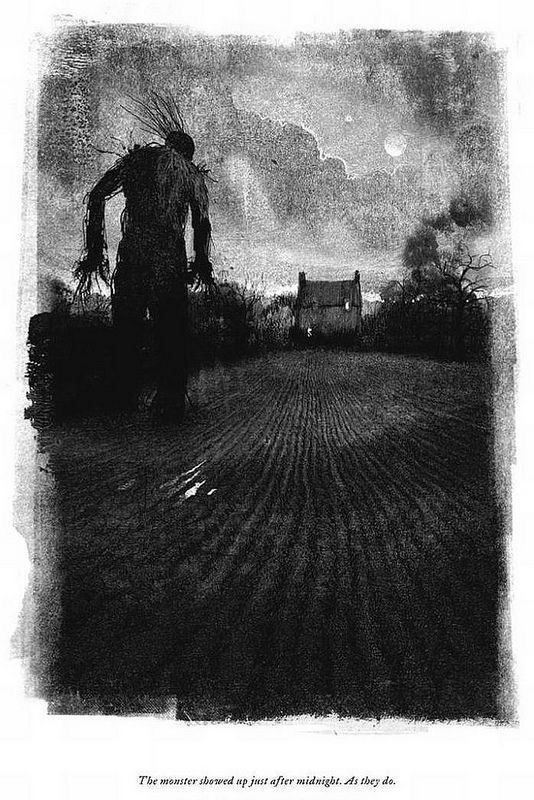
The Original Hans Christian Andersen tales could be frightening, cruel and surprisingly uncompromising. They introduced children to punishment, loss and death without necessarily explaining them, and rather than protecting children from difficult emotions, they trusted them to encounter them. It reminded me of A Monster Calls, one of the first books I read that made me cry. What stayed with me was not simply its treatment of grief, but its refusal to suggest that emotions need to be understood before they can be expressed. Conor, the central protagonist in Patrick Ness’s A Monster Calls, does not understand what he feels, but that confusion does not lessen their reality. Instead, Ness positions this uncertainty at the heart of his portrayal of childhood: children can be unreliable narrators not only in what they say, but in what they understand about themselves. A Monster Calls turns that gap between feeling and understanding into a feature of its narrative. 

Whilst A Monster Calls is a young adult novel geared towards 11–14-year-olds, its treatment of grief deliberately extends beyond a child’s understanding. Giskin Day writes that ‘The book draws on conventions of children’s literature to create a sense of familiarity that helps to balance the emotional stress of the story.’ Day’s emphasis on “familiarity” is important because Ness places Conor’s grief within a world that is immediately recognisable to a young reader: school, bullying, family conflict and the helplessness of having little control over what happens to him. The monster, its three stories and the fairy-tale structure then give these experiences a familiar fantasy framework through which difficult emotions can be explored. But familiarity does not mean simplification. Ness deals openly with anger, guilt and the frightening wish for suffering to end, trusting his younger readers to encounter emotions they may not yet have the language or experience to understand. Conor wants his mother to survive, but he also wants the uncertainty and suffering to end. The monster gives this contradiction a physical form before Conor can articulate it himself. A younger reader can accept the monster as part of Conor’s reality, whilst an older reader may interpret it as grief and emotional repression given a body. Ness therefore leaves room for both readings, and it is precisely this uncertainty that shapes the novel’s narrative perspective: just as Conor cannot fully understand what he feels, the reader is never given a completely authoritative explanation of what the monster is. 

Conor O’Malley is therefore an unreliable narrator in every sense but the technical one. Although the novel is written in the third person, everything is filtered through what Conor perceives, fears and cannot say, so his limited understanding governs what the reader is allowed to know. His unreliability has nothing to do with lying. He simply does not yet have the vocabulary to name what is happening inside him, or the self-control to contain it once those feelings surface. The ancient yew tree that stands in the churchyard behind his house gives this inability a physical form: at seven minutes past midnight it transforms, walks to his window and refuses to leave until Conor tells it the truth. Later, Conor destroys his grandmother’s sitting

room, smashing the couch, bookcase and treasured clock until only the display cabinet remains. Afterwards, he stares at his own bloodied hands, unable to understand how he could have done it. Ness refuses to provide the explanation that Conor himself cannot give. When his grandmother returns to the wreckage, she does not demand an explanation or punish him; she walks straight past him and pulls down the final cabinet herself. The scene is left unresolved, just as Conor’s feelings are. 

The same refusal to settle the truth surrounds the monster. Ness never definitively reduces it to a metaphor, keeping it in the same territory as a child’s imaginary friend: unprovable, but not therefore false. Its importance lies in what it allows Conor to express before he can express those feelings himself. This openness also allows an adult reader to take the more sceptical view that the monster is Conor’s grief given physical form, without forcing a younger reader towards that interpretation. Magritte makes a related point in his 1929 painting Ceci n’est pas une pipe: the painted pipe is not literally a pipe, but it still represents one. The monster may not be a monster, but it is the only visible form Conor’s feelings can take before he is able to recognise them. Even his moment of complete honesty arrives through representation. The monster tells three stories before demanding a fourth from Conor: his own. He can only tell the truth by turning it into a story. We are therefore never given Conor’s feelings directly; we encounter them through the monster, through his violence and finally through the story he struggles to tell. His unreliability comes from the gap between feeling something and understanding what that feeling means. 

Day describes the novel as confronting “the psychic burden of the impending loss of a parent through cancer”, and Ness’s response is not to make that experience smaller for children, but to give it a form they can enter. The monster makes fear, anger and guilt visible without reducing them to a simple lesson, while the novel’s uncertainty allows both child and adult readers to make sense of what Conor cannot yet articulate. His unreliability is therefore not a failure of understanding, but part of what makes his grief believable. Ness trusts children to encounter difficult emotions before they have the words to explain them, leaving the reader with something more honest than a neatly resolved version of grief: sometimes a child can know what they feel long before they understand why.

Categories
Poetry

Confessions of an internet-diagnosed avoidant

By Breannah Holton.

Feel my face first, drop your weapons and touch,

I won’t drop my fists but tense every tendon starting from my wrists,

Please be tepid to the touch.

I promise a reading of your temperature, if you promise I won’t burn my tongue

Why be comfortable? always be sceptical,

Promise you won’t gather your weapons and run.

From finger to thumb, raise me your trepidatious hand,

Feel around for bone and find my spine, burrow your hands in my pits,

“So tomorrow, you have any plans?”

You should shudder, prove this is a double-blind affair…

From finger to palm, from flesh to bone, ask with fear and trembling

“What are you?”

And i’ll drop my weapons and touch.

Curiosity and tenderness, curiosity and care,

they’re forming here in my sentence,

As I feel throughout your hair.

Kiss my hand or bite it, the intent is all the same,

consume me whole, with no restraint

Let self-preservation persuade you, and you’ll have only yourself to blame.

Hold your nerve as I hold you to mine,

undress my face, hold it far but firm,

I’ll kiss your bruises; I do this while your blind,

But I find, I am no panacea to your problems, no ointment to your burns,

You say I abandoned you,

I say I saved us both,

Because I left when undressing you finally became my turn.

I left my weapons and ran.

Featured Image: Cosmos

Categories
Perspective

Dystopian Omens of the Future

By Pedro Couto

Throughout history, humanity has been fascinated by the question of what the future might hold. Some have thought the problems of their time would be resolved, solutions ushered in by the arrival of new technologies. Others, in light of said technologies, have not seen the future in such a hopeful light. As we look back on history, we see that this worry and foresight into the problems of the future, as well as its solutions, was such a concern that humanity has even attempted to predict its end countless times in many apocalyptic myths or prophecies.

Dystopian literature, as a result, has become increasingly popular, as the idyllic hopes for the age of information and its promises have continually been crushed by wars, mass surveillance, and the manipulation of the populace with what the Roman poet Juvenal coined, ‘bread and circuses’. From the classic dystopian novels of the 20th century: Brave New World, 1984, and Do Androids Dream of Electric Sheep to newer titles in the 21st century like The Hunger Games and Ready Player One, and even in shows and movies such as Black Mirror. Dystopian literature is incredibly useful for our reflection on the trajectory and likely problems our society will face as a consequence of developments in technology, cultural attitudes, and politics (to name the three biggest), and during a year that has felt as turbulent as 2026 has, it seems all the more pressing to consider what the trajectory and likely problems our societies will run into. It is also notable that in the late 1950s there was a comic strip of an American Newspaper titled Closer than We Think, which was designed to illustrate ideas of how technology would change in the future (for the better in their eyes), and it is from such panels we get predictions of flying cars and the like.

Here, I wish to do something similar to that old comic strip, though not quite as cheery, and present what dystopian omens the future seems to hold both technologically and culturally. I look out into what I perceive to be problems already in 2026, with the aim to present these to you, dear reader, in order that you may reflect on my fantastical notions and consider whether these are real possibilities or not; and most importantly whether the problems that suggest them are problems at all, and if they are, how we may go about doing things differently.

Law by AI — The first thing on anyone’s mind when I bring up the future and its dark road is likely the use of Artificial Intelligence and especially Generative AI, which is exponentially developing and becoming more and more prevalent. There are many things AI will likely be used for in the future and already is. One I have seen people discuss the least, and I think is one of the most important, is that generative AI will have the potential to effortlessly produce forgeries of legal documents, anything from contracts to witness statements, etc. This risk has already been acknowledged by the International Bar Association (https://www.ibanet.org/authenticity-of-disclosed-documents-and-AI), yet the recommended way forward seems to me likely to be ineffective in stopping the use of AI in forging documents or in detecting its use preventatively. As such, we may expect a future in which the courts are run by attorneys and prosecutors alike, wielding AI to fabricate evidence for their own case so as to better compete with their opposition and in which increasingly the truth becomes irrelevant in court, but guilt is instead weighed on the attractiveness of the stories told by lawyer and machine together. Further, we may expect for innocent people to be accused with such evidence used against them, and for the guilty to defend themselves by claiming that real evidence is a fabrication of AI — which of course would lead to massive delays in justice to try to authenticate the legality of these documents (if AI will even be capable of being detected then). Even if AI becomes further regulated or less accessible to the common public, which seems to be the direction in which legislators are prepared to take, who does this benefit? Will not the state or companies be the ones with access to this technology? So the monster we call AI looms its ugly shadow over our destinies all the more, and we would be wise to beware of its coming.

Plurality in fragments. With regard to our wider culture in the future, there have been many worries about eugenics as gene editing technologies advance and the worries of the banality and meaninglessness of sex as society becomes ever increasingly more licentious. Personally, I do not feel threatened by these things; if anything, these worries have been so at the forefront of legislators’ minds and the general public that these aspects of culture and applications of technology have, in large part, been restrained. Instead, a much more threatening and looming danger can be foreseen and, in a dystopian world, is likely to be taken to its extreme; this threat being the fragmentation of society leading to, in its extreme, civil war(s). What I mean by fragmentation is that people in the 21st century, especially, but not limited to, the West, are differing more and more on their opinions, beliefs, and traditions, and so the cohesive shared vision of a healthy society — at least one that is well-ordered — is becoming a distant memory (before it is forgotten completely). If it were just disagreement, this could be tolerated — after all, humans have always disagreed and will continue to do so; I am not trying to suggest that every society ought to be a monolith. Rather, the danger emerges from precisely the intolerance of disagreement, whether on political, religious, or even ethno-cultural lines.

This intolerance first begins as hostile conversation, which quickly censors any kind of conversation that dares disagree with the status-quo in a particular context (this may be a small group of friends or a superpowered nation). The status quo then becomes moral law, incapable of being questioned lest one suffer the pain of complete character death. And after character death comes real physical death, since aggression and hostile opposition to disagreements do not persuade anyone of their oppressor’s cause but strengthen the conviction of their persecuted beliefs. The final stage is violence reproducing violence and, as such, the breaking out of a civil war. With the rise of social media, cancel culture, and a time of general political unrest, it seems evidently clear that no matter your politics, your religion, or anything else you believe, there are people online and perhaps even in person who not only disagree with you but would call for your death because of what you believe. If we as a species cannot learn to communicate without the threat of violence or censure, then we will be led into the dark; into a future in which countries break out in schismatic wars over political ideology, religious beliefs and even traditions of culture, thus creating a world in which plurality — which would be the ideal of tolerance despite disagreement — is itself fragmented into many tiny tribes all perpetually at war with their moral enemies.

Extinction of Cultural Diversity. We can further imagine a future in which the rise of globalisation, supercharged by social media, civil wars and unrest, creates a monoculture or the death of many different cultures worldwide as those that are militarily or economically weaker fail to have enough power to exert themselves into the global zeitgeist. We are seeing this already today as American media is unquestionably dominant with no real competition — whether it be Hollywood, TikTok influencers, or news stations — the whole world seems to revolve around American communication. What’s more, communication (especially repeated communication) inspires thought, beliefs, and values, and as American communication is globally widespread, so are American thoughts, beliefs, and values, such as the necessity of individuality, of liberal freedom, and also of consumerism en masse. Therefore, it follows that if this trend continues, the world itself will be American eventually, and with that, no longer a diverse ecosystem of variable history, ideals, and traditions. I leave it to you, the reader, to decide whether this is a good or bad thing and whether diversity is itself a cause worth fighting for. Nonetheless, I do consider this lack of diversity dystopian in so far as it is removed from what has been the natural order of human history up to this point.

Hopeful Note. If you are someone who gets anxious or overwhelmed with bad news, then this article probably hasn’t done you much good. So here’s a final note to help ease you out of the depression of worrying about the future. In the same way that many things become worse with the rise of technology and developments in culture, many things will also become better. The purpose of dystopias is to help reflect on the challenges we are currently facing so they do not lead to problems in the future, yet it is important to note that dystopias never come to fruition as we think they will. Orwell’s totalitarian state as in 1984 never came true (though many problems involving mass surveillance have become reality), nor did Huxley’s Brave New World or the Hunger Games. This is because while the human condition is doomed by many misfortunes to worsen the lives of many, it is also filled with the hopeful striving towards the betterment of those very same lives. We may foresee a future in which cures to cancers are found, climate technology advances and the air we breathe is cleaner, in which education and medicine is more readily available, and many more such developments. All these things are just as possible as the omens discussed in this article, so hold onto this hope and consider the possible evils only insofar as we think about how to make a difference now, so as with the dystopias of these great writers, they may never come to reality.

Featured Image: Pexels

Categories
Creative Writing

Katabasis


By Jude Kirk

Epilogue

O’ Muse, tell me how, tell me why, the strange Fates must warp my life, time and time again.

It is the fault, not merely fate, that wounds me so. My own fault, being who I am now and knowing who I was, then. But before it all, I was someone.

I used to be known by many sharp names: The Thracian bard, the father of songs. I used to be somebody, with hopes and dreams and constant, moving ideas (people become something and then nothing so quick!). I used to play gracefully. Used to sing sweet, sombre poetry; a thousand tales of a thousand men and women, a thousand lives more. But what was once a power is now a flaw, and the only flaw I know.

Now, there is only one story within me. Only story one left to tell.

O’ Aphrodite, sea-born scheming mother, I doubt you. For I believe that there is no love greater than mine. There is no love more empty, more critical, more crucial. It is what Love did to me that I must lose – and there is nothing to my love but losing.

Muse, give me the courage to tell this story, a final story, for me.

I

Three days the ceremony lasted. Three days the sky remained empty.

Hymenaeus, that dark-eyed decisive God – God to all those happily wedded – denied our calls each time. He gave no lucky omens; He brought no gifts. And in the sky, the throne where He should have been seated those days, remained vacant all along.

These were quiet days, but happy days, to me. They marked the finest days of my life. I anticipated the future in each and every way, for I felt within me such warmth. There was so little time to notice the unsettling absence of things. And my heart was too full to realise the continuous dearth of that God, and what it must have meant.

Alas, the next few days were all done in vain.

—

The first day of our wedding, we and all those in attendance had sung up, up, up into the sky, calling Him to acknowledge our holy union:

“Hymen, O Hymenaeus, Hymen, be present!”

He had not heard.

But there was always tomorrow. 

For the days were young! So young, and I was younger, happier, and looking out into the shared future before me with nothing but hope. What a joy a wedding is: to love someone in this way, and to have found this person by some grand chance. I was overwhelmed by my own luck.

In the evening time, whilst Eurydice offered her ending childhood days to lovely Hera, to swift Artemis, to Aphrodite, I poured out the libations to Hymenaeus, of thick gold honey. The air was cool and calm, and I waited for Him to come. But He remained silent to this first offering; the honey was not lapped up, nor was the incense enjoyed. And so, pouring out the libations for a lucky life, it was all fruitless.

Late that night, I imagined Eurydice in preparation: water streaming down her back and through her hair from the fine loutrophoros that had been gifted us. There and then, she had been cleansed of everything. I could imagine her, shiny and new, returning to her bed chamber to sleep alone for the last time.

Eurydice, the girl, then the woman, now nothing at all.

I thought and yearned to the point that I felt nothing within me but ironic fortune, and when Hypnos slipped his fine fingers across my eyes, I let the happy dreams come.

—

Day two was our union as husband and wife.

“Hymen, O Hymenaeus, Hymen, be present!”

And again, He did not hear! No, he was not there for Eurydice’s final moments in her father’s house, nor was He there for the splendid sacrifices made to all the Gods of Olympus. And again, I saw no reason in thinking of it too much. How could I think too much? For when I saw Eurydice, my Eurydice, with her oak-coloured eyes, and that day – that fine, beautiful day – she had flowers in her hair like Persephone, I need not think. Oh, no music, no prose of praise could preach my love for her as I do now! No love, no vivacity, felt greater than mine. It stays true, still.

So, lifting the veil to reveal her smiling face, I knew. Knew that I would never need nor want no other woman in all my life. That there would be no doubt within any ounce of my being in marrying her. That my songs may recount an element of my own longing for her, one day. And that day would be the greatest day in all my years, for in them would reveal the truth of my love.

For a striking moment, looking at her then, a sting of fear struck me universally. The knowledge of being unwatched, unprotected, passed through. There felt to be no God shielding us, and it might as well have been so.

It was a moment, in between a moment, but it seemed to linger there.

—

That night, I had a strange dream: Hymeneaus, dark-eyed, decisive, holding a torch of smoke, that would not alight pure flame.

—

Day three was the unluckiest of all.

Eurydice’s move from her father’s house to my home, her home, ours. I thought we had escaped an unhappy fate, and we were alone together at last.

New pots and perfume, jewellery and fine furniture lay across the darkening room; it was a life unlived, new and strange and exciting.

Finally, the liveliness of those days swept off our weary bones and Nyx – source of sweet repose – drew the dark curtains forth. I would have been happy to lay with Eurydice all night long, hand in human hand. If it were not for that night’s greatest woe. For when I thought it was all over, and my eyes begun to tire, to my surprise she called:

“I would much like to go out again, tonight.” She said, in a thin voice. 

I looked at her in a confused way, as if to say: How could you disturb this stillness? This final peace? 

She took my hand in between hers, hands of white and purple-veined marble.

“I want to remember this night.” she spoke. How could I deny her this?

“Shall I come with you?” I said, “A walk together, perhaps?”

She shook her head, that I could see. She did not explain why, and yet I knew: we had so much time to spend together yet. So much Time.

So, I let her go. Knowing that we were from henceforth never truly apart, or feeling it. I watched her go.

There were no stars that night.

—

I did not sleep. Could not sleep, for I finally felt a tickle of misfortune. I was right in feeling thus.

The Gods fell into their pleasing slumber, and Hymenaeus turned his back from Eurydice a final time.

To this day, I know not why, I know not how, cruel Fate twists and turns in that way it does: how it had to come then, so early in Time. For when Eurydice was walking, walking along the quiet, still plains of forest with the Naiads in her attendance, some kind of ruin slithered in.

I imagine it (with torment): for as she was speaking softly, suddenly all the flush spilled from her sweetened face, and her eyes lost their glimmer, and all the life around her begun to spin, and in doing so, gave way. In one fragile fleeting moment she fell, silenced in the dead of night by a serpent’s bite.

Muse, how am I to go on with this story?

The one that is only beginning. The one that is my end.

II

No words, no prose of praise can relate how I felt that night, how I have felt ever since. 

I mourned the days and nights away, mourned the outstretch of time altogether, until there was nothing to Life but Waking and Sleeping. Some days it felt that I had grieved her to completeness; I was so full of both love and loss for her. It was an emptiness that no life could fix, and everything at once became very silent. 

I was a coward, you know. Too sick with sorrow to attend her funeral, to see the truth before me. And yet I could think of nothing but Eurydice, my Eurydice, and the many years taken from her, the opportunities, the possibilities of a life full of uncertainties, joys and sorrows, for both of us.

Pots and perfume, jewellery and fine furniture, collecting dust. No lady at the loom. No one to play fine sweet music (for in losing her, I was lost too). I have lived my life, and here is the rest of it.

The night of her funeral, I went outside, where the ocean was completely still and cried:

“Hymen, O Hymenaeus, Hymen, why have you betrayed me so?”

I received no answer. That silence was the worst part. 

—

Another night, and again I had given up all hope. I felt – not just felt but knew, deep down – that I had mourned too long in that Upperworld without remedy. 

And there I found a thing to do.

Half-alive, half-thinking, then half-filled with hope, I considered a journey, lower. Would I dare? How could I dare? My stomach curdled at the thought! But with it came some strange comfort: to exchange this miserable life, the monotonous days, the come and go, the uncertainty of everything when alone. No, no, I would trade it instantly for some chance to see my wife. There was so little risk in doing so, I felt. For with my greatest fear come true, what more did I have to lose?

Rare it is for a soul to see the Underworld with living eyes. Rarer is it for a mortal to know the pure vastness of that realm. 

This is all I knew: First, to get to the Stygian world, you must enter through the gates of Taenarus, where son of Leto cannot reach you. To enter truly, escaping all six eyes of Cerberus is your only hope. Stop, anything deeper I could hardly fathom.

I knew that there was nothing else that I could do. I was nothing on my own, but with music I had a kind of power. My grief too made me ambitious, but also reckless (so, so reckless). I knew I was not a fighter. Not a hero like Hercules, nor a thinker like Theseus. All I truly had were my words, my music, so little left for me.

—

What was once a power is now a flaw, and the only flaw I know.

I found my way there.

The sky was like a smear of fire (it is the only clichéd way of describing it), and the tide was low and unending; it was unsurprising that Icarus yearned to indulge in one or the other. With me I had nothing but my love and my lyre, ready to play music again in search of half my soul.

Finding the entrance, abstracted just above the shimmering water, was the most beautiful thing I had seen in so long. For within I knew Eurydice was there, somewhere. 

Entering the cave, another kind of darkness seemed to seep in.

I walked through pure darkness, and whilst every nerve of what was both human and mortal within me begged to turn away, back to the place where the sun shined, I kept going. I don’t know how long I walked through that darkness, that silence. Through it all I felt an overwhelming melancholy, a familiarity. That space felt nostalgic to me strangely. 

Eventually, the terrain beneath felt unsubstantial, and waded back and forth, as if uncertain of itself. I found my footing.

Timeless, colourless, shapeless minutes and hours passed me by. Fatigue fell through me unhappily. But there was no time in thinking thus. For, soon enough, I heard the barking.

—

Cerberus, who was so large, so looming that I mistook it for some great cloud of shadow, I saw in front of the gates. Abandon all hope, ye who enter here. I dared not go close, too scared of the beast. How surreal it was to see the creature I had only heard of. Fear took my breath away. But Survival does what it needs.

So, to soothe the barking down I began to play my lyre, just like I had once done in life, to men and fine ladies, to children. To Eurydice, to send my darling to sleep. I played to a monster. And to my surprise it worked: those strings quieted the creature; soon enough all three heads were thudding to the floor, six inflamed eyes weighing closed unwillingly.

This victory infected me with Ego, and I was foolish enough to think it easy – for going further down, there seemed not one thing I could not dismiss with my song. 

I passed the paws of Cerberus and entered through those gates with nothing but Hope.

Time passes. Eventually, what once silence become something solid again, and I begun to hear water being poured into a cold windy cave. It sounded almost living: finally, something real, something solid against something else. It was the closest thing to certainty I had experienced.

Then I heard another sound, rising upwards and through me. Hundreds of sounds, sharp and piercing, echoing like half-formed memories. I knew not what they were until I saw: the ideas of people once before! Some wailed, some raged, some were completely silent. I saw them, barely, those insubstantial spirits of the dead.

Sifting through the absent crowd, I found the source of that fluid sound.

The Styx was a long narrow lake, looking like a plane of marble, black and unsettlingly calm, nothing like those wine-dark oceans back in Thrace. From a distance, it almost looked like peace. Before it, stood the man, the judge, who had only been a myth to me prior.

But Charon was not what I expected, for getting closer, he looked like the saddest man I had ever seen: what a thousand lifetimes of solitude and nonexistence does to you, I wonder.

“These are the souls who have not received burial.” he spoke, “feel pity on them, but do not help them. You cannot help.”

Then he looked down on me and must have realised my living soul.
  “You are still living” he said, “you don’t belong here, yet.”

His voice was slow and warbling. Here I knew not what to say, for his message was clear and simple. I tried to offer him an obol, shiny in that watery darkness, but he denied me this.

“You are still living.” the unhappy thing he repeated.

So, I had no choice but to give my lyre a second try. I played a very sad song, bringing tears to both my eyes and his. And to my pride it worked a second time; Charon offered me a seat in his tired little boat and slowly sailed me away, and did not speak nor question me.

I watched the thousand souls behind me then, crawling on the dead shore, wailing still, as they drifted from my view and into darkness again.

III


Looking up, I could no longer see that shining entrance which I had once entered

through. Everything above me became pure nothingness.

I landed onto solid ground, paid my obol, and with it my respects as Charon sailed away.

Here was a place I could have never quite imagined. Whilst the oceans of the earth seemed endless – but had an end – the landscape before me showed no sign. The lands went on and on, in layers before me. Each of them was filled with shades, but only a low humming sound could be heard all around, tuneless and formless.

My living body reminded me of its mortality by this time; I had been walking so long by now that I had begun to exhaust all of myself. This is how I came face-to-face with the rulers of those unlovely realms. In pure exhaustion, in pure desperation. 

Muse, how frozen I became, how powerless. For as I was wading along, I wasn’t yet aware of their presence. It was only until I looked up again and saw two exquisite thrones looming high. Soon enough shapes became recognisable, and I found myself looking into the deep, distant eyes of Hades, the gate fastener, and his wife Persephone. A God who could not yet see such a small insignificant life. No, I could hardly see their cold, still faces so high up there in the dark canopy of sky. They were eerily still. Nothing is ever how I imagine it to be.

Persephone was the first to see me; wasting her time best she could whilst stuck there. She was indeed a beautiful sight, from what I could see. It struck me so. How, oh how, could Eurydice be here, too? And how, oh how, do beautiful things leave so fast?

Eventually I caught the attention of Hades, who, in moving his head to see me, silenced every spirit with fright.

“How did a mortal make it to the land of lost souls?” 

So he spoke. And all the absence and uncertainty in that world became very clear, substantial in his voice.

There, then, I did the only thing I could do. Standing there, I began to play a final time.

“I am no hero. I have not come to see Tartarus, nor to bind the three heads of Medusa’s offspring. I cannot be who I ought to be since fate took my Eurydice away.

I have come on this journey in search of half my soul. For whilst we were together in life, a serpent snatched away her budding years, and left me here, alone. I am at my wit’s end!

Blessed king, blessed queen, believe me, I will not deny that I have tried to bear this grief. But Love has overcome me! If only you could see this grief poor mortals suffer when their lovers are turned away from them. Magnanimous Hades, may you please unravel the fates of my wife, too quickly run? All souls must return here inevitably, so why not rejoice in the death of two, after living our one good life? 

Hades, think of those cold months away from your wife, the thing you feel: though the time is mere seconds to your immortal eyes, you must feel her absence, still.

Persephone, do you miss your divine mother and her living seasons down here? Every half year the whole world knows she grieves for you. Please, give me this one hope.”

As I sang thus, playing my song in so great a melancholy, all the spirits of the Underworld cried out. The sounds blared into life in an echo. 

I saw Tantalus – yes, that most selfish fool – stop reaching for his uncertain desires, and Ixion’s turning wheel halted, wonder-struck. It is true, that Prometheus’ liver escaped the vulture in that moment, and all fifty daughters of Danaus halted from their futile labour. Sisyphus, for all eternity, forgot about the endless pushing of his boulder. Even the Erinyes stopped taking vengeance and wept, for the first time.

And for a moment – so brief a moment – I thought I saw a change in Hades, too.

He spoke nothing, for a long time. Only waited for those sounds of universal suffering to shuffle down, down into whispers again, until all was achingly still. I waited, so frozen with both love and fear, to see what they would do.

Persephone looked at her husband, her partner, a friend or a stranger. Her eyes seemed to glisten, and tears fell from her cheeks, like pearls. It was liked it begun to rain. 

Hades gave no sign of censure. Only began to kneel lower, so that his hand lay fisted before me. He opened each finger one by one, and there, in the palm of his lifeless hand I saw her.

Eurydice, my Eurydice! She who walked in steps halting, still affected by that pain which ended her.

But it was strange, for she was not fully herself: she seemed not to walk upon the ground. Her face I could hardly see, her hair drawn across it, as if caught in the wind, though there was none. She was an idea, still new, still clearer than the many shades I had witnessed.

A Eurydice half-formed. I thought: what can I do?

Before I could answer this question of mine, the divine king spoke:

“Do not look back.” Hades started, “Go forth from the valley of Avernus. You may not speak; you may not play your song. And do not turn back, for if you do before you have returned into the Upperworld, the gift before you shall all be in vain. In doing so, she will die a second time.”

The condition was clear. And so, I did the easiest thing I could do. I walked. Walked out through the darkness and the stillness, from whence I had come.

How was I to know this would be the hardest challenge yet? For whilst my other trials had one certainty in them (I knew I could play music with psychagogic charm), this was simple and vague and uncertain. How was I to know this was not some cruel trick, used to cast me out of the Underworld?

This is my worst flaw of all: Doubt. 

—

We walked. We both did, I know now. We marched up, up up that sloping path, through places of utter silence. Steep, indistinct, and dark. I imagined our wedding bells, and echo, then. Our house built for two living souls. I imagined a lady at the loom again, my darling there to sleep beside and to wake up beside. I remembered that none of it was yet real, and grieved her for the thousandth time. My eyes begun to well.

Each step away from that place felt like I was walking a lifetime away from her. The thought bit into me incessantly. Her form behind me, forced forward like a string pulled too tight. I was more scared then than I had ever been entering.

I heard no footsteps, no crunch in the rubble, no breath nor echo. I denied my temptation for clarity.

With no music to play, no quest but this, it took many hours or days until I saw that square of light again, though it felt like years. And then that light became something living. I heard sounds that I had almost forgotten. That monotonous ocean in its high tide, almost feeling the day’s warmth across my face, as if nothing had changed. I could smell the salt of my home, her home, our home. Could feel the fullness of the air lift up into my lungs and carry me away. And I knew that I could bear it no longer.

I, so afraid that she may fail me, eager for sight of her, touch of her, smell of her, turned back my longing eyes for only a moment. And in doing so, failed her. 

Oh, how beautiful she was! No longer was she a memory of herself, but a real living thing again: all the colour in her sweetened face renewed, and the glimmer of her eyes had soul behind them. I thought I heard a breath from her, a laugh from her. Felt her touch. I imagined that it would start again, our life: there was a pause, yes, but it had all returned now. We could keep on going. I, for one so foolish, was giddy with glee.

But then, I saw her face, fading how I must have that woeful night. Again, the colour faded, and the soul disconnect from her heart, and she slipped away, away from me and backwards, like a strange dream. I watched it happen this time. And I tried – Gods know I tried – to catch her, but my arms only held still air, unbreathed.

It is a sadness that wraps around you. It is a cruelty brought unto me. I have nothing to blame now for her early end, no snake to strike. It is me to blame, and me only.

Standing there, the living world behind me, I watched her go.

If you have read this far, I cannot help but thank you. No one has ever listened so long, and I have never had such a truthful song to sing.

———

THE END

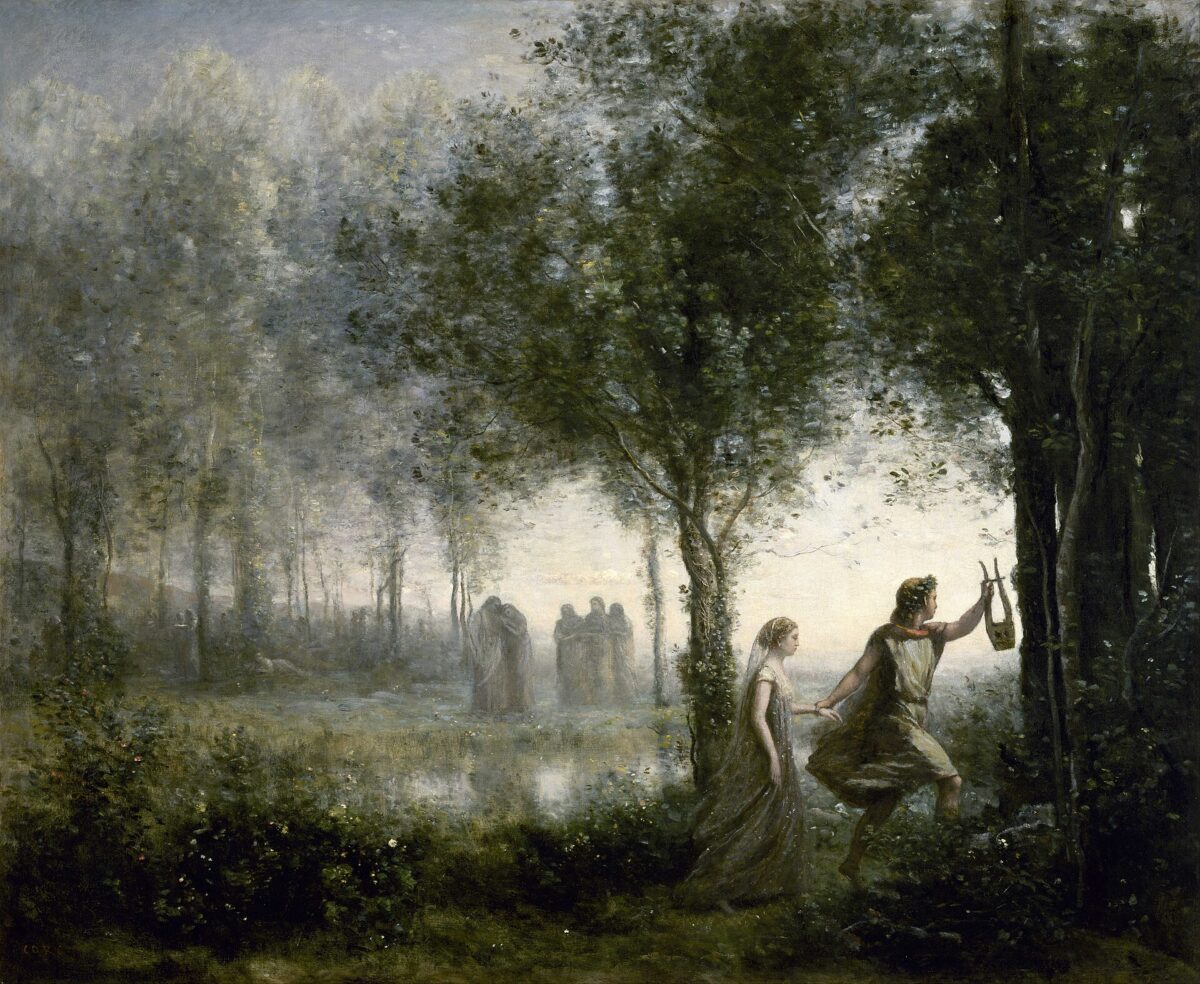
Featured Image: Jean-Baptiste-Camille Corot, Orpheus Leading Eurydice from the Underworld, 1861, Museum of Fine Arts, Houston.
Categories
Reviews

Hamnet Gives Sense to Shakespeare’s Genius

By Cecilia Martinelli

Art is as much about what is said as what is unsaid. The beauty of Shakespeare’s lyricism lies in the exact words chosen, and the exact words left out. Once we question the importance of the unseen in creating art and genius, it appears that Agnes is the body to Shakespeare’s brains. She renders possible his canonical creations by possessing the burden of grief and parenthood so that he may escape reality and create reflections of the life that she continues to uphold. 

People have long philosophised how geniuses come about – what invisible forces create these impossible characters? It is often women who uphold them; mothers, wives, sisters, daughters continue churning their buttered existence. Both Maggie O’Farrell and Chloé Zhao, in their retelling of the untold story of the West’s most proficient storyteller, present the tale the ‘canon’ has forgotten to tell.  Theirs is not just a story of motherhood, but rather a tale about women, who have always carried men.

Agnes (Jesse Buckley) centres the film as its protagonist: mother, wife and healer. She takes on a completely protective role over her children, grieving in fear of a child’s death before any loss has even taken place. In the twins’ birth scene she panics, foretelling the absence of a child at her deathbed; she expresses a carnal desperation for the safety of her family. While her husband (Paul Mescal) provides from afar, she takes to constantly protecting her children. Her bewitching role as town healer adds to this sense of responsibility as she feels she can control their health; when this power slips with the death of her child she screams in a grief so visceral we cannot bear to watch.

We intrude upon this ineffable pain, forced to partake in it, unlike her husband. He arrives unexpectedly after the death of Hamnet, trespassing on his family’s grief to feel the pain momentarily before escaping it. He leaves his lamenting wife to digest his loss independently, because he cannot bear to do otherwise and is not expected to. Instead, he crunches it into poetry and performance. Agnes tells him, “you are caught by that place in your head…not even the death of your child can keep you from it”. She is resentful of the freedom he has to retreat from the world into his mind, where pain becomes fiction and fancy.

O’Farrell and Zhao rightly give sense to the genius of Shakespeare in telling the story of those who upheld his reality as he sank deeper into fantasy. They do not philosophise the playwright to understand him so much as humanise him, as a man who was loved and sustained by women. His wife and mother were forced to go on living the life he couldn’t bear. And so, as they lead the tale of Hamnet, O’Farrell and Zhao never call Shakespeare by the name he is famed for. He need not be a protagonist now, as he will be the West’s literary protagonist for years to come. Meanwhile, his mother Mary and wife Agnes will tend to his garden, clean, peel potatoes, bathe, shield his children, watch those children suffer, die, grow, lose parts of themselves, smile, fall ill, play and cry. All the while he will write.

Featured image: Pinterest

Categories
Creative Writing

The Captain

By Freya Bertham


From the doorway, the world spreads marvellously before me. Streams ribbon through the landscape like veins and the earth convulses with evening life. Teeming with quiet activity against the backdrop of the setting world, the shoulders of the land swoop in drooping shapes down towards the lake, pooled between the arms of the mountainous bodies and suffused with the reflections of low hanging trees tinged pink by the dusk.

On the porch, my grandfather sits cocooned by this worldly beauty. His hands, like folds of thick velvet, rest on the arms of his wicker chair and he silently stares out across the terrain, intoxicated by the heavy August air, which hangs sultrily with the oppressive floral sweetness garnered from the moist summer.  

My nightdress billows around my ankles, taken gently by the humming wind. A chime is caught by the zephyr and the humid evening is scattered with a light tinkling.

The lake stretches out gloriously. In the weeping light it looks like a mirage of deep, liquid silver: a passage to another, ethereal world. When I was younger I’d often spend long afternoons crashing into the water to observe the slivers of golden fish jetting about below the surface. They looked like tiny stars littering the depths of a universe, and I became an astronaut, face submerged, suspended in the liminal space between the world I inhabited and a turbid mystery.

Tonight the small waves roll in noiselessly.

The figure on the porch does not stir. Perhaps his mind conjures fantasies, which colour the world in resplendent ways I cannot fathom. Maybe they are not fantastical, merely thoughts he indulges in to escape the time that seems to have loosened its grip on him. Somewhere lost in the pathways of his mind, he could be on a great journey travelling through lands blanketed in golden barley, wandering through precious streets he used to dawdle along when he was a boy. He could have slipped into a world where he does not find himself trapped by the limitations of his own body; where the medics do not pay him visits; where he does not have to take the four yellow pills, the two pink pills, and the two white pills each morning. I could spend forever placing him in the spaces of poets, of artists, of inventors, of voyagers – but he is not anymore.

Instead, he is a victim to his own brain and lost to the fabric of blank periods of time where he ceases to be anything at all. He is stuck watching the world without absorbing it. He is numbly looking out across the rolling land, and his eyes will be glassy and irritated because he has forgotten to blink. He is propped up, overcome by the pulsing of his heartbeat and the clanging sounds in his head.

When I was little, I’d climb like a leopard onto his lap and we’d sit together on that wicker chair watching the sun dip below the horizon. He’d tell me stories of when he was the captain, his adventures, how he roamed the seas, undertook expeditions others would never dare. He was infallible, undefeatable; a man who could wrestle with the tempestuous waves Neptune hurled at him and come out the victor each time. 

A pair of swans descend elegantly down to the water and break the glass surface. They shake themselves and slowly swim together across the lake. I imagine him bewitched by their effortlessness, eyes watching the ripples intently as they bloom out behind the creatures, how he would be charmed by their smooth movement. 

It’s all going to change. I’m standing on the periphery of tomorrow and suddenly this place feels like something that will become forbidden land, a dreamscape intricately fashioned to the soles of my feet, and ripped away overnight. In years to come, I’ll unintentionally shape the memories of my time here with desperate longing until I mould the melancholy into poignant nostalgia. I’ll be standing here limply as an observer, sanctifying everything to the point that it becomes surreal and idyllically adjacent to time. 

Our peace is ruptured by the birds pulsing from the neighbouring trees. They spiral into the air like billows of black smoke. They squark, madly; scream at one another, malevolently. Crows don’t twitter like songbirds and they don’t hoot deeply like the chorus of birds in the morning, they lurch and croak and cry and fester in trees waiting to interrupt tranquillity. They are an omen of death, a funeral march for this perfect place we shall have to abandon. Time has caught up to us, and bundled the furniture into large vans, left naked nails where pictures used to line the walls, taken the lady of the house. 

Behind me, there is a chasm where there used to be a choir of gentle voices in rooms scattered with memories – trinkets from places I have yet to see, jasmine scented draws filled with photographs of ancestral faces that I cannot assign names to. There were cabinets lined with hand painted plates, pots laden with silverware, glass cases boasting collections of angel sculptures with faded blue wings. There was a home I knew better than the ridges in my hands, a haven that already exists only in my memory. 

He will have forgotten the place he breathed life into. Forgotten why he has to leave it. Forgotten the laughter that reverberated through these rooms; forgotten the sound of small shoes as they clattered into the house leaving muddy trails behind them; forgotten the bonfires we would build in the garden that would burn until the morning of the next day; forgotten the sound of the floorboards on the stairs, the way they creaked, exhaled differently and familiarly under the weight of each person; forgotten the smells that came from the freshly made raspberry jam in the kitchen; forgotten the hands of the small children who picked those berries; forgotten the unruly garden that he used to nurse until it was immaculate; forgotten the door which had all our beaming faces tacked onto it; forgotten that he used to feed the birds with an array of different seeds in the morning; forgotten the golden curls that would float to the floor when they were trimmed with the kitchen scissors; forgotten the cheeky giggles of the children dancing wildly in the sitting room; forgotten the breathlessness of the soaked bodies that would emerge armed with snorkels from the lake. Forgotten the life that was his. 

Though, he would never forget the shuffling of her slippers on the carpet – that I am sure of – and I am certain too that the faces of the ones he loves are etched so deeply in his brain that in their own way, they too shall never be fully forgotten.

From the chair, the captain suspires deeply. A robin lands gracefully on the porch balustrade in front of him. I know it has captured his attention, for he leans towards the bird as if compelled to reach out and touch it. Its orange breast puffs out proudly, vibrant against the collapsing sky. 

I turn and leave him to slowly resurface from the abysm of the sea.

Featured Image: Breannah Holton

Categories
Poetry

addictive things

By Emi Sharples


the smell of my new ‘taxi driver’ perfume

orange juice from grey dining hall

smoking

mint tea from the forest at home

replaying that perfect four-song run near the beginning of the album

hashbrown

deleting hinge

tracing the line of muscle memory i have for my favourite karaoke song

irn bru before they changed the recipe

that sense of endearment for claypath deli even though their tables always wobble

thinking ‘i should start a playlist’, getting four songs in, and then never using it again

making eye contact with the security guys at tesco when i’m buying for pres but not sure what to say since ‘thank you’ doesn’t feel an appropriate response to them just being there

marvelling at evening light shining through windowpanes of somewhere so familiar

bringing you up all the time

imagining the colours of bedroom in arles in my mind’s eye

breaking the habit

the opening chords of eagles’ “take it easy”

deleting hinge again 

having the same elated response to seeing cheese scones on the menu 

singing the guitar solos with more vim than the rest of the song

laughing a little too loud at your jokes then feeling silly and like i’m in a panopticon and everyone saw that and now knows what i didn’t want them to know

falling asleep at afters on red wine nights 

revelling in the feeling i might have finally changed

never changing my order (i know what i like)

exchanging poems with friends and not feeling so stupid in putting words on a page

reapplying the lipstick i landed on as ‘my colour’ when i was seventeen 

obsessive to-do lists

having a favourite mug (with the slogan “gym? i though you said gin”)

using brackets in my writing after my favourite english teacher told me i was above that 

never being able to delete concert videos in case i forget them

guessing what you’re listening to 

updating my halloween costume list

feeling a sense of myself return when i stumble upon a beautiful sunset

novelty socks

writing letters to people i’ll never send and mentioning details that are a little too specific and consequently not being able to publish that writing so now i’m stuck

writing this list of addictive things


Featured Image: Emi Sharples


Categories
Perspective

The Politics of the Soil: The Entanglement of Human Violence and the Natural World

By Isabella Tarttelin

Complaining about the weather is our national pastime, as ancestral as a hot cup of tea, but these days, ‘terribly tense’ applies equally to the afternoon forecast and the morning headlines. As an unusually hot September day blurs the line between a changing climate and a turbulent political arena, it is time to look closer at how we talk about both spheres and find that they are not as separate as we have been socialised to believe. Through literature, film, and so many of the creative arts, there is a solidified dichotomy between the greys of metropolitan and the greens of Eden. Take, for example, the rise of Romanticism; William Wordsworth wrote an almost 10,000 line poem describing the natural environment as an otherworldly place that is entered through a deep spiritual understanding. I may not have reached the same development of my prefrontal cortex at the humble age of 20, but can I not claim connection with nature without having undergone some sort of spiritual psychosis? Or is the reality far simpler, and that the boundary between the human and natural worlds is entirely artificial, and everything we do is inherently natural, because we are? In exploring this question I’ve leaned heavily on Timothy Morton’s ecocritical work, The Ecological Thought and how the boundary between contemporary and natural are explored within the fields of creative works, particularly Seamus Heaney’s Field Work and director Martin McDonagh’s film The Banshees of Inisherin.

In The Ecological Thought, Timothy Morton argues that the modern climate crisis can only be resolved if humanity awakens to the reality of the deep, inescapable way in which we are connected to other beings. This perspective stands in direct contrast to William Wordsworth’s Romantic ideal, which relies on a lofty spiritual pilgrimage to access a sentient, separate, and capitalised ‘Nature’. To truly embrace Morton’s philosophy and reject this romanticised illusion, we must turn instead to the visceral poetry of Seamus Heaney. Written against the tumultuous backdrop of the Troubles, Heaney’s work shows a landscape entirely entangled with human conflict. In his poem “Glanmore Sonnet IX”, Heaney reflects on his retreat to County Wicklow. Seeking refuge from the violent political climate swarming Belfast, Heaney relocated his family in 1972 where they stayed until 1976, under the assumption that fresh immersion in the rural world would offer a sanctuary. The speaker becomes confronted by a rat, and promptly kills, following which he is wracked by guilt and shame for doing the very thing he moved for four years to escape from. As the speaker laments on line 5: ‘Did we come to the wilderness for this?’, the unanswered question underscores his guilt. By using the word ‘wilderness’ to imply a total removal, the speaker desperately aims to draw a line between human savagery and natural peace, instead revealing the boundary already collapsed. By fleeing Belfast for County Wicklow, Heaney tries to cross an imaginary border from a political world into a natural one, treating nature as a passive, neutral sanctuary where human conflict cannot and should not exist. However, the intrusion of the rat and an immediate resurfacing of violence smashes the speaker’s illusion and reinforces how human politics and natural ecologies are completely interconnected, just as Morton argues. Through the speaker’s lament and the penultimate positioning of the sonnet, Heaney presents the escape to Glanmore Cottage as a failed one, as it proved that human politics of violence, trauma, and choices are entirely native to the natural world. Such concepts are not alien to the ‘wilderness’ but are instead interconnected, as Morton emphasises.

The idea of violence, traumas, and petty social politics being native and interwoven into rural spaces is explored further in the film Banshees of Inisherin. If Heaney proves human politics cannot be left at the boundary of the ‘wilderness’, Martin McDonagh’s 2022 film The Banshees of Inisherin completely annihilates the boundary itself. Set near the end of the Irish Civil War in 1923, the film takes place on an island off the west coast of Ireland. While the fictional remote island of Inisherin is isolated from the actual fighting, gunshots and explosions from the mainland conflict act as a backdrop to Colm and Padraic’s trivial arguments. In McDonagh’s narrative, such an ambient and violent backdrop completely infects the seemingly romanticised, spiritual sanctuary from the distant gunfire on the mainland. The isolation in fact becomes a claustrophobic stage where any artificial divide between human affairs and the natural world is completely torn down. The feud between Colm and Padraic becomes trapped within their own geography, escalating into arson and mutilation, proving that the island’s sweeping cliffs and rolling hills offer no romantic peace, but instead a catalytic cage. Passive background elements become intimate casualties of human pettiness, when Padraic’s donkey Jenny dies from choking on Colm’s mutilated finger. By showing the physical toll our ideological conflicts take on the supposedly ‘separate’ natural world, McDonagh captures the ultimate reality of our ecological existence: our politics do not happen apart from nature, but happen within it, with catastrophic consequences for the entire living ecosystem. McDonagh’s narrative therefore runs parallel with Timothy Morton’s insistence on changing our outlook on the natural world as one that enshrouds and is enshrouded by the human experience.

We return, then, to our unseasonably warm September afternoon and our polite complaints about the weather. Our instinct to separate the natural world from our political structures has always been a comforting lie, a way to pretend that the ecosystems we inhabit are merely passive backdrops to our human dramas. But as Timothy Morton’s interconnected thinking reminds us, there is no separate fortress of the realm called ‘Nature’ to escape to. We cannot leave our trauma at the threshold of Heaney’s wilderness, nor can we pretend our ideological violence does not bleed into the rolling hills of McDonagh’s Inisherin. If everything we do is inherently natural simply because we are, then ecological responsibility is not a spiritual luxury for the enlightened few, but the crux of our political reality. It is time to drop the illusion of any boundary and admit that the storm inside Westminster and the storm outside our windows are parts of the exact same sky.

Featured Image: Cara Crofts

Categories
Creative Writing

My Morning Routine

By Lenna Suminski

I don’t want to know what you did today. 

I don’t want to imagine you continuing on in a dress, in happiness or in duress. I don’t want to know if you are painting still, I don’t want to know who you are painting for. I don’t want to see your Pinterest boards, I don’t want to know how you’re spending the summer keeping company with nuns. I don’t want to know how you fare, how you do your hair now – I don’t want to know where you’re going, I don’t want to know where you’re planning. I don’t want to know what you’re dreaming of if I can’t see you twitching in your sleep. I don’t want to know your favourite music now or what you will listen to next, I don’t want to know what you did today or what you will do yesterday. I don’t want to hear you sing if I can’t stay. I don’t want you here with me, in my nightgown on my bed, if you’re not going to stay – don’t. Don’t make me say it, don’t make me ask, don’t make me admit what I cannot mask. Don’t – don’t tell me about school or your friends, don’t make me feel what it feels to be with you. Don’t taunt me, stop leaving, I’m hurrying, don’t go on remembering. Don’t tell me how it feels. Do not tell me, please do not let me know, what it would be like to have you. 

I don’t want to know what you did today. 

–

I am panting. It is night and I am panting in the Savoy. The windows are shut though I am sure I left them ajar. I dreamt a scene, I dreamt a story, I dreamt a dream I don’t want to know. I am panting and my silk slip is clinging to my skin. It is night and I am sweating in cotton sheets in this ensuite. 

I am blinking, fast, trying to focus on the light that is blurring, suddenly this bed is a trap so I swing my legs over the edge and try to climb out of my skin. Stumbling, I leave him snoring to my left and brace myself to stand. I am parched, I am dizzy from white wine, my toes touch the carpet and I tip-toe to the bathroom, mapping out the route in my head, navigating my steps in the black. There’s glitter on the walls, silver stars shining from a bird’s beak, on the wallpaper there are mountains and skies and dirt that is soft. Hand-painted in beige hues, the same image shifting from this corner to that one. I cannot make out the lines of the blue-black feathers or if they even are the ones that fly. Nothing moves anyways, except my bony body sleuthing past these scenes. 

I am panting still – across this hotel room – my hand slips against the glass door of the closet and I knock into a chair. A stir – and I hold my breath. He turns in his sleep and I can see through a squint, he reaches for me, a naked hand searching for my body and it limps against a feather pillow. He snores. 

I take a breath in and let my feet search for the cold tiles. I slink forward toward the His & Hers sinks the way I used to tip-toe up the marble steps of my house. Turning on this swan tap I am hoping for the relief of cold London water – it is flowing through my fingers. 

I am panting as I look up at this girl – this woman – sweating from a nightmare. Her cheekbones are angular and her lips pink and wobbly, shoulders slack as I lean against this frigid sink, water pooling in my palms. I tighten my jaw, focus my eyes and take a closer look. I take her in. 

Nipples hard from the fright or from their piercings, poking through the purple slip dress that glides against her body seamlessly. Three hair ties on her right wrist waiting to leash the long brown hair that shies her eyes from sight. And the eyes – frantic. Frantically deciding what to scrutinize in the mirror, to land on a zit or stray eyebrow hair, searching, searching, searching – to no avail. Eyebrows that frown but could not be more detained in their shape and curve and color. A heart-shaped face that will probably start whimpering from the smoking, but tight and right with the upkeep: sunscreen, lotion, gua sha, masks. She is sculpted, given and maintained, to perfection. For now. 

I am splashing water on that perfect face. I’d have to moisturize again. 

I steady myself against this granite – it’s blue-blooded – my feet stay pointed, for some reason. There are two toothbrushes on the bathroom counter, concealer stains on the hand towel, the bath mat I am standing on is wet. Below the mirror is a used tea bag in a coffee cup dressed in lipstick stains. I catch her in sight again, sweat and wet dripping from the slightly-too-short chin and dropping to the floor. Moving my hands to the back of my neck, I look up at the ceiling, nothing but light. 

Leaning back and back, I put my hands up and stretch – towards the chandelier. I lock the door. Then I catch my breath, and collapse at once to the floor. I let myself fall undone. 

–

In the dream you were warm, and I was funny. We were laughing. Somehow, I’d imagined a utopia. It was university, but we took classes in trees. Every pupil belonged to a species: oak, birch, pine, cedar, fir, maple and ours – willow. It was twilight, my favourite time of day, a time where possibility still reigns but tragedy exempts, and I looked down at beautiful girls walking under the branches of my weeping willow. I could taste their smells, flurrying flowers of rose and moss and lily and salt. Their eyes twinkled like fairy lights, like the ones teenage girls hung in rooms, they hummed lantern tunes on the way to apothecary lessons. Through the woods that we called home there was a path for people, winding and small, manageably absorbed. I had raced from behind one rock to another to get to our willow. I wrote a poem, I don’t know what of, but it called for you. I tied it with a red ribbon and hankered it onto the lowest-hanging branch. I hoped you would see it, I knew you would see it. 

I think you did. Suddenly we were strolling down King’s Road, past boutiques and shops that glittered with leather and alligator along Sloane Square. In a pottery shop we stopped before a wall of mugs, just around the corner from our forest-school. It smelled of rain, right before or immediately after a downpour, I could not tell. Examining these ceramics, we weighed them in our hands, imperfections calling to us to choose one for the other. A mug with mushrooms and green dandelions, a cup with a handle of birds, two with pink waterfalls and four that were molded from jade. I scrutinized them all one by one, trying to discern the tupperware for your treehouse dorm. I am hungry for buttered bread and broth, after shopping we’ll go to the pub, play cards and huddle close in a booth. 

You had seen my letter, I called you and you came. I watched you from atop the branches, stopping abruptly in your step, picking up the envelope, and smiled. In the pottery shop I stood in front of you looking at the shelf of clay, you draped your hands over my shoulders and I leaned back – we are admiring the scenery and you are warm against me and I am funny in front of you. You laugh –

Behind me is him holding me tight. 

–

I see myself in the reflection of the porcelain bathtub. Is it still night out? 

This girl is a pool of purple, hunched tightly to keep from melting. A thousand shades of brown circle a halo across the tiles, falling in pieces and strands and catching between her hands. Hands pink manicured, digging into her head, fingering her temple to try and impede this epic pounding. Knees crammed against her chest, a concise ball of prey ready, but not wanting, to bite. Teeth white and neat and gnawing at her inner cheek – the taste of metal. The sound of a pule escapes, then two, then three, then at once, finally – a cry. 

Is it the wine or the Ambien? Is it the bed or the man? Is it your voice or a song? Is it a metier or a meteor? Is it a want or a must? Is it a necessity or a consequence – imaging you – is it me or is it you? 

Before I get an answer my stomach twists. 

I am lurched into myself when my gut slices. Cuts down my spine and across my forehead, chest, shoulder sides – pain that is sobering enough to get me to want to sit up, and I’m all the more wary that I can’t. With the pits of my palms I lift my body up half-way, enough to half-crawl like a half-dead centipede dragging along the bathroom floor. My legs won’t respond, and everything below my waist is burning. Waves are knocking into me, I recall the particular feeling of desperately holding onto coral when I snorkel, as tides hurry to slam me into the reef, again, again, and again. My body is puking something up. 

Four counts breath in, four counts hold, four counts breath out. I think I’m having a panic attack. Regulated breathing – a trick from the books, and it’s saved me before when I’ve taken it too far. In between the second and third round I make it to the toilet, below my belly button something is kicking out at me, battering my insides. 

My ankles are folded under me when I feel it start to go. I know – chased faith one too many times, took chance at her liberty and now – she’s pointing at me, smoldering. Stupid, stupid. My heart is hurting, that’s all that I’m thinking when I see all that red come out. My hands lined up on the floor, I put my forehead to my fingertips and barely get to say I’m sorry my –

I am bent in my bloodied mess and I am not crying for what is lost. I look up at her –

Against the marble is a woman – a girl – howling in a brilliant maroon pool. 

It is night. He snores. I wonder what you will do today. 

Featured Image: Aaliyah Angir

Categories
Poetry

Lambing


By Aaliyah Angir


Plough on, plough on 

into the night 

the fledgling calf 

driven on by

the farmer’s might 


Plough on, plough over 

the pungent fright 

ripped from her

mother 

no time to fight 


Plough on, plough on 

the bitter taste 

of cold iron,

metallic blood

the farmer’s haste 


Plough on, plough in 

to biting cold 

empty expanse

till flesh grows old 

plough on.


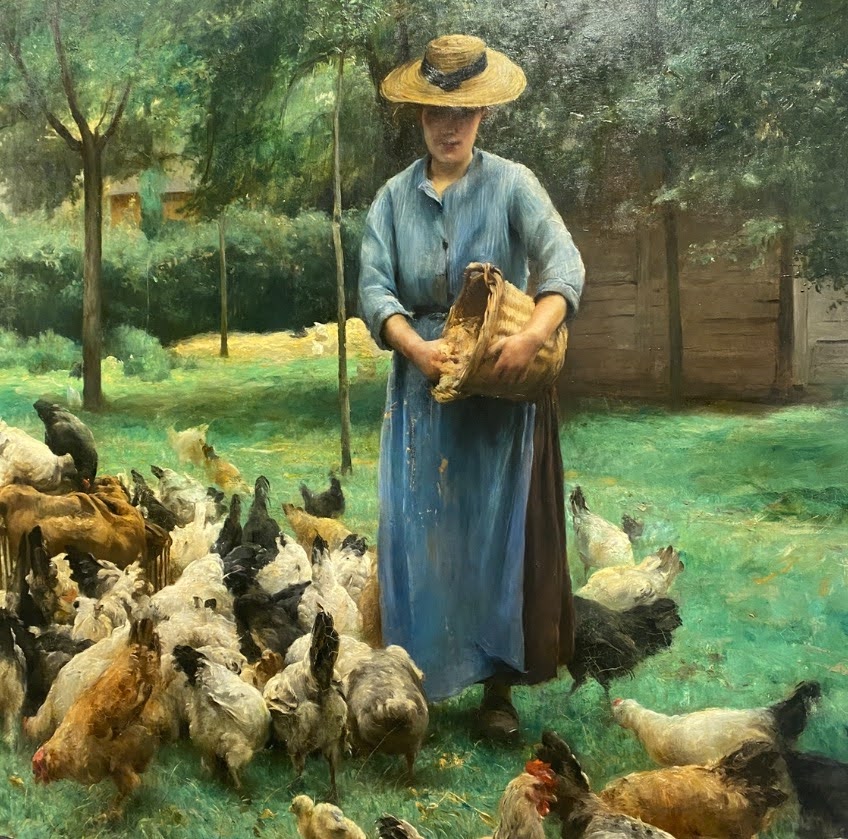
Featured Image: Thérèse-Marthe-Francoise Cotard Dupré, Dans le clos de la ferme. Musée des Beaux-Arts Jules-Chéret, Nice.