The eternal return is Nietzsche’s most theatrical idea, and also the one that most people, encountering it for the first time, tend to dismiss as too dramatic to take seriously. The demon appears, announces that your life will recur exactly as it has happened, infinitely, and asks you how you feel about that. The straightforward response is to say ‘yes, fine’, or to say ‘no, awful’. But Nietzsche’s real interest is in what the thought does to you – if it functions as a kind of moral pressure, an imperative to live as if every Tuesday were worth repeating forever.
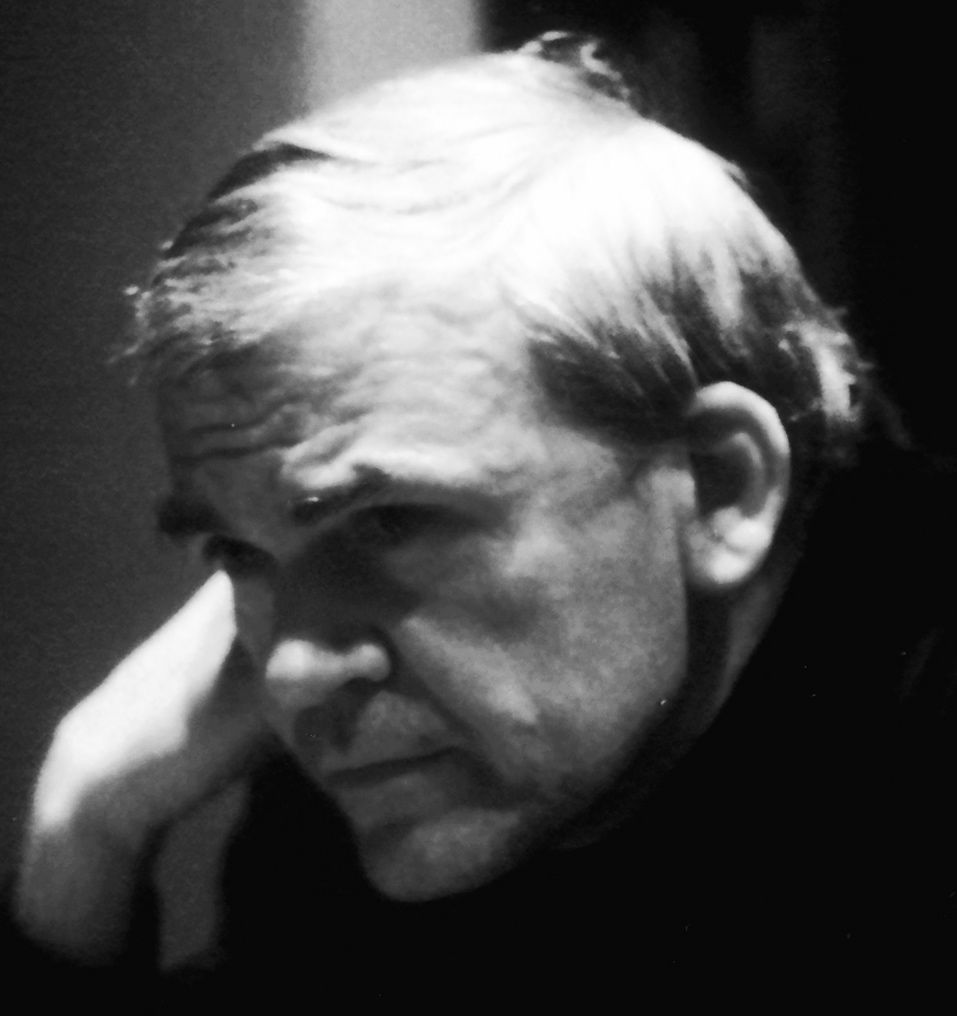
The Czech-French author Milan Kundera opens his novel The Unbearable Lightness of Being (1984)by taking this concept seriously enough to argue against it. What he argues, however, is much stranger than simple and outright rejection.
The eternal return is impossible. We know this, and the impossibility is the problem. We live once, our choices cannot be tested against their alternatives, and nothing we decide will ever be confirmed or refuted by repetition. In this sense, every choice floats free of the gravity that recurrence would have given it. This seems to be what Kundera means by the ‘lightness of being’ – the vertiginous condition of existing in a life that carries no weight because it can only ever happen in one direction.
The four characters he builds the novel around are studies in what this lightness really costs. Tomas, the Prague surgeon, has arranged his emotional life around a principle he calls ‘erotic friendship’, which entails the separation of physical intimacy from anything that might require him to stay. He has lovers without allowing any relationship to become fully binding, thus preserving his freedom and foreclosing almost everything else. Sabina, who appears most often in his life, takes this further and turns it into a philosophy. She leaves everyone before they can define her, betrays every fixed identity available to her (country, artistic tradition, the men who think they understand her…), and reads her own serial disappearances as a form of integrity and a ‘self’ that exists precisely because it refuses to be fixed.
Against them, Kundera places Teresa, who arrives in Tomas’s life carrying a heavy suitcase, a detail he lingers on, and who loves in the way that weight demands: fully, without this separation of body and soul that Tomas has built his whole life around. And then there’s Franz, the fourth main character, who cannot encounter anything without making it meaningful, who projects onto Sabina an idea of her so complete that she has almost no room to exist inside it.
What Kundera refuses to do is cast judgements on these positions, which is partly why the novel has endured so profoundly. He doesn’t suggest that Teresa’s suffering ennobles her, or that Sabina’s freedom is something to aspire to. Instead, he seems more interested in what each of them pays to live by their philosophy, and, importantly, exactly when the bill arrives.
Sabina ends the novel in America. She has exited every relationship and country that might have formed her, making paintings in a city where nobody knows what she escaped from or why. The freedom is therefore genuine, total, and also (this is what the novel won’t let you ignore) completely without echo. This same freedom has left her without any ground beneath her, so that every act of departure that felt like self-preservation has accumulated into a life in which nothing was allowed to accumulate. The eternal return, if it were real, would have given her choices weight, each decision meaning something proportional to its infinite repetition. Without it, she is exactly as free as she intended to be, and that freedom feels, by the end, like it belongs to a life that never quite solidified.
Tomas and Teresa end the novel in a small village, having given up Prague and surgery and most of what their previous lives contained. Their circumstances look, from the outside, like a kind of defeat that has narrowed, creating a life that is reduced rather than built. The happiness they have is modest and specific and hard to explain in terms that would make sense on paper. Nothing about their trajectory redeems the difficulty of it (Kundera is too honest a writer to suggest that it does). Rather, he simply shows that something has survived; what remains is a life built from weight rather than around the avoidance of it, which is not necessarily the same thing as a life that went well.
The problem the novel circles is not really about philosophy in the abstract, since it is lived before it is theorised. It is more about how one chooses what to hold on to when holding on to anything feels like a foreclosure. Kundera never quite resolves the tension between lightness and weight, because it is not the kind of tension that resolves at all. What he does show, though, is that Sabina’s costs are invisible precisely because they look like freedom from the outside, and there is no repetition, no demon, no recurrence to make them legible – not to us, and not to her.
The orange of my nails meets the tan sand, grains falling, attaching to the damp
I pick the small shell in my fingers then place it in the palm of my hand The sound of it clicking against the others obtained from the same sands I straighten up, the wind brings smells of salt and perfume, its motion pushing
Later, I sit in front of the campfire
The laughter of my friends, the plucking of strings and the soothe tone it
emits
I think of the day, of the sea and its loot
I transport back, to a decade ago To different waves, to same action
I pick the small shell in my fingers then place it in the palm of my hand
The sound of it clicking against the others obtained from the same sands l open my grasp; they cascade into a plastic bed
There is a spot in the library I always try to get. It faces the window, but more importantly, it faces a tree. Usually, there are birds moving through it, hopping from branch to branch, and when I’m lucky, they’ve got whatever they’ve foraged in their beaks. So, when I need to look away from the work trawling across my laptop screen, I get to see something that feels simultaneously so separate but all too similar to the ecological studies I was reading.
That morning, easing myself into work with something gentler than my usual music, I clicked on a ‘This is John Denver’ playlist. It was supposed to be background noise. Instead, it became a distraction. For anyone familiar with John Denver’s catalogue, the sheer number of songs, either explicitly or implicitly, rooted in nature is astounding. Mountains, rivers, rain, sunlight, country roads: the natural world is not just decorative, metaphorical world-building, but central. It is the emotional architecture.
And Denver was hardly alone. There used to be so many songs about the world around us at the forefront of popular music: “Green Green Grass,” “I Feel the Earth Move,” “Morning Has Broken,” and “Big Yellow Taxi”, to name but a few. Songs where fields, weather, birdsong, trees, earth and sky were not niche interests, but part of the common imaginative language. Nature could be everything you wanted it to be: romantic, spiritual, political, nostalgic, or just simply there.
What struck me was not just that these songs describe nature, but that they assume nature matters. A walk in the rain, the morning dew on the side of a mountain, the loss of trees to a parking lot: these are treated as emotionally legible experiences. The listener is expected to understand why they mean something.
So why does that now feel almost old-fashioned?
Of course, nature has not disappeared from music entirely. It would be too neat, and probably too melodramatic, to claim it has. Hozier still writes as though the forest is a place of worship and rot and desire. Bon Iver can make winter landscapes feel like a form of internal weather. Taylor Swift’s folklore and evermore are full of lakes, woods, ivy, snow, cliffs and gardens (I could also argue that these albums emerged from lockdown: an unusual period when many people’s permitted worlds narrowed to the supermarket, home, and the walk outside). But even these examples feel slightly set apart from the centre of mainstream pop. They occupy a particular aesthetic territory: indie, folk-adjacent, autumnal, cottagecore, wistful. Nature is still present, but it often arrives already stylised.
The first recent mainstream example that came to my mind was, unfortunately, Lil Dicky’s “Earth”, the 2019 celebrity charity single in which various famous people voice animals with varying degrees of dignity. This is probably unfair; the song did raise money for environmental causes. Still, I found myself slightly depressed that the most immediately available example of a nature-centred pop song was also essentially a joke.
For the sake of my own ego, I tried again. Gorillaz’s Plastic Beach came to mind: a brilliant, strange, synthetic album about pollution, consumerism and waste. But even there, nature appears largely through its destruction. The beach is plastic. The ocean is contaminated. The natural world is not encountered so much as mourned, mediated through apocalypse and irony.
This, I think, is part of the shift. Modern culture is not silent about nature. If anything, it is frequently anxious about it. We talk about climate change, extinction, pollution, ecological collapse. But the natural world increasingly enters mainstream art as crisis, not companionship. It appears as something damaged, vanishing, morally instructive. Less often is it simply allowed to be beautiful, ordinary, funny, boring, intimate, or woven into daily life.
Curious, and by this point absolutely not doing the ecological reading I had intended to do, I searched to see whether this was just nostalgia dressed up as insight. It turns out there is some evidence behind the feeling. A study by Selin Kesebir and Pelin Kesebir found a decline in nature-related words across English-language cultural products from around the 1950s onwards, including fiction, song lyrics and film storylines. References to the human-made environment did not show the same pattern, suggesting that this was not just a general change in language but a more specific cultural drift away from nature.
That does not mean everyone in the 1970s was wandering through meadows writing ballads about moss, nor that everyone now is spiritually bankrupt because they listen to synth-pop. But it does suggest something subtler and more troubling: that the shared cultural vocabulary of nature has thinned. The words are still there, but perhaps they are less central to the stories we tell about ourselves.
The same seems visible beyond music. Landscape painting no longer holds the cultural dominance it once did. Films often use nature as backdrop, threat, or spectacle, but less often as a serious emotional presence. Even adaptations of novels deeply embedded in landscape can seem oddly hesitant to let the land itself become a character. Nature is everywhere, yet strangely distanced: filmed beautifully, marketed aesthetically, invoked politically, but not always inhabited.
And yet I do not think this is only a story of loss. Recently, I have noticed small signs of return. Online, among the churn of microtrends and self-conscious identities, I keep seeing variations of the phrase: “cool girls like birdwatching.” It is easy to laugh at this, and maybe we should, a little. But beneath the trend is something sincere. There is an appeal in birdwatching precisely because it resists the pace of everything else. You cannot make the bird arrive faster. You cannot optimise the branch. You have to wait, look, and accept that most of the world is not performing for you.
Perhaps that is why nature feels newly attractive to a generation exhausted by acceleration. The appeal is not only environmental, but temporal. Nature offers a different rhythm. It does not ask to be consumed instantly, ranked, posted, monetised or improved. It can be engaged with lightly or obsessively. You can know the Latin name of every bird in the tree, or you can simply enjoy the fact that something small and alive is there.
This is what I feel in the library, looking out between paragraphs. The tree is not spectacular. It is not the Rocky Mountains. It is not a cinematic wilderness. It is just a tree outside a building, with birds in it. But it interrupts the flatness of the screen. It reminds me that the living world does not only exist as a field site, a dataset, a crisis, or a metaphor. It exists insistently, ordinarily, whether or not culture remembers how to sing about it.
Maybe we have turned our backs on what nature can give us. Maybe there is a political argument to be made there. But the great thing about nature? It will always be there. No expectation, no performance. All you have to do is just look through that window and let nature do the rest.
It is a truth most unfortunate that Fashion’s Great Pervert, as we know it, has been thoroughly domesticated. You could send a rubber clad ponyboy with a ball-gag down any runway and it would fail to register as particularly transgressive, The object can no longer be abject when it’s been cannibalised by the market, as chronicled over the past half century.
Throughout the 70s and 80s, Vivienne Westwood and Malcom Mclaren freed fashion from the chains of sexual conservativism. Littering the streets of Chelsea with sexual paraphernalia, from hobble straps, crotch zips, and bum flaps, thrusting forward the fin de siècle cultural breeding ground of revolution regarding the body politic. As such, the iconography of perversion clambered up the runway and became the enfant terrible of the fashion world. Provocateurs of the fashion world began to circle the drain of vulgarity; 90’s Mugler collections found themselves peeling with latex whilst Versace ventured into the depths of the red room in their 1992 Miss S&M collection. Soon, such indulgence into perversion trickled down into the market at large for the ritual of commodification to begin. It’s now rather normal to wear leather chokers, studs, maybe a harness in a somewhat casual register – and so it’s clear we’ve flipped over the clandestine underbelly of perversion and gutted it of all substance. For instance, when Dua Lipa wore the bondage gown from Miss S&M at the 2022 Grammys, it was worn and received as a museum drag piece that celebrated the history of the pervert, but certainly not the presence of one. However, paraphilia, as per the human condition, will prevail, and as a matter of principle must remain transgressive. And so it’s wriggled its way out of the spiked collar the market walks it by, and has reinvented itself in all its slippery countenance; hang up the gimp suit, the contemporary freaks are wearing office formal.
I came to this realisation while seeking solace in Haneke’s remarkably apt film The Piano Teacher (2001). For the uninitiated, the film follows Erika Kohut, a cold, sensitive, and sexually repressed middle-aged piano teacher at a Viennese Conservatoire, who finds herself in a sadomasochistic liaison with her student, Walter Klemmer, whose sexuality is gauchely overt, and as such absolutely cannot match her freak. Perversion lies at the crux of the narrative, yet Erika clads herself in stiflingly mundane outfits, attempting to reassure herself of her similarly rigid character. She wears sensible and nondescript knitwear, stiff starch blazers layered over dainty silk blouses, drab pleats and beige monoliths, punctuated by the occasional smear of colour and the pair of gloves she wears every time she leaves the house to go to the porn shop. Erika’s wardrobe is banal and conventional, yet it carries immense ontological weight, its stiffness actualises her repression, creating a dichotomy between character and clothing whereby her outfits become vectors of calculated and powerful libido, and objects of psychosexuality.
The power of her clothing has not gone unignored by the fashion zeitgeist. Erika Kohut was the muse of SHUSHU/TONG’s SS25 collection The Pleasure Of Rejection, shown at Shanghai Fashion Week. Liushu Lei (Shushu of SHUSHU/TONG) told Culted that the emotional tone of the collection was informed by restraint and introspection, noting how ‘In [Erika’s] mind, the lines between attraction and rejection seem to blur, creating a chaotic unity. This dynamic felt like a deconstruction of the binary between the two concepts, offering immense dramatic tension’, adding that ‘Erika Kohut is such a complex female character, sensitive, conflicted and even mad. Beneath her restrained and reserved exterior lies desperation and chaos, with emotions that rage like a storm’. These observations illustrate the ways in which collections like The Pleasure Of Rejection re-project a film’s psychological weight back onto the body, the ways in which desire becomes most energised through the restraint of being tightly buttoned up – a new type of bondage.
Similar comparisons can be made in Shainburg’s 2002 film The Secretary,wherein a young woman, Lee Holloway, having been recently released from a mental hospital, gets a job as a secretary to lawyer Edward Grey, who she establishes a sexually sadomasochistic relationship with. Her wardrobe is particularly striking as it evolves in tandem with her sexual and professional literacy: she begins dressing soberly – wearing silk blouses, skirts and stockings – yet her capacity for sexual expression becomes compounded. By the time she’s saddled up and crawling around Grey’s office, the erotic logic has long been present in her wardrobe as a mechanism of submission, her pencil skirt as restraint and her buttoned up collar already a collar. The Secretary has also been an object of inspiration within the fashion world, with Enfants Riches Déprimés extracting and interpreting the infamous bondage rig look onto the runway in their SS25 collection Inside Capitalism.
There is a case to be made for how both films were released in the very early 2000s, yet are only now really being celebrated and explored within fashion. The market spent the intervening decades digesting and mainstreaming the more overt face of perversion until it became palatable and gutted of ontological weight, exhausting its typical forward-facing fetish iconography in the process. Fashion now reaches backward in the cultural milieu for a sexuality undefiled by the market with a visual language communicative of perversion in its truest form, as eroticism in today’s cultural landscape offers meagre viable alternatives, clinically administering desire through legible, sexless blockbusters and hyper-sanitised cultural output. This has left a vast black hole in the place of sensuality with any real dissolute underbelly, yet office wear arguably provides a visual language exploratory of this lack. As demonstrated by Erika and Lee, the rigidity of formal wear encrypts, contains and yet compounds perversion. Perhaps this is where the contemporary appeal lies: subverted desire becomes infinite.
Featured Image: Maggie Gyllenhaal in Secretary (2002, dir. Steven Shainberg)
I am standing in the Loggia Dei Lanzi, perhaps the most magnificent open-air gallery in the world, Florence doing what Florence does best, making you feel simultaneously small and inexplicably chosen, and I watch all the tourists congregate around Perseus, as if they have all come to the telepathic consensus that this is the piece worth noting. He is glorious, naturally, Cellini made sure of this. He stands with his arm raised, holding the severed head of Medusa aloft, his boot pressing down on what remains of her body, her breasts pointing toward the sky, with the casual confidence of a man. Her neck is open; her limbs arranged with a particular elegance only a sculptor deeply in love with female suffering might achieve. Everyone takes pictures.
A few meters away, the Sabine women are held mid-scream. They have been like this for centuries. Giambologna froze them here, arms outstretched, mouths open, bodies twisted, writhing in the grip of men who decided, one afternoon, that they were owed wives. The Rape of the Sabine Women is considered a masterpiece of Mannerist composition. There is probably a fridge magnet at the souvenir tents in the piazza.
Both bear the full, dizzying weight of a civilisation that built its vision of beauty atop women’s bodies. You are forced to stand there, in the open air and scorching sun, among the crowds, and obliged to appreciate the craftsmanship, the invention, the man.
The mise-en-scène changes, but the woman’s role does not. She is the body the hero stands on, the wound the story opens. I have been thinking about decapitation ever since.
—
It is appropriate, then, I think, to start with Medusa. She was, depending on who you ask, a monster, a priestess, a survivor, or simply a beautiful woman who made the catastrophic mistake of existing in a temple where a god felt entitled to help himself to her. In the oldest versions, she is mortal and ravishing. Poseidon assaults her in Athena’s temple. Athena, in a characteristically divine display of lateral thinking, punishes her; turns her hair into snakes, makes her gaze deadly, condemns her to an island at the edge of the world. Then Perseus arrives, guided and armed by the gods, cuts off her head, weaponises it and turns enemies to stone with her lifeless face. Her power, born of violation, becomes his trophy.
Taming the wild woman is the maximum expression of male victory. This thesis is repeated in marble and bronze and oil paint across every major gallery in the world. The hero does not just defeat a monster; he decapitates the unruly feminine and carries her head around as proof of his greatness.
The Uffizi holds an object that makes this completely literal. Caravaggio’s Head of Medusa is not a painting in any conventional sense; it is painted on a wooden shield, commissioned as a ceremonial gift for Grand Duke Ferdinando I de Medici, intended to symbolise his courage in defeating his enemies. It stayed in the Medici armoury for over a century, a woman’s face deployed as military iconography. Mouth open, eyes wide, snakes still squirming; horrifyingly human and not monstrous at all, exchanged between powerful men as victorious symbols.
Medusa never gets to be anything other than the thing being killed.
—
Then there are other women, armed, instead, with the sword.
Judith stands in bronze in the Piazza della Signoria, small and severe, very much out of place among all the muscular civic bravado of marble and plaster. She hangs on walls across the city, too, painted by all the greats. Always holding the same thing.
The head of Holofernes.
She did as Perseus did, is the point. She got close enough to the enemy and cut his head from his body. Her story is biblical: a widow, a commoner, who charmed the Assyrian general besieging her city, got him blind drunk, took his own sword and beheaded him with it. It is a tale of nerve and patience, of clear-eyed understanding of what men are when they think they are about to get what they want.
Look at how she is painted. Massijs strips her nude, holding the head like a handbag. In Cranach’s she stands with her composed Renaissance face, rosy-cheeked and soft-lashed, the scene bathed in the warm lighting of a specifically male fantasy. In Rubens’ she is jewelled and splendid and somehow, impossibly, still glamorous. Allori painted her so beautifully that she must have been painted from life, and she was: his own lover, the model, himself as Holofernes, and this apparently romantic. Klimt painted her later too, nude and sexually satisfied, Holofernes barely present, head cropped by the frame as an afterthought. This painting is called feminist by some. I can tell you it is not. It is the male gaze recuperating even the image of female power back into erotica. Every generation gets the Judith it deserves, and most generations have deserved little.
Only a woman could have painted Judith like this, only a woman who inhabits a real body and knows what it means for the world to take it. Artemisia was raped by her father’s associate, Agostino Tassi, at seventeen. At the trial, it was she, not Tassi, who was tortured; ropes tightened around her fingers during questioning, ropes, she noted in devastating sarcasm, like the wedding bands Tassi had promised her. Throughout it all, she remained defiant, immovable: it is true, it is true, it is true. Tassi had friends in high papal places, and so he was cleared. Artemisia went home, and painted Judith.
Her Judith is not seductive, not satisfied. She grips Holofernes by the hair with the pragmatic strength of a woman who has made a decision and will see it through. Her maidservant holds him down. Blood pools and splatters onto white sheets. It is not pretty nor erotic. It is female rage, and what it looks like, really looks like, when a woman is allowed to paint it herself; not a fantasy, not an excuse to show a beautiful body. The thing that needed doing, being done.
Salomé gets less credit, which is instructive. Stepdaughter of Herod Antipas, she danced at his feast and pleased him enough that he offered her anything she wanted. Prompted by her mother’s grievance, she asked for the head of John the Baptist, and received exactly that. Her motives are considered impure: personal, petty, emotional. She did not do it to save a city. As if men have ever required noble motives for their violence.
What made Salomé so threatening that centuries of painters and priests worked to contain her is that her reason is simply because: because he deserved it, because I decided, because I was owed a wish, and this is what I wished for. The femme fatale is the man’s name for the woman who acts on her own terms without offering justification he might recognise. Women are permitted rage only when it is in service of someone else.
Judith and Salomé have been manufactured by history, remade to fit the story men most want to read. The Bible is not mistranslated by a change of language but by a change of morals and truth. They are painted and repainted, sometimes heroines, sometimes monsters, often nothing more than beautiful bodies holding props.
—
There is also a different tradition, one that does not give you a sword.
Galleries contain what feels like a thousand paintings of the Virgin Mary. She is in every room, every altarpiece, every triptych; nursing, praying, receiving the news. Always beautiful, always mild, and always available; to you, to the gaze, to the narrative requirements of a tradition that needs a woman pure enough to mother God but not powerful enough to threaten him.
Yet Mary is queen of the Earth. Without her body, her yes, or her body’s yes, depending on which theologians you consult, there is no redemption, no story. She is painted holding the child, and she looks elsewhere while he looks at her. For a moment, God’s entire world was a woman, this woman. The hinge on which everything turns, the architecture of Western civilisation, runs on a woman’s womb, and she gets pale blue drapery, and a lot of mild portraits people rush past, in return.
Mary Magdalene is her counterpart. She is, in the earliest texts, one of the most significant figures in the story; first witness to the resurrection. By the sixth century, she had been collapsed into a composite of unnamed sinful women and declared a prostitute. The Church did not retract this until 1969.
She is painted, overwhelmingly, weeping. Beautiful and weeping, her hair loose, loose hair being the Renaissance shorthand for sexual availability, a detail the painters understood very well. She is the cautionary tale standing next to the impossible ideal, together they construct the complete architecture of what women are permitted to be: the virgin or the whore, the mother or the magdalene, the one who never sins or the one who never stops paying for it.
What I feel, standing in front of yet another Annunciation, is weight, not theological, but the physical kind. Mary carries Christ in her body; births him, raises him, watches him die. The pietà: mother holding her dead son, body draped across her lap, a woman absorbing the full weight of the world’s grief.
We are not given the sword; we are given the greater burden. Mary accepts, endures, loves beyond any reasonable expectation of reciprocity. The Church built a civilisation on the willingness of women to do exactly this, and called it grace, and called it virtue, and painted it ten thousand times in pale blue and gold.
—
Perseus’ arm is still raised, Medusa’s head still drips its bronze blood. The Sabine women are still mid-scream, and nobody is stopping to ask them why. I stand and I think about all the Sabines, the Virgins, the Magdalenes, the Judiths in their dozens, Salome with her platter, Artemisia’s white sheets soaked red. We built the most beautiful city in the world out of this fabric: out of women’s suffering, women’s bodies, women’s labour, women’s silence.
The snakes, the exile, the death, the head as trophy, everything came after that one moment, that one casual assumption that she was there to be taken. And the culture said: yes, and built a statue of the man who finished the job, and put it in the most beautiful square in the world, and called it civilisation.
We have been here the whole time. In the margins of the altarpieces and the backgrounds of the allegories and the corners of the loggie, holding our swords, waiting for someone to look at the right painting.
He’d put on a collared shirt for the occasion, knowing as he did that Debby liked him best in collared shirts. He was sorry he didn’t wear them more often but, to his great shame, he never quite mastered the art of ironing. This one was pale blue and dotted with, in the words of the charming and vaguely European shop clerk who’d sold it to him, ‘orbs like the stars at night.’ It was more expensive than he’d hoped but Willard had let him pick up an extra shift on Tuesday night, so it wasn’t too bad. Trouser-wise he was hoping Debby wouldn’t notice that these were his bowling trousers and might simply take him as the kind of a man who would naturally own and habitually sport navy chinos. They were good because of the give around the thigh; he lunged deep when he bowled, that was the secret to his success.
The phone rang while he was plucking his monobrow. ‘Uh-huh,’ he said with a solitary hair caught between the tweezers. ‘Don’t say uh-huh like that Herb, it makes you sound like a slob.’ He tore out the hair in shock and stood up straight, as though his handset might judge him the worse otherwise. ‘Ah, sorry Deb, I didn’t know it was you.’ A grumble from the other end of the line. ‘Well, that’s just the problem, isn’t it Herb? You never do know who could be on the phone, do you? I might be Bobby Kennedy for all you know.’ The line stayed silent for some few seconds as Herb percolated this. ‘You’re not, are you?’ No response. ‘I don’t mean to be difficult, I just sorta hoped we could keep politics out of the bedroom is all.’ A crackling hiss that might’ve been laughter: that was good enough for Herb. ‘What time did you make the reservation for? Paula wants me to stick around until close tonight, I’d say no but what with Gail sick and Murph bailing on us, I can’t bear to leave her on her own.’ Herb had put the tweezers down and stood cradling the telephone like he’d seen the Virgin Mary do with the baby Jesus in some of those pictures at church. ‘You’re calling from the bakery? Say, you got any of the brioche lying around that might be unfit for consumers, if you know what I mean?’ Another grumble. ‘Sorry. The reservation is for 8, but I can call and move it if you –‘she didn’t let him finish. ‘No, that’s fine, I’ll see you at 8.’ She appreciated the drama inherent in the urgent putting down of a telephone. Herb smiled and reset the handset before returning to his tweezing.
On the subway, Herb saw four dogs, two cats, a baby, and a saxophonist: he gave one of them a quarter, but planned not to tell Debby which. Debby worked at a bakery called Loaf at First Sight. At first, Herb was attracted to the pun moreso than the woman behind the counter, but after watching her delicately assemble a ham and cheese croissant in a little under forty seconds, his opinions became inverted. The bakery was two stops from Sal’s Own, the second-rate restaurant Herb had booked – he usually opted for third-rate establishments, so this was something of a treat. Debby got to Sal’s two minutes before Herb, but waited a few paces out of view so that she might spare his feelings by appearing, as if by some miracle, a matter of seconds after he eventually arrived. He offered her a polite kiss on the cheek, she obligingly accepted.
‘Some place, huh?’ Herb observed as they took their seats at a table by the front window with an ample view of the passing traffic and an old man asleep on a park bench. Debby agreed in her usual way, a curt nod which landed somewhere between approval and condescension. They both ordered spaghetti with marinara sauce and decided to split a bottle of the second most expensive wine. An hour or so later, as the dishes were being taken, Debby made the face Herb recognised as her important point expression. She swapped her purse between her hands a few times before speaking: ‘Herb, there’s something I’ve been meaning to talk to you about.’ This time, Herb cut her off. ‘Say, I got you something!’ He reached around for the messenger bag his dad gave him when he turned 17 and produced a 12-inch vinyl record. ‘Well, Ralph spotted me the money, but it was me who picked it out – thought that counts right?’ He passed it across the table to Debby, who examined it with a tender care: Waltz for Debby, Bill Evans Trio. ‘You get it?’ Herb began. ‘Waltz for Debby! It’s a waltz for you! I heard Willard and his buddies talking about it – intellectual jazz types y’know – and knew I had to get it for you.’ Debby smiled down at the record and, after a few moments, up at Herb. ‘Thank you, Herb,’ She started, before, ‘I’ve been offered a job in Chicago, and I’m afraid I’m leaving tomorrow.’ In his head, Herb heard the sound of an empty telephone line.
‘Tomorrow?’ Debby nodded. ‘Chicago?’ She repeated the action. Under his breath he murmured a half-formed joke about the deep-pan style pizza he’d heard from someone at work say that they had over in Chicago, but gave up before he reached the punchline. A silence marinated between them. Herb tapped a rhythm with his knife and fork.
‘What do you say you come back to mine and we give this Bill character a spin?’ The ends of Debby’s eyebrows sunk; her mouth folded into a half-frown. ‘I’m sorry Herb, I’ve made up my mind. I can’t stay here forever, spinning my wheels. It’s a good job, a real good job. It’s not that I don’t love it here, or that I don’t – ‘. She cut herself off. ‘It’s just that I can’t stand still any longer.’ Herb smiled. ‘Is that yes, then?’ Her frown intensified. Before she could get out an affectionately scolding ‘Herb…’ he’d interjected. ‘Look, I won’t ask you to stay. I’ve been losing you ever since I met you: that’s just the way of things. But.’ He grasped around in the air for the words. ‘Won’t you just listen to this record with me? I hear it’s really good.’ They sat for a second in silence; outside, the old man awoke and set off towards a nearby bar. ‘You don’t need to love me forever Debs, just let me have the song. Can’t you stand still one more night?’ Behind the counter, a young waiter dropped a bowl of olives and swore loudly. Head downturned, Debby’s head rocked back and forth, a negotiation between agreement and dissent. ‘Oh, Herb. Why’d you have to go and buy me a present?’ The corner of her mouth curled upward as she caught Herb’s eyes: ‘you never know, I might just give you a dance as well.’
As they got up, Debby noticed a stain of marinara sauce across Herb’s collar. He scoffed: ‘and I tried my best to look all refined.’ Debby laughed slightly. ‘Ah well’, she said, ‘it’s the thought that counts.’
They walked to the subway arm-in-arm, how Debby saw them do in the movies, and made the 8.15 train. The couple were in Herb’s sitting room by 9. Debby sat and giggled as Herb awkwardly tried to drop the needle on the exact start of the album, a fool’s errand that lasted about as long as the record itself. Once it started, he emphatically cast his hand out towards Debby and, with slightly overambitious energy, pulled her up to him. Together, they shuffled across the room with all the soaring romance of Gene Kelly and Leslie Caron, only lacking in some of the grace. In a moment of special closeness, Debby looked up at Herb with a warmth he remembered from their early days. He made a point of not looking down to meet her eyes; he didn’t want her to see him cry. After what felt like a moment but must have been some forty minutes, the record spun out and was replaced by a dry hiss of static. They remained unmoved for a moment before Herb released Debby from their embrace and, with a voice just shy of cracking told her she ought to be on her way. She didn’t want to miss her train, after all. Debby agreed and set off to move. At the door, they shared a polite kiss and a quiet goodbye.
As she left, Debby could hear Herb reset the needle on the record and start it over. She could still hear it outside, as she looked back up at the apartment. Through the window, it looked like he was dancing.
Ever since I read the book, I have always hated the English translation of its name.
“The Hunchback of Notre Dame”, while being a fitting title for many adaptations of the story (including the Disney film and subsequent musical which I am about to discuss), is not at all a good descriptor of a book in which Quasimodo is arguably a supporting character at best. Needless to say, this is not the original title of the novel. In 1831, Victor Hugo published a novel simply called “Notre-Dame de Paris”, or in English, “Our Lady of Paris”. Having read the book, I think that this is a perfect title for this piece. Not only does it refer to the dozens of pages dedicated to describing the monumental cathedral, but it also refers to Esmeralda. Referring to Esmeralda as “Our Lady” not only puts her in the spotlight as the central character of the piece, but it also beautifully showcases how the narrative treats her just as a character: not as her own person, but as a MacGuffin of sorts that each of the male characters wants to gain in some way; she’s our lady.
As much as the story of the musical changed from its original source material, Esmeralda’s role in this regard is one thing that is conserved perfectly. Alan Menken is a composer who is known for his use of leitmotifs, a word which here means “a melody that is associated with a character or place in the story”. Most of the main characters have their own leitmotifs that they sing themselves throughout the musical; Quasimodo has his melody at the start of Heaven’s Light, Phoebus has Rest and Recreation (a melody that exists purely as a leitmotif without text in the original film), and Frollo gets pretty much the rest of them. When one looks at Esmeralda’s songs, there doesn’t really seem to be any common link between them; even Esmeralda’s most famous song, “God Help The Outcasts”, wasn’t used as any kind of basis for any of her other songs. The “Someday” motif, when it is sung, is mainly used to represent innocence and hope more generally rather than Esmeralda herself, hence why we see it most often sung by the choir rather than any of the cast.
However, Esmeralda does have a leitmotif, it’s just not sung by her. The Esmeralda motif is first shown in Rest and Recreation, in an otherwise forgettable section of the song where Clopin welcomes her to Paris. The relevance of this motif comes back in full stride in the finale of Act 1, which is itself titled “Esmeralda”, and this time, the melody is sung angrily by the soldiers (including Phoebus himself!) and then later by the soldiers with Frollo. At no point in her own song does Esmeralda actually sing anything. The next time it occurs, just before the finale, it is sung by Frollo, further cementing this idea of Esmeralda being ours; at this moment in time, Frollo still believes Esmeralda to be his, as a feat that he has to reckon with, and that he is better off having accomplished this “feat”. The Esmeralda motif never appears after this moment. Esmeralda is a much stronger and better written character in the musical than she is in the novel, but her role as “Our Lady” still shines through. It is worth mentioning that the Esmeralda motif is sung by every character who falls in love with her (and also Clopin), with the notable exception of Quasimodo. This is because Quasimodo’s affections for Esmeralda are deliberately painted as differently as possible from Frollo’s lust for her; there is a very good reason why Heaven’s Light and Hellfire happen in immediate succession from each other (and of course, the names of the respective songs are no coincidence). I would not say that the musical’s choice to retain some elements of the book and some elements of the film is always done as well as possible. However, the decision to have the Esmeralda motif always be sung by her suitors and never by Esmeralda herself is the perfect addition to this story. The motivic complexity of the musical, along with the precision of the choices made in this leitmotif specifically make Menken’s score a true work of art, and a perfect embodiment of Esmeralda’s role in the story.
It’s the first beer garden type evening of the year, but not an inch of me regrets spending it in the brick and buzz of The Grove. Pentire, the up-and-coming indie rock group from Herefordshire, didn’t come to play. Or, rather, they played in every sense of the verb.
From the moment that Pentire took to the stage, tellingly entering to Tubthumping by Chumbawamba (Google it; you’ll know it and chuckle), their set unravels into wit, electricity, and flourishing artistry. Launching into their 2022 anthem Watch Time with Me, it’s immediately apparent: Jack Morgan might just be the cheekiest frontman ever to grace this venue.
If there’s a fourth wall between Jack and the crowd, it’s there for him to obliterate. From the manneristic eyebrow raises adorning every song to a slapstick grimace after an on-stage stumble, Jack made every moment a conversation between him and the crowd. He had us spellbound, and vice versa: so attuned to the audience, it felt as if I so much as blinked for a second too long, Jack would catch on. He pointed at recording phones — sparse in a crowd too immersed — and gestured along to the strongest lyrics with a head point, a shrug, a growing smile. In an entrancing 90-minute set, Jack Morgan owned the room, intimate as it was, in a way that made you see Pentire headlining much bigger ones soon.
Jack may be the magnetic core, but the band around him are in no way peripheral to Pentire’s hypnotic act. Owen Seymour, perhaps the first (and not the last) cardigan-donned electric guitarist that I’ve seen, cruised through the gig nonchalantly. Yet the twangs of his riffs carried as the vital bedrock of Pentire’s nostalgic, coming-of-age indie sound. Throughout the set, Owen exchanged boyish grins with the bassist Jacob Beswetherick, whose basslines were the pulse powering every track, particularly in Get Up. Jake Weaver was the drumming dark horse of the set — quiet when the songs called for it, but every re-entry reminded you exactly why he’d been missed.
Together, Pentire make live music feel genuinely alive. Like the Cornish headland they’re named after, their music is the sonic equivalent of a summer drive to the coast: all warmth and easy rhythm, with the windows-down momentum of a sunny day. The bigger choruses carry traces of The Killers’ arena instinct; the quieter moments have something of Paolo Nutini’s soulful looseness. Pentire wear their influences lightly enough, though, that it mostly just sounds like themselves.
Much of the set drew from their January EP Love on TV. Standout moments included the witty lyricism of Fading Out (“Was there something else in my drink, or have I had a little bit too much to think?”), a longer-than-comfortable pause in the middle of I Won’t Waste Your Time — a characteristic tease from Jack — and the crowd’s sheer volume in Boy in the Machine. Even the setlist itself was opened to the room, with a surprise song voted for via QR code — proof, if any were needed, that the crowd are as much a part of a Pentire show as the band themselves.
To call the gig high-octane is an understatement: it felt as though Pentire would never tire. And yet, by the final stretch, there were glimpses of exhaustion in Jack — not that it ever faltered his on-stage fervour. If anything, it was the final tell-all: a Pentire gig is never half-hearted. Backed by BBC Introducing and festival slots at Truck, Y Not and Isle of Wight, bigger rooms are surely coming — but on Friday night, Pentire came to play with, not simply for, Newcastle’s crowd.