Categories
Poetry

Sonnet: for Spring

By Saoirse Pira

I want to tell you how winter stayed too long
sealed the world into its endless night;
we forgot that we had ever known
a morning not this shade of white.

I won’t pretend the season was a gift.
The birds left and I understood
But something in the air has shifted—
The light does what the light does: good.

There’s spring in my step, and it’s summer again,
and we’re anchored in that warm delight.
It’s a prayer I say before I sleep, then
wake to find the world remade in light.

You see, the earth does this. It always will.
It breaks, it opens. It opens, still.

Featured Image: Toby Dossett

Categories
Creative Writing

Surface Tension

By Saoirse Pira

“Michael, I told you already: you can go swimming later, when your father gets back,” from behind her sunhat – too big, he thought, ridiculous – “now eat your sandwich, please. You’ll be getting sand in it, Michael, do you want sand in your sandwich? I won’t make another sandwich if you get sand in that one, and dinner isn’t until six. Do you want to go hungry until dinner, Michael? Eat your sandwich. Christ, where is your mother? Anna!”

All in that horrible nasally lilt. He turned to watch her disappear up the steps, away from the beach, toward the house – calling, all the while, his mother’s name. He hated Aunt Helen, and thought she spoke too much: a feeling only made stronger, more pronounced, by that terrible radio voice she spoke with. Despite both Aunt Helen and his mother both being reared and raised in Ballina, only his mother retained this mark of her becoming in her speech. Aunt Helen moved to Dublin during the Celtic Tiger and made what they all thought to be a fortune selling office supplies to companies that were now most certainly out of business. Then, of course, she married Uncle Declan, who stank of stale tobacco and went red from walking up the stairs, and who had made an actual fortune selling American fridge-freezers to the upwardly mobile. Somewhere along the way, Aunt Helen adopted what Michael thought to be the most annoying accent that he had ever heard. Michael’s father said she listened to RTÉ Radio at night to absorb it as through osmosis. He also said she learned it through those tapes people would listen to to learn languages. Michael had seen those tapes at the back of the library, but they were all for people that spoke English to learn Spanish or French or German or Italian, not for people from County Mayo to learn Dublin 4. If his father was joking, as he suspected he was, the humour was most certainly lost on his mother, who would sigh and roll her eyes whenever his father got onto the subject of Aunt Helen and her middle-class metamorphosis. It was worse than the radio though, he thought, because at least he could turn the radio off. Aunt Helen just kept talking.

Michael looked down at his sandwich, sitting in a plastic bag on the hot sand. It was going to be horrible, and its contents getting warm from the heat of the sand couldn’t possibly make it worse. Maybe the cheese would melt, he thought, and mask the horrors of slimy pink ham. He prodded the bag there with a stick, flipped it over. It was no use. He wasn’t going to eat it anyway. He didn’t want to eat it; he didn’t want to eat anything. Besides, he wasn’t altogether convinced that this could be classed as food, legally, or maybe scientifically, speaking. It might be better used as a kind of glue or to manufacture bouncy balls. Now there’s an opportunity to earn a real fortune, he thought, if he could only find a way to mass produce them. He turned back around to the sea – yes, yes, that was it. He wanted to swim, he was going to swim. 

Down the steps again came Aunt Helen, with her horrible frantic air that loomed about her like a stink, one of those cartoonish green clouds, and his mother. She followed Aunt Helen uneasily down the steps and toward the beach. A quiet woman was Mammy, kind and scared. He often thought her not unlike a stray cat in nature – skittish, that was it. She hated the family holidays, but insisted on them for a reason Michael couldn’t understand. It was different when there was Granny and Grandad. Now it’s just Aunt Helen and Uncle Declan and he just didn’t see the point. As the pair approached, Michael noticed the blue cooler bag in his mother’s hand, and the beach bag slung over her shoulder. Inside that bag he knew would be his costume, goggles, and towel, and this little piece of knowledge was enough to get his heart racing, anticipation settling in his body as though it were happening in real time.

His mother and Aunt Helen found their way to the deck chairs, where they joined Uncle Declan, who had been lying wordless on his stomach since breakfast, his back growing relentlessly pinker despite Helen’s periodical suncream applications. His mother unzipped the cooler bag and passed two cans to Helen, who passed one again over to Declan, calling his name as she held it out. This, it seemed, was the only thing enticing enough for the pink man to peel himself off his deck chair. He sat up, taking the can from Helen, saying something or other about the heat. Finding Michael’s eye then, he grinned, bearing his long yellow teeth, and popped the tab. “There’ll be no tins of mineral for naughty children!” he said, bringing the can to his lips and drinking it at such an angle and eagerness that the contents streamed down the sides of his mouth, dripping onto his shorts. Michael looked back down at the sand, at his sandwich, anything but the sight of that strange man. He noticed a shadow approaching and looked up to find his mother standing over him. She crouched down, her kind face meeting his, and revealed a small white package. “Here child,” she said, unwrapping it carefully, and pulled out a bright orange ice lolly, his favourite. His face lit up at the sight and he felt his spirits infinitely lifted, his faith instantly renewed. 

He took it from her, replacing her fingers with his over the wooden stick. “Thank you, Mammy.”

She smiled softly, touching her hand to his shoulder before lifting herself back to a stand. With her hand to her brow, shielding her eyes from the sun, she glanced out towards the sea, then back to the house, then finally down at her son, the orange lolly already melting in his hand. She glanced down briefly, before walking carefully away, back to the chairs. 

Whoever discovered the wonders that could be gleaned from frozen juice must be a genius, Michael thought. He should like to meet them, thank them for their service, and maybe if he asked kindly enough, they’d give him a lifetime supply, like those people that win truckloads of chocolate or washing up liquid on the television. Though, people have probably been eating the likes of these since the Ice Age, because well, if everything was ice, surely the fruits would freeze too, and someone had surely juiced something by then. They’d have dropped an orange at some point, at the very least.

It was gorgeous. Just wonderful. Almost perfect, if not for the fact of it melting faster than he could enjoy it, forcing him to lap it up with a rabid sort of gluttony. He was embarrassed, of course, but the rush with which he consumed it left little room for contemplation. It was a race against the sun and time and probably God, and one he simply had to win. He turned away from the deckchairs, toward the sea, to indulge this savagery in some sort of privacy; it was bad enough that he knew, there was no need for this affront to his self-image to be known to anyone else.

Soon enough, it was finished, and there was no way of knowing if he had won, just that it was gone, and his hands were unthinkably sticky. His face, too, he noticed, trying then to wipe his face clean, only to remember the thing about his hands. There was just no winning. His hands were coated with that thick orange stick, and now the wasps would be all over him. He had never been stung. A boy in his class told him once that he was allergic to bees. Michael had no way of knowing if he was allergic to wasps, and if he was and they got him then, that’d be the end, and he’d be dead, and it could have all been saved had he only not been so incredibly greedy. He looked up again at the sea, then back up towards the house, staring with such intensity as if he could will his father into being there, like if Michael looked and thought and hoped hard enough, he would materialise then, making his way down the steps toward him.

It was no use, he was not magic. He didn’t understand why he had to wait, anyway. He’d been learning to swim in school, he was one of the best in his class. He didn’t even need armbands anymore. It just wasn’t fair. He’d built sandcastles all that morning, there was nothing left to do. Though, there was the map. He’d started one of the beach that weekend, on his dad’s suggestion. It was fun enough, he liked playing pretend at being an explorer; he hated that everywhere had been explored now, satellites and GPS had ruined all the fun. There was still the sea, but he didn’t even want to explore that, he just wanted to swim in it.

He stood up, wiped his hands on his shorts, and turned to walk toward the deck chairs. If he walked with enough confidence, they wouldn’t notice the fresh orange stains – still, better his shorts than his hands. He made his way to his mother, rummaging in her bag no doubt for the same magazine she had been pretending to read all week. “Mammy, I’m an explorer. Is my map there? I need it.” Her head bolted upright – he had surprised her. Her shock softened into a smile, relief no doubt at the child being occupied by something other than that sea. She lifted the bag to her lap, fished out the folded-up piece of A3 paper and marker pen. “There you are,” she smiled, “don’t go too far.”

He took the paper and pen from his mother, promised to be back soon, and turned to plot his excursion. He pocketed the pen and considered the paper. It had softened already, its corners curling slightly from days of damp sea air, folding and unfolding, mingling with paperbacks and bottles of suncream. He smoothed it over with his fingers as best he could. Then he was really moving, darting down the beach with the tilted gait of a child absorbed, already elsewhere entirely.

He had already plotted the house, the chairs, the steps down, in careful lines to the left of the page, having decided to focus his expedition eastward. This was due, in large part, to the wall of rocks to the west that rendered any exploration in that direction near-impossible. He knelt down, marking the rocks on the page with an array of sharp, angry shapes, thinking himself remarkably useful – should somebody come to use the map, they would know to proceed with caution. There was the obvious business of the shore to attend to. He decided he would mark it as he walked, he would complete the whole map from left to right. Any approximation would defeat the point, he would have to be exact. And so he set off walking slowly, drawing carefully as he went; marking lines of kelp and shells and the small, wet signatures of footprints, pointing this way and that before being swallowed by the tide. On approaching a groyne, he would place his map flat on its surface, the pen on top to secure it, before fixing his hands on the wood, hoisting himself up, and standing there, basking in that glory, his sweet bravery, for a few precious seconds before jumping down, retrieving his tools, and marking the site on the page. The beach narrowed as he went, cliffs and tide closing in on the sand. He noted this discovery, slowing every so often to consider the shape of the cliffs, the best lines to draw. After some time, it occurred to him that he would soon run out of space, at which point he turned around and realised the chairs were almost completely out of view.  

He didn’t need to be afraid; he had a map, he couldn’t get lost. And anyway, he was almost out of space, he would have to go back soon, and he would fill in any more details on his return. Fixing himself eastward again, he considered where his map might have to end. Ahead of him, the cliff closed in sharply to a point before receding again, at its point meeting a group of large rocks. The rocks varied slightly in size and shape, though altogether they gave Michael the impression of being not unlike small asteroids. And unlike the impenetrable wall by the deckchairs, the rocks here seemed relatively easy to climb. It was perfect, he had just enough space left. He would draw the rocks, climb them to be sure his depiction was accurate, and make note of what was on the other side.

He drew what he could see, set his map and marker down, and began the climb with relative ease. He was practised now, felt himself professional and decidedly athletic. The rocks were warm and damp, and after each successful summit, he would stop to admire the feat, his progress and new artificial height. Most were relatively flat, though some sloped slightly this way or that, and he would have to stick his arms out to catch himself from falling. The final few were anticlimactically easy, stacked as they were simply, altogether more like steep steps than satisfying boulders or asteroids. As he reached the top, it occurred to him that he could hear the sea a great deal louder than before, a theory confirmed when he reached the top, that final rock slanting off over the beating tide. The other side of the wall was pure water, all kelp and beating waves. He felt so powerful, there, standing over so much blue, he thought first of Poseidon and his trident, then of Lir and his children. Seagulls brayed overhead, and Michael closed his eyes and thought of Lir’s children, those swans. With closed eyes and slow breath, those gulls might be swans, their calls were almost song. Aoife couldn’t bring herself to kill the children, she took them to the water to bathe instead. 

He wouldn’t be able to say, later, just how it happened – only that it did, only that he fell. He hit the water before he knew he was falling, he was under before he knew he was in. He was reaching for something and grabbing at nothing, he was trying to swim up but he was flat on his back. He was kicking and swiping but he knew that he was sinking. He didn’t want to be an explorer, he didn’t want to be brave. He was swallowing so much water and it occurred to him that people didn’t live forever.

Everything seemed suddenly remarkably slow. He knew it was the sky above him, the light blue and the white. He’d always drawn the sun yellow, he’d always been so wrong. It looked like there were dark blue clouds cast over. He thought again of Lir’s children. He was no longer moving. He wondered if they were scared, when they bathed in the Loch, if they knew what was coming, if the water was cold. Or if they played before the spell was cast, if they played when they were swans. He let his head fall back. It was all blue on forever.

He felt the hands before he saw the body, the shape fixing itself into meaning, pulling him in and lifting him up. It wasn’t Poseidon or Lir, no catalogue of gods, just kin. The yellow shirt he had worn at breakfast, the steady arms that carried bikes and bags and bedtime blankets – his Dad, finally swimming. The sea loosened its hold, with that crash through the surface, running off his face – it gave him back. Gulls sang in circles overhead, the impossible nearness of the sky. There, yes, sky – so close to taking flight.

Featured Image – Toby Dossett.

Categories
Poetry

Against Longing

By Saoirse Pira


It’s what they always say

about that least expecting;

when my suitcase is packed

and that ticket burns a hole—


It’s the edge of goodbye

and it’s you, then it’s me

throwing lemons back at life.

Anyway, farewell is tired


so let’s pretend beginning:

Say a prayer to Saint Anthony

take my luck and lose it,

lay it all out there for me. 


It’s thin skin, I’m easy tender—

when it finds me, I’ll be kind

and a love that’s not my love

is playing gentle on my mind. 


Featured Image – Toby Dossett

Categories
Poetry

After Hours

By Saoirse Pira

It’s all the city, the smile that’s
plastered, the spring in my step
and the heart on my sleeve—
it’s the moving from one country

to the city, finding me. It’s the
street-clocks and the cheap beer,
and the drinking too much wine. 
Then it’s the people and the tramlines
and in Prague, I am alive.

In the city, I wake dreaming
and then I’m moving with the crowds
and I’m learning and I’m breathing;
it’s the city, I think in rhyme. 

Featured Image: Saoirse Pira

Categories
Poetry

Parakeet, Late Summer

By Saoirse Pira


I didn’t come here to be healed,

but you dropped into the day like this—

green and ridiculous on that black gate

as if the city had coughed you up

choking on its own noise.


A careful step then, and there

you stayed, watching me with

that idiot eye — does it think I’m kind?

Then it’s all my luck really 

or something in between, that snap


of the branch underfoot. Off then

you flew, and here I find myself

so out of the sky, with only that girl

and that home to which I turn—

with all that grey, that ridiculous green.


Featured Image – Toby Dossett

Categories
Poetry

Like Falling in Love

By Saoirse Pira

Lately, it’s all felt like falling in love
and walks in the woods feel 
like learning new names— where trees
are for climbing and knees always
grazed. 

My hands are full with the feeling
that’s the living like the loving– 
and then I’m falling in love 
with that being alive. 

And in that house by the sea
it stays always morning, the waves
beat their drum, folding foam against the shore.
Call it love, when they carry clams 

and stones and sticks and dust
to the boy and the dog 
that is always running, always returning, to
whom leaving always means being found. 

Then call it love, when I wake
in this bed on my own,
and I fall fast in love
with that beat of my heart.

Categories
Creative Writing

Somewhere, November

By Saoirse Pira
On a Monday morning in November, Marnie will peel a pomegranate. The light through the window is thin and grey, the kind of light that makes everything look a little washed out. She can hear the boiler clicking somewhere in the house, the radiator hissing faintly like it’s making an effort, but all a bit in vain. The fruit is sitting in front of her on the counter, alongside the knife and bright green cutting board that was left in the house when she moved in.

She knows David is going to break up with her later. He hasn’t said it, but she can tell. He’s been distant, weird – answering texts late, looking at her sadly when he walks her home. When they made plans for this afternoon, his voice had this strange quality, like he already knew he didn’t want to come. She doesn’t blame him, not really, she can understand it. But still, the thought of it feels like something heavy and inevitable. The worst part, she thinks, is that she will say she brought this on herself – it was her on Friday night asking him what they were doing, if he had made up his mind about her yet. Of course, this is a normal thing to ask, but she turns the thought around in her head – at least she will have herself to blame. They were meant to meet on Sunday, but he was tired and hungover and hadn’t made up his mind. Marnie bought the pomegranate two weeks ago for a Halloween costume. She fancied herself clever, going as Persephone, though the whole thing felt slightly forced, like a joke only she was in on. A girl she sits with sometimes in lectures had suggested it to her – she said in earnest that Marnie should make David go with her as Hades. This seemed ridiculous to her, even then, but she laughed anyway, made a joke-that-wasn’t-really-a-joke about how he’d never do it. She never asked him, of course. But she bought the pomegranate and went to the party, and she fancied herself clever. She never got around to eating it afterwards. It just sat there in the fridge going weird. She isn’t sure why she picked it out this morning. Maybe because she knew today would be long, and peeling a pomegranate is something to do with her hands.

She rolls it between her hands for a bit, getting a feel for the size, and gets a sense that the last time she held a pomegranate was in primary school, though she can’t place when or why. It doesn’t really matter, it was just a feeling. She looks up how to cut a pomegranate, clicking through an article, a visual guide, a video. They all advocate a mess-free, so-easy-your-toddler-could-do-it method. She knows she won’t be following any of it, but she learns that the pomegranate is a berry, and the seeds and pulp are produced from the ovary of a flower, and it’s used for bonsai in Japan and Korea. She learns that we get the English word for the military ‘grenade’ from the modern French for the fruit; they have the same name. Her own grenade could have come from India, Israel, Peru, South Africa, Spain, Turkey, or America. The weight of it is heavy in her hands.

She sets the fruit on the cutting board finally, carves off the crown most of the way, then breaks it off clean with her hands. She scores along the ridges of the membranes, through the skin, top to bottom. The pomegranate is harder to cut than she thought it would be, and the blade catches slightly before it finally gives – it relents, and splits along the seams, and she presses her thumbs into the crack, pulling it apart. The juice beads at the edges and trickles down her wrists. It’s sticky, colder than she expected – over-ripe. The seeds glint under the dull light, impossibly red and slightly translucent, like tiny gemstones. Her hands work precisely, peeling back the membrane, plucking out the seeds one by one, watching them drop into the bowl. The whole process feels strangely neutral, almost comforting. There’s something to the rhythm of it, the way the fruit resists and then gives, the small bursts of juice staining her fingertips. She likes how quiet the kitchen is, bar the occasional faint sound of seeds hitting the bowl.

Marnie thinks about what David will say later – they’re meeting for coffee at three. She entertains a scenario in which he has made up his mind and chosen her. He will look at her like he does after a few drinks, just before a few too many. There will be love in his eyes. He will say that he’s ready, and it’s her, and he won’t say he loves her but soon enough he will love her. She picks out a stray bit of membrane from the bowl. He will not love her, she knows this much. He will say ‘I just can’t do this’, and ‘I’m sorry’. He will not say ‘I love you’, and he definitely won’t think it. She wonders if she will cry, or if she’ll sit there, nodding, like she understands it all perfectly, like she was on the same page the whole time.

She guides a seed into her mouth, bites down hard, makes note of the pop. It is both tart and impossibly sweet – something about it feels medicinal. The light has shifted slightly, making her reflection in the window more visible. She watches herself for a moment, her hands stained red, her face pale. Then she looks back at the pomegranate. The sky is heavy; Marnie can tell there will be no stars tonight. For now, though, she fixes her focus on the pomegranate, the bowl slowly filling, and the soft sound of her own relentless breathing.

⭒⭒⭒

“So, tell me about this David.”

Marnie hadn’t seen Liam since they left college for the summer. This was their grand catch-up, sat in the pub, sharing a table sticky with old spills and new initials. It was easy with Liam, the way they could fall back into rhythm after months of not seeing each other. She had told him over text that she had been seeing someone, that she really liked him. The weight of her news had felt heavy, dense in the air. He had been telling her about his summer of adventure, and she was so comfortable to be sat across from him, listening. Marnie wasn’t sure she wanted it to be her turn to talk. She hesitated, turning her glass in slow circles on the table.

“I think he’s the best person I’ve ever met,” she said finally, glancing up at him as though testing the waters.

Liam raised his eyebrow, turning his face to a kind of smirk. “Bold statement. Where did you find him?”

She laughed, looking down into her drink. “We met at Amy’s party. I don’t know, he’s just… kind.” The word felt small compared to what she wanted to say, but it was the only one that fit.

Liam tilted his head. “Kind how?”

“He listens to me,” she said, shrugging a little, like she wanted to make it sound like less than it was. “Like, actually listens. And he remembers things I’ve said, even small things. And he’s — well, he’s nice to me in a way that doesn’t feel like he’s trying to get something out of it.”

Liam gave her a look, his mouth twitching at the corners. “Marnie. This is not your usual brand.”

“I know,” she said, laughing again, but softer this time. She felt a little sheepish, like she was saying too much. “It’s different. We haven’t slept together.”

Liam blinked, visibly surprised. “Oh, this changes things. How long has it been? And he’s not gay?”

“No, he’s not gay,” she laughed, then added quickly, “It’s been a few weeks. I mean, it’s fine, obviously. It’s just – I don’t know. It’s weird. He said he doesn’t do casual. And I’ve never had someone hold their interest in me without giving them anything. Or feeling like I should. I don’t know. I think he really likes me, Liam.” She bit her lip and looked at her friend, feeling the need to downplay it somehow, like the powers that be would hear her hopefulness and strike it down. “Well, you know. We’ll see how it goes.”

Liam nodded slowly, watching her. “And you? Do you like him?”

She smiled, a small, private smile. “Yeah,” she said. “I do. He’s – he’s good to me, Liam. I like how I feel when I’m with him. He feels safe.” She felt the words settle in the air between them, heavier than she expected. She wanted to follow it up with something like, But who knows? It’s early days, just to keep things light, but the truth was she meant it. All of it.

Liam leaned back in his chair, folding his arms. “Well, I’m happy for you. This could be good,” he said after a moment, his voice softer now. “I mean it. It’s just… surprising, that’s all. You usually don’t—”

“Date, I know.” she finished for him, raising her glass to her lips.

“Yeah,” he said, smiling slightly. “But maybe that’s what makes this a good thing.” Marnie nodded, but she didn’t say anything. Instead, she watched the bubbles rising in her pint, thinking about David – about the way he looked at her when she spoke, like her words were something he wanted to hold onto. It was a nice thought. It was hopeful.

⭒⭒⭒

They had their first kiss in the club smoking area. Marnie had gone out with him and his friends. She wasn’t sure if he liked her, or if she had misread it. He kissed her and his friends complained that it took them too long. They met for coffee on the first date, they both had it black. They talked until close, she didn’t want to leave him – she asked if he wanted to go to six-thirty mass with her, and it was almost a joke until he said yes. They walked and sat in an old pub with sticky beermats. They walked to mass, arm-in-arm. If we walked to church like this back home, they’d ask when we’d be married. He knelt beside her in the pews. She thought he was beautiful. She apologised after, when it dawned on her that it was probably abnormal to be taken to church on a first date. He said it was okay. They found another pub – they sat, they talked. He was beautiful. It got late, she didn’t want to leave him. He walked her home; she hung on his arm and laughed, because they looked like Bob Dylan and Suze Rotolo walking. She invited him in. She showed him her favourite record, lay in his lap, listened to the first song. I’m quite fond of you, you know. She couldn’t find her favourite movie, so let him put on his. They lay on her bed. He kissed her. She felt beautiful. She tried to follow the movie, but her eyes were heavy and he was snoring, so she let herself sleep beside him. They woke up before the movie ended, he said he had to go. She didn’t want him to leave her, but she walked him to the door anyway. He kissed her at the door, and she didn’t close it until the dark swallowed him whole.

⭒⭒⭒

It happens the way she knew it would. Marnie gets to the café a few minutes early, hovers at the side entrance, stubs out her cigarette. He catches her, she walks over, they hover by the front door.

“I’m sure you know what I’m going to say.”

And she did – and he says just that. I just can’t do this. I thought I could. I’m sorry. The words land as they should — short, simple, unremarkable, a thud so predictably neat. Marnie had built this world in her mind, she had lived through it already. All there was left to do now was to watch it twist, contort, realise itself in front of her.

She nods then, she gets it – she understands. She has already understood. They move to sit on a bench facing the car park. It’s a shopping park, there are old ladies passing them with trollies, bags of groceries unloaded into cars. Marnie begs a little there, it doesn’t work – it doesn’t matter.

“Can we still be friends, though?” He shifts on his feet, looks at the ground.

“Of course. I want to be your friend.”

They would not be friends, this much she knows. It would be strange – strange because she almost loved him, stranger still because he knew it. They part awkwardly, she makes a joke that isn’t funny. He laughs, it’s warm. They will not be friends. There was no coffee, in the end. Marnie walks herself home, stares at the sky. Seagulls caw somewhere in the distance – someone told her once that this means a storm is coming. She has to laugh then: the sheer drama of it all.

In the kitchen, the kettle lets out a hiss before the final pop. Marnie makes a cup of tea. This time, she will take it with milk. Her pomegranate seeds sit in a bowl on the counter. It feels practiced, when her hands find the seeds, when she lifts them out to inspect the stains: blotches of pink, so much red.

The sky outside is heavy, there will be no stars tonight.

Categories
Poetry

Prayer for October

By Saoirse Pira


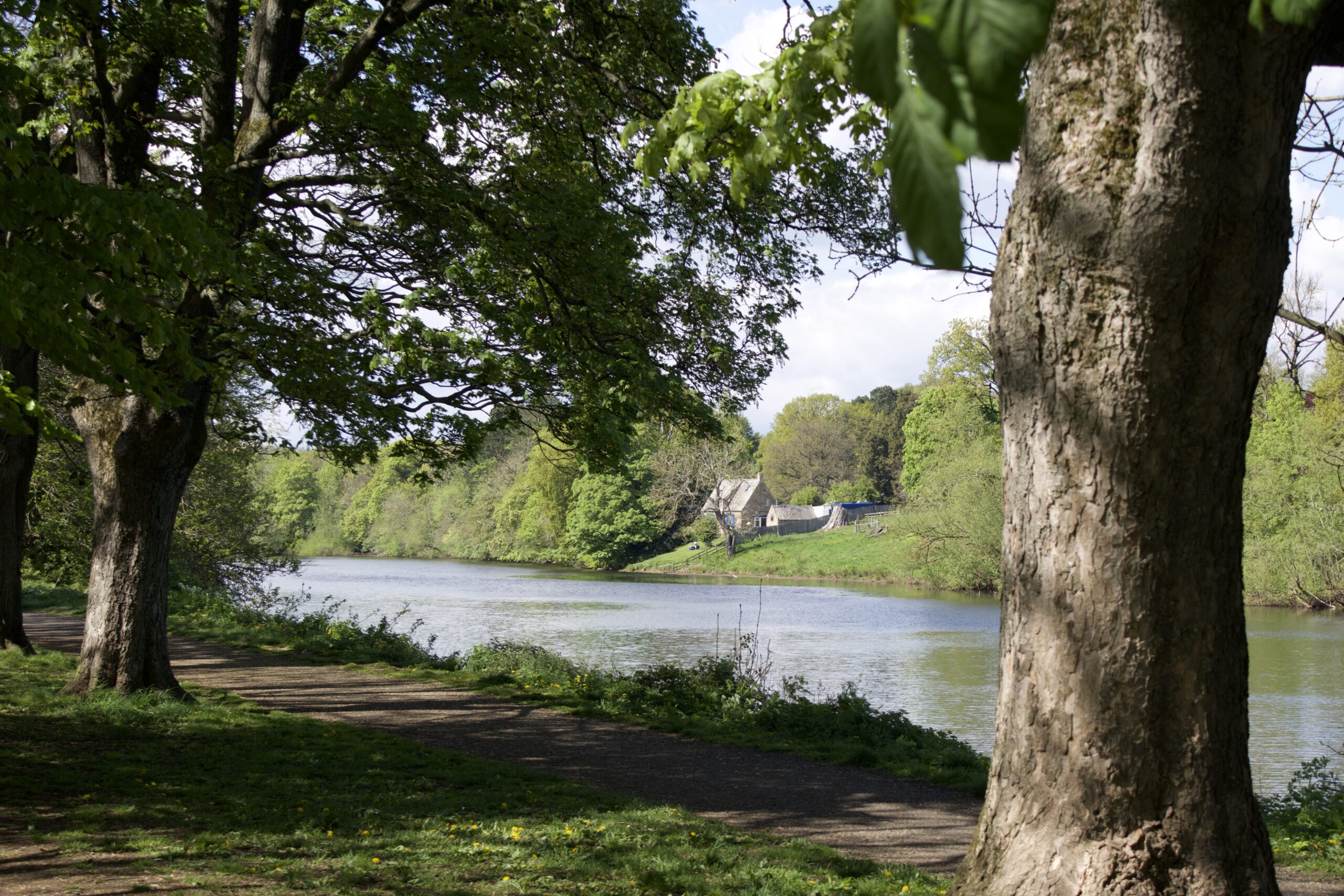
On the bank of the river in 

early October, I fall fast 

and in love with Living. 

It is a prayer– 


when I fall to my knees

in the grass, when

the trees dance in the wind,

and the woods sound like waves.


I pray there for plenty. For 

so much sun, for something to love

like the bank loves the bluebells

and the water-mint. To care because 


I can, to love because I must.

When I die, as I know I will– 

let it be here, let it be

like this. With the wind in


the trees and the dance like the

waves. Let it be kind.

I can only be as gentle as 

A prayer on my knees by the river.

Categories
Poetry Uncategorized

Ode to the End of the World 

Ode to the End of the World 

The road is long, 

it arches softly like the back 

of a cat on a hot day 

basking in the sun 


and I think we’re lost. 

The sun is setting 

or maybe it’s the middle of the 

day, but the birds — 


they are awfully quiet. 

I think the trees are 

drowning and the dust 

is hurting my eyes 


but you can hold my hand 

(please hold my hand) 

Time is a slipping like so 

much sand through my fingers 


my legs are tired our legs 

are tired. Come, we should sit down but 

I love you and I love you 

and that is all there is


The Wind 

The leaves are dancing; a waltz 

with the Wind in late afternoon. 

For a beat they are gentle, then 

the Wind missed a step — 


she is clumsy, experience can only 

teach so much. The leaves don’t seem

 to mind, they press on to the sound 

of the bell. It tolls in the distance, 


and the Wind finds her footing, 

if only to tell the leaves of Her stories 

— of children playing and lovers 

dancing, of the hymns they sing to find 

their God 


but they do not know (and for this, 

the Wind laughs) that their God is all around them; 

hiding in the whisper of the Wind 

for this is her very own hymn — 


in the dance of the leaves, 

and the beat of the waves as they find 

the shore, again and again and again.

Quiet now, the Wind slows her waltz 


and whispers something for 

only the leaves to make out.

It can be only love, truth be told. 

This is all she knows to do. 


Ode to a Home I Do Not Have 

Four walls, a table and two chairs the

 doors make do with the hinges — 

they laugh, but it sounds, 

to the untrained ear, like a creek. 

A fire burns somewhere off-stage, 


they can’t quite tell if it’s the 

mantle or the heart of the girl

upstairs. 

Regardless, it is warm and 

the walls are painted ivory; the 

curtains hang in green. A bookshelf 


stands tall in the corner, not dusted – but

not unclean. One shelf boasts stamps and 

pens and envelopes; 

the books are read to be shared.

A cat is stretched out on the floor 


by the window — her black fur 

kissed brown by the sun. 

She would swallow the sun if 

she could — I would give it 

to her on a plate. 


The present and the past meet 

in the middle, here. Nothing lasts

forever, but for now feels long enough.

Stay here for now, please. 

Come — the kettle is on.