Categories
Reviews

Down the Rabbit Hole: A Magical Musical Tumble – The Durham Opera Ensemble’s Alice’s Adventures in Wonderland

By Freyja Hollington

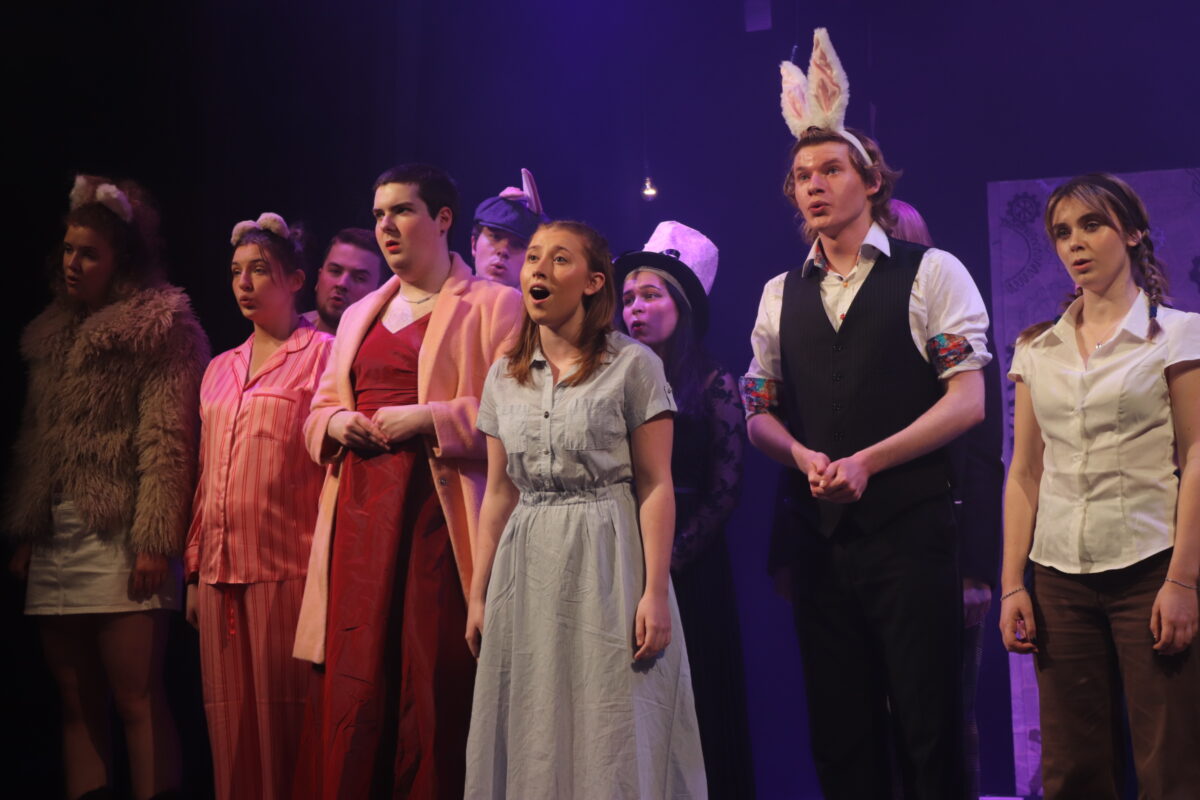
The Durham Opera Ensemble attain brilliance and professionalism in their masterful production of Will Todd’s Alice’s Adventures in Wonderland. The technical promise of the performance is anticipated in the thrill of the exposed orchestral accompaniment, which gradually breathes music into the theatre. The strength of the band is matched by the performers themselves, as the whole assembly weaves an intricate tapestry of symbiotic sound, with voice and string and brass raising goosebumps and thrilling audiences. 

The transformative work of the production team is foundational to the success of the performance. There is an intricacy of thought and detail which brings Wonderland to life, as towering flowers, playing-card-mushrooms and suspended butterflies spill over the stage and into the audience. In a particularly enchanting detail, book-pages cascade from the ceiling to mimic our heroine’s tumble down the rabbit hole. Such a self-conscious reverence for storytelling works as a constant thread throughout. The backdrop is transformed into a large storybook, whose pages are turned by the discrete ministration of the Stage Management team – Leon Ansorg, Aoife Bowles, Lily Beetles, Izzy Richards and Isabelle Owen – effecting a series of act breaks like the turning of a chapter. A very warm congratulations is due to Co-Set-Designers Libby Simpson and Eva Ryan for such visionary detail, and to the talented Set Production Team who realised their dream: Sarah Richardson, Veritas Dubik and Becky Hale. Included in their applause must also be the artful management of lighting, delivered excellently by Lighting Designer Zac Jackson and Lighting Operator Val Devereux, without whose technical contribution the brilliance of the set would have lost lustre. 

Such sensory delights are intensified by the accompaniment of the band, whose talented ministrations make the production breathe. The score is itself a delicate medley of classical and jazz, with the conventional operatic sections achieving haunting levels of tension that are brilliantly offset by the funkiness of blues. Such moments of musical summit are especially delivered through the success of the Cello, played by Tom Shaxson, and the Drum Kit, mastered by Isaac Short, and their gravity is balanced in the perfect airiness of Keys, played by Patrick Owen, and the Tuned and Auxiliary Percussion, delivered by Dan Hume. The Violins, provided by Cameron Davies and Katherine Iveson Vandy, and the Viola, played by Charlie Lineker, give body to the score, assisted by the strength of the wind instruments of Flute, by Emma Phipps, Alto Sax, by Annie Sullivan Qosja, Trumpet, by Leo Vernaglione, and Trombone, by Thomas Pennington-Arnold. In the playfulness of the Accordion, played by Sam Caskie, the intensity of the ensemble becomes grounded in childhood wonder, innate to the nostalgia of Wonderland. The band are themselves a united body, working in oneness to enthral and ensnare, and this is a credit to the success of Conductor Zac Smith. 

When the cast of performers joins the enchantments of the stage, the magic is complete. Every voice compels attention and emotion, and the power of projection is astounding. The opening scene is a particular showcase for the extraordinary talent of Maia Harris Lindop, starring in the dual role of Mum and Mad Hatter, and her co-star Ash Marshall as Dad and Queen of Hearts. In the ironically dysfunctional domestics of the real world, Olivia McClintock and Eleanor Barnes provide skilled hilarity in the comedic relief of the Two Brats, and as their dreamed mirrors Tweedledum and Tweedledee. In his role as the White Rabbit, Sammy Jarvis is sensational, bringing the world of Wonderland to life with a voice that is almost transportive. Nonsensical and psychedelic, the delivery of the Cheshire Cat by Francessca Fitton elevates this dream-realm, with Fitton’s mastery of physicality and facial expression matched in power by her strength of voice. 

Amongst the chaos, the chorus provide lucidity of narrative, as the figures of Daphne, Scarlett, Velma, Norbert and Fredrick give interludes of exposition and cogence that guides audiences through absurdity; excellently sung by Isabelle Bruce, Mathilda Ketterer, Izzy Cochrane, Ben Glover and Joe Wilson. Likewise, the exceptional talent of Kiera Barrett delivers brilliantly the guiding roles of Bottle and Duchess, with Barrett’s voice promising the potential of aria, and yet seamlessly blended with the community of the wider cast. The Caterpillar, performed by Fred Walmsley, intensifies the elements of jazz included in the production, in a clever adaptation of the traditionally intoxicated bug reflected in Walmsley’s play with voice. The tea-party retinue offer similar moments of hilarity, as the Dormouse played by Hannah Mayes and the March Hare performed by Matthew Dodd become comical victims of the Mad Hatter. In his secondary character as the White Knight, Dodd offers striking moments of physical hilarity whilst maintaining skilful control of voice.  In the starring role, Eleanor Brown shines. Brown lavishes audiences with exquisite song, expressive and controlled. Alice is especially alive in the heights of the musical score, where Brown’s clear and bell-like soprano most excels. Though undeniably accompanied by the brilliance of the wider cast, the sustained excellence of the lead is to be commended, and in every scene Brown attracts the focus of the performance. Delivering Alice’s Adventures in Wonderland with exceptional success, the Durham Opera Ensemble outdo themselves, performing with a calibre and talent far beyond the expectations of an amateur company – they have achieved magic on stage.

Featured Image – Durham Opera Ensemble
Categories
Travel

A Weekend in Monopoli, Apulia

By David Bayne-Jardine

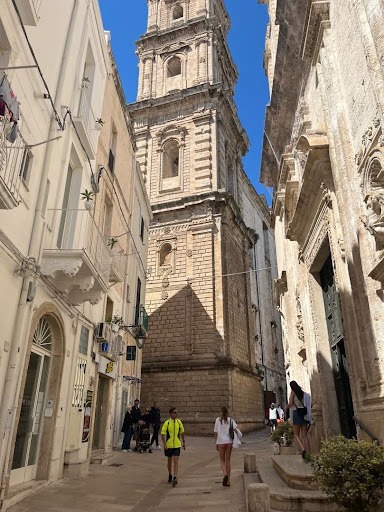
In search of a weekend break from the stuffy heat of Bologna, my Erasmus friends and I find ourselves in salt-cured, sun-bleached Monopoli – a small coastal town in one of Italy’s southern and less-travelled regions, Apulia. That morning, mindful of our student budget (and less considerate of our body clocks), we caught a 6 am flight to Bari – the capital of the region – before heading down to Monopoli on a 30-minute train journey. 

 Perched on a boulder on a rocky beach, I dig my fingers into a fresh ciabatta roll, pulling the top and bottom apart to reveal the soft, moss-like interior. Tearing open a packet of mozzarella with my teeth, the milky brine spilling out onto the rock below, I arrange the fresh cheese on the bread. I space out chunks of a bright, fleshy tomato on top before smothering it all in fresh pesto. As I tuck into my beach sandwich, its freshness reminds me of the unequivocal vividness of life in southern Italy; that sensory intensity that makes it feel as if everything is being experienced for the very first time.  

 If Italy resembles a high-heeled boot, then Apulia runs from the lower calf to the bottom of the boot’s high heel, with Monopoli sitting perfectly where the wearer’s heel would be. In fact, just like a heel, Monopoli itself is something of a bridge between top and bottom – it has the basic tourist infrastructure present in the north of Italy, but nevertheless maintains that distinct southern aesthetic of white-washed buildings and a daringly slow pace of life. 

   Gone are the frescoes of Florence, the gondolas of Venice, the snow-capped Alps.  Places like Monopoli are a reminder of how Italy only recently became the country we know today, having been cobbled together in 1861 from wildly different cultures, each with their own languages, landscapes and lifestyles. Whilst tourist numbers are gradually rising in this gem of a town, it remains relatively untouched – according to recent figures it’s the fifth most visited place in Apulia, which itself registers as only the ninth most tourist-heavy region in the country. 

 Hungry after swimming in the crystalline waters, we amble down a bright but narrow street in search of a snack, mistakenly timing our perusal with the daily southern siesta. Scouring the shuttered shopfronts, we eventually stumble upon a small window serving panzerotti to take away. These local delicacies are essentially fried pizza turnovers that are stuffed with tomato, mozzarella and other specialties. We devour these whilst sitting on the old fortified walls, trying not to drip hot tomato sauce on our white shirts as we watch sailboats meander lazily across the horizon. 

   Licking sauce off my fingers, I notice the salt that seems to coat everything in this town, from lips, hair, and forearms to the bleached exteriors of the buildings.  With its advantageous position on the Adriatic Sea, the town historically played an important role in trade and commerce. To this day the sea remains fundamental in the daily lives of the Monopolitani, who take any opportunity to bathe in it, roast themselves on rocks, or enjoy some of the freshest seafood Italy has to offer. 

   Admittedly, there isn’t all that  much for a tourist to do in Monopoli, but leaning into the slow pace of life and appreciating what we usually take for granted is a central tenet of southern Italian philosophy. The town is ideal for a weekend break, or to stop off on your way to see the rest of Apulia and the south. A few days is the perfect amount of time to spend uncovering the town’s quaint churches and shops, lounging on its beaches and getting lost in the narrow, lamp-lit alleys.

   One evening we set up camp in a local bar, sipping Aperol under low-voltage fairy lights that glistened off our jewellery. A harpist plucks away in a nearby piazza, his music underscoring the locals who sit around us, passionately conversing in the thick local dialect that is so far from the straight-laced northern Italian we are used to. With a glass of wine in one hand, they gesticulate with a cigarette in the other, the hot tip of it darting through the night like a firefly. We share a silent joke among the seven of us, broad smiles tugging at our lips. It can’t get much more Italian than this.

Featured Image – David Bayne-Jardine

Categories
Poetry

Yearnings of a Diaspora Kid

By Noor Al Huda Younes

I think of you everyday.
My body’s receptors ache for the overwhelming sensation
of your stimulating sounds and smells.
My face has never felt the reviving glow of the sun
except in your presence,
my hair has never been so lovingly brushed by the wind
except with you.
Colours are not as breathtakingly vibrant,
the sky is not a brilliant shade of cloudless blue,
fruit is not a luscious explosion of sweet and sour,
except with you.

My body has memorised the rhythms of the repetitive movement
of your palm trees,
the harmonious beeps
of cars in post-Maghreb traffic,
the indescribable smell
of the Damascus air;
a combination of humidity, of jasmine, of energy, of home.
The complexity of the diaspora struggle.
How difficult it is to be with you,
how difficult it is to be apart from you.
The push-and-pull mimics that of two lovers intertwined in an emotionally burdensome union.
Yet,
I would always choose to belong to you.

Through the pain, the loss, the heartbreak, the distance.
I will only
belong to you.

Featured Image: Honor Adams

Categories
Creative Writing

Frank the Snail

By Robertha Green Gonzalez

The idiom goes: there are plenty of fish in the sea. 

But things were never that simple, because Frank was a snail. 

Not just any snail, either. Frank was a store-bought snail, living in a fish tank in Gary’s flat. Gary was a university dropout whose primary contributions to the world at that point were an overwatered spider plant and a lingering cloud of cheap marijuana smoke. 

Frank believed in love. He tried for love. But love, as a snail, is a difficult thing, prospects being what they are: limited and slippery. Not that Frank had nothing to offer. He was a hard worker, possessed a respectable shell, and came from a fine background. By which I mean he’d been raised in a rather high-end pet shop, the sort with clean glass tanks, with no yellow mould creeping in at the corners. He wasn’t your bargain bin £3.25 snail, oh no. Frank had cost £4.75. As far as he was concerned, he was top dollar. 

The trouble was, the tank was small. Too small. And the other inhabitants, those fish he admired from across the plastic castle, never seemed to stay long. He couldn’t understand it. Each time, he would notice one, admire them, imagine a future of quiet companionship at the bottom of the tank – and then gone. Off to somewhere else, somewhere bigger, somewhere freer. 

Frank didn’t know why. He only knew that, time after time, the fish he loved refused to stick around. And so he stayed, watching the water ripple, telling himself there were plenty of fish in the sea, even as the truth pressed in on the glass walls around him: 

There was no sea. Only Gary’s tank.

What Frank never understood, what no one ever told him, was that fish love fish. Always have, always will. And no matter how polished his shell, how steadfast his devotion, how utterly sincere his slow, circling affection… he would never be a fish. He would always, always be a £4.75 snail.

Featured Image: João Costa

Categories
Travel

From the Rockies to the Ocean

By Matthew Squire

It all started in Denver, the conclusion of a visit that was supposed to last a week, but quickly turned into two, spent in a small college town north of Boulder surrounded by friends. I’d just finished another summer of work in Northern Michigan, three months spent among dense forest, sleeping in a shuttered cabin and taking my morning bath in the lake, watching the sun rest on top of the trees to my east and the steam rise up off the lapis waves of Torch. 

It felt different this time. I’d spent three weeks of that work in the wilderness of Eastern Alaska, guiding a group of 16-year-old boys in sea kayaking and backpacking, something I could not help but return to in my head as I set up the ropes course for the 24th time that week. I had agreed to run the ropes as part of a bargain for the Alaska trip, and it was taking its toll on me. I needed to get out of the forest.

Denver was new, all I’d heard came from Kerouac, basement jams and midnight rendezvous with all types of women, seemingly replaced by a multi-storey airport and a skyway that led straight to the plains. I was waiting a while, perched atop of my backpack, containing four months’ worth of possessions and camping gear, waiting on a girl to come and pick me up. It was humid, something I hadn’t expected, and I was sweating under my cut-offs and hoodie, feet mercifully free and somewhat hobo-ish in my sandals, all my cares thrown to the wind after the nomadism of the past months. The woods do that to you, they push you to the boundaries of self-care, unshaven and ragtag, a gang of lost boys, pieced together in a technicolour of bare feet and football jerseys. 

She finally arrived and we bundled across the plains at night, with the promise of peaks I couldn’t yet see falling from her lips, stopping only to experience some American culture in the form of a monstrous service station where we stocked up on all kinds of things. After a wonderful piece of car maintenance in the form of duct tape, we headed north, arriving in Fort Collins to the open arms of new friends.

I spent the next week or so sleeping between the backyard and her bed, grateful to be in those arms again, spending my days walking aimlessly around the frontier streets as summer died all around me, hours sitting in front of college bars and the little house on Colter Street. Mornings were spent sat in a beat-up recliner on the front lawn, drinking off my hangovers and watching the freshmen trudge to class in their droves, trying my best to ignore my own return to study in a few weeks’ time. There was something to be done most every night, with frequent trips to the liquor store for yet another case of Miller High Life, a new delicacy I’d acquired since turning 21 in the great country, which served as energy to escape into the backyards of college houses for gatherings aplenty.

Before my trip to Colorado, I had agreed to spend some time in Boulder. Further into the Rockies and some 45 minutes down the road from the new home I’d found in FOCO, I slept on the couch of a friend of Ohioan extraction for a few days before my eventual departure from Union Station on a train bound for Seattle, a decision that was becoming harder and harder to come to terms with. After a short trip around the mountains and a short goodbye, I took up residency on a blown-up mattress in a one room apartment, sick not just from the altitude and resigned to spend my days doomscrolling. I knew I had to go back, and it was with a quick goodbye that I hitched a ride in the back of a truck with a few Carhartt-clad snowboarders back north to the doorstep of the little house on Colter, the door opening to reveal the knowing smile of someone awaiting my return as much as I had awaited hers. 

It ended outside Union Station, my bag at my feet and her face in front of me, an embrace and then she was gone, disappeared into the early morning traffic of downtown Denver as I took my leave between the grand oak doors of the station and headed to my platform. 

What followed was arguably the worst 63 hours of my life, spent hurtling across a continent, with my heart left behind me and only tracks in front of me. My headphones became my most prized possession and I was later informed by Spotify that I had listened to almost two days’ worth of music on my journey, much of it a ‘rolling folk festival’. I was tormented not only by the sounds in my ears, but by what I could see through the scratched-up Perspex to my right, sloping plains, old schoolhouses, naked drifters bathing in rivers, vast forests and grand canyons, taunting me in scale and leading my mind back to the glaciers of Alaska, the forests of Michigan and the warm bed back in Colorado that my body was aching for.

I woke up somewhere in Northern California to a screaming baby, with the sun rising on the Cascades and my legs stiff from being still for some 45 hours of travel prior, the forest was blurry through my morning eyes as I got up to head to the viewing car in search of a coffee and something to eat. We rumbled over the border to Oregon, and I felt somewhat at home in the damp forest of the Pacific Northwest, the railroad facing single-storey homes with broken-down pickups and half-finished choppers in the driveways reminded me of Upper Peninsula Michigan, where people lived apart from society, unbothered by the nation. I dreamed of a future here, me and her, something out of a Neil Young song, racing down the cedarwood highways with her head on my shoulder and her hand in my hair, drinking in one-room bars and playing pool until time was called.

The train trudged closer to Seattle, passing through Portland and into Washington State, Mount Rainier growing ever closer in the canvas of my window, open fields giving way to car dealerships and homeless encampments, a brutal reminder of my return to society after so long apart, dragged kicking and screaming along the tracks back to the land of high-rise and the scream of life, all I wanted was to be screaming at the stars with a beer in my hand and her impression in the grass beside me.

Featured Image – Amtrak

Categories
Perspective

See Me: A Brown Girl in a Scarf 

By Samara Patel

I remember the last day I spent outside without a hijab. The frigid gasps of winter were fading into a peaceful springtime. Meditating on my forthcoming decision while meandering down cobbled walkways, I remember feeling the wind rake nails against my scalp, tousling hair chaotically around my ears and mouth. I felt small, lost in a sea of people who didn’t know my commitment to my faith, the most important part of my life. They saw a girl with brown skin drowning in her decisions with a furrowed brow, and I didn’t know if they saw anything past that. I didn’t feel free without the headscarf; I felt exposed and vulnerable, small and forgettable. 

My first week of wearing the hijab outside, I kept having the feeling of being watched. I would walk hurriedly through campus, trying to outpace the sun on my way home through the easy spring air. Cherry blossoms unfolded overhead, the serene sight dampened by my rising self-consciousness. With the hijab draped over my head and shoulders, dress fluttering shyly in the wind, I tried not to scrutinize every look thrown my way, wondering if every mutter and muffled laugh was targeted at me. I wondered what generalizations were being piled onto me, if they thought I was oppressed, if they thought I was judging, or rude, or a thousand other stereotypes. 

This feeling of being watched, scrutinized because of my visible difference to the rest of society, wasn’t new. Prior to proudly wearing my Muslim identity, I had grown up as an Indian-American girl in the white suburbs of Chicago. Before I ever learned that the skin I wore was different from everyone else, I found myself drawn to the few other girls of colour in my elementary school. We never acknowledged the force that had drawn us together, never said out loud that, for some reason, we felt more comfortable around each other than our peers. We didn’t understand the implications of race, and maybe we were better for it – it was totally fine that most of the kids in our class went to the same church camp and their dads played at the same country club. We had each other when we wanted to share stories of our nanis’ cooking and favourite Bollywood songs.

I was made very aware of my differences in high school. One frustrating afternoon spent in our white-majority school, my Filipina friend ranted to me that she wished she was “just called a slur” instead of experiencing the institutional, hidden racism that made us both feel unwelcome in a way that was impossible to articulate without sounding paranoid. At that school, both of us had felt that bone-deep certainty that we were treated differently than everyone else, but carried around the awful feeling of “what if” – what if that teacher didn’t mean to be racist, what if I really am that bad of a student, what if my feelings aren’t valid? What if nobody will believe me? 

It was the same pseudo-paranoia that had been following me around for weeks after putting on the hijab. I am incredibly proud of my religion, but also incredibly aware of the assumptions now placed upon me by people who had never met me. The first friend I met up with after putting on the hijab asked me, eyeliner drawn thickly around concerned eyes, “Did your parents make you wear that?”

I had laughed slightly, my smile fading once I realized that she wasn’t joking. I took a calming sip of the hot chocolate in front of me and made myself actually consider an answer. “My mom doesn’t wear the hijab, actually. It’s her choice whether or not to put it on, to dress as covered as they want. I choose to dress modestly because I like being known by my faith.” I twisted my lips to the side, considering. “Just like how your goth clothes,” I gestured to her fashionable all-black ensemble, “let people know that you’re a theatre kid with great taste, my hijab lets people know how I conduct myself, just like my Indian jewelry lets people know that I’m proud of my heritage. I choose to dress in a way that displays my identities, and how happy I am to represent them.” 

She pouted at the thought that she was goth and we laughed it off. She never brought up the subject again. One night a few months later, preparing to walk home from the library into the frigid air, she turned to me while tying her scarf into a balaclava. “Can you teach me how you do your scarf? I want it to look elegant like that.” 

I remembered our conversation in the spring a few weeks after making the big decision. I was walking with my mother around the quiet streets of my American hometown, a green scarf covering my head, a blue scarf covering her shoulders. “You’re already all the way in England, beta. What if something happens to you? What if someone tries to attack you because you wear a hijab?” 

I smiled at her gentle, protective prodding. “I’ll be okay. I’ve been a brown girl in this town,” I flung my arms out, gesturing to Chicago, “for my whole life. I already know what it’s like to be scared around people who might not understand me.” She pursed her lips. “I know, I know you’ll be careful.” She paused, collecting her words. “It’s a brave thing to do. I’m just so worried about you.”

I hate that I have to carry my mother’s worry around. I hate that I can’t tell her about my hijabi friend who had her scarf pulled off, violently, suddenly, in the middle of the street just a town over from my university campus. I hate that her worries have so much validity. 

“By the way,” a full smile returned to my mother’s face, “I know some Indian moms in the community who want a ‘good Muslim girl’ for their sons.” 

I laughed, well aware of the trope. Yes, I wear hijab with mindfulness, and I know the stereotypes that come along with it. But I am not a “good Muslim girl,” and my mother knows that. I am not good. I am passionate, I’m angry, and I cry during rom-coms that aren’t really that sad. “Good Muslim girls” don’t exist, they are a colonial figment of the collective Western imagination. It’s the idea of every Muslim man who doesn’t take into account how difficult it is for their daughters and sisters to be “good”, to be polite all the time knowing that the second she shows a bad temperament in public, it reflects badly on her entire religion. 

My mom knows the kind of girl I am. The day I flew home from the UK to the US that fateful spring, I landed in the ever-bustling O’Hare airport. I was wearing a comfortable black hijab and fidgeting with it while listening to my own pounding heartbeat. I hadn’t told my parents 

about my decision to put it on, and was nervous about what they might think. I knew about my mom’s fears, and also my dad’s indifference to the whole idea – in the Indian family he’d

grown up with, hijab was a choice not made by many, and I wondered if he would mirror my mom’s reaction. 

They didn’t say anything about it at first, just welcomed me home with open arms and squeezing hugs. It was only after we got onto the highway when my mom started, quietly. “I had a dream about this.” 

“About what?” I questioned nervously, still fidgeting with a frayed edge of my scarf. 

“I had a dream last night that you came out of the airport wearing a hijab. And you looked… you look so grown up.” She smiled, tears in her eyes as she looked at her daughter, the girl that she knows so well. 

I stopped being self conscious about being stared at since then. The people that love me understand that putting on the scarf never changed who I was – it just made me less invisible, made my identity more clear, and put the declarations I’ve made to my God at the forefront of who I am. 

The ability to be seen for who I really am is why I wear my hijab, why I wear Indian jumkahs and eat paneer and celebrate Eid. It makes me feel at home, protected from gazes that seek to put me in a box. The people that love me, know me – and I hope anyone staring at me in public, transfixed by my brown skin and modest clothes, will know who I am as well.

Featured Image – Honor Adams

Categories
Creative Writing

Fermain Bay, 2018

By Edward Clark

We woke up at five and walked to the beach. The sea was cold, cold to the touch as I strode in first, feeling the cool, slippery rocks beneath my feet. I brushed the glossy surface of the pebbles and the smooth wrack as I plunged, plunged my right foot into the water, listening to the sound of the waves washing over the burnished stones skipping on my left, the sound of the first seagull squawking. The water was dark; calm. I braced myself and 

                                                                     my teeth chatter with perseverance. My knees, waist – deep breath – stomach. There is a certain peace in the dark: the sky sunless, the water cold, cold to the touch of my collarbone. I look into the void, but all I hear is the sound of splashing feet behind me, the sound of my heart beating higher and higher in my chest as the heat of my heart warms the ocean as I raise my feet up, away from the slimy stones as my left pinky toe narrowly misses an urchin sleeping on the pink granite teeth bared ready to fight. My words stop. My shoulders, chin, eyes submerged and merged invisible in the deep. I surface, laugh. My hand grazes my naked chest and feels the braille on my skin 

                                            my body was so cold my teeth chattered uncontrollably my soaking hair in my eyes my fingers pitch purple my arms lilac. A wave broke over my head. I laughed the sea out of my nose as we walked home towards the sunrise.

Featured Image – Honor Adams

Categories
Reviews

El Espectáculo de Medio Tiempo del Super Tazón: The Histories Behind Bad Bunny’s Halftime Show

By Nicole Ruf

They want the culture, not the immigrant. 

They will stream the music, push it up the charts, but never protect the bodies that make it. They want rhythm without remittance, spectacle without the subject, pieces of our culture in their country, but not us. 

Lest we forget: America is not a country, America is a continent. Maybe two, depending on who draws the map. 

Benito says it plainly: together, we are America. His claim is not new, either; José Martí wrote Nuestra America over a century ago, Silvio Rodríguez then played it on his guitar, Residente now repeats it in stadiums. The argument always: the continent does not stand under a single flag. 

El Gran Tazón (The Super Bowl) has long served as liturgy to U.S nationalism: corporate excess baptised in red, white, and blue. Historically, a space both white and anglophone. To step onto that stage in Spanish, to dembow, under floodlights usually reserved for ‘The Star-Spangled Banner’, is no accident nor mere aesthetic choice; it is intervention, and it is political. 

It is a claim to stolen land, exploited land, land worked, plowed, and nurtured by migrant hands. It unfolds at a moment when immigration is once again framed as invasion. Eduardo Galeano knew to warn us that the North depended upon the extraction of the South; silver, sugar, oil, labour. Our veins remain open. Now the mining is cultural: reguetón everywhere, streams and ticket sales and halftime show; the rhythm circulates freely, the people do not. The irony should not be lost on us: one Latin body is welcomed onto the most-watched stage in the country, others detained and deported. 

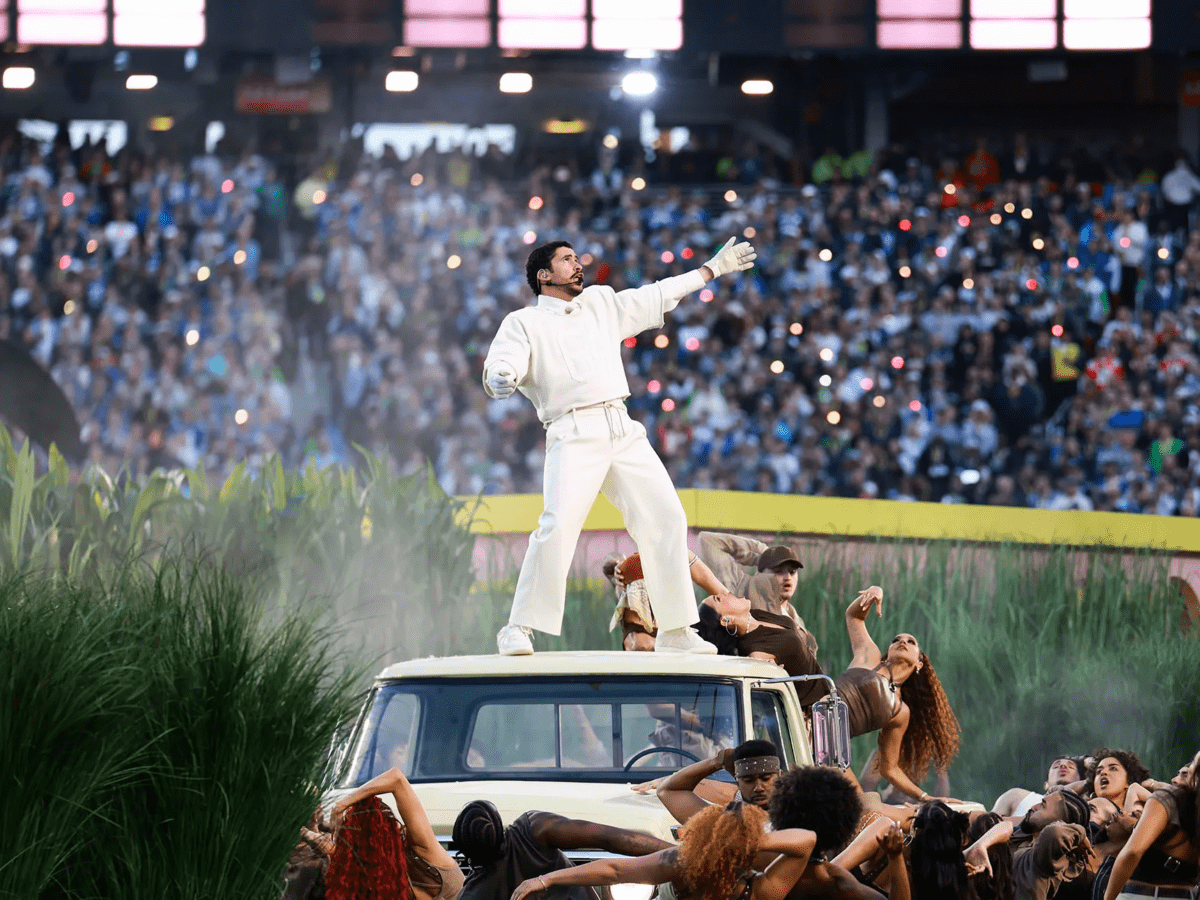
Bad Bunny’s show unfolds in constant motion, shifting from song to song, and scene to scene, transitions far from arbitrary. His setlist is deliberate architecture, each song laid carefully in constructing a history: 

LA MuDANZA (the move) 

The show opens with movement; salsa and colour. Why translate ourselves when we express everything perfectly in our own tongue? From the first strum it is clear this performance is not asking to be understood, it is demanding to be witnessed. 

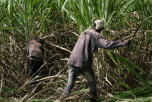
We are engulfed by sugarcane and suddenly we are somewhere humid, somewhere worked. It feels García Marquezian; Macondo in a NFL area, a place both marginal and mythical. Latin America has always occupied that paradox: peripheral in geopolitics, indispensable to global imagination. They want all the magic, and none of the realism. 

The stage feels like a stifling tropical summer, and the sweat on worker’s brows. Heat is aesthetic, but it is also historical.

Mauro González / Netflix
Pedro Farias-Nardi / Mother Jones 
NFL / Bad Bunny’s Apple Music Super Bowl Halftime Show

 Tití Me Preguntó (Tití asked me) 

Benito appears, dressed in Zara; not couture, not luxury. An accessible brand, found in the fluorescent aisles of shopping centres across continents, and a Spanish-owned one at that. His value does not depend on elite approval. 

It is Latin America’s economy on full display. Behind this moment sit the tienditas: street food vendors, liquor shops, nail salons; that “informal labour”, migrant labour, that sits at the backbone of the U.S economy. 

Yo Perreo Sola (I dance alone) 

The casita is decorated with Latin icons; Karol G, Pedro Pascal, Jesica Alba, Cardi B, all your favourites in one place, all of them Latin. Look how far we can come, all that we can build. To see ourselves centre stage, is to shift the frame, and the power. 

Kevin Mazur / Getty Images 

Perreo, it turns out, can also be political; to move the body and occupy space. Latina women flood the stage; frizzy hair and thick thighs, real, sexy. Not diluted or softened, not assimilated into something palatable. They are bodies I recognise. To see them like this, desired and desirable, self-possessed, does something tender, it feels like being seen. 

“Las mujeres en el mundo entero, perreando sin miedo” (women across the world, dancing without fear). In a country where women’s bodies are legislated, to dance like this is to reclaim sovereignty.

Safaera (chaos; or the moment during a party where things tip over into it) 

This is this generation’s Gasolina, it saw us through adolescent parties and coming-of-age. We all know the lyrics, I know because I mouth them as I watch, and the stadium shouts them back. It had to make the setlist, and we are glad it did, even those of us who think ourselves feminists (sure, the lyrics are questionable). But that, too, is part of it. Culture is not curated for moral purity, it is contradictory, chaotic if you will, but it unifies us with its chaos. 

VOY A LLeVARTE PA PR (I’m going to take you to PR) 

If anything, Benito has been taking us to Puerto Rico since the show began. I watch from my kitchen before a morning lecture, ten thousand kilometers from home, and yet, suddenly, I am there. He falls into a living room: a family gathered around a television. It feels familiar, recursive. We watch them watch him, and in doing so, watch ourselves. 

His jersey reads Ocasio, Benito knows where he comes from. Tego Calderon, Don Omar, Daddy Yankee; the patriarchs. He names his lineage. “Están escuchando música de Puerto Rico, de los barrios y los caseríos” 

(you’re listening to music from Puerto Rico, from the hoods and the villages) 

EoO (literally: on occasion, or a cue given before a beat drops) 

And then the dembow; the body understands even before the mind. If there is one thing Latinos know how to do, it is move (there is a joke there I will leave for you to find). 

MONACO 

“Buenas tardes CalifoLnia, mi nombre es Benito Antonio Martinez Ocasio” 

(Good afternoon, California. My name is Benito Antonio Martínez Ocasio) 

The intentional use of a full name, the stereotype spoken out loud, and then a reminder: “Y si hoy estoy aquí en el Super Bowl 60 es porque nunca dejé de creer en mí. Tú también deberías de creer en ti, vales más de lo que piensas, créeme” 

(And if I’m here at the 60th Super Bowl today, it’s because I never stopped believing in myself. You should believe in yourself too, you’re worth more than you think. Trust me.) 

He breaks the fourth wall, for an instant the performance recedes, and the man remains. 

The American Dream has been sold as: work hard, rise alone, transcend your origin story, and you may succeed, you may belong. 

Die With A Smile 

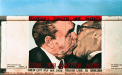
What follows is a display of belonging as Latinos conceptualise it. A (real) wedding ceremony on the halftime stage, the knot tied between a Latina and an American. They kiss, and like a kiss on the Berlin Wall, their marriage is a symbol of the collapse of borders. Intimacy where rhetoric insists on separation. A kiss for peace. 

NFL / Bad Bunny’s Apple Music Super Bowl Halftime Show
Joachim F. Thurn / Bundesarchiv

Lady Gaga is no coincidence either; a globally famous English-speaking singer with a globally famous English-language song enters a Latin space. Anyone is welcome at a Latin wedding. You dance alongside the family. The tías (aunts) dance cumbia, the tíos (uncles) are already drunk, the children asleep in makeshift beds between chairs. Benito also dances with her. 

BAILE INoLVIDABLE (unforgettable dance) 

To us, these dances are almost forgettable, precisely because they are so ordinary. We dance at weddings, and in kitchens, and on streets, and everywhere. But ordinariness becomes radical when movement is policed, to dance without fear is no small demand, and yet Benito urges us: “Baila sin miedo, ama sin miedo” (dance without fear, love without fear). 

NUEVAYoL 

The stage obeys, they dance. It is theatrical, a musical number refracted through diasporic memory: perhaps West Side Story, perhaps In The Heights. The American Dream feels staged within reach. 

Antonio RIBEIRO / Gamma-Rapho via Getty Images

A tribute unfolds: Willy Colon, Frida Kahlo, those trumpets! Toñita, named in the song, now standing there, in front of him, hands him a shot, and “PR se siente cerquita” (PR feels so close). 

NFL / Bad Bunny’s Apple Music Super Bowl Halftime Show

 Benito hands over his Grammy; it belongs to us all, to those who listen, to the children watching at home who look up to him, to his inner child too, perhaps, and to all those children who are now living in fear. 

LO QUE LE PASÓ A HAWAii (what happened to Hawaii) 

Quieren al barrio mío y que tus hijos se vayan” (they want my neighbourhood, and for your children to leave). That Ricky Martin sings this matters, a voice our mothers grew up with, a Puerto Rican idol shaped by American industry and polished for export. He opened a door in the 90s, when ‘Latin explosion’ meant temporary fascination. Benito does not ask for fascination. He now walks all the way through that door and closes it; we no longer need subtitling.

El Apagón (the blackout) 

Electric poles and risky jobs; infrastructure turned symbol. What keeps the States united: building, repairing, cleaning, maintaining. The blackout is no metaphor. Puerto Rico knows this too well; a colony left waiting for power to be restored, political and electrical. 

Immigration in the United States is not a crisis of numbers, but a crisis of ethics. Migrants sustain the nation’s infrastructure while being systematically denied its protections. 

Benito holds his flag, and his country, high. He climbs upwards, and at the top, a lyric cuts through everything: “Ahora todos quieren ser latinos, pero les falta sazón, batería y reguetón” (Now everyone wants to be Latino, but they lack seasoning, battery/drums, and reguetón) 

And then, a targeted warning: “Cuidao con mi corillo, que somo’ un montón” (careful with my crew, there’s a whole lot of us). 

NFL / Bad Bunny’s Apple Music Super Bowl Halftime Show 

CAFé CON RON (coffee and rum) 

The first few notes and something stirs, my soles itch. I want the dim light of a club, voices hoarse, someone’s arm heavy over my shoulder. I want the bitter coffee my father brews in the mornings, and the rum and coke poured generously before we step out into the night. Ours has always been a culture of effort and enjoyment in the same breath. 

Flags rise from every corner of the stage, and something tightens in my chest; pride, anger, homesickness, then pride again. Everything converges now; the flags, the songs, the story, the way we do, inevitably, even scattered across continents. 

“God bless America.” He says, and names it properly: 

Chile, Argentina, Uruguay, Paraguay, Bolivia, Perú, Ecuador, Brasil, Colombia, Venezuela, Guyana, Panamá, Costa Rica, Nicaragua, Honduras, El Salvador, Guatemala, México, Cuba, República Dominicana, Jamaica, Haití, Las Antillas, United States, Canada, and Puerto Rico 

He does not abbreviate, so neither will I. 

Kevin Mazur / Getty Images

DtMF (I should have taken more photos) 

He ends with the song everyone knows, even los gringos, and feelings just as familiar. Not a naive plea for unity, but rather something of a challenge: togetherness requires seeing and being seeing. 

They jump, shout, laugh, sing, because despite detention centres, policy debates, headlines, we are excessive with life, and joy, and above all, we are most certainly, loud. 

Power is rarely threatened by silence. It is not coincidental that the performance drew criticism from certain political figures, whose careers are built on policing borders, territorial and epistemic. But sound refuses containment. 

Sound travels, and apparently it crosses borders. Latin America has always been an act of sonic resistance. 

The only thing stronger than hate is love.

Featured Image: Kathryn Riley / Getty

Categories
Culture

Between Limerence and Ambivalence: A Visit to Nan Goldin’s The Ballad of Sexual Dependency

By Emily Mills

(Trigger Warning: domestic abuse)

Cheap booze and melancholia drip from bedframes. Heady cocktails and bodily fluids spill on weathered velour quilts. There are a lot of breasts, but not in an erotic way. At least not for the most part. 

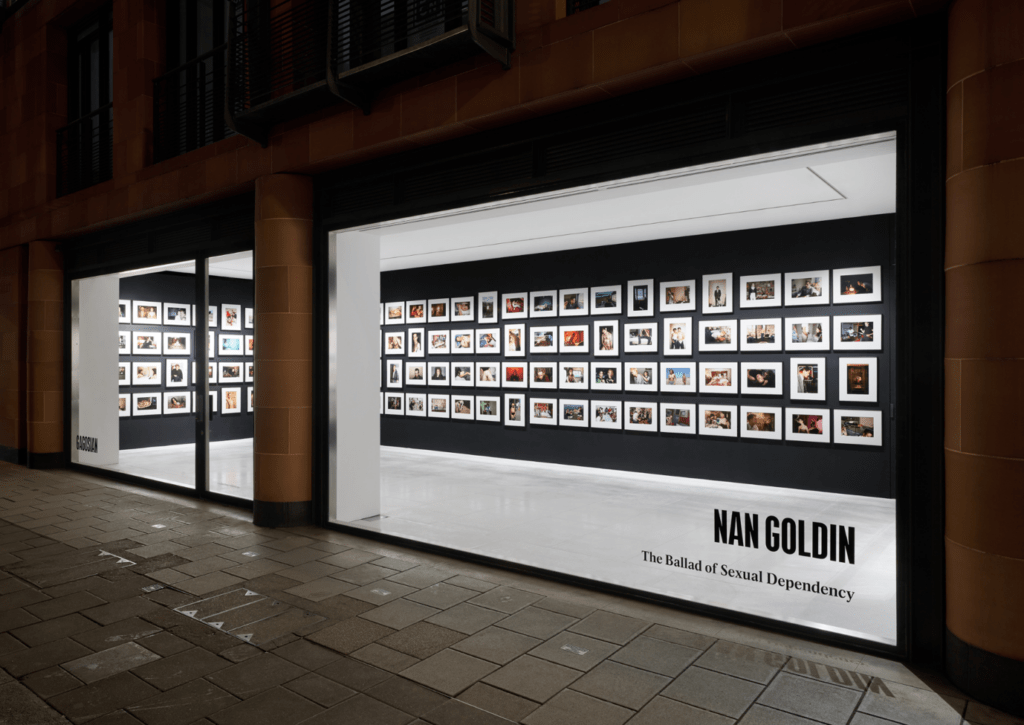
This is Nan Goldin’s The Ballad of Sexual Dependency, forty years on from its original publication. Magnum opus of the Boston photographer, The Ballad depicts the beautiful spectre of Free Love in 1970s NYC. Enchanting yet poignant: the Gagosian’s (13 January – 21 March 2026) display of 126 photographs had me mesmerised.

Goldin’s Ballad is a world where the line between friends and lovers blur. Trust is ubiquitous and judgement is distant. The sordid passion of 70s underground New York is hard to ignore. It sparked much thought as I left the exhibition and stepped back out into the manicured streets of Mayfair. 

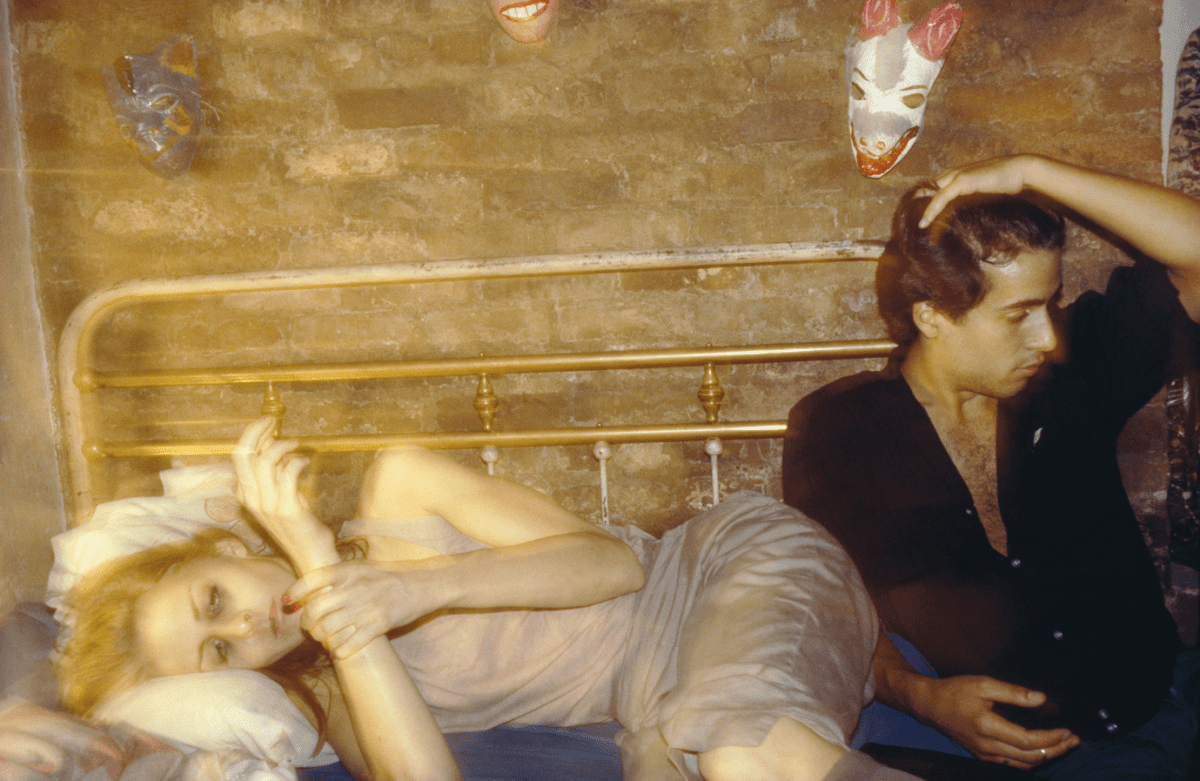
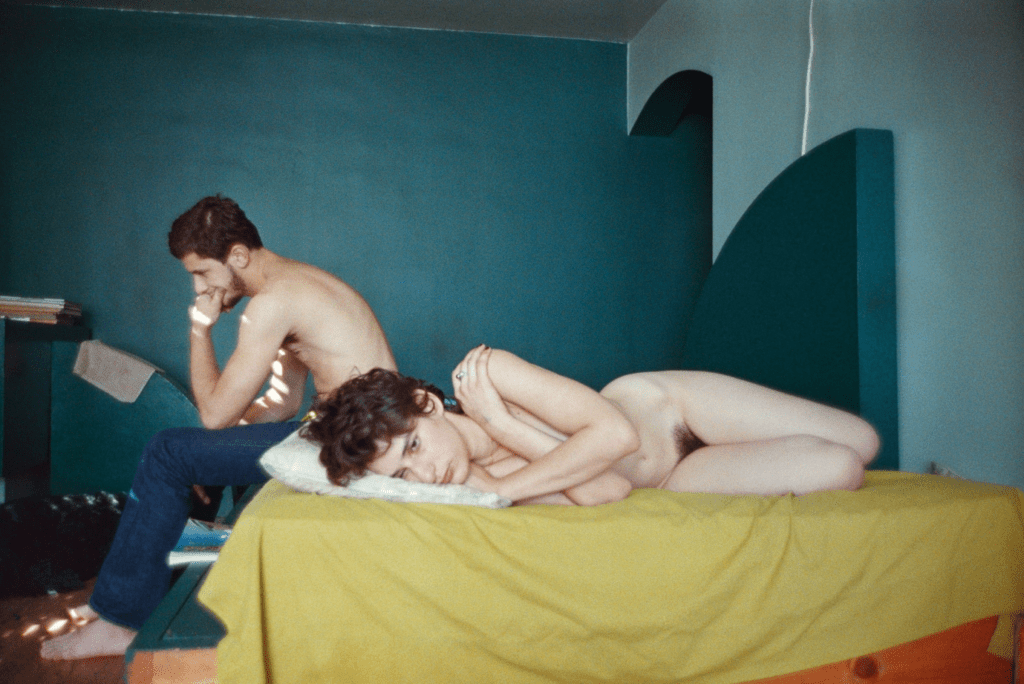
Couple in bed, Chicago (1977). Credit: Nan Goldin / Gagosian

Much of the collection challenges heteronormative structures in both subtle and overt ways. Goldin figures this volatility into the collection’s titular ballad form, also derived from Brecht and Weill’s 1928 The Threepenny Opera.

The sex-fuelled ruminations of the Couple in bed, Chicago (1977) are raw. Their gazes are melancholy. The couple may as well be Marianne and Connell in Normal People. Though these ones aren’t paid actors, nor actors at all for that matter.

Goldin’s ‘actors’ are friends or lovers, or both. Had she even wanted to pay her subjects, it wasn’t an option financially. Indeed, she once exchanged a sexual favour for a taxi ride to develop her spool of film (All The Beauty And The Bloodshed, 2022). 

Nan One Month After Being Battered (1984) is a visceral confrontation with domestic abuse, in self-portrait form. It is an act of survival. A vulnerable yet defiant rejection of shame. Her striking red lipstick echoes her bloodshot eye. This image helped stop Goldin from returning to the violent relationship. It’s a deeply personal exploration of the complex interplay between love, violence, unsuitability and dependency.

Nan one month after being battered (1984). Credit: Nan Goldin / Tate

Dependency rules over these scenes. Fair to say dopamine is unlikely to be the only thing the subjects are addicted to. Addiction either to love or drugs. Likely both. They’re indecipherably intertwined. The Ballad was first projected onto walls in downtown New York. These early slideshows were accompanied by a not very ballad-like soundtrack. Think more Femme Fatale by the Velvet Underground. The installation places all the images in proximity on three walls. I had anticipated this curation to dissipate the rawness of Goldin’s photography. Instead, it intensifies its intimacy. The viewer is overwhelmed by the searing mix of desire and pain.

Installation view with Nan Goldin, The Ballad of Sexual Dependency (1973-86). Credit: Prudence Cuming Associates Ltd / Gagosian

Such impassioned emotion mustn’t be overly glorified, however. Living in a far freer time than that of the 1970s, we are free to pursue love with far fewer barriers to self-expression. The more melancholic images also remind us of the fearful uncertainty that surrounded the early days of the AIDs epidemic, and the love that was to be lost to ravaging illness. The image titled Greer and Robert on the Bed, New York City (1982) depicts a lovers’ tiff, rendered in the blurred ghostliness of a waif-like Greer Lankton. 

Drug dependency has defined much of Goldin’s work, in her material art and the art of her activism. Goldin herself, having recovered from heroin addiction in the 1980s, found herself in the throes of an OxyContin addiction in 2014. Being prescribed the drug after wrist surgery, she quickly became hooked. She then flipped the temptations of ruination into a force for advocacy. She has succeeded in overturning status quos in the art industry, campaigning against the Sackler family empire. The family have long financed galleries worldwide, all while covering up the evil source of their success: the ‘snowstorm’ of prescriptions. The 2022 film All the Beauty and the Bloodshed follows Goldin’s militant activism against the opioid crisis. Goldin’s P.A.I.N (Prescription Addiction Intervention Now) campaign has included making prescriptions ‘snow’ from balconies at the Guggenheim. Another: a mass die-in at the Met Museum, accessorised by prescription bottles in the central water feature. Her campaign sparked a momentous movement from museums to reject Sackler funding and begin removing their name from gallery wings.

The Ballad long preceded Goldin’s activism against the Sacklers. Confronting the romantic dependencies of her subjects led me to muse on how shallow the dopamine hits of the 2020s are. By comparison, we’re living in a time of chronic ambivalence- ambivalence to a fated suburban banality, knot tied and two kids in tow. 

The neoliberal gamification of love is sweeping people up. This gamification of love, in turn, becomes the gamification of emotion. Indeed, reducing feelings to something swipeable felt like a useful shortcut to romance at first, but today’s generations see this reductionism as the status quo. There is no space for the melancholia of Kafka’s Letters to Milena. Instead, blue light dopamine obstructs the space for melancholy. Or ecstasy, for that matter. We funnel any of our remaining energy into ego-bruising and possessive electronic dating. In neoliberalism, every aspect of love is commodified, digitised and datafied. The apps facilitate a dangerous impunity. And so, we struggle to reconcile the paradox of possessive monogamy with intimate disposability.

Goldin (1986) underscores that men and women are unsuitable to the extent that they require each other. This captures the perils of interdependency, even as yearning outweighs the unsuitability. I think what I love about this description is that it helps us understand how irrational love is. In turn, it vindicates love. Dependency is unhealthy, but also sustaining. Limerence is both the peril of this unsuitability and the urgency of unrequited intensity. 

This intensity of feeling is now the topic of scorn by TikTokers, who have co-opted the term limerence to demonise romantic infatuation. Originally coined in 1979 by Dorothy Tennov, the term is discussed in its dual nature. She likens it to addiction, while also stressing its fundamentality to human nature. She claims its force ‘to power the very revolution of the planet’ (Tennov, 1998, p. 33). Yet, co-optive self-proclaimed therapists online provide advice on how to purge and quash these feelings, seeking to rid people of their hopeless romanticism, while ironically profiting from it- encouraging an emotional anaesthesia. Like the gamification of love, people are attempting to formulate a rational response to romance- or worse, an apathetic response. The visceral passion of Goldin’s Ballad is being eroded by this digitalisation of love and empathy. You see, TikTokers urge us to fear this limerent state. 

Bygone Ballads on unrequited love have been replaced by the demonisation of affect and melancholy. ‘Self-help’ in a play too hard to get era, instead pushes us to walk away. To shuffle towards a chronic ambivalence, leaving heartache to actors on big screens. Over-rationalisation of feeling is symptomatic of our world’s roboticization. After all, the only thing we will always have over AI is true emotional intelligence.

The perils of succumbing to a digitised apathy run far deeper than just repressed heartache. We face a wider risk: the tendency to anaesthetise affect by resorting to an emotional ambivalence. Goldin’s subjects so powerfully remind us that emotional tumult is fundamental to the human experience.

Bibliography

All The Beauty And The Bloodshed. 2022. [Film] Directed by Laura Poitras. United States: Praxis Films, Participant, HBO Documentary Films.

Goldin, N., 1986. Photographer Nan Goldin Interviewed by Aperture’s Mark Holborn [Interview] (Summer 1986).

Tennov, D., 1998. Love and limerence : the experience of being in love. 2nd ed. Lanham, Maryland: Scarborough House.

Featured Image: Greer and Robert on the bed, New York City (1982). Photograph: Nan Goldin / Gagosian

Categories
Poetry

Transatlantic Valentines Poem

By Serena

I have been thinking about your dreams.

I want to be America like I want to be beautiful

I know I am England– 

I am sorry as England is sorry, I am small as England is small 

with its unfashionable hat and its aversion to genitalia

I watch you in the mirror – you are all lingerie and cellulite

Marilyn’s mandibles and tobacco blondes

My England looks in the mirror and sees only its own eyes

We would never work

You are always writing songs about Travis Kelce–

I, elegies for the Daily Mail.

You are waiting for me in Hooters and I seem to be a chicken bake in the Greggs display fridge.

You are the Kardashians and

outside of London I am mainly Croydon.

I cannot keep up with your pyrotechnic televangelists, 

Your pharmaceutical genius, jam-filled centre,

your endless campaign that insists upon itself.

America is dilated and eager

Licking your lips, where is your shame?

I do not understand how you can chew your mouth is so full of teeth

The sun never sets. 

I am just as red as Florida and I am with you always in Rockland–

We both know it is not enough!

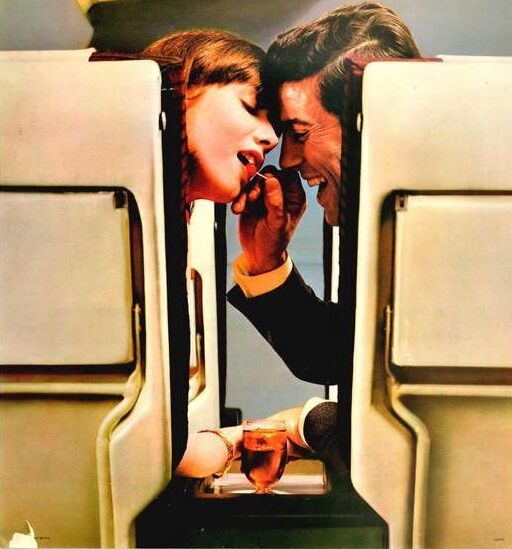
Featured Image – BOAC