Categories
Culture

Les Rouges et Noirs: Interwar Cross-dressing in the Public Eye

By Edward Clark

Today, gender variance is politicised. In the West, the liberty of transgender people and drag performers continues to be restricted by socially conservative politicians who see a minority population as a political football. For conservatives, resistance to gender variance is often connected to tradition and a belief that subversion of gender norms is a modern phenomenon. Cross-dressing revue troupe Les Rouges et Noirs, a critically acclaimed group made up of World War One (WWI) veterans, suggests the opposite – that a century ago, male gender variance was a commercialised form of entertainment with mainstream appeal.

‘The most attractive girl with short dress’

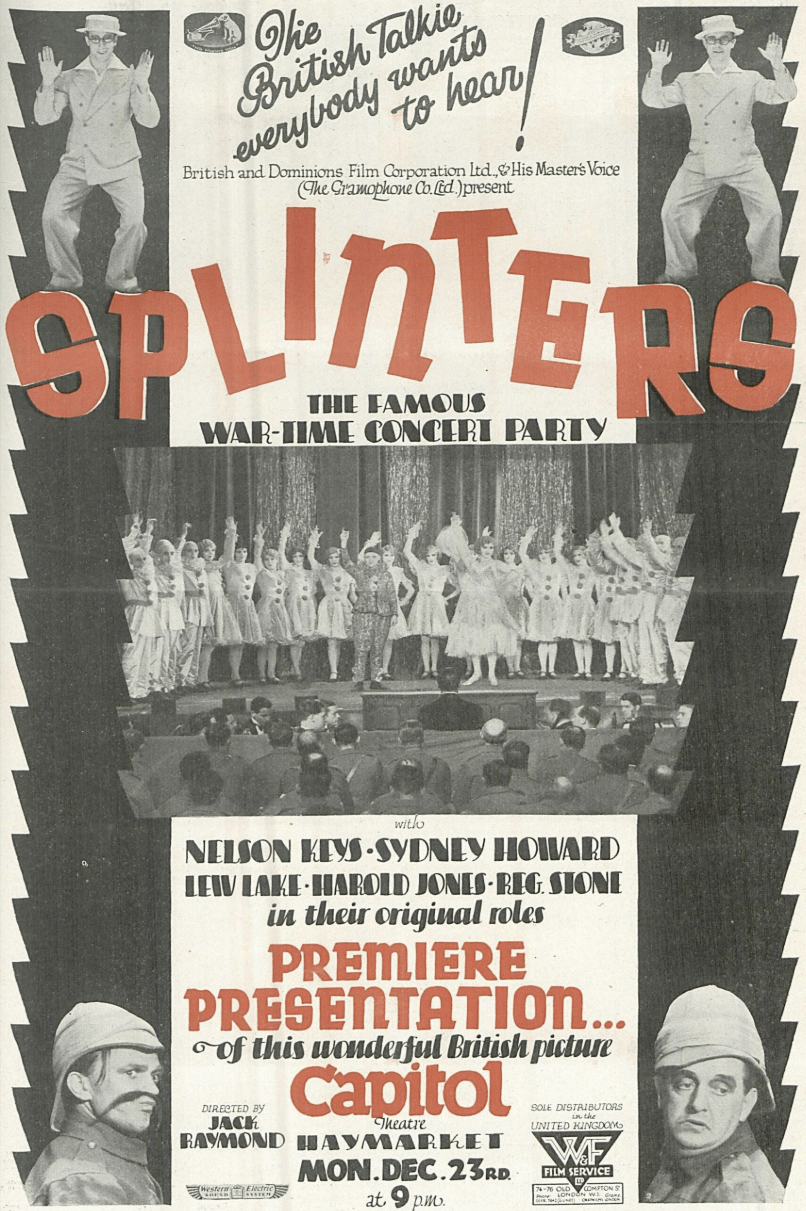
After refining their act during the war, where they performed at concert parties for other soldiers, Les Rouges et Noirs toured their debut show Splinters across England during the 1920s and 1930s, releasing a film of the same name in 1929. Rather than performing a mocking stereotype of femininity, the troupe were celebrated for the accuracy and sexual allure of their feminine beauty. In a 1919 review of Les Rouges et Noirs’ performance at the Savoy, the Evening Standard celebrated how lead performer Reg Stone ‘makes up into the most attractive girl with short dress’ and a ‘bewitching smile’.¹ The Times similarly lauded how the ‘illusion [was] wonderfully good’ and the audience refused to believe the performers were men until they removed their ‘golden tresses’.² The ‘real sex’ of the performers was an aspect drawn on comedically by the revue and Stone in performance. The show was alternatively titled Which is Which in reference to the sex of the performers, and the 1929 Splinters film contained a scene where a ‘Stage Door Johnnie’ pursues Stone to his dressing room after being enticed by his feminine appearance.³

Les Rouges et Noirs were extremely popular. The troupe performed to sold-out audiences across England and at Windsor Castle for King George V. Further, Les Rouges et Noirs’ cross-dressing performance was successful enough to inspire post-WWII veteran cross-dressing revues: Soldiers in Skirts and Forces in Petticoats both became widely popular.⁴ The mainstream appeal of Les Rouges et Noirs and its post-WWII successors rested on their ability to connect home front audiences to the experiences of soldiers. The troupe’s name itself, Les Rouges et Noirs, was a reference to the regimental colours of the First Army – red and black. Splinters was also key in expressing patriotic memory. Director of the Centre for the Cultural History of War, Ana Carden-Coyne, has argued that visual language was the ‘vernacular’ of wartime memory – this is exemplified in Splinters.⁵ By watching material which had been performed on the front lines, audiences felt connected to the soldiers they revered. In an article in London Life, writer Charles Dryhurst noted that he ‘admire[s]’ Reg Stone ‘so much’ because he helped British soldiers to ‘forget for a moment that there was such a thing as a front line’.⁶ A review of Splinters at the Savoy by the Pall Mall Gazette suggested that the performance was more enjoyable because it had ‘eased the monotony of life at the front for thousands of our fighting men’.⁷ The repeated use of war imagery in performance and on screen invited audiences to engage with patriotic wartime memory.

‘16 Soldiers and Every Soldier an Artiste’

The performers’ veteran status protected them from accusations of sexual immorality. Cultural historian Graham Dawson has argued that soldiers were the ‘quintessential figure of masculinity’, and although Stone’s cross-dressing act seemingly opposes Dawson’s argument, his masculine image allowed him to avoid accusations of sexual immorality.⁸ Notably, this was a period of British history where minor deviances from masculine norms were sensationalised in newspapers. After the 1932 raid on a ball at Holland Park Avenue where men were wearing women’s clothing, the Morning Advertiser boldly headlined ‘MEN DRESSED AS WOMEN’.⁹ Cross-dressing in private was also policed harshly. For example, twenty-three-year-old Thomas B. served three months in prison for ‘importuning male persons for an immoral purpose’, with the evidence simply being his possession of a ‘powder puff, powder and a small mirror’.¹⁰ However, at the same time as male gender variance was policed for its association with these ‘immoral purpose[s]’, Reg Stone was performing nightly to sold-out audiences.¹¹

This was facilitated by the ex-military status of the performers, which was repeatedly emphasised in their publicity. The programme for the revue’s 1919 Savoy Theatre performance detailed a story where the soldiers ventured under ‘shells screaming overhead’ to recover frocks left on the front lines – simultaneously emphasising their valour and their commitment to their revue.¹² The importance of the troupe’s military background is reflected in a poster advertising their 1919 performance at the Kennington Theatre, which reads ‘16 Soldiers and Every Soldier an Artiste’ on the left and ‘16 Artistes and Every Artiste a Soldier’ on the right.¹³ The troupe also negated potential accusations of immorality by emphasising that their cross-dressing was purely performative and a ‘huge joke’, as stated in their own promotion. In the Splinters film, Reg Stone’s onstage femininity is juxtaposed with his offstage masculine traits, as he is pictured smoking a pipe and removing his wig backstage. In the aforementioned scene where a soldier enters Stone’s dressing room, Stone is assertive, responding ‘Well what do you want?’ and ‘Now hop it!’ in a deliberately masculine tone, emphasising the divide between performance and reality. This has comic intentions: the soldier is embarrassed once he realises Stone’s ‘true’ sex. However, it also functioned to make clear Stone’s lack of effeminacy, and defuse potential connotations between cross-dressing and sexual immorality. The framing of the film itself as a ‘fly-on-the-wall’ depiction of the troupe’s wartime performances allowed for this distinction between performance and reality; through this juxtaposition, Stone and the other performers made clear their lack of effeminate or otherwise perverted traits offstage.  

‘Of course, they get love letters’

Whilst the soldiers sought to protect themselves from accusations of sexual immorality, the homoerotic undertones of the troupe’s performances should not be separated from interwar LGBTQ+ communities. Reg Stone was interviewed by London Life, a well-circulated magazine which gained popularity due to its kinky subject matter.¹⁴ Cross-dressing was frequently addressed in the magazine’s regular correspondence column, and although these stories deliberately avoided sexology, they were told from a fetishist lens.¹⁵ Photos of cross-dressed members of the public were even included in some printings.¹⁶ Stone’s interview with this magazine indicates his appeal to those with a personal interest in cross-dressing themselves. Although the interview was largely concerned with Stone’s technical skill as an ‘impersonator of the fair sex’, complimenting his ‘distinction and artistry’ and lauding him as ‘the cleverest artiste of his kind in the country’, it was conducted to appeal to cross-dressing hobbyists.¹⁷ The troupe even emphasised the homoerotic undertones of their production in promotion. The programme for their Savoy Theatre performance in August 1919 bragged about how ‘of course, they get love letters’ from male admirers.¹⁸ The Splinters film includes moments where soldiers overtly flirt with Stone in female dress – Stone makes flirtatious eye contact with a soldier, eventually blowing him a kiss which the soldier mimes receiving. The cross-dressing performers adopted female dress, female mannerisms, and female social roles through implicitly sexual relationships with men.

Les Rouges et Noirs subvert modern arguments that gender variance is a twenty-first-century phenomenon. The troupe show that cross-dressing was a mainstream and popular facet of British interwar culture. Les Rouges et Noirs also challenge a popular narrative within LGBTQ+ histories of Britain: that queer expression remained largely ‘invisible’ and underground before the post-WWII gay liberation movement.¹⁹ The Splinters tour and film emblemise a unique moment in British history, as its cross-dressers simultaneously represented soldier-like masculinity and an idealised femininity. Whilst many modern politicians want to keep trans and gender-variant representation out of the limelight, it is clear that British history may not be as simple as they want to make it: a century ago, cross-dressers headlined the Savoy and performed for the King.

ENDNOTES:

¹ ‘“Les Rouges et Noirs”: Army Entertainers’ Programme at the Savoy’, Evening Standard, 5 August 1919, quoted in Jacob Bloomfield, ‘Splinters: Cross-Dressing Ex-Servicemen on the Interwar Stage’, Twentieth Century British History, 30.1 (2019), pp. 1–28 (p. 20).
² ‘Les Rouges et Noirs’, The Times, 5 August 1919, p. 8.
³ Bloomfield, ‘Splinters’, pp. 12, 21–22.
⁴ Bloomfield, ‘Splinters’, p. 26.
⁵ Ana Carden-Coyne, Reconstructing the Body: Classicism, Modernism, and the First World War (Oxford University Press, 2009), pp. 82–83.
⁶ Cross Dressing between the Wars: Selections from ‘London Life’, 1923–1933, ed. by Peter Farrer (Karn Publications, 2000), p. 247.
⁷ ‘“Splinters” at the Savoy: Capital Performance by “Les Rouge et Noir”’, Pall Mall Gazette, 5 August 1919, quoted in Bloomfield, ‘Splinters’, p. 4.
⁸ Graham Dawson, Soldier Heroes: British Adventure, Empire and the Imagining of Masculinities (Routledge, 1994), p. 1.
⁹  Matt Houlbrook, ‘“Lady Austin’s Camp Boys”: Constituting the Queer Subject in 1930s London’, Gender & History, 14.1 (2002), pp. 31–61 (pp. 31–32).
¹⁰ Matt Houlbrook, ‘“The Man with the Powder Puff” in Interwar London’, Historical Journal, 50.1 (2007), pp. 145–71 (pp. 145–46).
¹¹ Houlbrook, ‘The Man with the Powder Puff’, pp. 145–46.
¹² Bloomfield, ‘Splinters’, p. 10.
¹³ Poster advertising the revue Splinters, Kennington Theatre, 15 September 1919, Victoria and Albert Museum, Theatre and Performance Collection.
¹⁴ Lisa Z. Sigel, ‘Fashioning Fetishism from the Pages of London Life’, Journal of British Studies, 51.3 (2012), pp. 664–84 (pp. 664–65).
¹⁵ Sigel, ‘Fashioning Fetishism’, pp. 665, 672.
¹⁶ Sigel, ‘Fashioning Fetishism’, p. 670.
¹⁷ Cross Dressing between the Wars, ed. by Farrer, pp. 249–51.
¹⁸ Bloomfield, ‘Splinters’, p. 20.
¹⁹ George Chauncey, Gay New York: Gender, Urban Culture, and the Makings of the Gay Male World, 1890-1940. (Basic Books, 1994), p. 3.

Featured Image: Splinters (1929) on Letterboxd

Categories
Reviews

bitknot, feeble little horse: Review

By Edward Clark

feeble little horse are the outlier. Not only possessing one of the greatest band names maybe ever, nothing else sounds quite like them. Their newest album pushes this musical boat out even further. Crunch and distortion are balanced by shimmering vocals and enchanting melodies, transforming bitknot into a sonic kaleidoscope.

The first album without founding guitarist Ryan Walchonski, bitknot wears the band’s new three-piece structure on its sleeve, exchanging cascading guitar melodies for more synthesisers and more chaotic post-production. This instrumental decision is mirrored in every layer of feeble’s branding – check out their website or the series of eleven music videos made for each song on the album. A digicore aesthetic is inseparable from the band’s identity. On their two previous full-length releases, Girl with Fish and Hayday, the blend of this experimental production with lo-fi rock and pop cemented feeble as a band blurring genres to produce something wholly unique. But, with bitknot, feeble little horse has broken the boundaries of genre altogether. I don’t know what genre the album is, and it seems like the band aren’t sure either. They are label-less. Lead vocalist Lydia Slocum used to call feeble a ‘noise pop band’, but now they just call themselves ‘a band from Pittsburgh’. 

Chipmunked vocals, heavily distorted guitar lines, and digital synthesisers support Slocum’s gentle delivery. The end result is a twenty-five minute album which shifts seamlessly from intense drone to twinkling melodies. bitknot makes up for the short runtime through a tight structure where no song outstays its welcome. Catchy, sub-two-minute tracks such as Paris or Poison are made up of snappy hooks, repeated a few times and sometimes connected by a bridge. The pace is quick and the album varied. Slocum’s vocals are so delicate, so hypnotic, that they provide a necessary balance to in-house-producer and multi-instrumentalist Sebastian Kinsler’s heavy mixing. The sheer detail in each song’s instrumental makes bitknot sound very muddy through most speakers. Through headphones, however, this detail is what makes the album so addictive. Guitar riffs, droning chords, and intense percussion which verges on blast beat, are supported by digital twinkles, glitches, and abrasive noise. 

Like many of the band’s hyperpop contemporaries – Nanajirachi or 100 gecs, for example – bitknot is a response to everyday reliance on technology, both sonically and lyrically. Digital dissonance is weaponised to emphasise Slocum’s lyrical frustration with consumerism, capitalism, and their ever-prevalence in the modern day. ‘She’s in my feed, I need her clothes, I need her hair’, she sings on Shopping over a repeated deep guitar riff. Her criticism is implicit and her vocal nonchalance a deliberate subversion of the maximalist instrumental. The final track, DMT, stands for ‘Death, Money, Taxes’. Slocum’s previously gentle vocals build to a scream in the album’s final moments, bitknot’s passive anger building to its concluding crescendo. But the listener doesn’t get the release, and bitknot loops back to its opening track Doorway, an intense introduction into bitknot’s digital hypnosis. 

Some listeners have started to categorize feeble little horse as a part of a new genre coined “Laptop Twee”, a rewiring of indie pop with a Y2K aesthetic. We can keep trying to fit new artists into a box, but maybe we should let feeble little horse be who they say they are: ‘a band from Pittsburgh’.

Featured Image: Genius

Categories
Creative Writing

Fermain Bay, 2018

By Edward Clark

We woke up at five and walked to the beach. The sea was cold, cold to the touch as I strode in first, feeling the cool, slippery rocks beneath my feet. I brushed the glossy surface of the pebbles and the smooth wrack as I plunged, plunged my right foot into the water, listening to the sound of the waves washing over the burnished stones skipping on my left, the sound of the first seagull squawking. The water was dark; calm. I braced myself and 

                                                                     my teeth chatter with perseverance. My knees, waist – deep breath – stomach. There is a certain peace in the dark: the sky sunless, the water cold, cold to the touch of my collarbone. I look into the void, but all I hear is the sound of splashing feet behind me, the sound of my heart beating higher and higher in my chest as the heat of my heart warms the ocean as I raise my feet up, away from the slimy stones as my left pinky toe narrowly misses an urchin sleeping on the pink granite teeth bared ready to fight. My words stop. My shoulders, chin, eyes submerged and merged invisible in the deep. I surface, laugh. My hand grazes my naked chest and feels the braille on my skin 

                                            my body was so cold my teeth chattered uncontrollably my soaking hair in my eyes my fingers pitch purple my arms lilac. A wave broke over my head. I laughed the sea out of my nose as we walked home towards the sunrise.

Featured Image – Honor Adams

Categories
Culture

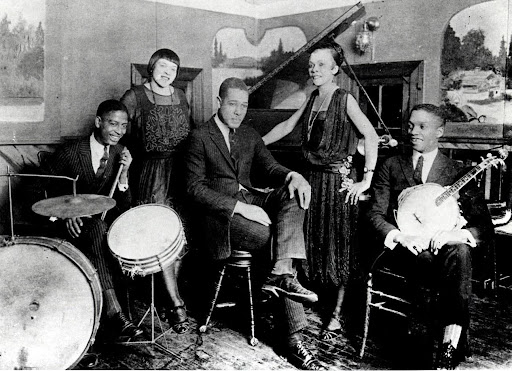
How Speakeasies Fashioned a New Jazz Age

By Edward Clark

“You can say anything want on the trombone, but you gotta be careful with words” – Duke Ellington to the New Yorker, 1944

In January 1920, the United States government passed a total prohibition on the sale of alcohol. Owners of bars either repurposed them into restaurants or shops or were forced to shut them down. In response, speakeasies began to quietly open their doors all over the country. Named for the patrons’ need to ‘speak easy’ when telling doormen the pass-word, speakeasies offered an illicit environment for drinking, socialising, and enjoying performances of the vogue music genre: jazz.

Although the genre originated in New Orleans during the 19th century, racial animosity led to many jazz musicians moving elsewhere. As newspapers like The New Orleans Times-Picayune called the movement an ‘atrocity in polite society’, groundbreaking artists like Louis Armstrong, Sidney Bechet and Jelly Roll Morton moved from The Big Easy to Chicago. There, within dimly lit illicit bars serving homebrewed whiskey and gin, audiences were receptive to New Orleans style ‘ragtime’ – or what audiences were beginning to call ‘jass’.

Speakeasies were the prominent feature of American urban ‘20s social life. In Carl Van Vechten’s 1930s novel Parties: Scenes from Contemporary New York Life, the protagonist Hamish frequents the illicit bars. Van Vechten describes: ‘It was nearly time for luncheon and he had yet to enjoy his first drink. He might, in search of this, visit his club, or any one of the fifty thousand speakeasies with which central New York was honeycombed’. 50,000 may be a small exaggeration – the Mob Museum estimates that at the peak of prohibition there were 32,000 speakeasies in New York. Nevertheless, the large number of illicit bars in one city alone gave way to extreme competition. In order to set themselves apart from competing establishments, owners looked to musicians to draw customers.

Stimulated by a period of extreme social development, urban audiences had the disposable income to support the new genre; speakeasies functioned as vessels to allow jazz acts to experiment and solidify their sound. The best example was at  New York’s Hollywood Club at Forty-ninth Street and Broadway. Patronage from the speakeasy’s owner provided the financial support for Duke Ellington’s legendary ‘Ellington Orchestra’ to form, as the band took on a permanent roster in 1923 and regularly played an evening for four years. These gigs were hard work. As guitarist Freddie Guy commented in a New Yorker interview: “Once you put your horn in your mouth you didn’t take it out until you quit. Until period. You started at nine and played until’. 

Prohibition-era performance like this allowed some of the age’s most notable musicians to cement themselves as the genre’s staples. In Ellington’s case, he wrote some of his most popular songs: ‘Black and Tan Fantasy’, ‘Creole Love Call’, and ‘Birmingham Breakdown’, for example, were all written during his stint at the Hollywood Club. Performances in speakeasies also coincided with the inception of commercial radio, with 600 stations broadcasting by the end of the decade; jazz performances recorded within speakeasies were broadcast to audiences beyond the cityscape.

Often, speakeasies resulted in African-American musicians performing for wealthy white audiences. For example, the Cotton Club, a popular New York club in Harlem, was positioned by its owner Owney Madden as offering ‘an authentic black entertainment to a wealthy, whites-only audience’. As the aforementioned quote from Ellington displays, whilst segregated speakeasies spread jazz to a new, powerful community, popular musicians renowned for their talent were forced to perform without expressing their opinions or politics. By the latter half of the 1920s, however, the illicit nature of speakeasies promoted integration, creating multiracial – or ‘black and tan’ – clubs. Opposing government policy, speakeasies broke down cultural barriers and created an environment where Americans from all backgrounds stood side by side, watching a new jazz age flourish.

Featured Image – The Syncopated Times

Categories
Travel

‘In the Precincts of The God’

By Edward Clark

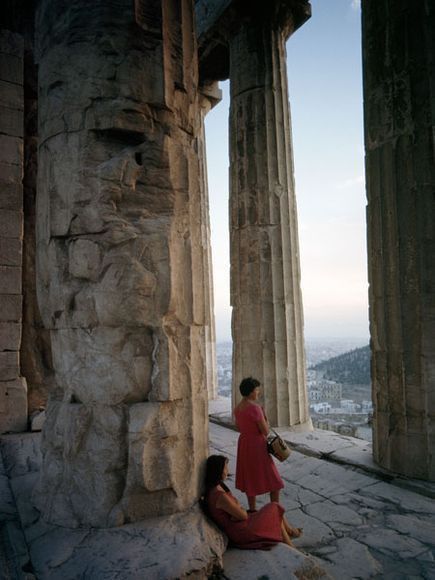
After queueing for half an hour, bringing a bit of British tradition to the centre of Athens, we finally reached the entrance to the grounds of the Acropolis. The memory of midday’s sun was already fading in the uncharacteristically temperate afternoon air. I scanned my ticket on my phone and went through the gate.

‘This is a single ticket’ 

After some discussion with the Greek staff, holding up the line behind us, my dad accepted that he’d failed to buy five tickets and had only bought one. Through the fence, we agreed that I’d get our money’s worth and see the temple. I shouted that I’d see them later and so ambled on: alone, phone dead, sun just over the horizon.

Halfway up the trail to the Parthenon itself, I took a break at a bench, and looked up to find what appeared to be a small shrine, half-derelict. I remembered a poem that I studied at A-level. 

It was midday, mid-May, pre-tourist sunlight / In the precincts of the god. / The very site of the temple of Asclepius.’ 

Despite the fact that it was neither midday nor mid-May, I felt a sort of connection to Seamus Heaney and a nostalgia for my past self who romanticised the site two years earlier. Completely on my own, I had the opportunity to sit and bask in the sunset,  soaking in a pilgrimage site that had been renowned as a place of healing for hundreds of years. 

It did seem a bit smaller than I’d imagined. ‘The precincts of the god’ had stimulated images of a grand sanctuary in honour of Asclepius and Hygeia, not a small room. But no matter. I sat and focused, enjoyed my solitude – pilgrims to the Parthenon walked past, paying no attention to this seemingly inconsequential structure. 

‘They don’t know what they’re walking past.’ I felt a secret pleasure in being the only person to properly admire the Asclepieion. After ten minutes were up, I stood and read the sign- ‘This sanctuary was one of several Asklepieia in the ancient Greek world’. I’d misremembered the poem. The main site was at Epidaurus, a completely different city. And not one we were planning on going to. I moved on, unfazed: my ten minutes meditation didn’t seem any less spiritual.

Image Credit – Pinterest

Categories
Reviews

Review: Danny Brown’s Stardust Explodes with Creativity

By Edward Clark

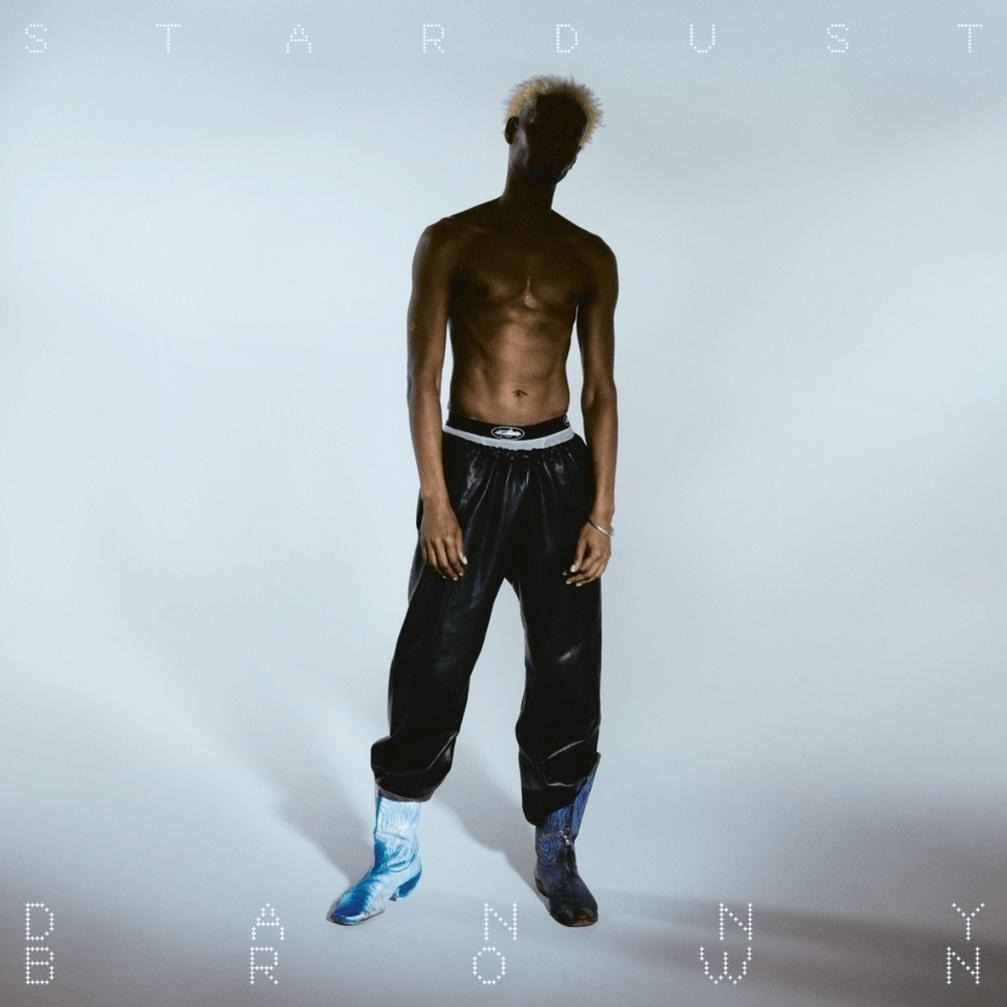
Danny Brown is on an all-time run. For a veteran rapper with over twenty years of experience behind him, Brown shows no sign of stopping, and even less sign of becoming out of touch. Stardust is stuffed with head-turning features. Although he has worked with cult artists Jane Remover and Quadeca before, collaborations with underground artists like 8485, ta Ukrainka, and NNAMDÏ is something unparalleled by any of Brown’s hip-hop contemporaries. As his collaborators frequently express online and in interviews, ‘he’s so tapped into the scene’ (underscores to The Face magazine); Brown’s assimilation of so many up-and-coming artists makes Stardust shine.

This album is Brown’s first ever made completely sober. As he worried to the Guardian in 2023, “I’ve seen so many artists get sober and their music sucks”. His concerns were unfounded: from the album’s first single, Danny Brown showed that he was not letting sobriety hinder his out-of-the-box style. If anything, ‘Starburst’ is one of Brown’s most inventive songs to date. Over a hypnotic beat produced by Holly – a collaborator on Brown’s previous album Quaranta – Brown displays his everlasting ability to rap over seemingly anything. Still as genuinely funny as ever, Brown comes in swinging from the first, wielding ridiculously inventive and memorable one liners. “Better shape up and get them squares up out ya circle” he demands in his first moments, his delivery so potent that you’ll probably consider it. Fantastically confusing songs like ‘Starburst’ are plentiful here. ‘1999’ with JOHNNASCUS is an overstimulating cacophony of glitchy synths and punk-rap; ‘Whatever the Case’ sees Brown and ISSBROKIE take a braggadocious approach over a syncopated, bubbling beat.

However, these outlandish alt-rap bangers are accompanied in equal measure by songs that would not be out of place at a pop club night. ‘Copycats’ features a mesmerising hook by underscores, an artist leading the wave of forward-thinking pop. Her mantra of ‘Rap star, pop star, rock star / Gimme that, gimme that’ is both an earworm and a reflection of Danny Brown’s career trajectory at this point. Stardust is an absolute refusal to be bound by genre. ‘Flowers’ features 8485 singing the chorus with ease, making a welcome accompaniment to Brown’s flora-related punchlines – all over an EDM instrumental which seems to have been sent into your speakers first-class from 2009. This is not to say that Brown relies on features to achieve this new sound. ‘Lift You Up’, a solo cut which functions as the album’s centrepiece, is a head-bopping banger, Brown fitting seamlessly into a Y2K pop-rap hit. 

Whilst this blend of hyperpop and experimental rap may seem like a novelty, Stardust is far too refined to be a gimmick. Indeed, a recognition of the ‘terminally online’ nature of hyperpop is a running theme through the LP. Angel Prost, one half of pop duo Frost Children, provides narration throughout the album, which leans knowingly into online slang. “I essencemaxxed on half-severe vibe casts” she declares, merging the album’s message of self-betterment and optimism with an ironic recognition of the genre’s reputation. Building on Danny Brown’s reflections on his own career, she directly addresses him, and by proxy the listener: “To lighten the jealousy, you compare your star power to others / You jot down all the reasons you’re goated”. As the album develops, the use of internet slang blends with Brown’s actual self-doubt, suggesting that his being ‘terminally online’ is negatively affecting his sense of self. Prost’s narration functions as an embodiment of online criticism. In his sobriety, he’s forced to face his imposter syndrome head on.

Danny Brown ended his breakout album XXX on the line “Doin’ all these drugs, hope an OD ain’t next, triple X’. Thirteen years on, Stardust is an explosive meditation on his career; of all the colour on the album, his gratitude for his success and sobriety glows the brightest. ‘The End’, oddly the penultimate track, is a nearly-nine minute behemoth of a song, combining production from Rye Mann, Cynthoni (better known under her previous alias Sewerslvt), and Quadeca. Over Rye Mann’s mystical beat Brown reflects on his experience with alcohol and drug abuse: ‘Addiction had me by the throat, I couldn’t breathe, just choke’ he admits. The track is broken up by Polish indie-pop artist ta Ukrainka, who sings in Ukrainian and Polish, providing a satisfying balance to Brown’s frantic delivery; as Cynthoni’s overstimulating breakbeat production takes over, Brown is optimistic as ever. “It’s better days, my life got saved, I’m focused on the future”. Sobriety is where Brown is most stable, and as he brags on the album’s final moments, “I’ma keep goin’ ‘til my life is over’. If he keeps going at this standard, the future of experimental hip-hop is in good hands.

Featured Image: genius

Categories
Culture

Interview: Guernsey’s new musical Radio Silence

By Edward Clark

Wayzgoose’s Head of Reviews, Edward Clark, sits down with Laura Simpson and Lydia Jane Pugh – the writers of brand new musical Radio Silence.

This summer saw the world premiere of Radio Silence, a brand new musical about the Nazi occupation of the Channel Islands during the Second World War. Performed locally at the Princess Royal Centre for the Performing Arts in Guernsey, the show received glowing reviews from audiences and critics alike. Grappling with oppression, freedom, and resilience, the musical asks the same questions of its characters as it does its audience: “what would you risk to resist?”. After their first leg of performances, I sat down with writers Laura Simpson and Lydia Jane Pugh to discuss the musical, island identity, and its uncertain future against the backdrop of shrinking arts funding.

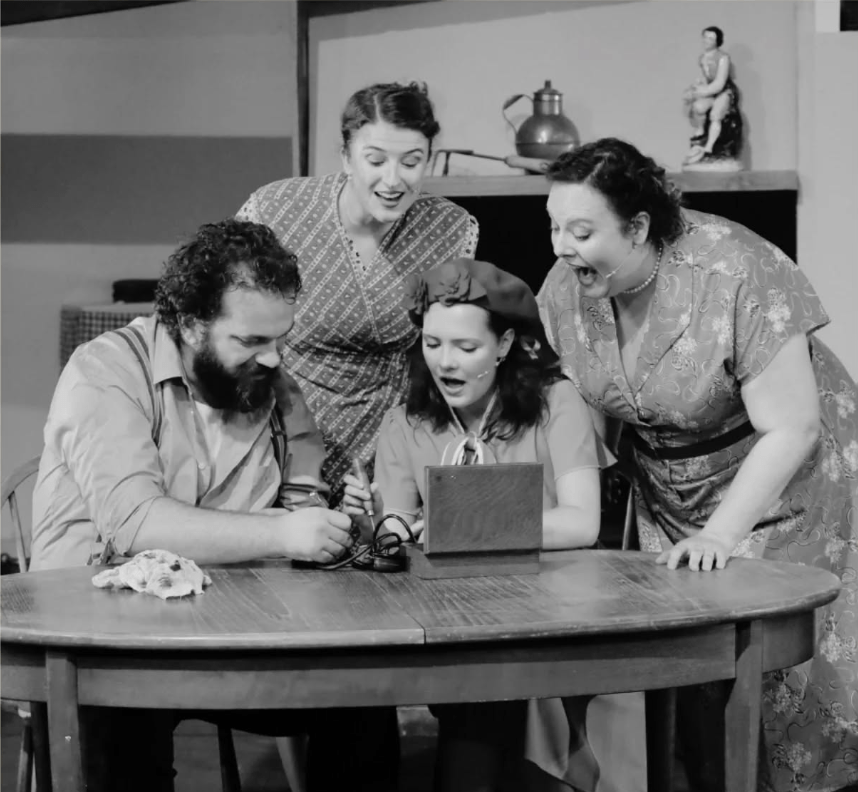
The narrative of Radio Silence follows the fictional Tabel family’s involvement with the Guernsey Underground News Service (GUNS), a secret movement during the island’s Second World War occupation which disseminated British news to islanders, banned from using radios by Nazi invaders. The detailed set of the Tabel family home offers a warm domestic sphere to juxtapose the unforgiving Nazi regime, as rules and taxes are imposed onto islanders. In response to this cold authority, the family begins to rebel. 

The book and music are written by local writer Laura Simpson and musician Lydia Jane Pugh. Blending modern lyricism and raw emotion with period-accurate detail, the musical shines as an exciting exploration of Guernsey’s unique history. In the musical’s first moments, the string section’s discordant tuning transforms into the sound of an air raid siren. The oppressive atmosphere of the bombing of the Guernsey harbour in 1940 smoothly shifts into the opening number ‘Days of June’, setting a precedent for the rest of the play. Lydia spoke about her aim to embed the events and style of the period within the music itself: ‘the song ‘Spin That Dial’ is very much based on the Andrews Sisters, because we wanted that 1940s sound’. All six actors offer outstanding performances, imbuing Laura’s fictional characters with believable and gritty emotion – a believability necessary to match the detailed, period-accurate set. Many set elements were sourced from the Guernsey Rifle and Heritage Society, with genuine WWII identity cards, ration books, kitchen equipment and other elements utilised onstage. Props and costumes were recreated from original occupation artefacts. The generosity of locals speaks to the importance of art like Radio Silence. As Laura tells me, ‘we’re now at a stage where it’s coming out of living memory for the vast majority, and although it’s something that is an extremely traumatic period of our history, I think that because there’s that bit more space now, we can tell a more balanced, more human story’. 

Fundamentally, the musical brings a story to life in a way that actually honours our local community. As Laura tells me, ‘we’ve seen other media interpretations of what Guernsey was like during the war, and they’re all often very inaccurate. And it was just that kind of feeling: why are other people telling our stories when we’ve got fantastic creatives. Our island produces a phenomenal range of really hardworking creatives. Why are we not telling these stories?’. Accordingly, there is a notable effort amongst the team to celebrate the island’s history. ‘I did manage to get a little bit of Sarnia Cherie [our unofficial “national” anthem] into one of the songs, which was so subtle that the violinist didn’t even notice’. An effort to celebrate island identity is reflected in the team’s detailed research, especially concerning accurate names and locations. Laura tells me: ‘that’s the thing that often, other representations have just got so wrong. I took it to the extreme because I’m a nerd, but you know, if I wanted to write a story set in Gibraltar, how would I find out what the local names were? I’d spend half an hour researching it.’

These references are not intended to ostracise non-islanders, but to celebrate Guernsey’s own community. When asking Lydia about the importance of a narrative faithful to our identity and history, she told me: ‘with a lot of those kind of subtleties throughout, in the lyric and the script as well, we wanted this to be accessible to any audience. But there will be audience members who are really listening, that will clock all those easter eggs. And that level of detail that we kind of layered on over time was really important to making it feel authentic’. That authenticity clearly resonated with the audience when I watched the sold-out second night: as a recording of Sarnia Cherie was played towards the end of the musical, older members began singing along amongst the crowd. The team were amazed by local support: ‘The response has just been obviously overwhelming’. ‘I mean I guess the thing that we are continually being asked is ‘when can we see it again?’. Evidently new art such as Radio Silence plays a key role in uniting local communities.

Looking forwards, Pugh and Simpson are hopeful about the future of the show. Laura comments that ‘I don’t feel like we’re done telling this story. Locally, we know that this is an audience for anything ‘occupation’. But when people who aren’t even necessarily die hard theatre fans are telling you it was extraordinary, you’ve got to take this further’. The team believe that Radio Silence’s characters and story are universal. ‘I mean, I keep going back to the quote from the line in the first song. “We should have seen it coming / We should have seen the signs / but our heads were planted deeply in the ever shifting sands.” I don’t think that line will ever not be relevant’. However, the team are unable to share the story of the Tabel family with new audiences without support. ‘In terms of taking this further, and as with all arts projects, it ultimately comes down to investment, and whether there are individuals, companies, organisations that want to get behind this project and help to take that piece of our history to a wider audience. Because ultimately, theatre is not a cheap sport. But we are both very passionate about it, and we do an awful lot just because we love it. You know, we cannot be asking people to work for free because that is not appropriate. It’s show business, and the emphasis on business is getting more and more significant’. To continue to share stories which connect with audiences on an emotional level, the team needs financial support – an ever-prevalent barrier to entry for emerging artists.

You can find updates about the future of Radio Silence on Instagram: @radiosilencethemusical

Featured Image: Radio Silence. Pictured (left to right), Michael Sullivan-Pugh, Lottie Ewin, Eve Le Sauvage, and Laura Simpson.

Categories
Reviews

The Army, The Navy live at Colours Hoxton

By Edward Clark

The Army, The Navy shine brilliantly live. In the cozy Colours Hoxton, the American two-piece showcased their unique style, which centres the detailed vocal harmonies of singers Sasha Goldberg and Maia Ciambriello. After growing in popularity last year, with the release of projects Fruit for Flies and Sugar for Bugs, the pair cemented themselves onstage as effortlessly talented performers, the audience in the palm of their hands.

The Army, The Navy’s Spotify Bio credits the pair’s ‘consonance’ to their being ‘childhood friends who shared a singing coach’. Live, this consonance was apparent from the moment they stepped onstage. Opening song Gentle Hellraiser – the namesake of the tour itself, of which the London date was the final gig – displayed the pair’s easy harmony. Mics were turned up to amplify Goldberg and Ciambriello’s gentle vocals. Although soft, the pair had absolute control of the room. Vocal lines were not the only thing working in tandem: both lead singers underscored themselves with detailed fingerpicking patterns played alongside one another. The pair excelled in these moments of quiet control. Songs where emphasis was placed on vocal harmony, such as Bookend and Persimmon, were exceptional.

These moments, alongside almost every number in the setlist, were supported by multi-instrumentalist Jess Kallen. Kallen’s addition provided the necessary range which The Army, The Navy’s catalogue demands. Shifting seamlessly from delicate keyboard accompaniment to heavy slide-guitar and shoegazey drone, their accompaniment elevated the live performance throughout. These heavier moments did sometimes drown out Ciambriello and Goldberg’s vocal nuance, an issue more apparent with their performance of unreleased material, where lyrics and melodies were lost. Nonetheless, heavier moments were well paced in the setlist, providing moments of reprieve which kept delicate harmonies fresh and exciting. Akin to their albums, The Army, The Navy had a clear vision for the flow of their performance, balancing subdued tracks with energetic ones and maintaining energy in the room. As the set began with captivating, quieter songs, it ended with the upbeat and dynamic Wild Again, leaving the audience wanting more.

With such a concise catalogue, I walked into Colours wondering whether Goldberg and Ciambriello actually had enough music to properly fill a setlist. I once saw a newly-popular artist play at a festival where they were forced to play all of their released songs twice, and hoped the case would not be the same here. By the third song, I realised I had nothing to worry about. Hits from their two LP’s were supported by unreleased material and personable audience interaction. Fan-favourite 40% smoothly transitioned into an acutely unique cover of Destiny’s Child’s Say My Name, 40%’s catchy hook ‘Say my name, say it again’ transforming into the R&B pop banger; the result was endearing. ‘Tricked ya’’, Goldberg joked. Whether the ‘trick’ was the surprise cover itself, or a clever way to avoid having to deal with the heavy breakdown of the song’s final moments, it nonetheless entertained. Sugar for Bugs cut Rascal was transformed into an anthemic moment, as Goldberg directed the audience to sing along with the repeated vocal riffs. The pit’s quiet admiration of the pair’s harmonies seamlessly shifted into audience involvement. Goldberg and Ciambriello’s musicianship was elevated through performance.

Goldberg and Ciambriello’s performance thrives on their chemistry. As human touch in music is no longer guaranteed – the use of Artificial Intelligence in production and vocal ‘cloning’ has received endless discussion online over the past two years – The Army, The Navy offer an enchanting, human response. Moments of light choreography, laughter and connection between Ciambriello and Goldberg placed the two singers’ chemistry and consonance at centre-stage. During one unreleased song, sung a cappella with the two singers in complete unison, you could hear a pin drop in the audience. As the two friends celebrated the final moments of their sold-out first headline tour, I could only wonder as to when they will return to Europe, and doubted that it would be in a venue this intimate again. The Army, The Navy is one to watch.

Categories
Culture

Finding Solace in The Wasteland: Comparing T.S. Eliot and Earl Sweatshirt

By Edward Clark

T. S. Eliot and Earl Sweatshirt (real name Thebe Neruda Kgositsile) are both visionaries. This claim is contentious – many find Eliot’s writing frustrating or pretentious and Kgositsile’s abstract delivery and style of hip-hop alienating. Nevertheless, both artists redefined what their craft could be, pioneering a new lens for poetry in interwar and modern eras alike. This essay considers how Eliot’s The Waste Land and Kgositsile’s “solace” both use abstract form, language and structure to express feelings of aimlessness after loss: Eliot representing the ‘lost generation’ of young people following the First World War, and Kgositsile dealing with depression and addiction following the death of his grandmother. Today marks a decade since Kgositsile released the ten-minute “solace” on YouTube channel dar Qness, accompanied only by the caption ‘music from when i hit the bottom and found something’. No rollout, no marketing. Split into five distinct sections like The Waste Land, the song delves into Kgositsile’s struggles with addiction, depression and grief. “solace” seemingly has little in common with Eliot’s masterpiece, a poem which encapsulated the aimlessness of modern twentieth-century society and cemented Eliot as a seminal modernist writer. Although it may appear fruitless to draw comparison between a groundbreaking century-old epic poem and a relatively unknown song released solely on YouTube, analysis of Eliot’s The Waste Land and Kgositsile’s “solace” suggests the unique role that forward-thinking art plays in conveying perspectives from ‘the bottom’.

As Eliot uses disorienting form to display a frustration with post-war aimlessness as a member of the ‘lost generation’, Kgositsile breaks down traditional hip-hop structure in “solace” to depict his difficulty in dealing with the grief of his grandmother. “solace” is split into five distinct sections, each providing a snapshot of different experiences of depression in loss. Kgositsile’s five-act structure is not only reminiscent of Eliot, but of Aristotle’s Poetics and a dramatic framework which Aristotle influenced – a form which both Eliot and Kgositsile themselves distort. “solace” and The Waste Land thrive on this type of disruption. If Aristotle’s dénouement of the fourth act intended to build towards a climactic conclusion, Kgositsile’s fizzles into depressive ambiance and Eliot’s five acts laugh in the face of structure altogether. Attempting to draw a single narrative between the fragmented voices of the poem does a disservice to the deliberate disorientation of Eliot’s writing. Beyond form, inversion of tradition and the familiar is the foundation of The Waste Land. The poem’s opening line ‘April is the cruellest month’ twists the opening to the General Prologue of Chaucer’s The Canterbury Tales, which describes how ‘Aprille with his shoures soote’ … ‘engend[er] the flour’ (April with his showers sweet … grow flowers). What represented new life in the Middle Ages is twisted by the 1920s to be lifeless and ‘cruel’. Kgositsile similarly distorts the optimism of April. A sample of Ahmed Jamal’s “April in Paris” is skewed and repeated to sound eerie and unsettling. A celebration of the beauty of spring through jazz is inverted to soundtrack Kgositsile’s lament that he has ‘been alone for the longest’. The rebirth of spring hurts more when stuck in a cyclical pattern of depression.

Where Eliot is constrained to the page, Kgositsile is provided with more opportunities for expression. His slurred, depressed tone leaves the listener with a pit in their stomach; a feeling only accentuated by uses of repetition throughout. The mantra of ‘it’s me and my nibbling conscience … I’m fixin’ to give up’ structurally emphasises Kgositsile’s repeated failure to climb out of the pit of depression which he raps about. Cyclical despondency is at the core of “solace”, the song beginning with a warped voice repeating ‘I’ve been here before’. Depression is not foreign to Kgositsile. A wide emotional range is expressed through instruments alone. The third section of the song lacks vocals altogether, sounding almost optimistic, yet then quickly descends into the darkest section of the track after a brief moment of reprieve. The decision to leave the most up-tempo, brightest moment of the song without vocals is itself reflective of Kgositsile’s low self-esteem – the song’s auditory moment of optimism is saved for when his vocals are absent. 

“solace’s” shifts between tones are reminiscent of Eliot’s poetic voice. In part one, The Burial of the Dead, Eliot uses enjambment to quickly change the meaning of his lines. The romantic image of ‘the hyacinth girl’ with ‘arms full’ and ‘hair wet’ turns sour as Eliot writes ‘I could not / Speak, and my ears failed’. Similarly, enjambment is employed at the beginning of part two, A Game of Chess, to create a flowing, confused and overwhelming body of text, reflective of the ‘synthetic perfumes’ Eliot describes. The abstract perspective of the poem disorientates the reader, placing them in Eliot’s aimless shoes. The words ‘troubled, confused’ are initially read as adjectives, leading on from the image of ‘perfumes’, yet as one follows onto the next line it becomes clear that they are intended as verbs. As optimism and pessimism are opposed in The Waste Land and “solace”, so are youth and death. Part one of The Waste Land questions a man, and by proxy the reader, as to whether the ‘corpse … in your garden’ will ‘bloom this year’. Rebirth is juxtaposed with the legacy of conflict and the First World War. How can new life flourish against a backdrop of violence? Kgositsile’s depression prevents him from disconnecting his physical body from his grief: ‘I got my grandmama hands, I start to cry when I see ‘em / ‘Cause they remind me of seein’ her’. At twenty-one, depression and grief lead him to despair, with seemingly no solace in sight. The final lines of the song are hopeless: ‘I’m the youngest old man that ya know’.

Years after The Waste Land’s publishing, Eliot described it as nothing but ‘a piece of rhythmical grumbling’. An untuned ear may describe Kgositsile’s solace in the same way. Both works represent the disgruntled voices of their generations a century apart. As The Waste Land instantly became a classic, its ominous tone connecting with those who connected themselves to a ‘lost generation’, “solace” has connected with thousands of fans around the world who relate to Kgositsile’s potent, free-flowing, faded depression. Yet it gets better. Eliot found happiness and connection in a second marriage later in his life, and Kgositsile is now a father and sober. Both artists pushed their art forms to convey their aimlessness and came out on the other side. Perhaps we can find solace in The Waste Land.

Image credit: genius

Categories
Reviews

Jane Remover ‘ventures’ further into rock: venturing’s Ghostholding


By Edward Clark

Jane Remover’s most recent release Ghostholding under side project ‘venturing’, refines her exploration of a rock soundscape. The project follows 2023’s Census Designated, Jane’s foray into post-rock and shoegaze, yet the sound on this release is tighter, Jane’s vocals less distorted, the guitar softer and the melodies more distinctive. On highlights such as ‘Sister’ and ‘Believe’, Jane’s distinct vocal style is placed at the forefront of the mix, accompanied by a relatively stripped-back rock instrumental. There is minimal deliberately harsh drone, a staple of Census Designated, and hardly any of the digitization which defined 2021’s frailty, an album which pioneered a subgenre coined ‘digicore’. In contrast to Jane’s previous releases, Ghostholding is simple yet potent.

Jane Remover’s rise to success followed her pioneering of the electronic, hyperpop-influenced genre ‘Dariacore’ online, after cultivating an audience through releases on Soundcloud. This self-made genre thus influenced 2021’s frailty, a record which embedded Jane’s distinct vocal style in her self-produced, incredibly detailed hyperpop-styled beats. She then progressed away from this genre in 2023’s Census Designated, a pioneering shoegaze and drone-heavy record. Even these songs, however, clearly reflected Jane’s passion for intricate, polished, detail-heavy music. Vocals on tracks such as ‘Lips’ were heavily layered, and crushing guitars, drums and piercing screeches combined to provide a challenging sonic experience. Ghostholding largely reduces Jane Remover’s strong songwriting in this style to its simplest form: a vocal line, guitar, bass and drums.

This stylistic decision does prevent Ghostholding from reaching the almost-metal heights Census Designated did on tracks such as ‘Idling Somewhere’ and ‘Census Designated’, yet instead achieves a stripped-back sound which amplifies Jane’s voice. For example, ‘Sick / Relapse’ is an absolute standout, with Jane’s vocals beautifully harrowing as they provide more clarity in the mix compared to her previous work. When provided the space to breathe, Jane’s emotional vocal tone and the repeated lyrics of ‘everybody’s seen my body’ and ‘everybody’s touched and said they love me’ take centre stage. No matter how the listener interprets these lyrics, perhaps as an exploration of the widespread sexualisation and fetishisation of trans women – Jane being one herself  – or lamenting a personal relationship, the song is incredibly poignant. When the track does build to a crescendo, the guitar solo and heavy drums go further to emphasise the lyrical material of the song rather than overshadowing Jane’s voice. Unlike deliberately intense hyperpop-styled sounds found in her previous work, the electronic noises on Ghostholding appear in moments of levity and beauty. The metronome-like beeping in the background of ‘Sick / Relapse’, alongside a high-pitched twinkling in the background of the instrumental section is beautiful rather than overbearing. These moments remind me of stripped-back highlights previously released by Jane, such as ‘goldfish’ or the single release of ‘Contingency Song’. 

However, not all of the tracks on Ghostholding are amplified by Jane’s simplification of her sound. Where the songs with the strongest melodies are supported by strong and simple guitar lines, others simply become repetitive and uninteresting. Where a less-popular song with a weaker melody still held value in developing the sonic experience of a previous Jane Remover record, songs like ‘We don’t exist’ and ‘Play my guitar’ are more obviously identified as weaker cuts here. 

Interestingly, this release under the ‘venturing’ alias has taken place alongside Jane Remover’s 2025 rollout for her upcoming album Revengeseekerz. However, the sound she has adopted on her singles ‘JRJRJR’ and ‘Dancing with your eyes closed’ is entirely at odds with that of Ghostholding. ‘JRJRJR’ is abrasive and detailed, with a maximalist, harsh electronic instrumental. Unlike the softer and melodic vocals on Ghostholding, Jane’s vocals on the repeated ‘JR’ hook are angry and assertive, underscored by a thumping bassline and a sample of the Pokémon Palkia’s in-game cry. The washed-out guitars of Ghostholding are nowhere to be found. The sound of the follow-up single ‘Dancing with your eyes closed’ is even closer to frailty’s ‘digicore’. Intense, distorted electronic breakdowns are reminiscent of the best on Jane’s debut. The grainy music video, which sees her dancing in a club to the hyperpop banger, only adds to the atmosphere. Both singles appear to be pushing Jane’s intense hyperpop sound further than she has before. 

Perhaps Ghostholding’s deliberate emphasis on a softer and more refined rock sound compared with Jane’s previous work indicates an upcoming shift in the other direction on Revengeseekerz. As Jane has used their alias to ‘venture’ further into rock, they appear to be moving in the opposite direction into the hyperpop sphere on their next release. Jane Remover is not bound by genre.