Categories
Perspective

Anche la Principessa Margherita Mangia Pollo con la Dita

By Emilia Brookfield-Pertusini

“Famed for her devotion to all that is most vapid and mindless in this world […] and her appalling taste in clothes” – Kingsley Amis 

I am a thoroughbred republican. Gaudy displays of wealth, inherited titles, birthdays (of which they have more than the average poloi), and dogs seldom impress me. Faced with the prospect of another royal wedding, jubilee, or cause celebre I turn my back and grumble. Armed with my quip that they don’t actually contribute anything to our economy, I have come to loath anything that merely is touched by the royal hand, orientating their ordained seal of approvals into the category of the hopelessly unfashionable and tragedy of organised, mandated fun. In recent years it has become easier to hold this, what for some is, offensively ‘un-British’ opinion of our rulers as each line of succession has slowly snipped away at the ties that hold it in a place above the rest, forcing them to decline and fall to a cacophony of disgrace as clamorous as Handel’s ‘Zadok the Priest’.  Where I falter, where the entertainment and pride that this family bestows upon the nation is finally realised by my red-blooded heart is in the ever-contentious Princess Margaret. 

Margaret’s name is synonymous with the idea of being ‘spare’ – that provocative term that her great-nephew would coin into popularity many years later. Living in the shadow of her sister, Margaret was unable to escape the sphere of influence of centuries-old orders and rules about how a royal should behave. The more her sister performed her role as matriarch, the less influence Margaret had at court, slowly slipping down the ranks of succession and jobs. Given both the regiment of her life, and the lack of purpose given to her as an individual, her name became a by-word for royally bad behaviour. Late nights, excessive drinking, large bills from hairdressers, jewellers, and designers. She pioneered a great brat-ishness as opposed to a great Britishness, making herself well known in both tabloid and broadsheets with her wryly brutal comments and controversial love affairs. As she later said to avant-guard filmmaker and harbinger of pretension Jean Cocteau, “disobedience is my joy”. The pomp and circumstance of her position stifled her and, whilst it certainly gave her the grace and excuse of lofty privilege, ultimately left her with little shape to carve out her own public persona, unless she actively took a step against protocol. It is in this very quote, said to a French Surrealist no less (not the usual member of a royal audience), that makes Margot more than a spare; she understood what she, and in turn the monarchy could be: artistic, engaged, interesting beyond expectation, and ultimately colourfully characterful. 

My disdain for the royal image often extends beyond the national, as I scorn their attempts to invade the personal privacy of my own phone with their out-of-touch, Cath-Kidston-meets-Barbour-inspired Instagram shoots that somehow always worm their way into my algorithms. This attempt to be ‘modern’ and ‘relatable’ misses the mark, royally. These people will never be ordinary; why pretend that they are like us? Modernity doesn’t mean engaging with us in forms that are new, but rather  encapsulating a new age and the interests of a time, and knowing how to position yourself within this. The public persona of the royal family is a difficult PR stunt to execute, but only difficult if the authenticity is taken out of it. Growing up my nonno would recite the phrase “anche la Principessa Margherita mangia pollo con la dita (even the Princess Margaret eats chicken with her fingers) at any sly attempt to rise above our station as children; why though, with her name being a by-word for gaudy exuberance and privilege, is Margaret’s name invoked as a way to quieten children and for them to be humble in their actions?  Margaret did nothing but show the public herself, who wasn’t afraid to get her fingers dirty in order to further her own cause of making herself look modern and engage with the contemporary society around her, refusing to be stuck in the lofty illusions and portences of being different to her subjects. 
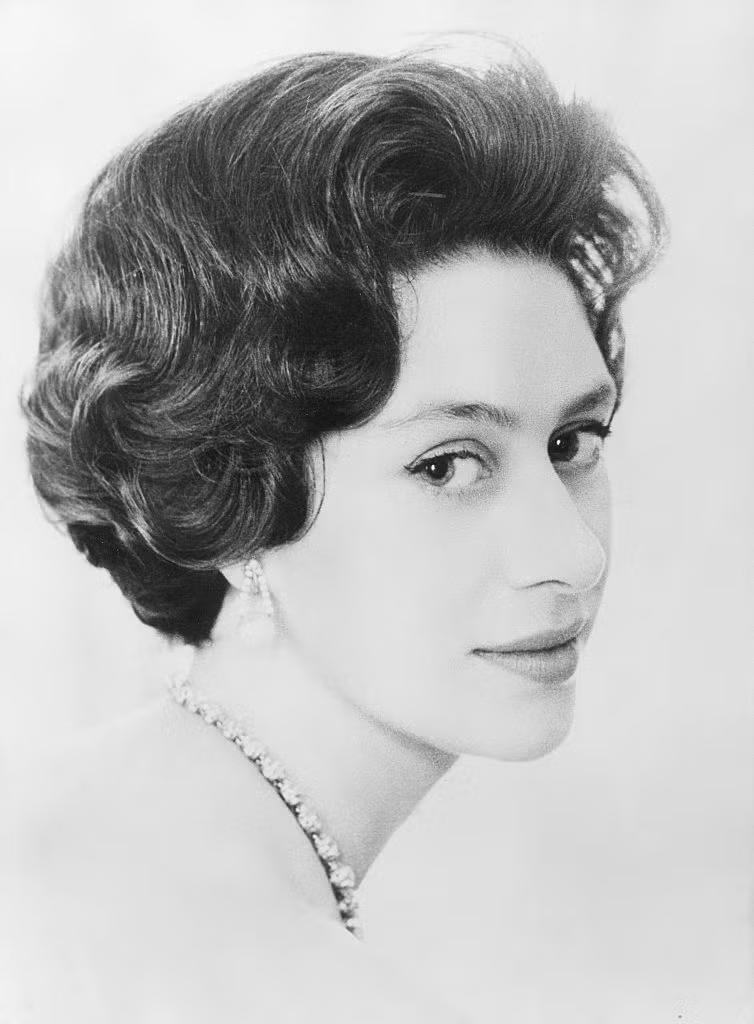
1959 Portrait of Princess Margaret by her future husband, Lord Snowdon (Anthony Armstrong Jones)

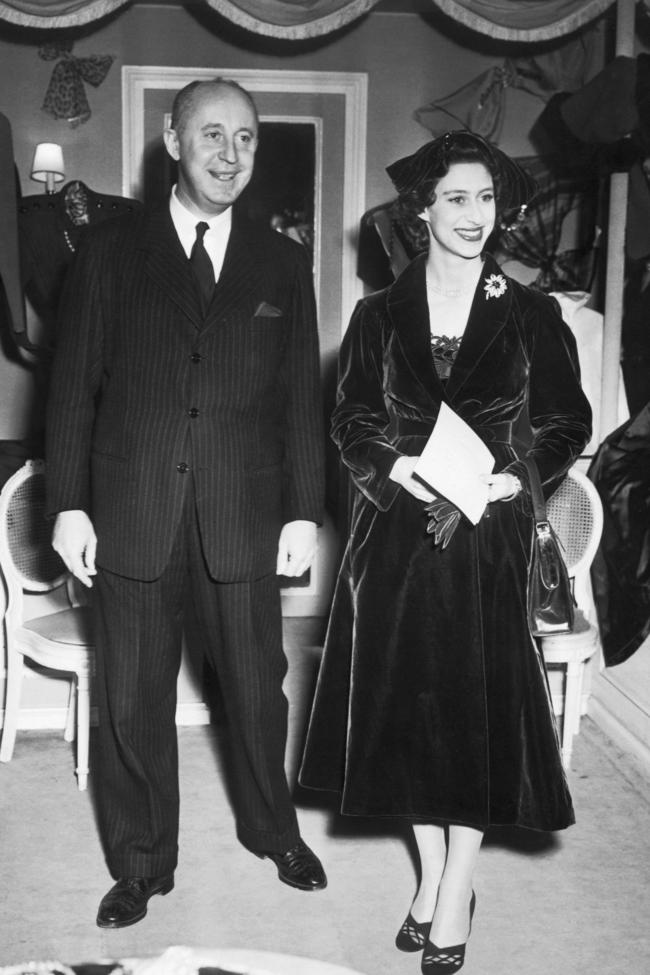
The eclipsing power of the royal family is another strike against their name in my books. Erring continually to the side of caution in a scrambled attempt to save their faces they pass round their hands and some well-briefed, sensible words of praise, shielding their real feelings with cliched sayings and sentiments, hoping the camera will stay focused on their extended hands and the label of their dress. With her fate sealed, Margaret realised no matter how she behaved her name would slowly climb down the list, eclipsed by each announcement of a new royal birth. Her entrance in society gave her the first instance of agency in curating her own look and name amongst the crowd of other majesties. She rose to this occasion in 1951 wearing a Christian Dior dress.  She debuted her adult persona in the New Look, hoping to bring the principles of this new fashion in her time as princess; modern, a new shape that dismisses traditional expectation, feminine, cosmopolitan, active, sexual. This first slight, her first disobedience, gave her the joy that inspired her to later run off and create a new look for what a royal could be and could look like.

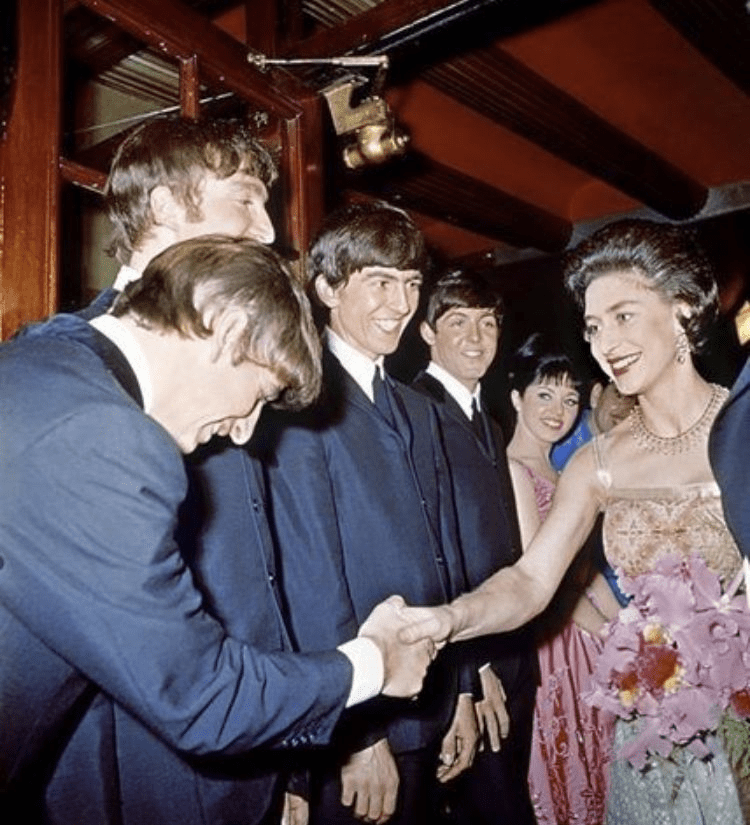
Cameras came to love her through her ability to strike against protocol. Tweed was swapped for silks. Shoulders were worn bare. Bright colours with bright patterns swayed against revealed legs. The tiaras and heavy metal seen around Margaret’s face were brought with her own money in auctions, suited to her own tastes, rid of the weight of inheritance. She drank with the Beatles. Ate with artists. Danced with Presidents. Wanting to be seen frequently besides what she loved, she positioned herself within the urbane interests of theatre, dance, music, and fashion. Whilst public tastes moved from the countryhouses of Wilde to the Salford kitchen sinks of Delaney, Margaret lavished recognition within the royal box of whatever play the theatre could offer her, regardless of traditional tastes and images. During dowager dinner parties, Margaret and Armstrong-Jones, her commoner husband (if you look past the private education, Society debutant mother, and Earl step-father), would create piles of pieces of torn bread, each nugget representing another cliche that had been passed around the table with the wine. Despondent to hackneyed sentiments, the President of the Royal Ballet and the patron of the newly built Brutalist National Theatre took the tabloids by storm in their fashionable silhouettes and sophisticated tastes, turning their backs to the traditional, country-centric interests of previous princesses, and embracing the lavish artistic explosion around them. 
Rising from the hairdresser’s chair, as she so frequently did, Margaret goes to sign the cheque for her obedient servant. ‘Margaret’ appears on the dotted line. Simply ‘Margaret’. No HRH. No Princesses. No Windsor. The tragedy of the royal family, the reason I believe they grow to become so terrible or simply bland, is their lack of vocation. From the moment they are born they have one job to do and are told they can never want for another. This is what is desirable: waiting in line and shaking hands until it’s their time to wear the headgear. Instead of descending into ruin within this maddening, archaic environment, Margaret made her job ‘the Margaret job’, not the royal job. The unfairness (a boldly sympathetic word for a republican to use, I know) of such a dogmatic dynasty was exposed in Margaret’s youth, not just through her position as ‘spare’ but also in her unfortunate affair with Group Captain Townsend. Living in her sister’s shadow and orbit, governed by the cruel spinster of centuries-old royal protocols and Acts, Margaret refused to throw a silver spoon out of her mouth and complain, but played by her own rules, being simply Margaret, not just a pawn or a rebel. By fashioning herself as a cut different to the rest, she built a persona of modernity and hedonism that suited her. Her push and pull of the rules that governed her life allowed her to both uphold her position and tear down the farce of pomp and circumstance. Craig Brown’s wickedly witty biography on the Princesses is aptly subtitled ‘99 glimpses of Princess Margaret’, because the princess only gave us peeks of the life she lead. Her dazzling provocative exchanges with the public eye fashioned her as a sight of modernity and difference, often obscuring her declining place within her own family and the difficulties of protocol. 

Whilst Margaret certainly had a privileged life (to say the least), and neither desired to be nor was considered ordinary, she dismissed the idea of being of a different cut to the people around her. As the Elizabethan age came into definition, Margaret learned to change with the times and aim towards modernity in building a persona that she could comfortably recognise as herself.  She didn’t pretend to be anything she was not; she didn’t want to relate to us, to appear to us in a football scarf for a team she would have no relation to, or to say some shallow remarks about a cause she had been told to care about. She didn’t try to be liked by all, as she knew that was impossible, in the same way she knew her job of being the perfect princess was also impossible. She gave us Margaret, not a Princess. She was self-affacing and affected, yes, undeniably, and at times she was stuck up and rude. At other glimpses she was bohemian and cultured; in the next instance she could be lost in a sea of organised celebration maintaining her royal name. However, in all these sightings, in person, press, or in piercing rumours, she was always Margaret. Not the Princess of York, or the Countess of Snowdon, or Her Royal Highness Princess Margaret Rose, just Margaret, acting in her own interests with her own agency, wherever possible. 

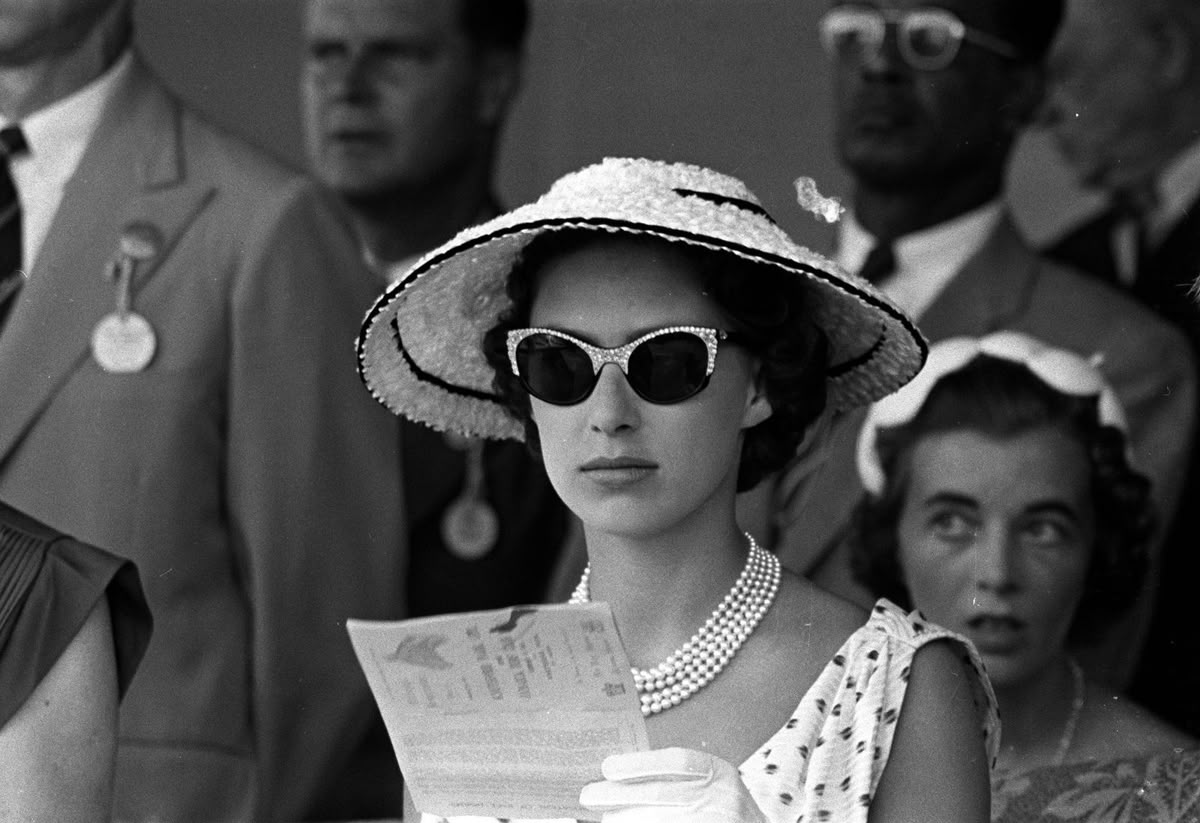
Featured Image: Margot in Kingston, Jamaica at the races, 1955 / Popperfoto

Categories
Culture

The Neverending Britpop Summer

By Matthew Dodd

As I cowered outside Wembley Park tube station, sheepishly shielding four cans of Carling from the view of patrolling police officers, and watched in semi-intoxicated wonder as a parade of bucket hats flowed towards the stadium, it seemed self-evident that I was observing a national cultural reckoning. Oasis were back. The great bastion of 90s Britishness had returned home to their natural place, extracting millions of pounds from millions of adoring fans. All over the nation, the tidal wave of Adidas Spezials and misjudged haircuts heralded the return of a cultural phenomenon. Across their two hour set, they more than clarified their enduring excellence, the anthemic barrage of power chords and vaguely aspirational lyrics turning thousands of fans – myself, of course, included – into a drunken congregation, joined together in the great fraternity of Gallagher-ism. And yet, this tour didn’t seem to reconsecrate Oasis as the biggest band in Britain. Rather, it seemed to be a reaction to the fact that Oasis still are the biggest band in Britain. Their physical reunion is almost perfunctory; they still occupy the same place at the centre of Britain’s musical ecosystem. Their return three decades on doesn’t toss them into a foreign cultural environment, an antique guitar cable awkwardly plugged into a state-of-the-art amplifier, rather it seems like they never really left.

It’s thirty years exactly since their seminal second album (What’s The Story) Morning Glory? established Oasis firmly as the pre-eminent British band of the 90s. In the same year, The Beatles Anthology 1 was released, a sprawling multi-media project reflecting on the band’s body of work and legacy, thirty years on from their heyday. Such a project was and remains so interesting because it reacts to how The Beatles shaped the course of popular music, placing them into a totally foreign musical environment – the 1990s – and arguing for their enduring relevance. This year, The Beatles Anthology 2025 is set to be released, a further argument for their continuing influence in an even further removed world. It’s interesting, then, that when Oasis, like their Liverpudlian icons, made their own return after thirty years, it was not to a totally foreign cultural zeitgeist against which theirs was an anomalous presence, but rather to a British musical sphere more amenable to them than ever. Just a year before the reunion, Liam Gallagher had sold out a tour performing Definitely Maybe in full. This isn’t a time-won reflection on an era’s defining music, it is a direct replay of that era. In the three decades between 65 and 95, British rock and roll went from A Hard Day’s Night to Wonderwall; in the three decades since, it’s gone from Wonderwall to Wonderwall again. Bloke-core, a wave of 90s nostalgia, nichetok edits, aAdidas brand deals and the spectre of Radio X continues to propel Oasis into the cultural mainstream, decades after their time. Of course, it isn’t just Oasis at fault. Blur sold out Wembley in 2023; Pulp made headlines at Glastonbury just a few months ago; Radiohead are set to embark on their own blockbuster reunion tour this autumn. These groups persist in shaping our national music conversation. In the 90s, kids queued up for hours to see these godlike bands. In the 2020s, it is the same bands who occupy this space, the same bands kids are queuing up to see. Oasis and their contemporaries continue to dominate Britain’s musical culture in a way that veers beyond reverence and towards stagnation.

Since the end of britpop – somewhere between the release of Oasis’ Be Here Now and Pulp’s This is Hardcore – few British acts have managed to break the mainstream and capture the cultural zeitgest in the same way. The Libertines seemed primed for a time to inherit Oasis’ spot as the tabloid-courting rock n’ roll ascendants before their abrupt implosion after only two albums. Taking a purely commercial view of things, one British band stands out as undoubtedly the most successful since Oasis. That said, as much as we all might like a late-night singalong of Yellow, we can hardly point to Coldplay as the paragons of modern rock. As Super Hans famously noted, ‘people like Coldplay and voted for the Nazis, you can’t trust people.’ What, then, has happened to the Great British band?

The post-britpop indie movements of the 2000s, what we might broadly call the landfill indie era, was a far less sure thing than its 90s predecessor. Fuelled by the panoptical tabloid furore of NME and its peers, bands were thrown in and out of the spotlight at a breakneck pace. A few names survive – The Fratellis, Kaiser Chiefs, Courteneers – but a whole wave of lesser bands stand, deservedly or undeservedly, forgotten – The Hoosiers, The Paddingtons, Joe Lean & the Jing Jang Jong, etc. etc. Where the britpop era saw a centralisation of culture, a nation crowded around Oasis and Blur, the landfill period was marked the vast proliferation of upstart outfits. The band who emerged unscathed from the skip, surely the only band to get close to filling Oasis’ vacant seat, is Arctic Monkeys. From grassroots beginnings – both in Sheffield and on the nascent world wide web – and headline-grabbing romances to, most crucially, massively successful and zeitgeist-capturing music, the Monkeys fit the bill more than any band this side of the century. Like Oasis, they remain lodged in the firmament of the contemporary indie scene: you’d be hard pressed to find a teenager with Doc Martens and a superiority complex who doesn’t know A Certain Romance by heart. Unlike Oasis, however, Arctic Monkeys had the boldness to allow their music to grow up with them, to not continue singing about nights out and Smirnoff ices into their fourties. It’s that artistic bravery that has held them back from becoming the nostalgia-fuelled ouroboros Oasis risks turning into. Nevertheless, their mainstream success is indisputable, especially in comparison to their contemporaries. Over their career, every one of Oasis’ eight albums reached number one on the UK charts. Six of Arctic Monkeys’ seven – blame Taylor Swift – achieved the same feat. By contrast, The Kooks and The Wombats have two number one albums between them.

Since the Monkeys swapped guitars for keyboards in the mid 2010s, what has become now the ‘indie’ scene has failed to produce an act to the same level of popular success. In the years since, UK indie has been collapsing into itself and into a nostalgia for the scenes that once were. For many British bands post-landfill and post-britpop, the object has been less to push the genre forward and more to recreate the feeling brought about by those earlier bands. Consequently, we end up with acts like Catfish and the Bottlemen, whose songs seem custom-built to be chanted drunkenly in a field on the shoulders of your best mate from school. There is nobody in the crowd of a Catfish or Inhaler or Reytons gig who wouldn’t rather be watching Oasis in 1994 or Arctic Monkeys in 2007. For at least a decade, the British indie scene has been running on the fumes of those bands, hoping that this year’s Latitude festival might be at least something like Spike Island.

Naturally, this isn’t all the fault of the bands. There are those acts which overtly chase the high of a bygone era of UK indie – The Reytons’ refrain that ‘everybody round here’s got a cousin or a mate who’s best friends with Alex Turner’ is certainly guilty – but there are of course a whole host of those from across the British Isles which are making genuinely new and genuinely brilliant music. Wolf Alice, Black Country New Road, Sportsteam, Black Midi (R.I.P), Fontaines D.C., Stereo Tuesday, English Teacher, Wet Leg, Mary in the Junkyard, Wunderhorse – the list goes on. But in today’s post-Spotify society, music isn’t the centralised thing it once was. Gone are the days when a nation would sit around the television set and let Top of the Pops reveal who the next big thing are. Similarly, the media landscape of the 90s and 2000s does not exist anymore: no NME reporters are on the ground looking for the gossip about Grian Chatten or Ellie Rowsell. Now is the age of the algorithm, the indie zine, the subgenre, the niche. Bands like Black Country, New Road play deliberately to a niche crowd, revelling in the kind of experimentation only possible outside the mainstream. Today’s answer to Oasis or Arctic Monkeys, the kind of bands that headline festivals and sell out small arenas, are still playing to an audience a fraction of the size of their predecessors. Perhaps the biggest band coming out of the British Isles currently, Fontaines D.C. played their largest gig to date in Finsbury Park over the summer. 45,000 turned out, this punter included, to see a mesmeric line-up of new-age superstars. Between Fontaines, Kneecap and Amyl and the Sniffers, the gig felt like a festival in its own right: a statement of intent from a new generation of rock n’ rollers. And yet, whilst Fontaines reaches five million monthly listeners on Spotify, Oasis reach thirty-one million. Therein lies the central paradox: the market for British/Irish indie is apparently a shadow of what it once was, but the market that once was is still listening to Oasis. The days are past when a band of loud-mouthed Mancunians could, with nothing more than some power chords and a tambourine, sell out the largest stadiums in the country for weeks on end. And yet, that’s just what happened this summer.  

The quality of music is there, as is the appetite, yet for the most part the UK music industry is submerged under the corporate hegemony of American pop. When homegrown artists like Olivia Dean or Sam Fender do break through, it feels like an exception rather than a rule. National musical character is, now more than ever, defined by our Atlantic neighbours: what was once a back-and-forth trade – The Rolling Stones for The Beach Boys – is now decidedly one-sided. The internet has, for the most part, homogenised much of our popular music culture. As such, the once dominant British music scene – the scene that produced The Beatles, Bowie and Fleetwood Mac – has faded away, its vestigial remains reforming into the indie scene. It’s that scene which now remains paralysed between 1994 and 2007, forever replaying Live Forever and 505. The money is in surefire hits from Disney channel stars, not local bands playing back-end pubs. This summer hasn’t been a Britpop revival, it’s been a rerun of the last time British music felt truly relevant. In other words, it’s been a Britpop summer for thirty years. Until the indie scene can get out of its britpop stupor, until the music industry pays attention to the upstarts and, most decidedly, until audiences listen, our national music scene, once our great pride, risks remaining forever stuck in the past and the great British band, one of our finest national exports, risks becoming history. All is not lost, however. Just last year, Charli XCX’s Brat made pretending to be British cool again (see: The Dare) and the continued success of artists like Raye and Olivia Dean point to a revival in the UK’s pop-soul scene. Whether a phallocentric music establishment would accept the new faces of British music as female is another matter entirely. Nevertheless, we can but wait for the next great British band to arrive and tear Radio X asunder. Oasis spoke to a dispossessed post-Thatcher Britain about living forever, chasing the sun, feeling supersonic; about years falling by like rain and dreams being real. If ever there was a time for a band like Oasis, it’s now.

Featured Image: Jill Furmanovsky

Categories
Reviews

A Chance Cultural Offering in Hamburg: Dann Passiert das Leben

By Martha Thornycroft

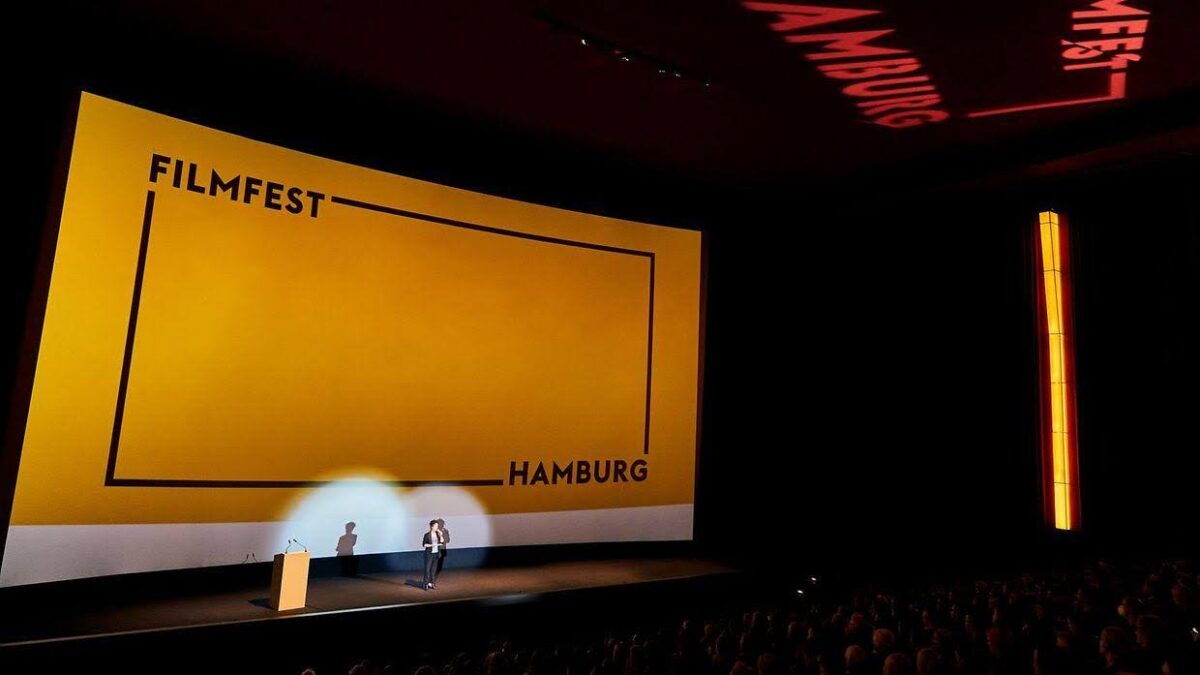
Persevering through watching often-alternative German films on a 14-inch laptop screen in the name of my degree is a far cry from experiencing German cinema in a local Kino, surrounded by its intended audience; serendipitously stumbling upon a semi-premiere of a new German film was hardly how I had imagined my first visit to a cinema in Germany would unfold. Despite repeatedly standing up for Hamburg – the location of my first year abroad placement – and having to convince family and friends that it is, really, the second-largest city in Germany, I was still uncertain about the cultural opportunities on offer in this often-overlooked, maritime city in northern Germany. Within the first month of living here, however, my ardent defence of the city was validated and rewarded when I chanced upon the Hamburg film festival (Filmfest Hamburg), which turned out to be just one of the many cultural gems this city has to offer.

Filmfest Hamburg is an annual film festival that takes place at the end of September. It is by no means akin to the Venice or Cannes Film Festival; attendees do not have the opportunity to catch glimpses of star-studded celebrities and directors. But, like many modest film festivals that steer away from the exclusivity epitomising other renowned cinematic events, this humble film festival offers a pared-back, artistically focused showcase of films from around the world for cinephiles and part-time enthusiasts alike (myself included). In this vein, the ‘Tag des freien Eintritts’ (free entry day), introduced last year to coincide with the day of German reunification (3rd October), has made this event all the more accessible. Thanks to this new feature, I was able to attend free of charge – music to any student’s ears. The film in question was Dann passiert das Leben (2025), produced and written by Neele Leana Vollmar and featuring two prominent German actors, Anke Engelke and Ulrich Tukur. Unbeknownst to me, the film’s official premiere was set for two days later at the Zürich Film Festival, with its cinema release date scheduled for just over a month after that – meaning that I was essentially witnessing its very first public screening. What’s more, the cast and main crew were even in attendance and participated in a post-screening panel. 

The film foregrounds a seemingly unassuming couple: Hans, a freshly retired headmaster, and Rita, a care home worker. Their life in Bayern is governed by a ritualistic monotony that, on the surface, appears unremarkable and inevitable, but quickly reveals a deep-seated discontent at the root of the couple’s relationship and existence. As the title – roughly translated as “Then life happens” – suggests, life gets in the way, and their quiet day-to-day is rocked by an accident that has implications for them both.

Speaking during the panel, Vollmar explained how inspiration for the film came to her unexpectedly whilst she was staying at a hotel in Berlin. At the breakfast buffet, her attention was invariably drawn to a couple in their early sixties also seated in the restaurant. Watching the couple interact, Vollmar said she was mesmerised by their mutual consideration of one another. The notion of love enduring through time – remaining constant alongside life’s milestones – began to take shape in her mind. Ironically, when she asked the pair their secret to a successful relationship, they revealed, with a laugh, that they were actually brother and sister. This moment, however, does underline an important truth: the common assumption that romantic relationships enduring into later life will naturally continue to last. It is this assumption that Vollmar grapples with in her new film, where love is no longer taken for granted but depicted as a constant, and sometimes difficult, challenge to sustain. 

Although I am evidently far from the stage of life depicted in the film – that of empty-nesterhood and retirement – Vollmar’s commitment to realism managed to immerse me in the world of this hapless couple. The damp, chilly atmosphere of the film somehow transcended the boundaries of the screen, and despite the warmth of the cinema, I had to put my jumper back on, shielding myself from the imagined cold. The film’s arguably bleak depiction of life post-middle age leaves a strong impression, with Rita’s shutters serving as a fitting visual metaphor for the routinisation and mundanity that can accompany later life. One of the cast members admitted that rewatching the film made him feel compelled to call his parents. In this sense, Dann passiert das Leben seems to depict a ubiquitous fear held by adult children: that our parents might be slipping into a static and colourless existence rather than living their life to the fullest. This is a fact the film seems to be self-aware of, as just minutes before the defining watershed moment, Hans, during an argument, refutes Rita’s claim that he barely notices her, asserting instead that she lives her life as though she doesn’t want to be seen.

The film is visceral, which is testament to Engelke and Tukur’s acting, and slowly, as love starts to be rekindled, the ambiance becomes brighter and warmer. A not-quite-happy but more contented life starts to look possible, exemplified by a spontaneous dancing scene in a schnitzel restaurant (an undoubtedly German way of signalling that all is well). That is why the film’s ending feels like a clichéd cop-out. Vollmar goes to the trouble of carefully establishing parallels only to undercut the actors’ powerful performances with an ending that feels both jarring and incoherent. It remained unclear to me what Vollmar intended to convey. As a result, the film proved more thought-provoking for the questions it raises than for its narrative substance. Still, despite its disappointing conclusion, it managed to leave a lingering impression – an outcome I certainly hadn’t anticipated as I walked to the U-Bahn from my flat, unsure of what to expect from the cinema I had discovered by chance on a Hamburg cultural events poster. With this first experience behind me, I plan to happen upon as many of these cultural opportunities as I can before I have to return to watching German language films on my laptop screen – something I know will feel all the more tedious now. 

Featured Image: Claudia Hohne

Categories
Poetry

feudalism

By Lottie Roddis

and it could end on the day it 

sinks with thunder. wheat an ashen shade of 

green, your hands callused and 

raw on the plough, gripping my forearm

as the water slinks down.

warm with damp, the sheets don’t 

dry on the rafters; instead, you bottle plums, i swallow my

syntax, the books fall apart on 

our shelf. we are on opposite sides of the dining table: 

there is something unspoken in the steam from my tea. 

you call the doctor, i tell you

he can’t fix this. there is ash and there is 

swelling, the last time we talked about it, i said i loved you, 

but you just say it started with the vodka, you’re starving with 

a scream. 

there might be a funeral, 

you could walk the course of the 

graveyard, debate your striding, all

smoke and mirrors of a run-on

sentence, a machine;

you could open the gates: let the dogs churn

the ground like butter, like a fight. you 

could pick up the phone, 

flick the match, light up

something you’re trying to quit. it is the 

day of endings, the reckonings, 

the day of myths and magic, the day 

of making amends and making a bed to lie in, 

to wake up in. to bring coffee 

and a newspaper to. 

one second-best call and a hailstorm, 

is all it could take, 

to make it to the end of harvest season.

Featured Image : Toby Dossett

Categories
Travel

Sri Lanka, By Rail and Rain

By Toby Dossett

Kandy

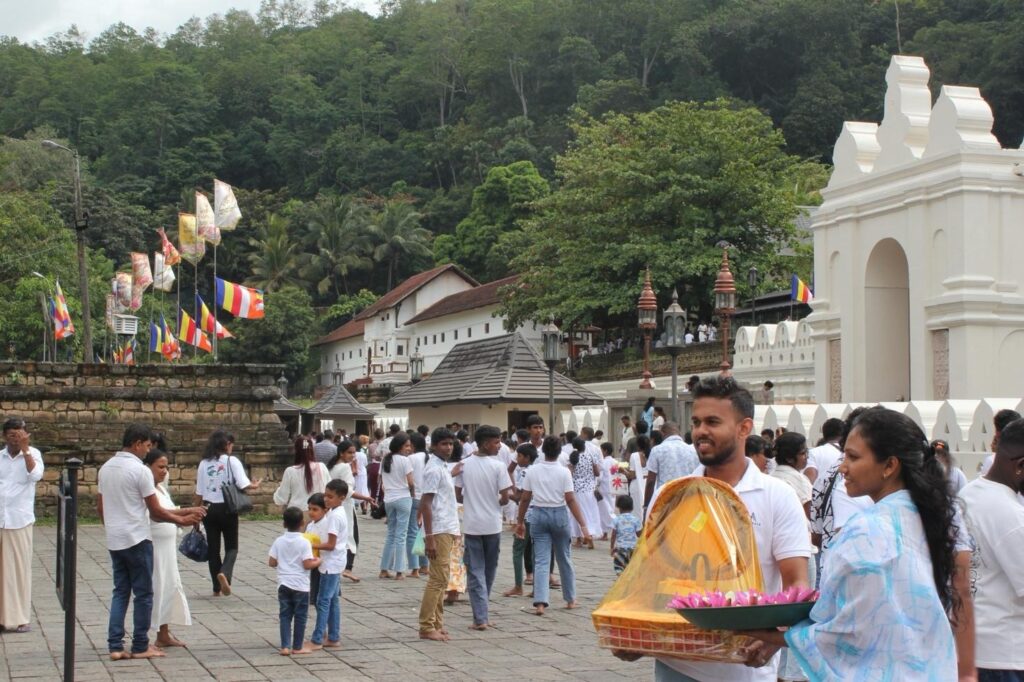
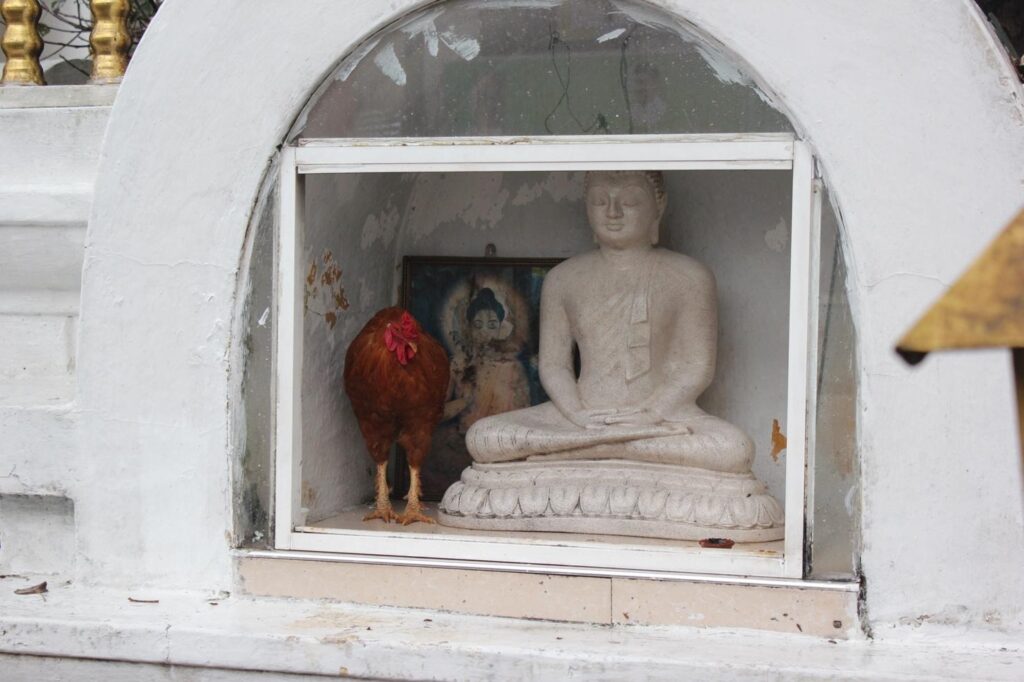
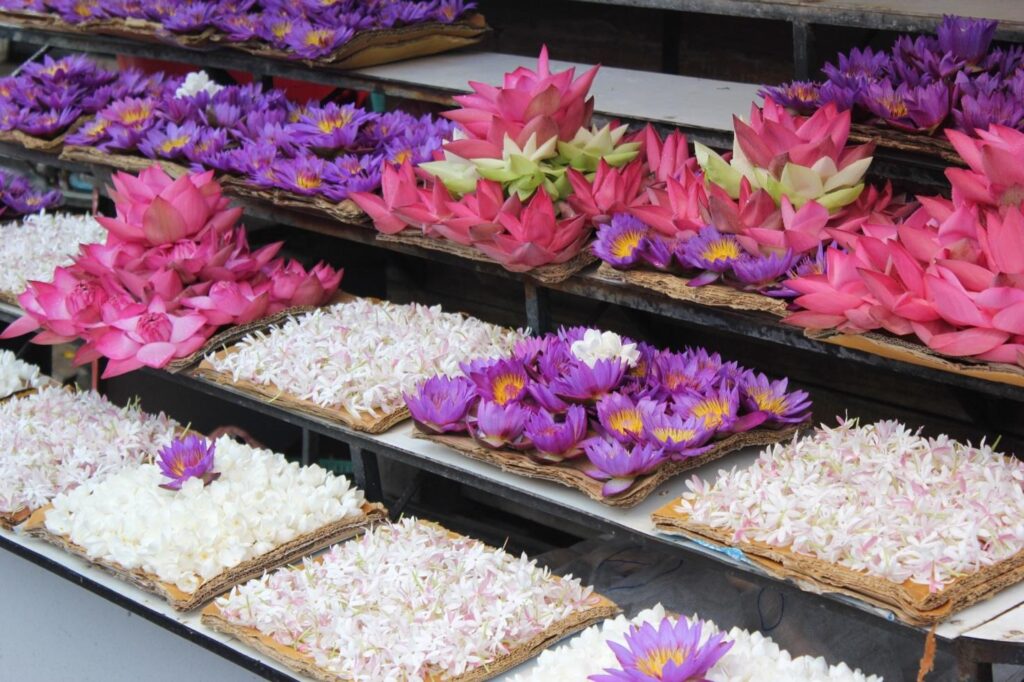
You arrive in Kandy, porous with travel fever. It’s your first time in Sri Lanka, and you could build temples out of the things you don’t yet know about this pearl of the Indian Ocean. The heavy air is filled with the yawns of dogs and the groans of traffic. It’s 07:15 on a random Tuesday in June and you find yourself in the queue to put your sandals away, before entering the Temple of the Sacred Tooth. You hand a thousand rupees to the attendant with a scribbled white beard, then step inside. The revered Buddhist temple was originally built in the 16th century within the Royal Palace Complex, and shelters what is believed to be the sacred tooth of Gautama Buddha. The stone steps, worn smooth by pilgrims, press history into your soles as incense curls through the courtyard. Milk, rice, and lotus flowers are offered reverentially by those who queue to see the sacred left canine through the golden hatch on the upper floor. It’s said that the tooth carries both spiritual and political power, with guardianship of the relic historically linked to the right to rule over the island. After the hatch closes, you follow the queue downstairs and head back outside into the powdery rain. A class of schoolchildren dressed in white, a cyclist, and two wiser women with umbrellas thread across your field of vision – all squinting as the downpour thickens. You collect your sandals, dart across the temple gardens, and slip into a tuk-tuk with a fleeting silver crown of monsoon mist.

Fifteen minutes from Kandy city lies your next stop: the Royal Botanical Gardens at Peradeniya. 

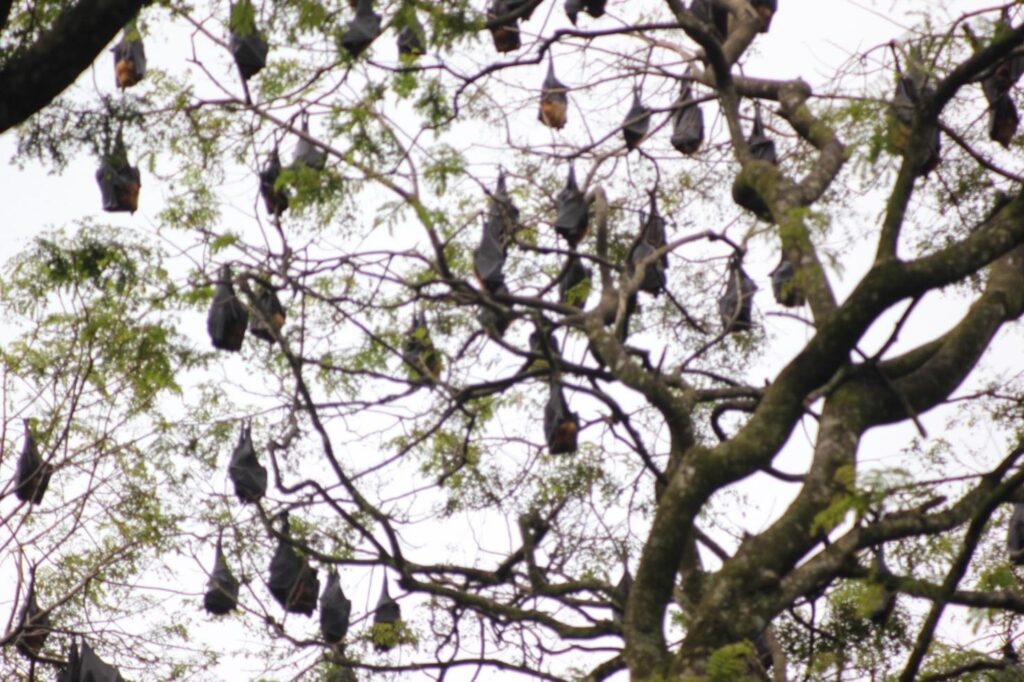
Established in 1821, under British colonial administration, and spanning more than sixty hectares, the gardens cradle over four thousand species of plants, many of which are endemic. You queue again for a ticket, which costs one two hundred rupees, and follow the main path until it opens into a wide green bordered by tall, lean trees. Sunlight settles like benediction on your skin, and the air hums with chatter as families run across the sloping hill. You notice an elderly couple holding hands on a bench (her head nestled perfectly into the nook of his shoulder) and a central wise tree that stretches its limbs across shaggy grass and toppled rock. Someone has placed stilts to support each branch’s reach; the leaves gleam a grateful, glossy green. You continue down the path and hear the strange screeches of what seems like a migration of birds. There’s no obvious fluttering in the sky, but on closer inspection you see the ornamental dangling of a thousand bats which adorn the canopy like living leaves that sigh and stretch in the afternoon sun.

Sigiriya

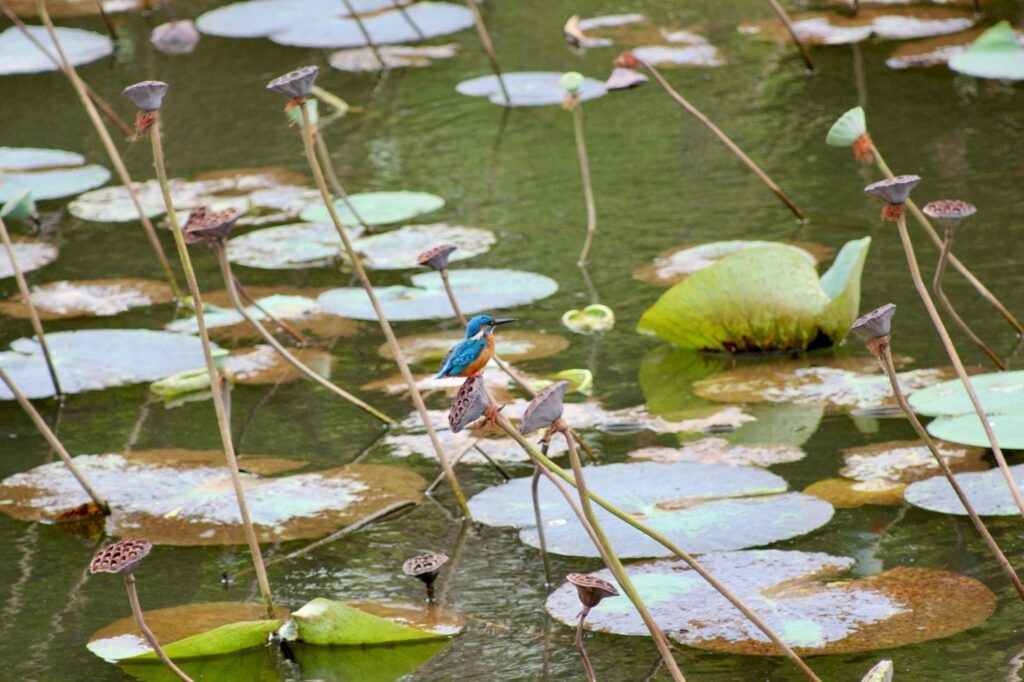
You set off early and drive north to Sigiriya, arriving just after eight. The air is still cool when you get out of the car, a slightly indecisive chill makes you wonder if you’ve dressed appropriately. Your driver seems to know everybody here, exchanging itinerant handshakes on his journey to the tourist office. Guarding the building are two extensive ponds brimming with lilac waterlilies that bathe in the water, acting as the perfect mirror of the pale morning. You follow the path into the water gardens and immediately see the large monolithic rock, a burnished orange and grey. The sun is just starting to peek out behind it, turning its jagged outline into a shimmer as if it had just caught alight. In the foreground the gardens stretch in symmetry, and a dusty nosed dog repositions as it agrees to an extra five minutes snooze. The ancient horizontal lines in the brickwork spiral out from the water and are cut through by the path of a white-throated kingfisher, who then perches on the tip of a fading lily. In awe you think, does a precious bird comprehend the language of its wings?

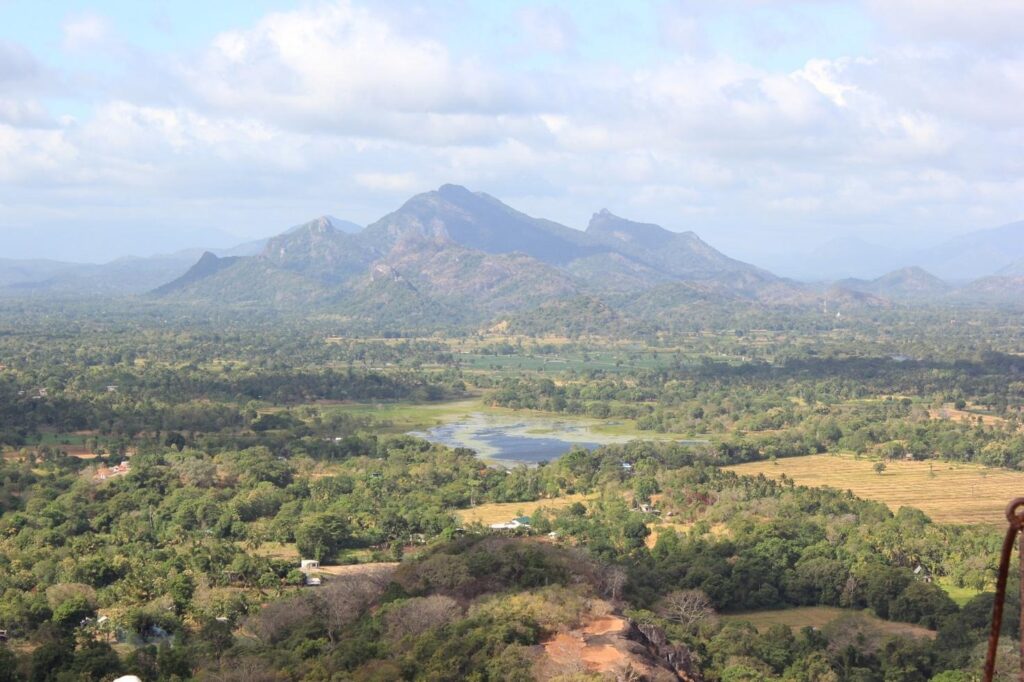
The climb begins through the remnants of the old city, between boulders etched with the faint impressions of ancient steps. You pass through the mouth of what was once a colossal carved lion and ascend the 1,200 perilously perched stairs to the summit. Sigiriya rises nearly two hundred metres above the plains as a massive pillar of granite occupying the valley. From the summit you can see the marvelling remains of King Kasyapa’s fifth century citadel, dating back to between 477-495 AD. Below you can trace the water gardens and then the surrounding landscape which is a mosaic of dry zone forest, rice paddies, and large wetlands. You then descend before the sun climbs too high and the winds grow wilder (you’ve already accidentally swallowed two flies). On the way down, you verge along the rock and up a narrow spiral staircase to access the rock’s overhanging cliff face. Enduring underneath, in muted ochre and coral pigments, are the famous ancient frescoes. 

Kandy to Nuwaria Eliya

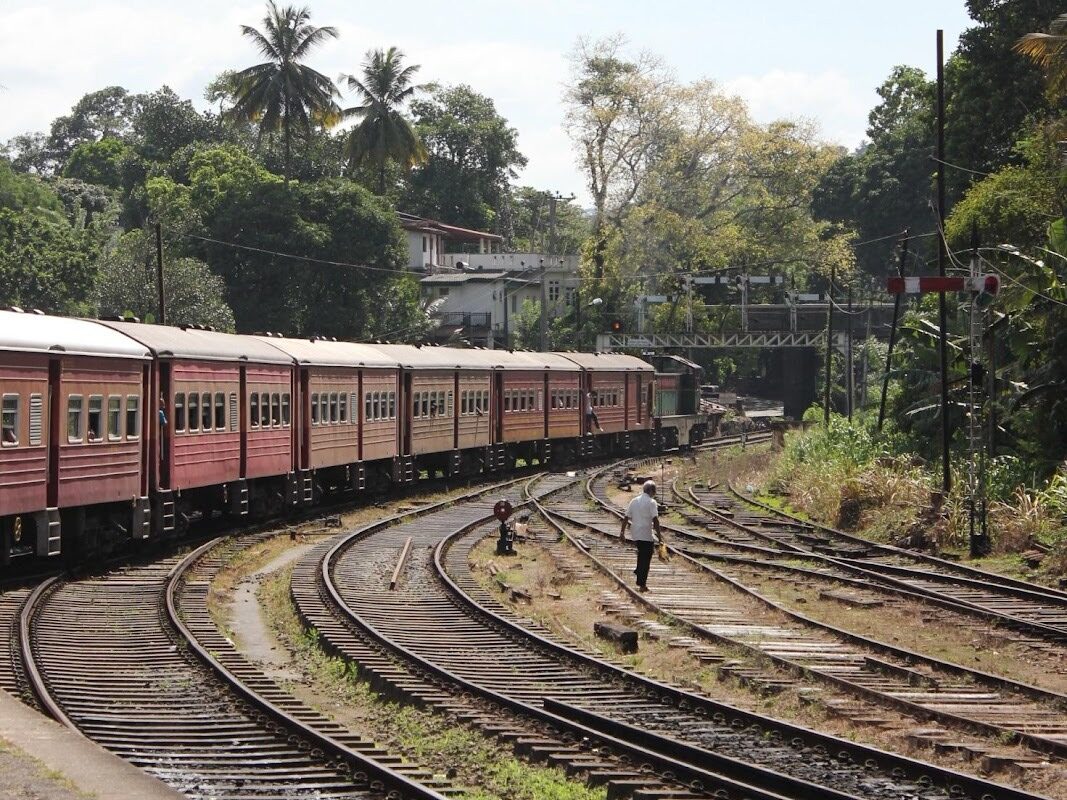
You make your way to the station, buy your ticket (knowing you’ll never sit still for long), and find your place among the waiting crowd. Overhead, a crow’s nest tangled in wires squawks, mimicking the loudspeaker as it announces the next departures. You hear the distant toll of temple bells and stand for a second and listen to a city humming in minor chords. A man in white strolls down the platform and, with insouciant steps, crosses the tracks while the train pulls in. For a moment the rails inundate him and the world starts to be mesmerised by lines, sounds, and the texture of your tongue. The sharp crack of a horn, a baby waving from the window, a conductor’s whistle; you are thirsty and dazed. You board the carriage and take a breath. Now everything Kandy has been, its colour, its noise and its slow devotion folds itself away into rolling railway motion as the train departs.

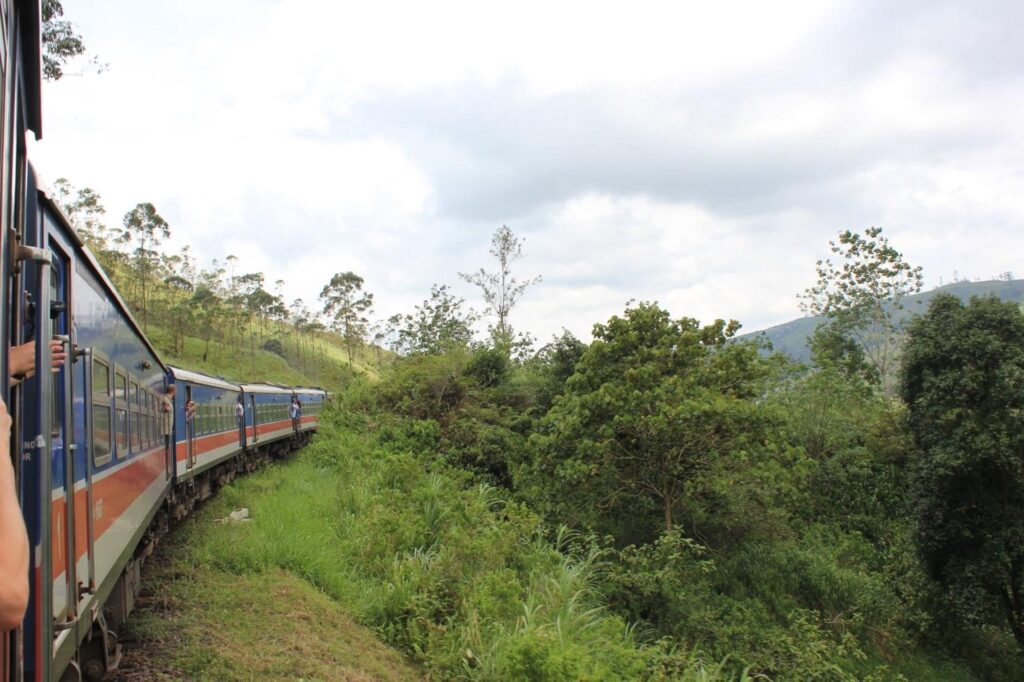
The journey from Kandy to Nuwara Eliya coils four hours through the central highlands, going past waterfalls, veiled green tunnels, and tea fields fluent across the hills and dense forests. You abandon your seat and decide to stand at the open end of the carriage, where wind hurls itself at you and  wraps you tightly before vanishing back off into the hills. You wander carriage by carriage in search of the canteen cart, and hear music drift from ahead: a mix of ‘Rambarini’ on the radio and loud, idiomatic chatter. Hoping for a coffee (or maybe a beer,) you settle yourself down on a wooden bench beside the bar. You’re received by an open window that frames the passing world of small mountain villages that coruscate like an overexposed reel of film, strobing in light through the eucalyptus leaves. 

The train slows down, and the mist thickens as you near the platform. You step down and the altitude bites softly at your lungs, almost two thousand metres above sea level, crisp enough to make your hair lift and your thoughts clear. The town spreads before you as you walk up the main road, presenting facades painted in muted pastels, which prompt the town’s echoing colonial nickname of ‘Little England’. The population here is just under thirty thousand, yet the town brims with abundance that spills from tea leaf markets and roadside shops. 

Horton Plains 

At five in the morning, you leave Nuwara Eliya, when the town still feels half imagined in the dark. The minivan climbs up winding roads until you stop briefly on a copper-coloured ridge to see the slow unfurling of light across the topography. It takes nearly an hour to reach the first checkpoint of Horton Plains National Park; a brick archway marks the entrance, alongside a dark green UNESCO sign noting the park’s establishment in 1988. After paying the entry you drive the final ten minutes through tall dew-covered grass, where the antlers of a young sambar deer survey above the blades before disappearing again. Erroneously thought of as an elk, the sambar is native to the Indian subcontinent and, though red listed as a vulnerable species since 2008, still roams quietly over the central highlands in docile herds.

Boots laced, you begin the nine-and-a-half-kilometre loop clockwise through the silvered grasslands, the air thin and oddly metallic. After a turned descent, you detour five minutes from the trail down to see Baker’s Falls; a collapse of white water crashing across rocks before spilling into the valley below. Twenty minutes later, the path steepens before softly plateauing to reveal an eight hundred and seventy metre drop. Ahead, the subtle geometry of tea plantations expands, and you can make out the pale outline of the Uda Walawe Reservoir. Farther still, through promising quick mercies before the fog arrives, the horizon stretches all the way to the ocean.

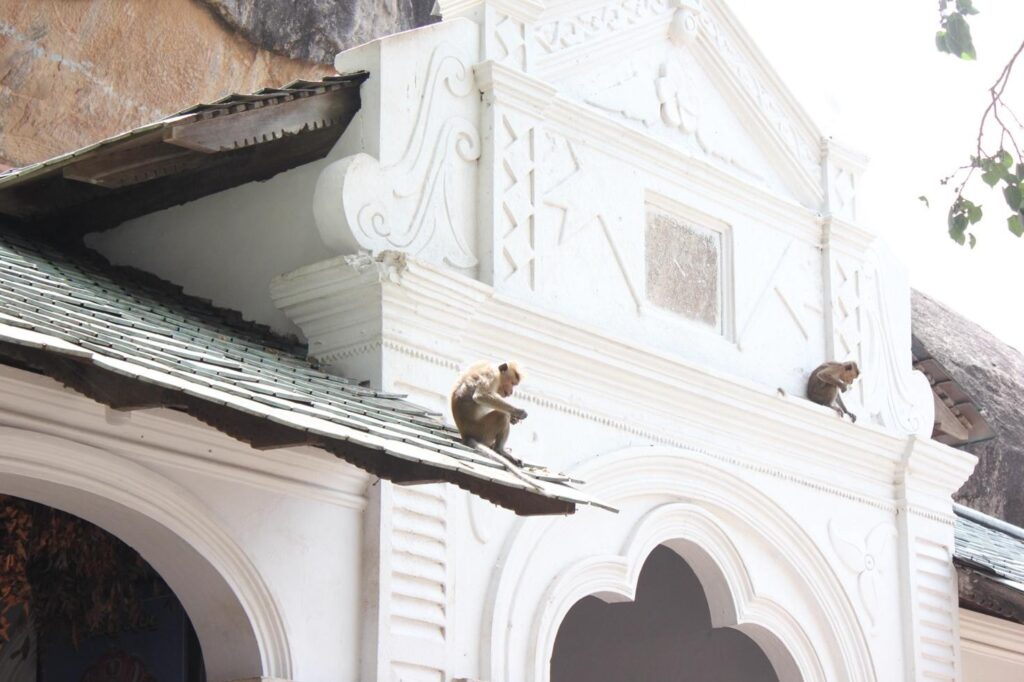
Across the remainder of the trail, birds call out forlornly and flit between the lichen-spotted canopy: the Black-naped Monarch, the Grey-headed Canary-flycatcher, and the Yellow-eared Bulbul; amongst some that you can identify with binoculars. Near the end of the hike from above the valley, you watch a movement stir on the fringe of the forest; purple-faced langurs argue in short, impatient bursts. Their monkey sounds are carried into the wind and return the height of the plains to its original equanimity, as if the morning were beginning all over again.

Galle

You head under the main archway and Galle materialises diligently in stone: an old Dutch citadel first built by the Portuguese in 1589. Clinging to the curve of the coast, Galle is shielded by sun-worn ramparts and a series of bastions, surviving after the 2004 tsunami. You find the fort quite quick to walk round and decide to slow down by stepping into an old wooden doorway that marks the entrance of a poorly advertised museum. In the first room, you find a gallery of stamps and old bank notes alongside historic yellowing maps of trade routes, city plans and major roads. The frames catch light from the next room where, resting in tall glass cabinets, is an improbable collection of things. Old spectacles, typewriters, cigarette cases, pistols, delicate necklaces, cameras, fountain pens and porcelain are all housed in separate neat collections, reminding you subtly of the intense Western interference in Sri Lanka. Through the open door at the end of the room, you can then see out across the courtyard where a man with a tarnished magnifying glass inspects a precious gem. He twists it in his hand several times over, puts it down on the desk and then grunts, while another old man smokes a cigarette in a chair with armrests carved into tight wooden spirals. 

You walk the ramparts in the afternoon and think that the sea reflects too much light. So, you scan down to see children swimming in the bay, calling out to one another and jumping in from the edge (hopefully one of the deeper spots,) where the waves aren’t beginning to tumble and crash. Chirping parakeets wheel above the lighthouse, its white body frames the rest of the port in your field of vision alongside a great banyan tree that’s draped heavily with vines. You continue through the streets and arrive at the post office, where a woman in a sapphire sari slides a set of butterfly stamps across the counter. You slip them into your little book in exchange for some coins and carry on in search of a bar to watch the evening from. 

Close

You end your trip in Habaraduwa, a small town a few miles south of Galle that has a panoramic view of the sea with beaches less bustled with fishing boats. Earlier in the day you saw turtles in the breach of the waves and fishermen casting lines from stilts as you walked down the coast. You’re unsure how to end a travel article exactly, you’ve loved expressing the interstices of noticing all those small moments on your journey but are stumped attempting to express any grandiose revelations of your time here. You think how Sri Lanka was such a wonderful adventure, and sitting on a curly piece of driftwood as the sun sets, you write a short poem instead: 

The sea turns to copper
And the horizon is bent
A bow strung with light
Until the evening is spent
The palm fronds scribble
Against the shaken sky
As its hem is sewn shut
By the fish eagles fly
They thread clouds of gold
To crown the stretch of sand
While crashing waves unfold
On Sri Lanka’s southern land

Gallery

Featured Image: Toby Dossett

Categories
Reviews

Krapp’s Last Tape at the York Theatre Royal: Review

By Darcy McBrinn

Almost candlelit, supposedly sometime ‘in the future’, we see a den in squalor. There sit mounds of books and rubbish, intelligentsia and filth all rotted into one, whilst decrepit musical fragments of memories past echo throughout the theatre. It is in this uncanny ambiance that the audience are left in anticipation of the emergence of both an external cultural icon and an internal theatrical icon of the absurd.

Marking his grand theatrical return after thirty-seven years, York Theatre Royal’s production of Krapp’s Last Tape is both directed by and stars cinema legend Gary Oldman, in a performance equally as captivating as its source material. Written by modernist heavyweight Samuel Beckett in 1958, and presently arranged by film producer Douglas Urbanski, Krapp’s Last Tape is both a one-man and one-act play. Set entirely within his dwellings, the monodrama follows the peculiar Krapp (Gary Oldman) on his sixty-ninth birthday, enjoying an annual ritual of relistening to tape recordings of years’ past before recording that year’s own – all the while chomping through bananas, pining over spools, and working his way through half of York’s bar reserves. It is on this birthday that Krapp happens to land upon the voice of thirty-nine-year-old Krapp, immortalised within Spool 5.

Krapp’s Last Tape’s most entrancing feature is the unitary multiroling brought about by two Krapp’s atemporally occupying the stage, the physical Krapp of the present and the auditory Krapp of the past. With our contemporary Krapp largely mute beyond sparse murmured ramblings, Beckett characterises him through an intense physicality undeniably seized upon by Oldman, who manages to convey so much emotion and depth while verbally constrained. Belching, burping, gulping, coughing, spluttering, munching, wheezing, groaning, and cackling – Oldman performs an incredibly bodily and guttural display showcasing the mounting disconnect Krapp has from his mind and abstract thought. Paired with incredibly expressive facial movements, what little animation Oldman does endure about the stage is laboured and stilted, as if any separation between Krapp and his coveted spools is an ordeal. Much like the contents of what Krapp slugs on stage, the character is a concoction of debility, alcohol, and bitterness – a blend of subtlety and theatricality that Oldman mixes to perfection.

The second central character – or rather personality – of the scene is the bygone Krapp isolated to the tape recorder. A purely vocal performance, Oldman expresses the beautiful wordsmithing of Beckett with an uneasy, almost sinister eloquence. As the audial Krapp voices his self-destructive and emotionally nihilistic philosophies, Oldman begins to conceptualise him in an antagonistic role for his iteration, and as such the voice holds almost a spectral tone, eerily bereft of bodily noise – like a phantom that looms over Krapp’s memory. Oldman’s Krapp is syllabically entrancing, and this feeling is aided by the work of sound editor and engineer Gary Canale, whose crackling gramophone effect draws the ear in closer to pick up on each utterance. Weaved together, the detached pair form a natural double act with both physical theatrics and voice acting talent independently given space to flourish.

It is a marvel to see Gary Oldman transform between film roles – be he the blood-guzzling Dracula or the whiskey-guzzling Churchill – but it is something greater to see him transform before your very eyes. Capturing both the humorous scatological oddities and corroded psychological realities of Krapp’s mind, Oldman wholly embodies the tragicomedy of Krapp.

Complimenting this layered performance, set designer Simon Kenny has crafted a stage of equal symbolic, and literal, layering. With a stark dichotomy of positive and negative space, Krapp’s ‘den’ (as written by Beckett) sees heaps of forgotten waste interrupted by a narrow path Krapp can shuffle through. Ultimately this makes the stage a linear construction, as Krapp’s movements are forced along a specific path, constrained in his own home. However, as seen through his wilful untidiness and deliberate mess throughout the play, the construction of this linearity is self-imposed. Much like the tragedy of Krapp’s life and his current entrapment by misery, it is his own unchanging decisions that have led to this state. Krapp lives in a self-made prison, domestically and psychologically – confined within his own negative space, forced down the path towards his maligning tape recorder.

With light and dark imagery central to both Beckett’s characterisation of Krapp as well as the play’s overall themes, Oldman’s use of lighting – designed by Malcolm Rippeth – is structurally vital. Opening, as theatrical productions typically do, well-lit as the audience finds their seats, the lighting does not lower but rather very gradually mellows into a faint glow over several minutes. This stresses the disconnect between the bright and lively hubbub of the audience against the quiet and dark loneliness of Krapp, all the while accompanied by the nostalgic and lonesome “We Three (My Echo, My Shadow and Me)” by The Ink Spots – projecting an entrancing feel over the play’s beginning.

From there on out, the lighting casts singular warm orange hues suggestive of a faint flickering candle, like the old and weathered Krapp whose own flame is slowly dying out. This effect naturally forces the eye to strain upon the dimly lit Krapp, central and stationary at his desk. The viewer focuses and mentally blots out the surrounding disorder that engulfs Krapp, just as Krapp himself has self-sequestered from all outside of his spools. This sense of focus is reflected by the tape recorder’s lambent lighting. Almost spotlit at times, Rippeth often frames it rather than Krapp as the protagonist, with the latter relegated to a shadowy supporting role, as if Krapp has become subsumed by it, consumed by this regressive manifestation of memory and reminiscence.

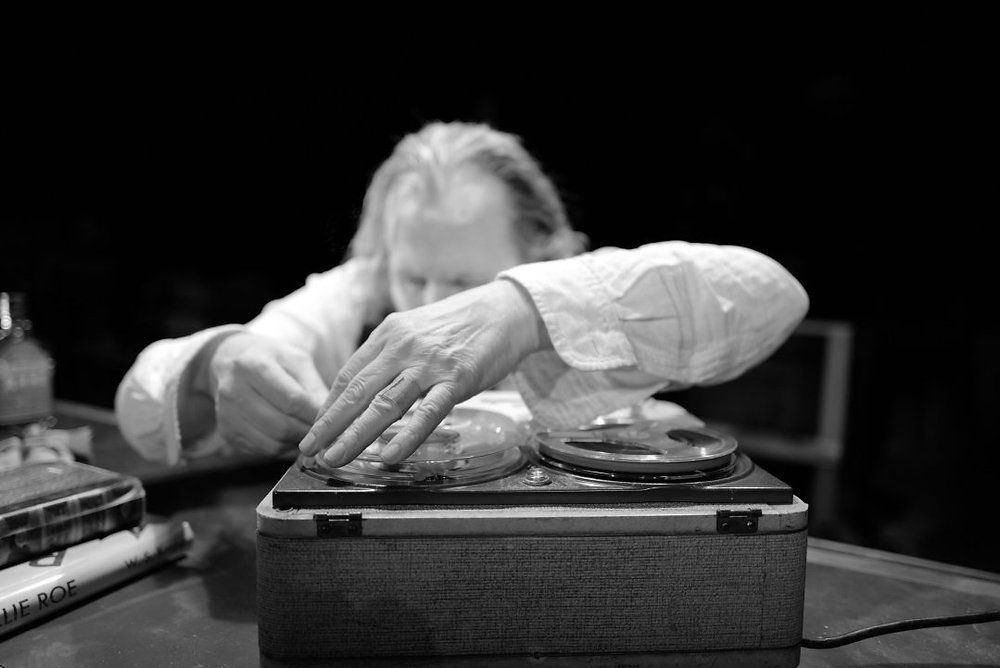
Historically, this tape recorder does hold significance beyond Oldman, being the same prop used in both John Hurt and Michael Gambon’s own performances of the play. In a way, just as Krapp is, Oldman himself is recording his own theatrical spool in this Beckettian catalogue, inevitably imparting a piece of himself onto its history. Just as much of Krapp’s Last Tape is autobiographical for Beckett, these gestures to the real world in the reused prop imply a personal connection between performer and character, between Oldman and Krapp.

Having made his professional acting debut at York Theatre Royal in 1979, Oldman, just like Krapp, is here revisiting his past. In this sense Krapp and Oldman begin to intertwine, as Oldman uses Beckett’s framework to explore his own feelings of regret, nostalgia, and professional self-reflection, as well as anxieties about his life or career moving forward – Krapp’s Last Tape is set “in the future” as Beckett’s stage directions read, after all. Oldman comments on the venue directly in his short piece within the programme, Returning Home, saying of the theatre, “This ancient building still holds many charms, but has undergone some massive development […] Yet, despite all the structural upgrades, the same old challenges remain”. Much like his debut venue, Oldman is gesturing throughout the play towards his continuous journey of growth and ‘development’, and the ever-looming hardships that undercut life.

Paired with this, the production also finds itself in the heart of Oldman’s sarcastically self-styled ‘alcoholic period’, the actor having recently played a succession of alcoholics on screen – an era Krapp should feel right at home in. Himself a recovered alcoholic, the presence of alcoholism is not just significant in the play but uniquely highlighted by Oldman. Whereas Beckett’s textual Krapp routinely drinks his gallons of liquor offstage and hidden from the audience, Oldman thrusts his version’s alcoholism into the limelight, unabashedly drinking onstage throughout the play. It becomes a highlighted element, and coupled with Oldman’s own history and dramatic themes of retrospection, this Krapp’s Last Tape in part morphs into a precautionary tale of where alcoholism can lead, what an alternative Oldman could have become. Perhaps even an honest insight into the ever-present spectre of regret and danger of relapse.

While on the whole I did feel that these, among other small changes, did peel back some of the more impactful moments of Beckettian absurdism, overall through these adjustments there became a clear vision and intention to build upon the text and uplift Oldman’s personal commentary.

A deeply pensive production, it is this introspective insight that elevates Gary Oldman’s Krapp’s Last Tape beyond simply an aged Hollywood A-lister trying their hand again at theatre. Every element of the production intersects and weaves together to both uplift the themes of Beckett’s masterpiece as well as to breathe life into Oldman’s new interpretation. With an audience eternally suspended in a deathly entranced silence – barring the odd banana bite laugh – it was an incredible performance to experience, as he simply is Krapp (perhaps for the first time a review means it as a compliment). Oldman concludes his aforementioned programme piece hopeful that his production will galvanise interest in the theatrical. One can only hope then, that just like in the case of his long line of predecessors, this won’t truly be Krapp’s last tape.

Featured Image: Giselle Schmidt

Categories
Perspective

Time as Currency: Why Patience Feels Radical Today  

By Alicia Mora de Rueda

There was a time when waiting was simply part of life. Waiting for a letter to arrive, waiting in line  at the market, waiting for a friend to show up, it was a time when such pauses were natural, even expected. Today, though, simply standing by feels almost anachronistic, like a small relic of a slower past that is no longer compatible with the rhythm of modern life. In a world that prizes efficiency and instant gratification, waiting without distraction has become a rare act, a form of  quiet resistance against the systems that reward urgency and production.  

Spanish philosopher Carlos Javier González Serrano calls attention and patience “acts of rebellion in an accelerated world”, describing the culture we live in as one that rushes us from task to task, and demands immediate responses for measurable results. Our days are punctuated not by quiet moments, but by notifications, deadlines, and a persistent pressure to keep moving towards the next showcase-worthy  achievement, the next task, the next visible sign of progress. To wait: to linger with uncertainty,  with discomfort, with unfilled time is a dangerous step off the treadmill.  

And yet, in its quiet defiance, waiting is more than a delay or an inconvenience. It is a space where  thought deepens and emotions find a place to settle, where presence takes root and distraction is gently but firmly prohibited. It forms the “quiet room” inside a noisy life so that we might find a  moment where we might actually notice something otherwise lost: the texture of a conversation, the way time stretches between words, the pause where we realise what we really want. 

At times it is possible to catch glimpses of patience in the background of daily life. Slow smiles  exchanged when someone offers their seat to you, the habitual pause before speaking in a  conversation, the thoughtful brewing of a cup of coffee. Such moments call for a mindful presence that resists interruption and welcomes human stillness. They are not the task-oriented, efficiency-driven interactions that we are used to, but call for an unhurried willingness to notice and understand. 

Yet it has almost become second nature for us to cut these moments short, so that stillness becomes  anxiety and waiting is filled with scrolling through kilometric feeds. Patience, once a quiet constant  of human experience, has come to feel like a skill to be relearned rather than something we instinctively carry. Impatience is normalised and even celebrated to the point that we perceive it as an ally to reach creativity, when in reality it does nothing more than stifle the depth and clarity  needed to truly engage with the world in a fully human way. 

So one cannot help but think: what does this mean for how we live, how we relate, how we build  community? If we lose patience, do we lose something essential to being human? González Serrano  suggests that reclaiming patience isn’t about turning back the clock but about resisting a culture that  equates speed with value. It is about recognizing that not all progress can or should be measured by  how fast we move. It invites us to ask deeper questions so that “how quickly?” becomes “towards  what, and at what cost?”  

The complexity and contradiction that comes from waiting is something that only time itself can offer us, if we allow it to become an experience to be inhabited rather than a tool to be managed. It lets us sit with uncertainty rather than rushing to conclusions. It creates room for empathy, for understanding perspectives that do not neatly align with our own. It slows us down just enough to notice nuance. In waiting, we learn to hold multiple truths and tolerate discomfort: a practice increasingly needed in a disjointed world that rewards certainty over reflection and speed over understanding.  

Perhaps then, patience is quietly radical. It challenges the dominant narrative of acceleration and  constant output. It insists that some things (relationships, creativity, healing, trust) simply cannot be 

rushed; they must not be. In doing so, it reconnects us to rhythms far older and more human than the clock on our screens, but rather those shaped by slowness, attention, and the quiet unfolding of time.  

So the next time you find yourself stuck waiting for a train, for a message, for a decision, consider it not an obstacle but an invitation. To pause, to observe, to inhabit time differently. In a world hurtling forward, waiting might just be the most rebellious act we have left.

Featured Image: Honor Adams

Categories
Poetry

Parakeet, Late Summer

By Saoirse Pira


I didn’t come here to be healed,

but you dropped into the day like this—

green and ridiculous on that black gate

as if the city had coughed you up

choking on its own noise.


A careful step then, and there

you stayed, watching me with

that idiot eye — does it think I’m kind?

Then it’s all my luck really 

or something in between, that snap


of the branch underfoot. Off then

you flew, and here I find myself

so out of the sky, with only that girl

and that home to which I turn—

with all that grey, that ridiculous green.


Featured Image – Toby Dossett

Categories
Travel

The Conflict of Tourism

By Sam Unsworth

Images that have been dominating my small screen in the past few weeks ( for I am publishing this quite a while after these events ) are scenes unfolding in Barcelona, where locals are protesting against the waves of tourists that descend on Europe throughout the summer. From water pistols and red tape to the more intimidating smoke bombs, flares, and verbal abuse, it is clear that locals are thoroughly outraged. While we may laugh at the sight of some unsuspecting holidaymaker, adorned in a bumbag and golf visor, being soaked by an angry resident, we must understand the deeper issues affecting these hotspots — and why they should matter to us.

I am a frequent user of Airbnb and have logged a fair few points on Booking.com, but until now I had not fully appreciated the effect these chains are having on local communities. Protestors were seen holding signs reading “El teu Airbnb era la meva casa” — or “Your Airbnb used to be my home” — which illustrates the root issue. People are being priced out of their own homes, and as they are squeezed from city centres, so too is their culture. How often do we see Irish pubs or an English breakfast headlining streets and menus across Europe to cater to bland palates or one-dimensional interests? In my view, all too often. If locals are pushed away, then truly, what is the point of travel?

To use the Sagrada Família — which is, or will be when it is finally finished, a true wonder of the world — I believe that a traveller must look beyond the building itself to the people who built, designed, and laboured since 1882 to create such beauty. Surely this is the real wonder, and this wonder is under threat, as these are the same people now lining the streets in protest.

Tourism is integral to many areas, and it is a major part of the Spanish economy, making up 15.6% GDP in 2024. This makes it seem strange to expel such a money-making machine from one’s country, yet I think the behaviour of tourists differs so greatly. I would be lying if I said I didn’t want to squirt water at the summer crowds in Oxford or London as they trudge along awkwardly, lining up for a picture with something I see as part of my normality. I could argue that I put up with it, so surely those in Spain can do the same. Yet here, locals are not being excluded from city housing in the same way as those in Barcelona; people do not waltz around in swimsuits, drunkenly singing and causing havoc, nor do they push back against our culture. As such, the culture and fabric of Barcelona and Marbella are being deconstructed in a way dissimilar to that of British tourist cities or towns.

So, the real question is: what can be done? People will still holiday in these places, whether locals are unhappy or not, but can we do something as a collective to make us Brits abroad more bearable? Perhaps by utilising hotels or hostels to a greater extent, travelling to areas beyond the classic cities, and allowing culture to flourish both in city centres and rurally. Let travel open our minds to new things rather than seeking familiarity in foreign lands. More practically — as I was reminded by signs in Croatia recently — dressing appropriately, drinking respectfully, and generally not reinforcing the British holiday stereotype. Tourism can be a wonderful thing if it reinforces cultural appreciation rather than suffocating local traditions. To appreciate the views of locals and respect their space in their own cities may well be the best way to soothe the protests, as we, the tourists, look to understand the fears and worries of local populations.

Featured Image: Honor Adams

Categories
Culture

“The summer of my life”: The Value of Sunburn in Queer Writing

By May Thomson

There is a short fragment of Sappho that simply reads: ‘you burn me.’ With these three words (just two in ancient Greek), she exquisitely conveys the intense, consuming nature of love. They can also be read as one of the earliest uses of burns as markers of queer love – a metaphor Chloe Michelle Howarth reanimates and makes titular in her debut lesbian novel, Sunburn.

Sunburn, true to its name, is a stinging, red-raw account of first love. The novel follows Lucy as she falls in love with the startlingly unapologetic Susannah. But, of course, there is always Martin – Lucy’s doting, handsome-enough friend, who everyone in the claustrophobic Crossmore expects her to marry. Martin is safety, while Susannah is, in the fullest sense of the word, divine happiness.

It is Susannah – loud, passionate, and fiercely loving – who wins the reader’s heart (as well as Lucy’s). The other characters lack the same depth; Martin is a flat character who exists to perform a narrative function and Lucy is a dull mirror, at once uncompromising and reflective, prioritising her reception over her internal reality –  pleasing no one in the process. Susannah, conversely, is depressingly patient, clawing at the idea that Lucy will choose her loudly and leave the ‘sweet wastleland’ of Crossmore behind. Perhaps one of the greatest tragedies of the novel is that, even after choosing Martin, Lucy loses everything she has so desperately clung onto. And none of the pain was worth it.

Like love itself, Howarth’s imagery is starkly contrasting – blending the thematic threads of sunlight and faith with visceral, bodily imagery: ‘I am all wounds, Susannah, and you are the loveliest pus. Flooding in to heal me. Yellow as the sun.’ These lines reflect the unlikely blend of the corporeal and sunny. The text feels, as a result, as grounded as it is lofty – as solar as sickening. A study in cognitive dissonance, Lucy’s wild emotions set the rhythm for the text, sending us volleying back and forth between mad, unapologetic love, and guilty, repentant cowardice. Despite being a girl, Susannah is more than Lucy could ever have imagined and later, when she leaves to travel and take other lovers, she remains unresolvedly present.

There is threefold value in the sunburn metaphor for queer love. First, it represents queer joy; lesbian love is sun-like – dazzling and bright. The sun becomes a figure of vitality and affirmation, casting queerness as something vivid – even life-giving. Second, the sun motif represents truth, picking up common associations with light and honesty. To step into the sun is to step into visibility – but this comes with risk. Exposure can be painful, and the resulting ‘burn’ reflects the often painful and strikingly visible cost of living openly. The metaphor thus captures the ambivalence of truth: it is illuminating but not without harm. 

Sunburn also speaks to the themes of pain and visibility. Unlike a hidden wound, a burn is raw, blistering, and marked on the skin for others to see. It is a public record of one’s exposure, suggesting that queerness (or, at least, the reception of it) leaves traces that are not easily concealed. Thus, sunburn becomes a kind of memory, imprinting on the body beyond the moment of exposure and contact. Likewise, the temporality of sunburn elevates this representation; it’s a delayed reaction, surfacing hours after a day in the sun. 

Queerness, likewise, is latent – often belatedly realised. As Eve Kosofsky Sedgwick reminds us, shame is not only wounding but generative – a mark of exposure that both hurts and makes queer identity legible. Sunburn, in Howarth’s novel, works in exactly this way: a searing trace on the skin, painful yet luminous, a record of love lived under the risk of visibility. This exposure carries a double valence, then, as it is framed as at once vital and wounding.

This metaphor, standing in opposition to metaphors like the closet and the shadow in its focus on visibility, judgement, and joy, clarifies the dynamics between Lucy and Susannah. When Lucy lies in the sun, Susannah lies beside her. Susannah is no Juliet, however, and is not equated with the sun consistently. The sun represents something beyond a lover – an external force that shapes queer life – and it shines on both girls. The metaphor also has implications for heterosexuality. While heterosexuality, for Lucy (or the queer subject more broadly), might be imagined as a life lived in shadow, queerness is figured in searing light. The sun figures as a metaphor for queer love that does not simply encompass judgment and shame, but also the conditions of unapologetic and honest existence. 

For all its sadness, Sunburn cannot be reduced to a lesbian tragedy. By treating sunburn as both wound and illumination, Howarth adds to a wider tradition in queer literature that understands desire as inextricably bound up with exposure. This metaphor does not simply describe the romance between Lucy and Susannah, but reconfigures how we read the visibility of queer love – as something at once joyous, wounding, and indelible.

Feature Image: Pinterest