By Emilia Brookfield-Pertusini
“Famed for her devotion to all that is most vapid and mindless in this world […] and her appalling taste in clothes” – Kingsley Amis
I am a thoroughbred republican. Gaudy displays of wealth, inherited titles, birthdays (of which they have more than the average poloi), and dogs seldom impress me. Faced with the prospect of another royal wedding, jubilee, or cause celebre I turn my back and grumble. Armed with my quip that they don’t actually contribute anything to our economy, I have come to loath anything that merely is touched by the royal hand, orientating their ordained seal of approvals into the category of the hopelessly unfashionable and tragedy of organised, mandated fun. In recent years it has become easier to hold this, what for some is, offensively ‘un-British’ opinion of our rulers as each line of succession has slowly snipped away at the ties that hold it in a place above the rest, forcing them to decline and fall to a cacophony of disgrace as clamorous as Handel’s ‘Zadok the Priest’. Where I falter, where the entertainment and pride that this family bestows upon the nation is finally realised by my red-blooded heart is in the ever-contentious Princess Margaret.
Margaret’s name is synonymous with the idea of being ‘spare’ – that provocative term that her great-nephew would coin into popularity many years later. Living in the shadow of her sister, Margaret was unable to escape the sphere of influence of centuries-old orders and rules about how a royal should behave. The more her sister performed her role as matriarch, the less influence Margaret had at court, slowly slipping down the ranks of succession and jobs. Given both the regiment of her life, and the lack of purpose given to her as an individual, her name became a by-word for royally bad behaviour. Late nights, excessive drinking, large bills from hairdressers, jewellers, and designers. She pioneered a great brat-ishness as opposed to a great Britishness, making herself well known in both tabloid and broadsheets with her wryly brutal comments and controversial love affairs. As she later said to avant-guard filmmaker and harbinger of pretension Jean Cocteau, “disobedience is my joy”. The pomp and circumstance of her position stifled her and, whilst it certainly gave her the grace and excuse of lofty privilege, ultimately left her with little shape to carve out her own public persona, unless she actively took a step against protocol. It is in this very quote, said to a French Surrealist no less (not the usual member of a royal audience), that makes Margot more than a spare; she understood what she, and in turn the monarchy could be: artistic, engaged, interesting beyond expectation, and ultimately colourfully characterful.
My disdain for the royal image often extends beyond the national, as I scorn their attempts to invade the personal privacy of my own phone with their out-of-touch, Cath-Kidston-meets-Barbour-inspired Instagram shoots that somehow always worm their way into my algorithms. This attempt to be ‘modern’ and ‘relatable’ misses the mark, royally. These people will never be ordinary; why pretend that they are like us? Modernity doesn’t mean engaging with us in forms that are new, but rather encapsulating a new age and the interests of a time, and knowing how to position yourself within this. The public persona of the royal family is a difficult PR stunt to execute, but only difficult if the authenticity is taken out of it. Growing up my nonno would recite the phrase “anche la Principessa Margherita mangia pollo con la dita (even the Princess Margaret eats chicken with her fingers) at any sly attempt to rise above our station as children; why though, with her name being a by-word for gaudy exuberance and privilege, is Margaret’s name invoked as a way to quieten children and for them to be humble in their actions? Margaret did nothing but show the public herself, who wasn’t afraid to get her fingers dirty in order to further her own cause of making herself look modern and engage with the contemporary society around her, refusing to be stuck in the lofty illusions and portences of being different to her subjects.
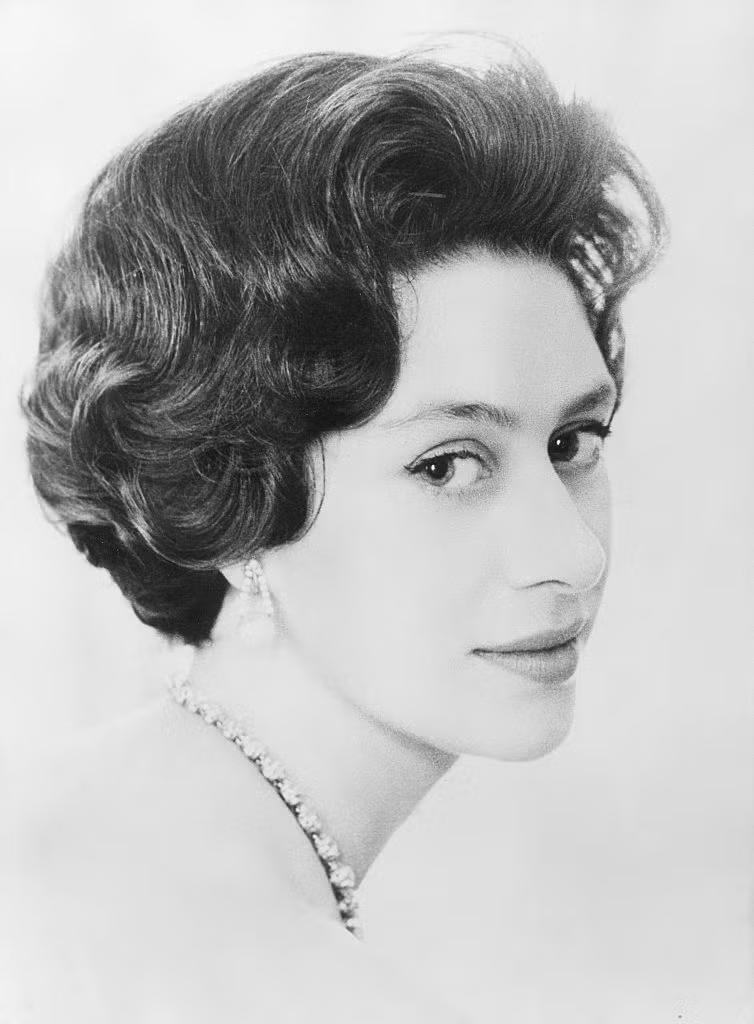
The eclipsing power of the royal family is another strike against their name in my books. Erring continually to the side of caution in a scrambled attempt to save their faces they pass round their hands and some well-briefed, sensible words of praise, shielding their real feelings with cliched sayings and sentiments, hoping the camera will stay focused on their extended hands and the label of their dress. With her fate sealed, Margaret realised no matter how she behaved her name would slowly climb down the list, eclipsed by each announcement of a new royal birth. Her entrance in society gave her the first instance of agency in curating her own look and name amongst the crowd of other majesties. She rose to this occasion in 1951 wearing a Christian Dior dress. She debuted her adult persona in the New Look, hoping to bring the principles of this new fashion in her time as princess; modern, a new shape that dismisses traditional expectation, feminine, cosmopolitan, active, sexual. This first slight, her first disobedience, gave her the joy that inspired her to later run off and create a new look for what a royal could be and could look like.
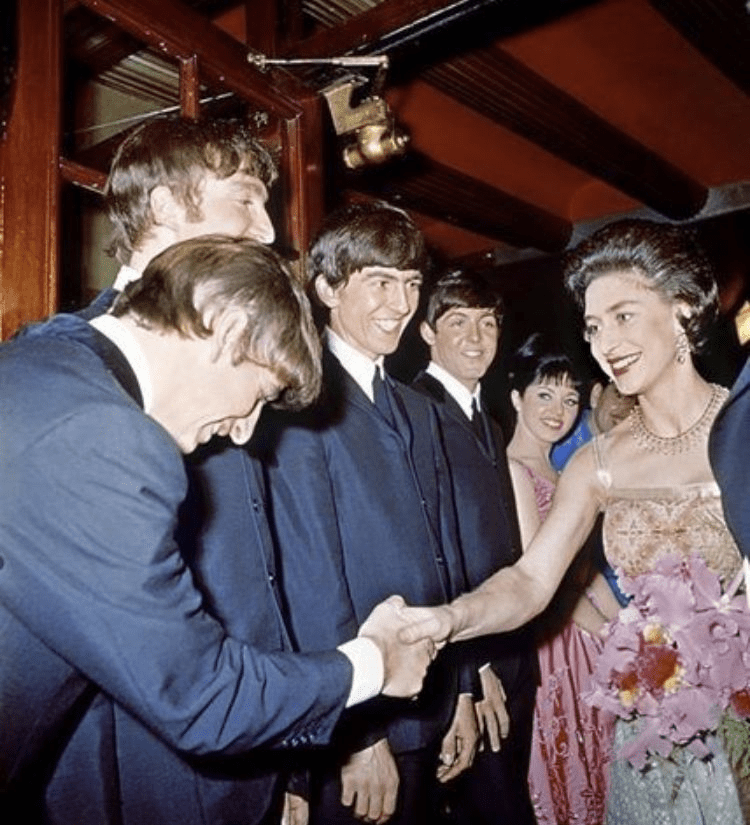
Cameras came to love her through her ability to strike against protocol. Tweed was swapped for silks. Shoulders were worn bare. Bright colours with bright patterns swayed against revealed legs. The tiaras and heavy metal seen around Margaret’s face were brought with her own money in auctions, suited to her own tastes, rid of the weight of inheritance. She drank with the Beatles. Ate with artists. Danced with Presidents. Wanting to be seen frequently besides what she loved, she positioned herself within the urbane interests of theatre, dance, music, and fashion. Whilst public tastes moved from the countryhouses of Wilde to the Salford kitchen sinks of Delaney, Margaret lavished recognition within the royal box of whatever play the theatre could offer her, regardless of traditional tastes and images. During dowager dinner parties, Margaret and Armstrong-Jones, her commoner husband (if you look past the private education, Society debutant mother, and Earl step-father), would create piles of pieces of torn bread, each nugget representing another cliche that had been passed around the table with the wine. Despondent to hackneyed sentiments, the President of the Royal Ballet and the patron of the newly built Brutalist National Theatre took the tabloids by storm in their fashionable silhouettes and sophisticated tastes, turning their backs to the traditional, country-centric interests of previous princesses, and embracing the lavish artistic explosion around them.
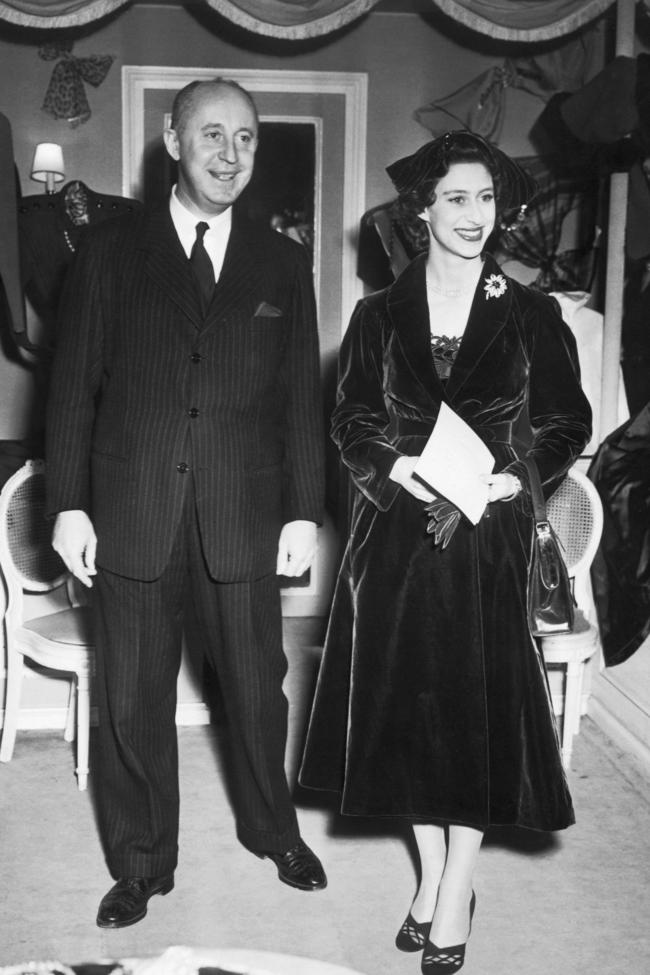
Rising from the hairdresser’s chair, as she so frequently did, Margaret goes to sign the cheque for her obedient servant. ‘Margaret’ appears on the dotted line. Simply ‘Margaret’. No HRH. No Princesses. No Windsor. The tragedy of the royal family, the reason I believe they grow to become so terrible or simply bland, is their lack of vocation. From the moment they are born they have one job to do and are told they can never want for another. This is what is desirable: waiting in line and shaking hands until it’s their time to wear the headgear. Instead of descending into ruin within this maddening, archaic environment, Margaret made her job ‘the Margaret job’, not the royal job. The unfairness (a boldly sympathetic word for a republican to use, I know) of such a dogmatic dynasty was exposed in Margaret’s youth, not just through her position as ‘spare’ but also in her unfortunate affair with Group Captain Townsend. Living in her sister’s shadow and orbit, governed by the cruel spinster of centuries-old royal protocols and Acts, Margaret refused to throw a silver spoon out of her mouth and complain, but played by her own rules, being simply Margaret, not just a pawn or a rebel. By fashioning herself as a cut different to the rest, she built a persona of modernity and hedonism that suited her. Her push and pull of the rules that governed her life allowed her to both uphold her position and tear down the farce of pomp and circumstance. Craig Brown’s wickedly witty biography on the Princesses is aptly subtitled ‘99 glimpses of Princess Margaret’, because the princess only gave us peeks of the life she lead. Her dazzling provocative exchanges with the public eye fashioned her as a sight of modernity and difference, often obscuring her declining place within her own family and the difficulties of protocol.
Whilst Margaret certainly had a privileged life (to say the least), and neither desired to be nor was considered ordinary, she dismissed the idea of being of a different cut to the people around her. As the Elizabethan age came into definition, Margaret learned to change with the times and aim towards modernity in building a persona that she could comfortably recognise as herself. She didn’t pretend to be anything she was not; she didn’t want to relate to us, to appear to us in a football scarf for a team she would have no relation to, or to say some shallow remarks about a cause she had been told to care about. She didn’t try to be liked by all, as she knew that was impossible, in the same way she knew her job of being the perfect princess was also impossible. She gave us Margaret, not a Princess. She was self-affacing and affected, yes, undeniably, and at times she was stuck up and rude. At other glimpses she was bohemian and cultured; in the next instance she could be lost in a sea of organised celebration maintaining her royal name. However, in all these sightings, in person, press, or in piercing rumours, she was always Margaret. Not the Princess of York, or the Countess of Snowdon, or Her Royal Highness Princess Margaret Rose, just Margaret, acting in her own interests with her own agency, wherever possible.
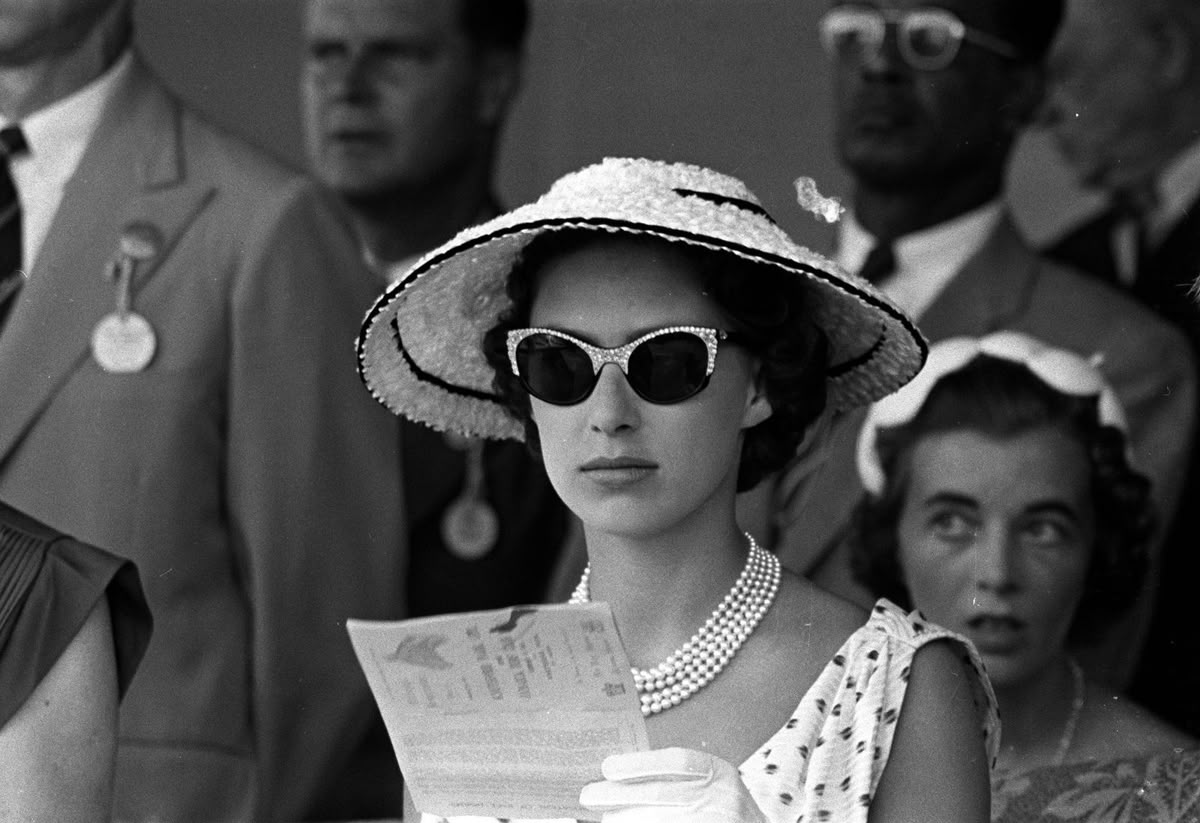
Featured Image: Margot in Kingston, Jamaica at the races, 1955 / Popperfoto