Categories
Perspective

A Time of Gifts, Graduation and Growing Up

By Rohan Scott


Leave thy home, O youth, and seek out alien shores…

Yield not to misfortune: the far-off Danube shall know thee,

The cold North-wind and the untroubled kingdom of

Canopus and the men who gaze on the new birth of Phoebus or upon his setting…

Poem by Petronius found in the flyleaf of A Time of Gifts


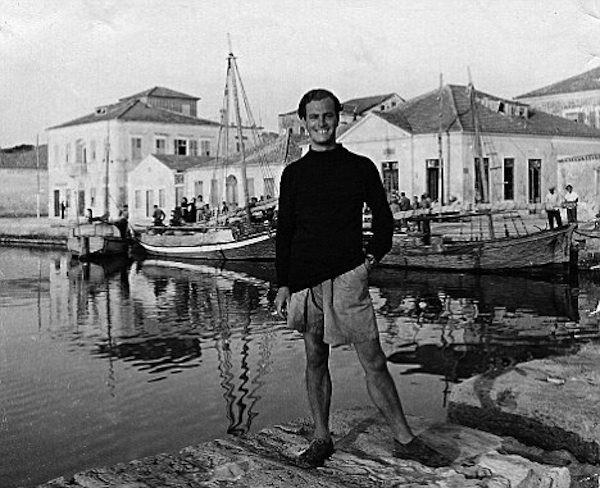
A slip of the mouse threw me into my spam inbox: Freeprints, eBay, that arena of smugness and comparison — LinkedIn. Scanning the rows of advertising and unemployment shaming, I catch sight of an email from a blog, titled Patrick Leigh Fermor. Without hesitation I click on the page, a site I had not visited in well over five years, to reconnect with the legacy of ‘Paddy’.

I was introduced to the writings of Patrick Leigh Fermor — ‘Paddy’ —  by an English teacher at the wide-eyed age of thirteen. Tasked with penning a travel piece in the style of Paddy, I became captivated by his words and then his story. I proceeded to consume A Time of Gifts, Between the Woods and the Water, and The Broken Road (posthumously edited and published from an incomplete manuscript). These three volumes detail a story of wonder and whimsy woven into Paddy’s endeavours from the Hook of Holland to Constantinople in 1933/4. With the lexical field to match a dictionary, Paddy lucidly frames scenes, experiences, and conversations that transport the reader back to the lost world of interwar Europe. Whether in a schloss in Bavaria or a shepherds hut in the Carpathians, Paddy carried himself with confidence, charm and naivety in equal parts.

This hobnail journey became a blueprint for me; one that inspired a love of adventure, walking, art — culture, if you will. An even more thought-provoking element that stamped his travels were the unexpected misfortunes, unlikely friendships and even unforeseen romances. Paddy’s ability to embrace the unknown and to navigate change seemed unparalleled; this is perhaps why he made such an excellent SOE operative during the Second World War. It was this flexibility and pragmatic attitude towards life and adventure that served as my greatest lesson from a young Paddy.

Now at twenty-two, I find myself at a crossroads, not too dissimilar to the one that an eighteen-year-old Paddy faced before setting off for Holland. Whilst I might not have been expelled from school, setting out into the world with a history degree feels as though our ‘career’ prospects are not too dissimilar. 

Paddy toyed with the idea of a Sandhurst commission before opting to become an author in London. When the burden of financial stability caught up with the struggling writer, Paddy set off on his trans-European odyssey. It certainly is a privilege to be able to cast down ‘responsibility’ and set off on an amble through Europe. Considering that Paddy was a destitute writer, it is worth noting that he was a beneficiary of some much-needed pocket money from his mother. Nevertheless, with a fistful of youth, Paddy made do with little in order to follow his desire to learn, to travel, to create.

This crossroads of life that Paddy faced resonates deeply with me. A keen desire to enter a creative field, an even keener desire to wander the planet, and the stark realpolitik of our capitalist world. I have been toying with many ideas, including the desk-borne rat race and postgraduate prolonging. Now, reminded by my affinity for Paddy and his tales, I know that despite what LinkedIn might tell you, adventure is not found staring down the barrel of an Excel spreadsheet. 

This is not an envy-ridden dismissal of those who have secured employment, neither is it an affront to those oh-so-important jobs in finance. What I hope to convey is a lesson that Paddy gifted through his works. Our youth is precious and direction and stability are fickle. The only certainty lies in change. So for those at a crossroads of life — lacking direction and stability — adventure is the antidote. I am not under the impression that money grows on trees, but therein lies the beauty of walking. Once a pair of hobnails are secured, the mode is free in every sense of the word. Paddy set out for Europe with no more than a pound in his pocket, a set of army surplus rags, a notebook, The Oxford Book of English Verse and the first volume of Loeb’s Horace. Despite this humble set of worldly possessions, Paddy embarked on the adventure of a lifetime. He wandered Holland, Germany, Austria, Czechoslovakia, Hungary, Romania, Bulgaria and then Turkey. His adventure of 1933/4 never really ended; a stint in Constantinople took him to Mount Athos in Greece, followed by a return to Romania that carried him to the outbreak of the Second World War.

Paddy had a zeal for adventure, a passion for life and a love for people. Through adventure, he managed to forge a successful ‘career’. As a soldier in Crete, his most noted exploit came in 1944 with the abduction of Nazi General Kreipe. As a writer, he found stability through early works Mani — Travels in the Southern Peloponnese and Roumeli. His celebrated success came from A Time of Gifts, written and published some forty-three years after completing his wander through Europe. Paddy’s adventure continued until he died in 2014, at the age of ninety-six. Having been reminded of the life that Paddy led, I hope to somewhat emulate him, at least for some time before the trench whistle blows and I become shackled to a desk.

If you too, feel at a crossroads in life, I suggest you pick up a copy of A Time of Gifts and find your next adventure.


Image Credit: patrickleighfermor.org

Categories
Perspective

The Beatles After Touring: How Quitting the Stage Let Them Redefine Music

By Nathan Gellman

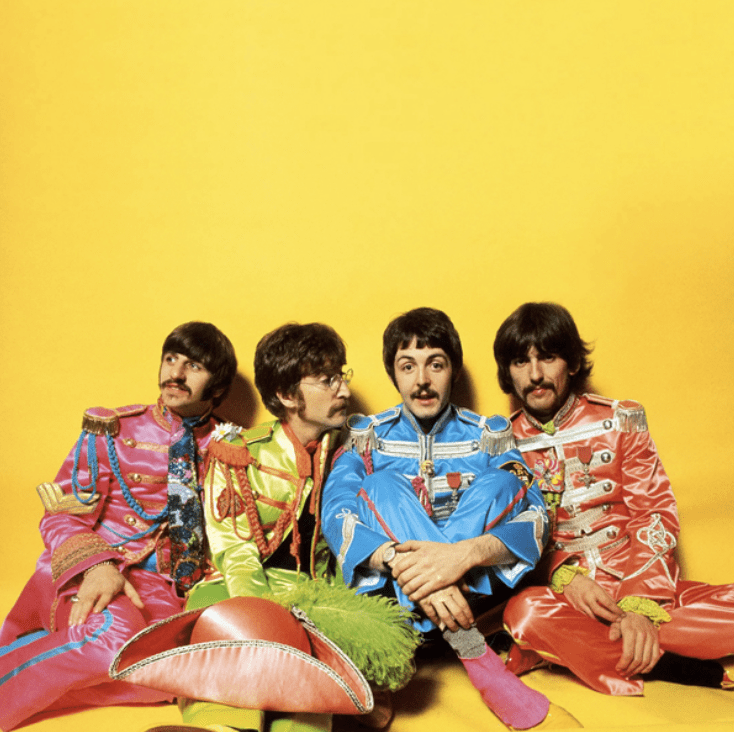
29th of August 1966, The Beatles played a sold-out concert at Candlestick Park in San Francisco. Their United States tour followed the release of their 7th studio album, Revolver and came at the height of their popularity, a period aptly named Beatlemania. This made the band’s decision to stop performing live shows bewildering to fans, but perhaps it was the best decision they ever made. 

1966 was a tumultuous time for the band. Their world tour, which saw them play in West Germany, Japan, the Philippines, Canada and the United States was rife with controversy following John Lennon’s claim that the band was more popular than Jesus. They endured threats and physical danger, throughout their tour, with former fans burning vinyls and t-shirts in the streets. This was the final straw for the band with the physical and emotional exhaustion of over 1400 concert appearances internationally taking its toll.  

This coincided with the self-revelation that the band’s strengths weren’t best utilised as performers, as Paul McCartney famously remarked after their final show: “We’re not very good performers, actually. We’re better in a recording studio where we can control things and work on it until it’s right. With performing, there’s so much that can go wrong, and you can’t go back over it and do it right”. 

Following their decision to stop live performances, they entered the studio in late 1966 to record their 8th studio album. For the first time, the band were not restricted by the parameters of performing these songs live – this album would be perfected and immortalised on vinyl. This allowed them to use the studio in ways that were uncommon during the 60s, implementing tape loops, orchestras and the surreal sound of backwards guitars. 

What resulted was The Beatles’ magnum opus, Sgt. Pepper’s Lonely Hearts Club Band. This album was hailed as revolutionary at the time, announcing the 1967 Summer of Love. The album’s stellar reputation stuck with it into the 21st century, with the Rolling Stone ranking it as the best album ever recorded in its 2003 top 500 albums of all time, despite it dropping to 24 in the 2020 edition. 

Beyond Sgt, Pepper’s, the band continued their innovation with the Magical Mystery Tour, The White Album and Abbey Road. In these further three albums they were able to experiment with more untraditional studio techniques. Ironically their final studio album Let It Be signposted the band’s desire to return to live performances which never quite happened as planned. What is clear is that none of these albums would have been possible under the constraints of a touring schedule and having to perform these songs live. 

The Beatles helped redefine what a band could be, not entertainers but artists. Their inventive and imaginative methods in the studio paved the way for other albums such as Pink Floyd’s The Wall and Radiohead’s OK Computer. They set a precedent that albums are a cohesive statement not a collection of singles and stop gaps. Every song had a meaning, not a word was wasted, the singles were the headliners, but the album tracks were more than just fillers. They didn’t merely hold the album together, they elevated it to a whole new level. 

The decision to quit touring was unbelievable, but it was the turning point that allowed The Beatles to reach new artistic heights. When looking back at The Beatles’ legacy, it is impossible to try and define it. However, if I had to try and pin it down, it wouldn’t be their early work and the crazed Beatlemania, but what came after it. What the Beatles made clear in a way that only they could: the best way forward is to stop. 

Image credit: vinterior.co

Categories
Reviews

Review: Durham University Classical Theatre’s Hay Fever

By Maisie Jennings

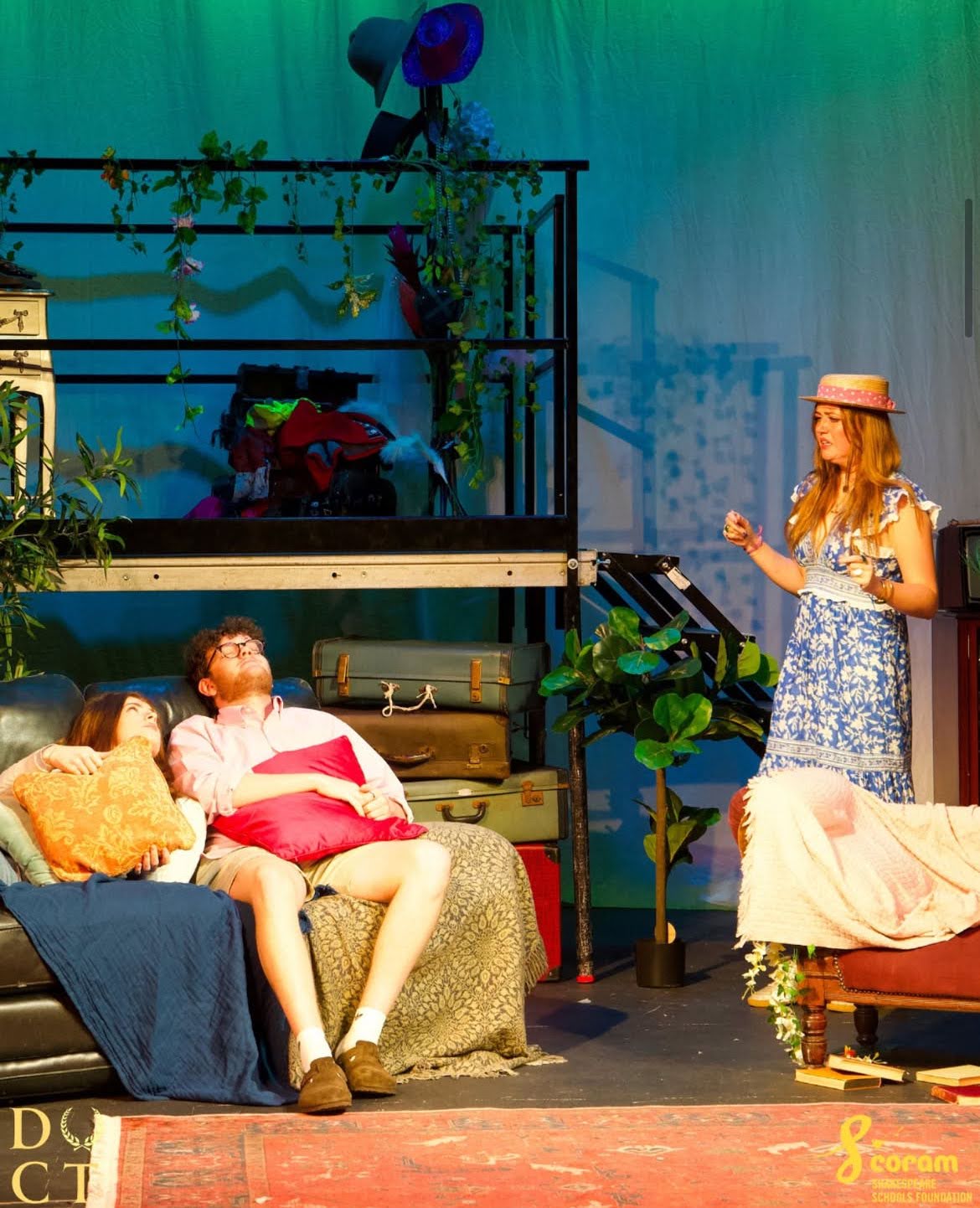
On Monday night, I had the pleasure of watching DUCT’s production of Noël Coward’s Hay Fever, a century after its first performance in 1925. Hay Fever forms the sticky, hazardous web spun around the eccentric Bliss family, and each of their four guests who are inevitably tangled up in it. Coward’s script blends high farce, slapstick comedy, and a sharp, winking satire directed at the British upper-class – all wielded deftly by director Abby Greenhalgh and the play’s sparkling cast and crew. 

Taking my seat in the Assembly Rooms Theatre, I was struck by the cleverness of the set, effortlessly curated to emulate the jaunty untidiness of a bourgeois-bohemian family home. There are ornate lamps, a silver tea set, a piano – relics of Coward’s contemporary staging, but not anachronistic amongst more modern elements. The effect is wonderfully timeless – perhaps another convention eschewed by the Blisses. This is further emulated in the character’s costuming; a mash-up of jeans, linen shirts, slinky evening gowns, and a fabulous string of pearls allow the play some temporal movement, whilst retaining the careless, offhand nature of the Bliss’ old money fashion. When siblings Sorel (Martha Buttle) and Simon (Samuel Bentley) languidly move about the stage, foppishly draped on sofas, and waxing lyrical about vaguely artistic nonsense, their movements are organic and instinctive. Even as their spats intensify, there is very little loss of this sense of authenticity. As Sorel, Buttle is razor-sharp, energetically firing disdain towards the other characters with a bored precision. Bentley’s presence as Simon is just as lively – his snarky retorts and scornful asides are particularly funny moments scattered through the course of the play. 

It must be said that Alannah O’Hare’s portrayal of Bliss matriarch and retired actress, Judith, is a delight. She sweeps across the stage, demanding cigarettes and vigorously reenacting the stardom of her youth. Her vocal inflections are perfectly extravagant – a stunningly bad, breathy rendition of ‘Frère Jacques’ in the second act is particularly hilarious. David, her husband, played by Ben Oliver, has a more understated presence on stage. The minutiae of his gestures, body language, and vocal choices are affected, somewhat preoccupied, and more softly flamboyant. Judith and David exchange love and contempt like canapés for their guests; indeed, the guests themselves are also passed around in a strange game of sexual competition. Fun for all the family? 

The guests are also skilful actors, working with more subtle characterisation. Liv Fancourt is stellar as Jackie Coryton – airy, giggly, and startled. The painfully awkward small-talk between Jackie and Richard (Oscar Dunfield Prayero) particularly stands out. Both characters struggle under the restraint of manners, desperately trying to make polite conversation amidst the midsummer madness. Myra Arundel (Maariya Khalid) is cool, charming, and a challenge to the whims and commands of the Bliss household. She, too, has mastered the art of subtle, biting wit hidden beneath seemingly innocuous remarks. Sandy Tyrrell (Cillian Knowles) provides a grounding presence within the play’s havoc; he is endearing, naive, and hilariously steals toast from the Bliss’ breakfast tray. The breakfast tray, I must add, is carried about the stage by Cara Crofts as the Bliss’ French maid, Clara. Croft’s accent is mostly convincing, and she busies around the set breezily.  

The cast and crew of Hay Fever truly extract the very best qualities of Coward’s text and the result is wonderfully silly. I think it’s always a joy to see actors really having fun with their roles – the cast relished every line, and, meeting them with near constant laughter, so did the audience. 

Categories
Creative Writing

It’s Still Early

By Joanna Bergmann

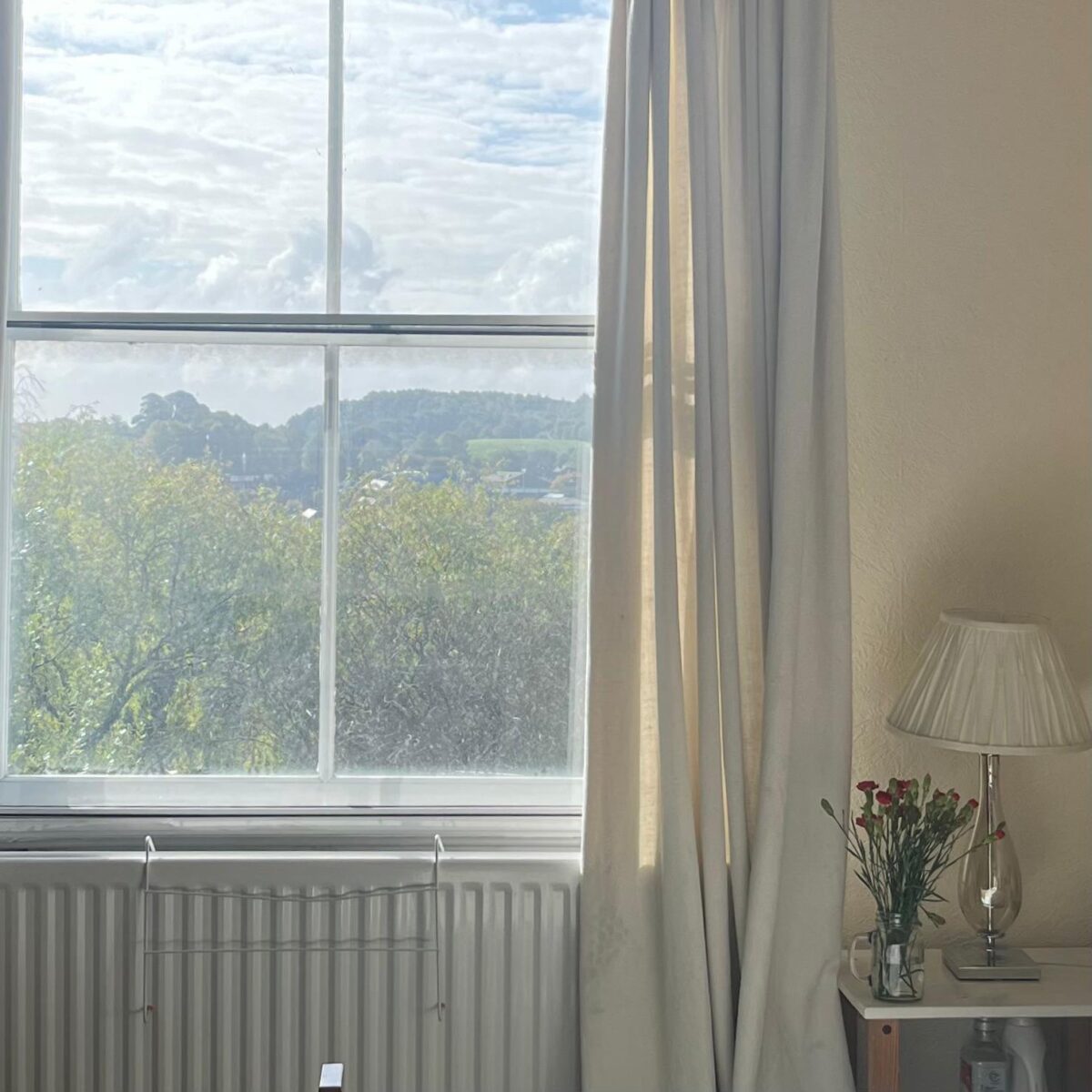
Orange peel, placed carefully next to a stack of books – a pinteresty still life.  Dust floats in the warm air, visible in the beam of sunlight that breaks through the half-open shutters, and slowly settles on the window sill. In the half-darkness,  a hand, a back, a stroke, a shudder. It’s still early. Tiptoes, fetch a dress, white,  to match the summer day. And out, fingers touching, barely, two pairs of naked feet in soft green grass, and – no.  

No, that’s not how it goes. Rubbing the sleep from my eyes, I prop myself up against a pillow, dressed in a set of Christmas pyjamas – it is May. A May, for that matter, that can’t decide whether it wants to be summer or not and hence keeps giving me colds. I contemplate the bare walls of my room I never bothered to decorate following my one-year excuse which, by the way, is also to blame for my plants still sitting in kitchenware on the window sill and why, realistically, they will never see a proper pot. They don’t seem to mind too much. 

No, this is not pinteresty, this is no clean-girl aesthetic, this is … life? Content, a little messy, but not too much, seeing as  I can’t handle uneven numbers on my laptop volume. A little dust, well yeah, I got that right, but not peacefully floating in yellow sunlight, and there are no shutters either. A stack of books on the desk, but no orange peel, just a worn-out bookmark and, yes, a used tissue. 

I close my eyes again and the tissue becomes a cluster of fleecy clouds in the dawning pink morning sky. Soft light dances on the little pond and water striders flit across the calm surface, already busy in these early hours. I crouch down and the surface ruffles beneath my touch, little rings shyly running away where I  disturbed the sleeping water. I straighten back up, stretching my arms up high towards the sky, and take a deep breath, inhaling the smell of the woods, and the grass, and the earth, and you. I half turn and you give me a small smile, and then I run – as fast into the water as I can, before I topple and it swallows me, enshrouding me in a wet and tender embrace. 

I open my eyes and smile back at you.

Categories
Reviews

Review: Walkabout Productions’ ‘Room for Doubt’

By Edward Bayliss

Yesterday, I watched the first night of Walkabout Productions’ Room for Doubt. Watched, it seems, is the wrong word. As the UK’s largest immersive student theatre company, Walkabout have for almost three years been delivering interactive performances, wherein the audience play a part in the action. Co-founder of Walkabout Max Shanagher, funnily enough, was a Wayzgoose team member from 2023-2024.    

It’s 8:25 and the audience are sitting, standing, waiting – awkwardly – in a peculiar room in St. John’s College. We are told that the jury session will begin soon, but that we are waiting for ‘Patrick.’ Is this part of the show? I suspect so. The cast members (three of which are in the waiting room with us) attempt, painfully, to make small talk, and I don’t know whether to laugh, play along, or bury my nose in my notebook. We learn soon after, that according to the performance, we have just returned from a fifteen minute break and are back on jury duty.

There are six ‘core jurors’ (the cast) and the rest of us form the peripheral jurors; we are all given the chance to vote on three occasions as to the guilt or innocence of the defendant. At its crux, the performance is designed to cradle the euthanasia debate. The accused is a nurse, named but not seen, who has administered an overdose of morphine to her terminally ill patient. The production navigates evidence and testimonies which we, the peripheral jury, are invited to read aloud, and make our own judgement upon. The performance urges us to consider both flaws in the institution of British justice, and the flaws in jurors’ characters, both of which will provoke argument and debate.  

The immediacy of our involvement in the performance is mostly very effective. We all sit around a table as jurors might – the boundary between actor and audience is incredibly vague – initially, a fly on the wall observer would not be able to tell the difference. The cast also offer unscripted asides to their neighbours, met admittedly with mixed enthusiasm by last night’s audience, but which afford a greater sense of realism and often, humour.  

Room for Doubt’s writer, Raphael Henrion, studies deference, passivity, anger, frustration, and courage in the characters of his play. This pot of personalities boils over more than once. Alliances are formed, factions are established, and it soon becomes less about the case at hand and more about the jurors themselves. Gusts of rage from Mable (Grace Graham) swell as she bites back at her juror nemesis Alex (Noah Benson), both claiming to sit on the right side of justice in their assessment of the seemingly far off defendant, Emily Carter. The production however does not rely solely on loud confrontation and clash. Oli (Daisy Martin) gives convincing breaks as she cools the temperature of the room with her personal story of a terminally ill family member. The gravity of the situation jars bathetically against the ignorance and idiocy of juror Patrick (Matthew Lo), whose judicial laziness works as effective comedic respite. Overseeing the process is the long-suffering head juror Sasha (Orlin Todorov), who cues topics of debate, readings of evidence, and generally buttresses the performance with a sufficient sense of structure.

The show culminates in a final vote. We now realise we are voting on much more than the guilt or innocence of Emily Carter, but rather on the state of justice in general, and on the place of contextual morality within the unbending bounds of the law. Have no objections, this is quite a remarkable dramatic arrangement. So, get the chance to hear the case and cast your vote.

Performances are at 6:00pm and 8:00pm on 10th & 11th June in St. Johns’ Vasey Rooms.

Categories
Poetry

Wind-up Merchant

By May Thomson


The aliens arrived at bathtime,

Whirring through the soft, black evening

In the starry galley we never spied.

You, seeing everything, would point:

There – and again there!

Then your brow would ripple – skull plates

In sudden, continental drift,

Listening carefully for something…

Catching a blurry, infrasonic word.

Little Heather, still with her aureate curls,

Would start to pout and redden,

And when a lone tear plashed into the spume,

Mother would snap your name,

And you’d parcel the bairnie into her towel,

Admitting there were no aliens at all.


When you refilled the porcelain tub, 

You’d tell us of your days as a shimmering girlish thing,

With glassy scales and webbed fingers.

Of the utterly clear sea and its glowing beings.

How you’d cover miles and miles

In the thrashing waters off the Moray coast,

Before you traded it all in for something new,

Hauling yourself up and across the wet sand and,

With a mouthful of seawater, deciding to be a father.


You were so big, in the fullest sense.

I don’t know how you managed 

To squeeze into that signed box.

Even now, some part of us

Is stuck in that bathtub – 

In our hazy dreams, we still see you,

Eyes gleaming, chest rising. 

We will wait up for you to reemerge, 

To give up on your cruellest trick yet –

For your wife to scold you

Into revealing your hiding place.

Categories
Travel

Tales and Tips from the Subcontinent

By Bertie Shepherd-Cross

It was August, work experience was in full swing, and I was striding along Chancery Lane in search of a lunchtime meal-deal. My girlfriend rang, “I’ve been thinking” she said. . . “let’s go to India!”

Somewhat surprised but overcome with wanderlust I had the entire trip planned by the time I went to bed that evening. Hotels, trains, tickets, you name it. Was I duped into a glorified shopping trip? Maybe. But was I ready to experience the sights, sounds and colours of the world’s largest culture all on a shoestring budget? Definitely! Tune in as I recount some tales and tips from our time in Rajasthan – the good, the bad and the really quite smelly.

After a day of travelling we were eventually spat out of Delhi airport into the humid September smog at 9 o’clock in the evening. My card was declined, our driver went to the wrong terminal, but at long last we checked in to our modest lodgings, washed and went to bed.

The following morning we met our guide who was to show us around the megacity that is Delhi in just 8 hours – quite a challenge, we thought, but one he duly accepted with a typical Indian enthusiasm for life. A day of two halves followed. From the claustrophobic crush of Asia’s largest wholesale spice market, the vast Jama Masjid Mosque with capacity for 25,000 worshippers, and the Mughal Red Fort in Old Delhi, we gradually made our way to Edwin Lutyens’ open-plan New Delhi. A testament to town planning, it has wide boulevards, green spaces and seemingly endless roundabouts (think Milton Keynes, but with tuk-tuks everywhere!).

The outstanding memory from day one was Humayun’s Tomb. Built in 1572 for the Mughal emperor, and known as the Delhi Taj, it is set in beautiful gardens with symmetrical gateways and a network of streams and fountains. The original Mughal splendour of the site is preserved, and it provides a peaceful sanctuary away from the din of India’s capital. As such, it should be on any itinerary of the city worth its salt.

After a baptism of fire into the Indian way of life, we retired to our hotel for some respite. Alas, as we collapsed onto the bed and disengaged our brains from the sensory overdrive they had entered, we discovered that our train to Agra in the morning had been cancelled. After soliciting the advice of the receptionist and his six eager assistants, the only option was a 4-hour taxi ride.

Having woken up especially early to book the Uber it transpired that most drivers didn’t fancy the round trip. We finally found someone prepared to cover the distance and after resisting his attempts to rip us off and needlessly tie the suitcases to the roof of his rust bucket, we got in.

What followed was an involuntary, full volume introduction to the very best of Indian folk music, sleep was off the cards but boy was it fantastic. I can still hear it now, the jingling in my head whenever I take myself back to that Hyundai hurtling down the Yamuna Expressway powered by natural gas and Bollywood.

At long last we made it to Agra, checked into our hostel, walked to the Taj Mahal, and snapped the cheesy tourist photo. Agra done.

Or so we thought.

To our astonishment, it was the Itmad-ud-Daula, endearingly known as the ‘Baby Taj’, that surprised us the most. A glittering precursor to the Taj Mahal and a pivotal transition in Mughal architecture from the earthy red sandstone to the gob-smackingly beautiful white inlaid marble, its chocolate-box perfection is definitely worth seeing for yourself. Perched on the banks of the Yamuna and set in pristine gardens you will likely have the place to yourself while the hoards are magnetised towards its more famous cousin. As a result, the Baby Taj is a haven of peace, offering a quieter alternative to the Taj Mahal.

The next day we got up before sunrise to catch the 6am train to Jaipur. Once on board and watching the countryside fly past we felt for the first time as if we were properly travelling. Despite their legacy as a vestige of the British Raj, there is nothing remotely British about the wonderful Indian railways. Swap the sullen commuters and dulcet tones of a shuffling ticket officer on the 08:19 LNER Azuma service, for a colourful array of sari-clad women, neatly dressed businessmen and the loud cries of the chai wallahs shouting ‘chai, chai, chai!’ as they pass through the carriage intermittently. The variety and excitement of train travel meant that even our longest 7-hour journey flew by and left us wanting more.

Arriving in the jam-packed Jaipur station we received a bombardment of attention from jostling tuk-tuk drivers all claiming to know exactly where we wanted to go – they of course did not. The common thread among them all though was that they would shake their heads affirmatively while receiving directions only to set off immediately in the wrong direction.

Our hotel in Jaipur was the once handsome residence of a local maharaja on the edge of the old city. Now consumed by the state capital, it nonetheless retains all the charm of its former glory. The beauty of Indian hotels is that you can get a lot of bang for very little buck, especially in the off-season month of September. We stayed in wonderful palaces, forts and havelis; a bit rough around the edges but all the more charming for it.

Having ticked off all the cultural gems on the first day (the Amber fort, City Palace, Jantar Mantar and the Jal Mahal are all must-sees) we left ourselves two more for shopping. In total we went to five different textile shops each with piles and piles of block print in buildings rising three or sometimes four stories high. The bargaining was fierce but always friendly, and after hours spent sweet talking the shop keeper out of an extra 250 rupees (£2.17), we felt victorious.

By the end of the day, we had amassed in total 35 metres of beautiful hand-made fabric, some made-to-measure shirts, skirts, dresses and quite a few kilograms of Jaipur’s famous blue pottery too. Deterred only by the looming threat of the luggage allowance, we stopped there.

The next day, with bulging bags we left on the early train for Udaipur. Clinging to the shores of Lake Pichola and once used as the film set for Octopussy, Udaipur is best enjoyed from a rooftop bar, drink in hand watching the setting sun illuminate the water with hues of orange.

We spent three very happy days here, enjoying the slower pace of life on a trip that was oftentimes hectic and exhausting. With a small and walkable centre, the peace of fewer tuk-tuks is noticeable and a welcome change from Jaipur’s madness. Don’t forget to check out the City Palace and definitely leave time for the Rajasthani folk dancing evening at the restored Bagore ki Haveli for an evening of fire dancers and puppeteers.

Feeling rejuvenated, we hopped aboard the afternoon train to Bundi, a far-flung destination in the hills of rural Rajasthan heartily recommended to us by someone who had never been. Undeterred, we set off to check it out.

Teeming with cows and not a tourist in sight, this sleepy little township turned out to be the jewel in our crown of Rajasthani adventure-seeking. Rich in Rajputana architecture and once the inspiration of Rudyard Kipling’s Jungle Book, we fell in love. There is an enormous but abandoned fort here that evokes a certain nostalgia for India’s past. We stumbled upon one room in particular, the Chitrashala, with the most remarkable wall-paintings in deep reds and turquoise greens of elephant combat and dancing figures.

After a while revelling in its beauty and sheltering from the 40-degree heat of the sun, we realised that our exit route was blocked by a troop of monkeys. Our initial attempts to scatter them from the doorway were made cautiously, stick in hand and shouting firmly, but to no avail. We were met with scornful faces and a nasty set of canines – we were clearly on their patch.

For our second offensive we enlisted the help of the lethargic warden unaccustomed to foreign tourists, (sign language for ‘there is a monkey in our way’ is rather harder than it may seem). Reluctantly emerging from his cabin with a pre-prepared truncheon, we felt braver this time. Needless to say, the monkeys dispersed with sore bottoms, and having made them angry we darted for the door with one eye over our shoulder.

To refuel after this escapade we consulted our Lonely Planet guide for lunch. Finding what looked to be a lovely spot we set off with high hopes. On arriving though we felt as though we had walked into the Best Exotic Marigold Hotel. The place was abandoned so we let ourselves in and called for assistance. Sheepishly we were shown upstairs by a porter to the rooftop terrace where a table and chairs were promptly set up for us. The chef was called to come immediately because, as the porter exclaimed in disbelief down the telephone, ‘we have guests!’ Despite being a little flustered by our arrival, we were made to feel welcome and twenty minutes later, ruffled and deeply apologetic, the chef arrived and set to work in the kitchen. About fifteen minutes after that the power went and lunch was put on hold. No matter though because it was still possible to make pancakes, and so we whiled away a hilarious afternoon playing cards and soaking up the madness. In fact, so happy was our experience that we returned for lunch the following day – this time the electricity was back and the menu a little more extensive.

After enjoying an unvarnished version of India for two days and witnessing a Hindu street festival, we left sleepy Bundi for Jodhpur by overnight sleeper bus. Learning after the event that these were best avoided in India for the high risk of road traffic accidents, theft and harassment, we ignorantly boarded from the side of the road, locked our bags together and settled into our upper-level double cabin.

Within minutes we both sat up and realised the error of our ways. The bumping we endured for 6 long hours was comical. Every so often we were bounced so high that our entire bodies would levitate before thumping back down onto the mattress. The clickety-clack of train tracks had never been so appealing. At long last, black, blue and bruised all over we arrived in Jodhpur and swore blind never to repeat the experience.

Our first port of call was the Mehrangarh Fort. Looming over the city from its rocky outcrop, the fort has walls some 36 metres high and 21 metres wide in places. It was off these walls that for an adrenaline-filled hour we launched ourselves down ziplines – flying high over the lakes and walls below while safely strapped into a harness.

The next day we toured the surrounding countryside in an open-sided jeep. Stopping first at a local Bishnoi house, we learned about their strict dedication to preserving the lives of animals and plants. We watched as the patriarch performed an opium ceremony before offering us a chance to indulge ourselves. After this we were taken to watch the mesmerising skill of a craftsman weaving carpets on a loom followed by a mandatory tour of his shop. Inevitably we had to awkwardly extract ourselves from Aladdin’s emporium telling him thank you but that we were just students and had no need for a 4×6 metre silk weave runner. Retail complications aside, we both loved journeying beyond the urban sprawl to see the countryside that we had previously only experienced through a dirty train window.

After three days in Jodhpur we left on the sleeper train to Jaisalmer, armed with cold pizza and masala crisps for supper. Arriving under the cover of darkness, we woke the following day to find our 3-star hotel was built into the city walls with a wonderful rooftop terrace and views across the entire town.

Once a major caravan city along the Silk Road, Jaisalmer has not let go of its commercial origins. Every shop has inside a haggard yet fiercely compelling salesman who will not so much as let you walk past without encouraging you to look at his wonderous array of dusty trinkets. Each one keen to reassure you that ‘looking is free’; one even going so far as to make the kind offer – ‘let me help you spend your money.’

One afternoon we drove West to explore the Thar dessert, ride camels and enjoy a freshly prepared supper under the stars. Our mounts, King Kong and Michael Jackson, were cantankerous camels but carried us leisurely into the dunes and helped us live out our best Lawrence of Arabia fantasies. After an authentic vegetarian supper watching the sun set over the dunes and chased down with a cup of sweet, spiced chai, we packed up camp and headed back to Jaisalmer after nightfall.

In our short stay we had grown quite attached to this remote desert outpost with its golden walled fort, blazing sunshine and slower pace of life. We spent three very happy evenings on the rooftop terrace with a Kingfisher lager, a simple curry and a pack of cards watching the industrious goings-on of Indian life on the street below.

Our train to Bikaner was a 3-tier sleeper carriage. Once packed into the sardine tin with the bunk above barely 30 centimetres beyond the ends of our noses, we drifted off to sleep to the calming sound of the train speeding eastwards back through the desert.

Bikaner is a little smaller than the other cities we visited but still radiating with magic. We stayed in a homestay run by a delightful couple who welcomed us like family and treated us to some local sightseeing recommendations and wholesome family cooking. After a busy day about town we were welcomed into their family dining room and had an array of homemade curries, dal and naan not appeared in front of us before too long, we could easily have been mistaken for being in an 18th century country house with mahogany furniture, silver candle sticks and an open fire.

By now our extended three-week circuit of the Golden Triangle of Rajasthan was drawing to a close. We had just one more sleeper train back to Delhi before catching our flight home. Feeling a bit glum at the prospect of leaving India our spirits were soon lifted by the promise of bacon that was waiting for us upon our return.

Our time in India had been truly enchanting. It is rare nowadays that you can properly open yourself up to new experiences and dive into a foreign culture with such a trusting instinct, but that is exactly what we were able to do in Rajasthan. The people we met along the way were all kind-hearted, easy going and happy to help us. Yes, we had some uncomfortable moments, but they served as helpful reminders that we were tourists, outsiders looking in, gawking at a life and culture that seemed a million miles from our own. As much as we might have felt like locals, the nature of travelling abroad is that you only ever get a fleeting glimpse, a privileged yet prying preview into someone else’s world.

It is only once you fully embrace the Indian way of life and abandon any preconceived ideals that the country begins to offer you some real fruits of reward. Instead of holding on to inflexible attitudes like Jean Ainslie in the Best Exotic Marigold Hotel, let them go. Don’t block out the noises and the smells, don’t ignore the dirt and heat, don’t look past the strange customs and eccentricities of Indian society, for these after all are the very things that make India so special. Entertain them, embrace them and get on and book your trip to India. Failing that, grab some popcorn and sit down to watch the Best Exotic Marigold Hotel for a snapshot of the Indian dream. It will not disappoint. 

Categories
Perspective

To Drink or Not To Drink: Reflections on the Science of Alcohol

By Cristina Tarruella González-Camino

It always begins innocently… the pulse of music, a glass raised, a warm laugh rolling through a crowded room. At university, drinking has sunk into tradition. A silent agreement. Something shared, expected. Drinks are not always poured for joy, but as a shortcut to courage, to connection, and to forgetting. While drinking culture promises fun, it rarely admits how often we drink past the moment. Not out of desire, but out of habit. And so, the line between celebration and excess begins to blur.

Alcohol is a slow unravelling, a gentle thief. An inhibitor. A central nervous system depressant, offering comfort at first. Easing the grip of social anxiety , softening the edges, as GABA and dopamine neurotransmitters, swirl though the brain offering calm and lift. But as the drinks keep coming, your brain’s balance tips. And it’s deeper mode of action hits: inhibition, governing the prefrontal cortex, section of the brain responsible for reasoning. Impulse control. Self-awareness. All beginning to dim.

You think you’re fine… but biologically, you’re no longer in a position to judge. 

And so, thresholds are crossed not in rebellion, but in silence. In laughter.  In forgetfulness. The next day, we pay in quiet currency: that grey fog of a brain stretched too far. Lost time. Fractured sleep. A memory that stutters. Cortisol surges. The body, still working through the chaos of the night, can’t quite return to baseline. A celebration now became a cost. A night erased; a day quietly lost.

And the cost runs deeper than we let on.

Even when spread across weeks, repeated heavy drinking reshapes the brain. Cognitive neuroscience show that frequent intoxication disrupts the hippocampus. The memory keeper. And the Hangover, often laughed off, it not just a headache. It’s the brains recalibration of its chemistry; dopamine depleted and cortisol peaking. A system seeking balance, finding static instead.

What if the fullness of the experience of the night lies not in more, but in almost? The almost-dizzy. The almost-tipsy. The fragile space where warmth meets clarity, where you can feel everything, and still remember it all. The night does not require to vanish to be beautiful. It can linger in soft focus, in slowed breath, in a loosened laughter, not a loosed bile.

This is not a call for abstinence. Just… presence.

To leave a little space between you and oblivion. In tasting, not chasing. In choosing to feel it all: the awkward, the tender, the real.

This is not a warning. Not a lecture. Not a moral decree.

It’s a reflection for a generation taught to treat hangovers as badges of honour and forgetfulness like freedom. To drink consciously is not to deny joy. It is to reclaim it. To understand the body is to respect it.

Because when we do, we still get the night. 

But we also keep the morning.

Follow: @Unbottled_Durham on Instagram for content and information around this topic.

Categories
Reviews

The Phoenician Scheme: I suppose I’m moved 

By Matthew Dodd

Around halfway through The Phoenician Scheme – the latest feature from Wes Anderson – Benicio Del Toro’s lead character, the existential arms dealer Zsa-Zsa Korda, takes a pin out of a hand grenade, refusing to return it until his associate Marty, played by Jeffrey Wright, agrees to cover a substantial portion of a funding deficit in the titular infrastructure project. In response to this, Marty says somewhat drolly, somewhat earnestly, ‘I suppose I’m moved by this absurd performance.’ It is a sentiment which might as well apply to the film at large: a strange and often inscrutable work which, nevertheless, leaves an indelible emotional footprint on the heart and mind of the viewer. A madcap, globetrotting adventure replete with fez-wearing nightclub owners, sardonic terrorists and semi-incestuous second cousins, The Phoenician Scheme represents Anderson at both his most eccentric and his most clear cut.

Anderson has charted a strange filmic course over the last decade. With 2014’s The Grand Budapest Hotel, it seemed that the cinematic establishment had finally accepted Wes Anderson as not simply an indie-darling, but a serious director, an auteur. Its nine Oscar nominations felt like his induction into the ranks of the great living filmmakers, regardless of the fact that Anderson himself went home empty handed. Since then, however, the director has refused to stay within the sweet spot of critical acclaim carved out by The Grand Budapest, instead moving further and further into the strange, idiosyncratic and divisive. 2024 saw Anderson win his first Oscar for the short film The Wonderful Story of Henry Sugar, the sole consideration the Academy has afforded him this decade. His last two films – The French Dispatch and Asteroid City – are marked by a deliberate complexity and emotional detachment which has left them somewhat controversial amongst his devotees. In many ways, The Phoenician Scheme is a move away from that convolution which has become staple and is, instead, a (broadly) straightforward espionage thriller about a father and a daughter. There are no meta-narratives, no plays-within-plays, no knowing winks to the camera to remind you that none of this is real. And yet, there is still an opacity about The Phoenician Scheme which can leave it feeling somewhat subdued. Whereas The French Dispatch and Asteroid City make a point out of their absurdity – the former as a sprawling ode to journalism and human life, the latter a narrative as thorny and overwrought as the melancholy of its characters – there is a sense in which this film finds no such certain footing from which to launch its hyperactive eccentricity. In short, it might seem there’s no method to the madness. 

The Phoenician Scheme tells the story of the plutocrat Zsa-Zsa Korda (Benicio Del Toro) and his attempts to curry favour from various business associates to fund his massive infrastructure project in the Levant, the eponymous scheme. He is accompanied by estranged daughter Liesl (Mia Threapleton) and tutor-cum-secretary-cum-spy Bjorn (Michael Cera). The whole affair is deliberately silly: Korda tries desperately to cover ‘the gap’ caused by a supra-national business council artificially inflating the costs of the ‘bashable rivets’ needed for construction. Along the way, the Scheme itself becomes secondary to the emotional journey Korda goes through. Constantly the subject of failed assassination attempts, Korda’s becomes a tale of a man rebirthing himself. He is dogged by strange visions of a heavenly courtroom at which God (Bill Murray) litigates the matter of his eternal soul. Liesl, his daughter, has become a nun since last seeing her father, and it is the reformation of their relationship which forms the emotional heart of The Phoenician Scheme. In a sense, the film retreads the path of Anderson’s 2001 The Royal Tenenbaums, another story about a deadbeat dad trying to make amends. In a more obvious sense, however, this is a wholly different beast. There is no moment in The Phoenician Scheme as obvious as Chas Tenenbaum breaking down and telling his father ‘I’ve had a rough year dad’ or as joyous as Royal and his grandsons riding on the back of a garbage truck to Paul Simon’s Me and Julio down by the Schoolyard.  Instead, this later Anderson builds up a world of cumulative absurdity out of which the reality of emotional connection faintly shines. 

In a heightened, exaggerated and very silly way, The Phoenician Scheme tells the story of a man who wants to move past the errors of his ways and forge a new path. Being a Wes Anderson film, this quite straightforward story has of course to be submerged under metric tonnes of pastel interiors, fast-talking bureaucrats and pristinely fitted suits. It is, to its credit, one of Anderson’s most unabashedly entertaining films. The performances – especially those of Threapleton and Cera – are ecstatically joyful, the narrative is outlandishly fun, the direction and production design is typically magnificent. And yet, moreso than others of Anderson’s work, the obfuscation of the film’s emotional centre can leave it feeling, at best, subdued and, at worst, detached. The walls of hyperreality are never quite punctured by sincerity in the way of his other films. 

Zsa-Zsa Korda is a character who ought by rights be dead and ought by rights to deserve it. The drama of the films comes from Korda’s post-death reinvention – as a father, as a Catholic, as a good man. This is a tale of male egos, pasts and presents, mutable identities and empathy. At each stop, Korda is forced to give up something in pursuit of success, whether it be an emotional confession, his own blood, his hand in marriage or, finally, all his worldly possessions. The film itself acts as a judgement of the character’s soul, sanctifying his spirit at each turn. Indeed, the film’s primary antagonist – if we can call him such – is Benedict Cumberbatch’s Uncle Nubar, a character who is set up explicitly as a monitory double for Korda himself. Nubar is described by Korda as ‘the son of my father’ and, quite possibly, the father of his daughter. They are one and the same, with Nubar representing the excess of that moral deficiency which Korda has long inhabited. Defeating him, he defeats himself. Throughout the film, various stone-faced assassins make attempts on Korda’s life, to which he dryly comments ‘I think I recognise that assassin.’ He is, quite literally, haunted by the ghosts of his pasts. Korda begins the film viewing his daughter as a business partner, a probationary heir. By the end, he accepts their connection as one beyond the mere biological, assuring her that, regardless of her real parentage, she remains his daughter. In many ways, The Phoenician Scheme constitutes Anderson’s most spiritual film. Liesl’s faith is the subject of numerous jokes throughout the film – early on, her rosary beads are replaced with a garishly bejewelled secular equivalent – but ends up central to the thematic conclusion. Owing to the influence of his daughter, Korda converts to Catholicism, a conversion cemented by an over-the-top action set piece which ends with a model dam bursting and dousing him in a tide of water. He is, in this way, baptised. He rejects riches and power for family and simplicity. The ending is a classically Christian one of humility and moral rectification. That said, where the traditionally religious narrative might land its hero in a monastery, Anderson favours an art-deco bohemian restaurant. The aesthetic and the spiritual are not, for Anderson, mutually exclusive.

The epilogue, in which the family are plunged into poverty with father and daughter reunited around a barrel playing card games, though not as punchy as Max Fischer slow-mo dancing with the woman of his dreams or Van Morrison playing out Royal Tenenbaum’s funeral, nevertheless finds a steadfast emotional footing. Out of a narrative of exaggerated absurdity, we are left with the final image of our two heroes, a father and his long-estranged daughter, enjoying the simplest of life’s pleasures. Perhaps, this is The Phoenician Scheme’s message to us, that none of the pomp and ceremony, the excess of style and riches, matters so much as family, as kindness. It is a strange, wild and often underwhelming film, but I cannot deny that I was moved. 

Who’s who – Discovering Identity in Wes Anderson’s The Phoenician Scheme

By Emilia Brookfield-Pertusini

One of the hallmarks of a classic Wes Anderson flick, almost as notorious as a symmetrically staged tableaux with a camera pan from the left, is a roll call of all your quirky looking stars. Picture the scene; it’s the start of The Royal Tenenbaums, Ravel’s ‘String Quartet in F Major’ is plucking away against a flip-book of striking scenes, each muse placed slap-bang center with action swirling around them. ‘Ahhh! I thought I recognised them’. ‘Oh yes! [insert star’s name] is great.’ The clamours of the Anderson cast list ensues. Identity is key to these quaint pictures, and in the midst of his middle-life crisis induced scriptwriting, Wes Anderson’s The Phoenician Scheme launches into an attack of identity headlong. Like with Asteroid City, the film focuses on makeup and artifice, attempting to use the precision of each piquant shot to display the loneliness and shallowness beneath. The marching towards the next tableau is merely another way to move us on to a new crisis of identity.  Charming as each curation is, The Phoenician Scheme’s self-conscious concern with its appearance leaves us with a film that is timid, with a cliche sense of adventure, departing into the realms of boring deflation. 

The promise of an Anderson feature starring the ever-awkward Richard Ayoade seemed like a manifestation long in the waiting. However, I think I could only remember 5 things he said, if that. Likewise, a silent Willam Defoe in the background of the absurdity cliche heaven segways, the forgettable apparition of Scarlett Johanssen, and the overshadowed Riz Ahmed, dissolve into the ennui of the film’s tired sighing. The Phoenician Scheme essentially follows three archetypes; the nun (Mia Threapleton), the reckless plutocrat (Benedicto del Toro), and the awkward, sniffling academic (Michael Cera). Any other person is nullified by their totemic identities, becoming one-note statues in the background. The reluctance for any sort of meaningful character breakdown within the film further cements its stagnancy. Despite her fall from grace,  Sister Liesel’s material habits and power hungry stubbornness and insistence mean she is ever the troubled nun in our eyes; these characters never really change, despite the ego death the film cries for.  The currents that cause the ripples and lapses of character are shallow and overdone, providing us with little substance outside the basic, espionage plot. The nun is really rather dissatisfied with her life, confused due to her mother’s murder, and her cloistered existence acts to stubbornly reject a world she feels detached from. The billionaire uses vanity to create intelligence. The academic is a spy, and wants more than bugs in his life. This parade of personas based on dissatisfaction ultimately makes the film itself a dissatisfaction, as each insecurity breeds into a cliched attempt of reconciliation and change.  

The instance to enshire these identities to these understood archetypes provides a catalyst for an overwhelmingly one-note performance from all. Sister Liesl provides us with an unwaveringly dead face, shrouded in unhappiness and wanting to be anywhere else, always. Zsa-Zsa speaks as if he has one eyebrow raised, always. Bjorn speaks as if preparing to be struck, with a truly Scandinavian direction, always. The compounding of their identities means even when challenged by a break, a relife never arrives. The black comedy runs stale, growing harder to digest upon each minute of the runtime. 

Maybe I have grown too old for Wes Anderson. The crisis of a plane crash, and the angsty black and white shots of heaven no longer amuse me. Perhaps my identity has moved away from the tweeness and symbolic affect of each character, leaving their identities stifling and my want for the Wes Anderson of old left unsatiated. That being said, there is still hope, with 2023s Roald Dahl adaptations solidifying Wes Anderson’s identification as the hard hitting, mature maker of twee. The Phoenician Scheme remains to be solved, and was left to discover who it was without being given a foundation of chance.