Categories
Perspective

‘Something else is alive’: Ecology and empathy in the philosophy of Arne Næss

By May Thomson

‘The last beachheads of uniqueness have been polluted if not turned into amusement parks: language, tool use, social behavior, mental events – nothing really convincingly settles the separation of human and animal.’ – Donna Haraway

Donna Haraway’s reference to the ‘last beachheads of uniqueness’ being polluted points to the collapsing myth of human exceptionalism and ‘uniqueness’ – a collapse Arne Næss takes further than most. This article will consider Næss’s theory of ‘the ecological self’, actively challenging Western individualism and human supremacy, as radically complicating the concept of human, not through mere entanglement but through philosophical expansion.[1] Whilst Haraway touches on the difficulty of separating the animal and human, Næss believes firmly in the mythic nature of this difference, seeking to dissolve the boundary entirely. Contrasting Haraway’s posthuman irony, Næss offers a serious, ethical vision of the self that redefines identity as inseparable from the nonhuman world. Where Haraway appreciates polluted boundaries, Næss’s transformative philosophy of ‘deep ecology’ erases the dividing line between human and nonhuman, redefining the self, and showing us that, indeed, ‘nothing really convincingly settles the separation of human and animal.’

Næss’s conception of the ecological self fundamentally rejects the human/animal dichotomy Haraway describes, proposing, instead, a radical redefinition of identity as inherently relational, in which the human is not a master but, like all organisms, a mere ‘knot in the biospherical net … of intrinsic relations.’ Næss, who coined the term in 1973, describes ‘deep ecology’ as a rejection of the ‘man-in-environment image in favour of the relational, total-field image’, instead emphasising ‘biospherical egalitarianism.’ Næss critiques shallow ecology (focused on ‘pollution and resource depletion’ and, by nature, undemanding and ‘shallow’ – but, Næss concedes, ‘presently rather powerful’) for almost solely emphasising the ‘health and affluence of people in the developed countries.’ Næss’s deep ecological approach goes beyond mere environmentalism. Indeed, the etymology of ‘environment’ itself encodes and perpetuates an anthropocentric, man-in-environment view, having its roots in the Old French ‘en-vironer’ – referring to the act of surrounding – and suggesting both anthropocentrism and invariable separation. The use of the image of a man-in-environment illustrates the human desire for dominion, with mankind rendered as the sole autonomous actor, with earth as his playground. This desire itself is explained away by social ecologists as a symptom of human hierarchies, with thinkers like Bookchin arguing for social revolution as a prerequisite for ecological restoration. But Næss rejects this view, arguing that, whilst exploitation of nature can be linked to intrahuman hierarchies, it is (1) irresponsible to view ecological relations as merely symptomatic, (2) downright dangerous to delay action against crises until the fall of all oppressive systems, and (3) counterintuitive to centre the human at all. This deep green philosophy is not anti-human, as some, like Eccy De Jonge who suggests the ideology contains ‘palpable misanthropy’, suggest – it is, instead, deeply post-individual. Næss’s concept of the ecological self describes a deeper, interconnected sense of self that transcends the individual ego and embraces the natural world: that is to say, one is inseparable from the ‘biospherical net’ in which they are a knot. And this brings us a new assumption: the needs of the whole biosphere must outweigh any individual species. This assumption, ‘the equal right to live and blossom,’ is one he describes as an ‘intuitively clear and obvious value axiom.’

Whilst Haraway critiques human ‘uniqueness’ through irony, hybridity, and cultural entanglement, Næss’s deep ecology dismantles the same boundary through ontological identification, offering a unifying and arguably more ethically demanding account of what it means to be a human in a shared world. Haraway’s critique is distinctly sarcastic, wrapped up in the rejection of essentialism embodied in A Manifesto for Cyborgs – a constructivist work which favours entangling and merging the machine, human, and animal in bizarre, unpredictable, chimeric ways. For Haraway, the divide between culture and nature becomes inconsequential through the ‘cyborg’, a dual figure that blends the boundary. Whilst Haraway’s comment is ironic, celebrating the blurring and complication of seemingly fixed lines, Næss is sincere, metaphysical, and insistent on our transcendence of boundaries through radical identification with the non-human. Haraway sees the line between animal and human as both corruptible and culturally produced, where Næss sees it as ontologically false. Indeed, Næss’s description of deep ecology contains an excellent synthesis of this relational ecology: he essentially argues, through the figures of ‘A’ and ‘B’, that A and B only exist as A and B because of how they relate. Entities do not pre-exist their relationships – the relationship between them makes them what they are. Whilst the objective of both thinkers is the destabilisation of these boundaries, Næss seeks to replace it with a vision of selfhood (‘“Self-realisation!” as an ultimate norm’) instead of simply playing with its erosion.

Arne Næss’s deep ecology is valuable in understanding both the human and the literature they produce. His works give us the tools and language to interrogate the representation of relations between mankind and nature in the literature we read. The poetry of Ted Hughes and Wendell Berry, for instance, seems to align with this collapse of human primacy by staging a metaphysical return and refusing symbolic domestication – offering space to stage the transcorporeality of matter. That is to say, both poets ostensibly present the animal as something raw, unknowable, and untranslatable – something to be encountered and understood as having ‘the equal right to live and blossom’, aligning with Næss’s vision of the nonhuman as an agentic equal. In ‘I Go Among Trees’, for instance, Berry takes a radical approach to describing the natural world. Refusing to name the creature his speaker encounters in the woods, Berry describes it simply through their interactions: ‘Then what is afraid of me comes / and lives a while in my sight. / What it fears in me leaves me, / and the fear of me leaves it.’ His approach, here, is one of total empathy and identification – one in which equality and mutual respect is integral. Embodied in his employment of grammatical parallelism, this is, at its core, an embodiment of Næss’s concept of the ecological self – an interaction between two beings on wholly equal footings. In ‘The Thought Fox’, likewise, Hughes notes ‘Something else is alive / Beside the clock’s loneliness’, lines which quietly expand the self to include the non-human. Hughes’s poem is a strikingly innocent and peaceful study of one animal carefully watching another. Indeed, the works of Berry and Hughes perhaps go even further in this sense: it would seem that the animal is actually not unknowable, so long as it is encountered on its own terms and not reduced to metaphor merely for the human writer’s self-indulgent self-knowledge. Through their refusal to instrumentalise the nonhuman, Hughes and Berry enact Næss’s philosophy: to truly encounter the animal is not to master it, but to identity with it as an unpretentious equal.

Ultimately, Haraway’s image of the ‘last beachheads of uniqueness’ embodies Næss’s desire to complicate the human as a concept – not through mere entanglement, but through a radical, ontological redefinition of identity. His deep green ecology and conception of an ecological self do not simply trouble the line between human and animal: Næss renders it meaningless. Where Haraway emphasises hybridity, he insists on identification – a radical ontological claim that challenges the very definition of the human. In a moment of ecological crisis, Næss calls us not simply to act differently, but to understand ourselves differently – as beings who are inextricably animal.

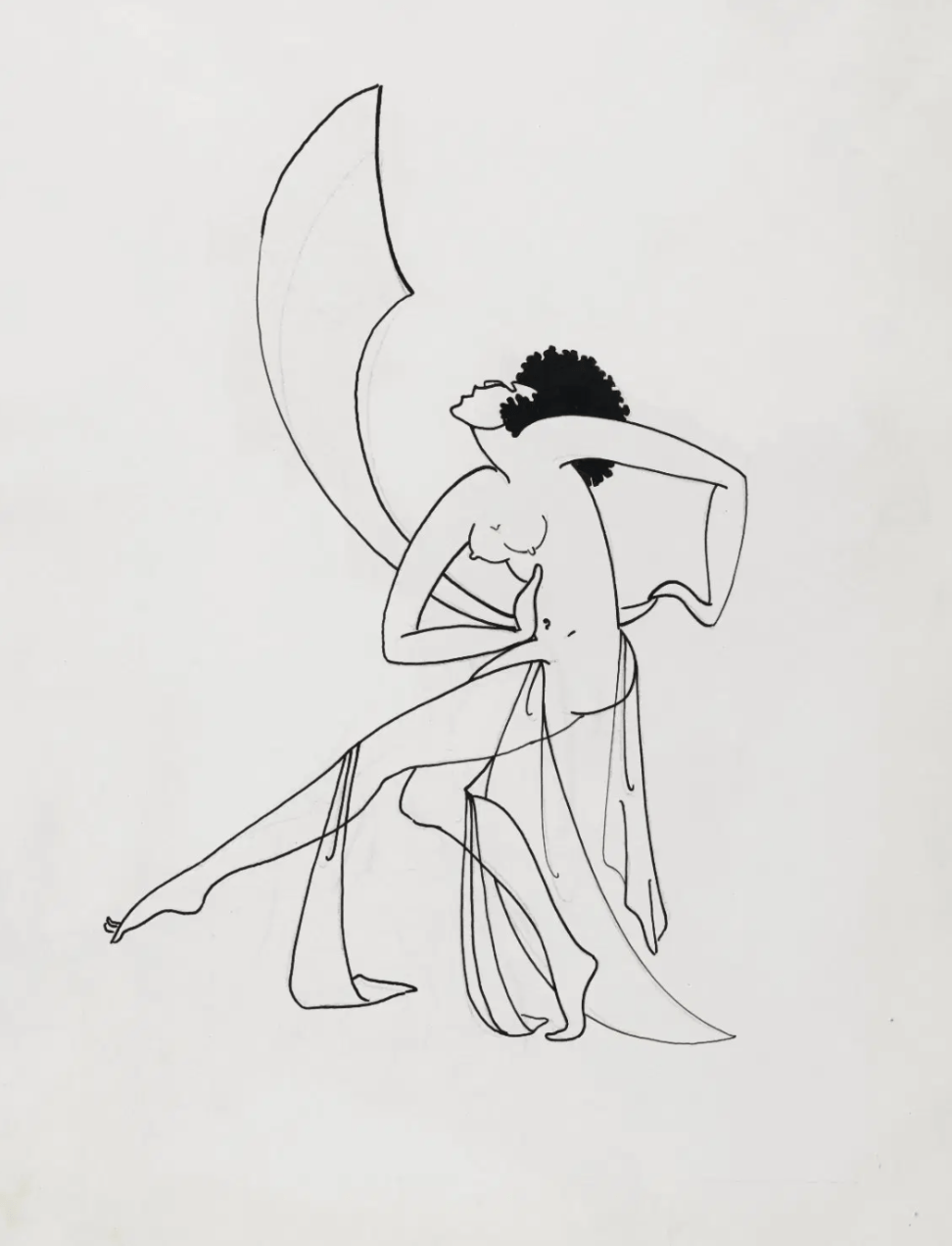
Featured Image: Honor Adams


[1] Quotes provided are taken from Næss’s ‘The Environmental Crisis and the Deep Ecological Movement’ and ‘The Shallow and the Deep, Long-Range Ecology Movement.’

Categories
Poetry

I am standing in the rain tonight

By May Thomson

The wind, making itself manifest,

Is possessing the vertical sheets of night—

Silver, chiffon.

Flour-fine and unbiting,

Glittering my arms with soft, pale vermillion,

The rain dresses me in a cool, satin shirt. 

‘I am dressed just like the wind,’ I think. 

And the wind, in its blouse, stays close at my back. 

I take a drag of soft, black evening 

And watch the motion of invisible things.

Featured Image – Toby Dossett

Categories
Culture

“The summer of my life”: The Value of Sunburn in Queer Writing

By May Thomson

There is a short fragment of Sappho that simply reads: ‘you burn me.’ With these three words (just two in ancient Greek), she exquisitely conveys the intense, consuming nature of love. They can also be read as one of the earliest uses of burns as markers of queer love – a metaphor Chloe Michelle Howarth reanimates and makes titular in her debut lesbian novel, Sunburn.

Sunburn, true to its name, is a stinging, red-raw account of first love. The novel follows Lucy as she falls in love with the startlingly unapologetic Susannah. But, of course, there is always Martin – Lucy’s doting, handsome-enough friend, who everyone in the claustrophobic Crossmore expects her to marry. Martin is safety, while Susannah is, in the fullest sense of the word, divine happiness.

It is Susannah – loud, passionate, and fiercely loving – who wins the reader’s heart (as well as Lucy’s). The other characters lack the same depth; Martin is a flat character who exists to perform a narrative function and Lucy is a dull mirror, at once uncompromising and reflective, prioritising her reception over her internal reality –  pleasing no one in the process. Susannah, conversely, is depressingly patient, clawing at the idea that Lucy will choose her loudly and leave the ‘sweet wastleland’ of Crossmore behind. Perhaps one of the greatest tragedies of the novel is that, even after choosing Martin, Lucy loses everything she has so desperately clung onto. And none of the pain was worth it.

Like love itself, Howarth’s imagery is starkly contrasting – blending the thematic threads of sunlight and faith with visceral, bodily imagery: ‘I am all wounds, Susannah, and you are the loveliest pus. Flooding in to heal me. Yellow as the sun.’ These lines reflect the unlikely blend of the corporeal and sunny. The text feels, as a result, as grounded as it is lofty – as solar as sickening. A study in cognitive dissonance, Lucy’s wild emotions set the rhythm for the text, sending us volleying back and forth between mad, unapologetic love, and guilty, repentant cowardice. Despite being a girl, Susannah is more than Lucy could ever have imagined and later, when she leaves to travel and take other lovers, she remains unresolvedly present.

There is threefold value in the sunburn metaphor for queer love. First, it represents queer joy; lesbian love is sun-like – dazzling and bright. The sun becomes a figure of vitality and affirmation, casting queerness as something vivid – even life-giving. Second, the sun motif represents truth, picking up common associations with light and honesty. To step into the sun is to step into visibility – but this comes with risk. Exposure can be painful, and the resulting ‘burn’ reflects the often painful and strikingly visible cost of living openly. The metaphor thus captures the ambivalence of truth: it is illuminating but not without harm. 

Sunburn also speaks to the themes of pain and visibility. Unlike a hidden wound, a burn is raw, blistering, and marked on the skin for others to see. It is a public record of one’s exposure, suggesting that queerness (or, at least, the reception of it) leaves traces that are not easily concealed. Thus, sunburn becomes a kind of memory, imprinting on the body beyond the moment of exposure and contact. Likewise, the temporality of sunburn elevates this representation; it’s a delayed reaction, surfacing hours after a day in the sun. 

Queerness, likewise, is latent – often belatedly realised. As Eve Kosofsky Sedgwick reminds us, shame is not only wounding but generative – a mark of exposure that both hurts and makes queer identity legible. Sunburn, in Howarth’s novel, works in exactly this way: a searing trace on the skin, painful yet luminous, a record of love lived under the risk of visibility. This exposure carries a double valence, then, as it is framed as at once vital and wounding.

This metaphor, standing in opposition to metaphors like the closet and the shadow in its focus on visibility, judgement, and joy, clarifies the dynamics between Lucy and Susannah. When Lucy lies in the sun, Susannah lies beside her. Susannah is no Juliet, however, and is not equated with the sun consistently. The sun represents something beyond a lover – an external force that shapes queer life – and it shines on both girls. The metaphor also has implications for heterosexuality. While heterosexuality, for Lucy (or the queer subject more broadly), might be imagined as a life lived in shadow, queerness is figured in searing light. The sun figures as a metaphor for queer love that does not simply encompass judgment and shame, but also the conditions of unapologetic and honest existence. 

For all its sadness, Sunburn cannot be reduced to a lesbian tragedy. By treating sunburn as both wound and illumination, Howarth adds to a wider tradition in queer literature that understands desire as inextricably bound up with exposure. This metaphor does not simply describe the romance between Lucy and Susannah, but reconfigures how we read the visibility of queer love – as something at once joyous, wounding, and indelible.

Feature Image: Pinterest

Categories
Poetry

Wind-up Merchant

By May Thomson


The aliens arrived at bathtime,

Whirring through the soft, black evening

In the starry galley we never spied.

You, seeing everything, would point:

There – and again there!

Then your brow would ripple – skull plates

In sudden, continental drift,

Listening carefully for something…

Catching a blurry, infrasonic word.

Little Heather, still with her aureate curls,

Would start to pout and redden,

And when a lone tear plashed into the spume,

Mother would snap your name,

And you’d parcel the bairnie into her towel,

Admitting there were no aliens at all.


When you refilled the porcelain tub, 

You’d tell us of your days as a shimmering girlish thing,

With glassy scales and webbed fingers.

Of the utterly clear sea and its glowing beings.

How you’d cover miles and miles

In the thrashing waters off the Moray coast,

Before you traded it all in for something new,

Hauling yourself up and across the wet sand and,

With a mouthful of seawater, deciding to be a father.


You were so big, in the fullest sense.

I don’t know how you managed 

To squeeze into that signed box.

Even now, some part of us

Is stuck in that bathtub – 

In our hazy dreams, we still see you,

Eyes gleaming, chest rising. 

We will wait up for you to reemerge, 

To give up on your cruellest trick yet –

For your wife to scold you

Into revealing your hiding place.

Categories
Perspective

Queer Paper Trails: Love in the Victorian Queer Archive

By May Thomson

There remains an oddly enduring idea that queerness – and particularly Sapphism – came bursting into existence with all its rainbow ribbons at the precise turn of the nineteenth century. With the exception of Wilde, Victorian LGBT literature seems utterly elusive – lost, if it is there at all. 

This is, of course, a myth. And manifold factors work to mystify, omit, and  revise queer literary history. Saliently, many pieces of literature were never actually written, with the queer Victorian fearing the consequences of inhabiting a space beyond contemporary notions of virtue. That said, the Victorian era saw the beginnings of a movement towards sexual emancipation and, despite the dominant current of sexual repression, nineteenth-century sexologists like Havelock Ellis became pioneers in gender and sexuality studies. 

Victorian queer invisibility also arises from modern impressions in the enduring critical hesitance when interpreting literature and primary sources as in any way LGBT. This is an idea Susan Koppelman articulates compellingly in the preface to Two Friends, a brilliant collection of nineteenth-century lesbian short stories by American women. In opposition to queer denialists, who claim that queer identity is being retroactively imposed, she writes: ‘if we read about a man and a woman loving each other in the way… that Abby loves Sarah in “Two Friends” … we would not wonder what the story was about or quarrel about how to label the relationship. We would know.’ Her frustration is clear, and her stance invites a shift in reading practice. She later says, of the stories in the collection, that they were chosen because ‘they feel like lesbian stories to [her]’, encouraging readers to trust their own affective responses – an approach that borders on a reader-response, even phenomenological, reading of literature, with meanings emerging from lived experience and perception rather than rigid taxonomies. 

As a result of both the uneasiness with calling texts queer and the underrepresentation of explicitly queer voices in the historical record, the practice of archiving becomes crucial for the preservation and restoration of this overlooked part of literary history. Creating and engaging with banks of primary sources is essential to the work of LGBT literary recovery, offering the possibility not just of uncovering lost texts, but of contextualising, interpreting, and learning from them. Rooted specifically in the Dickinson College archive, this article will trace some forgotten queer literary fragments and ask what it means to remember that we have always existed – loving, creating, and leaving traces where we were not meant to. Queer love and identity were not absent from the Victorian world but rendered illegible by dominant moral standards. The practice of queer archival recovery, as exemplified by this archive, offers not just historical restoration but a radical reimagining of how we read, remember, and recognise love.

‘The world was on us, pressing sore;
My Love and I took hands and swore,
     Against the world, to be
Poets and lovers evermore’

Written in the shadow of Victorian respectability, these lines declare an unwavering commitment to authentic love in a world that refuses to see it. They honour devotion and literary vision seemingly powerful enough to fuse two beings into one: indeed, the vow above belonged to Michael Field, the shared pseudonym of lovers and writers Edith Cooper and Katharine Bradley. The pair, though now largely obscure, were acclaimed by contemporaries Robert Browning, Algernon Charles Swinburne, and George Meredith, with Field deemed a promising talent before ‘his’ womanness was erroneously revealed. Whilst analysis of the literature of Michael Field could (and, in my view, should) fill thousands of pages on its own, this fragment is just one of tens of documents in Dickinson College’s Victorian Queer Archive. The archive, established by Professor Joanna Swafford, Professor Sarah Kersh, and teams of their respective students, aims to address the lack of publications of queer texts and to contribute to a fuller picture of Victorian literature. Accessible to anyone and fully digitised, it is one of the very few archives that seek to document and celebrate the often overlooked but certainly extant records of homoerotic desire, love, and identity. 

   ‘There was a very nice pretty young lady, who I (a girl) was going to be married to! (the very idea!). I loved her and even now love her very much.’    

This extract, from 1844, comes from the diary of ten-year-old Emily Pepys, recounting a dream she had the night before. It is an extraordinary little artifact – seemingly unremarkable, yet brimming with emotional and historical complexity. Notably, Pepys recounts her engagement not with shame, but with curiosity and warmth. However, she also makes a specific note of her gender (‘I (a girl)’) in a parenthetical aside, as if trying to reconcile the dream self with the waking self. This seems a moment of cognitive dissonance – a flicker of questioning that complicates gender identity and desire alike. This demonstrates that queer feelings do not emerge from cultural indoctrination or some ‘modern ideology.’ They are – they always have been. But, instead, are often complicated or diminished by the world of heterosexual norms and expectations. Indeed, she later describes hoping she will be ‘let off’  for her dreamy, forbidden affection. 

Whilst from a constitutional perspective the story of Queen Victoria refusing to criminalise sexual relations between women as they ‘did not do such things’ is impossible, lesbianism has been particularly overlooked throughout modern history. This text is a study in the consequences of ignoring queer love and existence, serving as a time capsule of a world that could not conceive of love between women.

‘THE VOICE OF SALOME: Ah! I have kissed thy mouth, Iokannan, I have kissed thy mouth. There was a bitter taste on thy lips. Was it the taste of blood? . . . Nay; but perchance it was the taste of love. . . . They say love hath a bitter taste. . . . But what matter? what matter? I have kissed thy mouth, Iokannan, I have kissed thy mouth.’

In this brilliant fragment, Oscar Wilde offers us a different but equally rich example of queer desire, existence, and resistance in the nineteenth century. Wilde is a central figure in the gay literary canon, not simply because of his sexuality, but because queerness permeates his work. Although Salome’s desire here appears heterosexual, Wilde saturates his play with queer longing and aesthetics: gender inversion, camp excess, and erotic obsession. Her desire – exemplified through her stream of excitable interrogatives – is excessive, theatrical, and repetitive, even bordering on self-parody in its sheer sensuality. Salome has also been reclaimed in queer readings as a gender-transgressive figure for unapologetically commanding male attention, sharply refusing passivity, and ultimately dominating the male body. Indeed, Wilde’s rendering of Salome was deemed scandalous at the time for disrupting Victorian gender roles and sexual decorum. This is an excellent example of Koppelman’s idea about the ‘feel’ of text. Whilst not explicitly describing a queer relationship, this text exudes the flamboyance and theatricality often integral to gay culture. One example of Salome being viewed through a queer gaze is Richard Bruce Nugent’s artwork. Nugent, a gay writer and painter, depicted Salome as a queer symbol of sexual defiance. Ellen McBreen argues that he was influenced by a ‘widespread gay understanding’ of Wilde’s version, further evidence of the value of perception and queer readings.

To trace queerness into the Victorian archive is not to impose modern, anachronistic categories, but to recognise what has long been obscured, silenced, and missed out of history. These texts, however veiled or fragmented, do not simply gesture towards queer existence but assert it, often with more clarity and courage than they have been appreciated for. 

The art of queer archiving is about both recovery and reanimation, making visible that which dominant histories have rendered unreadable. In reading these fragments, we not only challenge a heterosexual canon but honour the reality that queer people have always been here. This archive isn’t quiet. It hums with coded longing, risk, beauty, and defiance. To read – and, indeed, to create – archives of this sort is to remember that queer people were not just present: they were passionate, prolific, and determined to write themselves into eternity.