Categories
Perspective

Godfrey’s Popcorn: An Elegant, Elevated Take on a Classic Cinema Snack

By Matt Lo

Popcorn, encased in a rich and buttery history, first started popping up in the Americas thousands of years ago – but has far transcended its original purpose as a means of ceremonial decoration, now a delicious snack enjoyed by all. Sweet, salty, caramel – popcorn comes in all shapes and colors, ranging from diabolical flavors to more subtle appreciations. Throughout my life, I have eaten popcorn from far and wide, trying innovative flavors from various manufacturers, however, there has always been one that stood out against the rest: Garret’s Popcorn. 

Godfrey’s Popcorn, starting from humble beginnings, was born from a love of film, design, and flavor. Being a British soldier during the Second World War, Alfred Godfrey saw that cinema became a much-needed escape, with a particular fondness for fresh popcorn served in the picture house. Driven by a desire to create something tasty, Godfrey’s Popcorn was created; a sweet new maker who experimented with unique flavors, shocking customers. Luke Godfrey, Alfred’s grandson and the co-founder of the company, has recently opened a store in Covent Garden, reintroducing his grandfather’s techniques to a modern audience.

As you may have gathered, this article is not about the best popcorn I have tasted, but rather the second best. Last week, I mistakenly ordered a box of Godfrey’s Popcorn, thinking it to be Garret’s, the best popcorn I tasted as a kid. Ecstatic about the prospect of reaching this high again after a ten year wait, I cracked open a bag. At first, although shocked at the discovery that this popcorn was, in fact, an imposter, I was pleasantly surprised. The caramel was well balanced, perfectly savory and not too sweet, with subtle accents of vanilla and a crunch unmatched. The second bag was one filled with a Biscoff flavored delight. The choice of flavor intrigued me, yet it also left me with a bit of skepticism, fearing it may overpower the natural flavor of the corn. My doubt, however, quickly became a feeling of ecstasy as a moment of realization struck me – popcorn is the best medium for which the brilliance of Biscoff may shine. My fears instantly vanished as the two flavors danced in my mouth in a graceful pás de deux, balancing each other perfectly. The third and final bag was the one I was most excited for, a cheddar cheese flavored popcorn. As an avid cheese fan I knew instantly that I would enjoy this, yet I was not prepared for what came next. The savory cheesiness enveloped my mouth. Each bite, each crunch, left me craving more. Delivering on its signature funk, the cheddar cheese tasted authentic and of high quality, which paired beautifully with the popcorn, being a perfect vessel to deliver such deep flavors.

Although not my intended purchase, I was more than happy to receive this enormous box of popcorn, as one should be. The flavors were playful and inviting and worked brilliantly in the canvas that is corn, with enough surprise to keep taste testers on the edge of their seat. Mass-produced popcorn, being the preferred choice of many, has long overshadowed family run makers, often sacrificing quality for convenience. Commercialization of the product has led many small businesses to shut down due to rising pressure from larger companies, forcing smaller competitors to either bend the knee or leave. I hope, upon reading this, that we give more thought into the ethical concerns of our purchases, whether we are supporting a business worth our time, and if a tastier alternative is out there. The bright red logo of ‘Godfrey’s’ is sure to be a household name, being an example of dedication to craft, quality, and just a hint of luxury. With excellent customer support and a speedy response team, why shouldn’t you go for Godfrey’s?

Featured Image: Meg Boulden

Categories
Travel

‘In the Precincts of The God’

By Edward Clark

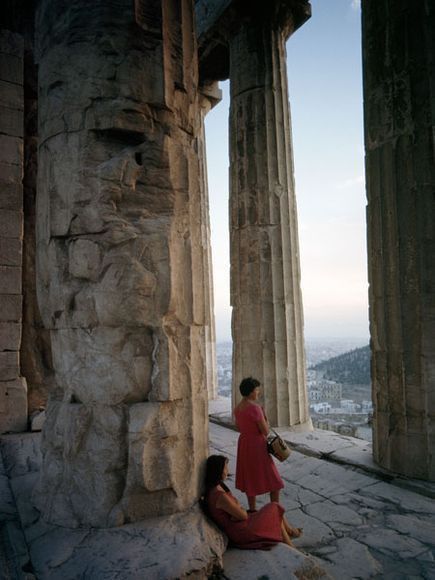
After queueing for half an hour, bringing a bit of British tradition to the centre of Athens, we finally reached the entrance to the grounds of the Acropolis. The memory of midday’s sun was already fading in the uncharacteristically temperate afternoon air. I scanned my ticket on my phone and went through the gate.

‘This is a single ticket’ 

After some discussion with the Greek staff, holding up the line behind us, my dad accepted that he’d failed to buy five tickets and had only bought one. Through the fence, we agreed that I’d get our money’s worth and see the temple. I shouted that I’d see them later and so ambled on: alone, phone dead, sun just over the horizon.

Halfway up the trail to the Parthenon itself, I took a break at a bench, and looked up to find what appeared to be a small shrine, half-derelict. I remembered a poem that I studied at A-level. 

It was midday, mid-May, pre-tourist sunlight / In the precincts of the god. / The very site of the temple of Asclepius.’ 

Despite the fact that it was neither midday nor mid-May, I felt a sort of connection to Seamus Heaney and a nostalgia for my past self who romanticised the site two years earlier. Completely on my own, I had the opportunity to sit and bask in the sunset,  soaking in a pilgrimage site that had been renowned as a place of healing for hundreds of years. 

It did seem a bit smaller than I’d imagined. ‘The precincts of the god’ had stimulated images of a grand sanctuary in honour of Asclepius and Hygeia, not a small room. But no matter. I sat and focused, enjoyed my solitude – pilgrims to the Parthenon walked past, paying no attention to this seemingly inconsequential structure. 

‘They don’t know what they’re walking past.’ I felt a secret pleasure in being the only person to properly admire the Asclepieion. After ten minutes were up, I stood and read the sign- ‘This sanctuary was one of several Asklepieia in the ancient Greek world’. I’d misremembered the poem. The main site was at Epidaurus, a completely different city. And not one we were planning on going to. I moved on, unfazed: my ten minutes meditation didn’t seem any less spiritual.

Image Credit – Pinterest

Categories
Poetry

humane

By Isobel Duncan

small lessons we learn as children—
don’t let them see you cry,
and some foods are good,
and some foods are bad,
and laziness is the bane of productivity,
and if he hits you it means he likes you, and don’t snitch, don’t tattletale, not ever—

are, in many ways, damning.

but the one that chased me 
the furthest through the tunnels
of this unsolvable labyrinth
that we call growing up, is that
‘the most humane thing you can do for 
a firefly is to poke holes in the lid
of the jar you caught it in.’

i thought i was so charitable
to shove a toothpick through the tinfoil
cinched atop the jar keeping it captive.
and i would call it kindness.
so, it is only natural that as i grew,
i became content with semi-suffocation,
so long as i was offered
a few gulps of fresh air every now and then.
it is only natural that i thought
the people who fed me
oxygen through straws,
like a jar-bound firefly,
were saints for being so kind
as to even let me breathe.

for the most humane thing 
you can do for a firefly
is to not catch it
at all.

Featured Image: Toby Dossett

Categories
Culture

The Romance of Rail: On Cinema’s Locomotive Love Affair

By Matthew Dodd

Consider the train. There is, perhaps, no greater symbol of the industrial age, of mankind’s advancement from agrarian primitivists to mechanised modernists than the hulking mammoth of steam and steel, rattling through sceptred fields and countryside. It permeates the psyche of modern society; the great communitarian dream that we might, united by rail, draw nations and continents together as one. Even as its atomistic rival, the dreaded motorcar, threatens its position, it remains a potent image of our contemporary world, and the hope of what it might be. No wonder, then, that it has seeped so heavily into the language of visual storytelling. The train is, like the telephone booth or the six-shooter, one of those enduringly anomalous staples of the moving image. How else to tear lovers apart or prompt random meetings across a train carriage? For over a century, since cinema’s very conception, the train has been an indispensable tool of symbolic relevance, a tool too often overlooked as merely perfunctory. In considering and unwinding the manifold resonances of the train on film, we might come to a better understanding of just how spiritually relevant this marvel of invention truly is.

Britain’s cultural consciousness, to its great disadvantage, lacks the figure of the cowboy. Where American national storytelling may always fall back on the image of the brooding sheriff traipsing endless flatlands on horseback, Britain is forced to recede deep into its medieval past to find any similarly entrancing historical archetypes. Perhaps, then, we supplant the train as our own kind of cowboy. A post-industrial mammoth, stoic and unfeeling, rounding the hills and valleys with unitary purpose. 1936’s Night Mail, a documentary – perhaps the first in Britain’s cinematic history – charting the progress of the overnight postal train, accompanied by a specially commissioned W.H. Auden poem and Benjamin Britten score, certainly makes this argument. The train hurtles from London to Scotland, an egalitarian troubadour at the nation’s service: ‘letters for the rich, letters for the poor, the shop at the corner, the girl next door’. Workers tirelessly sort through envelopes, placing each on specially chalked town-specific shelves. Mailbags are yanked from hooks by purpose-built nets at passing stations with a mechanical, stolid brutality. Auden’s poem is set to the metre of the train’s passage, a relentless onslaught of brusque couplets, dispassionately toasting the broad cross-section of British life past which the engine runs – ‘letters from uncles, cousins, and aunts, letters to Scotland from the South of France’. That the film, produced by the Post Office so as to increase public perception of the service and to dissuade the challenge of privatisation, should choose to tie the figure of the postal engine into this poetic system is something of a small wonder. This is no mere advertisement, but an argument for the incontrovertible necessity of the railway to British life. Across Night Mail, the railways become veins through which the blood of the nation runs. The train is positioned as a uniquely British kind of hero: deferential, resolute. The documentary serves as a hymn to this unsung champion of modernity. There is a note of George Eliot about the whole thing, an industrial echo of Middlemarch’s closing paragraphs: that things are not so ill with you and me as they might have been is half owing to the number of locomotives which have run a hidden service from Euston to Aberdeen and rest in unvisited depots. 

The conclusion of Night Mail, the poem and the film, is a revelation about the fundamental importance of the postal network, its manifold powers of connection, and thus the train’s ultimate duty in serving the people of Britain their correspondence, ‘for who can bear to feel himself forgotten?’. Films such as Night Mail, state-funded promotions for a nationalised train network, speak to a dream of post-war British connectivity: a nation at one with itself, bridged by a selfless and noble fleet of knightly engines running, unthanked, across the country. The final such film, a sequel to Night Mail, was produced in 1988, directed by Chariots of Fire’s Hugh Hudson and scored by Vangelis, with additional stanzas added to Auden’s poem. This modern version placed emphasis on the scope of British Rail’s commuter classes, drawing together, once more, the mess of British life intertwined by the railway: ‘the teacher, the doctor, the actor in farce, the typist, the banker, the judge in first class. Reading The Times with the crossword to do, returning at night on the six forty-two’. The film, the last to be made pre-privatisation, ends on the still image of an elderly couple reuniting with their children and grandchildren at the platform’s edge, overlaid with the slogan ‘Britain’s Railway’

The train’s stoical connotations give rise, by turn, to a rich romantic resonance. In 1899, two silent films entitled The Kiss in the Tunnel were produced, the first by George Albert Smith and the second by Bamforth and Company. Neither are especially complex works of cinema, featuring nothing more than establishing shots of a train entering and leaving a tunnel, as well as an interposed scene of a couple stealing a kiss in the darkness of the carriage. Between the two films, the only major difference is that Bamforth’s – known for their salacious seaside postcards – significantly increased the passion of the couple’s kiss. By combining the couple’s scene with those of the train entering and leaving the tunnel, Smith’s film represented the arrival of narrative editing in filmmaking. In its way, this minor locomotive love affair invented the very notion of narrative cinema. For over a century, then, the intrigue of the engine – the jeopardy of the darkened train tunnel, the intimacy of the compartment – has brought forth its romantic quality to the moving image. 

In his seminal new wave classic Les Parapluies de Cherbourg, Jacques Demy mounts his camera to the moving train which tears young lovers Guy and Genevieve apart. Genevieve recedes into the horizon as the train/camera removes Guy inexorably from her. The train, for the lovers, represents the inevitable: a separation as unfeeling and unshakeable as a railway timetable. Thus, the train becomes a method of industrial timekeeping, hours measured out by the comings and goings of engines and carriages. Meetings and affairs are cut short by the necessity of catching a train, a train representative of the outside world – a marriage avoided or a life escaped. Such is the case in Brief Encounter, David Lean and Noel Coward’s masterpiece of post-war British filmmaking. When Laura, the despondent housewife, and Alec, the kind-hearted dentist, meet by chance in a picturehouse, it is the waiting room of Milford Railway Station which becomes their sanctuary: an Edenic place of stillness, free from the rigidity of that real life represented in the arrival of the train. Whilst there, in that liminal space between destinations, they have a kind of freedom, yet a freedom which is ever worn down by the movement of their respective trains towards their station. It is, once more, the train that separates them from one another, and the fear of missing a connection which robs the pair of a real goodbye. The engines represent the reality to these romantic fantasies, tying us invariably to a world which works strictly to timetables and appointments which must be met. As in Night Mail, there is something decidedly British in the character of these trains, apathetic in the annihilation of high-flown romance. The lovers, whose respective worlds are obliterated by their separation, must move on dispassionately, catch the next train, and continue their lives.

The logical counterpoint to the heartbreak of the railway connection is found in Richard Linklater’s sprawling epic of love and transport, the Before trilogy, a cycle that dwells resolutely in the space between trains, and probes the danger of disrupting the regular flow of the timetable. In Before Sunrise, the young ramblers Jesse and Celine – a wandering American 20-something and a French university student – catch eyes across a train carriage bound for Vienna. They exchange reading materials, get to talking, and decide to delay their respective commitments by a day, hop off in Vienna and spend a night together. They amble through the city, falling in a kind of condensed love – the kind of love that perhaps works best with an established time limit – before being borne away by their respective trains. They promise at the platform to meet again in the same spot, in one year’s time. Eight years later, Before Sunset picks up their narrative with the two meeting again for the first time since their lone night together. Erring slightly away from the world of the train, their reunion is marked by a real-time countdown to Jesse’s return flight to America. Surely, were a direct rail route between Paris and Los Angeles established, Linklater would’ve used it here. Nevertheless, the film goes to great lengths to accentuate that kind of rigid timekeeping interposed by a train (plane, in this case) timetable, counting out minutes under the stress of a connection to be caught. The revelatory, subversive decision made at the end of the film, when Jesse elects to lounge in Celine’s apartment at the expense of his flight becomes a transcendentally romantic disruption of the mode of industrial timekeeping. Rather than play his role as modern man, zipping to an airport gate and dashing through security, Jesse does the radical opposite: he wastes time. ‘Baby,’ Celine tells him, ‘you are gonna miss that plane.’ When Jesse, with a coy smile, looks up and says ‘I know’, it is as a man broken free from the oppression of the timetable and, by extension, the outside world. 

Consider, then, when next you race for the TransPennine express or collapse into a seat on the LNER service from Newcastle to Edinburgh, that you are engaged in a sacred communion with an industrial object riven with soaring notes of romance and melancholy. You are the mechanical cowboy, the lovesick housewife; the railways the canvas of your own story. Consider the train. 

Featured Image: O. Winston Link Museum Archives Collection

Categories
Reviews

A Perfect Rendition of Respectability’s Imperfections – DUCT’s ‘The Importance of Being Earnest’

By Freyja Hollington

‘Well, I cannot watch a drama in an agitated manner.’

When Oscar Wilde took up the charge of presenting the social, he did so through the lens of satiric enjoyment. The unnecessary niceties and rules of manners that Wilde saw as both hypocrisy and absurdity poured forth into his characters and have created a drama that continues to hold resonance. Whatever distance we so wishfully place between ourselves and contemporary nineteenth century audiences, it is undeniable that the tangled web of silent social scriptures that Wilde exposed remains steadfast and unshakeable today. English hypocrisy need only be observed in the unspoken rigidity of orderly queueing everywhere except the pub, where the chaotic push toward the bartender seems to acknowledge how easily we forget ourselves in the pursuit of pleasure.

This essence of Oscar Wilde, his smirking dialogue and satirized stage, are so perfectly encapsulated by Sam Bentley’s direction of The Importance of Being Earnest with the Durham University Classical Theatre Company. The usual anxieties that accompany any theatregoer upon taking the stairs to their small – and not always too comfortable – seat melt away, as the world of Wilde unravels before them. The sword of dread which hovers at the inhale of a performance is swiftly lost, replaced by the thrill of anticipation that this will be brilliant. From the very moment the curtain lifts, the company achieves precision in the balance between the comic and the biting.

Opening the performance as perhaps the clearest mouthpiece for Wilde himself, the hedonistic bachelor and gad-about Algernon Moncrieff is central to the establishment of tone. In the hands of the talented Cillian Knowles, Algernon, and indeed the play itself, comes to life. Knowles’ first steps onto the stage are masterful, as his physicality conveys that which we have yet to learn but begin already to know. Amplified by the brilliance of costuming, Knowles as Algernon epitomises the freedom of carelessness in a system built upon self-criticism and self-regulation. Undone, almost naked, and embellished with the wisps of a lavish silk gown, Knowles saunters through the set toward audiences. In a striking moment of dramatic vision, the production utilises a transition into diegetic sound, as the playful music accenting Knowles’ appearance becomes the jovial and light-hearted melody of his own playing. The piano, as a recognisable symbol of higher social class and elevation, under the blithe and undisciplined hands of Algernon, becomes the image of social subversion that is definitive of the wider play. 

As his counterpart, the polarised figure of Jack (Earnest) Worthing enters the stage from the opposite wing and is, from the first, the antithesis of Algernon. Introduced in perfection of style, speech and posture, Jack, played by the sensational Edward Clark, illuminates the extent of Algernon’s individualism, whilst also conveying the sheer impossibilities of upholding social expectation. Dressed likewise in perfect costume, Clark enters in a sensible tweed three-piece suit, standing stately and self-possessed, in the shadow of his friend’s previous exposure. Where Knowles’ physicality is instrumental to his characterisation, Clark’s performance of Jack is centred in his control of voice. Always elegantly and clearly spoken, Clark’s Jack presents the nearest facsimile to respectability that Wilde, and indeed any individual, could achieve. 

It is not an uncommon critique of Wilde that his construction of character falls slightly in his presentation of women, and while The Importance of Being Earnest perhaps weakens itself by the balance of genders in the play, the central women of this production are unmissable. As the intended ‘Jack’ of the women set, Miranda Pharoah’s Gwendolen Fairfax emerges as a personification of contradiction itself. Emulating the sincere self-importance and charming arrogance of Gwendolen, Pharoah’s performance is perfection. Upstanding, self-possessed, and decisive, Pharoah’s Gwendolen returns something of autonomy to the women of Wilde, as the production teases out their greater conflicts of desire and duty, past and present. Pharoah is joined on stage by the entertaining and evocative performance of Roxy Rayward as Cecily Cardew. Rayward is expression itself, alert and receptive in every moment of stage presence, speaking or silent. The brilliance of the wider company to play off one another is epitomised in Rayward, who never parts from Cecily for a single moment throughout. 

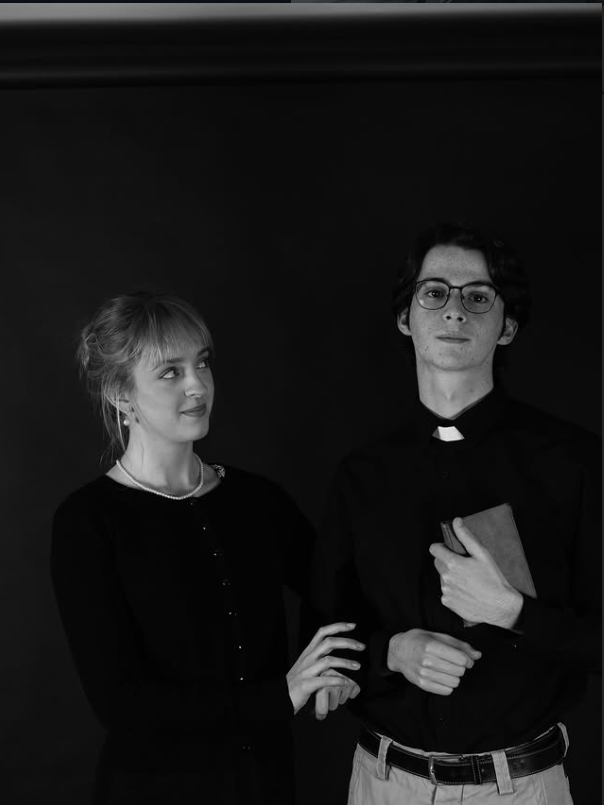
In the character of Lady Bracknell, Molly Bell transforms, speaking as the old voice of England and the origins of etiquette and decorum. Likewise enhanced by the genuine thought and construction of costume within the production, Bell presents the tenuous and flitting grasp that social expectation holds upon itself – never quite solidified, but always conscious of its indispensability. Bell, as Lady Bracknell, becomes intriguingly paralleled in the supporting character of Miss Prism, richly characterised by Olivia Fancourt. Where Lady Bracknell esteems the system through her own superiority therein, Miss Prism’s unflinching dedication to the same notions of order and behaviour interrogate the (dis)advantages of obedience. In her implicit and tactfully conveyed love for the Reverend Canon Chasuble, vividly realised by Noah Lazarides, Fancourt’s Miss Prism questions the benefits for those that adhere to the system; further explored in Henry Skinner’s persuasive performance as the servant figures of Lane and Merriman. 

What the Durham University Classical Theatre Company has achieved in their production of The Importance of Being Earnest is nothing short of remarkable. There is a fine attention to detail and finesse of set, costume and sound, which only intensifies the brilliance of the cast. The dedication of the company to this creation is evident in every element, and the love and loyalty of DUCT to their performance is palpable. As one of the strongest student performances held in Durham, The Importance of Being Earnest  will be remembered and treasured fondly and often by audiences for years. 

Image Credit – Durham University Classical Theatre

Categories
Reviews

Growing Up with LAUSSE THE CAT

By Matty Timmis

The Mocking Stars has arrived, seemingly out of the blue, and as I write this I am wondering if I am even capable of lauding this new album the way I did its predecessor The Girl, the Cat and the Tree. 

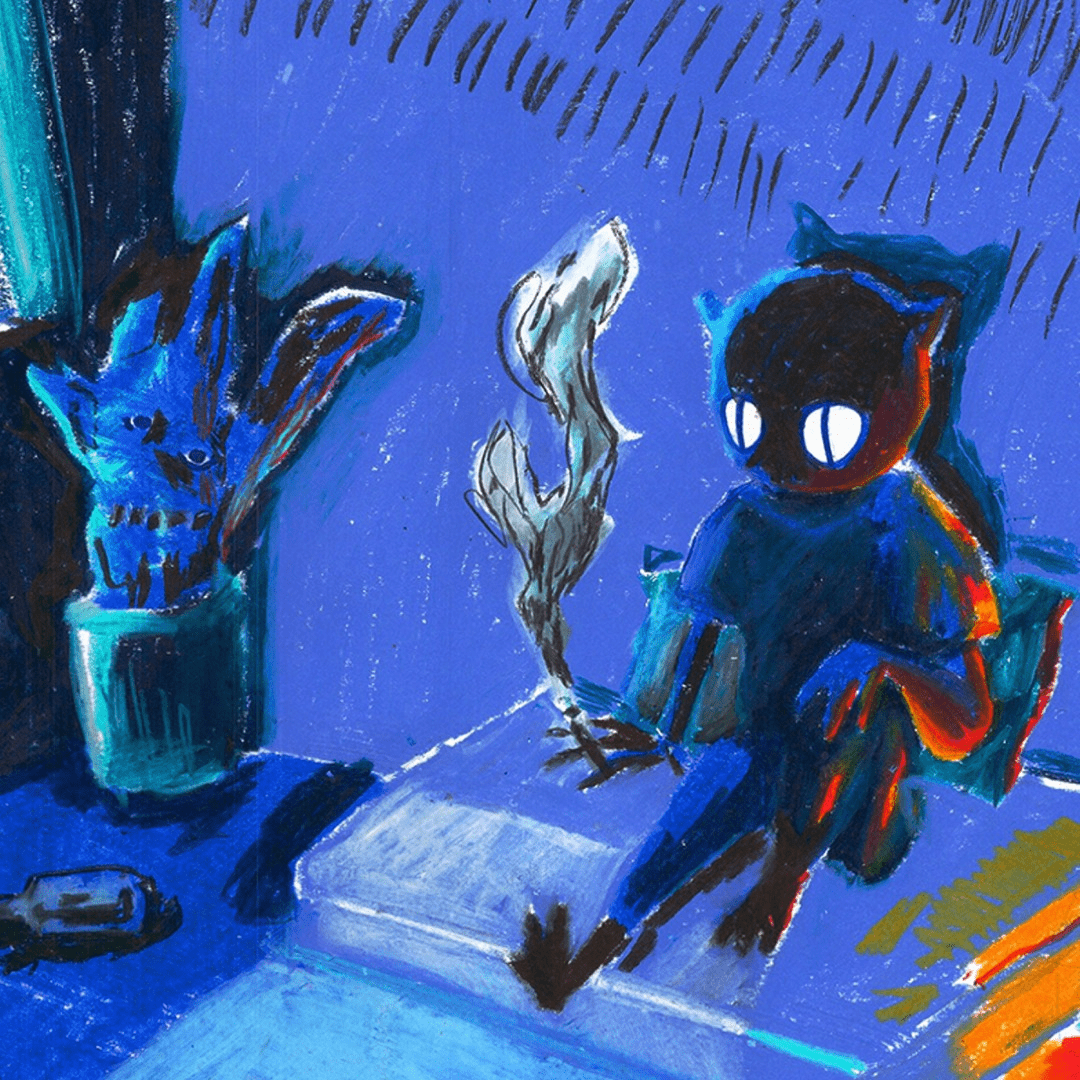
For the uninitiated, LAUSSE THE CAT is the character inhabited by an anonymous rapper,  spinning tales of a semi-fantasy life from Hyde Park, Leeds. The maestro of rippling velvet and head-fucking instrumentals he raps, sings, and orates in both English and French, conjuring strange yarns of louche living; both its pleasures and its consequences. Much like The Girl, the Cat and the Tree, The Mocking Stars is a concept album in the strongest possible terms, one that blurs boundaries of language, instrumentation and genre into something almost reminiscent of a theatre production. This second production drops us into a more adult world, ornamented with far richer, indulgent details and plaintive, mature anxieties. LAUSSE has descended into madness again, this time concerned less with the hedonism and toll of being a student than the reluctant transition from student to functioning member of society. Across 12 tracks our narrator pops up, much as he did in his prior work, to marshal us through the dusk like a ring master in a midnight musical circus. This circus is not concerned with hedonism anymore, but the freakshow of anxiety that makes up post-grad aimlessness. 

The record’s opener, “Blue Bossa”, immerses us in LAUSSE’s sanguine anguish, establishing beneath a muted bebop trumpet and hazy xylophones the insomnia that will lead him through these dashing, and at times uncouth, visions. We meet the ‘mad hatters round sainos’, who seem to offer some company, and an outline of Lausse’s journey begins to take shape. The track ends with increasingly frantic screams of ‘slay bitch’, as consumer items seemingly drive him to hysteria through both their unattainability and gaudyness. The maddening cries of ‘slay bitch’ further move LAUSSE into the delirium of adult life as he realises the only praise he will receive for his capitalist endeavors is an over-used internet speak of the apathetic generation he finds himself in, the anxiety of their situation unable to produce originality. This little squib leads aptly to early album highlight ‘I.D.W.G.A.J’, standing for I Don’t Wanna Get A Job, Lausse articulates the anxieties of the moment between graduation and fully fledged adulthood. He is concerned with getting a driving license and buying a car, all the things that employment and being grown up precipitate. The tension lies in his inability to afford any of this, and as his musings grow the fantasy expands to a life of dripping, idle wealth that seems all the more seductive for its distance, as Lausse saunters off into something starting to resemble a dream.

“The Midnight Hour” then is a more gentle affair, as LAUSSE drifts away from his forlorn reality to the clave pulse of a lounge-samba backing. Here he switches for the first time into a melodic French refrain, and navigates amiably his twilight sinking. A dour sun then operates like an amusing and harmonious bridge of A capella layering, pleading to be spared from the doldrums of employment.

All this builds to our title track, “The Mocking Stars”,  an expansive and apocalyptic epic that sees biblical floods sweeping through Hyde Park, cannibalism running rife, and our LAUSSE beset by a river of tears. There is an undeniable mania to this 10 minute song, dancing through genres and emotions with phantasmagoric ardor. This is an odyssey, warbled through smoke rings and desire, in much the same sense as “Redstripe Rhapsody” was. This however is a far darker affair, the scope of lyrical ambition and musical prowess far exceeding its predecessor’s journey through a Leeds house party as our protagonist sails away, with a rizla for a flag, into a chimerical world. 

“Space Cadet Cat” floats far from the tax payer funded rhythm of the relentless days, providing a rest-bite from the drama with a chirpy dose of the absurd. Similarly the opening chords of “Tea Party”, played on an echoing piano, almost call to mind a Debussy song. LAUSSE updates the surreal imagery of childhood, taking Alice in Wonderland and dreams of astronauts into our current world of angst. Here he reaches furthest from objective reality on his journey, delving into a debauched collective psyche with a naive escapism. Repurposing the fairy tales and space stories of more innocent childhood have certainly been done before, but here our youthful dreams are subverted with such striking precision and such dense interweaving that it is hard not to reflect upon our journey into our current selves.

“Keep Walking” walks us down from the inebriation of our own becoming with a heady kind of lullaby that sees LAUSSE shake loose the timbre of Hades evensong. He stumbles away from his mad hatters, away from his twisted fantasy and reflects upon how he found himself here. “Keep Walking” seems to pull us away from Leeds to potentially explain his absence for the last seven years, falling in and out of love and bars in London, the south of France and Berlin.

LAUSSE seemingly awakens as “Keep Walking” concludes, and finds himself grappling with the consequences of his actions and the destruction they wrought in “Moonlight Waltz”. Redemption creeps in as we are serenaded with a descending progression of vocals that take stock of the voyage we are finishing. A girl appears that offers the tenderness and romance that sustains our feline friend on the penultimate track, another highlight, “Peonies for Breakfast”. Beckoning to us with a welcome reprieve of brass and chorus it is a cathartic evocation of the charms of being loved that add a delicate and heartfelt charm to an album of high strung concepts and questions.

The album’s conclusory track, “Lotus Blossom”, is a more confusing affair, playing like a stoned Kanye song from his Yeezus era. That is not to say it is not energetic, it fizzes with the beeps of a childlike beat over which layered vocals and cultural references welcome LAUSSE back to a reality that seems more palatable. It is a fitting end to a record that sees LAUSSE grown up, still grappling with the same demons and still spinning them off in his languorous, enigmatic drawl, but now with the creeping onus of responsibility. This is a far broader canvas, and whilst still rooted in Leeds it is no longer the flow of a debauched student, but someone pondering where they are going and where they have been.

The first time I heard The Cat the Tree and the Girl it was quite a formative experience for me, bunking off of college, smoking a spliff in a mirror maze with a strange bloke who used a kettle as a book-bag. Then I was enraptured in my mildly miscreant youth, and I thought I saw it yawn out eternal in front of me in LAUSSE’s strange world. Then I was caught up in the vibrancy of living, of smoking a spliff with the boys and trying to pull at a house party. Now as I approach adulthood and consequences turn from abstracts to concrete, self perception grows some facets and the future begins to warble, The Mocking Stars appears ripe to guide me through my newest chapter of living.

As a footnote it is of the utmost importance that you roll a fathead and stick this record on your headphones looking out at the twilight.

Featured Image: LAUSSE THE CAT on Spotify

Categories
Creative Writing

Oysters

By Lenna Suminski

In the escape of answering the what-am-Is that dawned on me and dauntingly demanded, over an extra-dirty, extra-wet gin martini, I gave the perfect answer that I would oh-so-love to be the love interest. This response satisfies, excites, and disarms whichever man it is that is threatening me with a good time and a ring to follow. It is true, though perhaps cowardly. Determinism has governed my life since before my conception. The consummation of my idealisation appeared in the fantastical imagination of my father’s head. His first and only novel was written in a language I don’t understand but is his mother and mother’s tongue–one that he refused to teach me. We have that in common, cool terrains that are our own and solely our own. 

The love interest in his book, one that that 2000s blog posts describe as erotic, erotically dark, erotically masculine, erotically romantic. 

I often feel as though I had no choice but to become her. But I can never know her. I cannot read it. He will never let me know her. 

I was never meant to be a scathing self-empowered person. My gift of performance and beauty and witty intelligence is far too polished to give autonomy any space. 

Every time I fall in love it begins tragically. The only time I have ever been honest was with someone that really did not deserve my confessions: 

I can only be imagined. I can’t exist without other people. 

Why? 

I don’t know. 

We were staring at each other and he had the look that men get when they smell a woman’s vulnerabilities. Sense and Sensibility are what they hate. I imagine his mouth watering at the same time my eyes did. I must have been insatiable. I started to cry and went to my kitchen to make Lady Earl Grey tea from a dashing silver can. He followed me and tried to fuck me on the counter. I let him. I cried and smelled the rose petals in the tea leaves. I didn’t cum, I never do. 

I stopped seeing him because I was too much of a lady and frankly my disgust for him overrode just how much I needed his attention, his obsession. I was the best thing he could ever call his own and we both knew it. And I didn’t let him. I stopped falling in love with him when I had to pay for his oysters at a restaurant he thought to be fancy and he ordered two more spritz after I said I would pay. Talk of money and any anxiety always freaked me out. I don’t like to be aware of it. The fact that he didn’t know how many shells to order revolted me. Men that try to impress without the allocations and importance birthed into them made me nauseatingly abhorrent. I found him embarrassing. Some revolutionary that was being taken out to dinner by a woman he saw as an archetypal aristocrat. 

He didn’t know how to eat oysters and he never bought hard-cover books. He farted in my bed and I couldn’t take it anymore. It felt like the most apt violation a man could do to me. I told him to get the fuck out of my house. He slept with someone much uglier than me the next night. I felt pity. 

And then I felt sad. No matter how much I dislike a man, they will always make me hate myself more. 

I write it in a letter that he would never have the privilege of receiving: 

When I see you again, I will greet you with warmth and loveliness. And I will look gorgeous and feminine and ephemeral. You always liked the fleeting nature of my essence. Though you always did correct me like a child when I would misidentify a philosophical essence. 

I resent the way you’ve reduced me of all my complexities, I used to be able to feel so much more in all the possible worlds and now all I have is resentment. My inside writhe when I think of how you will package and deliver me to a group of self-proclaimed individuals as one of your stories that will reconfirm your eccentricities. At one of your dinner parties, like the last wine and cheese night you invited me to, where the flute players outnumbered those who actually know you, or like you. You confuse admirers for friends. And you confuse the wise with the loud. You confused me as everything else and as God and as a virgin and the whore. I am really none of those. I am really just a woman with a past and present and sometimes I am not even that, merely a person that hopes to have a future as well. 

It is like you’ve stolen me away, to be an anecdote. And it feels like rape though it isn’t, like you’ve taken my insides and my innocence and left me to rot. 

And then I am reborn again and again, euphorically leaping from the heads of Zeus’ except every man wants to have the taste of creation, if only for the sake of squashing that very life anyways. So I am born again and again for you to take me on. 

I can only be imagined. I can’t exist without other people. 

Why? 

I don’t know…Wanna go for another round?

Featured Image: Saint Peter at The Grand National Hotel

Categories
Culture

Broadcast Yourself: The End of the British Asian Auteur  

By Aliza Hussain 

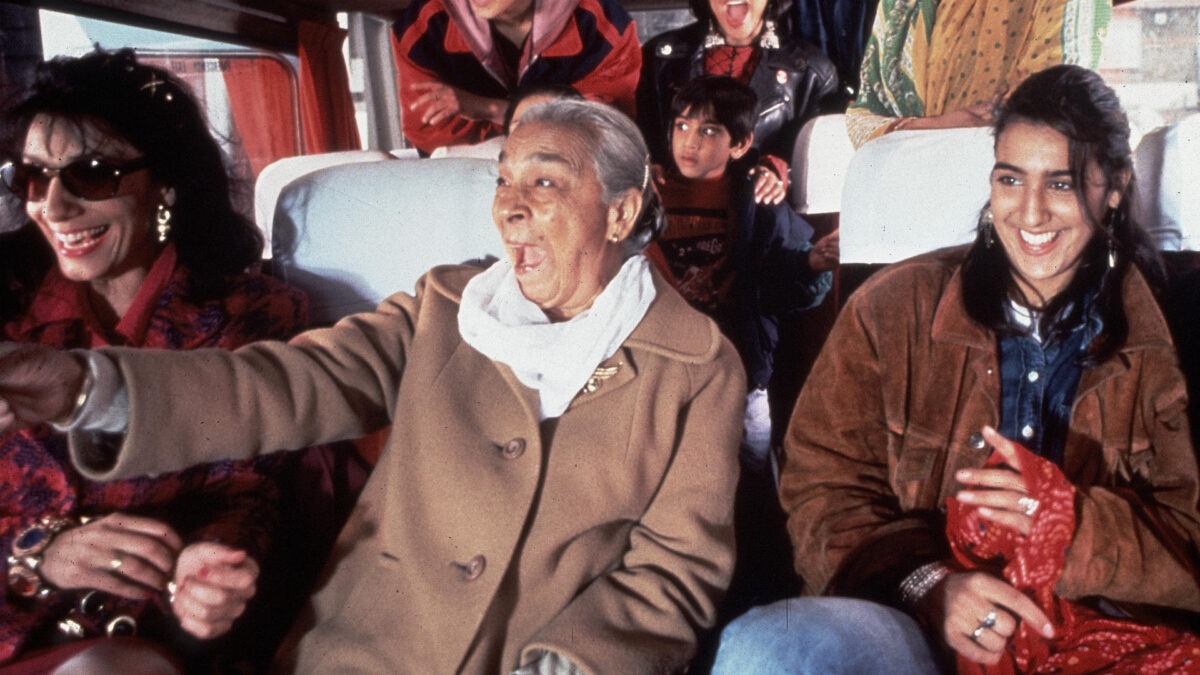
It’s 1990, and a 28-year-old Meera Syal walks into Channel 4 commissioner Karin Bambrough’s office with a modest pitch: a comedy about a coachload of British Asian women on a day trip to Blackpool, lifted straight from the outings she used to take with her aunties. She gets about five minutes in before  Bambrough cuts her off with a ‘Mmh, sounds great,’ and greenlights it on the spot. 

At some point during the past decade and a half, we seem to have decided that  the 1990s were a golden age. I’m sick to death of the compulsory nostalgia  loop, but when I hear my parents talking about their youth again, I can’t help  but understand the mythology. The picture comes quickly. It’s the mid 90’s and  you’re young and South Asian in London; it was only twenty-five years ago  that your parents started from scratch in Hounslow, cursing the bare knees  and booze. You grow up not allowed to speak English in the house and wear  your first pair of jeans at the ripe age of seventeen. But that all didn’t matter  now, they were remixing your music and playing it at Ministry of Sound, you  had Talvin Singh winning the Mercury Prize, Apache Indian and Cornershop  on MTV. Nights like Anokha at the Blue Note and Outcaste at Heaven pulled in  mixed crowds. You could buy T-shirts from Club Kali, read about Goodness  Gracious Me in The Face, and hear a dhol loop sampled on Radio 1. For the  first time, the British Asian sensibility felt legible to itself, there was a humour  built on self-consciousness, that diasporic reflex to pre-empt the gaze, to mock  what you love before someone else does. With this came a wave of British  Asian filmmaking that was stylistically self-authored, produced by artists  operating in a space with no market to please.  

Syal’s 1993 Bhaji on the Beach follows a coachload of British Asian women  heading from Birmingham to Blackpool, a trip rendered with warmth and  acuity, and what sounds like a throwaway premise comes, in director  Gurinder Chadha’s hands, a kind of moving chamber piece. The film gathers  women at different stages of life and lets their fault lines rub up against one  another: Asha, whose dutiful calm keeps slipping into lush Bollywood reveries,  Ginder, brittle with the knowledge she might not survive her marriage,  Hashida, gifted and frightened in equal measure, and the older women, who seem so sure of their authority it’s easy to miss the deep fear humming  underneath. 

Blackpool, with its rain slick neon and end-of-the-pier melancholy becomes a  kind of diasporic purgatory, and, like David Leland’s Wish You Were Here or  Andrea Arnold’s Fish Tank, Chadha understands the British seaside as a  liminal space, a landscape that reveals the tension between who the women  are and who they might briefly imagine themselves to be. Chada leans into this  tension formally too, with the deliberately clashing colour palette  externalising how the British and diasporic world never blend, only rubbing  and scraping against one another. Saris flare violently under the North Sea  light, and we are left with a sensory excess that becomes a kind of emotional  distortion, with the environment exaggerating the feelings the women have  learned to mute at home. We see this most clearly in the fairground mirror  scene, where Hashida, pregnant by Oliver, a Black man her family would  never accept, finds her crisis reflected back at her in warped glass, a private  fear becoming theatrically public, with the carnival brightness stretching it  into something almost surreal. 

Ultimately, the cheap magic of Blackpool drains away, leaving the women  back on a Birmingham pavement with nothing resolved, only with the film’s  ending leaving us with the salty aftertaste of a long day. Chadha rejects the  tidy dramaturgy of a social-issue film; her ending is closer to the British New  Wave’s open wounds, but with a reconfigured centre of gravity. Instead of the  working-class man railing against the system, we get women whose interior  lives have simply been made visible, and that visibility is its own form of  political charge. The movie’s themes; double lives, cultural drift, the  choreography of belonging, have since become familiar to the point of cliché,  but only because Syal and Chadha made them possible. 

Around the same time, Hanif Kureishi was scripting My Beautiful Laundrette,  folding Thatcherite greed and queer desire into one clammy Soho bedsit; Asif  Kapadia was reshaping the British epic with The Warrior; and Chadha herself  would soon make it to the mainstream with Bend It Like Beckham. These films,  emerging under the flush of Cool Britannia, were made possible by conditions  that now feel unreal. Public broadcasters still believed in cultural risk;  Channel 4’s minority-voices remit had teeth, the UK Film Council was throwing real money at first-time writers, and London, under the soft-touch optimism of  early New Labour, was busy selling itself as Europe’s great multicultural  experiment. But that civically confident Britain is gone, and what replaced it  could not be less hospitable to that kind of filmmaking. The broader guttering  of working-class film culture, youth theatres, public bursaries, regional  workshops, took this locally rooted, auteur-driven style of British Asian  cinema down with it. What remains isn’t absence but attenuation. It’s not hard  to spot a British Asian face in Netflix’s new wave of London-set diaspora  romances; charming, energetic, but speaking the lingua franca of a global  market where representation is inherently branding. And of course,  immigration has become a permanent election-cycle bogeyman. We’ve lost the  sense of a world built from the inside, and what’s taken its place is a cinema  that performs identity outwardly. It’s telling that the two of the most  interesting British Asian figures of the past decade, Riz Ahmed and Dev Patel,  became themselves elsewhere. Ahmed’s most radical work has been funded  across the Atlantic; Patel’s most substantial roles have come from directors  who aren’t British at all. Their talent is unmistakable, but it has flourished in a  vacuum. Britain grows the artists; it no longer grows the conditions that let  them tell stories at home, and in a landscape where fewer artists can afford to  begin in the margins, this realist, first-generation strand of filmmaking has  dissipated.  

This is where the 90s return in sharper relief. That brief British Asian cultural  boom; the fusion records, the fashion, the films made from inside the  community rather than at its expense was an infrastructure. A moment when  Britain was porous enough, and publicly funded enough, for new voices to  shape the culture rather than just appear within it, as Syal once did. Its  disappearance matters less as a pang of nostalgia than as diagnosis: proof of  how thoroughly we’ve dismantled the conditions that once made artistic risk  possible.

Featured Image: BFI

Categories
Reviews

DULOG’s 2025 Sweeney Todd, a Review

By Raphael Henrion

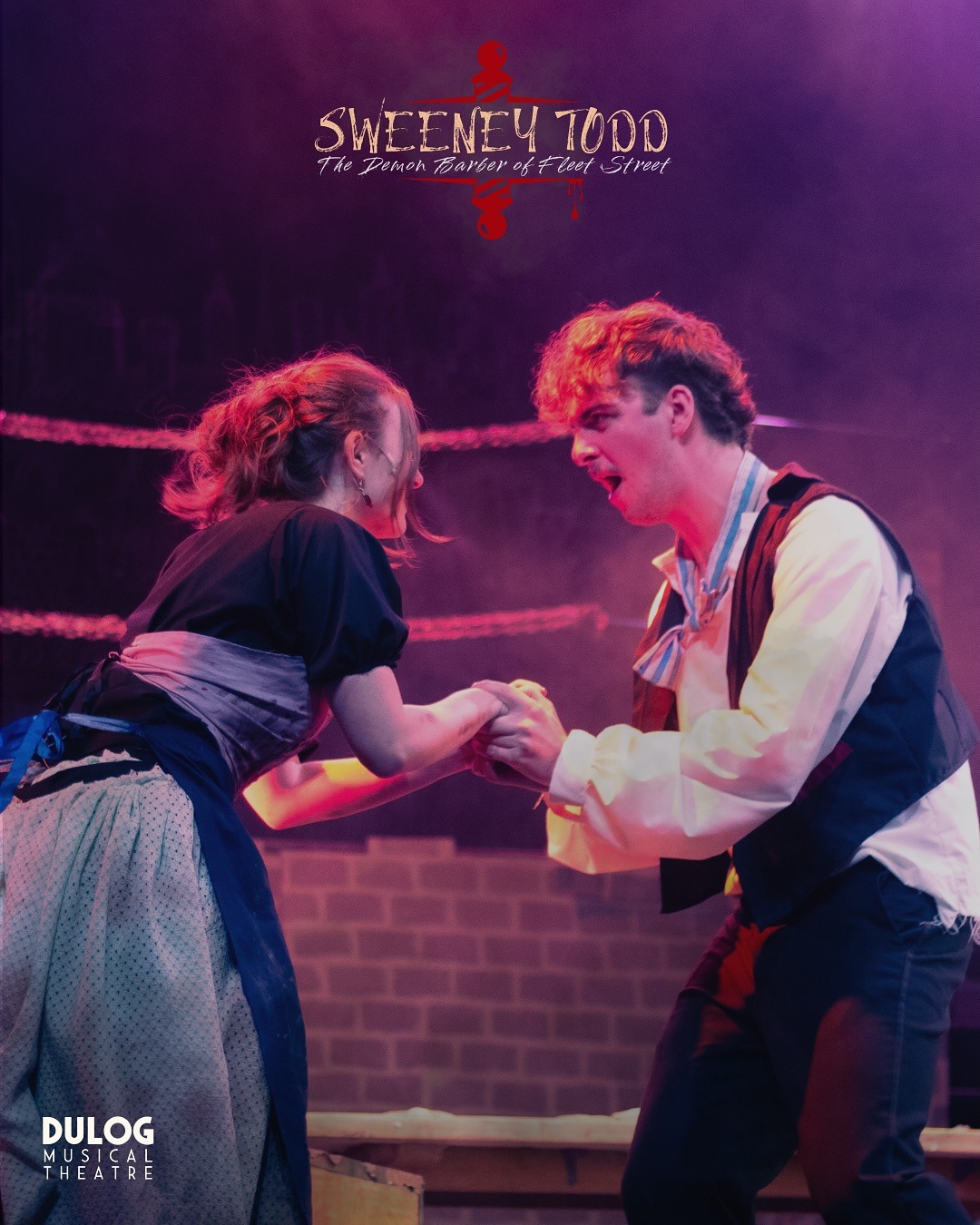
I had the privilege to watch DULOG’s production of Sweeney Todd: The Demon Barber of Fleet Street twice during their impressive run of six sold out performances. Stephen Sondheim’s musical adaptation is a classic that has been revived professionally, amateurly and somewhere in between since its opening on Broadway in 1979 and in the West End in 1980. It is no surprise that DULOG, Durham’s grandest music theatre company, took on this beloved story and musical. What I experienced in both performances was a striking, polished, and deeply impressive production with passion and energy oozing from every actor, musician and technician. Co-directors Amanda Cross-Court and Lauren Williams, assisted by Rio Patel, should be incredibly proud of creating a show with greatly deserved high praise.

The Performers

Right from his introduction, Sweeney Todd was played by Tom Carroll as a man full of confidence, purpose and power. Carroll’s ability to shift from sinister and vengeful to gracious and charming was very impressive, and was something he did especially well through his wonderfully sung lines. Todd’s partner in crime, Mrs Lovett, was played by Connie Richardson, who I must say was the standout performer both times I watched. Richardson managed to balance the extremely frantic energy in her physical and vocal performance while maintaining such clarity and strength in her singing and line delivery. Indeed, I scribbled in my notebook that Richardson ‘would not need to speak any lines’ given how much the audience gained from her facial expressions and physicality. Despite being a somewhat villainous character, I could not help but feel like I wanted to be on Richardson’s side.

Perhaps a more conventional romantic pairing, the actors for Johanna – played by Mathilda Ketterer – and Anthony – played by Joe Butler-Smith – demonstrated wonderful chemistry and embodied the hope of a more peaceful conclusion to the tale. Their voices were softer and brightly toned, helping set them apart from the other corrupted characters. A key moment of their interaction that stands out to me was that of Butler-Smith’s starstruck demeanour when he first sees Ketterer’s character. Followed by a timed spotlight, Butler-Smith was so eager to get closer that he descended the auditorium stairs quicker than the light could keep up. Intentional or not, I loved this detail.

Michael Nevin as Judge Turpin and Bede Capstick as Beadle Bamford worked very well together as the main antagonistic duo. Nevin’s highlight moment was his fantastic solo where, despite the uncomfortable motivation behind it, the audience could not help but be captivated by such a powerful performance – full of desperation, guilt and determination. As Turpin’s assistant, Beadle Bamford was embodied fantastically by Capstick, whose slimy yet charismatic portrayal made his character frustratingly likeable. 

Midun Odunaiya’s performance as Tobias was full of energy and this physicality was well suited to his character’s young age, making it far more believable. Pirelli, Tobias’s original employer and guardian (before he is ‘dealt with’ by Todd), was played by Will Simpson, who performed the faux Italian accent and flamboyant mannerisms very well and garnered many laughs from the audience. Simpson and Odunaiya appeared to have a lot of fun playing their roles, and the audience received all the benefits. Elena Pesciarelli sang excellently as the Beggar Woman, with great strength and desperation in her voice as she cries for ‘alms’, though I would have liked to see a greater sense of confusion and insanity in her characterisation.

Finally, I could not close my discussion of the acting performances without giving enormous credit to the nine members of the ensemble. This talented group of actors gave full commitment throughout the show, making a massive difference. A particularly impressive demonstration of the group’s brilliance was in the asylum scene, where each member of the ensemble played a uniquely ‘insane’ resident circling around the room – a scene that no doubt requires the crediting of Movement Directors Amelie Symmons and Jobe Hart. Their great work in choreographing this and many other moments of great synergy and synchroneity was integral.

The band, led by Musical Director Sammy Cormack-Repath, played full of character and emotion. I was impressed by the seeming shifts of motivation in their playing, their performance going beyond simply what they were playing and into how they played. In the first act, for example, the energy in their playing felt like they were on board with Mrs Lovett and Sweeney Todd’s plan, egging them on. After the interval, however, their playing felt more sinister, acting as more of a warning against rather than for Sweeney Todd. 

The Production

Production Manager George Murray and Assistant Production Manager Jonathon Wilson-Downs headed the design of a show that looked and sounded incredible. Deserving an entirely separate article reviewing their work alone, I will do my best to touch on every technical element that made Sweeney Todd so remarkable. 

The set was designed and constructed by Libby Simpson and her team. The two-tiered stage made it very easy to discern between Mrs Lovett’s pie shop downstairs and Sweeney Todd’s barber shop upstairs. Masking the height difference between the two floors were flats with painted grey brickwork. Sections of this brickwork were on hinges which could be opened to reveal different designs beneath, either red brick for symbolic emphasis, or the oven and signage of Mrs Lovett’s shop. I found this to be a very well-thought-out design that was used effectively throughout the show. The beautiful skyline drawing on the flat at the very back of the stage was gorgeously detailed yet subtle in colour, helping immerse us into Victorian London. The set and its various intricacies could not have been revealed without the excellent work of Stage Manager Evie Collins and her team (including Assistant Grace Mathews and Deputy Thea Jupe), who facilitated smooth, well-rehearsed transitions. I found that throughout these transitions, the stage crew moved with purpose, fitting into rather than clashing with the context and intensity of the play.

Co-Lighting Designers Leyla Aysan Montoya and Rory Collins delivered visuals that sincerely elevated the quality of the show. The flickering and dimming of the house lights at the beginning of the show was an effective choice I enjoyed; not even the ‘normal’ lights could provide the audience with familiarity and comfort as the show began. Additionally, the LED baton lights on the elevated platform (the upstairs) were a wonderful, dynamic choice that helped emphasise moments of violence, shifting motivations and more.

The sound for this production was some of the best I’ve experienced in Durham. Designer Carlos Davies, Isabella Broxis and Aniket Garg delivered the highest quality: very well balanced and mixed right from the beginning. All the sound effects that were used were well-timed and contributed meaningfully. Overall, I could hear and understand every line spoken or sung in this play, a feat I previously thought impossible. Indeed, one patron said to me that the amplification was potentially the best they ever heard in this venue.

Finally, I must commend the costume and makeup team, led by designer Harriet Miller, who ensured that every character was uniquely and effectively costumed to fit the bleak, Victorian context. One of my favourite details was that of changing Sweeney Todd’s waistcoat to red for the second act, matching the outfit of the Judge Turpin who he had sworn revenge upon. To reference Obi-Wan Kenobi, he had become what he swore to destroy.

Conclusion

All in all, this was a cast and crew brimming with talent and passion, making it an excellent show I am grateful I had the opportunity to enjoy (twice).

Featured Image: DULOG

Categories
Perspective

Remembering Derek Jarman on World AIDS Day

By David Bayne-Jardine

Finally permitted to give in to that festive impulse, on the 1st of December the world hits ‘go’ on its favourite ritual of organised mania. We haul boxes of decorations down from the attic, hit ‘play’ on Mariah as we march through the cold, and anticipate like giddy children a month of comfort, good food, and boardgame-induced fights. 

Unfortunately, this means the much more significant meaning of this day, muffled and dampened by the tinsel and Bublé tracks, tends to fly under the radar. The 1st of December is also World AIDS Day – 24 hours set aside to commemorate the estimated 44.1 million people who have died from HIV/AIDS since the first reported cases in 1981. These figures make it one of the deadliest pandemics in global history; for comparison, the worldwide number of confirmed deaths from COVID-19 is 7.1 million.

To this day, there are still tens of millions of people living with HIV/AIDS, and yet it remains a condition as stigmatised as it is unknown. Charities and activists spend much of their time fighting the harmful misconceptions surrounding the disease. For a start, many remain unsure about the difference between the two terms. HIV stands for Human Immunodeficiency Virus – the actual pathogen itself that enters a body, attacks its white blood cells, and weakens the immune system to make a patient more likely to develop diseases, infections, and cancers. AIDS (Acquired Immunodeficiency Syndrome), however, is the name for the condition of depleted immunity obtained when someone is exposed to the virus. 

Others have misconceptions about the lethality of the disease. No, a diagnosis of HIV is not a death sentence (modern drugs allow a long and healthy life for many with the disease). Others believe it just affects gay men, but in 2023 the majority of new cases in the UK were amongst heterosexual people. 

As a schoolboy, I recall the word ‘AIDS’ being used as an adjective, synonymous with ‘rubbish’ or ‘annoying’. The term was a part of our everyday language, and yet none of us really knew what it meant. Even as a gay man myself, it wasn’t until my early 20s that I finally educated myself on the story of this disease; ironic, considering that it is a story so deeply tied up with that of LGBTQ+ emancipation. Almost all of my mates who I’ve spoken to about HIV/AIDS admit they know next to nothing about it, aside from the fact that a diagnosis is, in the words of one friend, ‘very, very bad news’. 

In the days when the disease was still being largely ignored by politicians, artists played a very significant role in raising public awareness and campaigning for action. One of these figures was Derek Jarman, a renowned British painter, filmmaker, and stage designer who died of AIDS-related illness in 1994, aged 52. His films were known for being highly political, visually stunning,and gloriously punk. Some of his most celebrated works include Caravaggio (his queer biopic of the rebellious Baroque painter), Jubilee, and Blue – a 79-minute still of the titular colour over which the artist meditates on living with AIDS. 

But it is another work created in this same year of declining health, mere months before his passing, that I want to revisit on World AIDS Day. Jarman’s ATAXIA: AIDS IS FUN (1993) is a striking canvas housed in the Tate Modern that is perhaps this artist’s most celebrated and moving painting. Violently spattered and slashed with paint, equal parts angry as it is despairing, ATAXIA offers a profound insight into the artist’s mind mere months before his death. 

What we are first drawn to in this painting is the sense of contrast between the colours themselves and the way they’re deployed. Bright, radiant, almost childish primary colours are applied on a luminous red background with a shocking sense of violence. This dissonance between typically ‘happy’ colours and their brutal application creates a sense of irony, a sort of black comedy that persists as we move through the painting. 

From the mélange of colours, we can quickly make out two lines of text: ‘ATAXIA’, and ‘AIDS IS FUN’. The former, ataxia, is the medical term for what Jarman experienced as the disease took hold of him – a disorder that affects muscle coordination and leaves patients with difficulty walking, writing, and speaking (we can see this reflected in the seemingly uncontrolled form of the painting). The latter line, ‘AIDS IS FUN’, is as disturbing as it is ambiguous. Perhaps it’s a macabre reference to the changes happening in Jarman’s body – the loss of control and new sensations could be considered ‘thrilling’ and ‘fun’ in a bleakly ironic way. 

As we continue rootling through the layers of paint, two more lines of text whisper at us through the canvas. On the bottom, we can make out a desperate and hopeless ‘LETS FUCK’; on the top, ‘BLIND FAIL’ emerges in strokes of murky green, alluding to Jarman’s own loss of sight. In fact, the artist gives the viewer a taste of the experience of blindness through the way information is obscured in the painting. Just as Jarman struggled to make out people and things around him as his eyesight declined, so too does the reader have to squint and scramble to find form and meaning amidst the wash of the canvas’s colours and textures.  

But it’s not just the way we are put in the shoes of the sufferer that makes ATAXIA special. For me, it’s how the painting invokes an image beyond the canvas we see before us. In academic terms, we could call this work ‘palimpsestic’ – the image we see on canvas prompts another image in our head: that of the artist creating the painting. In the violent brushstrokes we can almost see a dying Jarman slashing at the painting, angry at a world that for so long ignored this disease, angry at this disease for cutting his life short. 

In this way, behind the abstract painting lies an intimate and detailed portrait: a visionary artist, desperate and tired in his final months, engaging in a gruelling battle which he is destined to lose. Whilst Jarman stands out as an icon of the AIDS crisis, it is the millions that died before him and the millions that live with HIV to this day that society risks overlooking. I hope that on World AIDS Day, amidst the Christmas chaos, we can spare a thought for these forgotten people. 

Sources:

https://worldaidsday.org/about/

https://www.who.int/news-room/fact-sheets/detail/hiv-aids

https://www.who.int/news-room/fact-sheets/detail/coronavirus-disease-(covid-19) (COVID-19)

https://nat.org.uk/about-hiv/hiv-statistics/ational AIDS Trust

Featured Image: Ataxia – Aids is Fun, 1993, Derek Jarman / Tate Collection