Categories
Creative Writing

Noa the Wasp and the Fig

By Robertha Green Gonzalez

NOA.

The surrounding walls seemed to breathe; slow, patient, alive. For a moment she thought she was still inside a flower, but flowers didn’t hum like this. Flowers didn’t whisper. “You’re here,” said a voice, soft as ripened fruit. 

“Where is here?” Noa asked. 

“Inside,” said the fig. 

She tested her wings. The space was close; her movements left faint echoes in the sweetness around her. “I don’t remember coming here.” 

“You don’t have to,” murmured the fig. “Arrival is enough.” 

Noa tilted her head. “It’s dark.” 

“Light isn’t always kind,” said the fig. “Some things grow best in shadow.” The wasp tried to smile, for that was what Noa was. A wasp. Though she wasn’t sure if her face could still do that. “It smells like forever.” 

“That’s only ripening,” said the fig. “It feels endless when it begins.” 

She brushed her antennae against the inner wall. It was soft, almost trembling. “I was looking for something,” she said, but couldn’t recall what. A flicker of memory; open sky, the taste of air, a pulse of sun, and then it was gone. 

“You were looking for a place to belong,” the fig said. “And now you’ve found one.” Something inside Noa ached. Not pain exactly, but a slow turning inward, a folding of one thing into another. 

“Is it supposed to feel like this?” 

“Yes,” said the fig. “It’s the way joining feels.” 

She hesitated. “It’s hard to breathe.” 

“Breathe slower. You’re part of something larger now.” 

Noa’s wings brushed the walls again; they no longer sounded like wings. “Am I changing?” she asked. 

The fig’s voice deepened, distant. “As am I.” 

For a while, neither spoke. The warmth thickened, fragrant and heavy. She could feel her body soften, her thoughts growing drowsy, like syrup cooling. 

“I think I’m disappearing,” Noa whispered. 

“You’re becoming,” said the fig. 

“But I’m scared.” 

“I know,” said the fig. “So was I.” 

Her movements slowed. The sweetness pressed closer, gentle, inevitable. She thought she heard other voices, faint and humming, hidden in the fruit’s heart. Maybe they were memories. Maybe they were prayers. 

“Will you remember me?” she asked.

The fig pulsed once, tenderly. “Always. You’re the reason I can bear fruit at all.” The warmth deepened, and the fig closed around her, not as a tomb, but as a cradle. Outside, the world turned quietly toward autumn. Inside, everything that had been Noa drifted into the soft, patient rhythm of the fig; a rhythm that would feed the living, though she would never know it. 

And somewhere, far beyond her last thought, the air was still singing. 

THE FIG. 

And when all was quiet, the fig began to remember. 

It remembered the light that had once entered with her – brief, winged, trembling. It remembered her questions, her fear, the small pulse of her heart against its walls. In the slow language of roots and sap, memory is not a thought but a movement, a sweetness travelling outward. Noa became that sweetness. 

Inside its dark flesh, she was not gone. She was pattern. She was purpose. The fig felt her in every grain of itself, in every seed it now held a thousand small hearts waiting to be carried elsewhere. The fruit ripened not with time but with her. 

Sometimes, when the wind moved through the leaves, the fig imagined it could still hear her; that soft, uncertain voice asking what it meant to belong. It wanted to answer, but it had already spoken all it could: by holding her, by keeping her, by turning what was once fear into nourishment. 

Soon the skin would split, and the world would taste what they had become together. And no one would know her name, or her wings, or how gently she had asked to be remembered. But the sweetness would tell the story, in silence. 

And the fig, in its quiet fullness, would understand at last what death had meant: not ending, but the long patience of being carried forward; alive, inside everything that follows.

Featured Image: Honor Adams

Categories
Culture

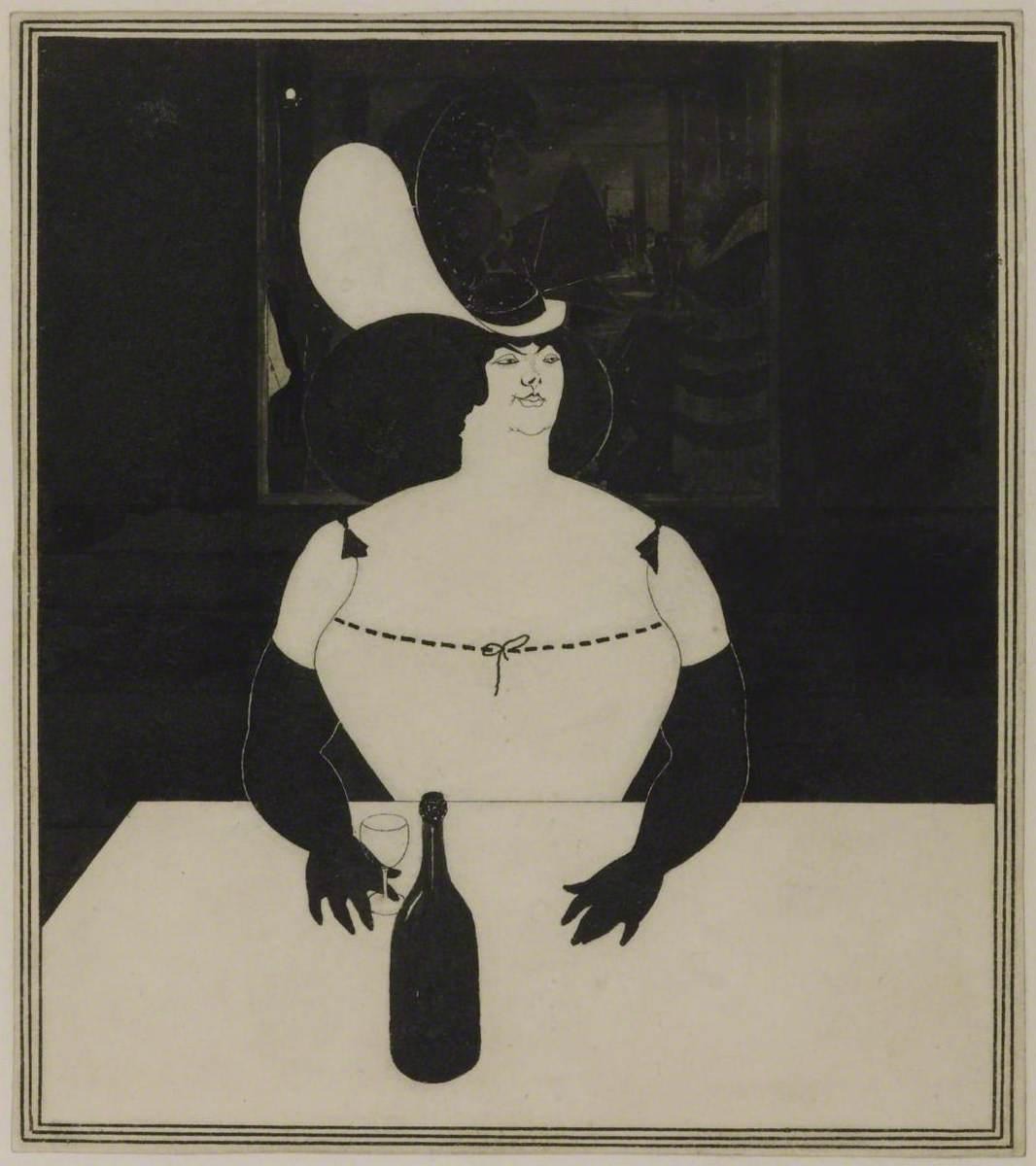
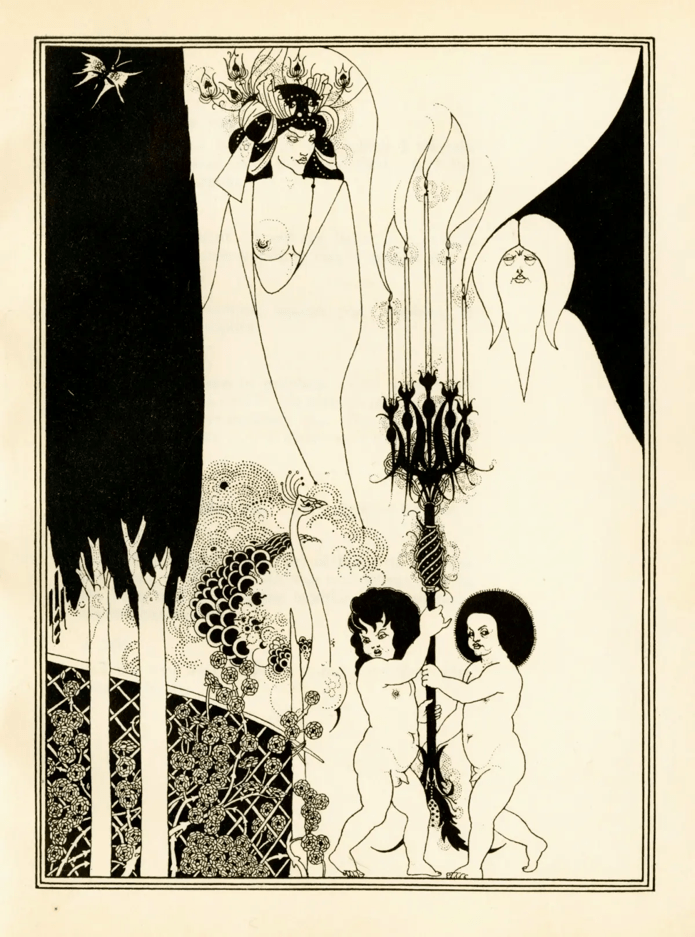
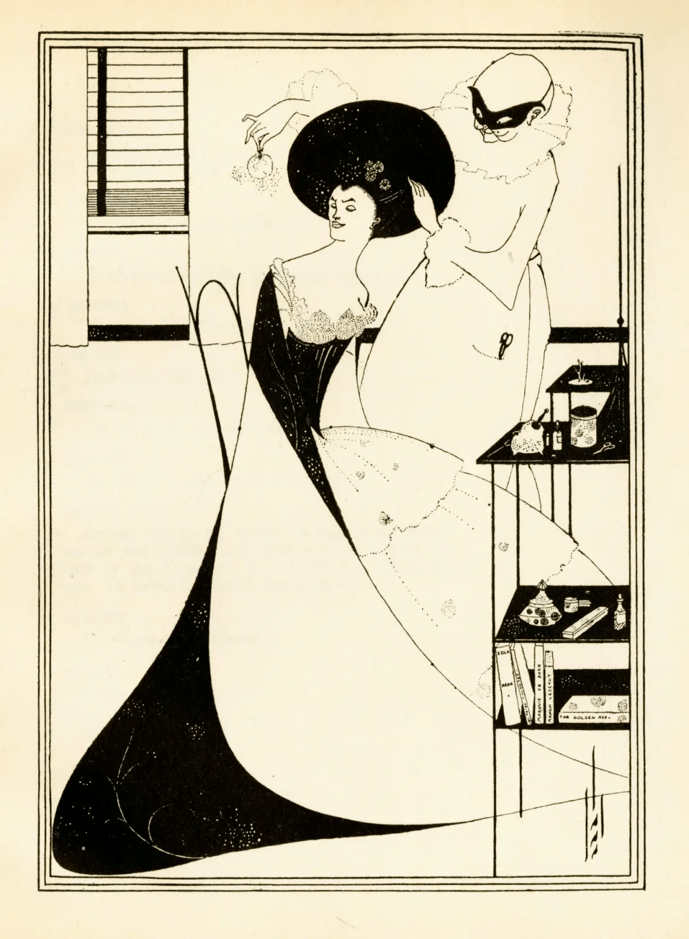
Aubrey Beardsley: Carving the Line Between Subversion and Progression

By Honor Adams

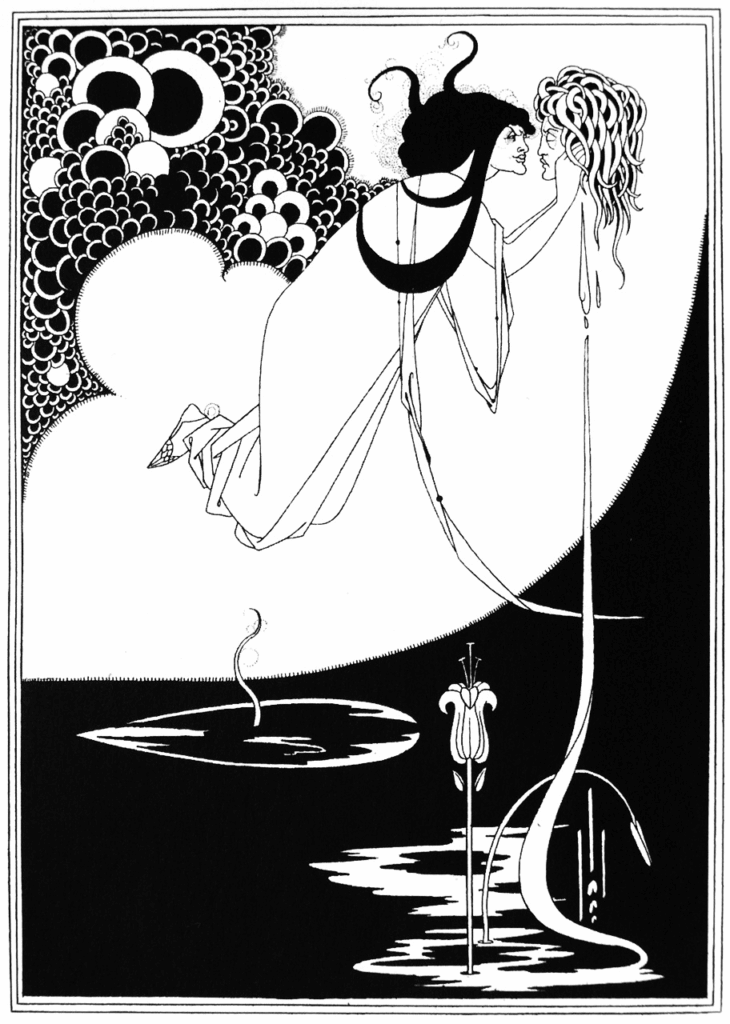
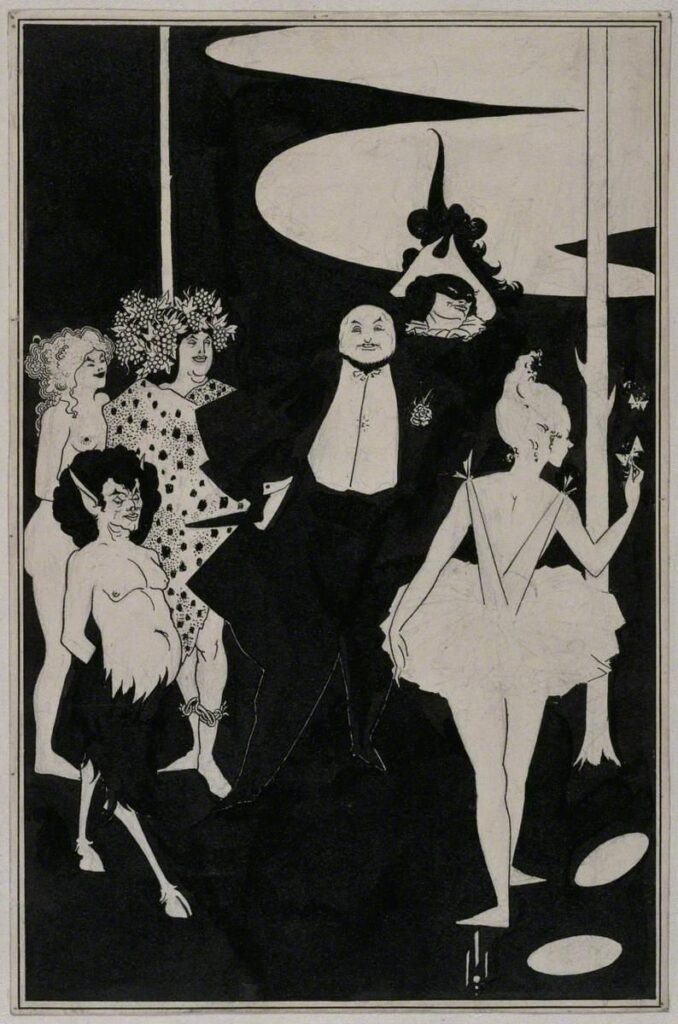
I first encountered Aubrey Beardsley in a solid red shop on Oxford’s fading high street. Amid draws of outdated maps and horticultural prints, his intricately simple woodblock prints began to creep out. Black and white visions writhed into life – their elegance tinged with irony, excess and restraint. 

Within the quiet confines of Saunders of Oxford, I found myself entranced, flicking through each leaf of shocking, ironic, and playful illustrations, where line and curve dissolved into a theatre of desire and defiance. Poised between the quaint and the transgressive, my experience felt like an initiation into the strange allure of the fin de siècle. 

Shocking the modern viewer has become increasingly difficult in the progression of contemporary art. However, Beardsley’s fictitious illustrations snipped from Wilde’s Salomè, Thomas Malory’s Morte d’Arthur or The Savoy, left me gawking through a window into the world of Victorian England. For Beardsley, audacity was a simply humorous exercise; continuing a tradition of political and societal mockery. And as with any contentious creation, objections were, and remain, multiplicitous.

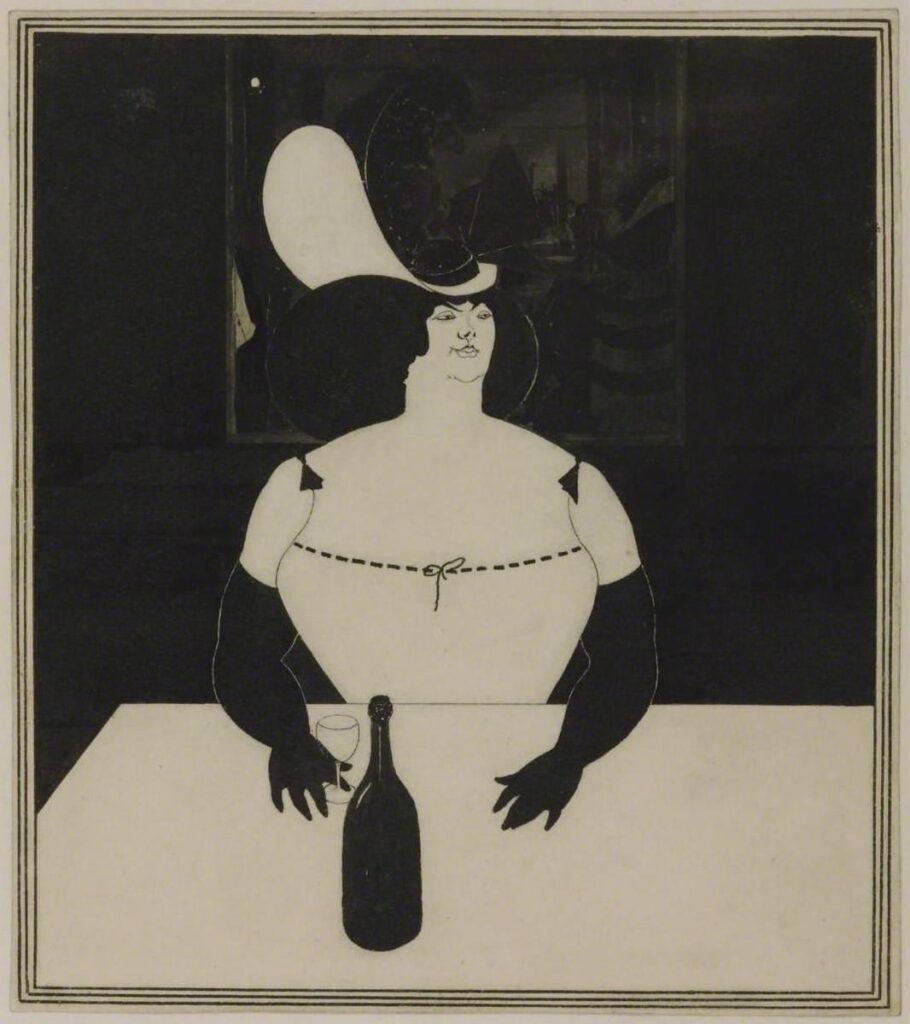
Beardsley’s grotesque, scandalous, and immoral subject matters gave him the attention he desperately desired. The bulk of his illustrations depict women, many of whom embodied deviance and corruption in the eyes of the conservative Victorian reviewer. Beardsley drew upon the taboos of the era, forming a subversive commentary on societal norms. Synchronous to his short working life, the feminist ideal of the ‘New Woman’ was salient, a term coined by the novelist, Sarah Grand, in 1894. These ‘New Women’ challenged values already being attacked by fin-de-siècle modernism and the societally deviant dandies of the Decadent movement. Women demanding social opportunities and emancipation were boxed into the same category as prostitutes or the promiscuous. Rather than attacking such unruliness, Beardsley mocks the ludicrousness of a dated categorization, gaining attention whilst revealing his progressive mindset. Despite backlash, gender was being redefined, and Beardsley harnessed such change as a platform for recognition and contentiousness. 

Subversive subject matters and a tendency towards sexualised themes were often associated with his infliction of ‘consumption’ (Tuberculosis), a bizarre 19th-century perception with no medical affirmation. Ironically, with continually poor health, Beardsley turned to Catholicism and rejected his previous work on the subject. 

The question of Beardsley’s own sexuality, or his advocacy for homosexuality more generally, has been debated. Despite this debate, his early death and contemporary taboos prevented any conclusions on his part. Linda Gertner Zatlin argues that he “advocated neither homosexuality, androgyny, nor heterosexuality”. Although, I would contend that his true nature or beliefs can never be uncovered, and any speculations produce no valuable theory. His work remains sexually ambiguous on a personal level, presenting us with a distinctly asexual depiction of Victorian taboos. The fluidity within his work was rare by Victorian standards, but the artist’s lack of comment on such matters reveals little of himself other than a liberal and risqué attitude. What cannot be doubted is that Beardsley was an eccentric dandy (a contemporarily mesmerising characteristic) and his confrontation of evolving issues came at a turning point in women’s and sexual history. 

“I have one aim – the grotesque. If I am not grotesque, I am nothing” Aubrey Beardsley, 1897. 

Beardsley initially drew inspiration from the Pre-Raphaelites, taking motivation from his desire for fame and encouraged by his mother’s expectations. He followed the works of William Morris, Dante Gabriel Rossetti, and Edward Burne-Jones. A shared interest in the medieval, symbolic subjects, as well as a rejection of contemporary art, drew Beardsley to these characters. Burne-Jones specifically acted as a mentor, strongly supporting his initial work. However, Beardsley grew tired of his Morte d’Arthur commission and the two diverged as the illustrator began to embrace his own more individualistic and increasingly erotic style. Morris held an unsupportive stance from the outset, leading to Beardsley breaking away from the Pre-Raphaelites and migrating towards a Parisian clique, further alienating British reviewers. The xenophobic normality of the late 19th-century criticised his French connections and grumbled over the otherness of his Japanese style. Nonetheless, contemporary judgment was not universally negative, and the elegance of his line and precise decorative style landed praise from several critics, including Joseph Penell.

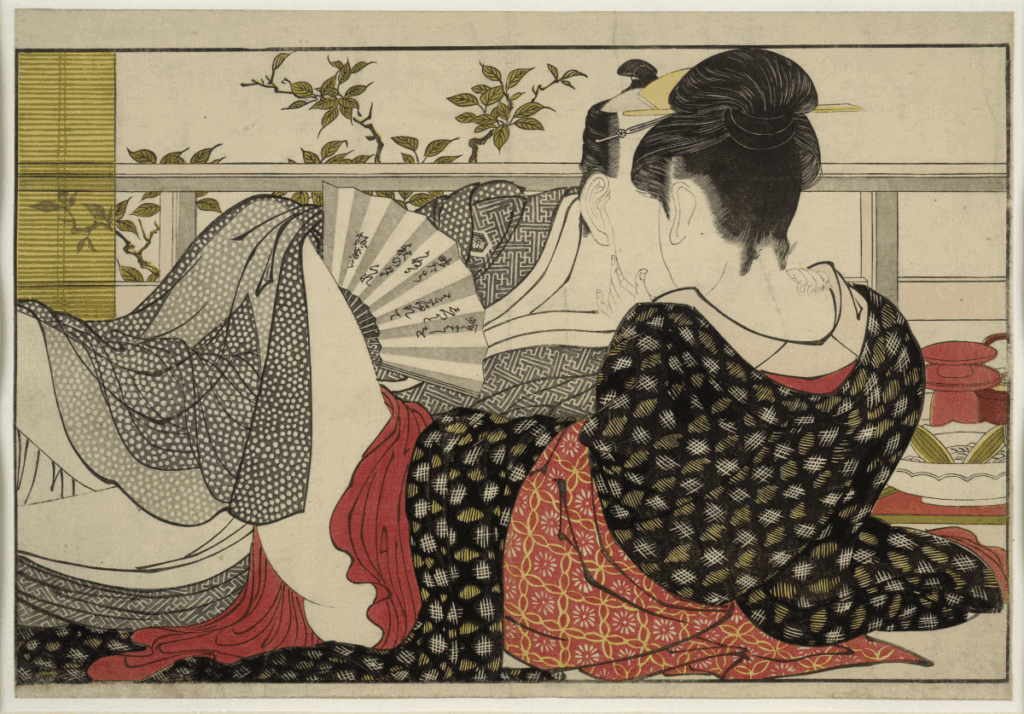
His hard-edged line forced his work to become visually aggressive. Contradictions weave throughout, blending elegance, classicism and purity of line while meshing between the scandalous and perverse. The result is a definite visual power. The line block technique and Japanese influence remain a thread throughout Beardsley’s work, allowing for its mass reproduction at a time when printed culture was particularly prevalent. Beardsley pushed back against the self-proclaimed cultural superiority of the British art scene, lacing ironic and mocking messages into his work. In contrast, Japanese artistic practice didn’t acknowledge erotic or sexual themes in the same disgust as the Victorian Brit. Distinct parallels can be drawn both in style and motif to artists such as Kitagawa Utamaro or Katsushika Hokusai. Prints such as The Dream of the Fisherman’s Wife (Hokusai) or Lovers in the Upstairs of a Teahouse (Utamaro) portray undisguised sexualised themes far more shameless than those of Beardsley and almost a century earlier. 

Irony and satire weren’t unknown to the British media, and Beardsley himself often found himself the brunt of such commentary.  Beardsley and his subversive advocacy saw him riddled with salacious scandal in the eyes of Victorian England. A poem from April 1894 in Punch magazine mocked the artist in a distinctly fin-de-siècle way:

Mr Aubrey Beer de Beers,
You’re getting quite a high renown;
Your Comedy of Leers,
You know,
Is posted all about the town;
This sort of stuff I cannot puff,
As Boston says, it makes me “tired”;
Your Japanee-Rossetti girl
Is not a thing to be desired.
Mr Aubrey Beer De Beers, 
New English Art (excuse the chaff)
Is like the Newest Humour style,
It’s not a thing at which to laugh;

(Owen Seaman: “Let’s Ave A Nue Poster” (Punch, 21 April 1894, p. 189))

In April 1895, two weeks following the arrest of Oscar Wilde, Aubrey Beardsley was fired from his position as art editor of The Yellow Book. Wilde was thought to be carrying a copy of the controversial periodical during his arrest. This was revealed to be simply a yellow-bound French novel, and the two men’s relationship was by now hardly amicable. However, the need to disassociate Wilde’s scandals from the periodical cost Beardsley his job. The Book’s sales fell with his illustrations no longer adorning the pages of Decadent writings. Beardsley is often associated with the life and literature of Wilde, and whilst his work depicted the society that Wilde inhabited, Beardsley’s creations hold their own gravity. 

By 1898, Beardsley’s health had deteriorated. An awareness of his impending death led to his conversion to Catholicism. Before he died, he wrote to his publisher, Leonard Smithers, to dispose of his work Lysistrata and many other shocking pieces. This request, for the sake of artistic appreciation and historical study, I am glad was never completed. Aubrey Beardsley’s career spanned less than 7 years, dying of Tuberculosis in 1898. He will forever be associated with The Yellow Book, Oscar Wilde and the controversial characters of Victorian Britain’s evolving society. For those who, like me, find themselves flicking through Beardsley’s work in an antique print shop, it is evident that his work has impacted far more than just a yellow bound book.

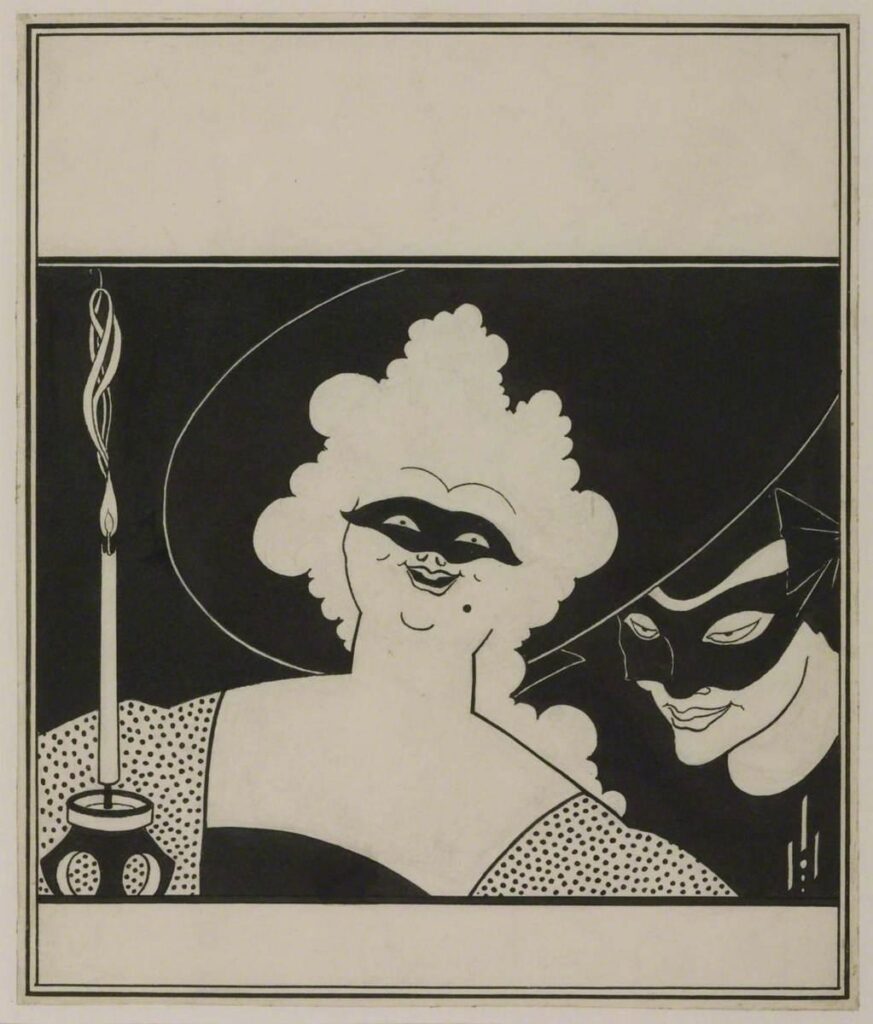
Cover Design for ‘The Yellow Book’ Vol.I, Tate.

Featured Image: Tate Britain

Categories
Poetry

a blacksmith’s bookmark

By Toby Dossett

now the light is cantaloupe and terminal.
a city smells of rain and resignation,
lying on the grass,
unmade and unmaking
i face the cathedral’s spine
the bruised sky is left
beneath the pretext of haste,
rapture and longing,
a blacksmith’s bookmark,
those water-burning words,
shyness at newness, 
an emptiness behind,
whom I cleave to, hew to,
he’ll wait a while 
before he kills the light.
and politely we both 
pretended, performing sincerity,
then dismantling it for your comfort.
who rearranges silence into affection?
there is no honesty left to ask for,
he’d drive through aspiration
and pretence, for instruction,
keeping us together when together,
all declarations deemed outspokenness.
angry at something
how many hours were we rain-swept?
what did he wish for then?
revealed but better hidden
during those hours when we lose interest 
in what needs to be done
so, one of us became the forsaken lover
who might wave from a subtitled dream
at the outskirts of a particular kind of writing
covert during a tender alliance
like hidden stairs down into a pond.
more and more, this last look 
of the forged wet
shine of the place is what means most to him.

Featured Image: Toby Dossett

Categories
Perspective

To Let Something Overflow

By Nicole Ruf

When I was a child, crying fits were a frequent occasion. Whether because I felt things more intensely, or for attention, I am unsure. Something would hurt, and I would cry. And cry, and cry. My father would come to me, kneel to meet my eyes, and explain things to me. He would dissect the world with logic, step by step, with scientific methodology. He would make me breathe and count to ten. And by the time I reached ten, my cheeks were already dry, and those enormous feelings had shrunk into a solved problem, neatly labeled and ready to be forgotten. A gentle lesson in rationality. 

Girls are taught from childhood that emotions are a thing to be contained, that logic and composure are signs of maturity, and that feeling is synonymous to failing. 

This is how we learn to explain things so as not to feel them. 

But these feelings grow as we do, and so does the habit of tidying them away. Somewhere between girlhood and womanhood, the language of reason slips quietly into a language of restraint. What was once a kind lesson becomes a nasty habit. Instead of counting to soothe our tears, we count the calories we eat, the words we speak, the glances we attract, the eternally unbridgeable distance between who we are and who we should be. We become self-conscious, rehearsed, reflective. Somewhere in the process, we trade our chaos for poise. 

What a funny, cruel thing to be a woman; to carry inside all these feelings so vast and so deep, so uncontainable they deform you from within. Worse still, to live in a world that demands you hand them over, tears them from you, turns them abnormal, rationalises them until they have lost their pulse. Your sadness must have a cause, your anger justification, your passions their limit. What a strange thing, to force your heart to fit the mold of the Other, your wishes to their commands, your needs to their whims. You always end up losing. 

The female archive is scattered; diary fragments, forgotten poetry, therapy sessions, late-night conversations with a friend. Each whisper a familiar refrain, carrying the shared burden of attempting to name what is so fervently silenced. The impulse to rationalise one’s feelings is almost universal among women raised in the cult of composure. 

An excerpt from my own diary: “Perhaps I am trying to rationalise my feelings too much. Perhaps I should stop.” 

These recurring phrases and patterns, which my own writing is not exempt from, are not just the bitter aftertaste of personal unrest, but of a collective one. The inheritance of generations of women unsettled by their intellectualised pain and muzzled emotions. 

Private thoughts, or public scripts, whispered into women’s minds and passed between their lips: 

If I am not small I cannot be a woman (not properly, nor successfully). 

If I do not learn silence I cannot be desired. 

If I am so intense, so much, I cannot be of interest. 

With my convictions so sharp, my desires so defined, 

I cannot be softened, cannot be shaped. 

If I cannot be shaped, I cannot please. 

If I do not say what they want to hear, 

I will not be wanted, 

The same goes 

if I do not do 

what is asked of me.

If I am whole, 

I will not fit. 

And if I fit, 

I will disappear. 

If I am not small 

I cannot be 

a woman. 

The catechism of femininity. A doctrine without scripture, taught through repetition; smile, soften, submit, smile, soften, submit. In this faith salvation is found in self-denial and damnation in desire. It demands devotion, asking us to kneel before our own subjugation. 

We bury these thoughts, hide them away from the world because they are too ugly to be seen, and far too irrational (that much we know, even if we all think them nonetheless). Yet as we dig them their graves, we unknowingly pile all that dirt onto ourselves, bury ourselves alive. Beneath the ground, we grow unsatisfied, unfeeling, hollow. To be functional means to be numb, the byproduct of a world that values control more than it does authenticity. 

We learn to see our bodies as burdens; too heavy, too loud, too visible. We are insistent, intense, speak too much, and too soon. Our presence spills over boundaries already drawn out for us. The female form becomes a site of conflict between selfhood and social expectation; being and appearing. To occupy space is a transgression of the worst kind. 

We praise women who take up less room, who bend like silk, soften their edges, make themselves light enough to be carried by a man’s gaze. Those who become what is asked of them; desirable, sensual, small. Mastering the art of being almost, of being seen but never truly known. In this currency we convert performance into power, obedience into love, stagnance into grace. So we all try to fold ourselves thinner, to disappear beautifully, so the world too might applaud. Yet the more we shrink; less air, less noise, less hunger, less body, the more the truth claws its way out, gutting us in its path, leaving us emptied, depthless things. Taxidermied and ready to be used at the will of others. 

It is no coincidence that women’s emotions are pathologised; the hysteric, oversensitive, irrational. The language of medicine and reason has long been used to domesticate feeling. There are times I still find that same sobbing child, hidden away in a corner of my body. I want to tell her there are wounds that only heal if you feel them, that not everything must be explained, much less solved. Perhaps what frightens us is if we stop explaining away our feelings, they might drown us. Perhaps that is exactly what we need. Not to contain ourselves, but to let something overflow.

Featured Image: Tashy Back

Categories
Reviews

DUCT’s The Importance of Being Earnest: Directing Wilde for the Modern Audience

By Sam Bentley

I have always loved Oscar Wilde. His wit and satire remains timeless, and his celebration of joy and absurdity feels fitting in a modern age defined by crisis. His refusal to treat seriousness as the only rational tone transcends his era. Wilde endures because his precision and irony has never required updating; his comedy lands because the behaviour he exposes remains constantly recognisable to a contemporary audience. 

There is no text where this rings truer than his most famous: The Importance of Being Earnest, which I have had the good fortune to direct this term with Durham University Classical Theatre (DUCT). Earnest is one of the great comedies in the canon of English literature. To call it just a witty and subversive Victorian comedy, however, would be to mistreat it as an old relic that ought to be admired and unchanged. Though still attached to its Victorian roots, I was committed to making Earnest feel fresh and contemporary. So often it is done with fully period-appropriate set and costume and RP accents lacking in variation – in these productions, too much focus is put on the idea that Wilde is writing about his own time. I wanted a production of Earnest which demonstrates that his satire is not nostalgic, but diagnostic; that he is talking about human behaviour far more than he is talking about Victorian England. Earnest is a play that speaks fluently to our modern contradictions, modern performativity, and contemporary romantic idealism. It is just as current as it was in 1895, and it was my intent to demonstrate this to our audience. 

Sincerity was at the heart of my creative vision. Wilde’s emphasis on absurdity is channelled through the sincerity of his characters in such absurd situations. My neo-Victorian production design allowed for me to emphasise the absurdity through set and costume, using bright colours such as vivid oranges and pinks and marrying them with classic Victorian style. Through this, absurdity is duly emphasised, allowing for the characters to be fully sincere in their performance and comedic style. It is easy with Victorian comedy, particularly with characters like Algernon and Lady Bracknell, to descend into a pantomime-like comedic style which undermines the integrity of the text and makes the comedy feel lazy. The emphasis I placed on sincerity was primarily to make the comedy of the text feel organic and not manufactured. All the comedy in Earnest is in the text and dialogue, so it was critical for me not to undermine that with cheap gags, but to let it grow naturally in the rehearsal process. 

Understanding the character relationships is the key to making Wilde feel fresh to a contemporary audience. The brilliance of Algernon’s wit comes through his comfortability with his counterpart Jack, and their ability to play with the music of Wilde’s text with one another. That relationship was constantly about emphasising to the performers that Algernon sets the tempo and rhythm to allow for Jack to play the melody, giving the audience the impression of genuine repartee rather than rehearsed punchlines. For a contemporary audience, the emphasis on their relationship makes the comedy feel familiar and engaging, arising from dynamics they recognise. The same can be said for Cecily and Gwendolen: their snarky, acerbic relationship and interactions are just as common now as they were in the 19th century. Therefore, in the rehearsal process, real intent was put on building those characters based on their human feelings, and not on archetypal stereotypes of young Victorian women. Indeed, whether it is making Lady Bracknell as much a suffering socialite as she is a matriarchal demagogue or making the bedrock of Miss Prism and Chasuble’s relationship their sexual repression for one another, every character was carefully crafted to feel authentic rather than a recycled archetype. 

The experience in the rehearsal room has been joyful. I cannot thank the cast enough for the hard work and dedication they have put into this project. Building on my initial visions for them they have transformed their characters to feel delightfully alive. It’s been such a pleasure to watch them discover the comedy within their roles and in the truth of the characters intentions, interactions and reactions. Their willingness to experiment and play with spontaneity has allowed the play to feel rich in comedy and unpredictability. Watching them do this has been a pleasant reminder that comedy will always thrive on authenticity. Working with this cast to do this has undoubtedly been my best university experience. 

Productions are never possible without swathes of support; it would be remiss of me not to thank this play’s Producer and Production Manager: Evie Trueman and Rory Collins. They are simply the best in the business. Furthermore, I would like to thank my Assistant Director, Harriet Miller. She is excellent in all departments, a joy to work with, and her insight and support has been invaluable. It is a joy to bring Earnest to life in a way that is both true to Wilde and alive for its audience. 

The Importance of Being Earnest will play in the Assembly Rooms Theatre from the 27-29th of November.

Featured Image: DUCT

Categories
Perspective

Humans and Houseplants: Loving Beyond Survival

By Siena George

‘They’re just spider plants, they can survive anything.’

I was once told this after expressing worry for my most loyal of houseplants, the humble spider plant. The comment was flippant, expressed with an air of cruelty, and clearly meant as something obvious. Everybody knows spider plants can survive ‘anything.’ But it never occurred to me that I was meant to be caring for something simply so it could survive.

The culture around house plants reflects our desire to engage with the non-human. In a world organised around the dominance of humanity above all others it is a potentially subversive act to love and care for a plant, something so easily portrayed as useless. The extent of our care, and how we care for plants is not the same as care toward a friend or a pet but this difference does not mean it is not love. The ritual of watering and sheltering our houseplants could not be a reflection of anything other than care.

As humans living in the 21st century, we are constantly exploiting or degrading plants and vegetation – whether directly or indirectly. This is what makes the phenomenon of houseplants distinct and one that fosters a greater bond between human and plant. The dynamic has shifted, and we are able to appreciate the non-human plant outside of its potential for human advancement or profit. It is in caring for the sake of caring rather than caring for self-reward that makes the relationship between human and houseplant so rich. We give up time, space, capital and water for plants as a means of acknowledging the plant’s existence, purpose and autonomy in our world. The plant takes on meanings beyond its material existence as the human constructs feelings of familiarity and connection in relation to the plant. Similarly, the plant is intimately tied to the human through its dependence on the human for not merely survival but prosperity in the non-native environment of a home.

This seemingly ‘worthless’ love between plant and human is an important act of resistance against the ever-increasing emphasis on productivity. The ways we love and care influence our ability to create new understandings of the world around us and the incredible diversity of actors within it. It is imperative that we question why we should only love those who are portrayed as ‘lovable’ or ‘worth loving’ and who gets to define these categories? How can challenging the normative performances of care enable more equitable relationships between humans, non-humans and wider planetary systems?

The more we care to promote collective welfare, as opposed to accepting basic, biologically defined survival, the more we expand the possibilities in our worldly experience. I want to care and love as widely as I have the capacity to and never as an idealistic aspiration but as an essential mode of living. Perhaps it is silly, but to me it could not be more apparent that my spider plants are as justified in receiving love and respect as you or I.

As humans we love not because it is necessary, but because the world is deserving of love.

Featured Image: Ju Seonyo

Categories
Creative Writing

Another, Before They Close?

By Matthew Dodd

It had been some years since I’d seen him. We’d last met in the early hours of the morning at opposite ends of a dining table in the house of a mutual friend neither of us knew particularly well. We didn’t talk about anything very substantial, though we must’ve been there for some few hours. We were just filling time and the air between us. I suppose, on some level, we both had a dim notion that we were unlikely to meet again, that these were the final verbs, nouns and infrequent adjectives that we’d ever share. We had, quite literally, run out of things to say to one another. These last few pleasantries were the aftershock of a friendship, eulogising a camaraderie that had meant something to us both for some years. We had nothing in common but circumstance. And yet, sat there, asking that man what his plans for the coming days were, how he was finding the weather, whether he envisioned a successful season for Arsenal, I wasn’t sure there was all that much to our little back and forth. Had I ever thought to ask what love meant to him? Or whether he had ever known grief? Or if he’d seen The Godfather? What did I really know of this man, or he of me, beyond vague likes, dislikes, phone numbers and shoe sizes? Cynically, I could conceive that this was, in fact, all there was to life, but as I left that house and nodded him farewell, I knew this couldn’t be true. There were too many songs on the radio for me to believe that life meant so little. And yet, still, I couldn’t shake the feeling that the paintings of one another which existed, and would continue to exist, in each of our memories were nothing more than pencil sketches. It was a troubling notion. He beat me to hailing a taxi, so I was able to watch as he, in the animus of an Austin FX4, receded over the horizon and out of my life. I managed to get a cab about ten minutes later and was home in bed by five-thirty.

Once, when we were in our late teens – he 17, me 16 – I remember us trying to smuggle a crate of inexpensive lager his older brother, Stephen, had bought for us into the sixth form graduation dinner. It was the end of the summer term and, though we still had a year left, we fancied joining in on the older year’s celebrations. We’d planned the whole thing between a maths and geography lesson under two pushed-together desks in Mrs. Deacon’s old classroom. We would wait about an hour, so that the teachers would assume all the students had already gone in, and then go round the back entrance to the dining hall, as though we were working the catering. Then, so he said, all we had to do was act casual and hope nobody recognised us. He kept guessing at how certain teachers would react if they caught us, doing wholly unrecognisable impressions of each of them. As he went on, the impressions became more and more outrageous, and we descended further and further into hysterics. By the end, he was doing our English teacher like Bugs Bunny and our headmaster like Popeye. I don’t know if I ever laughed as hard as I did that day, screwed up under that desk making notes on half a dozen pages torn out of a textbook. It didn’t work, of course. Mr. Amersham – who incidentally did sound a little like Popeye in the moment – found us almost immediately as we left the kitchen, threw us out and placed us in detention for the remainder of the year. It didn’t matter to us: we spent those endless hours in detention suppressing laughter at the thought of Mr. Amersham back in his office eating copious amounts of spinach and getting into fights on the seven seas with various miscellaneous sailors.

It was an uncharacteristically warm morning at Moorgate tube station when I saw him next. If memory serves, it was a little after nine o’clock, putting me vaguely in the realm of lateness for a meeting the details of which I struggle to remember. Droves of conservatively clad big-city types piled through a woefully insufficient number of ticket barriers and out into the street. For my sins, I was one of them. The cavalcade splayed in a multifarious passage towards central London’s many large buildings and unreasonably priced coffee shops. I had long since given up on keenly observing my surroundings on these sorts of commutes so had my attention firmly pointed towards nothing more than an article I’d read in the Times that morning about the surprising health benefits of artichoke hearts. As I walked, I’d been faintly aware of a head popping out of a car window and a related arm springing out of it, waving incessantly, but I hadn’t thought much of it until that head started shouting my name. Turning around in an accidentally-quite-delicate half-pirouette, I caught sight of the upper half of a man who looked strangely similar to someone I had known years before, only with thinner hair and darker eyes. He called out again and I, realising that this was someone I’d known years before, walked up to the car. My preeminent thought at the time was bewilderment that he had recognised me after all these years. I liked to think that I had changed at least somewhat but, I suppose, we weren’t all that different: I was an awkward adolescent then and an awkward adult now. He excitedly told me how wonderful it was to see me, how unlikely it was that we’d bump into each other here of all places, how terrible it was that it had been so long, how – ah sorry! – he must get to a meeting himself but that – oh – we must meet, how did Finsbury Circus at six sound? I agreed with him on all points and nodded a cheerful goodbye as his car – a sensible Volkswagen – set off in the direction of Old Street.

A day’s work passed uneventfully and, ten minutes early, I was sat on a bench in Finsbury Circus waiting for my friend. On time, he arrived. This surprised me, frankly, as the man I knew in the hinterland years of our youth was anything but punctual. Quick-witted, stubborn, smart-arse – never punctual. It wasn’t a bad thing, but it certainly was a shock. We shook hands, alleviating the tension the decade’s silence had accrued, before he brought me into a suffocatingly long embrace. After about twenty seconds, he released most of my body but kept a firm grip on my respective arms. Holding me in place, he looked me up and down, measuring his thoughts before sharing his final judgement: ‘you look really well.’ I began to reciprocate the compliment but he cut me off before I’d a chance – ‘come on, there’s this great Chinese place near here I’ve been meaning to try out.’ Dropping my arms he began walking away out of the park. Immediately and without my having to say a word, we had fallen back into old rhythms.  

The ‘great Chinese place’ in question was a Korean restaurant about ten minutes from the park, positioned unassumingly between a newsagents and an upmarket shoe repair shop. The owner, a short man whose face was bifurcated by a pair of steel-rimmed spectacles, led us to a table which, at the request of my dining-partner, was equidistant between the bar and the toilet. We took our seats and, while he went on a tangent about the colleague who’d recommended the restaurant, I had a chance to look, really look, at this man for the first time in years. It was him, certainly. And yet, there was something in his aspect which spoke to time-won wisdom, to a concerted difference in his nature. Wrinkles ran crevices along his forehead; silver hairs peppered his eyebrows at random. His earlobes sagged to nose-level – though I can’t say for sure this was a change or whether I’d simply never made a point of considering his earlobes.  

Eventually, his ramble ran out of steam and he relaxed into a placid smile. ‘It’s so great to see you mate’. I nodded and we sat with the thought. ‘So,’ he drummed the table, ‘what have you been up to?’ It’s an affronting prospect, trying to sum up one’s life and achievements within the confines of a convivial comment, but I tried my best. ‘I’m an English teacher, in the city.’ The explanation wasn’t quite finished, but this was enough to entertain him, somehow, and propel him out of his seat temporarily. ‘Do you remember Mrs Baxter in Year 10? I reckon the title of Macbeth was about all I learnt of it in two years with her.’ This made him chuckle. I remembered Mrs Baxter quite well, as it happened; she’d been a great help in directing me towards some University pre-reading. For an hour or so we proceeded in this way: I relaying some fact of my recent life and he returning with a remembrance from our far-flung history. Having got him started on the subject of sports, I managed to eat my starter of seafood Pajeon without once having to offer my opinion. Apparently, our old football team – whose scores I did not realise were publicly available – had been doing especially well that year. In those days I’d played left-wing defence and he striker. In practice, this usually meant that I stood about idly watching his frequent attempts to overdramatically punt the ball towards the boys’ changing rooms just west of the goal. Predominantly, I was just happy that he distracted any crowd of spectators – usually about seven old men none of us recognised and a handful of younger boys skiving off – from my, at that stage, severely awkward physical appearance; I hated how I looked in those shorts.

At some point, a squat waiter with a ruby tiepin came to deliver our main course. He’d gone for a cut of pork belly, rendering my kimchi somewhat dwarfed by comparison. ‘There’s a ring on your finger,’ he keenly observed, ‘who’s the lucky lady? Or is it just a statement?’ I considered the ring, an unintrusive gold band which had protected a sliver of my finger from tanning for nearly five years. ‘I don’t know if she’d call herself lucky.’ He scoffed. ‘We met on our postgrad, she – Annie – was a few doors down in halls. One night she fell into my room by accident and, in a way, I suppose she never left.’ He looked at me gormlessly as if this wasn’t a complete account. ‘We got married a few years ago.’ – and, in order to mitigate any potential awkwardness – ‘it was a small ceremony, just family’, I lied. A glass of wine by his hand had mysteriously emptied whilst I’d been talking. ‘No kids then?’, he asked. I shook my head: ‘not yet, but soon I hope.’ The squat waiter dropped a bottle of sparkling water at the adjoining table. ‘And you?’ I began, ‘kids, wife, etcetera?’ This wasn’t very tactfully put, I think in retrospect. ‘No, no.’ His eyes were fixed on my lapel. ‘I guess I never really had the time,’ he rubbed his temple roughly, ‘or the opportunity, if I’m honest.’ After our main courses were dispatched, the waiter returned to offer a dessert menu. I declined, citing a weight-loss routine I was at that point somewhat agnostically following, and he followed suit. I adjourned to the bathroom for a moment and returned to find two Old Fashioneds sat at our table. ‘I really shouldn’t’, I chuckled over-apologetically. He didn’t accept this and, invoking the same wanton vim with which I’d once watched him volley a football into the forehead of our chemistry teacher, passed the drink to me: ‘I’m sure Amy wouldn’t mind.’  Forgetful, that was another one.

While we drank – or rather, while I drank – he went into more depth on his earlier comment, explaining in gross detail the vast maze of divergent paths which had led him away from anything like a family. ‘There was a girl, I think, a few years ago. I really thought I loved her and, I guess, I think I thought she loved me too.’ There isn’t much to do but nod at times like these. ‘But I was wrong – typical me! Do you remember how everyone used to groan when I was called on to answer a question in maths? I never got any better at understanding the complicated things.’ I tried to steer us to safer shores by asking him about work and the meeting he’d had to rush off to earlier. ‘Oh,’ he paused, ‘that. Well, it pays the bills and I guess that’s all it needs to do.’ I didn’t question this, but he continued as though I had. ‘It’s not a bad life, you know, really. I drive a nice car, I eat nice meals,’ – he reached over and jostled my shoulder – ‘I see nice old pals!’ I smiled and touched his hand with a warmth I hope read as affectionate. He leant back in his chair and gripped his glass somewhat defensively – ‘not a bad life at all’, he said to the air beside him.

Our conversation had run dry, as had my glass. I ostentatiously sat it back on the table, attempting to project the image of a man about to leave a restaurant. This caught his attention. He simpered into the middle distance, laughed at something neither of us had said and turned back to me: ‘shall we have another, before they close?’ I smiled into my lap and shook my head. ‘Sorry,’ I was reaching for my wallet, ‘I really should be getting back.’ The waiter, who’d been wiping the same corner of the bar for about twenty minutes, looked up at us expectantly. He laughed once more, looked to his left twice, ran his hands through his hair and nodded, as if he didn’t really care either way. We both stood up, almost simultaneously, and produced our respective wallets. ‘No’, he said, thrusting his arm between my hand and the table, ‘let me, please’. There was a measured pause between those last two words, though I can’t say with any certainty that this meant anything. It would seem churlish to suggest I allowed him to pay for my meal, it was of course a great kindness on his part. Nevertheless, it seemed that depriving him of that little victory, that little reminder that I was still the gangly left-wing defender to his star striker, was an unnecessary cruelty. Besides, it had the added benefit of leaving me with enough cash on hand – I’d drawn just enough for my meal out of a cashpoint machine earlier that day – to treat myself to a taxi home.

He waited with me as I flapped my arm hopelessly into the street at a succession of unstopping cars. Eventually, after a hideously long wait, I attracted one’s attention. It veered alongside the pavement and I jogged, lightly, over to meet it, a definite spring present in my step. He laughed at my disproportionate joy in this minor success, ‘you never changed, did you?’ I turned back and smiled: ‘I yam what I yam!’ The weather had held firm throughout our dinner, so it was against the backdrop of a pleasantly clear sky that I saw him nod to me as my taxi joined an unceasing flow of traffic swimming upstream to Dalston. My driver was neither talkative nor the sort to make excessive use of the radio: it was a silent journey home and I was in bed by midnight.

The next I heard of him was a few years later, when news spread that, after a brief but consequential interaction with a Fiat Punto, he had shattered most every bone in his body. In time he made a full recovery. I sent some chocolates and a card to his hospital bed, I think. God, I hope I did.

Featured Image: Kenneth Josephson, Front Street, Rochester, NY 
Categories
Travel

Bullfighting: Culture vs Cruelty

By Sam Unsworth

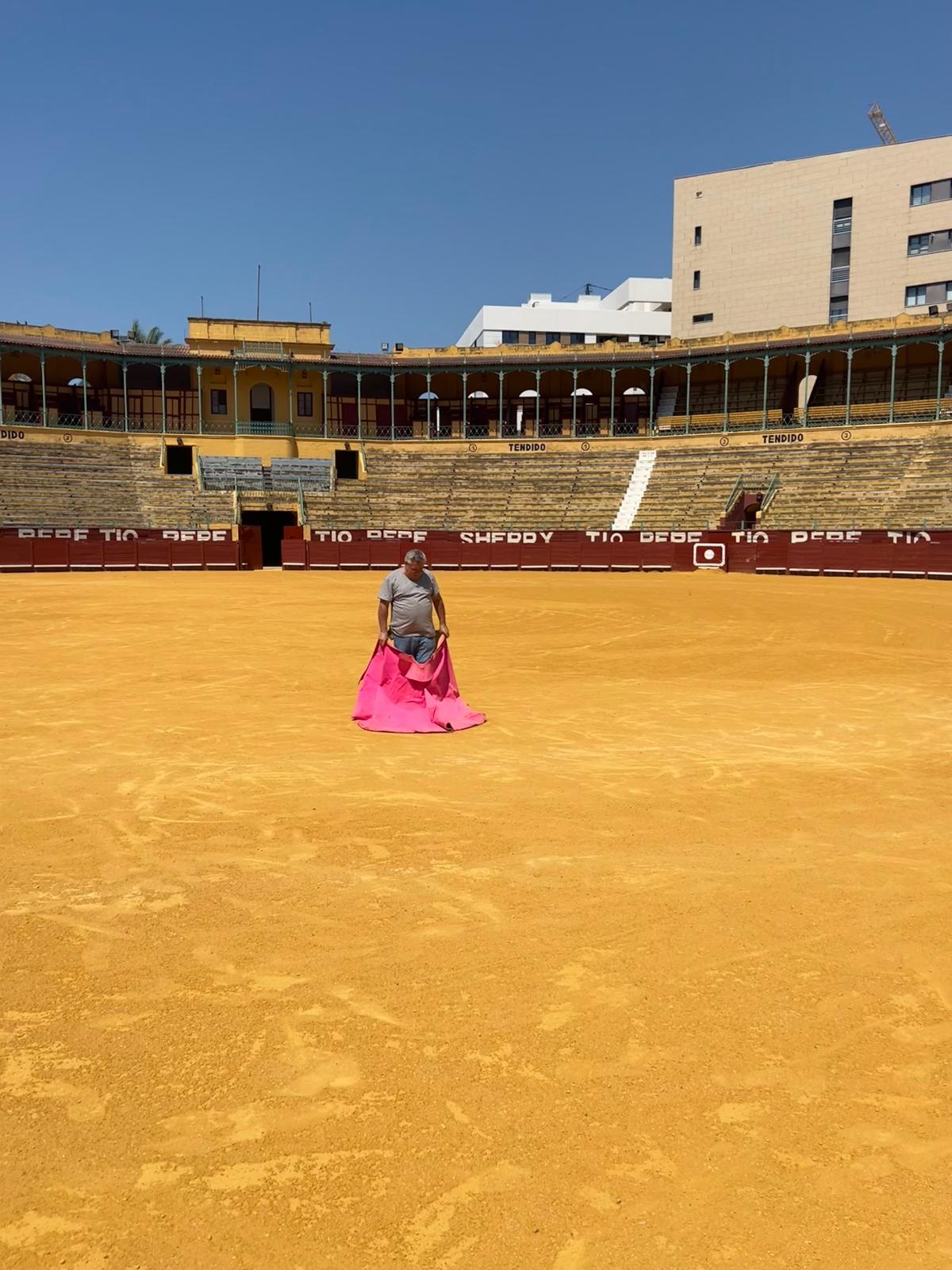
Whilst wandering the streets of Jerez de Frontera last week, I chanced upon the bullfighting ring. While the gate was not open, nor was it the season for the spectacle, I was still intrigued to look around.  A small door broke the yellow walls and inside, an old man sat tampering with a photo frame. I knocked and went inside. At this point it is probably useful to mention that I speak little to no Spanish, and by little in this case I also mean none. Which strangely made this encounter all the more interesting. As I muddled through on Google Translate, I managed to ask for a look around, and what followed was an incredible story of bullfighting. Of bravery and pain, bravado and celebration, but also of cruelty. 

I have never truly had an opinion on the sport of bullfighting. The pictures of matadors dressed immaculately, flourishing a crimson cape, always looked appealing. However, it is difficult to look past what is often not shown in the photos. Stabbing at bulls with hooked barbs in a display of human dominion over beast, does not spark positive notions in the minds of most, myself included. Yet this experience of speaking to this man may have swayed me toward an opinion of tolerance or perhaps, an understanding as to why this sport is such a staple of Spanish culture. 

The ring itself was impressive, a modern-day Colosseum. The yellow sand masked the sprays of blood and the stands packed high, row on row, bearing down on the competitors. I was taken into the ring and the man, who now revealed himself as a former matador, began drifting and swirling in patterns around the arena drawing deep curves in the sand as he deftly manoeuvred his cape and sword. This seemed more like a dance or a ritual than a deadly game. The passion that he held for the games, and the esteem with which he spoke of other bullfighters, impressed the importance of the sport to not only him and his family, but to the community as a whole. 

There is a side however that is rarely seen: the inner workings of the ring. He took me through the swinging doors where bulls would charge through in the May festivals and through a small wooden fence winding our way through a network of hiding places and ratruns before entering a white room. The tiles of the room reflected the hanging bulb in the centre, illuminating the operating theatre. Every time there are bullfights there are injuries, some minor, some major, and some fatal. The host explained all this whilst tracing a scar that ran from his ankle to the top of his calf, the mark of his final bullfight. Moreover, he whipped out his phone and after scrolling YouTube furiously, spun it round to show a video. A matador leaps towards the horns of this bull with muscle and sinew bulging from its flanks. The man lands a stab at the base of the bulls neck, then falls. He scrambles on the floor as the horns of the bull rip his eye out. I stood in shock; the host however simply slowed the video and showed it to me again. It was utterly strange in my mind that this was something this man had devoted his life to. Then he pointed towards a poster on the wall. A matador with his face in his hands, almost modelling a sad clown, with an eyepatch obscuring his right side. This matador was still fighting. 

Despite all this, the host continues to support the establishment of bullfighting, even training his own son and nephews in the art. This is what I found inspiring about the man, that he would see this amount of violence and bloodshed, and yet continue to embrace this culture in order to uphold tradition and not allow this bastion of old Spanish society to be eradicated.

I appreciate that I have not necessarily given a balanced view on bullfighting here, and my account may purely come across as one of admiration. However, I think that you will have a far easier time finding articles that offer a wholly negative view towards these things than what I found in this encounter. This understanding was not something that I think I would have found by looking at a screen, but was found in the weather-beaten face of an old man who still had that thrill of the fight instilled in his eyes, that sense of adventure that never truly leaves you, and I must say it made me think twice about my views on bullfighting.

Featured Image: Sam Unsworth

Categories
Culture

Stories We Tell Ourselves – The Main Character Moment

By Lucy Atkinson

There’s a moment on every student’s walk to a 9am lecture- mist hanging low over the river, your headphones in, tote bag swinging, when you catch your reflection in a café window and think: yes. This is cinema. 

You’re the protagonist. The world revolves around your inner monologue. You are misunderstood, artfully exhausted, and probably wearing something that attempts to look like it was stolen from a 1970s film student. 

Then the bus splashes you. The moment’s gone—the soundtrack cuts. You’re suddenly an extra again — damp, anonymous, and late for French grammar.  

We are a generation raised on The Main Character Moment. TikTok taught us that any walk can be romantic if you tilt the camera up 10 degrees and add some Phoebe Bridgers. Instagram captions whisper, “romanticise your life.” Pinterest boards promise “dark academia” as if tragedy and stress were an aesthetic rather than a cruel reality. The result? A cultural obsession with being seen, even if no one’s actually watching – the art and behaviour of constant performance.  

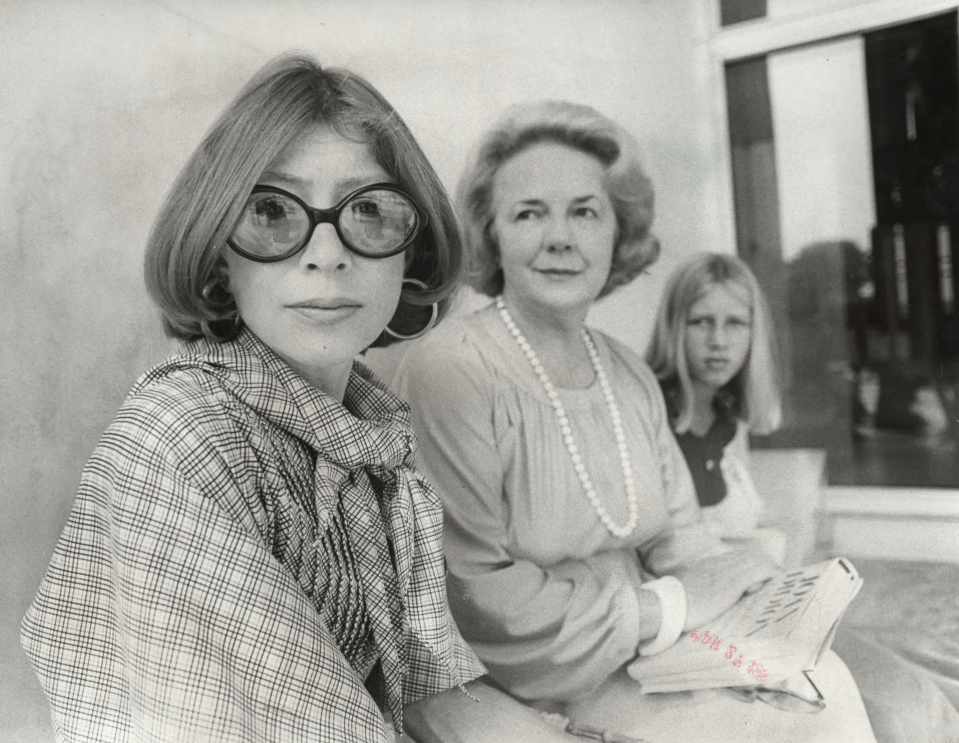
It’s tempting to laugh at it — the earnestness, the self-mythologising — but this desire for narrative coherence isn’t new. Virginia Woolf did it with stream-of-consciousness; Baudelaire did it in a crowd. As Joan Didion famously wrote in The  White Album, “We tell ourselves stories in order to live.” The main character complex is simply our generation’s spin on that instinct — to turn chaos into continuity, to edit experience into meaning, more often than not through the lens of social media.  

Didion’s insight lands differently in the era of the front-facing camera. We still tell ourselves stories in order to live, but now we do so publicly, performatively, with filters, and the perfectly chosen snippets of songs in our stories. We construct our lives like screenplays — plot arcs, redemption moments, personal soundtracks — as though meaning can be manufactured through aesthetics alone. 

Didion goes on to say, 

“We look for the sermon in the suicide, for the social or moral lesson in the murder of five. We interpret what we see, select the most workable of the multiple choices.” 

It is human nature to romanticise the tragic and mundane. And now, more than ever,  it is expected to do so for the viewing pleasure, or envy, of others. As Didion states,  we are affected by “the imposition of a narrative line upon disparate images, by the ‘ideas’ with which we have learned to freeze the shifting phantasmagoria which is our actual experience”. 

But what once felt like an act of defiance — the assertion of interiority, and the forceful reigning of the self’s own ‘story’ — now feels like a performance review.  How’s my narrative arc going? Am I developing as a character? Have I had my midpoint crisis yet? Ultimately, how do people view me? What am I worth if people don’t see my aesthetic? 

To be a main character today is to curate the illusion of intimacy. It’s to drink an overpriced flat white and pretend it’s plot-relevant. To view a breakdown as nothing  more than “character development.” To confuse aesthetic coherence with emotional authenticity. 

And yet, beneath the irony, there’s something tender in the attempt. To romanticise one’s own life is, at its core, to refuse invisibility. Maybe filming your sunset walk isn’t narcissism, but a tiny rebellion against banality. Perhaps the self that’s performed online isn’t fake, but aspirational — a draft of who we’d like to become, a fake-it-till you-make-it projection.  

So perhaps the real question isn’t “Am I main character enough?” but “Am I paying  attention?” 

The main character is not the loudest person in the room — it’s the one who happens to notice the way the light hits the library steps at 4 p.m., the one who finds narrative in the in between. To live like that — alert, romantic, a little ridiculous — might actually be the most honest kind of protagonism there is. 

So yes, maybe you are the main character. Just don’t forget that today, everyone else is too.

Featured Image Credit – Teresa Zabala / NYT / Redux

Categories
Reviews

The Deiform Father, the Deformed Son: Guillermo del Toro’s Frankenstein (2025)

By Robin Reinders

‘I have a very childlike rage, and a very childlike loneliness.’ – Richey Edwards

‘Little Lamb who made thee / Dost thou know who made thee’
‘Did he smile his work to see? / Did he who made the Lamb make thee?’

– William Blake

‘The sun is life.’

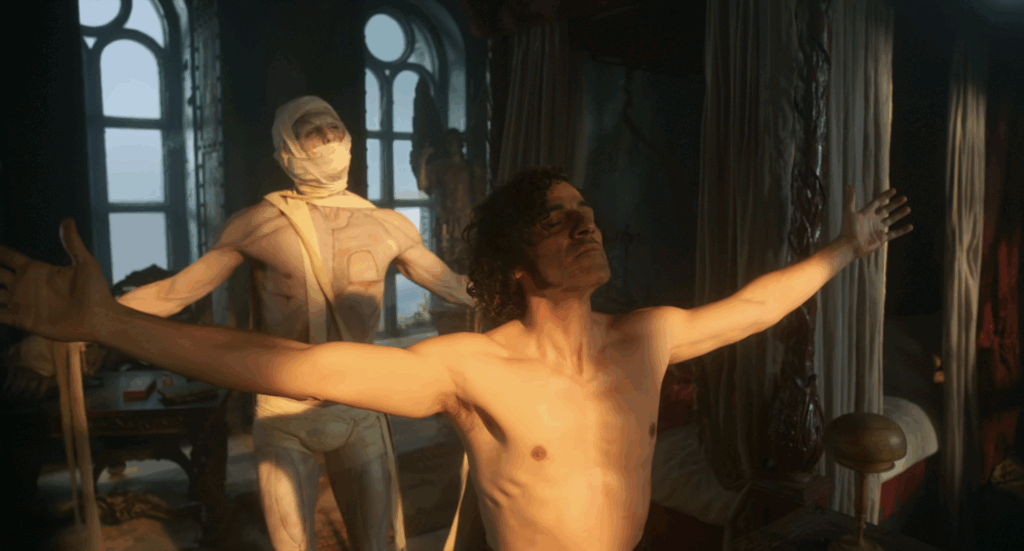
You are Victor Frankenstein; your ego is stored in your Adam’s apple and your scrupulous hand and the wound of your father’s apathy festering in the marrow of your bones. You fancy yourself a Maker in the making. A sedulous corps(e)man who deals with what is dead more than any doctor ought to. When you dream in the lavish bedroom not ten paces from the laboratory, it is not pleasant. You dream of dashed hopes. You dream of the body inert and shining on the slab. You dream of failure.

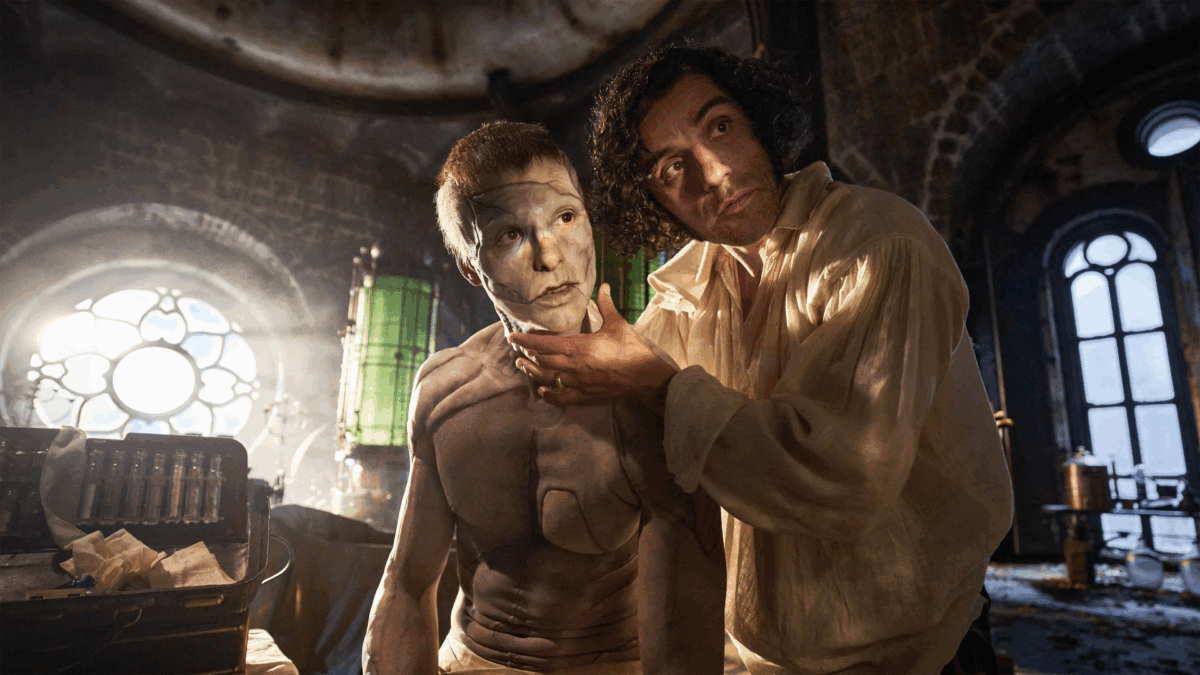
And wake now to a sound: small, inconceivable. A feeble inhalation, and another, and the world rearranges itself around what it has made. It is standing. Fragile and immense all at once. The skin gleams unnervingly, a milky sheen over bruised blue veins. The stitched geometry of the sutures glisten, fresh and pink. Its breath rasps raw through a new throat. Its head tilts as an infant’s. You are terrified. 

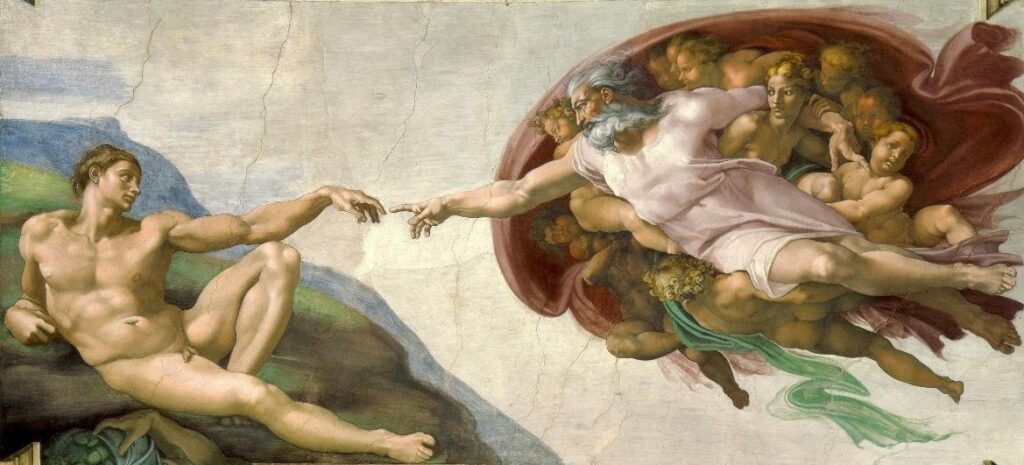
It takes a trembling step, the motion itself carrying a bone-weary ache both ancient and nascent. It is coming towards you. One red-gloved palm shoots out, No, please— and it lifts its mirrored hand in neonatal mimicry. This is Adam considering God; creation is watching you with wide, wet eyes. 

You could fall to your knees from it. The most significant thing is that you do not.  

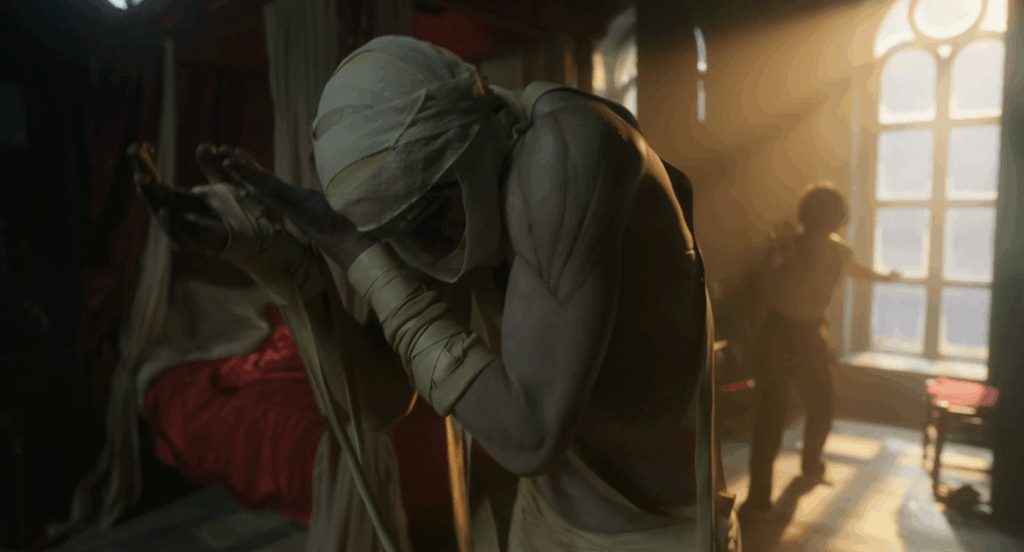
The veil which frames the canopy bed conceals the countenance of its lacerated face; through the gauze, you glimpse it watching you, staggered, breathing in tiny, animal pulses. And suddenly the gloves are unbearable, and so you strip them off with that sigh of sumptuous leather (bought and paid for by the blood of the Tsardom and Sardinia). Look, you whisper, holding out your bare palms. Same. Slow and balletic, those long fingers unfurl. Pale instruments writhing delicately in the dim glow of the late light. You circle its distracted figure, eyes devouring the impossible architecture of it – the alabaster chest, the striations of its shoulders, the stutter of bated breath. The sound that leaves your mouth is quiet, awed.

When you draw the curtains the daylight is violent. And it flinches with all its prodigious body; the sore, strangled sound of a child escapes its mouth; its wrists flail useless and instinctive about its face. This tall, jigsaw-limbed thing cowering at the morning: it is pitiful in its grace, almost feminine in its frailty. Sun, you say, as though naming could console. Your gentle reorientation of it by its great, albatrossian shoulder blades. Light! The sun is… the sun is life. You bid it face it, though only when you turn bare-chested to do so yourself does it dutifully follow your example. It mimics your posture, your sigh, the fluttered closing of your eyes. You watch its marmoreal body haloed in gold; you think its scars are so much like filigree. 

Peeling away the bandage shrouding its mouth feels like something you have the authority to perform. Its lips are an insipid, pallid blue. You gesture to yourself with open, benign hands: Victor. Its spindly arms fold clumsily inwards, its fingers tapping at its pronounced sternum. This weak, parroted exhalation of your name is its first word. You laugh then: a cracked, manic sound too full to contain. Yes! you bark, the syllable collapsing into whispered litany. Yes, yes, yes – of course you are. Your fingers trace the pulse beneath its jaw, the miracle of it. It leans infinitesimally forward, and slowly you lower your head, press your ear to its chest and hear that petrifying, preternatural throb of its heart. You are Victor Frankenstein; your ego is stored in your glorious creation. 


The son is life.

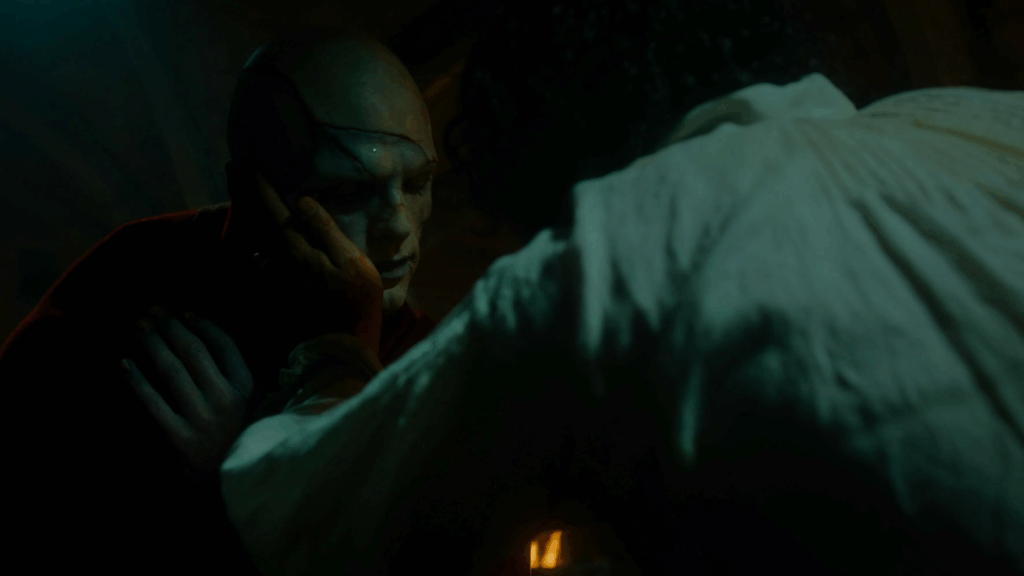
Guillermo Del Toro’s Frankenstein (2025) is about hands: the hands that stitch, the hands that strike, the hands that fail to cradle what they have conjured. Whereas Mary Shelley’s creature is the child of scientific hubris, del Toro’s is the orphan of affection – the casualty of emotional cowardice. Victor’s failure is this: he cannot sustain the intimacy his creation demands. ‘You have to see the purity of the moment when Victor touches his cheek,’ del Toro remarks, ‘and understand that there could be a happy ending – but there won’t be.’ The wretched, essential fatality of creation is compressed into that very gesture: it is the fleeting, fugitive instant when God and creation encounter tête-à-tête, when Adam is still precious and prized and darling and dear – before shame and fear set their miserable precedent. Del Toro makes raw the ruin latent in tender regard: this is the crux of the film. 

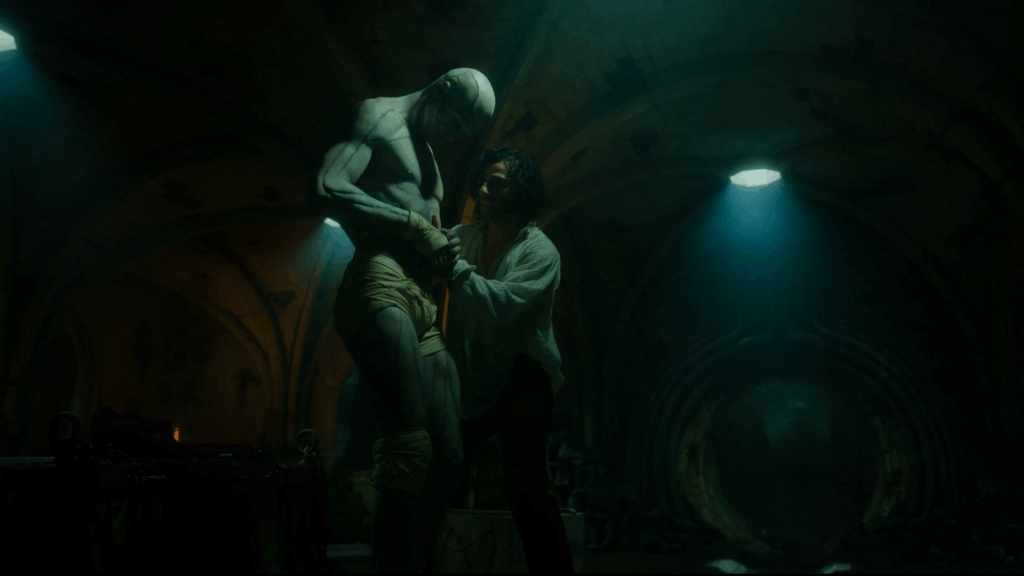
Jacob Elordi’s embodied performance of the Creature communicates this brilliantly. Ache is privileged over shock. The infant fury of an unloved child over the stupid, square-jawed, bolt-studded zombie we may be accustomed to. Through Elordi, the Creature’s anatomy becomes a palimpsest of failed affections. Each tendon and tremor inscribes the trauma of lost intimacy: a virgin sorrow, a betrayed commitment, a nascent rage. When we are first met with del Toro’s vision of the Creature, he is slack-jawed, his limbs unsure, his torso enormous yet quivering. Each gesture seems borrowed, as though he must study himself in order to move. The Creature’s entire education is conducted through this oscillation between contact and withdrawal. His physicality, as Elordi constructs it, is a grammar of approach. When he moves, it is always toward; the great sorrow is his misplaced faith in reciprocity. One senses in this rendering of the character the raw metaphysics of want in its most primitive state – a desire unmoralised and unnamed, simply occurring. 

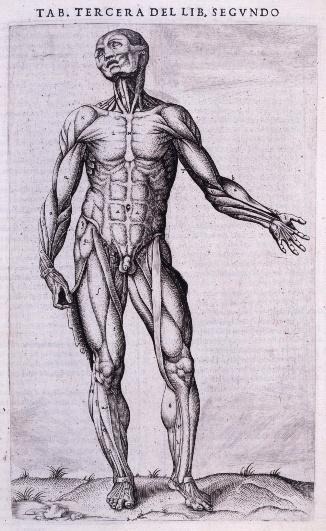
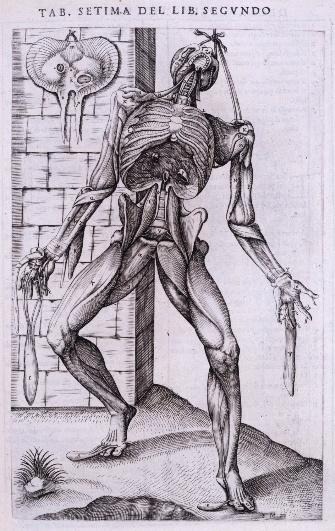
Andreas Vesalius, Male écorché (1556) / Anterior view of dissected muscle man, suspended (1556)

Young Elordi came into the project a mere nine weeks before filming began. Del Toro found his first Creature in the far more seasoned Andrew Garfield – who no doubt would have succeeded in realising the apposite affective register and mild demeanour demanded by such a character of the director’s vision – though this favoured casting was controversially scrapped due to scheduling conflicts at the time of the 2023 SAG-AFTRA strikes. Makeup artist Mike Hill was forced to discard nine months of painstaking effort in order to begin anew on Elordi’s lofty 1.96m canvas. While the swap kindled a small yet mighty outcry from internet cinephiles eager for this iteration, del Toro refused to see the matter as a derailment or departure from his intended design: ‘Anything that goes “wrong” in this movie is going to go right. I’m going to listen to the movie’ (Frankenstein: The Anatomy Lesson, Netflix). Hill shared this sentiment, describing an attraction to Elordi’s ‘gangliness and his wrists’. ‘It was this looseness,’ he says, ‘Then he has these real sombre moments where he watches you really deftly, and his eyelids are low, with the long lashes like Karloff.’ Eyes are of particular interest to del Toro. He describes a distinct openness in Elordi’s gaze: ‘an innocence and a purity … that was completely disarming’ – but, crucially, also a rage

The great narrative weight of the somatic and the sensory in this film cannot be overstated. The cadaver Victor animates must necessarily be of a certain scale, and must carry his awkward frame with a candid unwieldiness so earnest as to be endearing. The Creature must be sublime. ‘I don’t know who else you could get with a physicality like this,’ Hill said, and echoed by del Toro: ‘[Elordi] looks like an anatomical [drawing] … He looks like The Human … You can see his body in a Vesalius anatomical engraving. Very diagrammatic.’ He moves on coltish legs, buckling and knock-kneed, towards his Maker. Limbs long and lithe and reaching out in visceral inborn instinct. He doesn’t know what to do with himself. 

‘I am thy creature; I ought to be thy Adam.’ / Michelangelo’s The Creation of Adam (1512)

If Elordi’s portrayal of the Creature is one marked by reaction and response, it is also marked in consequence by movement. His manner of gesture is informed by the hypnotic, uncanny cadence of Japanese butoh, as well as the doggish behaviours of his beloved retriever and faithful set-companion Layla. In this simple, unselfconscious, animal humility there is a virtue and an innocence of religious quality. ‘He reacts to love with love … to hatred with hatred,’ del Toro explains – an ethics of basic reciprocity which engenders purity. This unhurried curiosity of interaction counters with stark contrast Oscar Isaac’s taut and fevered Victor. He is intellect void of commitment, perpetually at odds with the irregular impulse of his own weak solicitude; he creates for the sake of saying he has done so. His creation, instinct shot through with affection, is the resultant victim.

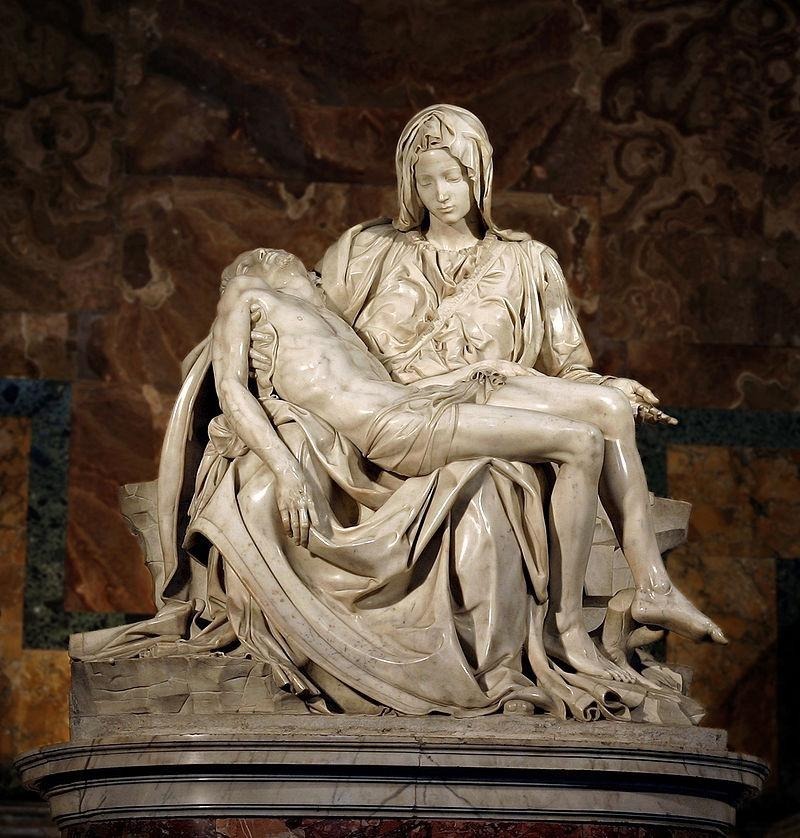
The bond between del Toro’s Frankenstein and the Creature unfolds like an inverted Pietà: the sentient son pleading to be held by the recoiling father. The first chapter of the film, ‘Victor’s Tale’, begins in his own tragic, operatic childhood. ‘He begins with his father,’ del Toro expounds. He must tell the Captain, and by extension the audience, the origins of his own creation before he can divulge the details of his own creation: ‘“I must tell you how it got there. And that’s with my own father.”’ The act of creation is staged by del Toro as an attempted act of psychic compensation, performed by the son unable to metabolise the grief of his father’s absence. The Creature, then, becomes a monument to the father’s repression: a body stitched from the detritus of his unloved self (‘Yes, of course you are’). Victor succeeds only in reproducing, with the frightful exactitude of the deluded surgeon, the very same pattern of abandonment that made him. ‘Say one word. One word more. Anything. Make me save you.’ He leers at his creation as the gloves come back on. ‘Victor.’ And the strike of the match.

Michelangelo’s Madonna della Pietà (1498-9)

Del Toro’s Frankenstein strays with great purpose and intent from Shelley’s modern Prometheus. He tells a very old story, lights it in Caravaggesque chiaroscuro: the father who cannot bring himself to touch, the son who starves of his abstinence. Blood in fathomless amount coats the hands that tilt your face toward the light – but they cradled you, did they not? 

Featured Image: Netflix