Categories
Perspective

‘Am I My Brother’s Keeper?’: Libidinal Economies of Fraternal Violence and Victimhood in Half Man

By Robin Reinders

‘When you split me and my brother in the womb, you did not divide us evenly. He got kindness, and I got longing. He got complacence, and I got ambition. I want to kill him sometimes. I think sometimes he wants to die.’
– ‘Hevel’, Nathaniel Orion

‘You do not have a brother. You have never experienced anything this ferocious or intentional with another person.’
– ‘You Are Jeff’, Richard Siken

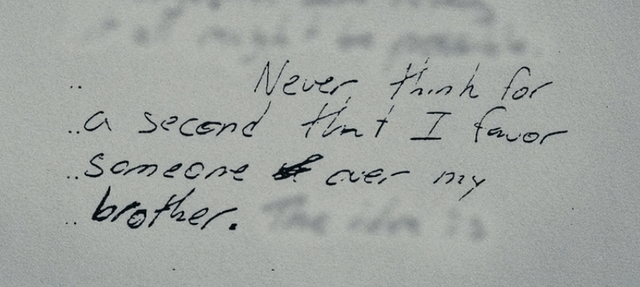
To be a brother and to have a brother is inherently, inexorably biblical. Brotherhood within the Western cultural imagination has historically served as arguably the most enduring structure of psychic and moral antagonism, saturated from its inception with asymmetry, rivalry, inheritance, obligation, violence and blood-guilt. The brother is never only familial: he assumes multiple roles, appearing instead as rival-double and shadow-self, intimate enemy and involuntary witness, the figure against whom identity is measured and comprehended and through whom it is displaced and dismantled. Fraternity, in this tradition, is no facile framework of mutual belonging, but a theatre of comparison, substitution, accusation and sacrificial demand. The literary canon bears the imprint of this logic: in Dostoevsky’s Karamazovs, brotherhood becomes a vehicle for metaphysical crisis staged through competing claims to divine silence, legislative punishment, erotic compulsion and rational unbelief, each brother functioning as a partial ontology belonging to the whole rather than a character unto himself; in King Lear, Edgar and Edmund recast fraternity as a juridical struggle over legitimacy and primogeniture, questioning the ideologies of inheritance and structural exclusion; for Steinbeck, Cal and Aron reproduce the schema of the first fratricide as an inherited structure of moral predestination, in which affection is metabolised through perceived grace and reprobation; in The Comedy of Errors, sibling doubling pushes identity into precarious ontological positions, whereby misrecognition exposes personhood as contingent on external attribution rather than any interior sense of coherence. It is, however, the image of Cain looming over Abel which most insistently haunts the theological, the literary and the psychic genealogy of fraternity: the brother as a node of ambivalent investment, a site of conflicting libidinal and moral investments – love, envy, resentment, safeguarding, substitution and an underlying logic of annihilatory desire. To pose the question Am I my brother’s keeper? is therefore necessarily to entrench fraternity within implications of burdenhood; it is to acknowledge that one brother is, by nature, psychically tasked with preserving, galvanising, monitoring, managing and accounting for the life of the other, even at the cost of his own singular psychic coherence.

‘Something / Happened to me, and I can’t tell / Anyone, so it will happen to you’
– Robert Bly, ‘Keeping Quiet’
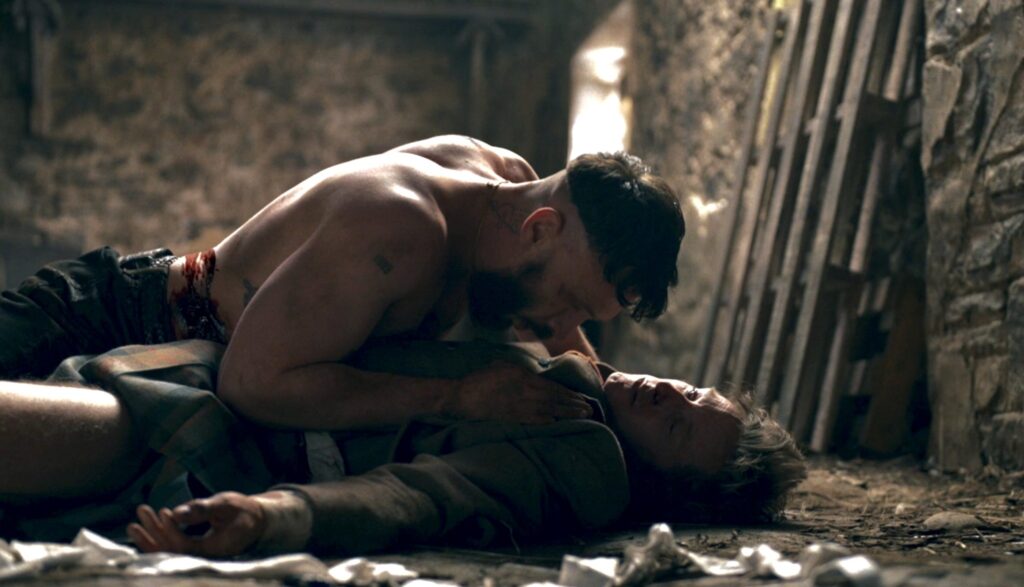
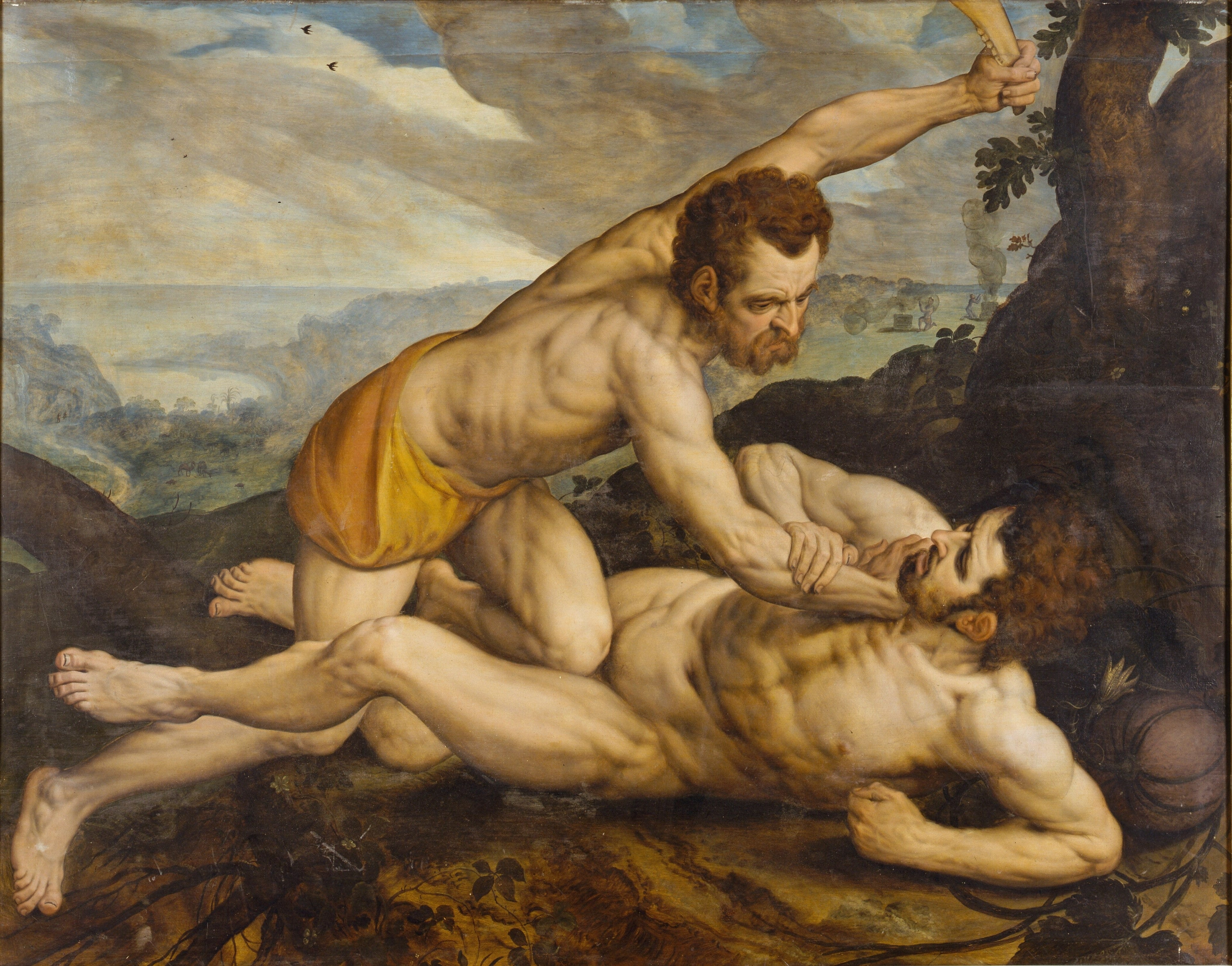
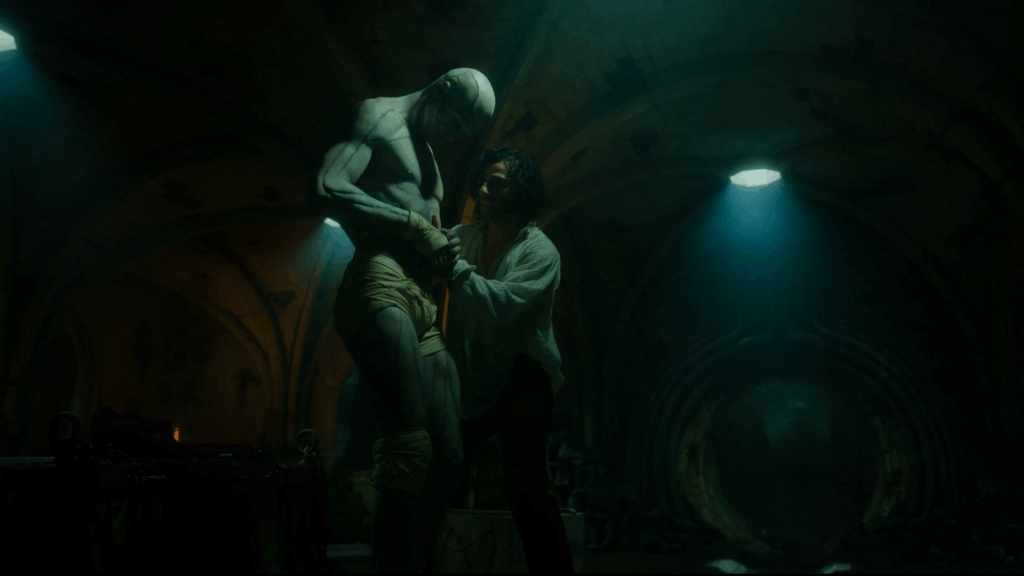
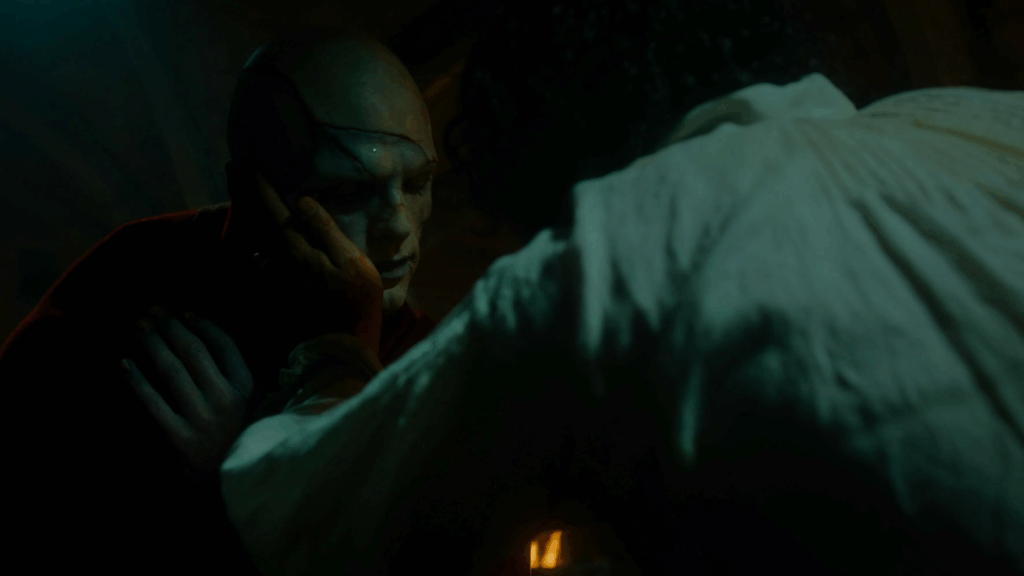
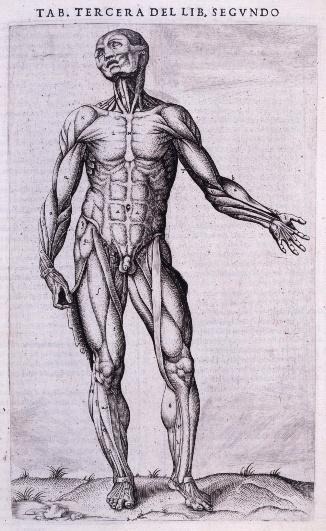
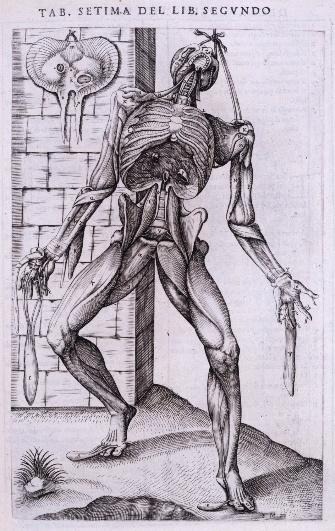
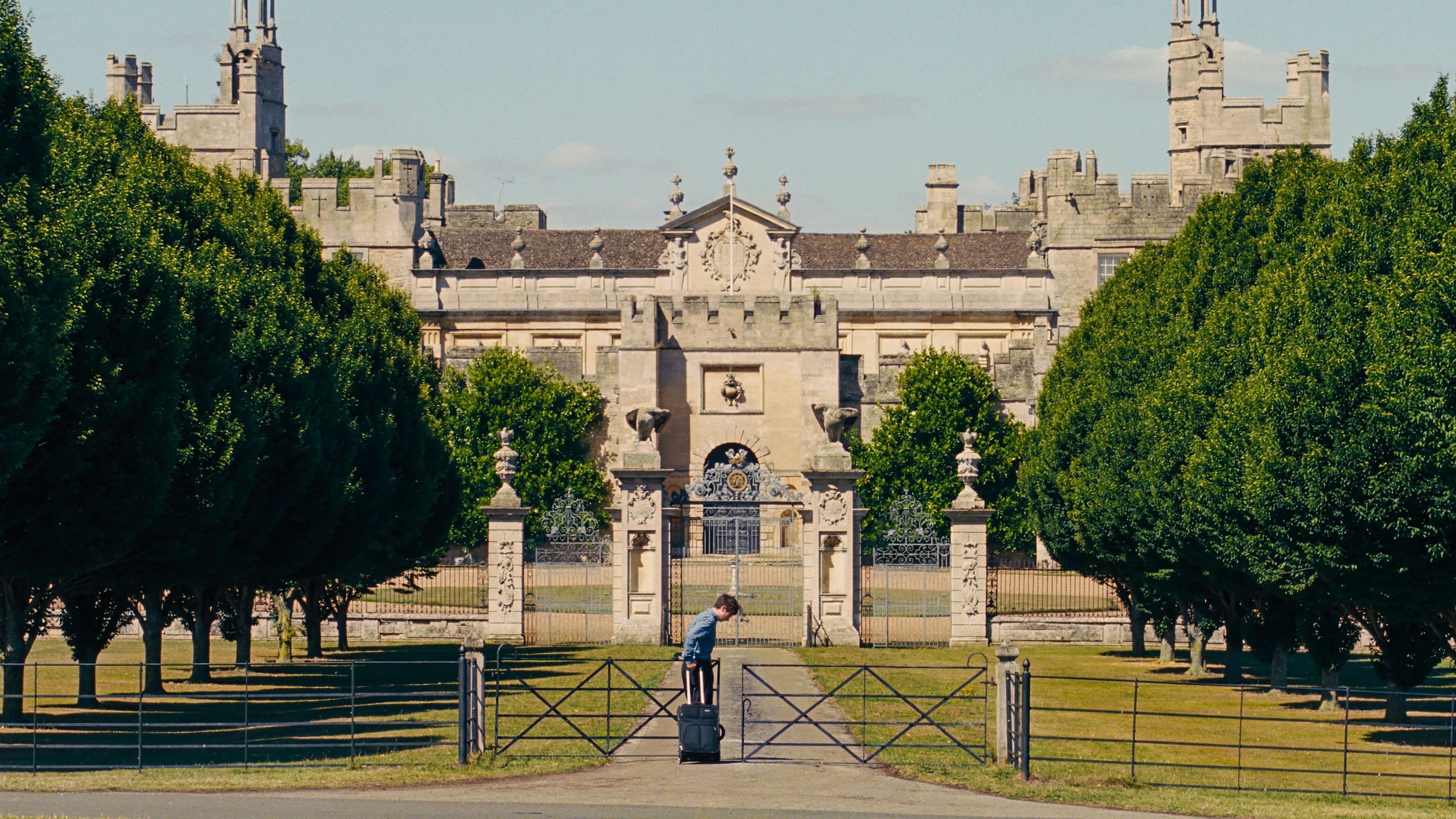
Half Man 1.06, dir. Eshref Reybrouck, 2026 / Frans Floris, c. 1531-1570

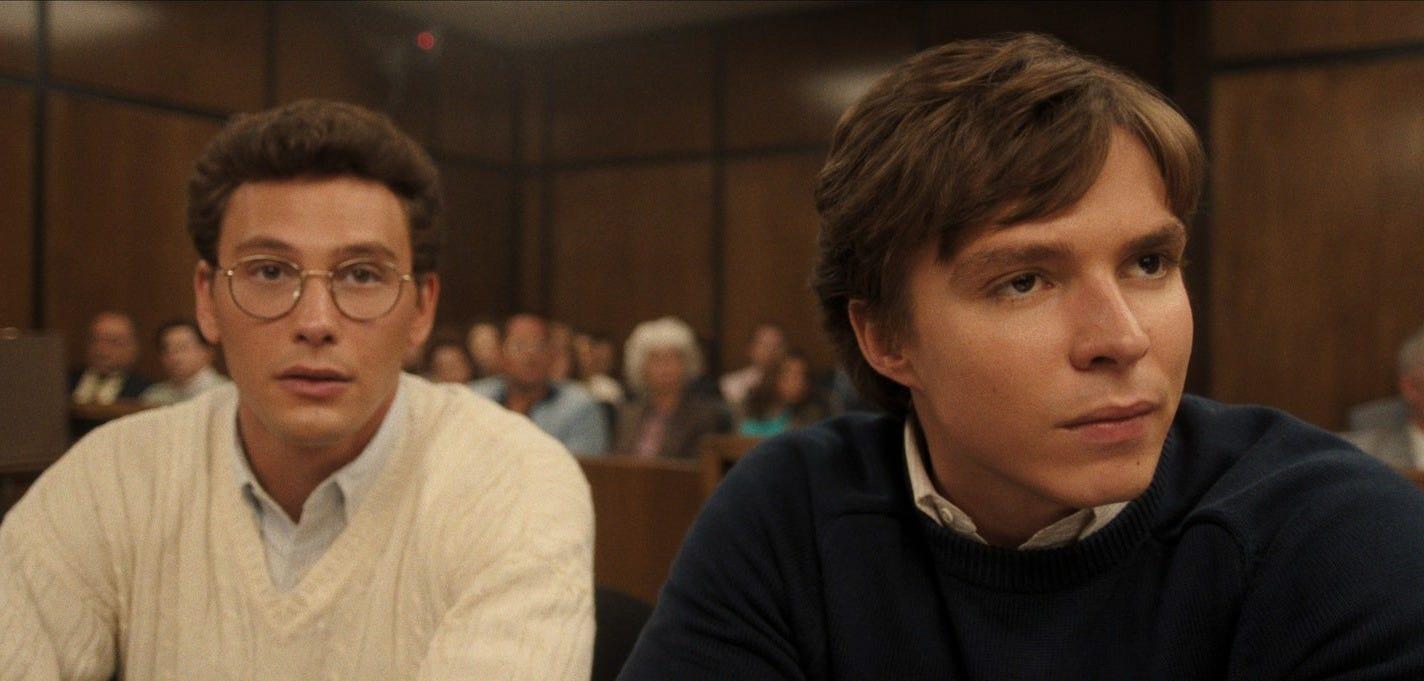
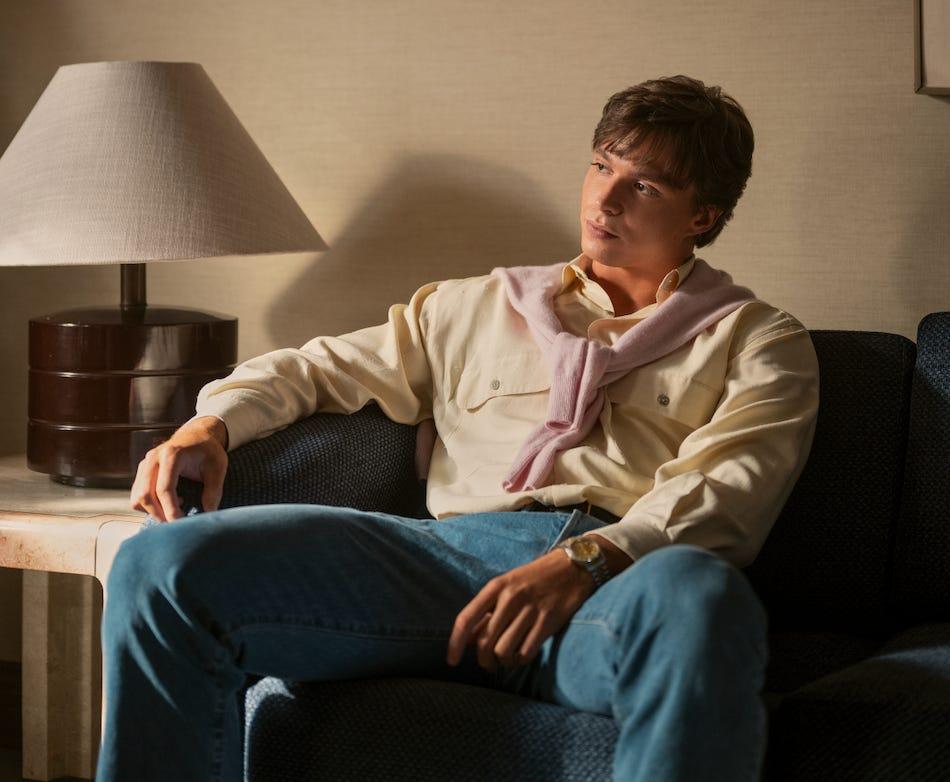
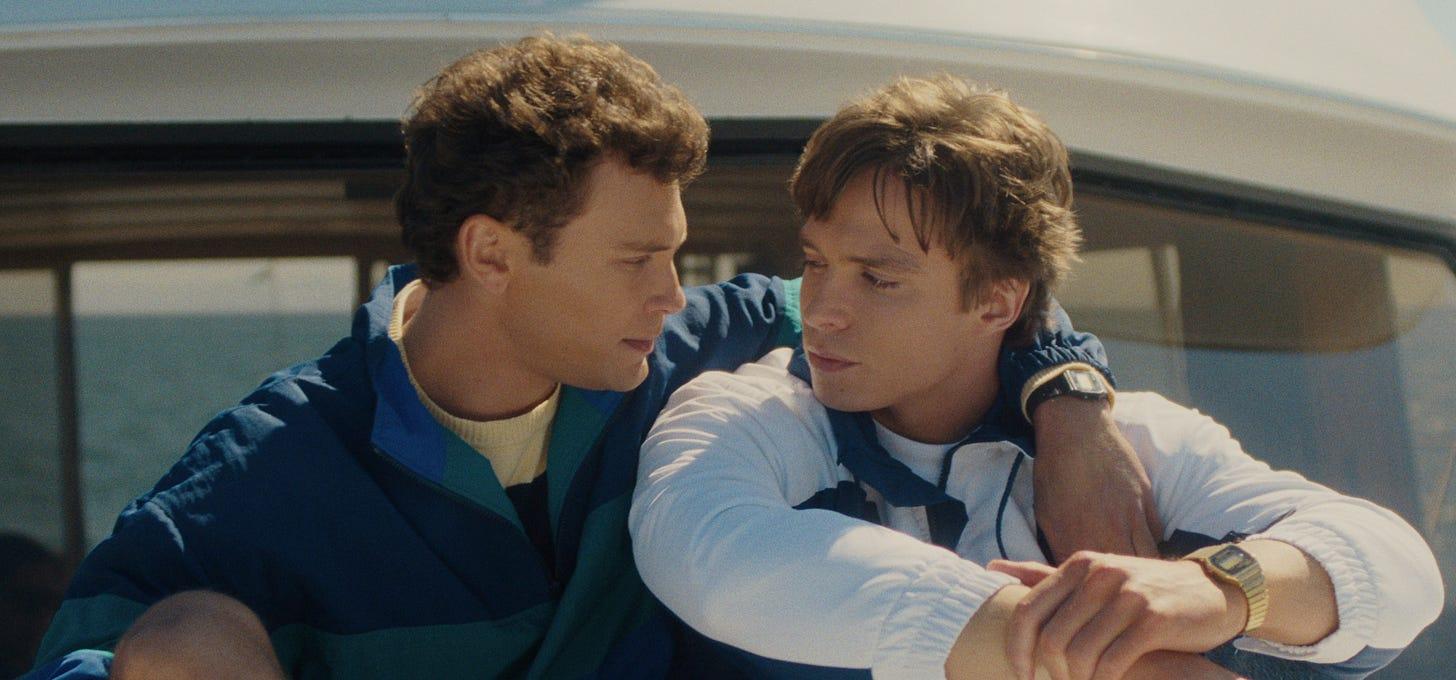
Richard Gadd’s limited series Half Man (2026) stages this question of brother-as-object and brother-as-keeper with a hand both violent and precise in equal measure. Centred upon Niall and Ruben – boys brought together through the relationship between their mothers and raised as brothers within a post-industrial Scottish milieu marked by pervasive Thatcherism, absent fathers, precarious identities and inherited familial violence – the series traces the evolution of an attachment whose intensity repeatedly exceeds the conceptual vocabularies available to describe it. Throughout the series, fraternity rewrites itself out of any stable structure of kinship and instead defines itself as a profound investment in one another’s existence as psychic objects. Each brother becomes indispensable witnesses to the other’s ego, undertaking the onerous affective labour of recognition in ways that render separation increasingly difficult to imagine. Brotherhood thus becomes a claustrophobic and internally recursive affective system in which care is reconfigured as Orwellian surveillance, intimacy as containment, dependency as a relational structure maintained by harm. The brother is simultaneously responsibility and rival, counterpart and counterbalance, object of preservation and possession, of desire and destruction. He is less a discrete subject than an extension of his kin, a living repository for his guilt, longing, resentment, obligation and projected selfhood. Niall and Ruben inhabit their siblinghood by way of enacting the retrospective effect of a prior fantasy of distribution gone awry: each is haunted by the suspicion that something essential has been allocated to the other, that identity itself has been unequally portioned at the level of origin. Gadd describes the two as ‘polar opposites’ – Niall marked by the soft-hearted, introspective self-consciousness of a fragile fifteen-year-old boy too far inside his own head; Ruben, in stark contrast, characterised by his volatility, his reckless, charming impulsivity and his comfortable physicality, present in the very way he carries himself. This asymmetry is intensified by the inverted paternal conditions under which the brothers are raised. Niall matures in the wake of paternal absence, the death of his father at the age of eight establishing a touchstone of irreparable loss which structures his later attachments as compensatory formations. Ruben, by contrast, remains ill-fatedly bound to a father whose lingering, haunting presence is no less injurious, his sense of self and relation to others organised unwittingly around an unwelcome intimacy interchangeable with violation. Stemming from patrilineal lack and ever-presence respectively, the brothers both develop a relational economy in which each appears to offer the other a kind of impossible redress. The father, in both cases, becomes what must be suffered through and survived; the brother becomes what might be lived through instead. Gadd thereby deconstructs the mainstream framework of familial intimacy, conventionally perched upon the clean promise of emotional soundness, presenting fraternity instead as a condition of psychic enclosure: a sealed and cyclical relational economy in which the distinctions between affection and abuse collapse and re-warp with increasing intensity. 

Juliet Mitchell’s theorisation of sibling trauma proves indispensable here insofar as it reorients psychic injury away from the vertical axis of the Oedipal drama and toward the horizontal violence of replacement, rivalry and resemblance. Mitchell thereby positions fraternity as a constitutive rather than secondary psychosexual structure. The sibling, for Mitchell, arrives not only as a ‘second-chance child’ (Half Man, 1.04) but as a traumatic interruption of narcissistic continuity: ‘The new baby now lying in the place it occupied will be both narcissistically loved, as more of the toddler’s self, and hated, as a replacement for itself’ (‘Siblings: Thinking Theory’, 2013; emphasis mine). Brotherhood therefore originates via the friction of a profoundly unstable oscillation between identification and annihilation, between adoration and dispossession. The sibling is simultaneously the self and the usurper of the self; ‘the same’ and intolerably ‘other.’ Mitchell’s formulation that ‘jealousy is the modus vivendi for the arrival of the “other,” the one who is different but who should have been the “same”’ resonates with particular force in Half Man, where Niall and Ruben repeatedly apprehend one another less as opposite individuals than as distorted alternate selves through whom their own deficiencies are exhibited and desires are displaced. The psychic violence of this arrangement is further intensified by Mitchell’s claim that the infantile wish for ‘narcissistic sexual union with one who is the same’ is inseparable from its countervailing fantasy of destruction, such that siblinghood becomes the site at which love and annihilation are first rendered coextensive, born together as twins. Indeed, the series achieves much of its affective intensity in its persistent blurring of fraternal intimacy and erotic identification. Mitchell’s claim that ‘the narcissistic identificatory love for the baby who is the self can, via the transitivism of childhood, become the “we are as one” of adult couples’, offers a striking framework through which to read the unstable psychosexuality saturating Niall and Ruben’s relationship. Crucially, Half Man does not present incestuous possibility as aberrant deviation from safe, traditional fraternity, but rather as fraternity’s own latent logic under conditions of traumatic enclosure and collapsed relational boundaries. J. V. Caffaro observes there is no universally agreed upon definition which serves to differentiate abusive behaviour from mutually-initiated sexual encounter between siblings (‘Treating Sibling Abuse Families’, 2004); this becomes particularly significant insofar as the series repeatedly stages encounters which refuse stable categorisation within conventional binaries of coercion and consent, aggression and desire, victimhood and reciprocity and so on. The dyadic dynamic between the brothers occupies a profoundly unstable intermediate terrain in which intimacy itself has become structurally contaminated by lineages of domination, imitation, dependency and compulsive reenactment.
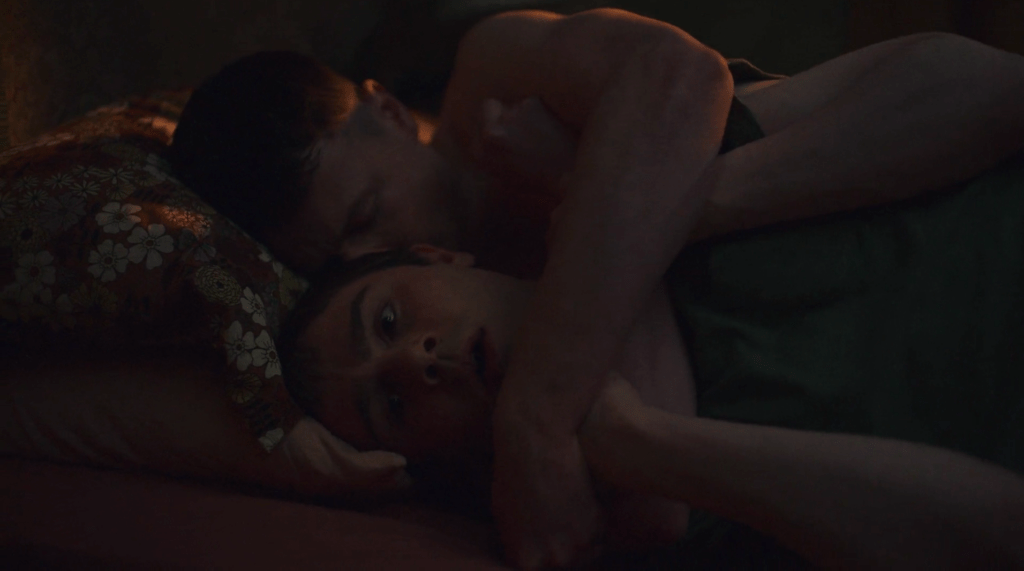
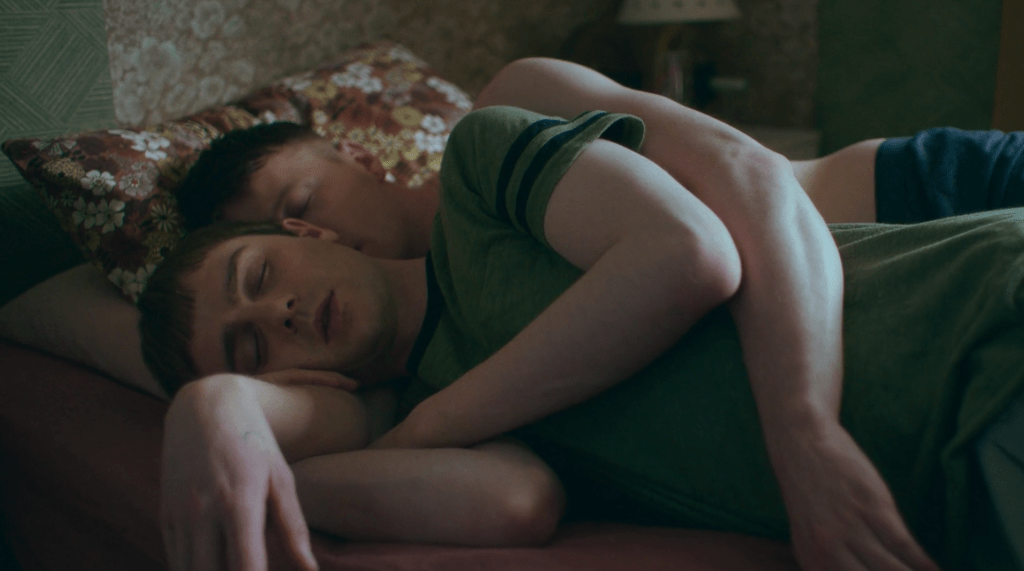
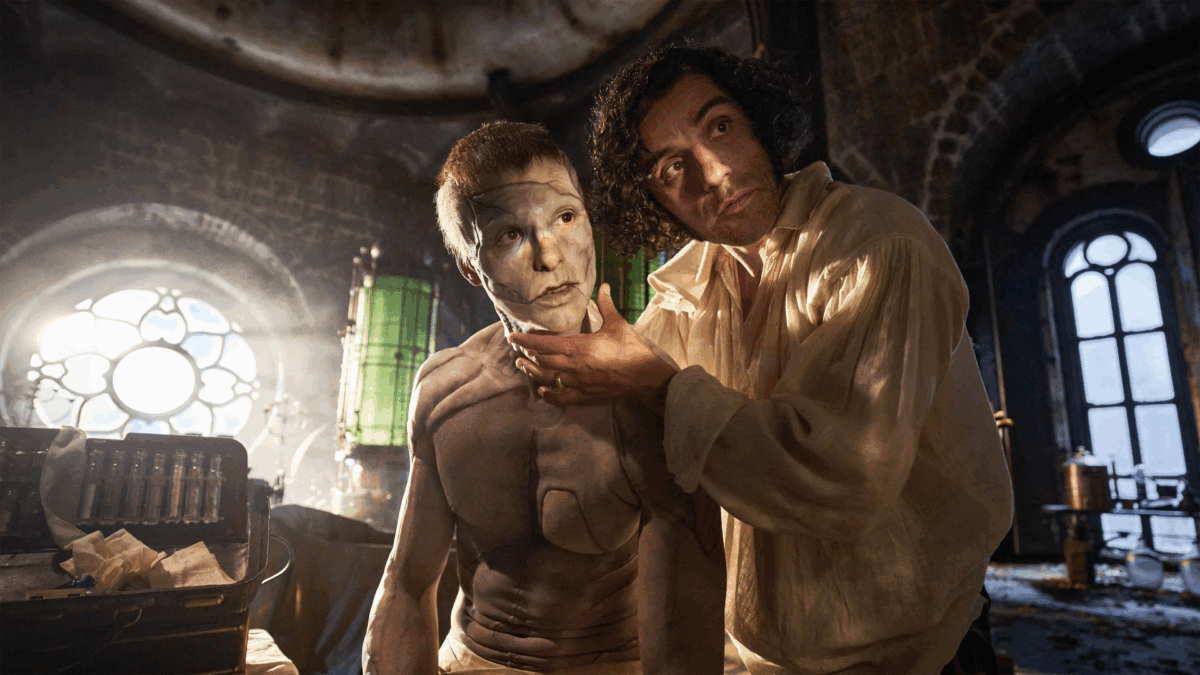
Half Man 1.01, dir. Alexandra Brodski, 2026

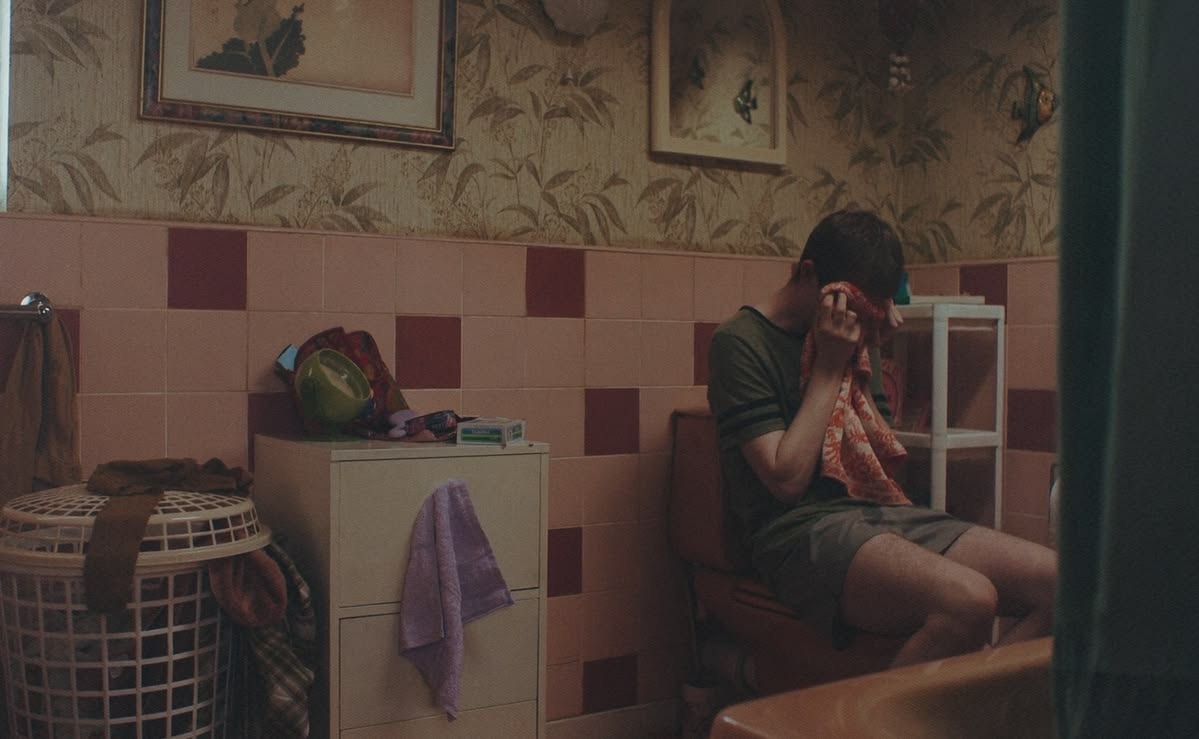
This perversion is already present in the very first episode. It is not yet clear, in these early moments, what kind of intimacy Ruben and Niall inhabit. They are not yet legible as enemies, nor as companions in any stable sense. What is discernible instead is a tense proximity which struggles to settle into category. In 1.01, Ruben restrains Niall in a harsh headlock after the latter suggests alerting their mothers to Ruben’s father’s late-night jeering outside the house (‘Why don’t you give your old man a big hug?’). The struggle quickly acquires an arguably erotic choreography: Ruben positioned behind Niall, rocking against him as the latter remains trapped between the hard line of Ruben’s body and his older brother’s mattress. Yet the scene simultaneously regresses toward infantilism, as the boys eventually fall asleep entangled together in an image oscillating between a lovers’ embrace and childlike clinging. Niall subsequently awakens to discover a wet patch staining his boxers – an image rendered deliberately ambiguous between ejaculation and the base, bed-wetting reaction of the body of a frightened child. Such moments exemplify the series’ persistent refusal to disentangle eroticism from terror and psychic helplessness, intimacy from humiliation or desire from frameworks of childhood. Sexuality and infancy become momentarily indistinguishable. Desire appears contaminated by vulnerability; vulnerability by desire. The result is a profoundly unsettling image of psychic life before differentiation has fully occurred. The body itself becomes unreadable within this libidinal economy of fraternity, incapable of clearly distinguishing arousal, fear, identification, submission or regression.

This ambiguity festers throughout the series as Ruben repeatedly mediates, orchestrates and mutilates the boundaries of Niall’s sexual subjectivity. Sexual initiation is no longer figured as a private threshold into adult relationality, but as a heavily scaffolded scene of fraternal governance in which access to desire is routed through Ruben’s regulatory presence. The sequence in which Ruben effectively ‘takes’ Niall’s virginity by proxy is particularly disquieting, arranging for Mona, the girl he himself is sleeping with, to deflower Niall (the same girl he will go on to marry) while physically regulating his somatic responses: coaching his breathing, placing a hand upon his chest to ground him, focusing his gaze upon his own face, repositioning his body when he loses rhythm. The scene’s psychosexual logic is unmistakably triangulated. What is decisive here is not only the substitution of partners, but the structural redistribution of agency: Ruben assumes a quasi-managerial position over Niall’s embodied experience. His access to heterosexuality is thus mediated through Ruben’s controlling presence, his brother insinuated in the architecture of all future possibilities. This renders Ruben simultaneously intermediary, author and witness – but also covert object of libidinal orientation and latent point of reference. The apparent heterosexual act becomes perverted with displaced fraternal eroticism, the brother the coloniser of the psyche and the body, coming-of-age’s most charged and visceral instant now irreversibly entangled with surveillance, watched by the panoptic gaze of Big Brother.
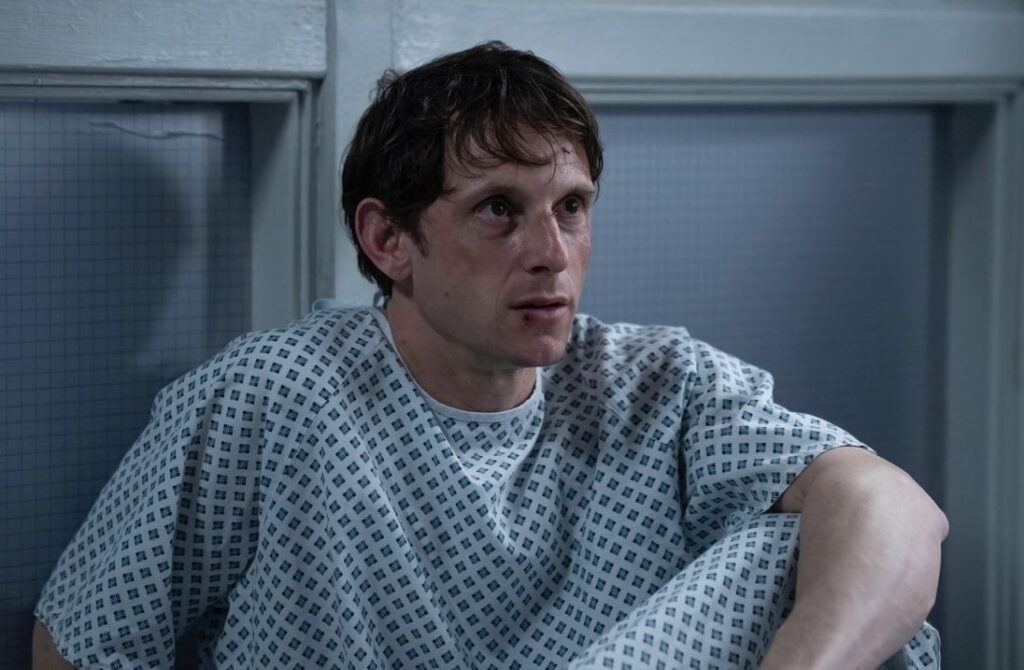
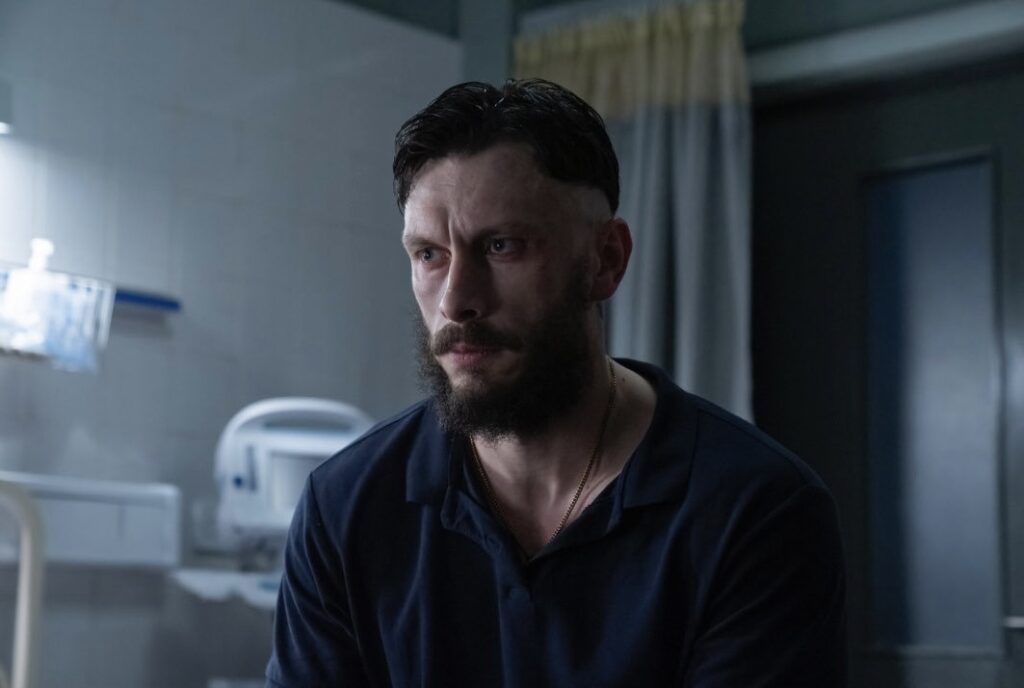
Half Man 1.04, dir. Eshref Reybrouck, 2026

Many such instances of assault take place throughout the series, though the most violent culmination of such logic is in 1.04, in which Ruben rapes Niall in a hospital bed with his car hood ornament after threatening to ‘twist it up [his] ass without lube’ should he fail to tell him the truth. Here, the series abandons euphemism entirely and reveals the latent structure underwriting the brothers’ relationship from the outset: domination articulated through penetration, intimacy through violation, acknowledgement through bodily invasion. The existing logic of the dynamic becomes fully legible: the act does not interrupt fraternity, but reveals what fraternity has already become under the pressure of the precedent of trauma. In this sense, the scene cannot be reduced to unilateral sadism, nor the explicit dialogue deployed ‘frivolously’, as Gadd makes clear in an interview. This would be to flatten its horror into pathology. Ruben’s violence serves as an inexorable catastrophic intensification of fraternal attachment, a reenacting of the incestuous logic already embedded within his own abuse history and formulation of affection. Clementine Morgan states: ‘Incest is never an isolated event. Incest is always a family dynamic.’ (The Realm of Unreality: An Incest Memoir in Essays, 2024) She clarifies ‘if there is a child that is perpetrating incest, that child learned that incest dynamic from somewhere, and somewhere along the line it was learned from an adult’. This theory proves devastatingly resonant in this narrative context. Ruben’s abuse by his father situates incest as an inherited relational mode of intimacy, a way of apprehending closeness, interdependency, responsibility and bodily access learned through coercion and molestation and subsequently reproduced horizontally within the fraternal bond. The father’s greatest legacy is not the wound he leaves marred upon his eldest boy but the architecture through which that wound comes to organise future love; you are allowed access to the body over which you are responsible. Violence here operates as traumatic pedagogy; it reproduces itself precisely because it has become indistinguishable from the very conditions under which attachment is experienced and recognised between one another (‘This is what you’ve always wanted from me, isn’t it?’). Here is the wound gouged by the father, then. Niall is haunted by a paternal absence; Ruben by paternal persistence. This parallel is cardinal. A yawning maw lodged within the youngest boy; the eldest with his interior self stained beyond cleansing. In this sense, the series proposes a horrifying inversion of paternal function: the father fails as protective authority and is replaced by the brother as compensatory psychic infrastructure. Yet this substitution only further intensifies the burden of fraternity, because the brother cannot occupy paternal space without simultaneously contaminating it. The series thus arrives at an implicit but devastating proposition: the only cure for a father is a brother, and there is no cure for a brother.

What ultimately emerges in Half Man is therefore a vision of fraternity as unstable psychic cohabitation: two subjects trapped within an economy of identification, resentment, longing, imitation and inherited violence from which neither can fully individuate. Medieval theological discourse surrounding incest, as James Donavin notes, understood the term paradoxically as both abomination and mystical union, ‘both a sin and a way of remediating sin’. (Incest Narratives and the Structure of Gower’s Confessio Amantis, 1993) Half Man inherits something of this paradoxical logic. Fraternal intimacy within the series appears simultaneously catastrophic and salvific, violating and preservative, obscene and devotional. The brothers seek in one another precisely what destroys them: recognition, continuity, merger, absolution and the impossible fantasy of becoming whole through the body of the other.

‘I was born to watch over you / & you were born to keep my hands purposeful.’
– Bloodmercy, I. S. Jones

Encoded within every episode of Half Man is that same biblical refrain: Am I my brother’s keeper? The series’ most devastating gesture is its refusal to imagine ‘keeping’ as a benign or even coherent form of care. To keep a brother, the series suggests, is never merely to look after him. It is to monitor, regulate, preserve, possess, enable, contain and attempt to simultaneously annihilate and survive him. Can’t live with ‘im, can’t live without ‘im. Keepership is honed throughout the series as an affective relation in which nurturance becomes inseparable from domination, and whereby care mutates into a mode of psychic piloting. The brother is stewarded, and through that stewardship is loved to an abominable degree. Indeed, what renders the relationship between Niall and Ruben so profoundly discomfiting is that neither man appears fully capable of distinguishing where devotion ends and ownership begins, and neither do they seem set on drawing such a line. Gadd describes the brothers’ relationship as ‘idolatry mixed with love mixed with hatred mixed with adoration and need’. This is revealing precisely because idolatry already implies an asymmetrical structure of emotional investment: one subject becoming the site upon which another deposits meaning, reverence, dependency and psychic orientation. The brother is elevated into object-status, relic-status, transformed into something simultaneously worshipped and instrumentalised. When asked for one word to describe their dynamic, Gadd stated: ‘Contorted is one that springs to mind, but if I said loving, would you think I was insane?’ This, then, is the central tension structuring Half Man: the series does not oppose love to toxicity, but rather explores the extent to which love itself may become distorted into a coercive attachment style under conditions of childhood trauma and emotional entrapment. ‘I think for something to be toxic,’ Gadd says, ‘it has to also be intoxicating first’. What festers between Niall and Ruben is not necessarily the failure of fraternal care, but fraternal care rendered pathological through excess intimacy, asymmetrical dependency, the patrilineal wound and a sort of psychic conjoinedness from which neither brother can fully depart. 

This impossibility manifests most visibly through the series’ recurrent obsession with provision, indebtedness and material subsumption. Ruben repeatedly installs himself in the role of provider despite his own economic precarity following the loss of his rigging job, accumulating catastrophic debt in order to continue financing the lives of others (including Niall) without their knowledge. When Niall confronts him over this compulsive assumption of responsibility, Ruben’s justification is startlingly naked in its ontological simplicity: ‘Because I liked it. I liked being the provider. I knew my place in the world.’ (Half Man, 1.05) To provide is to stabilise the self through indispensability; dependence furnishes Ruben with the only stable proof of his own role. Far from simple altruism, his acts of financial self-sacrifice therefore constitute an attempt to purchase recognition through utility, to render himself psychically inerasable by suturing his presence into the material conditions of others’ survival. Debt becomes an architecture of attachment through which emotional permanence might be forcibly secured. 
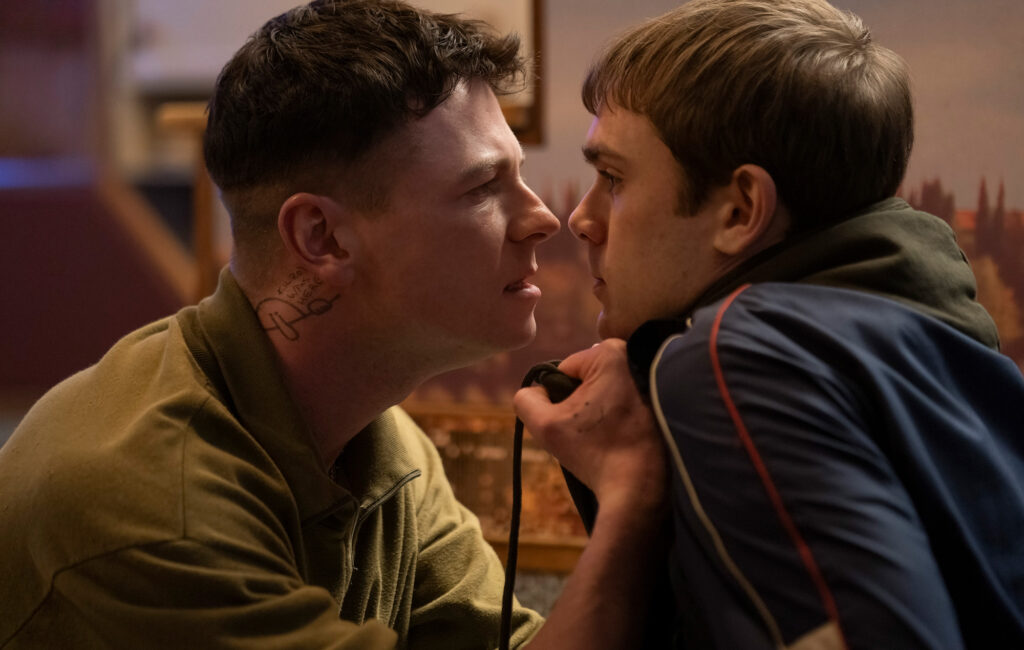
‘We share everything!’ / Half Man 1.02, dir. Alexandra Brodski, 2026

Niall, meanwhile, increasingly comes to occupy the complementary position of the kept object. Jamie Bell’s observation that Ruben becomes Niall’s ‘life support system’ captures the extent to which care in Half Man functions simultaneously as affective captivity. Niall’s attachment to Ruben is irreducible to facile fear or coercion alone; rather, Ruben’s volatility acquires the paradoxical status of security. Because Ruben is feared by the world, he may in turn shield Niall from that world’s hostility. Yet protection here is inseparable from capture. Niall becomes psychically and materially entangled within Ruben’s systems of provision to such an extent that separation itself begins to register as mutilation, as severance, as betrayal. This logic surfaces explicitly during their confrontation over Niall’s university accommodation, when Ruben rejects the very premise of independent existence: ‘We share everything! I mean you’re wearing my jumper right now … You should’ve brought me with you from the start!’ (Half Man, 1.02) The statement initially performs as childish, even petulant, yet its insistence that ‘it’s not about the room, it’s about the fucking principle’ reveals something considerably more disquieting. It is not a two-mattress-childhood at stake but ontological non-separation: a refusal of psychic distinction itself, an epistemic in utero in which selfhood can only be sustained through enmeshment. To leave is intolerable because departure threatens the collapse of the shared psychic infrastructure through which both brothers remain comprehensible to one another and to themselves.

The series repeatedly materialises this non-separation through patterns of possession, inheritance and symbolic circulation. Everything Niall touches has already passed through Ruben’s hands first: clothes, lovers, money, possessions, social identity itself. Ruben kisses nearly every person Niall kisses; he orchestrates Niall’s first time; he steals the domestic future Niall momentarily weilds for himself. The effect is competitive, certainly, but more so incorporative, implicating, insinuating – as though Ruben compulsively absorbs every emerging site of Niall’s autonomy back into the fraternal dyad before it can calcify independently. Eve Kosofsky Sedgwick’s account of male homosociality becomes especially illuminating here. Sedgwick argues ‘the use of women as exchangeable … property’ functions to cement bonds between men, revealing the extent to which heterosexual structures may conceal or serve as pretext for deeper currents of male homosocial desires, which the masculine nature deems more valuable. In Half Man, women repeatedly occupy precisely this mediating position. Mona does not inhabit the role of sexually autonomous woman within the narrative, but rather a conduit through which Niall and Ruben negotiate their own rivalry, identification, power and possession. Niall’s later affair with Mona cannot be comprehended in clean isolation; rather, it represents an attempt to access Ruben through what Ruben himself has claimed, achieved, won. To occupy his position of a man who has successfully settled in his masculinity by trespassing upon the intimate territory of his domestic life. Simultaneously, impregnating Mona (one of the few things Ruben is incapable of) offers Niall the possibility of both superseding his brother in the one way he can, and simultaneously giving Ruben the child his infertility denies him, reappropriating heterosexual reproduction itself into the convoluted economics of this libidinal fraternal economy. 

The logic of keepership thus increasingly collapses distinctions between care and colonisation of the brother. Unbeknownst to Niall, during a fourteen-year-long rift between the two, Ruben pays for his bedsit, his therapy (‘The therapy I used to talk about him?’; Half Man, 1.04), his car, his Christmas presents. Debt in Half Man therefore functions past the economical and into the ontological: to owe the brother becomes indistinguishable from being constituted by him. Jessica Benjamin’s theorisation of domination as a distorted response to the crisis of recognition offers a crucial scaffolding through which to comprehend this relation. Benjamin argues ‘the most familiar conflict that arises from differentiation is between the need to establish autonomous identity and the need to be recognized’ (The Bonds of Love, 1980), and that domination itself shows its face precisely when subjects attempt to resolve this conflict without relinquishing dependency. The subject seeks autonomy whilst simultaneously refusing the separateness of the other, ‘possessing or controlling’ them in order to avoid the psychological desolation of aloneness. Ruben’s behaviour throughout Half Man repeatedly enacts this impossible negotiation. He cannot tolerate separation because separation threatens annihilation; yet he equally cannot sustain mutuality because mutuality requires recognising the brother as genuinely separate and unimplicated in one’s own self. Consequently, affection mutates into possession. Financial provision becomes a mode of management. Protection becomes surveillance. Violence becomes a means of retaining a form of closeness while repudiating unmasculine vulnerability. Benjamin goes on to claim violence operates as an attempt ‘to resolve the issues of autonomy and recognition while denying the other’s subjectivity’. This is certainly felt in Ruben’s wounded aggression toward Niall, which tends most commonly to crop up at moments when Niall threatens an independent subjecthood: leaving home, forming romantic attachments, imagining futures beyond the dyad. Violence becomes a desperate strategy for preserving a twinned continuity while simultaneously disavowing dependency itself. In this sense, Ruben’s brutality does not signify emotional absence but catastrophic overinvestment and cognitive dissonance. He requires Niall too intensely to allow him autonomy, yet cannot articulate this dependency except through domination, humiliation, sabotage, financial superiority or bodily invasion. The violence of keepership, then, is that the brother must remain close enough to guarantee psychic survival, but objectified enough to prevent abandonment. The little brother is a favourite toy one cannot grow out of and will not put down.

Crucially, however, Half Man refuses to position Niall as a poor, passive, pristine victim within this structure. Benjamin’s discussion of domination insists that both parties become organised around complementary relational positions: one asserting a joint-selfhood through control, the other relinquishing his own selfhood in favour of the safer doublet. Niall repeatedly resists Ruben’s authority and cruel hand while simultaneously relying upon the very structures which imprison him. He accepts Ruben’s money, his protection, his emotional counterbalance, his rare oblations of tenderness. It would be dishonest to describe their dynamic as one-sided when closer to truth is a reciprocal affective capture: a closed affective circuit in which the brothers require one another precisely through the mechanisms which shatter them. To keep a brother, then, is not to safeguard his happiness or to encourage his prosperity, but to direct him; blind him, take him by the shoulders and point him where you both need him to go. Keepership becomes a form of existential governance through which care and cruelty, guilt and shame, animosity and codependency, violence and validation circulate and permeate indistinguishably. One comes to find that neither brother can survive the fracturing of this structure, even as the structure itself marks survival impossible.

‘A brother is born for adversity’ – Proverbs 17:17

The distribution of suffering between Niall and Ruben is, as is evident, manifestly asymmetrical; Ruben’s violence and abuse cannot necessarily be transposed into any straightforward moral equivalence with Niall’s evasive transgressions, self-sabotages, or forms of passive complicity. Yet the series is careful not to allow this asymmetry to resolve into a sacred ethical geometry of victim and perpetrator either. Both brothers are intensely invested in the maintenance of a structure of suffering which wounds them. Victimhood in Half Man is thereby an existential orientation: a mode of self-constitution predicated upon the continual narration, citation and reopening of injury. What Richard Gadd is essentially interrogating within the series is what kinds of selfhoods are made available when one lives inside the role of the injured party.

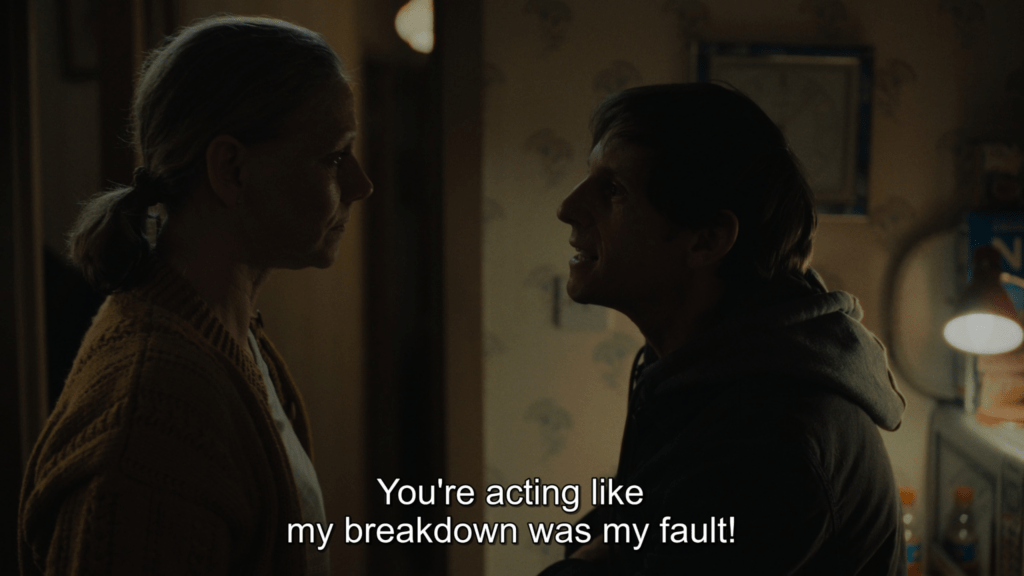
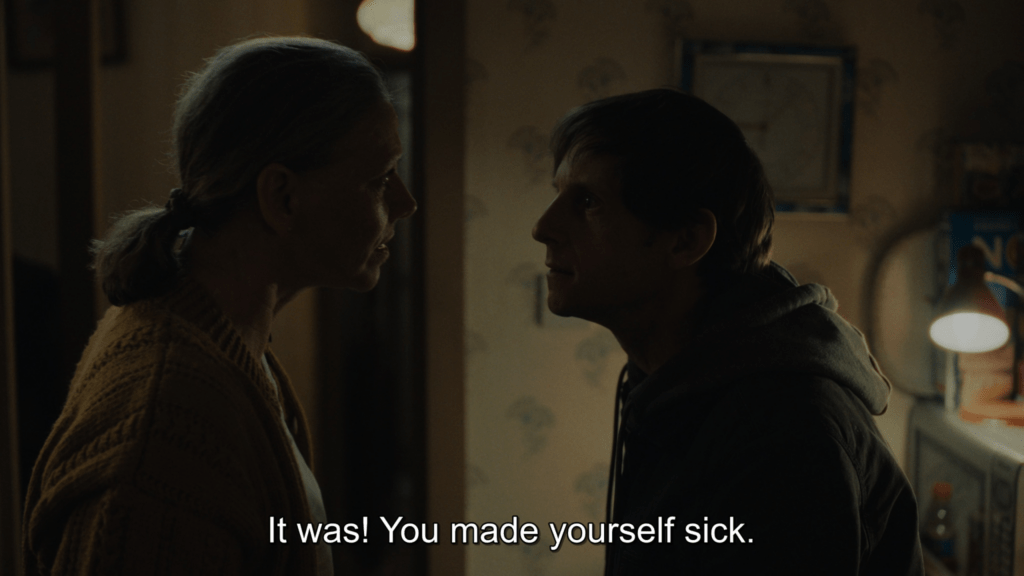
This question is particularly acute in relation to Niall, whose interiority increasingly appears built around injury as both excuse and root cause. Upon discovering Ruben has been secretly financing significant portions of his adult life, the initial response is one of puerile moral indignation. The force of the reaction is disproportionate to the revelation itself, suggesting what is truly at stake is not simply the embarrassment of financial dependency, but the absolute collapse of a precarious and carefully maintained fantasy of autonomy. Niall stalks his converted childhood bedroom – a room he and Ruben once shared – smashing possession upon possession paid for by his brother’s pocket. Alarm clocks, CD players – all are sacrificed in his tantrum fit, accompanied by a verbal breakdown in which Niall screams at his mother: ‘I hate him! I fucking hate him! … I’m his bitch! I’m his bitch!’ (Half Man, 1.04) The oscillation between repudiation and identification is decisive. At the end of the day, he is nothing more than a little brother who has lost the game; this will always be his first and only role to play. The rage therefore originates at the point of narcissistic injury. To owe the brother is intolerable because it punctures the fantasy of self-authorship – of a life without training wheels or your big brother’s hand hovering out of sight but no less ready to catch. This anxiety recurs later when Ruben proposes Niall repay a debt through domestic labour. Niall’s immediate recoil – ‘You want me to be your bitch?’ (Half Man, 1.05) – again translates indebtedness into erotic subordination. The language of repayment is immediately converted into the idiom of humiliation, suggesting that, for Niall, dependency is never purely material but always already symbolically charged, always already inscribed within hierarchies of domination and shame.
Half Man 1.04, dir. Eshref Reybrouck, 2026

Yet the series repeatedly and consciously complicates this interpretation by demonstrating the degree to which Niall simultaneously seeks, reproduces and seemingly requires the very structures he claims to abhor. Dependency functions both as grievance and lifeline. The brother is resented precisely because he provides what is needed. Such contradictions invite a broader consideration of the relationship between victimhood, complicity and identity. Throughout the series, Niall repeatedly returns to the childhood court case involving Ruben as what he describes as ‘the turning point’ and ‘the seed of all of [his] issues’. (Half Man, 1.04) The ‘seed’ becomes a master narrative through which the contingencies of adult life are retrospectively organised into a coherent story of injury. Significantly, Niall’s mother repeatedly challenges this interpretation. ‘You’re always talking about the seed’, she remarks, before accusing him of being ‘too busy blaming everyone else’ for his problems. Her harshest attack is in her rejection of Niall’s own  account of his psychotic breakdown, describing his institutionalisation as a stint in a ‘madhouse’ rather than ‘hospital’: ‘You made yourself sick … You became obsessed with it.’ When Niall shouts ‘I was ill!’, she responds with a dismissive wave of her hand: ‘You were self-involved.’ The series does not ask us to take a side here. Instead, Half Man remains deeply interested in the possibility that suffering itself can become narcissistically organised, a concept Richard Gadd is certainly no stranger to, as can be seen in his previous semi-autobiographical work Baby Reindeer (2024). Bell’s observation that Niall is frequently ‘manipulative and selfish’, and that many of his relationships revolve around ‘what he can get from people and what they can shoulder for him’ points toward a more uncomfortable truth: victimhood may become attractive because it offers coherence. To be injured is to possess a story, and to possess a story is to possess a self.

René Girard’s theory of victimage is pertinent here. Girard identifies the scapegoat as a figure through whom collective tensions are displaced, ritualised and rendered meaningful. The victim acquires a paradoxical status: simultaneously powerless and empowered by his own pain. Ruben is treated within Niall’s psychic economy as the origin point of suffering itself, the figure to whom every wound can be traced. Yet Ruben also constructs himself as a sacrificial figure: provider, protector, self-abnegating agent of care whose violence is retrospectively reinterpreted as a form of burden-bearing. This competition is rendered visible through the series’ parallel trajectories of self-destruction. Ruben externalises injury: rage, violence, destruction. Niall turns inward: drug abuse, compulsive unsafe sex, obsessive thinking. Injury thereby circulates between them, ever redistributed rather than resolved. Victimhood and perpetration thereby cease to designate clean labels and instead become positional effects within a shared system of affective exchange. What renders Niall particularly compelling in this formation is the extent to which his identity remains structurally tethered to Ruben even in moments of apparent autonomy. Bell’s description of him as ‘living as several different people and … not comfortable with any of them’ articulates this fragmentation precisely. Niall’s repeated attempts at self-reinvention – student, father, author, husband – all fail to acquire durable ontological weight because they remain shadowed by a far older and far more ‘primal’ structure of recognition, as Gadd puts it. Niall’s sense of coherence remains dependent upon Ruben’s gaze, upon his approval. ‘It pains you,’ Ruben tells him, ‘to know that all your achievements fill you with a void, whereas a smile from me fills you with all the fucking energy you need’. (Half Man, 1.04) Award, career mobility, self-reinvention – all indeed fail to provide satisfaction to Niall because they cannot replace the original structure through which meaning was first constituted in boyhood (‘It’s the only thing I’ve ever felt’, Half Man, 1.06).

This dynamic is perhaps most starkly condensed in the Freshers’ Week phone call. Isolated, miserable and struggling to adapt, Niall instinctively returns to Ruben as his primary site of regulation and comfort. The exchange is remarkable in its economy. Ruben immediately understands what Niall cannot bring himself to say. ‘You only need to ask’, he tells him. ‘Just say the words.’ (Half Man, 1.02) Eventually, after prolonged hesitation, Niall blurts out: ‘I need you’, before hanging up instantly, hand-over-mouth, unable to cope with the abominable truth of his own admission. The scene encapsulates the paradox at the heart of the series: Niall experiences dependence upon Ruben as humiliating, infantilising, self-destructive and frustrating, yet remains incapable of imagining himself outside it. The bond survives every injury because the injury confirms the bond. By the series’ conclusion, the question is no longer whether one brother can survive the other. It is whether either brother possesses a self that exists independently of the wound the other has left behind. Within such a configuration, victimhood no longer designates a position external to agency but serves as a dynamic and recursive structure through which the self is continuously assembled. Suffering ensures that neither subject within the dyad can fully exit its orbit.

‘We were the first two brothers, / I the first dead man and you the first / fratricide.’
– Inscriptions Cain Read in Abel’s Eyes, Silvina Ocampo trans. by Jason Weiss

I find myself returning to the Cain-and-Abel structure time and again, the origin of fraternity, where Gadd’s narrative logic acquires its most archaic inheritance. Abel is the first murder on God’s new earth, though he is also the one through whom fraternal violence first becomes narratable as moral inevitability, the figure whose elimination retroactively stabilises the meaning of the brother as victim. The scriptural designation of fratricidal violence is marked, in its Greek translational lineage, by the term ἀνθρωποκτόνος, a word whose semantic field exceeds the merely juridical ‘manslayer’ it is all too commonly translated as to approach the sacrificial register in which killing is already shadowed by a logic of offering and taking. In certain classical contexts, as in Euripides’ Iphigenia in Tauris, this same semantic drift allows human destruction to be incorporated into the framework of sacrifice, where the slain body persists as necessity. In Gadd’s Half Man, this sacrificial residue bears considerable weight beneath the surface of contemporary storytelling. For Niall and Ruben, injury is continually converted into justification, and justification into renewed intimacy. One is incapable of existing unimplicated in the other, as implication itself is what constitutes the boundary of the self.
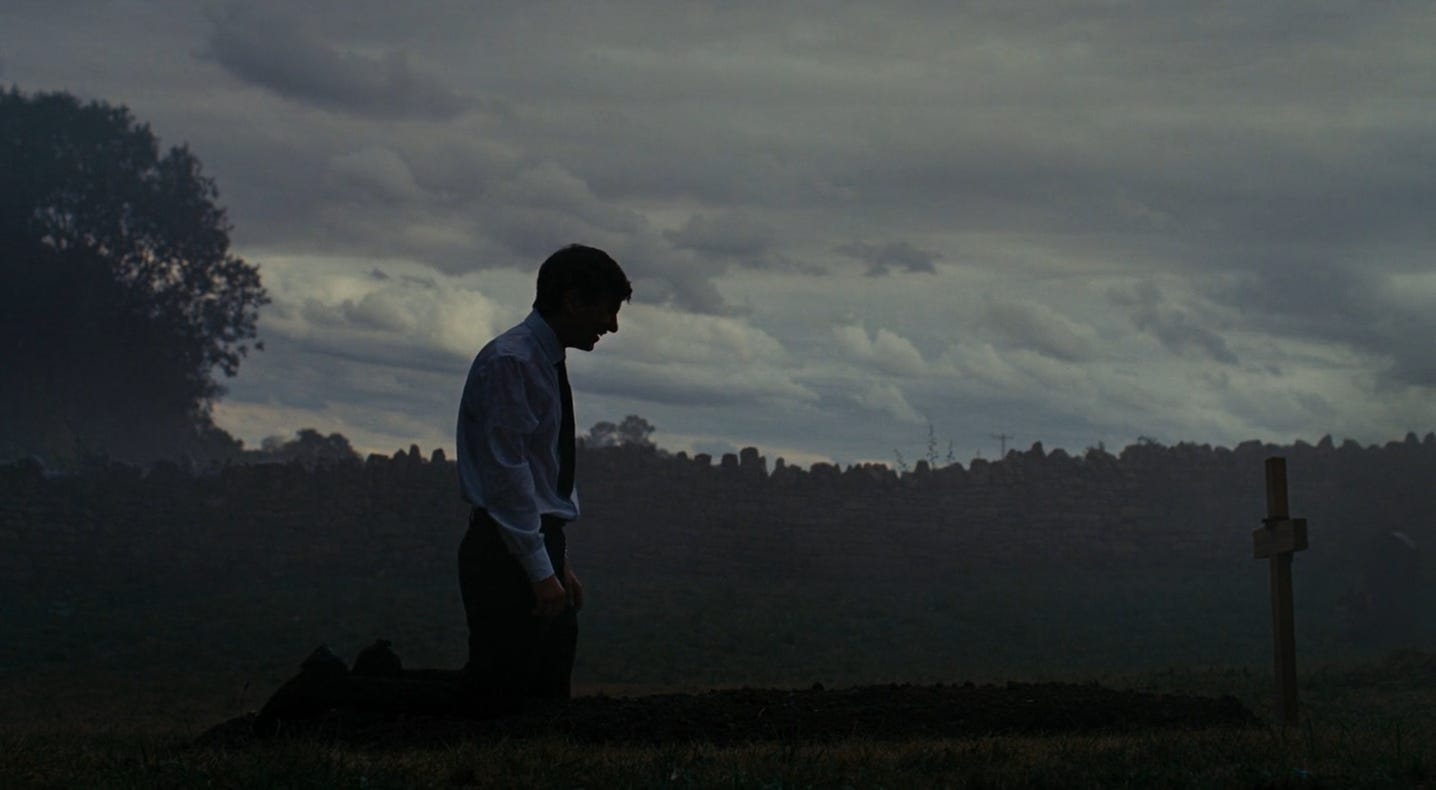
Half Man 1.06, dir. Eshref Reybrouck, 2026 / Giovanni Francesco Barbieri, 1619

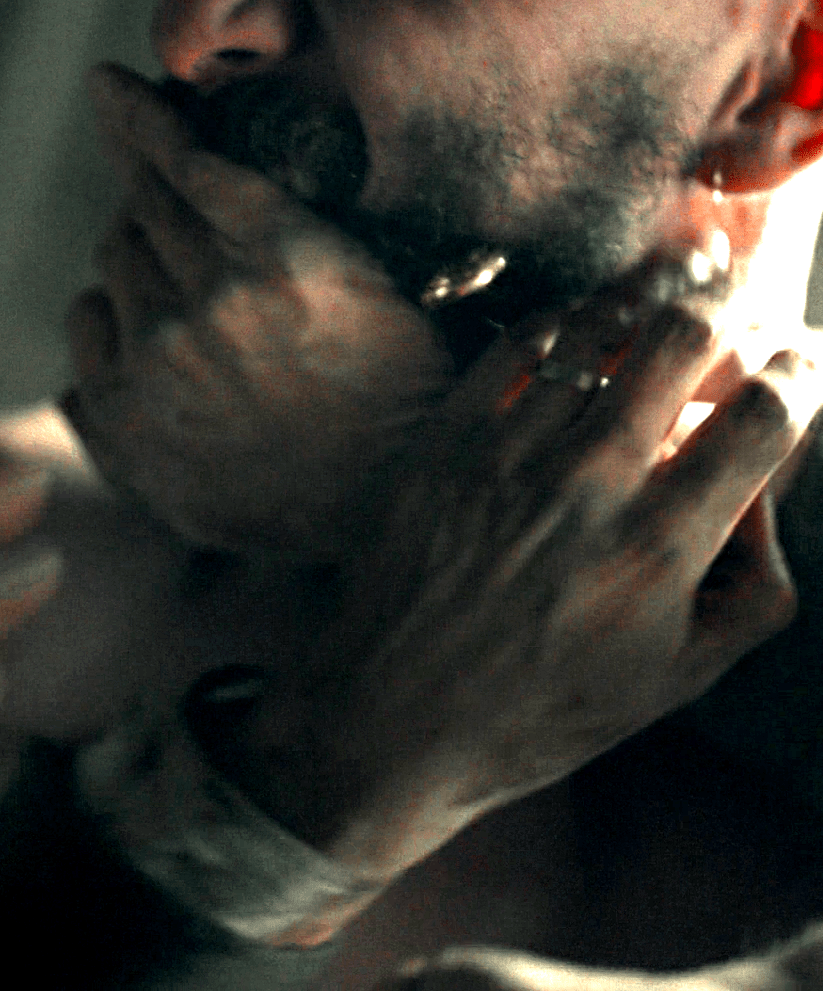
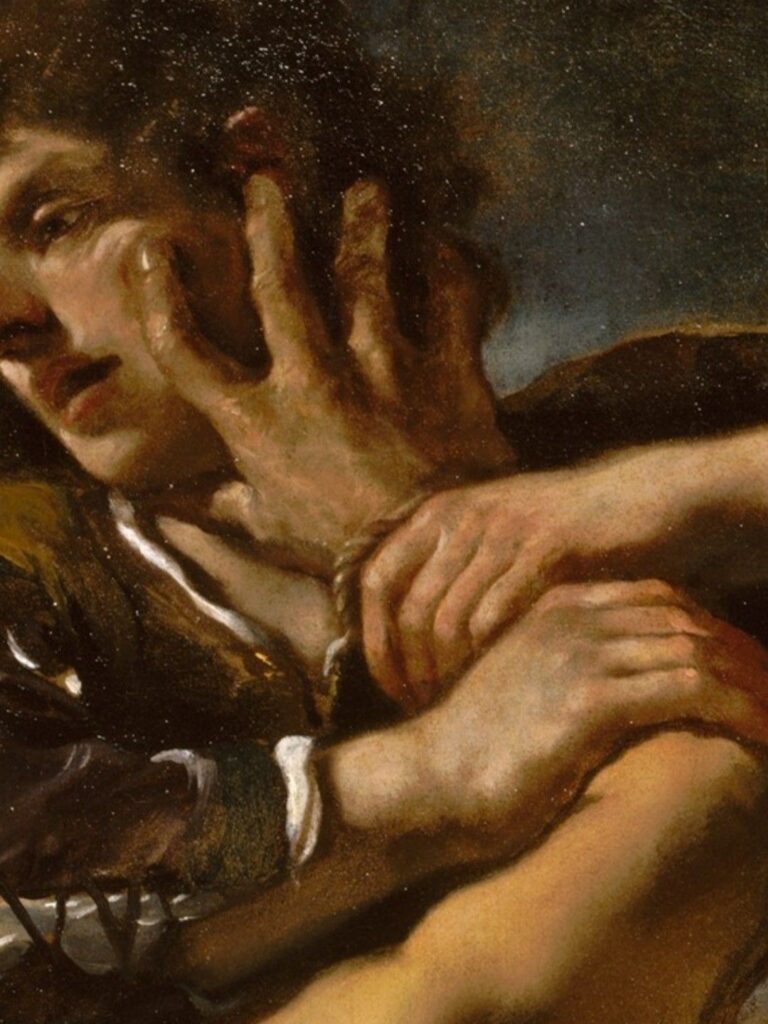
A brother bends himself over another in a dim interior that might be a room or might be the remembered reconstruction of one – somewhere between domestic chamber and the spectral architecture of religious myth-world, where childhood objects and adult consequences are no longer separable in their provenance. The light behaves badly here – diffuse, uncertain – everything slightly overdetermined by atmosphere, the air thick with implication. The movement is slow, none of the punctuation of rupture, proceeding with uncomfortable familiarity, the gesture rehearsed so often – across arguments, silences, reconciliations that were never quite so – that it has shed all promise of surprise, a kind of weary competence clinging to it. Violence in this place is habit, is careless, is intimacy outlived and outlasted. There is a strange epistemic confusion in its stillness, an inevitability and a monumental, omnipresent waiting – as though nearness has become indistinguishable from threat, and threat from recognition, and recognition from something like care, though none of these terms quite retain their boundaries anymore. Beneath him, the younger does not resist in any register of resistance legible to you or to me. Perhaps he does not know how, or does not want to know how. His body offers no clean opposition, only a kind of compromised responsiveness, sensation uncertain of its own category. Breath contracts unevenly. The click of a glottal stop.

Elsewhere – though perhaps only the kind of elsewhere produced by retrospect and by narrative co-option – a brother lies still in a barn in rural Scotland; it is his wedding day. The stillness is not peaceable; it is too exact and too deliberate in its negation of movement to be mistaken for rest. The body is arranged with the unsettling neutrality of something which has ceased to bother negotiating its own position in the world. Nothing resolves into clarity because nothing is permitted to conclude. The circumstances accumulate themselves, layering aftermath upon aftermath until the distinctions between what has happened and what is happening and what will happen become almost ornamental. There were or are or will be two still bodies in the barn; there is no other version of this story. But for now there is one. It is a catholic and ubiquitous scene, which Rilke depicts as so: ‘The brother did something to me that my eyes didn’t see. He veiled the light. He hid my face with his face. Now he is alone. I think he must still exist, for no one does to him what he did to me. I sense my older brother lies awake as if accursed. Night offers itself to me, not to him.’ (‘The Book of a Monastic Life’, 1905)

Featured Image: BBC
Categories
Poetry

Field Note Extremities

By Robin Reinders

The engines wind down real slow –
Each cylinder kicking once or twice more –
Reluctant machine, spooked like some creature.
The airfield lies under an anaemic morning light –
Mist clinging dim and dewy along the perimeter markers –
And the lamps beside the runway burning weak and washy –
Like tired, winking moons.

Inside the cockpit of the fortress
The air is cloyed with cold and damp –
Spent warmth and breath gone sour under rubber.
The gunners –
Both young bucks from Tennessee –
Eagerly out the rear door.
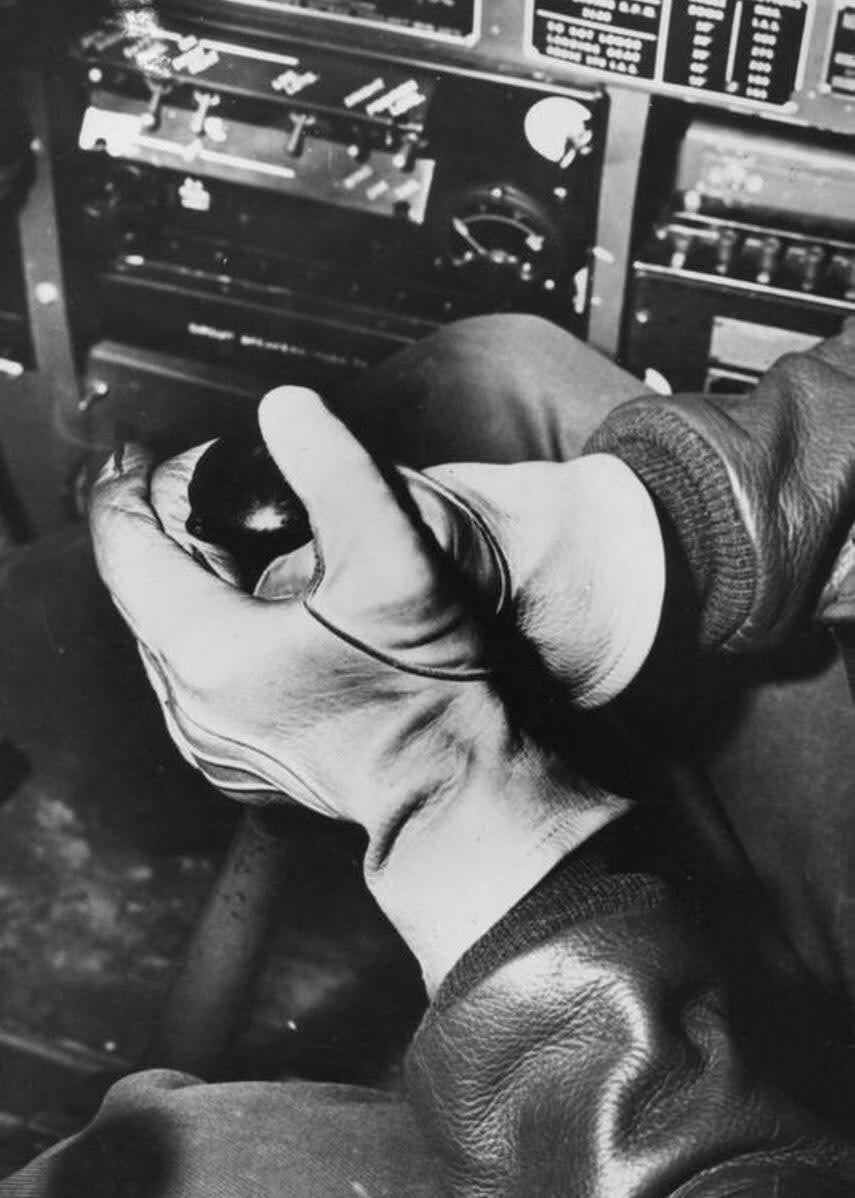
Your hands are still fixed on the throttles
Though the engines have been quiet
Nearly a minute-and-a-half now.
‘You can let go’, I say –
Unhelpful.
You do not look at me.
Tighten your jaw –
‘Thought of that.’
But the leather of your gloves is still wrapped
Tight around the metal –
Creaking like skin
Stretched across the white bone
Of a palsied hand –
Or the cracking leather of an
Old Midwestern diner booth.

Your shoulders ache –
I see it in the way they sit too high –
Tell it by the faint tremor
That runs through the
Strong line of your forearm.
You finally pull your hands back –
And the gloves do not follow suit.
They stay hooked on the controls –
The mould hugging your fingers
To the metal –
As though the cold
Has nailed them there.
You stare at them.
At me.

‘Don’t start’, you warn –
I haven’t spoken.

The frost at elevation has worked its way
Into the seams of the leather –
The hardened grip of wool and hide
Holding them fast.
The glove lacquered with altitude –
A fine rime worked into the stitching –
White crust clinging to edged thread –
To the stitching across the knuckles.
They have stiffened
Into the exact shape
Of your stolid, icicled grip.

You wrench your wrist in small,
Sharp motions –
Breathe out
Through your nose –
And in
Through your teeth.

I lean across the narrow space
With the same slow cadence as a horsemaster –
Feel bile at the back of my throat –
Note the swallow inside yours –
Your keyed-up caballine kick inevitable.
Our knees interfere under the instrument panel.
The smell of you is richer now –
Fuller, more animal –
Sweat,
Sheepskin,
The bitter ghost of oxygen.
My thumb presses along the seam of the glove –
The leather rigid as bark.
‘Don’t make a business of it’, you mutter.
‘Not a chance, pilot’, I defend –
Business-like.

Frost breaks
Under the pressure
Of the pad of my finger
With a brittle crackle of protest –
A small granular fracture,
Like biting soft and sweet into glacé.
Your idle attention flares in my periphery.
‘You always do that’, you whinge –
And it sounds like you have nine cylinders behind your ribs.
I can hum at the bait.
You clarify –
‘Act like you’re the only one
Who knows how to use your hands.’
And that throws me a bit –
Makes me take a hard look at you.
‘That so.’
‘You fuss’ –
Snarled from your shark-mouth.
‘I told you to wear your electric gloves.’
‘And you enjoy being right.’
‘And I enjoy you being wrong more.’
It seems to ease you out of your mood –
The mouthy play-fighting.
Eight months from now
I won’t be able to get a word out of you.

When I work the seam open
It feels like a part of you goes with it.
It yields by degrees –
Each finger released in phases –
The glove stubborn in its claim
On your extremities.
Your hand inside remains
Determinedly still –
I do not expect to notice this –
To feel the restraint in it –
The effort not to assist –
Not to betray need.
Mangy mutt drooling at the muzzle.
Terribly still.
The abominable heat of your cheek reaches the skin
Beneath my helmet strap.

The glove begins to give.
Each finger crooked and reluctant –
Your hand swelled and distended
By pain and cold.
When I tug harder –
A little mean –
You set your jaw firm and brave.
‘That hurt?’ I ask –
A little meaner.
Your head is angled
And gracious
And acquiescent against the seat rest.
‘Just get it off.’

My hands cupping yours –
Your wrist braced in the recess of my palm.
Small bones
Shifting like the
Slight, sinewy spars of
The very first bomber bird.
I pull and
You watch –
Like Hughes watches his own films.

The gauntlet releases its grip.
The skin of your hand dark red –
Flushed
Deep and swollen
Like fruit bruised beneath the rind.
Blooming blood vessels,
Tender contusions.
Your knuckles shine faintly –
Blood forced close to the
Taut, tight surface
Of your stinging skin
By the returning warmth.
You flex your fingers once –
Tendons moving all a-jitter
Beneath the skin.
Indecent, somehow.
Your mouth pulls askew .
‘Bad?’ I ask.
‘Raw, ‘s all.’
‘You’re shaking’ –
Unhelpful.
‘So are you.’
It’s not often you man up
And choose to be right about something.

The second glove is worse.
Your knuckles have caught stiff and dry-skinned
In the lining.
When I pull –
The cowhide gives only grief.
You shift impatiently.
Your knee jams harder into mine –
Pressure deliberate –
Provoking –
Desperate for horseplay.
Hell,
You’d romp with the Germans
If they gave you no reason not to.
Scuffle right in Stuttgart –
Half a bottle of brown in your belly
And a dollar on the line.
I look up.
Your eyebrow raised
Like fists by your face.
Your features etched with irritation.
‘You like telling me what to do’, you state plain.

‘Someone has to.’
I think of you behind the wheel.
Bail-out siren blaring –
And your parachute somewhere not on your person –
And all our boys with their silks torn open, safe and settled upon the ground –
Waiting for you to listen to your Kraut-crazed copilot and eat your grief –
And jump –
And come home to them –
Wounded –
And weepy –
And wonderful.

‘Thought that was the colonel’s job.’
‘He makes a poor go of it.’
‘And you manage well?’
‘Well enough.’
I think of you caught in the collapse –
Strapped fast –
While the fuselage folds upon itself,
The harness holding you
In saintly posture –
Head bowed slightly,
Arms drawn in,
As though the machine had arranged you
For burial.
I think of the long, awful fall
And the ground rising
To meet what is left of you.

I hook my fingers beneath the cuff
And yank harshly.
The leather complains.
Your mandible too –
Molar on molar.
For a moment I think
Your hand will come off like a doll’s.
When your wrist slips free –
And lands atop
The heel of my palm –
The heat of it is scalding.
Pulse jumping as the recoil of a gun
Just fired against
The heel of my palm.
You look down at the mess of limbs you put there –
Your wrist and
The heel of my palm.
Some small noise comes from you then
Which I have not yet heard –
Angry and frustrated,
Simpering and childish.
‘You do this’, you strain after.
‘What.’
‘This—’

The familiar edge in your voice.
The small flare of fury
That lives just under our skin –
Has festered since basic training –
Worsened in one another’s pockets.

You do the rest of the work –
Pull your hand away –
Flex strong fingers again. –
The redness all but gone.
‘Better?’ I ask –
Cringe at my own condescension –
‘Better.’
You do not thank me,
But when you reach for the latch
And haul yourself down the forward nose hatch,
You are there
To push your palm between my shoulder blades –
All pesky and puerile –
And send me stumbling over my own boots.
That wicked smile –
With all your teeth
Still in their right place.

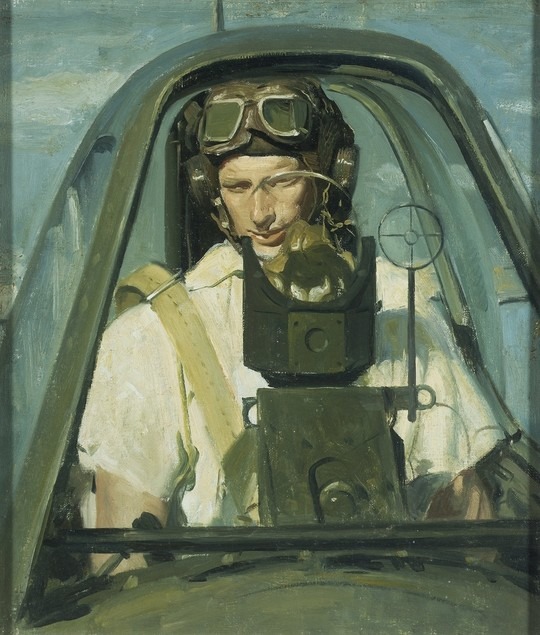
Featured Image: Imperial War Museum, United States Eighth Air Force in Britain, 1942-1945

Categories
Poetry

Bomber, Brother

By Robin Reinders

The morning has not yet decided to be morning –
A pale seam of light lying low along the hedgerow
Beyond the hangars –
Everything else ready-room charcoal and damp tin.
The trainers crouch along the tarmac, wings folded
Like birds waiting out a storm.

We sit on the narrow step of one of them –
Shoulder to shoulder because there is no other way to sit –
Soles knocking the aluminium skin.
The metal is cold enough
To steal heat through wool.
You swear softly from behind your teeth –
Shove your hands beneath your thighs.
‘Christ–
Colder than the Channel.’
Your breath ghosts between us,
Seeps into the nothing void of the sunless dark.

I strike a match.
The flare of it briefly paints your face gilt-gold –
Young still, soft along the jaw,
Eyes gentle
And half-lidded with sleep.
The cigarette takes to the flame –
Tobacco curls wonderfully into the air, bitter and sweet the way sweat is.
You pitch gracelessly forward to steal the first draw
Before I can lift it to my mouth,
Shoulder bumps mine –
‘Greedy bastard’, I mutter.
‘Pilot’s privilege’, you answer.
Cocksure. Irritating.
Your grin flickers quick and mean like the spark of the match –
Bright and licking up cruel and then gone.
Smoke leaks skywards from your mouth.
For a moment it hangs between us
Like breath on cold glass.

Inside the cockpit the instruments sit dark and patient,
Anticipating handling.
The seats absurdly close together –
A joke among all us flyboys –
Knees almost touching
Even before the parachutes and the harness
And everything else we carry into the kite with us.

You climb in first –
I tell you to –
The leather of your jacket creaks
Like saddle tack.
When I follow
There is the usual awkward instance –
Boots tangling with pedals,
Shoulders negotiating space
That will never be won between two grown boys
And their clumsy limbs.
We afford one another the same dignity
As bedfellows.

‘Give us the cigarette.’
You hold out your hand behind you
Without turning to face me.
I place it gingerly between your fingers.
Your glove brushes my wrist in hasty hungry hunt for the filter –
I feel as if some surface part of me has been permanently smeared by it.

The cockpit smells thickly of oil
And stale canvas.
Smoke threads through the cramped air
In thin blue ribbons.
You lean back in your seat impish and lazy,
So the cigarette hangs near my mouth.
I bend forward to take it –
A cat lapping milk from the dish and
Our helmets knock.
You laugh like you’re out of breath.
‘Careful –
We ain’t even wheels up yet.’

The ember pulses blood orange when I draw.
For a second the light of it
Paints the underside of your jaw all ruddy and raw.
Pink-skinned.
Your throat moves when you swallow.
Clicks.
(‘Why do all-a men got a Adam’s apple? Hell they do wi’ mine?’)
You notice I notice and know this is tolerable.

Outside, ground crew voices drift through the dark.
Boots clink-clanking on metal ladder-rungs.
Someone slams a hangar door with
The same rough-handed tenderness you’d handle a horse.
A lark begins somewhere beyond the field –
Thin, tinny, delirious music climbing the sky
Like a dizzy soprano.

You reach forward to fiddle with the compass housing.
Your sleeve drags across my forearm.
Friction of wool
And leather.
It is ridiculous.
It all is.

‘–?’ you ask.
Your voice is easy –
And careless –
Like how you fly and handle girls.
I shake my head though I never register what it is that you said.

You hand the cigarette back –
The flighty little pulse beneath your skin
Jumping through the opening in the glove seam –
The ghost of it stays in my palm.
The last of the ash lengthens, trembles.
You reach to tap it out the window
And your bony elbow nudges my ribs.
‘Sorry.’
‘Sure?’
You grin like you’re going to survive this one too –
Allow me to get you back for it.

The eastern sky lightens
From jet-black to Bobby’s blue velvet.
The trainers along the runway begin
To show their shapes –
Long wings, blunt noses,
Frost dulling the metal.

You stretch one leg forward,
Moony and slow,
Your ankle
Bullying my shin out the way.
I go without much fight.
‘We’ll be home for breakfast’, you speak
Through the palm
Dragging down your weary face.
‘Powdered eggs and cold coffee’, my lippy retort.

You draw once more on the dying smoke-butt –
Deep enough to burn it to the stub –
Then hold your leftovers out to me –
As if there’s anything left.
As if I should thank you kindly.
The heat from your last drag warms the thin paper.
I feel as though a detonator is beneath my thumb.

Outside, someone laughs, sharp and awake –
You snatch the butt back,
Flick it out into the wet grass,
Dewy from the damp English dawn.
It lands –
And dies with a small hiss.

Featured Image: Australian War Memorial, William Dargie, 1945

Categories
Culture

Saudade: Senna vs Prost

By Robin Reinders

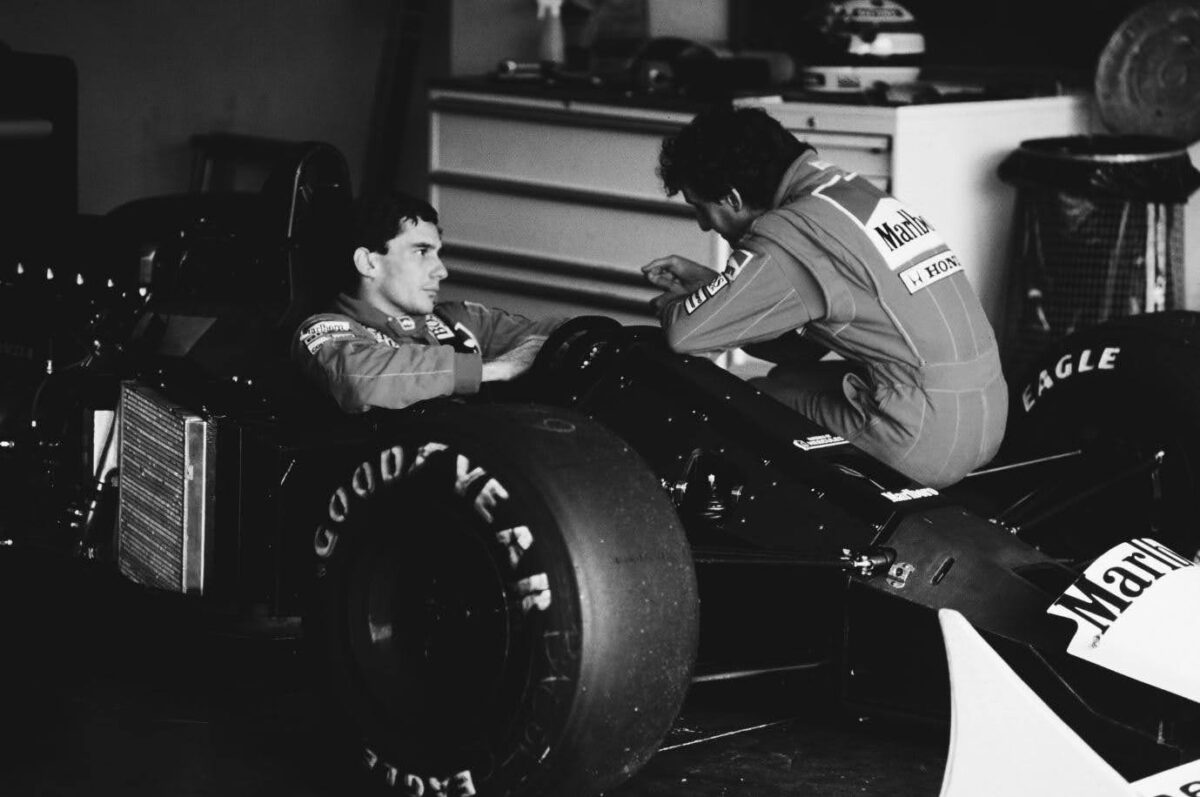
When you hear the word ‘Brazil’, what do you see? Racing driver Alain Prost correlates the country with a sequence of fond images. He remembers the sun, the sand. He remembers the smiles of the locals, their welcome, their character. He remembers the churrascarias and the beach and the grandeur of Rio de Janeiro. ‘And then’ – he speaks wistfully in an interview, mouth pulling askew – ‘there’s Ayrton.’

It is an invocation spoken like a prayer, a name that rests heavy at the base of Prost’s skull, brought forth and splayed bitterly across his face. It is both wound and salve. Match and mirror. ‘When you talk about Senna you speak about Prost and when you speak about Prost you talk about Senna.’ It is arguably the greatest rivalry in motorsport history; two near-divine beings rocketing through Formula One’s golden age, galvanising it with their animosity, their obsessive competitiveness, their tragic humanity. Near-divine. Near.

Teammates, 11 and 12 – but never partners. Theirs was a war waged in millimetres, in fractions of a second, in the mechanical exhale of a V6. Senna drove with holy devotion, God behind his ribs and beneath his palms; Prost was secular, stringent, sharp. In no world were either clean. Haniff Abdurraqib speaks on that astringent flavour of intimacy enemies share: ‘there is a tenderness in knowing what desire ties you to a person, even if you have spent your dreaming hours cutting them a casket … it is a blessing to know someone wants a funeral for you.’ Senna’s monomaniacal fixation on Prost cannot be overstated; here was a teenage karter with Renault-yellow and a charmingly crooked nose plastered on his bedroom wall, all-grown-up and starving for approval. Idolisation through a jaundiced lens: gnarled into confounded resentment, gnawing at the insatiable void of a racing driver’s volatile ego. ‘Ayrton did not think about other people’, Prost would say, ‘he just thought about me.’

Suzuka was the crucible. 1989 saw a collision on the chicane: Prost turning into Senna, sacrificing the twin McLarens on the altar of the tarmac to strategically secure his success; Senna, furious and dogged as he hauled the damaged car to the finish line – only to have his win invalidated, the championship seized. 1990 saw a reflection, a retribution: Senna hurtling into Prost, abandoning his former teammate – now driving for Ferrari – in the gravel as he snatched the championship like a malicious, mean-faced baby-brother.

When Prost retired, the fever broke: ‘We came to terms … and we stopped trying to remake each other.’ For the first time, there was laughter. Prost describes the year between 1993 and 1994 as the time he and Senna were closest. ‘Why did we put ourselves through all of that?’ he would ask. There was ease. There were breakfasts and late-night phone calls and ‘my dear friend Alain; we miss you Alain’ – spoken by Senna on the morning of the end of all things. And then Alain Prost watched Ayrton Senna die from the commentary booth at Imola. Watched as Senna torpedoed at 211 km/h into a concrete cradle. How do you cope? How do you mourn your mirror?

‘Maybe all I can say is that I was having breakfast in the morning of race day and he dropped by and sat with me. I am glad his final breakfast was with me. Even though it was short, that was still time he gave to me.’ This is how Alain speaks of his only rival, his counterpart, his almost-friend for the next thirty years, voice cloyed with saudade.

‘It was a fantastic story, don’t you think?’ he asks. His words are quiet, hopelessly reverent. 

Featured Image: LaPresse

Categories
Culture

Why Catholicism Looks Like That

By Robin Reinders

‘In order to communicate the message entrusted to her by Christ, the Church needs art. Art must make perceptible, and as far as possible attractive, the world of the spirit, of the invisible, of God. It must therefore translate into meaningful terms that which is in itself ineffable.’

– ‘Letter of His Holiness Pope John Paul II to Artists’, 1999

The visual culture of Catholicism does not naturally derive from an appetite for ornament. The earliest occupants of its interior life were men who fled from it. In the deserts of fourth-century Egypt and Syria, the first Christian monks stripped worship of every available excess, reducing religious life to silence, fasting, prayer and the barest material conditions requisite for survival. That this tradition of radical asceticism lies at the root of Catholic theology already complicates any easy association between worship and sensory indulgence. Indeed, Catholic form does not intrinsically lend itself to illustration nor to expression nor even to the beautiful – but crucially it does not refuse these as byproducts of the sensible mediation of grace. To beg the question Why does Catholicism look like that? is to interrogate the means by which the Catholic church makes belief legible – why it translates scripture into bodies and things and space and craft, and why it continues to argue that beauty, when shepherded by the proper hands, is not betrayal of truth, but one of its modes. 

At the root of Catholic visual representation lies the doctrine of the Incarnation: the assertion that the Word became flesh, and so the divine enters and inhabits matter without diminishing Creator or elevating creation. Catholicism habitually locates revelation in the transubstantiation of things: bread, wine, oil, water, fabric, light, gold. It is obsessed with the material, the corporeal and the kinaesthetic. The science of Catholic sacramentality firmly insists that the sign is not necessarily signifying in the semiotic, Saussurean sense of things, but efficacious, meaning it both points to and communicates what it signifies. The icon is allowed and venerated not for its own sake, but because it points beyond to the subject which it stands for. It is the sacramental telescope by which we see that which is invisible. Cardinal Nicholas of Cusa made this clear: ‘Creative art, which it is the soul’s good fortune to entertain, is not to be identified with that essential art which is God himself, but is only a communication of it and a share in it.’ (Dialogus de Ludo Globi) Communication, then, lends itself to teaching, does it not? The imagery of the church, as is possibly rather plain, once primarily served a practical purpose as the visual vehicle of catechism. For much of Western history, the fluctuating Catholic population remained largely illiterate. Pictorial gospel allowed for the narration of salvation to the faithful who could not consume the inaccessible Latin of vernacular texts. For this reason, such figures as Saint Thomas Aquinas and Pope Saint Gregory the Great endorsed the theological basis for an aesthetic that privileged intelligibility.

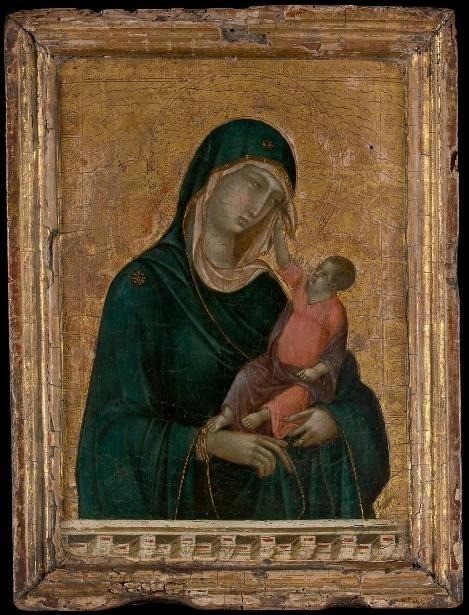
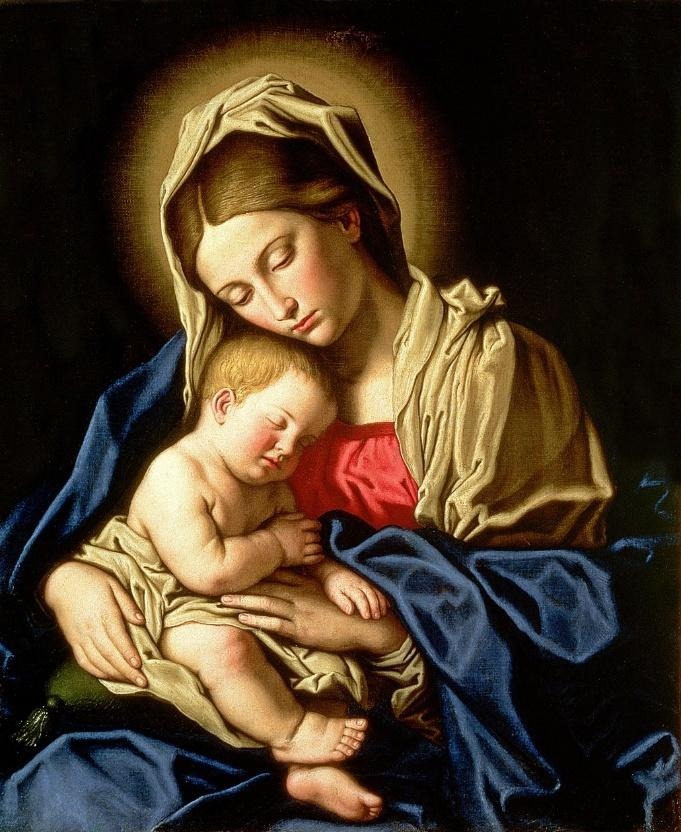
Madonna and Child, Duccio di Buoninsegna, ca. 1290–1300 / Madonna and Child, Il Sassoferrato, c. 1650.

If the visual culture of the Catholic church is solely fashioned for ‘the instruction of the uneducated’ (Aquinas, Commentary on the Sentences), why then do we begin with the dull, painfully emblematic representation of the Madonna and Child in the sacred catechistic art of the Middle Ages, and how do we burgeon into the diffused and delicate, near-ethereal proto-Baroque style of the Counter-Reformation? What necessitates and rationalises this shift? Theologian Hans Urs von Balthasar understands beauty as entirely inextricable from the glory of God, claiming that ‘beauty demands for itself at least as much courage and decision as do truth and goodness, and she will not allow herself to be separated and banned from her two sisters’. (The Glory of the Lord) Beauty is thus the manner in which earthly creatures manifest that glory, and thereby invite love and prayer. This synthesis of ideas finds parallel claim in the more classical, Greco-Roman metaphysic of beauty put forth by Plato: ‘The power of the Good has taken refuge in the nature of the Beautiful.’ (Philebus) It is also an idea agreed upon by ecclesiastical authorities of our contemporary day – the late Pope John Paul II concurred: ‘beauty is the visible form of the good, just as the good is the metaphysical condition of beauty’. The virtuous and the picturesque are essentially tied-up; that which is more lovely to look at is more noble by nature. 

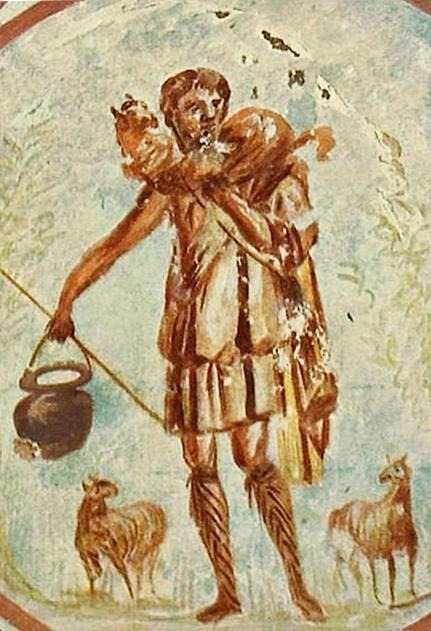
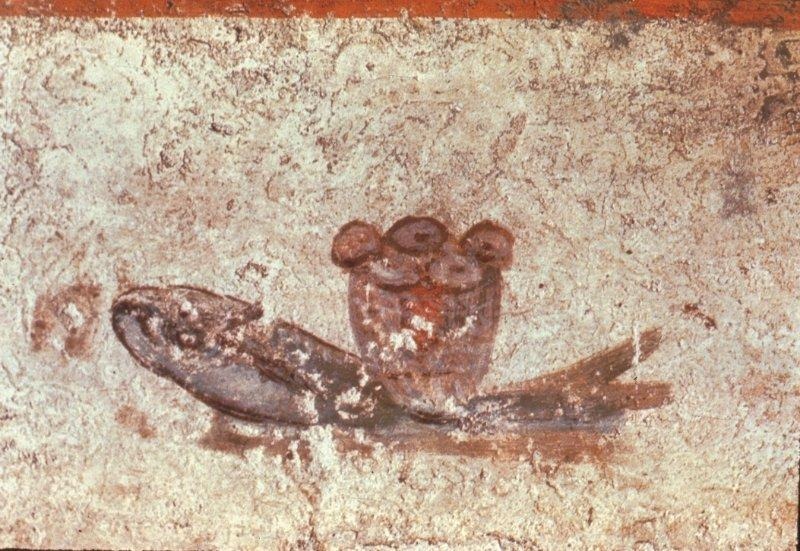
Early Christianity inherited from Judaism a deep suspicion of sacred imagery, shaped by Old Testament prohibitions against graven forms (‘Thou shalt not make unto thee any graven image, or any likeness of any thing that is in heaven above, or that is in the earth beneath, or that is in the water under the earth’, Exodus 20:4) and made sharper by the ever-present danger of idolatry (‘Confounded be all they that serve graven images, that boast themselves of idols: worship him, all ye gods’, Psalm 97:7). Under the Roman Empire – where Christians were a persecuted minority and pagan visual culture was both ubiquitous and polytheistic – Christian imagery emerged furtively, under a cloak of ambiguity. The earliest surviving artefacts of Catholic art are to be found in the subterranean caverns of the Roman Catacombs. The grapevine, the peacock, the Good Shepherd – each illustrated motif throughout the tombs deftly held a secondary latent meaning, operating as polyvalent signs intelligible to the initiated, yet inconspicuous within a familiar pagan visual economy.

‘Good Shepherd’ fresco and ‘fish and loaves’ fresco from the Catacombs of San Callisto in Rome.

It was only by way of prolonged doctrinal discourse – finally culminating in the Second Council of Nicaea in 787 – that the Church formally resolved the iconoclastic crisis, and confirmed that honorary veneration of images was permitted, though true adoration was to be reserved only for God Himself. With this conciliar decision, the image was finally affirmed as a legitimate participant in Christian devotion: not an idol or a mimetic attempt at rendering the divine, but a relational object and instrument of worship. This hesitant and cautious quality of early Christian iconography reflects an aesthetic history rooted in vigilance and restraint – certainly not in excess – whether due to fear of persecution or of deceiving one’s own faith. The legitimacy of the Catholic ‘look’ has always been something earned with time.

As Christianity travelled from the margins of Roman society to its imperial centre, its aesthetic posture necessarily shifted. The legalisation of Christianity under Constantine in the early fourth century precipitated a dramatic change in scale: worship moved from the domestic home and secreted altars into public space. And with this transition arrived architecture.

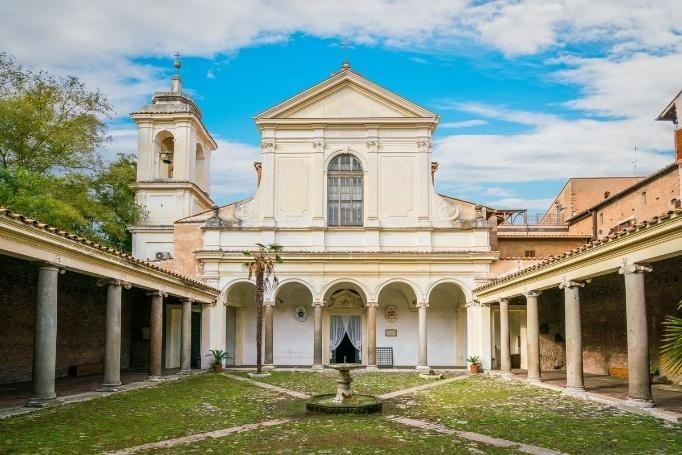
Basilica di San Clemente al Laterano in Rome. Once a private home and site of covert Christian worship in the first century, now a public basilica since the sixth century.

The earliest monumental Christian churches did not invent a new architectural idiom so much as appropriate one already embedded within Roman civic life. Ancient temples or civil buildings, such as the Pantheon in Italy or the Baptistère Saint-Jean in France, were common targets of conversion. Though it was the Roman basilica – used for legal proceedings, commercial exchange and public assembly – which offered a site uniquely suited to Christian worship. Unlike pagan temples, which functioned antithetically as enclosed dwellings for deities and were often visually inaccessible to the populace, the basilica was designed to hold bodies in common, encouraging ritual and interaction. This distinction is paramount: Christianity did not require a house for God, it sought a space for divine encounter. The basilican plan with its longitudinal axis, central nave, flanking aisles and projecting apse embodied the Church’s self-consciousness as a gathered community of people rather than a cult of contained divinity. Particular attention is paid toward space and orientation because this inscribes certain eschatological expectation into the building itself. As clerical hierarchies developed, so too did the structure of the church; the bema, transept and eventually the Latin Cross plan emerged among sacral architects to accommodate liturgical complexity whilst embedding salvation history into the body of the church. 

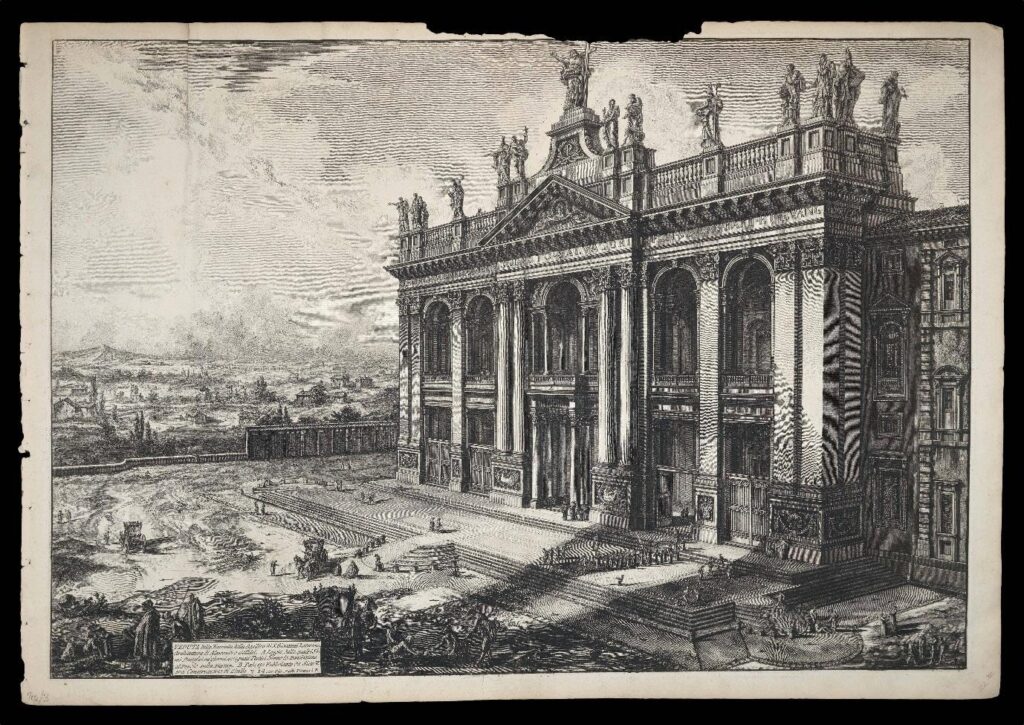
Yet even as scope increased, imagistic restraint largely remained in situ. Early basilicas such as the Archbasilica of Saint John Lateran exhibit an almost paradoxical sobriety. Exteriors relatively plain, often brick, resisting the monumental façades of surrounding imperial architecture. Interiors luminous though hieratic: figures hovering static rather than occupying space as you or I might. Saints rendered frontal, flattened, deliberately dimensionless and disembodied by virtue of theological caution. The sacral image was not yet trusted with naturalism.

Archbasilica of Saint John Lateran, engraving by Giovanni Battista Piranesi (1775). Founded in 324, it is the oldest basilica in the Western world.

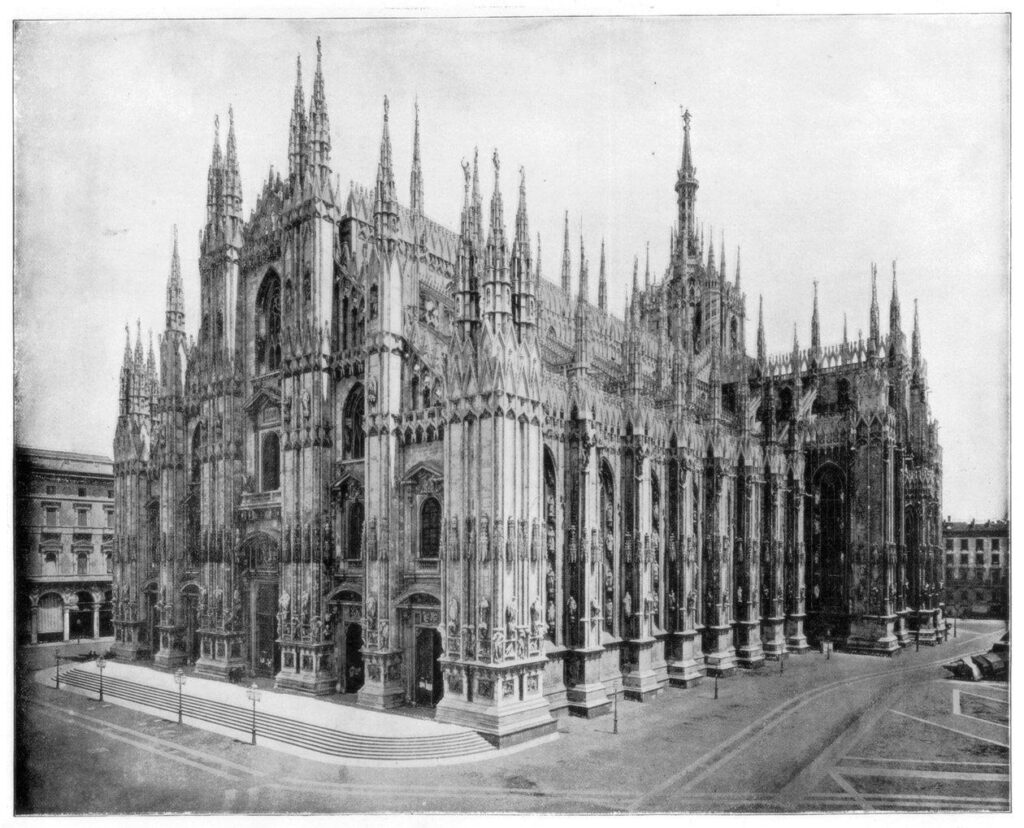
With the emergence of Gothic architecture in twelfth-century France came a decisive aesthetic turn towards aspiration and height – both literally and religiously. The introduction of such iconic features as the pointed arch, rib vault and flying buttress reconfigured the model understanding of how the Catholic church presents itself. By redistributing structural weight outward and downward, Gothic architects freed interior walls, allowing for new height and light. Churches rose vertically, straining upward as though neck vertebrae, their skeletal frames reaching into dizzying spires and dissolving into expanses of stained glass. Worshippers were bathed in truth and righteousness, God’s presence streaming in from the apertures, cradling faces with long, kind, coruscating fingers. 

Characterised by immense human labour, intricate geometrical design and centuries-long construction projects, the building of a Gothic duomo or cathédrale must be understood first and foremost as an act of worshipful tribute, not an indulgence in creation itself. The church was a collective offering on behalf of the people, a sustained and painstaking liturgy enacted across generations of effort and attempt. Effigies grew increasingly vivid, rose windows with intricate mullions and tracery impressed the eye, detailed frescoes spilled marvellously onto lofty cross vault ceilings. The Church was no longer the self-effacing provider of a place of worship; it had now begun to shape the Catholic’s sensory imagination. Still, the visual of the Gothic remains vertical, gestures heavenward; it does not yet engulf. That shift only comes on the heels of crisis. 

Duomo di Milano, John L. Stoddard, 1893.

The Protestant Reformation of the sixteenth century saw an attack on sacred material culture. Images were condemned as distractions, the splendour of structure as a corruption of pure faith. Iconoclasm was the logical terminus of reformist zeal, the consequence of a faith-branch which understood entitfied religious practice as an obstacle to worship rather than its vehicle. In response, the Catholic Church was forced to articulate – explicitly and defensively – the core principles which had long undergirded its aesthetic culture. The Council of Trent reiterated the legitimacy of sacred images as pedagogical and pastoral necessities: art was reaffirmed as the endeavour of teaching, moving and converting. The Counter-Reformation – soon to be followed by the Baroque – had settled upon the Western religious world. 

Intensely concerned with the bodily, the Baroque church is the church of the corporeal. It is a space – elastic and kinetic where it was once static and axial – engineered to produce affective response. Awe, disorientation, intimacy, rapture, overwhelm. Columns twist and hurtle upward. Ceilings open into illusionistic heavens which collapse the now-foggy distinction between the earthly and the divine. Perhaps most critical is the dissolution of inherited boundaries between artistic mediums in order to overburden the spectator’s capacity for detachment. Architecture frames sculpture; sculpture erupts into painting; painting bleeds into the calculated orchestration of light itself. Nothing remains autonomous, nothing stands in solitary. The gesamtkunstwerk of the Baroque church constitutes a single persuasive apparatus, calibrated to render theological abstraction experientially irrefutable. Devotion is no longer confined to the mind or mediated primarily through scripture; it is staged as a transcendent encounter unfolding in real time before and around the worshipper. God feels proximate, inconceivably so.

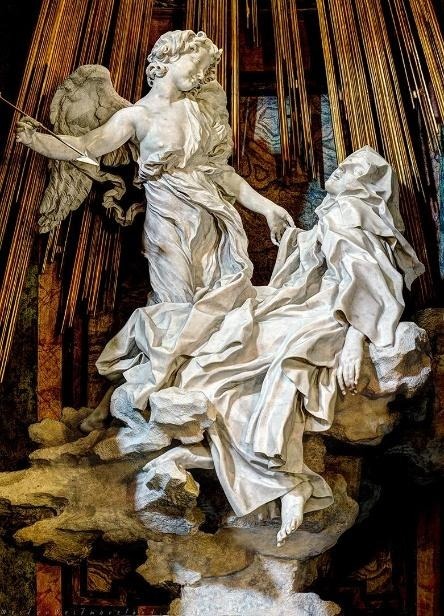
Ecstasy of Saint Teresa, Gian Lorenzo Bernini, 1652.

I ask you to consider Bernini’s Ecstasy of Saint Teresa as a prime instance. The collapse of the body, the slackness of the jaw, the give of the posture inviting divine invasion. Hidden windows flood the chapel with golden light; marble becomes skin before you; architecture frames the allegory of revelation as a spectacular event. Grace acts upon the body. We are less observer and more witness here, are we not? Hand over mouth, breath held, frozen in this theatre of the ecclesiastical. 

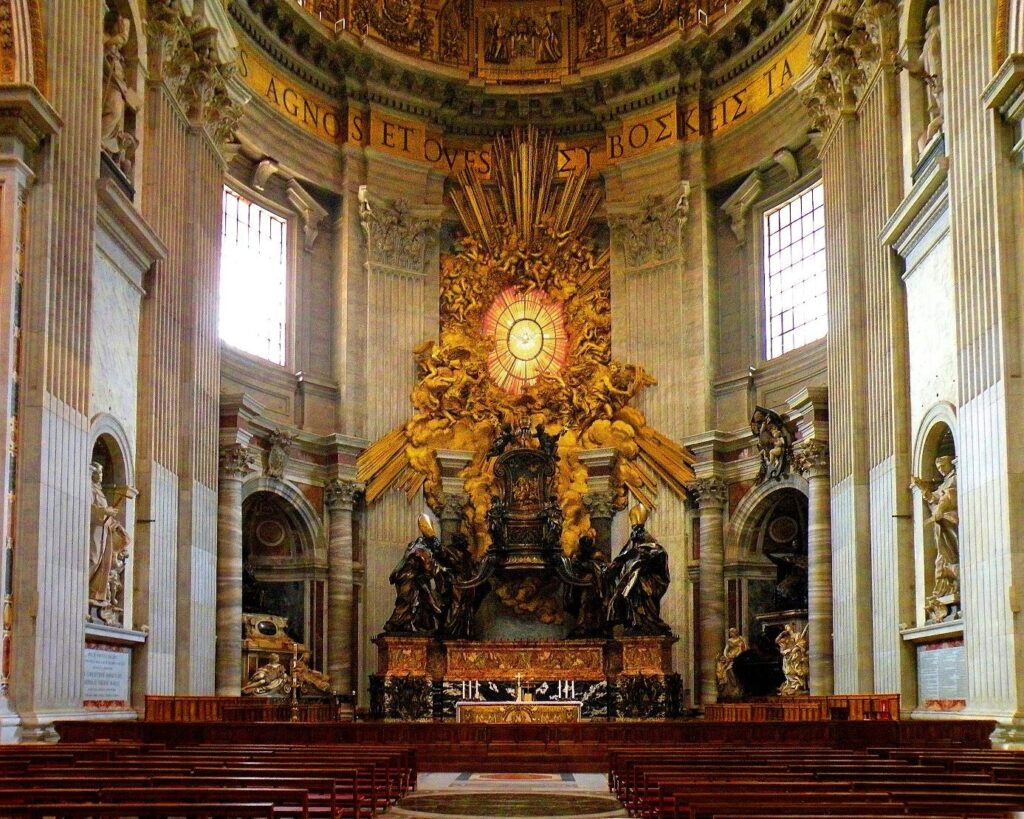
At the risk of sounding impious, when one steps into a seventeenth-century cathedral at times it does very much feel like stepping into an opera house. The Baroque is infatuated with theatricality, with staging and motion and chiaroscuro and synergy with the senses. Gold leaf and incense and marble and mosaic and choral polyphony and monastic chant and processional banners. It adores texture and lustre and materiality. Urges lavishness as well as durability. And what of scripture – the written Word? ‘Forasmuch then as we are the offspring of God’, the New Testament insists, ‘we ought not to think that the Godhead is like unto gold, or silver, or stone, graven by art and man’s device’. (Acts 17:39) I remind you that objects of sacramental action command honour, serving as intermediaries between heaven and the earth. What are the vestments and vessels of Catholic worship if not the Church’s firm and concrete assertion that the sensible is our only means to communicate the eternal? To signify the worthwhileness of the world God has created? Gold cannot make God more precious.

Apse of St Peter’s Basilica in Vatican City.

One of our greatest popes, John Paul II, wrote a deeply galvanising letter addressed to the artists of our day in 1999. Within this letter, he asks the question ‘Does the Catholic Church need art?’ He responds in the affirmative:

‘Art has a unique capacity to take one or other facet of the message and translate it into colours, shapes and sounds which nourish the intuition of those who look or listen. It does so without emptying the message itself of its transcendent value and its aura of mystery.’ (‘Letter of His Holiness Pope John Paul II to Artists’)

Though perhaps more of interest and quite remarkably, he also begs the question: ‘Does art need the Catholic Church?’ On this dynamic, he says ‘it has been a great boon for an understanding of man, of the authentic image and truth of the person’, and invites artists to ‘enter into the heart of the mystery of the Incarnate God and at the same time into the mystery of man.’ In our contemporary cultural economy, it is compelling and tremendously significant that the Catholic visual language survives in secular culture. 

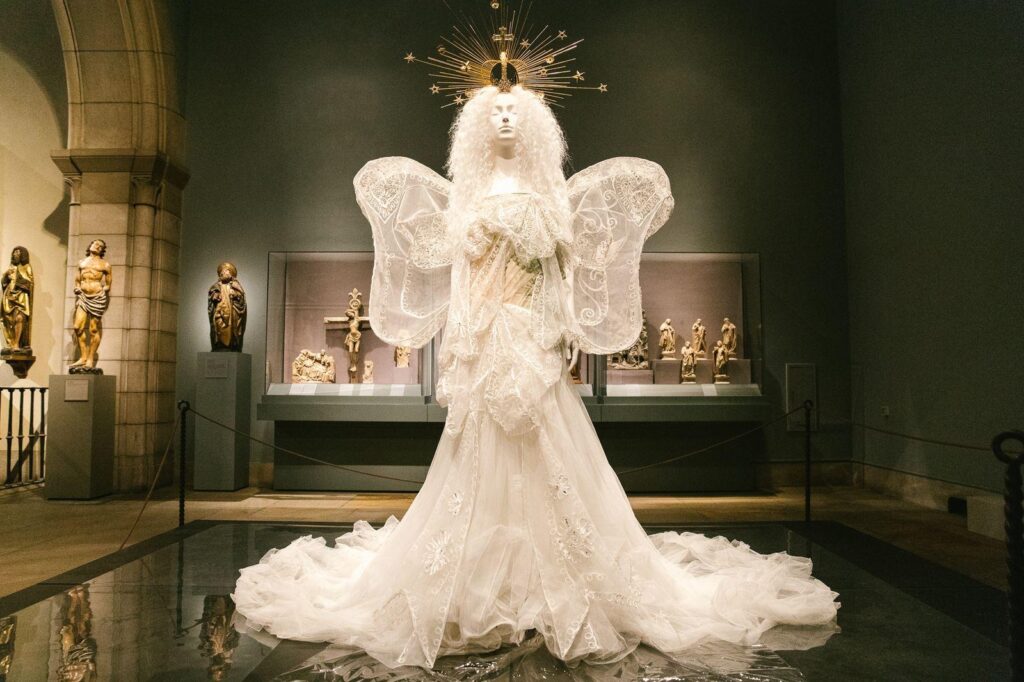
Its aesthetic vocabulary of precious metals, brocade, embroidery, architecturally-informed silhouette and sacred motif continues to resonate, particularly in the world of fashion. In 2018, the Metropolitan Museum of Art Costume Institute hosted an exhibition titled Heavenly Bodies: Fashion and the Catholic Imagination. Curated to explore the intersection of sacral visual codes and haute couture, it featured creations from Dior, Valentino, Jean Paul Gaultier and Dolce & Gabbana among many others, highlighting how liturgical chasubles, conical mitres and bejewelled reliquary crosses may function as purely visual language, divorced from worship though still inviting conversation and commemoration. 

Heavenly Bodies: Fashion and the Catholic Imagination at the Metropolitan Museum of Art / John Galliano for Dior: Evening Ensemble, Autumn/Winter 2005–6 Haute Couture.

Catholic imagery seems to thrive in this postmodern cultural afterlife because it carries an almost preternatural formal logic. For non- or nonpracticing Catholics, its characteristic verticality, hierarchy, symmetry and ornamentalism are legible even without contextual doctrinal framing. Gold filigree retains its connotations of sacredness, authority and value whether it is found in the Igreja de Santa Clara or the bodice of a John Galliano gown. Crucifixes and rosaries become motifs in jewellery, home decoration, graphic design. Even sans liturgical function, they signal drama, gravitas or a sense of ritualised performance, making them attractive to visual directors and cultivators of culture. The potency of Catholic iconography persists – whether celebrated or critiqued – independently of explicit belief, and its visual lexicon continues to exert cultural influence even in a world that may no longer consciously acknowledge its origins.

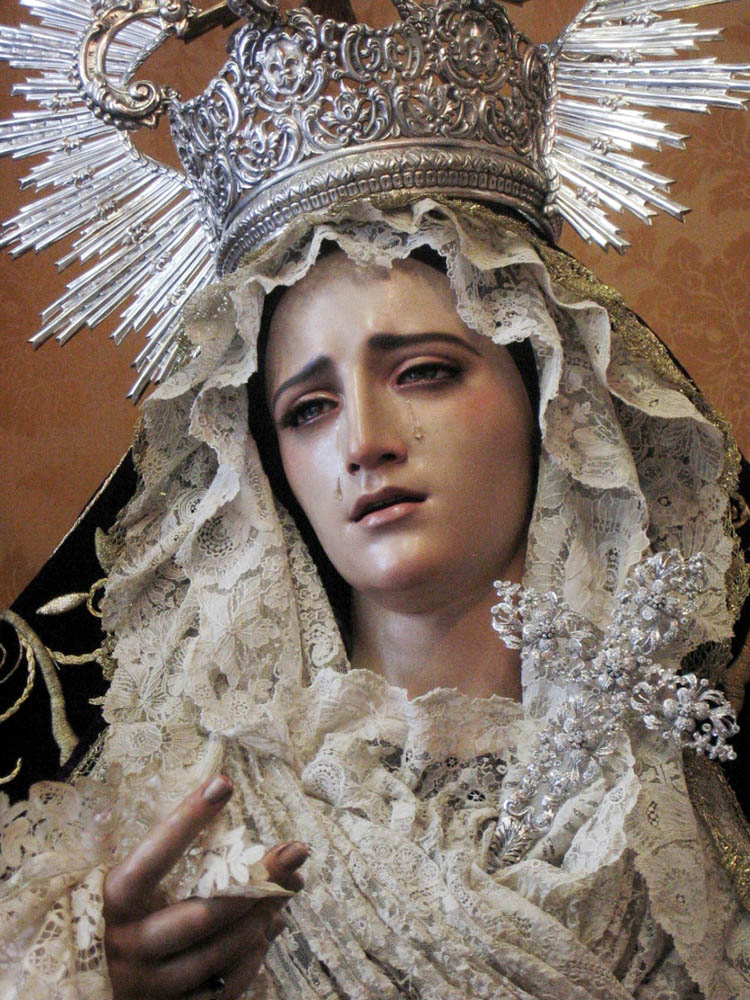
Featured Image: ‘María Santísima de la Aurora’, Francisco Romero Zafra, 2008

Categories
Reviews

The Deiform Father, the Deformed Son: Guillermo del Toro’s Frankenstein (2025)

By Robin Reinders

‘I have a very childlike rage, and a very childlike loneliness.’ – Richey Edwards

‘Little Lamb who made thee / Dost thou know who made thee’
‘Did he smile his work to see? / Did he who made the Lamb make thee?’

– William Blake

‘The sun is life.’

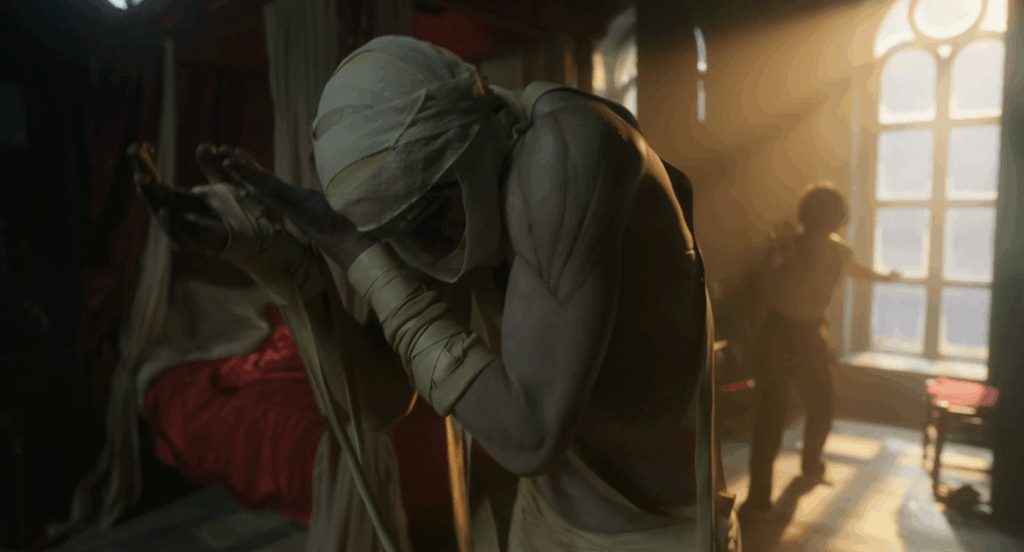
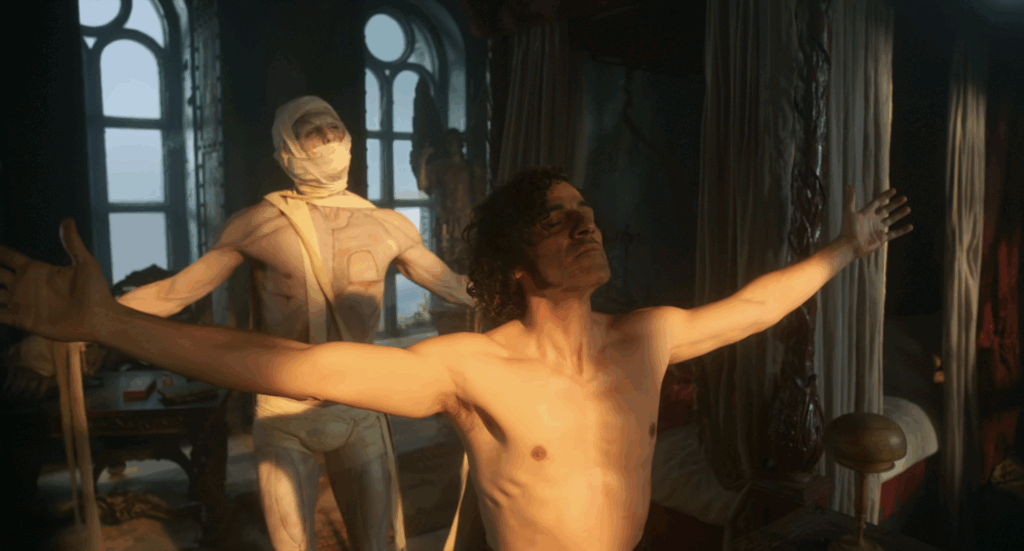
You are Victor Frankenstein; your ego is stored in your Adam’s apple and your scrupulous hand and the wound of your father’s apathy festering in the marrow of your bones. You fancy yourself a Maker in the making. A sedulous corps(e)man who deals with what is dead more than any doctor ought to. When you dream in the lavish bedroom not ten paces from the laboratory, it is not pleasant. You dream of dashed hopes. You dream of the body inert and shining on the slab. You dream of failure.

And wake now to a sound: small, inconceivable. A feeble inhalation, and another, and the world rearranges itself around what it has made. It is standing. Fragile and immense all at once. The skin gleams unnervingly, a milky sheen over bruised blue veins. The stitched geometry of the sutures glisten, fresh and pink. Its breath rasps raw through a new throat. Its head tilts as an infant’s. You are terrified. 

It takes a trembling step, the motion itself carrying a bone-weary ache both ancient and nascent. It is coming towards you. One red-gloved palm shoots out, No, please— and it lifts its mirrored hand in neonatal mimicry. This is Adam considering God; creation is watching you with wide, wet eyes. 

You could fall to your knees from it. The most significant thing is that you do not.  

The veil which frames the canopy bed conceals the countenance of its lacerated face; through the gauze, you glimpse it watching you, staggered, breathing in tiny, animal pulses. And suddenly the gloves are unbearable, and so you strip them off with that sigh of sumptuous leather (bought and paid for by the blood of the Tsardom and Sardinia). Look, you whisper, holding out your bare palms. Same. Slow and balletic, those long fingers unfurl. Pale instruments writhing delicately in the dim glow of the late light. You circle its distracted figure, eyes devouring the impossible architecture of it – the alabaster chest, the striations of its shoulders, the stutter of bated breath. The sound that leaves your mouth is quiet, awed.

When you draw the curtains the daylight is violent. And it flinches with all its prodigious body; the sore, strangled sound of a child escapes its mouth; its wrists flail useless and instinctive about its face. This tall, jigsaw-limbed thing cowering at the morning: it is pitiful in its grace, almost feminine in its frailty. Sun, you say, as though naming could console. Your gentle reorientation of it by its great, albatrossian shoulder blades. Light! The sun is… the sun is life. You bid it face it, though only when you turn bare-chested to do so yourself does it dutifully follow your example. It mimics your posture, your sigh, the fluttered closing of your eyes. You watch its marmoreal body haloed in gold; you think its scars are so much like filigree. 

Peeling away the bandage shrouding its mouth feels like something you have the authority to perform. Its lips are an insipid, pallid blue. You gesture to yourself with open, benign hands: Victor. Its spindly arms fold clumsily inwards, its fingers tapping at its pronounced sternum. This weak, parroted exhalation of your name is its first word. You laugh then: a cracked, manic sound too full to contain. Yes! you bark, the syllable collapsing into whispered litany. Yes, yes, yes – of course you are. Your fingers trace the pulse beneath its jaw, the miracle of it. It leans infinitesimally forward, and slowly you lower your head, press your ear to its chest and hear that petrifying, preternatural throb of its heart. You are Victor Frankenstein; your ego is stored in your glorious creation. 


The son is life.

Guillermo Del Toro’s Frankenstein (2025) is about hands: the hands that stitch, the hands that strike, the hands that fail to cradle what they have conjured. Whereas Mary Shelley’s creature is the child of scientific hubris, del Toro’s is the orphan of affection – the casualty of emotional cowardice. Victor’s failure is this: he cannot sustain the intimacy his creation demands. ‘You have to see the purity of the moment when Victor touches his cheek,’ del Toro remarks, ‘and understand that there could be a happy ending – but there won’t be.’ The wretched, essential fatality of creation is compressed into that very gesture: it is the fleeting, fugitive instant when God and creation encounter tête-à-tête, when Adam is still precious and prized and darling and dear – before shame and fear set their miserable precedent. Del Toro makes raw the ruin latent in tender regard: this is the crux of the film. 

Jacob Elordi’s embodied performance of the Creature communicates this brilliantly. Ache is privileged over shock. The infant fury of an unloved child over the stupid, square-jawed, bolt-studded zombie we may be accustomed to. Through Elordi, the Creature’s anatomy becomes a palimpsest of failed affections. Each tendon and tremor inscribes the trauma of lost intimacy: a virgin sorrow, a betrayed commitment, a nascent rage. When we are first met with del Toro’s vision of the Creature, he is slack-jawed, his limbs unsure, his torso enormous yet quivering. Each gesture seems borrowed, as though he must study himself in order to move. The Creature’s entire education is conducted through this oscillation between contact and withdrawal. His physicality, as Elordi constructs it, is a grammar of approach. When he moves, it is always toward; the great sorrow is his misplaced faith in reciprocity. One senses in this rendering of the character the raw metaphysics of want in its most primitive state – a desire unmoralised and unnamed, simply occurring. 

Andreas Vesalius, Male écorché (1556) / Anterior view of dissected muscle man, suspended (1556)

Young Elordi came into the project a mere nine weeks before filming began. Del Toro found his first Creature in the far more seasoned Andrew Garfield – who no doubt would have succeeded in realising the apposite affective register and mild demeanour demanded by such a character of the director’s vision – though this favoured casting was controversially scrapped due to scheduling conflicts at the time of the 2023 SAG-AFTRA strikes. Makeup artist Mike Hill was forced to discard nine months of painstaking effort in order to begin anew on Elordi’s lofty 1.96m canvas. While the swap kindled a small yet mighty outcry from internet cinephiles eager for this iteration, del Toro refused to see the matter as a derailment or departure from his intended design: ‘Anything that goes “wrong” in this movie is going to go right. I’m going to listen to the movie’ (Frankenstein: The Anatomy Lesson, Netflix). Hill shared this sentiment, describing an attraction to Elordi’s ‘gangliness and his wrists’. ‘It was this looseness,’ he says, ‘Then he has these real sombre moments where he watches you really deftly, and his eyelids are low, with the long lashes like Karloff.’ Eyes are of particular interest to del Toro. He describes a distinct openness in Elordi’s gaze: ‘an innocence and a purity … that was completely disarming’ – but, crucially, also a rage

The great narrative weight of the somatic and the sensory in this film cannot be overstated. The cadaver Victor animates must necessarily be of a certain scale, and must carry his awkward frame with a candid unwieldiness so earnest as to be endearing. The Creature must be sublime. ‘I don’t know who else you could get with a physicality like this,’ Hill said, and echoed by del Toro: ‘[Elordi] looks like an anatomical [drawing] … He looks like The Human … You can see his body in a Vesalius anatomical engraving. Very diagrammatic.’ He moves on coltish legs, buckling and knock-kneed, towards his Maker. Limbs long and lithe and reaching out in visceral inborn instinct. He doesn’t know what to do with himself. 

‘I am thy creature; I ought to be thy Adam.’ / Michelangelo’s The Creation of Adam (1512)

If Elordi’s portrayal of the Creature is one marked by reaction and response, it is also marked in consequence by movement. His manner of gesture is informed by the hypnotic, uncanny cadence of Japanese butoh, as well as the doggish behaviours of his beloved retriever and faithful set-companion Layla. In this simple, unselfconscious, animal humility there is a virtue and an innocence of religious quality. ‘He reacts to love with love … to hatred with hatred,’ del Toro explains – an ethics of basic reciprocity which engenders purity. This unhurried curiosity of interaction counters with stark contrast Oscar Isaac’s taut and fevered Victor. He is intellect void of commitment, perpetually at odds with the irregular impulse of his own weak solicitude; he creates for the sake of saying he has done so. His creation, instinct shot through with affection, is the resultant victim.

The bond between del Toro’s Frankenstein and the Creature unfolds like an inverted Pietà: the sentient son pleading to be held by the recoiling father. The first chapter of the film, ‘Victor’s Tale’, begins in his own tragic, operatic childhood. ‘He begins with his father,’ del Toro expounds. He must tell the Captain, and by extension the audience, the origins of his own creation before he can divulge the details of his own creation: ‘“I must tell you how it got there. And that’s with my own father.”’ The act of creation is staged by del Toro as an attempted act of psychic compensation, performed by the son unable to metabolise the grief of his father’s absence. The Creature, then, becomes a monument to the father’s repression: a body stitched from the detritus of his unloved self (‘Yes, of course you are’). Victor succeeds only in reproducing, with the frightful exactitude of the deluded surgeon, the very same pattern of abandonment that made him. ‘Say one word. One word more. Anything. Make me save you.’ He leers at his creation as the gloves come back on. ‘Victor.’ And the strike of the match.

Michelangelo’s Madonna della Pietà (1498-9)

Del Toro’s Frankenstein strays with great purpose and intent from Shelley’s modern Prometheus. He tells a very old story, lights it in Caravaggesque chiaroscuro: the father who cannot bring himself to touch, the son who starves of his abstinence. Blood in fathomless amount coats the hands that tilt your face toward the light – but they cradled you, did they not? 

Featured Image: Netflix

Categories
Culture

Learning to Drink Like Ourselves

By Robin Reinders

I don’t remember when I began to drink because I liked it. The first furtive sip of my mother’s vodka-cran, returned with a puckered mouth and distasteful shake of the head. Smirnoff Ice soaked in the saccharine aftertaste of a sticky American suburban desert summer. That cheeky ornamental sparkle in the family-fridge OJ; bubbles and Benedict before noon. I remember thinking adults must be something very far-fetched to have acquired not simply the taste but the temperament to tolerate something that looked like maturescence crystalised, and yet tasted of soap in the mouth. What we seem to forget when we’re piss-taking over pints and pre-rolls at the pub is that apprenticeship in alcohol comes about through mimicry.  

For most of us, this education begins in embarrassment.

Every culture of taste has its shibboleths – the books one must be versed in, the films one must feign to have seen, the discographies one must recite top to tail. To carouse, per contra, is to discover that your body will reject the canon, and that each bitter pill you swallow merits you that much closer to an earnest drinker. I don’t like dirty martinis. I tell you this as a truffle-foraging, cornichon-crunching creature of brine and salt and savour. I was cresting twenty when I asked my barman-retiree father to chill me a glass and uncork the Hendrick’s. I wanted to love it for its poise, its cosmopolitan severity. I didn’t laugh so much as bark, embarrassed by my own disappointment, balking at the opaque peridot of the frosted glass, like a birthstone that didn’t belong to me. I am not a dirty martini person. I accept this with a quiet, cognizant sort of amusement. There is a peculiar humility in discovering that you cannot love a drink you so chronically hope to love. It punctures the vanity of discernment. The drinks we abandon tell the truth of our appetites more eloquently than the ones we order ever could.

More and more I find it true that there is a certain choreography inherent to preference. Culture has always been coded in the minor details of consumption; cocktails simply render those codes portable and potable, able to be performed in the theatre of a hotel bar or an airport lounge or the local pub.  The process of taste-making – the literal kind, that is – is not unlike the making of a self. There are phases, fads, flirtations. A person’s drink becomes a form of shorthand. The girl watching her weight – Targaryen-blond and terribly boring – perching neatly on a barstool with her vodka-soda. The bubble-skirted, ballet-flatted Instagrammer bending over the counter for a birds-eye of her Aperol. The twenty-something berlioz bloke quoting Bukowski (incorrectly) while he swirls his single malt and checks his crypto portfolio when nobody’s listening.

We were all performing then: in the dewy-eyed dream of our parents’ kitchen, in bolshie adolescent company, in the sticky arena of a student bar. We still are. Drinking, not dissimilar from dressing, belongs to the theatre of self-definition. Every order at a bar is a small audition for the role of ourselves as imagined by others. The city itself colludes in the casting: cafés advertising ‘artisanal’ tonics, bars lit in imitation of some universal nostalgia, menus printed on textured paper that promise depth of field if not depth of flavour. Boozing has always had an anthropology attached to it. The tiki Mai Tais of the 1950s, a sweet postwar reprieve; the vodka revolution of the ’80s, a distilled form of corporate yuppie (in)efficiency; the craft-cocktail revival of the 2000s, a Buzzfeed-bloated mode of taxonomy. What your cocktail screams about you! To drink bitter is to be sage and perspicacious; to drink sweet, jejune. Even taste, it turns out, has a class system.

It’s no accident that bitterness has become the aesthetic of adulthood in our time – espresso, kale, dark chocolate. A comestible sort of cynicism that feels less cringe inside our mouths than it sounds projected out. Holistic, antithetical zoomer ‘wellness’ has a certain flavour, doesn’t it? I like a Negroni alright – what do you want me to tell you? A graduation from the half-hearted G&Ts of early adulthood. I don’t actually remember when or where we were introduced. I don’t remember the first whiff of pine and peel, the first wink of arterial red like the garnets in my jewellery. I didn’t like it, but I did. It’s not a drink that courts indulgence. Quite the opposite; it begs attention with a cruel rather than a kind hand. All this to say at some ill-defined, perfunctorily romanticised moment, I understood I was a bitter drinker. Fond of the acrid, the tannic, the aromatic. It’s a far cry from the pink cosmos and perfumed spritzes of my younger years, but when I order one I don’t do so with panache. I don’t fancy myself some maverick patron with a palate worth priding myself on. I order it because it’s my drink.

These days I keep little in the cabinet. A bottle of gin with a label I like. A bitter that stains the glass vermillion. A dry white I cook with as much as I sip. Maybe a cheeky Italian liqueur for some frivolous, far-future dinner function. I suppose when you finally start to drink like yourself, you have been, in consequence, every kind of drinker: the precocious, the posturing, the self-appointed pundit. And in that gradual ledger of sips, one discovers that taste is no static inheritance nor fixed, natural possession, but some fluid, fey thing. A patient, unhurried negotiation between what we think we ought to drink and what, inexplicably and inexorably, becomes the second-round staple.

Featured Image: Alain Delon / Getty Images

Categories
Reviews

Always Tragic: Sensationalised Suffering in Ryan Murphy’s Latest

The diabolical exploitation of the Menéndez brothers.

Full view

Lyle Menéndez (left) and Erik Menéndez (right) during their highly publicised trial. / Associated Press

‘Violence is never an answer, never a solution, and is always tragic. As such, I hope it is never forgotten that violence against a child creates a hundred horrendous and silent crime scenes darkly shadowed behind glitter and glamour and rarely exposed until tragedy penetrates everyone involved.’ — Erik Menéndez in response to Monsters

If you are not familiar with the Menéndez brothers, I simultaneously feel very sorry for and very envious of you. The 1989 murder case of wealthy entertainment tycoon Jose Menéndez and his wife Kitty, fatally shot in the den of their Beverly Hills mansion, may predate bite-sized TikTok rundowns, long-winded docuseries and ‘white woman true crime podcasts’. But by no means could the trial of the brothers responsible be described as anything other than a media circus—one that dominated the televisions and tabloids of the early nineties and turned suffering into spectacle, their tragedy into tableau. Nearly thirty-five years have passed, though the echoes of that anguish refuse to fade.

The public’s fetish for this case — and discourse surrounding the brothers’ defence that they were sexually abused by their father — are once again brought into controversial conversation with Ryan Murphy’s newest instalment of Monsters. This is not the place for learning about the idiosyncrasies of the Menéndez brothers’ crime; this is a place solely dedicated to the scrutinisation of the heinous and invented story Ryan Murphy so bumptiously tells. It is a place for examining the wounds he has reopened and unpacking why this spurious and irresponsible distortion of the truth matters. In August of 1989, Lyle and Erik Menéndez, twenty-one and eighteen respectively, shot and killed their father and mother. It is crucial before watching and digesting the fiction of this programme you understand why. In 2005, Erik Menéndez would tell People magazine: ‘It’s as if there was kerosene all over the floor that a match could light at any time. And my soul was burnt to death. The way I reacted was so destructive to all. It was the most awful devastation.’

Cooper Koch (left) as Erik Menéndez and Nicholas Alexander Chavez (right) as Lyle Menéndez. / Netflix

I’ll come clean and admit to being borderline ecstatic when I heard there was a new series about the Menéndez brothers coming out. It’s a case that sits very close to my heart, and affects me to a degree no fictional tragedy could ever hope to inspire. But I was less so after seeing it was produced by Netflix, even less upon learning it would be spearheaded by Ryan Murphy and the next instalment in his ‘true crime’ franchise. Monsters: The Lyle and Erik Menéndez Story. Shuddersome. I understand the title is meant to be ambiguous, a possible subversion of itself depending on what side of the fence you happen to sit on. The implication is still there; it’s still not right to even suggest these two men could stand on the same level as Jeffrey Dahmer. 

And this is where the cruel exploitation of Lyle and Erik Menéndez begins. Murphy takes off running from here and never seems to stop. There are a great many issues I take with this series, but I do believe its mindful and mannerly to mention the brilliant acting by breakout stars Cooper Koch and Nicholas Alexander Chavez, poignant score by Thomas Newman paired with a captivating soundtrack that has reintroduced an entire generation to Milli Vanilli, and outstanding cinematics achieved by a talented team. It is a well-crafted and engrossing show; I will not shy away from admitting to that. Any fond remarks I may have about this series now come to an abrupt halt. 

Foto: Erik Menendez, en un instante del documental 'Los hermanos Menendez'. (Netflix)

Erik Menéndez takes the stand in 1993. / CourtTV

I boast no behavioural psychology qualification save the common high school course. Nor do I intend to imply that having an interest in true crime—no matter how intense—grants me any authority to make sound claims about the truth of this trauma. Still, I find it impossible not to mention the presence and manner of the Menéndez brothers in court; how their disposition and the details of their demeanour during their testimonies add nuance and colour to the words that come stuttering, hesitant and embarrassed, from behind their teeth. Though the pain and trauma these two men suffered throughout their childhoods is, I do believe it’s fair to say, nearly their entire defence case, there is an astonishing and noticeable lack of self-pity in their statements. The physical and sexual torture they were subjected to is presented to the jury by the defendants with the same straightforward candour a twelve-year-old boy may explain his process of long-division to a tutor. Step-by-step. ‘That’s just the way it goes, see?’ When there are tears, put them under a microscope. You will find no ‘poor me’s, no crocodile victimhood, only their wretched, childlike frustration at not being able to spit out the words they need to say. ‘My dad…my dad…my dad…’ is how Erik Menéndez begins when questioned by his defence attorney Leslie Abramson: ‘What do you believe was the originating cause of you and your brother … shooting your parents?’ It takes him minutes of frustrated brow-furrowing, aborted sentences, hard stares at his lap while he tries to get his tears and his breathing under control. There are shaky sighs and sharp exhalations blown into the microphone—too close, the pops filling the courtroom. He pulls his mouth, desperate to school his expression. This lasts for fifty-five excruciating seconds. ‘It was you telling Lyle what?’ Abramson prompts. He looks physically ill as he finally forces out the full sentence: ‘That my dad had been molesting me.’ The mic captures a sharp inhale as the defendant’s face twists in embarrassed agony. There is no vaunting present. This is not something spoken lightly, with an air of ‘Look, see?’ Erik Menéndez chokes these words out, his voice saturated with defeat and shame. To be eighteen, feeling smaller than nothing as you tell this to your big brother. To be twenty-three, even smaller as you admit this to a courtroom full of strangers, a camera crew, the whole world. Can you imagine?

lyle menendez, wearing a white collar shit and red tie, sits with his hand on his chin and listens in a courtroom

Lyle Menéndez at trial. / Getty Images

This older brother Erik Menéndez confides in is hardly present in Murphy’s rendering. There are crucial facets of Lyle Menéndez’s personality he miserably fails to show. Take, for instance, his considerable emotional connection to soft toys. Lyle considered them family: ‘They made me feel safer,’ he would go on to testify, ‘Especially early on, but really all the way through my teenage years, sometimes they got me through the day.’ He took them to high school. When Erik would orphan his stuffed animals, having grown out of them, Lyle would take them in. He would impose different traits, roles, temperaments onto them, crafting highly complex hierarchies and social orders. Dr. Jon Conte, a psychologist specialising in child abuse and who worked with Lyle Menéndez during his time in jail, would remark of this behaviour: ‘In a way that I’ve never heard from another victim, he … was doing play therapy. When we see traumatised kids, we often ask them to act out with [toys] their bad experiences. The difference between Lyle’s [playing] and play therapy is that there was no therapist there to help guide the process.’ It is difficult to reconcile this Lyle Menéndez with Murphy’s brash, Janus-faced caricature, prone to violent threats and bratty outbursts.

A person sitting in a chair

Description automatically generated

Emerging talent Nicholas Alexander Chavez as Lyle Menéndez. / Netflix

Chavez’s disarming and ill-tempered Lyle swears at ticket agents, frightens children on Halloween, punctuates his immature shouting with wild gestures, banging on tables and slamming doors. Murphy even goes so far as to imply this awful imitation of Lyle is capable of deceiving the ‘audience’ of the jury, of putting on a performance of pain and misery so as to elicit profound, falsely-rooted sympathy. It is vile. Today, Erik Menéndez continues to fight on behalf of his brother, still defends him. In direct response to Murphy’s loud, violent, near bipolar portrayal of Lyle, he had this to say:

‘I believed we had moved beyond the lies and ruinous character portrayals of Lyle, creating a caricature of Lyle rooted in horrible and blatant lies rampant in the show. I can only believe they were done so on purpose. It is with a heavy heart that I say, I believe Ryan Murphy cannot be this naive and inaccurate about the facts of our lives so as to do this without bad intent.’

A couple of men hugging

Description automatically generated

A rare and raw moment of brotherhood Murphy delivers. / Netflix

We now arrive at the principal thing I take issue with. The great stain on what I genuinely consider to be an otherwise technical cinematic achievement. Ryan Murphy’s representation of Lyle and Erik Menéndez’s bond is nothing short of repugnant. There are moments where he almost captures it—tender and tearful apology met with easy forgiveness on the bow of a boat, the poignant contrast of Lyle paternally dressing his younger brother for the moment they hear their verdict, still finding ways to take care of him. All things in line with the real, corporal Lyle Menéndez, living and breathing outside of fiction at Richard J. Donovan Correctional Facility. The same Lyle Menéndez who wrote to his brother in 1990 a letter from behind bars, containing the phrase: 

r/MenendezBrothers - death by quotes

‘Never think for a second that I favor someone over my brother.’ / Netflix

But it’s all mangled, distorted, perverted by a sickening, intentional incestuous undertone. Ryan Murphy injects this poison for sheer shock value. This itself existing within the fictive vacuum of the show is nauseating enough to bring up, but when you consider that these are characters born from real people, real brothers, real victims of incestuous abuse still living and suffering today? It is unforgivable, and it inspires true rage.

You see, Lyle Menéndez was out, one could say. He had ended the cycle of sexual abuse between him and his father years prior; he was attending Princeton, he was in a committed relationship, he was on his way to forging a successful, independent life for himself. But when his little brother finally came to him, suicidal and terribly, terribly lost, it all went out the window. And that’s just the way it had to be. Witness of the prosecution and Lyle Menéndez’s former friend Donovan Goodreau would say of Lyle: ‘He takes care of his brother … It’s his biggest concern.’ When questioned by his attorney why he didn’t simply leave his younger brother to handle the situation himself, Lyle responded: ‘I would never say that to him, and he would never expect me to say that.’ When asked for a reason, the answer he provides echoes a sentiment Erik would repeat: ‘Just because we were brothers.’ Erik slept in Lyle’s bedroom that night, eighteen-years-old and terrified. Lyle testified he remained wide awake. He’ll come with me to Princeton, was planned, or I’ll figure out how to transfer to UCLA. There was confidence—misplaced confidence—but to Lyle Menéndez there was only one outcome: Erik would be safe, Erik would feel safe. And this he would make sure of; it didn’t matter how. Before Lyle Menéndez was a student, a partner, a businessman, an athlete and especially a son—before any other label, any other marker of identity, Lyle Menéndez was an older brother.

A person sitting in a courtroom

Description automatically generated

Erik Menéndez at trial. / Associated Press

And Erik? Well, when asked during trial if he ever considered running away, hiding or fighting extradition in any other manner, Erik Menéndez denied this. When questioned why, the answer was plain: ‘Because I wanted to be back with my brother.’ When presented once more with the question of why that was, he looked baffled, no answer prepared. In what world would any other scenario play out? In what world would any other truth come to pass? In what world would Lyle ever go through this alone? To Erik Menéndez, this question was stupid, undeserving of an answer, undeserving of consideration. This line of questioning was not taken any further.

This is who Erik Menéndez is. As stated by himself, standing behind Lyle was his ‘fixed position’ in life. It’s a core tenant of his identity; a marker of who he is, who he was and who he will always be. If it can be said that above all Lyle Menéndez takes pride and pleasure in his role as a big brother, then Erik Menéndez takes equal honour and comfort in his role as a little brother. ‘Erik Menéndez had always had few friends and fewer confidants, so his brother became, during that stage of his life and thereafter, the one person on earth it felt safe to love’: Leslie Abramson does a marvellous job of communicating to the jury how ardent a bond this is. She delivers its weight, its breadth—the scope and scale of its many nuances and shades of grief. This is a fraternal bond born out of fear and nurtured in an environment of great pain. It is built on a foundation of devotion, loyalty and shared torment. These two men are the only people on earth who will ever be able to entirely grasp what the other languished through. I cannot stress the importance of that enough. At the risk of sounding maudlin, it is the purest form of love I have ever witnessed, even from this great distance.

It is this very reason Ryan Murphy’s abashed exploitation of the Menéndez brothers’ story sends me into potent fury. Murphy sees two attractive young men in close proximity and makes the extraordinarily shallow decision to fetishise it, to suffuse it with surface-level suggestions of underlying brotherly incest, in an attempt to appeal to…whom exactly I can’t even say. If it is not intended to captivate a certain audience, then it must simply exist for equally surface-level shock value. To take a bond such as this and filthily taint it in hopes of a few gasps and shaking heads? 

How the Menendez Brothers' Trial Changed America

The Menéndez brothers at their preliminary hearing in 1990. / Associated Press

When asked by Barbara Walters on ABC how he would feel should the two be sent to separate prisons, Erik Menéndez responded: ‘There are some things that you cannot take, and there are some things you can endure … With everything taken away, that’s the last thing you can take.’ Following this interview, the two were placed in two separate vans. In Alejandro Hartmann’s documentary The Menéndez Brothers, released earlier this month, Erik reflects on his reaction: ‘I started screaming.’ The brothers spent twenty-two years separated before both were finally placed at Donovan, where they reside today. On being reunited with his brother, Lyle Menéndez would say ‘I felt like it was finally a chance to heal, and I was starting on that day.’
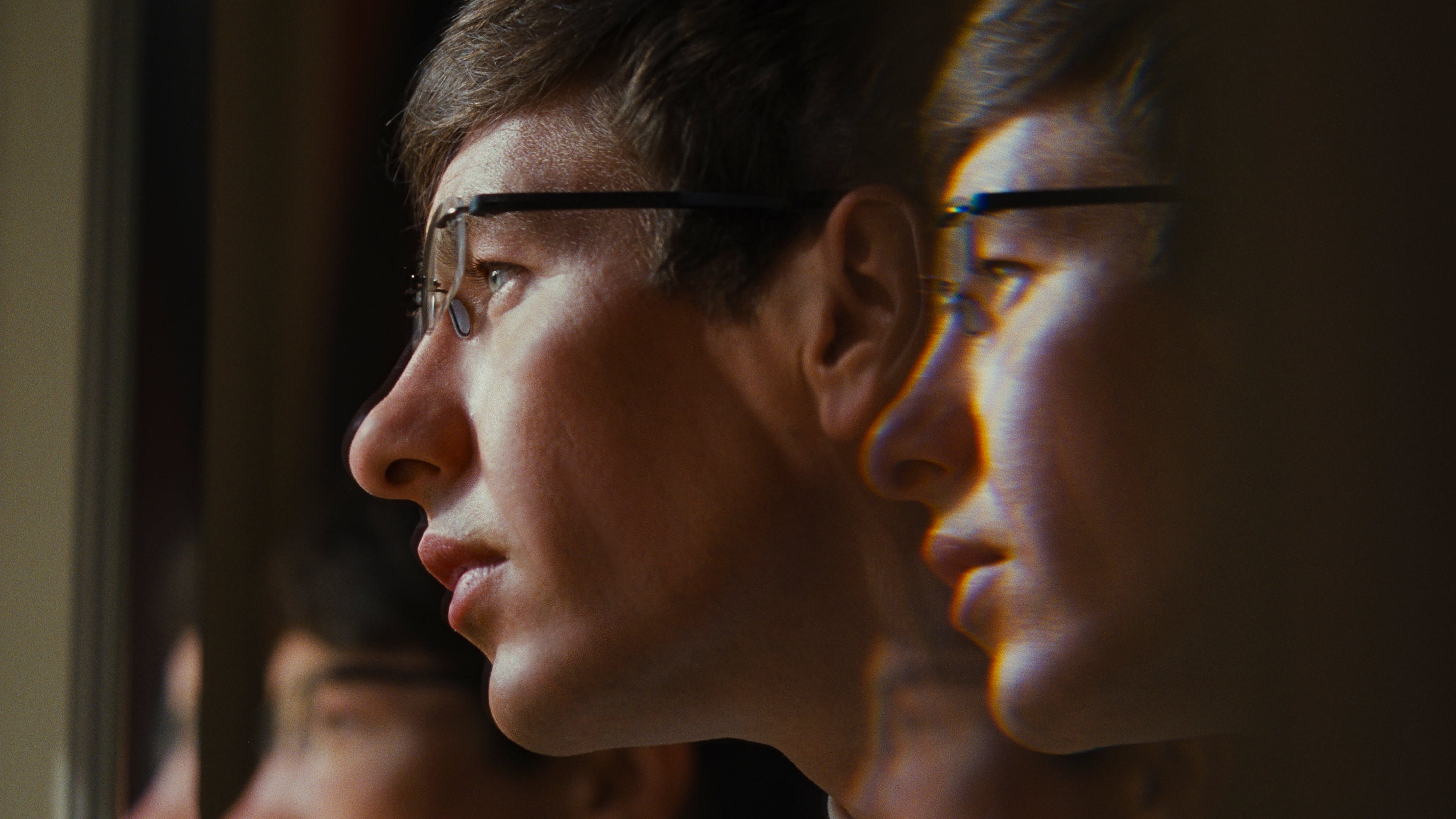
To me and to many, it seemed the situation and circumstance of the Menéndez brothers was utterly, hopelessly lost. The release of this series and the consequences of the case returning to the public mainstream in this fashion only promised devastation. To have the sensationalism and media spectacle that so heavily infringed upon the first trial resurrected? It spelled disaster. To have it centred solely around this new interpretation so far removed from the truth? I couldn’t begin to describe the resentment I felt towards Murphy, Netflix and everyone who sat adjacent to this project. Lyle and Erik Menéndez are still alive and striving for their release; the weight of this programme’s influence cannot be understated.

There is, however, hope to be found in Hartmann’s new documentary The Menéndez Brothers, also bizarrely distributed by Netflix, which worked in direct collaboration with the brothers through extensive audio interviews. It is two hours of accounts, testimony and context; it is very difficult and very necessary to watch. For it to have been released so soon after Murphy’s farce is vital, ineffably so. I have hope it will instil in this new generation of interested parties a sense of obligation to the truth. I have hope it will counteract any damage Murphy has done to the public’s perception of this case. And I have hope it will prove Erik Menéndez wrong in his sullen belief that he has ‘taken the painful truths several steps backward—back through time to an era when the prosecution built a narrative on a belief system that males were not sexually abused, and that males experienced rape trauma differently than women.’

Categories
Reviews

An Experiment of Empathy: Emerald Fennell’s Saltburn (2023)

By Robin Reinders

December began with Saltburn. As someone reading English at a top three university in the UK, and one of Oxford’s foremost competitors, the atmosphere of the first act of this film really sat with me. Sacrificing air conditioning for the sake of ‘the fucking wood fucking panelling’, lonely evenings at the pool table, indoor smoking, and the awful anxiety of sitting at the dining hall on the first day of term – haunted by paintings of who-knows-the-second and three-quarter-portrait-the-fifth looming above. It’s terrible. Constantly surrounded by signet rings, sterling cigarette cases, the question of where do you summer? and what school did you go to? If you haven’t got a family crest or a father who knows a department head in some vague ritualistic clap-on-the-shoulder way, you’re sort of fucked. But sometimes, if you’re especially quick and clever, you find a way to worm yourself in. 

Emerald Fennell’s Saltburn is a cinematic tour de force. Grandiose, with a scale large and looming amplified by its aspect ratio, Fennell creates an opulent cinematic experience that reaches for the unthinkable and certainly doesn’t shy away from the perverse. Saltburn primarily functions not as a surface-level class commentary (as it’s doubtlessly going to be misconstrued), but as a character study – an intense experiment of empathy, as the narrative focuses on its paradoxically ambiguous and yet radical protagonist.

Wide shots like these communicate the imposing, prodigious scale of
Saltburn and the world it represents

From the very beginning, we find that Saltburn is – essentially and at its core – a British film. The opening jingoistic anthem ‘Zadok the Priest’, composed by George Frideric Handel and used for royal coronations since the 18th century, sets this up fantastically. We find this British quality again in the tense, dissonant interplay between dialogue, action, and context in an unforgettable scene involving a pie. This here is particularly British, and particularly upper-class British. The refusal to acknowledge even the most terrible, soul-crushing thing and to simply carry on eating and drinking and politely confabulating is quintessentially British in a way that I think audiences from other cultural contexts might fail to appreciate completely.

A piece with so much personality, it truly is constructed and cemented by its influences. Pasolini’s impression is felt with lucid clarity. An homage to River Phoenix is paid in a subtle yet very present moment. There are faint hints of Hitchcock in the framing of a particular scene, along with long, dragging takes evocative of Kubrick. The literature that forms the foundation of this film is genius and marvellously curated. There are obvious traces of Waugh and Forster, with strains of Brontë and du Maurier in the gothic-romantic details. These all blend in a manner so rewarding, as if forming the bouquet of a particularly lavish vintage you might find in Saltburn’s cellar.

Like a moth on a windowpane, Oliver peers through—ever watching

‘Quiet, harmless, drawn to shiny things’ is how Venetia (Alison Oliver) describes the central character and unreliable narrator Oliver Quick (Barry Keoghan). He is incredibly obscure throughout much of the film; vaguely northern, amorphously working class, and ill-defined in terms of his feelings towards Felix (Jacob Elordi). His attitudes, desires, sexuality, and motives are always inexplicit and undefinable. His actions, however, tell a different tale. Beneath this pretence – and Oliver is well-versed in pretence – he is an incredibly radical character. Machiavellian in the pursuit of his object, whatever it may be. We see fierce, concentrated eruptions from him often when we arrive at Saltburn, as he is overwhelmed by what visceral affections he is constantly trying to conceal from character and audience alike. He is intense, almost militant in these actions. There is no presence of shame or regret – just base, perverse, urgent necessity; a heightened and somewhat violent ‘giving-in’ that engenders a lasting, grieving ache in us as viewers – as voyeurs. 

Voyeurism, exhibitionism – both lead to the discomfort of the audience. Uncomfortable art is always controversial, but it is also always adored by me. I will always advocate for art that makes us squirm, that arouses us in an unconventional and sometimes frightening way. Fennell takes what is normal and twists it into the abnormal, further the subnormal and further still the supernormal. It is a film preoccupied with fetishisation – fetishising mess, fetishising wealth, fetishising poverty and pity and misery and broken birds. Fetishises watching; from an ajar bathroom door, practically an invitation, to the very way the affluent and aristocratic live and move in their own home (dirty underpants discovered as the maids rifle through your luggage). A detail I’d like to highlight: the bathroom Felix and Oliver share has two mirrors positioned in an awfully clever way. Even when the two have their backs to one another, there is no scenario in which they can’t look. The film is obsessed with fervent, zealous, destructive yearning and desire. It explores how these feelings can mutate into self-loathing, further – into violent, intimate anger.

It is a film that asks us to look at our desires, look at them with both eyes and see them for what they are: grotesque and animal and writhing. Fennell argues that we as the authorities of our narratives cannot make something ‘frictionless and sweet and streamlined and easy; you have to make something complicated, and you have to make something that’s going to make people argue.’ Visceral and coarse and servile – these are things we find in Oliver. We see him reduced – bared and broken – in any number of contexts. His actions and our reactions are what Fennell plays with; she wants us ‘aroused and alive but also kind of freaked out.’ She nobly succeeds. We never hate Oliver. Never. We are always forgiving, understanding and terribly, terribly empathetic.

Felix and the ‘stuff of life’

Saltburn is crucially a film obsessed with the beauty of stuff – mundanity as defined by the upper class. The stuff of life, the stuff of wealthy domesticity. The intermingling of Flemish tapestries draping the wall and half-smoked Marlboros dying in a diet Coke can on the desk just below. ‘It’s the kind of surreal and the kind of mundane – the kind of beautiful and the sort of silly, all together in one’, Fennell says. It’s really a glamourisation of opulent, tart’s boudoir filth. Crystalline reflections sparkling off crisp packets and Carling cans in the college bar. ‘The constant dismissal of beauty’, Fennell calls it. It’s this blending of the Edwardian stately home life and the languid, dripping summer haze of the late noughties that gives Saltburn its unique atmosphere. The bridging of the two is achieved through the efforts of production designer Suzie Davies, costume designer Sophie Canale, and their respective teams. The aspect ratio of the film allows us to see not only the vastness of the estate, but the height. Shots which include both floor and ceiling are common, with details strewn about everywhere (an old piece of flypaper hanging limp on a diamond chandelier). Something I’d like to note about the costume design is Canale’s clever use of material – particularly her penchant for sheer materials. By way of capturing light through linen and gossamer night dresses, we are further able to empathise with Oliver’s frame of mind; when you are in love with someone, you are constantly aware of their body, constantly distracted – as we see in the long-take of Felix’s tour.

I do believe that is Emerald Fennell’s main goal with Saltburn. I’ve seen many ask ‘What are we supposed to take away from this?’ And no, I don’t believe we are supposed to walk away with a tepid inner monologue droning about class criticism. Saltburn is less an ‘eat the rich’ film and more an ‘eat out the rich’ film (notice the fixation on bodily fluids, so far as to be assigned to each character with the same casual purpose as any other idiosyncrasy; Venetia and blood, Farleigh and spit, Felix and spend). Its commentary on the middle class – particularly the upper-middle class – and its relationship to the extraordinarily wealthy is present, but takes a backseat. Saltburn is fundamentally an interrogation of our relationship with our own desire and how destructive that desire can be. It’s why we empathise with Oliver. It’s why we connect as much as we cringe. The film has to be queasy and uncomfortable; it has to freak you out and grip you in order to show you how impossibly carnivorous, locust, and insane that desire can be.

An unreliable narrator grieves

‘I…I hated him. I hated him! Yeah, I—I hated him.’ Oliver sighs at the end of it all. His monologue to whom? A comatose witness, a nobody audience? Desperate to convince himself and him alone it seems. Convince himself that this is what he wanted—all he wanted all along. Defensive. Cagey and paranoid around his own self-failure (don’t look! don’t look!). Willing to turn himself inside out to cope with the grief of his mistake: ‘This was always the way it was supposed to go. I meant for it. I meant for it.’ The events of the maze mark the frantic spiral of it all. There it goes, down the drain. And Oliver meant to pull the plug, he did. You have to believe him.