By Alicia Mora de Rueda
There was a time when waiting was simply part of life. Waiting for a letter to arrive, waiting in line at the market, waiting for a friend to show up, it was a time when such pauses were natural, even expected. Today, though, simply standing by feels almost anachronistic, like a small relic of a slower past that is no longer compatible with the rhythm of modern life. In a world that prizes efficiency and instant gratification, waiting without distraction has become a rare act, a form of quiet resistance against the systems that reward urgency and production.
Spanish philosopher Carlos Javier González Serrano calls attention and patience “acts of rebellion in an accelerated world”, describing the culture we live in as one that rushes us from task to task, and demands immediate responses for measurable results. Our days are punctuated not by quiet moments, but by notifications, deadlines, and a persistent pressure to keep moving towards the next showcase-worthy achievement, the next task, the next visible sign of progress. To wait: to linger with uncertainty, with discomfort, with unfilled time is a dangerous step off the treadmill.
And yet, in its quiet defiance, waiting is more than a delay or an inconvenience. It is a space where thought deepens and emotions find a place to settle, where presence takes root and distraction is gently but firmly prohibited. It forms the “quiet room” inside a noisy life so that we might find a moment where we might actually notice something otherwise lost: the texture of a conversation, the way time stretches between words, the pause where we realise what we really want.
At times it is possible to catch glimpses of patience in the background of daily life. Slow smiles exchanged when someone offers their seat to you, the habitual pause before speaking in a conversation, the thoughtful brewing of a cup of coffee. Such moments call for a mindful presence that resists interruption and welcomes human stillness. They are not the task-oriented, efficiency-driven interactions that we are used to, but call for an unhurried willingness to notice and understand.
Yet it has almost become second nature for us to cut these moments short, so that stillness becomes anxiety and waiting is filled with scrolling through kilometric feeds. Patience, once a quiet constant of human experience, has come to feel like a skill to be relearned rather than something we instinctively carry. Impatience is normalised and even celebrated to the point that we perceive it as an ally to reach creativity, when in reality it does nothing more than stifle the depth and clarity needed to truly engage with the world in a fully human way.
So one cannot help but think: what does this mean for how we live, how we relate, how we build community? If we lose patience, do we lose something essential to being human? González Serrano suggests that reclaiming patience isn’t about turning back the clock but about resisting a culture that equates speed with value. It is about recognizing that not all progress can or should be measured by how fast we move. It invites us to ask deeper questions so that “how quickly?” becomes “towards what, and at what cost?”
The complexity and contradiction that comes from waiting is something that only time itself can offer us, if we allow it to become an experience to be inhabited rather than a tool to be managed. It lets us sit with uncertainty rather than rushing to conclusions. It creates room for empathy, for understanding perspectives that do not neatly align with our own. It slows us down just enough to notice nuance. In waiting, we learn to hold multiple truths and tolerate discomfort: a practice increasingly needed in a disjointed world that rewards certainty over reflection and speed over understanding.
Perhaps then, patience is quietly radical. It challenges the dominant narrative of acceleration and constant output. It insists that some things (relationships, creativity, healing, trust) simply cannot be
rushed; they must not be. In doing so, it reconnects us to rhythms far older and more human than the clock on our screens, but rather those shaped by slowness, attention, and the quiet unfolding of time.
So the next time you find yourself stuck waiting for a train, for a message, for a decision, consider it not an obstacle but an invitation. To pause, to observe, to inhabit time differently. In a world hurtling forward, waiting might just be the most rebellious act we have left.
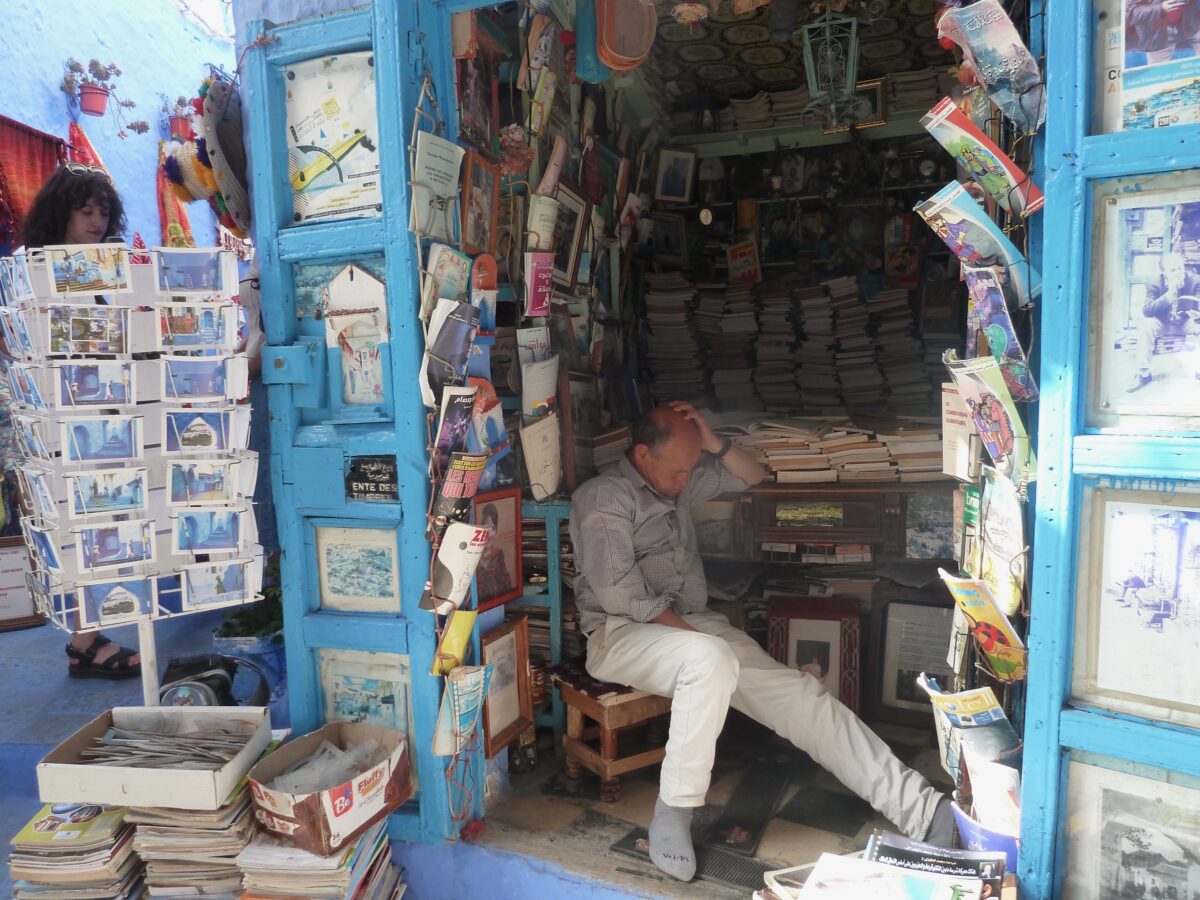
Featured Image: Honor Adams