Categories
Reviews

Goose on Geese

Getting Killed and Choosing Love

By Matthew Dodd

For the first forty-five seconds of Trinidad, the opening track from New York post-punk band Geese’s new album Getting Killed, there is a semblance of normality. Shuffling drums and a pedalling wah-wah guitar lick, accompanied by lead singer Cameron Winter’s plaintive cries of ‘I try so hard’, suggest a reflective, if unorthodox, serenity. Any such notion of peace and quiet is ruptured a moment later by a thunderous cacophony of sound: errant saxophones, frantic guitar and Winter’s howling refrain – ‘THERE’S A BOMB IN MY CAR!’ This contradiction, an oscillation between grooving slacker-rock and erratic noise, dogs the album. That tension, tied by Winter’s often sensitive and often bizarre lyricism to the uneasy interplay between the modern world’s mundanity and absurdity, constitutes the album’s thematic through-line. In one moment, Winter is the world-weary Sisyphus of 21st-century life, trying his hardest to no avail; in the next, he is the red-pilled doomscroller with a bomb in his car. Geese wear their influences on their sleeves, but they are nothing if not blisteringly contemporary. 

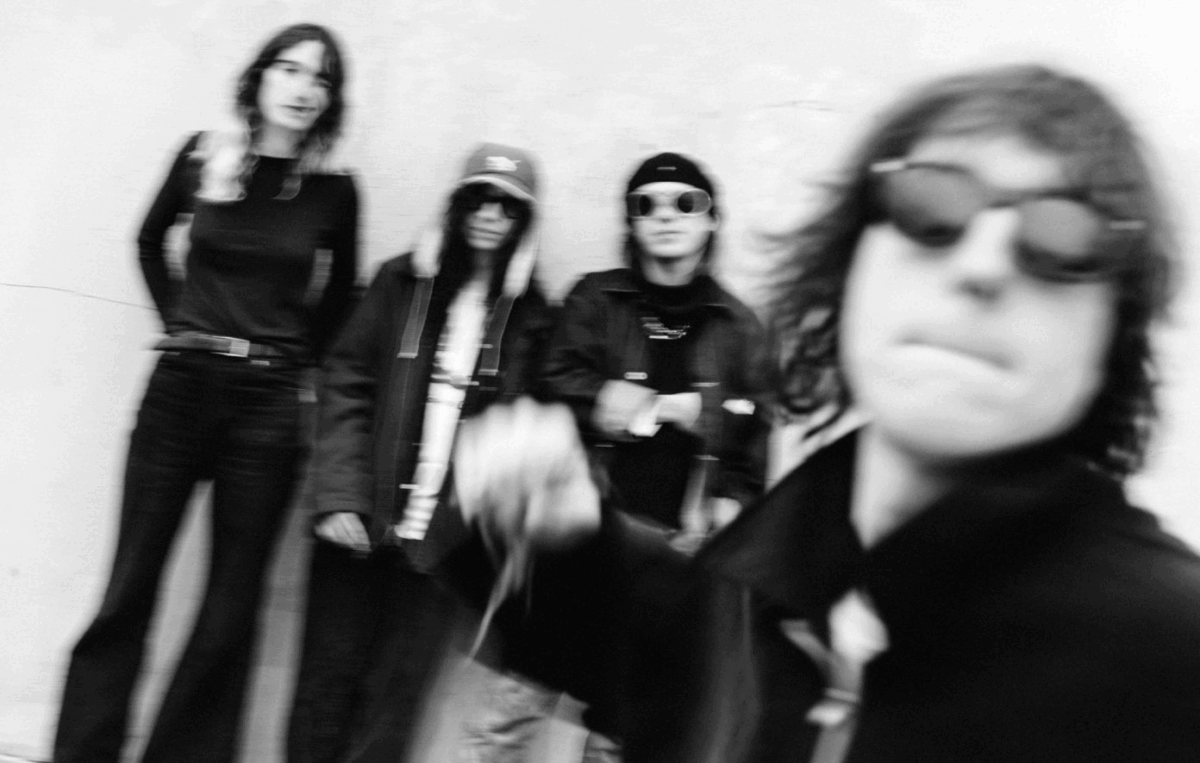
Not unlike one of their songs, Geese’s upward trajectory had, for years, been slow and rumbling before exploding, seemingly spontaneously, into the meteoric over the last summer. Since 2023’s 3D Country bought them a place in the peripheries of mainstream success, they’ve carved out a steady reputation as one of the most mercurial and exciting bands in the New York scene. A string of viral singles through the summer, bolstered by the release of Winter’s solo album Heavy Metal last year, has parachuted them into online superstardom, without any surrendering of their distinctly un-starlike style. They, like The Strokes before them, have become the ambassadors of New York’s yuppie-private-school-punk-rock-greasy-hair subculture. Cameron Winter operates in the same ambiguous space between cult leader and awkward schoolchild as Julian Casablancas did in the 2000s, appearing in both interviews and performance as much uncomfortable as he is totally in control. The band, eschewing the spotlight whilst languishing in the attention it’s won them, play to that most Gen Z affectation of self-conscious diffidence; the band are all under 25. 

Getting Killed moves with picaresque conviction through a surreal soundscape of modernity. The title track sets a discordant sea of chanting voices against pounding off-beat drums and a drudging blues riff before abruptly pulling back to reveal a gentle guitar line and Winter’s cracked, sensitive vocals. The song continues to jerk between the two sounds until both are subsumed by a wave of branching melodies and counter-melodies. Winter knows when to let the band’s musical chemistry take the spotlight, allowing his voice to become at times simply another piece of instrumental firmament. Islands of Men is carried by a grooving synthesis of guitar and drum lines, against which Winter’s vocals provide playful counterweight. The single 100 Horses is perhaps the most straightforward track on the album: an anthemic rocker, the kind of song Led Zeppelin might’ve made had they been raised on YouTube and cultural oversaturation. 

Winter’s lyricism is as bafflingly brilliant as ever. He has all the enigma of Jeff Mangum without ever venturing far from his emotional directness, evoking at times the genius of his avowed heroes Leonard Cohen and Bob Dylan. The bizarre – ‘my son is in bed / my daughters are dead / my wife’s in the shed  / my husband’s burning lead’ – is kept in delicate harmony with the simple and beautiful – ‘and if my loneliness should stay / well, some are holiest that way’. 

A certain spirituality runs through Getting Killed, a kind of sarcastic desire for a post-modern religious meaning that dares not speak its name. Winter’s solo track $0 ends with the singer’s rambling confession that ‘God is real, God is real, I’m not kidding this time God is actually real’: similar moments of religious epiphany pepper Getting Killed. On breakthrough single Taxes, Winter’s warbling baritone laments that ‘I should burn in Hell / but I don’t deserve this’ and threatens that ‘if you want me to pay my taxes / you’d better come over with a crucifix / you’re gonna have to nail me down.’ Between ‘nail me’ and ‘down’ a buoyant guitar line fulminates across a song which has hitherto been accompanied by a bottom-heavy assortment of plodding drums and droning bass. The moment has a baptismal quality, a revelatory instance of self-discovery as light dashes across a soundscape marked by darkness. Winter continues to paraphrase Luke’s Gospel – ‘Doctor, heal yourself’ before forging a new thesis: ‘I will break my own heart from now on.’ The song adopts this half-removed, self-effacing religiosity with familiar reticence but nevertheless finds an earnest truth in it: a radical freedom, a breaking away from the married scourges of sin (hell) and modernity (taxes). No wonder that Taxes has become an immediate favourite in performance, an orgiastic refutation of hyper-modern anxiety. 

Getting Killed is an intricate, freewheeling trip through modern life’s surreal minutiae, an adventure whose complexity never threatens its listenability. Though it might lack the frenetic, hard-rocking highs of Mysterious Love or 2122, it supplants them with something even more interesting, a ruminative sincerity. Change lies at the centre of the album. Standout track Au Pays du Cocaine dwells, over lilting riffs and angelic backing vocals, on the possibility of reconciling an ever-shifting world with emotional stability. ‘You can change’, Winter wails, ‘and still choose me.’ Life in the post-post-modern world is as hectic and unpredictable as a seven-minute jam track, inscrutable as a Cameron Winter lyric, but that doesn’t mean we can’t hold on to what we love. For a band as drenched in ironic internet culture as Geese, the beating heart of their latest record is as earnest as could be. 

The magic of Geese, on this album more than ever, is that theirs is a joke we as an audience aren’t in on. Here is a band of schoolfriends, content to play to each other more than any crowd. In concerts, Winter will race through lyrics to make his bandmates laugh; songs that the band enjoy will go on for double their recorded length. On one track they’re a country band, on the next they’re a Steely Dan tribute. At every step, Geese panders to no critics, no viral success, no mainstream acclaim- instead, they remain the band they themselves find most exciting. We wouldn’t want them any other way. 

One step forward, two steps back?

By Edward Clark

All eyes are on Geese. Following their critically acclaimed sophomore release 3D Country and subsequent EP 4D Country, excitement for their third album Getting Killed has been amping up. This hype was only furthered by lead singer Cameron Winter’s solo release Heavy Metal last December: a diversion from Geese’s rock roots, Winter’s work swapped 3D Country’s colourful jam-band sound for cascading piano ballads. Placing emotional lyricism and powerful vocal performances at the forefront, Winter showcased his versatility as a singer and his strength as a writer. For a band who have showcased so much creative potential, fans expected another strange departure from their previous work. Getting Killed feels like Geese playing it safe.

Having come up parallel to the post-rock scene based largely in Britain, sometimes called the ‘windmill scene’ or ‘post-Brexit’ rock (Shame, Squid, Black Midi etc.), Geese have been unafraid to place their New York identity front and centre. The band’s Spotify bio reads “NYC” and nothing else; their love for their hometown continues to glow on Getting Killed. ‘Bow Down’ wears its Strokes influence on its sleeve, Winter’s surreal religious metaphors underscored by fuzzy, driving guitar riffs and droning horns. Keeping the pace up, the song is an easy standout. After descending into a noisy instrumental section, accompanied by blaring car horns and mesmerising drum patterns, the song explodes into an awesome finale.

Where Geese achieve the same level of urgency as they do in Bow Down – emotionally or instrumentally – the album soars. Lead single Taxes is a fantastic blend of disconcerting imagery and tight accompaniment. The guitar tone is bright, blending nicely with Winter’s emotional vocalisations. Islands of Men is a more meditative cut, but still maintains a building crescendo as Winter sings about fear and ‘running away’ over a hypnotising, laidback guitar riff. Trinidad is packed with surreal panic – as the album begins at a smooth, steady pace, it is instantly offset by a frenzy of dissonant horn, bass, guitar, and sporadic drum fills. ‘There’s a bomb in my car!’, Winter shouts. Somehow, this noisy hysteria takes the form of a chorus, and somehow it works perfectly.

Despite these highlights, Getting Killed is a less creative album then their last. Less compelling tracks (Cobra, Husbands, and Half real for example) are hindered by the band’s reliance on one particular sound. The track-list merges together; each song struggles to carve out its own identity. The weirdness that the band embraced on 3D Country fails to materialise here. Winter is less silly and less melodic on Getting Killed: where Cowboy Nudes and Gravity Blues bubbled with soulful energy, Getting Killed is grittier and darker. The wide range of bizarre influences which shaped the playful sound of their previous LP are missing here; as a result, weaker songs lack the texture that made 3D and 4D country so unique. Further, Winter’s ability to create catchy, emotional ballads is not showcased here. There is no Love Takes Miles to be found on Getting Killed. The closest Geese get to striking the same emotional chord as Winter’s solo work is on Au Pays du Cocaine, a breakup song reimagined in their own New York style.

Nevertheless, the album is great. For Geese, ‘playing it safe’ is clearly an apt move. Their fanbase is growing, and they’ve recently set off on a multi-continent tour, including plenty of festival spots. As Cameron Winter admitted in an interview with GQ Magazine earlier this year, “Sometimes you’re walking down the street, and you feel like you could just make 40 albums.” The band’s love for making music shines through most of all.

Featured Image: Mark Sommerfield

Categories
Creative Writing

The Courtship of Jonty Sackford-Schächt  

By Charles FitzGerald

Thursday, 14:31  

Jonty:   Tell me. Why would a lady as enchanting as you be lurking on an app like this? A woman of your beauty is clearly Hinge-territory. 

Ella:    Does that normally work? 

Jonty:   It has been known.  

Ella:    Right. 

Chat Terminated.  

__________

Thursday, 17:53  

Jonty: Couldn’t help but notice something, RE: your profile picture. You appear to be holding a fork in your right hand, a steak-knife in your left. This is the wrong way round, Lucy – though, rest assured, I’m still interested. 

Lucy:    ? 

Jonty:   How’s about I take you to Côte Brasserie and show you how it’s properly done? I’m banned from the local one, so we’ll have to venture out.  

As of next Tuesday, I’ll be clean of all sexually-transmitted diseases. How does Monday evening work for you? I’m sure we can hold off until the morning, if you catch my drift. 

*MOST sexually-transmitted diseases. Apologies. 

Lucy:  Dying rn haha 

Original, i’ll give u that 

Jonty:   Always a gentleman, but never a gentle man. Ha! 

Lucy:    Why were u banned from Cote? 

Jonty:    I’d really rather not get into that right now, Lucy.  

    (seen

Thursday, 21:14  

Jonty:   Okay, I’ll bite. Last Valentine’s, Côte hosted a “smoked salmon challenge”. Pretty much as it sounds – if you consume an enormous (and I mean ENORMOUS) platter of smoked salmon within the hour, you and your party eat for free. 

I made a valiant effort, although needs must and I projectile shat. Coincidentally, James O’Brien (of LBC) was sitting behind me with his family, and took the brunt. 

He was commendably understanding about the whole thing (seemed to rather enjoy it, in fact!) and signed my napkin. The Côte stasi were much less sympathetic. The waiter actually ended up asking MY DATE for “Angela” – the balls! 

This probably won’t happen again Lucy. 

Chat Terminated.  

__________

Friday, 01:26  

Jonty:    Awooga. You bear a startling resemblance to my mother. Jonty likes.     (seen

Friday, 01:35  

Jonty:   Oh shit. Mum, what are you doing on Tinder? 

Chat Terminated.  

__________

Friday, 11:04  

Jonty:   Is that a copy of Dostoevsky’s ‘Crime and Punishment’ in your hand, or are you just pleased to see me? 

Emma: What does that even mean? 

Jonty:   Let me break this down for you, Emma.  

In your profile picture, you appear to be brandishing a copy of Dostoevsky’s ‘Crime and Punishment’. 

The saying typically goes “is that a gun in your pocket, or are you just pleased to see me?” – a reference to the male erection. 

I, in a play on words, have tailored the saying to your profile picture. Granted, it’s pretty high-brow. 

Emma: Yeah thanks for that. I understand the saying. 

Jonty:   Great, I’ll try again.  

Is that a copy of Dostoevsky’s ‘Crime and Punishment’ in your hand, or are you just pleased to see me? 

Emma: It’s a copy of Crime and Punishment. 

Jonty:   Ah. 

    (seen

Friday, 13:44  

Jonty:   See, I really thought you were going to say “I’m just pleased to see you”. 

Conversation Terminated. 

__________

Saturday, 09:35  

Clarissa: Hi sexy do u like have some fun with me always? 

Jonty:   Crikey, I certainly would!  

I must say, I do appreciate a woman willing to take the first plunge. Thank you for that. 

Clarissa: I do make a video of myself when im bored sometime a do a nasty squirting video

I’m single with no kids 

Jonty:   I see. I’ve always been fascinated by the female orgasm. Seems utterly pointless to me. Is it true it’s 90% piss? 

As far as I’m aware, I have no children either. 

Clarissa:   How do you treat your women in time of fun? 

Jonty:   In the throws of passion? I have no objection to being slapped in the head. Clarissa: How much do you work in a day and how much you earning in a day ? 

Jonty:   I receive £500 sterling from my estranged father’s premium bonds every 3 days or so.  

And if by “work”, you mean “be an absolute fucking animal” – 5 days a week. 

Clarissa: Do you got cash with you in the moment Jonty ?

Jonty:   I always carry cash. During my travels in Thailand, I thought it wise to store some notes up my bottom (in case of police bribery et cetera) – though they’ve since become permanently lodged up there. 

Clarissa: Oh you have point 

What institution you bank with jonty? 

I wanna you send money i need to load my internet so i send nasty squirting video 

Jonty:   I bank with HSBC, though my savings are stored in an off-shore account (Equatorial Guinea). 

I’ll certainly wire over some internet cashola. What are your account details, Clarissa? 

Clarissa: Thank you jonty my love 

I have no internet as my bank institution not work 

send photo of you card 

Jonty:   I quite understand. 

    [photo attached]

Clarissa: and three number on behind 

Jonty:   [photo attached

Conversation Terminated.  

__________

Friday, 23:25  

Jonty:   Mum. You’re not responding to my WhatsApps. Can I have some money please? 

Conversation Terminated.

Featured Image: Unsplashed

Categories
Culture

A Day with Alberto Giacometti, Told in Notes 

By Liv Thomas

17/07/2025 

Morning 

I was in the Tate Modern when I saw my first Giacometti statue.  

It was a grey day, blanketed by a sweltering heat, and I was alone in Paddington Station.  

No one around me knew that I’d started the day buzzing with that small, yet bright, excitement that comes from seeing someone you haven’t seen in half a year. 

They didn’t know that I was sitting on a bench in complete humiliation after receiving a response to my “here” text that read “I thought we were meeting tomorrow?”. 

I didn’t want to catch the next train home; I’d paid for this journey, after all. So I walked through, in my head, all the things I would want to do in London if I ever found myself alone there. Art galleries are a great place to explore if you want to blend in among a crowd of people who are perfectly content to be within their own company. I decided on the Tate Modern – and that’s where my day turned from strange to true.  

Midday 

The spatial layout of most art galleries carries the intention of leading you from one piece to another until you finish your journey with a new sense of meaning. The Tate Modern, on the other hand, makes you feel very, very small. 

Upon entering, the concrete walls and glass panels on either side of me stretched above to what I can only vaguely remember as a bright light. Facing the entrance, I turned left; if you were to see a map of the Turbine Hall, this would be in the direction of a tumorous-looking structure leeching onto an otherwise square building. 

This tumour is where I saw my first Giacometti statue.  

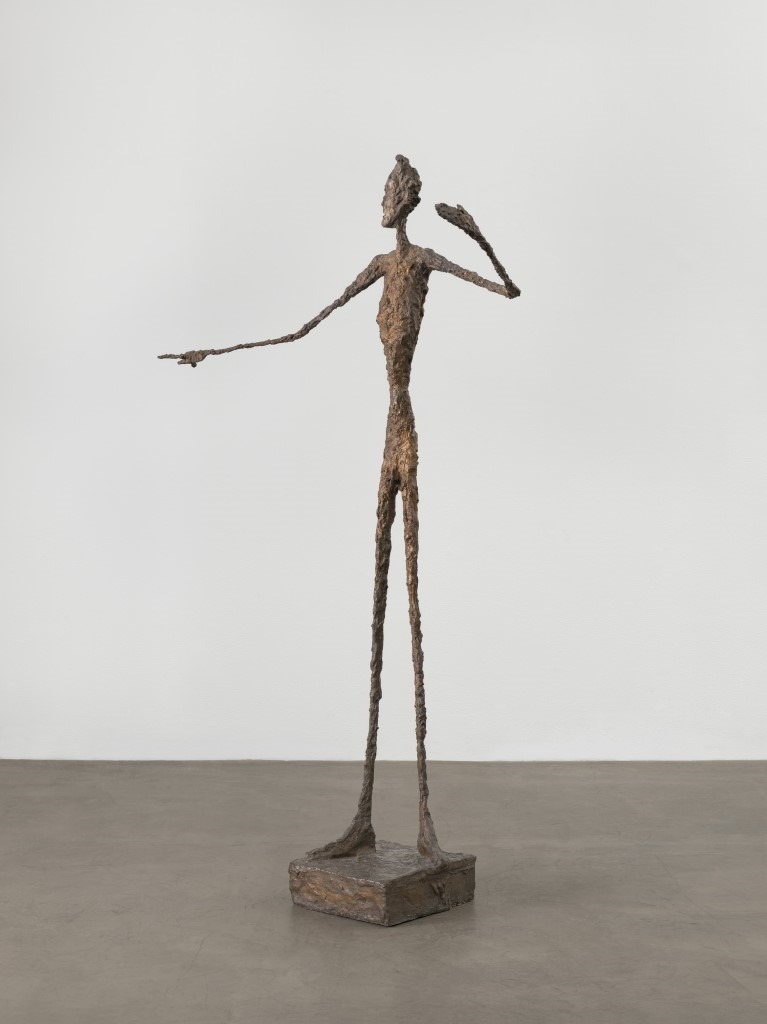
You enter this space and you’re presented with several openings, each leading to its own exhibition. You look down the corridor to one and see an alien standing at the end. Except it’s not an alien, it’s L’Homme au doigt

(Giacometti’s Man Pointing, 1947, bronze, 179 cm, The Museum of Modern Art) 

Existentialist philosopher Jean-Paul Sartre described the statue as “always halfway between nothing and being,” and that’s exactly how I felt when I found myself in this liminal space between the rest of the Tate Modern, and the works of Alberto Giacometti.  

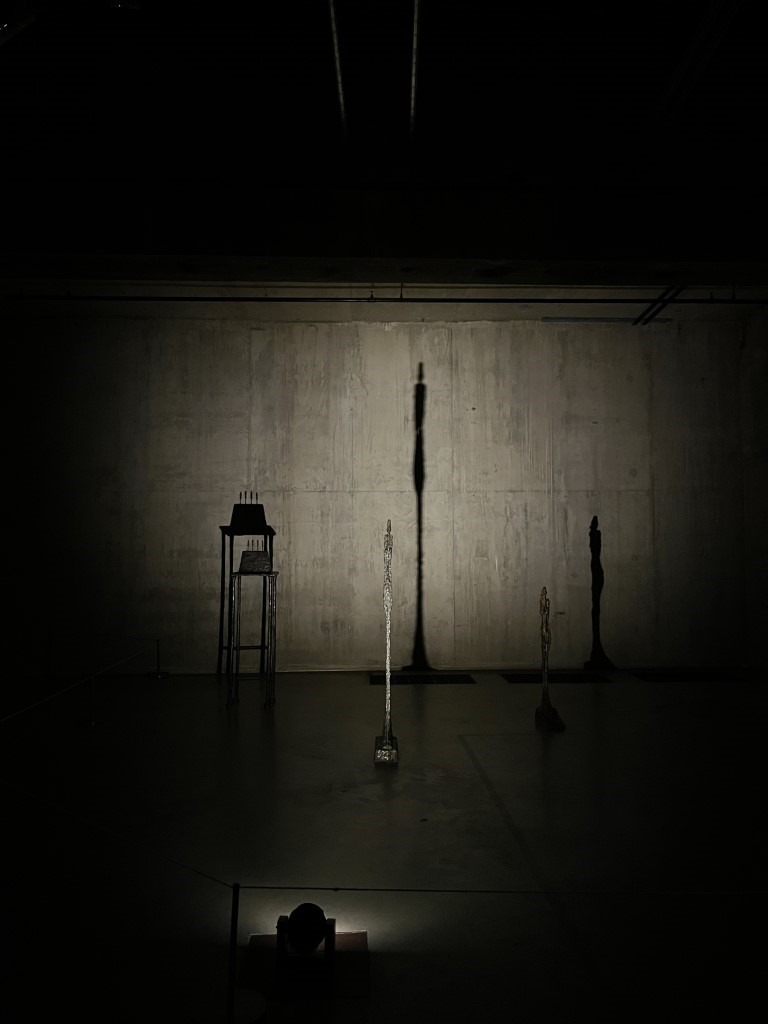
The exhibition was lit in a way that made the square-shaped corridor look like a tunnel, with the dark corners of each four-pointed frame bending over the sculptures, as a light pointed directly at them stretched their shadows against the wall.  

My first association was with Plato’s Cave. On the one hand, this matter of perspective accentuates Giacometti’s study of the human form and its relationship to the environment. On the other hand, these silhouettes and the figures that cast them represent the dual significations between alienation and endurance, fragility and resistance, and our anxieties and hopes.  

Notes on Giacometti 

Giacometti is often regarded as a late modernist who reaffirmed figuration after World War II.  Similar to T.S. Eliot’s The Waste Land — only translated here through plaster, clay, and bronze — Giacometti’s sculptures capture the fading afterimage of a society laid bare by war, fixating on humanity seen through a lens of thin, metal limbs, as if the world itself had been whittled down to its trembling bones. 

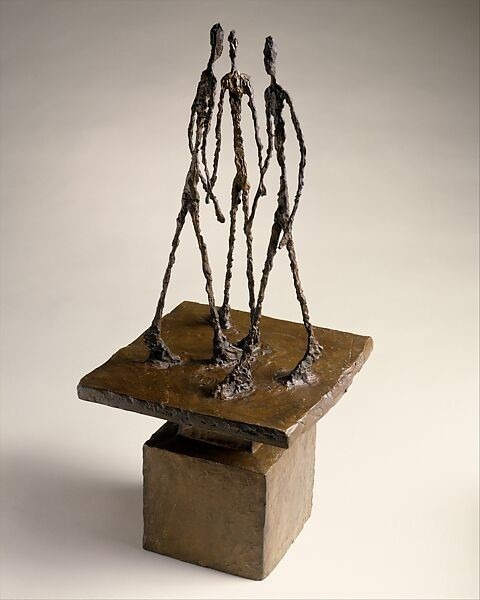
(Giacometti’s Three Men Walking II, 1949, bronze, 188.5×27.9×110.7 cm, The Met) 

Despite their proximity, the figures wander aimlessly, with neither direction nor acknowledgement – their identities blur, yet they are completely disconnected. 

Giacometti rejected the artistic notion of replicating reality; instead he sought to uncover the truth of life by reducing it to its barest principles. His art serves as an alternative to the superficiality of hyper-realism in sculpting.  

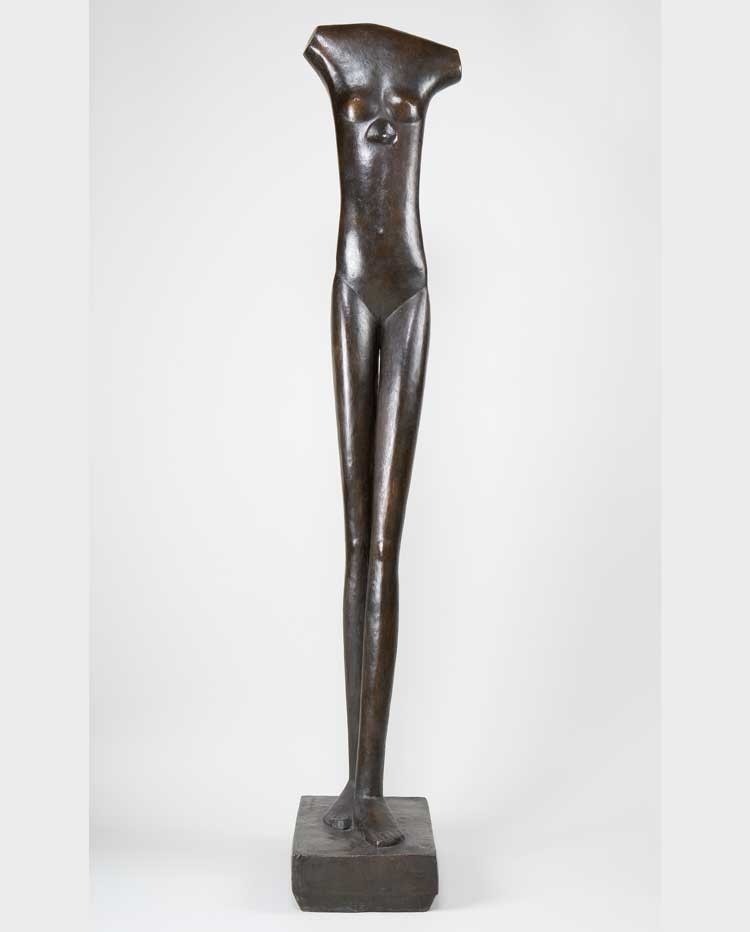
(Giacometti’s Walking Woman I, 1932, Bronze, 150.3 x 27.7 x 38.4 cm, Fondation Giacometti) 

This specific figure is inspired by Egyptian artistic traditions. While the name of the piece suggests otherwise, the sculpture conveys no sense of movement and rather reflects a wider awareness of varying 20th century stylisations.  

Final thoughts 

My thoughts at the Tate Modern gather to the present day.  

Plato’s Cave tells the story of prisoners trapped in a cave, and the shadows cast by a fire are mistaken for reality. Mimesis is an illusion that distracts us from the fragmented nature of human existence, and authenticity is needed now more than ever in a digital age that conglomerates everything fed into it.  

When you cast a shadow against Giacometti’s works, you don’t see reality –  you see a half-starved person, a physical manifestation of psychological confinement, a charred body… or maybe you would even see yourself.

Seeing this for myself in London, surrounded by strangers, and with a lost purpose for the day – left with the lingering feeling of reading whatever was in the news that morning – I couldn’t help but let Giacometti’s shadows speak to me. A lone person faces another human in the form of a sculpture; both carry multitudes. 

Featured Image: Liv Thomas

Categories
Perspective

Endometriosis: Not a Fair Ride

By Tashy Back

Many of you who are opening this article may be sitting there wondering what on earth Endometriosis even is. Indeed, I would be pleasantly surprised if you did know. Since being diagnosed a few months ago, I’ve had to explain it to friends, family, colleagues — truly everyone in between. And yet, what if I told you that endometriosis affects 1 in 10 women of reproductive age? That’s about 190 million people worldwide. You would surely expect something so common to be widely understood. Yet, astoundingly, the majority of people are woefully uninformed about it.

The Oxford Dictionary defines endometriosis as “a condition resulting from the appearance of endometrial tissue outside the uterus and causing pelvic pain, especially associated with menstruation.” This tame and clinical-sounding description is foreign to me, and I am sure to all endo sufferers. What it doesn’t say is that endo can mean chronic pain, fainting spells, vomiting, inflammation, bloating, diarrhoea, chronic fatigue, digestive issues, nerve pain, and even mobility problems. It can lead to infertility in up to 50% of cases. It can mean losing organs. It can mean wearing a stoma bag. It can even kill through complications, through cancer links, and through the devastatingly high rates of suicide among sufferers. Hopefully, this already gives you an idea of just how serious and totally debilitating endometriosis really is.

When I first received my diagnosis, I spent days doomscrolling TikTok — which in its eerie, algorithmic fashion seemed to know exactly what was happening in my life. What I found were hundreds of women across the world telling the same story: dismissed by doctors for years, told their pain was “normal,” finally given surgery only to discover that the endo had spread to their bowels, bladder – even their lungs and heart. Some were stage 4, where it’s growing on your vital organs, before anyone took them seriously. Some were told their fertility was already gone. That’s another important thing: the only way to get a formal diagnosis is through an invasive laparoscopy – surgery that takes a month to recover from – and even then, there’s no cure. Only management, and often a poor one at that.

Doctors often try to slap a plaster on it: hormonal birth control, gaslighting comments about “dramatic young women,” and the endlessly patronising reassurance that “painful periods are natural and normal.” (A direct quote, by the way, from one of my doctors.) No wonder it takes on average 7–8 years to get diagnosed in the UK — a delay mirrored worldwide. In that time, the disease continues to grow and spread. Lives and futures are being stolen by neglect.

And it’s not just personal suffering. Economically, endometriosis costs the UK around £8.2 billion a year in lost productivity and healthcare. In the US, it’s closer to $78 billion. This is a public health issue. A crisis. And yet, only 5% of global healthcare research and development funding goes towards women’s health. In an ironic twist, more money and research has been spent on male pattern baldness than on endometriosis. The minor aesthetic concerns of men get better funding than a disease that can grow lesions in your lungs, nasal cavity, even on your heart and brain. Lesions so complex they’re sometimes called “mini organs” because they can develop their own blood supply, nerves, and hormone activity. If that doesn’t sound like a medical emergency, I don’t know what does.

It’s not as though endo is new. It was first described over 300 years ago, and there’s evidence of it in 15th-century mummies. This isn’t some new-fangled mystery — it’s one of the oldest documented conditions in women’s health. Nevertheless, here we are in 2025, still treated like hysterical girls complaining about “bad periods.” Meanwhile, the only major study in 2013 didn’t look at mortality risks, fertility, or treatment options. Instead, it examined how endometriosis supposedly affected a woman’s attractiveness, with the men conducting the study baffled by the outrage that followed. To understand the absurdity of this study, let me paint a more cohesive picture of the widespread impacts of Endo, this is a disease that:

  • Affects nearly 200 million people.
  • Can cause infertility, organ damage, and in some cases, death.
  • Costs billions to economies worldwide.
  • Requires invasive surgery just to diagnose.
  • Has no cure, high recurrence rates, and woeful research.
  • And still is dismissed by doctors and governments alike.

Endo is chronic, it is life-altering, and it is proof of how badly women have been let down.  Yet, this isn’t just about endometriosis. It’s about how women’s pain is systemically ignored and belittled. It’s about a crisis in women’s healthcare — one that tells us our suffering is “natural,” our bodies are inconveniences, and our futures simply aren’t worth investing in. The struggles surrounding Endometriosis are thus truly emblematic of the crisis that is ongoing with women’s healthcare in this country, and it’s time that women’s pain was taken seriously. Indeed, even just while writing this article the severity of the issue is abundantly clear as a woman, only 27 years old, has died of untreated cancer, despite 20 prior visits to her GP where her pain was repeatedly dismissed. Thus, I hope that as the eyes of the country slowly start to turn to the crisis of women’s healthcare, the sufferers of endometriosis will not continue to be overlooked.

So, to conclude, no. I would say that people with endometriosis don’t get a fair ride.

Featured Image: Honor Adams

Categories
Culture

Short-shorts, Skirts and Croptops; What the Skimpy Menswear Trend Tells Us About Modern Masculinity

By David Bayne-Jardine

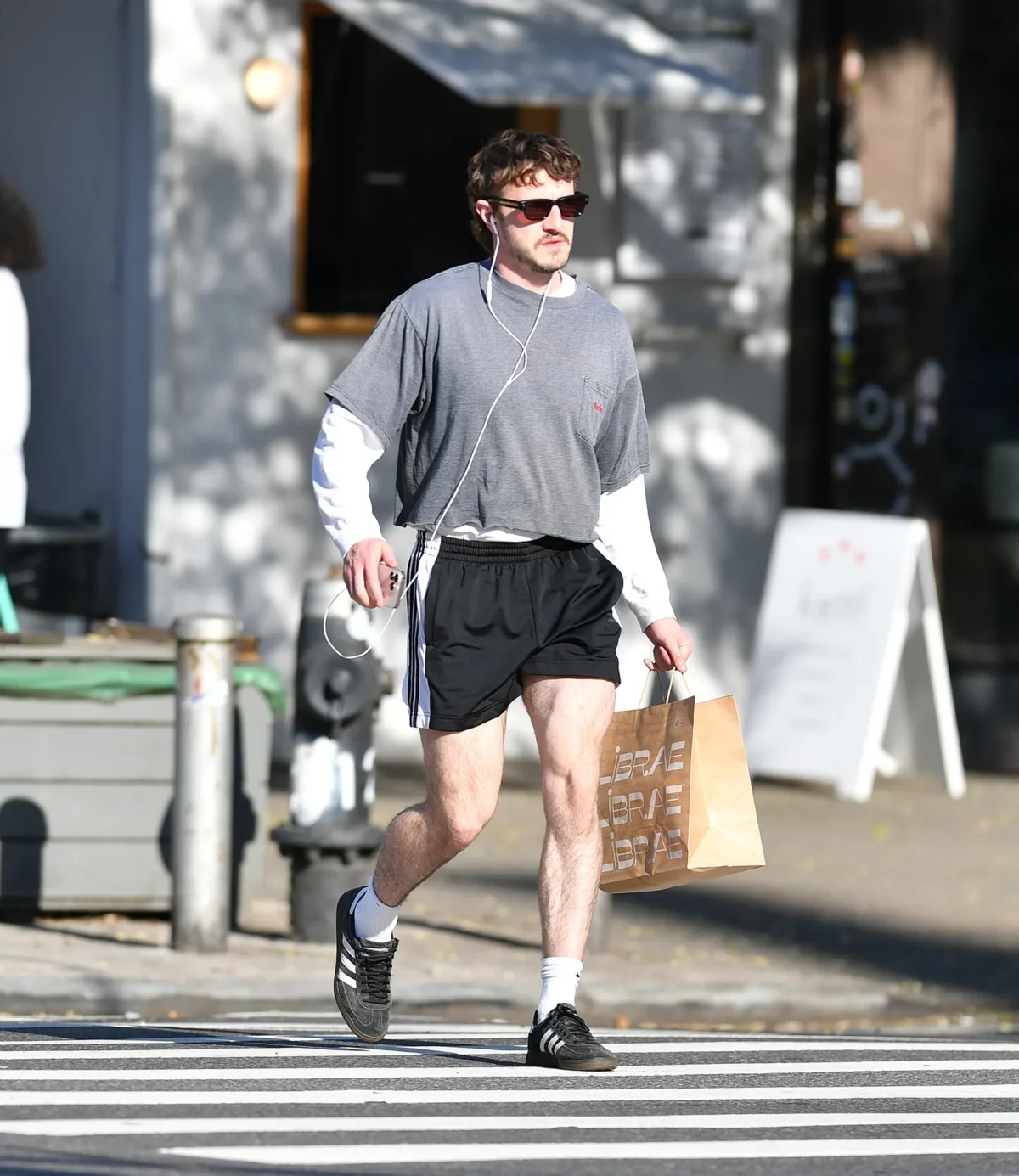
I lock eyes with Paul Mescal in the newsagents – a vision in short-shorts that stops me in my tracks. The Gen-Z heartthrob and award-winning ‘sad boy’ actor glares at me from the front page of the magazine. Decked out in a skin-tight cropped leather tank top and matching tiny shorts, his hips thrust provocatively into the centre of the photo, his arms stretched above him in a gesture at once powerful yet vulnerable. 

Over recent years, Mescal’s name has become synonymous with two things: tear-jerking portrayals of emotionally troubled men, and a worldwide obsession with short-shorts. Launched into fame in 2020 after playing Connell in the Normal People miniseries, his character’s humble and revealing Gaelic football shorts soon caught the attention of the fashion industry. Since then, as Mescal and other style icons have played with showing a bit more skin, retailers have reported skyrocketing sales in a sort of menswear very different from the norm. From Milanese catwalks to trendy cafes, from red carpet evenings to early morning park runs, men across the world have been sporting skirts, crop tops, painted nails and thigh-high shorts like never before.

In this photoshoot, his GQ cover story from November ‘24, Mescal exhibits this androgyny and playfulness that is taking over men’s fashion. After all, who better to represent male self-expression than the king of emotionally troubled men himself? In this post-COVID age of mental health awareness, as boys swap the late-night trauma dumps for self-care and therapy, their fashion is changing too. Brighter, bolder, tighter, smaller, scantier, hotter, gayer and girlier, it seems that as men loosen up and express themselves, so too do their clothes. 

It was not so long ago that glossy quarterlies like this one sold themselves by smothering their pages in a very different brand of masculinity. From the front cover, the likes of Cruise, DiCaprio and Brando defined male design as an affair of take-me-serious simplicity – expensive watches, white tees and razor-sharp tuxedos. If men were to be leaders and protectors, then their clothes needed to perpetuate that image – ordered, uncomplicated, unemotional. 

Now, I think as I absently flick through the magazine, things couldn’t be more different. Most of Gen-Z’s most successful heartthrobs are inclined, perhaps even expected, to rail against the boundaries of male clothing. Harry Styles made history in 2020 when he appeared on the front cover of Vogue in a blue Gucci ballgown. Bad Bunny’s Instagram is awash with dresses and skirts. Pedro Pascal rocked the Met Gala in 2023 with a flamboyant shorts and trench coat combo. Jacob Elordi, Milo Ventimiglia and Jonathan Bailey have all been papped showing off their quads in tiny shorts. 

But where did all this come from? What has prompted straight men in particular to start dressing more like the groups they once sought so hard to distinguish themselves from? As is often the case with mainstream culture, we are at least in part indebted to the Queer community for this sartorial about-turn. The sort of bold, playful and scanty clothing that A-listers are wearing nowadays was for years the dress code of LGBTQ+ subcultures, used to question gender binaries, promote self-expression and embody an ethos of sex positivity. 

As men are starting to open up, they look for inspiration in groups that have been expressing themselves for much longer – women and queer people. Of course, this is not the first time men have dressed like this (see John Travolta in Grease or Sean Connery as Bond), but it is certain that as previously marginalised narratives enter the mainstream, and as the playing field becomes more level, 2020s fashion is developing a distinctly gay and androgynous flavour.

Of course, it would be foolish not to acknowledge the deep irony that runs through this trend: when men dress scantily they’re hailed as transgressive; when women dress scantily they’re slut shamed or attacked. Feminine and queer fashion that was once dismissed as distasteful or offensive is now considered the epitome of good taste. 

As true as this is, it is refreshing to see men taking more risks when they dress themselves. In showing more skin, they make an attempt at vulnerability and have fun in doing so. As with all fashion, it is used to make a statement – ‘I am emotional, empathetic, a listener’ – that expresses allegiance to a new type of masculinity that tries to be less domineering and more empathetic. Of course, a pair of tight-fitting booty shorts, painted nails and a tank top won’t miraculously transform a misogynist into an ally (we’ve all seen the ‘performative male’ trend online), but it does signify an attempt by some to rebrand their masculinity into one with more tolerance. 

Naturally, this won’t be the only thing influencing menswear’s latest pivot. As summers get hotter clothes inevitably get lighter, and in our heavily pornographic society sex sells as much as ever before. After all, in an age where adult content is always a few taps away, when weight-loss drugs promise us almost any body we want, when daring sex stunts grab national headlines, is it not inevitable that we become more hooked on glimpsing our favourite celebs’ bodies?

In an era of momentary microtrends, the fact that the skimpy men’s clothing obsession is still going strong after half a decade signifies that something significant is shifting under the surface for men. Sure, it’ll all probably go out of fashion as quickly as it came in, but for now there’s nothing more stylish than a guy in unmanly clothes. So roll up that waistband and dust off mum’s skirts – showing some skin seems here to stay.

Featured Image: Paul Mescal / Vogue, 2024

Categories
Culture

Learning to Drink Like Ourselves

By Robin Reinders

I don’t remember when I began to drink because I liked it. The first furtive sip of my mother’s vodka-cran, returned with a puckered mouth and distasteful shake of the head. Smirnoff Ice soaked in the saccharine aftertaste of a sticky American suburban desert summer. That cheeky ornamental sparkle in the family-fridge OJ; bubbles and Benedict before noon. I remember thinking adults must be something very far-fetched to have acquired not simply the taste but the temperament to tolerate something that looked like maturescence crystalised, and yet tasted of soap in the mouth. What we seem to forget when we’re piss-taking over pints and pre-rolls at the pub is that apprenticeship in alcohol comes about through mimicry.  

For most of us, this education begins in embarrassment.

Every culture of taste has its shibboleths – the books one must be versed in, the films one must feign to have seen, the discographies one must recite top to tail. To carouse, per contra, is to discover that your body will reject the canon, and that each bitter pill you swallow merits you that much closer to an earnest drinker. I don’t like dirty martinis. I tell you this as a truffle-foraging, cornichon-crunching creature of brine and salt and savour. I was cresting twenty when I asked my barman-retiree father to chill me a glass and uncork the Hendrick’s. I wanted to love it for its poise, its cosmopolitan severity. I didn’t laugh so much as bark, embarrassed by my own disappointment, balking at the opaque peridot of the frosted glass, like a birthstone that didn’t belong to me. I am not a dirty martini person. I accept this with a quiet, cognizant sort of amusement. There is a peculiar humility in discovering that you cannot love a drink you so chronically hope to love. It punctures the vanity of discernment. The drinks we abandon tell the truth of our appetites more eloquently than the ones we order ever could.

More and more I find it true that there is a certain choreography inherent to preference. Culture has always been coded in the minor details of consumption; cocktails simply render those codes portable and potable, able to be performed in the theatre of a hotel bar or an airport lounge or the local pub.  The process of taste-making – the literal kind, that is – is not unlike the making of a self. There are phases, fads, flirtations. A person’s drink becomes a form of shorthand. The girl watching her weight – Targaryen-blond and terribly boring – perching neatly on a barstool with her vodka-soda. The bubble-skirted, ballet-flatted Instagrammer bending over the counter for a birds-eye of her Aperol. The twenty-something berlioz bloke quoting Bukowski (incorrectly) while he swirls his single malt and checks his crypto portfolio when nobody’s listening.

We were all performing then: in the dewy-eyed dream of our parents’ kitchen, in bolshie adolescent company, in the sticky arena of a student bar. We still are. Drinking, not dissimilar from dressing, belongs to the theatre of self-definition. Every order at a bar is a small audition for the role of ourselves as imagined by others. The city itself colludes in the casting: cafés advertising ‘artisanal’ tonics, bars lit in imitation of some universal nostalgia, menus printed on textured paper that promise depth of field if not depth of flavour. Boozing has always had an anthropology attached to it. The tiki Mai Tais of the 1950s, a sweet postwar reprieve; the vodka revolution of the ’80s, a distilled form of corporate yuppie (in)efficiency; the craft-cocktail revival of the 2000s, a Buzzfeed-bloated mode of taxonomy. What your cocktail screams about you! To drink bitter is to be sage and perspicacious; to drink sweet, jejune. Even taste, it turns out, has a class system.

It’s no accident that bitterness has become the aesthetic of adulthood in our time – espresso, kale, dark chocolate. A comestible sort of cynicism that feels less cringe inside our mouths than it sounds projected out. Holistic, antithetical zoomer ‘wellness’ has a certain flavour, doesn’t it? I like a Negroni alright – what do you want me to tell you? A graduation from the half-hearted G&Ts of early adulthood. I don’t actually remember when or where we were introduced. I don’t remember the first whiff of pine and peel, the first wink of arterial red like the garnets in my jewellery. I didn’t like it, but I did. It’s not a drink that courts indulgence. Quite the opposite; it begs attention with a cruel rather than a kind hand. All this to say at some ill-defined, perfunctorily romanticised moment, I understood I was a bitter drinker. Fond of the acrid, the tannic, the aromatic. It’s a far cry from the pink cosmos and perfumed spritzes of my younger years, but when I order one I don’t do so with panache. I don’t fancy myself some maverick patron with a palate worth priding myself on. I order it because it’s my drink.

These days I keep little in the cabinet. A bottle of gin with a label I like. A bitter that stains the glass vermillion. A dry white I cook with as much as I sip. Maybe a cheeky Italian liqueur for some frivolous, far-future dinner function. I suppose when you finally start to drink like yourself, you have been, in consequence, every kind of drinker: the precocious, the posturing, the self-appointed pundit. And in that gradual ledger of sips, one discovers that taste is no static inheritance nor fixed, natural possession, but some fluid, fey thing. A patient, unhurried negotiation between what we think we ought to drink and what, inexplicably and inexorably, becomes the second-round staple.

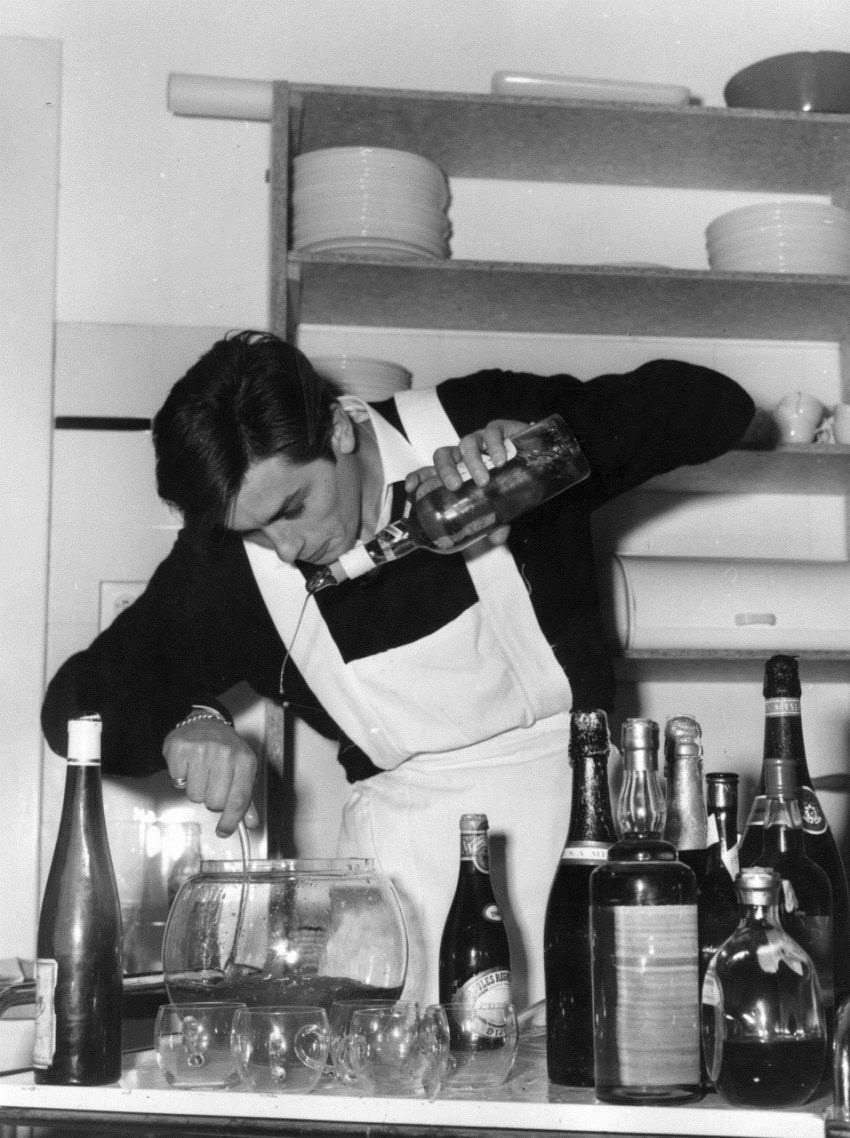
Featured Image: Alain Delon / Getty Images

Categories
Culture

Interview: Guernsey’s new musical Radio Silence

By Edward Clark

Wayzgoose’s Head of Reviews, Edward Clark, sits down with Laura Simpson and Lydia Jane Pugh – the writers of brand new musical Radio Silence.

This summer saw the world premiere of Radio Silence, a brand new musical about the Nazi occupation of the Channel Islands during the Second World War. Performed locally at the Princess Royal Centre for the Performing Arts in Guernsey, the show received glowing reviews from audiences and critics alike. Grappling with oppression, freedom, and resilience, the musical asks the same questions of its characters as it does its audience: “what would you risk to resist?”. After their first leg of performances, I sat down with writers Laura Simpson and Lydia Jane Pugh to discuss the musical, island identity, and its uncertain future against the backdrop of shrinking arts funding.

The narrative of Radio Silence follows the fictional Tabel family’s involvement with the Guernsey Underground News Service (GUNS), a secret movement during the island’s Second World War occupation which disseminated British news to islanders, banned from using radios by Nazi invaders. The detailed set of the Tabel family home offers a warm domestic sphere to juxtapose the unforgiving Nazi regime, as rules and taxes are imposed onto islanders. In response to this cold authority, the family begins to rebel. 

The book and music are written by local writer Laura Simpson and musician Lydia Jane Pugh. Blending modern lyricism and raw emotion with period-accurate detail, the musical shines as an exciting exploration of Guernsey’s unique history. In the musical’s first moments, the string section’s discordant tuning transforms into the sound of an air raid siren. The oppressive atmosphere of the bombing of the Guernsey harbour in 1940 smoothly shifts into the opening number ‘Days of June’, setting a precedent for the rest of the play. Lydia spoke about her aim to embed the events and style of the period within the music itself: ‘the song ‘Spin That Dial’ is very much based on the Andrews Sisters, because we wanted that 1940s sound’. All six actors offer outstanding performances, imbuing Laura’s fictional characters with believable and gritty emotion – a believability necessary to match the detailed, period-accurate set. Many set elements were sourced from the Guernsey Rifle and Heritage Society, with genuine WWII identity cards, ration books, kitchen equipment and other elements utilised onstage. Props and costumes were recreated from original occupation artefacts. The generosity of locals speaks to the importance of art like Radio Silence. As Laura tells me, ‘we’re now at a stage where it’s coming out of living memory for the vast majority, and although it’s something that is an extremely traumatic period of our history, I think that because there’s that bit more space now, we can tell a more balanced, more human story’. 

Fundamentally, the musical brings a story to life in a way that actually honours our local community. As Laura tells me, ‘we’ve seen other media interpretations of what Guernsey was like during the war, and they’re all often very inaccurate. And it was just that kind of feeling: why are other people telling our stories when we’ve got fantastic creatives. Our island produces a phenomenal range of really hardworking creatives. Why are we not telling these stories?’. Accordingly, there is a notable effort amongst the team to celebrate the island’s history. ‘I did manage to get a little bit of Sarnia Cherie [our unofficial “national” anthem] into one of the songs, which was so subtle that the violinist didn’t even notice’. An effort to celebrate island identity is reflected in the team’s detailed research, especially concerning accurate names and locations. Laura tells me: ‘that’s the thing that often, other representations have just got so wrong. I took it to the extreme because I’m a nerd, but you know, if I wanted to write a story set in Gibraltar, how would I find out what the local names were? I’d spend half an hour researching it.’

These references are not intended to ostracise non-islanders, but to celebrate Guernsey’s own community. When asking Lydia about the importance of a narrative faithful to our identity and history, she told me: ‘with a lot of those kind of subtleties throughout, in the lyric and the script as well, we wanted this to be accessible to any audience. But there will be audience members who are really listening, that will clock all those easter eggs. And that level of detail that we kind of layered on over time was really important to making it feel authentic’. That authenticity clearly resonated with the audience when I watched the sold-out second night: as a recording of Sarnia Cherie was played towards the end of the musical, older members began singing along amongst the crowd. The team were amazed by local support: ‘The response has just been obviously overwhelming’. ‘I mean I guess the thing that we are continually being asked is ‘when can we see it again?’. Evidently new art such as Radio Silence plays a key role in uniting local communities.

Looking forwards, Pugh and Simpson are hopeful about the future of the show. Laura comments that ‘I don’t feel like we’re done telling this story. Locally, we know that this is an audience for anything ‘occupation’. But when people who aren’t even necessarily die hard theatre fans are telling you it was extraordinary, you’ve got to take this further’. The team believe that Radio Silence’s characters and story are universal. ‘I mean, I keep going back to the quote from the line in the first song. “We should have seen it coming / We should have seen the signs / but our heads were planted deeply in the ever shifting sands.” I don’t think that line will ever not be relevant’. However, the team are unable to share the story of the Tabel family with new audiences without support. ‘In terms of taking this further, and as with all arts projects, it ultimately comes down to investment, and whether there are individuals, companies, organisations that want to get behind this project and help to take that piece of our history to a wider audience. Because ultimately, theatre is not a cheap sport. But we are both very passionate about it, and we do an awful lot just because we love it. You know, we cannot be asking people to work for free because that is not appropriate. It’s show business, and the emphasis on business is getting more and more significant’. To continue to share stories which connect with audiences on an emotional level, the team needs financial support – an ever-prevalent barrier to entry for emerging artists.

You can find updates about the future of Radio Silence on Instagram: @radiosilencethemusical

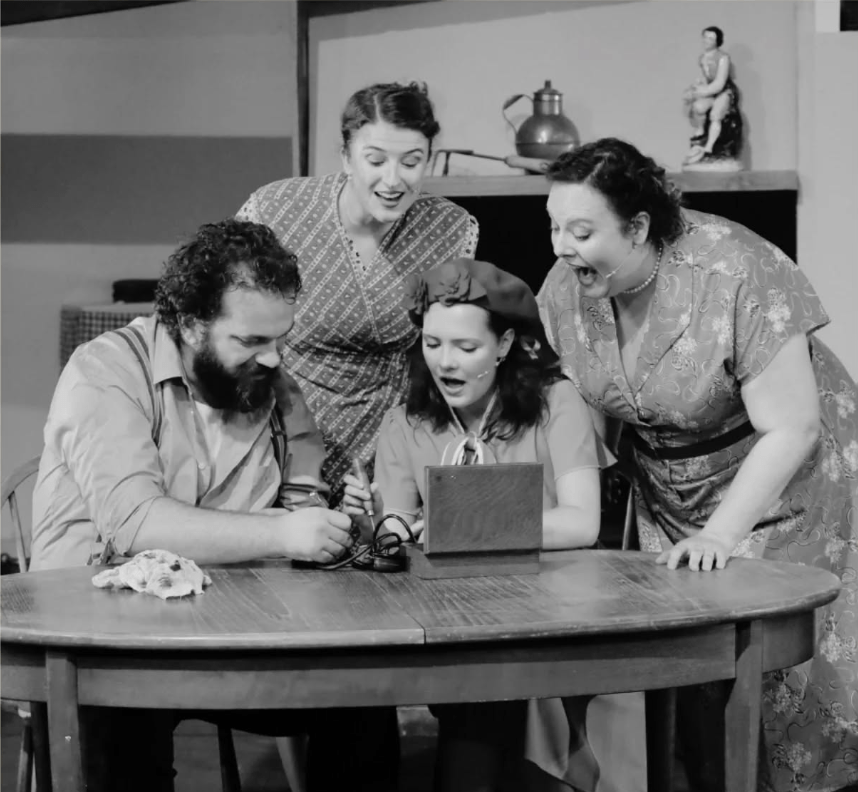
Featured Image: Radio Silence. Pictured (left to right), Michael Sullivan-Pugh, Lottie Ewin, Eve Le Sauvage, and Laura Simpson.

Categories
Perspective

A Glutton and a Sloth

By Bel Radford

My new bedroom overlooks Durham bus garage and the lucky passengers on the top deck I’ve managed to flash a handful of times. I’ve taken to sitting on my window ledge each morning equipped with cigarettes and coffee, soundtracked by Spotify’s finest Gregorian chant mix, and conducting some furious online shopping. The rituals are already piling up: a cyanotype bra, a top my housemates mistook for an upcycled binbag and anti-bloating pills that I suspect (and maybe hope) are some kind of black market Ozempic. 

This has become the best part of my day. It’s a very soothing practice, bringing various receptacles up to my mouth, sipping or inhaling their contents that soothe and corrode in equal measure. Freud would have called it symptomatic: a psychosexually stunted adult pacifying herself like an infant. And the chanting complicates things too. I don’t especially enjoy it, but perhaps that’s the point. Exposure therapy via my shitty wired headphones – sip, puff, submit to whatever sonic affront the algorithm conjures.

The more I think about my morning rituals, they resemble a kind of budget hedonism – a far cry from the Gatsbyesque sort that populates novels, but a cheaper pursuit of sensation that still feels vaguely philosophical. Epicurus is more flattering than Bacchus anyway. He distinguished between kinetic pleasures – minor ecstasies of caffeine, nicotine, tracking parcels across the country – and static pleasures – the quiet equilibrium that follows. This pursuit of modest satisfactions works to stave off acute pains, or the pain of seeing everyone you’ve ever gone home with in Tesco, or the indignity of subpar university grades. Epicurus deems such static pleasures the ‘highest good attainable’, thus dosing oneself in indulgence perhaps aids the aimless plane of existence that one finds themself navigating as a student. 

I try to believe I’m a good little Epicurean, yet instinct tells me I’m a twitching meatbag human stupefied by sensation; gawking, shopping, sipping and grasping at that which makes me feel alive. And here is where the self-awareness hits – am I just trying to excuse my own laziness because the world frightens me? When my mum asks why I’ve only bought antipasti in my weekly shop, will Philosophy shield me? Doubt it. Epicurus reads less like a moral compass and more like a cover letter for being a glutton, exhibitionist and a sloth. Student life seems to be the ideal laboratory for such negotiations between obligation and desire. Pleasure-seeking as a means of self-preservation is interesting to me, and shooting up dopamine to punctuate the banal rhythm of campus life is like shock therapy: drinking too much, spending too much, sleeping too much. Health is boring, people are boring, virtue is boring – there’s simply too much else to be thought about.

Deleuze might argue this laziness is honest; an openness to ‘affective intensities’- pleasure as a defibrillator rupturing inertia’s hold. I think of myself perched on the window ledge, limbs jittering, and I wonder if pleasure is as much about agitation as it is about tranquility. Perhaps to hyper-charge oneself is to insist on presence and refuse flatness while our limbic systems are still half-baked and irresponsibility is still charming. This might explain my fondness for my errors. The hob left on overnight after heating chicken soup; repeatedly getting the wrong train home from work and ending up stranded at the seaside; discovering two nights before a holiday that my passport is marooned in Durham. Horrible, dangerous and inconvenient, yes, but there’s a certain pleasure to be taken in the intensity of mistakes. The sheer unpredictability of my own half-formed adulthood feels like proof that I’m still in motion and irresponsibility has not yet calcified into flaw. 

I’m not sure these scattered thoughts (or excuses) arrive at any conclusion. The practice of mashing flesh onto theory and hoping it sticks seems vapid and closer to decoration than revelation. We contort ourselves into narratives, retrofitting philosophy to excuse appetites, and tell ourselves Epicurus or Deleuze would understand our overdrafts and intensities when they perhaps wouldn’t. But if Epicurus really did think modest (often superficial) pleasures could stave off pain, and Deleuze really did believe in the pursuit of fully charged embodiment to be at one, then I’d like to think these small indulgences aren’t failures as much as methods – undignified but workable. Chainsmoking and listening to Gregorian chanting is hardly a grand pursuit of ataraxia, and missing every important train doesn’t really gesture towards ‘becoming’, but the theory bends and clumsily adapts alongside us. My parcels, my Year-Of-Rest-And-Relaxation-adjacent amount of sleep, multiplied by the pills I take and caffeine in my blood don’t make me enlightened, but they keep me moving. If that makes me a glutton and a sloth, so be it. Philosophy can posture all it wants –  the bus passengers don’t seem to mind. 

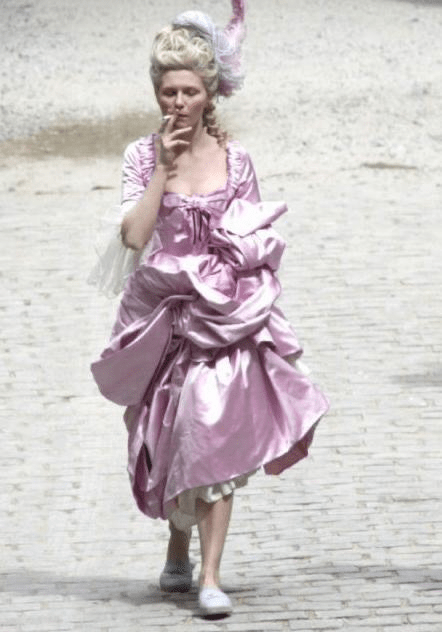
Featured Image: Kirsten Dunst on the set of Marie Antoinette (2006) / Unknown paparazzi

Categories
Creative Writing

The Second Dante

By Matthew Dodd

Outside the Caffe Giulia, two old men barked at one another across a table gossamered by empty coffee cups. A russet awning cast a shadow, so long as to shade the pair completely, but short enough that it left Paolo, a sedentary streetcat, half-exposed to the shrinking sun of the early evening. Disjunct jazz floated across from the Via Dante Alighieri. Underscoring every few bars was the airy hum of laughter. Paolo stretched his two paws out, in one movement, and extended his body to its fullest length before compacting himself into a curled ball under the nascent twilight. One of the men reached down and scratched Paolo’s right ear, much to the cat’s evident displeasure.

Inside the caffe, the expatriate flaneur sat cross-legged against the back of his chair, squabbling over his cappuccino with the young gentleman at the counter, Dante – no relation. ‘You can’t be serious’, the expatriate squawked, ‘Donatello’s David over Michaelangelo’s?’ Dante threw his hands up defensively; ‘for me? No contest.’ The expatriate let out a scoff heavy enough to leave his saucer rattling for a matter of seconds until being silenced by his picking up the cup. Similar scenes had played out in the caffe most afternoons since the expatriate – William, a man with one-and-a-half working eyes, recently turned thirty despite his best efforts – had washed ashore in Genoa and taken temporary lodgings in the smallest town he could stumble to. After a one-sided battle with the Italian motorway network, he had slumped into a corner chair in the Caffe Giulia and, excluding irregular trips to the nearby pensione in which he had taken board, stayed largely put. On discovering the elevated tastes of this young barista, William had elected to devote much of his time to conversing with Dante on matters artistic, as though his company were a kind of spiritual patronage. In reality, Dante had been more of a patron to William, as the latter’s bar tab had, in the month since his arrival, been never more than half settled.

‘Have you been to the Uffizi, Dante?’, William asked, with no intention of waiting for an answer. ‘I went with my folks when I was a boy; I must go back; I’ve been on a total Botticelli kick as of late; it’s a real beauty.’ He considered what he had said and drummed the fingers of his right hand against the knuckles of his left. ‘So few galleries are themselves worthy of exhibition.’ He beamed noiselessly, an intermission allowing Dante a response: ‘I haven’t, signor.’ William was aghast. ‘Oh, you must! Perhaps we’ll go together.’ – this idea evidently pleased the expatriate. Dante rubbed a moistened rag against the counter, his eyes fixed away from William. ‘I must work, if I want to study. I can’t go to Florence on a whim.’ A muffled, septuagenarian growl and the sound of a hand slamming against a table reverberated through the half-shut door. Ears drawn to the noise, William noted the accelerated tempo of the music across the street. ‘Is Beatrice singing tonight?’, he asked with a coy half-smile to Dante. The counter grew ever cleaner. Dante shrugged. ‘She sings on a Saturday,’ the pace of his scrubbing quickened, ‘it is Saturday today.’ A quiet hung between them, punctured at intervals by a faint hiss from Paolo and a pronounced chuckle from the two old men. ‘Why don’t you go over there? I’m sure of so little, but I know she’d love to see you.’ No response; the counter practically squeaked. 

William stood and, under the pretence of returning his cup, strode over to the counter. ‘Look,’ he began, ‘I don’t pertain to have any great romantic insight that didn’t come from a magazine or a horoscope’ – he waited for a laugh that did not come – ‘but I think I know something or other about that ineffable intercourse between man and woman which we, colloquially, call love. Enough to know that that girl out there’ – he pointed exaggeratedly towards the street opposite – ‘is feeling something like that for you.’ Placing the cup on the counter, he sat a hand on Dante’s shoulder. ‘And I know that when you hear her sing misty, you think it’s you she’s getting misty over, and it makes you feel good. Makes you feel like someone people ought to be singing about.’ He had his eyes set on the base of Dante’s ears, where his gaze would be met should the young man feel so inclined. ‘So, what I don’t understand is why you don’t shake off this ratty old place and run over there right now!’ He kept his hand on Dante’s shoulder. The night had set in fully, denoted by the groans of the men outside as they attempted standing up to leave. Ever the pugilist, Paolo insisted on scratching at both of their oversized gabardine trouser legs before they could leave.  

Dante shrugged the hand off of him. ‘I have to work.’ He picked up the abandoned cup and began methodically working out the heavy staining around its rim. ‘I don’t work, I don’t earn. I don’t earn, I’ll never study.’ The stains were agitating him. He bore away at them like a bull at a toreador. With sudden vigour, his head snapped around towards William, who had set off back to his seat. ‘And what about you? Swanning around as though you have no cares?’ William interjected, though he knew Dante wasn’t done: ‘Swanning! I don’t swan! Gamble, perhaps.’ Dante ignored the jibe and continued. ‘When will you leave here?’ Seeing on William’s face he’d entered territory resolutely marked ‘no trespassing’, he pressed further. ‘When will you go back to your wife?’ The jazz outside had slowed to a waltz. In the street, the two old men were walking together in time. William receded into his seat. ‘She’s not my wife.’ His right leg bounced at a violent pace against the table. ‘She won’t be my wife until I go back. Hence, I am here; she is there.’ This last geographical distinction was marked by an accentuated movement of the hands: here on one side of the table, there on the other. ‘Why should I leave? Go back and take over the role of upstanding husband? Have a cup of coffee, work hard and come back home to baying housewife? Where’s the time to gamble there, where’s the time to swan? Here, you’ve got freedom.’ This point was important to him, it was clear. ‘Freedom, Dante.’ Behind the counter, he shook his head and brought out a scourer. ‘I think there are different kinds of freedom, signor.’ 

A faint smile leaked into William’s face. ‘I think you are a wise man Dante, and I think one day the world will know it.’ Standing up, he made his way to the stand in the corner. He collected a military style trench coat from the stand and flung it over his person theatrically. Paolo had come up to the door now, evidently endeared by the sound of argument. William knelt down to stroke his chin. Paolo purred and scurried back into the night. The music had picked back up. William got up, stepped towards the door, paused, spun on his heel and sighed. ‘I’ll see you there, Dante.’ Once more, the young man did not return his gaze. ‘I must work, signor.’ William shrugged and set out towards the Via Dante Alighieri, leaving the second Dante alone in the caffe. 

Dante closed up the caffe after a few hours, by which time the music had stopped, and, thirty years later, died three doors down from a bacterial infection of the stomach – having never seen either David.

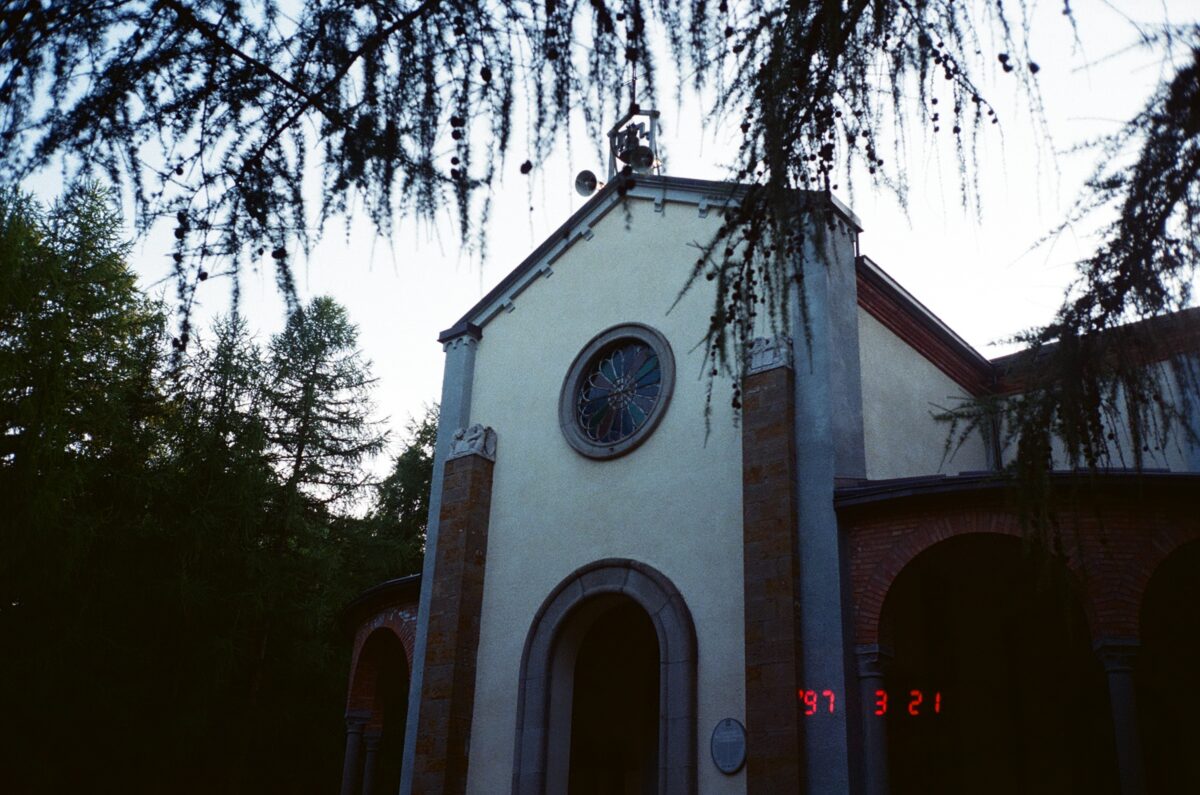
Featured Image: Matthew Dodd

Categories
Perspective

You, Disgust Me; Sarah Kane and the Need for Obscene

By Emilia Brookfield-Pertusini

‘It wasn’t for long, I wasn’t there long. But drinking bitter black coffee I catch that medicinal smell in a cloud of ancient tobacco and something touches me in that still place and a wound from two years ago opens like a cadaver and a long-buried shame roars its foul decaying grief.’ – 4:48 Psychosis

House lights on. Audience, now visible, is made of a wash of parents, siblings, and supportive peers. Five teenage girls blink up as the lights turn on. There is mascara running down their face. Their hair is knotted, tangled, and shines against the lanterns. Ribbons surround them. Small little ribbons litter the stage, peeping out in gaps where they dared to tread. Long red ribbons slink and slack around the girls’ arms, crawling up their wrists and following them like a veil. No one claps. No one smiles. The girls are out of breath, cautiously grinning at each other, unable to speak until the examiner dismisses them. Still, no one claps. They rise, bow, and begin to clear the stage. Still, no one claps. These spectators have just watched somebody kill themselves for 45 minutes. Can their clapping augment the pain? Can their proud smiles for their daughters exist against the ferocity of violence and the macabre they have been subjected to in their slightly too small classroom chairs? Was it a play even? It was the vast violent living of Sarah Kane. 

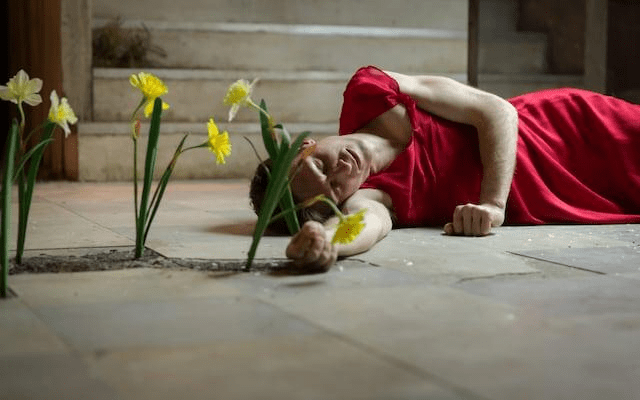
Sarah Kane lived in the shadow of a decade that pickled sheep for art, pumped music out of factories, and prescribed an incessant need to be ‘Cool’ to combat a Britain that lay bare, devoid of iron. Her short career spun across the 90s, beginning with the Balkan Wars and ending with a cri de coeur of disillusionment and defeat. Her stages gorge and delight in all consuming actual violence and self-violence. Blasted transforms a Leeds hotel room into the epicentre of brutality and manufactured human violence, where an eyeless journalist and a soldier violently mourn one another, attempting to carve survival out of an obliterated, wretched reality. Boards are trodden with obscene language, an unhinged sexuality, and bloodshed that appears unflinchingly before the audience’s eyes. Equally, flowers ‘burst upwards, their yellow covering the entire stage’ that was once filled with blood; daffodils blossom from Cleansed’s arena of furious passion. Love exists with violence; disgust resides in the belly of beauty. To experience the vast violent living is to experience, to bear witness, to learn to stomach and scream at all the frightening dualities Kane caught within her stage. 

Cleansed – credit the National Theatre

Roland Barthes’ A Lovers Discourse is the key that unlocks the maddening world of Sarah Kane. ‘Amorous seduction (a pure hypnotic moment) takes place before discourse and behind the proscenium of consciousness: the amorous “event” is of a hieratic order: it is my own local legend, my little sacred history that I declaim to myself, and this declamation of a fait accompli is the lover’s discourse.’. The discourse Kane flings on stage is personal, a ‘sacred history’ of both self and society that exists both within language and action. Love exists not behind rehearsed lines and revised scripts, but in a fraught mentality catapulted on stage that examines all the crevices of consciousness that define love’s existence. Barthes furthers Kane’s manifesto by celebrating the theatre for being a place in which extremes can live, where the consciousness of love and life can be understood in its capacity for juxtaposition. Beauty, horror, violence, adoration, sex, lies, truth – all exist layered on top of one another, crashing together, muddling and catastrophising our world view. In one instance the stage is a funeral pyre, in the next instance it is transformed into a wedding. 

The glaring surface of Kane’s work is cruel and provocative. It dares to be disliked. After leaving Blasted’s Press Night, critics called it a ‘feast of filth’ and ‘devoid of intellectual and artistic merit’ due to its obscene portrayals of human suffering and longing. Kane is still stained by this, even today. She is ‘tricky’ to put on, and people question whether an audience would even consent and pay to watch something so dark in a place of entertainment. However, this is not the full picture. The shock of the violence is a stinging reminder of the pain that comes with living; that living can be strained and fraught with peril, and yet there exists a capacity for a hopeful growth within the bleak depths of humanity. That flowers can grow again. That a scene of abject horror can change into one of comedy. That love will always exist, in its mysterious and desperate ways, amongst the fall out. Kane both wrote and experienced suffering, yet also loved, vibrantly and violently. She danced to Joy Division – an action that cements the duality of her works; songs of deep darkness from a band named after a grotesque Nazi operation, changed utterly by the action in ‘pure hypnotic moment[s]’, holding both woe and wonder within that instance. 

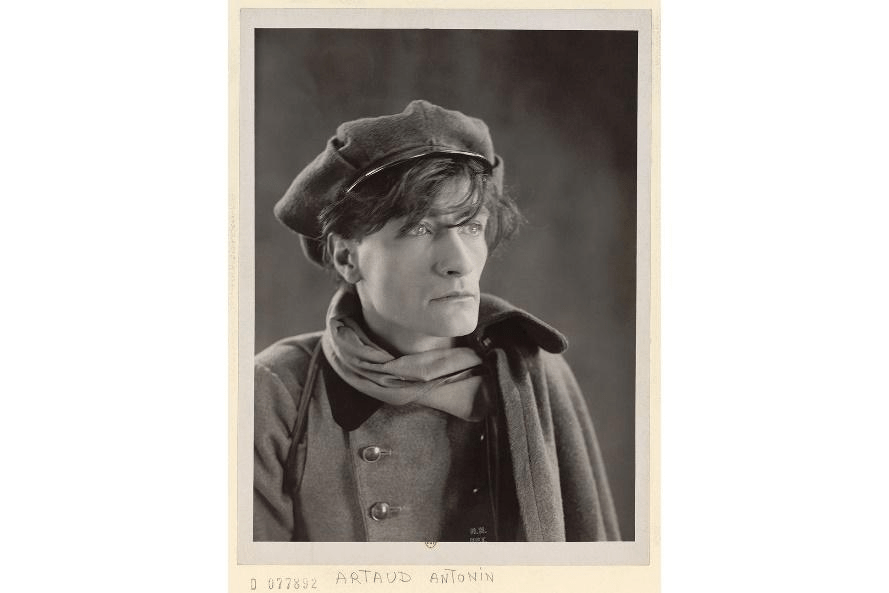
The battle of locating ‘artistic merit’ within violence was not instigated by Kane. The trenches ran deep in the popular consciousness of how art should be. ‘Father of Cruelty’ Antonin Artaud wanted theatre to induce ‘very violent reactions’, leaving the audience with ‘no misunderstanding’ that going to the theatre was not simply a pastime for melodramatic entertainment, but a spectacle to encapsulate human resilience and variety. His manifesto, The Theatre and Its Double, holds true to Kane’s desire for the full force of life to be displayed, to have Barthes’ instantaneousness of love play to effect; for every feeling, action or thought there is an equally fierce opposite, its double. For Artaud, as for Kane living in the grey waters of post-Thatcherism, ‘our sensibility has reached the point where we surely need theatre that wakes up heart and nerves’. Classical ideas of catharsis were reinstalled, where breaking point and release had to be met by both actor and audience alike: a communal epiphany and energy beating back against the ordinary.

100 years prior to Artaud, Percy Shelley’s The Cenci caused equally shocking waves amongst theatre goers. Banned and brutalised for the play’s demand for the audience to witness the relentless abuse of the real Beatrice Cenci of Rome, the murder of a patriarch, and the godless, lawless abandon of his house. The secular venom in which Shelley approached his radical theatrics caused the play to be censored, never performed in his lifetime. The rebellion within both Shelley’s original material and Artaud’s Cruel interpretation of The Cenci force a new perspective, capturing the full capacity of human extremities, asking audiences to not fear the abhorrent but to stare it in the face. Kane’s plays act as a late 20th century renewal of these demands. Her violence is not without reason, and her manifesto lies within a radical tradition of redefining theatre in the quest for accurate realism. 

Artaud – 1926

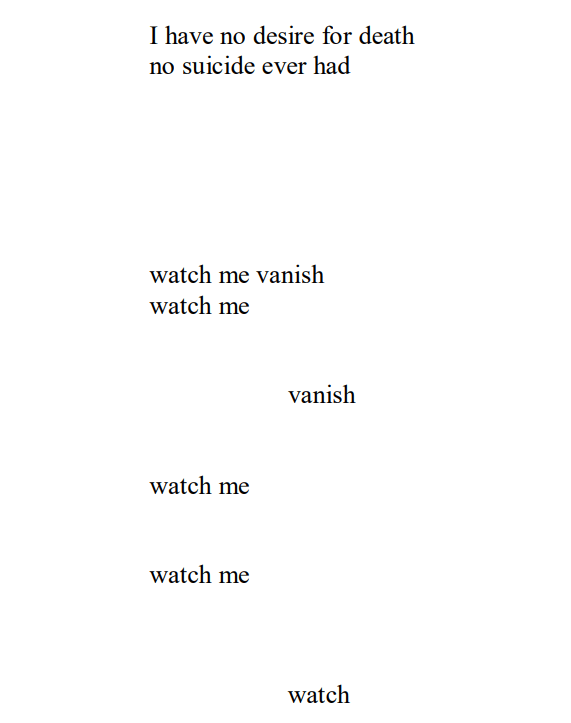
The cruelty Kane inflicts is not baseless. It is a mission to find the double, the duality, the full picture of life. Her final, posthumous play cements this mission. The interpretation of 4:48 Psychosis as a performed suicide note helps soften the blow, diverts the attention from the screaming pain and wrongdoing that lies within its core; it is a play about misunderstanding. Kane’s theatre continues to be misunderstood, and upon her own suicide in 1999 her work still brayed on her mind, her critics unable to decipher her poetry. Her own suicide has come to be misunderstood, as her staged suicide did. 4:48 comes from a writer, and centres its ambition in a place beyond tears, in a place away from sentimentality and sensibility. The poetics of mental decline hold the audience hostage. The tragedy is unrefined and unapologetic in its brutality. 4:48 pivots on the inability for true feelings to be communicated, with no designated speaker or roles, and is at once confessional and deeply private. Stifled conversations, the inability to decipher reality within the pain of mental anguish – nothing on Kane’s stage is sacred or secure. The realities of living with severe mental anguish are documented, as a speaker cries ‘my life is caught in a web of reason spun by a doctor to augment the sane’; suffering is misunderstood in order to be palatable to those without pain. In order to attempt to reason the unreasonable, it is only through achieving a true, cruel, Artaudian realism on stage that the misunderstanding of Kane’s reality can be understood. By unrelenting in the tragedy, Kane exposes a realism to the audience that is not a pretty or entertaining reality, but a harsh one. Yet one that is not pure violence and tragedy but showcases the abundance of life even under the strain of tragedy; 4:48 is the moment in which laughter, love, sorrow, loss, anger, and desperation co-exist in a gaudy explosion of life at the edge of death.  

The last page of script for Kane’s 4:48 Psychosis – 2000

Kane’s dramatic manifesto demands you to ‘watch me’, to endure and experience all volumes of life. By turning away from the violence we forget about its unfortunate reality, and we demand that art must engage in only certain forms and demerit the poetry of the darker shades of living. Kane did not intend for people to enjoy her plays, but to be moved by them. Whether 4:48 is met with the stunned silence of concerned parents, or the stage becomes a flower bed of praise, it doesn’t matter. The lamentable, the obscene, the catastrophic is the concern of Kane’s punching poetics, and her need for radicalism, for discomfort, for upset helps theatre achieve its full capacity of realism, even in its strangest stagings. The shockwaves from her performances will always ring out, cringing upon audience and critic alike, her formidable ideas still causing contention. But when the flowers rise from the boards, when blood spills across the audience, when moments of vulnerability are documented with force, Kane shows the realest truth of all in her theatre; that life, love, and passion have never been so violently fragile, obliterating and launching at once.

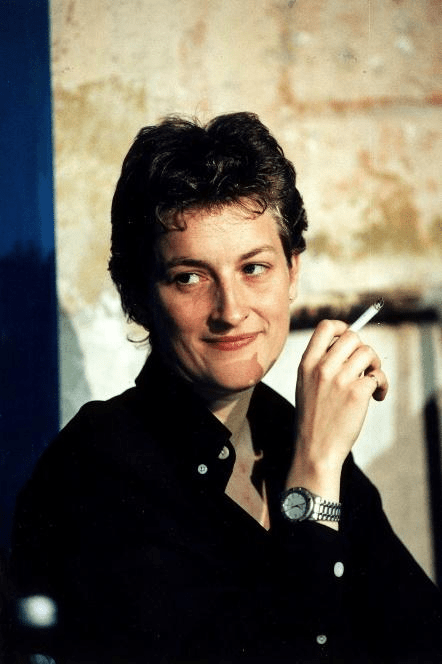
Featured Image: Marianne Thiel / Getty Images, 1998