By Liv Thomas
17/07/2025
Morning
I was in the Tate Modern when I saw my first Giacometti statue.
It was a grey day, blanketed by a sweltering heat, and I was alone in Paddington Station.
No one around me knew that I’d started the day buzzing with that small, yet bright, excitement that comes from seeing someone you haven’t seen in half a year.
They didn’t know that I was sitting on a bench in complete humiliation after receiving a response to my “here” text that read “I thought we were meeting tomorrow?”.
I didn’t want to catch the next train home; I’d paid for this journey, after all. So I walked through, in my head, all the things I would want to do in London if I ever found myself alone there. Art galleries are a great place to explore if you want to blend in among a crowd of people who are perfectly content to be within their own company. I decided on the Tate Modern – and that’s where my day turned from strange to true.
Midday
The spatial layout of most art galleries carries the intention of leading you from one piece to another until you finish your journey with a new sense of meaning. The Tate Modern, on the other hand, makes you feel very, very small.
Upon entering, the concrete walls and glass panels on either side of me stretched above to what I can only vaguely remember as a bright light. Facing the entrance, I turned left; if you were to see a map of the Turbine Hall, this would be in the direction of a tumorous-looking structure leeching onto an otherwise square building.
This tumour is where I saw my first Giacometti statue.
You enter this space and you’re presented with several openings, each leading to its own exhibition. You look down the corridor to one and see an alien standing at the end. Except it’s not an alien, it’s L’Homme au doigt.
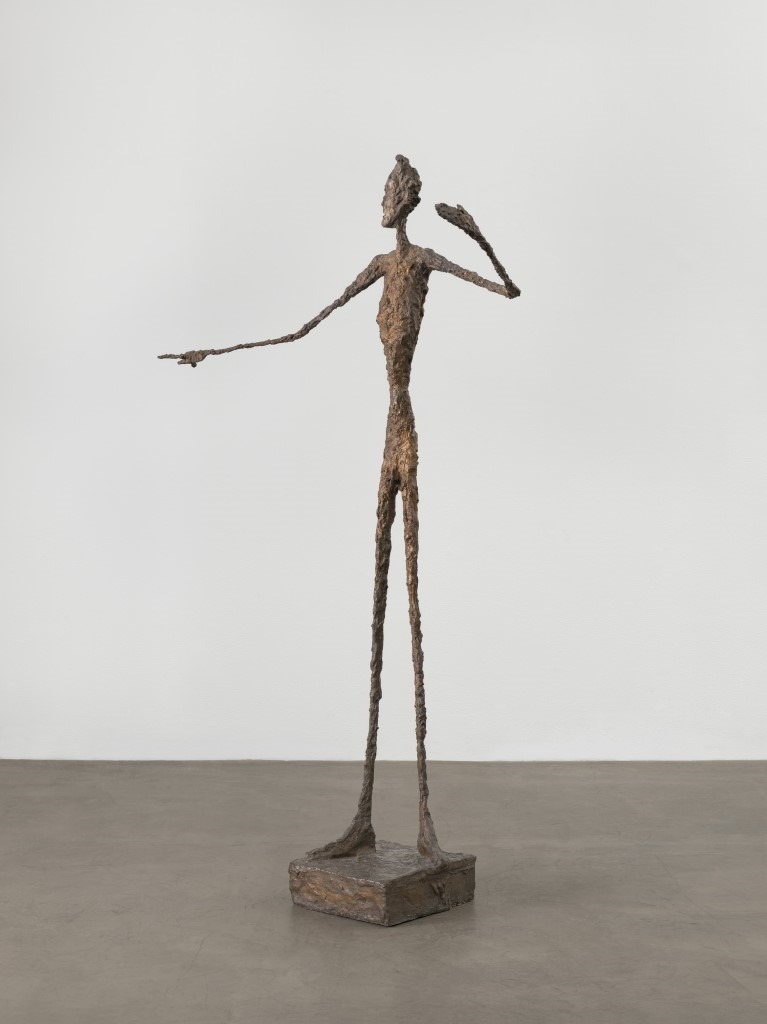
Existentialist philosopher Jean-Paul Sartre described the statue as “always halfway between nothing and being,” and that’s exactly how I felt when I found myself in this liminal space between the rest of the Tate Modern, and the works of Alberto Giacometti.
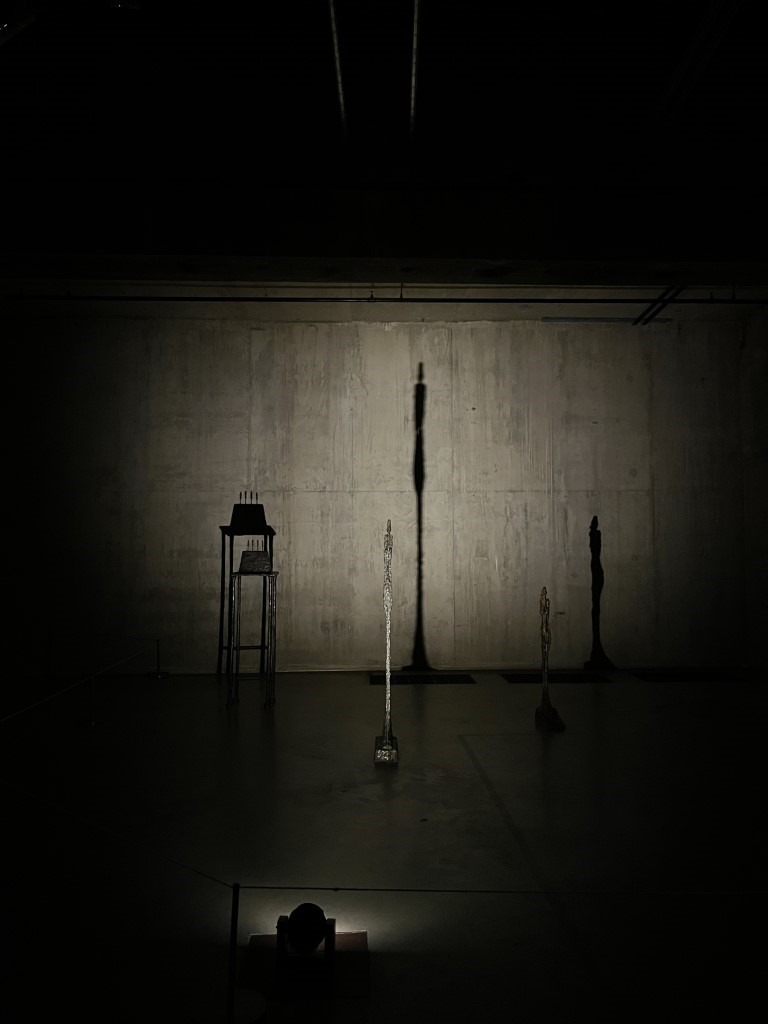
The exhibition was lit in a way that made the square-shaped corridor look like a tunnel, with the dark corners of each four-pointed frame bending over the sculptures, as a light pointed directly at them stretched their shadows against the wall.
My first association was with Plato’s Cave. On the one hand, this matter of perspective accentuates Giacometti’s study of the human form and its relationship to the environment. On the other hand, these silhouettes and the figures that cast them represent the dual significations between alienation and endurance, fragility and resistance, and our anxieties and hopes.
Notes on Giacometti
Giacometti is often regarded as a late modernist who reaffirmed figuration after World War II. Similar to T.S. Eliot’s The Waste Land — only translated here through plaster, clay, and bronze — Giacometti’s sculptures capture the fading afterimage of a society laid bare by war, fixating on humanity seen through a lens of thin, metal limbs, as if the world itself had been whittled down to its trembling bones.
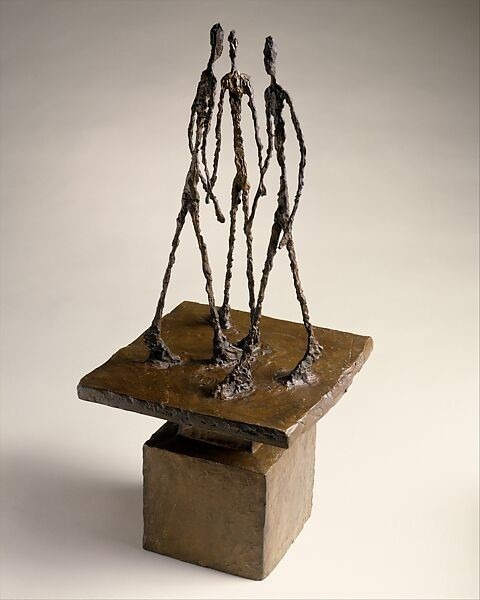
Despite their proximity, the figures wander aimlessly, with neither direction nor acknowledgement – their identities blur, yet they are completely disconnected.
Giacometti rejected the artistic notion of replicating reality; instead he sought to uncover the truth of life by reducing it to its barest principles. His art serves as an alternative to the superficiality of hyper-realism in sculpting.
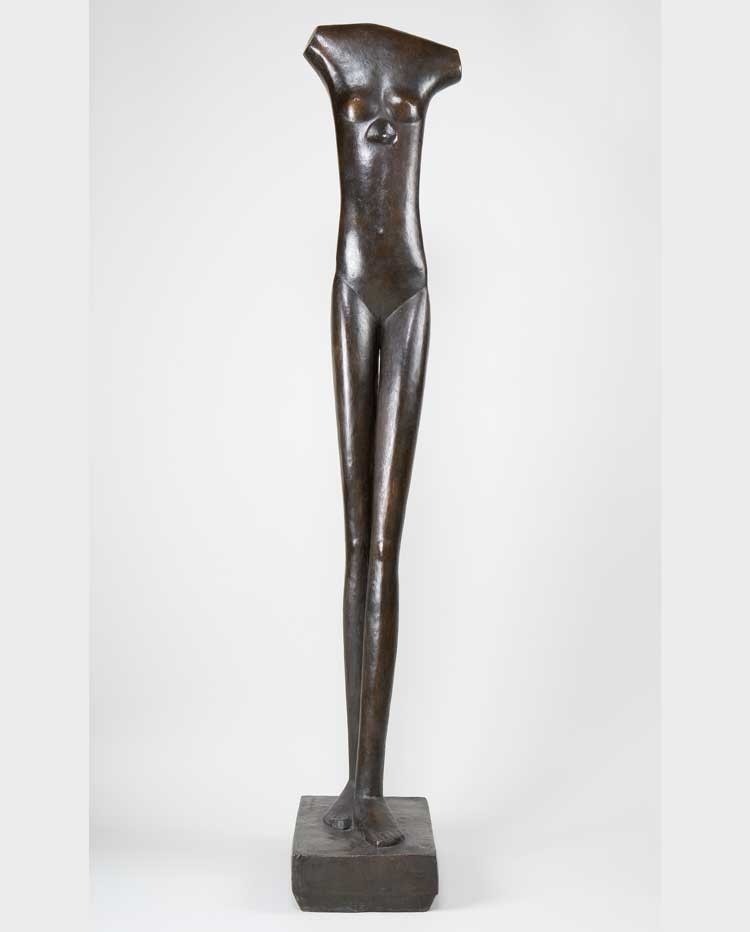
This specific figure is inspired by Egyptian artistic traditions. While the name of the piece suggests otherwise, the sculpture conveys no sense of movement and rather reflects a wider awareness of varying 20th century stylisations.
Final thoughts
My thoughts at the Tate Modern gather to the present day.
Plato’s Cave tells the story of prisoners trapped in a cave, and the shadows cast by a fire are mistaken for reality. Mimesis is an illusion that distracts us from the fragmented nature of human existence, and authenticity is needed now more than ever in a digital age that conglomerates everything fed into it.
When you cast a shadow against Giacometti’s works, you don’t see reality – you see a half-starved person, a physical manifestation of psychological confinement, a charred body… or maybe you would even see yourself.
Seeing this for myself in London, surrounded by strangers, and with a lost purpose for the day – left with the lingering feeling of reading whatever was in the news that morning – I couldn’t help but let Giacometti’s shadows speak to me. A lone person faces another human in the form of a sculpture; both carry multitudes.
Featured Image: Liv Thomas