Categories
Travel

What To Pack

By Tashy Back

As I sat in a hopeless heap on my floor, surrounded by collapsing piles of clothes, I found myself stuck, once again, on that question which always seems far more important than it should be: what to pack?  I know travelling is supposed to be about exciting new experiences and I fear that my love of roaming around strange countries may appear fraudulent, but clothing has always had a way of dictating how I move through somewhere new. More importantly though, how I feel I am perceived by the people there, with the constant risk of exposing myself immediately as a stereotypically obnoxious tourist as an ever daunting prospect.

Hong Kong, even before arriving, felt like somewhere that might read you quite quickly. The problem was that my wardrobe, unhelpfully, operates in extremes, either geared towards a nippy London winter or summers spent lounging at the beach, with very little in between. It became increasingly clear, as I tried and failed to assemble any sort of convincing outfit, that neither category would quite work. This was confirmed, with some amusement, by friends who had grown up there, who informed me that my usual Durham-coded style of baggy jeans and a half-decent top would not, in fact, cut the mustard. Indeed, nights out came with a far more specific expectation of short skirts and knee-high boots, a dress code which I hadn’t quite accounted for. 

On our train ride from the airport into the city, Hong Kong presented itself to me in all its majesty, angular glass towers packed tightly together, then just behind, steep verdant green hills pushing forward, as if the city and the jungle had never quite agreed where one ends and the other begins. Moving through the island only deepened my impression of Hong Kong as a place of contrasts, as the city shifted abruptly from the compressed intensity of crowded streets where double-decker trams trundle slowly past, and people move quickly but without urgency, caught in the steady hum of city life. Then there are the isolated and deeply rural beaches on the south side of the island, where, as you gaze at the never-ending silver line of the horizon, the city seems to fall away entirely. From neon-lit crowds and late nights that drag on in heat and fervour with voices spilling out from bars onto the street, to sudden pockets of stillness that catch you off guard, a dog nosing along the tide line, a lone figure propped up against the wall smoking, the glow of his lighter briefly lifting his face from the dark, before it all slips back again.

The air in the city felt even heavier than I expected, humid, carrying with it a mix of exhaust fumes, sea salt, a faintly earthy smell, and, drifting in and out, the sharp, sweet trace of incense. At times, the city felt unexpectedly close to England, the sky turning grey, the air thick and unmoving, with a heaviness that hung low over everything. We spent that weekend after our arrival watching the rugby Sevens in a jam-packed stadium, surrounded by noise, not-so-cheap drinks, and a rowdy crowd that buzzed on the edge of disorder. Just a few hours later, I found myself walking down a side street, shutters half down, stray light pooling onto the pavement, the city suddenly smaller and more contained. Then, one night later that week, looking out over the city from the Peak, it shifted for me yet again, lights blurring into streaks of white, amber, and neon blue as the city spread out beneath me, more expansive than it had ever felt from the ground, running on without any clear edge. Within these constant shifts, I began to understand that Hong Kong is a layered island, one that operates with its own unique rhythm. 

It was through my boyfriend, who calls Hong Kong home, that these layers began to take on meaning, because to walk through a place with someone who knows it intimately is to inherit a version of it that is not quite your own. We traced fragments of his childhood: half-forgotten amusement parks, familiar street corners, stories of clambering over corrugated iron fences for afternoon tea taken on silver trays by the derelict swimming pool, these places that meant everything to him and nothing to me, until suddenly they didn’t. I saw the city not just in the present, but as it had been, its past carried in his memory, which was a strangely intimate way of experiencing a new place, and one that made me constantly aware of my position somewhere between observer and participant. There is something slightly surreal about temporarily inhabiting someone else’s home like that.

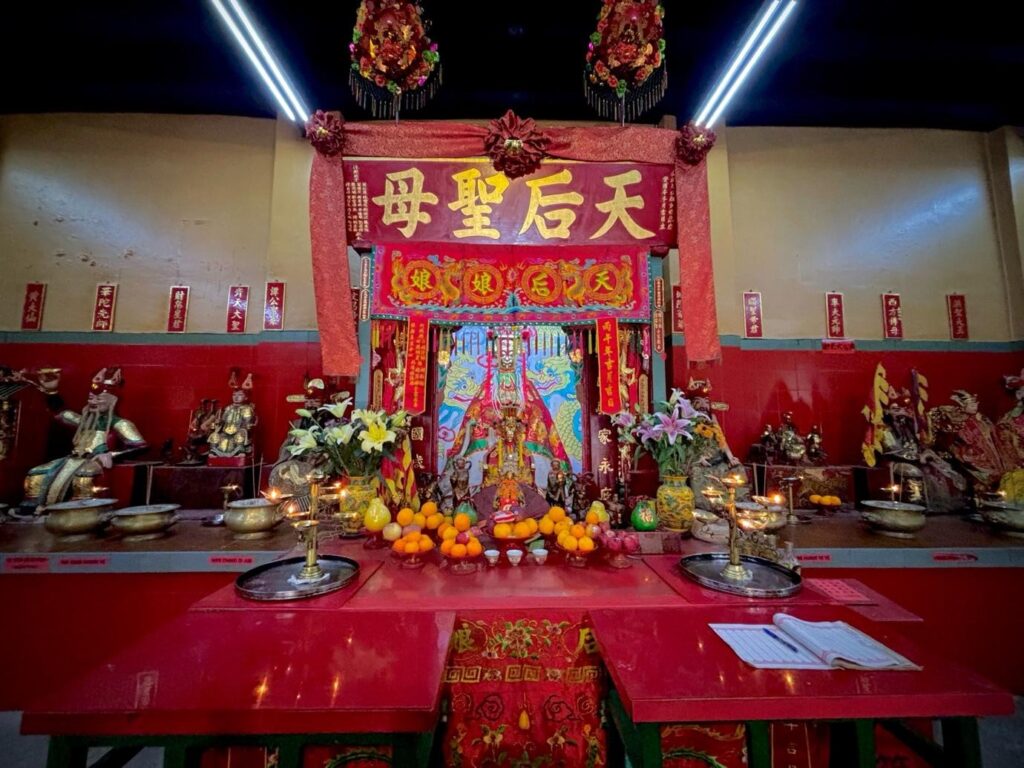
While wandering the island, we stopped at a small temple near the beach, easy to miss from the road. Inside, it was all red and gold, incense burning slowly in large bronze bowls, ash gathering in soft grey layers, and offerings of bowls of fruit arranged carefully in front of brightly painted figures. As we explored, my boyfriend told me how, as a child, he and his brothers had filmed a homemade ninja film in the square just in front of the temple. It was hard not to picture it as he spoke, a scrappy, ginger-haired boy darting between the benches and trees, sticks clutched like weapons, the whole thing playing out against the same still backdrop. For a moment it felt as though we were transported back a decade with the present still holding the faint outline of what had been.

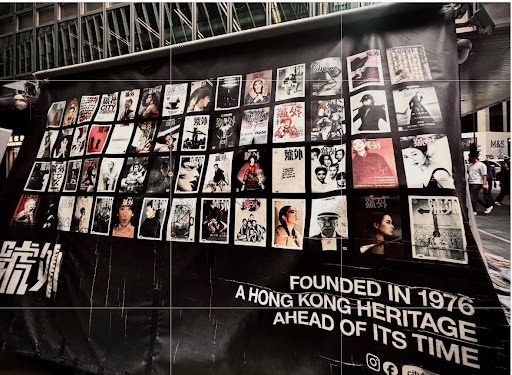
At the Hong Kong Museum of Art, I came across the work of Wu Guanzhong, who saw Hong Kong as a place where he could “see both the East and the West at the same time,” an idea reflected in his paintings, where Western scenes are rendered through traditional Chinese techniques and familiar forms shift between the two, creating a hybrid art form that links cultures. This convergence between the east and the west still lingers in Hong Kong, even after the handover to China; on one side of the street is a quintessentially British M&S, coolly lit and orderly, and opposite it, a Cantonese dim sum restaurant with plastic stools, worn menus, and steam rising from bamboo baskets. What struck me most, however, was how my friends who had grown up flitting between Hong Kong and England seemed to effortlessly embody this duality as they adjusted how they spoke and presented themselves with an instinctive ease that revealed a lived internationalism.

By the end of my time there, I had stopped thinking about the contents of my suitcase. What stayed with me instead was seeing Hong Kong through the eyes of someone who had always known it, which was, for me, the most revealing and perhaps the most meaningful way to experience it.

Images courtesy of Tashy Back

Categories
Poetry

Bomber, Brother

By Robin Reinders

The morning has not yet decided to be morning –
A pale seam of light lying low along the hedgerow
Beyond the hangars –
Everything else ready-room charcoal and damp tin.
The trainers crouch along the tarmac, wings folded
Like birds waiting out a storm.

We sit on the narrow step of one of them –
Shoulder to shoulder because there is no other way to sit –
Soles knocking the aluminium skin.
The metal is cold enough
To steal heat through wool.
You swear softly from behind your teeth –
Shove your hands beneath your thighs.
‘Christ–
Colder than the Channel.’
Your breath ghosts between us,
Seeps into the nothing void of the sunless dark.

I strike a match.
The flare of it briefly paints your face gilt-gold –
Young still, soft along the jaw,
Eyes gentle
And half-lidded with sleep.
The cigarette takes to the flame –
Tobacco curls wonderfully into the air, bitter and sweet the way sweat is.
You pitch gracelessly forward to steal the first draw
Before I can lift it to my mouth,
Shoulder bumps mine –
‘Greedy bastard’, I mutter.
‘Pilot’s privilege’, you answer.
Cocksure. Irritating.
Your grin flickers quick and mean like the spark of the match –
Bright and licking up cruel and then gone.
Smoke leaks skywards from your mouth.
For a moment it hangs between us
Like breath on cold glass.

Inside the cockpit the instruments sit dark and patient,
Anticipating handling.
The seats absurdly close together –
A joke among all us flyboys –
Knees almost touching
Even before the parachutes and the harness
And everything else we carry into the kite with us.

You climb in first –
I tell you to –
The leather of your jacket creaks
Like saddle tack.
When I follow
There is the usual awkward instance –
Boots tangling with pedals,
Shoulders negotiating space
That will never be won between two grown boys
And their clumsy limbs.
We afford one another the same dignity
As bedfellows.

‘Give us the cigarette.’
You hold out your hand behind you
Without turning to face me.
I place it gingerly between your fingers.
Your glove brushes my wrist in hasty hungry hunt for the filter –
I feel as if some surface part of me has been permanently smeared by it.

The cockpit smells thickly of oil
And stale canvas.
Smoke threads through the cramped air
In thin blue ribbons.
You lean back in your seat impish and lazy,
So the cigarette hangs near my mouth.
I bend forward to take it –
A cat lapping milk from the dish and
Our helmets knock.
You laugh like you’re out of breath.
‘Careful –
We ain’t even wheels up yet.’

The ember pulses blood orange when I draw.
For a second the light of it
Paints the underside of your jaw all ruddy and raw.
Pink-skinned.
Your throat moves when you swallow.
Clicks.
(‘Why do all-a men got a Adam’s apple? Hell they do wi’ mine?’)
You notice I notice and know this is tolerable.

Outside, ground crew voices drift through the dark.
Boots clink-clanking on metal ladder-rungs.
Someone slams a hangar door with
The same rough-handed tenderness you’d handle a horse.
A lark begins somewhere beyond the field –
Thin, tinny, delirious music climbing the sky
Like a dizzy soprano.

You reach forward to fiddle with the compass housing.
Your sleeve drags across my forearm.
Friction of wool
And leather.
It is ridiculous.
It all is.

‘–?’ you ask.
Your voice is easy –
And careless –
Like how you fly and handle girls.
I shake my head though I never register what it is that you said.

You hand the cigarette back –
The flighty little pulse beneath your skin
Jumping through the opening in the glove seam –
The ghost of it stays in my palm.
The last of the ash lengthens, trembles.
You reach to tap it out the window
And your bony elbow nudges my ribs.
‘Sorry.’
‘Sure?’
You grin like you’re going to survive this one too –
Allow me to get you back for it.

The eastern sky lightens
From jet-black to Bobby’s blue velvet.
The trainers along the runway begin
To show their shapes –
Long wings, blunt noses,
Frost dulling the metal.

You stretch one leg forward,
Moony and slow,
Your ankle
Bullying my shin out the way.
I go without much fight.
‘We’ll be home for breakfast’, you speak
Through the palm
Dragging down your weary face.
‘Powdered eggs and cold coffee’, my lippy retort.

You draw once more on the dying smoke-butt –
Deep enough to burn it to the stub –
Then hold your leftovers out to me –
As if there’s anything left.
As if I should thank you kindly.
The heat from your last drag warms the thin paper.
I feel as though a detonator is beneath my thumb.

Outside, someone laughs, sharp and awake –
You snatch the butt back,
Flick it out into the wet grass,
Dewy from the damp English dawn.
It lands –
And dies with a small hiss.

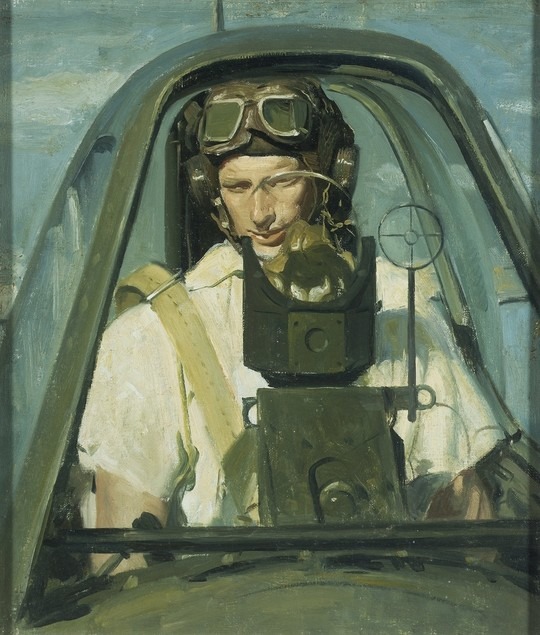
Featured Image: Australian War Memorial, William Dargie, 1945

Categories
Creative Writing

Dolphin in a Mug

By Toby Dossett

The mug was one I hadn’t seen in years, pale blue, its glaze a faint crackle I remembered from childhood. It sat on the kitchen counter as though it had always been there, waiting for me in the thin morning light. I reached for it out of habit, expecting warmth, but the porcelain was cold to the touch. Colder than the room, and colder than the rain ticking at the window.

When I lifted it, I almost dropped it. It was far too heavy. Not full-heavy, not the usual weight of tea or water, but a dense, gathering heaviness, as though the mug contained something larger than itself. I peered down into it. Inside, the liquid was dark at first, then glassy, then trembling: ripples widening into lingering silver ovals. Something moved beneath them. A small bottlenose rose slowly through the surface.

It did not belong in the mug, and yet there it was: slender, blue-grey, gleaming as though lit from somewhere under the water. It pushed its nose above the liquid and held there, watching me with one black, polished eye. Then it nudged upwards again, gently at first, then more insistently, as if it wanted the brush of my hand.

It kept rising, breaking the thin surface over and over with an impatient, pleading motion. Touch me, help me, and love me enough to lift me out. The wanting in it was unbearable.

I glanced toward the doorway, seized by the absurd thought that someone might see. Not the dolphin exactly, but me with it—me cradling this strange thing in both hands, pretending tenderness for a creature I didn’t entirely trust. Its little clicks quickened and the mug grew heavier still. In one sharp movement I carried it to the sink and tipped it out.

The creature slid free with the water, struck the metal basin, and changed instantly. No longer sleek or living, but hollow, bright, ridiculous—a plastic bath toy with a painted eye and a seam along its side. It spun in circles, tail flailing desperately, each turn slower than the last until the water spiralled away in a thin, dirty whirl. Its final clicks were softer now, mechanical. The toy tipped, caught the pull of the plughole, and vanished.

Featured Image – Toby Dossett

Categories
Reviews

Roots Theatre Company’s Othello: Review

By Mwambu Haimbe

“Haply, for I am black and have not those softer parts of conversation that chamberers have…”

Throughout my GCSEs (all the way in 2022, can you believe it) I extensively read over this passage of Othello’s monologue in Act 3 Scene 3, after Iago has sown the seeds of jealousy that would eventually lead to Othello’s decline and ultimately his demise. 

By no means the most quoted line of the play, this line is important to me because it speaks to something that is glossed over quite a bit in everyday readings of Othello: his own struggle with internalised racism. It is this understated struggle that made me grow fond of Othello even beyond my study, and it has been my life’s dream to see a performance of it that brings this and many other hidden themes of Othello’s subtext to the fore. 

Having that in mind, it is safe to say that the new juggernaut in Durham Student Theatre, Roots Theatre Company, has satisfied that life’s dream beyond my wildest comprehension. Directors Bea Pescott-Khan and Aaliyah Angir, assisted by Zara Khan, have done what many directors much more senior to them have seemingly failed to do, which is balance the obvious racial commentary of Othello with its stark commentaries about the various ways in which race and social class intermesh. 

This framing is particularly significant today, in a world where race and class have been exploited by bad-faith actors in politics and media to divide the world into tribal camps pitted to destroy one another. Pescott-Khan, Angir and Khan have taken an age old classic and, through precise staging, reserved yet conscious set design and intuitive blocking, transformed it into a masterpiece of social commentary that William Shakespeare himself would certainly watch enviously. 

A great example of this intuitive direction certainly has to be the clear directorial decision to have Ollie Painter’s Iago speak in two different accents to mark his devilish asides and his false persona of nicety he puts on to his superiors. Through Iago’s mischief, we see the absurdity of the noble classes and how easily their love of appearances brings about their undoing. 

This is most evident in Iago’s manipulation of Micheal Cassio. Iago understands that Cassio’s reputation matters to him most. By sullying his reputation, Cassio becomes a tool for Iago’s use, incapable of realising that the man he asks for help in restoring his standing with Othello is the same man actively seeking to destroy him. 

There are many other directorial choices like this that demonstrate a clear vision and understanding of Othello’s themes as well as an understanding of where Othello fits in our modern eye. However, none of the directors’ keen vision could have been possible without the exemplary work of a cast and crew deserving of mountainous amounts of praise, therefore I must give credit to the performances before I hark on too greatly about the directing. 

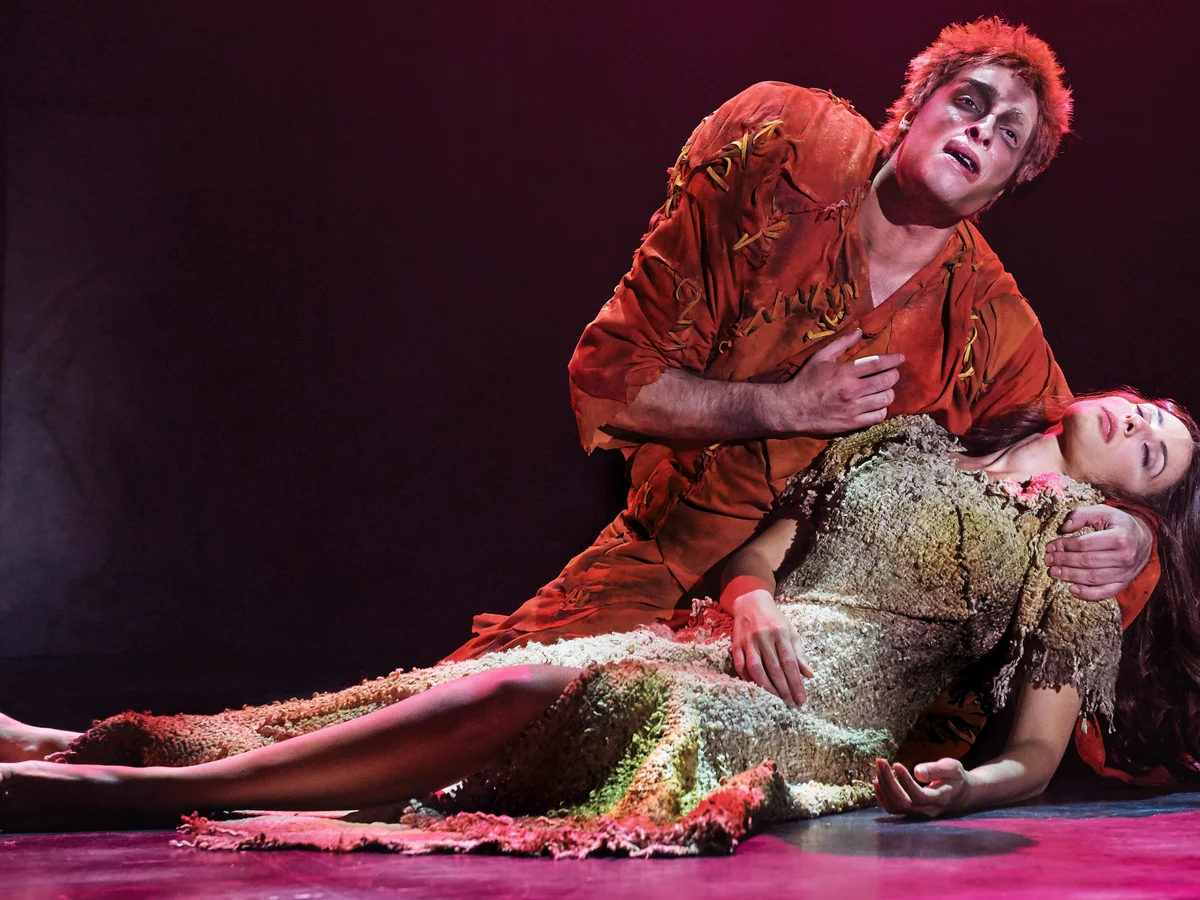
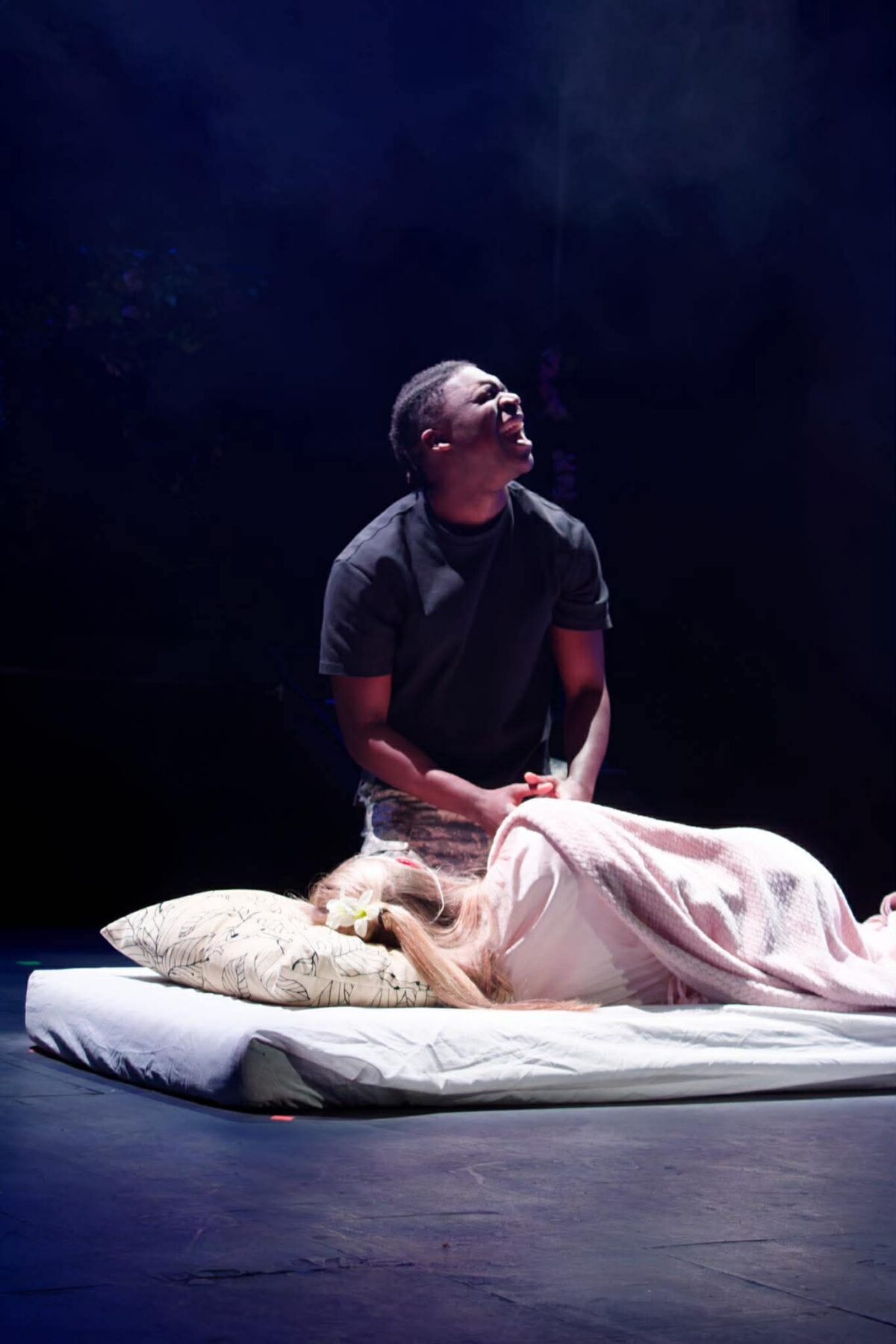
For me, the glue of this production is surely Dan Katsande as Othello. He is mighty and  magnanimous when he first comes on stage as the brave ‘Moor’ General greatly renowned in Venice, until he is sympathetic and vulnerable as the lowly cuckold, self-pitying as he bears his soul out due to what he believes is a mortal wound from his lover. Katsande becomes unhinged and manic, fully embracing the beastly cuckold and the horrid Moor that he believes he has become, before doing the unthinkable to the woman he had risked his office and reputation for just a few short acts before. 

It is a terrifyingly good performance – one where he commands his body to act before a line is spoken and, when the line is spoken, the audience are captivated all the more by his grand delivery, reminding them that Othello is a man of great power and poise. Katsande’s shrieks of pain and manic ramblings make us sympathise with Othello almost by force, we are shocked by his horrible treatment of Desdemona (played by Liv Fancourt), yet our hearts break watching this once great general become something more akin to an animal than a man – which Katsande delivers perfectly in the latter half of the play by lowering his shoulders and prowling around Desdemona when he speaks. Although at times he runs the risk of over-acting, particularly in scenes where he is howling in pain at Desdemona’s apparent betrayal, he grounds the performance, commanding the stage with his presence, physicality and booming voice.

A performance like Katsande’s is difficult to match, but Ollie Painter’s devilishly charismatic portrayal of Iago is certainly up to the task. Painter does something seemingly impossible in this show: he almost makes Iago likeable. Speaking directly to the audience in a crisp Cockney accent, Painter moves naturally in his dialogue, making them laugh through sheer charisma. He mocks and jeers at the posh, unexposed Roderigo, played by Sam Garratt, completely unaware that Iago is scamming him. The joke is every other posh, ignorant character onstage, the comic is the whip-smart, perceptive Iago and the audience to this stand-up is us. It is brilliant. 

There is a real venom and contempt in Painter’s line delivery. We really do believe that he detests Othello. It is an organic performance that comes from a place of clear understanding of the character. Iago’s struggle is one of class: Iago represents the disenfranchised working classes who feel betrayed, who feel as though despite their hard work they have either been pushed aside by unqualified aristocratic nobles (Michael Cassio) or racial minorities given access to empowerment schemes (Othello). Through his accent, Painter characterises this clearly to the audience. Iago is not like the others, therefore Iago is evil. 

The performances on display in this production facilitated the subtext that the directors intended for it. In what I refuse to accept was a debut performance, Amaya Uppal as Emilia delivered a masterclass on how to enhance the performance of others, and deliver one’s own performance just as spectacularly. Uppal was quietly disobedient to Iago, yet disobedient enough to irritate him, sowing seeds for her eventual end. She gives Fancourt’s Desdemona space to be overcome by woe and anguish, and she stands toe to toe with Katsande to create pulpable tension. Yet, where she is left to shine in her own moments, she is passionate, forceful, and fearless, delivering an exceptional debut worthy of praise. 

It speaks to the quality of a production’s cast if in a review it takes this long for the name “Cillian Knowles” to appear. Exceptional as always and effortlessly comedic, Knowles somehow turns Cassio into a Shakespearian character that feels like he was written by Wilde. In Knowles’s Cassio we see the absurdity of nobility come to the fore through his absurdly sweet prim and proper boy scout routine with Desdemona. So absurd and sweet is this boy scout façade that Iago can’t help but to use it to bring about the downfall of Othello and Desdemona’s lives. When he is not sickeningly charming, Knowles is delivering an extremely funny drunken, slurring Cassio that does not feel drawn out. Knowles is endearing, even when he is spewing misogyny directed at Bianca, and loveable and far too good at being Michael Cassio. 

Stepping away from the acting for just one second (I have plenty more to say), every detail of this production weaves together in a dance full of chemistry. Leyla Aysan and Molly Winchurst are no slouches in the lighting department, as they bathed the stage in fantastic midnight blue that holds a dark brooding atmosphere over this tragedy, only deviating from this colour scheme in the few moments of levity in the show or when using spotlights to showcase key moments in the show’s sequence. Aysan and Winchurst also teamed up nicely with movement director Robyn Bradbury, as all the moments of physicality, such as the hypnotic party sequence, were complimented deliciously by superb lighting. The fight scenes were also well choreographed – at times a little too well choreographed as you could see the fiction behind them – but so long as the performers remained safe, I was willing to suspend my disbelief. 

Special mention must be given to the sound of this production. Music cues between scene changes is standard in student theatre, but rarely does it ever match the story being told on stage and the theatre company itself. Emilia Edwards and Shaan Thomas made use of the songs they selected between scenes, as if you paid close enough attention to the lyrics, they reflected the action and the intensity as the story progressed. However, I do wish the ingenuity of sound could have been used to aid some of the performers, who at times struggled with their voice projection and lost some details to the ceiling of the Assembly Rooms. 

Back to the quality of performance in this show: I would be a hack reviewer if I did not mention the one and only Liv Fancourt. If I had a pound for every time Fancourt has stunned me to silence with her performances I can safely say I would be a very rich man indeed. In my personal opinion, I have always had a dislike of Desdemona as a character, primarily because Shakespeare uses her as a plot device – the innocent white girl corrupted and murdered by the uncontrollable black beast. In other iterations of Othello Desdemona is this faultless character used to highlight the faults of Othello, but not here. Fancourt gives Desdemona life. She is quirky and quick witted when she speaks with Iago after arriving in Cyprus, sarcastic with a doting Michael Cassio and even slightly resilient, when she refuses to let Iago see her in tears after Othello has just thrown her to the floor and called her a whore. There is strength in Fancourt’s Desdemona, a strength that is created by the love Othello has for her. When she feels Othello’s love wain, her own strength wains, which makes her death that more impactful. Fancourt makes Desdemona’s death matter more because she is not just a plot device. She is a person who Othello betrays by not trusting her loyalty yet she dies still loving him – an aspect of her performance furthered by the incredible chemistry between herself and Katsande. It is a performance that someone like Fancourt can make you think is easy to deliver yet so many before her have not been able to crack it. 

As I wind down this review, the more perceptive amongst you would have noticed I have not mentioned Sam Garratt (Roderigo), Becca Morran (Bianca and others), Ross Killian (Brabantio and others), Nia Keogh-Peters (First Senator and others), Nerfertari Williams (Gratiano and others) and Jasper Hinds (Lodovico and others) and I have reasons for that. These performers were absolutely incredible when given time. For example, Garratt embodied Roderigo with such perfection and accuracy I was overjoyed whenever he came on stage, and Killian’s Brabantio was vile in all the best ways, showing a real understanding of the character’s purpose to the story. All the members of the ensemble pieced this story together perfectly, however, I feel that they were all hard done by both the nature of this play and the director’s visions. The overwhelming feeling I had when watching Othello was that Roots had an obvious and large chip on their shoulders. For their first production as a newly established theatre company, tackling such a well-known and heavy play is a very risky bit of business, and that means your cast has no choice but to deliver. The cast did, in fact, deliver but it felt like the director’s had concentrated a vast amount of energy into the main cast, leaving the supporting and ensemble cast very little creative direction to work with. This hurt in particular Keogh-Peters and Williams who I believe are talents that any production would fight tooth and nail to have in their cast. If you do not believe me go and read the reviews of the DDF show Poetry Club. They are immense and I wanted, in fact this production needed, to have the two of them on stage a lot more with a lot more in terms of lines and time to work with. If I can level any criticism against this production it is that: not fully using all the amazing talent at their disposal and never fully removing their hand from the handbrake. 

Overall, Roots delivered a version of Othello that I wish I could see over and over again. The directing choices were for the most part informed, precise, and deeply aware of Othello’s greater narrative. The story Roots delivered blended elements of class and race issues in a way that was brave and long overdue, especially in a place like Durham. My only hope for Roots is that they lean into these themes more heavily and fully utilise all the talent at their disposal. However, all things withstanding, this juggernaut of a theatre company is destined for many great things to come and I cannot wait to see what else they deliver. Adieu!

Featured Image: Roots Theatre Company

Categories
Perspective

Heidegger and Earbuds

By Sara Tocci

It’s officially March, that slapdash combination of mid-day sunshine and five-degree chill, that blooming bluebell with its perennial reminder that nowhere stays dark forever. 

I’m walking home from class imagining the birds and the wildflowers singing backup to the Beach Boys song buzzing in my ears. Then the song ends, and Nick Drake starts playing, and it’s all different. 

Most people think of moods as filters we put over some objective reality lying just outside our perception. Heidegger disagrees. He argues the mood we’re in is borne out of our experiences, our worlds; it constitutes reality as it is and the future as it will be. Moods come from our bodies, our values, our sense perception: what we see, feel, and, yes, hear. 

I walk down the street listening to Nick Drake and feeling the isolation and tenderness and everything that beautiful man brings to mind. I’m passing student after student, occasional old man with well-behaved dog, and they’ve all got AirPods in. A million different worlds on one street. What are they listening to, I wonder? What’s being piped into their ears to complement this blue sky, or drive away any awareness of it at all?

Heidegger would’ve had a lot to say about technology’s proliferation in every facet of life. Two people in the same circumstances holding radically different views on subjects with which they have no firsthand experience, all because of algorithms generated in Silicon Valley to keep them scrolling for more, more, more. I look to my right and left and think about the worlds other people know so well. Our lives are more interconnected than ever before, and yet, I stand right next to them and couldn’t be further away.

Rates of leaving-the-house have been trending downward since the advent of television. I guess when you have a limitless world in the palm of your hand, it seems a little less tempting to go dance around a may pole or whatever people used to do. A downside of this is that people believe in the goodness of strangers less and less. Pummeled with bad news and misinformation, trusting only a handful of close friends, our social fabric is strained with solipsism. 

I like for my world to come from the world. I like to feel the kind of one-ness that puts everything into perspective, that distinguishes between things that really matter and the grievances of a twenty-year-old with too much time on her hands. When my world threatens to overwhelm, I think of three Heideggerian truths: 

  1. We are thrown into a world of social, historical, and political situations completely beyond our control. These situations determine the person we’ll become in a future we cannot predict;
  2. We can only understand ourselves and our world if we understand that the two go hand-in-hand; there is no one without the other;
  3. The beautiful things that make us feel alive, the terrible tragedies that bring us to our knees, and everything in between only move us because our world is meaningful to us.

I think of this when I’m walking to the library before the city wakes up. I like listening to news podcasts and getting the daily litany of global tragedies delivered to me with pleasant conversational detachment. It’s March, and the sun is starting to rise before I’ve left the house, and the morning birds are drowned out with news of Iran, Palestine, Ukraine. A panoply of suffering and malevolence. I don’t know what it’s doing to my mood but whatever it is I know I’m not the only one.

We don’t all have the luxury to wax philosophical about cultural malaise, or hear about bombings via the BBC. The lived realities in these war-torn countries seem to me surreal, like another world, adjacent to mine but not quite the same. And yet, it is. Raindrops in Durham eventually find their way to Tehran. Every time we vote, every time we choose to protest or keep quiet, we puncture the same social fabric that sends arms to reduce Gaza to rubble. 

I think of this world we were all thrown into. I think of its loving, suffocating embrace, how it merges irrevocably with all that we are, how our primordial pre-consciousness and permanent occupation with it is what imparts any meaning at all. I think of every sunny day and teary goodbye, every bus ride, every moment of total devastation, and the day when we wake to find, miraculously, that life goes on.

I tried ditching the AirPods last year, this whole “embracing the world for all that it is” thing, but it was pretty hard to bear months of darkness and freezing rain when I knew I could’ve had the dulcet tones of Joni Mitchell getting me through it all. But now it’s getting warmer, and isn’t it all a little easier? Today I walk in time to the train rushing off, the European wrens, the chatter of voices I’ll never know, with worlds just as wonderfully complicated as mine. Heidegger says we see ourselves for who we really are when we turn away from the noise of worldly concerns. I don’t think so. Maybe, if we all listened to the same sounds, attuned to the world beyond our algorithms, we might see ourselves in one another. 

Further reading/listening:

Heidegger, M. (1967) Being and Time. Translated by J. Macquarrie and E. Robinson. Blackwell. 

Putnam, R.D. (2000) Bowling alone: The Collapse and Revival of American Community. Simon 

and Schuster.The Beach Boys (1971) Surf’s Up.

Featured Image – Sara Tocci