By Cecilia Martinelli
Art is as much about what is said as what is unsaid. The beauty of Shakespeare’s lyricism lies in the exact words chosen, and the exact words left out. Once we question the importance of the unseen in creating art and genius, it appears that Agnes is the body to Shakespeare’s brains. She renders possible his canonical creations by possessing the burden of grief and parenthood so that he may escape reality and create reflections of the life that she continues to uphold.
People have long philosophised how geniuses come about – what invisible forces create these impossible characters? It is often women who uphold them; mothers, wives, sisters, daughters continue churning their buttered existence. Both Maggie O’Farrell and Chloé Zhao, in their retelling of the untold story of the West’s most proficient storyteller, present the tale the ‘canon’ has forgotten to tell. Theirs is not just a story of motherhood, but rather a tale about women, who have always carried men.
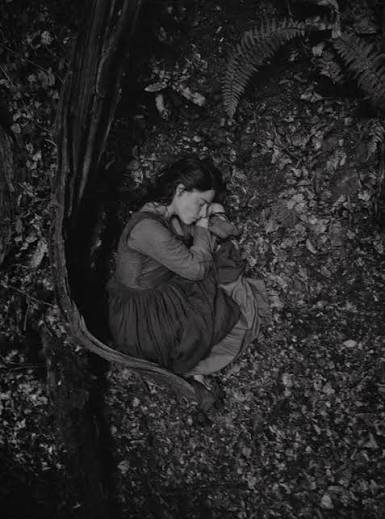
Agnes (Jesse Buckley) centres the film as its protagonist: mother, wife and healer. She takes on a completely protective role over her children, grieving in fear of a child’s death before any loss has even taken place. In the twins’ birth scene she panics, foretelling the absence of a child at her deathbed; she expresses a carnal desperation for the safety of her family. While her husband (Paul Mescal) provides from afar, she takes to constantly protecting her children. Her bewitching role as town healer adds to this sense of responsibility as she feels she can control their health; when this power slips with the death of her child she screams in a grief so visceral we cannot bear to watch.
We intrude upon this ineffable pain, forced to partake in it, unlike her husband. He arrives unexpectedly after the death of Hamnet, trespassing on his family’s grief to feel the pain momentarily before escaping it. He leaves his lamenting wife to digest his loss independently, because he cannot bear to do otherwise and is not expected to. Instead, he crunches it into poetry and performance. Agnes tells him, “you are caught by that place in your head…not even the death of your child can keep you from it”. She is resentful of the freedom he has to retreat from the world into his mind, where pain becomes fiction and fancy.
O’Farrell and Zhao rightly give sense to the genius of Shakespeare in telling the story of those who upheld his reality as he sank deeper into fantasy. They do not philosophise the playwright to understand him so much as humanise him, as a man who was loved and sustained by women. His wife and mother were forced to go on living the life he couldn’t bear. And so, as they lead the tale of Hamnet, O’Farrell and Zhao never call Shakespeare by the name he is famed for. He need not be a protagonist now, as he will be the West’s literary protagonist for years to come. Meanwhile, his mother Mary and wife Agnes will tend to his garden, clean, peel potatoes, bathe, shield his children, watch those children suffer, die, grow, lose parts of themselves, smile, fall ill, play and cry. All the while he will write.
Featured image: Pinterest