
Categories
Uncategorized

America, 2025


By Lulu McDonald

a follow-up to Allen Ginsberg’s ‘America’ 

America is this an identity crisis? 

Are you self-destructing? 

You need rehabilitation 

We want heroin and Jesus 

America when will you pull yourself together? 

I am far away from you 

and I miss your fast food comforts 

your cul-de-sacs and stupid traditions 

America why don’t you want to get better? 

What else can we give you? 

Our tired, poor 

America do you even want to be free anymore? 

When I touch down at JFK you will 

greet me with noise and dirty sidewalks 

and I will love it 

America I will breathe you in 

weed smoke and car exhaust 

How do you create beautiful ugly things? 

How do I listen to our national treasure Paul 

Simon while a pigeon takes a shit on a taxi 

How do I stare at the city skyline during sunset while 

men in the White House sign off on your demise 

America I love you 

I love your winding roads and picket fences and fried

food I love your exhaustion and self-hatred and paranoia

 I love you even though you make it 

so unbearably difficult 

I am you, no matter how much you try to deny it 

America please I am not talking only to myself America 

I am still putting my queer shoulder to the wheel.
Categories
Culture

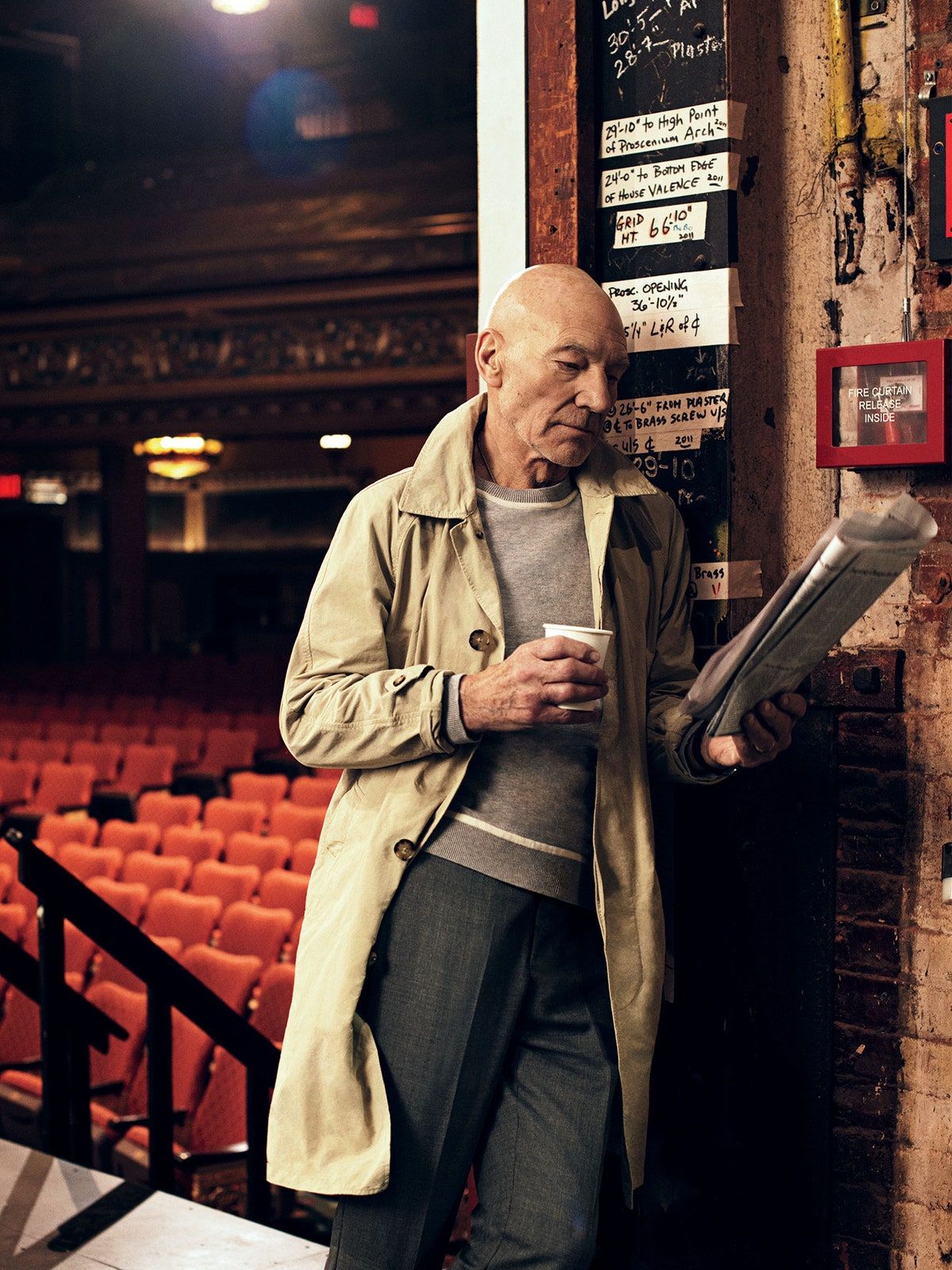
Sir Patrick Stewart: Colossus of Stage and Screen

By Daisy Lonergan

Sir Patrick Stewart was born on July 13th, 1940 in West Yorkshire, into a home and household that were less than easy. His family struggled financially, with Stewart growing up in a house that lacked an indoor bathroom, and with a father who repeatedly physically abused his mother. This early trauma no doubt left a mark, but Stewart found an outlet for his pain early on, when one day his English teacher gave him a copy of Shakespeare, encouraging him to perform, an act that would change the course of Stewart’s life. Later in his teenage years, he received a scholarship to study at the Bristol Old Vic Theatre School, and never looked back. He once recounted in an interview that the stage was the one place where he felt truly safe. 

Stewart later went on to become a titan of British theatre, joining the Royal Shakespeare Company in 1966, and appearing in over forty of its productions throughout his life. Perhaps though, his most popular achievements in the world of acting happened across the pond. Stewart’s career truly soared to new heights when he joined the world of Hollywood, playing two beloved and iconic characters that would go on to become staples of sci-fi storytelling. The first was his role as Captain Jean-Luc Picard in Star Trek: The Next Generation, a role he reprised in four feature films. The second was his role as leader of the X-Men, Charles Xavier, in which he was able to reunite with longtime friend and partner-in-crime, Ian McKellen. Both of these roles were characterised by tolerance, morality and intellectual curiosity, with Stewart bringing a diplomatic style that helped firmly establish science fiction as a genre capable of exploring both philosophical and political questions, even in the world of popular entertainment. Stewart’s unique combination of classical training and Shakespearean gravitas with commercial Hollywood success enabled him to bring the two worlds together, challenging the perceived hierarchy between stage and screen and showing that the two do not have to be mutually exclusive. Rather, they can inform one another, depend on one another, and help each other thrive.

Furthermore, the popularity of the Star Trek and X-Men franchises, combined with the wisdom of the characters he played, helped establish Stewart as a household name connected with decency and intelligence, positioning him as a role model for many. Indeed, Stewart himself was certainly deserving of the title, having waged a long campaign against domestic abuse. He spoke publicly about the terrors of his childhood and used his platform to advocate for others to speak out too. He also became a prominent supporter of Refuge, a UK charity supporting the victims of domestic abuse. His hard work on and off screen did not go unrecognised, as Stewart has won many awards, including two Laurence Olivier Awards, a star on the Hollywood Walk of Fame, an OBE and a knighthood. However, the achievement he was said to have been most proud of was his role as Chancellor of the University of Huddersfield, a position that allowed him to return to his Yorkshire roots.

Tragically, Stewart passed away at the age of eighty-six following a brief illness with Alzheimer’s disease and Lewy body dementia. According to loved ones, his last days were filled with tears, laughter and music. Stewart is survived by his wife, two children, and a rich and vital legacy, leaving behind a unique and indelible mark on the face of both theatre and film. And so, I can think of no better way to leave you than with the words of Sir Patrick Stewart himself (as he told the Oxford Union): 

‘The obvious conclusion is that art must somehow be essential to life. Art is a part of survival, art is a part of the human spirit, an unquenchable expression of who we are. Art is one of the ways in which we say: I am alive, and my life has meaning.’ 

Sir Patrick Stewart (1940-2026)

Featured image; GQ Magazine

Categories
Poetry

Confessions of an internet-diagnosed avoidant

By Breannah Holton.

Feel my face first, drop your weapons and touch,

I won’t drop my fists but tense every tendon starting from my wrists,

Please be tepid to the touch.

I promise a reading of your temperature, if you promise I won’t burn my tongue

Why be comfortable? always be sceptical,

Promise you won’t gather your weapons and run.

From finger to thumb, raise me your trepidatious hand,

Feel around for bone and find my spine, burrow your hands in my pits,

“So tomorrow, you have any plans?”

You should shudder, prove this is a double-blind affair…

From finger to palm, from flesh to bone, ask with fear and trembling

“What are you?”

And i’ll drop my weapons and touch.

Curiosity and tenderness, curiosity and care,

they’re forming here in my sentence,

As I feel throughout your hair.

Kiss my hand or bite it, the intent is all the same,

consume me whole, with no restraint

Let self-preservation persuade you, and you’ll have only yourself to blame.

Hold your nerve as I hold you to mine,

undress my face, hold it far but firm,

I’ll kiss your bruises; I do this while your blind,

But I find, I am no panacea to your problems, no ointment to your burns,

You say I abandoned you,

I say I saved us both,

Because I left when undressing you finally became my turn.

I left my weapons and ran.

Featured Image: Cosmos

Categories
Poetry

Family Feud 

By Breannah Holton.

I hear murmurs, my sister speaks in her sleep now,

not eloquently nor coherently, more like a struggle to form a word but I know,

it’s like a sister code, that only I, not just I, but me and her and my other sister know,

if you listen closely, you’ll hear not breathing but steam blowing through their nose,

with eyes closed and heads bowed rest makes pain appear peaceful now, but I know,

bed creaks as though sighs and vengeful resolves all at once, 

unlike God they do keep record of wrong.

They can’t help what they are.

Forgive them while they sleep for they know not what they do, but I know,

and they can’t sleep, so maybe they do too.

Featured Image: Hilal Özkanli

Categories
Poetry

Poetry is a Ping Pong Ball

By Penelope Gathercole

think of us here in your head before– 

no! don’t think! 

floating 

neither in front nor behind 

of your eyeballs? and already 

gone, too slow. 

why do they always have to go like that? 

just like that. 

not to think but to write. 

there, 

they are there. 

more wiggly than expected but certain nevertheless. 

an urgency, it is 

a frantic urgency. 

like a bird 

pecking at the same piece of corn 

but the force of the beak 

coming down 

propels the corn away and 

the bird must run 

after it and try again. 

nothing more humiliating 

than running 

after a ping pong ball. 

waddling, 

like a small child, arms outstretched, 

as it rolls and bounces 

further from you. 

we are all watching 

and waiting. 

an untimely titter, 

your turn. 

you’re my favourite yet. 

you tit. 

Featured Image – Darya Sannikova

Categories
Art

May Thomson

Art has always been my stopping place whenever I feel I have something I desperately need to say. Recently, a lot of my work has been studies of faces (although a lot of my pre-university work explored literary texts and book covers too…) but I am moving into thinking more about childhood, loss, and memory, which is what the painting of me as a child with my father – inspired by the final lines of Hughes’s ‘That Morning’ – represents. I am often most struck by warm, vibrant palettes, and usually work with coloured pencils or Procreate. My favourite painter is Shannon Cartier Lucy, whose works – charged with a sense of impending disaster – inspired a lot of my early painting process. 

Categories
Art

Orlando Bayliss

I am a first year history student at Durham. From a young age I have loved to draw and paint; capturing the human form, particularly in portraiture, has been my main interest. 

My work is mainly inspired by 19th and 20th century realists like Sargent, Zorn and Freud. I am in awe of their ability to capture the sitter with what appears to be such effortless (but in reality, painstaking) brushwork. By attempting to replicate their respective approaches I am able to learn and improve enormously. I am fascinated by the deeply personal aspect of portraiture which allows one to capture an individual in a way that no photograph can; the hope of achieving this makes me want to keep improving.

After leaving school, I wanted to focus on more classical methods like drawing from life and using limited colour pallets for my paintings. During my gap year, I studied on a short course with the Edinburgh Atelier of Fine Art which helped to formally become familiar some of these techniques.

Categories
Culture

Reinvention and reconnection: Hamlet Hail to the Thief

By Holly Simms

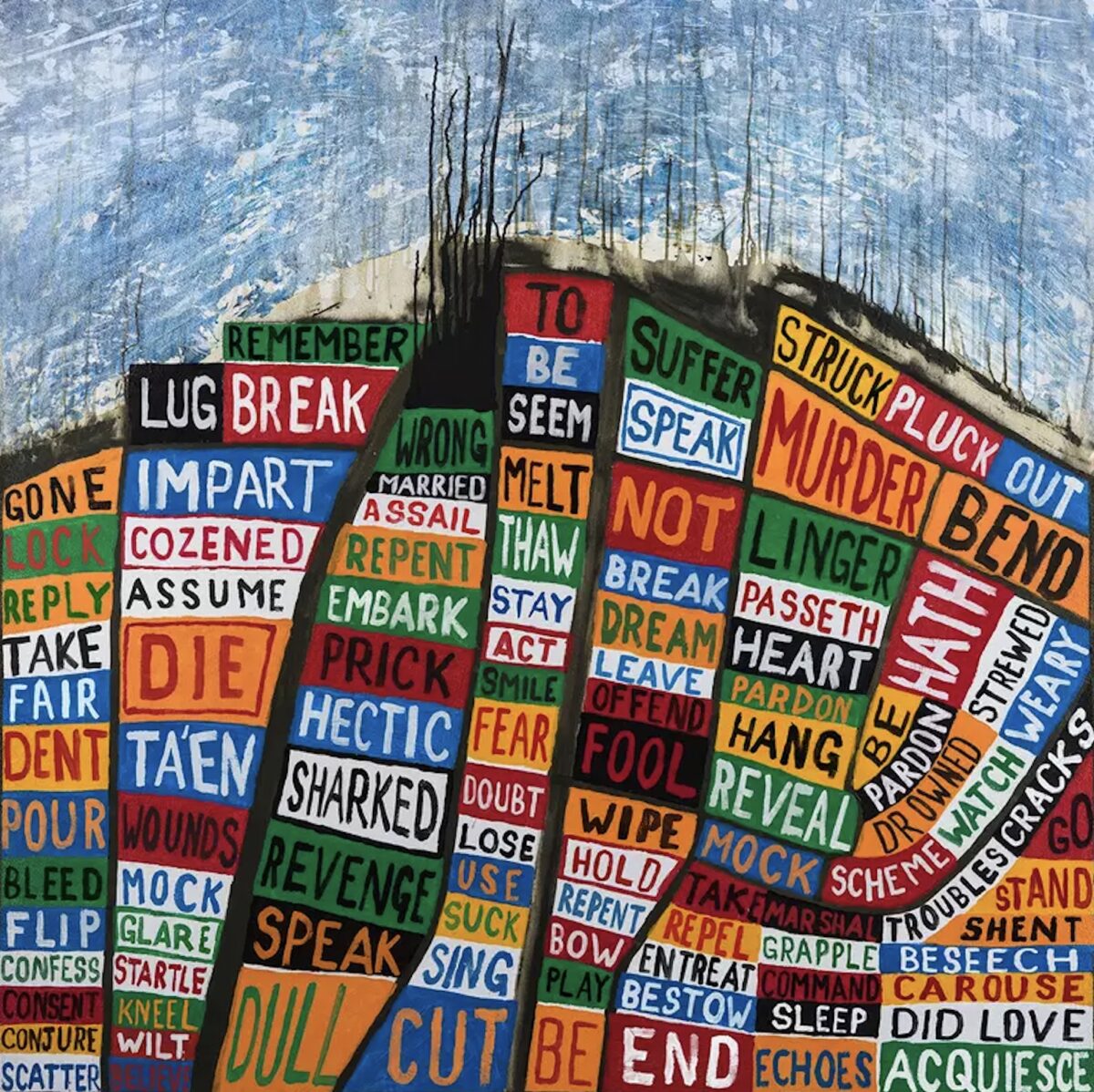
Thom Yorke and Hamlet, if you are a self-confessed, somewhat pretentious student of the arts, an admirer of the trope of the tortured artist, or ideally both, has a combination ever made more sense or had a greater natural appeal? April 2025 will allow this question to be realised as Radiohead’s sixth studio album and Shakespeare’s longest and arguably greatest work are reworked to form a coalition and come to the stage in the form of ‘Hamlet Hail to the Thief.’ 

‘Are you such a dreamer, to put the world to rights? I’ll stay home forever, where two and two always makes up five.’ These opening lines of Yorke’s album allow anyone familiar with the basic workings of ‘Hamlet’ and its profoundly mentally complex protagonist to see the thematic links between the two creative masterpieces. However, it was theatre director Christine Jones who spoke the connection aloud, allowing for this reworking to be conceived. In an interview regarding the project she discussed the psychological impact of seeing Radiohead live in 2003, the year Hail to the Thief was released, recalling, ‘it changed my DNA.’ She then goes on to ponder on its Shakespearean echoes, stating, ‘Not long after, I was reading Hamlet and listening to the album. […] There are uncanny reverberances between the text and the album.’ Additionally, Yorke has said he finds this project an ‘interesting and intimidating challenge’ with the RSC claiming the result of this challenge to be a ‘feverish new live experience, fusing theatre, music and movement.’ 

But what is it that makes this collaboration genuinely exciting? Shakespeare’s folio has been reworked, reworked, and reworked again, often with fairly dismal consequences. As an excited, newly inspired fan of Shakespeare I headed to the Globe’s Sam Wanamaker Playhouse at 16 years old to watch their production of ‘Richard III,’ a favourite play to this day. However, I found myself greeted with Richard and the rest of the cast in sports strips, forcing comedy and delivering Shakespeare’s meter in a manner which made it appear they were about to burst into freestyle rap. When attending a production of Shakespeare I don’t generally wish to feel on edge with concern that Lin Manuel Miranda might jump out of the stalls at any given moment.

This production is just one example of an endless list of Shakespearean reworkings that fall short of their expected critical reception, often deemed to be jarringly stripping the productions of their original integrity. Granted, this ‘integrity’ often includes prominent themes of patriarchal oppression, with Shakespeare’s supposed ‘heroines’ rarely given the opportunity to be even somewhat developed characters. However, as upsetting as these themes can be to explore in theatrical characterisation, if in every modern production of these plays, we must turn their original structures on their heads, are we still performing Shakespeare at all? Or do we just feel so collectively guilty for hyper-canonising the ‘Bard’ and his misogynistic tendencies in the way we have, that we must make the plays an ode to today’s rightful quest for equality as to allow them into our modern creative spaces?

Herein lies the crux of what I find to be appealing about the upcoming ‘Hamlet Hail to the Thief,’ I am hopeful that it will be able to find balance. Radiohead’s emotive melodies and lyrics that act as the building blocks for ‘Hail to the Thief’ hit so precisely on the themes of mental turmoil, paranoia, and grief that bleed from ‘Hamlet’s’ every syllable. Hamlet’s impassioned musing of ‘what piece of work is man!’ appears to be a line of thought that has resonated with Yorke across much of his musical career as he explores the psyche and its failings consistently and in great detail from ‘Pablo Honey’ through to ‘A Moon Shaped Pool.’ When this music soundtracks the conflicted, poisoned and often stagnated mind of Hamlet I am hoping that the play’s, still deeply relevant, discussion of the human condition will be what audiences are left most focussed on. Consequently the play should be able to modernise itself; as the reason for its hyper-canonisation becomes clear, it speaks to what is innately human in all of us, time period irrelevant.  

When the original core of the play is left intact having been exposed against the sounding board of Yorke’s art, today’s audiences should then be leaving feeling encouraged to contemplate the problematic elements of the play on their own, without having them thrust upon them. Ophelia’s quiet power in the face of dehumanising oppression, possibly unintentionally present in the text, can float its way to the fore of the mind naturally with the support of Yorke’s soundtrack. Shakespeare’s misogyny and its modern reverberations can therefore be able to co-exist with his genius as each layer of the play can be exposed intentionally and evenly without a clunky imposition of creative guilt heaped atop the play’s 4,167 lines.

Although there is much more to be said on the complexity of modernising Shakespeare and the challenge of locating its resonance within modern media, not much more can be said on this production in hope. Having bought tickets for the show in its first release I hope to be proved right in my high estimation of its quality. However, they do say never meet your heroes and perhaps the seemingly ideal combination of an all-time favourite band and one of the greatest works of literature created may not quite meet the mark. Nevertheless, ideally, I will not be left still roaming the creative ether in hope of one day finding the perfect Shakespearean reworking.