Categories
Culture

The Neverending Britpop Summer

By Matthew Dodd

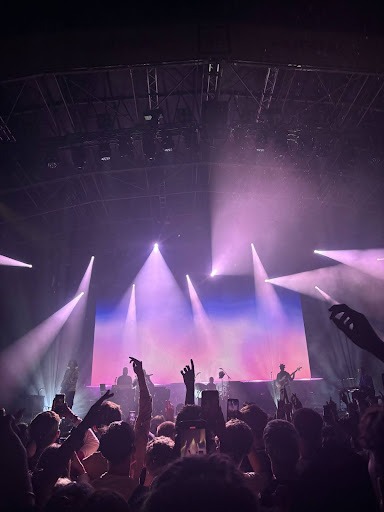
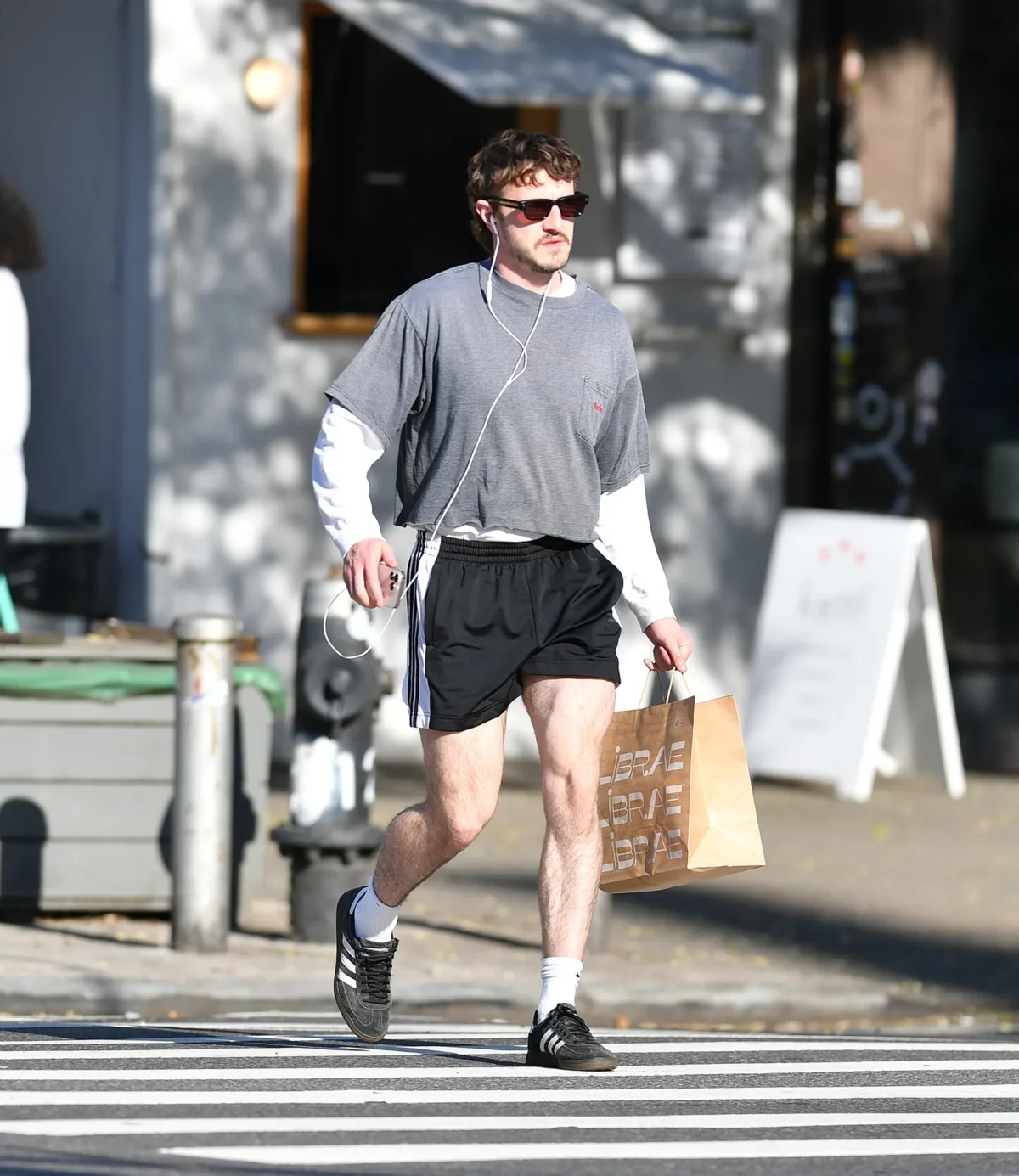
As I cowered outside Wembley Park tube station, sheepishly shielding four cans of Carling from the view of patrolling police officers, and watched in semi-intoxicated wonder as a parade of bucket hats flowed towards the stadium, it seemed self-evident that I was observing a national cultural reckoning. Oasis were back. The great bastion of 90s Britishness had returned home to their natural place, extracting millions of pounds from millions of adoring fans. All over the nation, the tidal wave of Adidas Spezials and misjudged haircuts heralded the return of a cultural phenomenon. Across their two hour set, they more than clarified their enduring excellence, the anthemic barrage of power chords and vaguely aspirational lyrics turning thousands of fans – myself, of course, included – into a drunken congregation, joined together in the great fraternity of Gallagher-ism. And yet, this tour didn’t seem to reconsecrate Oasis as the biggest band in Britain. Rather, it seemed to be a reaction to the fact that Oasis still are the biggest band in Britain. Their physical reunion is almost perfunctory; they still occupy the same place at the centre of Britain’s musical ecosystem. Their return three decades on doesn’t toss them into a foreign cultural environment, an antique guitar cable awkwardly plugged into a state-of-the-art amplifier, rather it seems like they never really left.

It’s thirty years exactly since their seminal second album (What’s The Story) Morning Glory? established Oasis firmly as the pre-eminent British band of the 90s. In the same year, The Beatles Anthology 1 was released, a sprawling multi-media project reflecting on the band’s body of work and legacy, thirty years on from their heyday. Such a project was and remains so interesting because it reacts to how The Beatles shaped the course of popular music, placing them into a totally foreign musical environment – the 1990s – and arguing for their enduring relevance. This year, The Beatles Anthology 2025 is set to be released, a further argument for their continuing influence in an even further removed world. It’s interesting, then, that when Oasis, like their Liverpudlian icons, made their own return after thirty years, it was not to a totally foreign cultural zeitgeist against which theirs was an anomalous presence, but rather to a British musical sphere more amenable to them than ever. Just a year before the reunion, Liam Gallagher had sold out a tour performing Definitely Maybe in full. This isn’t a time-won reflection on an era’s defining music, it is a direct replay of that era. In the three decades between 65 and 95, British rock and roll went from A Hard Day’s Night to Wonderwall; in the three decades since, it’s gone from Wonderwall to Wonderwall again. Bloke-core, a wave of 90s nostalgia, nichetok edits, aAdidas brand deals and the spectre of Radio X continues to propel Oasis into the cultural mainstream, decades after their time. Of course, it isn’t just Oasis at fault. Blur sold out Wembley in 2023; Pulp made headlines at Glastonbury just a few months ago; Radiohead are set to embark on their own blockbuster reunion tour this autumn. These groups persist in shaping our national music conversation. In the 90s, kids queued up for hours to see these godlike bands. In the 2020s, it is the same bands who occupy this space, the same bands kids are queuing up to see. Oasis and their contemporaries continue to dominate Britain’s musical culture in a way that veers beyond reverence and towards stagnation.

Since the end of britpop – somewhere between the release of Oasis’ Be Here Now and Pulp’s This is Hardcore – few British acts have managed to break the mainstream and capture the cultural zeitgest in the same way. The Libertines seemed primed for a time to inherit Oasis’ spot as the tabloid-courting rock n’ roll ascendants before their abrupt implosion after only two albums. Taking a purely commercial view of things, one British band stands out as undoubtedly the most successful since Oasis. That said, as much as we all might like a late-night singalong of Yellow, we can hardly point to Coldplay as the paragons of modern rock. As Super Hans famously noted, ‘people like Coldplay and voted for the Nazis, you can’t trust people.’ What, then, has happened to the Great British band?

The post-britpop indie movements of the 2000s, what we might broadly call the landfill indie era, was a far less sure thing than its 90s predecessor. Fuelled by the panoptical tabloid furore of NME and its peers, bands were thrown in and out of the spotlight at a breakneck pace. A few names survive – The Fratellis, Kaiser Chiefs, Courteneers – but a whole wave of lesser bands stand, deservedly or undeservedly, forgotten – The Hoosiers, The Paddingtons, Joe Lean & the Jing Jang Jong, etc. etc. Where the britpop era saw a centralisation of culture, a nation crowded around Oasis and Blur, the landfill period was marked the vast proliferation of upstart outfits. The band who emerged unscathed from the skip, surely the only band to get close to filling Oasis’ vacant seat, is Arctic Monkeys. From grassroots beginnings – both in Sheffield and on the nascent world wide web – and headline-grabbing romances to, most crucially, massively successful and zeitgeist-capturing music, the Monkeys fit the bill more than any band this side of the century. Like Oasis, they remain lodged in the firmament of the contemporary indie scene: you’d be hard pressed to find a teenager with Doc Martens and a superiority complex who doesn’t know A Certain Romance by heart. Unlike Oasis, however, Arctic Monkeys had the boldness to allow their music to grow up with them, to not continue singing about nights out and Smirnoff ices into their fourties. It’s that artistic bravery that has held them back from becoming the nostalgia-fuelled ouroboros Oasis risks turning into. Nevertheless, their mainstream success is indisputable, especially in comparison to their contemporaries. Over their career, every one of Oasis’ eight albums reached number one on the UK charts. Six of Arctic Monkeys’ seven – blame Taylor Swift – achieved the same feat. By contrast, The Kooks and The Wombats have two number one albums between them.

Since the Monkeys swapped guitars for keyboards in the mid 2010s, what has become now the ‘indie’ scene has failed to produce an act to the same level of popular success. In the years since, UK indie has been collapsing into itself and into a nostalgia for the scenes that once were. For many British bands post-landfill and post-britpop, the object has been less to push the genre forward and more to recreate the feeling brought about by those earlier bands. Consequently, we end up with acts like Catfish and the Bottlemen, whose songs seem custom-built to be chanted drunkenly in a field on the shoulders of your best mate from school. There is nobody in the crowd of a Catfish or Inhaler or Reytons gig who wouldn’t rather be watching Oasis in 1994 or Arctic Monkeys in 2007. For at least a decade, the British indie scene has been running on the fumes of those bands, hoping that this year’s Latitude festival might be at least something like Spike Island.

Naturally, this isn’t all the fault of the bands. There are those acts which overtly chase the high of a bygone era of UK indie – The Reytons’ refrain that ‘everybody round here’s got a cousin or a mate who’s best friends with Alex Turner’ is certainly guilty – but there are of course a whole host of those from across the British Isles which are making genuinely new and genuinely brilliant music. Wolf Alice, Black Country New Road, Sportsteam, Black Midi (R.I.P), Fontaines D.C., Stereo Tuesday, English Teacher, Wet Leg, Mary in the Junkyard, Wunderhorse – the list goes on. But in today’s post-Spotify society, music isn’t the centralised thing it once was. Gone are the days when a nation would sit around the television set and let Top of the Pops reveal who the next big thing are. Similarly, the media landscape of the 90s and 2000s does not exist anymore: no NME reporters are on the ground looking for the gossip about Grian Chatten or Ellie Rowsell. Now is the age of the algorithm, the indie zine, the subgenre, the niche. Bands like Black Country, New Road play deliberately to a niche crowd, revelling in the kind of experimentation only possible outside the mainstream. Today’s answer to Oasis or Arctic Monkeys, the kind of bands that headline festivals and sell out small arenas, are still playing to an audience a fraction of the size of their predecessors. Perhaps the biggest band coming out of the British Isles currently, Fontaines D.C. played their largest gig to date in Finsbury Park over the summer. 45,000 turned out, this punter included, to see a mesmeric line-up of new-age superstars. Between Fontaines, Kneecap and Amyl and the Sniffers, the gig felt like a festival in its own right: a statement of intent from a new generation of rock n’ rollers. And yet, whilst Fontaines reaches five million monthly listeners on Spotify, Oasis reach thirty-one million. Therein lies the central paradox: the market for British/Irish indie is apparently a shadow of what it once was, but the market that once was is still listening to Oasis. The days are past when a band of loud-mouthed Mancunians could, with nothing more than some power chords and a tambourine, sell out the largest stadiums in the country for weeks on end. And yet, that’s just what happened this summer.  

The quality of music is there, as is the appetite, yet for the most part the UK music industry is submerged under the corporate hegemony of American pop. When homegrown artists like Olivia Dean or Sam Fender do break through, it feels like an exception rather than a rule. National musical character is, now more than ever, defined by our Atlantic neighbours: what was once a back-and-forth trade – The Rolling Stones for The Beach Boys – is now decidedly one-sided. The internet has, for the most part, homogenised much of our popular music culture. As such, the once dominant British music scene – the scene that produced The Beatles, Bowie and Fleetwood Mac – has faded away, its vestigial remains reforming into the indie scene. It’s that scene which now remains paralysed between 1994 and 2007, forever replaying Live Forever and 505. The money is in surefire hits from Disney channel stars, not local bands playing back-end pubs. This summer hasn’t been a Britpop revival, it’s been a rerun of the last time British music felt truly relevant. In other words, it’s been a Britpop summer for thirty years. Until the indie scene can get out of its britpop stupor, until the music industry pays attention to the upstarts and, most decidedly, until audiences listen, our national music scene, once our great pride, risks remaining forever stuck in the past and the great British band, one of our finest national exports, risks becoming history. All is not lost, however. Just last year, Charli XCX’s Brat made pretending to be British cool again (see: The Dare) and the continued success of artists like Raye and Olivia Dean point to a revival in the UK’s pop-soul scene. Whether a phallocentric music establishment would accept the new faces of British music as female is another matter entirely. Nevertheless, we can but wait for the next great British band to arrive and tear Radio X asunder. Oasis spoke to a dispossessed post-Thatcher Britain about living forever, chasing the sun, feeling supersonic; about years falling by like rain and dreams being real. If ever there was a time for a band like Oasis, it’s now.

Featured Image: Jill Furmanovsky

Categories
Culture

“The summer of my life”: The Value of Sunburn in Queer Writing

By May Thomson

There is a short fragment of Sappho that simply reads: ‘you burn me.’ With these three words (just two in ancient Greek), she exquisitely conveys the intense, consuming nature of love. They can also be read as one of the earliest uses of burns as markers of queer love – a metaphor Chloe Michelle Howarth reanimates and makes titular in her debut lesbian novel, Sunburn.

Sunburn, true to its name, is a stinging, red-raw account of first love. The novel follows Lucy as she falls in love with the startlingly unapologetic Susannah. But, of course, there is always Martin – Lucy’s doting, handsome-enough friend, who everyone in the claustrophobic Crossmore expects her to marry. Martin is safety, while Susannah is, in the fullest sense of the word, divine happiness.

It is Susannah – loud, passionate, and fiercely loving – who wins the reader’s heart (as well as Lucy’s). The other characters lack the same depth; Martin is a flat character who exists to perform a narrative function and Lucy is a dull mirror, at once uncompromising and reflective, prioritising her reception over her internal reality –  pleasing no one in the process. Susannah, conversely, is depressingly patient, clawing at the idea that Lucy will choose her loudly and leave the ‘sweet wastleland’ of Crossmore behind. Perhaps one of the greatest tragedies of the novel is that, even after choosing Martin, Lucy loses everything she has so desperately clung onto. And none of the pain was worth it.

Like love itself, Howarth’s imagery is starkly contrasting – blending the thematic threads of sunlight and faith with visceral, bodily imagery: ‘I am all wounds, Susannah, and you are the loveliest pus. Flooding in to heal me. Yellow as the sun.’ These lines reflect the unlikely blend of the corporeal and sunny. The text feels, as a result, as grounded as it is lofty – as solar as sickening. A study in cognitive dissonance, Lucy’s wild emotions set the rhythm for the text, sending us volleying back and forth between mad, unapologetic love, and guilty, repentant cowardice. Despite being a girl, Susannah is more than Lucy could ever have imagined and later, when she leaves to travel and take other lovers, she remains unresolvedly present.

There is threefold value in the sunburn metaphor for queer love. First, it represents queer joy; lesbian love is sun-like – dazzling and bright. The sun becomes a figure of vitality and affirmation, casting queerness as something vivid – even life-giving. Second, the sun motif represents truth, picking up common associations with light and honesty. To step into the sun is to step into visibility – but this comes with risk. Exposure can be painful, and the resulting ‘burn’ reflects the often painful and strikingly visible cost of living openly. The metaphor thus captures the ambivalence of truth: it is illuminating but not without harm. 

Sunburn also speaks to the themes of pain and visibility. Unlike a hidden wound, a burn is raw, blistering, and marked on the skin for others to see. It is a public record of one’s exposure, suggesting that queerness (or, at least, the reception of it) leaves traces that are not easily concealed. Thus, sunburn becomes a kind of memory, imprinting on the body beyond the moment of exposure and contact. Likewise, the temporality of sunburn elevates this representation; it’s a delayed reaction, surfacing hours after a day in the sun. 

Queerness, likewise, is latent – often belatedly realised. As Eve Kosofsky Sedgwick reminds us, shame is not only wounding but generative – a mark of exposure that both hurts and makes queer identity legible. Sunburn, in Howarth’s novel, works in exactly this way: a searing trace on the skin, painful yet luminous, a record of love lived under the risk of visibility. This exposure carries a double valence, then, as it is framed as at once vital and wounding.

This metaphor, standing in opposition to metaphors like the closet and the shadow in its focus on visibility, judgement, and joy, clarifies the dynamics between Lucy and Susannah. When Lucy lies in the sun, Susannah lies beside her. Susannah is no Juliet, however, and is not equated with the sun consistently. The sun represents something beyond a lover – an external force that shapes queer life – and it shines on both girls. The metaphor also has implications for heterosexuality. While heterosexuality, for Lucy (or the queer subject more broadly), might be imagined as a life lived in shadow, queerness is figured in searing light. The sun figures as a metaphor for queer love that does not simply encompass judgment and shame, but also the conditions of unapologetic and honest existence. 

For all its sadness, Sunburn cannot be reduced to a lesbian tragedy. By treating sunburn as both wound and illumination, Howarth adds to a wider tradition in queer literature that understands desire as inextricably bound up with exposure. This metaphor does not simply describe the romance between Lucy and Susannah, but reconfigures how we read the visibility of queer love – as something at once joyous, wounding, and indelible.

Feature Image: Pinterest

Categories
Culture

A Day with Alberto Giacometti, Told in Notes 

By Liv Thomas

17/07/2025 

Morning 

I was in the Tate Modern when I saw my first Giacometti statue.  

It was a grey day, blanketed by a sweltering heat, and I was alone in Paddington Station.  

No one around me knew that I’d started the day buzzing with that small, yet bright, excitement that comes from seeing someone you haven’t seen in half a year. 

They didn’t know that I was sitting on a bench in complete humiliation after receiving a response to my “here” text that read “I thought we were meeting tomorrow?”. 

I didn’t want to catch the next train home; I’d paid for this journey, after all. So I walked through, in my head, all the things I would want to do in London if I ever found myself alone there. Art galleries are a great place to explore if you want to blend in among a crowd of people who are perfectly content to be within their own company. I decided on the Tate Modern – and that’s where my day turned from strange to true.  

Midday 

The spatial layout of most art galleries carries the intention of leading you from one piece to another until you finish your journey with a new sense of meaning. The Tate Modern, on the other hand, makes you feel very, very small. 

Upon entering, the concrete walls and glass panels on either side of me stretched above to what I can only vaguely remember as a bright light. Facing the entrance, I turned left; if you were to see a map of the Turbine Hall, this would be in the direction of a tumorous-looking structure leeching onto an otherwise square building. 

This tumour is where I saw my first Giacometti statue.  

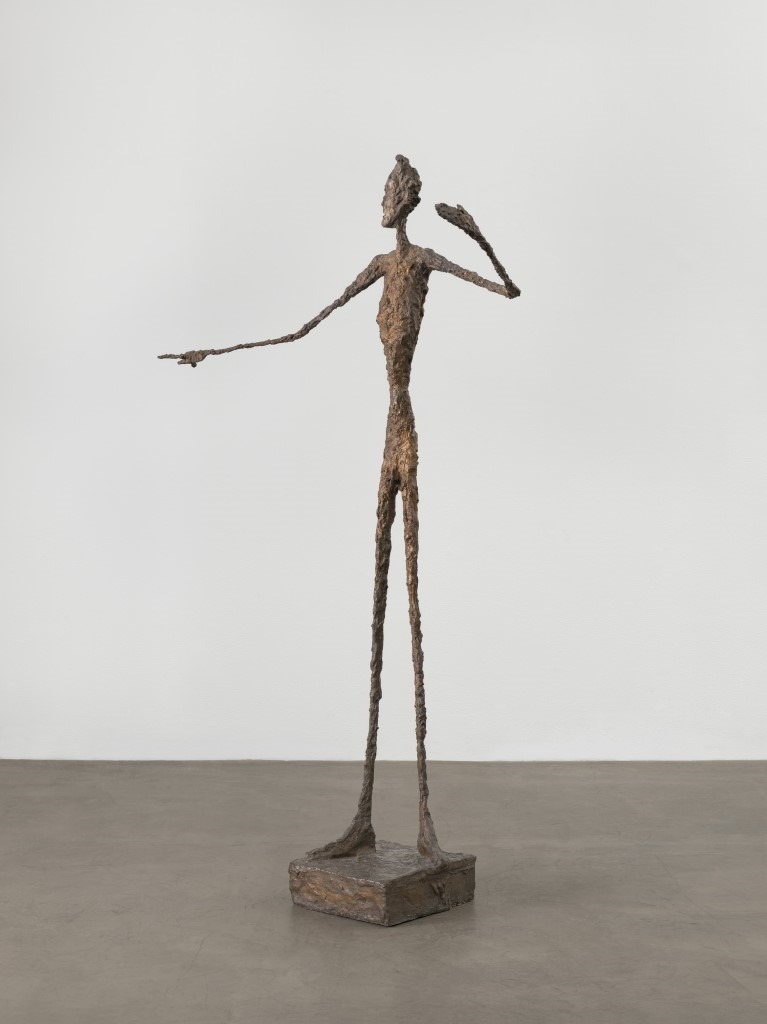
You enter this space and you’re presented with several openings, each leading to its own exhibition. You look down the corridor to one and see an alien standing at the end. Except it’s not an alien, it’s L’Homme au doigt

(Giacometti’s Man Pointing, 1947, bronze, 179 cm, The Museum of Modern Art) 

Existentialist philosopher Jean-Paul Sartre described the statue as “always halfway between nothing and being,” and that’s exactly how I felt when I found myself in this liminal space between the rest of the Tate Modern, and the works of Alberto Giacometti.  

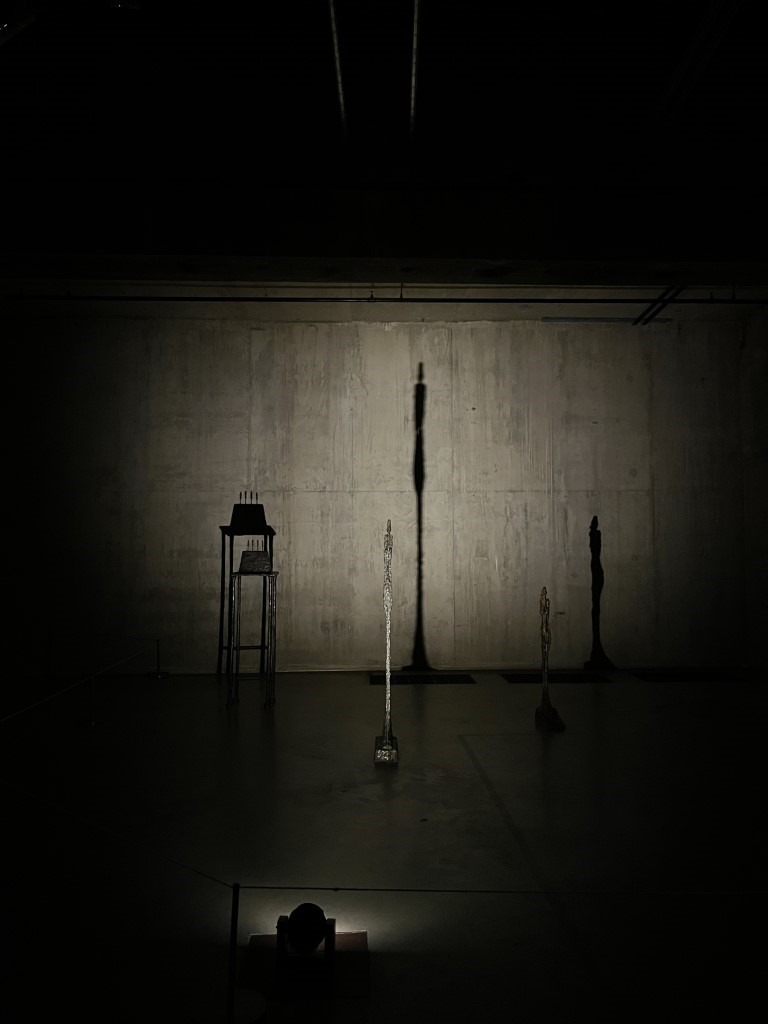
The exhibition was lit in a way that made the square-shaped corridor look like a tunnel, with the dark corners of each four-pointed frame bending over the sculptures, as a light pointed directly at them stretched their shadows against the wall.  

My first association was with Plato’s Cave. On the one hand, this matter of perspective accentuates Giacometti’s study of the human form and its relationship to the environment. On the other hand, these silhouettes and the figures that cast them represent the dual significations between alienation and endurance, fragility and resistance, and our anxieties and hopes.  

Notes on Giacometti 

Giacometti is often regarded as a late modernist who reaffirmed figuration after World War II.  Similar to T.S. Eliot’s The Waste Land — only translated here through plaster, clay, and bronze — Giacometti’s sculptures capture the fading afterimage of a society laid bare by war, fixating on humanity seen through a lens of thin, metal limbs, as if the world itself had been whittled down to its trembling bones. 

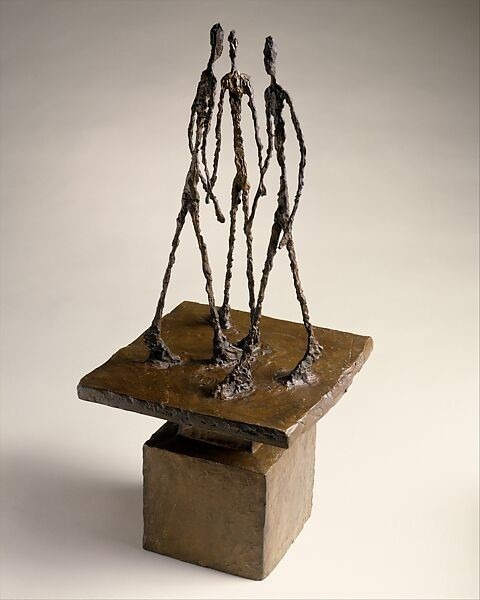
(Giacometti’s Three Men Walking II, 1949, bronze, 188.5×27.9×110.7 cm, The Met) 

Despite their proximity, the figures wander aimlessly, with neither direction nor acknowledgement – their identities blur, yet they are completely disconnected. 

Giacometti rejected the artistic notion of replicating reality; instead he sought to uncover the truth of life by reducing it to its barest principles. His art serves as an alternative to the superficiality of hyper-realism in sculpting.  

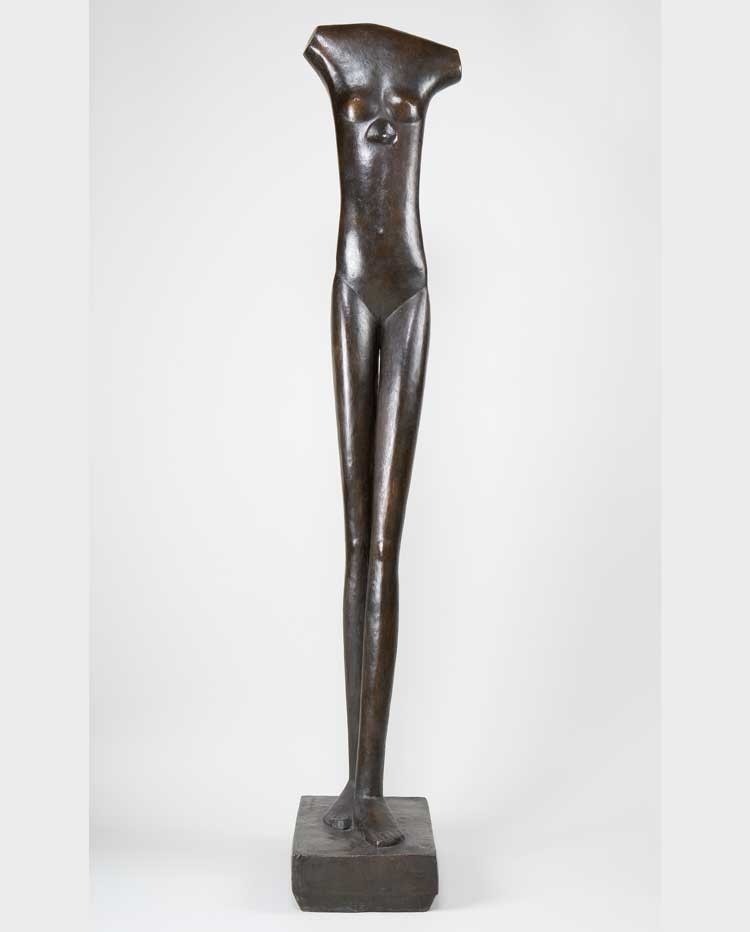
(Giacometti’s Walking Woman I, 1932, Bronze, 150.3 x 27.7 x 38.4 cm, Fondation Giacometti) 

This specific figure is inspired by Egyptian artistic traditions. While the name of the piece suggests otherwise, the sculpture conveys no sense of movement and rather reflects a wider awareness of varying 20th century stylisations.  

Final thoughts 

My thoughts at the Tate Modern gather to the present day.  

Plato’s Cave tells the story of prisoners trapped in a cave, and the shadows cast by a fire are mistaken for reality. Mimesis is an illusion that distracts us from the fragmented nature of human existence, and authenticity is needed now more than ever in a digital age that conglomerates everything fed into it.  

When you cast a shadow against Giacometti’s works, you don’t see reality –  you see a half-starved person, a physical manifestation of psychological confinement, a charred body… or maybe you would even see yourself.

Seeing this for myself in London, surrounded by strangers, and with a lost purpose for the day – left with the lingering feeling of reading whatever was in the news that morning – I couldn’t help but let Giacometti’s shadows speak to me. A lone person faces another human in the form of a sculpture; both carry multitudes. 

Featured Image: Liv Thomas

Categories
Culture

Short-shorts, Skirts and Croptops; What the Skimpy Menswear Trend Tells Us About Modern Masculinity

By David Bayne-Jardine

I lock eyes with Paul Mescal in the newsagents – a vision in short-shorts that stops me in my tracks. The Gen-Z heartthrob and award-winning ‘sad boy’ actor glares at me from the front page of the magazine. Decked out in a skin-tight cropped leather tank top and matching tiny shorts, his hips thrust provocatively into the centre of the photo, his arms stretched above him in a gesture at once powerful yet vulnerable. 

Over recent years, Mescal’s name has become synonymous with two things: tear-jerking portrayals of emotionally troubled men, and a worldwide obsession with short-shorts. Launched into fame in 2020 after playing Connell in the Normal People miniseries, his character’s humble and revealing Gaelic football shorts soon caught the attention of the fashion industry. Since then, as Mescal and other style icons have played with showing a bit more skin, retailers have reported skyrocketing sales in a sort of menswear very different from the norm. From Milanese catwalks to trendy cafes, from red carpet evenings to early morning park runs, men across the world have been sporting skirts, crop tops, painted nails and thigh-high shorts like never before.

In this photoshoot, his GQ cover story from November ‘24, Mescal exhibits this androgyny and playfulness that is taking over men’s fashion. After all, who better to represent male self-expression than the king of emotionally troubled men himself? In this post-COVID age of mental health awareness, as boys swap the late-night trauma dumps for self-care and therapy, their fashion is changing too. Brighter, bolder, tighter, smaller, scantier, hotter, gayer and girlier, it seems that as men loosen up and express themselves, so too do their clothes. 

It was not so long ago that glossy quarterlies like this one sold themselves by smothering their pages in a very different brand of masculinity. From the front cover, the likes of Cruise, DiCaprio and Brando defined male design as an affair of take-me-serious simplicity – expensive watches, white tees and razor-sharp tuxedos. If men were to be leaders and protectors, then their clothes needed to perpetuate that image – ordered, uncomplicated, unemotional. 

Now, I think as I absently flick through the magazine, things couldn’t be more different. Most of Gen-Z’s most successful heartthrobs are inclined, perhaps even expected, to rail against the boundaries of male clothing. Harry Styles made history in 2020 when he appeared on the front cover of Vogue in a blue Gucci ballgown. Bad Bunny’s Instagram is awash with dresses and skirts. Pedro Pascal rocked the Met Gala in 2023 with a flamboyant shorts and trench coat combo. Jacob Elordi, Milo Ventimiglia and Jonathan Bailey have all been papped showing off their quads in tiny shorts. 

But where did all this come from? What has prompted straight men in particular to start dressing more like the groups they once sought so hard to distinguish themselves from? As is often the case with mainstream culture, we are at least in part indebted to the Queer community for this sartorial about-turn. The sort of bold, playful and scanty clothing that A-listers are wearing nowadays was for years the dress code of LGBTQ+ subcultures, used to question gender binaries, promote self-expression and embody an ethos of sex positivity. 

As men are starting to open up, they look for inspiration in groups that have been expressing themselves for much longer – women and queer people. Of course, this is not the first time men have dressed like this (see John Travolta in Grease or Sean Connery as Bond), but it is certain that as previously marginalised narratives enter the mainstream, and as the playing field becomes more level, 2020s fashion is developing a distinctly gay and androgynous flavour.

Of course, it would be foolish not to acknowledge the deep irony that runs through this trend: when men dress scantily they’re hailed as transgressive; when women dress scantily they’re slut shamed or attacked. Feminine and queer fashion that was once dismissed as distasteful or offensive is now considered the epitome of good taste. 

As true as this is, it is refreshing to see men taking more risks when they dress themselves. In showing more skin, they make an attempt at vulnerability and have fun in doing so. As with all fashion, it is used to make a statement – ‘I am emotional, empathetic, a listener’ – that expresses allegiance to a new type of masculinity that tries to be less domineering and more empathetic. Of course, a pair of tight-fitting booty shorts, painted nails and a tank top won’t miraculously transform a misogynist into an ally (we’ve all seen the ‘performative male’ trend online), but it does signify an attempt by some to rebrand their masculinity into one with more tolerance. 

Naturally, this won’t be the only thing influencing menswear’s latest pivot. As summers get hotter clothes inevitably get lighter, and in our heavily pornographic society sex sells as much as ever before. After all, in an age where adult content is always a few taps away, when weight-loss drugs promise us almost any body we want, when daring sex stunts grab national headlines, is it not inevitable that we become more hooked on glimpsing our favourite celebs’ bodies?

In an era of momentary microtrends, the fact that the skimpy men’s clothing obsession is still going strong after half a decade signifies that something significant is shifting under the surface for men. Sure, it’ll all probably go out of fashion as quickly as it came in, but for now there’s nothing more stylish than a guy in unmanly clothes. So roll up that waistband and dust off mum’s skirts – showing some skin seems here to stay.

Featured Image: Paul Mescal / Vogue, 2024

Categories
Culture

Learning to Drink Like Ourselves

By Robin Reinders

I don’t remember when I began to drink because I liked it. The first furtive sip of my mother’s vodka-cran, returned with a puckered mouth and distasteful shake of the head. Smirnoff Ice soaked in the saccharine aftertaste of a sticky American suburban desert summer. That cheeky ornamental sparkle in the family-fridge OJ; bubbles and Benedict before noon. I remember thinking adults must be something very far-fetched to have acquired not simply the taste but the temperament to tolerate something that looked like maturescence crystalised, and yet tasted of soap in the mouth. What we seem to forget when we’re piss-taking over pints and pre-rolls at the pub is that apprenticeship in alcohol comes about through mimicry.  

For most of us, this education begins in embarrassment.

Every culture of taste has its shibboleths – the books one must be versed in, the films one must feign to have seen, the discographies one must recite top to tail. To carouse, per contra, is to discover that your body will reject the canon, and that each bitter pill you swallow merits you that much closer to an earnest drinker. I don’t like dirty martinis. I tell you this as a truffle-foraging, cornichon-crunching creature of brine and salt and savour. I was cresting twenty when I asked my barman-retiree father to chill me a glass and uncork the Hendrick’s. I wanted to love it for its poise, its cosmopolitan severity. I didn’t laugh so much as bark, embarrassed by my own disappointment, balking at the opaque peridot of the frosted glass, like a birthstone that didn’t belong to me. I am not a dirty martini person. I accept this with a quiet, cognizant sort of amusement. There is a peculiar humility in discovering that you cannot love a drink you so chronically hope to love. It punctures the vanity of discernment. The drinks we abandon tell the truth of our appetites more eloquently than the ones we order ever could.

More and more I find it true that there is a certain choreography inherent to preference. Culture has always been coded in the minor details of consumption; cocktails simply render those codes portable and potable, able to be performed in the theatre of a hotel bar or an airport lounge or the local pub.  The process of taste-making – the literal kind, that is – is not unlike the making of a self. There are phases, fads, flirtations. A person’s drink becomes a form of shorthand. The girl watching her weight – Targaryen-blond and terribly boring – perching neatly on a barstool with her vodka-soda. The bubble-skirted, ballet-flatted Instagrammer bending over the counter for a birds-eye of her Aperol. The twenty-something berlioz bloke quoting Bukowski (incorrectly) while he swirls his single malt and checks his crypto portfolio when nobody’s listening.

We were all performing then: in the dewy-eyed dream of our parents’ kitchen, in bolshie adolescent company, in the sticky arena of a student bar. We still are. Drinking, not dissimilar from dressing, belongs to the theatre of self-definition. Every order at a bar is a small audition for the role of ourselves as imagined by others. The city itself colludes in the casting: cafés advertising ‘artisanal’ tonics, bars lit in imitation of some universal nostalgia, menus printed on textured paper that promise depth of field if not depth of flavour. Boozing has always had an anthropology attached to it. The tiki Mai Tais of the 1950s, a sweet postwar reprieve; the vodka revolution of the ’80s, a distilled form of corporate yuppie (in)efficiency; the craft-cocktail revival of the 2000s, a Buzzfeed-bloated mode of taxonomy. What your cocktail screams about you! To drink bitter is to be sage and perspicacious; to drink sweet, jejune. Even taste, it turns out, has a class system.

It’s no accident that bitterness has become the aesthetic of adulthood in our time – espresso, kale, dark chocolate. A comestible sort of cynicism that feels less cringe inside our mouths than it sounds projected out. Holistic, antithetical zoomer ‘wellness’ has a certain flavour, doesn’t it? I like a Negroni alright – what do you want me to tell you? A graduation from the half-hearted G&Ts of early adulthood. I don’t actually remember when or where we were introduced. I don’t remember the first whiff of pine and peel, the first wink of arterial red like the garnets in my jewellery. I didn’t like it, but I did. It’s not a drink that courts indulgence. Quite the opposite; it begs attention with a cruel rather than a kind hand. All this to say at some ill-defined, perfunctorily romanticised moment, I understood I was a bitter drinker. Fond of the acrid, the tannic, the aromatic. It’s a far cry from the pink cosmos and perfumed spritzes of my younger years, but when I order one I don’t do so with panache. I don’t fancy myself some maverick patron with a palate worth priding myself on. I order it because it’s my drink.

These days I keep little in the cabinet. A bottle of gin with a label I like. A bitter that stains the glass vermillion. A dry white I cook with as much as I sip. Maybe a cheeky Italian liqueur for some frivolous, far-future dinner function. I suppose when you finally start to drink like yourself, you have been, in consequence, every kind of drinker: the precocious, the posturing, the self-appointed pundit. And in that gradual ledger of sips, one discovers that taste is no static inheritance nor fixed, natural possession, but some fluid, fey thing. A patient, unhurried negotiation between what we think we ought to drink and what, inexplicably and inexorably, becomes the second-round staple.

Featured Image: Alain Delon / Getty Images

Categories
Culture

Interview: Guernsey’s new musical Radio Silence

By Edward Clark

Wayzgoose’s Head of Reviews, Edward Clark, sits down with Laura Simpson and Lydia Jane Pugh – the writers of brand new musical Radio Silence.

This summer saw the world premiere of Radio Silence, a brand new musical about the Nazi occupation of the Channel Islands during the Second World War. Performed locally at the Princess Royal Centre for the Performing Arts in Guernsey, the show received glowing reviews from audiences and critics alike. Grappling with oppression, freedom, and resilience, the musical asks the same questions of its characters as it does its audience: “what would you risk to resist?”. After their first leg of performances, I sat down with writers Laura Simpson and Lydia Jane Pugh to discuss the musical, island identity, and its uncertain future against the backdrop of shrinking arts funding.

The narrative of Radio Silence follows the fictional Tabel family’s involvement with the Guernsey Underground News Service (GUNS), a secret movement during the island’s Second World War occupation which disseminated British news to islanders, banned from using radios by Nazi invaders. The detailed set of the Tabel family home offers a warm domestic sphere to juxtapose the unforgiving Nazi regime, as rules and taxes are imposed onto islanders. In response to this cold authority, the family begins to rebel. 

The book and music are written by local writer Laura Simpson and musician Lydia Jane Pugh. Blending modern lyricism and raw emotion with period-accurate detail, the musical shines as an exciting exploration of Guernsey’s unique history. In the musical’s first moments, the string section’s discordant tuning transforms into the sound of an air raid siren. The oppressive atmosphere of the bombing of the Guernsey harbour in 1940 smoothly shifts into the opening number ‘Days of June’, setting a precedent for the rest of the play. Lydia spoke about her aim to embed the events and style of the period within the music itself: ‘the song ‘Spin That Dial’ is very much based on the Andrews Sisters, because we wanted that 1940s sound’. All six actors offer outstanding performances, imbuing Laura’s fictional characters with believable and gritty emotion – a believability necessary to match the detailed, period-accurate set. Many set elements were sourced from the Guernsey Rifle and Heritage Society, with genuine WWII identity cards, ration books, kitchen equipment and other elements utilised onstage. Props and costumes were recreated from original occupation artefacts. The generosity of locals speaks to the importance of art like Radio Silence. As Laura tells me, ‘we’re now at a stage where it’s coming out of living memory for the vast majority, and although it’s something that is an extremely traumatic period of our history, I think that because there’s that bit more space now, we can tell a more balanced, more human story’. 

Fundamentally, the musical brings a story to life in a way that actually honours our local community. As Laura tells me, ‘we’ve seen other media interpretations of what Guernsey was like during the war, and they’re all often very inaccurate. And it was just that kind of feeling: why are other people telling our stories when we’ve got fantastic creatives. Our island produces a phenomenal range of really hardworking creatives. Why are we not telling these stories?’. Accordingly, there is a notable effort amongst the team to celebrate the island’s history. ‘I did manage to get a little bit of Sarnia Cherie [our unofficial “national” anthem] into one of the songs, which was so subtle that the violinist didn’t even notice’. An effort to celebrate island identity is reflected in the team’s detailed research, especially concerning accurate names and locations. Laura tells me: ‘that’s the thing that often, other representations have just got so wrong. I took it to the extreme because I’m a nerd, but you know, if I wanted to write a story set in Gibraltar, how would I find out what the local names were? I’d spend half an hour researching it.’

These references are not intended to ostracise non-islanders, but to celebrate Guernsey’s own community. When asking Lydia about the importance of a narrative faithful to our identity and history, she told me: ‘with a lot of those kind of subtleties throughout, in the lyric and the script as well, we wanted this to be accessible to any audience. But there will be audience members who are really listening, that will clock all those easter eggs. And that level of detail that we kind of layered on over time was really important to making it feel authentic’. That authenticity clearly resonated with the audience when I watched the sold-out second night: as a recording of Sarnia Cherie was played towards the end of the musical, older members began singing along amongst the crowd. The team were amazed by local support: ‘The response has just been obviously overwhelming’. ‘I mean I guess the thing that we are continually being asked is ‘when can we see it again?’. Evidently new art such as Radio Silence plays a key role in uniting local communities.

Looking forwards, Pugh and Simpson are hopeful about the future of the show. Laura comments that ‘I don’t feel like we’re done telling this story. Locally, we know that this is an audience for anything ‘occupation’. But when people who aren’t even necessarily die hard theatre fans are telling you it was extraordinary, you’ve got to take this further’. The team believe that Radio Silence’s characters and story are universal. ‘I mean, I keep going back to the quote from the line in the first song. “We should have seen it coming / We should have seen the signs / but our heads were planted deeply in the ever shifting sands.” I don’t think that line will ever not be relevant’. However, the team are unable to share the story of the Tabel family with new audiences without support. ‘In terms of taking this further, and as with all arts projects, it ultimately comes down to investment, and whether there are individuals, companies, organisations that want to get behind this project and help to take that piece of our history to a wider audience. Because ultimately, theatre is not a cheap sport. But we are both very passionate about it, and we do an awful lot just because we love it. You know, we cannot be asking people to work for free because that is not appropriate. It’s show business, and the emphasis on business is getting more and more significant’. To continue to share stories which connect with audiences on an emotional level, the team needs financial support – an ever-prevalent barrier to entry for emerging artists.

You can find updates about the future of Radio Silence on Instagram: @radiosilencethemusical

Featured Image: Radio Silence. Pictured (left to right), Michael Sullivan-Pugh, Lottie Ewin, Eve Le Sauvage, and Laura Simpson.

Categories
Culture

A Sit Down With Durham Film Festival President, Val Moreno

By Edward Bayliss

Val Moreno-Alvarado, a second year student, is president of the Durham Film Festival 2025. I caught up with her to discuss all things filmmaking, and to talk about the film festival itself, which in its fourth year, looks ready and set to champion the efforts of student filmmakers around the world.

 
What is the state of student filmmaking at Durham University?

‘When I first came to Durham, it seemed as though student filmmaking was very niche. But this year, at the first session that we had [at DU Filmmaking Society], there were around sixty people, and I realised how much people care about filmmaking, and in so many different fields –  people are into soundtracking, people want to act, to direct. There are film courses available at the university, but they are very theoretical – there’s no field experience – and that’s why the filmmaking society exists. We’ve had a number of films produced by Durham students who are aware of DFF through the filmmaking society.’

Tell me about the character of the film festival itself – what does it involve?

‘It’s a week of events. The main event is the screening on 14th June – we have a panel of judges coming up to Durham, two of whom are lecturers at the university. One is called Santiago, he has a lot of expertise in film festivals – he sat on the board at the Berlin Short Film Festival. We also have someone coming from the British Film Institute, who is the co-president of the London Short Film Festival and has been really helpful in assisting us with our own festival. We will screen around eight films, with an awards ceremony, a Q&A, and a drinks reception afterwards at the school foundation near the viaduct. Leading up to this, we have two events, the first of which is an open air cinema on 10th June at Aidan’s beer garden, with the next event on 12th June at Bar 33, with live music and an old Hollywood atmosphere. The final event is on 15th June, after the short film screening, with a live orchestra soundtracking films at the Masonic Hall.’ 

In unashamed Letterboxd fashion, what are your four favourite films?

‘I’ve been dying for someone to ask me this! I’ll try not to sound too pretentious, but also like I know something about cinema. The first one I have a very emotional connection with, it’s called Güeros, and it’s just perfect – the production and story are both very sentimental, and beautiful, I think. It also comes from Mexico, which lends a further familiarity. My next would be Kieślowski’s Three Colours: Red which was amazing, the ending was perfect, and overall, the storytelling is perfect. Then I would say Lovers on the Bridge, by Leos Carax. It’s a love story, but very real and not cheesy or hyper-romantic. And number four, I’m between Dead Poets Society, which I was really shaken by the first time I saw it, or La Haine which has a similar vibe to Güeros, black and white, artsy but unpretentious.’

Is there a particular film set or production you’d have liked to have been around?

‘I think Babylon, by Damien Chazelle. There is this one scene where there’s a party, it’s so chaotic, there’s an elephant, and dancing, the music is perfect. But overall, the whole film is about making films, and how much he appreciates the actual production of films. I think it would be crazy to have seen a production try to capture a production!’

And, a director whose brains you’d like to pick? 

‘I think, maybe Kieślowski. He also has a series of religious films called The Decalogue based on the Ten Commandments, though I hear he is not particularly religious. I’d like to ask him about his motivations there, where that inspiration came from. I also feel as though a lot of his films are characterised by mundanity, and I’d like to know if that came from personal experience. I think in general, filmmakers always put a part of themselves in their films, but I’d like to know to what extent this is the case with him.’ 

Check the Durham Film Festival Instagram account for events and updates, @durham_filmfest

Categories
Culture

Hauntology, Depression and Libido in the Lyrics of Isaac Wood

By Dan Xiberras

Hauntology is a term originally coined by Jacques Derrida. It concerns the notion that the present is haunted by both the past and ‘lost futures’. This concept was developed by Mark Fisher in relation to art, who employed the idea to argue that culture in the 21st century is characterised by a sterile, recycled tonality on account of neoliberalism – ‘What it is to live in the 21st century is living 20th century culture on higher definition screens.’ This, he posits, has resulted in ‘the slow cancellation of the future’ and an endemic depression among young people. In this essay I intend to apply Fisher’s analysis of a modern hauntological culture to the lyrics of Isaac Wood, former frontman of the British band Black Country, New Road (BCNR). Wood’s bleak yet witty lyricism takes the shape of an abstracted, cryptic life writing. It is at once deeply personal, even confessional, and at the same time, entirely indecipherable – its imagery able to wholly absorb the projections of any listener / reader. Nonetheless, within Wood’s lyrics the centrality of Mark Fisher’s conception of hauntology (and its relation to their depressive tone / a national endemic depression) is evident. 

Isaac Wood is a hauntological figure himself. Following the release of BCNR’s second, most critically acclaimed, album Ants From up There (AFUT), he took a permanent step back from the band stating, ‘Hello everyone, I have bad news which is that I have been feeling sad and afraid too…it is the kind of sad and afraid feeling that makes it hard to play guitar and sing at the same time.’ His departure would plague BCNR’s subsequent releases, with many fans mourning the band’s ‘lost future’ in Wood’s absence. AFUT is an album characterised by the notion of lost futures, its cover featuring an ‘airfix’ style Concorde sealed inside a plastic bag. The Concorde itself features as an extended metaphor in the album’s lyrical content, solely written by Wood. The aircraft, once considered the future of civil aviation and now defunct, acts as the centermost hauntological object in Wood’s writing here – itself pertaining metaphorically to a former relationship of Wood’s characterised by the idea of the ‘Concorde / sunk cost fallacy’. Fisher’s analysis of Burial’s album ‘Untrue’ can also be applied here – AFUT‘s lyrical content similarly ‘seems to have less to do with a near future than with the tantalising ache of a future just out of reach.’ This evident in the album’s eighth track ‘The Place Where He Inserted the Blade’:

So, clean your soup maker and breathe in
Your chicken, broccoli, and everything
The tug that’s between us
That long string
Concorde, Bound 2
And my evening
The good hunter’s guide to a bad night
Darling, I’ll spoil it myself
Thanks, you’re leaving
Well, I tried just to stroke your dreams better
But darling, I see that you’re not really sleeping

Here we see a slow disintegration of Wood’s fractured relationship induce a depression which is presented in an entirely hauntological light. The lyricist depicts, in Fisher’s words, not ‘apathy’ nor ‘cynicism’, but ‘reflexive impotence’:

‘They know things are bad, but more than that, they know they can’t do anything about it. But that ‘knowledge’, that reflexivity, is not a passive observation of an already existing state of affairs. It is a self-fulfilling prophecy. Reflexive impotence amounts to an unstated worldview amongst the British young, and it has its correlation in widespread pathologies.’

Wood’s deterministic spoiling of an evening which he introduces not as a shared moment but as his own, ‘my evening’, is an entirely reflexive action, and one which seems to be in response to a similarly disparate, distant and oppositional relationship – ‘The tug that’s between us / That long string’. The observation that his partner is ‘not really sleeping’, furthers this, and touches on the centrality of depression, the bed and libido in Wood’s lyrical life writing, wherein ‘reflexive impotence’ takes on a newfound sexual capacity. For instance, in the track ‘Athens, France’ Wood writes the lines, ‘She flies to Paris, France / I come down in her childhood bed / And write the words I’ll one day wish that I had never said’. We may observe here a similarly sexual ‘reflexive impotence’- it is with a climax in his partner’s ‘childhood bed’ where the seemingly inescapable ill-fated future relationship is conceived. The song ends ‘Won’t give up / Too soft to touch / And how hard could it really be?’, the humorous opposition of ‘too soft’ and ‘how hard’ implying a painful awareness of the ‘reflexive impotence’ at play. This awareness is foregrounded crudely in ‘Sunglasses’, where Wood’s partner is granted a voice rife with impatient distain ordering him to ‘Leave your Sertraline in the cabinet / And fuck me like you mean it this time, Isaac’. Here, the SSRI ‘Sertraline’ is depicted as an early material token of his impotence.

The relationship’s inevitable terminus is outlined on the very last track of AFUT, ‘Basketball Shoes’, in the lines ‘In my bed sheets now wet / Of Charlie I pray to forget / All I’ve been forms the drone / We sing the rest’. They detail a wet dream, the stain of which serves as the final lasting symbol of this sexual ‘reflexive impotence’, a liminal metaphorical emblem of the space between mourning and melancholia, terms which Fisher describes as such:

‘Both mourning and melancholia are about loss. But whereas mourning is the slow, painful withdrawal of libido from the lost object, in melancholia, libido remains attached to what has disappeared.’

In understanding Wood’s impotence as both mournful and melancholic, we may observe the hauntological undertones of this lyrical depiction of a sexual relationship defined by depression. Following the tradition of literary associations between food and sexuality, ‘Bread Song’ outlines a libido which is simultaneously withdrawn ‘from the lost object’ and ‘attached to what has disappeared’:

So show me the land you acquire
And slip into something beside
The holes you tried to hide
And lay out your rules for the night
Oh, don’t eat your toast in my bed
Oh darling, I
I never felt the crumbs until you said
“This place is not for any man
Nor particles of bread” 

Yet again, the bed forms the stage for another ‘passive observation of an already existing state of affairs’, and the crumbs on it induce another deterministic profession of the relationship’s trajectory. The bed is not the place for ‘any man’ and the crumbs of toast, analogous to Wood’s inconsumable sexual appetite, amount to an uncomfortable reminder of this. We see this device elsewhere in Wood’s lyrics such as in the line ‘darling I’m starving myself’ and ‘every time I try to make lunch / For anyone else, in my head / I end up dreaming of you’. The extended metaphor echoes ‘The Place Where He Inserted the Blade’, where Wood’s retrospectivity of ‘I tried just to’ enhances the seemingly unavoidable ‘slow cancellation’ of the relationship’s ‘future’- it’s future at once being an ‘already existing’ declination of ‘affairs’, a mourned potential (idealistic) ‘lost future’ and a ‘self-fulfilling prophecy’. These three manifestations of ‘future’ are evident in the album’s fifth track ‘Good Will Hunting’:

It’s just been a weekend
But in my mind
We summer in France
With our genius daughters now
And you teach me to play the piano

You call
I’ll be there
Once more
I’m scared of
The phone
Don’t ring it
Please know
That I’m just trying to find
Some way to keep me in your mind
And later on
Everyone will say it was cool

She had Billie Eilish style
Moving to Berlin for a little while
I’m tryna find something to hold on to
Never text me nothing
But she wants to tell me
She’s not that hard to find
And message me if you change your mind
Darling, I’ll keep fine

Here we can observe these concurrent hauntological futures – the anxiety Wood feels towards a separated future (‘Please know / That I’m just trying to find / Some way to keep me in your mind’), the mourned idealised future (But in my mind / We summer in France / With our genius daughters now / And you teach me to play the piano), and the notion of a self-fulfilling prophecy (‘I’m tryna find something to hold on to / Never text me nothing / But she wants to’). More pertinently, we learn that he is fearful of every single one of them. He is ‘scared of / the phone’, of the inevitable conversation and subsequent termination of the relationship. Wood discussed the centrality of anxiety in his lyrics in an interview titled ‘Making Good Their Escape’:

“I wouldn’t consider anxiety a conscious influence of mine at all really – but it is often felt at times of great importance and times of great importance are naturally things we might choose to write or sing about.’

Despite his statement, a depressive anxiety pervades a great deal of Wood’s lyrical content, and it is expressed in a manner equivalent to that of Mark Fisher insofar as that its source appears external, a symptom of the surrounding hauntological culture. As Fisher puts it:

‘it’s no accident that my (so far successful) escape from depression coincided with a certain externalisation of negativity: the problem wasn’t (just) me but the culture around me.’

In Wood’s writing on AFUT, criticism of an external, sterile and recycled neoliberal culture is evident – in ‘Good Will Hunting’ the line ‘She had Billie Eilish style /Moving to Berlin for a little while’ carries a particularly mocking tone. However, in the lyrical content of the previous album, For the First Time (FTFT), it is far more overt, Wood’s tone appearing to be influenced by Jarvis Cocker of the band Pulp. More specifically the mood of the opening track ‘The Fear’ from their 1995 album This is Hardcore, which conveys an overtly British sense of class-based hauntological dread. This is particularly noticeable in BCNR’s ‘Sunglasses’:

Mother is juicing watermelons on the breakfast island
And with frail hands she grips the NutriBullet
And the bite of its blades reminds me of a future
That I am in no way part of
And in a wall of photographs
In the downstairs second living room’s TV area
I become her father
And complain of mediocre theatre in the daytime
And ice in single malt whiskey at night
Of rising skirt hems, lowering IQs
And things just aren’t built like they used to be
The absolute pinnacle of British engineering

Here, Wood’s alienation in a culture witnessing ‘the slow cancellation of the future’, one that he is ‘in no way part of’, is not merely anxiety inducing, it is painful – likened to the ‘bite’ of the NutriBullet’s ‘blades’. In the future’s absence, all that remains prospectively for him is to become his partner’s ‘father’, and rehash the same postcolonial complaint that ‘things just aren’t built like they used to be’, himself becoming ‘the absolute pinnacle of British engineering’- a reproduction of history being the ‘pinnacle’ of attainment and the only recourse for a young man existing in a hauntological culture: ‘20th century culture on higher definition screens’. Moreover, Wood’s anxiety is inherently tied to class, as evidenced by the particularly British cultural capital associated with the words ‘theatre’ and ‘whiskey’. The same sentiment is evident in ‘Science Fair’:

References, references, references
What are you on tonight?
I love this city
Despite the burden of preferences
What a time to be alive
Oh, I know where I’m going
It’s Black Country out there

I saw you undressing
It was at the Cirque Du Soleil
And it was such an intimate performance
I swear to god you looked right at me
And let a silk red ribbon fall between your hands

But as I slowly sobered
I felt the rubbing of shoulders
I smelt the sweat and the children crying
I was just one among crowded stands
And still with sticky hands
I bolted through the gallery
With Cola stains on my best white shirt
And nothing to lose
Oh, I was born to run
It’s Black Country out there


Here the band’s nomenclature takes on new meaning. Wood realises his own absolute absence of individuality within neoliberal hauntological culture at the Cirque Du Soleil, which marrs his ‘best white shirt’ with ‘Cola stains’. This is especially apt when considering Slavoj Zizek’s argument that Coca Cola is the perfect commodity, representative of ‘the mysterious something more. The indescribable excess which is the object cause of my desire’. As such, we might read this sugared staining as the very symbol of late-stage capitalism and consumer desire staining the oppositional ‘white’ clean slate for an alternate future. This is an especially effective reading of the lyrics when you extend the idea to the refrain of ‘It’s Black Country out there’, which could pertain to the consequential staining of the entire nation. ‘Out there’ becomes juxtaposed with an implied ‘in here’. ‘Out there’ it is ‘Black’, there is nothing- only absence. ‘In here’, at the Cirque Du Soleil, all that remains is the reproduction of an 18th century form of entertainment, one in which the individual is ‘just one among crowded stands’, surrounded by ‘References, references, references’- there is nothing new. The sentiment bears resounding similarity to that of Fisher’s Ghosts of My Life- Writings on Depression, Hauntology and Lost Futures:

‘…our zeitgeist is essentially hauntological. The power of Derrida’s concept lay in its idea of being haunted by events that had not actually happened, futures that failed to materialise and remained spectra’

It is no wonder, therefore, that a culture witnessing ‘the slow cancellation of the future’ would possess an ‘endemic’ depression. In ‘Track X (The Guest)’, Wood encapsulates such a bleak ‘zeitgeist’ artfully, positioning himself among the ‘spectra’:

Oh, and I guess in some way
I’ve always been the guest
Oh, and I guess in some way
I’ve always been the guest

Dancing to Jerskin, I got down on my knees
I told you I loved you in front of Black Midi
I told my friend Jack that it could havе been you
I know it was funny, but I was struggling, too

I left my drink on the eighteenth floor
I thought about jumping in your facе when you saw
I thought of my father and proving him wrong
But mostly of Molly and Dylan and my mum

The ‘zeitgeist’ is portrayed as one which is entirely alienating. Wood is not merely now a ‘guest’ in his own culture, he has ‘always been’ such, a fate which causes him to consider leaving his ‘drink’ (referencing the ‘slow sobering’ from the surrounding culture in ‘Science Fair’) and initiating the cessation of his own life in front of a loved one. This pervading sense of alienation is consolidated in the final track of FTFT, ‘Opus’, which ends with the repeated refrain, ‘Everybody’s coming up / Oh, I guess I’m a little bit late to the party’. The lines imply a hauntological reproduction of 90s MDMA addled British rave culture and, in fact, earlier live versions of the song support this, with a dropped verse reading ‘As he talks of his travels, with so much fucking grace / Planning their revenge in basements / Planning their next DIY free party in basements’. The repetition of ‘basements’ mirrors the ‘References, references, references / What are you on tonight?’ of ‘Science Fair’, laying bare a frustration of contemporary British drug and rave culture, which exists in an inebriated splendid isolation, confined to ‘basements’ and matching the ‘passivity’ of Fisher’s cultural diagnosis of a ‘reflexive impotence’. It is not only Wood who is ‘late to the party’, but the party goers themselves. The track’s title ‘Opus’, meaning ‘(as a result of) work’ / ‘labour’ in Latin, embodies this sentiment. The word is most frequently used to refer to the ‘Opus number’, chronological order, of a composer’s work. This is typically presented in the format ‘Opus 21’, for example. Wood’s ‘Opus’ is, however, one without a temporal signifier – it is a suspended eternal ‘labour’, one without past and future, which Fisher terms a ‘(collective) desolation of melancholia’. The very absence of a chronological marker represents the utter emptiness of a society wherein the most one can do is enact a ‘passive observation of an already existing state of affairs’. This disenfranchisement causes, Fisher states, a ‘malign spectre’ of depression. In Wood’s writing, this is neatly summed up by three lines of an Untitled track from his solo project ‘The Guest’- ‘But I was almost something / Yeah, I was almost something / And now I’m almost nothing’.

To conclude, the abstracted life writing of Isaac Wood’s lyrics is entirely enmeshed with the notion that the present is haunted by both the past and ‘lost futures’. This is shown not only to induce an inhospitable cultural reality, but a depressive state of being which seeps both into personal relationships and self-perception. Consequently, Wood’s creative output is limited to a kind of ‘observation’ devoid of agency, the futility and staticity of which lends, in hindsight, an almost inevitable sense to the termination of his publicly written work. What remains, therefore, is that the act of actively listening to, rather than hearing, Wood’s lyrical expression has a profound capacity to induce an implicit acknowledgement of one’s own hauntological reality.

Image credit:  the-artifice.com

Categories
Culture

Dear Darling Voyeur

By Emilia Brookfield-Pertusini

When the moon slivers right in silver, and the cloud crowd around, expect to see the silhouette etch its away on the window. The gas hue of the lamp dances around the curtains, flirting with the supersonic glow of the TV. Mugs jingle. A smile creeps out. Rows of books, obscured by trinkets, memories, and the private and confidential. And all of this transmutes from your night-in by the fire side, to the kick inside of the footsteps, that stop momentarily, tying a shoe or checking their phone?, and feed off that light. The eyes that widen and feast whilst hands remain in pockets and lips blister in the chill, take the tableau in delight. You are being watched. Let us feast on your existence.

Inventory taken of your surface existence, let’s turn those eyes up, give them a real wedding breakfast. If those eyes were to take their shoes off by the door, weerily sigh as the keys clatter in the dish, and yawn and stretch towards the kettle, where do you expect them to go? A quick rummage through the notes on the fridge, a glance at the calendar, a poke through the medicine cabinet. But you curated your quarters so well, and wouldn’t you rather they dine on the print you choose to hang just there, or even at the way you placed the fruit in the bowl. How could these eyes be so cutting, so searching for clues in an investigation only Kafka could decipher, rifle through your home, your heart, your legacy of objects. Why, they delight in this seeing the mudnade objectivity of your existence, how perverse! But I gave you things to look at, some entertainment here and there, why must you devour all of me now – slurping the last drops of the tea from the pot like that gruesome teatime tiger expecting to be satiated from the stewed embers. Please, dear eyes, leave. Bolt the door behind you, and please, don’t come back here, just look at the way the window sill changes for you, and be content with that.


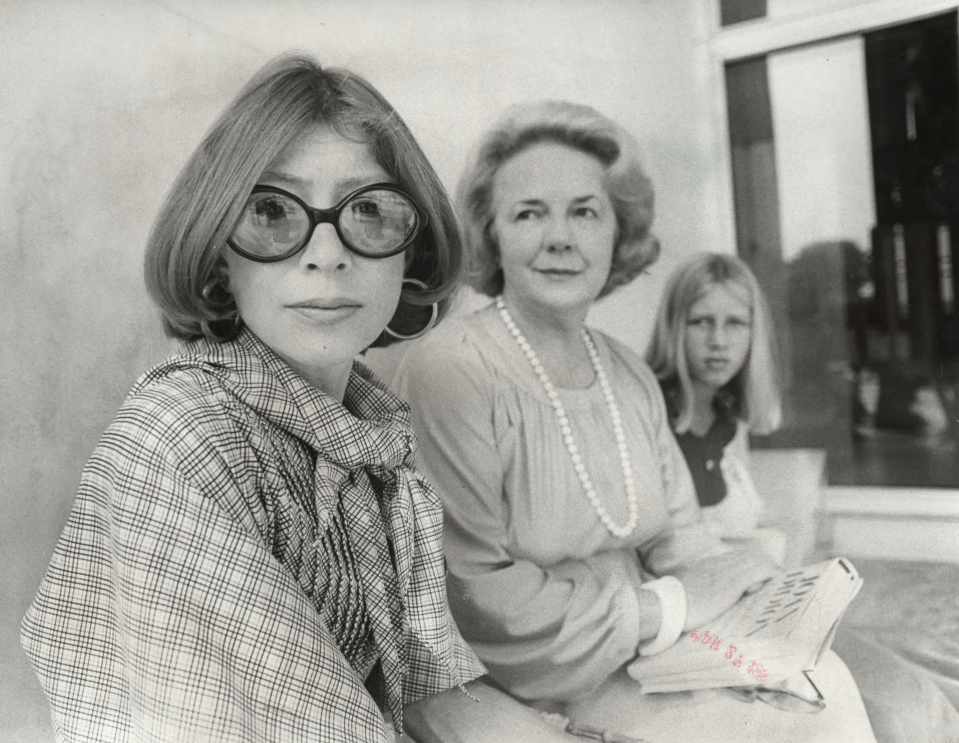
5th of February, 2025. My 21st birthday. And what better present, for a girl like me, to receive the news that Joan Didion’s therapy notes could soon belong to me. Isn’t this the news we have all wanted since her death? Finally, a chance to take stock of this brilliant mind, to really understand her. The literary community yelped.

Joan Didion is one of the US’s most defining writers. With needle-like precision she dissected America’s later 20th century. Her unrelenting commitment to journalism has rendered her with a wry, poignant voice, even its novelistic utterances. However, whilst she captured the world around her in her words, preserving the cultural offshoots and fascinations of America for us to gawk and examine like limbs in formaldehyde, Didion never quite captured herself. Her essays and articles harbour an essence, fleeting and distinct; like a stranger’s perfume as they walk past, we know it’s there but what is it, and where did it come from? From the Sharon Tate murders to the LSD shrouded Haight-Ashbury district, we locate a vision of Didion from the cultural landmarks she fashions herself around. This highly curated double-exposure of both author and object has enshrined Didion as the defining figure of a generation and that ‘California belongs to Didion’ without actually revealing the intricacies of being the woman who keenly observed the West Coast zeitgeist .

Did Didion pre-empt the sudden urge we would have to dissect, to own, that voice presented to us, thus her careful consideration of what she wanted us to know. She was a keen follower of Hemmingway, learning to structure sentences to the same acute precion by laboriously studying the very syntax and rhythm of them and synthesising this with her own literary vision. Everything she did was careful, precise, and exactly how she wanted to say it. Therefore, to leave something out in Didion world is not merely forgetfulness, or not being able to work it in, or being embarrassed, but a clear message about what she does and does not want us to see. Noli me tangere, for Didion’s I am. Her two most autobiographical works, My Year of Magical Thinking and Blue Nights, continue to approximate Didion in relation to what is around her. As her world becomes swallowed by the shock of her husband’s sudden death, the continual murmuring anxiety of her daughter’s life and upbringing, the beeping of heart monitors, the gare of x-ray prints, the calendar squares with the sames of different hospitals and departments, we see Didion reconfigure her world on these terms, showing us her life in the truest forms, unsensational and unsympathetic.

The word raw enjoys being thrown around the confessional, personal writing scene. This piece was raw as when I cut into it all that came out were tears, and blood, and guts, and juice. Maybe Didion saw that the rawest piece is the one that submits to be cut into and exposes a fleshy marbling, the blood shocked still in the veins. This craving for the ‘raw’ – the supposed real – voice behind the author has led to the letters and diaries of most of the canon to be available. Reading another’s diary no longer feels like sneaking about into another’s bedroom, searching under the bed, the dresser, the piles of clothes, and cracking the code, but a right we expect to receive; why write and not publish it for us, your peanut crunching crowd. The harrowing entries of the Plath journals show one of the fiercest writers of the 20th century at her most fragile. She speaks of an immeasurable, unrelenting pain, that she attempted to make sense of through her nightly writing campaigns to her ferocious psyche. The readiness we are to access them leaves a sour taste in the mouth, as we realise the perverse voyeurism on display as we are delivered an author’s life on a slab.

I am by no means a literary critic, no less one who believes in the autonomy of the text and the death of the author. Life informs art, afterall. But, when reading Plath’s diaries do I really get a better sense of the pain trapped between her lines? Does knowing that Woolf ate an egg or some beef or a trifle on the same day she began to pen Orlando help us unlock the text? Probably not… The ownership of the diary is a grab to owning the author; we hold their lives in our hands and scrutinise the mundane details they flourish poetically attempting to figure them out. Didion was a mother and wife as well as the writer and icon that emerges in her writings. Her careful curation of self to ensure her other selves only appeared under her watch, her direction, her discretion, was an attempt to assert herself as a public writer with an enchanting capability to fascinate and entertain with her pen, not a public figure whose life fascinates us. The intimacy of Notes to John goes against the constructed self that Didion intended.

Anais Nin, storing her diaries in a bank vault (supposedly). The holy relic of the author’s diary is pestered by prying eyes.

Categories
Culture

Raw Over Refined: Why Demos Hit Harder than Studio Albums

By Nathan Gellman

Art is often described as a window into the mind and soul of the artist. Whether on paper, sheet music, or canvas, the true emotion and meaning behind pieces of art are on full display. Music is no different; at its best it captures not just a perfect performance but a moment of emotional truth.

However, in a time when overproduction is sucking the life out of modern music, we the listeners are flocking to live shows to feel a connection with the artist that used to project through sitting rooms on vinyl, cassette and CDs. 

I’m not suggesting that I have found a substitute for seeing your favorite artist live but through my discovery of my favorite artist’s early takes and demos, I have a newfound appreciation for his work and process. Demos provide an unexpected intimacy and emotional experience of hearing a stripped-down, natural take of your favorite songs. Therefore, I challenge you, the reader and listener, to embrace demos and take in the rawness, vulnerability, and authenticity within them.

Demos are a rough, often first take of a song used to capture an initial musical idea, contrasted to a studio single it is dirty, unproduced, and not aiming for commercial perfection, merely expressing the artists’ viscerality. Demos preserve the artists’ creative spark before it is extinguished during production. 

My personal affection towards demos came upon my discovery of George Harrison’s ‘Early Takes Volume 1’ which was released in 2012. It compiles demos, the majority of which were recorded during the ‘All Things Must Pass’ sessions. I fell in love with the album as a result of Harrison’s unfiltered voice, emotional closeness and the offhand remarks that bookend some tracks which made me feel like a fly on the wall during the recording sessions, privy to the secret moments most listeners never hear.

A couple of tracks stand out as prime examples of the unique strengths’ demos have to offer. Awaiting on You All is one of my favorite Harrison songs, with it being one of his most religious and spiritual. The master recording of the song is busy and vibrant with an all-star personnel of Harrison, Eric Clapton and Klaus Voormann to name a few. However, the heavy use of reverb really melts the sound into a buzz with it difficult to hear the individual instruments throughout the song. The early take strips this all back and sounds almost unrecognizable compared to the master. You are no longer listening to a catchy pop-rock song but a man expressing his devotion to God with the help of his guitar.

Among Harrison’s most spiritual songs is My Sweet Lord, his debut single and biggest chart hit. A song in my eyes which is perfect, an exposed cry to God, presenting himself as one of the most famous and accomplished people in the world – simply, a vulnerable devotee. While there is nothing to improve on, in my opinion the demo really highlights the devotion Harrison had through the tenderness of his voice accompanied by his acoustic guitar. 

But why do these distinctions matter, why should you care about these mostly subtle differences? 

I believe demos and early takes allow for more emotional honesty, making the artist, someone who themself is followed and loved more human, through presenting their truth to the listener with no interference from middlemen. Demos feel like a discovery, something you find in your attic that you weren’t supposed to hear. It is an artist’s raw talent that separates them from you and I, and demos through showcasing their natural talent demonstrate this fact.

Demos such as Harrison’s ‘Early Takes Volume 1’ remove the layers of master recordings and remind us that sometimes the first take says it best. In an age of overproduced music, demos stand as a stark reminder that sometimes less is more.