Categories
Reviews

Review: Walkabout Productions’ ‘Room for Doubt’

By Edward Bayliss

Yesterday, I watched the first night of Walkabout Productions’ Room for Doubt. Watched, it seems, is the wrong word. As the UK’s largest immersive student theatre company, Walkabout have for almost three years been delivering interactive performances, wherein the audience play a part in the action. Co-founder of Walkabout Max Shanagher, funnily enough, was a Wayzgoose team member from 2023-2024.    

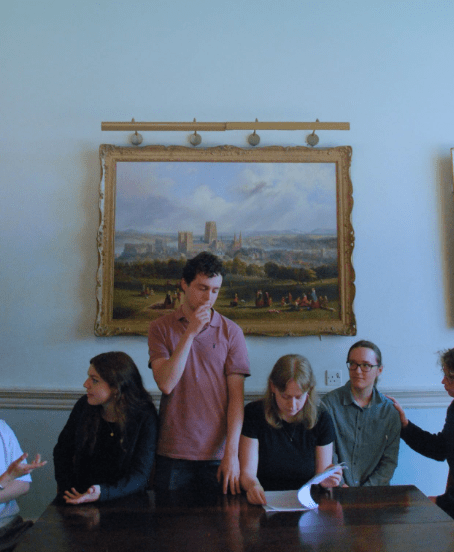
It’s 8:25 and the audience are sitting, standing, waiting – awkwardly – in a peculiar room in St. John’s College. We are told that the jury session will begin soon, but that we are waiting for ‘Patrick.’ Is this part of the show? I suspect so. The cast members (three of which are in the waiting room with us) attempt, painfully, to make small talk, and I don’t know whether to laugh, play along, or bury my nose in my notebook. We learn soon after, that according to the performance, we have just returned from a fifteen minute break and are back on jury duty.

There are six ‘core jurors’ (the cast) and the rest of us form the peripheral jurors; we are all given the chance to vote on three occasions as to the guilt or innocence of the defendant. At its crux, the performance is designed to cradle the euthanasia debate. The accused is a nurse, named but not seen, who has administered an overdose of morphine to her terminally ill patient. The production navigates evidence and testimonies which we, the peripheral jury, are invited to read aloud, and make our own judgement upon. The performance urges us to consider both flaws in the institution of British justice, and the flaws in jurors’ characters, both of which will provoke argument and debate.  

The immediacy of our involvement in the performance is mostly very effective. We all sit around a table as jurors might – the boundary between actor and audience is incredibly vague – initially, a fly on the wall observer would not be able to tell the difference. The cast also offer unscripted asides to their neighbours, met admittedly with mixed enthusiasm by last night’s audience, but which afford a greater sense of realism and often, humour.  

Room for Doubt’s writer, Raphael Henrion, studies deference, passivity, anger, frustration, and courage in the characters of his play. This pot of personalities boils over more than once. Alliances are formed, factions are established, and it soon becomes less about the case at hand and more about the jurors themselves. Gusts of rage from Mable (Grace Graham) swell as she bites back at her juror nemesis Alex (Noah Benson), both claiming to sit on the right side of justice in their assessment of the seemingly far off defendant, Emily Carter. The production however does not rely solely on loud confrontation and clash. Oli (Daisy Martin) gives convincing breaks as she cools the temperature of the room with her personal story of a terminally ill family member. The gravity of the situation jars bathetically against the ignorance and idiocy of juror Patrick (Matthew Lo), whose judicial laziness works as effective comedic respite. Overseeing the process is the long-suffering head juror Sasha (Orlin Todorov), who cues topics of debate, readings of evidence, and generally buttresses the performance with a sufficient sense of structure.

The show culminates in a final vote. We now realise we are voting on much more than the guilt or innocence of Emily Carter, but rather on the state of justice in general, and on the place of contextual morality within the unbending bounds of the law. Have no objections, this is quite a remarkable dramatic arrangement. So, get the chance to hear the case and cast your vote.

Performances are at 6:00pm and 8:00pm on 10th & 11th June in St. Johns’ Vasey Rooms.

Categories
Reviews

The Phoenician Scheme: I suppose I’m moved 

By Matthew Dodd

Around halfway through The Phoenician Scheme – the latest feature from Wes Anderson – Benicio Del Toro’s lead character, the existential arms dealer Zsa-Zsa Korda, takes a pin out of a hand grenade, refusing to return it until his associate Marty, played by Jeffrey Wright, agrees to cover a substantial portion of a funding deficit in the titular infrastructure project. In response to this, Marty says somewhat drolly, somewhat earnestly, ‘I suppose I’m moved by this absurd performance.’ It is a sentiment which might as well apply to the film at large: a strange and often inscrutable work which, nevertheless, leaves an indelible emotional footprint on the heart and mind of the viewer. A madcap, globetrotting adventure replete with fez-wearing nightclub owners, sardonic terrorists and semi-incestuous second cousins, The Phoenician Scheme represents Anderson at both his most eccentric and his most clear cut.

Anderson has charted a strange filmic course over the last decade. With 2014’s The Grand Budapest Hotel, it seemed that the cinematic establishment had finally accepted Wes Anderson as not simply an indie-darling, but a serious director, an auteur. Its nine Oscar nominations felt like his induction into the ranks of the great living filmmakers, regardless of the fact that Anderson himself went home empty handed. Since then, however, the director has refused to stay within the sweet spot of critical acclaim carved out by The Grand Budapest, instead moving further and further into the strange, idiosyncratic and divisive. 2024 saw Anderson win his first Oscar for the short film The Wonderful Story of Henry Sugar, the sole consideration the Academy has afforded him this decade. His last two films – The French Dispatch and Asteroid City – are marked by a deliberate complexity and emotional detachment which has left them somewhat controversial amongst his devotees. In many ways, The Phoenician Scheme is a move away from that convolution which has become staple and is, instead, a (broadly) straightforward espionage thriller about a father and a daughter. There are no meta-narratives, no plays-within-plays, no knowing winks to the camera to remind you that none of this is real. And yet, there is still an opacity about The Phoenician Scheme which can leave it feeling somewhat subdued. Whereas The French Dispatch and Asteroid City make a point out of their absurdity – the former as a sprawling ode to journalism and human life, the latter a narrative as thorny and overwrought as the melancholy of its characters – there is a sense in which this film finds no such certain footing from which to launch its hyperactive eccentricity. In short, it might seem there’s no method to the madness. 

The Phoenician Scheme tells the story of the plutocrat Zsa-Zsa Korda (Benicio Del Toro) and his attempts to curry favour from various business associates to fund his massive infrastructure project in the Levant, the eponymous scheme. He is accompanied by estranged daughter Liesl (Mia Threapleton) and tutor-cum-secretary-cum-spy Bjorn (Michael Cera). The whole affair is deliberately silly: Korda tries desperately to cover ‘the gap’ caused by a supra-national business council artificially inflating the costs of the ‘bashable rivets’ needed for construction. Along the way, the Scheme itself becomes secondary to the emotional journey Korda goes through. Constantly the subject of failed assassination attempts, Korda’s becomes a tale of a man rebirthing himself. He is dogged by strange visions of a heavenly courtroom at which God (Bill Murray) litigates the matter of his eternal soul. Liesl, his daughter, has become a nun since last seeing her father, and it is the reformation of their relationship which forms the emotional heart of The Phoenician Scheme. In a sense, the film retreads the path of Anderson’s 2001 The Royal Tenenbaums, another story about a deadbeat dad trying to make amends. In a more obvious sense, however, this is a wholly different beast. There is no moment in The Phoenician Scheme as obvious as Chas Tenenbaum breaking down and telling his father ‘I’ve had a rough year dad’ or as joyous as Royal and his grandsons riding on the back of a garbage truck to Paul Simon’s Me and Julio down by the Schoolyard.  Instead, this later Anderson builds up a world of cumulative absurdity out of which the reality of emotional connection faintly shines. 

In a heightened, exaggerated and very silly way, The Phoenician Scheme tells the story of a man who wants to move past the errors of his ways and forge a new path. Being a Wes Anderson film, this quite straightforward story has of course to be submerged under metric tonnes of pastel interiors, fast-talking bureaucrats and pristinely fitted suits. It is, to its credit, one of Anderson’s most unabashedly entertaining films. The performances – especially those of Threapleton and Cera – are ecstatically joyful, the narrative is outlandishly fun, the direction and production design is typically magnificent. And yet, moreso than others of Anderson’s work, the obfuscation of the film’s emotional centre can leave it feeling, at best, subdued and, at worst, detached. The walls of hyperreality are never quite punctured by sincerity in the way of his other films. 

Zsa-Zsa Korda is a character who ought by rights be dead and ought by rights to deserve it. The drama of the films comes from Korda’s post-death reinvention – as a father, as a Catholic, as a good man. This is a tale of male egos, pasts and presents, mutable identities and empathy. At each stop, Korda is forced to give up something in pursuit of success, whether it be an emotional confession, his own blood, his hand in marriage or, finally, all his worldly possessions. The film itself acts as a judgement of the character’s soul, sanctifying his spirit at each turn. Indeed, the film’s primary antagonist – if we can call him such – is Benedict Cumberbatch’s Uncle Nubar, a character who is set up explicitly as a monitory double for Korda himself. Nubar is described by Korda as ‘the son of my father’ and, quite possibly, the father of his daughter. They are one and the same, with Nubar representing the excess of that moral deficiency which Korda has long inhabited. Defeating him, he defeats himself. Throughout the film, various stone-faced assassins make attempts on Korda’s life, to which he dryly comments ‘I think I recognise that assassin.’ He is, quite literally, haunted by the ghosts of his pasts. Korda begins the film viewing his daughter as a business partner, a probationary heir. By the end, he accepts their connection as one beyond the mere biological, assuring her that, regardless of her real parentage, she remains his daughter. In many ways, The Phoenician Scheme constitutes Anderson’s most spiritual film. Liesl’s faith is the subject of numerous jokes throughout the film – early on, her rosary beads are replaced with a garishly bejewelled secular equivalent – but ends up central to the thematic conclusion. Owing to the influence of his daughter, Korda converts to Catholicism, a conversion cemented by an over-the-top action set piece which ends with a model dam bursting and dousing him in a tide of water. He is, in this way, baptised. He rejects riches and power for family and simplicity. The ending is a classically Christian one of humility and moral rectification. That said, where the traditionally religious narrative might land its hero in a monastery, Anderson favours an art-deco bohemian restaurant. The aesthetic and the spiritual are not, for Anderson, mutually exclusive.

The epilogue, in which the family are plunged into poverty with father and daughter reunited around a barrel playing card games, though not as punchy as Max Fischer slow-mo dancing with the woman of his dreams or Van Morrison playing out Royal Tenenbaum’s funeral, nevertheless finds a steadfast emotional footing. Out of a narrative of exaggerated absurdity, we are left with the final image of our two heroes, a father and his long-estranged daughter, enjoying the simplest of life’s pleasures. Perhaps, this is The Phoenician Scheme’s message to us, that none of the pomp and ceremony, the excess of style and riches, matters so much as family, as kindness. It is a strange, wild and often underwhelming film, but I cannot deny that I was moved. 

Who’s who – Discovering Identity in Wes Anderson’s The Phoenician Scheme

By Emilia Brookfield-Pertusini

One of the hallmarks of a classic Wes Anderson flick, almost as notorious as a symmetrically staged tableaux with a camera pan from the left, is a roll call of all your quirky looking stars. Picture the scene; it’s the start of The Royal Tenenbaums, Ravel’s ‘String Quartet in F Major’ is plucking away against a flip-book of striking scenes, each muse placed slap-bang center with action swirling around them. ‘Ahhh! I thought I recognised them’. ‘Oh yes! [insert star’s name] is great.’ The clamours of the Anderson cast list ensues. Identity is key to these quaint pictures, and in the midst of his middle-life crisis induced scriptwriting, Wes Anderson’s The Phoenician Scheme launches into an attack of identity headlong. Like with Asteroid City, the film focuses on makeup and artifice, attempting to use the precision of each piquant shot to display the loneliness and shallowness beneath. The marching towards the next tableau is merely another way to move us on to a new crisis of identity.  Charming as each curation is, The Phoenician Scheme’s self-conscious concern with its appearance leaves us with a film that is timid, with a cliche sense of adventure, departing into the realms of boring deflation. 

The promise of an Anderson feature starring the ever-awkward Richard Ayoade seemed like a manifestation long in the waiting. However, I think I could only remember 5 things he said, if that. Likewise, a silent Willam Defoe in the background of the absurdity cliche heaven segways, the forgettable apparition of Scarlett Johanssen, and the overshadowed Riz Ahmed, dissolve into the ennui of the film’s tired sighing. The Phoenician Scheme essentially follows three archetypes; the nun (Mia Threapleton), the reckless plutocrat (Benedicto del Toro), and the awkward, sniffling academic (Michael Cera). Any other person is nullified by their totemic identities, becoming one-note statues in the background. The reluctance for any sort of meaningful character breakdown within the film further cements its stagnancy. Despite her fall from grace,  Sister Liesel’s material habits and power hungry stubbornness and insistence mean she is ever the troubled nun in our eyes; these characters never really change, despite the ego death the film cries for.  The currents that cause the ripples and lapses of character are shallow and overdone, providing us with little substance outside the basic, espionage plot. The nun is really rather dissatisfied with her life, confused due to her mother’s murder, and her cloistered existence acts to stubbornly reject a world she feels detached from. The billionaire uses vanity to create intelligence. The academic is a spy, and wants more than bugs in his life. This parade of personas based on dissatisfaction ultimately makes the film itself a dissatisfaction, as each insecurity breeds into a cliched attempt of reconciliation and change.  

The instance to enshire these identities to these understood archetypes provides a catalyst for an overwhelmingly one-note performance from all. Sister Liesl provides us with an unwaveringly dead face, shrouded in unhappiness and wanting to be anywhere else, always. Zsa-Zsa speaks as if he has one eyebrow raised, always. Bjorn speaks as if preparing to be struck, with a truly Scandinavian direction, always. The compounding of their identities means even when challenged by a break, a relife never arrives. The black comedy runs stale, growing harder to digest upon each minute of the runtime. 

Maybe I have grown too old for Wes Anderson. The crisis of a plane crash, and the angsty black and white shots of heaven no longer amuse me. Perhaps my identity has moved away from the tweeness and symbolic affect of each character, leaving their identities stifling and my want for the Wes Anderson of old left unsatiated. That being said, there is still hope, with 2023s Roald Dahl adaptations solidifying Wes Anderson’s identification as the hard hitting, mature maker of twee. The Phoenician Scheme remains to be solved, and was left to discover who it was without being given a foundation of chance. 

Categories
Reviews

Sam Fender’s Long Heady Summer

By Esme Bell


I really meant to write this in February, when North-East legend Sam Fender’s most recent album, People Watching, was released. I planned a blistering review, criticising his new trajectory and the album’s general insipidness etc etc – but endless uni work and my diss meant there just wasn’t time, and the vitriol had to wait.

I should mention that Sam Fender is my longest-standing teenage obsession: his was my first gig, my next three gigs as well, and when I saw him in real life (not on stage) in Durham’s Boat Club in my first year, I nearly exploded. I was so excited for the third album – and my disappointment was therefore deep.

But my summatives were (eventually) submitted, and the album – played constantly, understandably, across Durham environs – became a general accompaniment for spring as it bled into summer; I began to think differently, and felt now might be the true time for a review.

I maintain some reservations. Lyrically, directionally, People Watching is less potent than his earlier albums, which can be characterised by real vocal and musical warmth, compassionate anger, and cutting social commentary. Songs like ‘The Borders’ and ‘The Dying Light’ demonstrate this perfectly, painting acute, personal heartbreaks, but in no way moralising or pretentious: convincing instead through their raw and open-hearted narratives; anthems in spirit as well as sound. 

People Watching is still concerned with social issues, but is also more introspective, self-regarding – at points, perhaps more fulfilling for Sam the writer than his audience – and at times it gets clunky, like the songs themselves aren’t used to this change of focus, like they miss addressing the wider world.

Case in point: in ‘Wild Long Lie’, which discusses the disconnect between fame and coming home, Fender sings  ‘And I’ve gone quiet ’cause my heart is still choking up from a love I tore apart’. This line, like a few in this song and the album, feels like it should be about someone else, not the first person: acceptable in a third-person narrative, but oddly dramatising and self-conscious when levelled by Sam about Sam.

Musically, there is also a dearth: gone are the anthemic, crowd-enrapturing, guitar-resplendent “rock” songs that we mostly expect from Fender. Anyone who has seen him live will know the magic of the final performance of ‘Hypersonic Missiles’, as the crowd joins the band to form an ecstatic, eternal-sounding choir. It is hard to imagine such a covenant being formed from this album; the whole sound is gentler, almost tinkling, much less emphatic, and in places, derivative. 

Bruce Springsteen and “Americana” has always been a self-proclaimed influence for Fender: a recent Times article discussed his label of ‘The Springsteen of the northeast’. Springsteen’s influence can be felt not just in Fender’s sound, but in their shared focus on disenfranchisement, the desire to escape, the power of place to impact a life. And while People Watching still calls on Springsteen, it is also more random: there are shades of R.E.M in ‘Nostalgia’s Lie’, shades of Oasis in ‘Rein Me In’, shades even of Fontaines D.C.’s ‘Starburster’ in ‘TV Dinner’. All, individually, are great artists and songs, and artistic appreciation/homage is obviously a major part of all music making, too – often not even deliberate. Across this album though, it comes across as a bit inconsistent: an undecided melange, as though homage were trying to plug the void of individual inspiration, and left some gaps.

But inspiration can never remain the same. Between Fender’s Hypersonic Missiles (2019) and this year’s album, he has moved away from North Shields – the anchor/kite/bone marrow of his earlier work – entered his 3rd decade, been on world tours, performed at Glastonbury, even opened for ‘The Boss’ himself. It is only fair that his music progresses, moves, fluctuates with him; as listeners, we can mourn the change, but shouldn’t ultimately resent it.

And People Watching isn’t an entire disappointment. The gentler tone is not unsuccessful; ‘Rein Me In’ has a deliciously Western, cowboy flavour, and somehow manages to rhyme ‘bliss’ and ‘tinnitus’ with complete conviction. ‘Nostalgia’s Lie’, too, is subtly affecting. Elegiac and reminiscent, it is also aware of the rose-tinted, endlessly summery way we look back on the past – particularly fitting for students, especially those of us in our final year. ‘Remember my Name’ – in touching reference to his grandparents – is a very persuasive argument for brass bands, and ‘TV Dinner’, I would argue, stands on its own: an entirely compelling listen and absolutely one of his best, from any album. 

It is startlingly different to the rest of People Watching, and definitely ‘Starburster’ – adjacent with its slippery chromaticism; it is also magnificent, kind of smoldering and metallic, with persuasive strength in the chorus and a “proper” guitar solo towards the end. Easily on a level with any of his other heavyweights like ‘Play God’ or ‘Aye’, ‘TV Dinner’ is even more poetic, more grown up, more cutting, with sophisticated lyrical layers like ‘the constant spin, the merry-go Round/house-kick into the face,’ (which sounds better if you listen to it!). It feels like a glimpse of the passion of Fender’s early sound, with the control and finesse of a third-album-artist; it feels almost like it could be the prototype sound for a fourth album.

And this is where I stand, now my rage has abated, with People Watching. As an album, it seems to signify a loss of power, of passion and outrage; but, in the quietness, there has emerged a sense of aging, growing wiser, maybe more at peace – and of greater, other, sounds still to come.

And it really does grow on you over the course of a few sunny months: the perfect soundtrack for a long, heady summer. 

Categories
Reviews

The Army, The Navy live at Colours Hoxton

By Edward Clark

The Army, The Navy shine brilliantly live. In the cozy Colours Hoxton, the American two-piece showcased their unique style, which centres the detailed vocal harmonies of singers Sasha Goldberg and Maia Ciambriello. After growing in popularity last year, with the release of projects Fruit for Flies and Sugar for Bugs, the pair cemented themselves onstage as effortlessly talented performers, the audience in the palm of their hands.

The Army, The Navy’s Spotify Bio credits the pair’s ‘consonance’ to their being ‘childhood friends who shared a singing coach’. Live, this consonance was apparent from the moment they stepped onstage. Opening song Gentle Hellraiser – the namesake of the tour itself, of which the London date was the final gig – displayed the pair’s easy harmony. Mics were turned up to amplify Goldberg and Ciambriello’s gentle vocals. Although soft, the pair had absolute control of the room. Vocal lines were not the only thing working in tandem: both lead singers underscored themselves with detailed fingerpicking patterns played alongside one another. The pair excelled in these moments of quiet control. Songs where emphasis was placed on vocal harmony, such as Bookend and Persimmon, were exceptional.

These moments, alongside almost every number in the setlist, were supported by multi-instrumentalist Jess Kallen. Kallen’s addition provided the necessary range which The Army, The Navy’s catalogue demands. Shifting seamlessly from delicate keyboard accompaniment to heavy slide-guitar and shoegazey drone, their accompaniment elevated the live performance throughout. These heavier moments did sometimes drown out Ciambriello and Goldberg’s vocal nuance, an issue more apparent with their performance of unreleased material, where lyrics and melodies were lost. Nonetheless, heavier moments were well paced in the setlist, providing moments of reprieve which kept delicate harmonies fresh and exciting. Akin to their albums, The Army, The Navy had a clear vision for the flow of their performance, balancing subdued tracks with energetic ones and maintaining energy in the room. As the set began with captivating, quieter songs, it ended with the upbeat and dynamic Wild Again, leaving the audience wanting more.

With such a concise catalogue, I walked into Colours wondering whether Goldberg and Ciambriello actually had enough music to properly fill a setlist. I once saw a newly-popular artist play at a festival where they were forced to play all of their released songs twice, and hoped the case would not be the same here. By the third song, I realised I had nothing to worry about. Hits from their two LP’s were supported by unreleased material and personable audience interaction. Fan-favourite 40% smoothly transitioned into an acutely unique cover of Destiny’s Child’s Say My Name, 40%’s catchy hook ‘Say my name, say it again’ transforming into the R&B pop banger; the result was endearing. ‘Tricked ya’’, Goldberg joked. Whether the ‘trick’ was the surprise cover itself, or a clever way to avoid having to deal with the heavy breakdown of the song’s final moments, it nonetheless entertained. Sugar for Bugs cut Rascal was transformed into an anthemic moment, as Goldberg directed the audience to sing along with the repeated vocal riffs. The pit’s quiet admiration of the pair’s harmonies seamlessly shifted into audience involvement. Goldberg and Ciambriello’s musicianship was elevated through performance.

Goldberg and Ciambriello’s performance thrives on their chemistry. As human touch in music is no longer guaranteed – the use of Artificial Intelligence in production and vocal ‘cloning’ has received endless discussion online over the past two years – The Army, The Navy offer an enchanting, human response. Moments of light choreography, laughter and connection between Ciambriello and Goldberg placed the two singers’ chemistry and consonance at centre-stage. During one unreleased song, sung a cappella with the two singers in complete unison, you could hear a pin drop in the audience. As the two friends celebrated the final moments of their sold-out first headline tour, I could only wonder as to when they will return to Europe, and doubted that it would be in a venue this intimate again. The Army, The Navy is one to watch.

Categories
Reviews

Review: ivies – ‘i don’t wanna care’

By Edward Bayliss

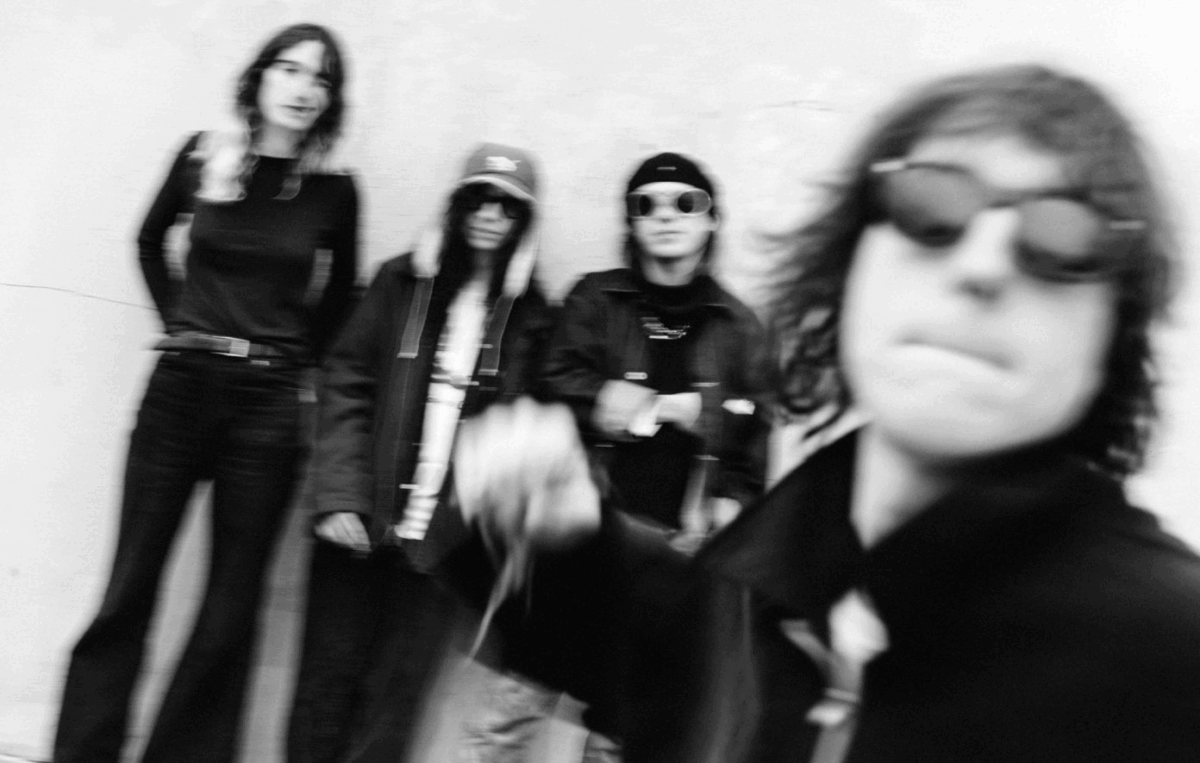
Indie-pop band, ‘ivies’, recently released their latest single, ‘i don’t wanna care’. Their band, formed of current Durham students and recent graduates, consists of vocalist Alice Bird, lead guitarist Alfie French, bassist Kiko Keighery, and featuring on this track are also drummer Ed Jobburn, and rhythm guitarist Ben Harrisson. Alice describes the character and creation of the song with the following words: 

‘As a chronic people pleaser, I spend way too much time and energy worrying about what I think people think about me. I often wish that I could let go of these anxieties and just live my life without the weight of other people’s opinions, so I wrote this song about it. We capture the chaos and frustration of dealing with these feelings through rapid lyrical runs and shouted backing vocals. This is wrapped up in an upbeat chorus that echoes the energy of the song’s predecessors ‘sick for a week’ and ‘drunk honesty’ but a deep dive into the lyrics show a more vulnerable side, depicting the prevalence of self-consciousness in this digital age.’

I am usually slightly suspicious of song titles that feel the need to do away with proper grammar or capital letters as a stylistic choice to provoke a more casual or intimate atmosphere. My Bloody Valentine pioneered the same tactic in their ‘loveless’ album back in 1991, but since then, Travis Scott, Ariana Grande, Billie Eilish, Taylor Swift, and many others have all gone lower-case in recent albums. I understand that it is an aesthetic choice, and if suited to the song’s sentiments, it can sometimes work, but often it appears, ironically, to force-feed us manufactured impressions of cool carelessness. Incongruity between a song’s title and its presentation can also jar against our ears – take Zayn’s laughably titled ‘PILLOWTALK’, for instance. All this – but then again, what’s in a name? I am however glad to report that the ivies’ song title ‘i don’t wanna care’, works – it’s no capital crime. It is consistent with the presentation of the band’s previous song titles, but more importantly, its disregard of capitals is symptomatic of the song’s desire for carelessness itself – a central theme of the song.

‘i don’t wanna care’ trips excitedly on clean guitar seventh chords at its beginning, giving it a sharp yet longing summery feel. A bass guitar and drums widen the sound, recollecting hits from Beach Bunny (think ‘Cloud 9’), with the bass climbing and falling, affording a sense of momentum to the piece. For a song with such tormented lyrics, the music is carried by a remarkable buoyancy. Perhaps, as with the song title and its apparent disregard for rules, the music also tries to break from any impression of rigidity or constriction. The lyrics seem to slip easily from vocalist Alice Bird’s mouth – the words are themselves agile and alive (like in many of Olivia Rodrigo’s songs) – again, in strange but effective opposition to the constrained themes of the song. It is this conflict that gives the song its compelling character. 

ivies’ song builds to a nicely bending guitar solo that tries to reach higher and higher, until we return to the next verse, which drops into discussion of feeling ‘crazy’, wanting to ‘let go’ and ‘unscrew’. Vocals are more liberally applied and layered after this at the song’s denouement, as the narrative grasps for further ‘carelessness’ and certain freedoms so difficult to possess in today’s culture of ‘social pressures’, according to vocalist Alice. By the end of the song, the lyrics and music are at their most intense, their most resistant – trying desperately to wrestle with the weight of ‘other people’s opinions’ and the resultant ‘anxieties’. 

This single is cleverly constructed – its themes in some ways reflect, and in some ways scrape against the surface of music beneath it. This is the narrative of someone disoriented and confused, who doesn’t want to care, but also feels the suffocating pressure of opinion and judgement. 

You can listen to ivies’ new single on Spotify.

Image provided by the band.

Categories
Reviews

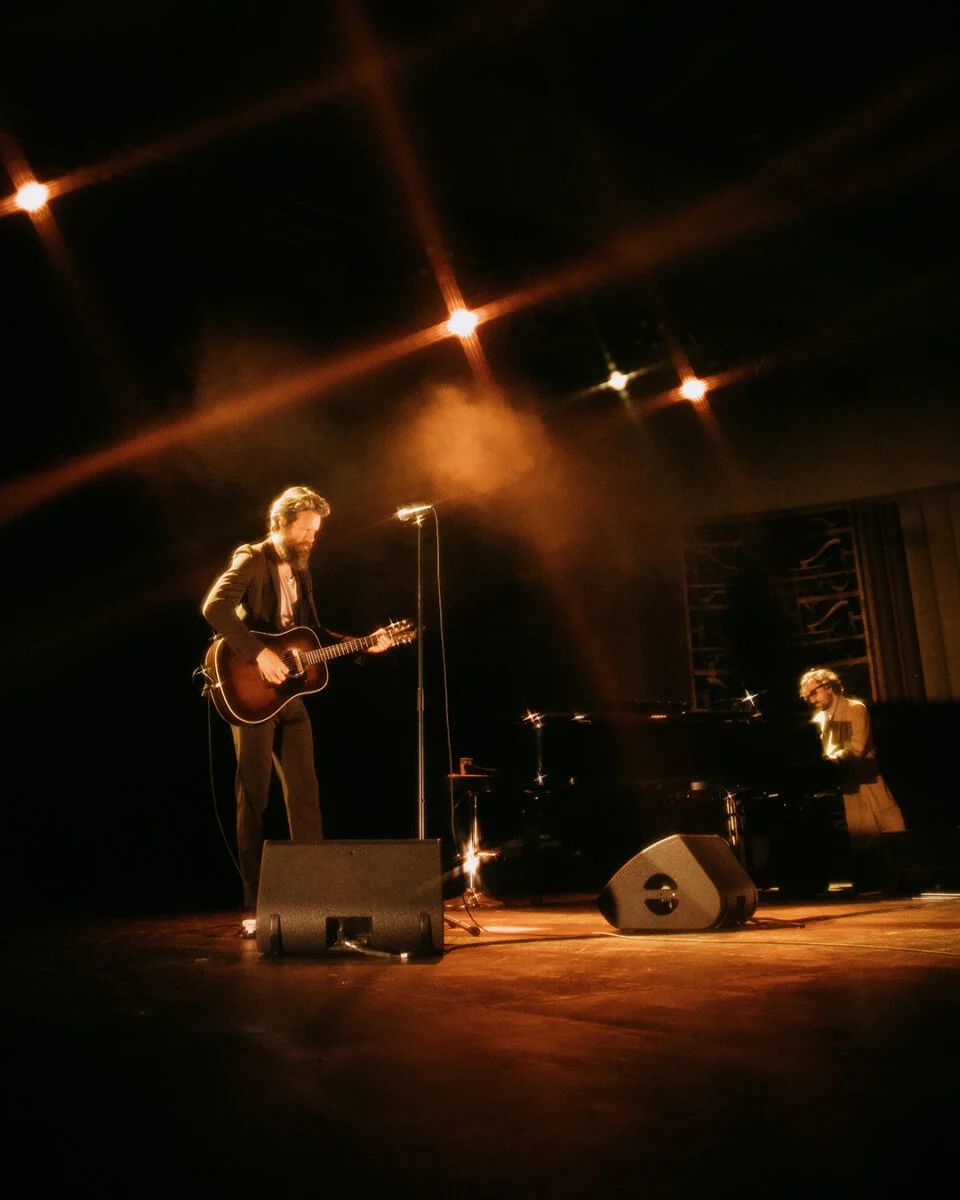
Father John Misty at the Royal Albert Hall

By Matthew Dodd

Josh Tillman – the artist currently known as Father John Misty – takes to the stage of the century-and-a-half old Royal Albert Hall with typical sangfroid. It’s four songs before Tillman deigns to speak to his crowd, sardonically quipping that ‘this is the most dignified place I’ve ever been in, and I went to the Sphere in Vegas.’ The singer-cum-hipster-messiah is, allegedly, playing in support of two projects: his latest album, 2024’s Mahashmashana, as well as a tenth-anniversary re-release of his breakthrough album I Love You, Honeybear. Both albums are well-represented on the setlist, but it’s hard not to see this performance as a wider celebration of an artist at the peak of his career. That said, this is nothing like a greatest hits showcase. Neither of his collaborations with Lana Del Rey (Buddy’s Rendezvous and Let the Light In) are played, nor his TikTok-ified megahit Real Love Baby. Instead, Tillman shines a light on and, with the help of an exceptional backing band, rejuvenates underappreciated numbers from his extensive discography, such as 2018’s Dissapointing Diamonds Are the Rarest of All and encore track So I’m Growing Old on Magic Mountain, the latter of which he describes as ‘another interminable meditation on ageing.’ Tillman has been pondering ageing, particularly in a time of global crisis, for much of his career, but there is a time-earned maturity about his performance now, the self-effacing humility of a performer who knows all too well how he’s perceived and has no desire to change.

Father John Misty, heretofore referred to by his birth name, has always had the aspect of a man out of time, whether as an old-fashioned singer-songwriter in a world of corporate pop music or a hipster millennial in an age of Gen Z post-irony, and this apex performance only solidifies his role as the brooding sage of contemporary indie. Publicly described by his peer Ryan Adams as ‘the most self-important asshole on Earth’, Tillman built a reputation as the most ‘online’ of his musical contemporaries, never one to shy away from a twitter controversy or a grandiose and divisive statement on any of his many opinions. For the best part of a decade, since 2016’s Pure Comedy, Tillman had taken a step back from social media and the press, chronicling the digital age from a concerted remove over his next two albums. Nevertheless, having returned to the internet last year, Mahashmashana finds Tillman as bogged down the esoterica of the ultra-online as ever: the Father John Misty merch table includes a T-Shirt of Tillman posed with the anime character Misato Katsuragi and the words ‘I WISH I WAS HIM’. It’s this peculiar concoction of cultural attitudes that makes Tillman such a compelling artist. He is a self-consciously conceited scribe of the digital age, hidden behind the deliberate artificiality of the Father John Misty character, and yet he is also one of the most open-hearted artists of his generation. Contradictions are central to his work, as is the faith required to accept them.

Raised in a staunchly Evangelical household, Tillman’s music interrogates the vacant space of religious meaning in a secular world. Across his work he tries at turns to plug this hole with technology and cultural overstimulation – ‘bedding Taylor Swift every night inside the Oculus Rift’ – before concluding that, ultimately, it is only love which can bring us peace – ‘I hate to say it, but each other’s all we’ve got’. His unique brand of post-modern fatalism and its paradoxical conjunction with a belief in the all-conquering power of love make him one of the few contemporary artists to feel truly contemporary, whose work aptly speaks to the antithetical, manifold anxieties of modern living. How can we continue to live and love in a world on fire? Tillman offers no relief, only a conciliatory suggestion that, in the grand machinations of a doomed world, our only choice as individuals is to keep on loving through it all. Yes, the world may be ending, but what’s that got to do with us? It’s a sentiment he sums up neatly in his closing number: ‘everything is doomed and nothing will be spared, but I love you, honeybear.’

Tilman is no stranger to self-mythologising. Indeed, at least three of the songs played (The Night Josh Tillman Came To Our Apt., Mr Tillman and Josh Tillman and the Accidental Dose) include his own name in their title. And yet, he revels in the periphery of mainstream acclaim. On opening song I Guess Time Just Makes Fools of Us All, he proudly quotes a description of himself as ‘easily the least famous to turn down the cover of Rolling Stone.’ There is an excitement in his self-proclaimed status as a pariah of the indie scene. Once the bad boy – the ‘precocious 33-year-old’ he cites as the author of his earlier songs – he is now the veteran provocateur, never content to coast off his back catalogue. Even last year’s Greatish Hits compilation was an excuse to foreshadow his next album. Brushes with mainstream success – his collaborations with Lana Del Rey and Real Love Baby’s adoption by the TikTok algorithm – seem only to have spurned him towards the new, the strange and the unconventional. Consequently, far from a sleepwalking retrospective on over a decade’s work, his Albert Hall set feels like the vibrant exhibition of an artist with everything still left to prove. If the Josh Tillman referenced in the aforementioned songs is the earnest romantic, Father John Misty is the prototypical showman. From the perfectly frazzled hair to the frankly sexual manipulation of a microphone stand, he owns his performance wholly and completely.

The religious element persists throughout Tillman’s music, from the satirical – tongue-in-cheek visions of a Mary Magdalene who, anticipating the crucifixion, ‘said no one’s fucking with my baby, Lord, and got armed to the teeth’ – to the sincere – a pleading cry to ‘roll the stone away, I wanna go where everyone’s perfect beneath their robes.’ Yet, it is difficult to miss the peculiarly mass-like quality of Tillman’s performance style. He renders the Royal Albert Hall a chapel, and he a prophet for the end times. His sermon is straightforward: a self-effacing condemnation of the irony-soaked cynicism wrought by modern living, and a plea for earnestness, for love, for art. The more meditative tone of Tillman’s latest album represents the artist at his most direct. On Mahashmashana’s lead single Screamland, a wall of ambient sound is splintered by the anthemic and brazenly simple chorus which, belted by an electronically enhanced Tillman, reverberates through every corner of the Hall: ‘stay young, get numb, keep dreaming.’ Father John Misty has never been more entertaining, more exciting, more essential.

Categories
Reviews

Grace Elizabeth Harvey – Folk and Faith in Tender Conjunction

By Emilia Brookfield-Pertusini

A honey prickled voice rolls through the chambers of my Koss portaPros during an anticipatory Spring walk in Durham. The Spotify algorithm has decided that me, right here, right now, is the perfect audience for such a tender serenade. ‘Grace Elizabeth Harvey – Familiar’ flashes back up at me. The chords and charmingly brutal lyrics, in spite of the optimism of Harvey’s voice, recall etching  memories of syrupy mornings, sunlight slipping in and out of curtains, after some bleary eyed sleepover of youth, singing whilst waiting for pancakes. This a truly trancentry, transportive experience, against the Medieval, faith woven paths of Harvey’s alma mater  The gentle intimacy of Harvey’s sound is profound, and is apparent within her new single ‘Lullaby for Wasted Time’ (out 4th of April).   

Harvey’s delicate sound is informed by a frenzy of folk artists. The rolling, dreamy guitar resonates and hums with the haze of Nick Drake. The somber dewyness of Leonard Cohen drips against the delicately placed cello and gossamer lyrism. A communion of folk is created by Harvey, staying devoted to her folk roots. Her upcoming tour and EP, ‘Other Faith’ ( 9th of May), is a passage through faith’s many formed manifestations; Harvey’s own faith clearly lies within the grooves of folk LPs.  Faith appears as a confusing gauze, fragile when untangling, trapping in its covetousness. Yet, the apparitional iterations of Harvey’s  music enchantingly unravel the holy, melancholic, and loving underpinnings of faith. The push and pull of faith, and faithlessness, moves Harvey’s music into crushing crocendos, and gentle frolics. 

Adrianne Lenker, a fountain of inspiration for Harvey and the 21st century’s brand of folk, has a conjuring quality about her. Her presence and the ability to melt the world around her, and Big Thief, during performance, possesses a transient magic that illuminates her moody ethereality further. This 21st century iteration of folk, one that is moodier and bolder in its whimsy, has clearly been captured by Harvey, with her new single, ‘Lullaby for Wasted Time’. A beautifully damning lyricism, with crushing dejection, the sentimentality and abandon run clear.  The chords brim and bubble with honesty, meandering, brooklike, into a captivating haze. 

The suspension held in the musicality of Grace Elizabeth Harvey’s song is dazzling. Precious, personal, and relentlessly poetic. The subtle power that spurs Harvey’s creativity relinquishes faith in folks’ new form. So, whether meandering down carpeted avenues sun blinded, or rain shafted, curled up in the intimacy of a morning cup of tea, or simply blessed with a voraciousness for new gems within the music scene, Grace Elizabeth Harvey’s gold-spun rhymes will transport you to a personal poetic elysium. 

Categories
Reviews

Jane Remover ‘ventures’ further into rock: venturing’s Ghostholding


By Edward Clark

Jane Remover’s most recent release Ghostholding under side project ‘venturing’, refines her exploration of a rock soundscape. The project follows 2023’s Census Designated, Jane’s foray into post-rock and shoegaze, yet the sound on this release is tighter, Jane’s vocals less distorted, the guitar softer and the melodies more distinctive. On highlights such as ‘Sister’ and ‘Believe’, Jane’s distinct vocal style is placed at the forefront of the mix, accompanied by a relatively stripped-back rock instrumental. There is minimal deliberately harsh drone, a staple of Census Designated, and hardly any of the digitization which defined 2021’s frailty, an album which pioneered a subgenre coined ‘digicore’. In contrast to Jane’s previous releases, Ghostholding is simple yet potent.

Jane Remover’s rise to success followed her pioneering of the electronic, hyperpop-influenced genre ‘Dariacore’ online, after cultivating an audience through releases on Soundcloud. This self-made genre thus influenced 2021’s frailty, a record which embedded Jane’s distinct vocal style in her self-produced, incredibly detailed hyperpop-styled beats. She then progressed away from this genre in 2023’s Census Designated, a pioneering shoegaze and drone-heavy record. Even these songs, however, clearly reflected Jane’s passion for intricate, polished, detail-heavy music. Vocals on tracks such as ‘Lips’ were heavily layered, and crushing guitars, drums and piercing screeches combined to provide a challenging sonic experience. Ghostholding largely reduces Jane Remover’s strong songwriting in this style to its simplest form: a vocal line, guitar, bass and drums.

This stylistic decision does prevent Ghostholding from reaching the almost-metal heights Census Designated did on tracks such as ‘Idling Somewhere’ and ‘Census Designated’, yet instead achieves a stripped-back sound which amplifies Jane’s voice. For example, ‘Sick / Relapse’ is an absolute standout, with Jane’s vocals beautifully harrowing as they provide more clarity in the mix compared to her previous work. When provided the space to breathe, Jane’s emotional vocal tone and the repeated lyrics of ‘everybody’s seen my body’ and ‘everybody’s touched and said they love me’ take centre stage. No matter how the listener interprets these lyrics, perhaps as an exploration of the widespread sexualisation and fetishisation of trans women – Jane being one herself  – or lamenting a personal relationship, the song is incredibly poignant. When the track does build to a crescendo, the guitar solo and heavy drums go further to emphasise the lyrical material of the song rather than overshadowing Jane’s voice. Unlike deliberately intense hyperpop-styled sounds found in her previous work, the electronic noises on Ghostholding appear in moments of levity and beauty. The metronome-like beeping in the background of ‘Sick / Relapse’, alongside a high-pitched twinkling in the background of the instrumental section is beautiful rather than overbearing. These moments remind me of stripped-back highlights previously released by Jane, such as ‘goldfish’ or the single release of ‘Contingency Song’. 

However, not all of the tracks on Ghostholding are amplified by Jane’s simplification of her sound. Where the songs with the strongest melodies are supported by strong and simple guitar lines, others simply become repetitive and uninteresting. Where a less-popular song with a weaker melody still held value in developing the sonic experience of a previous Jane Remover record, songs like ‘We don’t exist’ and ‘Play my guitar’ are more obviously identified as weaker cuts here. 

Interestingly, this release under the ‘venturing’ alias has taken place alongside Jane Remover’s 2025 rollout for her upcoming album Revengeseekerz. However, the sound she has adopted on her singles ‘JRJRJR’ and ‘Dancing with your eyes closed’ is entirely at odds with that of Ghostholding. ‘JRJRJR’ is abrasive and detailed, with a maximalist, harsh electronic instrumental. Unlike the softer and melodic vocals on Ghostholding, Jane’s vocals on the repeated ‘JR’ hook are angry and assertive, underscored by a thumping bassline and a sample of the Pokémon Palkia’s in-game cry. The washed-out guitars of Ghostholding are nowhere to be found. The sound of the follow-up single ‘Dancing with your eyes closed’ is even closer to frailty’s ‘digicore’. Intense, distorted electronic breakdowns are reminiscent of the best on Jane’s debut. The grainy music video, which sees her dancing in a club to the hyperpop banger, only adds to the atmosphere. Both singles appear to be pushing Jane’s intense hyperpop sound further than she has before. 

Perhaps Ghostholding’s deliberate emphasis on a softer and more refined rock sound compared with Jane’s previous work indicates an upcoming shift in the other direction on Revengeseekerz. As Jane has used their alias to ‘venture’ further into rock, they appear to be moving in the opposite direction into the hyperpop sphere on their next release. Jane Remover is not bound by genre.

Categories
Reviews

Review: After Taste

By Rory McAlpine

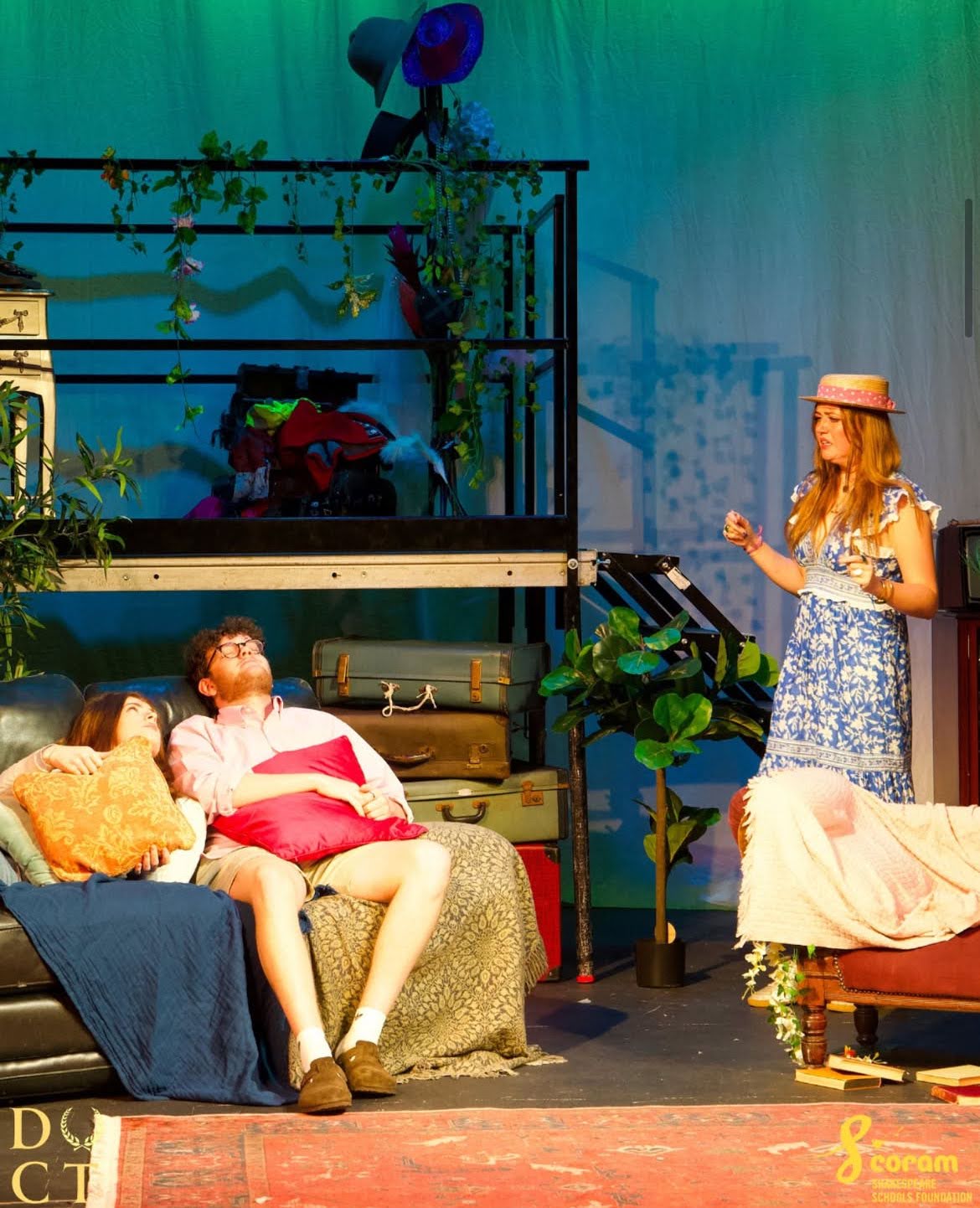
What is love? What is this mystifying, often elusive force, shaping and impacting so much of our lives? After Taste, by Katie Procter, is an hour-long performance infused with humour, joy and moments of deeper vulnerability, grappling with this question and offering a moving commentary on love, heartbreak and human connection. 

Juniper (Isabel Bainbridge), in the aftermath of a breakup and with her ambitions to pursue a career as a writer faltering, is feeling lost and lonely in the vastness of the city she has moved to post-university. Her nights see her attempt to fill this void by bringing men back to her room, found on dating apps, club floors, and even introduced by mutual friends. Yet, the sexual encounters that Juniper seeks never come to fruition – instead, she finds herself conversing on love and unpacking its meaning, contemplating on the patriarchy and her struggles transitioning from university life into the world of work. Waking up with the inevitable hangover after these failed flings, Juniper is always met by her best friend Maddie (Robyn Bradbury), whose concern, encouragement and care for Juniper proves to be the much-needed cure. 

Juniper and Maddie are opposites. Juniper’s life is directionless; she feels stagnant, while Maddie, in contrast, is put together, preparing for her morning yoga or discussing the latest health crazes. When Juniper lies hungover in bed, Maddie is bustling around the room suggesting hangover cures and radiating an invasive positivity that initially irritates Juniper but quickly brings a smile to her face. The intimacy of Juniper and Maddie’s friendship is at the centre of the play and is conveyed on stage through not just dialogue but body language, movement and physical touch, with moments of female friendship and care such as Maddie combing through Juniper’s hair or cleaning up her room and bringing her food, taking on the role of a motherly figure. 

Each man brought back to her bedroom exposes Juniper to a different view of love. One awkward encounter ends up with her playing scrabble and discussing the view that love is a talking quota, that your relationship lasts only as long as you have things to say to one another. Another night, an overconfident, narcissistic man talks about how monogamy is outdated, whilst a man with a particularly mathematical mind talks about the probability of finding love in a room full of people. All these conversations ultimately converge on the question of whether they believe in soulmates, and all try to disabuse Juniper of this notion, claiming: No, there is no single person for someone, no fated love in the stars. Yet that is ultimately Juniper’s view of love: the existence of soulmates. 

All these different views of love are brought up when the final man she meets in her room is her ex-boyfriend, and they talk through what led to the disintegration of their relationship, with Juniper subconsciously slipping into conversation the ‘talking quotas’ and mathematical probabilities. Against this backdrop of men that come and go with divergent views on love, there is a constant – interwoven through these episodes is Maddie and Juniper’s relationship. One that is genuine and built not on romantic love but deeper friendship. If one believes in soulmates, Maddie and Juniper exemplify this. This realisation is one that Juniper gradually comes to understand. 

The performance incorporates sparing but thoughtful use of props, lighting, and set. The passing of time is effectively indicated by characters changing the pages of the calendar in Juniper’s room, while scene changes are accompanied by purple lights and pulsating music, marking clear distinctions between different moments. The use of a screen to project a montage of photos and videos documenting Maddie and Juniper’s friendship is a particularly moving moment, intensified by the differing medium. 

After Taste is a delightful original script that holds at its heart the powerful message that life and love are messy and complicated. Yet, we should not allow this fixation on romantic love to cause us to lose sight of the fact that love has many guises and that the love born of friendship can be equal, if not more fulfilling.

Categories
Reviews

Tied up in Love: Revisiting Secretary on Valentine’s Day

By Misty Delembre

It seemed like a fitting Valentine’s Day choice: Secretary (2002), the offbeat, kinky romance that had once felt refreshingly different from Hollywood’s sanitized love stories. I remembered it as tender, strange, darkly funny – a film that challenged normative notions of desire and control, of what it means to be in love and be seen. But on rewatch, there is something near insidious about the way Secretary is able to seduce its audience. It masquerades as a love story. But beneath its neatly tailored surface, something far more perplexing simmers. Steven Shainberg’s film walks a fine line between empowerment and conditioning; liberation and entrapment. It is a film that titillates while making us uneasy, that plays with control while never quite relinquishing its own.

Although this time, I couldn’t ignore the details. The imbalance. The erasure. He is Grey; she is Lee. He is the boss; she is the secretary. He is older, composed, in control. She is younger, uncertain, and  shamelessly desperate to please. It is not lost on me that he refers to her by her first name, while the film never allows us to know him as anything but ‘Mr. Grey’. Even in language, the hierarchy is maintained.

Yet the film romanticises their dynamic as a kind of mutual discovery. Lee, a woman who has spent her life in quiet self-destruction, finding solace in the structure of submission; Grey, a man daunted by his own desires, learning that he can allow himself to indulge. But this concise narrative arc collapses when observed too closely. The truth is in the unspoken details, the ones the film never asks us to interrogate too deeply.

Grey has done this before. Lee is not the first. She is not special. This is indeed a pattern. A hiring practice. A cycle. The film never lingers on the implications of this – the other secretaries who sat at that desk, typed those letters, ceremoniously bent over at his command. Were they discarded when they got too close? Did they leave, shaken, distraught and  ultimately unsure of what had just occurred? Secretary treats their existence as a footnote, a quiet admission that Lee is merely another in a line of women funnelled through Grey’s carefully constructed world.

And yet, the film asks us to perceive this as love. It asks us to believe in the sincerity of their connection, to rally when Lee proves her devotion by sitting, hungry, exhausted, near-delirious, at his desk for days, waiting for him to decide she is worthy of his affection. Her submission, once playful, becomes obscured by undertones of abuse. And while the film frames this as an act of self-actualisation, of agency, I cannot shake the unease. Would this be as palatable if Grey were less conventionally attractive? If his office were not bathed in warm, rich mahogany? If the camera did not romanticise his touch, his control, his power?

The mise-en-scène aids in facilitating this deception. The muted tones of Lee’s home life, occluded thick with repression – soft pastels, smothered under fluorescent lighting – give way to the deep, intoxicating reds integral to her transformation. Lee’s wardrobe transforms from frumpy skirts to fitted, dark-hued dresses, the deep red of her lipstick echoing the welt of a fresh handprint. This is a film obsessed with texture, attune to the unfolding of control. 

The cinematography intently mirrors this descent into submission, shifting from the sterile, detached framing of her early life to the sensual close-ups of her and Grey’s interactions – the tension built in the pause before a touch, the breathy silence that replaces dialogue, the way even diegetic sound seems to hush itself in anticipation. The camera lingers on the sensuality of small movements – the stroke of a hand against skin, the weight of Grey’s gaze. The lighting is warm and intimate, coaxing us into complicity. We are seduced alongside Lee, drawn in by the same slow unraveling of control. And perhaps this is the film’s greatest trick – it somehow makes submission feel like freedom. But whose freedom?

Lee’s submissiveness, for the most part, isn’t framed as a weakness but as a kind of self-actualisation. She does not suffer under Grey’s control; she flourishes. And yet, the film is careful about how it allows Grey to exert that control. Unlike the overt brutality of, say, The Night Porter (1974) or the performative excess of Fifty Shades of Grey (2015), Grey’s dominance is measured, almost hesitant. His punishments are not arbitrary; they are rituals of structure, discipline, imbued with intimacy. He is not cruel, but he is afraid – his desires are tinged with a hesitant edge, unsettled by the implications of his actions.

It is here that Secretary becomes its most fascinating and most troubling. For all its transgressiveness, the film is not truly radical. It does not upend traditional gender dynamics so much as repackage them in a new and palatable aesthetic. Yes, Lee initiates – she even pushes for more when Grey recoils. But in the end, it is still the man who holds the power – who dictates the terms, who punishes, who ultimately decides when and how the relationship will function. Even the film’s climax – Lee’s days-long protest of stillness, her body growing weaker with each passing hour – reads as both a declaration of agency and a disturbing surrender. And here’s the real provocation: is Secretary feminist, or does it simply disguise submission as empowerment?

It would be easy to frame this film as a story of liberation, of a woman embracing her true desires. But to do so neglects the larger context in which those desires are inherently shaped. BDSM, in its most idealised form, is about mutual exchange, about negotiation. But in Secretary, there is no conversation about limits, no safewords, no clear indication that Lee’s desire for submission is anything but an extension of her lifelong craving for structure and discipline. She moves from self-harm to being disciplined by a man in a position of authority. The film never interrogates whether this is a choice or simply another coping mechanism.

There is perhaps a version of this story where Secretary is genuinely radical, where Lee’s desires are explored with the complexity they deserve. A version that does not gloss over the troubling reality of power dynamics, where Grey is forced to reckon with the fact that he has done this before, and will likely do it again. Instead, we are given a fantasy – a love story built on omission.

Watching Secretary again, I am not sure if I find it beautiful or horrifying. Perhaps both. It is a film that complicates pleasure, that forces us to question the narratives we have been given about power and romance. It is intoxicating, yes. But so is a lie, when told well enough. 

And this, I think, is Secretary’s real legacy – not as a film about love, but as a film about the stories we tell ourselves to make love feel safe. Even when it isn’t.

Image credit: MUBI