Categories
Culture

The Strokes Get Old

By Matthew Dodd

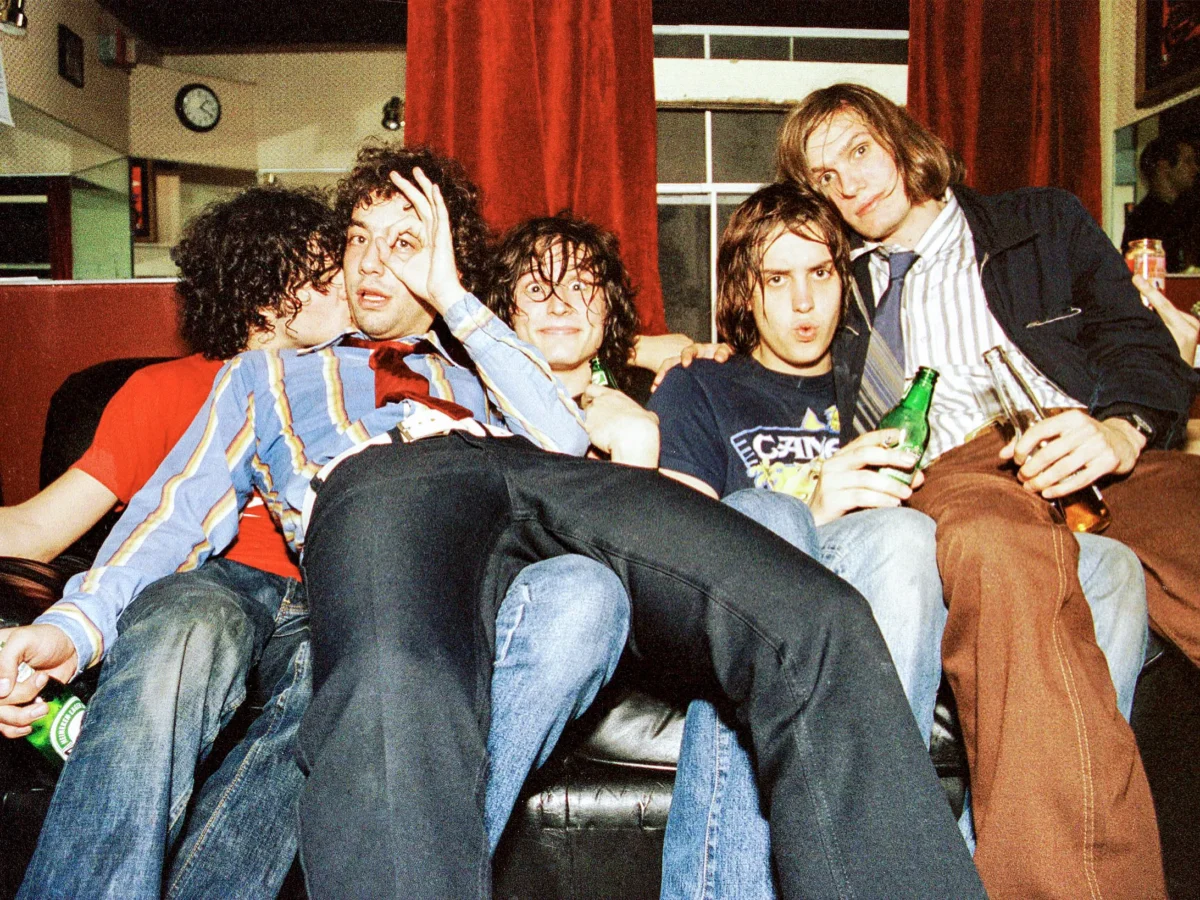
On the second night of Indio, California’s 2026 Coachella Festival, a musical singularity event of sorts occurred. Across one day, audiences were able to watch on as the ghosts of indie rock past and present performed from opposite ends of their respective careers. This is to say, Geese and The Strokes were scheduled to play on the same day. Since their rapid ascent to the centre of the cultural zeitgeist at the end of last year, Geese have been dogged by comparisons to their New York indie forebears. Both bands were touted as heralding a revival of guitar-rock, both were products of New York private schools, and both were fronted by messianic lead singers who seemed incapable of washing their hair. Sonically, both seem guided by the same philosophy, though pursuing divergent methods. The appeal of The Strokes, 25 years ago as now, was that they were remarkable musicians who seemed broadly disinterested in the excellence they were dispensing. Julian Casablancas would lazily groan into an old-fashioned microphone, rarely deigning to move around the stage, while the rest of the band would remain focused on either their instruments or their bandmates, unbothered by the imposition of any audience. Geese seem to have carried this attitude to its logical extreme, disregarding any notions of established performance conduct: altering tempos within songs, duplicating verses to throw off any singing audience members, and randomly leaping into covers of Justin Bieber’s ‘Baby’. Chief amongst their similarities, though, is that both were thrust into the musical ecosystem as the prototypical ingenues. Both Casablancas and Geese singer Cameron Winter were 23 when they had their breakthrough; both bands were promoted as much for their music as for their status as a group of bright, young things. Coachella’s accident of scheduling is a reminder that, as The Strokes prepare to release their seventh album ‘Reality Awaits’, they are no longer the wunderkinds of the scene, but the godfathers. 

The joy of the early Strokes output, primarily their debut ‘Is This It’, had a lot to do with a self-conscious attitude towards their own youth. Indeed, theirs was an appeal conditional on their youth, and one which deliberately toyed with the melancholy of memories still being made, an actively forming nostalgia. ‘Last Nite’ is a paean to nights out nobody will ever understand; the title track is a forlorn reflection on the disappointments of the adult world. On ‘Someday’, Casablancas pines that ‘when we were young, oh man did we have fun’ – again, nobody in the band was over 23 at the time of release. The aesthetics they played with – grainy music videos of the band members hanging around in bars, concerts modelled after Elvis’ 68 comeback gig – only bolstered that image of crystalised youthful expression. To this day, ‘Is This It’ remains an unimpeachable masterpiece of 2000s indie, a flash-in-the-pan moment of musical ingenuity. It was an album that, practically overnight, made The Strokes the most important band in the world. They were as influential as The Velvet Underground, as derivative as Oasis, and as cool as The Ramones. It was their impact which shook the UK out of its post-britpop daze and launched the careers of countless awkward, jangly guitar bands. As Alex Turner of Arctic Monkeys would reflect on the opening track of ‘Tranquillity Base Hotel and Casino’, ‘I just wanted to be one of The Strokes.’  

On successive releases across the next two decades, The Strokes never really managed to return to the heights of ‘Is This It’. 2003’s ‘Room on Fire’ was well received but criticised for being little more than a continuation of their debut. The spectre of shrinking youth persists throughout this second album: ‘talk to me now I’m older’, croons Casablancas on ‘12:51’. ‘You Only Live Once’, the lead single from third album ‘First Impressions of Earth’, offers a 28-year old’s reflections on life’s lessons: ’oh men don’t notice what they’ve got, oh women think of that a lot.’ An alternate version of the track, a piano lead number entitled ‘I’ll Try Anything Once’, makes this spirit of maudlin introspection all the more obvious. Removed from the hard-rocking verve of the original track, this parallel take foregrounds the anxiety of youth with greater melancholy than on previous efforts – ‘ten decisions shape your life, you’ll be aware of five about’. Nevertheless, after their explosion as the new faces of youth rebellion and the vanguards of guitar rock, The Strokes were held hostage by that image such that they were never truly able to expand beyond it. Their next two albums, ‘Angles’ and ‘Comedown Machine’, were received lukewarmly, and the creative attentions of the bandmembers seemed turned towards other projects, such as Julian Casablancas’ electronic rock outfit The Voidz. For much of the 2010s, then, it had seemed that the great rockers of the century had failed to make it out of their early-20s excitement.

Their return in 2020 – at the height of worldwide lockdown – was nothing short of a resurrection. ‘The New Abnormal’ was a revelatory album. It was as musically brilliant as anything they’d ever done but, crucially, it was as relevant to the band as 40-somethings as ‘Is This It’ had been to them in their early 20s. The album is full of middle-age regret and gestures towards a lost past. ‘Bad Decisions’ deliberately interpolates Billy Idol’s ‘Dancing With Myself’ into a knowing reflection on the band’s evolution and the inevitability of alienating its audience. The sound of the album is a world away from the band’s garage-rock roots: a breezy mix of synth-pop and new wave that sits closer to The Psychedelic Furs than Arctic Monkeys. Opening track and TikTok megahit ‘The Adults are Talking’ is a masterful sermon from the aging rockers towards the strata of teenage rebels from which they are, by time, estranged. On the fame won so early by Casablancas and co., the message is clear: ‘don’t go there ‘cause you’ll never return’. Album closer ‘Ode to the Mets’ sets the band’s own history against that of their native New York and their home baseball team. The overarching theme is one of regret and introspection. It is an apology to their fans for ‘the silence you’re hearing’ and a dismissive creation myth for the band itself: ‘I was just bored, playin’ the guitar, learned all your tricks, wasn’t too hard.’ With the release of ‘The New Abnormal’, The Strokes had finally made a true successor to ‘Is This It’, a bookend of a record which was as inventive and essential as its ancestor. As the band had grown up, so too had their music.

Six years later, we find the Strokes once more on the verge of revival. ‘Reality Awaits’ is set to release at the end of June, with two singles put out in anticipation. It is hard not to listen to these tracks, ‘Going Shopping’ and ‘Falling Out of Love’, without a sinking of the heart. The Strokes have always been chasing a new sound, for better of for worse, to maintain an edge: a glimpse of the creative insight that burned through their initial success. On ‘Going Shopping’, The Strokes sound, for the first time, out of touch. It doesn’t sound like a new evolution, or indeed a knowing homage to the old, but a misstep into the middlebrow. The instrumental is fine – a groovy-enough synth line with a classically Strokesy guitar accompaniment. A good, if not great, song seems buried within the track. Yet, the decision of Julian Casablancas to mire his vocals in deliberately janky autotune makes the song sound like the product of a secondary school band messing around with Pro Tools for the first time, rather than one of the most important acts of the century. They feel, in a way they never have before, like an act disconnected from the zeitgeist. If ‘The New Abnormal’ was their great reflection on ageing, ‘Reality Awaits’ sounds like the album on which The Strokes get old. This, accompanied by widespread allegations of AI usage in the creation of the album’s promotional art, gives the band an aura of awkward tastelessness which can’t help reminding us that they are rapidly approaching the dominion of the Classic Rock station. 

At Coachella, The Strokes seemed to reassert their position as the great ones of indie-rock: a performance as good as any they’d given in years, coupled with a political intervention braver than any at this year’s festival. Even Cameron Winter was forced to look on in awestruck wonder. In their new music, however, none of that spirit of rebellion seems to have found creative footing. Perhaps this is solely an accident of single choice, or an elaborate prank by Julian Casblancas. We can only hope, for the sake of the 21st century’s greatest band.

Featured Image – GQ
Categories
Culture

Leading Ladies Must Return to the Rovers Return

By Tess Cato

You’re sitting under your kitchen table in Pendlebury, Greater Manchester. It’s the early forties, the height of the Second World War, and your mum, aunty, gran and neighbour chat – about the war, but also about literally anything. Their voices are raspy from too many cigarettes and too many spirited conversations. You don’t sit there because you’re hiding or scared, you’re just listening because you like to. These women are the pillars of your world, and the inspiration for your life’s greatest artistic achievement.

This was the childhood Tony Warren recalled. Born Anthony McVey Simpson, Warren grew up, like most children brought up in the midst of the war, in the absence of a father. Instead, he was surrounded by women from the working-class English north who chatted away with that charming rhythm that can only be found in Manchester. These women and these completely mundane conversations inspired Warren to write Coronation Street. “I used to sit under the kitchen table, on a cushion, on the flagged floor, and listen to how people talked.” he told Charles Sturridge, who wrote the Bafta award-winning film about his career. “Here’s me Auntie Renee who married money and she talks posh, and here’s lovely Auntie Gladys whose husband is a prison warder and she doesn’t [talk posh]. It was wonderful training.”

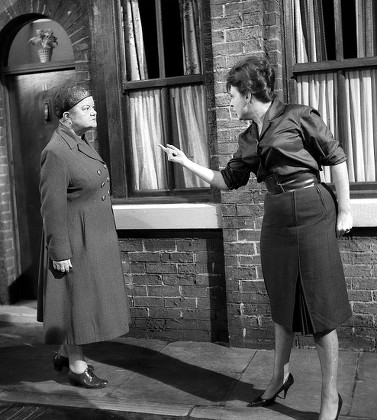
In the sixties, seventies and eighties, when Corrie was watched by a good 18-21 million viewers, the characters that dominated it included Elsie Tanner, Betty Williams, Diedre Barlow and Hilda Ogden. And what do these characters have in common? They were women, northern, working class and ‘of a certain age’. Most importantly, though, they were sharp-tongued and sharp-witted. Their husbands seemed almost like secondary characters, moaning about their wives behind their backs while the women laughed, fought or gossiped, or did all three simultaneously. It was these women that were the true stars of the show. Corrie wasn’t just revolutionary for normalising proper good ol’ northern-ness on the TV – “eh, chuck”, “nowt” and “by ‘eck”with the Queen’s English being the preferred dialect of the BBC and ITV, Corrie put probably the most under-appreciated demographic in the limelight for once: the working class, middle-aged, northern woman. She who was the backbone of British society during the war, as the men went off to fight. She whose strength, humour and love has been acknowledged far too infrequently, but which Warren captured like flies in the amber.

Fast forward to today. While still carving out space for this type of woman – Mary, Rita, Tracey and Sally bringing classic feminine northern charm to the show – Coronation Street‘s story lines get wackier, less realistic and often more depressing. There is always someone with a terminal illness, someone who’s been kidnapped and someone who’s been wrongly accused of murder – and that’s just before the first advert break. It almost seems like Corrie gets sponsored by so many charities that its storylines feel forced, and thus the natural funniness that came so easily in the earlier days is lost.

Without a doubt, less people watch Corrie today. Even I – once a superfan who was starstruck to see Dev walking around the Trafford Centre – must confess that I haven’t properly watched it for years. Its presence on social media is stark, an indicator that ITV desperately needs to engage with younger viewers in an age of Tik Tok and dwindling attention spans. But when there are millions of creators on social media platforms, I wonder how many kids ditch their phones full time for the soap. 

For me, Corrie lost its way when the classic Corrie women lost their ‘main character energy’, so to speak. They were strong, hilarious, fiery and proud. Not twenty-something year olds with perfect legs, refined accents and swanky jobs reminiscent of the chick flick heroine. Just real, normal, hard-working women you would be proud to call your mum, aunty or nan. Women like this carried the show on their backs, and made Corrie the success that it was.

Louis Theroux’s Inside the Manosphere documentary revealed that there is a crisis in how women are presented in the mass media today. Kids who stumble across a HS Tikky Tokky video may grow up thinking that women are powerless, worthless and unintelligent – the very antithesis to the classic Coronation Street woman. If only Corrie would return to its roots, and focus its stories on the types of women Tony Warren grew up to be inspired by, the world might be a slightly brighter place.

Featured Image: Coronation Street, ITV

Categories
Culture

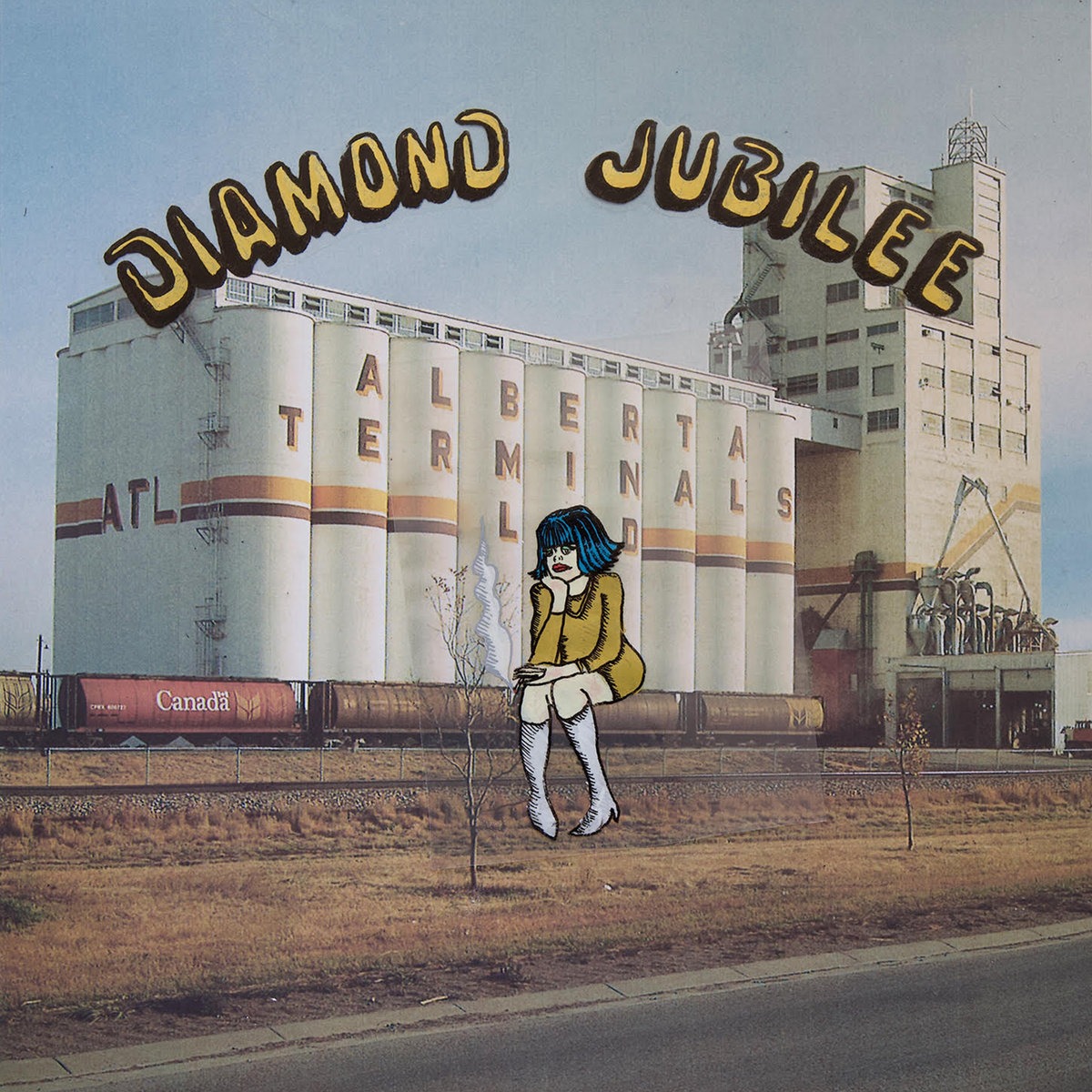
On Cindy Lee’s Diamond Jubilee

By Ashley Zhou

From the first electric twang, I’m in a battered middle-of-nowhere gas station, back burning against a Toyota in the dry heat. Grit blows freely; my white socks are closer to brown and I feel speckled rocks in the crevices. It clings to the car as I wait for a refill and there’s the gurgling of oil, the murmur of other trail chasers, the groan of rusty, wheeled miracles melting onto potholed tarmac.

A lady in a mid-60s yellow dress pops out from a vehicle I don’t recognise, somehow wholly, perfectly in-time in the time-stopped place. The sky seems to ebb as she walks, flows as she tilts her head. She speaks and the melody draws dust into a swirl, wrapping around my ankles and stuttering smoothly, like a Hollywood animation flipbook. Sock rocks rumble. Torrid air crackles with electricity; I feel it in the shock of metal on skin when I  move my hand. 

I squint and Vancouver blurs into the extraterrestrial.

In the filmy light, antennae spike from her scalp, round at the tips and glinting. Blink and they’re gone; she’s asking for a receipt. Spacey and lilting, her words are accompanied by a dirty baseline, tin-can drumbeats, singing violins. Tilt your head and it melts into the onomato-poetic brown noise of the outpost. badum, badum. Dreams of you / Visions of doom.

Car keys weigh down my pocket; they cut a bit, they’ll leave a mark. Everything hovers over the edge of humdrum revelation.

I think to ask a lanyarded someone if they could fix my radio, but decide against it. Static ripples, already in the air. If I concentrate just enough, my body aligns with a frequency; off-tune charity shop guitars, repurposed patchy sofas, a voice that might be the same—possibly if it was underwater and I was behind glass. My rings feel tingly where they wrap around the fingers. 

Wild one, you can do what you want.

Over there, she trills: something to do with nearly-expired shop chocolate, gas station money, darlings. There’s a murmur in my ear. Everything I must’ve heard before; excitingly different, comfortingly familiar. Schmaltzy, sour on my tongue. I test out the words myself, a burning memory,

and time has absorbed me. Heady, calm, blistering, breezy, shockwaved. The line ends, time resumes, and I realise my chest is heaving. I try it again and I find I can’t—everything tilts a little to the left, rotated something like 20 degrees.

My vision is fisheyed when I light one up and ground myself with char. The blazing heat crawls into my chest. I check my gas meter. I drop cigarette ash on cheddar chunks of the moon and it falls next to crumpled coke cans. Oil glug halts. 

But I left it all behind

The voice stops and we’re back in Canada, at the ‘Durham City Limit’, one much farther away. Familiar and different. The lady in the yellow dress heads back into her car and it grumbles to life and away. Desert heat and waves of sound warp in her wake. Full-bodied, round-edged tinkling; drowning harmonicas, slanted strings. They chorus mournfully as she’s dragged away by the dunes. The cutoff is abrupt.  

I get into my car and swipe my hand over the scorching dash. The signal’s suddenly good enough for Spotify, and I ditch the crackling radio for Bluetooth. Freak Heat Waves comes on, as does a vaguely familiar voice with an undertow of the outlands. I shake alien blues off my shoulders and drive.

Featured Image – Cindy Lee

Categories
Culture

Something Stiff This Way Comes

By Bel Radford

It is a truth most unfortunate that Fashion’s Great Pervert, as we know it, has been thoroughly domesticated. You could send a rubber clad ponyboy with a ball-gag down any runway and it would fail to register as particularly transgressive, The object can no longer be abject when it’s been cannibalised by the market, as chronicled over the past half century.   

Throughout the 70s and 80s, Vivienne Westwood and Malcom Mclaren freed fashion from the chains of sexual conservativism. Littering the streets of Chelsea with sexual paraphernalia, from hobble straps, crotch zips, and bum flaps, thrusting forward the fin de siècle cultural breeding ground of revolution regarding the body politic. As such, the iconography of perversion clambered up the runway and became the enfant terrible of the fashion world. Provocateurs of the fashion world began to circle the drain of vulgarity; 90’s Mugler collections found themselves peeling with latex whilst Versace ventured into the depths of the red room in their 1992 Miss S&M collection. Soon, such indulgence into perversion trickled down into the market at large for the ritual of commodification to begin. It’s now rather normal to wear leather chokers, studs, maybe a harness in a somewhat casual register – and so it’s clear we’ve flipped over the clandestine underbelly of perversion and gutted it of all substance. For instance, when Dua Lipa wore the bondage gown from Miss S&M at the 2022 Grammys, it was worn and received as a museum drag piece that celebrated the history of the pervert, but certainly not the presence of one. However, paraphilia, as per the human condition, will prevail, and as a matter of principle must remain transgressive. And so it’s wriggled its way out of the spiked collar the market walks it by, and has reinvented itself in all its slippery countenance; hang up the gimp suit, the contemporary freaks are wearing office formal. 

I came to this realisation while seeking solace in Haneke’s remarkably apt film The Piano Teacher (2001). For the uninitiated, the film follows Erika Kohut, a cold, sensitive, and sexually repressed middle-aged piano teacher at a Viennese Conservatoire, who finds herself in a sadomasochistic liaison with her student, Walter Klemmer, whose sexuality is gauchely overt, and as such absolutely cannot match her freak. Perversion lies at the crux of the narrative, yet Erika clads herself in stiflingly mundane outfits, attempting to reassure herself of her similarly rigid character. She wears sensible and nondescript knitwear, stiff starch blazers layered over dainty silk blouses, drab pleats and beige monoliths, punctuated by the occasional smear of colour and the pair of gloves she wears every time she leaves the house to go to the porn shop. Erika’s wardrobe is banal and conventional, yet it carries immense ontological weight, its stiffness actualises her repression, creating a dichotomy between character and clothing whereby her outfits become vectors of calculated and powerful libido, and objects of psychosexuality.

The power of her clothing has not gone unignored by the fashion zeitgeist. Erika Kohut was the muse of SHUSHU/TONG’s SS25 collection The Pleasure Of Rejection, shown at Shanghai Fashion Week. Liushu Lei (Shushu of SHUSHU/TONG) told Culted that the emotional tone of the collection was informed by restraint and introspection, noting how ‘In [Erika’s] mind, the lines between attraction and rejection seem to blur, creating a chaotic unity. This dynamic felt like a deconstruction of the binary between the two concepts, offering immense dramatic tension’, adding that ‘Erika Kohut is such a complex female character, sensitive, conflicted and even mad. Beneath her restrained and reserved exterior lies desperation and chaos, with emotions that rage like a storm’. These observations illustrate the ways in which collections like The Pleasure Of Rejection re-project a film’s psychological weight back onto the body, the ways in which desire becomes most energised through the restraint of being tightly buttoned up – a new type of bondage.

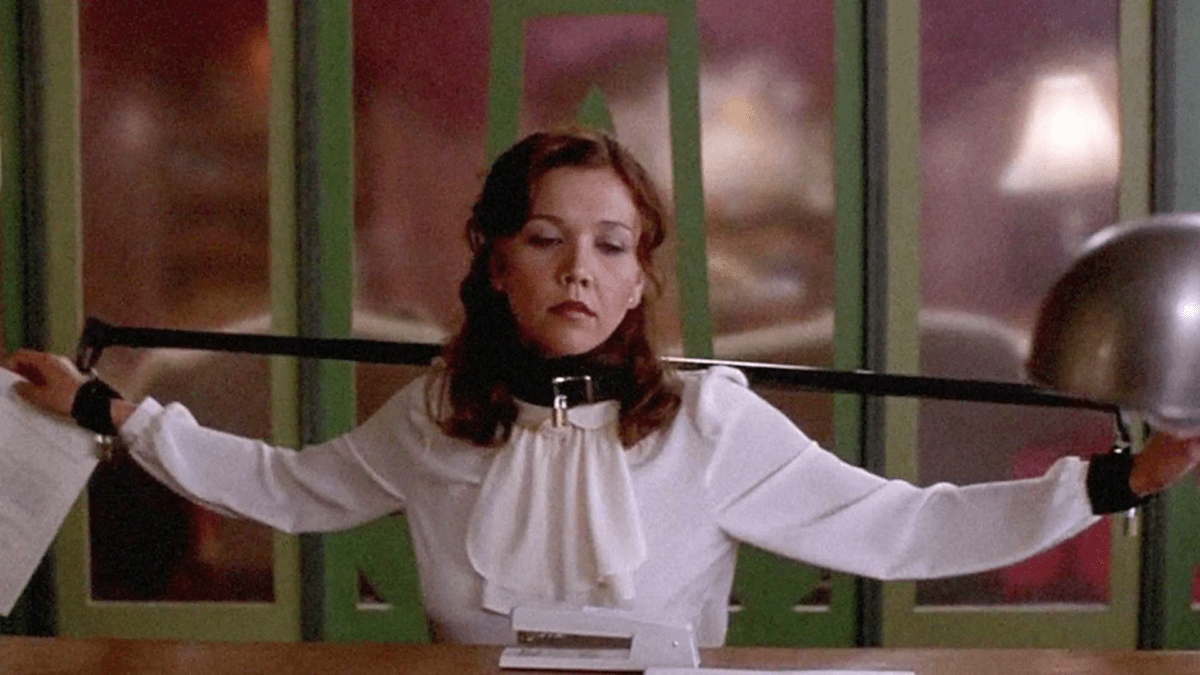
Similar comparisons can be made in Shainburg’s 2002 film The Secretary, wherein a young woman, Lee Holloway, having been recently released from a mental hospital, gets a job as a secretary to lawyer Edward Grey, who she establishes a sexually sadomasochistic relationship with. Her wardrobe is particularly striking as it evolves in tandem with her sexual and professional literacy: she begins dressing soberly – wearing silk blouses, skirts and stockings – yet her capacity for sexual expression becomes compounded. By the time she’s saddled up and crawling around Grey’s office, the erotic logic has long been present in her wardrobe as a mechanism of submission, her pencil skirt as restraint and her buttoned up collar already a collar. The Secretary has also been an object of inspiration within the fashion world, with Enfants Riches Déprimés extracting and interpreting the infamous bondage rig look onto the runway in their SS25 collection Inside Capitalism

There is a case to be made for how both films were released in the very early 2000s, yet are only now really being celebrated and explored within fashion. The market spent the intervening decades digesting and mainstreaming the more overt face of perversion until it became palatable and gutted of ontological weight, exhausting its typical forward-facing fetish iconography in the process. Fashion now reaches backward in the cultural milieu for a sexuality undefiled by the market with a visual language communicative of perversion in its truest form, as eroticism in today’s cultural landscape offers meagre viable alternatives, clinically administering desire through legible, sexless blockbusters and hyper-sanitised cultural output. This has left a vast black hole in the place of sensuality with any real dissolute underbelly, yet office wear arguably provides a visual language exploratory of this lack. As demonstrated by Erika and Lee, the rigidity of formal wear encrypts, contains and yet compounds perversion. Perhaps this is where the contemporary appeal lies: subverted desire becomes infinite. 

Featured Image: Maggie Gyllenhaal in Secretary (2002, dir. Steven Shainberg)

Categories
Culture

The Esmeralda Motif: Why Alan Menken’s Score Works

By Amelia Awan

Ever since I read the book, I have always hated the English translation of its name.  

“The Hunchback of Notre Dame”, while being a fitting title for many adaptations of the story  (including the Disney film and subsequent musical which  I am about to discuss), is not at all a  good descriptor of a book in which Quasimodo is arguably a supporting character at best.  Needless to say, this is not the original title of the novel. In 1831, Victor Hugo published a novel  simply called “Notre-Dame de Paris”, or in English, “Our Lady of Paris”. Having read the book, I  think that this is a perfect title for this piece. Not only does it refer to the dozens of pages dedicated to describing the monumental cathedral, but it also refers to Esmeralda. Referring to Esmeralda as  “Our Lady” not only puts her in the spotlight as the central character of the piece, but it also beautifully showcases how the narrative treats her just as a character: not as her own person,  but as a MacGuffin of sorts that each of the male characters wants to gain in some way;  she’s our lady.  

As much as the story of the musical changed from its original source material, Esmeralda’s role  in this regard is one thing that is conserved perfectly. Alan Menken is a composer who is known for his use of leitmotifs, a word which here means “a melody that is associated with a character or place in the story”. Most of the main characters have their own leitmotifs that they sing themselves throughout the musical; Quasimodo has his melody at the start of Heaven’s Light,  Phoebus has Rest and Recreation (a melody that exists purely as a leitmotif without text in the  original film), and Frollo gets pretty much the rest of them. When one looks at Esmeralda’s  songs, there doesn’t really seem to be any common link between them; even Esmeralda’s most famous song, “God Help The Outcasts”, wasn’t used as any kind of basis for any of her other  songs. The “Someday” motif, when it is sung, is mainly used to represent innocence and hope  more generally rather than Esmeralda herself, hence why we see it most often sung by the  choir rather than any of the cast.  

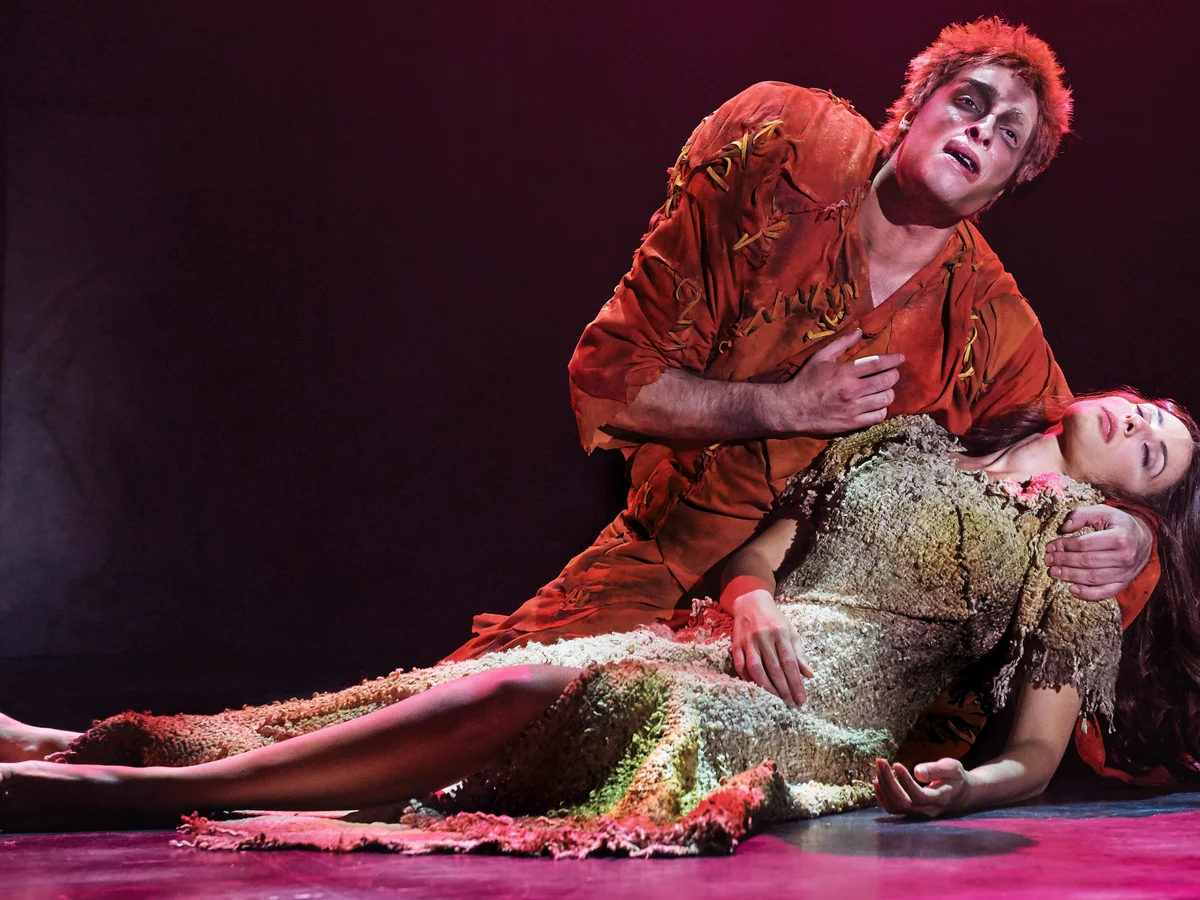
However, Esmeralda does have a leitmotif, it’s just not sung by her. The Esmeralda motif is first  shown in Rest and Recreation, in an otherwise forgettable section of the song where Clopin  welcomes her to Paris. The relevance of this motif comes back in full stride in the finale of Act 1, which is itself titled “Esmeralda”, and this time, the melody is sung angrily by the soldiers  (including Phoebus himself!) and then later by the soldiers with Frollo. At no point in her own  song does Esmeralda actually sing anything. The next time it occurs, just before the finale, it is  sung by Frollo, further cementing this idea of Esmeralda being ours; at this moment in time,  Frollo still believes Esmeralda to be his, as a feat that he has to reckon with, and that he is better off having accomplished this “feat”. The Esmeralda motif never appears after this moment.  Esmeralda is a much stronger and better written character in the musical than she is in the  novel, but her role as “Our Lady” still shines through. It is worth mentioning that the Esmeralda motif is sung by every character who falls in love with her (and also Clopin), with the notable  exception of Quasimodo. This is because Quasimodo’s affections for Esmeralda are deliberately painted as differently as possible from Frollo’s lust for her; there is a very good reason why  Heaven’s Light and Hellfire happen in immediate succession from each other (and of course,  the names of the respective songs are no coincidence). I would not say that the musical’s  choice to retain some elements of the book and some elements of the film is always done as well as possible. However, the decision to have the Esmeralda motif always be sung by her suitors and never by Esmeralda herself is the perfect addition to this story. The motivic  complexity of the musical, along with the precision of the choices made in this leitmotif  specifically make Menken’s score a true work of art, and a perfect embodiment of Esmeralda’s  role in the story.

Photo Credit – Alessandro Dobici

Categories
Culture

Pentire at The Grove

By Isobel James

It’s the first beer garden type evening of the year, but not an inch of me regrets spending it in the brick and buzz of The Grove. Pentire, the up-and-coming indie rock group from Herefordshire, didn’t come to play. Or, rather, they played in every sense of the verb.

From the moment that Pentire took to the stage, tellingly entering to Tubthumping by Chumbawamba (Google it; you’ll know it and chuckle), their set unravels into wit, electricity, and flourishing artistry. Launching into their 2022 anthem Watch Time with Me, it’s immediately apparent: Jack Morgan might just be the cheekiest frontman ever to grace this venue.

If there’s a fourth wall between Jack and the crowd, it’s there for him to obliterate. From the manneristic eyebrow raises adorning every song to a slapstick grimace after an on-stage stumble, Jack made every moment a conversation between him and the crowd. He had us spellbound, and vice versa: so attuned to the audience, it felt as if I so much as blinked for a second too long, Jack would catch on. He pointed at recording phones — sparse in a crowd too immersed — and gestured along to the strongest lyrics with a head point, a shrug, a growing smile. In an entrancing 90-minute set, Jack Morgan owned the room, intimate as it was, in a way that made you see Pentire headlining much bigger ones soon.

Jack may be the magnetic core, but the band around him are in no way peripheral to Pentire’s hypnotic act. Owen Seymour, perhaps the first (and not the last) cardigan-donned electric guitarist that I’ve seen, cruised through the gig nonchalantly. Yet the twangs of his riffs carried as the vital bedrock of Pentire’s nostalgic, coming-of-age indie sound. Throughout the set, Owen exchanged boyish grins with the bassist Jacob Beswetherick, whose basslines were the pulse powering every track, particularly in Get Up. Jake Weaver was the drumming dark horse of the set — quiet when the songs called for it, but every re-entry reminded you exactly why he’d been missed.

Together, Pentire make live music feel genuinely alive. Like the Cornish headland they’re named after, their music is the sonic equivalent of a summer drive to the coast: all warmth and easy rhythm, with the windows-down momentum of a sunny day. The bigger choruses carry traces of The Killers’ arena instinct; the quieter moments have something of Paolo Nutini’s soulful looseness. Pentire wear their influences lightly enough, though, that it mostly just sounds like themselves.

Much of the set drew from their January EP Love on TV. Standout moments included the witty lyricism of Fading Out (“Was there something else in my drink, or have I had a little bit too much to think?”), a longer-than-comfortable pause in the middle of I Won’t Waste Your Time — a characteristic tease from Jack — and the crowd’s sheer volume in Boy in the Machine. Even the setlist itself was opened to the room, with a surprise song voted for via QR code — proof, if any were needed, that the crowd are as much a part of a Pentire show as the band themselves.

To call the gig high-octane is an understatement: it felt as though Pentire would never tire. And yet, by the final stretch, there were glimpses of exhaustion in Jack — not that it ever faltered his on-stage fervour. If anything, it was the final tell-all: a Pentire gig is never half-hearted. Backed by BBC Introducing and festival slots at Truck, Y Not and Isle of Wight, bigger rooms are surely coming — but on Friday night, Pentire came to play with, not simply for, Newcastle’s crowd.

Featured Image: The Bodega

Categories
Culture

Belle and Sebastian, The 30th Anniversary Tour: An Exploration of Intergenerationality and the Modern Concert. 

By Anna Wheatley

Paris – 27/02/2026 – Le Grand Rex 

My father has always been my biggest musical inspiration. He has filled my playlists with bands and artists that have built my own taste and preferences over the years. For Christmas, it seemed only fair that I take him to see one of our shared favourite bands together. Belle and Sebastian are a Scottish band who released their first two albums, Tigermilk and If You’re Feeling Sinister, thirty years ago in 1996. Their concert at the Grand Rex in Paris was a truly intergenerational experience, not only for my father and I, but also for the many other parent/ child duos that filled the venue. It is a known fact that music brings people together, although it seems cliché it is an undeniable truth. As we took in every second of the show, it became clear to me that it was more than just a gifted experience, it was a moment of bonding through music and performance. 

The enormity of time was evident, the band members were grey and their dance moves were stiff. The pure occasion, the thirtieth anniversary tour, was proof enough of the passage of time. Not a phone in sight, no opportunity for an Instagram story on my behalf, only a quick selfie could be captured before the show for the viewing pleasure of the family group chat. Some members of the audience even spoke up about having been in the very same room thirty years prior for the original album release tour! The atmosphere was fun, carefree, and truly magical. I was informed by my father later that this is what concerts used to be like… not in 60,000 person venues, with overly large, but necessary, screens in order for everyone to see, but in smaller rooms, with some background visuals, and nothing more. Even the level of security was shocking to someone who has only known 21st century concerts. As the show progressed, members of the audience were invited to join the band onstage to dance, without a barrier in sight, just one, slightly confused, security guard without a job to do. 

The experience led me to wonder what has happened to the musical scene. Why is it that a live show now entails a soul-crushing digital battle on Ticketmaster, an impressive amount of savings, and months of planning in advance? The answer may seem quite obvious, with the rise of travel opportunities, the extensive marketing ploys and the consequent increase in competitiveness. But, does this greed for sales taint the magic of a live show? Having now experienced the typical modern concert and the more intimate, ‘retro’, show, I feel this may be a question with no answer. The perks of the larger scale of concerts are obvious: not only does it allow more people to experience live music, but the profits also enable the artists themselves to travel further and perform to a wider demographic across the globe. Nevertheless, discrimination persists, less so in a geographical sense (although still to an extent), but also financially. The laws of supply and demand declare that the more popular the artist, the more expensive the ticket must be. Live concerts are therefore a luxury, one that only a lucky minority may access without difficulty. Although economically this phenomenon makes sense, it remains saddening.

 When my father tells me about his live experiences with bands such as Pulp, R.E.M, and Radiohead – to keep the list short – in Student Unions or gritty nightclubs around the UK, I find it

truly inconceivable. I believe that this is why seeing Belle and Sebastian and getting a taste of an old school concert, felt so special. While it may be argued that the stagecraft showed less creativity and extensive rehearsal than the modern showcase, and that the average age of 50 

pretty much removed all chances of a moshpit, the music was truly the main focus. Overall, the show was a celebration of musical legacy and a clear representation of its appeal to both older and younger crowds, that I, for one, thoroughly enjoyed. 

Featured Image – Pinterest

Categories
Culture

Saudade: Senna vs Prost

By Robin Reinders

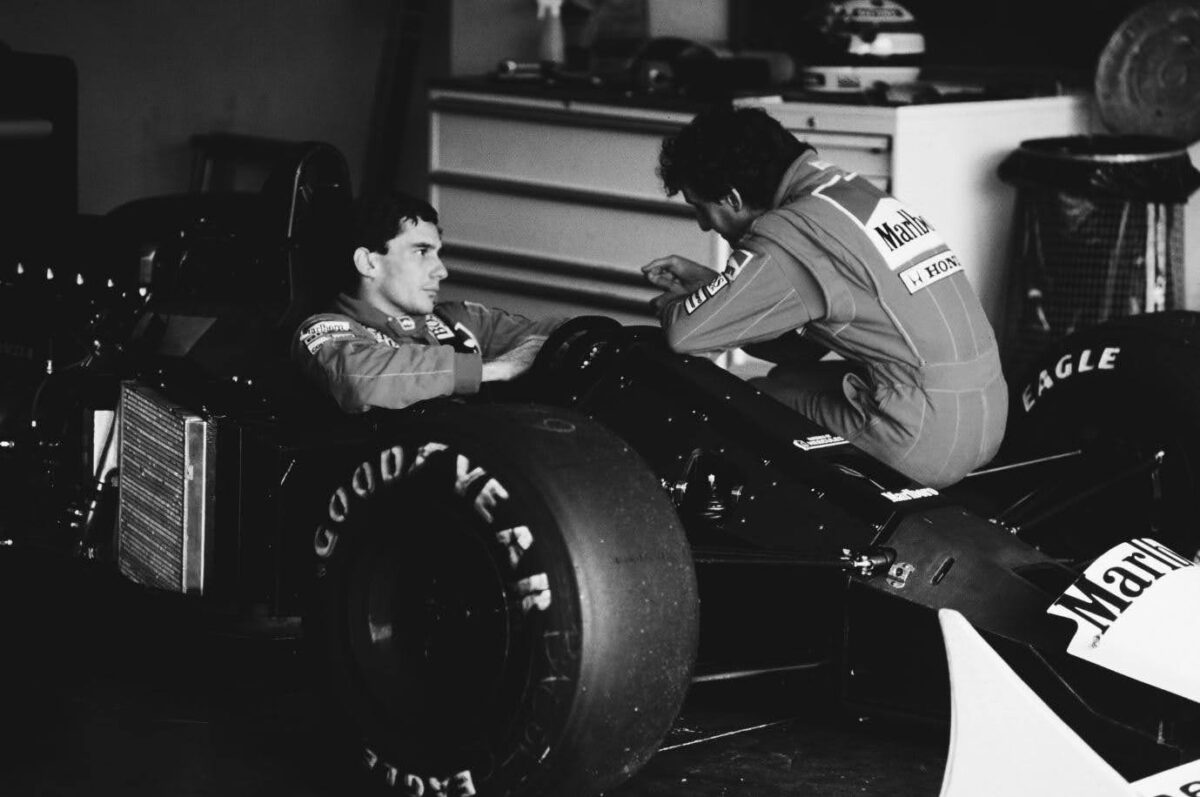
When you hear the word ‘Brazil’, what do you see? Racing driver Alain Prost correlates the country with a sequence of fond images. He remembers the sun, the sand. He remembers the smiles of the locals, their welcome, their character. He remembers the churrascarias and the beach and the grandeur of Rio de Janeiro. ‘And then’ – he speaks wistfully in an interview, mouth pulling askew – ‘there’s Ayrton.’

It is an invocation spoken like a prayer, a name that rests heavy at the base of Prost’s skull, brought forth and splayed bitterly across his face. It is both wound and salve. Match and mirror. ‘When you talk about Senna you speak about Prost and when you speak about Prost you talk about Senna.’ It is arguably the greatest rivalry in motorsport history; two near-divine beings rocketing through Formula One’s golden age, galvanising it with their animosity, their obsessive competitiveness, their tragic humanity. Near-divine. Near.

Teammates, 11 and 12 – but never partners. Theirs was a war waged in millimetres, in fractions of a second, in the mechanical exhale of a V6. Senna drove with holy devotion, God behind his ribs and beneath his palms; Prost was secular, stringent, sharp. In no world were either clean. Haniff Abdurraqib speaks on that astringent flavour of intimacy enemies share: ‘there is a tenderness in knowing what desire ties you to a person, even if you have spent your dreaming hours cutting them a casket … it is a blessing to know someone wants a funeral for you.’ Senna’s monomaniacal fixation on Prost cannot be overstated; here was a teenage karter with Renault-yellow and a charmingly crooked nose plastered on his bedroom wall, all-grown-up and starving for approval. Idolisation through a jaundiced lens: gnarled into confounded resentment, gnawing at the insatiable void of a racing driver’s volatile ego. ‘Ayrton did not think about other people’, Prost would say, ‘he just thought about me.’

Suzuka was the crucible. 1989 saw a collision on the chicane: Prost turning into Senna, sacrificing the twin McLarens on the altar of the tarmac to strategically secure his success; Senna, furious and dogged as he hauled the damaged car to the finish line – only to have his win invalidated, the championship seized. 1990 saw a reflection, a retribution: Senna hurtling into Prost, abandoning his former teammate – now driving for Ferrari – in the gravel as he snatched the championship like a malicious, mean-faced baby-brother.

When Prost retired, the fever broke: ‘We came to terms … and we stopped trying to remake each other.’ For the first time, there was laughter. Prost describes the year between 1993 and 1994 as the time he and Senna were closest. ‘Why did we put ourselves through all of that?’ he would ask. There was ease. There were breakfasts and late-night phone calls and ‘my dear friend Alain; we miss you Alain’ – spoken by Senna on the morning of the end of all things. And then Alain Prost watched Ayrton Senna die from the commentary booth at Imola. Watched as Senna torpedoed at 211 km/h into a concrete cradle. How do you cope? How do you mourn your mirror?

‘Maybe all I can say is that I was having breakfast in the morning of race day and he dropped by and sat with me. I am glad his final breakfast was with me. Even though it was short, that was still time he gave to me.’ This is how Alain speaks of his only rival, his counterpart, his almost-friend for the next thirty years, voice cloyed with saudade.

‘It was a fantastic story, don’t you think?’ he asks. His words are quiet, hopelessly reverent. 

Featured Image: LaPresse

Categories
Culture

“Heart of gold, constitution of an ox, and pants of thunder” – An Ode to the Weirdest Children’s Film Ever Made

By Charles FitzGerald

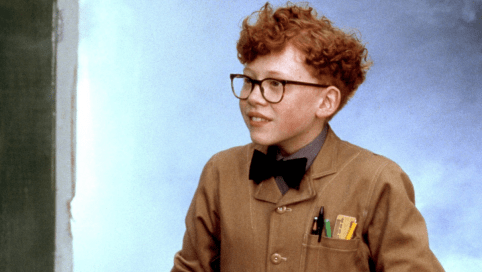
Circa 2011, I was browsing the small film section of my primary school’s library. It housed the usual suspects – Barnyard, Open Season and, bizarrely, Bridget Jones: The Edge of Reason (one for the mums, I suppose?). Even stranger was the sun-faded, garishly noughties DVD – bearing its title in big, bold Comic Sans; Thunderpants

The synopsis was weirder still: a ten-year-old boy with incredible flatulence who dreams of becoming an astronaut is recruited by NASA to assist in a life-or-death rescue mission. Upon reading the blurb, a resounding wave of ‘what the fuck?’ washed over me. I had another read before opting for Coraline

Thereafter, Thunderpants haunted a young Charles. I couldn’t shake the confusion, bordering on concern – how on Earth could they make a children’s film about something so puerile? Who would green-light such a thing? Why was a bespectacled Rupert Grint on the cover? My father claimed he’d once caught a portion of it on TV – calling it “one of those British films that’s desperate to be  American”. I asked if he’d recommend it and, with commendable economy of language, he replied, “No”. The conversation moved swiftly on. 

Morbid curiosity eventually got the better of me. I searched for Thunderpants in my father’s old Radio Times compendium, where it received a scathing one-star review from Alan Jones. In an ingeniously subtle play-on-words, Jones hailed the film “an absolute stinker”, and “excruciatingly vulgar”. That clinched it; I had better things to occupy my mind with than a 2002 family comedy about farting – such as my forthcoming Year 2 SAT exams. 

Thunderpants was co-written and directed by Peter Hewitt, whose resume is a diverse roster of light-hearted 1990s films, from Bill and Ted’s Bogus Journey to The Borrowers. The film was shot over the summer of 2001 on a modest $7 million budget, though it ultimately failed to recoup even half of that at the box office. Its production company, Pathé, must have had some faith in  Thunderpants – as the film boasts a baffling all-star cast:

Paul Giamatti of Sideways, Ned Beatty of Deliverance (responsible for the titular quote), Stephen  Fry of supposed ‘national treasuredom’, Simon Callow of Four Weddings and a Funeral, Rupert  Grint of a little-known multi-billion dollar franchise about an adolescent wizard, and a young  (uncredited) Keira Knightley. The lead, Bruce Cook, retired from acting following the film’s release in May 2002. 

My first viewing of Thunderpants came in the advent of the first national lockdown. I can’t quite remember why I sought it out – probably the urge to extinguish the spectre which burned in my psyche for the preceding ten years. Within the film’s opening five minutes, something becomes abundantly clear: the blurb on that sun-faded DVD does no justice to the debauched lunacy that is Thunderpants’ plot. 

Here’s a fun little exercise for you. Of the following, which do you reckon is a genuine Thunderpants plot point? Bear in mind, the British Board of Film Classification awarded the film a  ‘PG’ certificate – citing “some crude humour”. 

I.) A newborn baby quite literally flies out of his mother’s womb – as the doctor exclaims,      “We’ve got a flyer!” 

II.) A young boy’s flatulence becomes so unbearable, his father permanently leaves the family home – and his mother turns to chronic alcoholism. 

III.) A young boy, named ‘Patrick Smash’, accompanies an opera singer on a world tour –   producing an unattainable high note with his “unique gift”. 

IV.) A young boy is placed before a firing squad after accidentally murdering an Italian man with his flatulence. 

V.) A young boy is strapped to a methane-powered rocket thruster. The resulting flame prompts Paul Giamatti to punch the air and yell “hot dog!” for some reason. 

Your suspicion is correct; they are all, indeed, real components of Thunderpants’ plot. Like young  Charles, you are likely questioning how – and to what end – this made the journey from Hewitt’s  ‘lively’ imagination to national cinema screens. Having had fifteen years to mull this over, I feel well-equipped to answer. Despite the feeble special effects, the unsavoury green set-design, and  the off-putting inappropriateness of the whole thing, you’d be hard-pressed to call Thunderpants 

a “bad film”. 

Thunderpants treats its audience with respect – developing its juvenile premise with surprising restraint. In careless hands, Hewitt’s central, crude conceit would wear thin very quickly. And yet,  in a film about a young boy’s inability to control his flatulence, the wind-breaking becomes almost incidental – a vehicle for an earnest message of overcoming adversity and pursuing your dreams.  It’s just as schmaltzy as it sounds, but only the most cynical could fault the ambition. 

The central performances are similarly earnest, though they effectively serve their purpose. Cook plays  ‘Patrick Smash’ with a perpetually gormless gaze, as unperturbed by his school bullies as he is by appearing before a firing squad. Grint echoes Jerry Lewis’ Nutty Professor in his role as Cook’s only friend – a child prodigy who lacks a sense of smell. None of the all-star cameos phones it in either – revelling in the material’s Viz-like absurdity. 

Most striking is Thunderpants’ no-bars approach to cruelty. Under the guise of a Beano comic strip brought-to-life, the film is relentlessly bleak. The lead – a ten-year-old child, mind – is mercilessly bullied, neglected by his parents, insulted by a criminal barrister, and exploited by questionable NASA officials. Hewitt’s message – ostensibly “life is shit, so do what you can with 

what you have” – is refreshingly honest, and seldom posed in children’s media. 

Despite my modest praise, I find myself in agreement with young Charles. A children’s film with such a puerile premise should probably not exist. At risk of sounding puritanical, there’s a myriad 

of subject matter Hewitt could have used as a crux for the ‘follow your dreams’ moral. Equally, I  must concede, Thunderpants is as good a film about farting could possibly be.  

Thunderpants was met with widespread critical derision and quickly fell into DVD bargain-bin –  and school library – obscurity. It performed so poorly at the UK box office that Pathé released the film straight-to-DVD in the US, several years later. The US poster prominently features a much older  Rupert Grint, bearing little resemblance to his appearance in the film; a desperate attempt to cash in on his Harry Potter fame. 

For years, Thunderpants remained a barely-visible stain on the memories of those who saw it as children. However, recently, many have taken to TikTok and X to express their glee that  Thunderpants wasn’t just a bizarre fever dream – and defend the film as a childhood favourite.  

The cast seems similarly fond of the film. During a press junket for The Holdovers in 2023, Paul  Giamatti was visibly delighted at an interviewer’s reference to Thunderpants. He states, without a  sliver of sarcasm, “Thunderpants is one of the most remarkable movies I’ve been in… It is a  brilliant movie.”  

In a sea of AI-generated slop – functioning solely as cheap babysitting under the misnomer of  ‘children’s entertainment’ – a film as humble, unpretentious and charming as Thunderpants is well worth reevaluating.  

Categories
Culture

‘Time Isn’t After Us’: Transcending Time Through Collaboration in Stop Making Sense

By Matthew Dodd

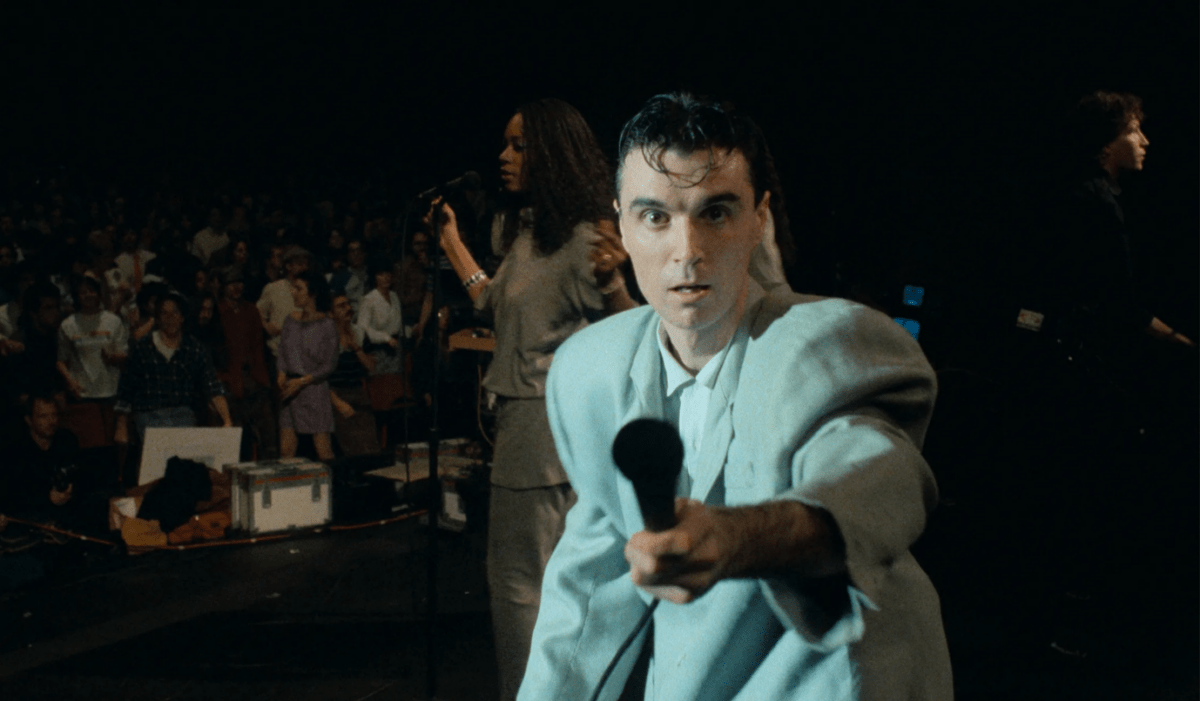
A gangly, quasi-spectral figure in a pale grey suit walks onto an empty stage. The camera clings to his feet – white plimsoles against a black floor – as he wanders purposefully into a light. He, placing a jukebox on the ground before him, proclaims quite calmly, “I’ve got a tape I want to play.” As the opening chords of Psycho Killer are violently strummed, the camera pans up to reveal our lead player, David Byrne. So begins the greatest record of human creativity ever put to screen.

In 1984, Talking Heads – the great pioneers of the 80s new wave scene – had found themselves at their commercial peak: Speaking in Tongues had produced their biggest hit, Burning Down the House, and Remain in Light had assured their place in the highest order of musical talents. With the benefit of hindsight, this was a peak to which they’d never quite return. Their next two albums, Little Creatures and True Stories, were hits but failed to reach the sonic highs of their earlier work. The tour recorded in Stop Making Sense was to be their last. As such, the resultant film feels like a lightning-in-a-bottle crystallisation of unstoppable talent, a consignment to screen of a moment in time at which these musicians were not only the best band of their generation but, probably, the greatest of all time. Fresh off his Oscar-winning  Silence of the Lambs , director Jonathan Demme approaches Stop Making Sense less as a concert film and more as an argument for the expansive possibilities of human creativity.

As Byrne is revealed to the audience in Psycho Killer, he immediately establishes himself as scene-stealing leading man. He jerks around the stage, as if attacked by his own chords, and maintains, in his steeled expression, a look somewhere between deathly shock and religious epiphany. He gambles towards the camera as though his actual audience were mere spectators to a world entirely his own. Behind him, stagehands assemble the sort of apparatus that would look more at home on a construction site than a concert stage. The deliberate exposition of this work – Demme makes no effort to shield the stagehands from view – is central to the argument that underscores the music. Art is, unavoidably, a collaboration. David Byrne is doubtlessly the central figure, but his efforts are nothing without those working around him.

At the end of Psycho Killer, bassist Tina Weymouth steps out to accompany Byrne on Heaven. Demme holds our view, for the most part, on a side-by-side of the two artists, their vocal and physical harmonies kept in gentle balance. As the song runs out, yet more stagehands crowd the two performers, assembling pedal-boards and drumkits. The camera follows Chris Frantz as he makes his way to the newly assembled drumkit, capturing a momentary glance between him and his bandmate-cum-wife, Weymouth. During a brief pause after the next song – in which David Byrne makes his second announcement to the crowd: ‘thanks!’ – Jerry Harrison arrives on stage, rounding out the quartet. By deconstructing the band – revealing the specific importance of a vocalist, bassist, drummer, and guitarist song by song – Stop Making Sense becomes a narrative thesis on the joys of communal music making. After Found a Job, the band is joined by another drummer, two more backing vocalists, another guitarist, and a keyboard player – Steve Scales, Lynn Mabry, Ednah Holt, Alex Weir, and Bernie Worrell, respectively. By this point, as the expanded group starts performing Slippery People, the performance has become an orgy of sound: ‘Lord help up, help us lose our minds’ sings Byrne. Taking their time to construct this massed ensemble, the band shows us that they could do this with one player, or two, or four, but they choose to do it with the whole troupe. It reminds us that music isn’t just some auditory phenomenon that arrives pre-constructed into our ears, it is something that people DO together, to entertain, to have fun. The stage is built, the band is built, right before our eyes to remind us that human hands made it. The little moments and looks between members of the band are just as magical as the performances. It reminds us, perhaps, that we’re all just animals, looking for a home, to share the same space for a minute or two.

For a film so delicately choreographed, it is the space it allows for spontaneous human moments which elevate it to its note of all-conquering tenderness. During Burning Down the House, Demme’s camera is distracted for some time by Alex Weir as he, evidently caught in the throes of the music, begins jumping around the stage. Immediately after, we watch as Harrison joins in an awkward shuffling dance with backup singers Mabry and Holt, eliciting a noiseless chuckle from the latter. Talking Heads, then as now, were a band renowned for their mystical inscrutability. Stop Making Sense is replete with that impenetrable charm – David Byrne wiggling through Life During Wartime; the quasi-nonsensical words that appear on screens behind the band, e.g. ‘BEFORE DINNER TIME’; the massive suit, of course – but they are buoyed throughout by the unimpeachable humanity of their performance.

The stage becomes a church; Byrne becomes a new-wave evangelist. His sermons reverberate through the audience, whose reaction Demme offers us only sparingly: ‘watch out, you might get what you’re after’. He, like any great prophet, understands that he is not the centre of the universe and briefly cedes the stage to Weymouth and Frantz’s side project Tom Tom Club for a section in which the sonic wizardry of Genius of Love is only somewhat marred by Frantz’s barrage of ad-libs, including but not limited to ‘the girls can do it to, y’all’ and ‘James Brown!’ Reclaiming the stage and, having guided his flock through the spiritual journey of Stop Making Sense, Byrne leads us to a final baptism with Take Me to the River: a sweaty, noisy, beautiful absolution. Rounding off with the frenetic Crosseyed and Painless, we are finally treated to a view of the audience in their convulsive, magical reverie. A small child holds a stuffed unicorn, two sound technicians stand arm-in-arm. Byrne waves for the stagehands to join the band on stage, providing a final tableau of massed creativity in all its myriad forms, before the concert wordlessly ends, subsumed by applause.

Talking Heads make a friend out of time’s passing, out of the knowledge that all experience is fleeting and all moments will be lost. When spent well, when spent with the right person, the dispensation of life’s transient currency is a gift gladly given: ‘You’re standing here beside me, I love the passage of time’. Such is the revelation at the heart of Stop Making Sense. A song is a few minutes, a concert is an hour and a half, this time will never return. But this is no cause for concern. We are the masters of time, and of life, because we spend it how we care to. The suburban paranoiac who narrates Once in a Lifetime feels that, in modern America, he is quite unconsciously ‘letting the days go by, letting the water hold me down.’ His life has been folded together, he has found himself unknowingly sat ‘behind the wheel of a large automobile ’ – beset with wife, job, and house, wondering, understandably, ‘how did I get here?’ His mistake is resistance. As David Byrne howls in the final chorus, his oversized suit wibbling in the darkness, ‘time isn’t holding up’. Equally, however, ‘time isn’t after us.’ Time is no predator, clawing at our lives. It will never stop, but it holds no grudges. Forty years later, the 90 minutes of Stop Making Sense remain as potent as ever, drawing crowds together in ecstatic movement as surely in the screens of London’s Prince Charles Cinema as it did in Hollywood’s Pantages Theatre. We live life as we choose and, if someone asks, this is where I’ll be.

An incidental post-script:

I first watched Stop Making Sense with one of my best friends in a packed-out BFI IMAX, a week or so before starting university. About a month later, I performed This Must Be the Place in a since-closed cocktail bar at my first open mic night with a newfound friend who would later become my housemate. One particular lyric stuck out to me in that moment, as a frightened fresher taking his first flight out of the nest, uncertain of his place here or anywhere: ‘home is where I want to be, but I guess I’m already there.’

Featured Image: A24