Categories
Culture

Egon Schiele – Sketches Through The Digital Age

By Matty Timmis

Believe me, I am not a fan of Instagram. It’s the closest fit I can think of to a ‘Babylon machine’, except maybe something like a credit score, but who the fuck really knows what that is. The strange thing is though, when examined honestly, Instagram’s Babylonian currents have been a powerful force for moulding who I am today, how we all exist in this strange new age, and where we all think we’re going. I’m not quite sure that’s the tragedy everyone would have you believe.

Now I am not a psychologist or a sociologist, in fact I can sometimes be a bit suspicious of those more abstract sciences, so this is not one of those tiresome researched or sourced papers. As an insufferable arts student, I much prefer to triangulate my sense of self and reality with the medium of other people’s creative expression. The other week then, as the clock on my phone taunted me with the grandiose digits of the evening, through midnight’s crescendo of zeros and onward to the meek little numbers of the pre-dawn morning, I stumbled upon something genuinely interesting. Amidst the chintzy buzz of the search feature, trapped in the gaudy mosaic, between tiles of hideous car crash videos, offensive memes and plastic surgery was a strange post that genuinely struck me.

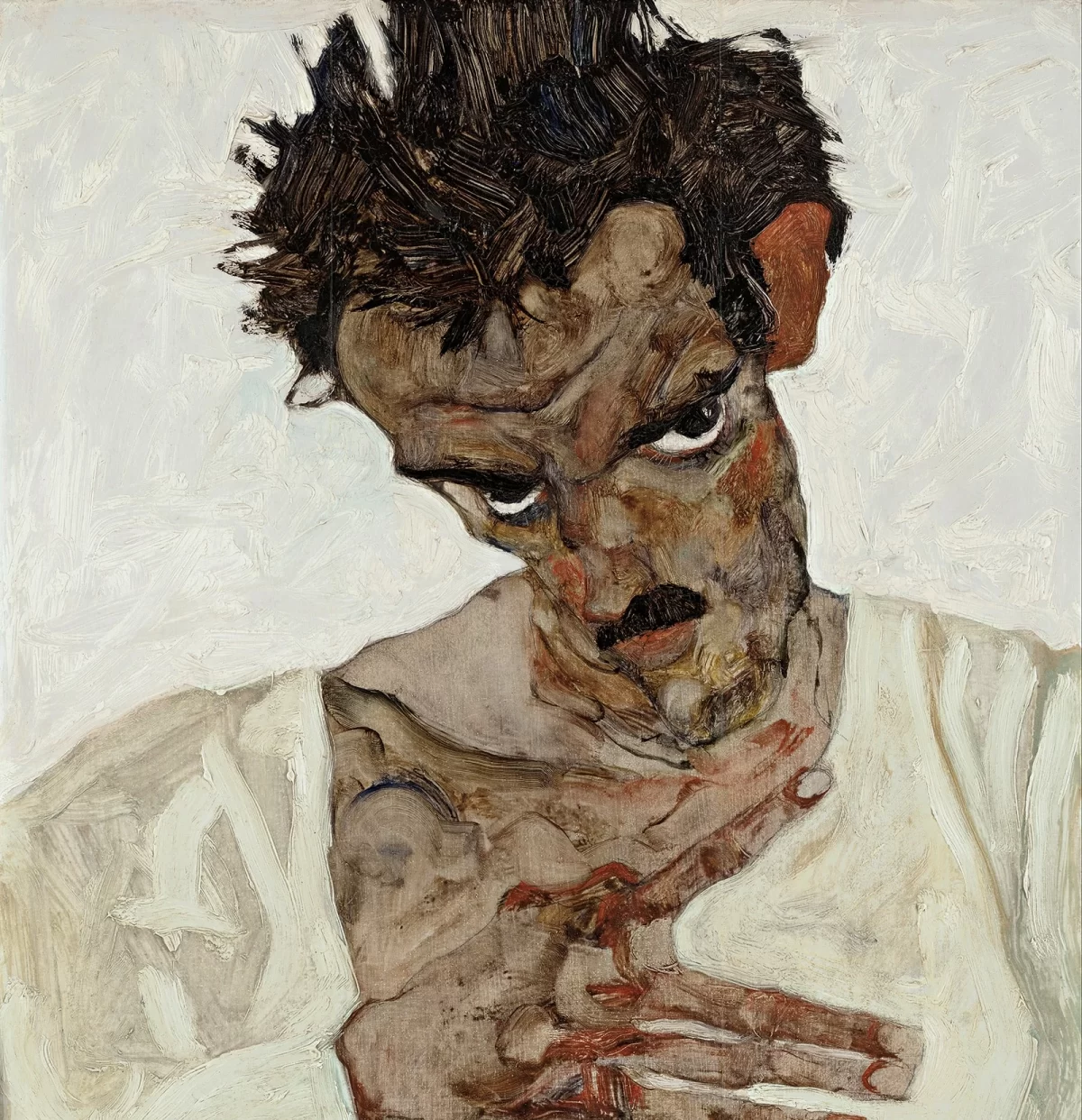
What I had stumbled upon, in the suitably unpalatable hours of the morning, was a collection of ten paintings by Egon Schiele. These were like nothing I had ever seen before – piercingly raw, expressive, and tormented in their vivid simplicity. A protege of fellow Austrian Gustave Klimt –  Schiele led a suitably troubled, bohemian existence. Dead by twenty-eight following a twisted, reckless life – pursuing an incestuous relationship with his sister and having a less than healthy relationship with alcohol, he bore well the stereotypes of a troubled artistic genius. This however is not an article about such a blackened bolt of lightning – this is an article about me, and hopefully about you too.

To start, what I think is so interesting about this unlikely discovery is the way in which it speaks to the power of art to occasionally triumph over the patter of the mundane. I certainly did not search for this, or any other kind of artistic revelation, and I’m certain my dastardly algorithm is not skewed to present me with anything so profound. Yet when I glimpsed it amongst the discards of empty degradation I was affected deeply, enraptured with the power of a few lines.

Those lines, those bewildered, tortured faces Schiele summoned, were strangely prescient to my online experience. I feel those wailing lines, sketched in a kind of visceral flow that would often see him fix his manic pencil to his paper for the duration of the piece, can be traced onto the minds of the digital age. There seems to smoulder in the singe of those brandished pen strokes, a very strange kind of symbiosis. Between those warped, shrewd sketches and the pale flame of our minds that flicker so fickle at every swipe, burning to the pace of the digital age.

There’s a desperate kind of compulsion lurking in our digital presence that, when considered, is fundamental to our conceptualisation of ourselves. That kind of stupefied, arresting gaze that we fix to our screens for interminable periods lingers in Schiele’s lucid, striking faces. I suspect Schiele’s inspirations stemmed seldom from contented individuals or joyous experiences, heaven knows he wasn’t a beacon of certitude. But he had the cogency to articulate a particular facet of those prosaic lives, to reveal the swirling mire of darkness that beckons us, that we have always escaped into. 

I, for one, have never desired any relations with any of my family, nor do I have such a harrowing relationship with substances, but all of us I think remain ghastly consumptives. Instagram is often referred to as addictive, but I think the connotations of that word constitute a slight misunderstanding. We know that Instagram works almost exclusively to our detriment, yet we cannot resist complicity. We are not helpless to the ravages of addiction, we are engaged in creating our own snare. We not only consume but contribute. There is a darkness implicit in that, and that twisted human agency is written with crushing lucidity across these seemingly regular, strangely devastated faces. Like any true piece of art they are an accompaniment, a mirror in which looms a charmed derangement – the frantic consumption of our lives.

The elevation of beauty is scrawled over all of our Instagram feeds, and it sucks us into a strange semi-reality, ogling the embellished truth of lives. We too cannot help but project a vision of a life in its most favourable terms, but the depth lies in our desire to do this, which Instagram feeds off. What is so striking in these works then is their undressing – their candid presentation of our sparser, but more emotionally complex minds. Something that lies not in our mere projections onto Instagram, rather in a far more layered embodiment of our interaction with it. What I read in those warped lines of lives is far more complete than a post – it is the murmurs of all live’s choruses, crushing us and contenting us. In our age those strange figures, leering so tormented from the page, are more than glossy holiday posts or a ‘chronicling of memory’ , they also gape for our mindless hours of swiping. They know of the strange curse of existence, of our idle, ivory desires.

Schiele’s paintings, particularly those portraits that I first discovered, are exercises in that damnation, quantified in the digital age. They are portraits of the humdrum, of the menial and the uninspired, but they throb with a macabre revelation, one fuelled by the hopeless forces of consumption. They sing for the looming twilight churn we are so often ensnared in, scrolling to the conclusion of our wits, right out to the precipice of our contact with reality.

So whisper it, but maybe there’s something true in the Babylon machine. Maybe it has moments of brilliance, where the hard swing of the numbed chisel unearths a little vein of gold that courses through our minds, when the miasma is illumined by an eerie brilliance. I am aware Zuckerberg has actually managed to get worse recently, as though he were in some fiendish race to the base of man’s ineptitude. Would the world be a better place if he had kept his churlish woman rating creation in his virginal notepad? Probably. Does there remain however glimmers of creativity’s timeless capacity to reflect personhood and inflect reality even there? I think there may well be.

As a footnote, Instagram can’t be too terrible, chances are that it is the means by which you found this pretentious crap!

Categories
Culture

Bourdain: The True Travel Man

By Sam Unsworth

“Eat at a local restaurant tonight. Get the cream sauce. Have a cold pint at four o’clock in a mostly empty bar. Go somewhere you’ve never been. Listen to someone you think may have nothing in common with you. Order the steak rare. Eat an Oyster. Have a Negroni. Have two. Be open to a world where you may not understand or agree with the person next to you but have a drink with them anyways. Eat slowly. Tip your server. Check in on your friends. Check in on yourself. Enjoy the ride.” – Anthony Bourdain.

Is it really possible for one to be effortlessly cool? Appeal to all? Understand and be understood by those with lots and those with little? Only one man, I find, has this connection. The late great Anthony Bourdain. While Parts Unknown and A Cook’s Tour used to seem to me of the genre of Ice Road Truckers, River Monsters , or whatever everyone’s dad was watching in the late 2000s, they are in fact some of the most insightful perceptions of what it means to travel and embrace culture. I would expect that most readers are familiar with the opening quote, no doubt plastered on an eccentric French teacher’s wall at school, but find it means far more now than it did at the time.

The beauty of Bourdain’s work truly lies in his honesty. Whilst the Clarkson, May, Hammond trio, Michael Palin and even Richard Ayoade have inspired prospering travellers to engage in great feats and navigate the globe purely for thrill and interest, they fail to capture the same intimacy as Bourdain. The audience feels as though they know him, that they are experiencing his strange escapades alongside him, both the good and the bad. We are invited into the very workings of his brain, as though every episode is a tell-all about his multitude of experiences.

I was recently rewatching Parts Unknown, procrastinating whatever essay was sitting in my due folder gathering dust, when I came across an episode I had not watched for a long time. The Sicily trip. This episode is utterly thought-provoking as Bourdain circles into a state of manic depression after a staged diving trip to “capture” some seafood for dinner.. Bourdain swimming along the vibrant coral with octopi falling from above, hurled from a fishing boat not ten metres away. With each splash, and falling fish, the shock and disappointment crept across his face. We, the audience, are then taken through the rest of his travel, and hearing the voiceover we feel as though we are experiencing the trip alongside Anthony. He admits in the voiceover that he had proceeded to get so drunk after the fishing trip that he did not remember the interactions and meals that were filmed after it. He states that had he not been filming he would have returned to his hotel room, mixed up some medicine, drank, and flicked through the porn channel. This kind of gritty honesty is what makes him such an engaging character, we see him through thick and thin.

In Parts Unknown, we are introduced to a slightly older, more mature Bourdain, already a seasoned traveller but now lacking his signature cigarette stuck to his bottom lip. On a side note, I have been meaning to find an interview between Bourdain and Marco Pierre White and count who smoked more cigarettes during the interaction. Bourdain’s early work is what drove his mantra of “enjoy the ride” as we see him eating anything and everything, challenging the new and mysterious with an open heart and mind and firing Kalashnikovs whilst sipping on a Tiger in a Cambodian bar. Interestingly, at said bar, you don’t pay for drinks but for ammunition. Bourdain personifies the traveller, willing to talk with anyone and do anything such as his graphic discussions about bondage in Tokyo. Having grown up in the kitchen, Bourdain is aware of a tough life and hard work and made his name in the culinary field working in Michelin star kitchens. He was a man who knew how to eat, but, more to the point, he knew what he liked to eat. Whether that be at roadside cafes or famously the meal he shared with Obama in Hanoi, there is a refreshing lack of snobbery in his ideas on food. He narrates with a quick wit and humility, dealing with the culinary delights of the world, whilst also dealing with very intense and very real problems facing many people today.

So, if you find yourself at a loose end or simply need some inspiration for your next travel or adventure, then there is no better place to start than with the master himself: Anthony Bourdain.

Categories
Culture

Perverts as Ostracism: a Dissection of Ethel Cain’s New Mode. 

By Edward Clark

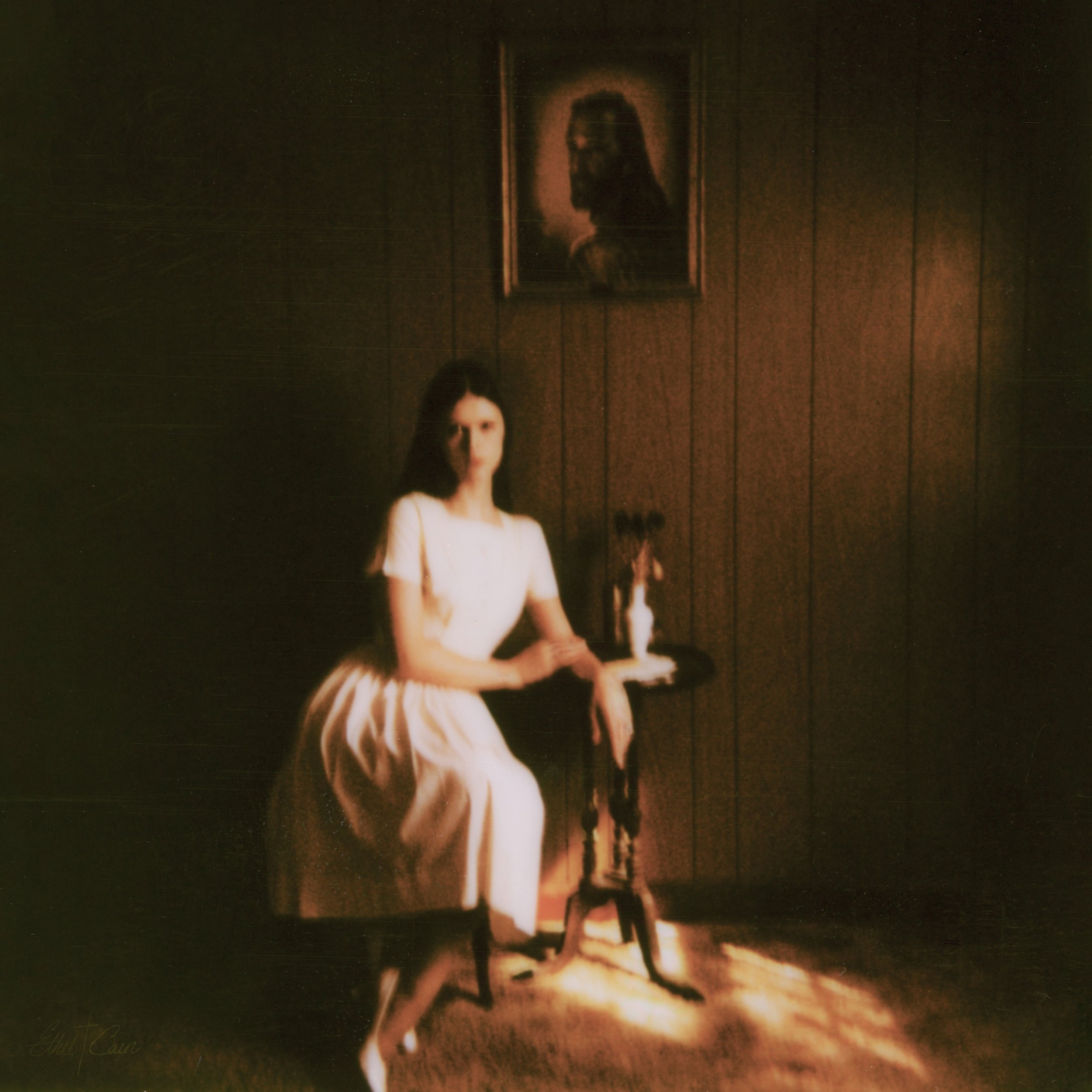
Via her Tumblr, ‘mothercain’, Hayden Anhedönia (releasing music under alias Ethel Cain) repeats the phrase ‘Perverts is for every-body’. Yet her ninety-minute EP Perverts, released in January, has divided her fanbase. For newer fans born from Anhedönia’s success on Tiktok, the drone and ambient-heavy EP lacks the catchy melodies and vocal expression found on 2022’s Preacher’s Daughter and 2021’s Inbred. For dedicated fans of Ethel Cain and Anhedönia’s worldbuilding, Perverts is a departure from the Ethel Cain character and mythology. Anhedönia stated on Tumblr that ‘this next little project has nothing to do with ethel cain lore’ and has no connection to the narrative developed in her previous work. Perverts instead functions as something closer to a thematic set of character studies of different ‘perverts’, initially inspired by Donald Ray Pollock’s book Knockemstiff. Anhedönia has acknowledged that the end product has shifted away from this case-study-like structure, but the initial form grounds it; the project is thus a total separation from her previous album.

Anhedönia’s most recent venture is seemingly a result of her changing mindset. In a May 2022 interview with the New York Times, she expressed how she was happy to embrace celebrity and ‘play Miss Alt-Pop Star and … parade [her]self around’ for the release of her ‘first record’, with the aim to earn a legacy where she can remove herself from the mainstream. Now that Anhedönia’s first album cycle is over, her ‘parad[ing]’ seems to be over. During an interview with the Guardian, Anhedönia stated that she ‘would really love to have a much smaller fanbase’ than she did post-Preacher’s Daughter. Frustrated with her audience ‘joking’ about her work, Anhedönia expressed a desire to be able to ‘turn off the memeable internet personality thing’ where she can move away from being ‘funny’ or ‘relatable’ and, instead, have an audience based on appreciation of her art. Six months later, Anhedönia appears to be somewhat succeeding. Fans of hers have expressed confusion about the direction of her new sound on social media, with comments such as ‘ETHEL WHAT IS THIS??’ and ‘this new Ethel Cain album is just machine noises … what even is this’. 

For these fans, Perverts lacks the anthemic and catchy memories of American Teenager or Crush; the lead single Punish is a dark, brooding, nearly seven-minute piano ballad. Anhedönia’s vocals are accompanied by creaking noises, as she sings slowly, enunciating every syllable, providing the minimalist space for the repeated refrain ‘I am punished by love’ to slowly and effectively resonate with the listener. As Anhedönia lets her voice and the piano become swallowed by harsh guitar riffs and feedback, her chorus blends into itself, the melody repeated and repeated until the guitar cuts out as the song returns to sombre piano chords, accompanied by an eerie, panning drone. Despite its harshness, this is arguably the most accessible song on the album. It is followed by the thirteen-minute ambient track Housofpsychoticwomn, which pairs the repeated, artificially monotone call of ‘I love you’ with a building sample (or reconstruction) of a pregnancy scan. Behind the clear repeated vocal, Anhedönia quietly mutters a spoken-word extract about the magnitude yet un-explainability of love. Eventually this is overridden by the overbearing drone. ‘I love you’ is perverted from a plea to a threat.

Although Perverts’ dark ambience is at odds with any previous framing of Anhedönia as a pop artist and the ‘stan economy’ she found frustrating in interviews in 2023, her new style is not a complete diversion from Preacher’s Daughter. Repeated vocal melodies, brown noise and heavy guitar riffs are reminiscent of harsher moments on songs such as ‘Ptolomaea’ and ‘Family Tree’. Further, Anhedönia’s new material, like her previous work, has ample room for interpretation and analysis. The fifteen-minute Pulldrone details the ‘12 Pillars of Simulacrum’, Anhedönia’s own theory influenced by Jean Baudrillard’s Simulacra, which concerns the difficulties of dividing reality from media representation in modern society. Anhedönia’s interpretation of Simulacra is grounded in spirituality and a connection to ‘hell’ and the ‘great dark’, which Anhedönia developed in a YouTube video titled ‘the ring, the great dark, and proximity to god’ released in anticipation of the departure of Preacher’s Daughter. Proximity to God is of consistent thematic importance throughout the entire album, and there is an implicit comparison between the perversion of love and perversion of reality. Through a perversion of reality, the listener finds themselves against God. Further, the title of Pulldrone itself refers abstractedly to the pull of humanity between spirituality and the apathy of the modern age, yet also functions as recognition of the ‘drone’ accompanying the poetry. The ambience is uncomfortable and distorted; strings develop and become more grating as the song progresses, stuttering and dying out in its final moments. Anhedönia stated that this ambience alongside the base texture for the album is entirely developed from field recordings of Niagara falls. A connection to nature and thus a spiritual connection to the physical world is embedded in Perverts; this natural connection is distorted beyond recognition throughout. Not all of the ambient cuts on Perverts are deliberately abrasive, however. Thatorchia is a standout example, with developing vocal riffs which expand to an atmosphere that is eerie rather than claustrophobic. Even this, however, is uncomfortable. 

Perhaps the decision to state that Perverts is an EP (Extended Play) whatsoever is Anhedönia’s recognition of the album’s stylistic departure from Preachers Daughter. An EP is usually considered a shorter album, with the length nearly never exceeding 30 minutes. Perverts is longer than Anhedönia’s debut album. The decision could reflect some acknowledgement that this is a side-project or not the direction of her future sound. In a Tumblr post, Anhedönia brushed off the question ‘is it true you’re trying to push away from the more mainstream sound to draw in a closer and intimate audience?’ by saying that she ‘just really like[s] drone music and wanted to make some’. Despite this, it is surely naïve to suggest that Anhedönia did not believe that her newest release would ostracise some fans – a reduction of her fanbase she has previously been all in favour for. 

I am not intending to argue that Anhedönia’s newest release is a deliberate attempt to ‘weed out’ fans who discovered her music through TikTok or other social media. But she is encouraging her audience to judge her music critically and engage with it, instead of rejecting it upon first listen. Anhedönia regularly posts and thanks critics for reviews of her music even when not entirely positive: when the listener properly considers the merits of her music, the feedback is appreciated. Ambient and drone are not genres which resonate with everybody; through the release of a challenging, incredibly detailed drone record, Anhedönia encourages her audience to properly judge the music they hear. 

Perverts is for every-body.

Categories
Culture

The Man in Me? The Importance of A Complete Unknown 

By Matthew Squire 

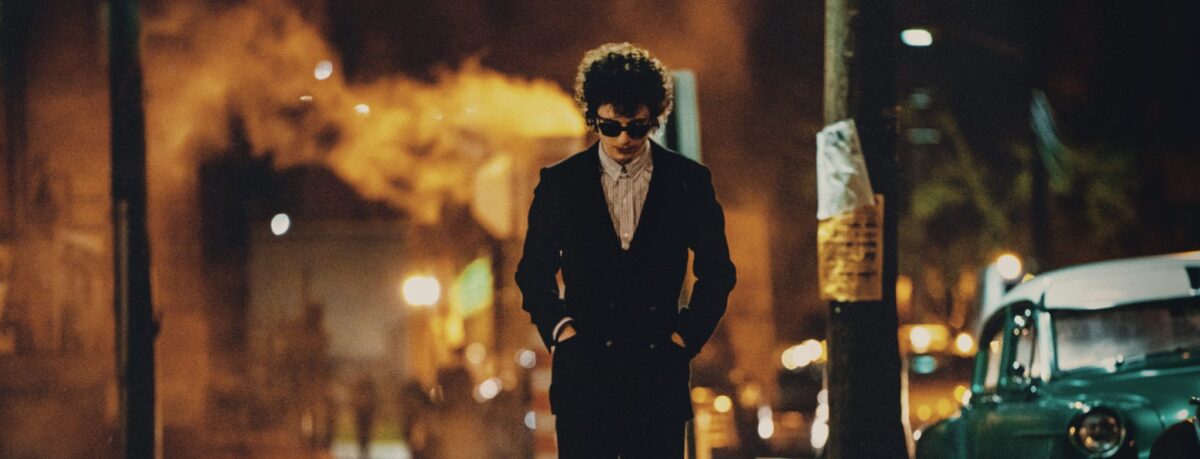
I was 12 years old, sitting on the floor of my bedroom, with a budget Crosley facing me, a record placed carefully upon it with the black already spinning . Next to me lay a sleeve, a man staring up at me, hair tousled and eyes glaring, daring me to look back, challenging me and inviting me in equal measure. The record caught. ‘That snare shot that sounded like somebody’d kicked open the door to your mind’. Now I agree with Bruce Springsteen on a whole number of matters (there is a reason we call him “The Boss” after all), but this quote I hold as gospel, it encapsulates hearing Bob Dyan for the first time. 

When I heard there was to be another piece of media made about the man himself, I cringed to a degree. Having already taken in so much music, writing and film, I figured this new picture was simply a Hollywood money grab, an opportunity to introduce Bob as a new figure to stand at the altar of the social media generation; I realise now I may have been mistaken. The film I watched tonight was not a commercial, nor was it a mindless piece of film celebrating an era so pined after. No, what I watched was a picture that celebrated a man who has given so much to art and the world, whilst holding close to heart the most important feature of the story, Dylan’s music. 

However, you may take this with a sizable grain of salt. Such high praise is to be expected from such a big fan like myself, someone who holds some of his dearest memories in the same arena as the catalogue of Bob Dylan, and in the same cage as some of his worst. I feel praise for A Complete Unknown extends beyond the expected fans, such as myself. This is an old story told in a new way, made accessible for a new generation to unlock and appreciate the music that has affected so many. 

 However, this is where the problem will lay for some of us; the ability to let go of our ‘ownership’ of Dylan’s music. Music that has become synonymous with our own personalities, our own moments and memories. But, it is imperative that the message and the sound continues to reach new ears and new minds. I myself have been guilty of trying to hold this experience out of reach to those unfamiliar with Dylan’s music, as I’m sure many have. Many times I’ve allowed his songs to do their job too well, coming too close to my heart and pushing me to gatekeep them with a vigour not reserved for other music. This is why A Complete Unknown is such an important film, it forces us ‘pure’ Dylan fans to a noble defeat and drags us gladly kicking and screaming into a new age, one where we must be ready to accept his universal appeal as a positive. 

Although I’m not quite ready for a Blood on the Tracks era biopic, I think we must accept the fact that it is more important to share music than it is to keep it to ourselves, as important lessons and myths lay within. Let us not be the ‘lone soldier on the cross’, but push others ‘down the road to ecstasy’.

Categories
Culture

Ode to a Pint and Pintman Proper

By Harry Laventure

The Internet. Noun, “a harrowing whirligig of rot”. Defined by example: scroll, Lebron James’ smiling face transposed onto a pumpkin with a spectral version of the song ‘You Are My Sunshine’ playing from the digital wings; scroll, the grinch, coloured blue, enormously excited about a certain kind of patella-themed medical procedure on the following day; scroll, a small dog AI rapping in Chinese; scroll, a rotund young man now known to the world as The Rizzler; scroll, Ian Hawke; scroll, Hawk Tuah; scroll, Talk Tuah; scroll, Talking Tuah. Has the great gallery of gibberish ever had so little wall space? Certainly not. 

After the pinted pretension of a Christmas quiz’s revelry, a friend of mine described influencers as our era’s answer to socialites. Having wept for Madame de Pompadour for a little while, I reflected on the sparkling offerings of the zeitgeist. Are we cooked? Perhaps, but it’s not all bad. I present the panacea: LondonDeadPubs. Real name, James McIntosh. Street, Jimmy Mac. 

Sycophant that I am, it is a labour of Herculean proportions to pin down this cultural aficionado in but a few lines. He is at once a musician, an underwriter, and a journalist, alongside more serious endeavours. Published on Spotify, in the FT, and editing for The Fence, there are many strings to the bow of this Zythophilic Robin Hood of content. Above all else, punctuated by various homages and tips of the hat, one theme has been prevalent in his corpus: yes, the nominative determinism speakst true, his muse is the humble boozer. 

LondonDeadPubs offers the premium service of criticism for every kind of public house, from the shop-conversion cavalcades of quaffage on the estate to the anachronistic debauchery dens of the Dorset village. Spliced between shots of sips and sips of shots, soundtracked by vaguely alienating ambience, Jimmy Mac has flown far and wide in search of the perfect place for a perfect pour. Adorned with a sartorial armoury of herringbone jackets and 70s collars, his quizzical insouciance has peppered pub after pub, pint after pint, with a narration that is at once lucid, referential, enjoyable, and directly informative. Structurally, his arenas of merriment are judged on four parameters by number: ambience, interiors, drinks, and the ever-delightful DPF (Dead Pub Factor). According to these barometers, each inebriation station is ranked and depicted in a fashion that is faithful to their identity, for better or worse. 

From Moranos of Canons Park to Albert’s Schloss of Piccadilly, we meet no conceit or alcoholic martyrdom on this tour. Criticism is humorous but candid. The care and attention to detail of each review coagulates with the frothed collar coherence observable atop a well settled stout. The fact is, Jimmy Mac seems to me the perfect influencer. I sincerely know nothing about him beyond his LDP character. His content is consistent but enriching, niche but entertaining, and it stems from something sincere. This is a man who not only loves to drink, but knows and treasures the very English reverie that is a simple pint in a pub, whatever the context. 

At the end of it all, we must concede the comforts in the anchor of a damp coaster. The concentration of a country’s attitudes to the seasons, bleak and golden; the shadows of sodden-boots on old stone floors post-countryside-walk, whisked away by the glowing fuzz of a cast-iron hearth; or the light chime of parasols in the creaky rattle of beer garden benches. That particular hieroglyph of the pump-badge, and the second sunlight of an IPA’s contents refracted and projected on a table of your choice… I digress.

At the risk of sounding like a git, he is one of the few actively positive things that I have encountered spontaneously through the algorithm’s radical wisdom. I implore you to find him on Instagram or TikTok. 

On the mystical metric known as the DPF, it’s a ten from me. 

Categories
Culture

David Lynch: In Dreams I Walk With You 

By Maisie Jennings

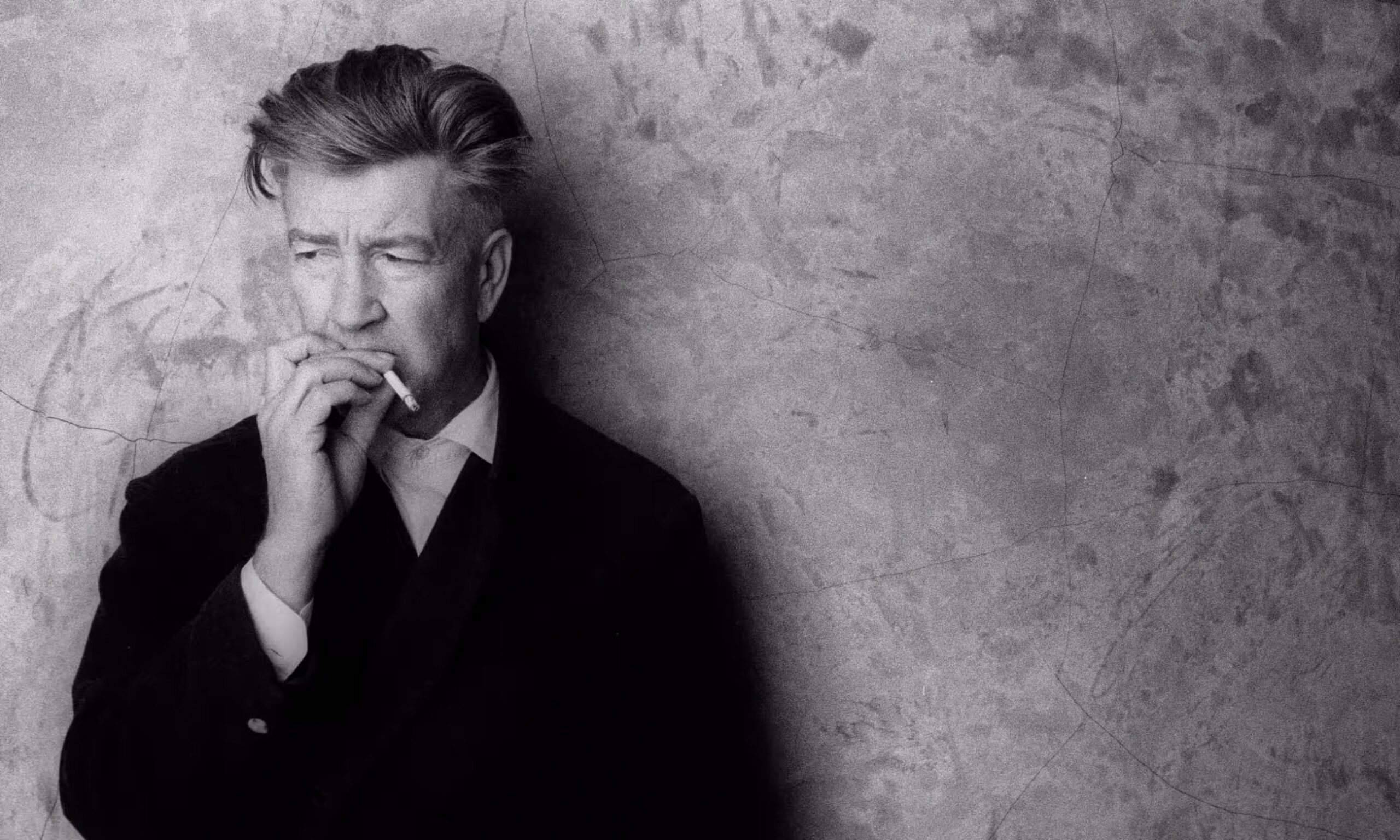
David Lynch (1946-2025) was an American filmmaker. 

I discovered David Lynch as a teenager – I was discovering cult classics, “arthouse” films, Murakami novels, and drinking red wine without grimacing. I watched Blue Velvet and was spellbound, nearly hypnotised. Masterfully, Lynch enmeshes American, white-picket-fence suburbia with dangerous and seductive forces – a distinctive thematic quality across his body of work. The terror Lynch constructs is existential; it probes the fragility of the everyday, piercing the mundane with ostensibly unnatural evil. At the same time, he locates this fear within, arguably, some of the most beautiful shots in cinema, and amongst whimsically playful moments of campy humour. This, I think, is why Lynch’s work, transfixes and intoxicates like a lucid dream and, simultaneously, reverberates in our minds like a terrible nightmare. He undercuts horror with glimmers of hope, offering some light in worlds that seem bereft of it. For me, he completely transformed the way I interacted with art, and taught me that strangeness could be a boundless repository of creativity. 

In an interview with the Guardian in 2018, after the release of Twin Peaks: The Return in 2017, Lynch speaks plainly: “I was never a movie buff. I like to make movies. I like to work. I don’t really like to go out.”. Expressed in typically gnomic fashion, Lynch’s blithe response is somewhat unexpected from one of cinema’s greats. In another interview, he lists the films that inspired him: the works of Godard, Kubrick, Fellini, and Bergman. However, Lynch, delighted by the ephemeral slipperiness of ideas, explains that inspiration is often captured in the “24/7 movie” of life, and not conjured or created by the realm of film. “The whole thing”, for Lynch, “is translating that idea to a medium”. His 2006 book Catching the Big Fish: Meditation, Consciousness, and Creativity, outlines his creative approach: 

‘Ideas are like fish.

If you want to catch little fish, you can stay in the shallow water. But if you want to catch the big fish, you’ve got to go deeper.

Down deep, the fish are more powerful and more pure. They’re huge and abstract. And they’re very beautiful.’ 

It is a characteristically elusive metaphor. Lynch goes on to elaborate that ‘going deeper’ means to access an expanded state of consciousness via Transcendental Meditation, a practice he began in 1973 during the production of his first feature film, Eraserhead. Though Lynch certainly did lean towards the wacky persona he became associated with, his wisdom is gentle and serious. More than anything, Lynch lived for his work – the deeply introspective process of art-making. 

David Lynch was born in Montana in 1946, and his childhood was spent mostly in transit due to his father’s job as a tree surgeon with the United States Department of Agriculture. It was an all-American upbringing; Lynch was a Boy Scout and his family pinged about happily between towns in the Pacific Northwest, Idaho, and Virginia. He reminisces, however, on a particularly striking image from his childhood: 

‘[My youth] was a dream world, those droning airplanes, blue skies, picket fences, green grass, cherry trees. Middle America as it was supposed to be. But then on the cherry tree would be this pitch oozing out, some of it black, some of it yellow, and there were millions and millions of red ants racing all over the sticky pitch, all over the tree. So you see, there’s this beautiful world and you just look a little bit closer and it’s all red ants’. 

This memory constitutes the opening scene of Blue Velvet – a bright blue sky, white picket fence, and pristine red roses subsequently disturbed by the camera’s focus on the squirming insects on the ground below. Lynch’s surrealist Americana had always been implanted from the landscapes of his childhood – doubtlessly his time spent in Spokane, Washington influenced the mystical lumbertown of Twin Peaks – as ever, it is reflective of his ability to catch the big fish of ideas and translate them into works of art. 

In the 1960s, Lynch went to art school in Philidelphia. He found the city to be a sort of industrial hellscape – ‘There was violence and hate and filth. But the biggest inspiration in my whole life was that city’. After his daughter was born and Lynch moved his family to Los Angeles in 1971, it took Lynch another five years to complete his first feature-length film Eraserhead; he dubbed it his ‘Philadephia story’. The success of Eraserhead lead Lynch towards a brief, but phenomenally impactful, foray with mainstream, blockbuster cinema. He was approached to direct Jonathan Sanger and Mel Brooks’ The Elephant Man – a biopic starring John Hurt as Joseph Merrick, a severely disfigured man who became a Victorian object of curiosity. The film was nominated for eight Oscars, and Lynch was hired to create a film adaptation of Frank Herbert’s epic science fiction novel Dune, kickstarting his collaboration and enduring friendship with actor Kyle MacLachlan. Dune was a notorious commercial and critical disaster – Lynch was unhappy with the heavy postproduction cuts of his footage and the experience further alienated him from pursuing a conventional Hollywood career. 

In 1986, Lynch released Blue Velvet – cementing him as cinema’s psychosexual and surrealist auteur. The film also established Lynch’s use of recurring cast members and his small, exclusive pool of creative collaborators. Most notably, perhaps, was his partnership with composer Angelo Badalamenti, who created the dreamlike scores to Lynch’s most iconic projects. After Blue Velvet, Lynch got to work on Twin Peaks, extending Lynch’s visual corpus into prime-time television. Twin Peaks aired in 1990, and since then, I think, it remains the most enchanting, thrilling, and entirely matchless American TV drama. The series follows FBI Agent Dale Cooper (another role played and shaped by MacLachlan) to the fictional Pacific Northwest town of Twin Peaks as he leads the investigation into the murder of high school sweetheart Laura Palmer (Sheryl Lee). Its release and sensational reception marked a decisive turning point in television drama – the deliberate, steady pacing, uncanny tone, and surrealist turns influenced other iconic shows like The X-Files, Breaking Bad, and Mad Men, to name a small few. Although it was precipitously cancelled after the second season, Twin Peaks proved that television could be a challenging, provocative medium. 

Twin Peaks: Fire Walk With Me, the feature-film prequel to the series, was released in 1992; it cast much darker, devastating shadows than the off-kilter folksiness of Twin Peaks. The film signified Lynch’s refusal to satisfy his audience’s lingering questions, instead, he unearths the true evil within the town – rather than the cosmic, metaphysical forces in the woods, the horror of Fire Walk With Me is found in the home, inside the torment of Laura Palmer. It is a shuddering crescendo of sorrow, and, in my opinion, Lynch’s masterpiece. 

Lynch returned to the psychological thriller in 1997 with the release of Lost Highway, starring Bill Pullman and Patricia Arquette as a couple who receive mysterious videotapes of themselves inside their home. The film is labyrinthine and dense with potential explanations, and potentially Lynch’s coolest, sexiest mindfuck. In 2001, Lynch’s Mulholland Drive further disturbs the conventions of the neo-noir – deconstructing fantasy by layering dreams and illusions. Initially, Lynch has intended for it to be a series and a pilot was shot, immediately cancelled, and then adapted by Lynch into a feature-film. Despite its shaky start, it proved to be another enormous critical success – owing, I think, to its endlessly interpretive nature, and Lynch’s frustration of the audience’s desire for diagetic narration. We become the detective, and Lynch’s neo-noirs do not so much defy interpretation and explanation as they mire us in them. 
In recent years, Lynch had retreated from making feature-films. 2017 saw the release of the third season of Twin Peaks – a powerful 18-hour nosedive into the depths of surrealism, beginning with the endless reverberations of Laura Palmer’s bone-chilling scream. It underscores, for me, how woefully insufficient language is to express the mysterious forces of existence that Twin Peaks reveals and obscures. I was deeply touched by Kyle Maclachlan’s tribute to Lynch in The New York Times; he explains that Lynch was not just a filmmaker, but an artist concerned with languageless mediums, existing within the world of feeling and the unconscious – the deepest depths of a unified, creative ocean. It’s why Lynch’s films are so brilliant. He was a painter, and he was enthralled by the idea that you could add texture, sounds, and smells to an image. Almost, I think, like experiencing the senses in a dream.

Categories
Culture

Don’t Look Back: The Definitive Dylan on Screen

By Matthew Dodd

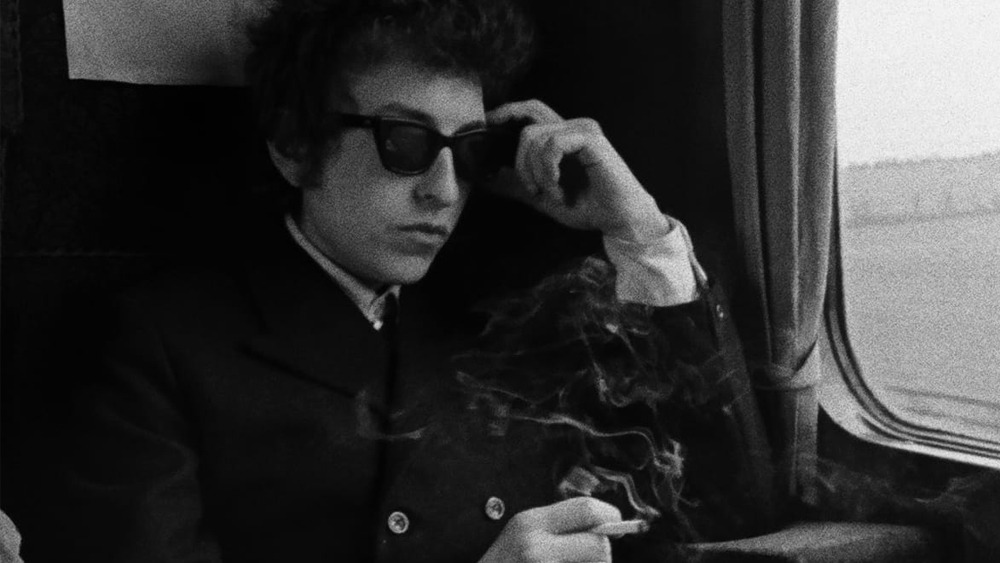
‘I didn’t consciously pursue the Bob Dylan myth, it was given to me–by God’, Bob Dylan told People Magazine in 1975. And yet, despite his best efforts, he remains the centre of a vast cultural legendarium encompassing university modules, murals in North London suburbs, street names in rural Minnesota and almost everything in between. He is, perhaps, the most documented, revered, critiqued, impersonated and mythologised musical figure of the last century. It’s no surprise then that he should also receive the 21st century’s favourite tribute to the giants of recent history: an Oscar-tipped Hollywood biopic. James Mangold’s A Complete Unknown, starring Timothee Chalamet in the lead role, depicts the life of the young Dylan arriving in New York and builds towards his infamous decision to ‘go electric’ at the 1965 Newport Folk Festival. Yet, despite being the first major biopic of Dylan, A Complete Unknown is far from the Nobel laureate’s first foray into the world of cinema. The Coen Brothers’ Greenwich Village fable Inside Llewyn Davis only features Dylan – or a version of Dylan – for a few seconds near the end but is nevertheless a beautiful evocation of the time and place which gave rise to his legend and an ode to the music that made him. More obviously, Todd Haynes’ 2007 film I’m Not There sees six actors – including Heath Ledger, Cate Blanchett and Marcus Carl Franklin – playing different sides of Dylan’s persona, offering a kaleidoscopic view of this most multifaceted of figures. Still, however, no effort to capture Bob Dylan on film has been so singularly powerful, so essential to understanding the artist, as the very earliest: D.A. Pennebaker’s 1967 documentary Don’t Look Back. Recorded over the course of Dylan’s 1965 tour of Britain, Don’t Look Back offers an unceremonious and impromptu insight into a man who, before our very eyes, is being transformed into a myth.

As the film opens, we find our hero flanked by his team, shuffling through an airport interchange, ruminating on whether he’s allowed to smoke indoors and singing a nursery rhyme to himself. The genius of Pennebaker’s film is that he doesn’t approach his subject as though he were the most significant artist of his generation, but rather as though he were a 24-year-old college dropout with a talent for being supremely obnoxious. Coincidentally, this is exactly who Dylan was. Over the course of the film, we are presented with the dichotomous visions of Bob Dylan, a pop culture sensation who is shaking the very foundations of contemporary music, and Bob Dylan, a man. Between these warring images we almost find some granule of sincere truth about both figures. Through the window of a London phone box we watch as a middle-aged critic sends back a review of Dylan’s concert line by line, fearing that the audience ‘applaud the songs and miss, perhaps, the sermon.’ This insistence from the press that there must be something more to Dylan’s music, a serious literary value that couldn’t possibly be understood by lank haired teenagers, dogs the film. In response to every suggestion of genius, or even intent, Dylan obfuscates – ‘I don’t write for any reason’, he tells a Time magazine reporter before sounding off a polemical diatribe about the inherent phoniness of the mainstream press. The film looks on from afar at the active mythmaking put upon this young songwriter by the world around him. It argues, instead, that genius is happening largely by accident in little, unmajestical ways. While sitting improvising over an unfinished song, Dylan casually throws in a lyric, ‘I’m a rolling stone’. This line of improvisation does not lead him anywhere before the film’s end.

Other moments speak more overtly to the developing sense that this young star might just be something special. In the back of a car, Dylan hears about a British folk artist, a young man named Donovan, and insists on meeting him. This meeting, documented in full, sees the pair perform songs to one another. Donovan plays a sweet but unremarkable rendition of ‘To Sing for You’, to which Bob jovially responds ‘Hey, that’s a good song, man!’ before bringing the room to an awed silence with ‘It’s All Over Now Bay Blue’. The gap between these two artists, even at this stage, appears cavernous. For all his cocksure posturing, there is an acceptance that Bob Dylan is, by the age of 24, already an important artist. With the benefit of 50 years’ retrospect, the film now seems morosely vindicated. The artists who surround him, such as Donovan and the Animals’ Alan Price, have not quite faded into obscurity, but have certainly become footnotes in the grand narrative of Bob Dylan.

One major character whose legend has survived the Dylan monolith is his friend, on-and-off lover and creative partner Joan Baez – another of the folk movement’s most iconic figures. She first appears here making faces at the camera and doing mock accents before explaining to a reporter – who takes her as simply another element of Dylan’s cavalcade – how to spell her name. By the ‘Z’ of ‘Baez’, the reporter realises his mistake, jolting back with a peculiarly British ‘Oh strewth! I’ve been looking for you all day.’ The relationship between Dylan and Baez is perhaps one of greatest mysteries in the history of folk music, and one of the most beloved points of discussion amongst self-proclaimed Dylanologists, but it comes out here as nothing so nebulous, more so a casual intercourse between two young people drawn together into a massive and unknowable world of cameras, reporters and sold-out music halls. In the back of a car, she sings a deformed version of ‘Baby Blue’, ‘crying like a banana in the sun’. She uniquely refers to Dylan as ‘Bobby’, sticking out as quite possibly the only person in the film who doesn’t view him as a prophet, financial prospect or spoiled brat. Through this narrow window into the lives of two musical titans, we see them quite simply as tender friends.

Walking hand in hand with the development of Dylan the myth is the administration of Dylan the business. Long scenes are dedicated to Dylan’s manager attempting to squeeze as much money out of record executives as possible, the name ‘Bob Dylan’ becoming a byword for riches. Later, Bob and co. quibble over the position of ‘Subterranean Homesick Blues’ in the charts – a meagre number 16 at first. These scenes are a bold reminder that the pursuit of art is not always one run on good will alone. The cultivation of this ‘voice of a generation’ was an opportunity to make a great deal of money, a fact that Don’t Look Back finds no shame in acknowledging. It is the banal, ugly and crass moments that Pennebaker chooses to spend his time on which makes Don’t Look Back such a singularly powerful accomplishment. It is a rare documentary which seems genuinely interested in revealing something about who its subject is, rather than trying to place them into an imposed narrative of success. We watch Dylan perform to sold out venues, but we also watch him, perhaps even more closely, as he awkwardly re-tunes his guitar after ‘The Times They Are A-Changing.’ This is a portrait of the artist unscripted, unceremonious and unpolished. 

The central limitation of the biopic in its current form is its futile desire to aggrandise its subject to legendary status, mapping a hero’s journey onto the life of a real human being. Perhaps the most egregious example of this in recent memory is Bryan Singer’s 2018 film Bohemian Rhapsody. Instead of painting an intimate picture of one of the most iconic rock bands of all time, Singer’s film insists on transforming Queen’s career into a three-act tragedy and Freddie Mercury into its tragic hero. His homosexuality is treated as hamartia, his exploration of his sexuality as the pit of his moral degradation. It cannot go unnoticed that this film was made with the express supervision of the band’s surviving members – no wonder, perhaps, that one of the film’s climactic scenes see Freddie apologise at length to the rest of the band for his errant behaviour. This style of biopic turns people into caricatures and, as in Bohemian Rhapsody’s case, risks imposing prejudicial readings onto real lives. All too frequently, these films turn some of the most exciting figures of our time into obnoxious burlesques of their public persona, with every moment of their lives steeped in some sort of divine knowledge of their own greatness. How many times must we watch a biopic tell us just how important every aspect of an artist’s life is in leading them to write one of a dozen or so popular hits? Perhaps the sorry state of the music biopic was best diagnosed by the 2007 satire Walk Hard: the Dewey Cox Story, in which the fictional folk/rock/pop star’s drummer tells crowds ‘Dewey Cox has to think about his entire life before he plays!’

This is not to say that the biopic is a doomed genre altogether, recent offerings such as last year’s Oppenheimer and Priscilla are proof of that, but there is a sense in which the best examples are those which do not propose to be an authoritative biographical extravaganza but rather a reading of a life. Often, these films work best as a synthesis of artist and subject: Oppenheimer may be read as a film as much about Christopher Nolan’s own guilt of creation as his protagonist’s, Priscillia as a story not unlike Sofia Coppola’s own as a young girl forced to meet all too early the scrutiny of the public eye. But fundamentally, they are all simply versions of the story: recollections, urban legends, re-translations of ancient manuscripts.

A Complete Unknown may be a wonderful film about a young songwriter who changed the world, but he will be Bob Dylan the myth rather than Robert Zimmerman the man. It will tell us how this boy became the voice of his generation; how he, with little more than a guitar, a funny haircut and a polyamorous spirit, revolutionised popular music. But it will not give us, across two hours, any of the same insight into who this most elusive of artists actually was as D.A. Pennebaker does when he captures Dylan laughing at the British pronunciation of ‘bloke’, throwing a tantrum at his harmonica being out of tune or, most crucially, instructing his rowdy posse to ‘be groovy or leave, man.’ Bob Dylan has always been a figure who revels in indefinability. Throughout his life he has rejected classification as a folk singer, protest singer, poet, anarchist, and most every other moniker thrown at him. A Complete Unknown will try its best to define him again as one thing or another – voice of a generation, genius, asshole etc. – but, in Don’t Look Back, Dylan himself put all such definitions to rest in perpetuity, telling student journalist Terry Ellis, quite simply, that ‘I’m just a guitar player. That’s all.’

Image credit: The Criterion Collection

Categories
Culture

Silver Swans, China Plates and Memories from the Pits: The Bowes Museum and ‘Kith & Kinship’

By Rohan Scott

County Durham’s Bowes Museum is a fabulous French Second Empire edifice nestled in a corner of the charming town of Barnard Castle. It was purposefully built in 1892 to house the collections of Josephine and John Bowes. Given the context of the ‘Kith & Kinship’ exhibition, it is important to acknowledge the source of the Bowes family fortune. The coalfields of County Durham and Northumberland did well to service the wealth and station of the Bowes family, but would not have been possible without the graft and toil of many working people in the region. If this museum may be a sweet fruit from bloodied and ashen soil, then I hope the beauty of its contents and the ‘Kith & Kinship’ exhibition goes some way to serve as a testament to the communities that enriched the very foundations of this museum.

The museum is endowed with an excellent ceramics collection that beautifully illustrates the intersection between art and functional wares. Over the past century it has subsumed other nationally renowned collections, allowing it to enamel a picture of the history of porcelain. Items range from ancient Qing wares to intricate nineteenth-century European open-work pieces. A favourite of mine is a pair of faience felines coloured canary yellow, made by Émile Gallé.

The parquet-floored picture gallery sits on the second floor, occupying a grand space reminiscent of the rooms in the National Gallery. Upon entering the gallery, a conspicuously placed Canaletto might catch one’s eye, unless first drawn to the bizarre novelty that is a silver swan automaton. Works by El Greco, Goya and Fragonard can be found on the walls, interspersed with paintings by none other than the museum’s founder, Josephine Bowes. 

I will briefly pay some attention to a concurrent exhibition called ‘Framing Fashion: Art and Inspiration from a Private Collection of Vivienne Westwood.’ It displays items from collector Peter Smithson alongside pieces from the museum’s collection to explore historical inspiration in the works of Vivienne Westwood. I feel entirely underqualified to make any discerning comments on this exhibition – but I thoroughly enjoyed the pieces from Dressing Up (Autumn/Winter 1991/92) which feature Harris Tweed corsets, velvet jackets, tattersall skirts and stalker hats. It somehow manages to make a country wardrobe fit for the runway.

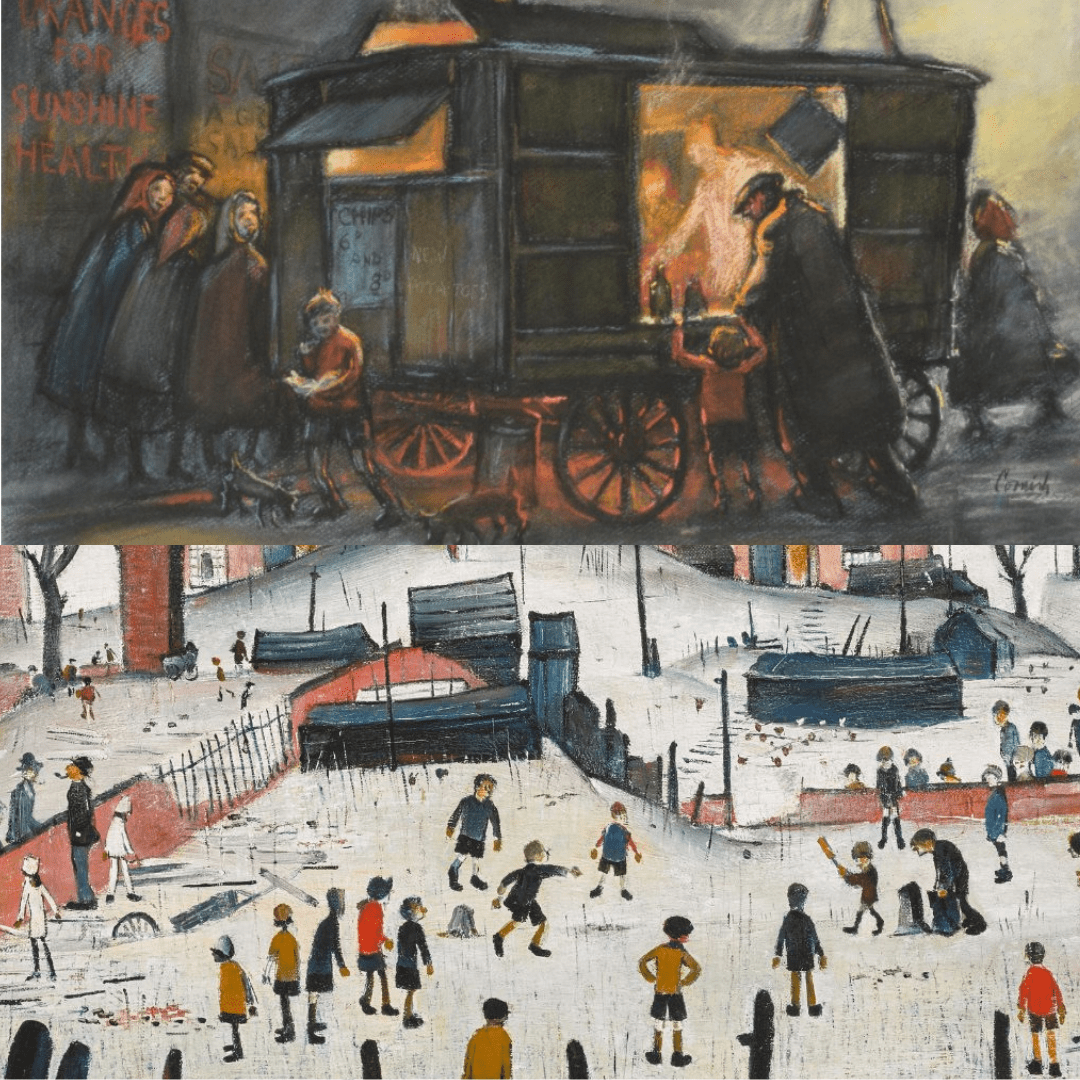
The ‘Kith & Kinship’ exhibition revolves around the works of Norman Cornish (1919-2014) and L.S Lowry (1887-1976). The exhibition seeks to illustrate the relationships and social webs of Northern England’s working class communities during labour disputes, wars, the Great Depression and industrial decline. Cornish and Lowry captured the lives of working people in moments of joy and moments of hardship to create a colourful testament to the people of Northern England – their history, their kith and their kinship.

The selected works of Cornish and Lowry work beautifully in tandem, complementary in intention, contrasting in approach and outcome. Cornish draws directly from his experience in the pit in Spennymoor, County Durham. The scenes of his artworks reflect an ‘insider’ perspective as a member of the very community he was capturing on canvas. By contrast Lowry conveyed the toil of Northern industrial life – in Pendlebury, Greater Manchester –  as an empathetic outside observer. The exhibition has been curated with sensitivity and purpose – that is – purpose to highlight an aspect of English history and society so often overlooked. The works of Cornish and Lowry are delightfully paired together to create a sort of correspondence between the two artists. 

Some painting that deserve particular attention are as follows:

‘Chip Van at Night’ (Cornish)
Cornish delivers the warm glow of a Spennymoor chip van, conveying a sense of warmth and respite from a long day’s work.

‘Teenagers’ (Lowry)
Lowry’s signature waifish matchstick figures present a still of adolescent life in industrial Britain.

‘The Gantry’ and ‘Pit Gantry Steps’ (Cornish)
Two paintings of miners climbing the pit gantry steps, the overcast skies and ominous steel structures induce a powerful sense of dread.

‘The Big Meeting’ (Cornish)
A sea of flat cap-crested miners against a backdrop of the silhouettes of Durham Cathedral and Castle. An inspiring image of a community celebrating their heritage and demonstrating labour solidarity.

‘Cricket Match’ (Lowry)
A joyous image of play, set against a backdrop of urban decay – representative of declining industry, unemployment and uncertainty during the Great Depression.

Postscript: I thoroughly recommend a visit to the ‘Kith & Kinship’ exhibition and the permanent collection of Bowes Museum. I apologise for the late delivery of this article as the final day of the exhibition is Sunday 19th of January. The ‘Framing Fashion’ exhibition is on until the 2nd of March. I hope this might inspire some last minute weekend plans – or perhaps a cause to see the museum and the other fabulous exhibitions they put on later in the year.

Categories
Culture

This Cruel World Where I Belong – The Myth of Nick Drake

By Matthew Dodd

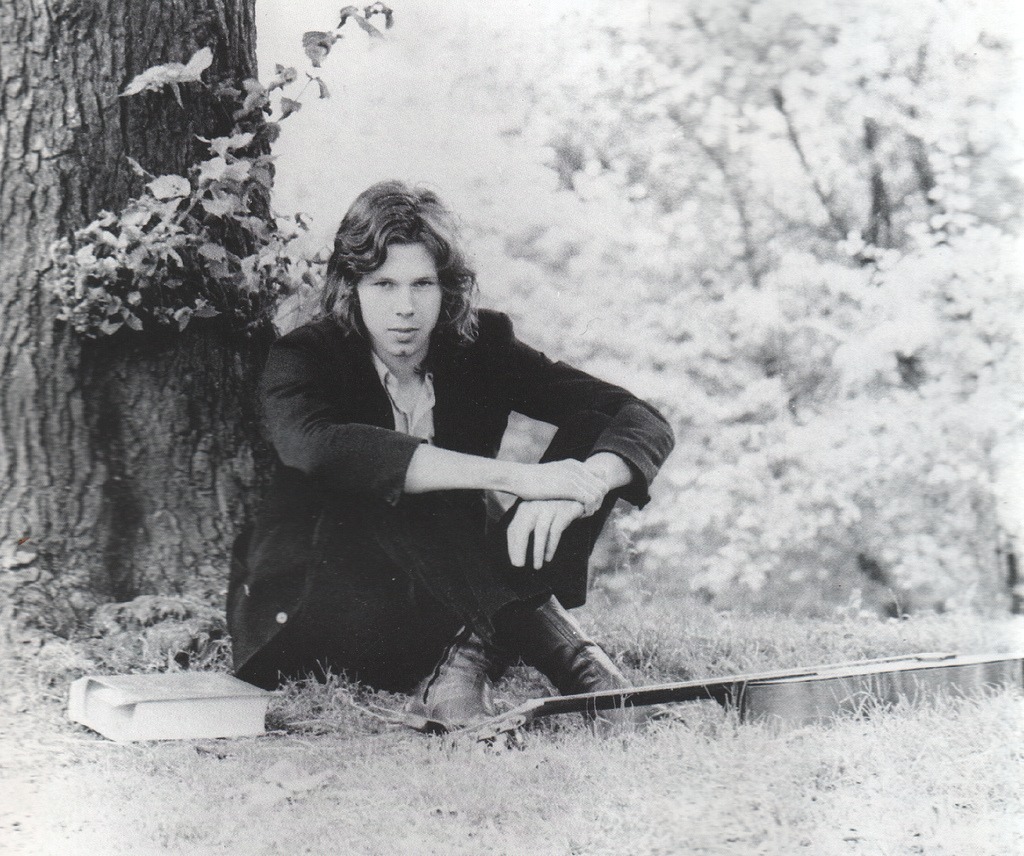
On the 25th of November 1974, at his family home in Warwickshire, the singer-songwriter Nick Drake passed away from a believed overdose of antidepressants at age 26. Drake, a Cambridge dropout, left behind him three studio albums: all of which were released to critical and commercial failure. Around fifty mourners attended his funeral and, by 1975, his record label Island had decided not to reissue any of his albums. Fifty years later, a fully orchestrated rendition of Drake’s music was performed to a packed out Royal Albert Hall as part of the BBC’s annual programme of Proms. Having died in obscurity, by the 21st century Drake has far eclipsed more successful contemporaries like Donovan and Fairport Convention to become perhaps Britain’s most popular folk artist. But how did a career that lasted less than seven years and ended in unconscionable tragedy become such a defining chapter in folk history?

In youth as in adulthood, Drake was a guarded and often abrasive figure. His father recalled an old headmaster of Drake writing that ‘none of us seemed to know him very well. All the way through with Nick, people didn’t know him very much’. By the late 60s, Drake had won a scholarship to study English Literature at Fitzwilliam College, Cambridge. Once there, he immediately aligned himself with, in the words of fellow student Brian Wells, ‘the cool people smoking dope’. Having found himself drawn to folk artists such as Bob Dylan and Van Morrison, Drake began performing his own music around London in 1967. Apocryphal accounts describe Drake as an imposing performer, his gangly build and harsh features giving him even at the outset the look of a star. Fairport Convention’s Ashley Hutchings talks of how Drake performing at this stage ‘seemed to be seven feet.’ Still, Drake was uncomfortable performing, a fact that would persist throughout his career. For all the extended paraphernalia published on his short life, no actual live recording of Drake exists today. 

Drake skipped lectures to record his first album, 1969’s Five Leaves Left, and by 1969 had left Cambridge nine months before graduating to return to London and focus on his music. He expanded from the raw, Leonard Cohen inspired sound of his first album with his second, the fuller, jazz influenced Bryter Later in 1971. With the release of Bryter Layter, Drake began to withdraw further, refusing to promote the album publicly and delivering reserved performances. Across two nights in late 1971, Drake recorded what would prove to be both his masterpiece and his final album, Pink Moon. Unlike his previous two records, Pink Moon, features no instrumentation beyond Drake’s voice and guitar – save for a brief, revelatory moment of piano intrusion on the titular track. Island, Drake’s record label, had not expected a third album from him and only learnt of its production when Drake delivered it, completed, to producer Chris Brackwell. A popular story goes that Drake left the completed tape unannounced at the reception desk of Island Records, though this was not the case: just another piece of mythologising in Drake’s already developing legend. Despite the strength of Pink Moon, now considered amongst the greatest albums ever recorded, it won Drake no greater acclaim and his work remained on the fringes of the folk scene. By this point, all of Drake’s albums had collectively sold under 4000 copies, leading him to consider joining the army as an alternative career prospect. Nevertheless, despite mental deterioration, Drake returned to the studio in 1974 to work on an ultimately unrealised fourth album. Throughout the year, however, his mental state worsened and a few months after his 26th birthday, Drake died in his childhood bedroom.

Drake’s posthumous fame came in no single wave but as a slow, rumbling ascension to the heights of folk’s musical hierarchy. Artists such as Robert Smith and Kate Bush cited him as an influence during the 80s and, throughout the decade, his status as a tragic figure began to brew. Documentaries and biographies began to appear in the 1990s and the somewhat un-Drakelike use of Pink Moon in a Volkswagen advertisement brought his music to a wider audience. By the 21st century, Drake’s status among the emergent ‘indie’ crowd had been firmly established. The use of Fly in Wes Anderson’s 2004 film The Royal Tenenbaums, on whose soundtrack Drake appears alongside the similarly fated Elliott Smith, represented an early example of his newfound demographic base. 

In the decades following his untimely death, Drake has been transformed into the archetypal martyr of contemporary folk music. His guarded public persona, his staunchly un-traditional attitude to guitar playing, his introspective and often inscrutable lyrics find fresh ears with each generation of wayward rebels and dreamers. The model of his martyrdom and lifelong mental health struggles have drawn him into the massed tradition of ‘tortured artists’ – alongside Van Gogh, Rimbaud, Plath and countless others – whose respective mystiques have only ballooned in the wake of their early deaths. This tendency to cast Drake as a tragically doomed romantic hero does, as it does to those other artists who shared his fate, a disservice to both his artistry and his memory. There is, of course, a degree to which Drake’s reputation has been made by his tragedy, in the same way that Van Gogh’s paintings or Plath’s poetry is made all the more powerful by knowledge of their grim contexts. The brevity of his career, represented in three albums amounting to a little under two hours, certainly affords him a certain unassailability. Compare him, for instance, to his great friend and contemporary John Martyn, another legend of the British folk scene, whose forty year career has earned him enduring acclaim but failed to bring him to the mythic status of Drake. Death froze Drake as the brooding face of eternal tortured youth: clad in corduroy and woolly jumpers, unkempt hair pushed back by the wind as he wanders through England’s green and pleasant lands singing of the days and their endless coloured ways.

It is easy for every brooding adolescent to find some understanding in a figure like Drake – indeed, that’s the very way his music found me – but to define Drake by his death, to narrativize his mental illness as the climax of his hero’s journey, is a gross error. Poorly treated mental illness – whether he suffered from heavy depression or schizophrenia was a fact undiscerned in his lifetime and still not understood fully now – robbed the world of a lifetime of music and, more importantly, took a friend, a son and a brother from those around him. It’s easy to fall for the myth of Nick Drake, but for the sake of all those affected by issues of mental health, we cannot. Nick Drake didn’t die for our sins. As a culture, we are all too keen to fictionalise our heroes and reduce them to stepping stones on the path to our own self-actualisation. On this path, Drake becomes just another victim of a tendency to fetishise mental illness, to turn unbearable pain into an aesthetic choice and by extension alienate the suffering from their pain. Nick Drake’s music is a solace, a heartbreak, a tragedy but Nick Drake was also a man. Now 80 and with a successful career in acting of her own to her name, Drake’s sister Gabrielle has reflected at length on the way her brother’s cult of personality has affected her personally. She remembers candidly hearing of one fan gleefully taking a piece away from Drake’s gravestone. But, she claims, this mythologised Drake – the dreaming boy roaming Hampstead Heath – only bears slight resemblance to her actual brother, a man she found frequently obstinate and difficult. 

The temptation to project one’s own woes onto our idols is a dangerous one. To look into Nick Drake’s steely eyes and recognise, not the seismic melancholy attributed to him, but our own troubles is an understandable salve to the woes of the world. But we must understand our heroes as people as well as legends. Nick Drake’s body of work is unimpeachable, three near-perfect albums of consummate artistry, an unbridled marriage of poetry and music. Yet, his memory’s necessary entwinement with his tragedy bears attention beyond the ephemeral attachment to a romantic hero. Drake is baked into the ecosystem of contemporary music: his influences are felt throughout artists from Belle & Sebastian to R.E.M. But perhaps his most powerful legacy is his enduring ability to connect with and console generations of listeners, to draw out beauty from the heartache of the world. To find serenity in art is natural, and if serenity does have a soundtrack, it surely must be by Nick Drake.

And I was green, greener than the hill
Where flowers grow and the sun shone still
Now I’m darker than the deepest sea
Just hand me down, give me a place to be

Image credit: Songs From So Deep

Categories
Culture

Reinvention and reconnection: Hamlet Hail to the Thief

By Holly Simms

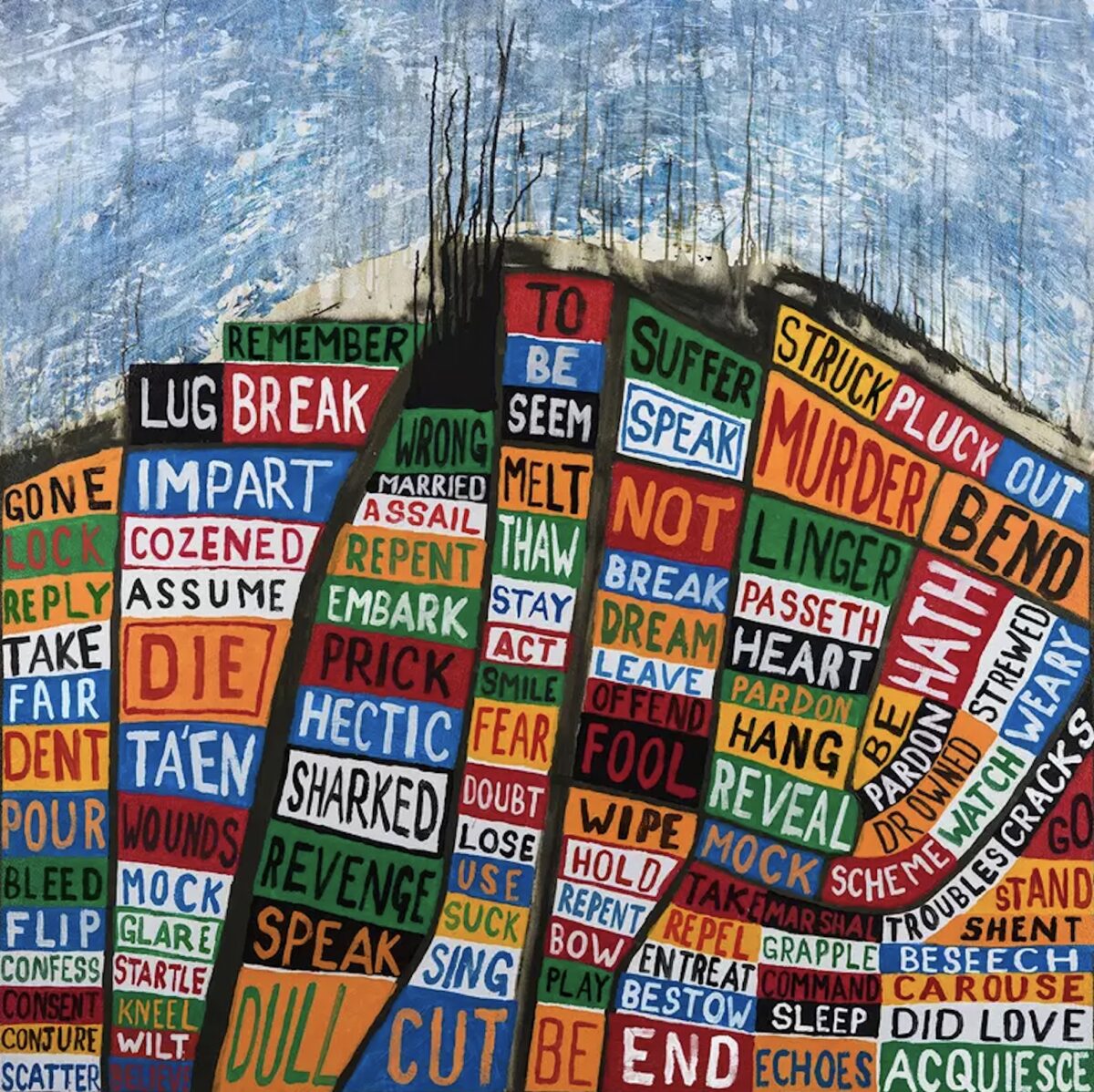
Thom Yorke and Hamlet, if you are a self-confessed, somewhat pretentious student of the arts, an admirer of the trope of the tortured artist, or ideally both, has a combination ever made more sense or had a greater natural appeal? April 2025 will allow this question to be realised as Radiohead’s sixth studio album and Shakespeare’s longest and arguably greatest work are reworked to form a coalition and come to the stage in the form of ‘Hamlet Hail to the Thief.’ 

‘Are you such a dreamer, to put the world to rights? I’ll stay home forever, where two and two always makes up five.’ These opening lines of Yorke’s album allow anyone familiar with the basic workings of ‘Hamlet’ and its profoundly mentally complex protagonist to see the thematic links between the two creative masterpieces. However, it was theatre director Christine Jones who spoke the connection aloud, allowing for this reworking to be conceived. In an interview regarding the project she discussed the psychological impact of seeing Radiohead live in 2003, the year Hail to the Thief was released, recalling, ‘it changed my DNA.’ She then goes on to ponder on its Shakespearean echoes, stating, ‘Not long after, I was reading Hamlet and listening to the album. […] There are uncanny reverberances between the text and the album.’ Additionally, Yorke has said he finds this project an ‘interesting and intimidating challenge’ with the RSC claiming the result of this challenge to be a ‘feverish new live experience, fusing theatre, music and movement.’ 

But what is it that makes this collaboration genuinely exciting? Shakespeare’s folio has been reworked, reworked, and reworked again, often with fairly dismal consequences. As an excited, newly inspired fan of Shakespeare I headed to the Globe’s Sam Wanamaker Playhouse at 16 years old to watch their production of ‘Richard III,’ a favourite play to this day. However, I found myself greeted with Richard and the rest of the cast in sports strips, forcing comedy and delivering Shakespeare’s meter in a manner which made it appear they were about to burst into freestyle rap. When attending a production of Shakespeare I don’t generally wish to feel on edge with concern that Lin Manuel Miranda might jump out of the stalls at any given moment.

This production is just one example of an endless list of Shakespearean reworkings that fall short of their expected critical reception, often deemed to be jarringly stripping the productions of their original integrity. Granted, this ‘integrity’ often includes prominent themes of patriarchal oppression, with Shakespeare’s supposed ‘heroines’ rarely given the opportunity to be even somewhat developed characters. However, as upsetting as these themes can be to explore in theatrical characterisation, if in every modern production of these plays, we must turn their original structures on their heads, are we still performing Shakespeare at all? Or do we just feel so collectively guilty for hyper-canonising the ‘Bard’ and his misogynistic tendencies in the way we have, that we must make the plays an ode to today’s rightful quest for equality as to allow them into our modern creative spaces?

Herein lies the crux of what I find to be appealing about the upcoming ‘Hamlet Hail to the Thief,’ I am hopeful that it will be able to find balance. Radiohead’s emotive melodies and lyrics that act as the building blocks for ‘Hail to the Thief’ hit so precisely on the themes of mental turmoil, paranoia, and grief that bleed from ‘Hamlet’s’ every syllable. Hamlet’s impassioned musing of ‘what piece of work is man!’ appears to be a line of thought that has resonated with Yorke across much of his musical career as he explores the psyche and its failings consistently and in great detail from ‘Pablo Honey’ through to ‘A Moon Shaped Pool.’ When this music soundtracks the conflicted, poisoned and often stagnated mind of Hamlet I am hoping that the play’s, still deeply relevant, discussion of the human condition will be what audiences are left most focussed on. Consequently the play should be able to modernise itself; as the reason for its hyper-canonisation becomes clear, it speaks to what is innately human in all of us, time period irrelevant.  

When the original core of the play is left intact having been exposed against the sounding board of Yorke’s art, today’s audiences should then be leaving feeling encouraged to contemplate the problematic elements of the play on their own, without having them thrust upon them. Ophelia’s quiet power in the face of dehumanising oppression, possibly unintentionally present in the text, can float its way to the fore of the mind naturally with the support of Yorke’s soundtrack. Shakespeare’s misogyny and its modern reverberations can therefore be able to co-exist with his genius as each layer of the play can be exposed intentionally and evenly without a clunky imposition of creative guilt heaped atop the play’s 4,167 lines.

Although there is much more to be said on the complexity of modernising Shakespeare and the challenge of locating its resonance within modern media, not much more can be said on this production in hope. Having bought tickets for the show in its first release I hope to be proved right in my high estimation of its quality. However, they do say never meet your heroes and perhaps the seemingly ideal combination of an all-time favourite band and one of the greatest works of literature created may not quite meet the mark. Nevertheless, ideally, I will not be left still roaming the creative ether in hope of one day finding the perfect Shakespearean reworking.