By Lara Rusinov
‘When I get to heaven, I mean to spend a considerable portion of my first million years in painting.’ These are the words of Winston Churchill, Britain’s prime minister through the Second World War and again in the early 1950s. Yes, I know. I was thrown too on discovering not only that Churchill painted, but that he painted rather well, and prolifically.
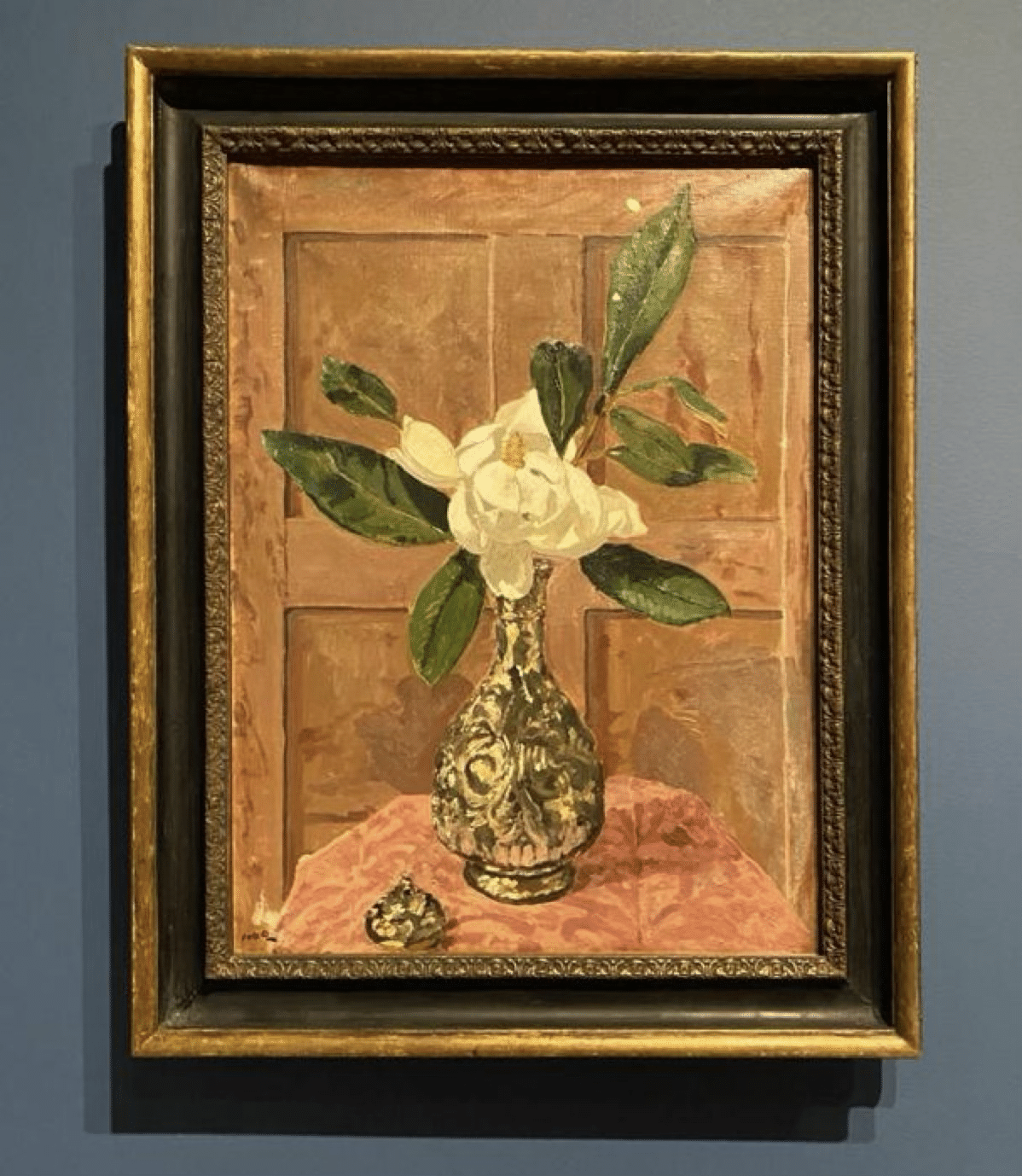
Some reviews have dismissed Churchill’s canvases as amateur and short on technique. Yet there is more to learn from our former prime minister than the limits of his technical abilities as an artist. The exhibition, Winston Churchill: The Painter, housed in The Wallace Collection in London until 29 November 2026, is a heartfelt defence of the amateur, a reminder of the importance of stepping away from the real world into the realm of creative sublimity.
For me up until this point, Churchill has been the prime minister of VE Day, the booming voice on the wireless, the bald, cigar-chomping, hunched figure of The Crown. This exhibition pulls the pedestal out from under him and he comes down to earth to meet us face-to-face. Not only are Churchill’s paintings displayed, but his personal possessions too, including his spectacles, individual brushes, and travel easel. While these objects add an interactive level to the exhibition, more significantly, they play a part in making us feel closer to the ‘human version’ of this figure who we feel we ‘know’: we see Churchill as a person rather than simply as a statesman. The cult of the politician dissolves; in its place we are gently introduced to Winston, a man we can begin to unlock and understand.
In his book Painting as a Pastime, Churchill explained that ‘painting is complete as a distraction… I know of nothing which, without exhausting the body, more entirely absorbs the mind.’ Churchill makes it clear that the goal of his painting was not to produce critically acclaimed masterpieces, but rather, he painted to escape. Churchill himself even dismissed the value of his own paintings, referring to them as ‘daubs’. This raises the question: must art be ‘good’ to be worthwhile? For Churchill, painting was not only a worthwhile escape, but essential. To put it in 21st-century terms, it was the statesman’s detox, and an addictive one at that: the almost sixty works on show at The Wallace Collection make up only about a tenth of his estimated total output. The exhibition makes an affecting case in defending creative impetus as a vehicle for increased productivity. Our time away, absorbed in creativity, is key for enhanced performance. Seemingly, some of the apparently useless things we do might well turn out to be the most useful.
Perfection is not always attainable, nor always the height we should be striving for. Churchill valued the simple pleasures associated with his creative hobby: ‘we cannot aspire to masterpieces,’ he said; ‘we may content ourselves with a joy-ride in a paint-box.’ Indeed, sometimes a ‘daub’ is enough, and sometimes that daub is the very thing that propels us into an elevated, ‘flow’ state.