By Emilia Brookfield-Pertusini
all images courtesy of Braxton Haugen
It’s a never-ending pursuit, and I think that’s the point. When you start thinking differently is when you’re going to get yourself into trouble. – Braxton Haugen
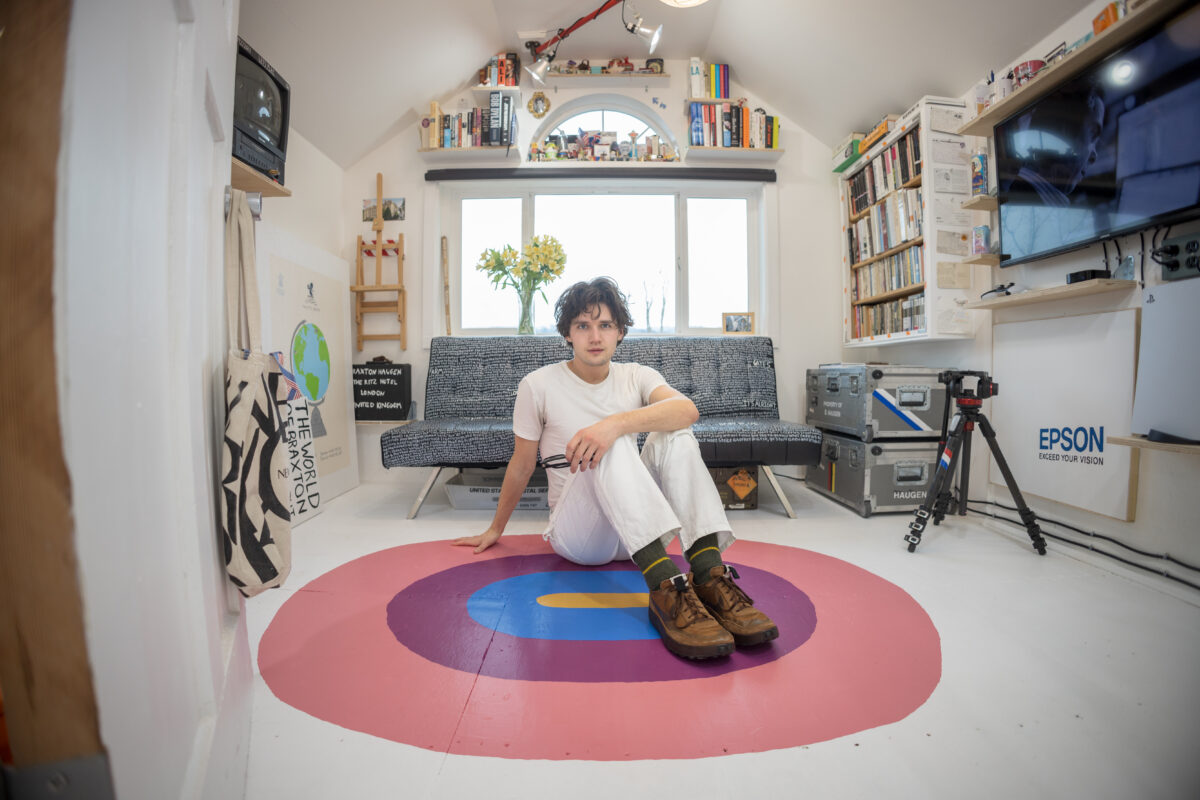
Let us go then, you and I, and enter the technicolour world of Braxton Haugen. It is rather easy to find his rabbit hole, and chances are you have stumbled across it before. Braxton’s niche corner of the internet that he inhabits is one of poetry, carefully made props, hotel stationery – asked very politely for at reception desks across the world – and curios, the music of the 1960s, and most importantly film. Taking the form of the artistic polymath for the 21st century, Braxton has dabbled and triumphed in art and film-making in its myriad forms, yet his colourful, twee, vibrantly personal series The World of Braxton Haugen has catapulted this filmmaker onto the cultural radar. It is with this world that we are reminded of what makes our own world so dear; the ability to hold things, the ability to personalise our spaces and the ability to be an individual. In a time of increasingly digitalised, uniformed existences, Haugen’s world embraces the tangible, the uniquely man made, and is an ever increasing reminder of the necessity for art and artists. Haugen’s world is a culmination of and testimony to all that he has learnt, seen, done and forayed in other years; it is the attention to detail of place, character and identity that has given us these glimpses inside a life as nourished with artistic endeavour as Haugen’s. Drawing on one of his many artistic inspirations when asked to introduce himself, “There’s that great Dylan line off ‘Farewell Angelina’ that goes, ‘call me any name you’d like, I will never deny it.’”, Haugen encapsulates his world and his artistic story in Dylan’s line. The World of Braxton Haugen is one of experiment, of trying a new name when called to and never denying the character you are working with, quirks and all. Fascinated by the world Braxton has carved out for himself, I spoke with Haugen to get to the core of his world, and discover what it could teach ours.
“There were ten years before the sun came up” on Braxton’s seemingly “overnight success” with the World mini-series, ten years during which longform film, feature films, poetry series and being suspended between Los Angeles and London all had to happen in order for Braxton’s world to finally reach us. The series started in June and quickly rose to reel prominence, but like the emergence of a new star in the sky, his light had always been there – it just took us time to receive it.
BH – World was initially a difficult project to get off the ground. […] I guess I was looking for something I could do that was of a smaller scale than the kind of work I’d done in the last year. I actually made three prototype episodes in January, but they were missing something. I wasn’t ready. Some of the ideas were there, or rather the seeds, but the execution was underdeveloped and lacked vision. I watched the rough cut of the first part and didn’t buy it. I ended up scraping that early version and put the entire project on the shelf.
In the meantime, I went back to London and kept myself busy with a couple of new writing projects. But I wasn’t especially happy with anything that was coming out on the page either. I guess somewhere in the back of my mind the idea of World had stuck around long enough that I began scribbling down little ideas for it while I was supposed to be writing. Around May I knew I had to make a decision about getting serious about a project. It felt like one of those fork-in-the-road moments. What I was writing then and the short films I imagined comprising World were very much two separate things and I knew I couldn’t do both, and I knew once I’d started on one sincerely that I wouldn’t want to change horses midstream. So I just said to myself: “World is going to be your next project, come hell or high water. You’re going to make these movies.”
It began as a way for me to document some of the people, places and things that were meaningful to me. I found the process challenging and rewarding enough that I’ve just kept making them. It was also the first project I’d ever received attention for right out of the gate. I’ve been publishing movies like these on the internet for almost ten years. I’d gotten used to people not really caring about me, so it was validating to see these movies connect so quickly with an audience. I’m incredibly grateful for that. But it took me showing up in the right place and in the right moment for that to happen. I guess I’d always resisted showing up in these places for one reason or another. But my girlfriend really encouraged me to think about sharing my movies on Instagram. So I started an account. At the time I posted the first part of my series, I don’t think I’d ever seen a Reel all the way through in my entire life other than the ones I was making for Van Neistat. So the whole thing was new to me. I think it gave the impression that I was some kind of overnight success, but of course there were ten years before the sun came up. That’s how the story goes.
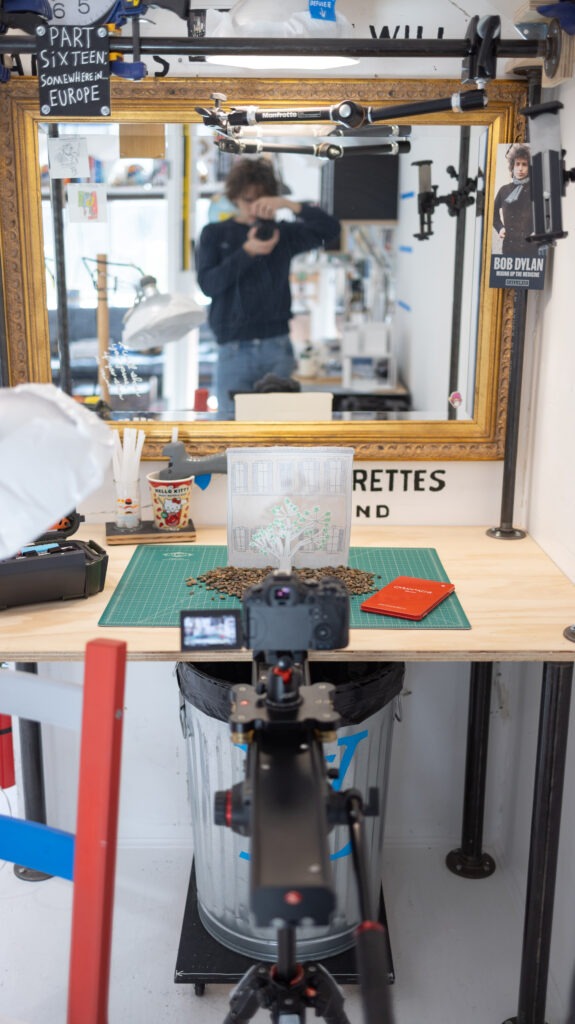
However, World wasn’t the first time the phone screen had seen Haugen. Answering also to the call of ‘poet’, In His Own Words saw Haugen publish his poetry using film. The words are zany, there’s a frenetic strength of delivery and energy held in the lines, and a spontaneity worthy of the Beat Generation’s urgency of feeling. Filmmaking and poetry aren’t foreign entities, explains Haugen, but rather he “look[s] at it as the same dance, but with a different partner”. It’s all part of the same creative process, vision and world.
BH – I write, I paint, I make movies, I build sculptures, I take pictures – and when you put it like that, it can seem like these are separate mediums, but I choose to look at it all as more or less the same thing. I think it all comes from the same place. But film is my native medium. Even in my written work, I chose to visualise my manuscripts as opposed to binding them in a book. So in that way, filmmaking is at the core of my creative life.
The four written collections were initially born out of a dissatisfaction I felt with filmmaking at the time. It was 2020, I’d dropped out of university, I was living on my own I’d just come off making 50 short films in a row for my series The Home Movies. I was disappointed and disillusioned with the reception, the film festivals, the whole scene really. I just didn’t feel like there was much space left for me to grow. I’d become increasingly uncomfortable with the self-obsessed, attention-seeking spirit of the times and I think I was curious what my life would look like if it didn’t revolve around making movies. I needed to step away from everything for a while to figure out what it was I had to say next. I wanted to push myself as an artist.
So that was where my head was at going into COVID. It was a strange time. It was a strange time for everyone. I was pretty isolated for the lockdowns. I spent most of it reading. I became fixated with blues music, the Beat Generation, and the films of the French New Wave. I would read all day long and write through the night. Looking back, I don’t really know where all that energy was coming from. I felt this fire in me to learn as much as I could about the things I was interested in. I was hungry. I just soaked up everything I could get my hands on about the lives of writers, poets, painters, musicians and filmmakers. I saw myself in that whole bunch of people and figured I was going to need all the help I could get along the way. I was giving myself an education. I was doing a lot of writing just for the page, which is something I’d never really done up until that point; I’d always just written for the screen. That feeling of newness and the challenge that came with it sustained me for those collections. I feel like, in the end, I more or less said everything I had to say with them.
Writing is still at the cornerstone of how I work now, but it just takes on a different final form. What I am doing now has more in common with what I was writing when I was seventeen than what I was writing when I was twenty-two. I’m really proud of some of those stories. I read them today, and I don’t really know where a lot of them came from. I’m interested in eventually putting some of those years of experience writing prose and poetry towards a fictional screenplay. There are a few ideas that really excite me, but right now I’ve got my hands full as is.
It is not only Haugen’s hands that are full, but his past credits. Since turning to filmmaking as a child, Haugen has worked on personal projects aplenty, but has also collaborated with some of his greatest inspirations. Van Neistat’s The Spirited Man series was a reflective, poetic series, and gave Haugen the chance to work with a hero.
BH – Working with Neistat was the thrill of a lifetime. He was one of my formative influences growing up, and to be up close and personal with a hero was nothing short of a life-changing experience for me. Maybe life-affirming is a better word for it. It was the ultimate validation to work so closely with him for the last few years. It was like going into battle with an old samurai master. I learned a lot from Neistat, and I think he learned some from me too. We worked really well together. Even though there’s an entire generation between us, our approach to things really wasn’t dissimilar. It felt as if we both sort of came from the same place out of the earth. There was a shared language of our tastes and references that I think came as a surprise to both of us. When we met for the first time, I felt as if I’d known him all my life. I’ve never felt that way about anyone before or since.
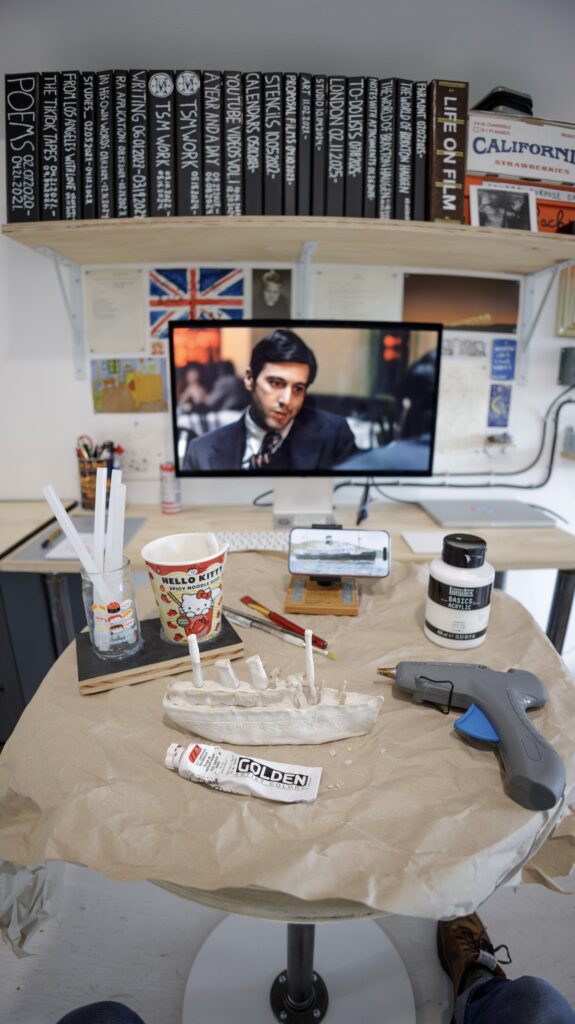
Haugen’s experience on the eclectic set of The Spirited Man enriched his creative vision further. Neistat’s embrace of the tactile and tangible within his films and general life – he is a keen repairman and tinkerer – has revitalised an interest in the physical in an increasingly digital age. Impersonal consumerism, new apps set on making our lives vaguely better and a common acceptance that nothing is built to last anymore. Neistat and Haugen’s physical media revolution feeds into a wider desire to return to a time when the physical, the real and the held was top dog. Armed with a garrison of props, collections, prized possessions and curios, Haugen is an advocate for the handmade and handheld.
BH – The handmade ethos is a really important part of my filmmaking. It goes beyond just aesthetics for me. I think it’s a way of celebrating the human touch in the arts. Filmmaking can be such a magical and mysterious medium, and I am drawn to seeing just a little bit behind the curtain. It’s also an attitude as much as it is a technical kind of thing. It’s Springsteen choosing to put out Nebraska in the format he did. That record has got a sound and a quality to it that no amount of studio polish could possibly capture. I feel the hand of the artist in every one of those songs. It’s like seeing the brushstrokes of a master painter. It’s part of the composition. Nothing is concealed. It’s all right there in front of you, in all of its beauty and contradiction. I think in our time, with the age of artificial intelligence upon us, that’s the kind of humanity that should be at the centre of the arts.
His penchant for the handheld is not a mere quirk or flourish of artistry, but part of his success. Episode 4 of World saw Haugen reveal his hotel stationery collection. Keen observers of his work will have already noted the apparition of these headed sheets – with their monolithic crests and elegant typefaces – throughout Haugen’s work, acting as part of his utilisation of everyday objects to transform his vision into tangible art. The dissection of his stationery habits and rituals resulted in his videos being brought to prominence online, reminding us that there is still a fascination in the physical object despite the intrusion of the digital.
BH – It’s so funny to me that was the movie which really introduced people to the World. Hotel Stationery was the fourth part of this new series and very quickly took on a life of its own. I had no idea that many people would be interested in this thing I kind of thought was my own weird little hobby. The stationery community really came out for it, and God bless them for it. It was really cool to see the positive reception. There’s a comment on that video with something like four thousand likes by the designer who is working on the Hilton’s stationery redesign, and all kinds of people are chiming in with their suggestions and preferences. I think I responded that the best ones give plenty of room to write with the letterhead not eating into the page too much. I definitely prefer unlined stationery for drawings and a little extra paper weight is always appreciated. Oh, and absolutely under no circumstances is it acceptable to put social media icons on stationery. I think even a website link is pushing it, but we do live in the 21st century. Other than that I’m not too picky. Good typography, tasteful logos – I suppose just your basic tenets of good design.
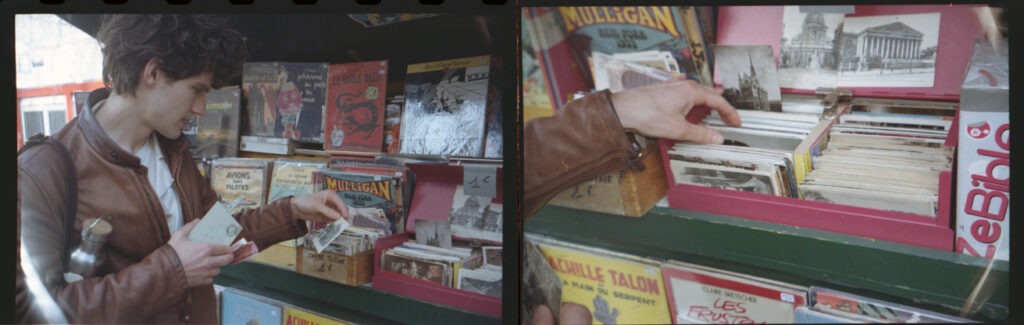
Palpable visualisation is at the forefront of Haugen’s world, allowing the creation of a world for us on screen that is colourful, carefully curated, exudes personality and revolves around the tactile and the textural. For a dyslexic, like myself and Haugen, the visual becomes all the more important when articulation can be a stifling endeavour. When words frustrate but the nag to tell stories still persists, the visual and the tangible become all the more vital to artistic expression and conveying what words fail to reach. “As a little boy all I wanted to do was tell stories”, Haugen says, “I had a lively imagination, but it was restricted by my ability to read and write as fluently as my peers. I can remember I would get so worked up over not being able to spell that I would just start crying, and I’d get so upset that I would forget the story I wanted to tell. I had all these ideas and pictures in my head, and getting them out was a painful process”. A tumultuous relationship with reading and writing led to Haugen discovering filmmaking at a remarkably young age: “When I discovered that I could tell stories through the little movies I made in the backyard, it was like discovering a loophole. I suddenly didn’t feel stupid. I taught myself to edit when I was seven years old. I embraced those skills as some kind of superpower or something.” With a talent for vision and articulation, Haugen has refused to let his filmmaking be stopped, and wants his films to reflect the “humanity and truthfulness” that is at the heart of all his endeavours. Each film is not another chapter in a manifesto, but rather a search for the humanity and truthfulness that lies at the core of each of our worlds.
Haugen refuses to walk the road for humanity and truthfulness alone, and his scripts, poems and soundtracks all ring as an homage to the artists that shaped his artistry and individuality. An avid reader, his library is an eclectic menagerie of genre, perspective, time and thought.
EBP – You talk about living for stories and making a living from stories – what pieces of literature have inspired you the most, and what is it you look for within a story? What do you want your story to say about you?
BH – I guess the books that come to mind first are what I was reading during the pandemic. My library is really all over the place. Those early Hemingway novels, particularly A Farewell to Arms, really struck me. Edith Wharton’s beautifully written novel The Age of Innocence. I also really fell in love with poetry in that time. The Inferno and Paradise Lost. The Odyssey. Everything Rimbaud ever wrote. William Blake’s Songs of Innocence and Experience made a big impression on me. Ginsberg’s ‘Howl’ and Kerouac’s Dharma Bums. Baldwin’s essays. I read all the big Dylan biographies. Patti Smith’s stunning memoir Just Kids. Those are a few that come to mind off the top of my head. I just picked up Patti’s new memoir Bread of Angels, and am really looking forward to reading that. Just Kids is probably the book I find myself recommending the most, especially to young artists. I think it’s maybe the most generous book I’ve ever read. What a gift she shared with the world in writing that book. It’s a masterpiece. I’m completely in awe of her artistry and her spirit. I’m not really sure I’m looking for anything specific from stories beyond some kind of truthfulness. But I certainly found what I was looking for in her writing.
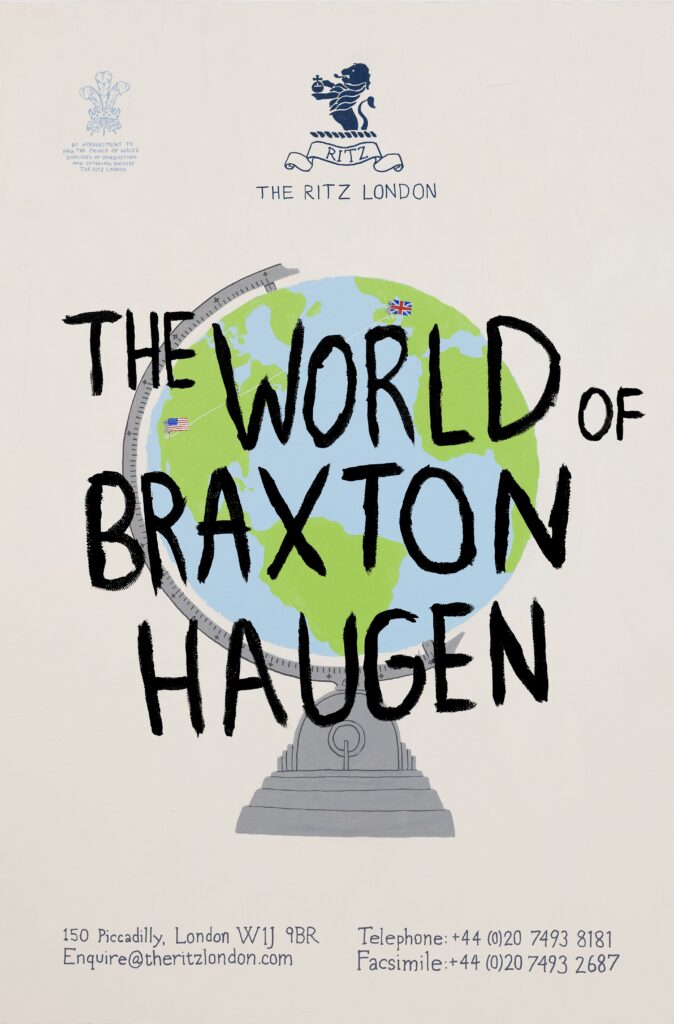
In a world where individuality is increasingly obscured, where digitalisation is prioritised before human experience and truth is lost within a murky echo of voices, Haugen’s artistic vision strikes an urgently compelling, charming note within this chaotic symphony. Taking a chance on your vision and developing your own world to explore and share is what drove Haugen, and something he believes any artist should hold dear to their pursuit. Putting life and humanity back into the arts is essential, and acts as a rebellion against the noise of the art world. Life should be vast, vibrant and – most importantly – human.
BH – Read a lot. Watch a lot. Listen to different music. I hope I’ve mentioned enough in this conversation that there’s a reading list or a watchlist someone could pull out of this. Getting an education doesn’t mean going to school. I’m a dropout, and I care more about learning now than I ever did sitting in a classroom. I think that talent can only ever be as great as one’s curiosity. And in the beginning, your curiosity is the thing powering everything. I’d say travel. Fall in love. Take big risks. Do things that make you feel as if your life depends on it. When you’re scared or nervous, that means you’re growing. It means you care. If you want to be an artist or a writer or a filmmaker, don’t put ‘aspiring’ in front of it. Just be it. We live in a time where anyone reading this interview has what they need in their hands to tell great stories. So there’s no reason to diminish yourself by placing a label like that in front of what you want to be. These are vocations which consume your life. You’re going to need to learn to live with it sooner than later; you might as well give yourself the head start. Life is about becoming who you want to be. I don’t really like the connotation that once you make a film or get a paycheck for your art, that somehow that means you’re no longer aspiring, because great artists are always aspiring to something more. It’s a never-ending pursuit, and I think that’s the point. When you start thinking differently is when you’re going to get yourself into trouble.
Get out, make art, live and – most importantly – be as generous to your art and to others in order to make your world as human and vibrant as Braxton Haugen’s.
ALL IMAGES COURTESY OF BRAXTON HAUGEN