Categories
Culture

‘Eat my rust’ – 4 boys plan to take on the world’s greatest road rally adventure

By Ida Bridgeman.

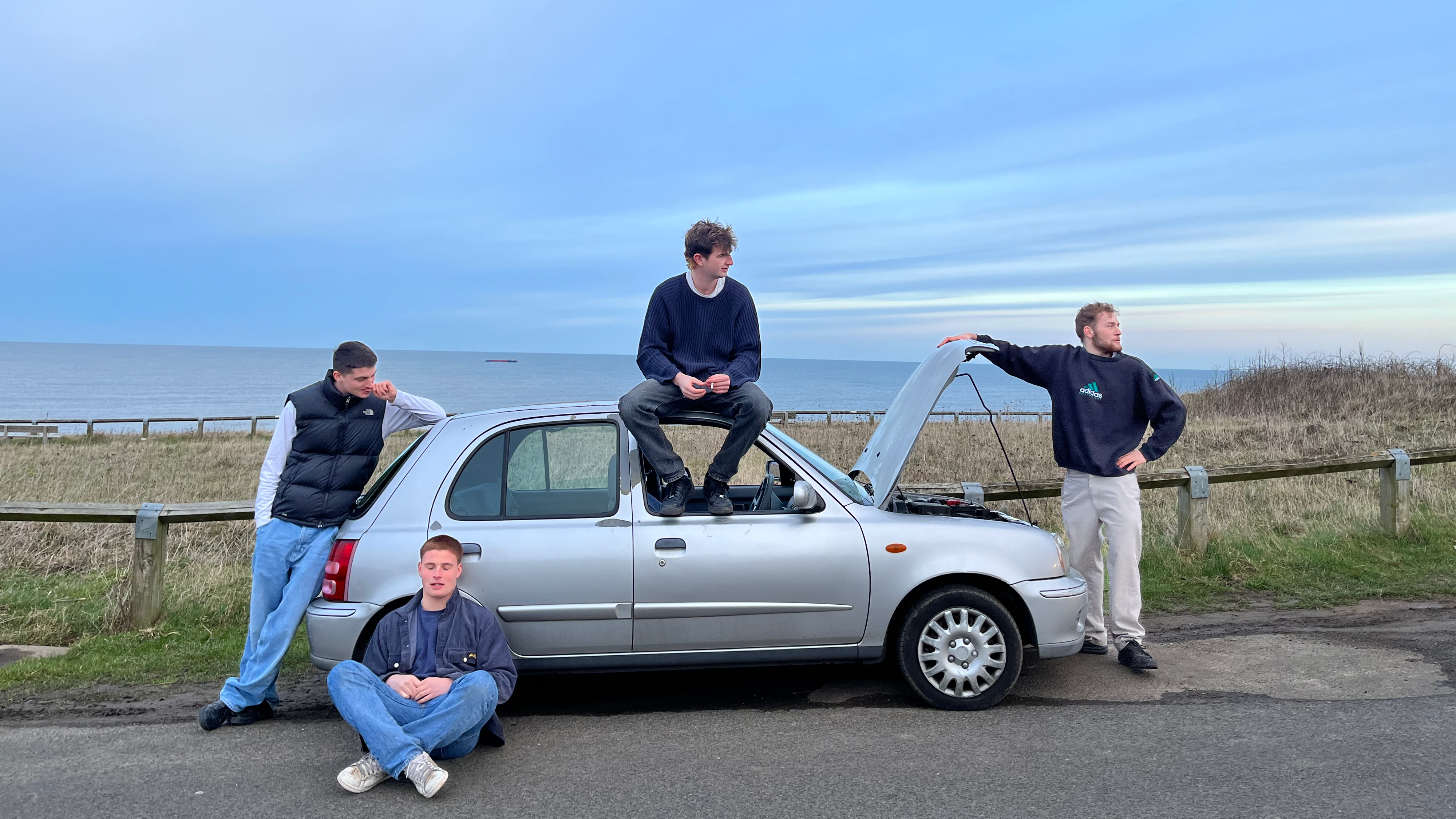
‘A third of the way around the planet in a vehicle you swapped for a bag of crisps…Welcome to the World’s Greatest Road Trip.’ This is how the Mongol Rally introduces itself. I spent a snowy March evening nestled away in the corner of the Swan and Three Cygnets pub, hearing about the plans of four young men with a serious mission ahead of them. They plan to take on the Mongol Rally 2023, a road race from England to Mongolia in which they are given next to no guidance or help. The organisers of this event say that their ‘only job is to tell you where the finish line is and wait for you to turn up a battered but better person’. 

As all good stories do, Charlie starts his with ‘We were in the pub one day…’. Having met in the early weeks of their first term at Durham University, the four young men proceeded to, as is now a regular occurrence, chat the night away with tales of stupidity and plans of adventure. When given too much free time and a couple of pints, they have a habit of ‘coming up with dumb ideas’. Charlie in wistful reminiscence tells me that ‘we were going to sail a bathtub across the English Channel’, but then, in reflection he adds ‘you forget about the choppiness’, followed by ‘and bathtubs aren’t particularly stable’ (Not quite a sieve, but something of that Edward Lear poem ‘The Jumblies’ springs to mind). Unlike the failed bathtub race though, the Mongol Rally actually exists, as does the boys desire to partake in it, and so they shook hands and were set. 

The trip has been branded ‘Tour 4 MMM’. They proudly regard it as ‘a very clever multi-layered name’. Four young men, raising money for the charity Men’s Minds Matter, by touring across Europe and Asia in a rattling tin can. Their slogan? – ‘Eat my rust’. It’s a tacit nod to the boys’ style: speed is necessary at all costs, and a little rust never hurts. Or does it? I’m not entirely convinced by the quality of mechanics skills on hand. Fortunately, ‘Ralph studies engineering’. This reassuring statement seems to be their answer to any mechanical mishaps they might encounter along the way. 

Friends of the boys thought it was a ‘pipedream’ until ‘Nina’ showed up in Durham. The love these four have for one car could quite frankly compete with any Hollywood meet cute. Think love at first sight but the car dealer version. Ralph found it on Ebay, and Archie and Charlie went to check it out in some slightly dodgy looking industrial estate. They spoke to ‘a proper wheeler dealer’, with an earpiece in and a supposed long list of clients desperate to buy the car if these boys didn’t. One test drive alongside some haggling and it was a done deal, that was their car. ‘It’s the look we’re going for’ is the fond way they describe the rusted top, jammed close sunroof and awkwardly square bonnet of the tiny Nissan Micra. They were hooked. And the next week ‘Nina’ (the name taken from a sort of anagram of Nissan) arrived. 

The role of securing sponsorship and heading the campaign is given to Archie aka ‘Mr corporate chat’ himself. He is also head navigator because, unfortunately at 20 years old, he still can’t drive. A skill one might think useful for a multi-week road trip. This did not seem to faze the boys; they are convinced he will learn before the summer – nothing will deter this team. I asked who would be the man to get them out of a sticky situation and Archie is their answer – at least he can talk if he can’t drive.

George, head of socials and marketing, has big plans for spreading their story, aiming for 1,000  Instagram followers by next term. The Instagram page in question is a combination of amusing stories and serious content, ‘come on boys take this seriously we need a picture for our corporate post’ we were told on the photoshoot. It was hard to balance that with George’s insistence on ‘more sex appeal’, if we’re going to look like a boy band (as a passer-by suggested them to be) we want more Oasis and less Blur. 

Charlie is ‘Head of finance’ or so they say – Archie usually chips in before a heated debate ensues regarding who best lives up to their roles. They meet in the Swan to discuss plans, a pub where electronics are banned and storytelling encouraged, an environment fitting for the remote nature of their upcoming mission. When I asked the location that they are most looking forward to travelling in, Ralph suggests anywhere remote, ‘when the road goes from tarmac to dust, then we’re getting serious’.

‘What’s going to be your go-to meal?’ I tentatively asked. Archie’s face lit up as he explained that he is in the process of gaining sponsorship from MRE empire, an army rations company. Quite a pragmatic answer to the pertinent issue of eating during the trip. The same couldn’t be said for George’s insistence on bringing ‘one of those blow-up mattress things’ along with him for five weeks in a car that barely seemed big enough for themselves. Another sponsor that Archie has worked hard to secure is ‘Fuel the Adventure’, providing the boys with iconic jerry-can shaped electrical power banks. CEO Barry Jenkins described the boys as ‘4 lunatics’ but has said in a comment ‘I am delighted to be supporting such a worthy cause as they fuel their adventure for MMM’. Then, George piped up with ‘do you want a joke for your article?’:

‘Who can drink 20 litres of petrol?

Jerry can.’

(There we go George, joke included)

I inquired, in true Desert Island Discs fashion, what luxury items they would be taking – they will be camping and roughing it with the bare minimum of luggage. Ralph initially said a pillow, which they all agreed was a necessity, before settling for loo roll. In my opinion loo roll is a given – but there you go. Archie picked a satellite radio so he can listen to football – the language barrier won’t be an issue he insists, ‘I could be listening to it in German, you can still understand ‘1-0’. 

Charlie contributed with ‘I’m a pretty simple man I don’t really need any luxuries in life’ and mentioned something about maybe a pot of olives. In the meantime, George, as a diligent PPE student, has decided he will bring a book or two to enrich himself along the way; he’s recently been reading Hawking’s ‘The Theory of Everything’. He reckons he’s cracked physics, now I wonder if he should move to a car manual. 

Loud would be an understatement when describing these four. I overheard someone put to them the question of whether they might run out of conversation. My opinion? No chance. The only silence will be when they have a hugely over-dramatic argument over who messed up the cable ties that were holding the wing mirror together. Not unlikely given it fell off during a drive to the coast. I asked if they think it will fall out and the responses were mixed. Let’s hope the team doesn’t implode from within like a supernova surpassing Chandrasekhar’s limit, but only time will tell. This phenomenon (dredged from my non-existent knowledge of physics) happens when a star’s core surpasses a certain mass, which leaves me wondering what the mass limit is for a Nissan Micra to carry four blokes, an armfuls of army rations, George’s blow-up mattress, a slab of hopefully correct visa paperwork, and a couple of tinnys thrown in for those not driving (so Archie all the time at this rate). 
The Mongol rally organisers give some helpful words which I think are quite fitting: ‘if the sky falls on your head, prop it up with a stick and carry on. If you break down, find a way to fix it, buy a horse or start walking’. Our interview ended with imaginary maps being drawn in the air, and across the pub table, the words border crossing, getting lost, and avoid war zones blended into the general evening buzz.

Categories
Culture

Our Lady of Perpetual Distraction

A psychological reason of why you’ve been feeling zoned out recently

By Paula Wengerodt.

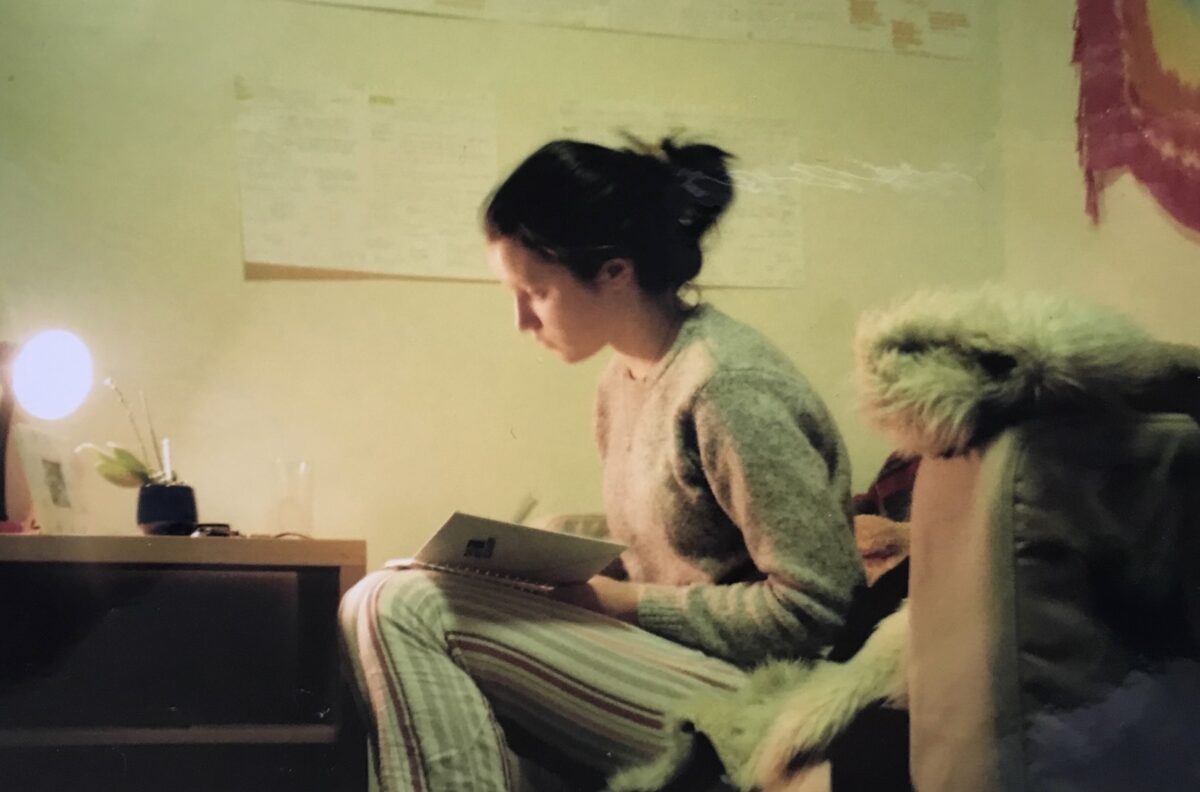
Picture this: I’m on my bike on the way to work. There is rush hour traffic, meaning dozens of bikes back to back over the bridge from Nørrebro to the city centre. Danish yummy mummies with three blonde children in a cart attached to the front of their bulky electric bikes, red-faced middle managers in their suits and ties, slicked- back Danske girlies with Asics on their feet and airpods in their ears. Everyone is truly on top of each other at this time of day, wheel-to-wheel. The lights begin to turn green, everyone wobbles forwards, but one woman just won’t move. When she does, it’s at a glacial pace. Road rage fills the air. I overtake, and she is literally scrolling on Instagram. This happens three more times that day. I know the Danes are comfortable on bikes, but there’s a time and a place – and I’m noticing this level of distraction more and more.

I see it at work when I have to call a customer’s name five times whilst looking them square in the eyeball before they register I’m talking to them. I see it in the street when someone cuts off my path because their attention is fixed on a phone. I see it at restaurants where (many) couples now have dinner whilst texting absent friends rather than conversing IRL. People simply seem increasingly detached from their surroundings. But why? Is daily reality in one of the world’s most beautiful cities just too hard to face?

I am no innocent in the tug-of-war between reality and the digital void. Lately, I too have been visited by the spirit of Our Lady of Perpetual Distraction. She is the patron saint of overstimulated brains, tired eyes and short attention spans… and she visits every twelve minutes, according to a 2021 Ofcom report. This is how often the average UK adult checks their phone, the survey found.

Having a panacea of information at your fingertips at all times is, after all, a pretty difficult thing to be self-disciplined about. If the magnetic pull of your attention towards the little flat box in your pocket after a good minute of focussed work or the irresistible ping of a potentially important email are familiar sensations, you shoulder no blame. Contrary to what Elon Musk wants, we still have animal brains with animal impulses, and our devices are designed to exploit those.

Good news: your brain has a built-in solution: selective attention. It is an essential part of filtering information into what is and isn’t worth paying attention to. It favours the loud, the bright, and the important. The bad news: when we are surrounded by loud, bright and (seemingly) important stimuli competing for our attention at all times, our selective attention mechanism can become over-stressed leading to functional blindness1, a kind of passive, half-aware autopilot state. This confirms that attention is a limited resource. Our brains have a finite pool of mental energy to exert, which explains why I threw a £20 espresso machine filter away with the coffee grounds at the end of a long shift last week and then put an empty bottle of wine in the fridge instead of the recycling. The hypochondriac in me rejoices – this is not early onset dementia! My synapses are just a bit overwhelmed.

Our Lady of Perpetual Distraction is not a harmless presence, however. Exposure to distracting stimuli during a task increases the likelihood of disrupted memory formation, information recall and other cognitive processes. We notice less “irrelevant” detail such as the colour of a leaf on the ground or an interesting feature on a building. As a person who finds joy in the little things, the ability to see them is not something I want to lose. I want my brain to have a bit of perceptive energy left over, to draw inspiration from the everyday and to take in my surroundings. Doing without my favourite podcast when walking somewhere and not taking my phone to the toilet are the first steps (not that there is much beauty to be experienced in a poo – but it’s all about practice).

Perhaps I’m clinging on to an old way of moving through the world, however an ample body of research exists to support the real physiological and psychological effects of overstimulation, interruption and constant partial attention to multiple stimuli. Raised cortisol and adrenaline levels can cause inflammatory effects on brain cells which is linked to depression and anxiety, whilst consistent distraction and interruption has been linked to a drop in IQ scores double the effect of habitual weed use. 

So how do you avoid distraction fog? In the event that you do not have the time or energy to resist the tides of change and retreat to the land to work the soil like our Amish friends (which I have certainly considered), there are a few solutions echoed by experts.

  1. Read a physical book for pleasure. This will help you train your brain to get back into a juicy flow state and make deep levels of concentration more accessible in the long run. 
  2. Meditation or sitting in silence. Learning to recognise a drifting mind can help you practice holding sustained attention.
  3. Getting 7-8 hours of sleep a night. This isn’t news, but insomnia and overstimulation can form a vicious cycle that becomes harder and harder to break. 
  4. Physical exercise, around 150 minutes a week. Happy hormones released during aerobic exercise will bolster your brain cells against stress. 

This list may sound boring to some, but that’s exactly the point. A bit of boredom is good for you. For those to whom boredom is a luxury, I get it! Increased connectivity means increased expectations of being accessible at all times. Whenever you can, prioritise stealing a few moments for yourself. Although unwinding after work by scrolling mindlessly might feel like the most appealing thing to do, build in some moments in silent contemplation. I promise they’ll go by much slower than ten minutes on TikTok. 

1According to the linked article by Craik, functional blindness is the “failure to carry out deeper perceptual processing”. It is a similar sensation to anxiety dissociation. The dorsal pathway which is responsible for guiding behaviour without object recognition or analysis takes over – your body walks, for example, whilst your attention is elsewhere.

Categories
Culture

Why Miranda Hart is ‘such fun’!

By Ella Milne.

“How are you? Had a good week? Lovely. Well Back to me!” (Miranda Hart)

Miranda Hart was my first taste of comedy, as a post ‘Strictly Come Dancing it Takes Two’ family watch before bedtime. Her series is the ultimate comfort show when I am feeling in a rut or stressed, a common word associated with third years! Added to which, anyone who has survived my driving knows my car is named after the one and only Miranda Hart.

So here are my three reasons why Miranda Hart is ‘such fun’: Bear With, Bear With, Bear with – Back:  

  1. Her unique comedic style: Hart’s style of physical and verbal comedy that is both childish, silly and relatable. Her willingness to make fun of herself and her awkwardness is endearing, something I portray in myself! Her self-deprecating humour is the epitome of British female comedic characters. Yet she can also play a kind midwife I would want by my side when giving birth.
  1. Her ability to connect with her audience: Not only does she connect with fans when breaking the fourth wall but she is also able to create a sense of community with her fans, who often feel like they know her personally. Having had the pleasure to meet her, it is genuine and infectious.
  1. Her positivity: Miranda is known for promoting body positivity, self-love, and mental health awareness. She has used her platform to inspire others to be kinder to themselves and to embrace their unique qualities. Stevie can be found asking her in her show “What have you done today to make you feel proud?” (Heather Small). I ask myself this everyday!

A group of women smiling

Description automatically generated with medium confidence

Ultimately Miranda Hart has been a huge influence on my own acting and lifestyle, she is a talented comedian and actress who has a unique style and an ability to connect with her audience on a personal level. Thank you for reading and remember to keep calm and gallop on! 

Join Fiona Walker on her journey as she navigates the cutthroat corporate world beyond university. As a former student of the arts, she’s used to playing different roles, but can she keep up with the office politics and drama of corporate life, alone? A new one woman show at the Edinburgh Festival Fringe, written and performed by Ella Milne and directed by Alice Holmes, CCTV is a show filled with wit, theatrics and all the struggles of a modern day drama graduate. 

Follow the creative process: Instagram: @madeyoulookprod

Categories
Culture

Hanif Kureishi: Tweeting against Time

By Cosmo Adair.

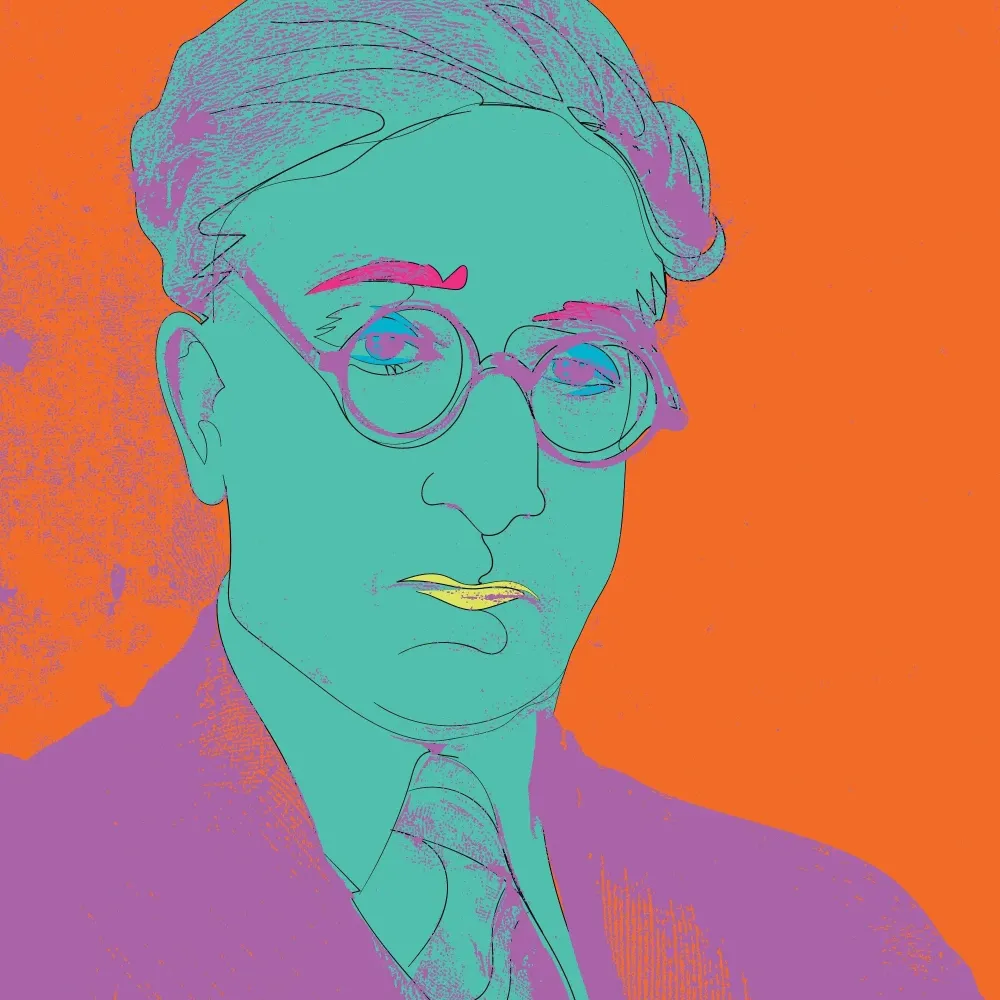
Spare a thought for Carlo Kureishi. After his father Hanif Kureishi’s collapse in Rome on Boxing Day, Carlo has transcribed his father’s thoughts, daily, and published them on Twitter. To write on behalf of an incapacitated father was enough to drive John Milton’s daughters furious—but even they didn’t have to transcribe a fragmented memoir, a meditations-type-thing, with stories involving cunnilingus, sex and drugs. And I know that if I had to hear my father’s lyrical reminiscences about someone he’d shagged, then I’d have slipped something into his food a long, long time ago. So we must thank Carlo Kureishi each day, what he transcribes might feel uncomfortable, but I believe that these reflections are also going to become a definitive work of contemporary literature; and one of the reasons for that is that it’s being dictated by Hanif Kureishi with the knowledge that it could well be the last thing he ever writes. 

On the 6th of January, 2023, Kureishi tweeted, “Dear followers, I should like you to know that on Boxing Day, in Rome, after taking a comfortable walk to the Piazza del Popolo, followed by a stroll through the Villa Borghese, and then back to the apartment, I had a fall.” 

From this moment onwards, his Twitter threads began to weave themselves into literary history. His description, in this first thread, of the moment he regained consciousness is horrifying: “I then experienced what can only be described as a scooped, semi-circular object with talons attached scuttling towards me. Using what was left of my reason, I saw this was my hand, an uncanny object over which I had no agency.” His delayed recognition of his hand expertly conveys his alienation and dissociation from his own body. 

Since then, he has drifted through time, down a now-characteristic stream of free-associations—one marked by a quick authenticity, and by the illusion of spontaneity (each entry is carefully planned, Carlo has said)—and discusses themes as varied as the consistency of Uniqlo trousers, Manchester United, Italian eyebrows, TV soaps, photographs of authors, fountain pens, and the sartorial style of Graham Greene. One entry is even entitled ON CUNNILINGUS, ENVY, AND OTHER MATTERS, and opens, “It doesn’t follow that just because one is severely injured, one doesn’t think about sex. Indeed, one might think about sex more.” From which I deduce that paralysis has not diminished Kureishi’s libido. 

His threads abound with pithy observations: on Hollywood screenwriters, “some are employed just to write the endings of the movies. Others are better at the beginning.. I wonder who writes the middle”; on Italy, “Italy is one of the great gay civilisations of Europe. The Vatican is gay as is the fashion industry. The entire aesthetic of the renaissance is based on polyamorous sexuality.” And then there are the stories: how he learned to type, “I started to blindfold myself with my school tie and soon found I could write the right words in the right order without even looking”; or on the hospital, “In the gym today a man tried to sell me a horse. He showed me a picture of the horse. I can confirm the horse is very pretty. I had to explain to him that my garden in London is not big enough for a horse.”

Kureishi, with only a handful of words, has constructed a voice which is impersonal enough as to be universal, and personal enough to feel real and de profundis. His self-reflections and analyses are the more profound for it. Each time the voice speaks up from its hospital ward in Rome, one can see how Kureishi has shored these fragments up against his ruin: not only that, but through these tweets he is asserting his identity, his presence, how he is still a writer and is hanging on to life as well as he possibly can.  Equally, it is hard not to dwell on what this could mean for the future of Literature. After years of bland, mundane, and downright poorly written, short stories and poems being splattered over Social Media with a tedious importunity, finally there appears to be something noticeably literary appearing on Twitter. More than that, something literary written by one of the previous generation’s greatest talents. And so, whilst Twitter has been the home of political commentary for sometime now, could it possibly be becoming a new home of Literature? After years of bold and prophetic pronouncements that Social Media is bringing about a new age of Literature, finally we have some proof.

Categories
Culture

Barbara Hepworth: Holes in our Perceptions of Science in Art

By Clara Tyler.

It is commonly assumed that the relationship between art and science is dichotomous and irreconcilable. In separate spheres of influence, the artist and the scientist fight for the title of official commentator on the human condition. Is our understanding of what it means to be human determined by our scientific make-up, or is it our abstract ability to craft from our surroundings? With every cast and sculpture, Dame Barbara Hepworth forged her revolutionary mark on British modernism by going some way into bridging the abyss between science and art. In her own words she developed her sculptures to reflect the development of society and, through doing so, offered a reconciliation between art and science. 

Barbara Hepworth (1903-1975) was born in Wakefield and grew up surrounded by the Yorkshire moors. Her rural background was interrupted by brief episodes of urban life, leading her to pursue her studies in art. She studied at the Leeds school of art from 1920 and in 1921 was awarded a scholarship to study at the Royal College of Art (RCA) from which she graduated with a diploma in 1924. It was at RCA where she met Henry Moore, who became her friend and competitor in the field of sculpture. 

Biog 16

Hepworth’s permanent move to St Ives in 1939, at the outbreak of the second world war is suggestive of her disillusionment with the urban environment. Her art is indicative of such sentiment: she used natural materials to create her sculptures and was an avid ambassador for the new movement of ‘direct carving’, where the artist crafts the sculpture out of an original material, as opposed to using casts and moulds to fashion the sculpture. Through the process of direct carving, Hepworth showed the close link between the artist and their form. By leaving her etching marks on the sculpture she draws the viewer closer to her art by encouraging them to touch the sculpture, implicating them in the artistic process. Hepworth once said, ‘everything I make is to touch’, and her donation of one of her sculptures to a school for the visually impaired shows her to be true to this statement, requiring her viewers to engage with the hand of the artist through the use of their own hand.

Hepworth’s use of spaces and hollowed areas in her work requires her audience to engage with their bodies when looking at her art. One of her most famous sculptures, Two Forms, particularly challenges the viewer to involve themselves in the art work through the presence of holes. These voids in the work encourage her audience to investigate the view through the holes and how they can change it. Hepworth’s attention to fine details also draw the viewer closer to the form, her choice to polish the oval recess in the sculpture goes some way to softening the transition between sculpture and sky behind, whereas the abrupt gap between the two semi circles creates a severe disjuncture in the work. The context of this sculpture is important; produced in the same year of the moon landing, Hepworth is perhaps commenting on human progress. By encouraging viewers of her work to immerse themselves in the sculpture, and showing the infinite possibilities to see what they want through the holes, she is perhaps experimenting with the representation of the limitless possibilities of mankind. Critics have suggested that the circular shape of the hole is perhaps emblematic of the moon, if looking at the sculpture at the right time and place, you would be able to see the moon right through it, however, I wonder whether this is a too crude reading of the work. Rather than encouraging a specific interpretation of the sculpture, Hepworth shows the boundless capability of scientific progress by encouraging a reading unique to each viewer.

Two Forms (Divided Circle) 1969 http://www.tate.org.uk/art/work/T03149

Hepworth wished her work to engage with daily life and, in a reciprocal fashion, for daily life to immerse itself with her work. Her legacy suggests she achieved this: the opening of her home and studio in St Ives as a Tate gallery allows viewers to walk all over her life and work. But, perhaps the specific work most involved in daily life is Winged Figure (1963) clamped to the side of the John Lewis flagship store in Oxford Street in London. It is intriguing to me that Hepworth was chosen as the artist whose work should be hung off one of the busiest streets in London. Throughout her career, Hepworth frequently alluded to the tension between natural form and the human figure, and Winged Figure is one of those works, where the stretched out aluminium figure is restrained by stainless steel rods. The tension embodied in this work is a frequent feature in her portfolio and shows the relationship between nature and human progress. Rather than Hepworth showing the two forces to be opposing and incongruous, she instead suggests human progress and nature stretch and test each other, and are ultimately implicit with each other. 

Winged Figure https://barbarahepworth.org.uk/commissions/list/winged-figure.html

Hepworth’s life was blighted by significant personal events. Her first marriage to John Skeaping ended after 8 years, when she met and fell in love with the painter, Ben Nicholson who was also married at the time. She had one child with Skeaping, Paul, who died in a plane crash whilst serving for the Royal Air Force. Whilst she travelled to Greece to mourn the death of Paul, her friend sent her a large shipment of Nigerian guarea hardwood and her work briefly turned to Greek-inspired woodcarving when she returned, resulting in sculptures such as Corinthos (1954) and Curved Form (1955). 

She had triplets with Nicholson in 1934, naming them Rachel, Sarah and Simon, and the significance of their birth was also reflected in her work, most obviously in Mother and Child, produced in the same year. Again, Hepworth’s style of direct carving allowed her to engage more closely with the material and is suggestive of the vitality of the subject of mother and child. Furthermore, the void in the centre of the work is emblematic of the space in which the child once occupied, but is now separate from the mother’s body. Both child and mother are made from the same piece of Cumberland alabaster, alluding to the creation of child from the mother’s flesh. There is also meta-artistic significance in the parallel between the crafting of child from mother, and art from artist, and through drawing this parallel Hepworth refers to the notion of the ‘woman’ artist. She once stated: ‘a woman artist […] is not deprived by cooking and having children, nor by nursing children with measles – one is in fact nourished by this rich life, provided one always does some work each day; even a single half hour, so that the images grow in one’s mind’. 

Mother and Child 1934
http://www.tate.org.uk/art/work/T06676

Does the position as a ‘woman artist’ allow Hepworth to make a more nuanced argument in comparison to that of Henry Moore in his bronze sculpture of the same name, Mother and Child (1954)? Henry Moore’s piece shows the nurturing role of the mother, especially in a post-war period, where the infant is shown to be fiercely suckling from the mother’s breast. I believe Hepworth instead portrays a fluid representation of the reclining mother with the infant resting on the figure, showing the beauty and symbiosis of the two; the child nurtures the mother just as much as the mother nurtures the child. It is possible for Hepworth to make such a statement due to her position as a woman artist and a mother, and she uses this unusual position to create subtle feminist undertones in her work. 

After the birth of her triplets, Hepworth’s work moved noticeably from figuration to abstraction, from depiction of the human figure, to more non-specific sculptures suggestive of the landscape. We can support this change in style of her art with contextual knowledge of her life: the outbreak of the second world war instigated her move from her hometown of Wakefield to the beauty of the Cornish coast, where her work became increasingly abstract. It is possible to argue that this transition in her art is resemblant of her disillusionment with human progress, but I believe it is more likely to be representative of the reassurance she receives from the permanence of the presence of our landscapes. 

Hepworth was a unique artist in many respects; being a woman in the twentieth century modernist movement is one such reason, but also her shrewd knowledge of current affairs and scientific progress made her work relevant to her context. In this way, she challenges the perception of art as irrelevant to daily life and raises its applicability. I don’t pretend to equate art and science through looking at Barbara Hepworth, and I also don’t believe that is what she intended to portray. However, I do believe that Hepworth’s work shows the entwined nature of science, art and our environment. It is not possible to totally isolate these fields of knowledge and Hepworth shows the importance of having an all-rounded awareness in order to be able to make astute judgements of the human condition.

Categories
Culture

Time After Time – Art Meets Fashion

Time After Time – Art Meets Fashion

————-


By Ida Bridgeman and Jack Fry.            


DUCFS is often recognised, and rightly so, for its charitable endeavors and of course its main event. However, I believe it should be noted that through its events, it helps to bring Durham creatives together, cultivating a ‘scene’ or collective of sorts in which musicians, artists, designers and small businesses are able to collaborate and share their work. Last Sunday, we were at one such event. Normally, these events tend to take place in a pub, which Durham is not in short supply of, but on this occasion we ventured into a more unusual venue, The Masonic Hall. The Freemasons are a fraternal organization that trace their origins to the local guilds of stonemasons from the 13th century and an air of mystery often surrounds them. The event we were attending was an art exhibition along with the unveiling of some of the designers’ clothes, related to the 40th shows’ theme of ‘Time after Time’.


Upon entering, we took in the first piece, a purple and green rabbit in front of the Durham cathedral. Amy, the artist, with an engaging smile asked if we thought it looked supernatural or scary – if I’m honest it reminded me somewhat of the Netflix show Wednesday. With its dark, broken colouring, it looked as if it should have been on the wall of Wednesday Adams’ gothic dorm room. Fortunately, Amy soon admitted that she is a big fan of the series as she loves all things supernatural. Considering the theme of time, she found herself ‘thinking about the things it does not seem to touch’, thus the seemingly everlasting image of the cathedral took its form. Named ‘After Midnight’, Amy told us that the piece is ‘close to reality through the illustrative black lines’, and yet what draws the eye is that it is ‘fantastical through the colour palette’.

In the centre of the table is a purple-based starlit sky. ‘Fairyland awaits’ pictures a small girl stepping out into the hills, bathed in a magical, nostalgic light. The pink undertone evoked a fairy tale, far away from the passage of time, from an age of fantastical children’s stories.

We tend to know very little about what the artist was thinking, looking at a painting from the outside. 


Quizzing Amy gave us hidden insights. For example, the fact that she drew the line of the cathedral while copying a picture, but upside down, so that the power of her brain wouldn’t skip a step and reconstruct what it thought the cathedral looked like. Perhaps we’re all secretly painting geniuses, we just need to turn the canvas upside down. I quietly concluded that this is unlikely, if my friends’ Pictionary interpretations are anything to go by.


Drawing ourselves away from the captivating gothic colours, we moved along to the next artist’s work, John Eric Rothwell, a local artist from Newcastle who’s ‘enchanted woods’ series continued on the mystical theme. Drawing his inspiration from long walks in the Northumberland countryside, his paintings of burnt oranges and turquoises depict tree trunks in a forest, playing with depth and perspective. His paintings of the forest toy with convention. The trees, rather than dark silhouettes punctuated with shards of light, instead glow with metallic copper and gold detailing against a darker background, created through the scraping back of layers of oil paints and wax that the artist built up.


My eyes then landed upon a series of tiny canvases, a professional painter turned child. An armful of pound store purchases each intricately coloured with a fine oil brush. Each is painted with the same tree in different seasons. Although small, the tree is unmistakably familiar to a girl from Northumberland. It takes the shape of the tree in Robin Hood. A sycamore, iconically poised in a gap along Hadrian’s wall, with hills rising up either side and a wide expanse of sky behind. These small canvases, painted to be sold as miniature gifts in the Hexham market, show the beauty that is found in both night and day. Through summer and winter, in and out of different seasons, the colours and backdrops change and yet each canvas portrays the same tree.


A key piece of art on display was the huge canvas, taking up one side of the room, a joint piece encompassing teamwork, inclusion, and charity. It is painted by one of the DUCFS artists at each exhibition or event. The piece sparks interest and inspires viewers at each of these events and ultimately will be auctioned off at the show in February, raising money for the Rainbow Trust Children’s Charity. The piece changes and evolves, and layers are added as time after time the artists come back to add and create to it.


Wandering up the wide staircases lined with old images of Durham, and past Freemason leaders, we made our way into a large hall. The hall was flanked with chorister-like benches and overlooked by a bright stained glass window decorated with ancient masonic symbols. Groups of models gathered on the checkerboard carpet, like life-size chess pieces, sipping red bull and swaying to the oh-so-cool tunes of Fred again. 


No stage divided the models from the audience, rather we walked amongst the extravagant outfits, long trails and pointed sleeves. The clothes on display were part of Act 2 of the fashion show, designed to reflect the inner ‘turmoil and chaos’ of personal transition. Many of the designs had clear gothic influence, long sheer gowns, made up with layers of black fabric, pooled on the floor, like religious robes. The fabric glistened with green embroidery and sequins. Other designers contrasted these with more structural work, clean and hard monochromatic lines that jutted out of the tailoring. One notable piece was only complete when the two models stood together, bringing the shard like structure into focus.


We left feeling inspired and excited by the designs and artwork. If last Sunday was anything to go by, and you have managed to bag a coveted ticket to Februarys’ shows, then you have much to look forward to.

Categories
Culture

How Political is Bee Movie?

By Izzie James.

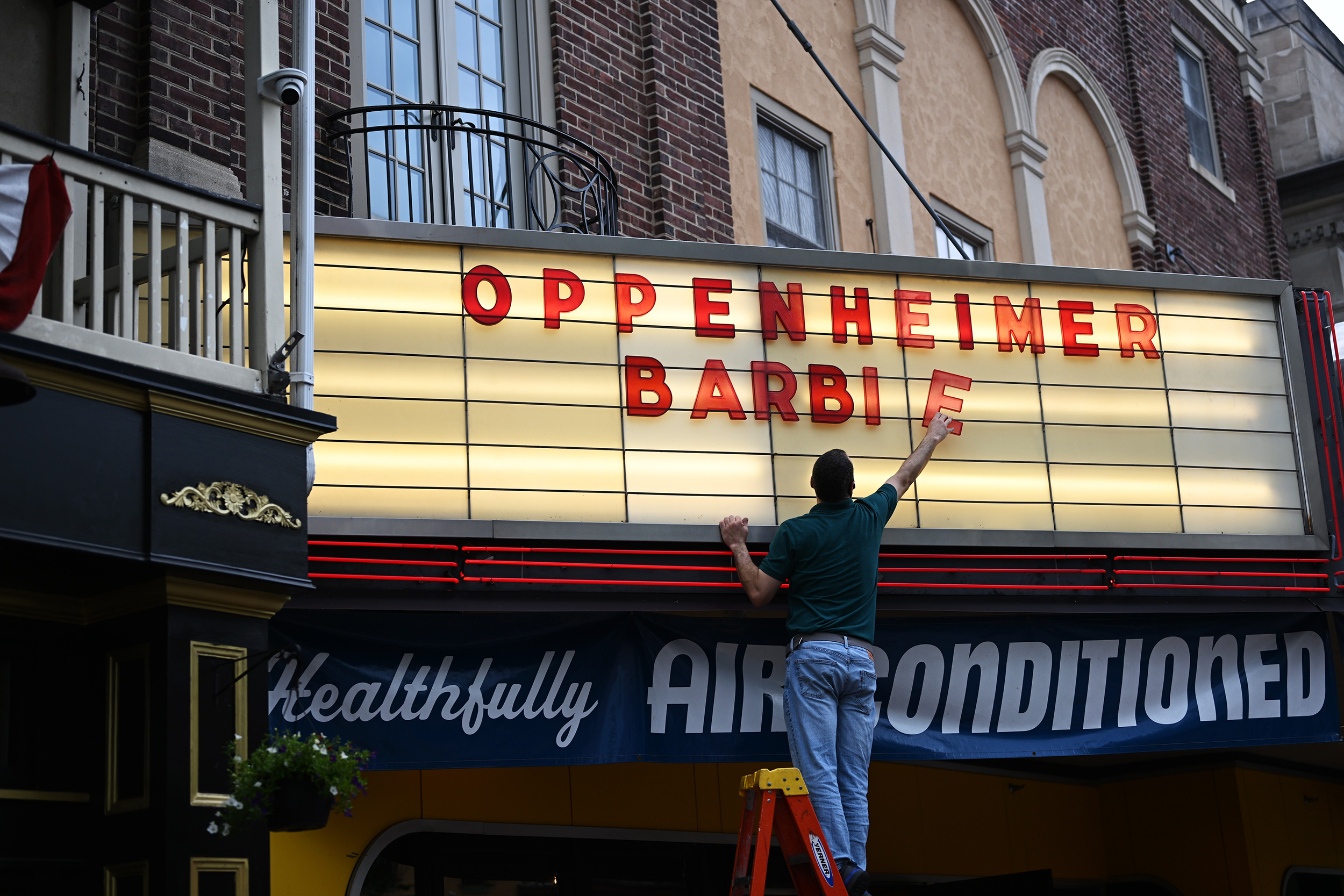
Bee Movie, released in 2007, was easily one of my favourite childhood movies. The silly puns always made me giggle, and for some reason, I accepted the romantic relationship between the main character Barry B. Benson (yes, the bee), and his human girlfriend Vanessa. When my housemates decided to re-watch Bee Movie the other day, I thought it would have the same effect on me as it did when I was younger. However, despite how humorous I still find it, I couldn’t help but think about its deeper themes and message, namely, its exploration of consumerism, exploitation, and society.

Just to clarify, I’m not trying to make Bee Movie boring. Along with being well-written, it’s colourful, cheerful, and has a great plot arc. However, I find it interesting that children’s films are often used to explore such deep and controversial themes. Bee Movie explores Barry’s journey of suing the human race, once he finds out that they are exploiting bees for their honey. There is much detail on the bees being ‘worked to death’ when making honey, as they are told they must stay in their job for the rest of their lives. Barry is disturbed by this idea, and therefore he leaves the hive to see what lies beyond it. When he meets Vanessa, he sees that honey is a commodity consumed daily by humans, with no credit nor profits going to the bees. He also sees bees being exploited outside the hive, as they are subject to being smoked in bee farms. Barry hears the beekeepers boast, “They make the honey, and we make the money.”

Barry then successfully sues the human race, meaning the big companies stop honey production, and the bees no longer have to work. They become lazy and bored, and eventually, the world’s flowers die as they are no longer being pollinated. Luckily, there’s a happy ending, where the last remaining flowers are brought back to New York City on a plane, which the bees help to land, and they save the day by pollinating the flowers again (the cinematography and choice of music here is phenomenal).

We see the bees battle a consumerist society here, as well as fight against their exploitation. We see a revolution against work conditions and a fight against capitalism. If you read into it, Bee Movie has an array of political messages. Even the supposedly happy ending is debunked by some, such as Daily Arts Writer Darby Williams, who wrote of the bees: ‘They remain enslaved to the humans, producing honey with the efficiency of a disgruntled union worker, only this time with marginal improvements to their working conditions… In his attempt to spearhead a proletariat revolution, my childhood idol finds himself trapped in the very system he sought to overturn.’1 Williams’ dismal summary emphasises a critical and depressing way in which the Bee Movie can be viewed. 

Surprisingly, this pattern of deeper commentary is one that many children’s films follow; for example, Shrek is seen to comment on society’s superficiality and obsession with beauty, Shark Take is about the struggle of debt, lying and the desperation to be rich and Happy Feet is about environmental decline, human greed, and exploitation. Re-watching these movies as an adult can be enlightening, as you realise the real issues that are brought up behind the colourful façade of humour and animations. I will say though, if you want to re-watch these movies without thinking about their commentary on society and, instead, to just enjoy the jokes, soundtracks, and characters- that is just as worthwhile.

1Darby Williams, ‘Capitalism’s cautionary tale: The fall of Barry B.Benson.’ The Michigan Daily, https://www.michigandaily.com/arts/capitalisms-cautionary-tale-the-fall-of-barry-b-benson/ (2021)

Categories
Culture

A Sit-Down with Shrink Scooters

By Cosmo Adair.

It’s 3PM Eastern European Standard Time and the team at SHRINK SCOOTERS are meeting a potential investor on Zoom. Having miscalculated the time difference, they close their laptops and log out. But once the meeting actually starts, Ed realises he’s seeing double. This isn’t a medical condition; rather, he has accidentally opened the meeting in two separate tabs. Panicking, he muted his screen and texted the team group chat. Is it just me, or are there two of me on the screen? When the others replied, Yes, he started laughing out of awkwardness. But he was only muted on one of the tabs. ‘What’s the joke, Ed?’ the potential investor asked. ‘I just went white, panicked, shut my laptop.’ Young and learning on the job, such are the challenges. But such challenges are surmountable. ‘Ultimately,’ Jack pipes up, ‘the meeting was a success.’ He laughs. ‘Maybe we should just get rid of Ed!’ Zac adds. It must be hard work founding a start-up, especially as a university student: but, crucially, Jack, Ed and Zac manage to make it look like a hell of a lot of fun. 

SHRINK SCOOTERS is the UK’s first student-run e-scooter start-up—an achievement they take lightly, self-deprecatingly comparing themselves to some of Durham’s student-led events companies. They’re aiming to have a fleet of thirty Okai ES400As navigating the streets of this historic metropolis by the start of the next academic year (September 2023). In response to the myriad challenges of student mobility in Durham—especially given the recent housing crisis, and the University’s continual expansion up the hill—they came up with a solution: e-scooters. They’re everywhere else in the world, so, why not Durham? As a first year student in Hild-Bede—notoriously detached from the rest of the University by an accident of geography—the idea first presented itself to Jack. Now, one year on, it’s fair to say Shrink has come a long way. 

Once they’re rolled out, SHRINK SCOOTERS will initially only be available to those with an ‘@durham.ac.uk’ email address; it is, after all, a University-based scheme, with five of its six proposed sites situated on University property. Although, if—and arguably, now, it’s more a question of ‘when’—SHRINK’s first year is a success, they hope to expand into the wider public. 

Jack, Ed and Zac (respectively, the CEO, CMO, and CFO) met each other in a 1st year Geography lecture. Arguably, it’s this shared passion which has defined SHRINK’s trajectory. Whether it be Jack’s nerdy obsession with Geofencing (the technology which will prevent rogues from driving their scooters off to Newcastle); Ed’s insistence that I write about their ‘bespoke data set … which looks at the topographies of Durham, the paving surfaces, bike routes, and the socio-economic data of all of County Durham’; or Zac’s visible excitement when discussing SHRINK’s collaborative work with 6 Degrees, a consultancy firm focussed on sustainability, it’s quite clear that Geography is their guiding star. In fact, it’s their commitment to sustainability which has got Durham Council and the University excited: because, as Jack says, ‘when people talk of a bottom-up approach to solving climate change, it’s the smaller projects like this which actually create that kind of change.’ 

One initiative which they’re particularly excited about is ‘SHRINK SAFE’, a response to several reports on Overheard at Durham and Durfess about people’s discomfort at walking back from the library late in the evening. According to ‘SHRINK SAFE’, travel to any of the proposed ‘home stations’ (Hild-Bede, Hill Colleges, Viaduct, and Gilesgate) between nine and ten PM will be free. To ensure the success of this initiative, they’re currently looking at ‘partnering up with a Durham street-safe charity.’

Prior to the interview, one of my big questions was how they’d handle drink-driving: obviously a considerable challenge, given that these e-scooters are targeted at Durham students and Durham students love fun. But as Ed reminded me, all e-scooter drivers are liable to standard Road Traffic Laws. What’s more, they’re exploring the possibilities of using a CAPTCHA-esque system to test drivers on their phones (spelling challenges, identify the boxes containing traffic lights etc.) and have also committed to a 10PM to 7AM curfew, a safety measure offered by few other e-scooter companies. It seems that—as much as is feasibly possible—they’ve got this sorted. 

It seems clear that there’s a gap in the market, one that SHRINK SCOOTERS could very feasibly fill. As Jack himself put it, ‘this isn’t about what people desire, but what they require,’ before succumbing to a fit of embarrassment at having spurted out such a corporate catchphrase. But there’s a truth in it: obviously, for those in Gilesgate and Langley Moor, there are bus routes—but for the mid-length, 25-30 minute commute from the Viaduct to the Billy-B, or from the Hill down to the Half Moon, an e-scooter seems quite a pleasant idea. 

Now, I must shut my laptop. I must walk thirty minutes in the cold, late November rain. As I’m sprayed by passing cars, and my airpods run out of battery, and I remember that I still need to make a trip to Tesco’s, one thought strikes me: wouldn’t it be nice to shrink this journey and arrive home more quickly. Get it? 

@shrinkscooters

Categories
Culture

Streaming Shakespeare: Could reconsidering our view of theatre soothe funding-cut wounds?

By Sophie Hogan.

The Guardian announced last week that Roxana Silbert had resigned from her position as Artistic director of Hampstead theatre after they suffered a 100% funding cut. Arts Council England withdrew the annual grant of £766,455 that the North London-based theatre had been receiving in an attempt to relocate funding away from the capital. Other institutions that were affected by these drastic changes include the Barbican Centre and the English National Opera. As a result, Silbert decided to step down from her role, and the theatre has highlighted the need for a ‘’change of direction’’, as it will no longer be able to ‘’exist solely as a new writing theatre’’ without the grant. 

The loss of government support for these theatres has been part of a larger scheme of ‘levelling up’ the artistic and cultural aspects of Britain, shifting these creative hubs to more Northern parts of the country. The allocation of funding has and will always continue to be a challenging process for all involved, and there is no doubt that redistributing funding away from the capital city will facilitate the growth of more diverse and accessible theatre. However, it does appear that some venues such as Hampstead theatre have been ‘’devastated’’ by the news. 

Perhaps, then, these funding cuts might push theatres to look towards new, innovative ways of producing plays. Director Simon Goodwin’s 2021 version of Romeo and Juliet embraced the pandemic conditions, creating a play geared specifically towards a television audience. Productions such as these saw huge success during lockdown, with National Theatre streams reaching staggering viewing figures of 15 million, both in and outside of Britain. These methods could continue to be instrumental for theatres in a post-pandemic world, providing greater accessibility at a lower cost for the keen theatregoer. 

It has typically been the responsibility of the productions themselves to shoulder the hefty filming expenses, meaning the theatre for home consumption has mainly been put out by larger-scale shows. However, according to Rupert Goold, artistic director of London’s Almeida theatre, this past summer has seen an increased number of screen versions produced in partnership with companies such as the BBC. He imagines a future which sees digital platforms collaborating with theatres that may be in a similar position to the Hampstead venue, envisioning the industry shifting away from the scarce government funds. He has hope that this could be done but emphasises that it would require ‘’very joined up thinking’’. Could an alliance between local theatres and streaming services solve the problems faced by Hampstead theatre and many others?

Many remain sceptical of theatre-from-home, pointing out the loss of an all-consuming experience that some feel theatre alone provides. There continues to be fiercely polarised debates between theatre purists and those excited by the prospect of streaming, but maybe this is up to you, reader, to decide for yourself. 
I will finish by urging you to watch some of the National Theatre streamed productions, of which a large portion are made available to students through your Durham login. Some personal highlights include: A Streetcar Named Desire, featuring Gillian Anderson and Vanessa Kirby, (2014), Barber Shop Chronicles (2017), and Chewing Gum Dreams, the play that inspired Michaela Coel’s hit TV series, Chewing Gum (also 2014)

Categories
Culture

A Sit-Down With Rotate

By Thea Opperman.

Reaching the end of term is a great excuse to sit back and reflect on what this year has brought us so far within the creative scene of Durham. There’s been DH1 signing more and more bands, collaborating with the likes of SNAFU for their infamous gigs at the Angel; there was Fight Night, where some insanely brave students took each other on in the ring; and now we have been lucky to have the latest incredible student plays popping up once again from the drama scene. 

It’s been a great term, but one aspect of the social calendar has been there every week, through thick and thin – and I, of course, am meaning Rotate Wednesdays, run by the incomparable team of Brett, Agnes, Alex, Harry, Georgia, and Bea. These 6 are the ones responsible for many a hangover from a night in Loft; and, since working for the brand, they have elevated Rotate to new heights, as they create a community of not just followers, but of mates.

Where did Rotate come from? Well, it’s no secret that Durham is known as ‘Dullham’ for a reason. With a sparse number of clubs, a few decent college bars, and some nice pubs, the city is hardly pushing boundaries in terms of entertainment for students. As a remedy for this Durham boredom five years ago, four guys started to throw ‘underground’ house parties above a flower shop on North Road. Unsurprisingly, they were hugely successful, and some months later they were able to upsize to Allington House, before taking the more established residence at Fab’s – the birthplace of ‘Rotate Wednesdays’.

Building ‘Rotate Wednesdays’ to be what they are today took a lot of work, as Brett, Rotate’s captain told Wayzgoose; “it took a long time for people to show up at Fab’s”. Word of mouth was key, but they had confidence that what they were offering – an alternative night out to the would-be Abba-filled night at Jimmie Allen’s, or even sports night at Babylon – would eventually sell itself.

One year on, they find themselves residing at Loft, a relatively new club on North Road, that seems to fit their alternative aesthetic far more naturally than Fab’s. As the team were explaining, Loft is great for a number of reasons: “more space”, Agnes told us, “we have gone from a 200 capacity to 600” which, she admitted “does come with its own set of difficulties”. Handling the super-long funnel queue, for example, is not as easy as you might think. But more importantly, however, the bigger space has allowed them to “grow a community”. Creating this vibe was one of their key aims setting out, as Georgia explained – “We want it to feel like a family, with more and more students returning each week, we want them to feel at home.”

But the predominant goal of Rotate is to provide a platform for new, up-and-coming DJs, giving them an opportunity to perform to a crowd with legitimacy and support. Alex, one of their resident DJs, told us that offering emerging artists this break is a “really important one”, as it “materialises a passion, externalising it into something real.” Georgia and Harry, the other two resident DJs, agreed; Rotate had been their first proper gig too and as such, they told me “we want others to have that same opportunity.”

One key way in which they have adapted to the new space in order to create this feeling of authenticity is their decision to move the actual DJ decks forward, into the dance floor, allowing the crowd to dance behind whoever is performing. When asked, all 6 of the Rotate team told us unanimously that it had been “one of the most successful changes” they have made all year. “It creates intimacy, like you are at someone’s house” – again, adding to that family feel they are so wanting to create. 

When drawing the interview to a close, I asked them how they feel about Durham’s growing creative scene, and whether they think it might be becoming an oversaturated market. But they all answered, “for sure it’s growing”, without a doubt, “but that’s what we want.” Brett explained “we are all working together – no one is stealing punters and we do our events on different nights” whilst Harry added “it’s nice the market is filled, it’s like we are shouting into a void that others are shouting into too.” The camaraderie and growth of the creative hub in Durham is palpable, but, when student life may be feeling a little dull, at least we know there’s a guaranteed, alternative, new and exciting Wednesday night at Loft, supplied by none other than the Rotate team.