Categories
Culture

Masculinity in Music: The Doors and Their Inspirations

By Leo Dagianti.

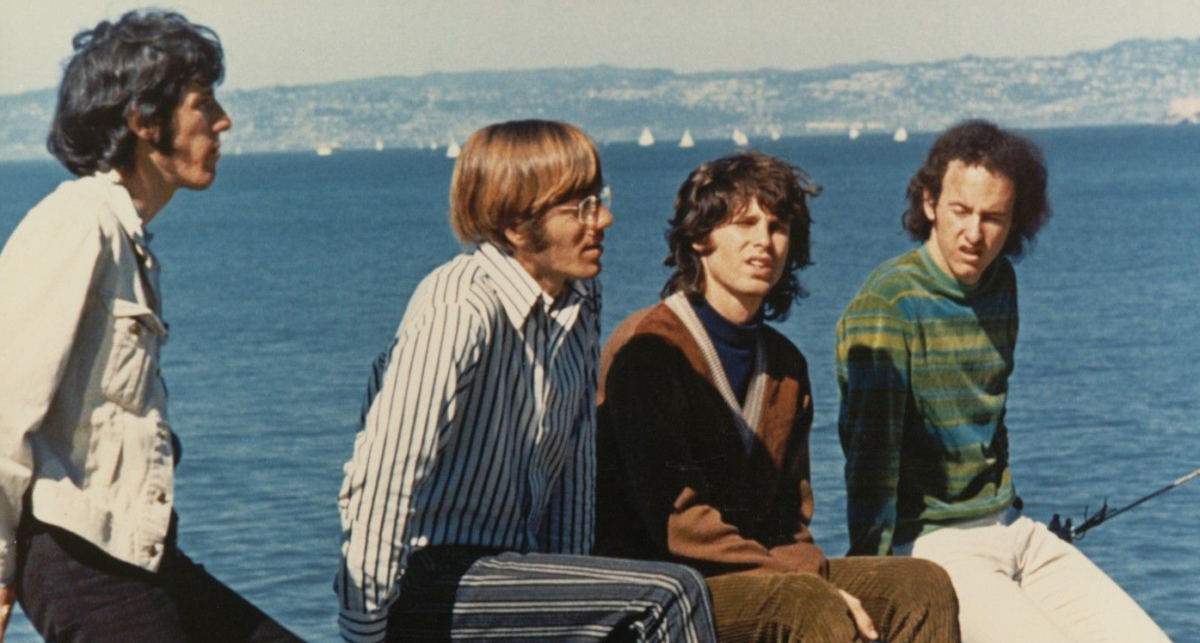
When I listen to The Doors, I feel like I am transported to a desert with a half-drunk bottle of whisky. Everything is hazy. There is a feeling of frenetic nothingness backed by cynicism. It evokes the thinking man’s detachedness – I am here and I am alone and there are answers to be found at the bottom of this bottle. Their work contains a distinctly masculine air, rooted far deeper than the simple fact that Morrison is a man. Considering the central role that activism played in the creation of The Doors’ music, as well as their personas as proto-punk contrarians, there seems to be a disconnect between the essence of the masculinity and how that is portrayed throughout their lyrics. 

The American Man of the time was a bread winner; white collar starched and stiff, duty was seated as his central concern. This duty extended to a variety of realms, from duty to family through to duty to country. It is important to note that at the time of The Doors recording their self-titled album, the Vietnam War had been raging for 11 years. There was anger brewing amongst the American youth, and it was no longer targeted solely at the military. The anger began to strike against the generation before, who were seen as having stood idly, watching the war rage. The sentiments of the Beat Generation were still alive and well: rampant drug use, freed sexuality, uprooting of gender roles. The subversion of masculine duty was total masculine liberation. On the Road by Jack Kerouac distils this ideology into its purest form – the story of a man who leaves his familial responsibilities behind to venture, uninhibited, into western America. The story involves a cocktail of mind-expanding drugs, poetry, close male relationships, and promiscuity. Every page of it feels like it is sticking its tongue out at the generation before. 

That isn’t to say that the new man forgot those who came before him. The spaghetti western narrative of the great frontier, of exploring something new and creating a vision of life from scratch, was central to the allure of the Beat generation. They still echoed the themes of dominance that their predecessors held dear, preferring dominance over the constraints of the human mind rather than over nature. This was intoxicating to the counter-culture youth of 60’s America, who came to idolise these artists and in turn a masculinity that lauded the ideal of freedom from the lethargy of suburbia. The freed man was one who took charge not of the family but of himself, who manifested his own destiny. 

In William S. Burroughs’ book, Queer, we are given a glimpse of Beat life in New Mexico City in the 50s – one that carried many of the typical tropes of hedonism and detachedness. Burroughs himself was a vision of a Beat man: he was on and off of heroin for a number of year and wandered between cities with his wife, who he accidentally shot and killed in 1951 while drunk. The protagonist of the book, Lee, seeks peyote after receiving word that it holds the potential for mind control. Much like Burroughs, Lee is rarely sober and regularly detached from reality. The book, initially set in a small quarter of Mexico City, rarely makes reference to any part of Mexico. Lee eats at an American diner, watches French films and talks about Rome. There is an isolation even from the place where he has chosen to isolate himself. That isn’t even to mention the cynicism with which he regards everyone in his life, and how this only serves to tear him apart from reality further. To a modern audience, the book reads as an indictment of the freedom seeking Beat generation more than a praise of it. 

To label the Beat authors as purely hedonistic is to ignore the anti-establishment roots to their ideology, but their methodology often held a selfishness highlighted by the way ideas of masculinity that emerged in their writing. Masculinity to the Beat generation became reactionary: a boy’s club of men dedicated to rebelling against what their dads tell them is right. 

Here, we can distinguish between Morrison’s work within The Doors and the somewhat misguided sentiment of the Beat Generation. Whilst a disciple of the Beat authors, Morrison’s masculinity holds political action at the centre of its ethos. The son of a Navy admiral, Morrison’s own paternal rebellion was always characterised by anti-military sentiment. After telling his father of his plans to go into music, his dad told him that he should do something worthwhile to society. This dismissal grossly underestimated the political impact that The Doors’ work would have. Their music incited vicious anger at the paternalistic forces of the Johnson administration, who held power during the peak of The Doors’ popularity. 

Their music, whilst speaking of an isolation and depression so deeply reminiscent of that espoused by the Beat generation, became a call to arms in a way that the Beats failed to bring to fruition. It is this, to me, that makes the Doors such an incredible band. The perfect balance of detachedness and despondency matched with real political change. The lyrics are far from defeatist, far from fatalistic. Morrison comes off as an inebriated messiah of sorts, leading people towards a world that is truly different, truly better.
Categories
Culture

Leonora Carrington and the allure of surrealism

By Elizabeth Marney.

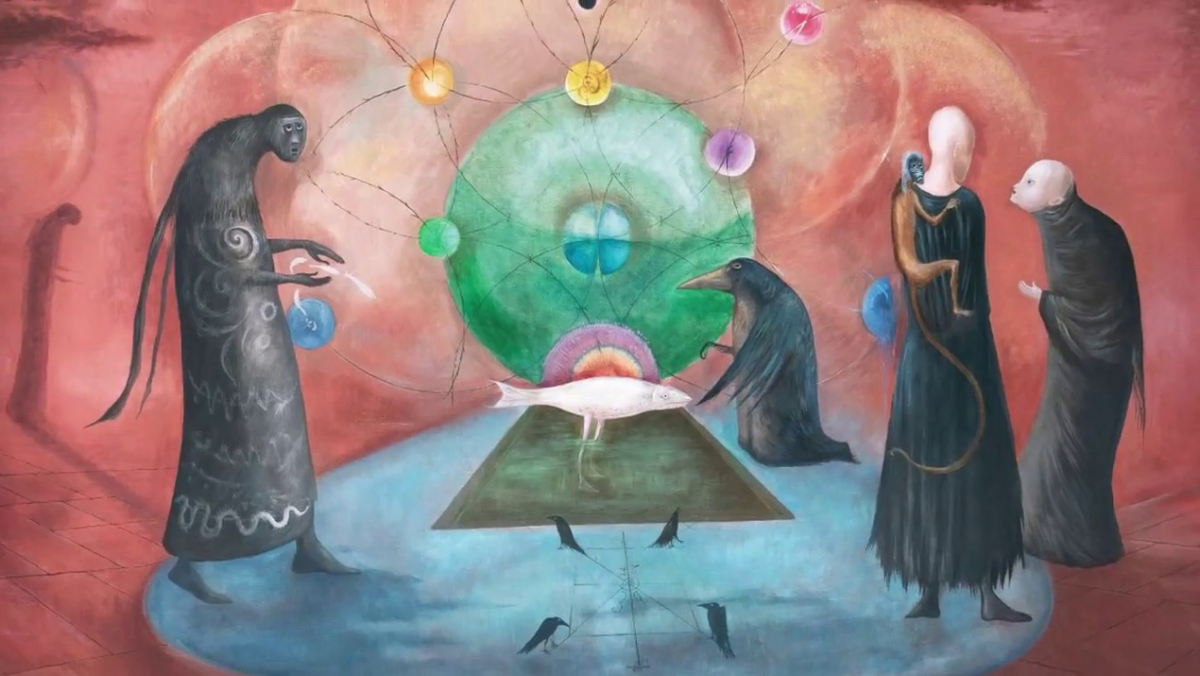
Leonora Carrington, most famous for her ground breaking additions to surrealist painting and literature, steadfastly maintained that she was never born, she was made. On an otherwise ordinary day in 1917, in the Lancashire mill town of Chorley, Carrington’s mother, left bloated and uncomfortable by overindulging in decadent foods, lay herself upon a machine. This particular machine had been designed to extract hundreds of gallons of semen from all the animals you could possibly imagine and, from this joining of human, animal, and machine, Leonora was created. This playful, disturbing anecdote encapsulates Carrington’s work and personality. Through her life’s work we see consistent subversion and parody of gender, posthumanism, and madness – all presented in the most brilliantly jarring way. 

Whilst a patriarchal society may have brought us a breadth of insight from Carrington, it has left her often dismissed as a muse to the mainly male surrealist posse of the 20th century. Her time spent as Max Ernst’s companion or as ex-debutante is never far from conversation when an art aficionado is around. Carrington’s work was undeniably influenced by these things. Her most famous short story, The Debutante, contains an obvious nudge towards her past and her hunger to escape high society. A child debutante befriends a hyena and asks it to take her place at the ball. The hyena tears the face of the child’s maid, donning it as costume whilst the narrator remains willingly encaged in her room. After a snide remark is made at the ball towards their smell, the hyena rips off its fleshy mask and escapes through the window. Humanity is no more than a pageant of manners and materials. One need only decorate oneself and behave “like a human” in order to be accepted as a human. Whilst the turbulent emotions that she experienced in early adulthood greatly informed her work, it seems slightly absurd that a woman who escaped from involuntary incarceration in a sanatorium on a submarine is best known anecdotally for being on the footnotes of an ex-lover’s life. 

What is the use of surrealism if not to point out the madness in normality? Carrington dissolves the distinction between human, animal, and machine with diligence and decadence. There is a great merging of everything: mysticism, class consciousness, plants and animals, humans, chimeras, rotting meat. There is no hierarchy among living things; in fact, humans are frequently the butt of the joke. Carrington’s posthumanism undermines anthropocentrism by various means. By relentlessly highlighting that violence is inherent in all life, Carrington undercuts humanism’s false benevolence. In exposing the self-deception and charlatanry inherent to science and religion, Carrington articulates logic and reason as little more than misplaced coping mechanisms.

There seems to be little qualm throughout Carrington’s work that humanity is a harbinger of death and violence. Sometimes, such as in The Debutante, they see the brutal murder of the lower classes as an acceptable remedy to mild inconveniences. In other works, such as The Hearing Trumpet, this death and destruction is on a global level, materialising in the form of the atomic bomb. One may expect a sense of sadness or catastrophe to be attached to the notion of global destruction. Instead, Carrington leans into optimistic nihilism and posthumanism. There is an unknowingness to death that need not be so painful. She envisions a world populated by cats, werewolves, bees and goats – ‘We all fervently hope that this will be an improvement on reality’.

Carrington’s painting, Cabbage, is a personal favourite. Relative to the rest of her oeuvre, this painting is straightforward. It does not emerge from any bizarre context, nor does it rest in a richly detailed background. It is stark and spare, growing from a dark background and rendered in vivid shades of red and purple that echo a blooming rose. In her short story, Uncle Sam Carrington, the narrator stumbles upon two cabbages in a terrible fight, tearing leaves from each other one by one until nothing remains. It is almost as if there is no limit to the introversion of the cabbage – by peeling a leaf away one simply reveals a smaller cabbage. It appears to lose none of its essence by this extraction.  The anthropomorphising of a non-human object is a tempting analogy. Carrington asks us to resist this temptation. Metaphor itself is a metaphor for the inadequacy of language to capture essence. There is something unknowable of a cabbage and yet upon seeing her painting we attempt to know it. We may see a gloomy, rose-like, cabbage and project an emotional state onto it, we may cover it with lashings of butter and pepper and eat it for dinner, but we know nothing of being a cabbage. Likewise, as tempting as a reliance on predictability may feel, we cannot demand conformity and essence from human’s and non-human creatures. It is impossible to reconcile a reality experienced within power structures as a vindication of projections; it results in an unavoidable feeling of dissonance or misplacement, almost as if everybody in the world is saying quietly to themselves ‘nobody understands me, nobody ever will.’ One cannot truly conform to hegemonic norms; one can only appear to conform.
Part of the allure of Carrington’s work is that it does not demand to be understood. These creations are at their core playful, dreamlike, representations of life. Carrington loathed the notion of absolute truth. There is a spiritual element in the works, a darkness matched with hope, a recognisability that leans more on feeling than it does on logic. Whilst we may never understand Carrington, nor should we attempt to, she provides us with a springboard for introspection, playfulness, and an alternative understanding of the world around us. She embodies surrealism at its core.

Categories
Culture

World AIDS Day

By Maddy Harlow.

For most people reading this, the 1st of December is just another day, perhaps an exciting one as advent calendars are opened and Christmas songs are considered socially acceptable to play. But for many across the world, the 1st of December is a day of reflection, of raising awareness and of hope for the future. World Aids Day is an opportunity not only for the 38.4 million people living with HIV worldwide, but for everyone to spend at least a few minutes thinking about, talking about, or learning about HIV. 

HIV is a virus that damages the cells in a person’s immune system, weakening their ability to fight infections and disease. It is sometimes conflated with AIDS, the name used to describe a number of potentially life-threatening infections and illnesses that occur when an immune system has been severely damaged by the HIV virus. With an early diagnosis and effective treatment, most carriers of the HIV virus will not go on to develop AIDS and are able to live a healthy life.

According to the World Aids Day website over 105,000 people in the UK are living with HIV, yet 63% of the public do not remember seeing or hearing about HIV in the past six months. HIV can affect any one of any race, ethnicity or sexuality, and the assumption that it only affects a ‘certain group’ is a deeply damaging narrative, facilitating needless transmission. 

In the UK, antiretroviral therapy (ART) medication is accessible. Access to ART reduces a person with HIV’s viral load to the point that it is both undetectable and untransmissible. Globally, thousands of people still do not have access to this life changing medication. Despite the monumental advances in HIV treatment since the beginning of its pandemic in 1984, stigma, shame and ignorance still dominate discourse surrounding HIV. Gareth Thomas, former Rugby Union star opened up about his positive status and was spat at on the street due to the inaccurate perceptions which people hold about HIV. 

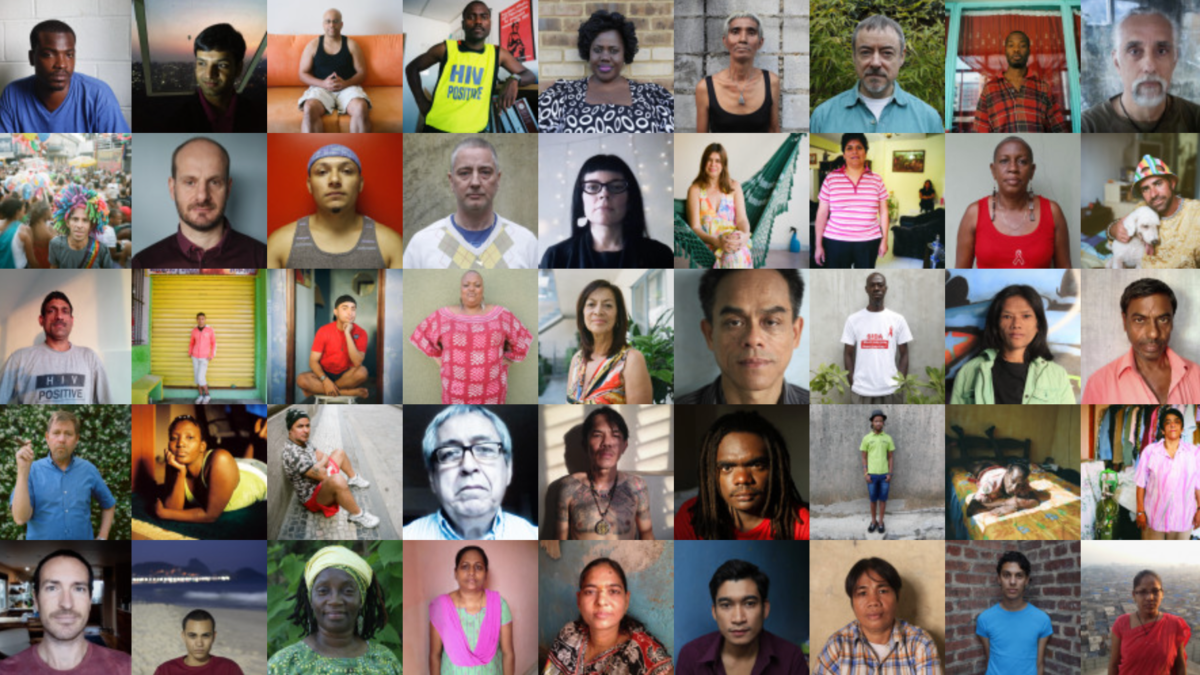
It is crucial that those of us who are not HIV positive participate in conversations surrounding HIV. Whilst looking for resources, I stumbled across ‘Through Positive Eyes’, a collaborative photo-storytelling project by over 140 people living with HIV across the world. ‘The project chronicles a very particular moment in the epidemic, when effective treatment is available to some, not all, and when the enduring stigma associated with HIV and AIDS has become entrenched: a major roadblock to both prevention and treatment’. The collection of photos taken by those living with HIV around the world illustrates the diversity of the population of people who are HIV positive, reminding us that we still have a long way to go if we are to end AIDS globally. The virtual gallery is strikingly powerful and each photograph is a bold and courageous act of artistry, reflecting the emotions and lived experiences of those who are HIV positive globally. Through Positive Eyes is one of many projects aiming to end the stigma of HIV once and for all it feels like a privilege to be able to see intimate snapshots of the highs and lows of living with HIV. 

Having a look at the Through Positive Eyes website is just one way to start to think about HIV this world AIDS day. Films and TV shows such as ‘It’s a Sin’ and ‘How to survive a plague’ are two examples of poignant representations of the history of the AIDS pandemic – but a vast amount of footage and documentaries can also be found online. The HIV unmuted podcast contains valuable knowledge and insight on the subject, or you can take a look at the World AIDS day 2022 website to learn a bit more about HIV and what you can do to help make a change. 

Perhaps one of the most important things you can do this world AIDS day is get tested. Take a festive trip to the STI clinic or do it from the comfort of your own home. One blood test could make all the difference in reducing the transmission of HIV. 

Talk to your friends and family about HIV, raise awareness and end the stigma around the topic. David, who lives with HIV, told the national HIV trust:
‘What I’m learning, and have learned, is that it is fightable, it is worth getting out of bed and it is worth the pain to fight to be able to see a day when possibly millions can be free from this epidemic. We just have to keep fighting’. 

HIV is far from being a thing of the past. Whilst the UN has stated that it wants to end HIV as a public health threat by 2030, we still have a very long way to go. To end the shame and the stigma we need to talk, we need to educate ourselves and we need to test ourselves. Across the world people are still dying from AIDS. This world AIDS day be the person who starts the conversation. Nobody should have to die due to ignorance. 

Some resources to access: 

https://www.worldaidsday.org

https://throughpositiveeyes.org

https://survivors.unaids.org

https://www.nhs.uk/live-well/sexual-health/visiting-an-sti-clinic/

https://www.nhs.uk/live-well/sexual-health/visiting-an-sti-clinic/

https://podcasts.apple.com/gb/podcast/hiv-unmuted/id1565625594

Categories
Culture The Goose Presents

Hands that Help – A night of poetry for the people

Hands that Help -
A night of poetry for the people

By Alex Kramskaya.


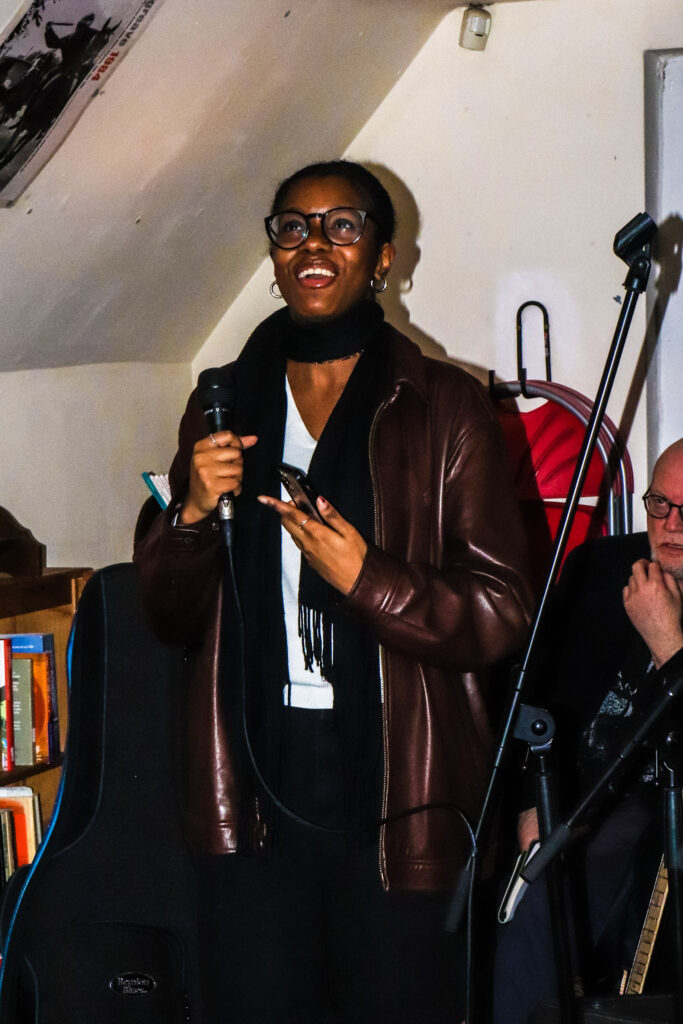
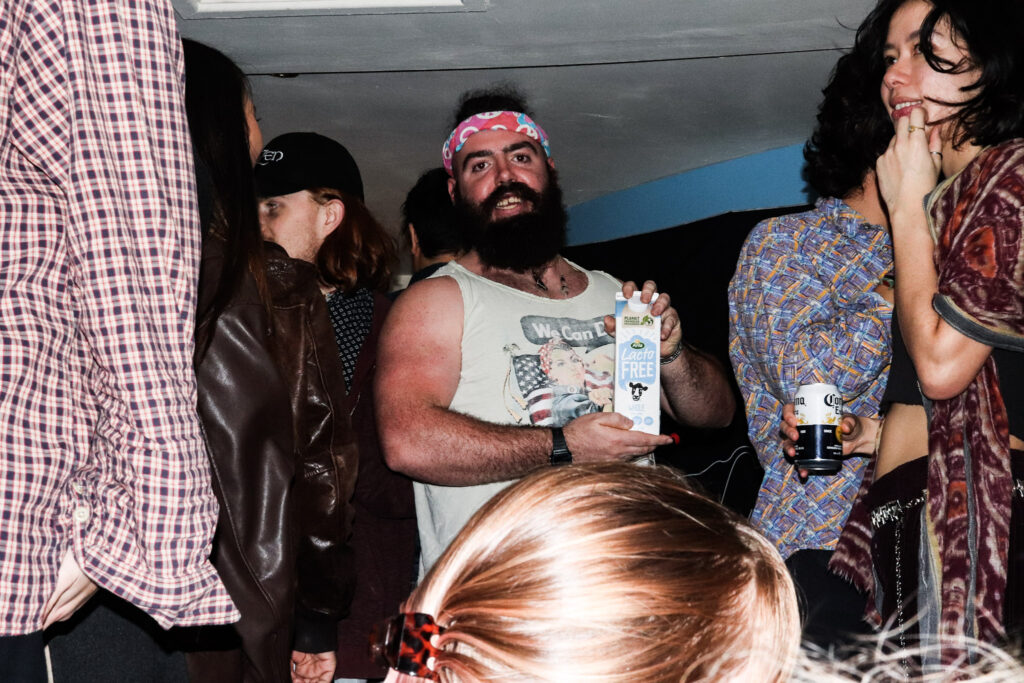
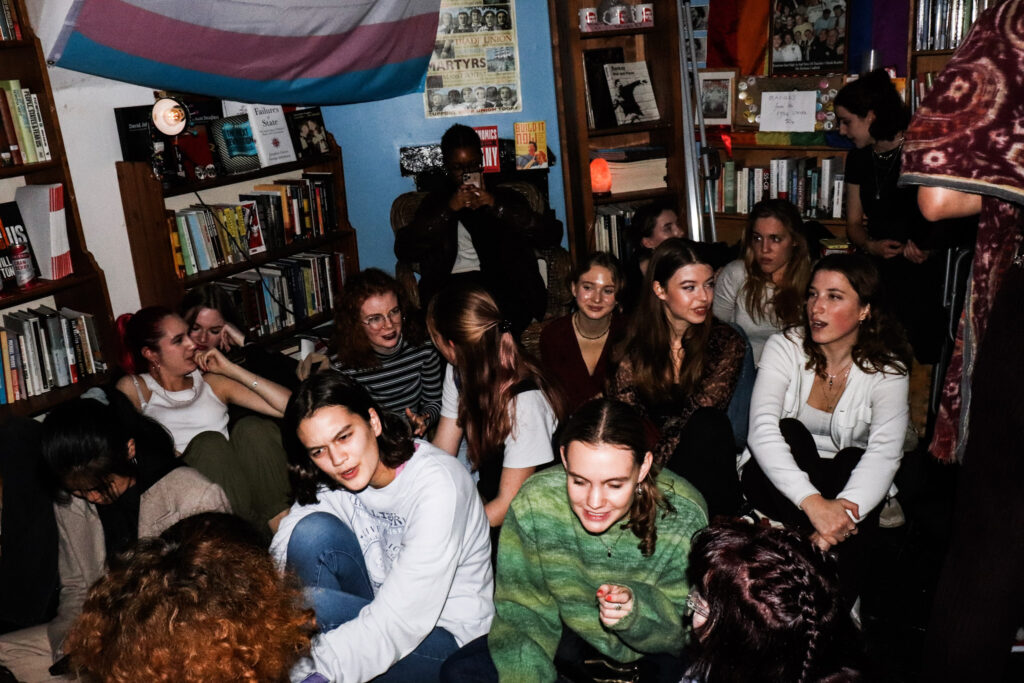
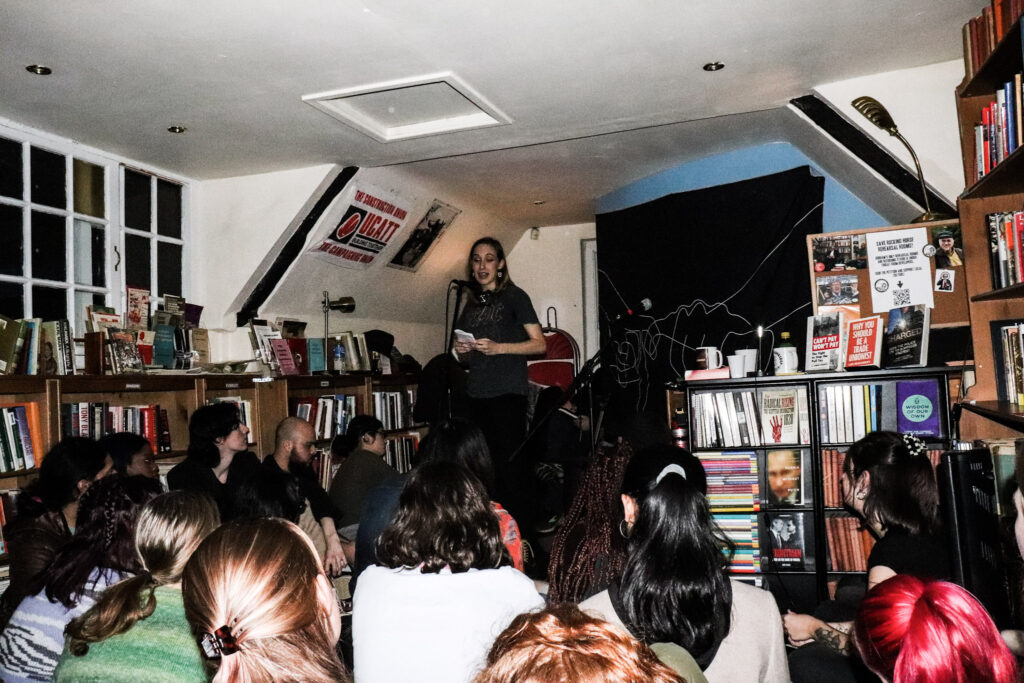
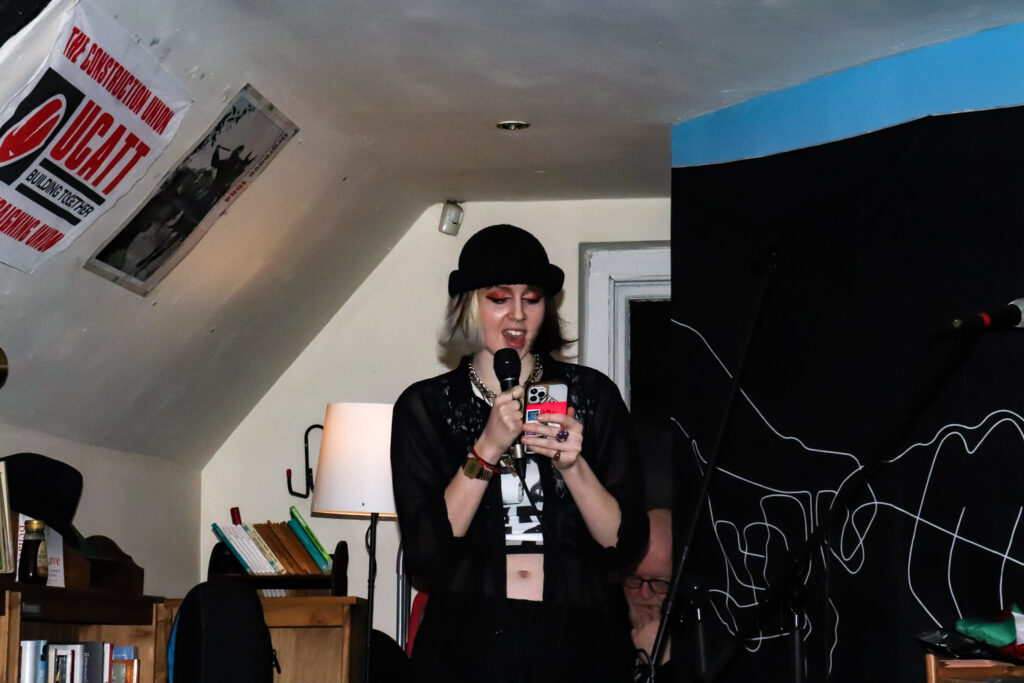
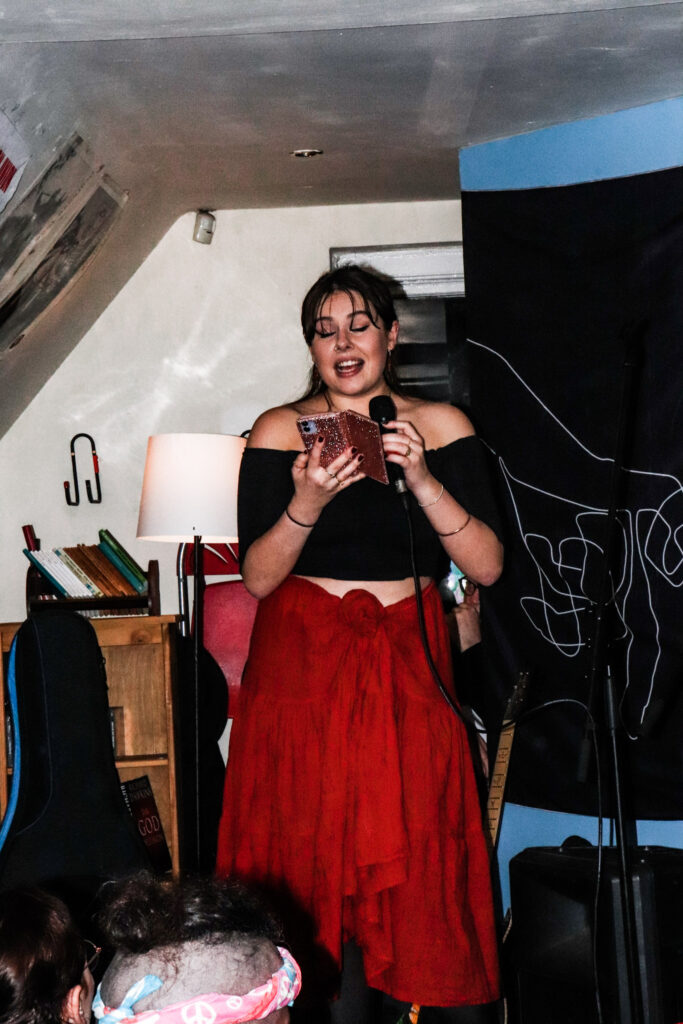
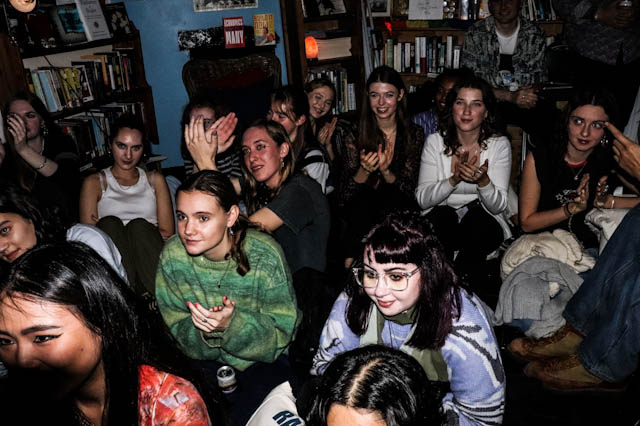
“Give me hands that help over lips that pray” says poet Asa Williams, gripping the microphone and staring down at the audience of poetry goers, friends, and bookshop employees huddled together on the shop floor, some holding blankets, others tin G&T’s, leaning against each other to listen to a night of poetry written by the people of Durham, hosted by The People’s Bookshop as their first event since lockdown. 

The shop itself is hidden away, and climbing up its winding staircase becomes a moment of ritual before arriving finally at the top floor. It’s small, no bigger than an attic, with books crammed in at odd angles, out of print copies and antiques sat under biographies and pamphlets, and the scent of coffee being freshly brewed dense in the air, making it feel close, looking down at the fog and the streets below. The shop, to the unacquainted, is a bewildering, secret place, and the volunteers – on any given day a mix of students, locals, and professors – are its trusty guides, presiding over the only radical bookshop of its kind in the Northeast.

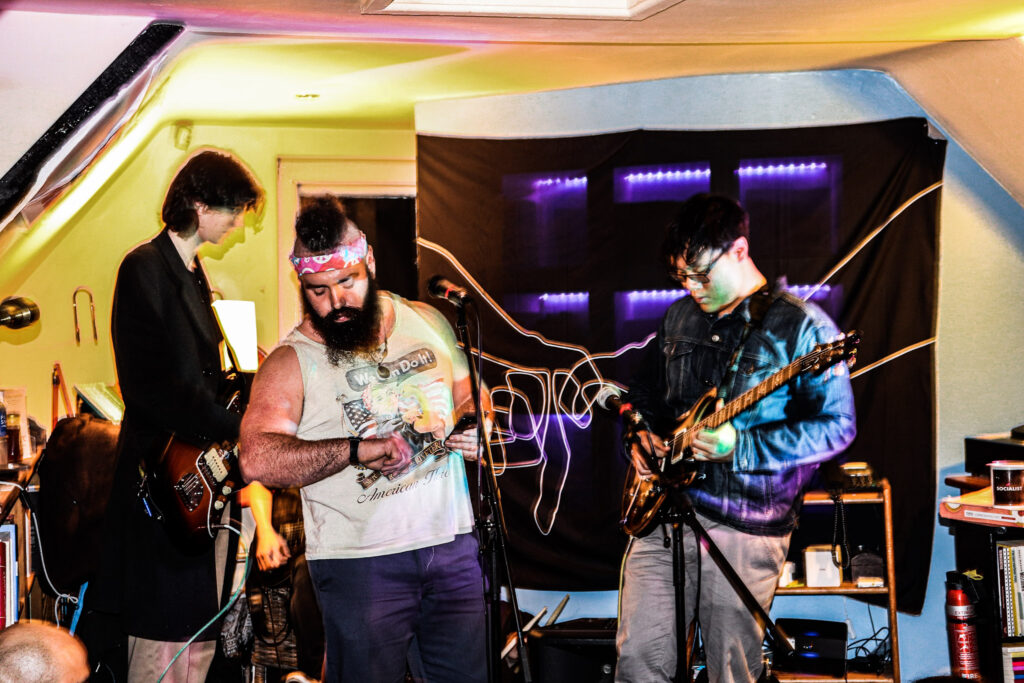
The arts community in Durham is a close one, where word of mouth is the main means of communication, and news spreads like a ripple in an instant. Think of it like a large, confusing, extended family except with less group dinners and more conversations over an open notes app on someone’s phone. Word got round the family fast, and suddenly the quaint shop was overrun to bursting point with writers, guitarists, fellow poets, and Bob Dylan enthusiasts, all there to support to support not only the growing movement of art in Durham, but also The People’s Bookshop which actively encourages and fosters creative expression outside the university setting.


          Drowning in your hair and your eyes,

          Giving head in a moonsoaked bed,

          Whilst your housemates watched the spilt sunrise.

          There were a thousand words said in the dark,

          And maybe half of them were true my love.

          After your read Rimbaud to me at Wharton Park

          Till one day you decided you’d had enough.

                         – Asa Williams, ‘The Avenue’


The lineup saw poets such as Eden Ward, Izzy Gibson, Ariana Nkwanyuo, Alex Kramskaya and Asa Williams, each bringing a unique poetic voice and style to their works – some funny and melodic, others aggressive, words landing on the downbeat like drums – it was a wide and wonderful cacophony.


          ‘Through cracks in penthouse windows,

          blowing through paper deeds to land,

          we feel hope prickle the nape of our necks

          in a language we can all understand.’

                         – Izzy Gibson, ‘Political Manifesto of an Iceberg Lettuce’


I’ve often tried to locate the origin of poetry, I think it lives in some quiet place between the ribs and the diaphragm, burying itself deep inside the chest and smouldering like ashes – heat radiating onto the page and fire burning on the lips of those who read it. It’s outrageous, like a secret being performed, there’s an element of the forbidden in it – the audience leaning in close to listen to words scribbled in a fit of rage, a moment of passion, cooling the embers for a moment. A group of people become bonded, sitting around a campfire listening to the echoes of love on the avenue, feeling the memory of a hand brushing past theirs – the world opens up for a moment. 


          ‘Perhaps it is the sweetness of June.

          Perhaps is is the warm shoulders pressed against mine,

          the palpable love of how dawn breaks over my best friends faces

          The moment is so perfect I want to hold it in my palms.’

                         – Eden Ward, ‘Sunrise over the observatory’


          ‘But if I could tell them, that I had seen the stars and met the moon.

          That I had indeed danced with the cat and laughed with the spoon.

          That the universe was bigger than they’d ever known- 

          More profound than their very own.’

                         – Ariana Nkwanyuo, ‘Silk Ear and Sow Purse’


Words and a sixteen wheeler truck have more in common than you’d think – both can hit you all at once, rearranging your insides and leaving you floored, picking yourself up if you are able. Poetry is unforgiving, and thus lends itself well to protest – it gives voice the effervescent and the indignant, the merciless and the aching. ‘The People’s Poets’ displayed the way that art becomes action and action becomes impact, the small shop atop Vennels blazing bright for an evening, illuminated by a community that huddled close together to sing the body poetic.


          ‘And passionate words 

          And quarrelsome lips

          Blaze harder and brighter in between sips.’

                         – Alex Kramskaya, ‘Whiskey Poem’

  •  


Categories
Culture

Banksy in Ukraine – The Power of Art in War

By Thea Opperman.

On the 14th November, The Art Newspaper confirmed that the British street artist Banksy has created seven new murals in various locations across Ukraine, including the capital Kyiv, the suburb of Irpin and the town of Borodyanka. Speculation arose earlier this week as the graffiti artist debuted his latest mural on Instagram, whilst three more were spotted by civilians in and around Kyiv. 

The first artwork Banksy claimed ownership over was a mural in Borodyanka, portraying a painted gymnast doing a handstand on a pile of rubble. Borodyanka, 35 miles northwest of Kyiv, sustained significant damage from Russian infantry, and some 13,000 who lived in the town prior to the invasion, have had to flee. Oleksiy Savochka, a 32-year-old Ukrainian, spoke to the Agence France-Presse and stated that it is ‘a symbol that we are unbreakable…and our country is unbreakable.’

One mural depicts a man said to resemble the Russian president, Vladimir Putin, being thrown to the floor during a judo match with a young boy. Another shows a young gymnast doing a handstand, whilst the others include a bearded man taking a bath, a woman in her dressing gown, hair in curlers, wearing a gas mask and wielding a fire extinguisher, and, by incorporating an existing graffiti of a penis, Banksy has depicted a nuclear warhead loaded onto the back of an armoured truck.

The simplicity of Banksy’s subject matter is well known, but there is something distinctly beautiful about portraying such ordinary men and women doing such ordinary things – having a bath or curling your hair – in a country whose people and buildings are so torn and destroyed. 

Although these new works of Banksy’s are his first murals in over a year, the artist’s involvement in the war effort in Ukraine has been incredibly strong from the start. Back in March, a print of one of his most famous anti-war pieces, CNC Soldiers was sold at auction, raising $106,505 for a children’s hospital in Kyiv. The original mural first appeared outside the Houses of Parliament in London in 2003, during protests against the war in Iraq.

Given the recent developments in Poland following the two deaths on NATO soil, it would be easy to overlook what a momentous moment this work from Banksy is for Ukraine. In fact, speaking to Reuters’ Gleb Garanich and Max Hunder, 31-year-old Alina Mazur said, ‘this is such a historic moment for our country, that people like Banksy and other famous figures are coming here and showing the world what Russia has done to us.’

The importance of fame and world-wide notability has been a key player in the Ukrainian war-efforts – indeed, Sean Penn has just lent Ukrainian president Volodymyr Zelenskyy his Oscar as a ‘symbol of faith.’ However, Banksy’s work feels like the first sign of solidarity from the art world, insofar as there is new art being created on the ground for the Ukrainian people. Completing these works in Ukraine, they are a sign of peace and unity of course, but more poignantly, Banksy has given the people of Ukraine pieces of art to come back to, to rebuild their country upon in a time where creativity has been forced to take a back seat.

Categories
Culture

A Sit Down with Freddie Graham​

A Sit Down with Freddie Graham

————-


————-


By Thea Opperman.            

A sit down with Freddie Graham is about as insightful a conversion as you can get. Born and bred in Hampshire, now studying Music at Manchester University, the list of his talents are about as long as his Jesus-like hair, but because of his impeccably broad musical knowledge, when chatting, you get the sense that he is far more mature than his years. 

Like so many students back in 2020, Freddie was trapped in halls due to covid, meaning creating music was much harder.
“It was much less productive”, he tells Wayzgoose, “there was little to no stimuli to use for inspiration, and it was hard to stay motivated stuck in your room.”
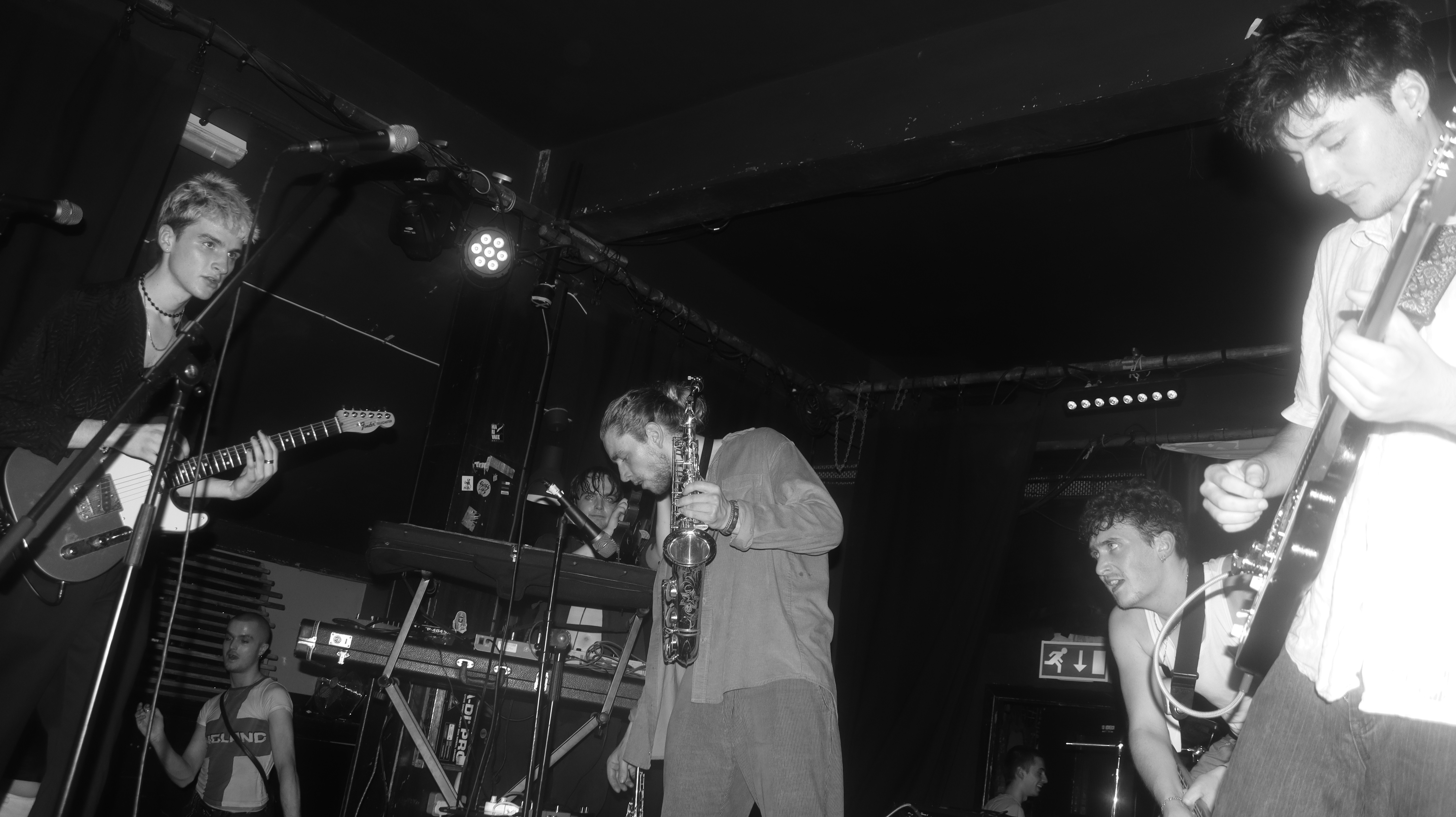
But Fred got lucky, finding six like-minded students who had found a way to bypass the issue: congregating in the basement of their uni halls to share and make music. They asked him to join their group as a saxophonist, from which the Basement Collective was born. The seven-piece band draws influences from jazz, funk, and soul, aiming to blend the elements together to form a unique acoustic and vocal sound.
“It was a great way to meet new people”, Fred said, “because music is everywhere – everyone has a personal connection to it in some shape or form.”

With Basement Collective still a roaring success, Fred joined another group: DRIVERS. Their music is more experimental, drawing from a fusion of punk, psychedelic, rock, and grunge influences. They have had a string of sold-out events in Manchester, supporting the likes of Church Girls, Humour, Split and Slap Rash. What’s great about Fred’s role in DRIVERS is his use of experimental sax, as he explained that he “saw the experimental powers of electric guitar using guitar pedals and thought” to himself “why can’t I do that with the sax?” So he did – enabling him to try out new effects and sounds mid-performance, giving a far more broad and diverse sound to the audience. 

But that’s Fred to a tee – constantly questioning and pushing the boundaries of what can and can’t be done with sound. He told us that “DJing was something I always wanted to pick up” so when he reached uni he gave it a go. Two years on, he and three others have founded Apollo Sounds – an events company in Manchester born out of a string of successful house parties; they felt they could make something bigger. He told us that there’s a big DJ scene in Manchester, but when asked whether that makes it a saturated and overdone ‘market’, he answered “definitely not.” Apollo Sounds track record of selling out all their events is testament to this. “It’s an amazing feeling to create music with others and everyone is really open to helping and improving each other’s work.” 

The comradery of his music experience was a major theme in our conversation. He described a sort of cycle, especially in live music, where creating music in front of a crowd, giving them energy, in turn gives him a massive push to create more. “It’s addictive”, he said, “and a massive part of that is playing for and experimenting with a crowd. You get energy from them as they get energy from you.”
But what about your own personal production?, I asked.
“Well”, he said, “it’s kind of similar. It starts with a rhythm or tune or lyric in my head; I record it and then go back to edit, sync, and synthesise it in a cycle.” Mixing genres, he told us, “is an amazing way to create a new sound and find your own style and playing in front of other musicians allows him to learn and progress.”

Last year, Fred edited and produced a video tilted You: a six-minute film highlighting the intense dangers of our climate crisis. In the description, he writes “There is so much as an individual that you can do right now, today, beginning with a change of mindset around this topic. It is vital that all of us understand the challenge we face, but also to understand that we can overcome it.” The film is incredibly powerful. When asked what role music played in its creation, and whether all music creation should have some kind of message to it in this day and age, he responded that using music to spread a message can be incredibly powerful, but that people tend to grab onto ideas of positivity, rather than doom and gloom. 

With regards to political music he said that it “isn’t always welcomed, but in most cases, I think musicians should be free to create what they want.” There’s a tension here, as in certain genres, music is used as a tool to spread hate and violence. Indeed, the recent anti-Semitic racial slurs from Kanye West are the antithesis of this, and in response, with an air of disheartenment, Fred said “it’s just such a shame. Music can have such a positive effect as a force for change and good in the world – it’s hurtful seeing such platforms being abused.”

When drawing our chat to a close, I asked Fred one last question – what advice would you give to younger musicians, freshers, or beginners, starting out? His answer was as much as you would expect from such a friendly but clued-up guy: “try out as much as you can; get involved with as many groups and experiment with as many genres as possible, because by doing so, you can create your own style unique to anything else. Don’t get too hung up on the commercial side of things, that will all happen in good time. Just listen to your gut, follow your feelings and the rest will sort itself out.” 

Go follow Fred on Instagram to keep up with all his latest moves – @freddiegrahammusic. And if you’re ever in Manchester, check out his events – they are not one to miss!


Categories
Culture

Visions of Heaven

By Henry Worsley.

They passed us in groups of ten or a dozen. Convoys of armoured trucks – blocky, khaki-green, fitted with glass so thick that they seemed driven by shadows. They were heading in the opposite direction, down South towards the Tajik border. Some kind of fight had started there a few days before, ‘you know, just farmers with shotguns and slingshots, neighbour against neighbour. That’s how they all start, and it just gets bigger from there.’ And it had got bigger – it had crept its way up on the BBC newspage. It was turning into an international scene. The ‘WAR’ word was being thrown about on Kyrgyz TV, and people were scared that one of the major powers, most likely Russia, would intervene. 

‘In all honesty, I think we’d do better if we still had the Russians,’ Dima said, ‘you see that’ – he pointed at a factory, sunk in on itself on the arid plain – ‘that is the state of our country now, since the communists left.’

He showed me a few photos from the South as we went further into the mountains: I saw a house split in two by shelling; shattered porcelain littered across the Fergana valley; Apache helicopters thudding over the horizon; explosions shot with a telephoto lens. It all looked somehow staged, like a huge post-Soviet stunt show. I wondered how old the boys were in those trucks, if they really hated those goddam, good-for-nuthin’ Tajiks just because they spoke Farsi and had different hats.

But we weren’t heading that way, we were going to a different corner of the country, to a lake in the Northwest named Issyk Kul. The road which wound towards this lake used to be full of military checkpoints – Issyk Kul is the largest and one of the deepest alpine bodies of water on the planet, and therefore an ideal place to fire off some torpedoes. The USSR had tested submarines there for decades.

I had an idea of how vast the lake would be. I mean, it was big, it was really big – you could see it from space. I read somewhere that it was the size of Wales (why are so many things compared to the size of Wales?). But when you see Issyk Kul for the first time it doesn’t resemble a lake at all – it is so damn huge it may as well be a sea, a mirror stretched horizontally ad infinitum, duplicating and inverting the cloud-shrouded peaks on every visible piece of shoreline. Here, surrounded by the monumental Tian Shan – The Heavenly Mountains – was the utopia of the nomad; the perfect microclimate, the richest grass to graze on, the most crisp and delicious water to bathe in and drink from. The air smelled good, clean, snowy. It was the opposite to the cloying stuff that rotted and sizzled back in the capital, Bishkek, where the utilitarian blocks built by the Soviets had been left to crumble, where people sold horse milk out of shipping containers.

Not that it was very different on the shores of Issyk Kul – here you could also buy horse milk in plastic bottles – but it was more fresh, of course. 

There were still plenty of remnants of Soviet rule: in the centre of Cholpon-Ata, a battered tank doubled as a memorial to the war in Afghanistan; next door was a ‘museum of spiritual practice’, full of big empty halls displaying yurts or framed photos of Kyrgyz poets. As you went further back along the line of portraits, they stopped being listed as poets and started being listed as manaschi – those who sing the Epic of Manas, Kyrgyzstan’s legendary founder. The manaschi wear the kind of felt-brimmed hats you see in portraits of Genghis Khan.

Dima and I slept that night just outside town. My companion was converting an old workers’ resort into a hotel. It was half-finished, there was no electricity. We ate grechka and fried eggs by lamplight, then played backgammon in silence, taking turns on google translate to bridge the gap between our mutually patchy English and Russian. 

After dinner we took a walk.

Stol – o – vaya … stolovaya, you see.’ Dima pointed at the bones of a clapperboard cabin, some words written in scabby red on its back wall. Below the script there was a mural of a beaming communist tucking into his borscht. There used to be a dining room here, but now even the table was gone, just broken glass and smashed-in doors. How very cold it felt to see that place in the grey half-light, surrounded by thin, peeling birch trees – the sort of trees that look romantic in Doctor Zhivago. Dima just stood between them, silent, looking at a place his parents might have remembered from summer holidays.

I had never done that before or since – spent two days with another human being with whom I could barely communicate. But Dima didn’t need to say much, not with that sad, stubbly look of a man who knows the mountains. I could certainly tell he was kind – his grechka was perfectly al dente, although he did cheat at backgammon. And he really was a man of the mountains – he woke me up at dawn to swim naked before we left. We barely knew each other, and here he was, stripping down. He did it with the nonchalance of a soldier at a medical test. 

‘Azora, davaiti!’ – ‘Lake! Swim!’

As we returned to the capital we heard news of the war down South. It had been resolved swiftly, diplomatically – the Kyrgyz had taken a good beating, a few hundred dead, and the Tajiks had captured a small chunk of the disputed frontier. The line had shifted a little on the map. Nothing had really changed, the ghost of the USSR still mattered – it still killed people. Now there were more of those spirits between the birch trees. 

And I thought again of the white forest and the ruin of the cafeteria at twilight, and how some places really give you the creeps.

Categories
Culture

Post-punk: the sound of today, tomorrow, and 40 years ago

By Ed Osborne.

If I asked each of you reading this which genre of music you believe has had the greatest influence over mainstream music and culture, what would you say?

The most common (and probably accurate) answers would gravitate to commercial giants like hip-hop, rock ‘n’ roll, or going further into the past, jazz and blues – all arguably correct choices.

However, pretentious-indie-kid-wannabe that I am, I have to propose an obscure alternative to these that’s cool enough to earn me a knowing nod from the leather-jacketed, doc-martened, cigarette-dragging hipsters I’ll see at gigs. So, meet Post-punk: a moody, depressed genre of music that had a cult popularity in underground music circles from 1978-83, and has only briefly resurfaced from time to time since.

Don’t look at me so cynically though, I’m not just doing this for cool points – I really do believe that post-punk is the most underrated and underappreciated genre of the last 50 years. It’s had a huge influence on subsequent popular music but has received almost no mainstream attention itself. To see my conviction, you only have to glance at my record collection, or the number of books on Joy Division and the Cure I’ve accrued (and then breathe a sigh of relief at the absence of Morrisey’s albums or autobiography).

Emerging from the ashes of the self-righteous and self-consuming fire of the punk movement, post-punk is what happens if you take a punk song, give it a hangover, abandon it in a warehouse in Manchester, and then play it to a very small crowd. The instrumentation is stripped down, sparse, and more rhythmic; guitars are often washed in reverb, whilst the bass plays the melody line. The drums sound industrial, the snare like a gunshot. The production is distinctive, mostly down to one man – Martin Hannett – who produced Joy Division and the rest of Factory Records’ bands in the late 70’s and early 80’s.

The lyricism was also radically different; gone was the escapism of rock ‘n’ roll, or the raging protest of punk. Instead, lyricists such as Ian Curtis and Robert Smith write with a seemingly numb acceptance of a broken status-quo, seeking only to document their own experiences with it, rather than cry for a revolution or glamorous alternatives. The Cure’s ‘10:15 Saturday Night’ gives us none of the ‘sex, drugs, and rock ‘n’ roll’ we would usually associate with such an evening; instead we are left with the bleak image of a tap dripping into the kitchen sink, whilst Smith watches and waits for a phone call.

The watershed moment in post-punk’s formation came when Joy Division – considered to be the quintessential band of the genre – performed their ‘hit’ (by post-punk’s standards) single ‘Transmission’ on Tony Wilson’s ‘Granada Reports’ TV show. The genre and its aesthetic were now distinguishable from punk and an exciting embodiment of a new underground musical future. Unfortunately, this exciting beginning didn’t last long: just before the release of their second critically acclaimed album, Joy Division’s frontman, Ian Curtis, took his own life, and the band ended.

When they reformed, after some time off, as New Order, their sound had progressed – although it retained the driving rhythms and distinctive bass playing of Joy Division, it was now unmistakeably dance-oriented. Their 1983 single ‘Blue Monday’ almost single-handedly kickstarted the UK Dance scene, which operated out of Factory Records’ club, the Hacienda. By the mid-eighties, the record label and band responsible for originating post-punk had swiftly become dance acts, whilst retaining their countercultural edginess.

Elsewhere in Britain, the rest of the ‘scene’ was also branching out into new landscapes of sound. The Cure, Bauhaus, and Siouxsie and the Banshees exaggerated their theatrical gothic image, becoming icons of goth rock, before the Cure ventured further into new wave and art rock later on in the decade. Many of the original post-punk bands are indie darlings nowadays, and their albums classics, but post-punk’s influence stretches into the mainstream, too. Stadium rock giants U2 began their careers as a Dublin post-punk band, and whilst their sound has expanded, their lyrics have remained honest, emotional, and realist. Aside from individual bands, the sound of post-punk has bled into countless genres: its distinctive drum sound can be heard in almost all 80s pop, from Michael Jackson to Duran Duran.

In the 90s, the popularity of grunge and pop-punk forced post-punk’s distinctly 80s sound to take a backseat, but the new millennium brought it straight back into popular consciousness with the sudden popularity of New York’s ‘post-punk revival’ indie scene. Bands like The Strokes and Interpol had made post-punk sound fresh again, leaving the overproduced drums behind in the 80s but keeping the interlocking melodies of the guitar and bass, and continuing to foreground their personal lyrical stories in a straightforward, no-frills delivery. The ‘revival’ took a while longer to reach the UK, arriving almost halfway through the 2000’s with Franz Ferdinand, Arctic Monkeys and, strangely, a little-known Las-Vegas based band who were struggling to find any popularity in the states: The Killers. All of these acts have been unanimous in crediting original post-punk bands as inspirations, and their work in modernising the genre’s sound to keep up with the sonic trends of the 2000’s has kept the genre alive to fuel the wave of rock and indie bands that emerged in the wake of the ‘revival’ trailblazers.

Unsurprisingly, the wave of 80’s nostalgia that swept popular culture in the mid 2010’s flooded the music world with a craze for anything synthy, and original post-punk was back on the menu. If it sounded at home on the Stranger Things soundtrack, it was cool; The 1975’s 80’s pop sound made them the biggest modern band on the planet, and even cult acts like the Belarussian 3-piece Molchat Doma have become mainstream thanks to social media’s reawakened appetite for the new-wavey, post-punk sound.

Post-punk’s musical legacy includes genres as diverse as dance, indie, post-rock, goth-rock, new wave, synth pop, industrial rock, and so much in between, but what I find most exciting is bands like Fontaines DC, Idles, and Ultra Q, who are exploring new avenues of post-punk and generating mainstream interest whilst they do it. This most recent wave of bands show that the genre isn’t just an artifact, whose influence can be studied but remains in the past: post-punk is at the forefront of the newest innovations in modern music, and its time everyone knew it.

Recommendations:

Post-punk, an introduction – https://open.spotify.com/playlist/5f4GW6B55mSjof0A8cQki3?si=072c19d7600f4ba3

Categories
Culture

From Witches To ‘Bitches’: Female Success Re-Written

By Maggie Baring.

In May 1693, one of the most famous witch trials in history came to an end, having caused the executions of 14 women and girls, as well as five men. The Salem Witch trials offer another example in a long history of the oppression of women, in which outspoken, powerful or ‘difficult’ women were, and arguably are, still deemed as a threat to society. It is interesting to ask why, within the period known as ‘the witch craze’, spanning the 16th and 17th Centuries, around 78% of all those accused of witchcraft were women. Let us take 49-year-old Sarah Osborne, one of the first women accused at Salem, as a key example of how powerful women, in upsetting gender norms, fired up suspicion and hatred in those around her. Sarah Osborne was left a 150-acre farm in Massachusetts by her first husband after his death in 1674, which upset the status-quo when she moved herself and her new husband into her new home, overtaking her male sons who, legally, should have been given control of the land. Her attempt for economic independence, along with accusations from the young ‘afflicted’ girls who claimed she was ‘tormenting’ them, led to her subsequent arrest. She died in jail in 1692 from neglect. 

A recent trending song on TikTok by Devon Cole, ‘W.I.T.C.H’, says it best; that what is deemed a witch in modern society is a ‘woman in total control of herself’. How often are modern women, especially women in the media’s spotlight, torn down in this way because of a similar quest to gain economic independence and success? Why is it that businessmen such as Jordan Belfort, whose hideous ambition and illegal enterprises areglamourised by the media, whilst powerful businesswomen such as Taylor Swift are torn down for every move they make being deemed ‘calculated’ or ‘bitchy’. Indeed, Taylor Swift’s timeline as an artist in recent years is a prime example of how these modern witch hunts targeting high-achieving women very much still exist, even if they don’t involve mass executions anymore. 

Cancel Culture, a movement very much debated in the current climate, can be turned very quickly into a veiled way of tearing down powerful women, as the negative connotations of power in women is so deeply embedded in society that we find it uncomfortable, even now, when a woman transgresses the social norms she is expected to uphold. #Taylorswiftisoverparty became the number one trending hashtag on twitter for days in July 2016 in what seemed like an unprovoked attack upon the multi Grammy-award winning artist. One tweet read: ‘Taylor Swift is the worst thing in a while to happen to the music industry. Everything about her is calculated and fake’. 

The internet witch hunt tearing down her hard-earned career was allegedly provoked by her falling out with Calvin Harris, over a gender pay gap over the song-writing of ‘This is What You Came For’, and their subsequent breakup. Even if one believes that Swift was in the wrong for this event, it is interesting to compare her behaviour to that of a male artist whose behaviour is far worse than hers. Liam Gallagher, for example, who called himself ‘one of the f**king true great rock’n’roll singers on the planet’, is labelled as a ‘comic genius’ for such comments, whilst one could not imagine the uproar if Taylor Swift, or any other female artist, had ditched the drilled-in notion of humility and modesty in making a comment such as this. Although the music industry’s treatment of women is notoriously unfair, this is beginning to change, with awards such as ‘Woman of the Decade’ being introduced to celebrate women’s achievements and protecting them from the abuse which they can face from the media. 

As Swift said in her acceptance speech for the award in 2019, ‘as a female in this industry, some people will always have slight reservations about you. Whether you deserve to be there. Whether your male producer or co-writer is the reason for your success. Or whether it was a savvy record label; it wasn’t’. Like the targeted Sarah Osbourne of the witch hunts, who died at the hands of a hostile society objecting to her financial ambitions, one can clearly see how this systemic gender-based bias still affects modern society with regards to contemporary successful businesswomen. It is encouraging, however, to see these powerful women push through media scrutiny, showing that these witch hunts are slowly becoming a thing of the past. 

Since coming through the other side of her mass online witch hunt in 2016 onto greater things, with her tenth studio album being released on the 21st October, Swift has fast become an icon and an inspiration to young girls who fear that reaching for heights of success is something that only a man can access. 

Categories
Culture

The Revival of Japanese City Pop

By Emily Mahoney.

Years ago, on one of my 4-hour voyages through the black hole of Spotify’s recommended for you section, I stumbled across an artist called Taeko Ohnuki, a Japanese pop singer and songwriter from the 70s. Her song じゃじゃ馬娘 (Jajauma Musume), the first track on her 1978 album Mignonne, stirred a peculiar curiosity within me that I had not felt for quite some time. I immediately knew that whatever genre of music this track belonged to, I was in. Despite not speaking a single word of Japanese and, subsequently, not having a clue what she was singing about, the rise and fall of her soaring vocals, accompanied by the funky synth and an incredible guitar solo, created such an intense feeling of nostalgia within me, nostalgia for an era in which I was not even conceived.

Hooked on the distinct feeling that her record gave me of intense melancholy, coupled with wanting to dance my arse off, I searched for more, coming across a plethora of Japanese songs from the 80s categorised as ‘City Pop’. I came to discover that this music was the soundtrack to Japan’s economic boom in the 1980s, and was somewhat influenced by American rock, soul and R&B, perhaps why it seemed so unheard yet so familiar. The genre as a whole gave me the feeling of glimpsing through a window into the past, with many of the songs energies seemingly capturing the atmosphere of the 80s, the synthy and upbeat instrumentals creating the perfect backdrop to a good boogie.

Despite my propensity for a good dance, what I found the most enthralling about City Pop were the melancholy undertones that seem to lurk in the background of every track, creeping through the discography that I poured over and giving the tracks dimension. Underlying emotions of heartache seemed to seep through hidden cracks in each song, itching a part of my brain that I didn’t know existed. The juxtaposition between the catchy hooks and cheery sounds and the lyrics that speak of regret, lost love and gloom help to create that sense of nostalgia, and within me, summon the feeling of looking back at time passed and love lost.

This is perhaps why Tomoko Aran’s 1983 hit Midnight Pretenders pairs so well with the toxic and regretful lyricism of The Weekend’s discography today, particularly on his 2022 album Dawn FM, in which his track Out of Time samples the song. In the chorus and it’s repeating phrase ‘Say I love you girl, but I’m out of time’ The Weekend’s dreamy tenor, both distinct and versatile, seamlessly intertwines with arguably two of the most important elements of City Pop, the melancholy lyrics and the groovy, nostalgic instrumental. The Weekend’s undeniably incredible vocal performance makes the song an instant hit, shining a light on the genre of the sample.

Overwhelmingly, however, the topic of the song interlaces perfectly with the melancholy sentiment of many Japanese City Pop songs. The Weekend proclaims his yearning to rekindle a relationship, despite the fact that he knows his efforts are meaningless and that he must accept that he is ‘Out of Time’ to show her his love. Patrick St Michel, a Japan-based music writer asserted that Out of Time, is “the most mainstream example of any older Japanese music being introduced to a wider audience”, and I am thrilled that people all over the globe have been able to experience the same mind-melting groove that gave me chills back in 2019.