Categories
Culture

Is ‘Insta-poetry’ real poetry? A study of Rupi Kaur’s poetry in the age of consumerism

By Emma Large.

When reflecting on previous avant-garde poets and movements, such as Allen Ginsberg and the New Age poets or Ezra Pound and the Modernist movement, it seems that new poetry is almost always divisive and controversial in its contemporary context. We often wonder why these works were such furious points of literary contention. I now want to be on the right side of history, embracing new art forms and styles with open arms. However, when I consider the new era of ‘Insta-poetry’, front-lined by poet Rupi Kaur whose work first shot to fame on the social media platform in approximately 2015, I am unsure which side I want to be on at all.

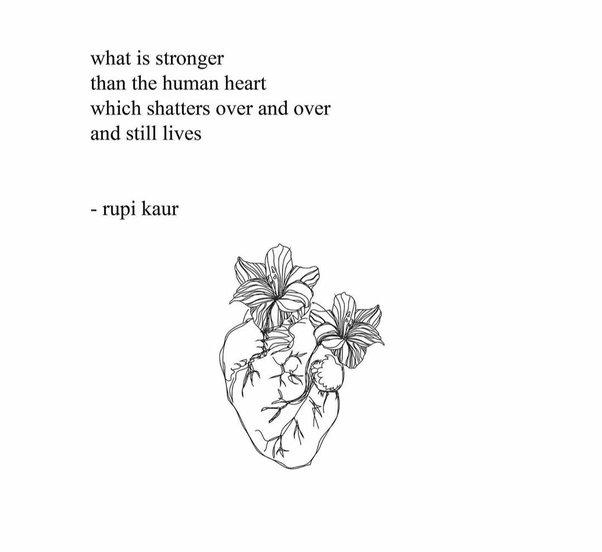
Kaur, self-styled a “poet, artist and a performer”, publishes and promotes her poetry on her Instagram account with a vast following of 4.5 million. She is known for her distinctly brief and fragmented poetic form, typed in all lowercase letters and without punctuation, and usually accompanied by a small sketch:

The debate about the value and nature of Kaur’s work has been particularly vociferous, and I have no desire to feed into a fierce pool of unnecessary criticism. However, whilst I understand her writing is emotionally impactful, I struggle to see how it can be called ‘poetry’; at least it seems less like poetry than the work of Ginsberg or Pound. Though it is not necessary for poetry to have form, I propose Kaur’s work lacks something that means it often fails to fulfil the conditions of real poetry. This deficiency’s exact nature seems elusive and contentious for all. While her work may be short, great Haiku poetry is only a few lines long; and though her words are decapitalised, this is also often the case for many contemporary poets. Hence, I pose the following questions: what exactly is Kaur’s writing lacking, and why does it matter?

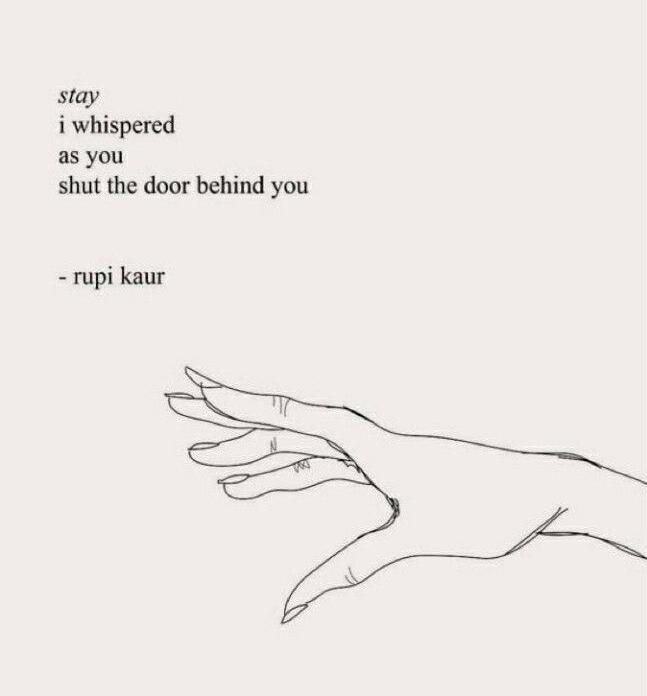
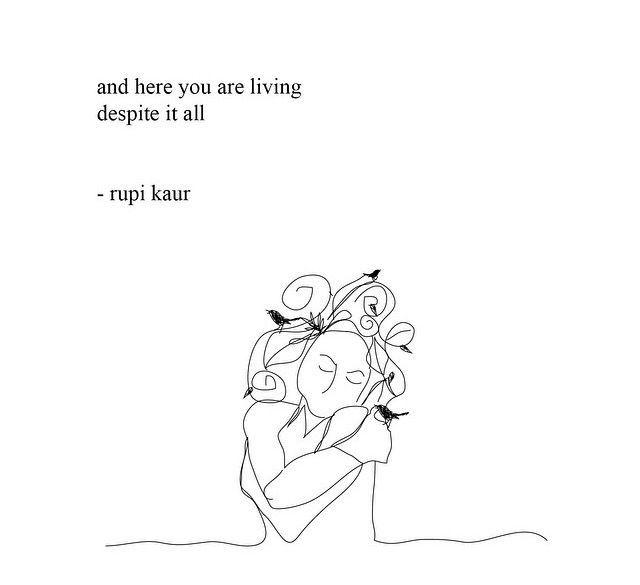
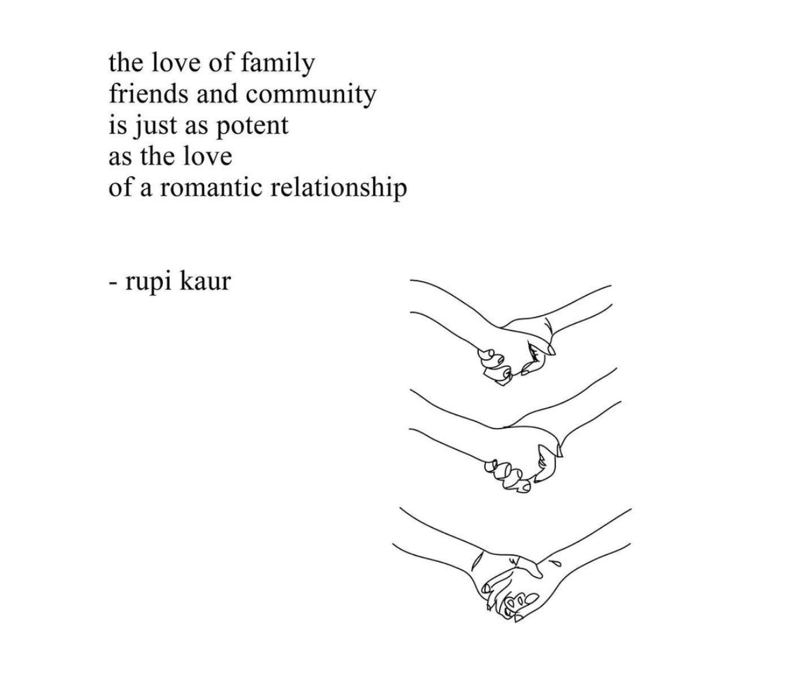
I first contend that Kaur’s art lacks the unique specificity that provides most poetry it’s crucial emotional passion and substance, a point on which she has received a great body of criticism. Her work rarely provides a geographic or temporal location nor explicit context and abounds with generalised pronouns as she addresses the wider ‘you’ of her readers. This universality is amplified further by her poetry’s brevity. I provide these two examples from her 2015 collection ‘milk and honey’ for reference.

Kaur’s work is deliberately vague and imprecise for the purpose of being relatable to most people’s circumstances and contexts; the ‘all’ she depicts (or doesn’t depict) in the second poem is consciously undefined for this very reason. In the same way, her poem begins just after an event – ‘and’ – yet the exact occurrence remains unknown. The ‘you’ she addresses in the first poem could refer to anyone, thus easily translatable into a reader’s own life; and the ‘you’ addressed in the second is explicitly her audience. Though Kaur’s poetry thus appears to express passionate personal sentiment, at its bottom it does not entail anything individual or intimate at all; its emotion and personality is provided by her reader’s interpretation of it. This is arguably the key to Kaur’s popularity – her poetry can apply to everyone and anything, easily accessible and crafted for mass consumption.

Of course, I am hesitant to fall into the trap of poetic elitism. As Monika Hartmann suggests, Kaur’s work “democratises” poetry so that all can appreciate it; merely because something can be understood by all does not mean it is inherently bad or unworthy. Universality could be a vital asset of Kaur’s work. However, for me her artwork lacks the specificity and personal feeling that I think poetry – or at least captivating poetry – requires. Her poems do not make “monuments” out of “moments” (as Dante Gabriel Rossetti once wrote about sonnets), finding beauty and profundity in a singular place and time; but rather provide shiny all-purpose statements that could mirror any time and event in a reader’s life. Kaur’s poetry therefore may be reflective, but I certainly do not believe it is authentically personal.

Furthermore, the immediate transparency and directness of her work also means that it does not need much thought to understand. She rarely uses figurative language, and her metaphors and similes are instantly obvious or explained to the reader. Many of her poems likewise seem to be frank statements of fact and advice, absenting any literary features at all. This is an example from her newest collection ‘home body’:

I do not deny that this poem can be emotionally powerful for its readers; in fact, I think that Kaur’s frankness intensifies her work’s vitality and impact. However, I do also strongly believe that good poetry requires a little thought from the reader in its understanding; poetry needs to be interpreted and mused on rather than simply served up to its reader on a silver platter. Kaur’s work does not engage a reader’s thought in the process of reading it, as they do not need to discover its meaning: it is spooned directly and straightforwardly, straight into their mouths. Her poetry to me appears more like statements reflecting fact, or self-help advice; while perhaps powerful and motivating, you do not need to think to understand it.

At the core of my arguments thus far lies my conviction that Kaur’s work seems crafted more for immediate mass consumption than individual deliberate thought. Both the structural form of her poems – their brevity, the frequent line breaks, the decapitalization of her words for no apparent purpose – and her direct transparency of meaning and universality all suggest that her work has been crafted to be read quickly by many. While superficially her writing seems genuinely confessional, at its core it does not offer much real emotional substance; likewise, it does not inspire much deliberation on its meaning. Kaur’s work seems to reflect its creation in the Instagram-age, in which we are used to consuming art and media at a rapid speed and forming an opinion after only a quick glance. Her work is perfected for the Instagram feed. While I cannot deny its emotional power and inspiration, I do not think either that a lot of it can be classed as poetry. Without personal contextualisation and emotion or figurative language, I think Kaur’s writing consists instead of beautiful assertions and mirroring musings on reality. Its focus is on its reader rather than its writer. This is art fashioned for consuming rather than thinking. But, perhaps, in our intensely commercial environment, this is what art is becoming?

Categories
Culture

LET’S TALK: UPCOMING POP-UP EXHIBITION IN DURHAM

Let's Talk: Upcoming Exhibition in Durham


On the 18th June from 12-4pm, a free pop up exhibition and live performance is coming to Alington House (North Bailey) aiming to tackle harmful sexual attitudes and behaviours through various creative mediums.


The event is the culmination of Changing Relations’ ‘Let’s Talk About Sex’ project which began in September 2021. The project formed a Student Social Action Group, bringing together students aged 17-24 from Durham University, The Northern School of Art, and Bishop Auckland College. Working with the organisation, the group has commissioned artists to put together a zine – ‘You Should Be Flattered’ – and a free public exhibition as part of Durham’s annual Summer in the City festival. The outcome of the ‘Let’s Talk About Sex’ project was informed, in part, by drop in sessions that occurred at the three partner institutions. Data collected from surveys and conversations revealed reoccurring problems across these institutions, including issues with boundaries and consent. The exhibition hopes to facilitate open conversations about ways to change harmful sexual attitudes and behaviours, with the hope that young people will be able to develop and maintain healthier relationships of all kinds.


The art on show includes work from queer feminist artist Lou Brown, aka Goodstrangevibes, who deals with sex education, mental health, and body positivity. The experience  coming to terms with their queer identity and struggles with mental health have informed their creation of vibrant, innovative, and positive illustrations. Brown worked as the artist-in-residence for the initial phase of the project and was recommissioned by the Student Social Action Group to illustrate seven anonymous stories about positive experience of relationships of all kinds.


Alongside Lou Brown’s illustrations, work has been commissioned by other professional artists; Sofia Barton, a Newcastle-based Punjabi artist, whose multidisciplinary works take inspiration from nature and folklore; the bold and experimental work of Bettie Hope (aka Slutmouth) which questions social taboos; James Mernagh (aka Merny Wernz), an artist dealing with concepts of truth in an age of technology; and illustrator Beka Haigh, who brings art to life through performing live illustrations. These artists provide rich and varied techniques and mediums to approach the often tabooed subject matter.


At 2:30pm there will be a performance from the feminist theatre company ‘Menstrual Rage’ who in their work both challenge stereotypes and celebrate womanhood. Their work has included ‘Emma, a play by Emma Woodhouse’, a rethinking of Jane Austen’s novel. Following this, there will be an informal Q&A with a panel of the Student Social Action Group, Pollyanna Turner (Changing Relations’ Artistic Director), and other project partners. There will also be limited free copies of the zine available at the event, on sale afterwards through CR’s website.


The themes of this project are especially relevant in the context of Durham University’s issues with sexual misconduct. Following the shocking leaked Facebook messenger chat in 2020, in which ‘posh lads’ competed to ‘sleep with poorest girl on campus’, and the rise of spiking incidences in Autumn 2021, it is evident that the university needs to rethink attitudes towards sex and how these inform behaviours. All are welcome to come along to the ‘Let’s Talk’ exhibition and live performance on June 18th, any time between 12-4pm. Don’t miss out on the opportunity to see some great artwork and challenge your mindset.

By Isabel Davies-Jones

Categories
Culture

Kraf Twerk

By Grace Marshall.

Imagine you are in a silver box surrounded by dancing men and women in dagger collared shirts and PVC trousers.

Imagine flashing lights, streamers and a disco ball – imagine a voice on the loudspeaker giving thanks to Uncles Ralf and Florian and then blasting Numbers. You are in Detroit in 1988.

In fact you don’t have to imagine. You can go onto YouTube (everything I write comes back to videos on YouTube), type in ‘Kraftwerk New Dance Show’ and be transported. I’ve seen Kraftwerk live, but actually that didn’t really come close to watching this 144p video. I saw them a long time ago in the middle of East Anglia with my middle-class dad and surrounded by other middle-class men who looked like my dad. Not surprisingly, ‘80s Detroit seems very different to ‘10s East Anglia. There was widespread unemployment, a crack cocaine epidemic, and a ‘Devil’s Night’ on Halloween of every year. It doesn’t seem to matter too much to the people dancing. As YouTube user Alexlesexe observes, it is rather ‘Rare footage of people having real fun!’

The link between Kraftwerk and west coast techno has been wheeled out before. The stories are fun.  There is one about Ralf and Florian going into a club in New York and being confused when ‘Metal on Metal’ started playing only to go on for ages after it should have ended. Ralf asked the DJ what was going on and found out he had two copies of the record which he was mixing together. But I wouldn’t go so far as to say that Kraftwerk invented techno. You can hear the beginnings of four-on-the-floor and synth tech in Timmy Thomas and Lee Perry and Funkadelic – it might be time to reassess these kinds of reductive ‘handing the baton’ narratives you sometimes hear cropping up around techno. Juan Atkins does emphasize the influence Kraftwerk had on him, but he also says that “Kraftwerk got off on the third floor” and the elevator kept going up.

Whether it would have happened without Kraftwerk or not – Detroit techno went way beyond its European influences in the ‘90s. One of the things I really like about this movement is the sense of “scenius” – an ecosystem of Roland T808 and monosyllabic samples. Juan Atkins talks about listening to a Detroit radio show called Electrifying Mojo, which aired at midnight every night, and just before it came you would hear people honking their horns and turning their bedroom lights on and off. The 90s duo Drexciya would also have been listening to Electrifying Mojo as well. They really picked up on the idea of the techno ecosystem. Between 1992 and 2002 they released five records imaging an aquatic fantasy world in the middle of the Pacific Ocean, based on the micro-apocalypse of the Zong Massacre. A slave ship on the middle passage ran low on supplies and white slavers killed over 130 enslaved African people. Drexciya reimagined the atrocity by creating a sound-world in which the slaves who were thrown overboard didn’t die but gave birth to children who could breathe underwater. It’s not really comparable to Kraftwerk at all in my opinion – there’s more to electronic music than the Autobahn.

Categories
Culture

“I Ain’t Goin’ to Play No Second Fiddle”

By Tom Sykes.

Emanating from a forgotten corner of the American South East, the blues is the foundation upon which modern popular music has been built. Rock ‘n’ roll, soul, jazz and country music all owe a significant debt to the blues men and women of the Mississippi Delta.

Alongside gospel music, blues was the most popular form of African American cultural expression in the first half of the twentieth century. However, since the genre’s heyday in the 1930s and 40s, blues has been forgotten and displaced by its more slick and economically savvy musical offspring, rock and soul. Since the 1960s, blues artists have only been brought back into the spotlight by the rock stars and soul singers who appreciated their influence. It was British bands, such as the Rolling Stones and the Yardbirds, who sparked the blues revival of the 1960s, after they popularized covers of tracks by Muddy Waters, Howlin’ Wolf and Robert Johnson. There is still some way to go before the blues is fully appreciated as the bedrock of popular music, but thanks to the success of the Stones and others, there is a growing recognition of the profound influence of this remarkable genre.

One area of blues music that remains fundamentally misunderstood is its political and social significance. Though we acknowledge the musical debt owed to the blues by the writers of the great protest songs of the civil rights era and beyond, we rarely see blues as a form of protest music in itself. Blues, instead is regarded as deeply introspective, dealing with themes of love, pain, and personal misfortune. Where Sam Cooke, Marvin Gaye and Bob Dylan hit out forcefully and explicitly against the injustice facing African American communities in tracks such as ‘Chain Gang’, ‘What’s Going On’, and ‘Blowin’ in the Wind’, blues musicians seemed content singing about spurned lovers, sexual prowess and the wonders of rail travel.

According to one study by the University of Mississippi, overt political protest was present in just two percent of the blues records produced before 1945. However, when blues music is placed in its historical context of racial oppression in the Jim Crow South, it becomes clear that the blues was a radical and sophisticated form of dissent against white supremacy in the USA. Not only did blues provide the musical foundation of twentieth century popular music, but it was also the first musical genre that brought the experience of an oppressed minority into mainstream culture and laid the groundwork for the more famous protest anthems of the 1960s.

The seemingly trivial themes that southern bluesmen addressed in their songs all carried a far greater meaning than a superficial look initially reveals. One such theme is the recurrence of the trope of rail travel in Delta blues music. Southern bluesmen were not simply impressed by the locomotive as a symbol of modernity. Instead, rail travel was an expression of one of the most prized freedoms of the post-emancipation South: the freedom of movement. In this context, a seemingly simplistic song such as ‘Hello Central’, by Lightin’ Hopkins, in which Hopkins moans about being prevented from catching a train to see his lover, can be understood as a protest against the structures of southern racism that sought to limit the freedom of movement of African Americans and tie them to their traditional role as plantation labourers. Protest against the structures of Jim Crow racism is similarly evident in the reverence shown for criminals and vagrants who challenged white supremacy by existing outside of the control of white landowners. The popularity of the itinerant bluesman, Henry Thomas, who sang about his existence beyond the grasp of white plantation owners, is testament to the power of Delta blues as a declaration of African American autonomy in the post-emancipation South.

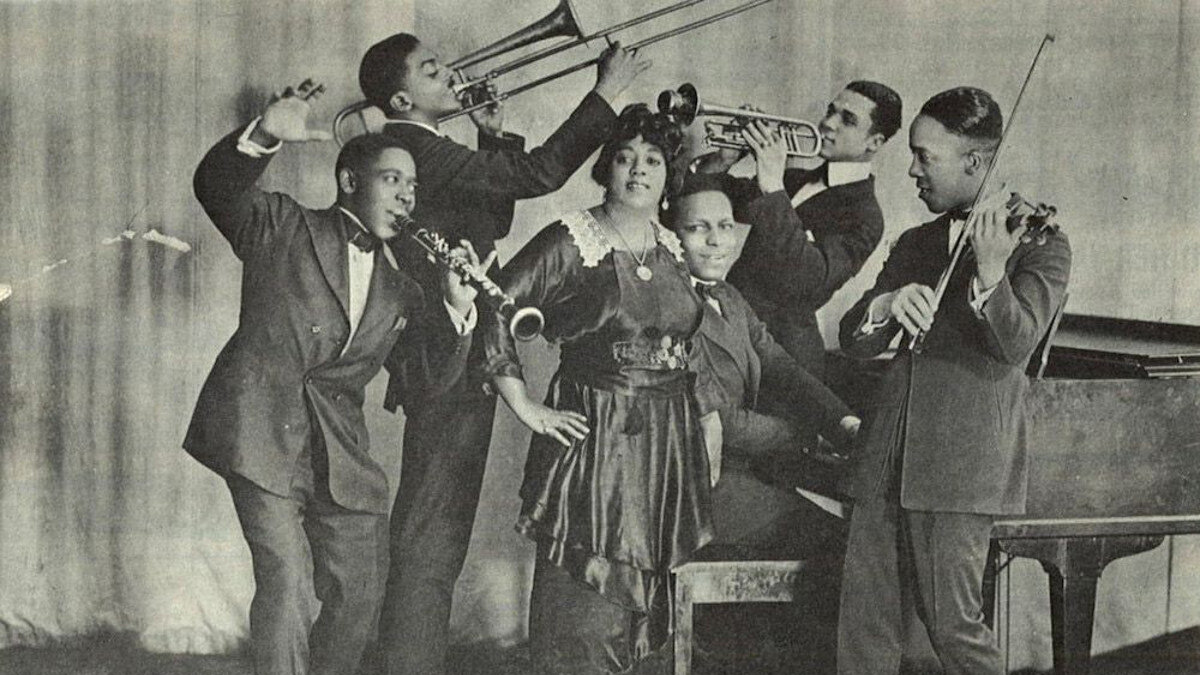
Arguably the most politically radical and powerful of the blues artists of the South were the Blues Queens who dominated the ‘race records’ industry in the 1920s and 30s. These women, whose popularity far exceeded their male counterparts until the 1930s, directly challenged the structures of white patriarchal society that sought to defeminize and even dehumanize Black women. The Blues Queens, led by Ma Rainey and Bessie Smith, asserted their own freedom and sexual agency through their music in a manner that shocked white audiences. Bessie Smith’s ‘I Ain’t Goin’ to Play No Second Fiddle’ is an assertion of female agency, in which the singer talks about kicking her man out of her house, as she “ain’t gonna play no second fiddle ’cause, I’m used to playin lead”. In her 1928 hit ‘Prove It On Me Blues’, Ma Rainey even challenged the gender normsr imposed by US society by singing “It’s true I wear a collar and tie”, and later alluded to her lesbian sexuality with the words, “I went out last night with a crowd of my friends, It must’ve been women, ’cause I don’t like no men.”

The radicalism and political significance of the blues is confirmed by the reaction of white society to the growing popularity of what was described as the “devil’s music” by many social conservatives. According to the musician, Adam Gussow, who was one half of the blues double act, Satan and Adam, a pastor from Baltimore described the blues dancehall as “hell’s ante-room”. Gussow even identifies Black community elders who warned that the blues “only poisons the soul and dwarfs the intellect”. Such an extreme reaction against the radicalism of the blues can only serve as evidence of the efficacy of blues protest and expression.

In the context of Jim Crow oppression, blues artists, who dealt with themes such as freedom of movement, resistance to labour exploitation, and female sexual agency, were vital in the development of consciousness of racial injustice in the USA. Without pointing the finger explicitly at the white establishment, the blues gave expression to the simmering anger of African Americans, both in the South and in industrial North and West. It was these artists who laid the groundwork for the Civil Rights movement and the protest anthems that accompanied it.

The blues deserves credit for establishing a tradition of protest and dissent that had never existed in popular music beforehand. Just as from a musical perspective James Brown could not have existed without the influence of the likes of Muddy Waters and Howlin’ Wolf, nor could he have written the Black power anthem, ‘Say It Loud – I’m Black And I’m Proud’, without the trailblazing protest of the bluesmen and women of the American South.

Categories
Culture

Charles Manson’s Other Side

By Ed Merson.

Spotify can lead to many different places. The rabbit-hole of music which I embarked on during lockdown opened my eyes to the peculiar phenomenon of Charles Manson’s debut album in 1970, ‘Lie: The Love and Terror Cult’. Music often evokes emotions of happiness or sadness, but not much has incited such confusion and fascination, or even guilt, as Charles Manson’s debut record.

When people think of Charles Manson, the most likely things which come to mind are the events of mid-1967 involving the Manson Family. Feeding a commune of middle-class teenagers LSD while manipulating the words of the Beatles to incite a race war, Manson coerced lost souls in the Summer of Love to commit nine murders on his behalf, including that of Sharon Tate, the wife of Roman Polanski.

Before listening to this album, it’s interesting to consider what to expect. Dark and estranged by madness is the first inclination. The album cover immediately gives this impression, which features Manson, Swastika on forehead and ‘LIFE’ magazine changed to ‘LIE’. Besides, what else could come from the mind of a serial murderer who forced innocent people to paint the words ‘Piggies’ on Polanski’s kitchen walls with blood.

To my dismay, the album offered a deep and reflective Charles Manson, commenting on US Society, his wish to return home and his relationship with girls. If anything, this fits perfectly into the context of counterculture and Woodstock.

The first song ‘Look at Your Game, Girl’ is a soft and intimate address to a girl, asking to reveal her emotions to his confused and sad state:

What a mad delusion

Living in that confusion

Frustration and doubt

Can you ever live without the game

The sad, sad game

Mad game

Just to say loves’ not enough

it can’t be true

Oh, you can tell those lies

but you’re only fooling you

Although experiencing familiarity while listening, I was immediately snapped back to the narrative of murder and manipulation.

‘Look at Your Game, Girl’ is followed by ‘Mechanical Man’: an unemotional response to the monotonous nature of industrial life in middle America. Manson offers a satirical and receptive comment on the dysfunctionality of life that Manson experienced himself, growing up with a negligent father who worked in local mills in Ohio.

 I am a mechanical man, a mechanical man

And I do the best I can

Because I have my family to look out for

I am a mechanical boy

I am my mother’s toy

And I play in the backyard sometime

I am a mechanical boy

Largely abandoned by family, he lived between foster homes and eventually committed his first offence of arsenal when he was 13. From then on, Manson’s home would be in state institutions, spending 20 years in rehabilitation centres and prison intermittently. The background brings sadness when listening to ‘Home is Where You’re Happy’: a short and upbeat song that resonates with his own loneliness and isolation.

Up to this point in the album, without knowing the origin of the words, you could equate it to the voice of Rodriguez, also lost in American culture until recently. However, the insightful lyrics are interrupted by ‘I’ll Never Say Never to Always’ performed by an ensemble of girls. The same ensemble who loyally followed Manson and whose hands killed nine people. A chilling amalgamation of murderous voices.

The album was written during his incarceration, where he learnt to play the guitar and met Phil Kaufman, producer of Gram Parsons, who encouraged Manson to record his music. Through this relationship came another with The Beach Boys. He recorded his album in their studio and even harboured his family in Dennis Wilson’s LA house. The Beach Boys even went on to adopt his song ‘Cease to Exist’ as ‘Never Learn Not To Love’.

If ever you wanted a means of gaining an insight into the mind of a psychopathic multi-murderer, behind the Swastika tattooed on his forehead and his chilling expression of madness, an album with a mixture of longing for love and social commentary provides the perfect opportunity. You may now continue on the straight and narrow of modern music.

Categories
Culture

2021: Shining lights in a dismal year for music

2021: Shining Lights in a Dismal Year for Music

Tom Sykes


2021 has been a year to forget for many reasons, not least for the music industry, which seems to have done its best to churn out a host of mediocre and unoriginal albums. Aside from predictably inane pop releases from the likes of Dua Lipa, Justin Bieber, and Selena Gomez, producers have turned to celebrity amateurs in the hopes of making a quick buck in what is fast becoming a TikTok driven industry. This year has seen a UK number one record from Youtuber, turned-boxer, turned-rapper, KSI, meanwhile Usain Bolt has his eyes on a Grammy for his recent reggae release, ‘Country Yutes’. While these albums have provided an entertaining distraction, their surprising success hardly indicates a thriving global music scene. To make matters worse we seem to be in the midst of an Abba reunion – need I say more.

To cut artists and producers some slack, it has been an exceptionally challenging 18 months for the industry. The pandemic has wreaked havoc to live venues leading to a decline in emerging artists and hiatuses for those bands who rely on live performance. However, it is hard not to be disappointed by the creative output of an industry emerging from the pandemic.

That said, 2021 hasn’t been all doom and gloom for music lovers. A select vanguard of talented artists has put their long periods of isolation to good use and cobbled together some brilliantly innovative albums. Hailing from the London post-punk, Aussie indie rock, and US country and bluegrass scenes, these artists are attempting to save the stuttering music world and provide some direction to a rudderless industry. What follows is a list of the best albums released in 2021 designed to restore some faith in the creativity of today’s generation of musicians.

1. Bright Green Field – Squid

Quite simply the best punk band around. ‘Squid’ has burst to the forefront of the London punk scene this year with their faultless debut album, Bright Green Field. In fact, it is reductive to describe Squid as a punk band, as Bright Green Field demonstrates that they are so much more than that. Along with Black Midi and Dry Cleaning, the members of Squid are representatives of a musically sophisticated London punk scene with jazz, blues, and funk influences seeping through their records. They are at their raw and thoughtful best on the rollercoaster post-punk track ‘Peel St.’.

2. Sharecropper’s Son – Robert Finley

At the tender age of 67, Louisiana-born bluesman Robert Finley has released his second studio album, Sharecropper’s Son. Finley is a musician with an incredibly diverse musical and professional background, having served as a US army guitarist, led a gospel group, and appeared in the 2019 incarnation of America’s Got Talent. Having been spotted busking by the Music Maker Relief Foundation in 2015, Finley has gone on to achieve the commercial and critical acclaim that his work richly deserves. Sharecropper’s Son is an autobiographical album that returns to Finley’s roots on the plantations of Louisiana while incorporating some of the many influences that Finley has picked up on his long musical journey. The result is a rich, bluesy record built around the distinctive twang of a southern blues guitar with some strong nods to gospel and soul. The album provides a strong indication of Finley’s musical versatility built up over years of toiling in an industry that never paid him his due. The title track ‘Sharecropper’s Son’ and ‘County Boy’ represent classic southern blues in its modern incarnation, meanwhile, Finley shows off his vocal range in the more soulful tracks, ‘My Story’ and ‘I Can Feel Your Pain’. The standout track from the album is ‘Souled Out On You’, a gritty and powerful southern soul track, sure to become an instant classic.

3. Shyga! The Sunlight Mound – Psychedelic Porn Crumpets

This is not the best album on this list, nor is this the most talented band. The Psychedelic Porn Crumpets make it onto this list not on merit but by virtue of their magnificent name. The Aussie prog-rockers returned in 2021 with their fourth album with a little less psychedelia than their previous offerings, but a whole lot more crumpet. Well worth a listen.

4. Daddy’s Home – St Vincent

One of the more established names on this list. St Vincent released her sixth album in 2021, a haunting record that defies categorization grounded thematically on the release of her father from his ten-year prison sentence. The album is almost impossible to define as it veers from funk guitar riffs to discordant thrashing and occasionally threatens to spill over into trashy pop before a cutting lyric brings it back into focus. Daddy’s Home is certainly not an easy listen, but St Vincent has built on her strong reputation for innovation, lyrical talent, and sheer strangeness with a commercially unfriendly but fascinating album.

5. The Ballad of Dood and Juanita – Sturgill Simpson

This concept album from Sturgill Simpson is a true product of pandemic-induced reflection and creativity. Simpson dreamt up this civil war love story, or as he calls it, a “simple tale of either redemption or revenge” while recovering after being hospitalized with coronavirus. The ballad has come to life in the form of a bluegrass album that cements Simpson’s status as country music’s brightest star. The album even features a cameo from country legend, Willie Nelson on the delicate love song ‘Juanita’. As good a reason as any to give it a listen.

6. Comfort To Me – Amyl and the Sniffers

If the London punk scene is dominated by thoughtful and sophisticated post-punk bands, Aussie surf-rock is at the other end of the spectrum. Along with the Chats and the Smith Street Band, Amyl and the Sniffers have been thrashing out 3-chord punk tracks since their 2019 debut. The Londoners seek to emulate the post-punk groups of the 1980s, while Amyl and the Sniffers are far more akin to the early punk-rockers of the 70s. Their rapid delivery of their simplistic songs gives them a Ramones-like quality, while lead singer Amy Wilson has the energy of Iggy Pop combined with the alluring stage presence of Patti Smith. Comfort To Me is stylistically nothing new. It is Taylor who makes the band compelling, with her empowering lyrics and irresistible presence – punk rock for the age of female empowerment.

7. Delta Kream – The Black Keys

Ohio blues group, The Black Keys, are succeeding in the traditional quest of the ageing rock band to remain relevant as they enter their forties. They have returned in 2021 with Delta Kream, an album that pays tribute to the legendary bluesmen of the Mississippi Delta. Delta Kream provides a shiny new coat of paint to some of the oldest and most influential country blues songs ever written. The Black Keys’ rendering of ‘Poor Boy a Long Way From Home’, a song that has been covered by almost all the greats of the blues, is the standout track on an impressive album.

Categories
Culture

The Importance of Being Beautiful

The Importance of Being Beautiful

Mary Neale-Smith

The word beauty comes from the Old French beaute, originating from the Latin bellus meaning pretty or handsome. The Latin word was associated with women or children, and when used to describe men, it implied insult or irony.

In Webster’s (1828) Dictionary of the English Language, beauty was defined as ‘whatever pleases the eye of the beholder’. So today, as mainstream beauty has to conform to capitalism and the patriarchy, the beholder is male. Men are the judge, jury, and executioner when it comes to defining beauty.

The definition and concept of beauty has transformed throughout the centuries. In The Beauty Myth, Naomi Wolf (1991) writes about how women have transitioned away from being economically and politically reliant on men. But, for every action, there is an equal and opposite reaction. The obligation became ingrained in our society that women ought to be beautiful. This counterforce arose as women were no longer bound to the narrative of domesticity and chastity. One waste of time had to be replaced by another.

We believe ‘beauty’ is something that can be achieved. It is not about chance or luck. We ignore the role of genetics and natural variation. Instead, we have been persuaded that beauty is a product of a woman’s hard work, investment, and perseverance. So it is imposed on us all, expected of all women, regardless of their profession, relationship status, or desire to be judged on a more meaningful characteristic.

The irony is that the idealised standard of beauty right now is being “natural”. To look like you haven’t had to try. The cosmetics giant Glossier can market products as ‘glow-enhancing’ and then made a fortune in charging extortionate prices for essentially sheered out products. By 2024 the skincare industry in the UK is predicted to be worth $24 billion, reflecting women’s investment into countless regimes and routines to achieve the goal.

All the hard work and expense in trying to achieve the perfect ideal of beauty has been rebranded. The old-fashioned message splashed across magazines telling women to spend time and money to look better for their husbands has been seamlessly transitioned into telling them to do it for themselves. The magical phrase ‘self-care’ has turned the hours and pounds spent on your appearance into something progressive.

What is difficult about this discussion is that it is not the desire to be beautiful that is wrong. Navigating these waters is hard when it can appear to be unfeminist to criticise any decisions women make around their bodies. The problem is that beauty has become a requirement, and the beauty standard centers around narcissism and feeds off our insecurities.

When we look in the mirror, we might see things we like, but more often than not, we focus on the parts that we don’t. These parts are often natural and how they ought to be, but we get manipulated into believing they need to be worked on. That they need improving.

Instead of raising meaningful and important questions about these beauty standards and their origins, we are trying to expand them. We believe that beauty is such an important attribute that we all need to feel beautiful. It’s placed on an untouchable pedestal.

As a result, the ideal of beauty has evolved in some positive ways. It has become more inclusive and diverse – the body positivity movement works to enable people of all shapes and sizes to be included in what is beautiful. But, the underlying assumption: beauty is, and should be, of fundamental importance to us all. Why can’t it matter less?

The beauty ideal turns us into hamsters on a wheel. Although we are continuously running, we never get anywhere because perfection cannot be reached. And we keep running because participating and trying to achieve the beauty ideal delivers a sense of power.

But this power is a facade. Often the only type of power women are pushed to pursue. It is a power rooted in the male gaze and male opinions. Yet, it is not a power over men but a power to attract them. With beauty comes power, perhaps it’s a privilege, but the privilege is not without consequences.

The historical progression of professions reliant on beauty show just how the beauty ideal and the power associated with it have changed over time. Previously, when beauty mattered less, it was used by a class of working women in jobs like dancers, models, and sex workers, which were low paid and unrespected. The new reality is being beautiful is valued above all else. Some women have managed to make money out of it. Porn, modelling and being a social media influencer are some of the few industries where women earn more on average than men.

But using your beauty to make money doesn’t feel like stepping off the wheel. In fact, believing you are benefiting from the beauty ideal feeds it more. As Margaret Atwood observes, “even pretending you aren’t catering to male fantasies is a male fantasy”.

The beauty ideal will not change while we conform to it, but not conforming is often too great a sacrifice. Being sold the promise that beauty can and should be attained also makes many people very wealthy – so it’s not going anyway. For the time being, it seems we are damned if we do and damned if we don’t.

Categories
Culture

Music and Society

Music and Society

Ed Merson


When I was 17, my school put on a talk for the whole year. It was about the history of music. I was excited. I loved music. I used to sit outside at parties, not bothering to dance to the shit music played out of some UE Boom, listening to my own music.

The talk was by a man called Mike Hurst. He made it clear he was cool. Former singer of the Springfields, who he said had headlined instead of the Beatles. Everyone ‘ah’ed. He started to talk about the origin of music. Through Egyptians, Early Modern England. I ignored all of this. I wanted Cat Stevens.

I grew up on my parents’ music. CDs in the car, like everyone else my age. I thought I had the most individual music taste, trawling through to find the most obscure 70s musician, and when ‘Mike Hurst’ started playing a song by Howlin Wolf I was proud I knew the song. I whispered to the person next me, ‘Do you know that song?’. He said no and I reveled in my knowledge. From this point onwards I listened to the talk, counting how many songs I knew of.

But that wasn’t the point. I had missed the point of the talk, just like I didn’t understand my parent’s music. I re-watched his talk recently online. He gave one remark at the end which has almost stopped me from playing my parent’s music. My parent’s music was theirs. They experienced it, and they followed it as instructions. The music was a unifying symbol which brought social issues to their minds. They felt they could fight against the society which was holding them back.

Now I look at myself. Privately educated. Durham University. Funded by my parents. Where is my fight? Well, I could just say that I haven’t been given a challenge yet. Or that there isn’t anything to fight against. But I would be lying to myself to legitimize the life which I’m leading. I would be insular, selfish, or weak. There are so many problems which are given little to no public stage. Music created a consistent narrative which couldn’t be avoided.

There is no change in our lives. Though we have no limitations, we have no purpose, and our desire to . Instead of listening to music and adapting it as a basis of action, we read the BBC, or scroll through Instagram and TickTock. Though our parents used the medium to fight against social norms, we have no problem with conforming to the paths which society gives us. School, then university and then a job.

Categories
Culture

Bragging rights: NFTs and a new world of art

Bragging Rights: NFTs and a New World of Art

Thea Belton


Picture this. You walk into the Louvre and head straight to the Mona Lisa. You join the throng of people craning to see the world-famous Da Vinci painting. They have travelled hundreds of miles, just as you have, to catch a glimpse of the 77×53 cm image that has been described as the “best known, most visited, the most written about” piece of art in the world. But you possess something that everyone else here does not. While anyone can claim to have held a moment in front of that notoriously enigmatic expression, only you possess the bragging rights to ownership of it.

Well, not quite. But as close as you can get to owning the painting that has the highest known insurance valuation in history at $100 million. This is because you have purchased an NFT (non-fungible token) of Da Vinci’s masterpiece, and you can show off your digital copy of it (better, of course, than the thousands of google images you can get) at the dinner table with your friends.

This is all hypothetical of course. The Louvre has not started selling NFTs of the Mona Lisa. But we’re not far off. Russia’s State Hermitage Museum in St. Petersburg announced in July 2021 that it will auction off tokenized versions of five famed artworks from its collection: Leonardo da Vinci’s Madonna Litta (1490); Giorgione’s Judith (1504); Vincent van Gogh’s Lilac Bush (1889); Wassily Kandinsky’s Composition VI (1913); and Claude Monet’s Corner of the Garden at Montgeron (c. 1876).

The sale is set to take place at the end of next month on the Binance marketplace. The idea is to “provide a new level of accessibility to the Hermitage’s collections” and “emphasize the importance of digitalization as a new stage in the realm of collecting artworks,” according to the museum’s announcement.

For those of you who don’t know, NFTs are a way of buying a digital good that represents a real-world object, usually art, in the form of a unique digital token living on a blockchain. Essentially, you can purchase some clip art of a rock for the price of a house if it is sold to you by the right artist. They were started to support struggling artists but have quickly become an exclusive stock-purchasing industry that is generating billions of dollars. You might question their rising popularity, considering that an original painting is noticeably different from a copy, whereas a digital piece of art will always be the same as the original. They essentially give you the flex of owning a piece of digital art and access to the exclusive NFT communities that are forming.

They are becoming both a new world of trading and a future of fine art collecting. In both cases, they are hospitable to the uber wealthy, and are the latest way to climb the social and financial ladder further into the heart of capitalism.

Take 18-year-old artist FEWOCiOUS, who has made millions auctioning off NFTs. The teen has jumped into the industry with full force, building a community through his sale of NFTs and placing himself at the centre of the intersection between craft and commerce. Yet the intersection is blurring the lines between money and art to the extreme.

NFTs are not just a new way of buying art. They’re becoming a currency in themselves. In New York, the auction platform Origin Protocol, which sold the viral video “Charlie bit my finger” as an NFT, is hosting events with entry requirements of NFT tokens via an online auction platform.

Grimes recently sold 10 pieces at auction, amassing a staggering $6 million. Her one-of-a-kind video, “Death of the Old” was sold at $389,000. Meanwhile, 700 copies of her pieces “Earth” and “Mars”, were sold at $7,500 each. Meanwhile, Balmain has launched its 3rd NFT project – trainers you can purchase that also give you access to exclusive VIP experiences. Gucci auctioned a video NFT at Christie’s in May for $20,000.

The roaring twenties are well under way. At the annual conference of NFT corporations in New York, crowds queued to get into Hammerstein Ballroom. The party was hosted by OpenSea, who facilitated over $10 billion in NFT trading volume in 2021 so far. Essentially, artists, buyers and dealers have found a way to immerse themselves even deeper into the exclusive world of investments and keep the good times rolling for those rich enough to partake.

Speaking this week to Freddie de Rougemont, Old Masters Specialist at Christie’s, a grimace at the mention of NFT’s said it all.

“It’s the same as the idea of online bidding at an auction,” he said ruefully. “It takes all the theatre out of it.”

I know what he means. There’s nothing quite like that wind-knocked-out-of-you feeling when you see a famous piece of art in real life for the first time. The goosebumps you feel when you begin to understand the meaning behind an artist’s entire life’s work are like no other. The hair-raising and invigorating moment when art creates beauty out of trauma, and you are moved by the genius produced from personal and historical pain.

Yet the art market has also always been dominated by a level of hype, a need to get the right people generating excitement about certain pieces, that often takes away from the art itself. I witnessed it in Christie’s, standing next to a dealer audibly excited by the beauty of an 18th century print. Less than a minute after he had moved away, a gentleman had rushed up to the print and taken a snap of its going price.

Working at Frieze Masters art fair this year was like this experience on crack. What was, I soon realised, the fashion week of art hosted in Regent’s Park, opened my eyes to the anxiety of the rich to bid on the most sought-after pieces. In their expensive tailored suits, fur hoods and bejewelled hands, jacked up on morning Marlboro’s and Vicodin, they work themselves into a frenzy over the Frieze catalogue, before rushing in to be schmoozed by gallery attendants.

Meanwhile, the lowly Frieze staff spend their lunch break fawning over the Basquiat that gleams from the centre of the room. I barely gave myself a moment to eat, so enraptured was I by my proximity to Auerbach, Freud and Moore. Yet I was also sucked into this slightly deranged bidding mentality. With only an hour to tour the fair, I found myself looking for the big names on the cards before I’d even bothered to look at the art next to it.

The world is too fast paced for money to be made from a slow and balanced approach to viewing art. Nowadays, bids for $1million + are made from the comfort of bed and bragging rights to virtual masterpieces can be bought at the click of a finger.

While it is a new form of people’s relationship with art, it stems from the age-old characteristic of the art world, that lingers in the hallways of Christie’s and spills out in bizarre escapades in Regent’s Park. It is the need to compete with others, to prove that one is better, and to show off one’s wealth, style and taste. It is the preoccupation of the wealthy and sucks the life out of the Auerbach that so captivated a 14-year-old me on a school trip to London.

When it comes to NFTs, the exclusive aspect to their business model is wholeheartedly denied by brands such as Balmain. Yet the current hype around NFTs promotes an access-only mentality to so many products, events and experiences that are unaffordable to most. According to investment banking firm Morgan Stanley, metaverse gaming and NFTs could constitute 10 per cent of the luxury goods market by 2030. Will this expand the world of NFTs to the rest of us, and will we want it? Only time will tell.

https://time.com/6115274/nft-conference-parties-culture/

https://news.artnet.com/art-world/hermitage-museum-auctioning-nfts-1992830

https://www.voguebusiness.com/fashion/exclusive-why-balmain-is-betting-big-on-nfts

https://www.theverge.com/2021/3/1/22308075/grimes-nft-6-million-sales-nifty-gateway-warnymph

Categories
Culture

Navigating 2022: When and What to Leave Behind

Navigating 2022: When and What to Leave Behind

Sia Jyoti


Despite it boiling down to a change in numbers, the event of a new year tends to accumulate emotion unlike ever before. I like to think of myself as a realist, unfazed by mere ‘special days’. Yet I too find myself, every year in and every year out, overwhelmed by the New Year blues of January the 1st.

During day-to-day life, Mondays take shape as benchmarks of productivity. What you failed to achieve on the weekend and what will taunt you for the coming week are all things you tackle — on a Monday. Yet every so often, that occasional late Sunday night will lead to a missed 9 a.m. or a failed gym attendance. When this happens, you’ll maybe groan, whine a little to your housemates or to your parents on the phone to paint the illusion of how much you ‘really care’. Self discipline and criticism is tough in these instances and we find ourselves trusting the unknowns of Tuesday, Wednesday – maybe even Thursday. What is it then about the relentless agony of achieving something — anything, on the first day of the year? Spanning from the taking on of a Tolstoy novel to the sole establishment of a year-long goal, why are we so desperate for change?

In the coming of a new year, romanticisation is flipped on its back and every event from the former year takes shape as possibly the worst judgement of your life. That late assignment? A sign that you’ll never really be competent enough. That average first date? Your one chance at love that you blew with your fear of commitment. The things we nostalgically reflect on the night before suddenly take shape as all that we avoided. At a younger age when one’s emotional intelligence hasn’t quite developed, I would owe it all this regret to athe mixture of alcohol, fireworks, and New Year’s Eve kisses. In retrospect, I find the blues to be deeper than a result of sensory overload and immaturity.

On the first day of a new year, the human love for patterns, continuity and comfort clashes with an intrusive urge to change. The daunting prospect of localising in on the areas of mediocrity which require improvement manifest into our beloved resolutions. Eating better, exercising more, and always, without an actual plan, magically ‘stressing less’. The majority of resolutions we publicly announce will fail due to the external validation of your friends’ proud reactions. The others may partially succeed, but only until March when the normality of 2022 also settles in. What then? How does one navigate the pressure of a new year?

I find the problem is inherent within my choice of the word navigate. Why all of a sudden do I find myself lost in my own life? About decisions I have consciously made and patterns I so carefully built? The word resolution can be defined as a pledge or a commitment. It can also be referred to as “the conversion of something abstract into another form” (Oxford Dictionary). For example, the resolution of an image that may have been pixelated earlier. Whilst one meaning almost begs a certain stubbornness, the latter suggests clarity. Perhaps in our struggle for change we dismissed our need for closure. Both metaphorically, of the emotions we thought to have processed in one drunken night, and of the events that don’t seem as far away as you would like them to.

In my attempt to avoid the let down of failed resolutions, I will start my Mondays now with reflection. Instead of investing in an overcomplicated bullet journal, maybe I’ll try and invest in myself. Two years now we’ve lived in a pandemic where change occupied a constant state. The beginning of 2022 most certainly does not require a continuation of that stress. To allow myself to grow in a way and “make better judgments” required by resolution, I first must sign up to do some reflection. I know you’ve been told that it is all in the past — that your unsolved anger and miscommunication can be left in the former year. Regardless, it doesn’t take a genius to know that if flared pants could make it back into society, your saviour complex most certainly will. For now, I’ll pledge to write in my journal. That way, I’ll attempt a resolution designed for resolving.