Categories
Travel

New Adventures and New Boundaries

By Sam Unsworth

Recently, I have been pondering my next big travel adventure. Not the classic European raunch, or beachside holiday, something new, different, and exciting. But what is there and where is there to go? I lamented to my parents over the Christmas break, ( a time when you are inevitably squeezed together with many visitors and are well-advised to escape the house as much as possible to avoid the looming cabin fever), that there is simply nothing nowhere new anymore. The misquoted line of Hans Gruber in the hotly debated Christmas film ‘’Die Hard’ reads “And Alexander wept for there were no more worlds left to conquer,”. To me this rings true completely, not to conquer necessarily, but to find and keep a secret. The great travel influences in my life have plied their trade by finding hidden places and revealing them to us through words and screens, encouraging us to find them for ourselves. I find that once I find those secret places, I would be hard pushed to reveal them out of selfish desire to leave them untouched. But I digress, sat around the dinner table as I droned on that everything had been done, gulping down the last of the mulling wine that was meant for the next day, I was challenged and therefore could not simply recite this romantic line without truly thinking about what it was I was saying. 

Now, there are places I want to go, places that can be gone to, and places that other people have been to and documented, which totally undermines my previous annoyance that I was “born in the wrong generation”, as most mopey teenagers are, for exploration. My favourite books are filled with pages of adventures that could not take place today, but I wonder if that is such a bad thing. One of the books I have recommended on the profile page of the magazine (Have a look there, some other great things on there) is Eric Newby’s A Short Walk in the Hindu Kush, which details the author’s journey through Afghanistan to the Hindu Kush mountains to scale the unclimbed peak of Mir Samir. A journey that could not be undertaken today, mainly because the Foreign, Commonwealth & Development Office advises against all travel to Afghanistan due to the security situation and the danger for travellers in the region. Afghanistan geographically, is one of the most beautiful and culturally rich countries on earth, the graveyard of empire where one king remarked that one could be in a place where it has never and will never snow and within a day’s ride be in a place where it has never stopped. Simply put, with its long history, stunning architecture of the Silk Road (although how much of it is left is another matter), Afghanistan would be at the topbe top of most adventurers’ travel lists. 

However, it is not impossible to get there. Like other avid travellers, my social media is plagued by videos of people having a better time than me in far-off places around the globe, including Afghanistan. People merrily being taxied around the streets of Kabul and riding pedalos on the Band-e Amir Lake seem to portray the country as the place to be for the real adventurers. While wanderlust pulls at me, I am reminded of a conversation I had with a man in the mountains of Kyrgyzstan. In the way that you run into the most random people, he happened to live but 10 minutes away from where I grew up and had set out to hitchhike across the globe, from Yorkshire to wherever his end point felt right. As we were both interested in the new places to travel, Afghanistan entered the conversation. What he argued was very convincing. He argued that he refused to travel there as it posed such a moral dilemma that in fulfilling your own desire to see and experience the country, you would be aiding the growth of immoral ideology through participating in the Taliban economy. To say this took the wind out of my sails would perhaps misrepresent my thoughts on the matter. I agreed wholeheartedly and as such have changed my views on the influencers who go to these places to boost interactions on their own platforms.

These influencers, some of whom have also travelled North Korea, seem to act selfishly in a different way than I saw at the beginning. They are seemingly selling an idealised view of a country whilst not appreciating the deep-rooted inequality, repression, and control that characterise these places. 

And so, equipped with this new mindset, I may change my long-held belief that everything has been done. They are “worlds left to conquer” but I believe there is a time and a place for when it is right to push the boundaries and explore beyond perceived limits. I hope that one day I will be able to make it to Afghanistan and find something new, some hidden places, which I would then, if I mature a little bit, want to share with the rest of the world. 

Featured Image: Toby Dossett

Categories
Creative Writing

Honey, Your Breakfast’s Getting Cold 

By Nicole Ruf

Victoria places her plate on the kitchen table and sits across from him. He lifts his gaze slightly, just enough to see her, and enough for her to see him do it, just not enough to hold it. With that same caution, he brings his fork to his mouth. They eat scrambled eggs, with thinly chopped onions and tomatoes. Where Victoria comes from, they call them huevos pericos, but he does not know this; he has never asked. Victoria’s eggs are cold. She eats them anyway, more out of habit, and to give her hands something to do, than out of hunger. 

It had been a while since she had felt real hunger, or perhaps she felt it all the time, a low ache so constant she no longer knew how to recognise it. She stares at her plate, fork held between palms in a gesture on the verge of prayer, praying, perhaps, that the eggs on her plate might confess something to her, that something, anything, might happen, that her gaze could pierce its ceramic, or the wooden table, or even the tiled floor beneath her feet. Break apart this kitchen, this apartment, this life she was never meant to stay for. With the same intensity Victoria fixes on her plate, he fixes on her. Probably with similar intent: to provoke a reaction, any reaction. He watches the stubborn line of her mouth, the brief crinkle of annoyance at her nose, studying her the way one studies a closed door, searching for a way in. Victoria can feel his eyes on her. She refuses to return them.

“My eggs are cold.”

“I told you to give me the first ones.”

Victoria opens her mouth to say something, but does not. For a brief second, she thinks the gesture makes her look a lot like a fish; the thought amuses her.

“What are you laughing about?”

She says nothing. 

“What are you laughing about?”

Victoria looks at him then, for the first time. One eyebrow raised slightly, eyes hovering between scolding and something close to pleading; see me, they might say. He cannot tell which she means, perhaps she cannot either. She simply shakes her head. It seems to satisfy him; maybe he lacks the will to insist further, maybe it is indifference, probably a bit of both. Victoria lowers her gaze to her plate again, and he to the crown of her head. He can see the roots of her hair, the newest bits of her; they make him think of the first time he saw her. He had liked her hair so much then. He follows each strand with his eyes: those intertwined shades of brown and copper, the curls forming at the ends. He thinks of how well he knows this hair, how many times his hands have… and then stops. Some things it no longer helps to remember. It occurs to him how beautiful she looks. 

“Are you crying?”

The sound of her voice catches him off guard. He straightens too quickly, shifts his gaze to Victoria’s eyes, but she has already returned hers to her plate. Victoria furrows her brow. His tears make her angry, in fact, they make her furious. That her heart will not yield at the sight of the man she loves crying across from her, and yet it refuses to. She bites down on her tongue, hard enough for it to show on her face. The gesture draws another tear down his cheek.

“I shouldn’t have stayed.”

She does not know, quite, why she says it. Her words have a tendency of arriving before she does. He sets down his fork. Her words come slowly, like furniture moved between two. Then anger; at what she said, but mostly at her eyes, still fixed on her plate. He wants her to look at him. Even knowing that he will no longer find in them that same tenderness that once lived behind her pupils, reserved for him only. He knows she has already left in every way that matters. He looks at her anyway. 

“Maybe you shouldn’t have stayed.”

Victoria’s eyes flick to him, just briefly, just half a second before she intends them to. She lets out a small laugh.

“Are you agreeing with me?”

He laughs too, but it sounds hollow even in his own ears. They allow themselves to look at each other, and they smile. For a moment, elapsed time collapses, and the room is dim and orange, and she is in his shirt, sneaking back into bed with a plate of scrambled eggs, the window full of sunset. She was happy then, or thought she was, or was just not yet unhappy. Just as quickly, Victoria looks away, back to her plate. She is the one to do it; she notices this. They both miss it, though not in the same way. He misses her, and she misses who she was before. The eggs are colder now.

Featured Image: Pinterest

Categories
Poetry

I am standing in the rain tonight

By May Thomson

The wind, making itself manifest,

Is possessing the vertical sheets of night—

Silver, chiffon.

Flour-fine and unbiting,

Glittering my arms with soft, pale vermillion,

The rain dresses me in a cool, satin shirt. 

‘I am dressed just like the wind,’ I think. 

And the wind, in its blouse, stays close at my back. 

I take a drag of soft, black evening 

And watch the motion of invisible things.

Featured Image – Toby Dossett

Categories
Perspective

Born with a Greasy Spoon in Your Mouth; Caff Society and the Making of a Modern Britain

By Emilia Brookfield-Pertusini

Bourdain has his noodles and coke, I have my greasy spoon. All I want after a night bracing the cold in the name of a dance and drinking  is a good breakfast. A proper breakfast. No avocados. Thick white bread and conspicuous eggs. Some form of repackaged potatoes, fried. Clattering of cheap cutlery on wellworn plates. The greasy spoon has been the hangover haunt of ravers, drinkers, and night-owls for as long as people have found only a tenner left in their wallet after a night of lambasting the liver. The rich history of these unassuming cafeterias spell out an answer for our ‘identity crisis Britain’ of 2026, and celebrate the contributions people from around the world and across the social ladder have made to British cuisine and culture. With a round of toast at the ready, a strong brew at hand, and an endless supply of bubble-and-squeak,  welcome to Caff Society. 

The infamous egg-sandwich a la ‘Withnail and I’ – the opening of the best British film ever made bases itself in a 1960s caf 

The greasy spoon was born out of a hunger for cheap and filling food, fast. Against the embers of WWII and its subsequent rations, a new war-time industrial workforce demanded feeding. Labouring round the clock, Britons needed places that could fill their bellies up at any hour. A far cry away from the post-war lagging vegetal ration at home, they intrigued workers with plates of hot food full of carbs and meat. These workers’ cafeterias, soon baptised to ‘caffs’ –   cafes being too continental – unquestionably became a post-war phenomenon, transforming their one-time necessity into a perennial staple of the high street. With populations from across the world arriving in Britain in search of new opportunities, these eateries were repurposed by immigrants, serving British bellies with the food they knew, with a few twists. The arrival of Italians in the UK made Britain start to switch the teapot for the mokapot, leading to the caff embracing the pillars of Italian coffee culture: cheap and strong coffee, served at a bar, quick no-fuss service, and a brief chit-chat to start the day. As Greeks, Cypriots, Turks and more came ashore, each country’s cafe culture was brought into this new British scene. Caffs slowly moved beyond their utilitarian purpose and became the epicentre for newly emerging immigrant populations to establish home on new soil, whilst also integrating with the locals and their cuisine. To this day, most greasy spoons are owned by families who came to Britain in search of something new, displaying menus that celebrate both the beige comfort of Britain and traditional breakfasts from across the globe. Sausages sit next to shatsuka, jacket potatoes next to pasta al forno. All is equal on the laminated pages of the caff menu. Founded on the promise of cheap, warm and hearty food, the greasy spoon has been a faithful hallmark of the highstreet. Serving savvy shoppers, bulking builders with long cold shifts ahead, and flustered mums in search of a hot drink and satiating slice of cake for the school run, the greasy spoon is a truly egalitarian eatery. 

As the post-war industrial workforce began to decline, the greasy spoon was able to keep the friers on by continually meeting a British appetite for cheap food. The austerity of the 80s, strikes, changing pallets of aspirational metrosexual cityslickers, the greasy spoon soldiered it all. Cheap, filling food with familiarity, if not nostalgia. It is not uncommon to go to a greasy spoon and see ‘school cake and custard’ on offer, satiating our hunger for cheap thrills and blasts from the past. What these slabs of stodge consist of is besides the point; the e-number infused fluorescent pink icing and molten custard bring back all the child-like wonder of a cold schoolhall in a polyester sweatshirt. The greasy spoon caters to both our bellies and minds – something trendy cafes and bohemian attitudes fail to do. Walls are decorated with more nostalgic relics. Mario’s Cafe (Kentish Town, est. 1989/1958) boasts a collection of Italian merchandise, photos of the band Madness, who used to hang out in Mario’s with Saint Ettienne, and PEZ machines all serving to delineate the personal history of its Italian owners, and its place within pop culture over the years. Prints of favourite footballers, drawings by local children or the next generation of caff owners, and relics from the homeland all serve in the greasy spoons’ nostalgia trip, physicalising a personal yet shared history of Britain. Part of the nostalgia for those effervescent, unlocatable ‘simpler times’ is the community that we somewhere along the line had been told had been lost. Enter the caff and the community is right there, alive as ever before. 

Unified in an appetite for a quick, no-frills meal on a fornica table, striking up conversation in a greasy spoon is encouraged, if not expected, amongst those who dine there. The cheap promise of the greasy spoon solidifies its position as a sanctuary for many who otherwise might not talk to others as frequently. It is no wonder the first lines of Withnail and I are said in a caff as I’s hangover epiphany takes head. It is in looking at all these faces, all these Londoners, that he realises his place among them, and the state of the world he has found himself in. Be it through working unsociable hours, the unaffordability of congregating in other spaces for long periods of time, or elderly isolation, the caff provides a space for all to sit, receive something warm with a smile, and to talk to a stranger whilst passing unbranded sauces back and forth. It is for this reason many artists, like Saint Etienne or Gilbert and George, who refuse to eat in their home and prefer their local Market Cafe, have come to love the caff. Not only does the promise of a hot meal appeal to the starving artist, but they are fertile grounds for inspiration due to the heart of the caff being found in the people that make and frequent them. Local and tourist alike commune under the roofs of these community sanctuaries, filling in the space for community centers, workers cafeterias, and social clubs when the state fails. 

However, it hasn’t been all golden for the greasy spoon. Whilst the greasy spoon helped change British pallets by serving their owners’ homeland favourites alongside British staples, British snobbery can never be underestimated. Caffs are working-class institutions and it wasn’t long until their locations and plates were going to be scorned for being rough, unnutritious, and showcasing an unpolished Britishness.  

There is a lot to be said for the unimaginative quality of British cuisine (‘bombs flying overhead’ springs to mind), but there is a time and a place for it, particularly if you’re hard up or facing a long, laborious shift ahead.  As more Britons began working the 9-5 in offices, the need for a hearty fry-up breakfast, or an omelette, chips, and salad lunch, waivered, and palates became more aspirational with this turn away. Rationing gave British food a bad name, blighting any chance of British food actually having a renaissance – note how during the 90s ‘Cool Britannia’ era, all touched by Britain turned to gold, besides our food.  Moreover, the grease that gave these caffs their name was no longer a desirable hallmark of a good meal.  A more health conscious, aspirational Britain didn’t envision greasyspoons in its 21st century make-over. Hit with the blow of rising rents and food prices, the greasy spoon is more of a treat than ever on our high streets.  

In a climate where luxury items have been replaced by luxury experiences, even your morning cuppa has to be a signifier of your wealth, with brand name coffee cups becoming the must-have item on the morning commute. People love them for their in-n-out service, consistency across cities, and variety of different combinations to give your day a sugary caffeinated start. Each coffee shop has its own unique appeal, from a trendy logo to being matcha pioneers. If you frequent Blank Street coffee, your coffee won’t even be made by a person – how fantastic! Breakfast spots have transformed from a necessity and a local hub, to an overdone, overpriced experiment in the power of marketing. As a South London native, watching my local high streets succumb to this trend has further pushed the greasy spoon to the side as we favour slick coffeeshops with the familiar comfort of an instantly recognisable logo and name. The caffs of London, built off post-war spirit and optimism, have now been replaced by heartless corporations, pushing locals further away. However, there is cash to be made in nostalgia, so we can trust corporations to cash-in. Norman’s, a shallow imitation of the ‘working-class cafe, yah’, is the prime example of the co-opting of British nostalgia and working class culture in order to market an experience to audiences who want the caff ‘vibes’ without the actual grease or Common People. Norman’s hipster-facing, venture capitalist-backed attempt to gentrify the caff fell flat on its face after 5 years, despite being used by Burbury in a campaign in 2023. It’s uncanny in its hollow evocation of these institutions with owners who should have listened to Jarvis Cocker more. A picture of the England men winning the ‘66 cup is slightly too neatly hung on a freshly painted wall; no one who works there was around for that moment and there is no sense of personal attachment to anything. The signage is too curated, informed by a vision board, not picked from a list of slightly funky, slightly carnival-esq, slightly formal fonts from a signage company. There are wine bottles next to the cans of pop. It wants all the aesthetic, with none of the authenticity. British class dynamics are a contradictory, intricate, and often confounding series of movements to follow, but the love of the higher-classes to play poor will forever haunt our culture. Norman’s and other such institutions that owe their success, failure, or idea from the caff will never live like common people, they’ll never do whatever common people do, but attempt to capitalise off the uniquely British romanticisation of the common person. Norman’s failed due to its inauthenticity, bringing hope back to the local caff as customers crave the ethos that powers them on. 

I propose to embrace the current nostalgia trip trend affording greasy spoons the current attention they’re receiving – viva the greasy spoon renaissance. Instagram accounts like @cafss_not_cafes and @eggchipbeanpint are reintroducing these spaces to a younger, digital clientele to whom the greasy spoon is the relic of the past with olden times prices. We like them for their cheapness, their familiarity, and their authenticity as local establishments, but let’s take that further. Whilst my local Pret by Brixton station has responded to the fact that the local homeless population often bed down outside its doors by promising it donates to homelessness charities, The Hope, a caff on Holloway Road, boasts a sign that encourages those in need to come in from the cold and have a bite to eat, paid for by a charity pot on the counter filled by its local customers. Whilst not all caffs operate on such a charitable basis, their place as institutions that offer cheap cups of tea and toast, where cash is always king, and there are no questions asked about the length of your stay (most caffs operate on a counter service leaving tables unsurveyed by floor staff) provides refuge for many in need. They stand as a testimony to the optimism of a post-war society where local businesses could serve as local community hubs, ensuring all were well-fed – including the new arrivals to the country that took on the leases. They became the physical incarnation of Modernity Britain, a tolerant multi-cultural society that provided for all, and perhaps could help glue together the fragmented country we find ourselves in today, one sausage bap at a time. 

THE BEST CAFFS 

  • Mario’s Cafe, Kentish Town (obviously) 
  • The Electric Cafe, Brixton 
  • Rosy Lee Irish Cafe, Tooting 
  • Rick’s Diner, Oxford 
  • Regency Cafe, Pimlico 

Featured Image – Pinterest

Categories
Culture

“It’ll Pass”: Healing Through Transient Love in Fleabag

By Lizzy Holden

“I love you.”

“It’ll pass.”

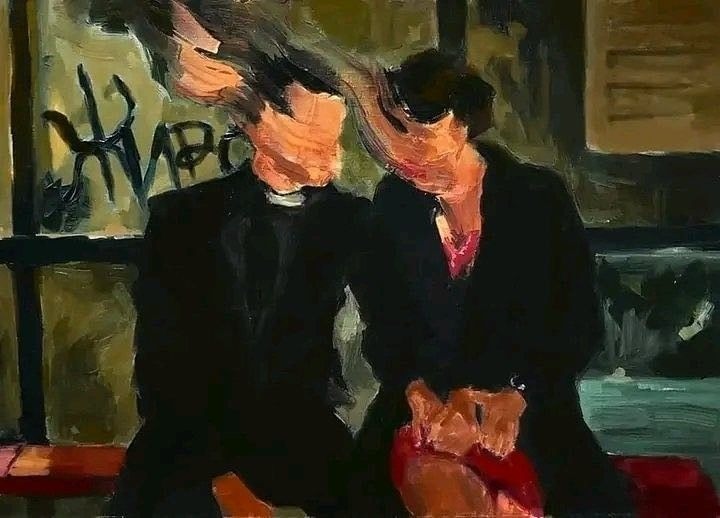
Spoken under the drizzling lights of a quiet bus shelter, Fleabag and the Hot Priest’s confession is one of soul searing heartbreak. Throughout the season we see their compatibility, and yet the show concludes with them all the more in love and all the more impossible. Upon rewatching this scene amidst the heart-shaped paraphernalia of Valentine’s Day, I found myself reflecting once more on the Hot Priest’s words. 

He is so certain of love’s transience. 

It is something that can fade, a bruise that, with enough time, will recede into the skin and exist as a mere memory. Media often assures us of love’s indomitability, its steadfast existence that – when you have found the allusive ‘one’ – will never fail you and carry you into bliss forevermore. There is a hope in this kind of love, it is a parachute catching you as you plummet into the heady wonder of ‘falling’. 

But in Fleabag we are presented with an alternate narrative.

With Fleabag and the Hot Priest, we realise that we can stumble upon a soulmate and still let that person go. Love, quite simply, is not an immediate guarantee for a long-lasting relationship. 

Throughout the second season, the Hot Priest alludes to a past of sexual and alcoholic indulgence and estrangement from his parents and paedophilic brother. The church gives him structure, and although we still see lingering struggles in his hidden G&Ts and swearing, it is clear he is overall much happier. He tells Fleabag that “celibacy is a lot less complicated than romantic relationships”. It gives him someone to hold him accountable and, in doing so, takes away the torment of decision making. He has found the person who tells him how to live his life, just as Fleabag whispers in the confessional, and to pursue a life with her would be to throw away his peace. 

He may love Fleabag, but that love isn’t worth a life in chaos. 

I think this is, in part, why Fleabag stayed with so many of us, to the point that I am writing about it ten years after its TV premier. Waller-Bridge respects the values and realities of her characters’ lives, understanding that to have the Hot Priest and Fleabag end up together would be a cliché and a disservice both to the characters and the audience. Not every love story ends with forever, in fact few do, and the media we consume should also recognise this. We engage with these narratives not just for hope, but for a reflection of ourselves. 

This reminded me of Bell Hooks’ All About Love, a thought- provoking book discussing love, its role in our lives, and its treatment in the media. When recounting a meeting with her “true love,” she describes a dinner with a man and explains that it felt as though they had always known each other, despite the fact that he was already in a committed relationship. Regardless of this ‘soul connection’, their story ended with this dinner, just as Fleabag and the Hot Priest’s ended at the bus shelter. For Hooks, however, this isn’t tragic, but rather a testament to the commitment, timing, and devotion it takes for a relationship to last. We shouldn’t see fleeting love as a reflection of its futility, but as a reminder of the dedication long-term love requires. 

Hooks also discusses at length the impact of childhood in shaping our understanding of love, and how the love exhibited by our family serves as the blueprint for our adulthood. Waller-Bridge illustrates this dynamic perfectly through Fleabag and her emotionally distant father. 

Drunk by the doorsteps of her family home, the door halfway closed on her, Fleabag tells her father, “I have a horrible feeling that I’m a greedy, perverted, selfish, apathetic, cynical, depraved, morally bankrupt woman who can’t even call herself a feminist.” The silence stretches between them, her brows creased as she pleads for recognition, but all he can bring himself to say is “Well. Um… You get all that from your mother.” 

By attributing their daughter’s struggles to his deceased wife, Fleabag’s father deflects responsibility, treating his daughter not as an individual who needs him, but as someone who has inherited issues from her mother and can thus be placed in the realm of graves and dismissal. This rejection is reinforced by him calling a cab for Fleabag and banning her from going upstairs… his emotional distance mirroring a physical one. Ironically, in the following scene, Fleabag fulfils her father’s claim by stealing a statue made in the likeness of her mother’s body. By taking the statue, Fleabag quite literally carries a piece of her mother with her, removing it from a house in which both of them have become unwelcome under her godmother’s influence. Fleabag is excluded from her family, just as her mother is, if neither of them can belong, they will at least leave together. 

Yet, even her thievery is met with apathy from her father, who simply says “Well you’ve said no, so now I can go” after Fleabag denies her actions. He shows zero interest in truly understanding his daughter, content to stagnate their relationship in non-conversations, where they talk around topics in stop-starting sentences, with little to no connection regarding what the other is actually saying. 

Waller-Bridge contrasts this with Fleabag’s confession to the Hot Priest, echoing her fears in Season One, when she says, “I just want someone to tell me how to live my life, Father, because so far I think I’ve been getting it wrong.” Even beyond the appeal to a “Father” in both conversations, Waller-Bridge parallels the two relationships by having Fleabag express her fear that she is a terrible person making all the wrong choices. But, unlike her father, the Hot Priest meets this vulnerability with affection and kisses her, pulling Fleabag close rather than rejecting her. 

Similarly, earlier in the episode, the Hot Priest tells Fleabag “I’m just trying to get to know you” in the same cafe her father so desperately tried to escape conversation. These echoes in setting and conversation, though driven with opposing intentions, reveal to the audience how the Hot Priest begins to rewrite Fleabag’s understanding of love. He seeks intimacy where her family distances; he accepts where they reject; and, most importantly, he loves where they criticise. For the Hot Priest, she doesn’t have to “not be herself.” Instead, she can make poorly timed comments at Quaker meetings: she can be vulnerable, she can be broken, and scared, and witty, and honest, and caring. She can love. And he will love her in return. 

Through the Hot Priest, she not only learns that she is capable of loving another person, but that they can also love her back. She is not the unlovable child whose flaws and jokes make her unbearable to her family, but instead someone worthy of being seen and adored. 

This is not an easy process for her to learn, however. Fleabag tells the Hot Priest that she “doesn’t want” him to get to know her, and she freaks out when he acknowledges the fourth wall. As much as she craves love and validation, she is nonetheless scared of being truly seen. 

Hooks too experiences this fear, writing that she was “afraid to be intimate.” Not physically, but spiritually. To be seen without all the masks, into that secret, private sphere we keep for ourselves. But to love someone is to allow them to see these hidden parts of ourselves, and for them, in turn, to acknowledge and accept us. For Fleabag, this private sphere is the audience, we are her witnesses, her companions of the inner self. The Hot Priest’s recognition of her disassociation, therefore, becomes symbolic of him seeing her true nature. Her acceptance of such is allowing him to look at the camera and see her soul, her audience. 

Maybe Fleabag’s love for the Hot Priest will pass, maybe it won’t. This is, in fact, of minimal importance. Instead, it is Fleabag’s learning that she can find connection and embrace vulnerability with another person, without being met with rejection. But amidst this love, she cannot fully possess the other person. They too have their own internal world, and sometimes this means that you cannot stay together. Even so, to have known and been known by that person for a short while, is still a beautiful thing. To bear witness to their love, however temporary, remains a blessing. 

We may not have one, true cinematic love story. But in the loves that we have and the lives that we touch…we can heal ourselves again. 

Featured Image: @ratsandlilies.art on Instagram