Categories
Perspective

Let’s talk about the Parthenon Marbles… Again

By Edward Bayliss

A few days ago, Sandra Bond gave us the most brilliantly awful poem in her local regional newspaper as she made her frustrations with the Elgin, or Parthenon Marbles public. The first stanza goes:

The Elgin Marbles are causing quite

a fuss

Greece now wants the return of 

them by us

The statues have been here for a 

really long time 

Do they have to be returned 

after we have looked after them for

such a long time?   

I particularly like the way that Bond rhymes ‘long time’ with…‘long time’ – it really drags out our sense of dread and vexation, both with the author and her subject. The poet, in her inadvertent wisdom and William McGonagallesque doggerel, captures entirely the sense of futility and absurdity in the marbles debate. I feel it is time, thanks to Rishi Sunak’s prompt, to defrost the already 212 year old dispute.

Let’s begin by dispelling some myths peddled by belligerents from both sides:

The argument that Greece is ill-equipped to look after or maintain the statues and friezes is completely untrue. Let’s not kid ourselves, the Parthenon is no longer being used by the Turks as a gunpowder magazine; in 2009 the ‘Acropolis Museum’ opened to the public, ranking 6th in the TripAdvisor’s Traveller’s Choice Awards for best museums in the world. I think they can manage. 

The marbles were not ‘stolen’. There was an official edict, or firman, drawn up (which exists in translation) and was ratified by a distrustful House of Commons Select Committee in 1816, part of which states that ‘should they wish to take away any pieces of stone with old inscriptions, and figures, that no opposition be made.’ This firman involved the Sultan, the civil governor of Athens, and the military commander of the Acropolis citadel. The Greek government had no part in this transaction because it didn’t exist – it was the occupying Ottoman Empire that oversaw it. Many take issue with this fact. But, the Ottomans had control of Greece from as early as the 14th C., so it can hardly be compared to Nazi sales of Polish or Soviet works of art. 

The ‘slippery slopeists’ are wrong. No, the world will not come rapping its fists on the glass doors of the British museum to reclaim all of their artifacts should we decide to return the marbles. The floodgates will not open. The case of the Elgin Marbles, as the Greek Government itself has gone to great pains to make clear, exists independently. Your Rosetta Stones and your Greek vases are fine.

What is most important is the ethical question of where art belongs. It seems to me that an international conception of culture is the most morally responsible route – one where we aren’t seized by nationalistic urges and feelings of exceptionalism. The marbles aren’t in the British museum for selfish reasons of patriotism and self-aggrandisement. They are there so we can see them alongside other great works – there is beauty and knowledge in cultural and contextual comparison. I, for one, would be proud to see Queen Victoria’s stockings or an 1860 Shropshire postman’s coat in an Eritrean museum.    

So, Sandra, worry not. We share in your frustration – let’s stop arguing and start focusing on the art that has been so long forgotten in the fog of political rhetoric. 

Categories
Perspective

A Sit Down with Jonathan Ruffer

By Cosmo Adair & Maggie Baring.

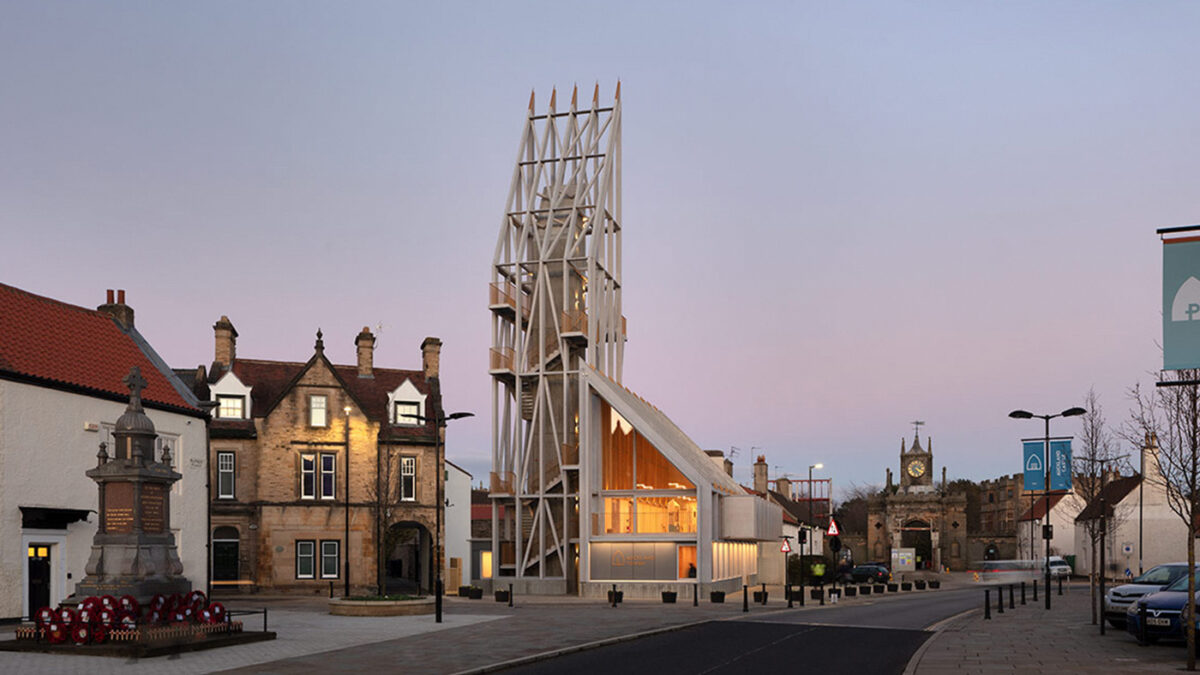
Bishop Auckland, November 29th — grey with a smattering of drizzle. Standing in the town square, it’s obvious that this isn’t a typical, left-regional town. In the windows of an old, listed, one-time bank, characters from paintings jest with one another, speech bubbles spilling from their mouths onto a dark, tenebrous background. That’s The Spanish Gallery, home to pictures by Murillo, Velazquez and El Greco. Then, ahead, there’s a strange, church-like building — modern, in the openness of its glass and steel, but hinting at times past in its striving Gothic upwardness. That’s Auckland Tower

What’s this all doing here? It’s here because Bishop Auckland is home to The Auckland Project: an ambitious regeneration project, instigated by philanthropist Jonathan Ruffer. Passing the tower, we can see him standing on the doorstep of Auckland Castle’s Gatehouse, which he has made his home, waiting for us. He wears an old v-neck jersey over a checked shirt. He greets us with an instinctive, avuncular kindness which is almost disarming. Ruffer behaves as I had once expected University professors might — prone to mental flight, all the while retaining a formidable intellectual sharpness. He seems to belong to an England of yore, one of ‘the old maids biking to Holy Communion through the mists of the autumn morning’ which Orwell so vividly described. But he is simultaneously a very modern man: his wealth comes from finance, with his firm Ruffer Investment Company listed on the FTSE 250, and The Auckland Project is not quite as quixotic as the tendency to focus on its promotion of Spanish Art would suggest. He is not some Aristocrat of yore spilling cash in the belief that what the North really needs is an exposure to Spanish Art: no, he is motivated by his belief that County Durham needs considerable investment and education in order to kickstart the local economy, create employment opportunities, and in doing so remind the region of its local identity and hopefully encourage its citizens to take more pride in that. 

Ruffer was born in the Northeast of England in 1951. His father was a sea-going Royal Marine during World War II, and he met Ruffer’s mother whilst his ship was being repaired in Newcastle. They settled down just south of Middlesbrough. Ruffer would later attend Cambridge University, where he studied English Literature, despite the fact that ‘[he] didn’t ever discover where the English department was’: something I questioned, at first, given his impressive erudition. He ended up in the City where, he claims, his degree came in handy, given that ‘English is an everyman subject, and losing money in investments is an everyman subject as well.’ To call him ‘successful’ would be an understatement; he went on to become one of the country’s wealthiest men. But inspired by a ‘coup de foudre’ — related, no doubt, to his Christian faith — he decided that ‘What [he] wanted to do was to change the emphasis of [his] life, and the form that took was to be involved in regeneration somewhere in the Northeast.’ Thus followed The Auckland Project

Bishop Auckland was not always the inevitable location, but County Durham certainly was. Because, he remarks, whereas Northumberland and Yorkshire still possess a distinct local character, ‘County Durham has lost the sense of who it is.’ And so when the Church of England decided to sell off Auckland Castle and its famous Zurbaran pictures, he went one better: he bought the castle as well. Here was a town in County Durham, rich in history and in possession of some important but little-known Spanish Golden Age pictures — and Ruffer had for a long while been a devoted admirer of both Baroque Art and Spain. It has also ‘turned out to be, strategically, a really astute place.’ It might only have a population of 25,000, ‘but the catchment area is 125,000 and if you look at its sphere of influence, it’s about 350,000 which is bigger than Cardiff. So, in other words, if Bishop Auckland improves, then actually more than half of County Durham improves.’ 

His Christianity and his interest in Art are both important in the direction which The Auckland Project has taken. Much has been said before of the relationship between Religion and Art, but we were both quite spellbound by the acuity of how he described his understanding of it. 

He refers to himself as “Goddy” — a rather charming, if English, manner of lightly and inoffensively describing such a life-defining belief. “I do think … that for  all of us as human beings, there are things that define the nature of who we are. And one of them is power, one of them is sex, one of them is money, and one of them is faith. Now … if you look at Victorian times, what you’ll find is that nobody ever talked about sex, but if they put up a new building, the foundation stones would start with the words, ‘to the Glory of God.’ Now, today, it’s the exact inverse of that … and everybody is very happy to talk about sex. But, in fact, these are fundamental things that drive us, and it is simply that at the moment, that element is in the shadows, but it doesn’t go away.’ 

If Faith, then, is so important, what is its object? ‘It’s to encounter something bigger than yourself. And clearly, the Christian God is like looking at a burning sun without any shade. It’s agonisingly painful to do, because it’s just such a powerful and intense and concentrated thing.’ How, then, do we approach the unapproachable? For Ruffer, we approach it through art, which for him is ‘not the light of the sun, but the light of the moon. The moon isn’t overpowering; moonlight is caressing. It woos you and settles you. But what we know from physics is that moonlight is actually the same as sunlight; they both come from the same place. So I don’t feel, at all, that when I’m talking about art or when I’m talking about the Christian God, that I’m really talking about different things at all.” 

There’s one acquisition which he’s especially focussed on: that’s St. Paul’s Burning of the Hebrew Books, a tapestry by Pieter Coecke van Aelst. It ought to be in the UK because of how well it conforms to the Waverley Criteria, the process by which an object might be deemed a ‘national treasure.’ These are: Is it closely connected with our history and national life? Is it of outstanding aesthetic importance? Is it of outstanding significance for the study of some particular branch of art, learning or history? To Ruffer, the tapestry ticks all three boxes. In fact, he believes that only the coronation spoon is of equivalent importance. 

It was made for Henry VIII during the Reformation. It depicts St. Paul to symbolically represent a break from Rome, where St. Peter and the Petrine liturgy were dominant. But, historically, the liturgy in England had been Pauline, and so Henry’s ‘effectively saying the Pope is the head of the One Church, but I’m the head of the other church. And so the rest of the depiction which is the burning of the heathen books is a quotation of what St. Paul did in Ephesus in Acts. And what Henry was doing was saying, ‘I’ve done that, I’ve burned all the Tyndale bibles, killed a few of them too.’ Here, again, Ruffer excels: he explains church history and a complicated artistic work in a way that’s both rigorous and accessible. 

The problem is, however, that this tapestry is in Spain. It had been missing since 1770 when it disappeared from Hampton Court Palace until it turned up with a dealer who ‘worked out that this was the thing which had gone missing in 1770, whereupon the Spanish Minister of Culture slapped on an export ban. And so that’s what [he’s] fighting.’ So far, his campaign’s going well. ‘We’ve got both archbishops, the top four bishops: Canterbury, York, London and Durham. And we’ve got Prime Ministers behind us, and we’ve got Wayzgoose behind us,’ he jokes. 

Naively, we ask whether he has any Spanish connections who could help him out. ‘Yes, yes, I mean I’m a trustee of the Prado. And I must say one of the things I’m quite allergic to is titles, you know, people who go around … saying ‘I’ve got an OBE.’ But … one of the things which did randomly come my way is I’m a Spanish Knight, I’m an Encomienda of the Order of Isabel the Catholic, Isabella la Cattolic, who is Catherine of Aragon’s mum, so I play that one for all it’s worth. But I’m about as Spanish as an English mousetrap.’ Given his connections, and given what he has managed to acquire so far, I have a feeling that the Encomienda Ruffer will acquire the tapestry eventually. And much like the Greeks awaiting the return of the Elgin Marbles, he has set up The Faith Museum, which awaits the return of the tapestry. ‘Its temperature and humidity are controlled, which costs some millions to do, with nothing in it … we’ve got what those historical old palaces and the V&A haven’t got, [which is] somewhere suitable to put it. 

Our discussion drew to an end. Initially, we had been booked in for a half-an-hour chat but he kept us for an hour and fifteen minutes in a thrilling, wide-ranging discussion. Coming away, one thing struck both of us about him: it was the sheer thrill and interest he took in other people. Throughout our session, he asked about us, about the magazine, about university, and about where we both grew up. This was not some elaborate diversion tactic, but a reflection of his natural curiosity. He treated us with a seriousness that made it feel — at least for us — as if he did not differentiate between The Times, The Telegraph, and Wayzgoose Magazine. He is so passionate about his project that he would take hours to proselytise anyone — from the Prime Minister to a Student Journalist — about the importance of what The Auckland Project is getting up to. 

But this welcoming curiosity of his extends beyond mere journos. Later, chatting to one of the gallery attendants about Jonathan, we said how impressed we’d been by this aspect of him. To which, she simply replied: ‘That’s Jonathan for you.’ Which, I think, it really is. 

Categories
Perspective

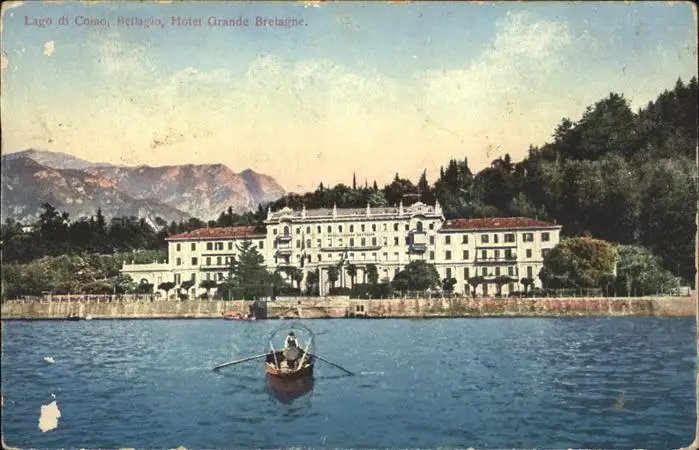
L’Hotel Grande Bretagne; Regione Lombardia, Bellagio Below the Sorgenti Alpine 

By Emilia Brookfield-Pertusini 

The world of Wes Anderson’s The Grand Budapest Hotel contains the nostalgia of a time we never saw. A time when tourism was more than Instagram destinations and drinking cheaper booze. As the symmetrically perfect landscape of The Grand Hotel flickers between the hotel’s height and its slow descent to obsolete grandeur, we must ask what happened. Where did all these buildings go? The truth is, they didn’t go anywhere, we simply moved on without them, trapping them in a Haversham-like web of past and decay, with no room for the future to whisper some resurrecting hopes through. L’Hotel Grande Bretagne haunts the promenade of Bellagio, as oblivious Americans snap and sip in the shade of its glory. 

In my almost 20 years of life, my Italian homeland has changed. Gone are the days of people not knowing where Lake Como was; I have met people now who not only know where the place that has defined my summers is, they have swum on the shores of my village, walked the same cobbled staircases as me, jumped off the same bridge as thousands of Italians, Romans, and Lombardian people did before. People want that Italian summer. It’s a rather enviable summer and one I have taken for granted for a long time. There are certain times of the day when sitting on the porch back in Nesso the whole lake goes quiet. The lake glitters as the sun arches over the mountains just right, stardust dancing from the watery depths below, the boats retire, and even from my perch up in the heavens of the village, you can hear the gentle sighs of the lake, yawning as it nuzzles against that familiar shore. This should be enough. This was enough. But it isn’t anymore. 

Lord Byron spews hundreds of tourists off its deck. Manzoni lingers, puffing and panting, zigzagging across the lake not far behind, carrying the same load of hungry eyes and cameras. Out onto the promenade of Bellagio, they flounder, wondering where next to sit and sip. The Grande Bretagne looks on, paralyzed. Birthed as a response to Lord Byron, the Grande Bretagne served to house these future poets of the English upper class. This pilgrimage to the ‘pearl of the lake’ was one to see a place of wildness, of mystery as the mist rises on a silent morning, of inspiration, all under the shelter of the endless mountains, water and sky. Before meeting his end, Percy and Mary Shelley took shelter by the lake, hiding from the endless troubles flung at them during their marriage. A refuge. A stop away from the rest of the world. To find inspiration and keep beating on against the current. A sanctuary like no other. The Shelleys, Byrons, Flauberts of a new age, a belle-epoch, were to be sheltered by The Gran Bretagne. She provided all they needed. The grand mistress of the lake, providing international schooling and scandal in her grounds. Home comforts next to Italian ruins. Panoramic views of infinite sublimity. A search for Italy. Elegentiza from all over Europe flocked to her arms, longing for that Romantic experience. To bathe oneself entirely in all the lake had to offer to them. And yet, to remain hungry. 

From there she rose. The Gran Bretagne. Named in honour of those poets who came before her, she reached out to those around her after being wrongfully christened L’Hotel Grande Italia. Tourists crept back in after il Duce was caught along her shoreline, and with them crept old fashions, roast beef, and a surprise visit from an unelected Churchill. Whilst cigars, watercolours, and oysters flowed, locals learned how to become professional mixologists, oyster shuckers, and linen pressers. It was here my Nonno learned to cook; having never been afforded such continental delicacies at home, this job gave him more than a culinary education. The peach wedding cake on the lake was feasted on by all. 

However, the Italy the tourists were searching for wasn’t one that was pleasant to those who had always known her. Coffee cups clinked on the terraces outside, whilst inside people dreamed dreams unlike those of the Romantics; escape, revolution, to be better. She was like no other. She saw it all, and her arms heavy, mustered a response. People came to her for a better life, even if only for a night.

Sunrise. An orange lake. An old man pushes out a batell further into the abyss. The battering of a carpet, the hum of a lawn mower. Through the green, the snakes draw open their eyes to the uninterrupted, mice playing in her skeleton. Something happened. A shift. And now she lies alone, unable to keep up. No more Romantic poets. No more escape. 

Since Succession, James Bond, Clooney, and Star Wars arrived, she has been forgotten. They are the future, the ideal portrait of wealth, class, and taste. She can’t fit in. Her ballrooms, marble stairs, palm trees, and muraled ceilings mean nothing to the insatiable crowd of today. The iconic cobbled saliti of Bellagio is nothing more than a backdrop. Scenes of happiness, wealth, and a supposed Italian summer play out on her stage, the real Bellagio cowering off stage, hiding behind the alleyways, pushed far from the actions. Boats recklessly drive towards the shore, smiling for the camera as locals close their shutters. The towns swell under the mass of footsteps, yet no footfall is to be seen by the locals, as tourists flock to industry-approved havens, found from one of the endless flock constantly bleating about a perfect Lake Como itinerary, away from the alberghi, alimentari, and agriturismi. Mountains peep out from gapes between bars where Aperol constantly flows and boutiques where the silk industry has departed in favour of Armani and Gucci, the mountains that beckoned people all those centuries ago stand hidden from the spotlight, a minor role in this melodrama. Scripts written in English, costumes loaned from theatres from far afield, is this really Italian, or just an American fetish? 

Locked away in plain sight. Waiting ever patiently for this Renaissance of the Lake to reach her. Her, covered in cobwebs. Her, who’s marble staircase lies destroyed, stolen in some other house. Her, surrounded by a grail of thorns. Holding on to whatever of her she has left; using the cobwebs to feign a wedding dress, trying to keep the new rodent house guests happy. Like the rest of the lake’s features, she can’t come out, as she doesn’t align with them. Unlike The Grand Budapest Hotel, the love stories of The Grande Bretagne remain hidden, decaying with the timbers. There is no interest, no eventual demolition, only rot. 

This is the history of a building that no one wants anymore. Yet, we still need her. She carries a lot with her, representing what we could have been as travellers. People who slip into the scenery, do not make the scenery a prop. Lake Como is a place that is stubborn to move forward, and maybe you will think me stubborn and jealous too, yet this stubbornness is born of protection. There is only so much it can endure, and it is being exploited by too many, searching for the wrong Italy. When travel advice is so easy to encounter and when travel has become so quick, easy, and convenient, have we forgotten why we do it? We all want beauty, we all want the sublime, we want what those past travellers of The Grand Tour wanted, but we want it fast, on demand. By being too quick, and being too blind-sighted about where, and why, we travel, we miss out on where we are all together. We miss out on the immersion. We come to these places to pretend the beauty is ours, part of our existence, but how can we if we stay for so little time? The Lake is known by many, yet a stranger to most.

The Grand Bretagne is the cost of our travel. The lives, the history, and the buildings we affect by changing the way we travel. If we want beauty, we must be patient. We must push past the thorns, separate from the crowd, and bask in what once was, and what can still be. The beauty hasn’t gone away, we have just ignored it. 

Categories
Perspective

A Sit Down With ADHShe 

By Maggie Baring

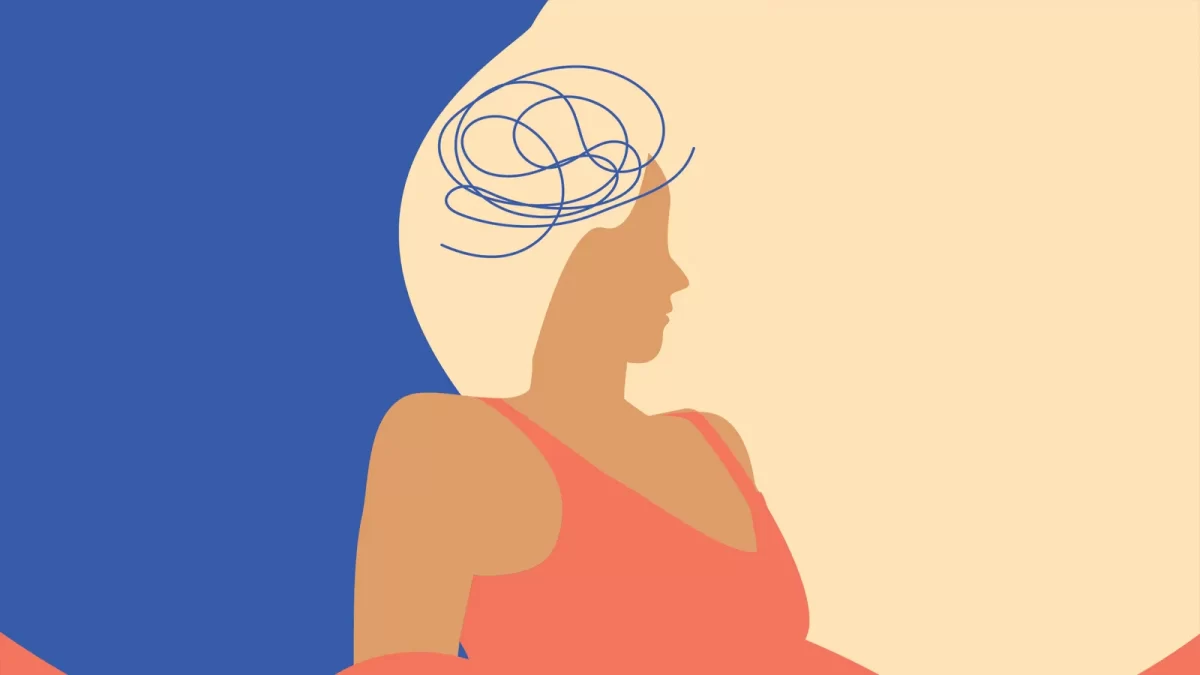
Around 2% of children in the UK experience the neurodevelopmental condition of attention deficit hyperactivity disorder, more commonly known as ADHD. The male to female ratio of diagnosis is 3:1, despite studies showing that ADHD is just as common in females as males. Women tend to be diagnosed at a later stage of adolescence, unlike men who are often diagnosed in childhood. I asked Ellen, a member of the exec of ADHShe (a Durham-based charity and society working with the neurodivergent community), why this was the case. 

Ellen was diagnosed with ADHD aged fifteen which, she says, is a pretty common diagnosis age for girls. She tells me that female symptoms are more internal: for example, inattention, disorganisation and emotional regulation difficulties. These are symptoms which girls become adept at masking, whilst hyperactivity and impulsivity are more common in men. ADHShe, which was set up last year and has been taken up by Ellen and her team, was created in response to the university’s frustrating lack of support for the neurodivergent student community. Their focus is to help support the female ADHD community in particular. Ellen herself tells of the ‘alienating’ experience of being a woman with ADHD, especially when studying at university; often feeling overwhelmed by work, struggling to keep a consistent routine, or worrying about seeming lazy. 

The society, since its creation, has formed a community and introduced a programme to help its members which Ellen is incredibly proud of, and rightly so. This includes study sessions in the Library every Monday using the technique of “body doubling” (a partnered learning process that aids productivity and concentration in a positive reinforcement cycle). They are also holding an eclectic variety of socials, and are planning the introduction of an ADHD audio-therapy software programme created by the company, Stimuli. The society continues to seek out collaborations with feminist societies to increase its outreach, with a partnership scheduled with Women in Business in the upcoming term. 

In other cases, this love for the creative fields can be taken further than simple relaxation purposes. Asha is a member of ADHShe who has recently been made Music Director of the 2024 DUCFS fashion show. Her love for music began from a very young age, growing up around her father’s taste for 80s pop, including ‘ABBA’ and ‘Wheatus’. She began DJing around 16; listening to ‘GirlsDon’tSync’ (one of the members, G33, she met at a workshop a year later) and ‘Jungle’ and being encouraged by her friends who saw that she had a gift in her musical taste. Asha was diagnosed with ADHD only five months ago, despite having a father who is a psychiatrist, such was her ability to mask her symptoms. She has found the recent diagnosis extremely helpful and enlightening: “I give myself more compassion if I’m struggling to keep up with deadlines, complete simple chores such as laundry (for ADHDers this is the worst one), attend lectures or even maintain friendships”.

Links have been made between those with ADHD and a love for music, as the structure of music has been known to help focus. Music such as house and garage, without lyrics, (music which Asha herself enjoys), is especially effective in this way. Asha laughs, adding that she can never be found without her headphones: “I find my life boring and dull if I don’t have my headphones with me”. Her love and talent for music has led her to meet incredibly creative people and earn positions within university organisations (such as DUCFS and nightclub DJing events) which are highly impressive and sought after. Asha’s creative flair proves yet again that neurodivergence ought to be celebrated within society; producing deeply creative people who see the world in a different light. 

ADHShe’s door is open to anyone who might be struggling with their ADHD at university, no matter their gender. They are a safe space and a community on campus where one can meet like minded individuals and cultivate new friendships.

For more information, follow their Instagram account: adhshe.durham.

Categories
Perspective

Carnivore Diets and Catholicism: Reactionary Chic in the Digital Age

By Maisie Jennings

First, a confession: I’m probably chronically online. I’d like to think that this is a result of some novice cultural observation instead of a routine frying of my dopamine receptors, but I also believe I can extract something discursively valuable from my endless scrolling. The internet, particularly social media, has become the largest bureau for cultural exchange and political discourse. For third-wave feminism, it is its digital beating heart – providing the framework for social movements of global magnitude and significance. In 2017, MeToo, spearheading the largest campaign against sexual violence and harassment, propelled awareness of rape culture into collective consciousness – on and offline. It seemed to solidify  – despite its many hazards – that the mainstream internet is largely progressive, and can function as an empowering and expressive space for women and girls. 

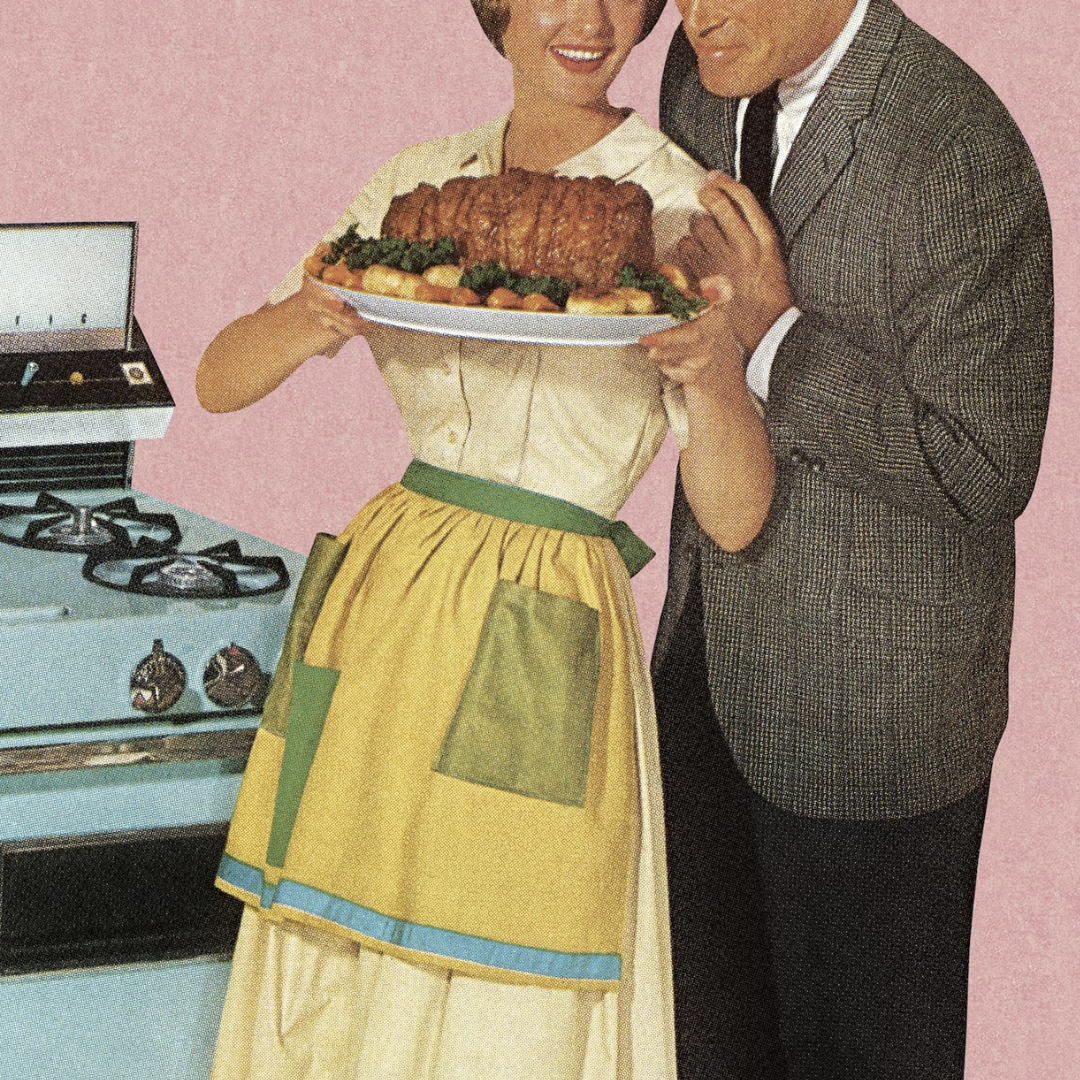
There are, however, several new trends that resist the forward-thinking, liberal ideology of contemporary internet culture. A few weeks ago, I liked a video about historical fashion – it appeared, to me, totally benign. Moments later, my feed became a tirade of videos about using beef tallow as sunscreen, the dangers of seed oils, the benefits of unpasteurised milk, and the overarching importance of submitting to one’s husband. What I’d stumbled across was the content created by members of the ‘tradwife’ online subculture – a large, and growing, community of women who believe in traditional conceptions of femininity and gender roles within marriage. Of course, this may sound like a bizarre fringe movement – situated at the internet’s peripheries – but videos under #tradwife have amassed 266.3 million views on TikTok. At its most sinister, traditional homesteading and lifestyle content quite clearly advocates for the political alt-right. However, it is the more ostensibly innocuous aesthetics surrounding the movement that disperse broader ideological implications regarding feminism online. I’m not suggesting that every video of a woman endorsing the benefits of raw liver is some sort of insidious far right dog whistle, but the recent surge in women adopting ‘carnivore diets’ is part of a growing scepticism towards the nature of modern life – manifesting in new age dietary fads and holistic lifestyle changes.

The shift to an idealised hearkening back to an earlier time is, surprisingly, not inherently right wing, but is also a viewpoint shared by some of those associated with the political left. Vegan wellness influencers are eschewing chickpeas for chicken – attempting to seek a lifestyle uncorrupted by the inorganic mechanisms of modern day capitalism. We might see this represented on social media as ‘cottagecore’ – a kitschy imagining of rural life through photos of women in floaty dresses wandering through fields and dappled sunlight. A digitised nostalgia for pre-industrial society is one that appeals to women regardless of their individual political stances, rather, it suggests a broader disenchantment with conspicuously modern ways of life. For third-wave feminism, it reveals a dissonance between corporate ‘girlboss’ culture and its potentially unsustainable, dissatisfying reality. This is due, in part, to a reevaluation of how we should live and work after the pandemic. COVID-19 ignited a reactionary desire for escapism; a pastoral fantasy of slow-paced, bucolic simplicity. In the fragile post-pandemic landscape we currently inhabit, locating ‘alternative’ wellness and dietary practices in the mainstream media is, perhaps, an exacerbation of the anti-vaxx movement that garnered support across the political spectrum. Connecting tradwives, carnivore influencers, and cottagecore enthusiasts is an aesthetic objection to modern life; it’s this aesthetic quality, overriding any background ideology, that makes reactionary womanhood so pervasive on social media. 

There is also a significant religious element to a lot of the content that advocates for a return to ‘natural’ or ‘ancestral’ rhythms of life through heavily aestheticised, mock subsistence farming – most videos are overwrought with Christian hashtags and captions that vehemently promote Evangelical purity culture. Female Christian influencers are certainly popular, amassing hundreds of thousands of followers, but they surely aren’t at the cutting edge of whatever’s trending online. However, Catholicism has become an unlikely, transgressively chic fashion statement. In Instagram bios, where there once was an astrological symbol, the internet’s cool girls are now adorning their profiles with crucifixes. Brandy Melville, the controversial ‘size zero’ clothing brand, has released a series of t-shirts depicting Jesus Christ, and Praying, a smaller label that cultivates grungy pop culture references, sells ecclesiastical motifs on bikinis and crop tops. Fashion, particularly fashion on the internet, has always been subversive – perhaps the edgy photos of scapulars and rosary beads are merely pastiching the cheekily iconoclastic Catholic schoolgirl aesthetics seen in the 1990s. I think this is largely the case; Catholicism is a natural counter-cultural symbol, it has been since the emergence of goth subcultures in the ‘80s. 

Arguably, there is somewhat of an ideological background to the rise of this subversive aesthetic. Dasha Nekrasova, a co-host of the Red Scare podcast, is a Catholic revert and a dryly critical voice against liberal feminism and ‘woke’ political culture. She is credited with leading a coolly cynical, post-ironic discursive vanguard – flirting between shrewd criticism of neoliberalism, arch academic discussion of Camille Paglia, and a close proximity to the new right. Nekrasova’s world-weary vocal fry attracted significant criticism and admiration after she denounced MeToo as a superficial liberal performance; ‘this seems’, she said, ‘like bullshit’. Since then, her personal coquettish style of babydoll dresses and obliquely ironic American flags (reminiscent of the hyper-feminine tradwife uniform) have made her a Pinterest board staple for the vaguely alternative. It’s easy to dismiss this kind of frisky, reactionary rhetoric as simple provocation, but Red Scare’s popularity and online cultural impact do reflect the new perspectives towards feminism in the digital age. There are debates, on the left and right, about hookup culture, the empowerment and objectification in online sex work, and the effectiveness of social media based feminist activism.

I don’t think the rise of reactionary behaviours on the internet signify some kind of cataclysmic tectonic shift, across an online political landscape, towards an anti-feminist new right. Women on social media aren’t slowly rejecting feminism. Rather, the increase of tradwife content, the popularity of carnivore diets, and the aesthetic appropriation of an ancient religion reflect natural, anxious responses to the confusion of 21st century life. The trends themselves, like most things on the internet, may have a fleetingly short lifespan – however, the interrogation of modern cultural and political conditions will surely remain. 

Categories
Perspective

An Interview with ‘You Look Hot’ Founder, Sophia Ponsonby

By Emelie Robinson.

As we approach the colder months, you’ll be hard pushed not to spot somebody wrapped up in a classic You Look Hot scarf as you pass through market square. I sat down with the brand’s founder, Sophia Ponsonby, to discuss her experience and what it takes to balance being a small business owner, employer and Durham University student.

  1. Tell me about yourself and what motivated you to start your business?

I am a third year studying Spanish and Italian at Durham, currently doing my year abroad in Siena. I’ve always loved fashion and making clothes and took the leap to launch my knitwear brand, You Look Hot, in December 2022. I thought university would be a good time to start as there was less pressure for it to work out and would allow me to get stuck into lots of different things like marketing, social media and product development because I had no idea what I wanted to do for work!

  1. What does the concept of ‘looking hot’ mean to you?

I knew I wanted to create something that people would like wearing and feel good in, so the idea of ‘looking hot’ for me means clothing that makes people feel confident. Like they say – when you feel your best, you look your best! I also like the play on words as knitwear is so  warm. Especially as Durham gets so cold, I found it difficult to find clothes that were both warm and looked good!

  1. What are the core values of your brand?

One of my biggest aims is sustainability. As I started off with all the pieces being made-to-order, I’ve always avoided any mass production. However, since moving to Siena, I have taken on a team of knitters based in the UK that hand make everything in small batches for our drops. It’s also important to me that our clothes are for everyone rather than a small demographic, unlike some brands which only have a one-size fits all approach that just doesn’t work. My new team of knitters are more skilled than I am to make a range of sizes, so there’s lots more scope for the future to stay inclusive and keep creating pieces that look flattering on every body type.

  1. How important do you think it is to have experience in the industry you want to get into and did you have any yourself?

Experience is never a bad thing and can definitely help you figure out what you like, but not always necessary. I had no experience of owning a brand myself – there was a lot of trial and error. I had made clothes before doing textiles at school, but hadn’t actually done much knitting so that was a spur of the moment decision! I’m really lucky to have watched my mum start her own clothing brand six years ago, so she has been a fountain of knowledge to answer all my questions.

  1. What is the hardest part about owning a small business?

I think my biggest challenge has been staying motivated when I wasn’t selling as much as I’d like. Particularly doing something as seasonal as knitwear, it can get frustrating. I definitely worked harder than ever during the summer to keep the momentum going. It was also difficult when I was making all the products myself since I’m a pretty amateur knitter, so there were times when I would mess up a scarf right at the end and have to start again. The exam period last year made it difficult to balance everything, but since I enjoy working on YLH so much, I usually find it’s nice to have something to break up my day.

  1. What would be your biggest piece of advice to anyone thinking about starting their own business?

Just go for it! I spent so much time thinking about it instead of actually doing it. I would also suggest setting up a website early. Initially, all my sales were done through Instagram, which was great to build a following but wasn’t the most efficient for selling. Since launching my website in September, it’s much easier for people to follow a link on adverts or social media directly to the product. I created mine using Shopify which specialises in e-commerce and although it did take some learning, it wasn’t too difficult. Another thing I’ve learnt is how valuable it can be to reach out for advice from other brand owners, it is something I wish I had done sooner. Also be prepared to make lots of embarrassing TikToks!

  1. How do you think being a student with direct access to your target audience has impacted your brand?

It has been super helpful, especially in a small city like Durham where it’s easy to spread the message. It also means I can easily send my products to friends at other universities for them to wear and help spread the brand elsewhere. Although, I do think Durham in particular has an advantage because of all the events going on. With all the societies, fashion shows, charity fairs, I’ve been lucky to get involved in a lot. The DUCFS market takeover was one of my favourite memories of YLH and was our biggest day in sales so far. Cat and Eliza did such a great job running it!

  1. What is your vision for YLH?

Just keeping it growing – I have a whole Pinterest board of ideas! I’ve recently taken on some amazing brand ambassadors and have lots of Christmas fairs coming up, so the last few months have been really exciting. Ideally, I would love to do this as my job and keep bringing out new products – maybe one day something that isn’t even knitwear!

Categories
Perspective

On Re-reading Jane Eyre as a Grown Child

By Emilia Brookfield

St. John’s College. 7:36pm. The window looks tiredly below at St. Mary the Less. The bar is not open yet, there can only be one thing left to do, become the “reader”. 

When my reading list for 1st year English arrived those many weeks ago, the sight of Charlotte Bronte’s Jane Eyre caught my sneering eye off guard. What a field day it would have as I scorned the text for daring to exist next to Austen’s masterpiece of Emma; how could such a juvenile piece, sneered at by even the ever cynical 13-year-old Emilia, have reared its head as I emerged into the complexities of a degree level reading.

 Charlotte remains my least favourite Bronte. The turbulent, destructive (yet witty) Branwell ranks higher than her on my charts. His cartoonish scribbles of a taunting death at one’s elbow reach wit and gothic twistedness far beyond Charlotte’s reach. Bronte’s accompanying fresher’s author, Plato, rally’s that art is full of mimesis, simply layers and layers of shadow, light, and imitation; these imitations are especially apparent in Charlotte’s writing as she tries to emulate the broodiness of her sisters. Charlotte appears to only mimic those feelings that her sisters so perfectly put. When other’s swooned over the plateable gothic of Jane Eyre or the wildly stormy, yet ultimately dull, Villette, I cemented myself further away from Charlotte’s camp, declaring myself to be a firm comrade of Emily and Anne. Although perhaps in being so obstinate, I was more Eyre than met the eye…

Reluctantly I settled down to the opening chapter. The wind whips down the Bailey, swathes of tired students scurry along, the Victorian graves sigh under the weight of the leaf carcasses; I read in both this world, and the hauntingly similar world of Jane, from my window seat. 

Jane’s stubborn procession through life has become an oddly great comfort to me. Trapped in the red room alone, haunted by the whispery ghost of her uncle, I took solitude; I too am that girl afraid, in an unknown room, haunted by the spirits of those who lived before me, hiding behind the curtains of some haunted hide-n-seek.  Floating along in this strange newness, the first few weeks of freshers are full of expectation more than anything. Unknown voices rise around Jane in her new Lowood environment; threads of conversation catch her ear, yet she cannot grasp them. She is surrounded by people her own age, yet is unable to distinguish a single person.  This constant feeling of overcrowded loneliness permeates Freshers. The voice across the dining hall belongs to a physics student, yet turning you lose them, unable to connect that voice with yours in harmonious conversation beyond the parameters of the department they belong to and the papers they sat one June afternoon. 

Thrown into a tumult of new places, names stick when visuals can’t be mustered. Thornfield, Lowood, Millcote, Gateshead, Lowton – all these decidedly English names that could be anywhere. The anticipation of what these mythic places look like as you finally are asked to meet for an audition, a meeting, a seminar, in one of these made-up halls. Jane believes herself to be smart, admirable, respectable upon leaving Lowood; graduation to Thornfield displaces this. She has no idea where she is going, asks to help too often, and is naïve to the stately and suspicious goings-on. Out of depth is the best way to describe her, and as a fresher in those formative weeks. 

The window is fogging up with that Durham dampness. Only the leaves remain. My four walls creak under the weight of many maddening bodies. Am I that brooding girl? Or are we all her. Her adventures, dull and dangerous, make for a great selection of anecdotes, and is that all we can hope for at this moment? The gothic works as it takes the familiar and distorts it; you feel comfort whilst also checking behind you as you walk down the corridor. It’s that faint familiarity we hold on to when finding our ways back. Charlotte may have some merit as a trusty guide or a stoic beacon in the mist. 

Categories
Perspective

Death Traps 

By Henry Worsley

A couple of weeks ago I picked up a copy of Robert Pirsig’s Zen And The Art Of Motorcycle Maintenance. It is a strange and whimsical book, constantly oscillating between long, detailed passages which explain the literal nuts and bolts of motorbikes, and equally long, meta and open-ended spiels that dive into the philosophy behind a bike, how it can serve as a tool not just to dissect man’s relationship with machines, but also the machinery of the human mind in and of itself – why a motorbike is both a bold expression of Romanticism, but also of cold, straight logic.

I started reading Pirsig’s book in Florence, towards the end of my own two-thousand kilometre journey on two wheels. I had set out from London a month earlier, in the dead of night, my Kawasaki GPZ loaded with virtually everything I owned, or would need, for the next year: two pairs of jeans, three shirts, some books, some tools, a battered sleeping bag and a can of chain oil. The destination was Rome, where I would be living for the next ten months. I wanted no motorways, no toll roads – just the back lanes that trace the ancient pilgrim path to the Eternal City: the Via Francigena.

The most challenging part of this journey would doubtless be the Alps. My bike is twenty-four years-old; it is carburated, with a manual choke, no ABS, no traction control, no fuel gauge (when it starts to splutter, you twist a petcock below your left knee to open the reserve tank, like a Spitfire). It is, essentially, an old-world piece of engineering – and I’m no mechanic. So as I began to ascend towards the Cime de la Bonette, the highest road in France and the second highest in Europe, I wasn’t sure what was going to happen.

Why ride a motorbike? That’s the essential question Pirsig poses to his readers. To look fucking cool is one answer, and it’s an answer that any honest owner of a bike would give. Motorbikes just look cool; they make you feel macho, powerful, sexy. But there is more to it than just the testosterone and the adrenaline – motorbikes are also beautiful, almost magical; they feel somehow alive, which is why people give them names. That’s one way of looking at them, as hunks of steel and alloy and copper wire that seem to have some sort of soul, yet they are still just hunks of steel and alloy and copper wire – and this is also the point, that motorbikes are the product of a ruthless, exact science. So in this sense they represent both schools of thought – the Romantic and the Rational; Lord Byron and Nikola Tesla.

Sure enough, as the Kawasaki and I gradually climbed from one thousand metres, to fifteen hundred, and finally to two thousand and above, I started to feel this thing that I was sitting on change – to pant and gasp for air. The revs at idle halved, barely turning over; I was afraid that if I stopped then the bike would stall too, and I would end up stranded in the lunar wasteland near the summit – a nothingness, an airless void, grey and snowless peaks, the odd Maginot bunker emerging from the rockface.

Another reason you should ride a bike: it’s terrifying.

Motorbikes are death traps, or at the very least, they make death much more probable in an accident. When I rented a bike in Jamaica, a group of guys in their twenties approached me and, eyeing up my sweet new ride, started pulling up their trouser legs or taking their shirts off: ‘this, from a wheelie’, one said, indicating a missing chunk of flesh in his leg; ‘this, head-on collision, smaaash!’, said another, running his finger across his chest, where a deep pale scar crossed it like a lightning bolt.

Three thousand metres. You reach the summit of the Cime de la Bonette, and you feel like Zeus, jacked and omnipotent. Looking out over the vast, wonderful ruggedness of the Alps, smelling the clean air, thin and diluted, deliciously crisp, you appreciate the meaning of another word often associated with motorcycles: freedom. That star-spangled, bald-eagle kind of freedom, that freedom to ride wherever you want whenever you want – but not only that, because that would be no different to a car. When you’re in a car, and you’re looking out of a window, you may as well be staring at a television – you don’t sense anything. On a bike you feel the wind, the heat from the tarmac, the vibrations of the engine, you sense your whole centre of gravity shift as you take a corner. Italo Calvino wrote about the concept of the ‘infinite city’, the boundless metropolis, a city which he argued the modern world had already produced. By taking trains, planes and automobiles, we put ourselves in little teleportation capsules from urban island to urban island – the motorcycle is an escape from that, it is an exposure to the places in between.

From three thousand metres that sense of freedom becomes sharply defined: you see a matchstick town ten or so miles away, you hop back on the bike, and after a few turns you return to that zen state Pirsig was talking about – the bike disappears, you’re flying, and you feel fucking cool.

Categories
Perspective

Getting Things Done Whilst Being “Hysteric” My Experience as a Woman Being Called “Hysteric” by a Peer in 2023

By Annabel Roest.

Today, we often assume that gender stereotypes and subtle biases have diminished significantly compared to times gone by. However, as a young woman studying in a very multicultural and diverse educational environment, I recently had a first-hand experience that shattered this illusion. During a heated online discussion (I know – these things always end in tears…) between the organising team from two university committees, collaborating on a joint event, a fellow student, what I have since felt is a derogatory term, labelling me as “hysteric.” 

This not only left me feeling invalidated and belittled but also shed light on the prevailing gender biases that are still very much present in our educational institutions. I had such a strange reaction to this word and thought that it must represent something more significant than I had initially perceived. Feeling angry yet still weirdly shamed and confused, I struggled to fully understand why I felt the way I did and desperately searched for what I could say or do to counteract this totally outdated comment. I felt that the word was used to disarm me and undermine my leadership contribution and assertions. (For context, I also happened to be the sole female member of the leadership team for this project out of four of us, and I held a higher position of authority to the person who called me “hysteric”). I wondered then how and why did I find myself in this situation and no one else? Was I, in fact, just being “hysteric” and problematic for no real reason? Or was it because I had a strong opinion and was not willing to compromise on my values and expectations? I also considered whether the same word would be used by the same person when discussing or interacting with my other male peers or if this word was locked and loaded and reserved only for members of my gender…

As a person who likes to channel personal experience into growth and productivity, I thought I would rationalise these feelings through words. So, I want to explore the impact of such a gender-based derogatory term, a brief historical context behind the term “hysteric,” and the real need for a shift in perspective to promote gender equality.

Understanding the Power of Words:

Words hold such immense power; we are taught this in kindergarten. They can uplift, empower, and inspire, but they can also wound, diminish, and perpetuate harmful stereotypes and very negative ideals. The term “hysteric” is rooted in a longstanding historical context, often used to undermine and dismiss women’s emotions and concerns. Its usage in a modern educational setting, like in my situation, demonstrates how deeply ingrained these gender biases are and the work that still needs to be done to dismantle them. As a language graduate, I understand that words hold power in different ways and nuances depending on how they are translated. This is relevant because the person who called me “hysteric” does not have English as their first language. But I ask, is this really an excuse?  

Taking the three Latin languages, French, Italian and Spanish and examining translations further, we can see that there is actually a very similar meaning across all three languages:

  • In French, the equivalent term for “hysteric” is “hystérique.” It carries a similar meaning to the English term, referring to someone who displays excessive or uncontrollable emotions. However, it’s worth noting that the historical context and connotations associated with the term may vary. (I spoke to some French friends following the incident and asked them if in French the word is ever used when describing a man, which they replied was a super rare occurrence, which I found fascinating).
  • The Italian equivalent of “hysteric” is “isterico” or “isterica” depending on the gender of the person referred to. Like its English counterpart, it typically refers to someone who exhibits excessive emotional or irrational behaviour. The word is primarily used to describe women rather than men. It stems from the historical notion of “hysteria” as a female-specific disorder associated with emotional instability. While the term itself does not exclusively apply to women, it has traditionally been more commonly associated with women due to these historical connotations.
  • In Spanish, the term “hysteric” can be translated as “histérico” for males and “histérica” for females. Similarly, it refers to someone who demonstrates exaggerated emotional responses or irrational behaviour.

A Very Brief Historical Context of “Hysteric”:

The term “hysteria” traces back to ancient Greek times when it was believed that a wandering womb caused emotional and physical disturbances in women (Online Etymology Dictionary, 2023). 

This notion continued into the Victorian era, where it was widely used to pathologise women’s emotions and experiences and deeply belittle female struggle. Women who dared to express their opinions or deviated from societal norms were easily dismissed as “hysterical”, and this condition was actually categorised as a psychiatric disease (along with homosexuality) until 1980 (Rewire News Group, 2019). It was believed that the uterus could move within a woman’s body, causing physical and emotional distress. Symptoms of “hysteria” included (but were not limited to): emotional instability, gloomy and melancholic behaviour, sexual disturbances (such as frigidity, promiscuity, loss or increase of sexual appetite) and sensory disorders (including hallucinations, hypersensitivity or altered sense of taste, smell or touch). 

Women were frequently disregarded, misunderstood, and given inappropriate treatments because of this broad variety of physical and emotional ailments that were attributed to “hysteria”. These symptoms were rooted in patriarchal views and societal control rather than scientific facts or a thorough understanding of women’s health. “Hysteria” as a term undercut the agency, credibility, and autonomy of women, ultimately discrediting their experiences, and pushing them to the periphery of society.

Though we have come a long way since then, remnants of this historical bias still obviously persist today, and instances like these provide us with a great opportunity to reflect and try to understand why still using words like these are so problematic in modern society.

Impact on Women’s Voices:

As previously mentioned, being called “hysteric” by a peer has profoundly impacted me. Not only did it aim to undermine the validity of my assertions, but it also served to silence my voice and dismiss my emotions, especially in a group situation where it was done in front of a watching audience. This incident highlighted the systemic issue of women being labelled as overly emotional or irrational when expressing their thoughts or concerns, which is not a new phenomenon for me to have to deal with in my own personal life. Such derogatory language propagates the notion that women’s opinions are less valuable or less worthy of consideration than those of their male counterparts. I remember reading a book a while ago that noted that the best way for women to win arguments with men was by ‘avoiding getting too emotional’ and ‘using calm logic’ (I shall keep this book anonymous for its own protection…!) but I find this incredibly troubling. Passing around ideas like these is highly harmful in any setting. Of course, we need to note and understand that men and women do communicate differently, that is true enough, but it is not helpful to perpetuate the notion that in order for a woman to be fully understood or listened to by a man, she must make herself agreeable and pleasant to listen to. 

In the same vein, women often face unique challenges when attempting to communicate assertively without being labelled as aggressive. Society has long been influenced by gender stereotypes that prescribe a women’s temperament to be nurturing, accommodating, and gentle. Women can be perceived as threatening or pushy when they deviate from these expectations and assert themselves confidently. The double bind arises where women are expected to be assertive but not too assertive, striking a delicate balance that is rarely expected of men. This societal bias often undermines women’s credibility and hinders their ability to communicate their ideas, needs, and boundaries effectively. Overcoming these challenges requires acknowledging the existing limitations, dismantling gender biases, promoting inclusive communication styles, and recognising that assertiveness is a valuable trait for all genders.

To address the concept of differing intercultural interpretations, I have studied Effective Communication as part of my master’s course, and I understand that there can often be many barriers to communication, including semantic, cultural, and psychological/attitude barriers. These are in turn caused by varied connotative meanings, diversity of cultures and moods, attitudes, and interpersonal relationships. We are all different and come from different places and experiences, each with different languages and different perceptions of reality. However, I genuinely believe that it is our joint responsibility to recognise these differences and try to improve our levels of understanding and comprehension so that we can build on the barriers and unfortunate actions of the past and try to find effective solutions that don’t leave members of any team feeling belittled or misunderstood.  

Shifting Perspectives for Gender Equality going forward:

The most important thing to remember is that you must be able to separate how you feel about someone versus how they make you feel. The person who said this to me is a great and fun person to be around. However, they made me feel small, belittled, and unseen/heard as I momentarily questioned my own value. When they apologised, I was further undermined and told next time to be more cooperative and not to cause drama … This demonstrated to me that they had no idea of the effects of their words nor the maturity level at this stage to try to understand where I was coming from and fix it properly, reaching a state of mutual respect. I would have appreciated a conversation from their side to further understand why they thought the word was alright to use in the first place, for me to better appreciate how to approach situations like these next time. I am always a big believer in open dialogue and an honest conversation. 

However, moving forward, I must take care to defend my personal boundaries whilst also being open to an informative and enlightening conversation in the future, should they be open to it, where we can discuss the harm that the use of that word carries. But for now, it is important for me to protect my own energy and focus on moving forward. 

To achieve true gender equality, it is crucial to challenge and dismantle gender stereotypes and subconsciously imposed ideas through derogatory terms like “hysteric.” However, I am by no means saying that it is only men that are the problem (absolutely not!). I want to emphasise the collective effort that men and women alike should take not to use this word and to challenge users to think more about why they chose this word, when it happens. We need to consider and point out that words like “hysteric” carry with them a deeper, more loaded context. Going forward, we should encourage more open discussions in schools, workplaces or at home to sensitise people to the impact of their words and actions and help them understand when a word has a particularly derogatory gender bias attached to it.

Women need to be encouraged to find their voices and express themselves freely without fear of judgement or marginalisation. By empowering women to be assertive, we can counter the stereotypes that silence their perspectives. Fellow females: it’s our job to call it out as we see it. 

I also encourage male allies to speak up against gender-based derogatory terms and challenge sexist behaviour. Allies play a crucial role in creating an inclusive and respectful environment where all voices are heard and valued. Ultimately, we need to reach a place in contemporary thinking where a male or female should understand by themselves when a word or action has the power to belittle, without the need of someone else telling them so.

The last word:

Being called “hysteric” by a peer served as a stark reminder of the pervasive gender biases that still exist in our society. It is essential to recognise the power of words and the impact they have on shaping our perspectives. By challenging derogatory terms, no matter the context they are used in, and promoting a culture of equality and respect, we can create an environment where all voices, regardless of gender, are valued. Let us strive for a future where derogatory terms and stereotypes have no place and where all voices are truly heard and celebrated.

Categories
Perspective

An Interview with ‘Bottoms Up The Brand’ Creators Ailis Osobase and Clara Smith

By Izzie James.

I sat down with Ailis Osobase and Clara Smith to discuss their small business ‘Bottoms Up The Brand’. Walking around Durham, you’re likely to see people sporting their trackies, from the DUCFS exec team to the Durham University Hockey Club. In our interview, Ailis and Clara discuss the difficulties and rewards of owning a small business whilst studying at university.

IZZIE: To start things off, explain to me how you came up with ‘Bottoms Up The Brand’?

CLARA: We started Bottoms Up as part of our school enterprise challenge. We were given £100 to start any business we wanted and we knew that to stand out amongst other brands we needed to have a unique product and it needed to be perfect for our target audience – girls aged 11-18. We wanted to create a product that was comfortable, while still being flattering, and with an aspect of personalisation to ensure that we had a product for everyone. We settled on our straight leg trackies (which still to this day is our USP) with personalisation across the seat. These sold like wildfire around school and by the end of the 3 months challenge we had sold over 500 pairs. While most teams shut down their businesses, we were keen to keep up the momentum, and now we’ve sold over 5000 pairs and continue to sell to schools and universities all over the country. 

IZZIE: Clara, as Financial and Logistics Manager, what have you learnt through your time at Bottoms Up?

CLARA: I have learnt a lot from this business as I’ve worked many roles throughout our time. So my main role at the moment is communicating with our local suppliers and managing our orders and financials, but from the beginning of the business my main role has been tracking our stock and working the more financial side of Bottoms Up. I’ve had to teach myself a lot about Excel and now I would say I’m mildly obsessed with spreadsheets. I’ve also had to learn a lot about data analytics and stock prediction. As our stock comes from abroad our orders have to be put in months in advance and so I use analysis to predict what kind of sizes we’ll need, which has been really tough but incredibly rewarding. 

IZZIE: Ailis, as Marketing Manager, what techniques have you used to promote your brand?

AILIS: In the launch of Bottoms Up, I very much focused on the visual elements first, so the designing of our logo and smaller details such as a colour scheme for us to stick to. The main aspect of our brand that I emphasised was our ability to personalise each order, as I saw this as essentially our USP. I’ve since learned the value of brand partnerships too, both with other companies as well as “influencers” who I feel could be a good match for us. I must say, some of our recent collaborations in Durham like DUCFS and charity ‘Let’s Get Our Knickers in a Twist’, have been real highlights for me. I’m lucky, too, in that a lot of our consumer traction has been simply through word-of-mouth. Building on this buzz through social media is my usual port of call. I’ve loved sharing photos on Instagram of our customers over the years, and still find it extremely cool that people have been able to spot themselves or their friends on our page. 

IZZIE: How did the COVID-19 pandemic affect your business?

CLARA: As for most small businesses, COVID was a bit of a nightmare. Ours started with the trade route from Italy (where our suppliers are based) to the UK being closed and so our tracksuits were held up for months in customs. This was crazy for us. We are all self-taught and none of us had the knowledge on where to go from here. After months of angry emails and refunds we were lucky enough to get our tracksuits and resume production! It was a crazy time for all of us, especially as we were operating via zoom the entire time as opposed to being sat in our school dining room! But for us the pandemic and following lockdowns had a few positives – we were lucky the comfy loungewear was in extremely high demand and so our sales on singular pairs increased massively, which was very new for us as we were so used to catering to schools and societies! It was definitely a hard time for us as a small biz but we came out of the other side better for it.

IZZIE: How does ‘Bottoms Up’ promote size inclusivity?

AILIS: Size inclusivity is something we have really valued from the start. I remember our first tag line launched on Valentine’s Day being to “love your bottom”. Although definitely one of my cheesier first attempts at marketing, it really was what we wanted people to get out of buying from us. With the recent growth of our business and the better functioning supplier network we’ve created, I’m happy to say that we are now a truly size inclusive brand. With both our hoodies and tracksuit bottoms ranging from UK sizes 6-16, we feel proud to be able to cater to a range of sizes and body types. In doing so, hopefully everyone can purchase from us and feel confident in our product. 

IZZIE: How have you navigated managing a small business whilst being at University, as well as being in different locations from the other creators?

CLARA: We definitely learnt a lot from operating during COVID, as this gave us the time to learn how to work efficiently on zoom and we actually haven’t had an in person meeting since before the pandemic! Working with a team definitely makes it easier to balance uni work and life with running a business but it is by no means an easy task. Going into university we had to be really decisive with everyone’s roles to ensure we could each do our work separately, however being able to sort that early on really helped. We are also lucky to be surrounded by an incredibly supportive and hard-working team, we’re all so passionate about this business and I think that’s the most important thing.

IZZIE: What advice would you give to other small business owners who are studying at University?

AILIS: Firstly, not to underestimate the workload. Even if your business is still relatively small, it’s an inevitable commitment as you’ll want to avoid letting customers down or falling through on promises made. However, if you are passionate about what you’re selling and have that initial love of your business idea, putting in the work will become enjoyable rather than a chore. To make the whole process more manageable, you’ll need a collaborative team with varying strengths, and a supplier you can count on to deliver or otherwise communicate with you effectively. From there, it’s just a little faith and patience that keeps the whole thing moving! 

IZZIE: And finally, what are your future plans for ‘Bottoms Up’?

AILIS: Next year, the majority of our team will have graduated from university, and we plan to really capitalise on this. Our more short-term plans include the launch of our website which we expect to have up and running in the coming weeks. I’ve loved partaking in the whole design process of this, and it’s particularly exciting since we’ve solely taken orders via email and Instagram DM for some time now. However, we felt this perhaps wasn’t a sustainable option for much longer if any of us hoped to have a life outside of Bottoms Up! Down the line, we are also keen to expand our collection of loungewear. You’ll have to wait and see, but I can say that I’m really looking forward to these next steps- we’re starting to feel less like small fish in a big pond, and it’s exciting to think where that might take us.  

For more BottomsUp content, follow them on social media: @BottomsUpTheBrand on all platforms

Also keep an eye out for their website, going live on the 15th of May! https://bottomsupthebrand.com/password