
Categories
Culture

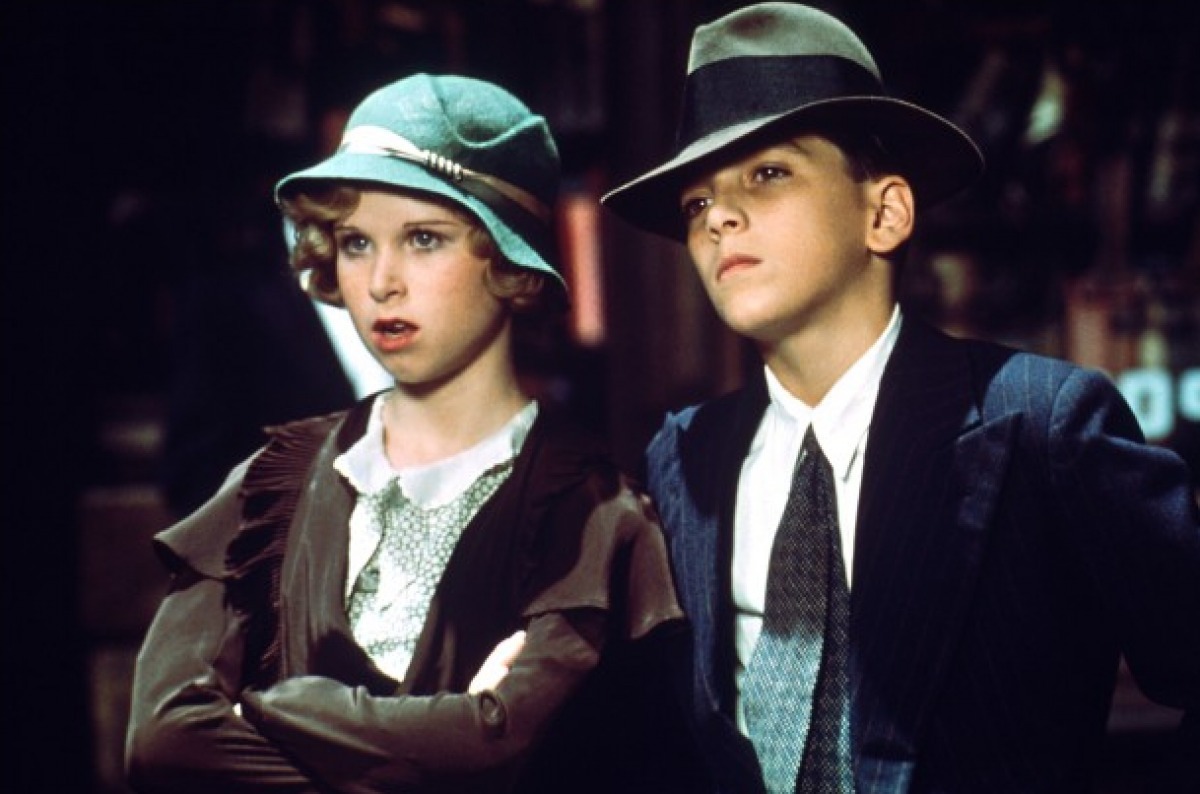
We Could’a Been Anything That We Wanted To Be – a tribute to Bugsy Malone

By Emilia Brookfield-Pertusini

Shimmering silver costumes. Specials on da rocks. Spiteful dancehall girls waiting for their big break. Welcome to the world of Bugsy Malone. Slightly feverish, suffering the consequences from getting too ‘tight’ the night before, I decided to revisit my childhood favourite. My mother protests, “not everyone has had as camp an upbringing as you”, but I really think every child, and film-loving adult, should be made to watch this film. How does a film that merges The Sopranos with Cabaret, is set in New York but was filmed in Slough, relies entirely on a cast of under 15s, and has iconic songs that the children certainly didn’t record themselves, last beyond the bizarreness of 70’s British TV? Charm. 

There’s a cold, deserted New York street where moonlight and outsiders dare to tread. The sound of frantic footsteps dart behind a brown stone, disturbing the alley-cats and a mother at her wit’s end. Shouting. The arrival of the gang in this dead-end spot signals the struggle. Roxy the Weasel, covered in deadly custard, lies in the gutter. Cut to song. 

Gang warfare, the Mob, showgirls who sing suggestively to an audience of mobsters, politicians, and wise guys, shoot-outs and lock-ins. Most children’s films would try and distance themselves away from this crime-ridden world, even if it’s romantically portrayed in 1920’s glamour and gowns.  Part of Bugsy’s magic is that it’s a film for children, starring children, yet why treat children like kids, give them a film that grows up with them. Children aren’t as afraid of playing in a grown-up space as we often believe, Bugsy accepts this and cuts out the middleman by making the kids the heroes without diluting their characters or stories. ‘Namby-pamby showgirls’ are criticised by tedious casting directors, all 13 still, who effortlessly deliver lines exclaiming how they could ‘do something’ with that ‘great face’. From Fat Sam’s Tony Soprano reminiscent demeanour, to passing waitresses and agents, all the characters are given their time to play pretend at full, convincing pelt. The moustaches drawn on with pencils, eyes gaze up as Tallulah glides across the stage ready to start her number, she rolls her eyes in tired professionalism, winking at mobsters and factory workers alike. She opens her mouth ready to sing. ‘My name is Tallulah, I live ‘til I die’. Whilst it may sound like a perfect copy of a showtune, it sounds like a copy written by the kids based off snippets of songs heard through their parents’ records with their innocence of songwriting shining through. This is a musical that wants to feel like a child’s game, and it’s terrific. 

A world powered by peddle-powered cars that are constantly running from the creek of peddle chains belonging to rival mobs, where characters retire from a stressful day with a cocktail and a cabaret, guns that actually shoot; it’s all rather charming. Age appropriateness without patronising. The gusto to the commitment of Bugsy being a mob film is fabulous without pretension; language, names and settings are all so perfectly in keeping with the genre, why sacrifice any of the more cert 15 bits? Despite this age-blind approach, the film gives no sour stage-school taste. Jazz hands are firmly excluded from this speakeasy. Jodie Foster, who plays the wickedly witty chanteuse Tallulah, arrived at the Bugsy set fresh from the scenes of Taxi Driver; these are children who are already immersed into the adult world of acting, why not let them play-pretend as adults, but without the bullets? 

Bugsy finishes galivanting through 1929’s Little Italy with a Leone style shootout. Fat Sam’s Grand Slam is covered in cream, the volume of which almost ventures into the absurd. The glittering girls are dulled. The piano keys glue together under the warfare. Tallulah lets out her last quip, ‘so this is show business’, as she wipes the custard from her eyes. In the normal world, this is catastrophic, a merciless shooting of an entire speakeasy. Yet in Bugsy’s world, it is the perfect finale to extended game of dress up. The previously deadly custard bullets loose all killing potential, causing all to erupt into a custard coated final number. The costumes must all go back into the box, the kids must go back to their respective houses for tea, and they turn back into kids once more – just kids, having fun. Whilst they are convincing and almost scarily good at dressing up as adults, Bugsy Malone has managed to escape a fate of being caged into the weird children’s media of the 1970s by keeping a surreal sense of fun and games close to its chest. They ‘could’a been anythin’ they wanted to be’ and they chose to be fun. 

Categories
Culture

Compliments to the Chef

By Emilia Brookfield-Pertusini

Tattoos drawn on with eyeliner borrowed from the girlfriend in the Coppola-style Marie Antoinette costume. A fitted white t-shirt. Greased hair that looks like an effortless “F you, world” to what other people would call showering before work, but really took 45 minutes and a fine-tooth comb to perfect. Carmen “Carmy” Berzattos were en masse last Halloween. “Yes Chef!” has become a dog-whistle amongst those who want to signal to others that they too have watched the hit, Grammy- winning TV show, The  Bear. Yet, this phenomenon is not down to one TV show, this is a legacy finally taking hold. Chefs are cool thanks to Anthony Bourdain.

Bursting onto the scene in the 90s, Bourdain’s New Yorker article Don’t Read This Before Eating, which later became the basis of the remarkably cool Kitchen Confidential, took the lid off from this edgy underground hidden in plain sight. The Escoffier notions of overly gastronomic, mustache twisting chefs have since been fleeting; chefs are cool people, who just happen to like good food. When Bourdain criticises people who order well-done steaks it feels like an in-joke, stove-top banter, not the scathing judgment of some worn out Cordon Bleu alumni. His writing, his intensity, both in print and on screen, strikes us as simply friendly, never passing judgment, at least not too severely. 

​Bourdain scoffs “who cares” when told his Georgian dumplings “aren’t very sophisticated”; if the food is good the food is good, no two ways, two stars about it. “I eat a lot of shit”, remarks Bourdain about filming Parts Unknown, for Bourdain the food was glue holding his show, and career, together. We eat to explore, and each meal tells a story about an area. Fresh out the fryer, scotch eggs arrive, yoke dripping down the chin to escape a greedy end, a pub that feels like the smoking ban never came into place – why do we eat here? And why does it taste so good here? The bún chả eaten in a front room restaurant in Hanoi with Obama, the overly truffled animal rights nightmare of a meal eaten in Montreal, all receive equal praise. 

Unlike Obama, Bourdain refuses to travel with cars and escorts that equate to the protection of a US backed and built nuclear bomb shelter; he slips in and does as the Romans do, even if that means crashing a Shanghai wedding to experience Chinese drinking culture in full force. Everyone in Vietnam, President or not, eats off plastic stools on the pavement, no reservations, no table service – just something steaming and delicious with a cold beer. There is no brashness. No guidebook. No Michelin guide. Just people eating a meal and being human. Bourdain wants Americans to have passports and to use them, and what better way to persuade people to get to know a stranger in a strange land than through our voracious need for the delicious. Food is shown to be an experience, a political moment, a zeitgeist of the area. “The smell: that’s the first thing that hits you, promising everything in exchange for your soul”, quotes Bourdain as he introduces us to Hanoi. The smell of incense pours from every size temple, a split keg from last night’s bia hơi leaves a tang within these notes, humidity colours the streetside with impossibly green plants that sweat against the fumes of thousands of mopeds, against these endlessly moving bikes aunties and workmen sit alike letting their lotus tea and thick, treacly coffee steam into the air, sizzling herbs and simmering pots of a bone broth left to bubble up the smell of something amazing and only to be slurped down in an almost religious trance, gulping to savour this fleeting flavour forever, the smell of life everywhere.

For his American audience this is monumental. This is Vietnam without the war. This is a place at ease, a place that in so many ways is like theirs – if only they took the time to join the flow of thousands of Vietnamese people on the streets of Hanoi, to throw away their ideas of what dining should be, to sit on a plastic stool and enjoy the experience that we call eating. This is Bourdain’s rock-star in a chef’s hat legacy on travel; leave your expectations behind and get ready to experience the chaotic, friendly, altering reality of immersion. Whatever the local delicacy is, there is a care to show it at its most organic state, be that be on a boat on the Congo, or in a pub with Nigella. All food is good, why be pretentious about eating a Jollibee ‘jolly spaghetti’ or eating freshly hunted game from A.A Gill’s estate if that’s what you’re meant to do to have a good time?  

That is what essentially being a chef comes down to, ensuring people have a good time from whatever you can provide for them in the under 30 minutes wait time it takes to pan fry fresh trout, reduce a jus, and shout at your KP for being a slow ‘mal carne’. Bourdain exposed us to real eating, real kitchens, real people. Food is not aspex coated truffles from some unpronounceable 20km radius of Tuscany, it’s where people flock to have a good time over. Kitchens are not in fact military operations, but made of people who know what people like, and have a good time doing it. Revisiting his first experience in a kitchen in Kitchen Confidential, Bourdain introduces us to a Down and Out reminiscent Orwellian underworld, although this time with slightly better worker’s rights; temperatures are high, and temperaments are higher. The air is perfumed with seafood, garlic, and hints of cigarette smoke. Knives flash and pans blaze. Someone’s speaker is swelling with old school rock as another FOH gets bollocked for not being able to operate within this mystic backroom. Grill chefs show off their newly formed scars as the KP’s hands break out in soapy soars. The EPOS machine whirrs. Baptisms happen over the pastry station as a rookie earns his stripes in this misfit’s lair. These characters may be loud, mean, and sometimes dangerous, yet they know how to transform a place of relentless 12 hour  work days into a community. Food isn’t a chef’s armoury, it’s they’re ability to understand people, in and out the kitchen. Walking into my first day as a chef 8 months ago, I realised this. We may have been working through a heatwave in a poorly ventilated kitchen with 6 tickets racked up and waiting, but I was welcome and cared for in a way like no other. I adopted the name ‘chef’ and joined. 

Carmy No.4 of the party is starting to waiver. He trudges up to the bathroom, wobbling against every instinct telling him to lie down and not summit that treacherous peak of the staircase. He may have whacked a pizza in the oven for dinner and hasn’t cooked something that would take longer than 15 minutes to prepare in months, but he knows he loves food. He knows The Bear was a good show for more than just it’s writing and Jermey Allen White, he felt tension like no other watching Boiling Point, and when Thomas Straker’s homemade butter or WhatWillyCook’s loaded breakfast crumpets videos appear on his for you page, he never scrolls past. Even being one of many counterfeit Carmies has given him a taste of that chef community, the chef respectability advertised to him. Bob Ross passes him with a “Behind, chef.” as Carmy No.4 rolls a cigarette and prepares to enter the rabble once again. Eating is cool. Being a chef – cooler. 

Categories
Perspective

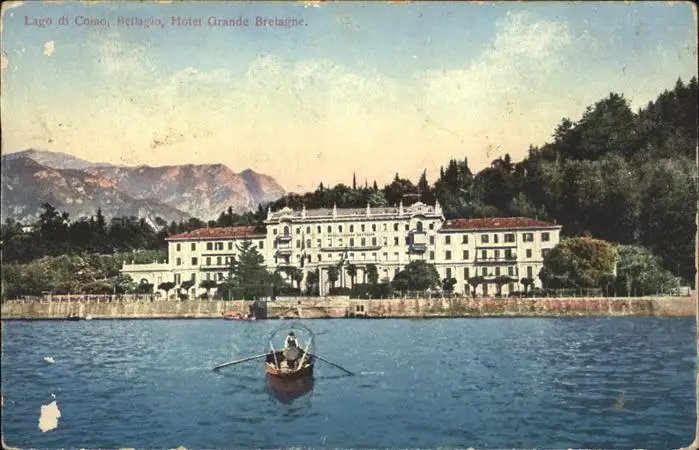
L’Hotel Grande Bretagne; Regione Lombardia, Bellagio Below the Sorgenti Alpine 

By Emilia Brookfield-Pertusini 

The world of Wes Anderson’s The Grand Budapest Hotel contains the nostalgia of a time we never saw. A time when tourism was more than Instagram destinations and drinking cheaper booze. As the symmetrically perfect landscape of The Grand Hotel flickers between the hotel’s height and its slow descent to obsolete grandeur, we must ask what happened. Where did all these buildings go? The truth is, they didn’t go anywhere, we simply moved on without them, trapping them in a Haversham-like web of past and decay, with no room for the future to whisper some resurrecting hopes through. L’Hotel Grande Bretagne haunts the promenade of Bellagio, as oblivious Americans snap and sip in the shade of its glory. 

In my almost 20 years of life, my Italian homeland has changed. Gone are the days of people not knowing where Lake Como was; I have met people now who not only know where the place that has defined my summers is, they have swum on the shores of my village, walked the same cobbled staircases as me, jumped off the same bridge as thousands of Italians, Romans, and Lombardian people did before. People want that Italian summer. It’s a rather enviable summer and one I have taken for granted for a long time. There are certain times of the day when sitting on the porch back in Nesso the whole lake goes quiet. The lake glitters as the sun arches over the mountains just right, stardust dancing from the watery depths below, the boats retire, and even from my perch up in the heavens of the village, you can hear the gentle sighs of the lake, yawning as it nuzzles against that familiar shore. This should be enough. This was enough. But it isn’t anymore. 

Lord Byron spews hundreds of tourists off its deck. Manzoni lingers, puffing and panting, zigzagging across the lake not far behind, carrying the same load of hungry eyes and cameras. Out onto the promenade of Bellagio, they flounder, wondering where next to sit and sip. The Grande Bretagne looks on, paralyzed. Birthed as a response to Lord Byron, the Grande Bretagne served to house these future poets of the English upper class. This pilgrimage to the ‘pearl of the lake’ was one to see a place of wildness, of mystery as the mist rises on a silent morning, of inspiration, all under the shelter of the endless mountains, water and sky. Before meeting his end, Percy and Mary Shelley took shelter by the lake, hiding from the endless troubles flung at them during their marriage. A refuge. A stop away from the rest of the world. To find inspiration and keep beating on against the current. A sanctuary like no other. The Shelleys, Byrons, Flauberts of a new age, a belle-epoch, were to be sheltered by The Gran Bretagne. She provided all they needed. The grand mistress of the lake, providing international schooling and scandal in her grounds. Home comforts next to Italian ruins. Panoramic views of infinite sublimity. A search for Italy. Elegentiza from all over Europe flocked to her arms, longing for that Romantic experience. To bathe oneself entirely in all the lake had to offer to them. And yet, to remain hungry. 

From there she rose. The Gran Bretagne. Named in honour of those poets who came before her, she reached out to those around her after being wrongfully christened L’Hotel Grande Italia. Tourists crept back in after il Duce was caught along her shoreline, and with them crept old fashions, roast beef, and a surprise visit from an unelected Churchill. Whilst cigars, watercolours, and oysters flowed, locals learned how to become professional mixologists, oyster shuckers, and linen pressers. It was here my Nonno learned to cook; having never been afforded such continental delicacies at home, this job gave him more than a culinary education. The peach wedding cake on the lake was feasted on by all. 

However, the Italy the tourists were searching for wasn’t one that was pleasant to those who had always known her. Coffee cups clinked on the terraces outside, whilst inside people dreamed dreams unlike those of the Romantics; escape, revolution, to be better. She was like no other. She saw it all, and her arms heavy, mustered a response. People came to her for a better life, even if only for a night.

Sunrise. An orange lake. An old man pushes out a batell further into the abyss. The battering of a carpet, the hum of a lawn mower. Through the green, the snakes draw open their eyes to the uninterrupted, mice playing in her skeleton. Something happened. A shift. And now she lies alone, unable to keep up. No more Romantic poets. No more escape. 

Since Succession, James Bond, Clooney, and Star Wars arrived, she has been forgotten. They are the future, the ideal portrait of wealth, class, and taste. She can’t fit in. Her ballrooms, marble stairs, palm trees, and muraled ceilings mean nothing to the insatiable crowd of today. The iconic cobbled saliti of Bellagio is nothing more than a backdrop. Scenes of happiness, wealth, and a supposed Italian summer play out on her stage, the real Bellagio cowering off stage, hiding behind the alleyways, pushed far from the actions. Boats recklessly drive towards the shore, smiling for the camera as locals close their shutters. The towns swell under the mass of footsteps, yet no footfall is to be seen by the locals, as tourists flock to industry-approved havens, found from one of the endless flock constantly bleating about a perfect Lake Como itinerary, away from the alberghi, alimentari, and agriturismi. Mountains peep out from gapes between bars where Aperol constantly flows and boutiques where the silk industry has departed in favour of Armani and Gucci, the mountains that beckoned people all those centuries ago stand hidden from the spotlight, a minor role in this melodrama. Scripts written in English, costumes loaned from theatres from far afield, is this really Italian, or just an American fetish? 

Locked away in plain sight. Waiting ever patiently for this Renaissance of the Lake to reach her. Her, covered in cobwebs. Her, who’s marble staircase lies destroyed, stolen in some other house. Her, surrounded by a grail of thorns. Holding on to whatever of her she has left; using the cobwebs to feign a wedding dress, trying to keep the new rodent house guests happy. Like the rest of the lake’s features, she can’t come out, as she doesn’t align with them. Unlike The Grand Budapest Hotel, the love stories of The Grande Bretagne remain hidden, decaying with the timbers. There is no interest, no eventual demolition, only rot. 

This is the history of a building that no one wants anymore. Yet, we still need her. She carries a lot with her, representing what we could have been as travellers. People who slip into the scenery, do not make the scenery a prop. Lake Como is a place that is stubborn to move forward, and maybe you will think me stubborn and jealous too, yet this stubbornness is born of protection. There is only so much it can endure, and it is being exploited by too many, searching for the wrong Italy. When travel advice is so easy to encounter and when travel has become so quick, easy, and convenient, have we forgotten why we do it? We all want beauty, we all want the sublime, we want what those past travellers of The Grand Tour wanted, but we want it fast, on demand. By being too quick, and being too blind-sighted about where, and why, we travel, we miss out on where we are all together. We miss out on the immersion. We come to these places to pretend the beauty is ours, part of our existence, but how can we if we stay for so little time? The Lake is known by many, yet a stranger to most.

The Grand Bretagne is the cost of our travel. The lives, the history, and the buildings we affect by changing the way we travel. If we want beauty, we must be patient. We must push past the thorns, separate from the crowd, and bask in what once was, and what can still be. The beauty hasn’t gone away, we have just ignored it. 

Categories
Perspective

On Re-reading Jane Eyre as a Grown Child

By Emilia Brookfield

St. John’s College. 7:36pm. The window looks tiredly below at St. Mary the Less. The bar is not open yet, there can only be one thing left to do, become the “reader”. 

When my reading list for 1st year English arrived those many weeks ago, the sight of Charlotte Bronte’s Jane Eyre caught my sneering eye off guard. What a field day it would have as I scorned the text for daring to exist next to Austen’s masterpiece of Emma; how could such a juvenile piece, sneered at by even the ever cynical 13-year-old Emilia, have reared its head as I emerged into the complexities of a degree level reading.

 Charlotte remains my least favourite Bronte. The turbulent, destructive (yet witty) Branwell ranks higher than her on my charts. His cartoonish scribbles of a taunting death at one’s elbow reach wit and gothic twistedness far beyond Charlotte’s reach. Bronte’s accompanying fresher’s author, Plato, rally’s that art is full of mimesis, simply layers and layers of shadow, light, and imitation; these imitations are especially apparent in Charlotte’s writing as she tries to emulate the broodiness of her sisters. Charlotte appears to only mimic those feelings that her sisters so perfectly put. When other’s swooned over the plateable gothic of Jane Eyre or the wildly stormy, yet ultimately dull, Villette, I cemented myself further away from Charlotte’s camp, declaring myself to be a firm comrade of Emily and Anne. Although perhaps in being so obstinate, I was more Eyre than met the eye…

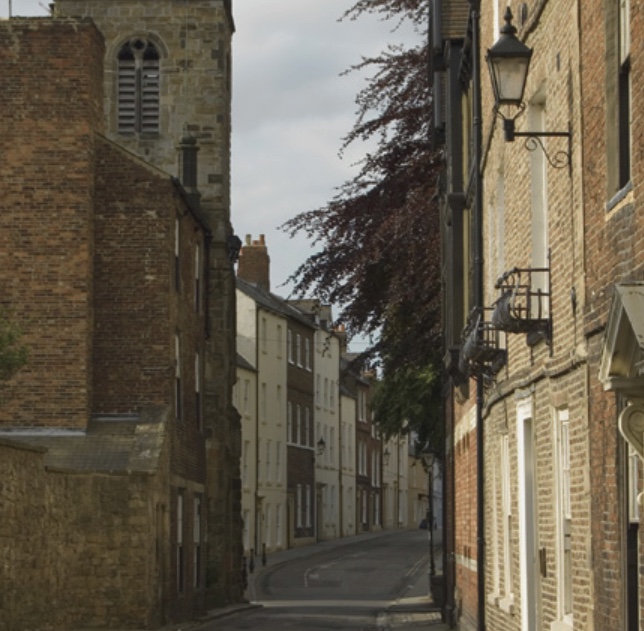
Reluctantly I settled down to the opening chapter. The wind whips down the Bailey, swathes of tired students scurry along, the Victorian graves sigh under the weight of the leaf carcasses; I read in both this world, and the hauntingly similar world of Jane, from my window seat. 

Jane’s stubborn procession through life has become an oddly great comfort to me. Trapped in the red room alone, haunted by the whispery ghost of her uncle, I took solitude; I too am that girl afraid, in an unknown room, haunted by the spirits of those who lived before me, hiding behind the curtains of some haunted hide-n-seek.  Floating along in this strange newness, the first few weeks of freshers are full of expectation more than anything. Unknown voices rise around Jane in her new Lowood environment; threads of conversation catch her ear, yet she cannot grasp them. She is surrounded by people her own age, yet is unable to distinguish a single person.  This constant feeling of overcrowded loneliness permeates Freshers. The voice across the dining hall belongs to a physics student, yet turning you lose them, unable to connect that voice with yours in harmonious conversation beyond the parameters of the department they belong to and the papers they sat one June afternoon. 

Thrown into a tumult of new places, names stick when visuals can’t be mustered. Thornfield, Lowood, Millcote, Gateshead, Lowton – all these decidedly English names that could be anywhere. The anticipation of what these mythic places look like as you finally are asked to meet for an audition, a meeting, a seminar, in one of these made-up halls. Jane believes herself to be smart, admirable, respectable upon leaving Lowood; graduation to Thornfield displaces this. She has no idea where she is going, asks to help too often, and is naïve to the stately and suspicious goings-on. Out of depth is the best way to describe her, and as a fresher in those formative weeks. 

The window is fogging up with that Durham dampness. Only the leaves remain. My four walls creak under the weight of many maddening bodies. Am I that brooding girl? Or are we all her. Her adventures, dull and dangerous, make for a great selection of anecdotes, and is that all we can hope for at this moment? The gothic works as it takes the familiar and distorts it; you feel comfort whilst also checking behind you as you walk down the corridor. It’s that faint familiarity we hold on to when finding our ways back. Charlotte may have some merit as a trusty guide or a stoic beacon in the mist.