
By Liv Thomas
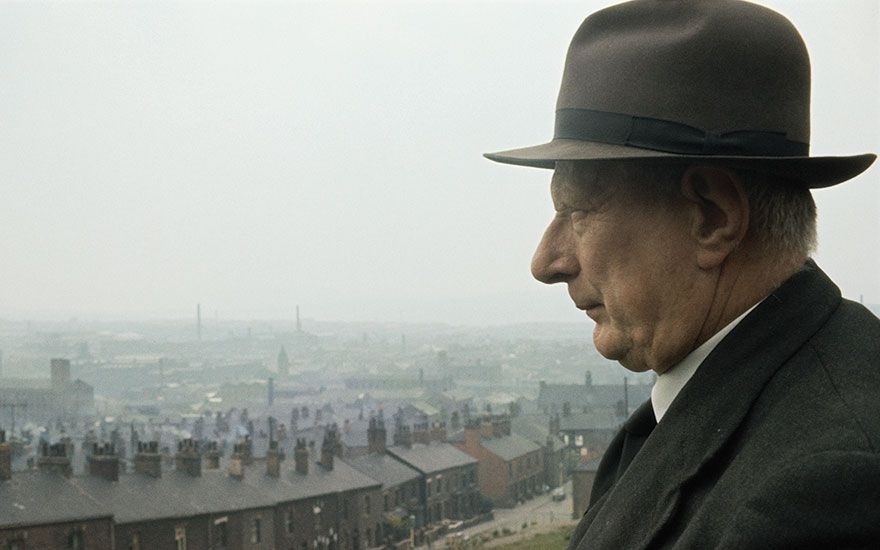
The mid-19th-century pavements of Manchester and Salford would often bear the footsteps of Karl Marx and Friedrich Engels, whose encounters with the harsh industrial conditions kindled ideas that would reverberate far beyond the city’s rauch und ruß. In the 1950s, those same pavements felt the same steady tread of L.S. Lowry, an artist who, when his paintings failed to make any profit, turned to the prosaic vocation of rent collecting – wandering the less fortunate quarters of both cities, gathering his modest income, and taking in the quiet scenes that would later find their way onto his canvases.
One cannot help but notice the irony wherein the very streets that bred The Communist Manifesto would later see an artist navigating them as rent collector, inspecting the homes of working class families and simply trying to make ends meet. Having missed his train one day in 1916, Lowry stumbled upon the loose end of a Manchester suburb with a happenstance ACME Spinning Company Mill in full churn. He would later recall, “The mill was turning out hundreds of little, pinched figures, heads bent down… I watched this scene – which I’d looked at many times without seeing – with rapture.” This view, a boilerplate skyline of brick, chimney, and chilly smoke, suddenly brimmed with a new life under the realisation that no one else was painting this. Lowry thus decided to put the industrial scene “on the map because nobody had seriously done it”, and from then on, Pendlebury’s mills, Salford’s back alleys, and Manchester’s markets became his muse.
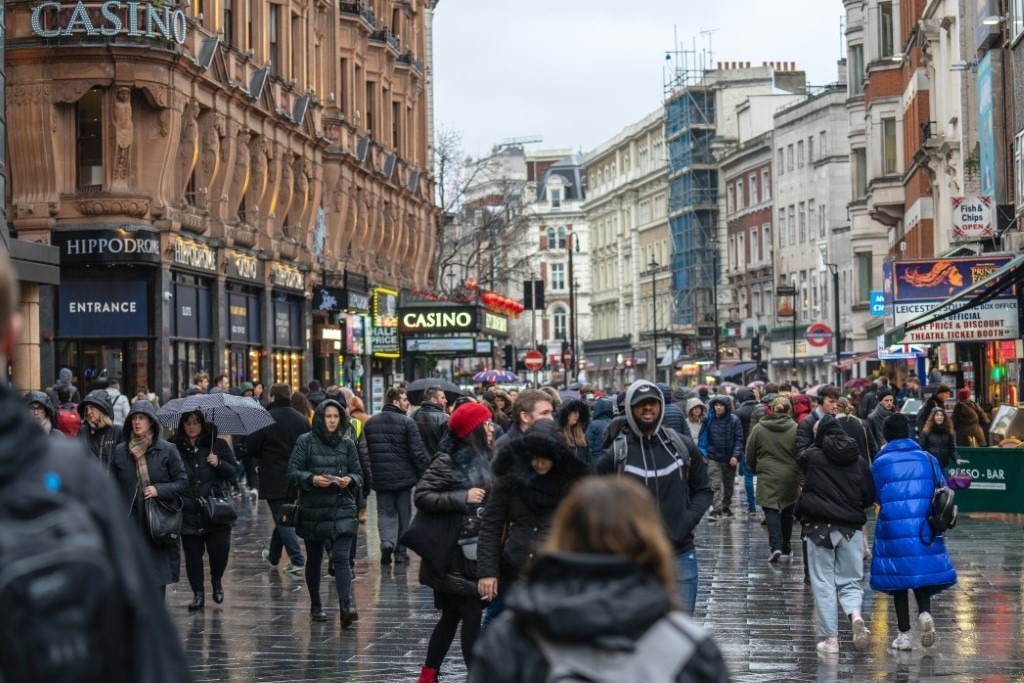
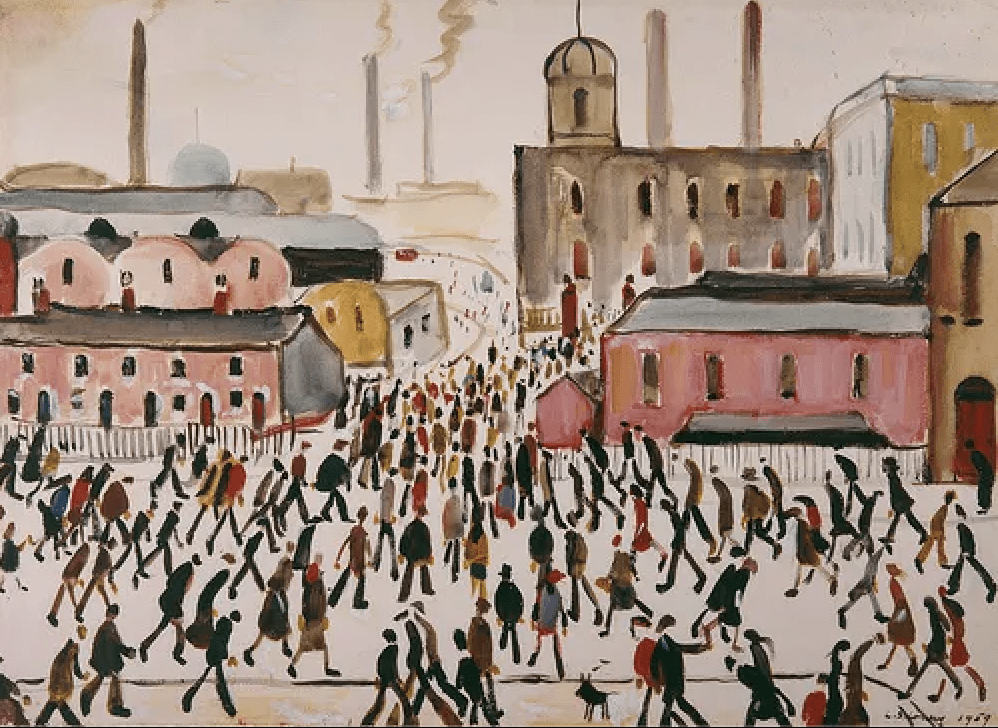
Today’s Manchester is a hive of activity, its identity manifesting in the iconography of worker-bee souvenirs and a pulsing music scene. Much the same could be said of Lowry’s Manchester, though gift shops were much less in vogue and its soundtrack not yet touched by the likes of ‘The Smiths’ and ‘Joy Division’. Nevertheless, his canvases feature a similar population of matchstick figures in dense crowds, set against red-bricked factories and rows of terraced houses.
In a 1957 BBC documentary on his life’s work, Lowry comments, “I just paint the people as I see the people in my mind’s eye,” a philosophy that creates an almost dreamlike process in which, rather than sketching soldiers or machinery from life, memories and local lore fill the scene – figures he described as “not exactly” Manchester workpeople but ghostly silhouettes that “seem to me so beautiful,” drifting through factories and streets. His speech was marked throughout by an insouciant “I don’t mind it at all,” and on the particular settings of his paintings, he observes, “I don’t mind it at all whether they’re today or yesterday or any other time.” A Christie’s curator notes that “Lowry is beloved by us for making the industrial scene his own. These works were created in his own unique way, poetic yet not sentimental, compelling… but never judgmental.” Indeed, Lowry claimed he did not paint to agitate or reform. “I was not thinking very much about the people in the way a social reformer does,” he admitted, “They are part of a private beauty that haunted me.”
After all, it is not difficult to locate his work within the mid-century backdrop of Manchester’s smoking chimneys and flat caps, all seemingly tethered to a different alien to our own. The idea that it could belong equally to today or yesterday feels, at first, like a fragment of his time rather than ours. And yet. Watching that documentary during the final stretch of a degree in English Literature at Durham University (with all the existential static that attends a completed education and its ensuing blurry prospects), I found myself looking out of my bedroom window and recognising that today and yesterday. There is something in Lowry’s figures, drifting through those industrial thoroughfares, anonymous and unhurried, that refuses to be confined to any particular moment, and, for all the years that lie between Lowry’s world and our own, you may also find yourself absorbed into the slow ebb of a crowd.
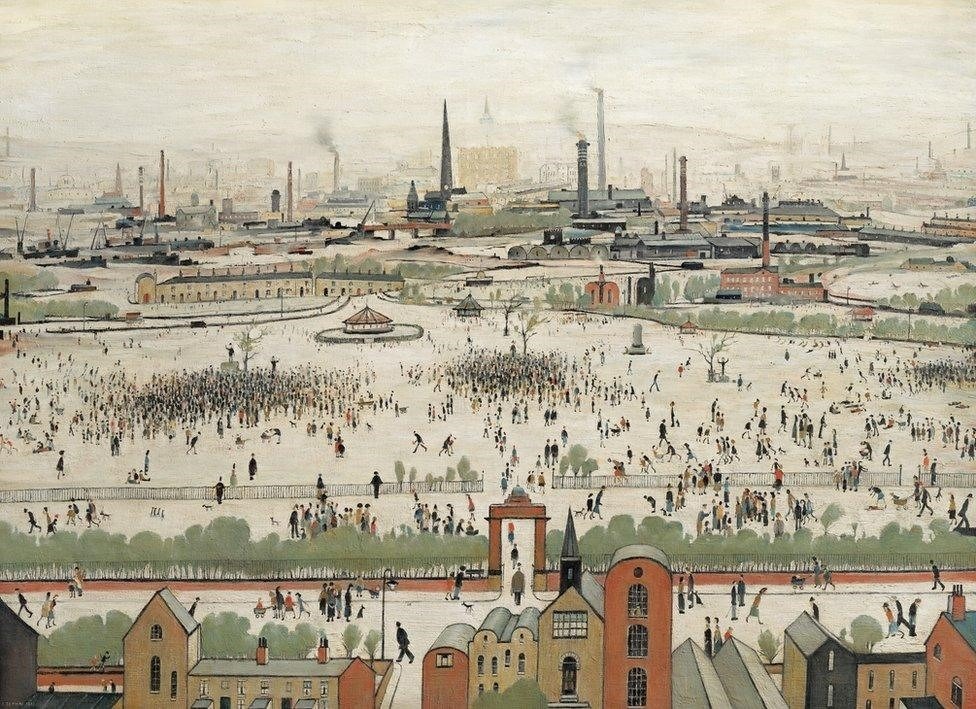
A self-proclaimed simple and lazy man, with little penchant for the “usual humdrum job,” Lowry occupies a peculiar position in the landscape of British Painters. Despite establishing an absence of ideology behind his art, it nevertheless maintains an air of its own reason. His canvases carry a certain passivity, the quality of an image recalled only in the fleeting, unfocused moments of everyday life: walking to the shops, walking through a familiar street, trying not to make eye contact with the strangers who are also simply getting on with things – reminiscent of the life my own grandma would describe to me.
Yet. The Pre-Raphaelite Brotherhood had cast a long shadow over conservative British taste, its legacy of medieval romance and religious symbolism still colouring the expectations of what serious painting ought to look like. Within this same broad moment, artists like René Magritte were fashioning their ordinary figures within the realm of surreality, bending the everyday toward the uncanny and the subconscious.
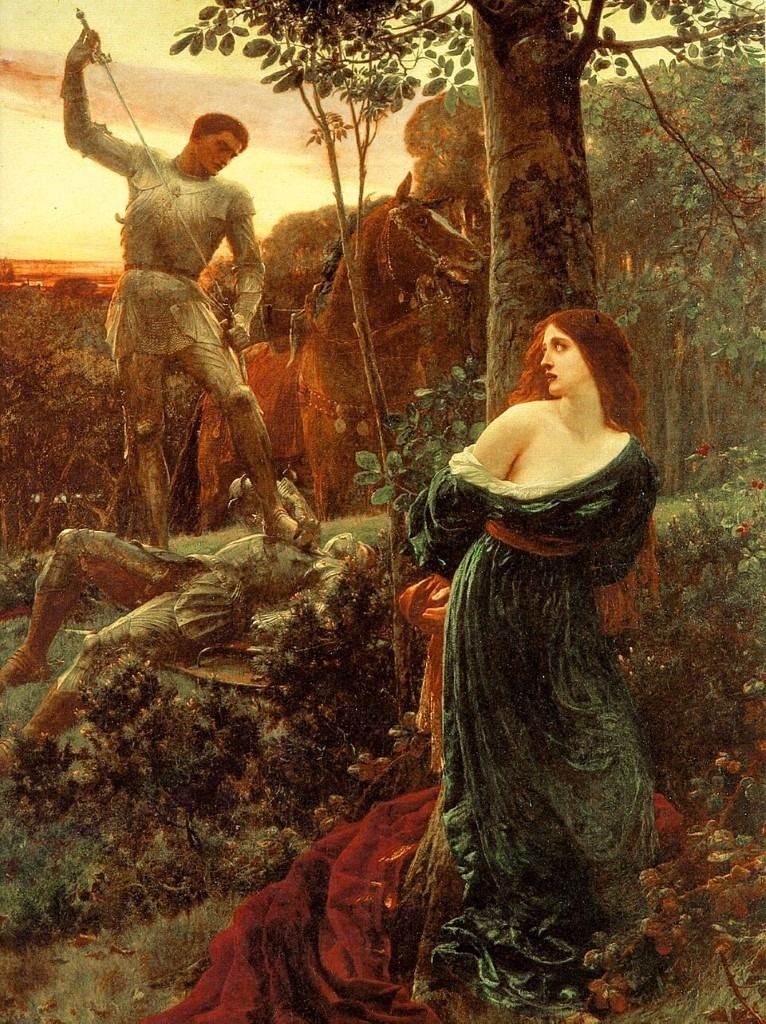
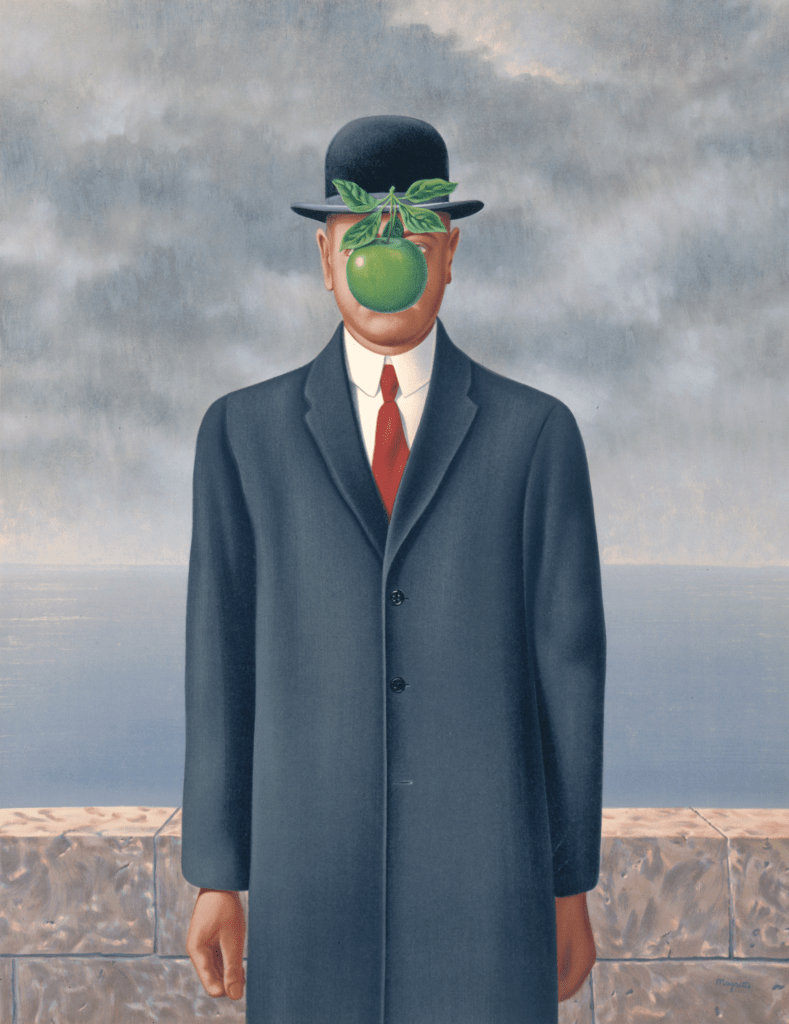
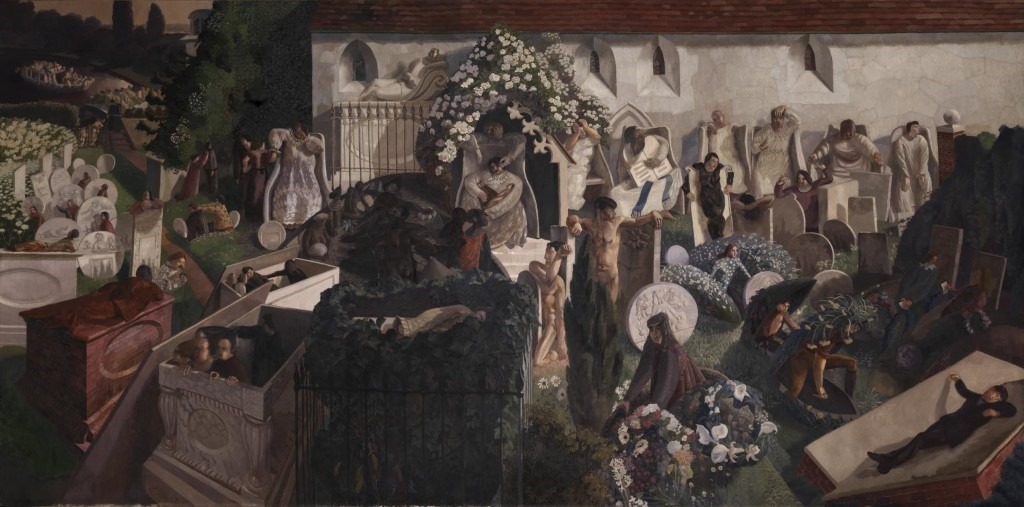
Stanley Spencer, with his quiet English churchyards and resurrected dead, transfigured the familiar into something devotional and intense. All of it, in its various ways, beckons beyond the everyday… reaching toward a distant past, an exploration of the self, or some higher plane of meaning which the visible and tangible world alone cannot contain. The Royal Academy, meanwhile, clung to its traditions of historical grandeur and mythological scene-painting, its Arthurian knights and Sunday School virgins dressed in a culture reluctant to look itself in the eye.
Lowry wanted none of it, though not out of any particular rejection so much as something closer to indifference. Where his contemporaries turned the outward world into a framing for the inward one, Lowry showed little interest in being the kind of man who made his own mind the subject. He painted what he saw, and from this, he made something that the Southron art scene never would have thought to.
As such, within this peculiar space occupied by Lowry, and in spite of his assertions otherwise, he has come to embody a politics of representation, in that, by portraying the today and yesterday of Northern England, his art performs an act of attention that the broader culture had largely refused to make. The mills, back streets, and crowds filing out of factory gates were not the typical subjects that hung in the Royal Academy, nor the stuff of which artistic reputations were typically made, so much so that critics would describe the people in his paintings as “figures like insects”, one reviewer conceding he was “original but narrow and repetitive.” Yet Lowry paid them no mind: when asked why his figures always came out the same, he shrugged, “Because I can’t do them in any other way.”
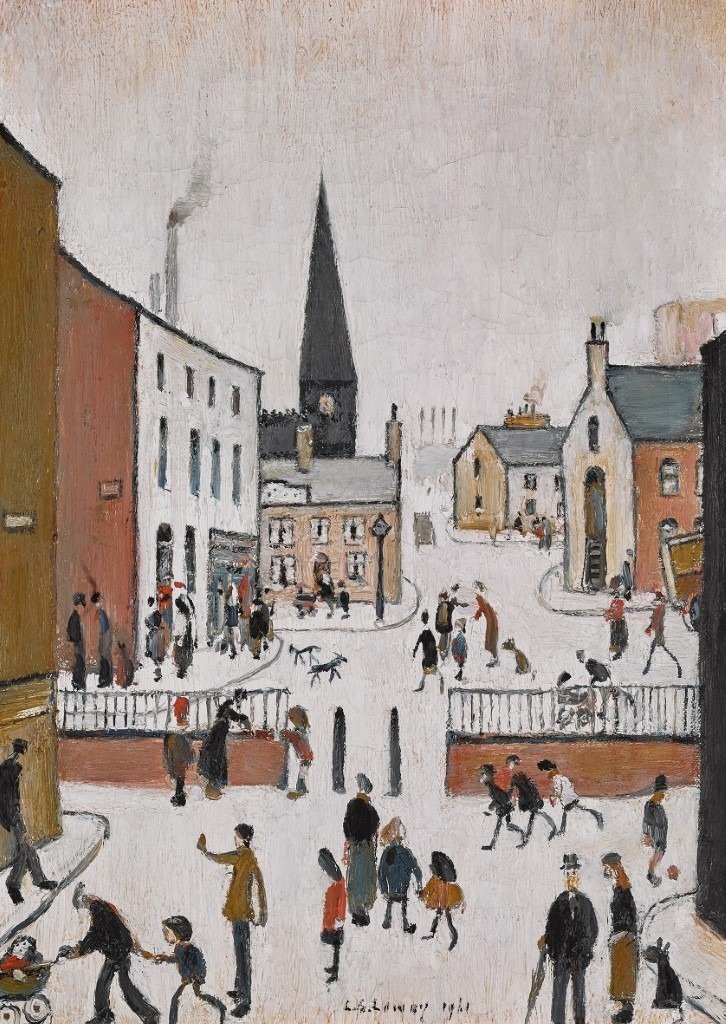
I would locate these criticisms in their own explicit form of classism towards the industrial North and its people; regardless, Lowry has made a legacy out of what these critics turn their noses up at, a legacy experienced by many. At a time when art was expected either to transcend its surroundings or to interrogate them, Lowry did neither. Within Lowry’s paintings, the lives of working people in the industrial North were as worthy of a canvas as an Arthurian legend. He did not sentimentalise them, and in doing so, preserved something that might otherwise have passed entirely unrecorded.
While Lowry’s location is settled in Manchester, this legacy speaks to his future and our present. With the passing of Bradford legend David Hockney, the way in which northern artists offer us a grounding with reality seems more relevant than ever. Hockney, whose work occupies a much later decade than Lowry’s but who was also initially criticised for his simplicity and subject to mixed reviews from the Royal College of Art, is evidence of what Bradfordian journalist Ben Forrest writes: “Working-class people, and northern people more generally, aren’t afforded much of a foothold in the art world, and children are increasingly being persuaded to ignore their artistic sensibilities in favour of developing practical skills aimed at funnelling them into the job market.” And Lowry, the self-proclaimed simple man, demonstrates a similar trajectory – his mills may no longer churn, his crowds may wear different coats, but the ebb and flow stays steady.
Featured Image: Pinterest