Categories
Culture

All Things Must Pass: George Harrison and the Long Fade of Britain 

By Lucy Atkinson

There’s something about George Harrison’s All Things Must Pass that feels uncannily British — not the old empire kind of British, but the rain-soaked, quietly resilient, half-resigned version. Released in 1970, the triple album came out just as the country began to feel the slow ache of decline: post-Beatles, post-utopia, post-swinging-sixties London. Even its title felt like an elegy for a fading Britain. 

Fifty-five years later, the sentiment lands harder than ever. All Things Must Pass now plays like a requiem for a country trying to convince itself it’s still special — a soundtrack for the long, unglamorous hangover after the party of empire, of cool Britannia. 

When Harrison wrote All Things Must Pass, he wasn’t being cynical. He was being spiritual. He’d seen the machinery of fame and ego up close and come out the other side searching for something gentler, truer. The song’s calm acceptance of “sunrise doesn’t last all morning” felt like wisdom at a time when Britain still thought the sixties might never end. But in 2025, it sounds more like a prophecy. It seems like the sun’s been setting for a while now. 

Public services are crumbling, rivers are filling with sewage, and politics has become performance art for bitter men with microphones. Reform UK gains traction by promising renewal but selling racial resentment; Labour promises competence, not hope, yet fails to deliver on both. Everyone’s tired, and the rain keeps falling. 

Harrison’s voice, patient and forgiving, may hum through the noise like a counterpoint: It’s not always going to be this grey. But yet, it is — for now. 

Britain has always excelled at melancholy. We make poetry of drizzle and drama of decline. From The Waste Land to The Crown, we aestheticise decay until it almost looks romantic. Harrison, though, wasn’t interested in performance. His melancholy wasn’t self-pitying; it was cleansing. He offered resignation not as despair, but as liberation, which is a lesson the modern political class could use. Today’s leaders — Farage shouting from a pub, ministers performing contrition on breakfast TV — cling to power like it’s still 2012, still possible to summon optimism with a slogan. “Levelling Up” has become a punchline; “British values”, a meme. 

Harrison would have recognised this noise for what it is: pure ego. 

Beware of Darkness, one of the album’s most haunting tracks, could be mistaken for a sermon to the electorate. “Beware of greedy leaders / They take you where you should not go.” In 1970, that might have sounded like Eastern mysticism. In 2025, it’s practically the daily news cycle. 

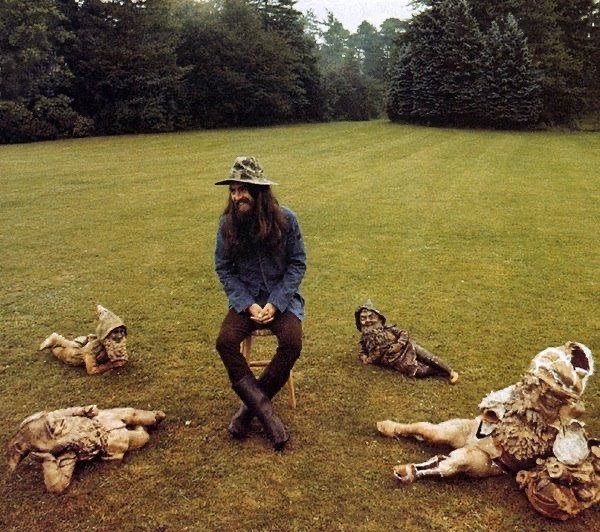
The album was partially recorded at Friar Park, Harrison’s eccentric gothic estate, and the iconic album cover was shot there — half-mansion, half-monastery. The walls, lined with gargoyles and silence, gave him the distance to write a work of self-reflection, something Britain rarely manages. Today, the country feels like it’s still living in that house — ornate, damp, haunted by the past. We’ve filled the rooms with nostalgia: wartime mythologies, royal weddings, Great British Bake-Offs. It’s charming, but it’s also claustrophobic. Every institution, from Parliament to the BBC, feels like it’s decaying in slow motion.

Harrison’s mantra — all things must pass — isn’t just an observation; it’s an instruction. Empires fall. Economies falter. Cultures shift. The task isn’t to stop it happening, but to let it happen, and then begin again. 

But Britain doesn’t let go. We polish the relics instead. 

But for one moment, imagine if we actually took Harrison seriously — if the country released its grip on the fantasy of exceptionalism. Reform UK wouldn’t exist; it depends on the illusion that decline is reversible, that we can simply vote our way back to the 1950s. Nor would the endless nostalgia industry that props up our media — the monarchy, the Blitz spirit, the Beatles themselves — work without the promise that the past can be restored. 

Harrison’s message was the opposite: transcendence through impermanence. Growth through surrender. The idea that endings aren’t failure, but natural order, and maybe that’s the radical politics we need now — not rage, not revival, but acceptance. To look honestly at what’s rotting and stop pretending it can be repainted. 

Listening to All Things Must Pass in 2025 Britain feels like stepping outside the chaos for a moment. The songs drift like prayer — full of humility, humour, resignation. Harrison’s slide guitar sounds like light breaking through fog. It’s an album that insists, even amid decay, on grace. 

And perhaps that’s the hope we’re left with. Not a new golden age, but a quieter one — where kindness outlasts the slogans, where humility replaces bluster, where we stop shouting about greatness and start doing small good things. 

Because if Harrison was right — if all things must pass — then this too will. The populism, the cruelty, the endless decline. The question is what we’ll build in the silence that follows. 

Until then, the rain keeps falling. The records keep spinning. And somewhere, faintly, George Harrison’s voice reminds us: 

“All things must pass away.”

Featured Image: Barry Feinstein
Categories
Culture

Are We Seeing a 1930’s Fashion Revival?

By Sam Unsworth

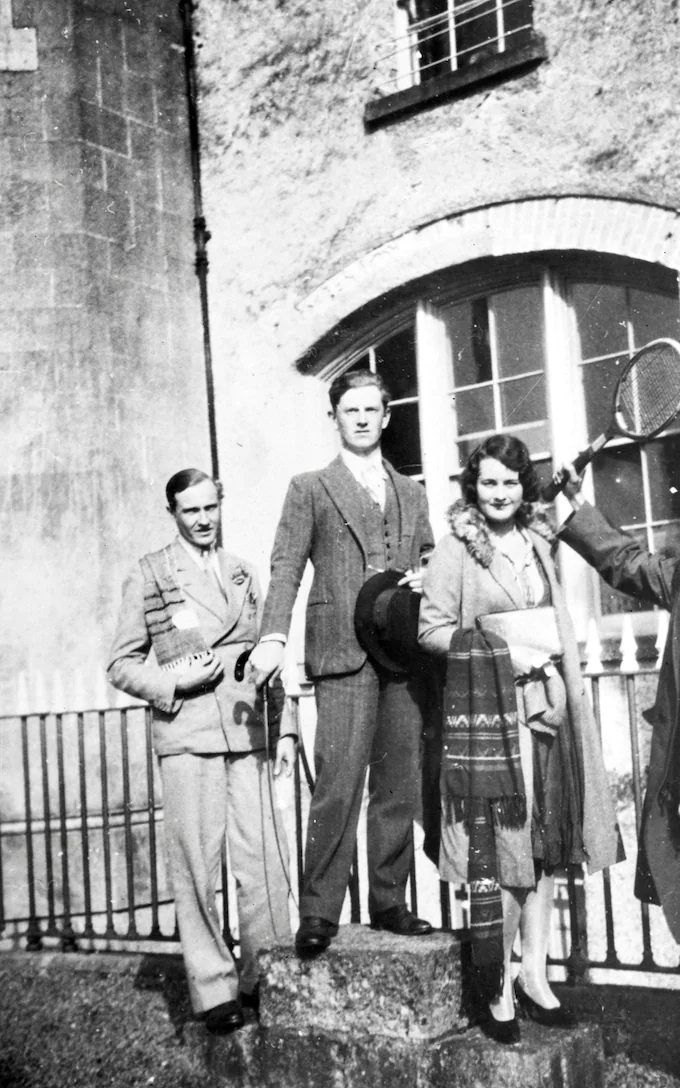
It is a more than well-known fact that there is simply nothing new in fashion; all is a rehash upon rehash of older ideas, cuts, and silhouettes- with the exception perhaps of fabric. Nonetheless, it is still interesting to examine the comparisons we can draw with the past and how these may hint at the ways in which fashion may evolve in the future. This article will focus on men’s fashion with all the authority of someone who watches too many films, looks at too many clothes, and picks up some of Hardy Amies’ books from time to time. In my opinion, the 1930s arguably saw the peak of the suit. Focused on both style and practicality, the thirties flowed with softness and ease of wear in its fashion. Broad shoulders and well-fitting garments designed to exude confidence and effortlessness, and most importantly, simplicity. This, I believe, is seeing a revival in the style of the everyday man’s wardrobe, as well as among stars on red carpets across the globe. 

The first thing that occurred to me was what YouTuber James Leung refers to as the “2025 uniform”. This, as one is probably aware, tends to involve larger, wide-legged trousers paired with a well-cut t-shirt and some form of polished boot or shoe. Now, how exactly does this reflect the 1930s? Well, the ease of this type of outfit and the emphasis on basic, comfortable clothing are clear indicators. If we were to examine the suits common in early 1930s Germany, we would encounter loose-fitting trousers that flowed neatly down from the waist, usually accompanied by pleats. These loose trousers permitted a clean break above the shoe, a feature often mirrored in contemporary fashion. This, however, was not restricted to Germany- rather reflecting a shift toward practicality within men’s fashion in a post-Wall Street crash world where men would have less time for leisure and would look to own curated items that would last comfortably, whilst also retaining some of the finery of the 1920s. 

Furthermore, the influence of The Great Depression saw an increase in workwear being utilised more openly- with the serial production of French chore coats by the likes of Le Laboureur and Vetra, allowing working-class fashion to evolve further in Europe (If you want to know more about Le Laboureur, I would recommend Albert Musquiz’s YouTube channel). In the USA, there was also a boom in workwear fashion, with Levi’s and Carhartt gaining nationwide prominence with the emergence of the first Carhartt jacket, the “Engineer Sack Coat,” in 1925. Workwear in fashion is not restricted to the 2020s; however, there is a clear increase in the sourcing of pre-loved or softened workwear for incorporation into the fashion world, which has led to online trolling of individuals for ironically having “soft hands” while donning traditional workwear, arguably demeaning and accessorising its blue-collar roots. US workwear appears to be in high demand at present, consistent with a broader pattern of US influence, particularly through film stars, celebrities, and social media influencers. 

A key focus must also be placed on the cut of suits and trousers. Gone are the days of oversized and baggy apparel; people instead want well-fitted clothing that accentuates their bodily features most prominently from the waist up – perhaps aligning with an increased focus on health and fitness within influencer circles. In the earlier example of the t-shirt and larger trousers, there is a clear distinction between being ‘larger’ and being ‘baggy’. These large trousers still sit tightly at the waist, usually in a high-to-medium waist fit. Notably, these trousers often do not require a belt to cinch any excess material; instead, an increasing number of designers are reverting to systems such as English side straps or Gurkha waistbands. This is well modelled by the likes of actor Jacob Elordi, who often wears double-breasted suits that reinforce 1930s-style motifs. As such, the cut of these trousers appears to model that of the 1930s, with larger yet well-fitted garments that accentuate one’s waist whilst also adding volume to the legs. On a personal note, I believe this is a welcome step away from the tight Tom Ford suits of the 2010s, which I, for one, hope do not come back into fashion. 

Finally, a note on t-shirts and jackets. In this case, I will use Mutimer as an example. Currently,  Mutimer is really the driving brand in men’s fashion beyond the runway, with sleek silhouettes that lend themselves to everyday use and styling, offering a sense of effortlessness whilst also retaining a put-together look. Hardy Amies famously wrote, “A man should look as if he has bought his clothes with intelligence, put them on with care and then forgotten all about them,” and I believe this to be clear within Mutimer’s brand vision. They recently released a new T-shirt labelled “The Jagger T-shirt”, faithful to the cut and shape of its namesake, Mick Jagger, yet adopting shorter sleeves and a tighter fit- it does away with the boxy tees popularised by skate fashion, instead aligning with the 2025 uniform, accentuating your features with a simple, unabashed silhouette. Much like the fit of Marlon Brando’s t-shirt in Streetcar. This can also be seen in jackets; the Mutimer leather jacket, conveniently always sold out, features a cropped fit typical of most biker jackets, yet also contributes a snug waist reminiscent of military styles of the late 30s and 40s, such as the No.5 battledress or General Jim Gavin’s modified officers’ jacket. 

There are many comparisons to draw, but I believe that overall, a 1930s style revival is totally beneficial to men’s fashion as it blends practicality, comfort, and elegance, in turn allowing the wearer to curate a more long- lasting wardrobe not driven by fast fashion but rather by timeless classics which focus more heavily on fit rather than flair. 

Image credit : The Telegraph

Categories
Perspective

Invocation for 6pm on a Sunday

By Serena

It is Sunday evening so I am hoping for the release of death. I know that I am being perhaps dramatic- that two nights spent putting alcohol in my body may simply be having its consequences. Nonetheless, I cannot help but think the only sensible course of action is a sudden and immediate death. Instead, I will tell housemates that I “have really bad hangxiety lol” and stay in my room, thinking about such things as What I Have Done and The Person I Am Becoming. Wonderful. It’s ridiculously indulgent: navel gazing as self-flagellation. 

It has been a rollercoaster of a weekend. Jubilant nights: eyes swimming in their sockets, seeing angels in the Jimmy’s bathroom, possessing but a Woodgate and a dream. Oh to be back there! Slurring obscenities in the smoking area, mouth agape and acrid! Shit-eating grin, doing the dance, having SO MUCH FUN. Forget academic validation, sporting success, reciprocated feelings of love- that’s the good stuff. Things do often take a turn for the worse- blacking out, being replaced by a stranger with my face and my voice and the moral compass of a Spartan. Hungover me is terrified of blacked-out me. It’s Jekyll and Hyde, and Hyde is a D1 rascal- she does not play well with others. 

Waking up brings fresh horrors. Sober, finally, I feel the weight of the day in my palm. Nasty ritual I have developed: listless, partially dressed, staring at my phone, half-baked platitudes circling my mind like that will soothe me. Nauseous, shaking slightly, breathing manually- the hangover-resistance of my youth has left me. 

First come the resolutions. What a creature I promise to be! No drinking to excess, be more mindful of others… I devise all manner of plans to become a sparkling paragon of virtue. It’s fine! I have been cast as Woman In Her Twenties. Who am I to veer off-script? I have a responsibility to the fans. The path to self-actualisation is paved with humiliation, I tell myself. This is simply growth in disguise. I’m in the bargaining stage, junkie limbo (my drug of choice being… Isla Negra?). An Augustine confessional- “Lord make me chaste, but not yet!”.  Promises to ‘be better’ like so many Hail Marys, sycophantic and hollow. My insides are necrotic but my heart is hopeful.

This optimism eventually fades, of course. The world is colder on Sundays. Christian vindication, I suppose. Sabbath, day of rest and repentance and a very Catholic kind of guilt. Mutatis mutandis, I will be delivered from sin. I know things are bad when I go all ‘New Age’, listening to Ram Dass and googling “Ayahuasca retreat UK”. Pick a god and pray, baby! It hits four PM and gets dark- there is no reprieve to be had tonight, no warm light of absolution. I realise I am the architect of my own misery. I want my mother, or some abstract concept of my mother. My teetotal housemate has just been for a run and is off to the library. I hate her with every fibre of my being. 

Tomorrow will be a new day, I am sure. Next weekend I will put on a similar performance. Is it all worth it? Hard to say. Is it worth Sisyphus getting to the top of the mountain? Seeing a big rock roll down a mountain is always pretty cool. Amen to that.

Featured Image – Toby Dossett

Categories
Poetry

Promises

By Emily Fitzpatrick


I choose to live to see out the autumn

as it paints the streets with hues of fire –

burning that which is not worth keeping,

leaving my shoulders bare, but lighter.


I choose to live to see the midday sun

weave through pine trees in Poland,

to see how the moss glistens under its touch

and how the mist dances coyly in its gaze.


I choose to live to feel the bass in my teeth

at a concert I haven’t budgeted for,

to feel the noise seep into my body

until I am consumed by soundwaves and held close.


I choose to live to hear you laugh,

and to see you shine as you do it,

bursting with light that cuts through the

darkness my eyes had adjusted to.


I choose to live to see the stars

unfettered by light pollution,

to learn the constellations (finally)

and to know that you see them too.


I choose to live to swim in open water,

to feel the biting cold fade to numbness,

and then warmth. To float on my back

and let the waves flood my ears.


I choose to live until I can write in free verse

and it’s not just prose with line breaks.

So I will live for a long while yet –

I am way better with a rhyme scheme.


Most of all I choose to live in the hopes that one day

I will no longer have to choose;

I will simply do.

And when that day comes, I promise,

you will be the first to know.


Featured Image – Tashy Back

Categories
Perspective

Reflections at Yule this Year

by Amelia Awan

It was the busiest it had been in years.
I walked up there with one of my closest friends, caked in the mist that had surrounded us since our car journey there. It made the stone circle seem slightly more magical. My friend kept pointing out water droplets, imperfect rocks, branches. They have such a good eye for this type of thing. We immediately parted once we got to the stone circle; I to reflect on prayer, my friend to do some sketching. We both knew the drill by now.


I tied my mandala on the branch of the Wishing Tree. I had made it in a rush 10 minutes before we left the house. Maybe next year I’ll have more time to make something better, something more special. I overheard somebody explaining the Wishing Tree to somebody else, and she specifically pointed me out. “That lady is tying a note on the tree,” she said. I’m so happy to be perceived as an adult.


I walked to the middle of the stone circle. Nobody shouted at me, much to my relief. My eyes alighted to the familiar sight of the fruit left in the middle of the circle as offering. I layed out orange slices in a circle around the rind, trying (and failing) to set it alight. I lit my incense, and crouched next to it for about 10 minutes, once again staring at the circles rising from it. It’s all circles, really. At the end of the day. The earth is a circle, the sun is a circle, the moon is a circle, smoke rises in a circle. Time is a circle.


Sitting next to my incense stick, I confess I did get distracted. A man said to his partner “you need to walk round the circle for good luck. I’m making my own rituals now.” He said it in jest, but I thought it was so beautiful. There were some people burning what looked like sage on the far end of the circle. Several people were there with their dogs. It’s so beautiful how everyone got something different out of it, how everyone came from a different place. I walked back to the Wishing Tree, away from my incense stick: I knew it would continue burning. As I was tying some pieces of string onto the tree, I saw a man on the other side, looking at my mandala. We caught each others eyes. We smiled at each other. I’ll never see him again.

Image Credit – Toby Dossett