
By David Bayne-Jardine
This year, on June 11th, British artist David Hockney passed away at the age of 88 in his London home.
A record-breaker on many fronts, Hockney’s iconically bright and bold paintings garnered him immense success within the market. In 2018, his famous Portrait of an Artist (Pool with Two Figures) (1972) sold for $90 million at Christie’s, New York, making it the most expensive artwork sold at auction by a living artist.
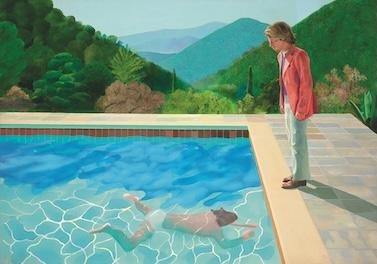
Acrylic on canvas, 84 x 120 in.
Despite this, his is usually not the most famous name associated with the Pop Art movement (we likely imagine the technicolour renditions of Marilyn Monroe by Andy Warhol). However, David Hockney played a substantial role in defining not just the UK’s version of the trend, but also Modern British art more broadly.
Born in Bradford, West Yorkshire, and educated at various prestigious art schools, Hockney found his success, like many of his contemporaries, in railing against the traditional aesthetic values taught to him at the Royal College of Art. Tired of being expected to engage with the lofty subject matter and conventional techniques of ‘classical’ art, Hockney and other likeminded Pop artists turned to mass culture for their inspiration.
This is why 1960s California – a setting known for its post-war consumerist culture, booming media industries and shifting political landscape – served as inspiration for much of Hockney’s art when he was living out there. His use of acrylic paint on canvas, rather than oil, worked to capture the garish shininess of the swimming pools and glass houses that dotted the scenes of the American South West. A Bigger Splash (1967) depicts the almost eerie stillness of this lifestyle. Soaked and saturated in sun, with the splash of a swimmer frozen in time, this poolside scene captures leisure and wealth without a visible subject.
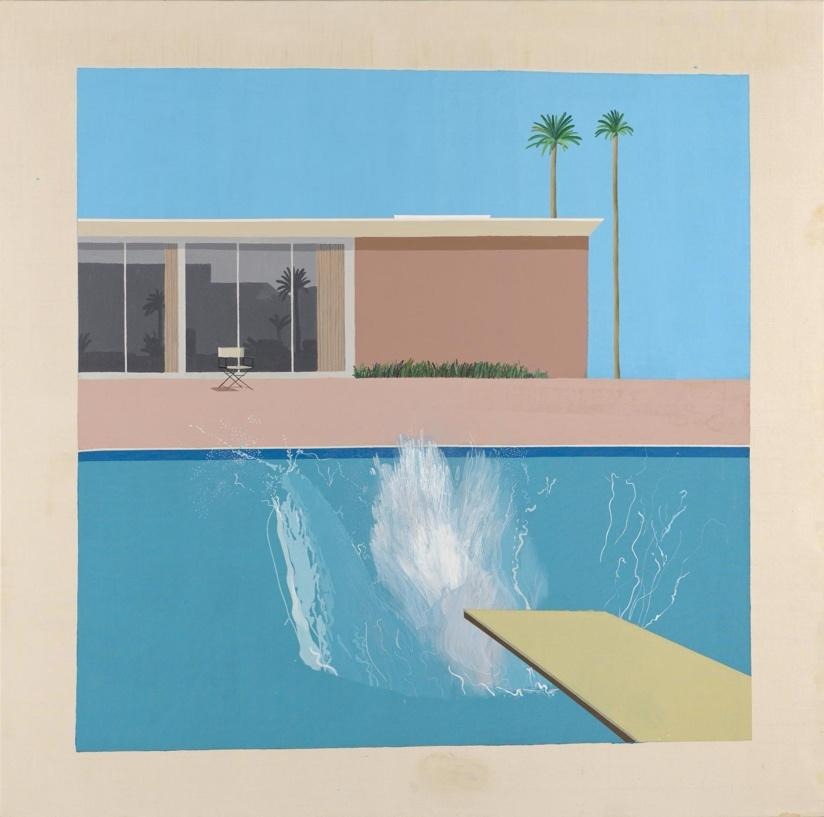
Acrylic on canvas, 95.5 x 96 in.
Returning to the UK and France in his later life, Hockney’s subject matter shifted to portraiture and the sweeping landscapes of his home county, Yorkshire. In the final decades of his life, Hockney became known for his iPad artworks of the area, with a print of his Arrival of Spring in Woldgate (2011) selling for $1 million at Sotheby’s in 2025, making it the most expensive iPad painting ever sold at auction.
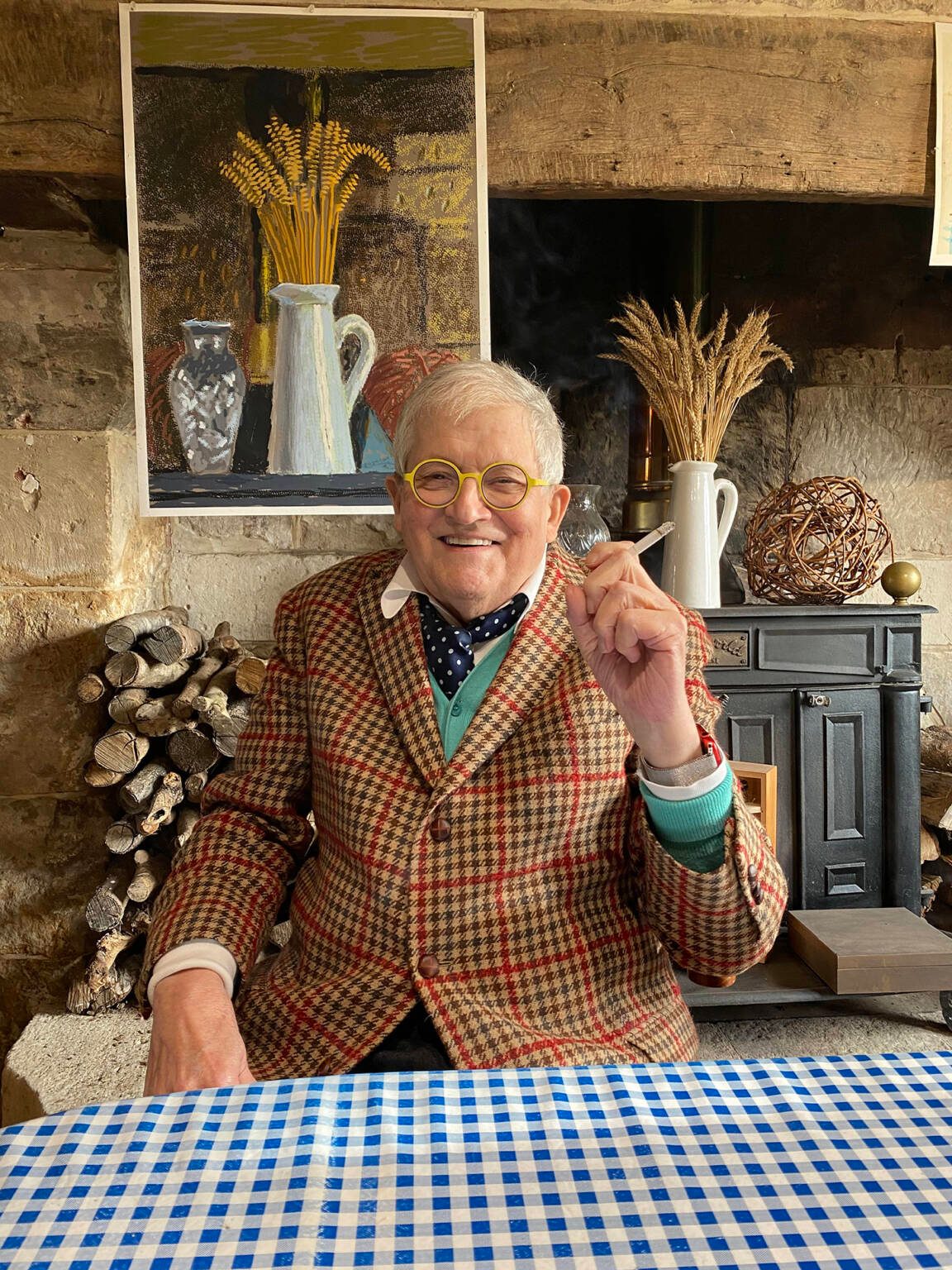
Beyond the successful and experimental artist, however, lay a man equally as memorable for his personal life. As a gay man who came out before the legalisation of same-sex relationships, Hockney has become an icon for the LGBT+ community – one who engaged boldly with touching scenes of same-sex love and intimacy in a time when many sought to bring down his emerging community. He was also an icon of style, famed for his signature round glasses, eccentric clothing and bright yellow Crocs, which he famously wore to meet the King at Buckingham Palace in 2022.
It seems, then, that there are many versions of Hockney to be remembered upon his death: the artist, the activist, the fashionista… But perhaps it was Dame Tracy Emin, another titan of Modern British art known for her provocative confessional works, who summarises him best:
‘[Hockney was] a great artist and a wonderful man, who with the power of art changed the perception of Britishness. [He was] a proud chain-smoking homosexual, who flew the flag higher than any other British artist.’
Rest in Peace David Hockney, 1937-2026.
Featured Image – Jean-Pierre Gonçalves de Lima, accessed at https://pallant.org.uk/perspectives-art-in-focus-kaisarion-hockney/