Categories
Culture

Martyrdom for a Banner: Heraldry, Heritage, and the Northampton Saints

By Harry Laventure

The title “Visual Identity Review” is a prompt that no sane creature could wish to answer, let alone ruminate on.

It is also the heading for a 22-page document published by none other than the Northampton Saints rugby team as a proem to their newly unveiled logo. Once enclosed, the veritable badger may undergo frisson at a carnival of surveys and experiments curated to articulate the present plight of English domestic rugby, and the acute necessities for individual franchises to save themselves by any panacea possible. For shallow is the clock. Worcester Warriors, London Wasps, and London Irish have already been disposed of alongside the superfluous bloats of PPE; Leicester Tigers and Exeter Chiefs both groped at cash inoculations to survive the pandemic’s debilitations. Precious few of the teams that remain operate at a profit.* As the Saints’ investigation itself purports, less than 1/3 of people can name a Premiership club. Although rugby union is the fourth most followed sport in the country, it doesn’t even make the Top 20 for Gen Z (EY Sports Engagement Index, Nov. 2023). It is perhaps a set of studs rammed to the begging hand to note that one of the larger surveys within the report only garnered 1611 responses. Thus Webb-Ellis’ great game of rough football with fingers wheezes.

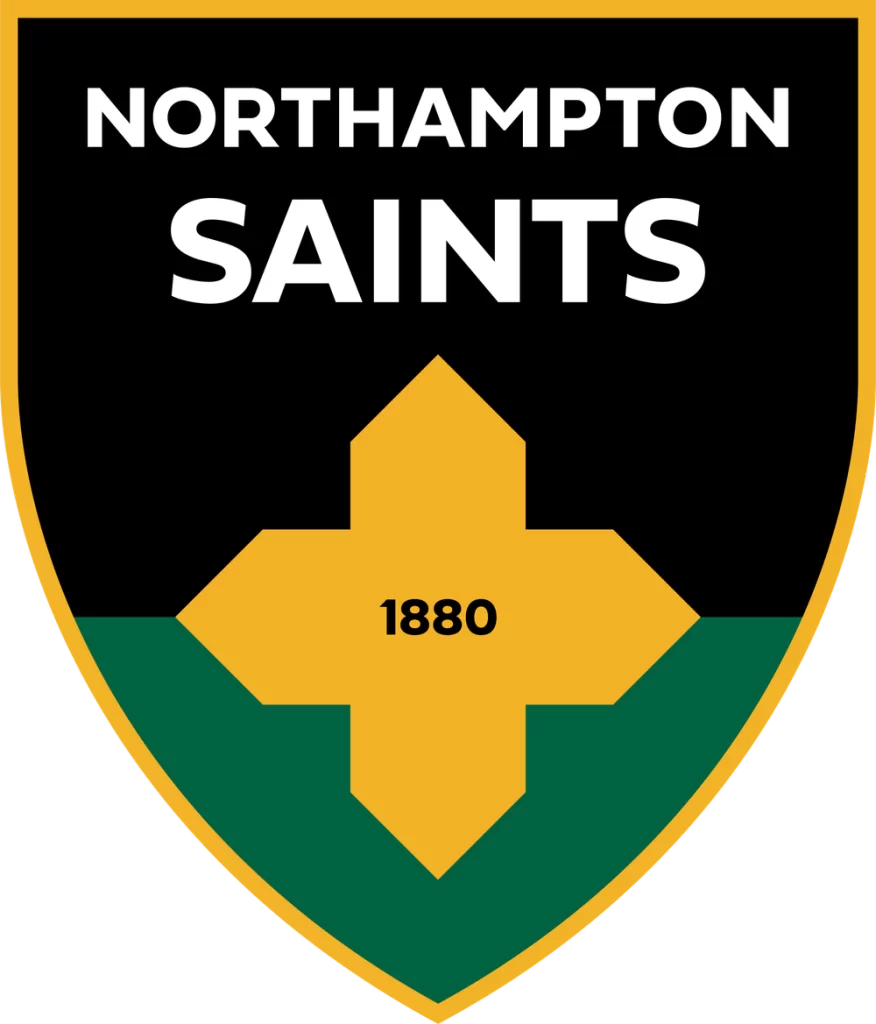
In their hour of need, the Saints have built a new cross: a modernised logo. As an appeal to the digital vernacular, the much-simplified shield posits a daffodil yellow skeleton of St. James’ crux to straddle bands of ebony and Heineken green. As such, Northampton recalibrate to align themselves with every sporting franchise from Juventus to the New York Yankees (cited precisely in the report as examples of efficacious branding) in the sleek, sterile new era. Charmingly, the cross itself is derived from the teamwear in the oldest pictures we have of the then St. James Improvement Class, 1884. It is this detail, declares the club, that permits the memory of forefathers whilst preserving the blood for generations of technophants to come. Alas, for this writer, the cost of lost alleles eclipses the cosmetic.

Images courtesy of the Northampton Saints website

A brief twig of aesthetic genealogy. In 1880, a reverend with the nominal bristle of Samuel Wathen Wigg founded the Improvement Class of his St. James Church. Between then and 1951, the Improvement Class would become the Britons, and the Britons would become the Saints, with accompanying palette changes of scarlet strips to the present black, green, and gold. From chrysalis to adult, the team’s students designed arms for their blazers that would endure to this very year. The Northampton Borough heraldry of 1617 was their starting whistle: two lions grin rampant guardant with the proud symmetry of a Dragontail, between them the solitary turret of Northampton Castle. To this, the students added nimbs, wings, the crimson rose of Northamptonshire, and a trinity of scallop shells. In doing so, they demonstrated erudition and tact that is not usually – unfairly – associated with the muddy foot soldiers of fifteen. Indeed, there is density in the detail. Beyond the elements that made saints out of lions, the scallop shells not only refer symbolically to St. James but tap into the heraldic legacy of the Spencer family, who have historically resided in the nearby Althorp Estate. In this fashion, to poach from Burnett and Dennis, ‘fact and fancy, myth and manner, romance and reality’ enjoy exuberant union within a small patch. A grandiose castle of around 1100 CE finds its rhyming couplet with the sketched halos of post-WWII students. Between history’s pomp and shrapnel, there is plucked taut the golden thread of a place eternal and changing. This is the story of all heraldry, and the martyrdom to which it has glumly plodded for the best part of two centuries is painfully indicative of a recent malady in our attitudes to communication.

Image courtesy of the Northampton Saints website

The Old French hiraudie (deriv. Frankish, Hariwald) animates the imagery of chivalry and other anachronisms by association and fact. A form of identification card for the budding noble combatant, the home-and-away strip of knightly tournaments provided a defensive canvas for the exhibition of lineage, location, and claimed attribute. It is this vast well of opportunity in expression, aesthetic and figurative, that made heraldry a kind of practical art. The bolster of the aristocrat becomes the banner of the company – a charring claim to individuality in the collective of the militant mind. It is a cheap trick of the tongue to note the importance of a topic by citation of its own scholarship, but humour me to direct you towards the contents of Richard Blome’s 1685 The Art of Heraldry. From bordures charged to labells, ineschocheons to orles, fesses to celestials, and four chapters dedicated to the different postures and parts of lions, it reads more like the ingredients list for amateur incantations than history of art. This visual zest has rendered the topic the branding of childhood lessons on medieval England – the de facto décor of the veteran history teacher. Indeed, it seems only yesterday that I charged down Senlac Hill (the mound of our cricket pavilion) under the handled pinion of Normandy’s double lions. But of heraldry, alas, history has not made a victor. Perhaps it is now the moment to calculate why.

Not just yet. An entertaining but relevant digression comes in G.K. Chesterton’s The Defendant (1901). Nestled between the obdurate esteem of Baby Worship, Nonsense, and China Shepherdesses, the writer finds a nook to document the unfortunate denouement of heraldry in his (now our) times. In light of the newly-ruled illegitimacy of God’s nominated representatives, Chesterton argues, the rhetoric becomes more about dragging down the elite than aspiring to conduct oneself by the expectations of their ranks. So the ‘road from the eye to the heart that does not go through the intellect’ becomes one not taken, in an ironic inflection of snobbishness. The tobacconist finds not a shield for his crossed briar pipes; the cheesemonger no war-cry of Wensleydale. The pictorial ‘suggestion, without naming or defining is rendered extravagance’. And men may argue over the ‘wittiest thing about the spring’ that is theirs to inherit, rather than serve. Indeed, Chesterton proposes that it is the continued use of heraldry that permits pubs to exercise their continued, mysterious attraction (…). How easily nostalgia binds itself to English ink. But not entirely off the mark.

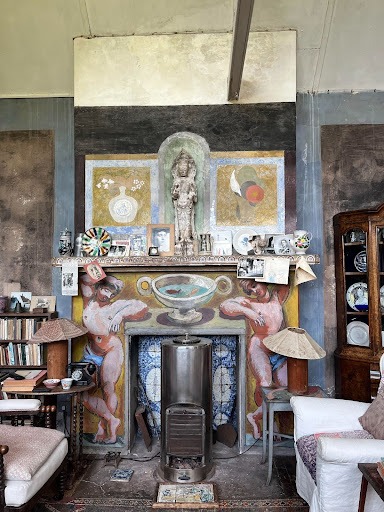
Now, then. Take a gander at the ludicrous excess of the Coat of arms of Baldomero Espartero, Prince of Vergara (1793–1879). Even in an extravagant art form, there are extravagances. Artefacts like this smoothly demonstrate what it means for any piece of art to be imbalanced away from us. It is needlessly overwhelming in what it tries to throw all at once, expecting us not to drop the ball for a moment’s lack of subtext. A reaction of eye-rolling dismissal is not only natural, but justifiable. Because it is natural, it seems right. We are always quicker to note that which inconveniences us. Something that requires more discipline to spot is the imbalance of art at our service, or worse, mercy. That which curries our favour without asking for any form of participation in return is little more than a sycophant’s counsel. I am describing the modern phenomenon of branding. By definition, it is designed to pamper and pander to the lazier instincts of our faculties. Obviously, its only purpose is the successful and swift achievement of your investment. All else is irrelevance – for why would any vendor rely on his customer’s capacity for active evaluation of their product? Neither true commerce, nor free creative expression, heraldry lacks the poise to find a habitat in this landscape. Here we see the true inhospitality of our epoch. 

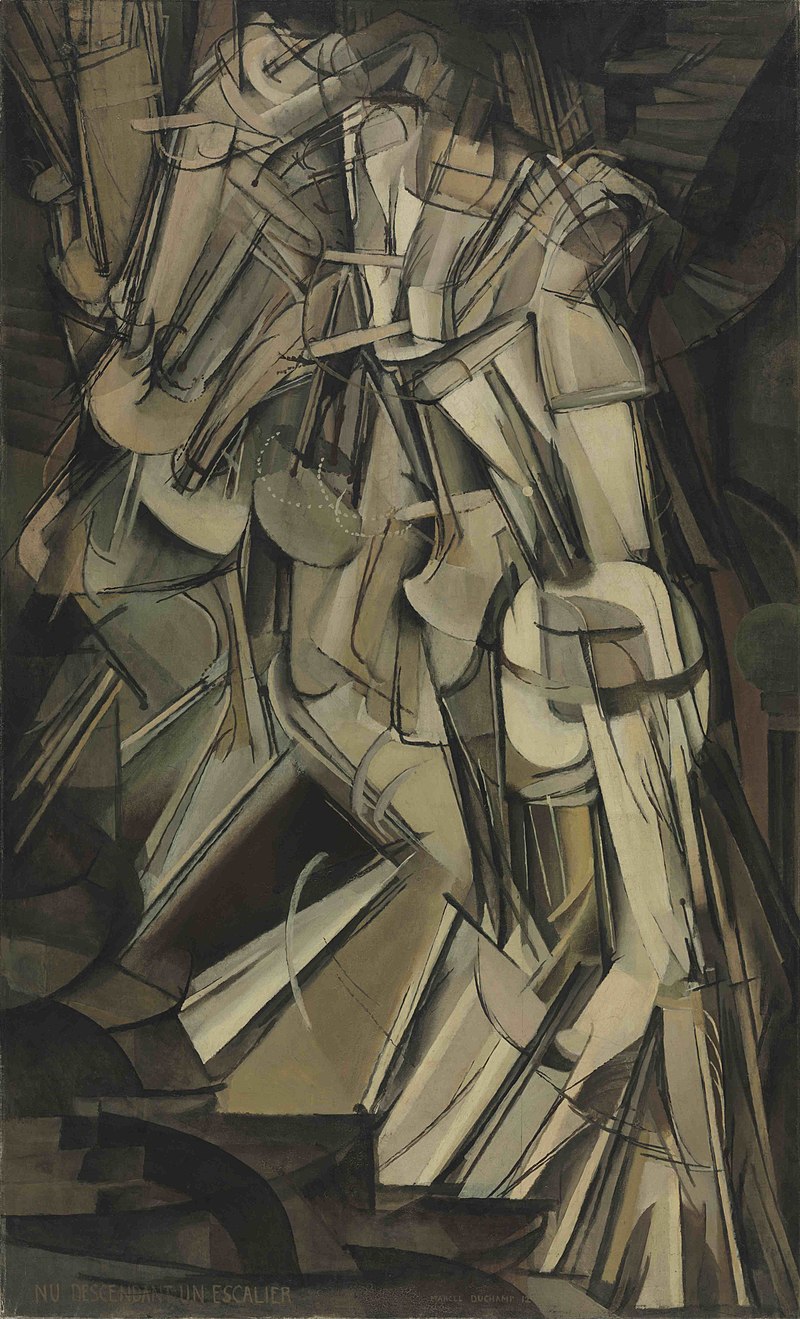
Duchamp once considered the concept of real artistic meaning as the electrified space between a transmitter (artist) and receiver (audience). At its worst, the martyrdom of heraldry is the parable of a collapse in this traditional mode of exchange. Catalysed by the online medium and the general disenfranchisement of the public on the back of the modern era’s artistic experiments, both sides have failed to keep their perfect tension. To reconfigure to a new (but very, very old) image of the Caduceus, the serpents have lost their rhythm with one another. One, gluttonous and slow, waits to be anaesthetised repeatedly by the fangs of a hyperactive other. In the resultantly anharmonic heap, the golden rod has no centrifuge to hold its salute. This is that space between, and it fell with little more than a metallic twang.

Possibly, the true cynic could go further still. In the traditional mode of doom-mongering, they would suggest that the corrosive attitude bred by the casual proliferation of these commercial transactions is a septic tank slowly bleeding into the water supply. Moreover, you can read it in the disposable nonchalance and sterility of this generation’s architecture, infrastructure, art, and literature. And we might consider the sanding down of ornate Parisian lampposts to the aluminium and glass cuboids of central New York. They may even direct you to a Tiktok contrasting the cornices of Schönbrunn with the tubing of the Centre Pompidou. Rising skirt hems, lowering IQs, and things just aren’t built like they used to be. Let us not stumble into satire with no interesting point but laughter. Here sleaze numerous conflations and generalisations, but the questions they elicit are not entirely unrelated to our symposium. Woven as the theme is with strands of pessimistic nostalgia, I do not think that the commercial tectonics dictating art’s place in our lives have been entirely without condescension as of late. Conf. Banksy. When was the last time you saw a piece of contemporary art that was neither blatant nor untenable to you? Harsh, but fair. Fragrances of these ponders are relevant, others are ludicrous. For now, this punter backs away burnt, and concedes that perhaps the more grandiose abstractions of enquiry are for now to remain like the impacts of the French Revolution. Too soon to say. 

In this mess of pretence, it’s easy to forget that we started on the logo of the Northampton Saints rugby team. If we cannot put the artistic atmosphere of our times to rights over this dilettante’s aperitif, we may at least try to reconcile our introduction. It is a shame, but after all that I do feel we must concede that the Saints’ metamorphosis is evidence of evolution in the truest sense: a shot at survival. Practicalities must, and there is no space for the detailing of a centuries old crest in a profile pic. As mentioned earlier, there are fond anecdotes of the Reverend Wigg’s wife knitting the very same cross of the new logo on the St. James’ Improvement Class teamwear. This essence of approach, regardless of execution, should be admirable to the dustiest of Earl Marshals.  

As for heraldry more generally, it seems all too sadly obvious. In the mid-19th century, Somerset Herald James Robinson Planché despaired to admit that it had been called ‘the science of fools with long memories’. Fond as I am, it now appears self-evident that the truest mystery of any cult’s rites exists only for those already initiated. But this panegyric must refuse to conclude in this key centre. Instead, we may remark that heraldry’s finest lessons and attributes survive in whispers, too subtle in their blatancy to offend. Men still do not ‘argue over the meaning of sunsets’. From the blood-peppered fork of the Zulfiqur, to the three (preferably beer-marinated) lions of an England shirt, the most formidable banners of our histories will survive us. And so, let the obituary conclude with a new definition. One of my favourite poets once determined his work as ‘the movement of a self in the rock’. Surely, if nothing else, this ditty has proven heraldry to be none other than ‘the aspiration of ourselves in the rock’.

*Since this article was written (12th August), seven of the ten Premiership teams have declared that they are balance sheet insolvent.

Categories
Culture

Kubrick Since Kubrick

By Edward Bayliss.

25 Years after the Death of the Director 

In 1998, director Stanley Kubrick won the D.W. Griffith Award from the Directors Guild of America. Typically, Kubrick was not available to receive the award in person as he was working in London on what would become his final film and ‘greatest contribution to cinema’, Eyes Wide Shut. What we are given is a remotely recorded acceptance speech from the director, which so tellingly reveals the character of Kubrick.

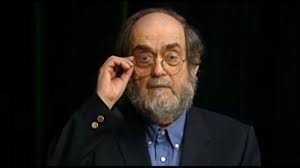
It is with the small ache of separate parts that I rewatch this footage of the director in the final couple of years of his life. In part, because it dispels compellingly the portrait so messily painted by the press of Kubrick the ‘recluse, the misanthrope, the phobic, the paranoid, the museum piece.’ His mythical designation was nothing more than a gluttonous bite from tabloids on a director who had ‘chosen to keep silence in a society that is deafeningly noisy.’ From recordings of him and commentaries I’ve read from long time collaborators and friends, it seems he was a desperately shy man. Barry Lyndon actor Leon Vitali has spoken of how Kubrick kept what he called his ‘actor’s kit’ – a small box which held a little comb and other things to help make him look presentable. You will notice in the clip his awkward shuffle before the camera and how he frequently shifts his glasses over his nose. Kubrick, who otherwise dressed like a ‘cottager’, now wears uncharacteristically, a blazer and button down shirt. Without any intention of condescension, I think his manner and bearing bring about a sensitivity, even a vulnerability. I’ve often humoured myself thinking of the vast number of takes he might have shot before finally landing on the one we see now. 

The hardest thing about filmmaking, Kubrick begins quite surprisingly, is ‘getting out of the car.’ I wonder whether this was because of the dreadful burdens that awaited him in the studios, sets, and sound stages, or really, because it was a daily departure from his greatest friend and driver of 30 years, Emilio D’Alessandro. I suspect it’s likely a mixture of both. Soon after, Kubrick says playfully that making a film is ‘like trying to write War and Peace in a bumper car’ – though Kubrick’s Napoleonic War epic was never realised, it might be argued that his cinematic output was one of Tolstoyan proportions. In terms of his grip on genre, he really was a jack of all trades and master of some. 

D.W. Griffith, who lends his name to the award, has lately been reassessed on the basis of his  beliefs. His 1915 film ‘Birth of a Nation’ made groundbreaking technical and stylistic advancements, but unashamedly lauded the KKK. Kubrick is quick to caution the turbulent career of Griffith. Though he was capable of ‘transforming Nickelodeon novelties into art forms’, Kubrick warns that ‘he was always ready to fly too high.’ With a portfolio of 500 films, it’s fair to say that Griffith cast his net far and wide. Although we are left with just 13 feature films from 1952-1999, Kubrick also travelled far: from the cosmic dreamscapes of 2001 to the blue lit bedroom of Eyes Wide Shut, he saw scale and intimacy unlike any other director. 

The director finishes his acceptance speech with a final remark on the Griffith – Icarus comparison:

‘I have compared Griffith’s career to the Icarus myth, but at the same time I’ve never been certain whether the moral of the Icarus story should only be ‘don’t try to fly too high’, or whether it might also be, forget the wax and feathers, and do a better job on the wings.’

It satisfies me enormously that Kubrick, a man so tiringly associated with myth, skews this legend into a brilliant picture of his process and humour. Biographer Paul Joyce says fittingly, that ‘he’s not serious, he’s not joking, he’s a bit of both.’ Twenty five years after his death, we need to stop seeing Kubrick as a miserly old man fingering reels of film in his darkened editing studio, and begin to watch him as we’ve watched his films – with sensitivity.  

Photo ©:

“It’s Nice That”, 2019

Kubrick’s 1998 Directors Guild of America D.W. Griffith Award Acceptance Speech ©Tyler Bickle Channel Returns


Categories
Culture Uncategorized

Arthur Rimbaud: The Disappearing Poet 

By Maisie Jennings

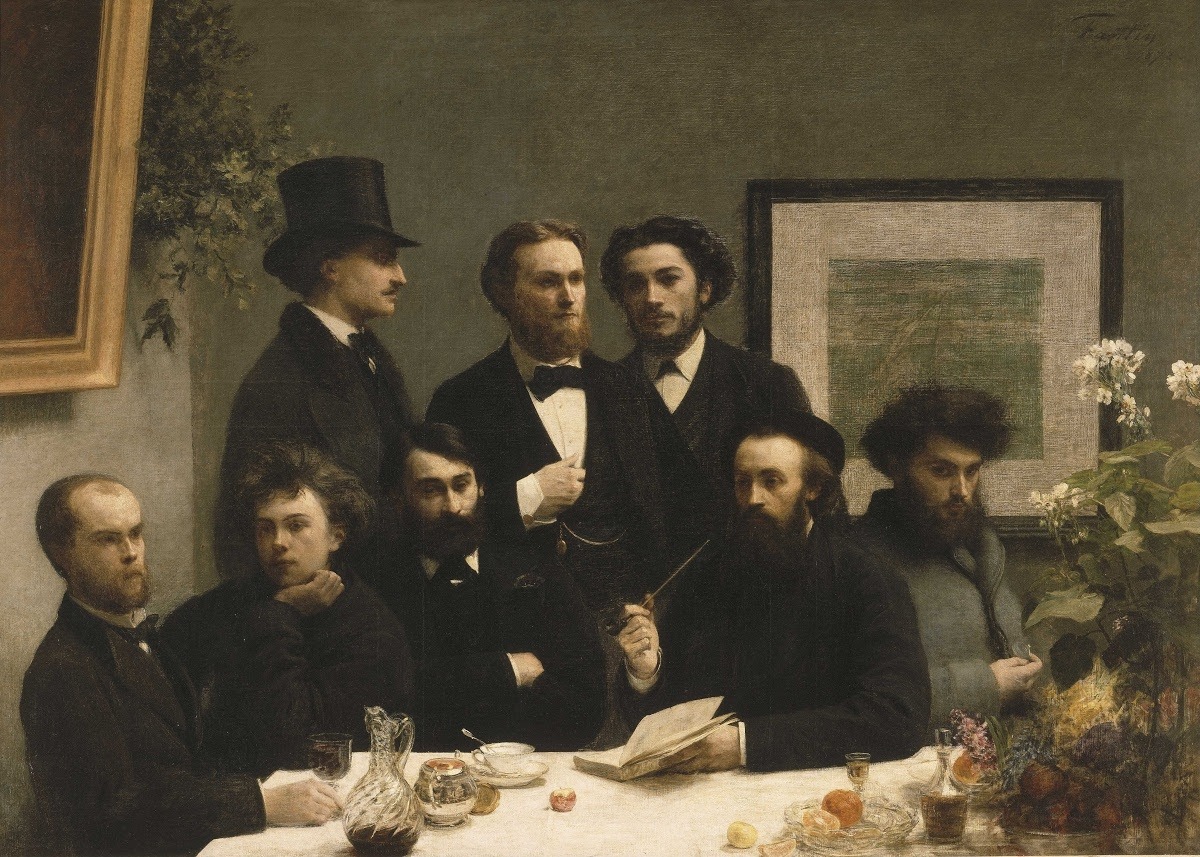
A small, drawn mouth, static brown hair like charged feathers, the foppish ease of his chin resting on the heel of his palm. Henri Fantin-Latour’s 1872 painting, By the Table, depicts Arthur Rimbaud amongst his austere contemporaries. The poet is seventeen – a year prior he had written The Drunken Boat, a dazzling anarchic gem of French symbolist verse, a year later he began to write the crystalline disorder of Illuminations. At twenty, Rimbaud leaves Paris, enlists in the Dutch Colonial Army, and never writes again. 

I was sixteen when I discovered Rimbaud – a poetic icon I found in my worship of Patti Smith, the crowish Poet Laureate of punk rock. In her memoir, Just Kids, Smith describes her adoration of Rimbaud; sixteen in Philadelphia, she stole a copy of Illuminations and found an ‘unrequited love for him’ with the same aching pangs of a teenage crush. I’ll admit, I recognised a smug concordance between the poet, Smith, and I – all sixteen, three centuries apart, and starting to write. Crucially, my poetry was largely sad teenage dreck and less consequential than a pebble in a pond; Rimbaud’s The Drunken Boat, with crests of purest transcendence and crashing depths of filth, changed the landscape of poetry with the force and beauty of a colossal wave. 

And from then on I bathed in the Poem

Of the Sea, infused with stars and lactescent,

Devouring the azure verses; where, like a pale elated

Piece of flotsam, a pensive drowned figure sometimes sinks

Art

The poem is a synaesthetic collection of perfect lines – some with the delicate cadence of seafoam , and others that howl monstrous from the sea’s abyss. It is a triumph of Rimbaud’s precocious mastery of verse and his youthful poetic philosophy. For Rimbaud, the poet becomes a kind of sybillic being through the disruption of the senses – verse, and its potential for capturing all octaves of sensory experience, is the medium for such transformation. In his Letters du Voyant (the name given by scholars to letters Rimbaud wrote in the May of 1871) he writes: ‘The Poet makes himself a seer by a long, gigantic and rational derangement of all the senses. All forms of love, suffering, and madness’. Rimbaud sought to directly encounter the unknown through revolutionising form; poetry became a kind of language of alchemy. 

Rimbaud was born in 1854 in Charleville, a village in Ardennes. In 1871, he wrote to poet Paul Verlaine, washed up in Paris, and the two began an affair that would culminate with a revolver and a bullet to the wrist, somewhere in Brussels, just two years later. Living down and out in Paris and London, I picture Rimbaud and Verlaine sulking in the acrid dinge of opium dens and cheap hotels – poets of the underbelly and the gutter. The original enfant terrible, Rimbaud’s Baudelairean lifestyle ostracised him from the Parisian literary coterie; in Latour’s painting, writer Albert Mérat is surreptitiously replaced by a vase, having refused to be “painted with pimps and thieves”. He describes his volatile relationship with Verlaine in Une Saison en Enfer, an extended poem in prose and the only book Rimbaud published, as a twisted domestic farce – Rimbaud the ‘infernal bridegroom’ and Verlaine the enslaved husband. Still, he entrusted the texts that would constitute Illuminations to Veraline – published ten years after Rimbaud had deserted from the Dutch Colonial Army and vanished in the jungles of Java, Indonesia. 

In his Illuminations, his treatment of the senses is hallucinatory and surreal – flavoured with absinthe, hashish, and the tumult of his travels with Verlaine. The world of Illuminations is at once utopic and apocalyptic; the poems describe the burnt asphalt and debris of a city, inhabited by angels, orphan children, princes, and giants. A Grimm metropolis textured with brimstone visions, it is perhaps Rimbaud’s most realised poetic revelation – a transcendence of the vatic poet. Why then, after having ostensibly fulfilled his poetic philosophy, does Rimbaud abandon his pen? I think the answer can be found in the beautiful, terrible images of Illuminations. Rimbaud presents us with a world that seems to be captured from the vignettes of a child’s nightmarish dream – his poetic achievement, then, seems to be located within his youth. At the cusp of adulthood, Rimbaud seems to have turned his psyche inside out, and then, turned away from his hallucinations, visions, and impressions, and towards the material world. He appears to offer a farewell to poetry: 

For sale: living places and leaving places, sports,

extravaganzas and creature comforts, and all the noise,

 movement, and hope they foment! 

For sale: mathematical certainties and astonishing harmonic leaps. 

Unimaginable discoveries and terminologies—available now.

After his departure from poetry, details of Rimbaud’s life as he travelled across three continents are obscure. Until his death from cancer, aged thirty-seven, in 1891, Rimbaud was soldier to a brutal imperialist regime, a mercenary, an arms dealer, a coffee trader – his one hundred and fifty-odd letters from his time in the Horn of Africa paint the portrait of a man, who was, more than anything, entirely prosaic. The visionary, adventurous seeds of wanderlust he planted in the sparkling landscapes of his poetry are a far cry from the scrupulously mercantile business man, complicit within a violent colonial enterprise, revealed by his correspondence. Latour’s portrait of the artist as a young man demonstrates a precocious bildungsroman – Rimbaud, at the start of his career, had already achieved a poetic maturity he could not sustain in adulthood. 

Image Credit: Google Arts and Culture

Categories
Culture

Words Spoken, Emotions Sung

Dan Whitlam and a New Iteration of Poetry By Callum Tilley.

As those of us not immune to social media trends will have noticed, everything – and I mean everything – now has a space online. Whilst some might critique this impulse as shallow, the hollowing-out of arts like fashion, literature, and film for likes and online fame, it also means that creatives have new platforms on which to broadcast their work, and this art can find new audiences. Whilst this debate about the use of social media for art might rumble on – does it represent a superficial manifestation of technological capitalism, or a democratising impulse in creativity and the arts? – one man has been using media to broadcast his own art, and it is truly quite remarkable.

Dan Whitlam has been posting videos on Instagram (@danwhitlam) since 2017, and on Spotify since 2021. His work consists of a unique blend of spoken-word poetry, coupled with musical accompaniment that renders his work emotionally touching. Now amassing around 137,000 followers on Instagram (as of March 2024), is his significant following a symptom of the democratisation of the arts through social media? And how is work so uniquely modern, yet steeped in a rich poetic tradition? Is Dan Whitlam the future of poetry?

Firstly, I would argue that Whitlam’s style is novel, but not radically new. Whilst being a pioneer of his art form, he has not invented a new category of literature (if such a thing is possible). Spoken word poetry has a long and rich history, its oral tradition reaching as far back as Homer; and in a more modern context, its influences and iterations include theatre, jazz, and blues music from the early twentieth century. His art is not revolutionary, but perhaps a new iteration of this rich art form for the modern (or post-modern) age. 

Arguably, the novelty of Whitlam’s poetry comes from addressing problems unique to his (and our) generation. Perhaps my favourite of his works, ‘Paper People’, is about what could conventionally be described as a break-up. The speaker explains that he doesn’t know if he and his former partner can be friends, because,

“That would mean writing over what we were

Those rose-tinted days

Turning it into something less special

And slightly more mundane.

A lower level of pain – 

You no longer want me as your lover

But wanna hold on to my best bits

When your chest hits

The arm of another.

I don’t think we can be friends.”

The emotional distress Whitlam transmits is acutely familiar to anyone who has gone through a break-up in the past. The feeling of having to turn what was a hugely special relationship into something that, whilst no less important is much less intimate, is something that only those with immense emotional strength can manage. The pain of seeing a former lover in the light of friendship, and knowing that you lost something – or wondering about what could have been – is perhaps too strong an emotion to translate into a friendship. 

Whitlam effectively captures this emotional turmoil in a uniquely modern way. Whilst conventionally interpreted as a failing relationship, it is never explicitly referred to as such. This ambiguity could refer to the diminishing importance of labels when navigating modern love; poetry has absorbed the ambiguity of post-modern dating. Would it be too much to suppose that Whitlam is describing the emotional fallout after that perilous quasi-relationship-like place, the ‘situationship’?

Take, for example, another piece, published on Instagram. The poem opens,

“Nothing stranger than lovers turned friends.

As you both slowly forget your beginning and

Only remember the end.”

Perhaps the most piercing line comes later; when the couple meet again, as friends, 

“Just as strangers with a hidden knowledge

Who have to sadly pretend.

[…]

Where laughter’s not quite as close

But still holds the memory.

Or smiles that aren’t as deep…

But they’re still your remedy.”

In Whitlam’s emotionally sensitive phraseology, the pain of not quite knowing where you’re standing – emotional no-man’s-land – is rendered crystallised. It cuts straight to the buried point of tension, where your complicated feelings and questions about a relationship that cannot be quite defined – that, like Whitlam, avoids labels – and pins it down. The poet won’t let you escape your pain; he expresses it for you. You cannot be friends with someone who was once more than that. You might be friendly, but you either operate on a new plane of relationship – a halfway-point, where you operate as friends but know one another as lovers – or, if too painful, you cut and run. Whitlam leaves it up to us, the audience, to make that choice for ourselves. For him, or his poetry at least, it is too painful.  

If Rupi Kaur is the millennial poet, Dan Whitlam is the emotional mouthpiece of Generation Z. He voices our concerns about the instability of relationships, refusing to define them as we often refuse to define our relations to a lover, and gives intense and beautiful words to the complicated and often un-utterable emotions that characterise our feelings for someone who does not necessarily reciprocate in the same way. It’s painful to listen to, emotively read and set to music, but it’s reflective of our post-modern understanding of love.

This framing of our understanding of relationships finds a uniquely modern platform. Shared on Instagram, Tiktok, Spotify, these poems are directly targeted at the generation of people they discuss. This democratisation of his art allows Whitlam to reach everyone – or, anyone with access to the Internet – which is remarkably modern. So, too, is the blurring of the boundary between music and literature, so that this new iteration of spoken word poetry finds a modern setting over low-fi beats. 

What is not modern, however, is Whitlam’s discussion of loss. I am struck by the intense sadness that runs through his work, but never at any point do I get the impression that he regrets it. This recalls Tennyson’s famous lines,

“’Tis better to have loved and lost 

Than never to have loved at all.”

Whilst Whitlam might be communicating intense emotional turmoil, one emotion left off the page (or screen) is regret. Like Tennyson and countless others, whose rich tradition of love poetry Whitlam now continues, there is no sense that we should protect ourselves from these feelings. Before, I argued that his framing of relationships is uniquely modern; his framing of love, however, is definitely not.

Perhaps the only anti-modern thread in Whitlam’s work is the advocation for feeling these emotions; for loving and loving harder, for experiencing these emotions regardless of the potential consequences, because to fail to do so insulates you from one of the most natural aspects of the human experience: heartbreak. Discussed for thousands of years as an almost universal theme in poetry, Whitlam’s work continues this legacy of advocating for the pursuit of love whilst pushing back against the current impulse to not feel and remain emotionally bubble-wrapped. He reframes age-old poetic tropes of love and loss for post-modern contexts and audiences. Despite being intensely modern in his approach and his medium, Whitlam reminds a modern audience that not to love is worse than loving, and losing.

Sources:

Dan Whitlam’s Instagram, https://www.instagram.com/danwhitlam/

Dan Whitlam’s Spotify, https://open.spotify.com/artist/4t4zanmCp0GBomHaX5hXt8?si=j9bMkWsfRKW6QYVj1ywgsA

Dan Whitlam, ‘Paper People’, extract on Instagram, https://www.instagram.com/p/C3p4kyoo77P/ 

Dan Whitlam, ‘Nothing Stranger’, extract on Instagram, https://www.instagram.com/p/C4slEHjovs4/

Dan Whitlam, ‘Paper People’, on Spotify, https://open.spotify.com/album/5ao1mH7SdctA1afS3CtklP?si=RWGyXOrcQ5u7tP5GM4x-Ug
Alfred, Lord Tennyson, In Memoriam A. H. H. OBIIT MDCCCXXXIII: 27, https://www.poetryfoundation.org/poems/45336/in-memoriam-a-h-h-obiit-mdcccxxxiii-27

Categories
Culture

Playlist of the Week 13 May

By Chloe Stiens

I was in a folky rocky acoustic mood this week. Featuring new music from St. Vincent only.

You can find this week’s playlist at the top of the ‘Spring 24’ playlist, here:

https://open.spotify.com/playlist/5FaZdPSwOS8sEOx6Dq0yB1?si=528b996c66b74f05

Laura Marling, Alexandra

  • This song was the soundtrack to my 2020 lockdown, i.e., sitting in the sun with my Bluetooth speaker and a glass of wine, so as soon as it gets sunny this song makes an appearance.
  • The song is inspired by the Leonard Cohen song ‘Alexandra Leaving’. Here, Marling questions what happens to the woman-muse after she is no longer relevant to the writer.
  • I like chromatic descent in the internal harmony, in which the flat 7 note lends mixolydian modal folk sensibility.

Funkadelic, Can You Get To That

  • From their celebrated 1971 album, Maggot Brain. It is actually a reworking of an earlier Parliament’s track, ‘What You’ve Been Growing’.
  • I love how the drums come in accompanied by a piano glissando, and the low ‘I wanna know’ in the chorus.

St. Vincent, Big Time Nothing

  • From St. Vincent’s new album, All Born Screaming (it has also been released as a single). This is the first album entirely self-produced by St. Vincent, in which her previous sonic influences are excitingly combined; in this song, the Masseduction-esque synth gives way to a funk influence first explored on  Daddy’s Home.

Big Red Machine, Fleet Foxes, Anaïs Mitchell, Phoenix

  • Big Red Machine is the collaborative project between Aaron Dessner (of The National, and co-producer of Taylor Swift’s Folklore/Evermore and The Tortured Poets Department), and Justin Vernon (Bon Iver). 
  • The piano writing here brings to mind one of my favourite Evermore songs, ‘Dorothea’. The percussion is very interesting; the backbeat is composed more of fills than grounding kicks. I also enjoy the subtle horns combined with the other country/folk acoustic instruments.

Mac DeMarco, Moonlight on the River

  • My favourite song off of 2017’s This Old Dog
  • The reverb on the lead guitar brings to mind reflections in water, before it gives way to simple acoustic guitar, bass, and drums for the verse.
  • I love how it goes crazy at the end, as ‘everybody dies’. While the rest of the song can be interpreted as the narrator coming to terms with his father’s impending death, the ominous sounds here could be his grief taking over.

Gang Starr, Full Clip

  • This song is from the rap duo’s eponymous compilation album, released in 1999, and samples Cal Tjader’s instrumental ‘Walk On By’. I particularly like the scrubbing on the chorus.

Joni Mitchell, California

  • Joni Mitchell’s music is back on Spotify!
  • I too have been ‘Sitting in a park in Paris, France / Reading the news and it sure looks bad.’
  • I love how her voice floats upwards on ‘Just give you the blues’.

Land of Talk, Compelled

  • From the Canadian band’s 2020 album, Indistinct Conversations.
  • The layered guitars and synths from 2:21 create a kind of ‘indistinct’ soundscape.

Taylor Swift, The Bolter

  • One of my favourites off the Anthology portion of her new album, The Tortured Poets Department. I’ve chosen the clean version, just because I don’t enjoy how the explicit lyrics in the chorus jar against the sentiment of acceptance and renewal.
  • Dessner’s country/folk influence is strong here, and perfectly compliments Swift’s vocal writing. I really like the minor turn at the end of the chorus.

Grateful Dead, Deal – Live at Gizah Sound & Light Theater, Cairo, Egypt, Sep. 16, 1978

  • I was visiting friends in Cairo, so downloaded this album for the flight. The Grateful Dead were the first band to play at the pyramids!
  • ‘Deal’ is my friend’s favourite Dead song at the moment, so it was on repeat during my trip.
  • I really like the solo (which is actually in the first half of the song, starting at 1:23)… you can really hear Jerry’s banjo techniques in the arpeggiation. 
Categories
Culture

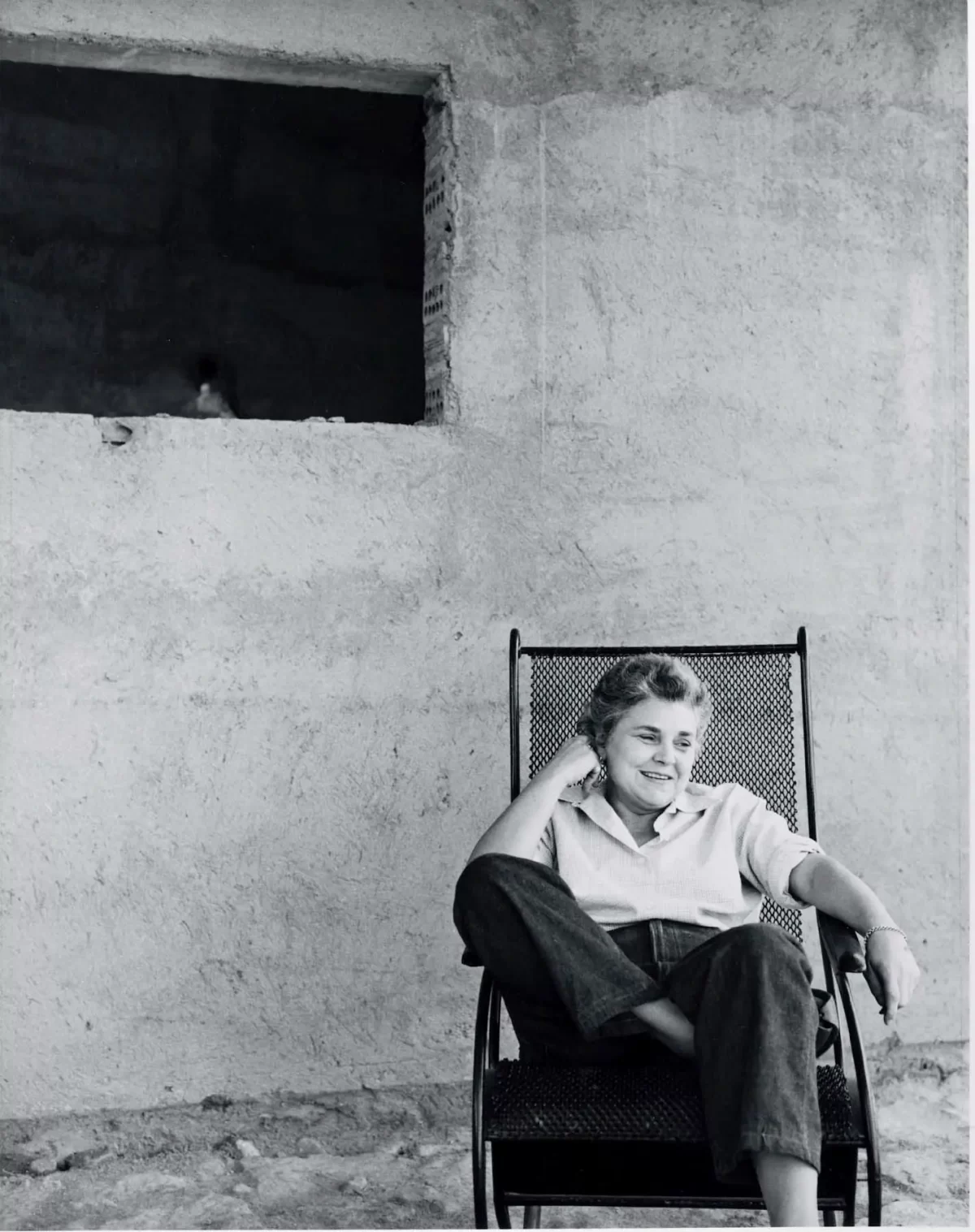
Elizabeth Bishop: ‘One Art’ and the Anatomy of Grief. 

by Vadim Goss

‘The art of losing isn’t hard to master’ is the greatest opening line to the greatest villanelle ever written. 

On a first reading, ‘One Art’ begins ostensibly simplistic. How yes, indeed, it is easy to lose door keys and have an ‘hour badly spent’. But that’s ok — ‘their loss is no disaster’. And then, in its heartbreaking final stanza, we understand what the poem is really about. 

When Elizabeth Bishop was 40, she was awarded a fellowship to travel South America; and it was during her travels in Brazil when she met Maria “Lota” Soares, a daughter from a prominent Rio de Janeiro family. Bishop was only supposed to stay for two weeks in Brazil. In the end, she stayed for 15 years. It was during this period Bishop wrote her third and most outwardly joyful volume of published work, Questions of Travel, in 1965. The work is markedly different from her previous collections, North and South and A Cold Spring, with the shedding of her insular, New England upbringing in favour of a more mature, more outward facing poetic. And whilst the theme of place remained (and indeed, would always remain), what it signified underwent significant alteration. That instead of it being somewhere one has been, rather, place became somewhere one arrives

As mentioned, there is an immense amount of joy in Questions of Travel. For we get to witness Bishop’s voice grow as if a bird learning to fly — beginning as the outsider in ‘Arriving in Santos’, before developing to that of the full-fledged native in ‘The Riverman’. Such joy is compounded in its context, running parallel with Bishop and Soares’ love story — a journey which too began under foreign skies and found its home through a blissful familiarity, reaching the clouds. For as much as the work is a love letter to Brazil; as much as it is a testament to the importance of travel and the virtues found in new beginnings, more significantly the work is an ode to Soares; to the discovery of love and the long-awaited aggrandisement of Bishop’s own homosexuality. It is an object which unveils how love is transformative across all strata.  

Questions of Travel was Bishop’s most hopeful collection. A work which encapsulated the sheer happiness of a life kept waiting now living. But this happiness, like all happiness eventually one must suppose, was not to last. Yet in this particularity, its ending was that of superlative horror. In September 1967, very shortly after she went with Bishop back to New York, Soares took her own life. Questions, in turn, gained an unwanted context and thus an unwanted new way of reading it — becoming a work that no longer lived in happiness, but could only reminisce. More than that, it felt (and still reads now) as if it is begging to reminisce. 

8 years later, Bishop began writing ‘One Art’. Conversely, one might question why it took her 8 years to address the subject. But as the poem itself answers, grief makes the memory of love as young and as old as yesterday. “Lota”, who had been gone for 8 years, had never left. Perhaps any attempt at elegy had eluded her for 8 years. Or perhaps, for Bishop, it had only been 8 minutes.

Like Dickinson before her, Bishop had a singularly small body of published work (just a little over a hundred poems), making her, too, anomalous compared to other great poets. Indeed, she was an extensive drafter, known to spend months at a time working and reworking a single poem. ‘One Art’ was no different, amounting to 17 drafts in total. The title, for example, went through several iterations, such as ‘How to Lose Things’, ‘The Gift of Losing Things’, ‘The Art of Losing Things’. Another notable revision was the line ‘I shan’t have lied’, originally ‘I am lying’. And so on. These drafts are particularly revealing, not only in relation to her signature, artistic anxiety, but also in demonstrating an equally real human one. 

But how different would ‘One Art’ really be for example, if the title was ‘How to Lose Things’? Or if she wrote ‘I am lying’ instead of ‘I shan’t have lied’? If the former was the title, perhaps it seems Bishop is telegraphing an instruction manual of letting go. If she opted for the latter as the line’s composition, Bishop willingly admits that the poem’s thesis — of how ‘it’s no disaster’ to lose things — is untrue. And yet ‘One Art’ is a product of the struggle between these two anxieties; a constant tremble; an endless grappling between her responsibility as a renowned poet and as a lover who never stopped loving. In this light, ‘How to Lose Things’ suddenly becomes a question Bishop is asking herself, desperately trying to write the answer to rid the pain. ‘I am lying’ becomes Bishop’s own doubt invading an art form which demands a disguise to the writer’s Caliban. Yet I think one has to concede: all these tensions exist in ‘One Art’, whether it’s a draft version attested in her notebook, or the final version.

These tensions define ‘One Art’. They are why it comes across so undecided and elusive. On one hand, we have the poet — the silent communicator whispering to the reader permeable meanings. And on the other, the mourning lover who simply wants to scream and to cry and to convince herself of her own meanings. And whilst this is not unique to the elegy itself — one has to look no further than Tennyson’s In Memoriam and the dedication to his “friend” Arthur Henry Hallam (and we can even go as far back as Milton and the veneration he pays to his “esteemed fellow” Edward King in ‘Lycidas’) — ‘One Art’ is unique because it does not pretend to uphold the elegy’s mythos. There is no attempt to re-write a national consciousness; no lamentations on the state of the English Church. Bishop does not divert her attention to state apparatus. She does not dilute the meaning of the elegy. She stares down at grief undiverted, for they have Lota’s eyes. She demands for them to close, for yet cannot bare the sight of Lota’s light becoming lost forever. For Love is ‘filled with the intent / to be lost’. It should be ‘no disaster’. And yet it will always be. This is the concession that renders heartbreak. 

One would be tempted to think there is no “resolution” in ‘One Art’ of which we expect in the traditional elegy. There is a misconception however, that the elegy is supposed to be some sort of cathartic experiment healing the writer from its pain. No doubt this is the consequence of the form’s male lineage, in which coming to terms with grief and “turning away” from it are the same thing. But grief exacts an emotional struggle seemingly too demanding for the masculine sensibility. No male elegists have ever been able to properly deal with grief (except maybe W. H. Auden) because men must always conquer their emotions. They must have their victory over grief. But in grief there is no chance for victory. We have already lost. Bishop’s female sensibility understands this. The “resolution”, if one can call it that, is simply one of this understanding. Grief will always be a cruel contradiction. ‘One Art’ is therefore the anatomy of grief itself — a psychology of contradiction constantly wanting to preserve, to get back, and to let go. 

‘One Art’ towers over later twentieth-century poetry. What first appears as an ode to the elegiac tradition becomes something more confessional, more fragmented, and more human. It refuses to be lofty, nor does it seek to be universal — “to speak for everyone”. Bishop speaks her own voice. She sings her own song. It’s the reader’s job to listen. And at its heart, what we hear is a declaration, both mournful and proud. ‘I have loved. I still love.’ 

Categories
Culture

We Could’a Been Anything That We Wanted To Be – a tribute to Bugsy Malone

By Emilia Brookfield-Pertusini

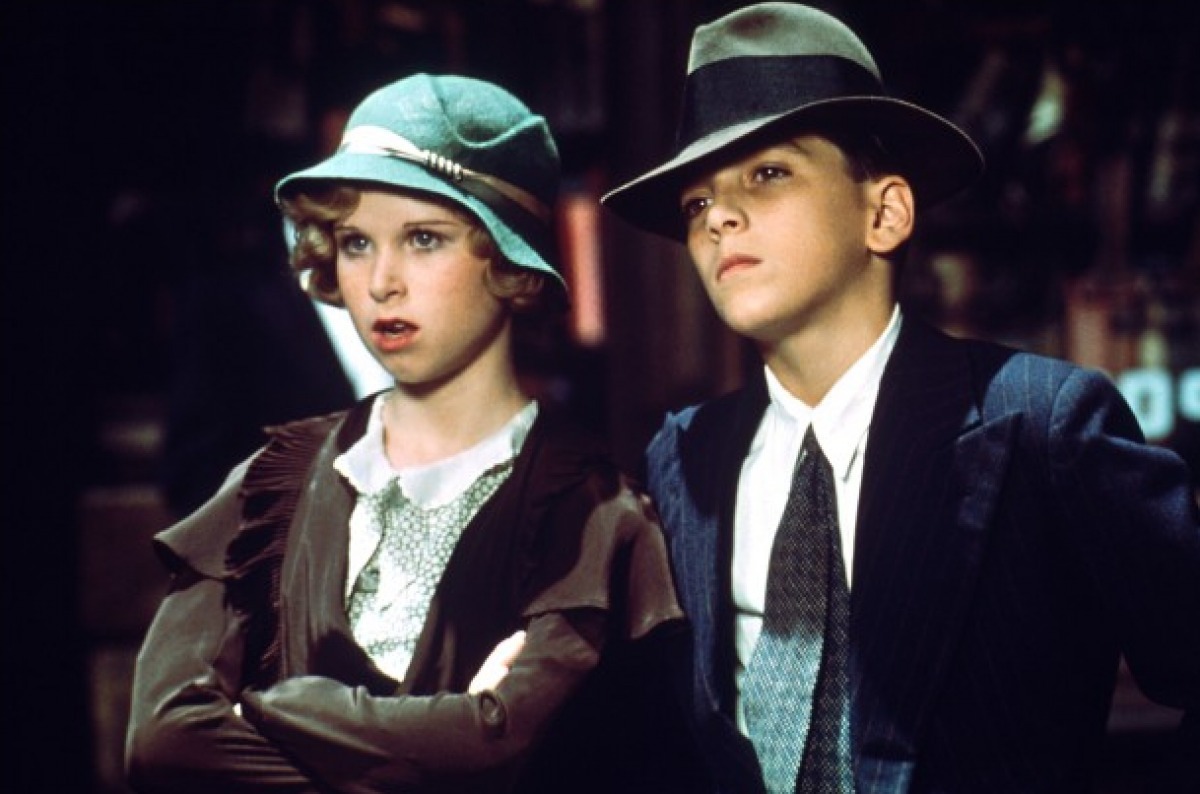
Shimmering silver costumes. Specials on da rocks. Spiteful dancehall girls waiting for their big break. Welcome to the world of Bugsy Malone. Slightly feverish, suffering the consequences from getting too ‘tight’ the night before, I decided to revisit my childhood favourite. My mother protests, “not everyone has had as camp an upbringing as you”, but I really think every child, and film-loving adult, should be made to watch this film. How does a film that merges The Sopranos with Cabaret, is set in New York but was filmed in Slough, relies entirely on a cast of under 15s, and has iconic songs that the children certainly didn’t record themselves, last beyond the bizarreness of 70’s British TV? Charm. 

There’s a cold, deserted New York street where moonlight and outsiders dare to tread. The sound of frantic footsteps dart behind a brown stone, disturbing the alley-cats and a mother at her wit’s end. Shouting. The arrival of the gang in this dead-end spot signals the struggle. Roxy the Weasel, covered in deadly custard, lies in the gutter. Cut to song. 

Gang warfare, the Mob, showgirls who sing suggestively to an audience of mobsters, politicians, and wise guys, shoot-outs and lock-ins. Most children’s films would try and distance themselves away from this crime-ridden world, even if it’s romantically portrayed in 1920’s glamour and gowns.  Part of Bugsy’s magic is that it’s a film for children, starring children, yet why treat children like kids, give them a film that grows up with them. Children aren’t as afraid of playing in a grown-up space as we often believe, Bugsy accepts this and cuts out the middleman by making the kids the heroes without diluting their characters or stories. ‘Namby-pamby showgirls’ are criticised by tedious casting directors, all 13 still, who effortlessly deliver lines exclaiming how they could ‘do something’ with that ‘great face’. From Fat Sam’s Tony Soprano reminiscent demeanour, to passing waitresses and agents, all the characters are given their time to play pretend at full, convincing pelt. The moustaches drawn on with pencils, eyes gaze up as Tallulah glides across the stage ready to start her number, she rolls her eyes in tired professionalism, winking at mobsters and factory workers alike. She opens her mouth ready to sing. ‘My name is Tallulah, I live ‘til I die’. Whilst it may sound like a perfect copy of a showtune, it sounds like a copy written by the kids based off snippets of songs heard through their parents’ records with their innocence of songwriting shining through. This is a musical that wants to feel like a child’s game, and it’s terrific. 

A world powered by peddle-powered cars that are constantly running from the creek of peddle chains belonging to rival mobs, where characters retire from a stressful day with a cocktail and a cabaret, guns that actually shoot; it’s all rather charming. Age appropriateness without patronising. The gusto to the commitment of Bugsy being a mob film is fabulous without pretension; language, names and settings are all so perfectly in keeping with the genre, why sacrifice any of the more cert 15 bits? Despite this age-blind approach, the film gives no sour stage-school taste. Jazz hands are firmly excluded from this speakeasy. Jodie Foster, who plays the wickedly witty chanteuse Tallulah, arrived at the Bugsy set fresh from the scenes of Taxi Driver; these are children who are already immersed into the adult world of acting, why not let them play-pretend as adults, but without the bullets? 

Bugsy finishes galivanting through 1929’s Little Italy with a Leone style shootout. Fat Sam’s Grand Slam is covered in cream, the volume of which almost ventures into the absurd. The glittering girls are dulled. The piano keys glue together under the warfare. Tallulah lets out her last quip, ‘so this is show business’, as she wipes the custard from her eyes. In the normal world, this is catastrophic, a merciless shooting of an entire speakeasy. Yet in Bugsy’s world, it is the perfect finale to extended game of dress up. The previously deadly custard bullets loose all killing potential, causing all to erupt into a custard coated final number. The costumes must all go back into the box, the kids must go back to their respective houses for tea, and they turn back into kids once more – just kids, having fun. Whilst they are convincing and almost scarily good at dressing up as adults, Bugsy Malone has managed to escape a fate of being caged into the weird children’s media of the 1970s by keeping a surreal sense of fun and games close to its chest. They ‘could’a been anythin’ they wanted to be’ and they chose to be fun. 

Categories
Culture

Spring has Sprung: A Seasonal Playlist

By Jack Fry

I wait on springtime with bated breath. Like leaves on a vine, I desperately seek out any creeping sunlight. I really do feel reborn as the weather changes and my levels of vitamin D rise. To many, the first true sign of spring is when the blossom appears; I returned home from Durham last week to find the magnolia tree at the bottom of my garden had bloomed a brilliant white. Spring to me is the first time you tentatively hang your sheets on the washing line, a toasted hot cross bun slathered in salty butter, rain that glimmers as it refracts the pale sunlight, the first freshly cut lawn, a thawing of creaking winter bones. Someone wisely suggested to me recently that spring was a better time for New Year’s resolutions and I always feel a reinvigorated sense of purpose at this point in the year; spring is often associated with renewal, awakening, and growth. The season is transitional and fleeting, a bridge between extremes. I feel each song included is a call to recognise not the sublime, but those smaller moments that occur in between, a moment where a beam of light just breaks through the clouds or the unfurling of a leaf, blink and you’ll miss them and summer will be upon us. So with all this in mind, I’ve curated this seasonally-themed playlist. 

Light of a Clear Blue Morning – Waxahatchee

This Waxahatchee cover of a timeless classic by Dolly Parton, and the album it’s included on St Cloud, feels incredibly emblematic of spring to me. The album, full of songs of renewal and hope, was written following a period when Crutchfield had embarked on a new love affair and had chosen to get sober, observing the world with an intense lucidity. Crutchfield sings in the first verse, a line I think we are all too familiar with after a winter spent in Durham:

“I’ve been looking for the sunshine

You know I ain’t seen it in so long”

With the spring equinox having just passed, the daylight hours now outnumber the dark. And so when Crutchfield’s glassy voice cuts through the grey clouds, she embodies the communal sense of hope that comes with a blue sky day, singing: “Everything’s gonna be alright, It’s gonna be okay”.

Morning has Broken – Yusuf/Cat Stevens

I just managed to catch Cat Stevens’ Legends slot while working at Glastonbury last year and his presence, especially whilst performing this song, brought about a tangible serenity amongst the crowd. This song will always be reminiscent of this time of year for me; when I was growing up it was always sung on Easter Sunday at church. It feels like a companion song to the ‘Light of a Clear Blue Morning’ –  one is an actual hymn and the other is a hymn-like tribute to the renewing power of the morning. 

Little Green – Joni Mitchell

To celebrate the return of Joni Mitchell’s catalogue to Spotify, listen to this moving and deeply vulnerable ode to the child she gave up for adoption whilst at art school, with lovely lyrics capturing the season:

“Just a little Green

Like the colour when the spring is born

There’ll be crocuses to bring to school tomorrow”

New Jade – Caribou

One of my favourite electronic musicians, Dan Snaith makes music under the moniker Caribou. This song from his most recent album evokes the vivid greens of spring with its title. The lyrics referencing new beginnings, stabs of drums throughout and slightly psychedelic production make for a propulsive and joyful springtime listen. 

“It’s like a new first kiss

Yeah, you can start feeling glad

We’ve been waiting for so long

And now he’s finally gone”

Deeper Well – Kacey Musgraves

In this cut from her new album, Musgraves sings of some emotional spring cleaning, where she dispatches some bad habits and unhealthy people from her life and in return draws from a richer spiritual source.

Wash. – Bon Iver

Whilst this title I believe refers to a place, Washington State, I was always under the impression it actually referred to the act of washing. For me, the piano motif sounds like the steady drip of melting ice or raindrops post-April shower. It sounds like a seasonal cleansing, washing away the woes of winter for a fresh start.

Go Do – Jonsi

To me, this song truly captures the energy of spring, an urgent life force compelling us forward. The glitching of the sonics at the beginning resembles the natural world stuttering back to life, a bird beating the water off its wings, a bud breaking through the earth. Whilst I generally don’t like being told what to do, this song can be the exception to the rule, its thumping drums could make even the most sluggish seize the day. 

April Come She Will – Simon and Garfunkel

The most obvious choice of the playlist doesn’t particularly need explaining.

The Foggy Dew – Ye Vagabonds

Earlier this week I went for a walk to watch the sunrise and returned with my boots sodden by the dew, no longer frost. This achingly gorgeous Irish folk sung by a brother duo in lilting harmony is a recent find and one I have on repeat.

Four Seasons In One Day – Crowded House

British weather is unpredictable even in summer, but springtime is when it’s at its most fickle, when the climate assumes a rather fluid identity, giving us warmth, chill, and downpours sometimes all in a matter of minutes. As I write this the sun has offered a brief interlude to an afternoon of torrential rain, hail and gusts of wind that knock the breath out of you. Thus this single from the Australasian band’s album, Woodface, seemed rather apt.

Cattails – Big Thief

Adrienne Lenker, the frontwoman of Big Thief, is in my opinion a songwriter who singularly captures small moments of beauty, as I explained earlier on I find these collected ephemera to be representative of the essence of spring.

Sleep the Clock Around – Belle and Sebastian

The whimsical production of this song in the beginning sounds like birdsong and the song itself sounds like reemerging into the world after a winter of hibernation, sleeping the clock around. The line, “Then the moment will come, and the memory will shine” in conjunction with the brass and synths is absolutely euphoric.

Rise – Eddie Vedder

Like Autumn, the transitional nature of this season can often place me in a plaintive mood and the line “such is the passage of time/ too fast to fold” very much reflects this. This rousing tune from the Pearl Jam frontman, created for the Into the Wild soundtrack, will stir you from your winter slumber.

Silver Soul – Beach House

Beach house sounds like daydreaming feels, and I often catch myself at the moment fantasising about the idyll of summer. The hook is a repeated mantra that “it is happening again” announcing to the world the excitement of a new season and assuring us that with the continuous passage of time, spring will roll around once more no matter what.

Categories
Culture

Playlist of the Week 29th April

By Chloe Stiens.

Bass bass bass! Also, it’s finally getting warmer…

This week’s playlist can be found at the top of the “Spring ‘24” Spotify playlist, attached here:

The Flying Burrito Brothers, Just Can’t Be

  • On their 1971 eponymous album, the first without Gram Parsons. 
  • If I was going on a long drive in summer, this is what I’d play with the windows down. Maybe I’m listening to it as wishful thinking (it’s freezing in Paris)! I like the mixolydian modal influence, and the bass.

ENNY, I Want

  • You may know the South-East London rapper’s song with Jorja Smith, ‘Peng Black Girls’, also from 2021. The second verse slightly reminds me of Little Simz’s ‘Woman’… I’d love to hear them on a track together.
  • Again, I love the bass on this song. It fully explores the potential of a synth bass, in both its bouncy tone, and wide range.

Led Zeppelin, Good Times Bad Times

  • Another windows down song, this time from 1969.
  • John Paul John keeps the bass moving in quavers or semiquavers throughout, complementing the sporadic drum fills. It really takes off in the guitar solo after the second chorus.

Derya Yıldırım & Grup Şimşek, Nem Kaldi

  • My new favourite song, by multinational band Derya Yıldırım & Grup Şimşek. There is a great article by The Guardian that talks about their creative process that spans national borders, that you can read here: https://www.theguardian.com/music/2023/nov/24/grup-simsek-band
  • The group call their music Antonalian folk. Here, you can hear the influence of Turkish music, as well as psychedelic rock. Like Arab music, Turkish music uses modes that include tones outside of the Western conception of harmony (such as ‘half-flats’, which can be heard here in the vocal line and solo instruments. I particularly enjoy the timbre of the bağlama, a kind of lute.

Beyoncé, Miley Cyrus, II MOST WANTED

  • New music by Beyoncé, featuring Miley Cyrus. I wouldn’t necessarily call this country, but its influence can be felt. Cyrus’ husky voice perfectly complements Beyonce’s smooth tone.
  • There are no drums in this song, just bass! This allows the song to maintain its acoustic feel, while keeping it rhythmically grounded.

Marvin Gaye, What’s Happening Brother

  • This song, from Gaye’s 1971 album What’s Going On, tells the story of a soldier returning from Vietnam, and getting used to how life has changed since he’s been gone.
  • Here, you can really hear the influence of jazz and funk in the chord progression, which is constantly shifting tonal centre, and in the syncopated bass.

Control Machete, Comprendes, Mendes?

  • From the Mexican hip-hop groups 1997 album, Mucho Barato. I like the trumpet-mute sample, and the bass slide.

Julia Jacklin, Don’t Let The Kids Win

  • From the Australian indie-rock artist’s 2016 album of the same name. The simple guitar chord accompaniment complements the poignancy of the lyrics.
  • My brother already doesn’t think I’m cool, sorry Julia.

The Pixies, Ana

  • Again, I really enjoy the tonal instability here, as well as the counterpoint between the multi-tracked vocals and lead guitar.

Art Tatum, I Cover The Waterfront

  • A version of the jazz standard (composed 1933), by one of the greatest jazz pianists, Art Tatum. Here, you can hear the influence of stride players like Fats Waller.

Photo credit – The Flying Burrito Brothers, Spotify

Categories
Culture

Bruckner’s Symphonic Contract with God 

Feierlich, Misterioso

By Harry Laventure

Solemnly, mysterious etch the brackets into which we are hemmed in the opening sears of the first movement. Violins buzz with the tremors of dust disturbed in the prelude of a tempest’s caprice, and call the calling of sombre fanfare. Thus the brass asserts itself above the tremolo in forceful simplicity, and therein the inscribed syllables of loft find their reciprocal: the nod of a bull before the altar’s slaughter. Forgive the Classicist his unimaginative vices, but there is something of Homeric grandeur in this sonic landscape. The twin rumble of drums are hammers to the battlelines, and we are sealed in amidst the scattered promises and declarations of an uncanny hero’s ambition. Our tension is permitted a woodwind reverie of gasping brevity, a bouquet of memories before commencement. We hear what it is to soar in the vignettes of a past well spent, spliced with shots of remorse too thrifty. Then comes the surge, at the mercy of a rolling wave’s architecture: from the raging torrent swells some dark god – the conductor himself? – and with it the orchestra is electrified into a monument of raw majesty, blasting thunderous bolts of assault on the ear in ruthless succession. Paralysis of megalophobia, to coin a phrase. Under these auspices does Bruckner begin his theological wrestling match: the unfinished Symphony No.9 in D minor.

Some forty-five minutes earlier, I had disembarked at Newcastle station. Abiding thematic etiquette, the fragrance of a fashion show induced hangover had left me feeling penitent. Indeed, advancing on the refractive armadillo of The Glasshouse at Gateshead by afternoon sunlight, I mused that perhaps this was the only way to appreciate a work written on the composer’s death bed. Macabre remarks aside, I had never visited the International Centre for Music; I was quite shocked to find such a titanic figure perched like an enormous silver hippopotamus enjoying a river tipple. Changing its name from The Sage in 2022, the £70,000,000 project was built in 2004, and houses a small rehearsal and performance space, a 450-seater, and a 1,700-capacity auditorium. The latter of these formed the arena for the afternoon’s concert – the third day of The Glasshouse’s Big Bruckner Weekend in celebration of his 200thbirthday. 

A true centurion of the concert hall, my grandfather had attended all three days, witnessing the Royal Liverpool Philharmonic’s take on Bruckner’s 7th (“quirky”), the Hallé’s portrayal of his 8th (“breathtaking”), and the Royal Northern Sinfonia’s performance of his ‘Great’Mass No.3 (“quite staggeringly beautiful”), to name the party pieces. Whilst we enjoyed a sobering glass of elderflower, I surveyed the belly of this beast to the soundtrack of three of Bruckner’s motets, live. Bar the occasional jolt of ground coffee belted from its chamber, a reverential silence cascaded upon the open-plan café and restaurant as we were serenaded by the Royal Northern Sinfonia’s chorus. The acoustics cradled the gentle cadences of these chapel-sized blooms, and the delicate parhelia of technicolour lights above provided fitting aesthetic symmetry. It was moving in a soft way, and quite unlike the rip-roaring blasts of the symphony to come. A composer of measure, I chortled to myself. 

On 4th September 1824, Anton Bruckner was born intothe Grimmly named Ansfelden, Linz-Land. A variation on a fairy-tale theme, he was the eldest of 11 childrenand the son of the village schoolmaster. Though the family’s poverty rendered a solely musical career untenable, his early years ran parallel to the lines of the stave – lessons in violin and the organ from his father set the tone for the man who would come to be known for his meticulous, obsessively-calibrated scores. Prior to this symphonic success, he trained as a schoolteacher, returning from positions at Windhaag and Kronstorf to the monastery where he had once played chorister: St. Florian’s. 1855 saw him grace the organ-pipes of Linz Cathedral, before spending the best part of a decade studying under Simon Sechter and Otto Kitzler. The latter of these two pedagogues would introduce Bruckner to his most profound musical influence and champion in Richard Wagner. By 1868, Bruckner had secured the position in the Viennese Conservatory previously held by Sechter, and had become court organist for Emperor Franz Joseph I. Then, and only then, could he turn his hands to composition. 

Many biographers have gone to great lengths to demonstrate the peculiarities of this “late blooming”. Aged 38, Bruckner had already outlived Mozart and Mendelssohn’s entire careers before he put quill to stave– I daresay you can hear it. This procrastinated musical puberty meant a very choppy few years for the Austrian. His organ playing was unquestionably gifted, but his composition was the subject of frequent and vehement ridicule. Brahms would lambast his work as a toggle of‘symphonic boa-constrictors’, referring to the man himself as a drunkard and a ‘bumpkin’. Indeed, though Wagner considered him the finest symphonist since Beethoven, Bruckner’s 1877 premiere of the 3rdsymphony was such a catastrophe that most of his audience left before it had finished. As a man of perpetual low self-confidence and revision, he would go so far as to beg the emperor to prohibit the draconian critic Eduard Hanslick from writing about him. It was only twelve years before his death, upon the opening performance of his Symphony No.7 in E Major in Leipzig, that Bruckner would receive due applause for his work. The final nine years of his life would see him metronomically sway between grave illness and the attempted completion of his most grandiose aspirations yet in his Symphony No.9.

Feierlich, Misterioso. The existential sobriety of a pious man’s last musical musings is indeed enveloped in enigma. Even the famous dedication Dem Leiben Gott (To the Good Lord) is a matter of dispute, with some suggesting Bruckner’s doctor Richard Heller fabricated it. Quoted or not, it goes some way to connote the scale of this biblically infused colossus. Numerous writers (the present not exempt) have resorted to hyperbole to articulate the majestic physicality of the work. Graf would compare Bruckner to a medieval architect before a Gothic cathedral. The Glasshouse’s website calls him ‘musical marmite’, with the tagline ‘Bold. Brassy. More peaks than the highlands’. Perhaps Douglas Kennedy’s Leaving the World puts it best: ‘the search for the divine amidst the whirligig of the quotidian; the notion that there are large, ethereal forces at work in the universe’.Between belches of dissonance and swooning passages of beauty, the composer’s behemoth embraces every kaleidoscopic slide of life as the man in fever clings to the bedsheets with atavistic desperation. 

And so, it fell to the Scottish Symphony Orchestra to inflate this piece to popping point. I took my seat, awkwardly parcelled the programme below my chair, and performed the stand-up stand-down routine as last-minuters scuttled past me. Settled, the doors locked us in. The young iridule Alpesh Chauhan strutted as a gladiator to his conductor’s perch. Thus, the ring completes. I have gone to some lengths to describe the scintillating opening of the first movement, triumphant and commanding with phrases of delicacy. In many ways, this is a fitting synecdoche for the whole chapter. There are groans of elephantine proportion, and cadences like the exhalation of a dandelion on a clement gust. Rapid, tumbling passages expel us from paradise, before peacefully curious, dainty perambulations hold our hands with glee. The movement finishes as it started, as a towering pillar that confronts even the casual listener: the aggressive finger of accusation to the heavens seen in a high church spire. The Scherzo of the second movement is crashing and dynamic, tying us to the back of a chariot that drags us through wastelands by night, by way of Bruckner’s own katabasis. Bewegt, Lebhaft. Emotional and lively, it attacks the ear with vermiculite aggression, and wouldn’t be out of place replacing Williams’ famous Imperial March. Finally, the Adagio is Bruckner’s ‘farewell to life’. If the battle has been lost and won, the bittersweet third movement is reflective and elegiac, at once a lament and a celebration of achievement and decay. Langsam, Feierlich. We start as we begin, but emerge changed utterly: solemnly, but slowly. Mystery gives way to clarity and consideration, but the conclusions are of magnificent scale and effect. Unsurprisingly, there is Wagnerian climax in the spine-tingling ‘cathedral of sound’, and we are left in the cosy fallout of a truly nuclear finale. If this sounds excessive, it is. The SSO were sublime, and Flora Willson’s review was absolutely right to praise Chauhan as a charismatic and balletic conductor, at once channeling the energy of this almighty work and bridling the tension necessary to execute it. I think I heard more than one exasperated “blimey” as I walked out, bereft. 

Given this sense of closure, it is perhaps even more bizarre to consider that this was not the intended ending. As Bruckner passed on to meet his maker, the fourth movement remained unfinished. His doctor Heller claimed that ‘he had drawn up a contract with his ‘dear Lord’’ – I wonder if it was fulfilled thus. Many have edited, revised, and ornamented the final movement in vain attempts to give the piece its full glory. But to my mind, performing it as is feels overwhelming enough, only just balanced. For all his division and derision, a word that doesn’t come up enough when discussing Bruckner is poise. Whether he pushes or pulls us, toys with our expectations or fulfils them, there is an innate sense of pacing that maturely pulses throughout – a sign of his age, possibly.

Bruckner’s reception through the years has been unorthodox to say the least. His influence is hard to express, but tangible. Occupying a liminal space between Wagner and Mahler, it is unsurprising that cinematic parallels are often drawn in the epic scale of his symphonies. This occurs in translation and paraphrase: as Bergman adopted the Scherzo of Symphony No.9 in Saraband, there is certainly more than a smattering of the Jaws bass in the opening minutes of the Adagio. Some have even suggested an impression on contemporary music: take to minute 3.05 of the 2005 Munchner Philharmoniker/Christian ThielemannSymphony No.5 in B flat Major, and try not to detect The White Stripes’ painfully omnipresent Seven Nation Army riff. 

Influence aside, Bruckner has been the victim of more than one biographical embellishment or rumour through the years. We have already seen the potential tampering of his doctor, Richard Heller, in the alterations to his final work. Morbid oddities are a weed-like motif throughout his other biographies. The mammoth ninevolume work of Auer and Göllerich (1922-37) mentions a compulsion to count, claiming Bruckner was addicted to numbering everything from windows, to steps, to the bars of his scores. We are also told of nine documented proposals to women much younger than him (all rejected), and a page in his notebook reserved for those whom he had taken a fancy to. He allegedly planned his funeral with fastidious acumen, and cherished a picture of his mother on her death bed. Once more, Butt names testimonies that Bruckner had ‘fingered and kissed the skulls of Beethoven and Schubert’. There is no denying that Bruckner was a most peculiar man. 

And yet, as with all lives of the artists, we must be on our guard to writers’ attempts to make the private moments of great creators and pioneers live up to the scale of their outward inventiveness. In many ways, we probably ought to be thankful for these attention stunts: in the 1927 printing of Grove’s Dictionary of Music and Musicians, Anton Bruckner receives no more than a singular paragraph, deemed too redolent of Wagner for due time and effort. We are on the correct trajectory to rectify this misdemeanour. Although we may never know the man, the panegyrics of our eyes will always harmonise with his work. The Glasshouse’s Big Bruckner Weekend did a stupendous job of facilitating that. The exhibition Bruckner, the Pious Revolutionary at the Austrian National Library’s State Hall will hopefully amplify awareness further. Only time will tell whether we are capable of more perseverant praise than sitting up and listening at a landmark like his 200thbirthday. To plagiarise a toast, perhaps Ludwig Speidel put it best: ‘it is no common mortal who speaks to us in this music’. For all his solemnity and mystery, let us tip our hats Bruckner’s way.