
By Matthew Dodd
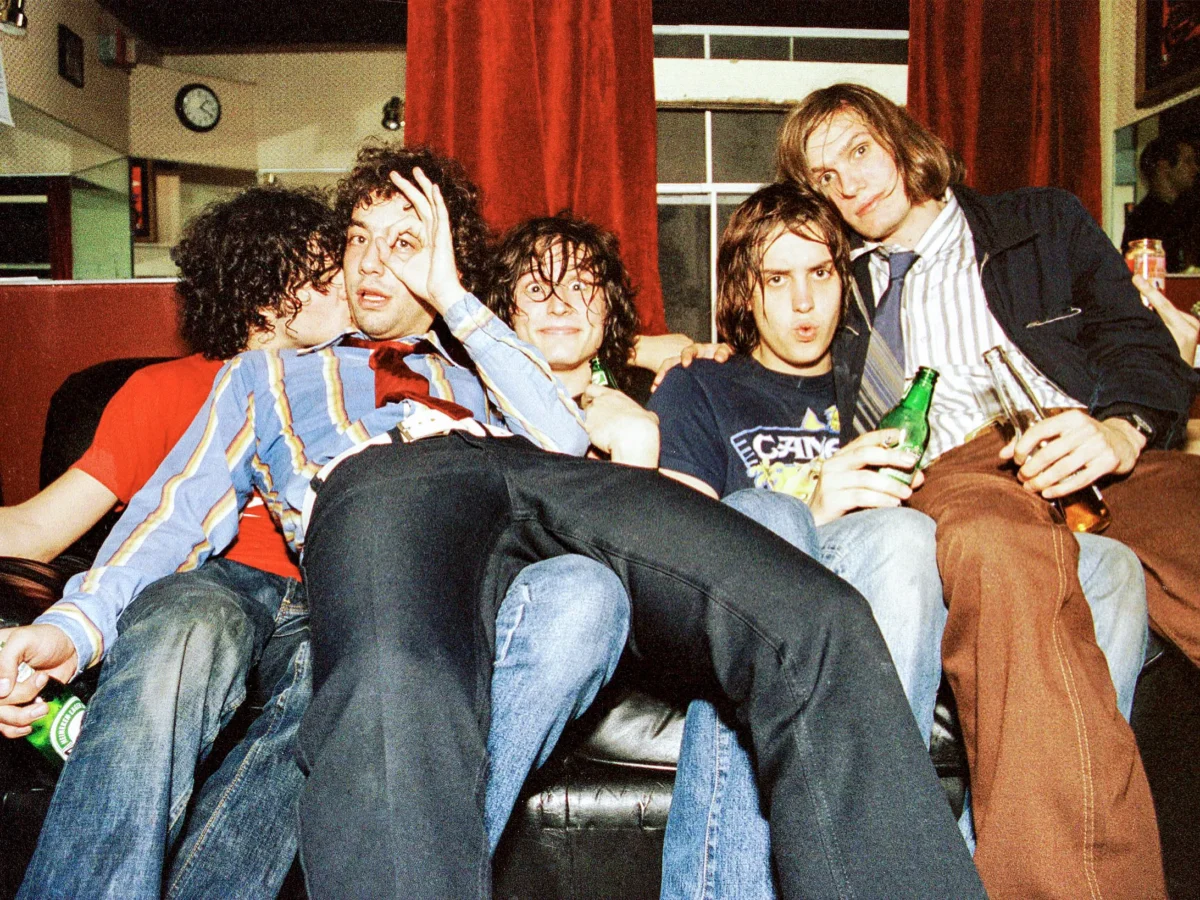
On the second night of Indio, California’s 2026 Coachella Festival, a musical singularity event of sorts occurred. Across one day, audiences were able to watch on as the ghosts of indie rock past and present performed from opposite ends of their respective careers. This is to say, Geese and The Strokes were scheduled to play on the same day. Since their rapid ascent to the centre of the cultural zeitgeist at the end of last year, Geese have been dogged by comparisons to their New York indie forebears. Both bands were touted as heralding a revival of guitar-rock, both were products of New York private schools, and both were fronted by messianic lead singers who seemed incapable of washing their hair. Sonically, both seem guided by the same philosophy, though pursuing divergent methods. The appeal of The Strokes, 25 years ago as now, was that they were remarkable musicians who seemed broadly disinterested in the excellence they were dispensing. Julian Casablancas would lazily groan into an old-fashioned microphone, rarely deigning to move around the stage, while the rest of the band would remain focused on either their instruments or their bandmates, unbothered by the imposition of any audience. Geese seem to have carried this attitude to its logical extreme, disregarding any notions of established performance conduct: altering tempos within songs, duplicating verses to throw off any singing audience members, and randomly leaping into covers of Justin Bieber’s ‘Baby’. Chief amongst their similarities, though, is that both were thrust into the musical ecosystem as the prototypical ingenues. Both Casablancas and Geese singer Cameron Winter were 23 when they had their breakthrough; both bands were promoted as much for their music as for their status as a group of bright, young things. Coachella’s accident of scheduling is a reminder that, as The Strokes prepare to release their seventh album ‘Reality Awaits’, they are no longer the wunderkinds of the scene, but the godfathers.
The joy of the early Strokes output, primarily their debut ‘Is This It’, had a lot to do with a self-conscious attitude towards their own youth. Indeed, theirs was an appeal conditional on their youth, and one which deliberately toyed with the melancholy of memories still being made, an actively forming nostalgia. ‘Last Nite’ is a paean to nights out nobody will ever understand; the title track is a forlorn reflection on the disappointments of the adult world. On ‘Someday’, Casablancas pines that ‘when we were young, oh man did we have fun’ – again, nobody in the band was over 23 at the time of release. The aesthetics they played with – grainy music videos of the band members hanging around in bars, concerts modelled after Elvis’ 68 comeback gig – only bolstered that image of crystalised youthful expression. To this day, ‘Is This It’ remains an unimpeachable masterpiece of 2000s indie, a flash-in-the-pan moment of musical ingenuity. It was an album that, practically overnight, made The Strokes the most important band in the world. They were as influential as The Velvet Underground, as derivative as Oasis, and as cool as The Ramones. It was their impact which shook the UK out of its post-britpop daze and launched the careers of countless awkward, jangly guitar bands. As Alex Turner of Arctic Monkeys would reflect on the opening track of ‘Tranquillity Base Hotel and Casino’, ‘I just wanted to be one of The Strokes.’
On successive releases across the next two decades, The Strokes never really managed to return to the heights of ‘Is This It’. 2003’s ‘Room on Fire’ was well received but criticised for being little more than a continuation of their debut. The spectre of shrinking youth persists throughout this second album: ‘talk to me now I’m older’, croons Casablancas on ‘12:51’. ‘You Only Live Once’, the lead single from third album ‘First Impressions of Earth’, offers a 28-year old’s reflections on life’s lessons: ’oh men don’t notice what they’ve got, oh women think of that a lot.’ An alternate version of the track, a piano lead number entitled ‘I’ll Try Anything Once’, makes this spirit of maudlin introspection all the more obvious. Removed from the hard-rocking verve of the original track, this parallel take foregrounds the anxiety of youth with greater melancholy than on previous efforts – ‘ten decisions shape your life, you’ll be aware of five about’. Nevertheless, after their explosion as the new faces of youth rebellion and the vanguards of guitar rock, The Strokes were held hostage by that image such that they were never truly able to expand beyond it. Their next two albums, ‘Angles’ and ‘Comedown Machine’, were received lukewarmly, and the creative attentions of the bandmembers seemed turned towards other projects, such as Julian Casablancas’ electronic rock outfit The Voidz. For much of the 2010s, then, it had seemed that the great rockers of the century had failed to make it out of their early-20s excitement.
Their return in 2020 – at the height of worldwide lockdown – was nothing short of a resurrection. ‘The New Abnormal’ was a revelatory album. It was as musically brilliant as anything they’d ever done but, crucially, it was as relevant to the band as 40-somethings as ‘Is This It’ had been to them in their early 20s. The album is full of middle-age regret and gestures towards a lost past. ‘Bad Decisions’ deliberately interpolates Billy Idol’s ‘Dancing With Myself’ into a knowing reflection on the band’s evolution and the inevitability of alienating its audience. The sound of the album is a world away from the band’s garage-rock roots: a breezy mix of synth-pop and new wave that sits closer to The Psychedelic Furs than Arctic Monkeys. Opening track and TikTok megahit ‘The Adults are Talking’ is a masterful sermon from the aging rockers towards the strata of teenage rebels from which they are, by time, estranged. On the fame won so early by Casablancas and co., the message is clear: ‘don’t go there ‘cause you’ll never return’. Album closer ‘Ode to the Mets’ sets the band’s own history against that of their native New York and their home baseball team. The overarching theme is one of regret and introspection. It is an apology to their fans for ‘the silence you’re hearing’ and a dismissive creation myth for the band itself: ‘I was just bored, playin’ the guitar, learned all your tricks, wasn’t too hard.’ With the release of ‘The New Abnormal’, The Strokes had finally made a true successor to ‘Is This It’, a bookend of a record which was as inventive and essential as its ancestor. As the band had grown up, so too had their music.
Six years later, we find the Strokes once more on the verge of revival. ‘Reality Awaits’ is set to release at the end of June, with two singles put out in anticipation. It is hard not to listen to these tracks, ‘Going Shopping’ and ‘Falling Out of Love’, without a sinking of the heart. The Strokes have always been chasing a new sound, for better of for worse, to maintain an edge: a glimpse of the creative insight that burned through their initial success. On ‘Going Shopping’, The Strokes sound, for the first time, out of touch. It doesn’t sound like a new evolution, or indeed a knowing homage to the old, but a misstep into the middlebrow. The instrumental is fine – a groovy-enough synth line with a classically Strokesy guitar accompaniment. A good, if not great, song seems buried within the track. Yet, the decision of Julian Casablancas to mire his vocals in deliberately janky autotune makes the song sound like the product of a secondary school band messing around with Pro Tools for the first time, rather than one of the most important acts of the century. They feel, in a way they never have before, like an act disconnected from the zeitgeist. If ‘The New Abnormal’ was their great reflection on ageing, ‘Reality Awaits’ sounds like the album on which The Strokes get old. This, accompanied by widespread allegations of AI usage in the creation of the album’s promotional art, gives the band an aura of awkward tastelessness which can’t help reminding us that they are rapidly approaching the dominion of the Classic Rock station.
At Coachella, The Strokes seemed to reassert their position as the great ones of indie-rock: a performance as good as any they’d given in years, coupled with a political intervention braver than any at this year’s festival. Even Cameron Winter was forced to look on in awestruck wonder. In their new music, however, none of that spirit of rebellion seems to have found creative footing. Perhaps this is solely an accident of single choice, or an elaborate prank by Julian Casblancas. We can only hope, for the sake of the 21st century’s greatest band.
Featured Image – GQ