
By Edward Clark
feeble little horse are the outlier. Not only possessing one of the greatest band names maybe ever, nothing else sounds quite like them. Their newest album pushes this musical boat out even further. Crunch and distortion are balanced by shimmering vocals and enchanting melodies, transforming bitknot into a sonic kaleidoscope.
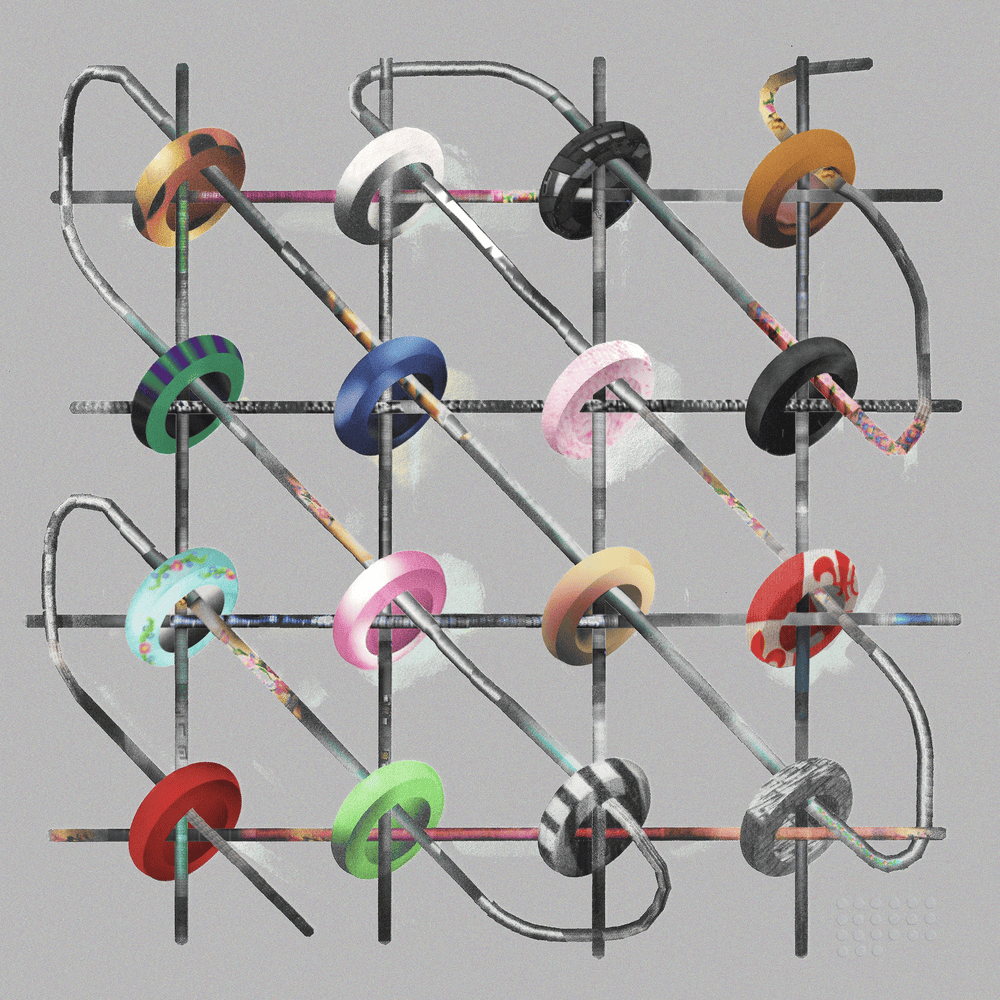
The first album without founding guitarist Ryan Walchonski, bitknot wears the band’s new three-piece structure on its sleeve, exchanging cascading guitar melodies for more synthesisers and more chaotic post-production. This instrumental decision is mirrored in every layer of feeble’s branding – check out their website or the series of eleven music videos made for each song on the album. A digicore aesthetic is inseparable from the band’s identity. On their two previous full-length releases, Girl with Fish and Hayday, the blend of this experimental production with lo-fi rock and pop cemented feeble as a band blurring genres to produce something wholly unique. But, with bitknot, feeble little horse has broken the boundaries of genre altogether. I don’t know what genre the album is, and it seems like the band aren’t sure either. They are label-less. Lead vocalist Lydia Slocum used to call feeble a ‘noise pop band’, but now they just call themselves ‘a band from Pittsburgh’.
Chipmunked vocals, heavily distorted guitar lines, and digital synthesisers support Slocum’s gentle delivery. The end result is a twenty-five minute album which shifts seamlessly from intense drone to twinkling melodies. bitknot makes up for the short runtime through a tight structure where no song outstays its welcome. Catchy, sub-two-minute tracks such as Paris or Poison are made up of snappy hooks, repeated a few times and sometimes connected by a bridge. The pace is quick and the album varied. Slocum’s vocals are so delicate, so hypnotic, that they provide a necessary balance to in-house-producer and multi-instrumentalist Sebastian Kinsler’s heavy mixing. The sheer detail in each song’s instrumental makes bitknot sound very muddy through most speakers. Through headphones, however, this detail is what makes the album so addictive. Guitar riffs, droning chords, and intense percussion which verges on blast beat, are supported by digital twinkles, glitches, and abrasive noise.
Like many of the band’s hyperpop contemporaries – Nanajirachi or 100 gecs, for example – bitknot is a response to everyday reliance on technology, both sonically and lyrically. Digital dissonance is weaponised to emphasise Slocum’s lyrical frustration with consumerism, capitalism, and their ever-prevalence in the modern day. ‘She’s in my feed, I need her clothes, I need her hair’, she sings on Shopping over a repeated deep guitar riff. Her criticism is implicit and her vocal nonchalance a deliberate subversion of the maximalist instrumental. The final track, DMT, stands for ‘Death, Money, Taxes’. Slocum’s previously gentle vocals build to a scream in the album’s final moments, bitknot’s passive anger building to its concluding crescendo. But the listener doesn’t get the release, and bitknot loops back to its opening track Doorway, an intense introduction into bitknot’s digital hypnosis.
Some listeners have started to categorize feeble little horse as a part of a new genre coined “Laptop Twee”, a rewiring of indie pop with a Y2K aesthetic. We can keep trying to fit new artists into a box, but maybe we should let feeble little horse be who they say they are: ‘a band from Pittsburgh’.
Featured Image: Genius