
By Lucy Atkinson
There’s a moment on every student’s walk to a 9am lecture- mist hanging low over the river, your headphones in, tote bag swinging, when you catch your reflection in a café window and think: yes. This is cinema.
You’re the protagonist. The world revolves around your inner monologue. You are misunderstood, artfully exhausted, and probably wearing something that attempts to look like it was stolen from a 1970s film student.
Then the bus splashes you. The moment’s gone—the soundtrack cuts. You’re suddenly an extra again — damp, anonymous, and late for French grammar.
We are a generation raised on The Main Character Moment. TikTok taught us that any walk can be romantic if you tilt the camera up 10 degrees and add some Phoebe Bridgers. Instagram captions whisper, “romanticise your life.” Pinterest boards promise “dark academia” as if tragedy and stress were an aesthetic rather than a cruel reality. The result? A cultural obsession with being seen, even if no one’s actually watching – the art and behaviour of constant performance.
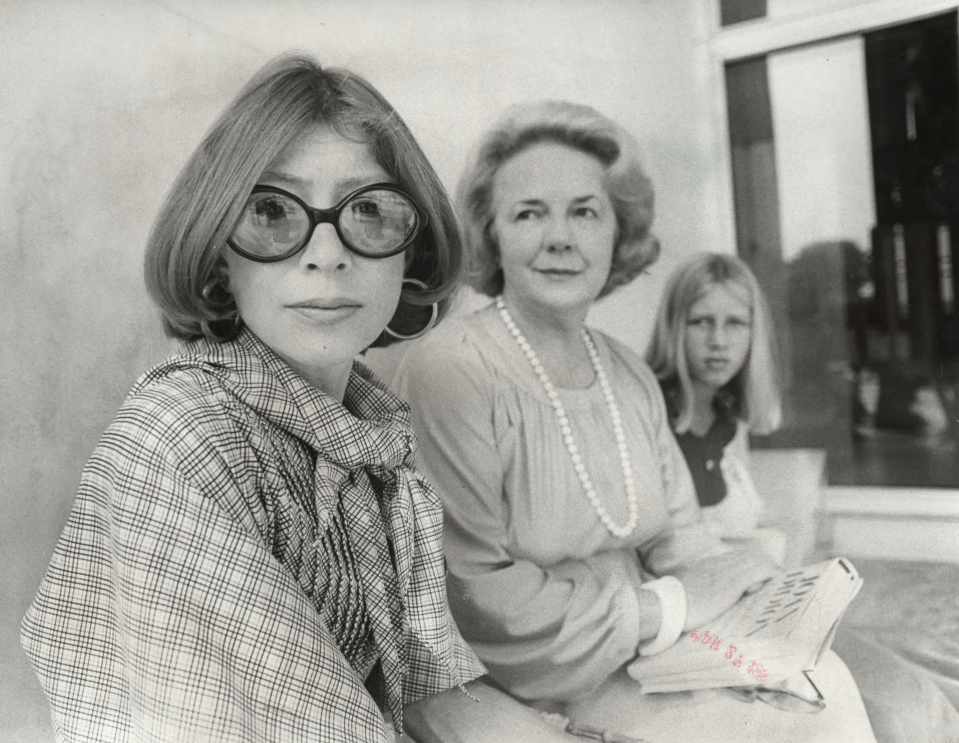
It’s tempting to laugh at it — the earnestness, the self-mythologising — but this desire for narrative coherence isn’t new. Virginia Woolf did it with stream-of-consciousness; Baudelaire did it in a crowd. As Joan Didion famously wrote in The White Album, “We tell ourselves stories in order to live.” The main character complex is simply our generation’s spin on that instinct — to turn chaos into continuity, to edit experience into meaning, more often than not through the lens of social media.
Didion’s insight lands differently in the era of the front-facing camera. We still tell ourselves stories in order to live, but now we do so publicly, performatively, with filters, and the perfectly chosen snippets of songs in our stories. We construct our lives like screenplays — plot arcs, redemption moments, personal soundtracks — as though meaning can be manufactured through aesthetics alone.
Didion goes on to say,
“We look for the sermon in the suicide, for the social or moral lesson in the murder of five. We interpret what we see, select the most workable of the multiple choices.”
It is human nature to romanticise the tragic and mundane. And now, more than ever, it is expected to do so for the viewing pleasure, or envy, of others. As Didion states, we are affected by “the imposition of a narrative line upon disparate images, by the ‘ideas’ with which we have learned to freeze the shifting phantasmagoria which is our actual experience”.
But what once felt like an act of defiance — the assertion of interiority, and the forceful reigning of the self’s own ‘story’ — now feels like a performance review. How’s my narrative arc going? Am I developing as a character? Have I had my midpoint crisis yet? Ultimately, how do people view me? What am I worth if people don’t see my aesthetic?
To be a main character today is to curate the illusion of intimacy. It’s to drink an overpriced flat white and pretend it’s plot-relevant. To view a breakdown as nothing more than “character development.” To confuse aesthetic coherence with emotional authenticity.
And yet, beneath the irony, there’s something tender in the attempt. To romanticise one’s own life is, at its core, to refuse invisibility. Maybe filming your sunset walk isn’t narcissism, but a tiny rebellion against banality. Perhaps the self that’s performed online isn’t fake, but aspirational — a draft of who we’d like to become, a fake-it-till you-make-it projection.
So perhaps the real question isn’t “Am I main character enough?” but “Am I paying attention?”
The main character is not the loudest person in the room — it’s the one who happens to notice the way the light hits the library steps at 4 p.m., the one who finds narrative in the in between. To live like that — alert, romantic, a little ridiculous — might actually be the most honest kind of protagonism there is.
So yes, maybe you are the main character. Just don’t forget that today, everyone else is too.
Featured Image Credit – Teresa Zabala / NYT / Redux