By Tess Cato
You’re sitting under your kitchen table in Pendlebury, Greater Manchester. It’s the early forties, the height of the Second World War, and your mum, aunty, gran and neighbour chat – about the war, but also about literally anything. Their voices are raspy from too many cigarettes and too many spirited conversations. You don’t sit there because you’re hiding or scared, you’re just listening because you like to. These women are the pillars of your world, and the inspiration for your life’s greatest artistic achievement.
This was the childhood Tony Warren recalled. Born Anthony McVey Simpson, Warren grew up, like most children brought up in the midst of the war, in the absence of a father. Instead, he was surrounded by women from the working-class English north who chatted away with that charming rhythm that can only be found in Manchester. These women and these completely mundane conversations inspired Warren to write Coronation Street. “I used to sit under the kitchen table, on a cushion, on the flagged floor, and listen to how people talked.” he told Charles Sturridge, who wrote the Bafta award-winning film about his career. “Here’s me Auntie Renee who married money and she talks posh, and here’s lovely Auntie Gladys whose husband is a prison warder and she doesn’t [talk posh]. It was wonderful training.”
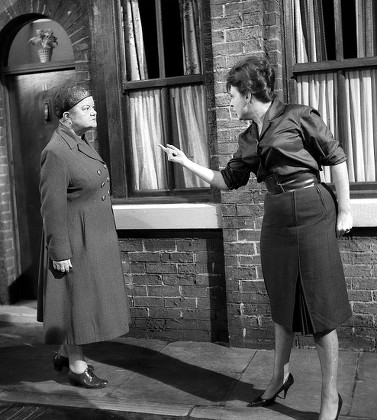
In the sixties, seventies and eighties, when Corrie was watched by a good 18-21 million viewers, the characters that dominated it included Elsie Tanner, Betty Williams, Diedre Barlow and Hilda Ogden. And what do these characters have in common? They were women, northern, working class and ‘of a certain age’. Most importantly, though, they were sharp-tongued and sharp-witted. Their husbands seemed almost like secondary characters, moaning about their wives behind their backs while the women laughed, fought or gossiped, or did all three simultaneously. It was these women that were the true stars of the show. Corrie wasn’t just revolutionary for normalising proper good ol’ northern-ness on the TV – “eh, chuck”, “nowt” and “by ‘eck”with the Queen’s English being the preferred dialect of the BBC and ITV, Corrie put probably the most under-appreciated demographic in the limelight for once: the working class, middle-aged, northern woman. She who was the backbone of British society during the war, as the men went off to fight. She whose strength, humour and love has been acknowledged far too infrequently, but which Warren captured like flies in the amber.
Fast forward to today. While still carving out space for this type of woman – Mary, Rita, Tracey and Sally bringing classic feminine northern charm to the show – Coronation Street‘s story lines get wackier, less realistic and often more depressing. There is always someone with a terminal illness, someone who’s been kidnapped and someone who’s been wrongly accused of murder – and that’s just before the first advert break. It almost seems like Corrie gets sponsored by so many charities that its storylines feel forced, and thus the natural funniness that came so easily in the earlier days is lost.
Without a doubt, less people watch Corrie today. Even I – once a superfan who was starstruck to see Dev walking around the Trafford Centre – must confess that I haven’t properly watched it for years. Its presence on social media is stark, an indicator that ITV desperately needs to engage with younger viewers in an age of Tik Tok and dwindling attention spans. But when there are millions of creators on social media platforms, I wonder how many kids ditch their phones full time for the soap.
For me, Corrie lost its way when the classic Corrie women lost their ‘main character energy’, so to speak. They were strong, hilarious, fiery and proud. Not twenty-something year olds with perfect legs, refined accents and swanky jobs reminiscent of the chick flick heroine. Just real, normal, hard-working women you would be proud to call your mum, aunty or nan. Women like this carried the show on their backs, and made Corrie the success that it was.
Louis Theroux’s Inside the Manosphere documentary revealed that there is a crisis in how women are presented in the mass media today. Kids who stumble across a HS Tikky Tokky video may grow up thinking that women are powerless, worthless and unintelligent – the very antithesis to the classic Coronation Street woman. If only Corrie would return to its roots, and focus its stories on the types of women Tony Warren grew up to be inspired by, the world might be a slightly brighter place.
Featured Image: Coronation Street, ITV