By Robin Reinders
‘I have a very childlike rage, and a very childlike loneliness.’ – Richey Edwards
‘Little Lamb who made thee / Dost thou know who made thee’
‘Did he smile his work to see? / Did he who made the Lamb make thee?’
– William Blake
‘The sun is life.’
You are Victor Frankenstein; your ego is stored in your Adam’s apple and your scrupulous hand and the wound of your father’s apathy festering in the marrow of your bones. You fancy yourself a Maker in the making. A sedulous corps(e)man who deals with what is dead more than any doctor ought to. When you dream in the lavish bedroom not ten paces from the laboratory, it is not pleasant. You dream of dashed hopes. You dream of the body inert and shining on the slab. You dream of failure.
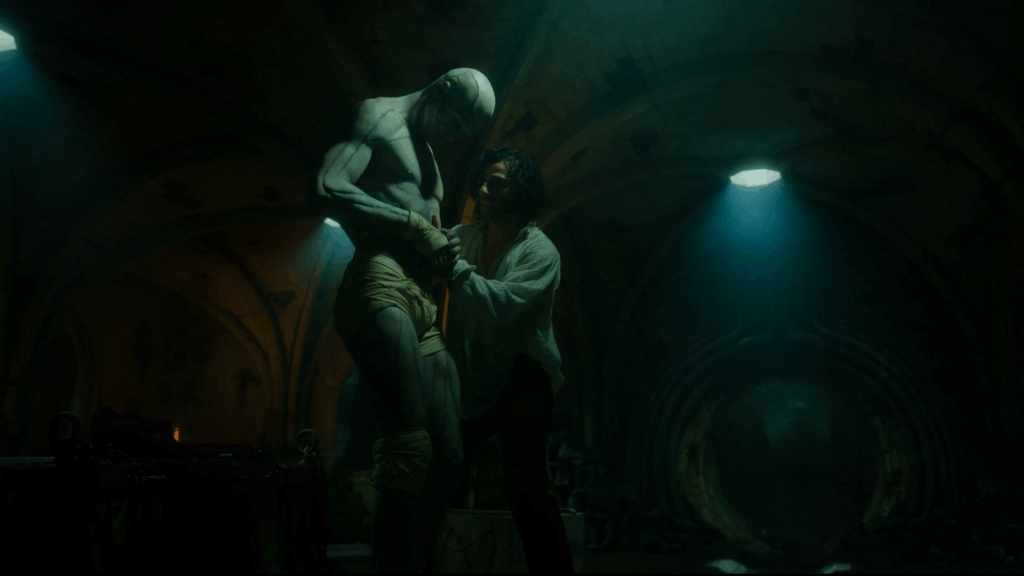
And wake now to a sound: small, inconceivable. A feeble inhalation, and another, and the world rearranges itself around what it has made. It is standing. Fragile and immense all at once. The skin gleams unnervingly, a milky sheen over bruised blue veins. The stitched geometry of the sutures glisten, fresh and pink. Its breath rasps raw through a new throat. Its head tilts as an infant’s. You are terrified.
It takes a trembling step, the motion itself carrying a bone-weary ache both ancient and nascent. It is coming towards you. One red-gloved palm shoots out, No, please— and it lifts its mirrored hand in neonatal mimicry. This is Adam considering God; creation is watching you with wide, wet eyes.
You could fall to your knees from it. The most significant thing is that you do not.
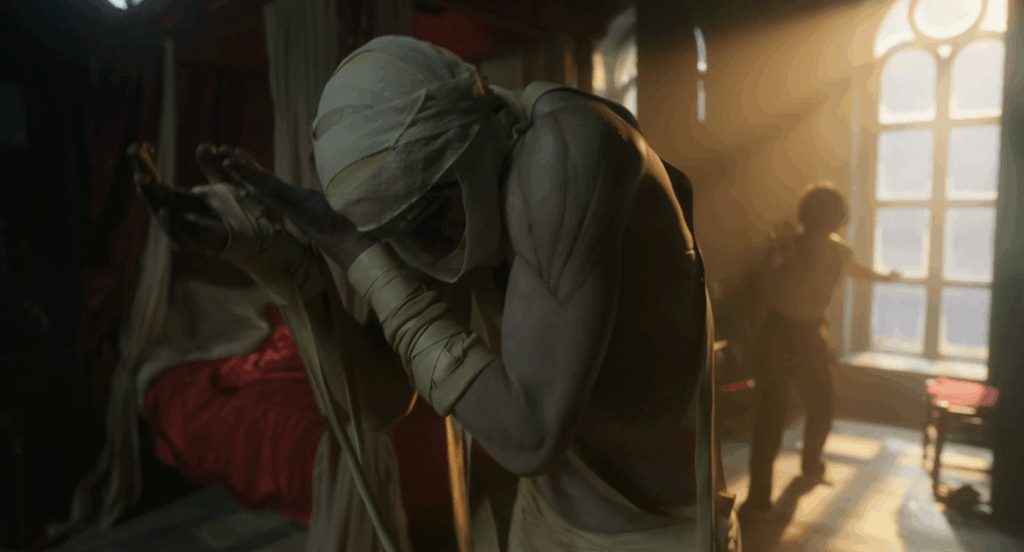
The veil which frames the canopy bed conceals the countenance of its lacerated face; through the gauze, you glimpse it watching you, staggered, breathing in tiny, animal pulses. And suddenly the gloves are unbearable, and so you strip them off with that sigh of sumptuous leather (bought and paid for by the blood of the Tsardom and Sardinia). Look, you whisper, holding out your bare palms. Same. Slow and balletic, those long fingers unfurl. Pale instruments writhing delicately in the dim glow of the late light. You circle its distracted figure, eyes devouring the impossible architecture of it – the alabaster chest, the striations of its shoulders, the stutter of bated breath. The sound that leaves your mouth is quiet, awed.
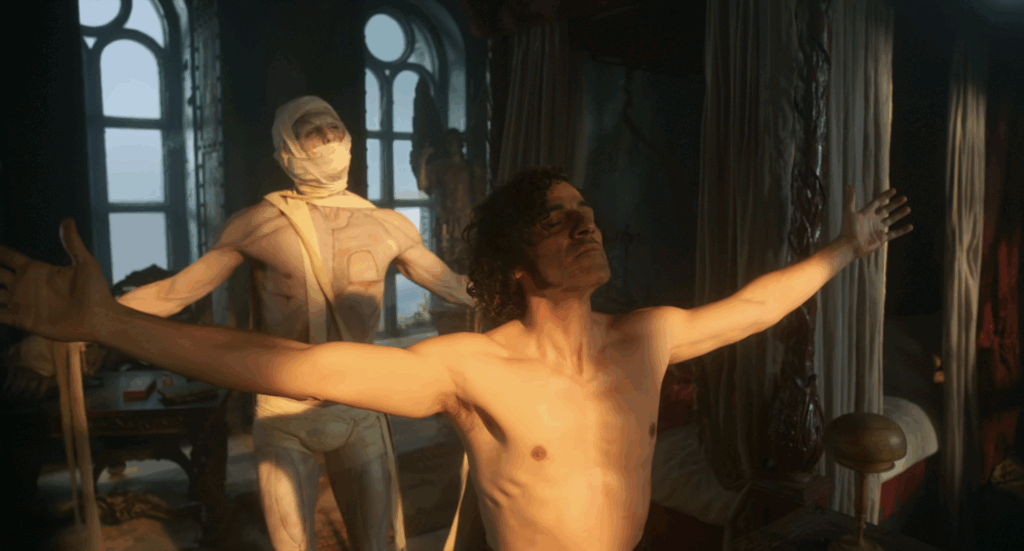
When you draw the curtains the daylight is violent. And it flinches with all its prodigious body; the sore, strangled sound of a child escapes its mouth; its wrists flail useless and instinctive about its face. This tall, jigsaw-limbed thing cowering at the morning: it is pitiful in its grace, almost feminine in its frailty. Sun, you say, as though naming could console. Your gentle reorientation of it by its great, albatrossian shoulder blades. Light! The sun is… the sun is life. You bid it face it, though only when you turn bare-chested to do so yourself does it dutifully follow your example. It mimics your posture, your sigh, the fluttered closing of your eyes. You watch its marmoreal body haloed in gold; you think its scars are so much like filigree.
Peeling away the bandage shrouding its mouth feels like something you have the authority to perform. Its lips are an insipid, pallid blue. You gesture to yourself with open, benign hands: Victor. Its spindly arms fold clumsily inwards, its fingers tapping at its pronounced sternum. This weak, parroted exhalation of your name is its first word. You laugh then: a cracked, manic sound too full to contain. Yes! you bark, the syllable collapsing into whispered litany. Yes, yes, yes – of course you are. Your fingers trace the pulse beneath its jaw, the miracle of it. It leans infinitesimally forward, and slowly you lower your head, press your ear to its chest and hear that petrifying, preternatural throb of its heart. You are Victor Frankenstein; your ego is stored in your glorious creation.
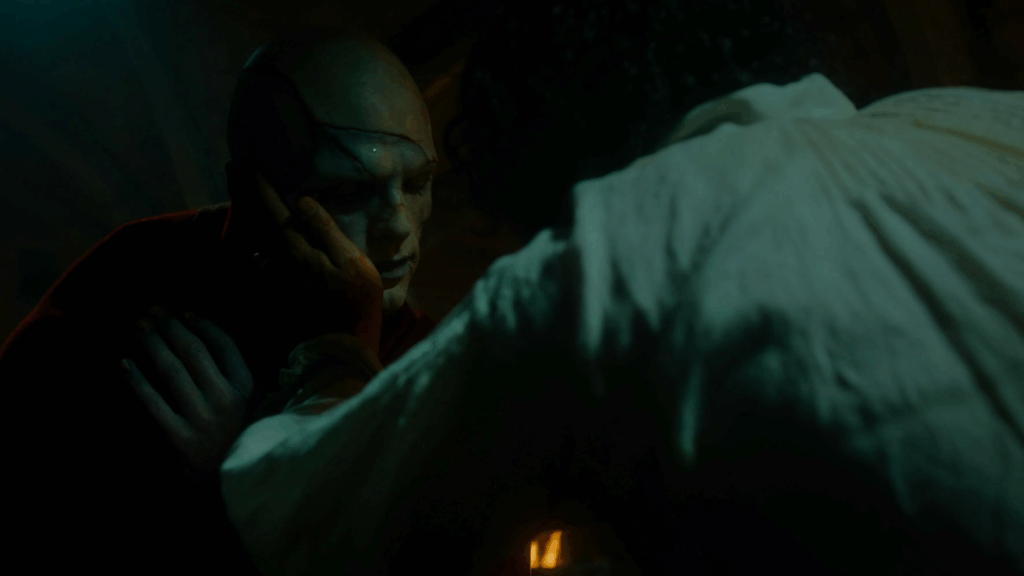
The son is life.
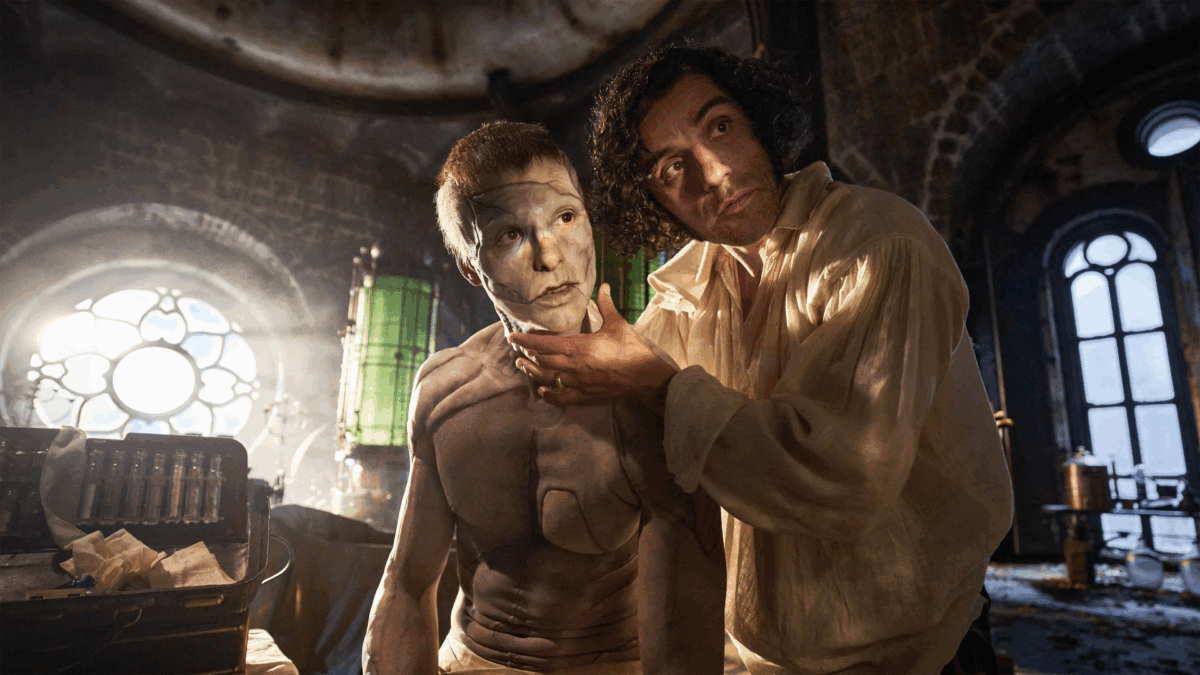
Guillermo Del Toro’s Frankenstein (2025) is about hands: the hands that stitch, the hands that strike, the hands that fail to cradle what they have conjured. Whereas Mary Shelley’s creature is the child of scientific hubris, del Toro’s is the orphan of affection – the casualty of emotional cowardice. Victor’s failure is this: he cannot sustain the intimacy his creation demands. ‘You have to see the purity of the moment when Victor touches his cheek,’ del Toro remarks, ‘and understand that there could be a happy ending – but there won’t be.’ The wretched, essential fatality of creation is compressed into that very gesture: it is the fleeting, fugitive instant when God and creation encounter tête-à-tête, when Adam is still precious and prized and darling and dear – before shame and fear set their miserable precedent. Del Toro makes raw the ruin latent in tender regard: this is the crux of the film.
Jacob Elordi’s embodied performance of the Creature communicates this brilliantly. Ache is privileged over shock. The infant fury of an unloved child over the stupid, square-jawed, bolt-studded zombie we may be accustomed to. Through Elordi, the Creature’s anatomy becomes a palimpsest of failed affections. Each tendon and tremor inscribes the trauma of lost intimacy: a virgin sorrow, a betrayed commitment, a nascent rage. When we are first met with del Toro’s vision of the Creature, he is slack-jawed, his limbs unsure, his torso enormous yet quivering. Each gesture seems borrowed, as though he must study himself in order to move. The Creature’s entire education is conducted through this oscillation between contact and withdrawal. His physicality, as Elordi constructs it, is a grammar of approach. When he moves, it is always toward; the great sorrow is his misplaced faith in reciprocity. One senses in this rendering of the character the raw metaphysics of want in its most primitive state – a desire unmoralised and unnamed, simply occurring.
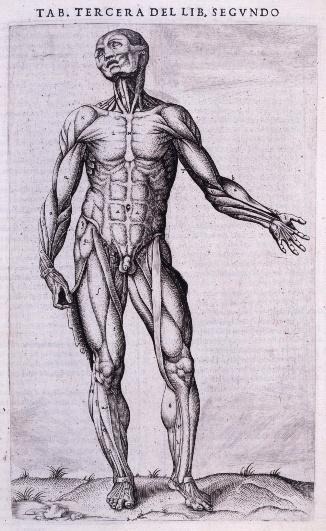
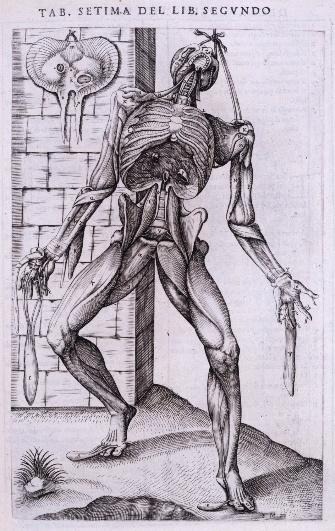
Andreas Vesalius, Male écorché (1556) / Anterior view of dissected muscle man, suspended (1556)
Young Elordi came into the project a mere nine weeks before filming began. Del Toro found his first Creature in the far more seasoned Andrew Garfield – who no doubt would have succeeded in realising the apposite affective register and mild demeanour demanded by such a character of the director’s vision – though this favoured casting was controversially scrapped due to scheduling conflicts at the time of the 2023 SAG-AFTRA strikes. Makeup artist Mike Hill was forced to discard nine months of painstaking effort in order to begin anew on Elordi’s lofty 1.96m canvas. While the swap kindled a small yet mighty outcry from internet cinephiles eager for this iteration, del Toro refused to see the matter as a derailment or departure from his intended design: ‘Anything that goes “wrong” in this movie is going to go right. I’m going to listen to the movie’ (Frankenstein: The Anatomy Lesson, Netflix). Hill shared this sentiment, describing an attraction to Elordi’s ‘gangliness and his wrists’. ‘It was this looseness,’ he says, ‘Then he has these real sombre moments where he watches you really deftly, and his eyelids are low, with the long lashes like Karloff.’ Eyes are of particular interest to del Toro. He describes a distinct openness in Elordi’s gaze: ‘an innocence and a purity … that was completely disarming’ – but, crucially, also a rage.
The great narrative weight of the somatic and the sensory in this film cannot be overstated. The cadaver Victor animates must necessarily be of a certain scale, and must carry his awkward frame with a candid unwieldiness so earnest as to be endearing. The Creature must be sublime. ‘I don’t know who else you could get with a physicality like this,’ Hill said, and echoed by del Toro: ‘[Elordi] looks like an anatomical [drawing] … He looks like The Human … You can see his body in a Vesalius anatomical engraving. Very diagrammatic.’ He moves on coltish legs, buckling and knock-kneed, towards his Maker. Limbs long and lithe and reaching out in visceral inborn instinct. He doesn’t know what to do with himself.
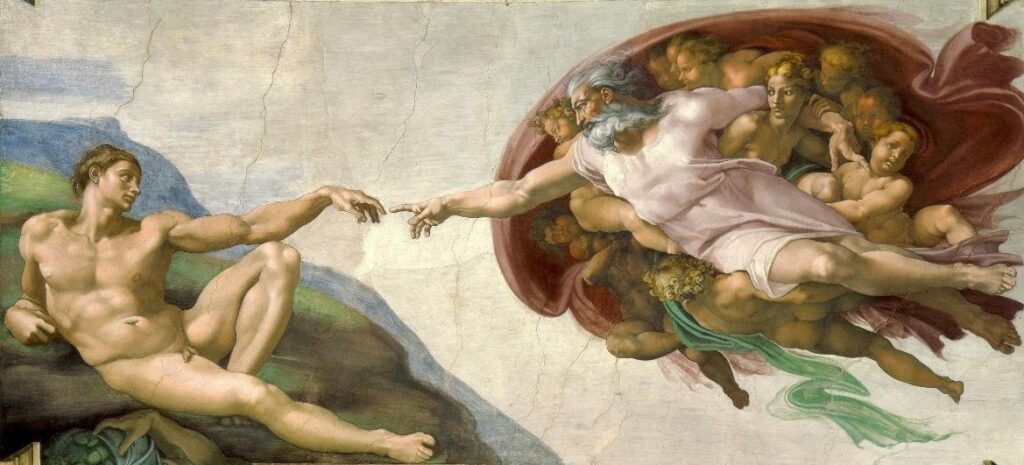
‘I am thy creature; I ought to be thy Adam.’ / Michelangelo’s The Creation of Adam (1512)
If Elordi’s portrayal of the Creature is one marked by reaction and response, it is also marked in consequence by movement. His manner of gesture is informed by the hypnotic, uncanny cadence of Japanese butoh, as well as the doggish behaviours of his beloved retriever and faithful set-companion Layla. In this simple, unselfconscious, animal humility there is a virtue and an innocence of religious quality. ‘He reacts to love with love … to hatred with hatred,’ del Toro explains – an ethics of basic reciprocity which engenders purity. This unhurried curiosity of interaction counters with stark contrast Oscar Isaac’s taut and fevered Victor. He is intellect void of commitment, perpetually at odds with the irregular impulse of his own weak solicitude; he creates for the sake of saying he has done so. His creation, instinct shot through with affection, is the resultant victim.
The bond between del Toro’s Frankenstein and the Creature unfolds like an inverted Pietà: the sentient son pleading to be held by the recoiling father. The first chapter of the film, ‘Victor’s Tale’, begins in his own tragic, operatic childhood. ‘He begins with his father,’ del Toro expounds. He must tell the Captain, and by extension the audience, the origins of his own creation before he can divulge the details of his own creation: ‘“I must tell you how it got there. And that’s with my own father.”’ The act of creation is staged by del Toro as an attempted act of psychic compensation, performed by the son unable to metabolise the grief of his father’s absence. The Creature, then, becomes a monument to the father’s repression: a body stitched from the detritus of his unloved self (‘Yes, of course you are’). Victor succeeds only in reproducing, with the frightful exactitude of the deluded surgeon, the very same pattern of abandonment that made him. ‘Say one word. One word more. Anything. Make me save you.’ He leers at his creation as the gloves come back on. ‘Victor.’ And the strike of the match.
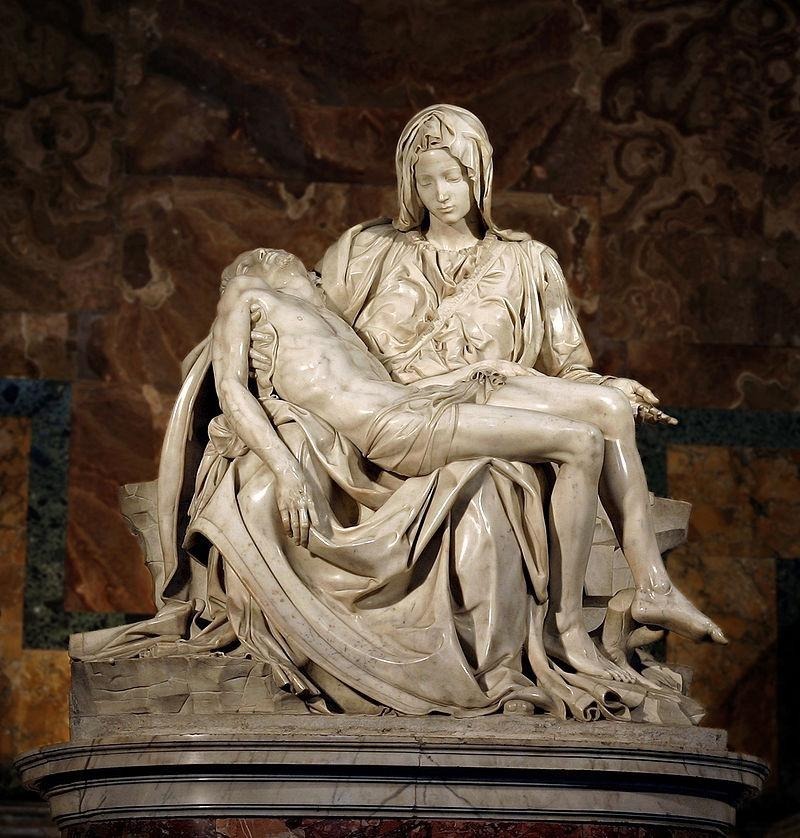
Michelangelo’s Madonna della Pietà (1498-9)
Del Toro’s Frankenstein strays with great purpose and intent from Shelley’s modern Prometheus. He tells a very old story, lights it in Caravaggesque chiaroscuro: the father who cannot bring himself to touch, the son who starves of his abstinence. Blood in fathomless amount coats the hands that tilt your face toward the light – but they cradled you, did they not?
Featured Image: Netflix