
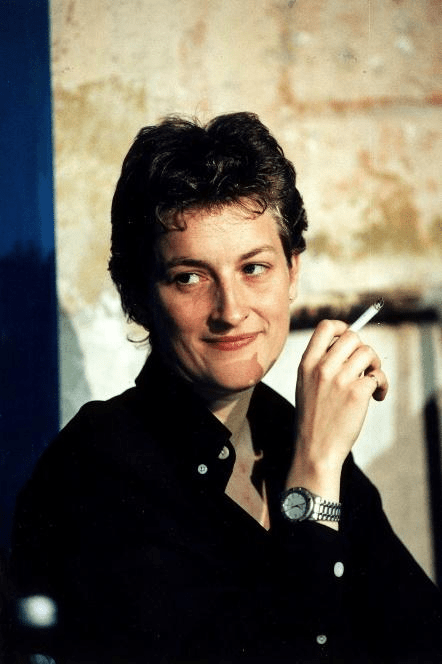
By Emilia Brookfield-Pertusini
‘It wasn’t for long, I wasn’t there long. But drinking bitter black coffee I catch that medicinal smell in a cloud of ancient tobacco and something touches me in that still place and a wound from two years ago opens like a cadaver and a long-buried shame roars its foul decaying grief.’ – 4:48 Psychosis
House lights on. Audience, now visible, is made of a wash of parents, siblings, and supportive peers. Five teenage girls blink up as the lights turn on. There is mascara running down their face. Their hair is knotted, tangled, and shines against the lanterns. Ribbons surround them. Small little ribbons litter the stage, peeping out in gaps where they dared to tread. Long red ribbons slink and slack around the girls’ arms, crawling up their wrists and following them like a veil. No one claps. No one smiles. The girls are out of breath, cautiously grinning at each other, unable to speak until the examiner dismisses them. Still, no one claps. They rise, bow, and begin to clear the stage. Still, no one claps. These spectators have just watched somebody kill themselves for 45 minutes. Can their clapping augment the pain? Can their proud smiles for their daughters exist against the ferocity of violence and the macabre they have been subjected to in their slightly too small classroom chairs? Was it a play even? It was the vast violent living of Sarah Kane.
Sarah Kane lived in the shadow of a decade that pickled sheep for art, pumped music out of factories, and prescribed an incessant need to be ‘Cool’ to combat a Britain that lay bare, devoid of iron. Her short career spun across the 90s, beginning with the Balkan Wars and ending with a cri de coeur of disillusionment and defeat. Her stages gorge and delight in all consuming actual violence and self-violence. Blasted transforms a Leeds hotel room into the epicentre of brutality and manufactured human violence, where an eyeless journalist and a soldier violently mourn one another, attempting to carve survival out of an obliterated, wretched reality. Boards are trodden with obscene language, an unhinged sexuality, and bloodshed that appears unflinchingly before the audience’s eyes. Equally, flowers ‘burst upwards, their yellow covering the entire stage’ that was once filled with blood; daffodils blossom from Cleansed’s arena of furious passion. Love exists with violence; disgust resides in the belly of beauty. To experience the vast violent living is to experience, to bear witness, to learn to stomach and scream at all the frightening dualities Kane caught within her stage.
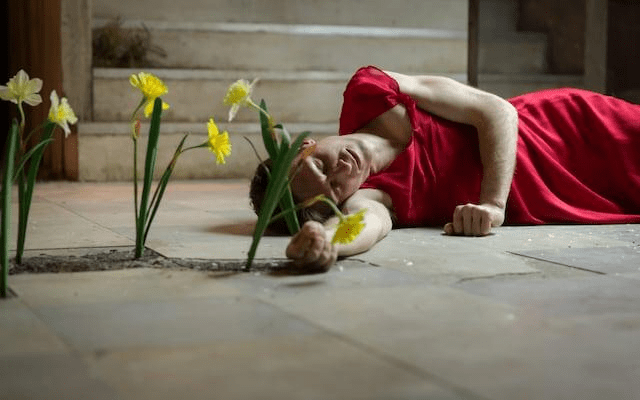
Roland Barthes’ A Lovers Discourse is the key that unlocks the maddening world of Sarah Kane. ‘Amorous seduction (a pure hypnotic moment) takes place before discourse and behind the proscenium of consciousness: the amorous “event” is of a hieratic order: it is my own local legend, my little sacred history that I declaim to myself, and this declamation of a fait accompli is the lover’s discourse.’. The discourse Kane flings on stage is personal, a ‘sacred history’ of both self and society that exists both within language and action. Love exists not behind rehearsed lines and revised scripts, but in a fraught mentality catapulted on stage that examines all the crevices of consciousness that define love’s existence. Barthes furthers Kane’s manifesto by celebrating the theatre for being a place in which extremes can live, where the consciousness of love and life can be understood in its capacity for juxtaposition. Beauty, horror, violence, adoration, sex, lies, truth – all exist layered on top of one another, crashing together, muddling and catastrophising our world view. In one instance the stage is a funeral pyre, in the next instance it is transformed into a wedding.
The glaring surface of Kane’s work is cruel and provocative. It dares to be disliked. After leaving Blasted’s Press Night, critics called it a ‘feast of filth’ and ‘devoid of intellectual and artistic merit’ due to its obscene portrayals of human suffering and longing. Kane is still stained by this, even today. She is ‘tricky’ to put on, and people question whether an audience would even consent and pay to watch something so dark in a place of entertainment. However, this is not the full picture. The shock of the violence is a stinging reminder of the pain that comes with living; that living can be strained and fraught with peril, and yet there exists a capacity for a hopeful growth within the bleak depths of humanity. That flowers can grow again. That a scene of abject horror can change into one of comedy. That love will always exist, in its mysterious and desperate ways, amongst the fall out. Kane both wrote and experienced suffering, yet also loved, vibrantly and violently. She danced to Joy Division – an action that cements the duality of her works; songs of deep darkness from a band named after a grotesque Nazi operation, changed utterly by the action in ‘pure hypnotic moment[s]’, holding both woe and wonder within that instance.
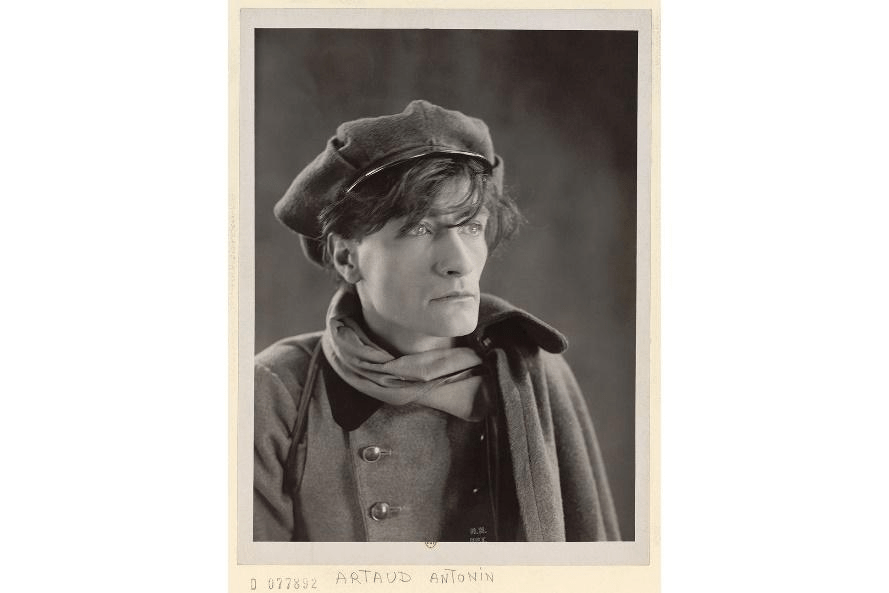
The battle of locating ‘artistic merit’ within violence was not instigated by Kane. The trenches ran deep in the popular consciousness of how art should be. ‘Father of Cruelty’ Antonin Artaud wanted theatre to induce ‘very violent reactions’, leaving the audience with ‘no misunderstanding’ that going to the theatre was not simply a pastime for melodramatic entertainment, but a spectacle to encapsulate human resilience and variety. His manifesto, The Theatre and Its Double, holds true to Kane’s desire for the full force of life to be displayed, to have Barthes’ instantaneousness of love play to effect; for every feeling, action or thought there is an equally fierce opposite, its double. For Artaud, as for Kane living in the grey waters of post-Thatcherism, ‘our sensibility has reached the point where we surely need theatre that wakes up heart and nerves’. Classical ideas of catharsis were reinstalled, where breaking point and release had to be met by both actor and audience alike: a communal epiphany and energy beating back against the ordinary.
100 years prior to Artaud, Percy Shelley’s The Cenci caused equally shocking waves amongst theatre goers. Banned and brutalised for the play’s demand for the audience to witness the relentless abuse of the real Beatrice Cenci of Rome, the murder of a patriarch, and the godless, lawless abandon of his house. The secular venom in which Shelley approached his radical theatrics caused the play to be censored, never performed in his lifetime. The rebellion within both Shelley’s original material and Artaud’s Cruel interpretation of The Cenci force a new perspective, capturing the full capacity of human extremities, asking audiences to not fear the abhorrent but to stare it in the face. Kane’s plays act as a late 20th century renewal of these demands. Her violence is not without reason, and her manifesto lies within a radical tradition of redefining theatre in the quest for accurate realism.
The cruelty Kane inflicts is not baseless. It is a mission to find the double, the duality, the full picture of life. Her final, posthumous play cements this mission. The interpretation of 4:48 Psychosis as a performed suicide note helps soften the blow, diverts the attention from the screaming pain and wrongdoing that lies within its core; it is a play about misunderstanding. Kane’s theatre continues to be misunderstood, and upon her own suicide in 1999 her work still brayed on her mind, her critics unable to decipher her poetry. Her own suicide has come to be misunderstood, as her staged suicide did. 4:48 comes from a writer, and centres its ambition in a place beyond tears, in a place away from sentimentality and sensibility. The poetics of mental decline hold the audience hostage. The tragedy is unrefined and unapologetic in its brutality. 4:48 pivots on the inability for true feelings to be communicated, with no designated speaker or roles, and is at once confessional and deeply private. Stifled conversations, the inability to decipher reality within the pain of mental anguish – nothing on Kane’s stage is sacred or secure. The realities of living with severe mental anguish are documented, as a speaker cries ‘my life is caught in a web of reason spun by a doctor to augment the sane’; suffering is misunderstood in order to be palatable to those without pain. In order to attempt to reason the unreasonable, it is only through achieving a true, cruel, Artaudian realism on stage that the misunderstanding of Kane’s reality can be understood. By unrelenting in the tragedy, Kane exposes a realism to the audience that is not a pretty or entertaining reality, but a harsh one. Yet one that is not pure violence and tragedy but showcases the abundance of life even under the strain of tragedy; 4:48 is the moment in which laughter, love, sorrow, loss, anger, and desperation co-exist in a gaudy explosion of life at the edge of death.
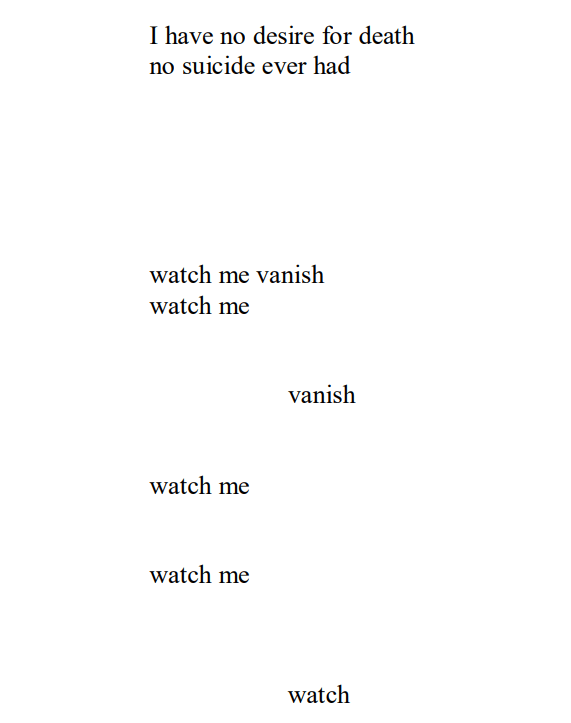
Kane’s dramatic manifesto demands you to ‘watch me’, to endure and experience all volumes of life. By turning away from the violence we forget about its unfortunate reality, and we demand that art must engage in only certain forms and demerit the poetry of the darker shades of living. Kane did not intend for people to enjoy her plays, but to be moved by them. Whether 4:48 is met with the stunned silence of concerned parents, or the stage becomes a flower bed of praise, it doesn’t matter. The lamentable, the obscene, the catastrophic is the concern of Kane’s punching poetics, and her need for radicalism, for discomfort, for upset helps theatre achieve its full capacity of realism, even in its strangest stagings. The shockwaves from her performances will always ring out, cringing upon audience and critic alike, her formidable ideas still causing contention. But when the flowers rise from the boards, when blood spills across the audience, when moments of vulnerability are documented with force, Kane shows the realest truth of all in her theatre; that life, love, and passion have never been so violently fragile, obliterating and launching at once.
Featured Image: Marianne Thiel / Getty Images, 1998