
By David Bayne-Jardine
I lock eyes with Paul Mescal in the newsagents – a vision in short-shorts that stops me in my tracks. The Gen-Z heartthrob and award-winning ‘sad boy’ actor glares at me from the front page of the magazine. Decked out in a skin-tight cropped leather tank top and matching tiny shorts, his hips thrust provocatively into the centre of the photo, his arms stretched above him in a gesture at once powerful yet vulnerable.
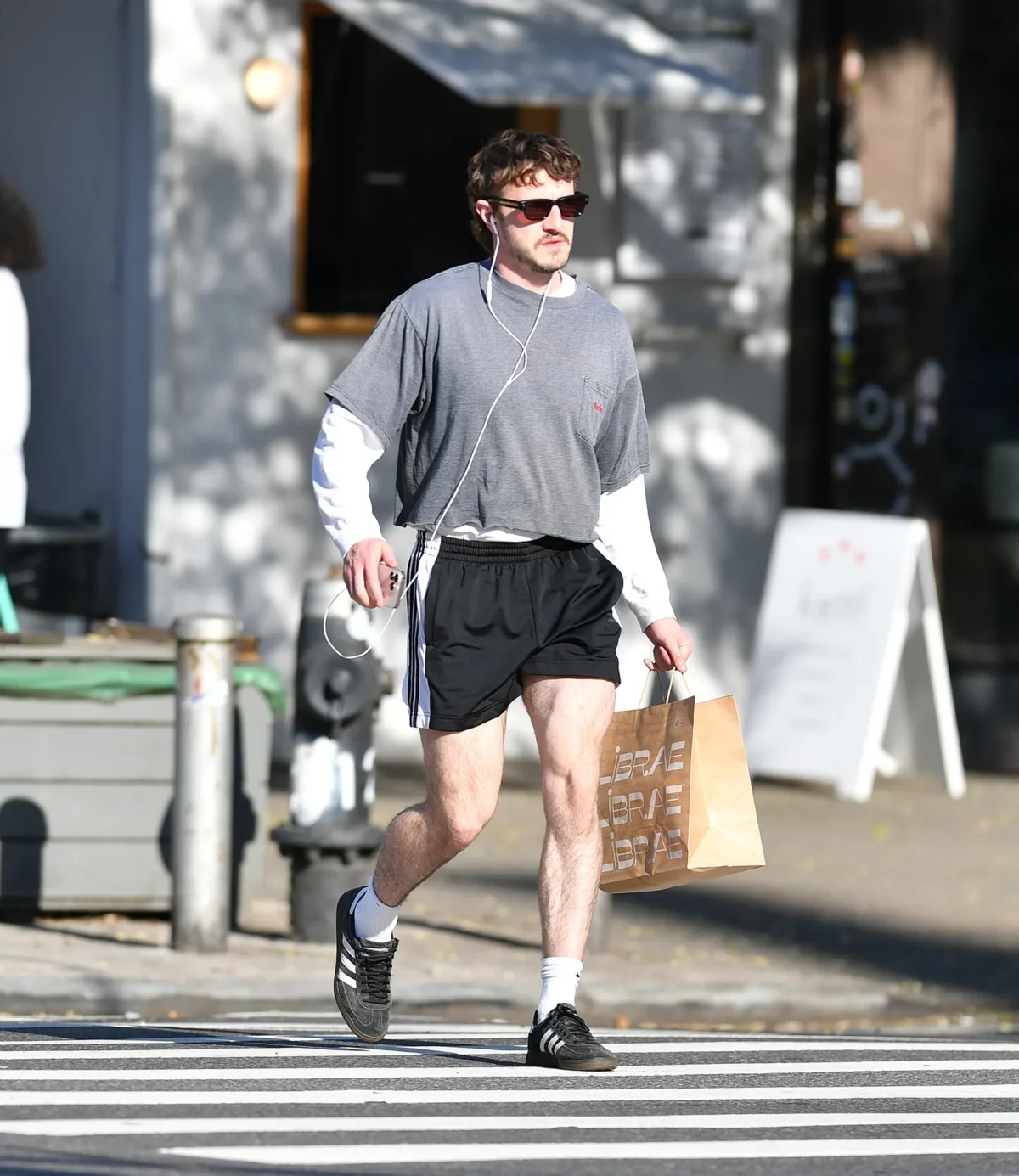
Over recent years, Mescal’s name has become synonymous with two things: tear-jerking portrayals of emotionally troubled men, and a worldwide obsession with short-shorts. Launched into fame in 2020 after playing Connell in the Normal People miniseries, his character’s humble and revealing Gaelic football shorts soon caught the attention of the fashion industry. Since then, as Mescal and other style icons have played with showing a bit more skin, retailers have reported skyrocketing sales in a sort of menswear very different from the norm. From Milanese catwalks to trendy cafes, from red carpet evenings to early morning park runs, men across the world have been sporting skirts, crop tops, painted nails and thigh-high shorts like never before.
In this photoshoot, his GQ cover story from November ‘24, Mescal exhibits this androgyny and playfulness that is taking over men’s fashion. After all, who better to represent male self-expression than the king of emotionally troubled men himself? In this post-COVID age of mental health awareness, as boys swap the late-night trauma dumps for self-care and therapy, their fashion is changing too. Brighter, bolder, tighter, smaller, scantier, hotter, gayer and girlier, it seems that as men loosen up and express themselves, so too do their clothes.
It was not so long ago that glossy quarterlies like this one sold themselves by smothering their pages in a very different brand of masculinity. From the front cover, the likes of Cruise, DiCaprio and Brando defined male design as an affair of take-me-serious simplicity – expensive watches, white tees and razor-sharp tuxedos. If men were to be leaders and protectors, then their clothes needed to perpetuate that image – ordered, uncomplicated, unemotional.
Now, I think as I absently flick through the magazine, things couldn’t be more different. Most of Gen-Z’s most successful heartthrobs are inclined, perhaps even expected, to rail against the boundaries of male clothing. Harry Styles made history in 2020 when he appeared on the front cover of Vogue in a blue Gucci ballgown. Bad Bunny’s Instagram is awash with dresses and skirts. Pedro Pascal rocked the Met Gala in 2023 with a flamboyant shorts and trench coat combo. Jacob Elordi, Milo Ventimiglia and Jonathan Bailey have all been papped showing off their quads in tiny shorts.
But where did all this come from? What has prompted straight men in particular to start dressing more like the groups they once sought so hard to distinguish themselves from? As is often the case with mainstream culture, we are at least in part indebted to the Queer community for this sartorial about-turn. The sort of bold, playful and scanty clothing that A-listers are wearing nowadays was for years the dress code of LGBTQ+ subcultures, used to question gender binaries, promote self-expression and embody an ethos of sex positivity.
As men are starting to open up, they look for inspiration in groups that have been expressing themselves for much longer – women and queer people. Of course, this is not the first time men have dressed like this (see John Travolta in Grease or Sean Connery as Bond), but it is certain that as previously marginalised narratives enter the mainstream, and as the playing field becomes more level, 2020s fashion is developing a distinctly gay and androgynous flavour.
Of course, it would be foolish not to acknowledge the deep irony that runs through this trend: when men dress scantily they’re hailed as transgressive; when women dress scantily they’re slut shamed or attacked. Feminine and queer fashion that was once dismissed as distasteful or offensive is now considered the epitome of good taste.
As true as this is, it is refreshing to see men taking more risks when they dress themselves. In showing more skin, they make an attempt at vulnerability and have fun in doing so. As with all fashion, it is used to make a statement – ‘I am emotional, empathetic, a listener’ – that expresses allegiance to a new type of masculinity that tries to be less domineering and more empathetic. Of course, a pair of tight-fitting booty shorts, painted nails and a tank top won’t miraculously transform a misogynist into an ally (we’ve all seen the ‘performative male’ trend online), but it does signify an attempt by some to rebrand their masculinity into one with more tolerance.
Naturally, this won’t be the only thing influencing menswear’s latest pivot. As summers get hotter clothes inevitably get lighter, and in our heavily pornographic society sex sells as much as ever before. After all, in an age where adult content is always a few taps away, when weight-loss drugs promise us almost any body we want, when daring sex stunts grab national headlines, is it not inevitable that we become more hooked on glimpsing our favourite celebs’ bodies?
In an era of momentary microtrends, the fact that the skimpy men’s clothing obsession is still going strong after half a decade signifies that something significant is shifting under the surface for men. Sure, it’ll all probably go out of fashion as quickly as it came in, but for now there’s nothing more stylish than a guy in unmanly clothes. So roll up that waistband and dust off mum’s skirts – showing some skin seems here to stay.
Featured Image: Paul Mescal / Vogue, 2024