By Robertha Green Gonzalez
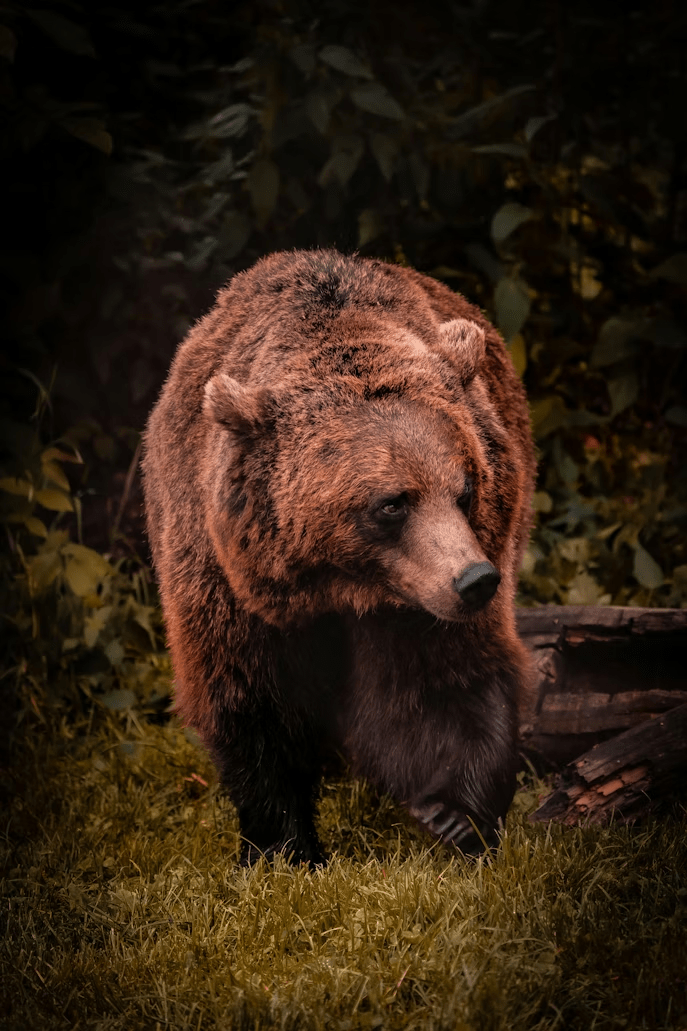
Leopold was a Russian brown bear. Precisely how he came to inhabit the welfare rooms of the Sergei Rachmaninoff Conservatory remains an enigma, one of those strange realities people come to accept not through understanding, but through quiet resignation. It was said, simply, that he was there and there wasn’t really much one could do about it.
He was not, by nature, an objectionable tenant. Leopold bore himself with a certain melancholy dignity. He did not roar, nor did he disturb. To put it frankly, he wasn’t much of an inconvenience to anyone, unless of course you needed to use the welfare facilities, in which case, to put it rather bluntly, you were stumped.
Curiously, Leopold spoke excellent French. How a bear acquired such eloquence is unclear. Rumours abounded. The most persistent of them claimed he had learned the language in the 1970s in order to woo a violinist named Arabella. She, poor soul, never saw his face. She heard only the voice, low and resonant, emanating from behind a half-closed office door. And how could she have known? Leopold
was, if anything, a hopeless romantic though hopeless more in the sense of being ill-fated, or even morally adrift. He delighted not in love itself, but in its illusion.
In stringing Arabella along the path of imagined passion, he seemed to reach the outer edge of some dimly recalled humanity. But love requires flesh, and presence, and truth and Leopold, alas, was still a bear. When Arabella graduated, she vanished
from his life. There wasn’t much Leopold could do about the matter and since, Leopold has seldom spoken French.
I think the last noted occurrence was rather tragic really, as it was used with rather malicious intent – luring a visitor, an oboist if I’m correct into the welfare room and … well truly, no one saw her again, though the sound of her oboe – of the melody Gilles Silvestrini’s Six Etudes Pittoresque is apparently often heard in the quiet of the night.
There was, however, one particular occasion that stands out. Perhaps it even explains why Leopold is still allowed to reside in the welfare rooms at all. It was to do with his fondness for jazz.
Naturally, jazz wasn’t something regularly heard in the conservatory reality, almost improper. Yet from the room below Leopold’s, it drifted upward now and then—the work of a saxophonist, a quiet prodigy. Lived mostly in major thirds and Chopin études. But jazz, that was where his heart sat. He kept his passion for it hidden, a
secret. Only late at night, when he was certain everyone else had gone home, would he indulge. Quiet at first, then freer, more wild. It was beautiful, really.
Leopold listened. Night after night, he’d sit in the welfare room above, unmoving. He assumed, based on the playing, that it was a “he” down there. He never checked. Leopold didn’t like leaving the welfare room. What mattered was that anyone who tried to interrupt the player, anyone who thought they might barge in or critique or ask politely for the practice room, was met with a rather unpleasant surprise the
following morning. A large, unmistakable one. Left just outside their door. It was, to put it plainly, Russian brown bear shit.
It didn’t take long for word to get around. Soon, no one dared interrupt the saxophonist. And a kind of understanding formed unspoken but very real, that if the bear liked your playing, then no one else had the right to question it. In a place filled with judgement, that kind of endorsement was priceless. Leopold and the saxophonist never actually spoke. Not once. But their silence said enough. A strange sort of friendship. One that didn’t need to be acknowledged to be deeply felt. In some ways, it may have been the thing the saxophonist needed most.
The following year, he quit the conservatory. Went off to play jazz full-time. In an interview, he was asked why. He said, simply, “It was the bear.”
And that was that.
Featured Image: Daniel Diesenreither