
By Sam Bentley
I have always loved Oscar Wilde. His wit and satire remains timeless, and his celebration of joy and absurdity feels fitting in a modern age defined by crisis. His refusal to treat seriousness as the only rational tone transcends his era. Wilde endures because his precision and irony has never required updating; his comedy lands because the behaviour he exposes remains constantly recognisable to a contemporary audience.
There is no text where this rings truer than his most famous: The Importance of Being Earnest, which I have had the good fortune to direct this term with Durham University Classical Theatre (DUCT). Earnest is one of the great comedies in the canon of English literature. To call it just a witty and subversive Victorian comedy, however, would be to mistreat it as an old relic that ought to be admired and unchanged. Though still attached to its Victorian roots, I was committed to making Earnest feel fresh and contemporary. So often it is done with fully period-appropriate set and costume and RP accents lacking in variation – in these productions, too much focus is put on the idea that Wilde is writing about his own time. I wanted a production of Earnest which demonstrates that his satire is not nostalgic, but diagnostic; that he is talking about human behaviour far more than he is talking about Victorian England. Earnest is a play that speaks fluently to our modern contradictions, modern performativity, and contemporary romantic idealism. It is just as current as it was in 1895, and it was my intent to demonstrate this to our audience.
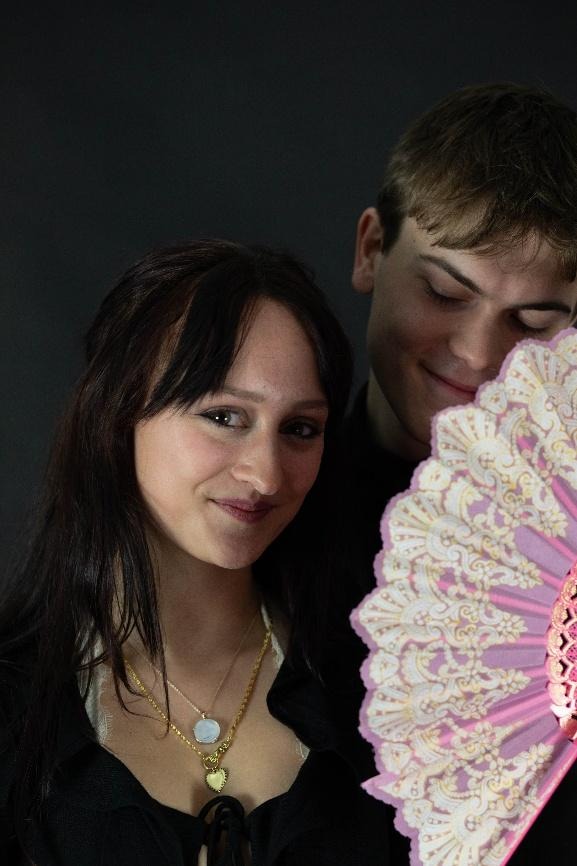
Sincerity was at the heart of my creative vision. Wilde’s emphasis on absurdity is channelled through the sincerity of his characters in such absurd situations. My neo-Victorian production design allowed for me to emphasise the absurdity through set and costume, using bright colours such as vivid oranges and pinks and marrying them with classic Victorian style. Through this, absurdity is duly emphasised, allowing for the characters to be fully sincere in their performance and comedic style. It is easy with Victorian comedy, particularly with characters like Algernon and Lady Bracknell, to descend into a pantomime-like comedic style which undermines the integrity of the text and makes the comedy feel lazy. The emphasis I placed on sincerity was primarily to make the comedy of the text feel organic and not manufactured. All the comedy in Earnest is in the text and dialogue, so it was critical for me not to undermine that with cheap gags, but to let it grow naturally in the rehearsal process.
Understanding the character relationships is the key to making Wilde feel fresh to a contemporary audience. The brilliance of Algernon’s wit comes through his comfortability with his counterpart Jack, and their ability to play with the music of Wilde’s text with one another. That relationship was constantly about emphasising to the performers that Algernon sets the tempo and rhythm to allow for Jack to play the melody, giving the audience the impression of genuine repartee rather than rehearsed punchlines. For a contemporary audience, the emphasis on their relationship makes the comedy feel familiar and engaging, arising from dynamics they recognise. The same can be said for Cecily and Gwendolen: their snarky, acerbic relationship and interactions are just as common now as they were in the 19th century. Therefore, in the rehearsal process, real intent was put on building those characters based on their human feelings, and not on archetypal stereotypes of young Victorian women. Indeed, whether it is making Lady Bracknell as much a suffering socialite as she is a matriarchal demagogue or making the bedrock of Miss Prism and Chasuble’s relationship their sexual repression for one another, every character was carefully crafted to feel authentic rather than a recycled archetype.
The experience in the rehearsal room has been joyful. I cannot thank the cast enough for the hard work and dedication they have put into this project. Building on my initial visions for them they have transformed their characters to feel delightfully alive. It’s been such a pleasure to watch them discover the comedy within their roles and in the truth of the characters intentions, interactions and reactions. Their willingness to experiment and play with spontaneity has allowed the play to feel rich in comedy and unpredictability. Watching them do this has been a pleasant reminder that comedy will always thrive on authenticity. Working with this cast to do this has undoubtedly been my best university experience.
Productions are never possible without swathes of support; it would be remiss of me not to thank this play’s Producer and Production Manager: Evie Trueman and Rory Collins. They are simply the best in the business. Furthermore, I would like to thank my Assistant Director, Harriet Miller. She is excellent in all departments, a joy to work with, and her insight and support has been invaluable. It is a joy to bring Earnest to life in a way that is both true to Wilde and alive for its audience.
The Importance of Being Earnest will play in the Assembly Rooms Theatre from the 27-29th of November.
Featured Image: DUCT