Categories
Creative Writing

Leopold The Russian Bear

By Robertha Green Gonzalez

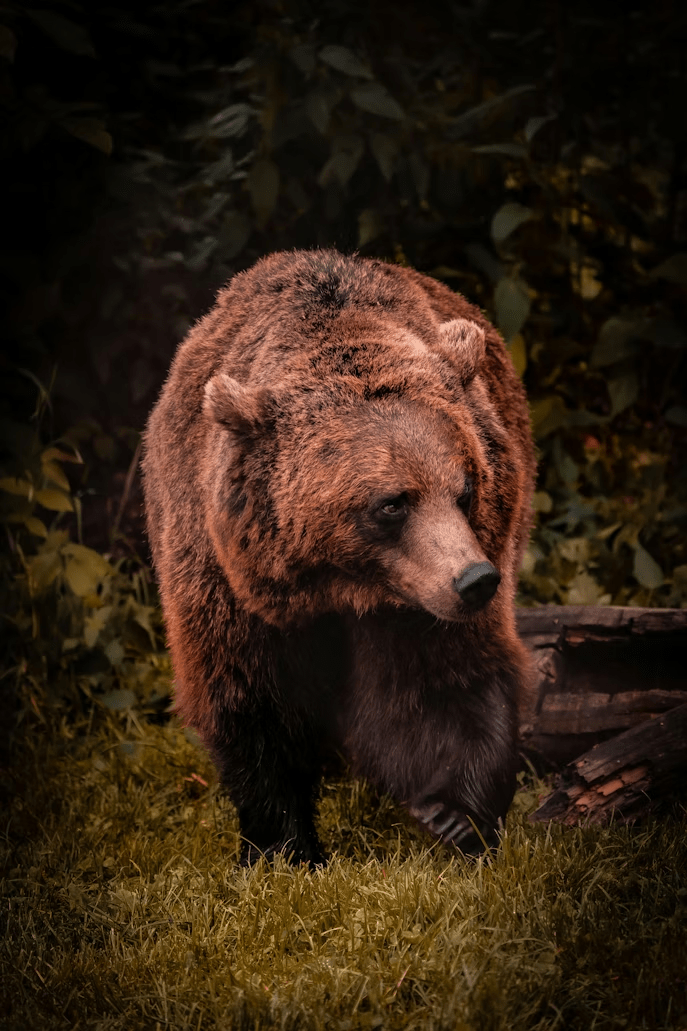
Leopold was a Russian brown bear. Precisely how he came to inhabit the welfare rooms of the Sergei Rachmaninoff Conservatory remains an enigma, one of those strange realities people come to accept not through understanding, but through quiet resignation. It was said, simply, that he was there and there wasn’t really much one could do about it.

He was not, by nature, an objectionable tenant. Leopold bore himself with a certain melancholy dignity. He did not roar, nor did he disturb. To put it frankly, he wasn’t much of an inconvenience to anyone, unless of course you needed to use the welfare facilities, in which case, to put it rather bluntly, you were stumped.

Curiously, Leopold spoke excellent French. How a bear acquired such eloquence is unclear. Rumours abounded. The most persistent of them claimed he had learned the language in the 1970s in order to woo a violinist named Arabella. She, poor soul, never saw his face. She heard only the voice, low and resonant, emanating from behind a half-closed office door. And how could she have known? Leopold

was, if anything, a hopeless romantic though hopeless more in the sense of being ill-fated, or even morally adrift. He delighted not in love itself, but in its illusion.

In stringing Arabella along the path of imagined passion, he seemed to reach the outer edge of some dimly recalled humanity. But love requires flesh, and presence, and truth and Leopold, alas, was still a bear. When Arabella graduated, she vanished

from his life. There wasn’t much Leopold could do about the matter and since, Leopold has seldom spoken French.

I think the last noted occurrence was rather tragic really, as it was used with rather malicious intent – luring a visitor, an oboist if I’m correct into the welfare room and … well truly, no one saw her again, though the sound of her oboe – of the melody Gilles Silvestrini’s Six Etudes Pittoresque is apparently often heard in the quiet of the night.

There was, however, one particular occasion that stands out. Perhaps it even explains why Leopold is still allowed to reside in the welfare rooms at all. It was to do with his fondness for jazz. 

Naturally, jazz wasn’t something regularly heard in the conservatory reality, almost improper. Yet from the room below Leopold’s, it drifted upward now and then—the work of a saxophonist, a quiet prodigy. Lived mostly in major thirds and Chopin études. But jazz, that was where his heart sat. He kept his passion for it hidden, a

secret. Only late at night, when he was certain everyone else had gone home, would he indulge. Quiet at first, then freer, more wild. It was beautiful, really.

Leopold listened. Night after night, he’d sit in the welfare room above, unmoving. He assumed, based on the playing, that it was a “he” down there. He never checked. Leopold didn’t like leaving the welfare room. What mattered was that anyone who tried to interrupt the player, anyone who thought they might barge in or critique or ask politely for the practice room, was met with a rather unpleasant surprise the

following morning. A large, unmistakable one. Left just outside their door. It was, to put it plainly, Russian brown bear shit.

It didn’t take long for word to get around. Soon, no one dared interrupt the saxophonist. And a kind of understanding formed unspoken but very real, that if the bear liked your playing, then no one else had the right to question it. In a place filled with judgement, that kind of endorsement was priceless. Leopold and the saxophonist never actually spoke. Not once. But their silence said enough. A strange sort of friendship. One that didn’t need to be acknowledged to be deeply felt. In some ways, it may have been the thing the saxophonist needed most.

The following year, he quit the conservatory. Went off to play jazz full-time. In an interview, he was asked why. He said, simply, “It was the bear.”

And that was that.

Featured Image: Daniel Diesenreither

Categories
Creative Writing

Frank the Snail

By Robertha Green Gonzalez

The idiom goes: there are plenty of fish in the sea. 

But things were never that simple, because Frank was a snail. 

Not just any snail, either. Frank was a store-bought snail, living in a fish tank in Gary’s flat. Gary was a university dropout whose primary contributions to the world at that point were an overwatered spider plant and a lingering cloud of cheap marijuana smoke. 

Frank believed in love. He tried for love. But love, as a snail, is a difficult thing, prospects being what they are: limited and slippery. Not that Frank had nothing to offer. He was a hard worker, possessed a respectable shell, and came from a fine background. By which I mean he’d been raised in a rather high-end pet shop, the sort with clean glass tanks, with no yellow mould creeping in at the corners. He wasn’t your bargain bin £3.25 snail, oh no. Frank had cost £4.75. As far as he was concerned, he was top dollar. 

The trouble was, the tank was small. Too small. And the other inhabitants, those fish he admired from across the plastic castle, never seemed to stay long. He couldn’t understand it. Each time, he would notice one, admire them, imagine a future of quiet companionship at the bottom of the tank – and then gone. Off to somewhere else, somewhere bigger, somewhere freer. 

Frank didn’t know why. He only knew that, time after time, the fish he loved refused to stick around. And so he stayed, watching the water ripple, telling himself there were plenty of fish in the sea, even as the truth pressed in on the glass walls around him: 

There was no sea. Only Gary’s tank.

What Frank never understood, what no one ever told him, was that fish love fish. Always have, always will. And no matter how polished his shell, how steadfast his devotion, how utterly sincere his slow, circling affection… he would never be a fish. He would always, always be a £4.75 snail.

Featured Image: João Costa

Categories
Creative Writing

Noa the Wasp and the Fig

By Robertha Green Gonzalez

NOA.

The surrounding walls seemed to breathe; slow, patient, alive. For a moment she thought she was still inside a flower, but flowers didn’t hum like this. Flowers didn’t whisper. “You’re here,” said a voice, soft as ripened fruit. 

“Where is here?” Noa asked. 

“Inside,” said the fig. 

She tested her wings. The space was close; her movements left faint echoes in the sweetness around her. “I don’t remember coming here.” 

“You don’t have to,” murmured the fig. “Arrival is enough.” 

Noa tilted her head. “It’s dark.” 

“Light isn’t always kind,” said the fig. “Some things grow best in shadow.” The wasp tried to smile, for that was what Noa was. A wasp. Though she wasn’t sure if her face could still do that. “It smells like forever.” 

“That’s only ripening,” said the fig. “It feels endless when it begins.” 

She brushed her antennae against the inner wall. It was soft, almost trembling. “I was looking for something,” she said, but couldn’t recall what. A flicker of memory; open sky, the taste of air, a pulse of sun, and then it was gone. 

“You were looking for a place to belong,” the fig said. “And now you’ve found one.” Something inside Noa ached. Not pain exactly, but a slow turning inward, a folding of one thing into another. 

“Is it supposed to feel like this?” 

“Yes,” said the fig. “It’s the way joining feels.” 

She hesitated. “It’s hard to breathe.” 

“Breathe slower. You’re part of something larger now.” 

Noa’s wings brushed the walls again; they no longer sounded like wings. “Am I changing?” she asked. 

The fig’s voice deepened, distant. “As am I.” 

For a while, neither spoke. The warmth thickened, fragrant and heavy. She could feel her body soften, her thoughts growing drowsy, like syrup cooling. 

“I think I’m disappearing,” Noa whispered. 

“You’re becoming,” said the fig. 

“But I’m scared.” 

“I know,” said the fig. “So was I.” 

Her movements slowed. The sweetness pressed closer, gentle, inevitable. She thought she heard other voices, faint and humming, hidden in the fruit’s heart. Maybe they were memories. Maybe they were prayers. 

“Will you remember me?” she asked.

The fig pulsed once, tenderly. “Always. You’re the reason I can bear fruit at all.” The warmth deepened, and the fig closed around her, not as a tomb, but as a cradle. Outside, the world turned quietly toward autumn. Inside, everything that had been Noa drifted into the soft, patient rhythm of the fig; a rhythm that would feed the living, though she would never know it. 

And somewhere, far beyond her last thought, the air was still singing. 

THE FIG. 

And when all was quiet, the fig began to remember. 

It remembered the light that had once entered with her – brief, winged, trembling. It remembered her questions, her fear, the small pulse of her heart against its walls. In the slow language of roots and sap, memory is not a thought but a movement, a sweetness travelling outward. Noa became that sweetness. 

Inside its dark flesh, she was not gone. She was pattern. She was purpose. The fig felt her in every grain of itself, in every seed it now held a thousand small hearts waiting to be carried elsewhere. The fruit ripened not with time but with her. 

Sometimes, when the wind moved through the leaves, the fig imagined it could still hear her; that soft, uncertain voice asking what it meant to belong. It wanted to answer, but it had already spoken all it could: by holding her, by keeping her, by turning what was once fear into nourishment. 

Soon the skin would split, and the world would taste what they had become together. And no one would know her name, or her wings, or how gently she had asked to be remembered. But the sweetness would tell the story, in silence. 

And the fig, in its quiet fullness, would understand at last what death had meant: not ending, but the long patience of being carried forward; alive, inside everything that follows.

Featured Image: Honor Adams