
Categories
Reviews

Down the Rabbit Hole: A Magical Musical Tumble – The Durham Opera Ensemble’s Alice’s Adventures in Wonderland

By Freyja Hollington

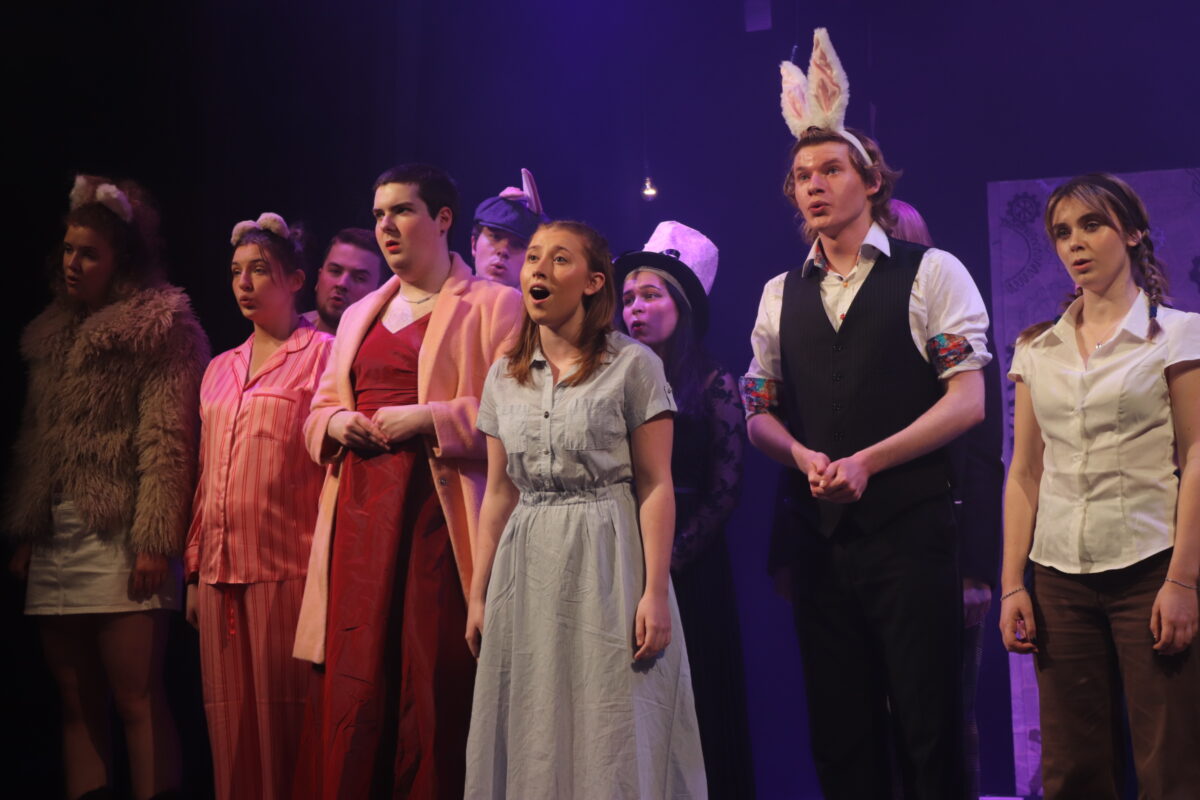
The Durham Opera Ensemble attain brilliance and professionalism in their masterful production of Will Todd’s Alice’s Adventures in Wonderland. The technical promise of the performance is anticipated in the thrill of the exposed orchestral accompaniment, which gradually breathes music into the theatre. The strength of the band is matched by the performers themselves, as the whole assembly weaves an intricate tapestry of symbiotic sound, with voice and string and brass raising goosebumps and thrilling audiences. 

The transformative work of the production team is foundational to the success of the performance. There is an intricacy of thought and detail which brings Wonderland to life, as towering flowers, playing-card-mushrooms and suspended butterflies spill over the stage and into the audience. In a particularly enchanting detail, book-pages cascade from the ceiling to mimic our heroine’s tumble down the rabbit hole. Such a self-conscious reverence for storytelling works as a constant thread throughout. The backdrop is transformed into a large storybook, whose pages are turned by the discrete ministration of the Stage Management team – Leon Ansorg, Aoife Bowles, Lily Beetles, Izzy Richards and Isabelle Owen – effecting a series of act breaks like the turning of a chapter. A very warm congratulations is due to Co-Set-Designers Libby Simpson and Eva Ryan for such visionary detail, and to the talented Set Production Team who realised their dream: Sarah Richardson, Veritas Dubik and Becky Hale. Included in their applause must also be the artful management of lighting, delivered excellently by Lighting Designer Zac Jackson and Lighting Operator Val Devereux, without whose technical contribution the brilliance of the set would have lost lustre. 

Such sensory delights are intensified by the accompaniment of the band, whose talented ministrations make the production breathe. The score is itself a delicate medley of classical and jazz, with the conventional operatic sections achieving haunting levels of tension that are brilliantly offset by the funkiness of blues. Such moments of musical summit are especially delivered through the success of the Cello, played by Tom Shaxson, and the Drum Kit, mastered by Isaac Short, and their gravity is balanced in the perfect airiness of Keys, played by Patrick Owen, and the Tuned and Auxiliary Percussion, delivered by Dan Hume. The Violins, provided by Cameron Davies and Katherine Iveson Vandy, and the Viola, played by Charlie Lineker, give body to the score, assisted by the strength of the wind instruments of Flute, by Emma Phipps, Alto Sax, by Annie Sullivan Qosja, Trumpet, by Leo Vernaglione, and Trombone, by Thomas Pennington-Arnold. In the playfulness of the Accordion, played by Sam Caskie, the intensity of the ensemble becomes grounded in childhood wonder, innate to the nostalgia of Wonderland. The band are themselves a united body, working in oneness to enthral and ensnare, and this is a credit to the success of Conductor Zac Smith. 

When the cast of performers joins the enchantments of the stage, the magic is complete. Every voice compels attention and emotion, and the power of projection is astounding. The opening scene is a particular showcase for the extraordinary talent of Maia Harris Lindop, starring in the dual role of Mum and Mad Hatter, and her co-star Ash Marshall as Dad and Queen of Hearts. In the ironically dysfunctional domestics of the real world, Olivia McClintock and Eleanor Barnes provide skilled hilarity in the comedic relief of the Two Brats, and as their dreamed mirrors Tweedledum and Tweedledee. In his role as the White Rabbit, Sammy Jarvis is sensational, bringing the world of Wonderland to life with a voice that is almost transportive. Nonsensical and psychedelic, the delivery of the Cheshire Cat by Francessca Fitton elevates this dream-realm, with Fitton’s mastery of physicality and facial expression matched in power by her strength of voice. 

Amongst the chaos, the chorus provide lucidity of narrative, as the figures of Daphne, Scarlett, Velma, Norbert and Fredrick give interludes of exposition and cogence that guides audiences through absurdity; excellently sung by Isabelle Bruce, Mathilda Ketterer, Izzy Cochrane, Ben Glover and Joe Wilson. Likewise, the exceptional talent of Kiera Barrett delivers brilliantly the guiding roles of Bottle and Duchess, with Barrett’s voice promising the potential of aria, and yet seamlessly blended with the community of the wider cast. The Caterpillar, performed by Fred Walmsley, intensifies the elements of jazz included in the production, in a clever adaptation of the traditionally intoxicated bug reflected in Walmsley’s play with voice. The tea-party retinue offer similar moments of hilarity, as the Dormouse played by Hannah Mayes and the March Hare performed by Matthew Dodd become comical victims of the Mad Hatter. In his secondary character as the White Knight, Dodd offers striking moments of physical hilarity whilst maintaining skilful control of voice.  In the starring role, Eleanor Brown shines. Brown lavishes audiences with exquisite song, expressive and controlled. Alice is especially alive in the heights of the musical score, where Brown’s clear and bell-like soprano most excels. Though undeniably accompanied by the brilliance of the wider cast, the sustained excellence of the lead is to be commended, and in every scene Brown attracts the focus of the performance. Delivering Alice’s Adventures in Wonderland with exceptional success, the Durham Opera Ensemble outdo themselves, performing with a calibre and talent far beyond the expectations of an amateur company – they have achieved magic on stage.

Featured Image – Durham Opera Ensemble
Categories
Reviews

A Perfect Rendition of Respectability’s Imperfections – DUCT’s ‘The Importance of Being Earnest’

By Freyja Hollington

‘Well, I cannot watch a drama in an agitated manner.’

When Oscar Wilde took up the charge of presenting the social, he did so through the lens of satiric enjoyment. The unnecessary niceties and rules of manners that Wilde saw as both hypocrisy and absurdity poured forth into his characters and have created a drama that continues to hold resonance. Whatever distance we so wishfully place between ourselves and contemporary nineteenth century audiences, it is undeniable that the tangled web of silent social scriptures that Wilde exposed remains steadfast and unshakeable today. English hypocrisy need only be observed in the unspoken rigidity of orderly queueing everywhere except the pub, where the chaotic push toward the bartender seems to acknowledge how easily we forget ourselves in the pursuit of pleasure.

This essence of Oscar Wilde, his smirking dialogue and satirized stage, are so perfectly encapsulated by Sam Bentley’s direction of The Importance of Being Earnest with the Durham University Classical Theatre Company. The usual anxieties that accompany any theatregoer upon taking the stairs to their small – and not always too comfortable – seat melt away, as the world of Wilde unravels before them. The sword of dread which hovers at the inhale of a performance is swiftly lost, replaced by the thrill of anticipation that this will be brilliant. From the very moment the curtain lifts, the company achieves precision in the balance between the comic and the biting.

Opening the performance as perhaps the clearest mouthpiece for Wilde himself, the hedonistic bachelor and gad-about Algernon Moncrieff is central to the establishment of tone. In the hands of the talented Cillian Knowles, Algernon, and indeed the play itself, comes to life. Knowles’ first steps onto the stage are masterful, as his physicality conveys that which we have yet to learn but begin already to know. Amplified by the brilliance of costuming, Knowles as Algernon epitomises the freedom of carelessness in a system built upon self-criticism and self-regulation. Undone, almost naked, and embellished with the wisps of a lavish silk gown, Knowles saunters through the set toward audiences. In a striking moment of dramatic vision, the production utilises a transition into diegetic sound, as the playful music accenting Knowles’ appearance becomes the jovial and light-hearted melody of his own playing. The piano, as a recognisable symbol of higher social class and elevation, under the blithe and undisciplined hands of Algernon, becomes the image of social subversion that is definitive of the wider play. 

As his counterpart, the polarised figure of Jack (Earnest) Worthing enters the stage from the opposite wing and is, from the first, the antithesis of Algernon. Introduced in perfection of style, speech and posture, Jack, played by the sensational Edward Clark, illuminates the extent of Algernon’s individualism, whilst also conveying the sheer impossibilities of upholding social expectation. Dressed likewise in perfect costume, Clark enters in a sensible tweed three-piece suit, standing stately and self-possessed, in the shadow of his friend’s previous exposure. Where Knowles’ physicality is instrumental to his characterisation, Clark’s performance of Jack is centred in his control of voice. Always elegantly and clearly spoken, Clark’s Jack presents the nearest facsimile to respectability that Wilde, and indeed any individual, could achieve. 

It is not an uncommon critique of Wilde that his construction of character falls slightly in his presentation of women, and while The Importance of Being Earnest perhaps weakens itself by the balance of genders in the play, the central women of this production are unmissable. As the intended ‘Jack’ of the women set, Miranda Pharoah’s Gwendolen Fairfax emerges as a personification of contradiction itself. Emulating the sincere self-importance and charming arrogance of Gwendolen, Pharoah’s performance is perfection. Upstanding, self-possessed, and decisive, Pharoah’s Gwendolen returns something of autonomy to the women of Wilde, as the production teases out their greater conflicts of desire and duty, past and present. Pharoah is joined on stage by the entertaining and evocative performance of Roxy Rayward as Cecily Cardew. Rayward is expression itself, alert and receptive in every moment of stage presence, speaking or silent. The brilliance of the wider company to play off one another is epitomised in Rayward, who never parts from Cecily for a single moment throughout. 

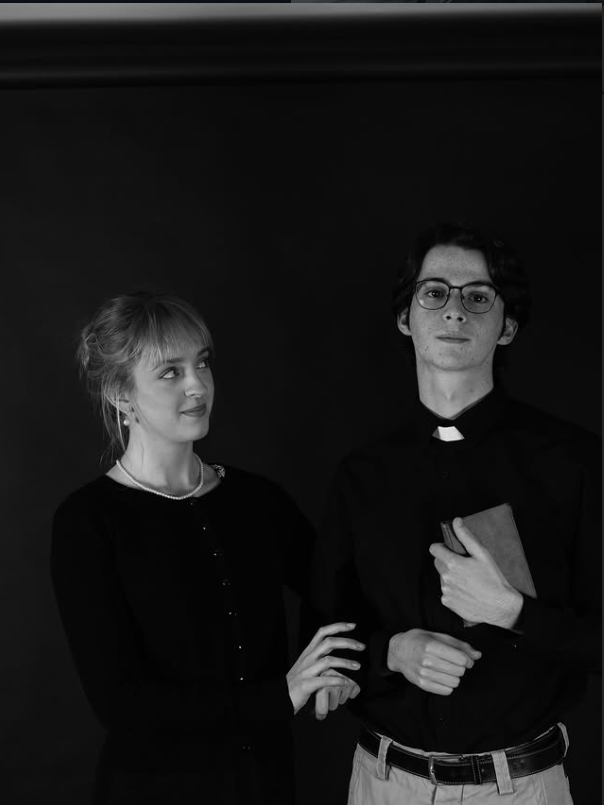
In the character of Lady Bracknell, Molly Bell transforms, speaking as the old voice of England and the origins of etiquette and decorum. Likewise enhanced by the genuine thought and construction of costume within the production, Bell presents the tenuous and flitting grasp that social expectation holds upon itself – never quite solidified, but always conscious of its indispensability. Bell, as Lady Bracknell, becomes intriguingly paralleled in the supporting character of Miss Prism, richly characterised by Olivia Fancourt. Where Lady Bracknell esteems the system through her own superiority therein, Miss Prism’s unflinching dedication to the same notions of order and behaviour interrogate the (dis)advantages of obedience. In her implicit and tactfully conveyed love for the Reverend Canon Chasuble, vividly realised by Noah Lazarides, Fancourt’s Miss Prism questions the benefits for those that adhere to the system; further explored in Henry Skinner’s persuasive performance as the servant figures of Lane and Merriman. 

What the Durham University Classical Theatre Company has achieved in their production of The Importance of Being Earnest is nothing short of remarkable. There is a fine attention to detail and finesse of set, costume and sound, which only intensifies the brilliance of the cast. The dedication of the company to this creation is evident in every element, and the love and loyalty of DUCT to their performance is palpable. As one of the strongest student performances held in Durham, The Importance of Being Earnest  will be remembered and treasured fondly and often by audiences for years. 

Image Credit – Durham University Classical Theatre