
By Toby Dossett
Kandy
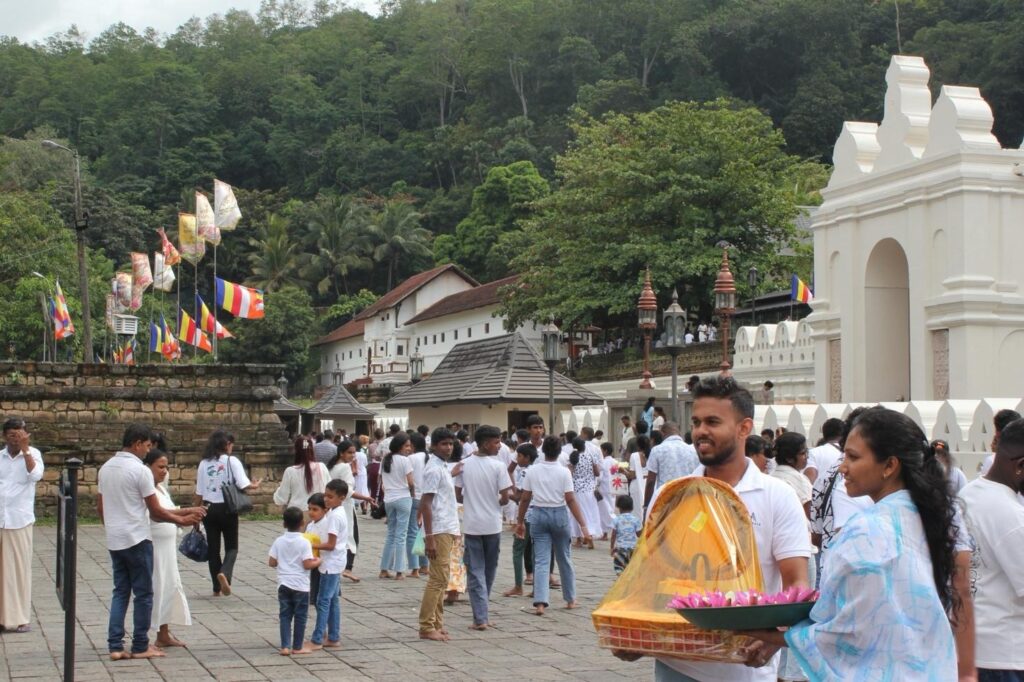
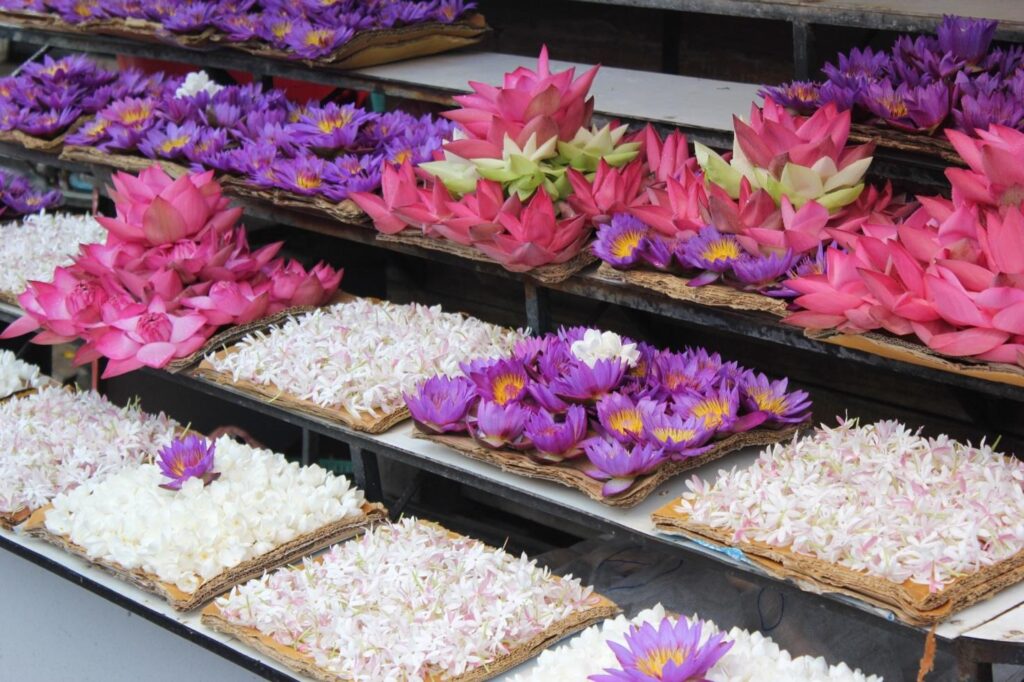
You arrive in Kandy, porous with travel fever. It’s your first time in Sri Lanka, and you could build temples out of the things you don’t yet know about this pearl of the Indian Ocean. The heavy air is filled with the yawns of dogs and the groans of traffic. It’s 07:15 on a random Tuesday in June and you find yourself in the queue to put your sandals away, before entering the Temple of the Sacred Tooth. You hand a thousand rupees to the attendant with a scribbled white beard, then step inside. The revered Buddhist temple was originally built in the 16th century within the Royal Palace Complex, and shelters what is believed to be the sacred tooth of Gautama Buddha. The stone steps, worn smooth by pilgrims, press history into your soles as incense curls through the courtyard. Milk, rice, and lotus flowers are offered reverentially by those who queue to see the sacred left canine through the golden hatch on the upper floor. It’s said that the tooth carries both spiritual and political power, with guardianship of the relic historically linked to the right to rule over the island. After the hatch closes, you follow the queue downstairs and head back outside into the powdery rain. A class of schoolchildren dressed in white, a cyclist, and two wiser women with umbrellas thread across your field of vision – all squinting as the downpour thickens. You collect your sandals, dart across the temple gardens, and slip into a tuk-tuk with a fleeting silver crown of monsoon mist.
Fifteen minutes from Kandy city lies your next stop: the Royal Botanical Gardens at Peradeniya.
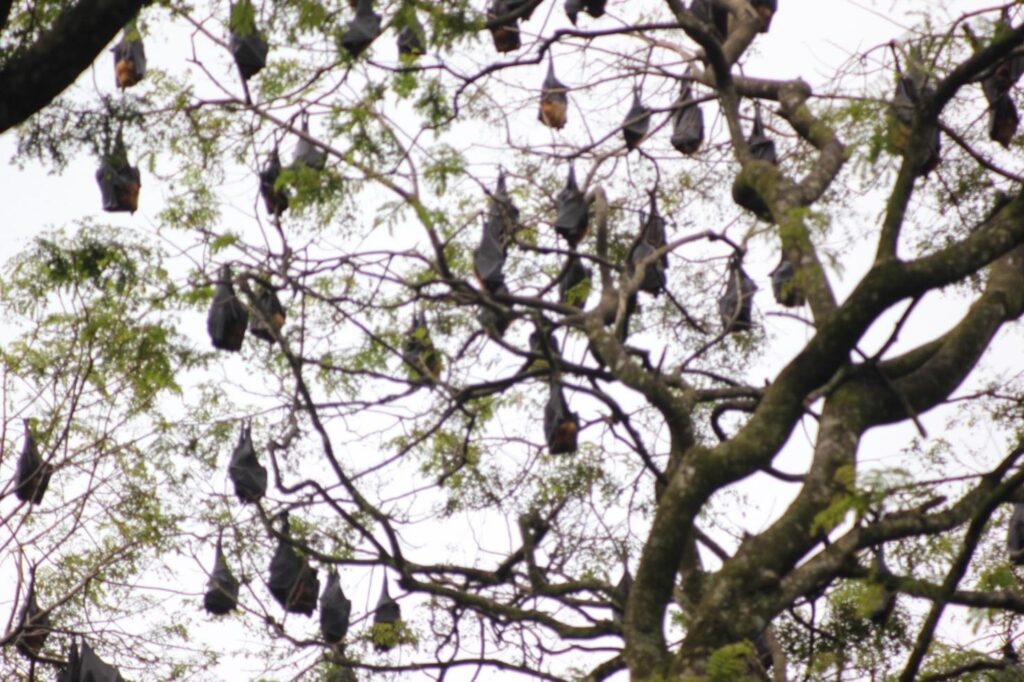
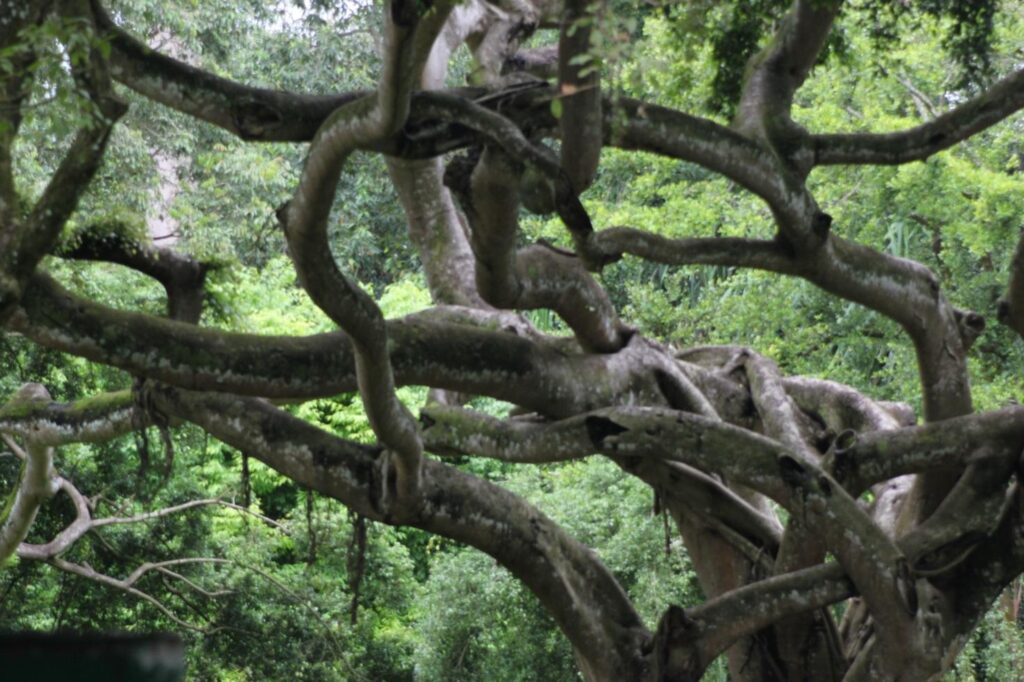
Established in 1821, under British colonial administration, and spanning more than sixty hectares, the gardens cradle over four thousand species of plants, many of which are endemic. You queue again for a ticket, which costs one two hundred rupees, and follow the main path until it opens into a wide green bordered by tall, lean trees. Sunlight settles like benediction on your skin, and the air hums with chatter as families run across the sloping hill. You notice an elderly couple holding hands on a bench (her head nestled perfectly into the nook of his shoulder) and a central wise tree that stretches its limbs across shaggy grass and toppled rock. Someone has placed stilts to support each branch’s reach; the leaves gleam a grateful, glossy green. You continue down the path and hear the strange screeches of what seems like a migration of birds. There’s no obvious fluttering in the sky, but on closer inspection you see the ornamental dangling of a thousand bats which adorn the canopy like living leaves that sigh and stretch in the afternoon sun.
Sigiriya
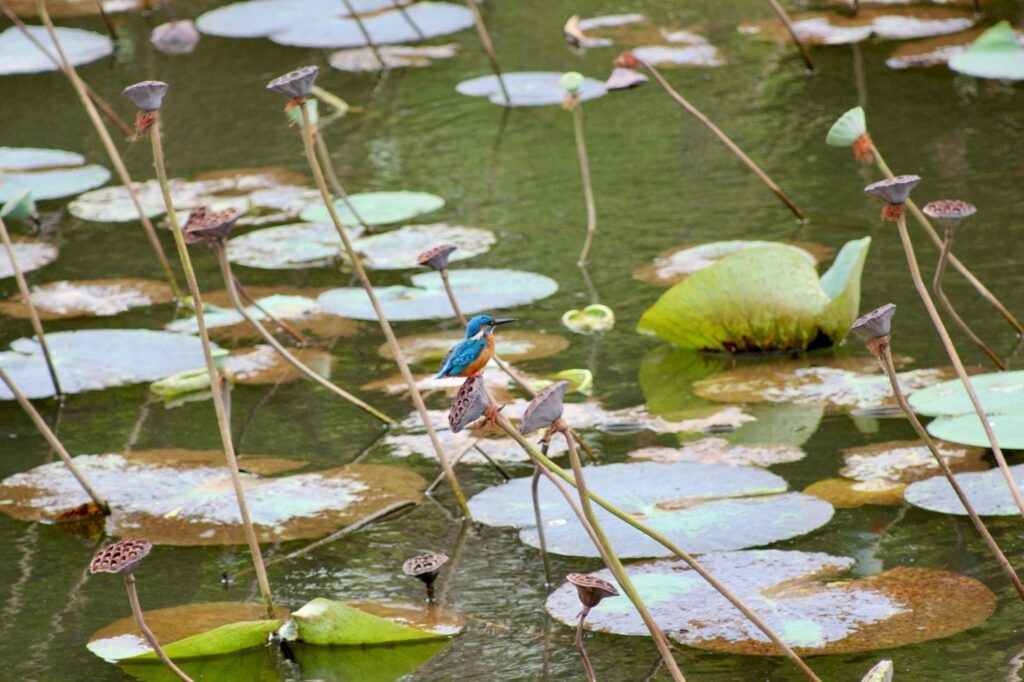
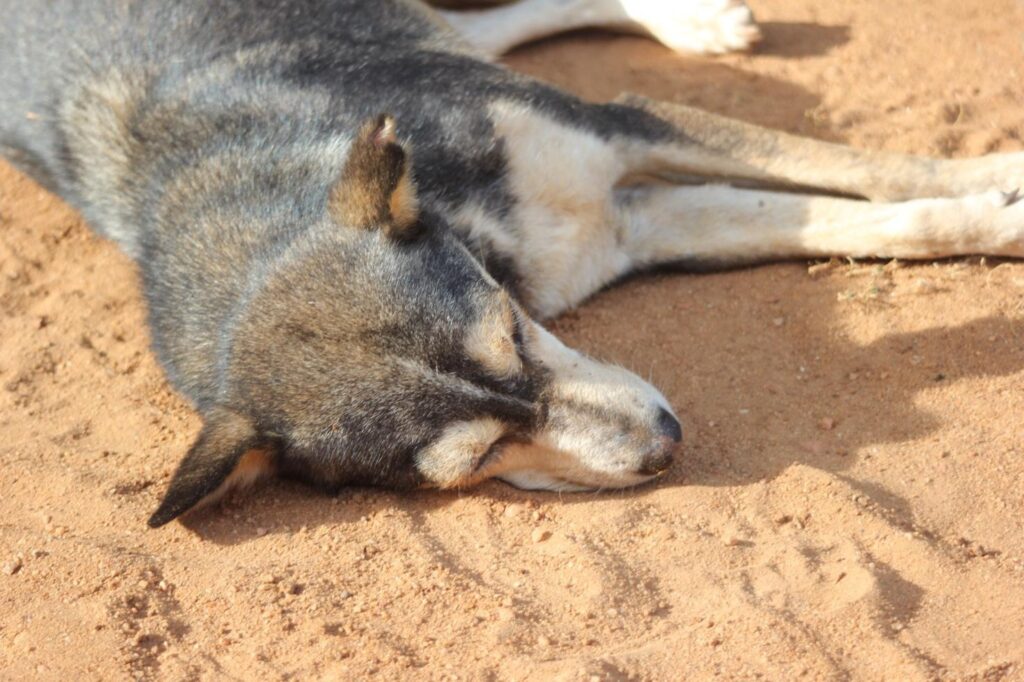
You set off early and drive north to Sigiriya, arriving just after eight. The air is still cool when you get out of the car, a slightly indecisive chill makes you wonder if you’ve dressed appropriately. Your driver seems to know everybody here, exchanging itinerant handshakes on his journey to the tourist office. Guarding the building are two extensive ponds brimming with lilac waterlilies that bathe in the water, acting as the perfect mirror of the pale morning. You follow the path into the water gardens and immediately see the large monolithic rock, a burnished orange and grey. The sun is just starting to peek out behind it, turning its jagged outline into a shimmer as if it had just caught alight. In the foreground the gardens stretch in symmetry, and a dusty nosed dog repositions as it agrees to an extra five minutes snooze. The ancient horizontal lines in the brickwork spiral out from the water and are cut through by the path of a white-throated kingfisher, who then perches on the tip of a fading lily. In awe you think, does a precious bird comprehend the language of its wings?
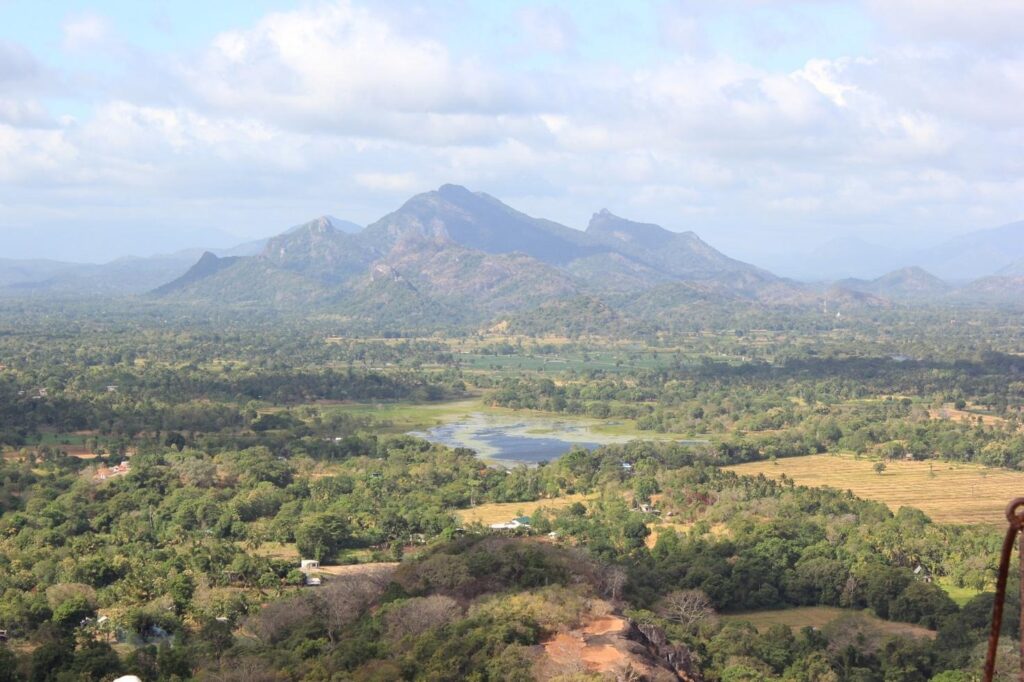
The climb begins through the remnants of the old city, between boulders etched with the faint impressions of ancient steps. You pass through the mouth of what was once a colossal carved lion and ascend the 1,200 perilously perched stairs to the summit. Sigiriya rises nearly two hundred metres above the plains as a massive pillar of granite occupying the valley. From the summit you can see the marvelling remains of King Kasyapa’s fifth century citadel, dating back to between 477-495 AD. Below you can trace the water gardens and then the surrounding landscape which is a mosaic of dry zone forest, rice paddies, and large wetlands. You then descend before the sun climbs too high and the winds grow wilder (you’ve already accidentally swallowed two flies). On the way down, you verge along the rock and up a narrow spiral staircase to access the rock’s overhanging cliff face. Enduring underneath, in muted ochre and coral pigments, are the famous ancient frescoes.
Kandy to Nuwaria Eliya
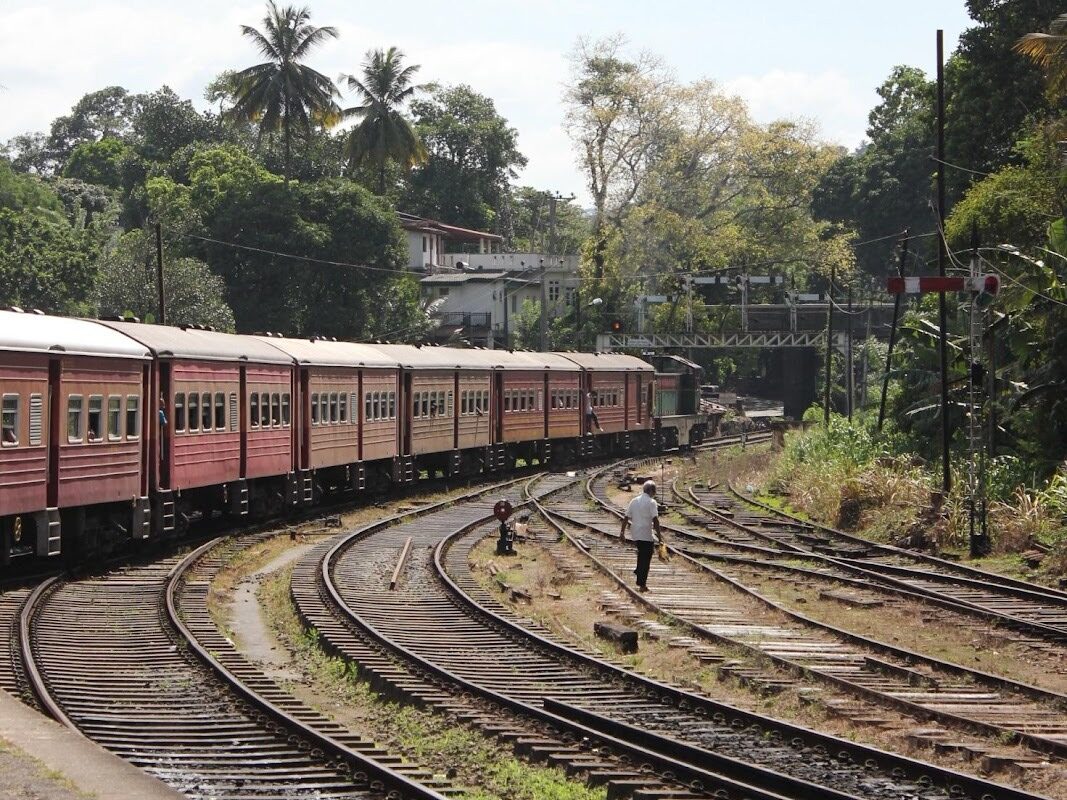
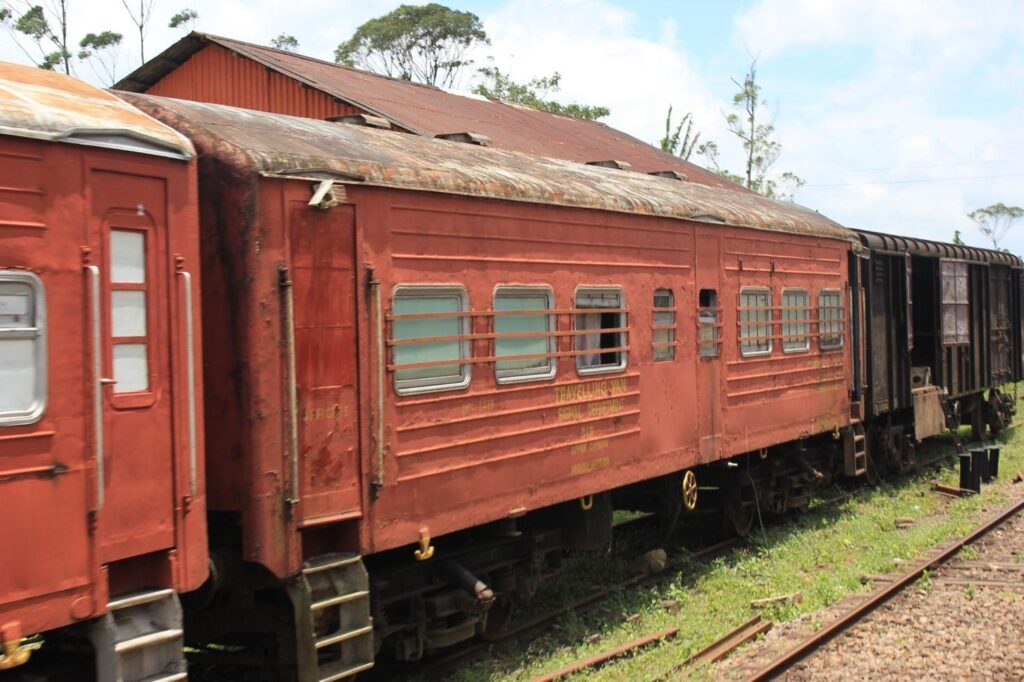
You make your way to the station, buy your ticket (knowing you’ll never sit still for long), and find your place among the waiting crowd. Overhead, a crow’s nest tangled in wires squawks, mimicking the loudspeaker as it announces the next departures. You hear the distant toll of temple bells and stand for a second and listen to a city humming in minor chords. A man in white strolls down the platform and, with insouciant steps, crosses the tracks while the train pulls in. For a moment the rails inundate him and the world starts to be mesmerised by lines, sounds, and the texture of your tongue. The sharp crack of a horn, a baby waving from the window, a conductor’s whistle; you are thirsty and dazed. You board the carriage and take a breath. Now everything Kandy has been, its colour, its noise and its slow devotion folds itself away into rolling railway motion as the train departs.
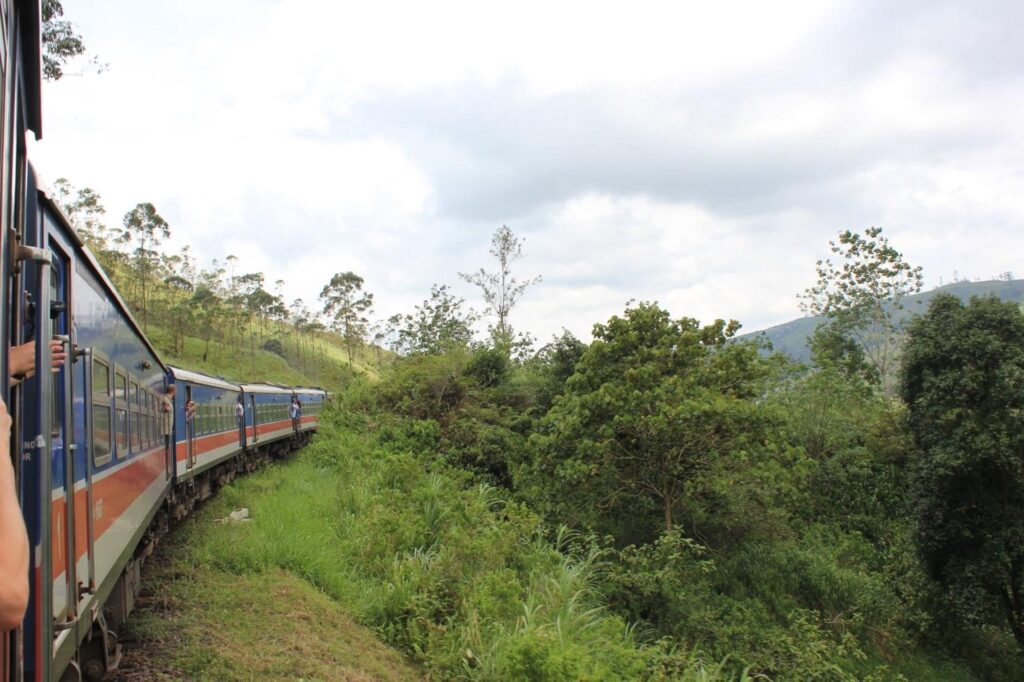
The journey from Kandy to Nuwara Eliya coils four hours through the central highlands, going past waterfalls, veiled green tunnels, and tea fields fluent across the hills and dense forests. You abandon your seat and decide to stand at the open end of the carriage, where wind hurls itself at you and wraps you tightly before vanishing back off into the hills. You wander carriage by carriage in search of the canteen cart, and hear music drift from ahead: a mix of ‘Rambarini’ on the radio and loud, idiomatic chatter. Hoping for a coffee (or maybe a beer,) you settle yourself down on a wooden bench beside the bar. You’re received by an open window that frames the passing world of small mountain villages that coruscate like an overexposed reel of film, strobing in light through the eucalyptus leaves.
The train slows down, and the mist thickens as you near the platform. You step down and the altitude bites softly at your lungs, almost two thousand metres above sea level, crisp enough to make your hair lift and your thoughts clear. The town spreads before you as you walk up the main road, presenting facades painted in muted pastels, which prompt the town’s echoing colonial nickname of ‘Little England’. The population here is just under thirty thousand, yet the town brims with abundance that spills from tea leaf markets and roadside shops.
Horton Plains
At five in the morning, you leave Nuwara Eliya, when the town still feels half imagined in the dark. The minivan climbs up winding roads until you stop briefly on a copper-coloured ridge to see the slow unfurling of light across the topography. It takes nearly an hour to reach the first checkpoint of Horton Plains National Park; a brick archway marks the entrance, alongside a dark green UNESCO sign noting the park’s establishment in 1988. After paying the entry you drive the final ten minutes through tall dew-covered grass, where the antlers of a young sambar deer survey above the blades before disappearing again. Erroneously thought of as an elk, the sambar is native to the Indian subcontinent and, though red listed as a vulnerable species since 2008, still roams quietly over the central highlands in docile herds.
Boots laced, you begin the nine-and-a-half-kilometre loop clockwise through the silvered grasslands, the air thin and oddly metallic. After a turned descent, you detour five minutes from the trail down to see Baker’s Falls; a collapse of white water crashing across rocks before spilling into the valley below. Twenty minutes later, the path steepens before softly plateauing to reveal an eight hundred and seventy metre drop. Ahead, the subtle geometry of tea plantations expands, and you can make out the pale outline of the Uda Walawe Reservoir. Farther still, through promising quick mercies before the fog arrives, the horizon stretches all the way to the ocean.
Across the remainder of the trail, birds call out forlornly and flit between the lichen-spotted canopy: the Black-naped Monarch, the Grey-headed Canary-flycatcher, and the Yellow-eared Bulbul; amongst some that you can identify with binoculars. Near the end of the hike from above the valley, you watch a movement stir on the fringe of the forest; purple-faced langurs argue in short, impatient bursts. Their monkey sounds are carried into the wind and return the height of the plains to its original equanimity, as if the morning were beginning all over again.
Galle
You head under the main archway and Galle materialises diligently in stone: an old Dutch citadel first built by the Portuguese in 1589. Clinging to the curve of the coast, Galle is shielded by sun-worn ramparts and a series of bastions, surviving after the 2004 tsunami. You find the fort quite quick to walk round and decide to slow down by stepping into an old wooden doorway that marks the entrance of a poorly advertised museum. In the first room, you find a gallery of stamps and old bank notes alongside historic yellowing maps of trade routes, city plans and major roads. The frames catch light from the next room where, resting in tall glass cabinets, is an improbable collection of things. Old spectacles, typewriters, cigarette cases, pistols, delicate necklaces, cameras, fountain pens and porcelain are all housed in separate neat collections, reminding you subtly of the intense Western interference in Sri Lanka. Through the open door at the end of the room, you can then see out across the courtyard where a man with a tarnished magnifying glass inspects a precious gem. He twists it in his hand several times over, puts it down on the desk and then grunts, while another old man smokes a cigarette in a chair with armrests carved into tight wooden spirals.
You walk the ramparts in the afternoon and think that the sea reflects too much light. So, you scan down to see children swimming in the bay, calling out to one another and jumping in from the edge (hopefully one of the deeper spots,) where the waves aren’t beginning to tumble and crash. Chirping parakeets wheel above the lighthouse, its white body frames the rest of the port in your field of vision alongside a great banyan tree that’s draped heavily with vines. You continue through the streets and arrive at the post office, where a woman in a sapphire sari slides a set of butterfly stamps across the counter. You slip them into your little book in exchange for some coins and carry on in search of a bar to watch the evening from.
Close
You end your trip in Habaraduwa, a small town a few miles south of Galle that has a panoramic view of the sea with beaches less bustled with fishing boats. Earlier in the day you saw turtles in the breach of the waves and fishermen casting lines from stilts as you walked down the coast. You’re unsure how to end a travel article exactly, you’ve loved expressing the interstices of noticing all those small moments on your journey but are stumped attempting to express any grandiose revelations of your time here. You think how Sri Lanka was such a wonderful adventure, and sitting on a curly piece of driftwood as the sun sets, you write a short poem instead:
The sea turns to copper
And the horizon is bent
A bow strung with light
Until the evening is spent
The palm fronds scribble
Against the shaken sky
As its hem is sewn shut
By the fish eagles fly
They thread clouds of gold
To crown the stretch of sand
While crashing waves unfold
On Sri Lanka’s southern land
Gallery
Featured Image: Toby Dossett
One reply on “Sri Lanka, By Rail and Rain”
Beautifully written and informative article. Incredible photos. What an amazing trip. Thanks for inspiring and sharing.