
Categories
Travel

New Adventures and New Boundaries

By Sam Unsworth

Recently, I have been pondering my next big travel adventure. Not the classic European raunch, or beachside holiday, something new, different, and exciting. But what is there and where is there to go? I lamented to my parents over the Christmas break, ( a time when you are inevitably squeezed together with many visitors and are well-advised to escape the house as much as possible to avoid the looming cabin fever), that there is simply nothing nowhere new anymore. The misquoted line of Hans Gruber in the hotly debated Christmas film ‘’Die Hard’ reads “And Alexander wept for there were no more worlds left to conquer,”. To me this rings true completely, not to conquer necessarily, but to find and keep a secret. The great travel influences in my life have plied their trade by finding hidden places and revealing them to us through words and screens, encouraging us to find them for ourselves. I find that once I find those secret places, I would be hard pushed to reveal them out of selfish desire to leave them untouched. But I digress, sat around the dinner table as I droned on that everything had been done, gulping down the last of the mulling wine that was meant for the next day, I was challenged and therefore could not simply recite this romantic line without truly thinking about what it was I was saying. 

Now, there are places I want to go, places that can be gone to, and places that other people have been to and documented, which totally undermines my previous annoyance that I was “born in the wrong generation”, as most mopey teenagers are, for exploration. My favourite books are filled with pages of adventures that could not take place today, but I wonder if that is such a bad thing. One of the books I have recommended on the profile page of the magazine (Have a look there, some other great things on there) is Eric Newby’s A Short Walk in the Hindu Kush, which details the author’s journey through Afghanistan to the Hindu Kush mountains to scale the unclimbed peak of Mir Samir. A journey that could not be undertaken today, mainly because the Foreign, Commonwealth & Development Office advises against all travel to Afghanistan due to the security situation and the danger for travellers in the region. Afghanistan geographically, is one of the most beautiful and culturally rich countries on earth, the graveyard of empire where one king remarked that one could be in a place where it has never and will never snow and within a day’s ride be in a place where it has never stopped. Simply put, with its long history, stunning architecture of the Silk Road (although how much of it is left is another matter), Afghanistan would be at the topbe top of most adventurers’ travel lists. 

However, it is not impossible to get there. Like other avid travellers, my social media is plagued by videos of people having a better time than me in far-off places around the globe, including Afghanistan. People merrily being taxied around the streets of Kabul and riding pedalos on the Band-e Amir Lake seem to portray the country as the place to be for the real adventurers. While wanderlust pulls at me, I am reminded of a conversation I had with a man in the mountains of Kyrgyzstan. In the way that you run into the most random people, he happened to live but 10 minutes away from where I grew up and had set out to hitchhike across the globe, from Yorkshire to wherever his end point felt right. As we were both interested in the new places to travel, Afghanistan entered the conversation. What he argued was very convincing. He argued that he refused to travel there as it posed such a moral dilemma that in fulfilling your own desire to see and experience the country, you would be aiding the growth of immoral ideology through participating in the Taliban economy. To say this took the wind out of my sails would perhaps misrepresent my thoughts on the matter. I agreed wholeheartedly and as such have changed my views on the influencers who go to these places to boost interactions on their own platforms.

These influencers, some of whom have also travelled North Korea, seem to act selfishly in a different way than I saw at the beginning. They are seemingly selling an idealised view of a country whilst not appreciating the deep-rooted inequality, repression, and control that characterise these places. 

And so, equipped with this new mindset, I may change my long-held belief that everything has been done. They are “worlds left to conquer” but I believe there is a time and a place for when it is right to push the boundaries and explore beyond perceived limits. I hope that one day I will be able to make it to Afghanistan and find something new, some hidden places, which I would then, if I mature a little bit, want to share with the rest of the world. 

Featured Image: Toby Dossett
Categories
Culture

Are We Seeing a 1930’s Fashion Revival?

By Sam Unsworth

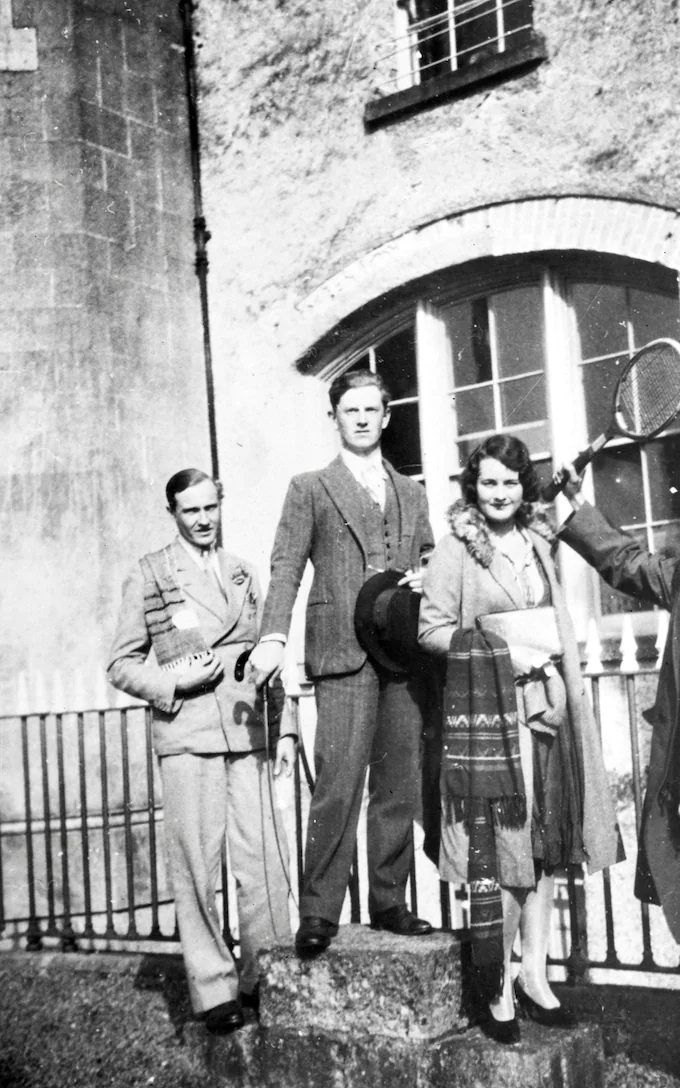
It is a more than well-known fact that there is simply nothing new in fashion; all is a rehash upon rehash of older ideas, cuts, and silhouettes- with the exception perhaps of fabric. Nonetheless, it is still interesting to examine the comparisons we can draw with the past and how these may hint at the ways in which fashion may evolve in the future. This article will focus on men’s fashion with all the authority of someone who watches too many films, looks at too many clothes, and picks up some of Hardy Amies’ books from time to time. In my opinion, the 1930s arguably saw the peak of the suit. Focused on both style and practicality, the thirties flowed with softness and ease of wear in its fashion. Broad shoulders and well-fitting garments designed to exude confidence and effortlessness, and most importantly, simplicity. This, I believe, is seeing a revival in the style of the everyday man’s wardrobe, as well as among stars on red carpets across the globe. 

The first thing that occurred to me was what YouTuber James Leung refers to as the “2025 uniform”. This, as one is probably aware, tends to involve larger, wide-legged trousers paired with a well-cut t-shirt and some form of polished boot or shoe. Now, how exactly does this reflect the 1930s? Well, the ease of this type of outfit and the emphasis on basic, comfortable clothing are clear indicators. If we were to examine the suits common in early 1930s Germany, we would encounter loose-fitting trousers that flowed neatly down from the waist, usually accompanied by pleats. These loose trousers permitted a clean break above the shoe, a feature often mirrored in contemporary fashion. This, however, was not restricted to Germany- rather reflecting a shift toward practicality within men’s fashion in a post-Wall Street crash world where men would have less time for leisure and would look to own curated items that would last comfortably, whilst also retaining some of the finery of the 1920s. 

Furthermore, the influence of The Great Depression saw an increase in workwear being utilised more openly- with the serial production of French chore coats by the likes of Le Laboureur and Vetra, allowing working-class fashion to evolve further in Europe (If you want to know more about Le Laboureur, I would recommend Albert Musquiz’s YouTube channel). In the USA, there was also a boom in workwear fashion, with Levi’s and Carhartt gaining nationwide prominence with the emergence of the first Carhartt jacket, the “Engineer Sack Coat,” in 1925. Workwear in fashion is not restricted to the 2020s; however, there is a clear increase in the sourcing of pre-loved or softened workwear for incorporation into the fashion world, which has led to online trolling of individuals for ironically having “soft hands” while donning traditional workwear, arguably demeaning and accessorising its blue-collar roots. US workwear appears to be in high demand at present, consistent with a broader pattern of US influence, particularly through film stars, celebrities, and social media influencers. 

A key focus must also be placed on the cut of suits and trousers. Gone are the days of oversized and baggy apparel; people instead want well-fitted clothing that accentuates their bodily features most prominently from the waist up – perhaps aligning with an increased focus on health and fitness within influencer circles. In the earlier example of the t-shirt and larger trousers, there is a clear distinction between being ‘larger’ and being ‘baggy’. These large trousers still sit tightly at the waist, usually in a high-to-medium waist fit. Notably, these trousers often do not require a belt to cinch any excess material; instead, an increasing number of designers are reverting to systems such as English side straps or Gurkha waistbands. This is well modelled by the likes of actor Jacob Elordi, who often wears double-breasted suits that reinforce 1930s-style motifs. As such, the cut of these trousers appears to model that of the 1930s, with larger yet well-fitted garments that accentuate one’s waist whilst also adding volume to the legs. On a personal note, I believe this is a welcome step away from the tight Tom Ford suits of the 2010s, which I, for one, hope do not come back into fashion. 

Finally, a note on t-shirts and jackets. In this case, I will use Mutimer as an example. Currently,  Mutimer is really the driving brand in men’s fashion beyond the runway, with sleek silhouettes that lend themselves to everyday use and styling, offering a sense of effortlessness whilst also retaining a put-together look. Hardy Amies famously wrote, “A man should look as if he has bought his clothes with intelligence, put them on with care and then forgotten all about them,” and I believe this to be clear within Mutimer’s brand vision. They recently released a new T-shirt labelled “The Jagger T-shirt”, faithful to the cut and shape of its namesake, Mick Jagger, yet adopting shorter sleeves and a tighter fit- it does away with the boxy tees popularised by skate fashion, instead aligning with the 2025 uniform, accentuating your features with a simple, unabashed silhouette. Much like the fit of Marlon Brando’s t-shirt in Streetcar. This can also be seen in jackets; the Mutimer leather jacket, conveniently always sold out, features a cropped fit typical of most biker jackets, yet also contributes a snug waist reminiscent of military styles of the late 30s and 40s, such as the No.5 battledress or General Jim Gavin’s modified officers’ jacket. 

There are many comparisons to draw, but I believe that overall, a 1930s style revival is totally beneficial to men’s fashion as it blends practicality, comfort, and elegance, in turn allowing the wearer to curate a more long- lasting wardrobe not driven by fast fashion but rather by timeless classics which focus more heavily on fit rather than flair. 

Image credit : The Telegraph

Categories
Travel

Bullfighting: Culture vs Cruelty

By Sam Unsworth

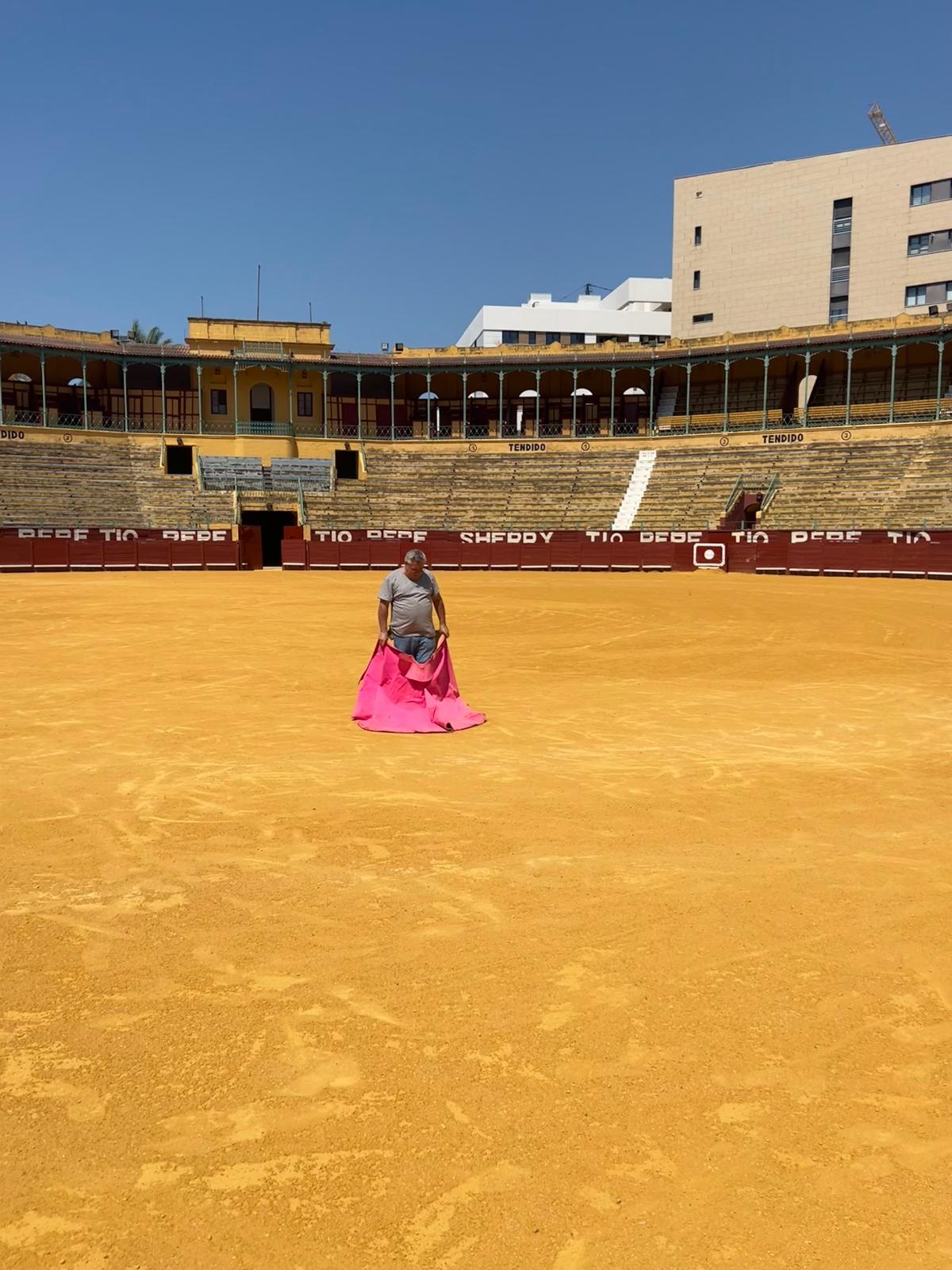
Whilst wandering the streets of Jerez de Frontera last week, I chanced upon the bullfighting ring. While the gate was not open, nor was it the season for the spectacle, I was still intrigued to look around.  A small door broke the yellow walls and inside, an old man sat tampering with a photo frame. I knocked and went inside. At this point it is probably useful to mention that I speak little to no Spanish, and by little in this case I also mean none. Which strangely made this encounter all the more interesting. As I muddled through on Google Translate, I managed to ask for a look around, and what followed was an incredible story of bullfighting. Of bravery and pain, bravado and celebration, but also of cruelty. 

I have never truly had an opinion on the sport of bullfighting. The pictures of matadors dressed immaculately, flourishing a crimson cape, always looked appealing. However, it is difficult to look past what is often not shown in the photos. Stabbing at bulls with hooked barbs in a display of human dominion over beast, does not spark positive notions in the minds of most, myself included. Yet this experience of speaking to this man may have swayed me toward an opinion of tolerance or perhaps, an understanding as to why this sport is such a staple of Spanish culture. 

The ring itself was impressive, a modern-day Colosseum. The yellow sand masked the sprays of blood and the stands packed high, row on row, bearing down on the competitors. I was taken into the ring and the man, who now revealed himself as a former matador, began drifting and swirling in patterns around the arena drawing deep curves in the sand as he deftly manoeuvred his cape and sword. This seemed more like a dance or a ritual than a deadly game. The passion that he held for the games, and the esteem with which he spoke of other bullfighters, impressed the importance of the sport to not only him and his family, but to the community as a whole. 

There is a side however that is rarely seen: the inner workings of the ring. He took me through the swinging doors where bulls would charge through in the May festivals and through a small wooden fence winding our way through a network of hiding places and ratruns before entering a white room. The tiles of the room reflected the hanging bulb in the centre, illuminating the operating theatre. Every time there are bullfights there are injuries, some minor, some major, and some fatal. The host explained all this whilst tracing a scar that ran from his ankle to the top of his calf, the mark of his final bullfight. Moreover, he whipped out his phone and after scrolling YouTube furiously, spun it round to show a video. A matador leaps towards the horns of this bull with muscle and sinew bulging from its flanks. The man lands a stab at the base of the bulls neck, then falls. He scrambles on the floor as the horns of the bull rip his eye out. I stood in shock; the host however simply slowed the video and showed it to me again. It was utterly strange in my mind that this was something this man had devoted his life to. Then he pointed towards a poster on the wall. A matador with his face in his hands, almost modelling a sad clown, with an eyepatch obscuring his right side. This matador was still fighting. 

Despite all this, the host continues to support the establishment of bullfighting, even training his own son and nephews in the art. This is what I found inspiring about the man, that he would see this amount of violence and bloodshed, and yet continue to embrace this culture in order to uphold tradition and not allow this bastion of old Spanish society to be eradicated.

I appreciate that I have not necessarily given a balanced view on bullfighting here, and my account may purely come across as one of admiration. However, I think that you will have a far easier time finding articles that offer a wholly negative view towards these things than what I found in this encounter. This understanding was not something that I think I would have found by looking at a screen, but was found in the weather-beaten face of an old man who still had that thrill of the fight instilled in his eyes, that sense of adventure that never truly leaves you, and I must say it made me think twice about my views on bullfighting.

Featured Image: Sam Unsworth

Categories
Travel

The Conflict of Tourism

By Sam Unsworth

Images that have been dominating my small screen in the past few weeks ( for I am publishing this quite a while after these events ) are scenes unfolding in Barcelona, where locals are protesting against the waves of tourists that descend on Europe throughout the summer. From water pistols and red tape to the more intimidating smoke bombs, flares, and verbal abuse, it is clear that locals are thoroughly outraged. While we may laugh at the sight of some unsuspecting holidaymaker, adorned in a bumbag and golf visor, being soaked by an angry resident, we must understand the deeper issues affecting these hotspots — and why they should matter to us.

I am a frequent user of Airbnb and have logged a fair few points on Booking.com, but until now I had not fully appreciated the effect these chains are having on local communities. Protestors were seen holding signs reading “El teu Airbnb era la meva casa” — or “Your Airbnb used to be my home” — which illustrates the root issue. People are being priced out of their own homes, and as they are squeezed from city centres, so too is their culture. How often do we see Irish pubs or an English breakfast headlining streets and menus across Europe to cater to bland palates or one-dimensional interests? In my view, all too often. If locals are pushed away, then truly, what is the point of travel?

To use the Sagrada Família — which is, or will be when it is finally finished, a true wonder of the world — I believe that a traveller must look beyond the building itself to the people who built, designed, and laboured since 1882 to create such beauty. Surely this is the real wonder, and this wonder is under threat, as these are the same people now lining the streets in protest.

Tourism is integral to many areas, and it is a major part of the Spanish economy, making up 15.6% GDP in 2024. This makes it seem strange to expel such a money-making machine from one’s country, yet I think the behaviour of tourists differs so greatly. I would be lying if I said I didn’t want to squirt water at the summer crowds in Oxford or London as they trudge along awkwardly, lining up for a picture with something I see as part of my normality. I could argue that I put up with it, so surely those in Spain can do the same. Yet here, locals are not being excluded from city housing in the same way as those in Barcelona; people do not waltz around in swimsuits, drunkenly singing and causing havoc, nor do they push back against our culture. As such, the culture and fabric of Barcelona and Marbella are being deconstructed in a way dissimilar to that of British tourist cities or towns.

So, the real question is: what can be done? People will still holiday in these places, whether locals are unhappy or not, but can we do something as a collective to make us Brits abroad more bearable? Perhaps by utilising hotels or hostels to a greater extent, travelling to areas beyond the classic cities, and allowing culture to flourish both in city centres and rurally. Let travel open our minds to new things rather than seeking familiarity in foreign lands. More practically — as I was reminded by signs in Croatia recently — dressing appropriately, drinking respectfully, and generally not reinforcing the British holiday stereotype. Tourism can be a wonderful thing if it reinforces cultural appreciation rather than suffocating local traditions. To appreciate the views of locals and respect their space in their own cities may well be the best way to soothe the protests, as we, the tourists, look to understand the fears and worries of local populations.

Featured Image: Honor Adams

Categories
Culture

Bourdain: The True Travel Man

By Sam Unsworth

“Eat at a local restaurant tonight. Get the cream sauce. Have a cold pint at four o’clock in a mostly empty bar. Go somewhere you’ve never been. Listen to someone you think may have nothing in common with you. Order the steak rare. Eat an Oyster. Have a Negroni. Have two. Be open to a world where you may not understand or agree with the person next to you but have a drink with them anyways. Eat slowly. Tip your server. Check in on your friends. Check in on yourself. Enjoy the ride.” – Anthony Bourdain.

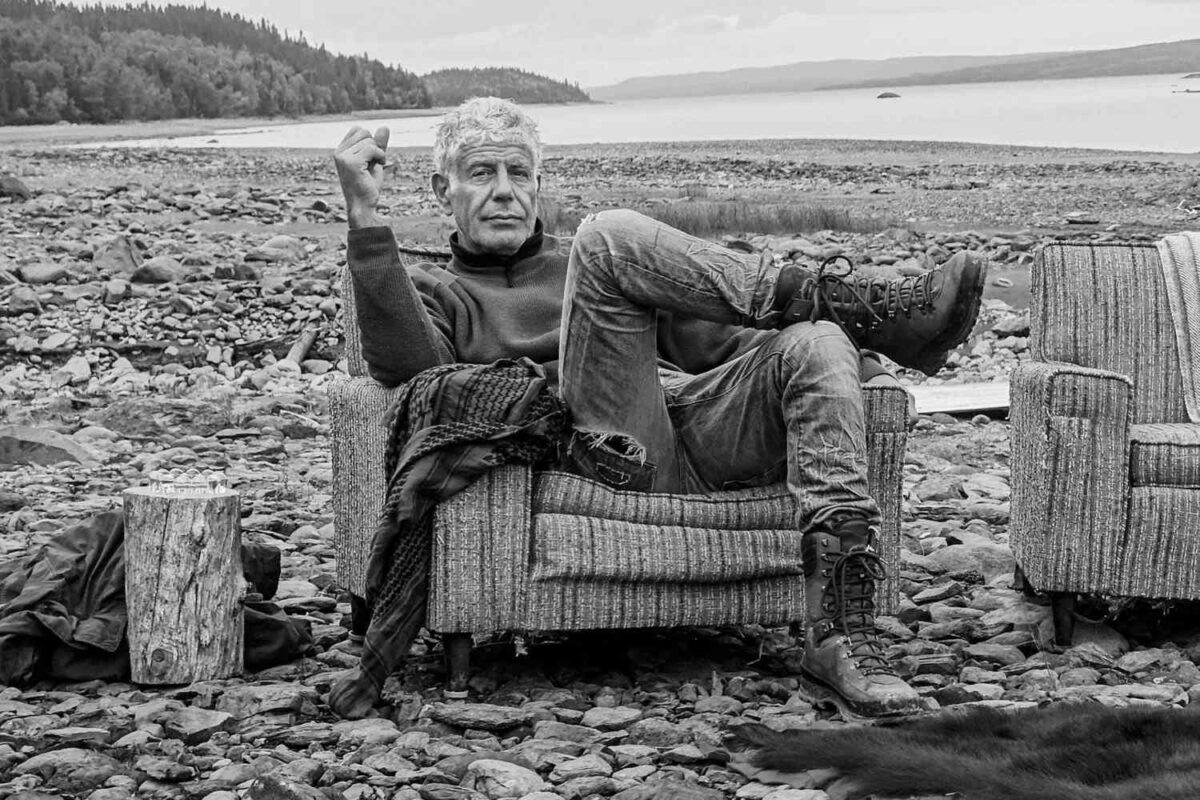
Is it really possible for one to be effortlessly cool? Appeal to all? Understand and be understood by those with lots and those with little? Only one man, I find, has this connection. The late great Anthony Bourdain. While Parts Unknown and A Cook’s Tour used to seem to me of the genre of Ice Road Truckers, River Monsters , or whatever everyone’s dad was watching in the late 2000s, they are in fact some of the most insightful perceptions of what it means to travel and embrace culture. I would expect that most readers are familiar with the opening quote, no doubt plastered on an eccentric French teacher’s wall at school, but find it means far more now than it did at the time.

The beauty of Bourdain’s work truly lies in his honesty. Whilst the Clarkson, May, Hammond trio, Michael Palin and even Richard Ayoade have inspired prospering travellers to engage in great feats and navigate the globe purely for thrill and interest, they fail to capture the same intimacy as Bourdain. The audience feels as though they know him, that they are experiencing his strange escapades alongside him, both the good and the bad. We are invited into the very workings of his brain, as though every episode is a tell-all about his multitude of experiences.

I was recently rewatching Parts Unknown, procrastinating whatever essay was sitting in my due folder gathering dust, when I came across an episode I had not watched for a long time. The Sicily trip. This episode is utterly thought-provoking as Bourdain circles into a state of manic depression after a staged diving trip to “capture” some seafood for dinner.. Bourdain swimming along the vibrant coral with octopi falling from above, hurled from a fishing boat not ten metres away. With each splash, and falling fish, the shock and disappointment crept across his face. We, the audience, are then taken through the rest of his travel, and hearing the voiceover we feel as though we are experiencing the trip alongside Anthony. He admits in the voiceover that he had proceeded to get so drunk after the fishing trip that he did not remember the interactions and meals that were filmed after it. He states that had he not been filming he would have returned to his hotel room, mixed up some medicine, drank, and flicked through the porn channel. This kind of gritty honesty is what makes him such an engaging character, we see him through thick and thin.

In Parts Unknown, we are introduced to a slightly older, more mature Bourdain, already a seasoned traveller but now lacking his signature cigarette stuck to his bottom lip. On a side note, I have been meaning to find an interview between Bourdain and Marco Pierre White and count who smoked more cigarettes during the interaction. Bourdain’s early work is what drove his mantra of “enjoy the ride” as we see him eating anything and everything, challenging the new and mysterious with an open heart and mind and firing Kalashnikovs whilst sipping on a Tiger in a Cambodian bar. Interestingly, at said bar, you don’t pay for drinks but for ammunition. Bourdain personifies the traveller, willing to talk with anyone and do anything such as his graphic discussions about bondage in Tokyo. Having grown up in the kitchen, Bourdain is aware of a tough life and hard work and made his name in the culinary field working in Michelin star kitchens. He was a man who knew how to eat, but, more to the point, he knew what he liked to eat. Whether that be at roadside cafes or famously the meal he shared with Obama in Hanoi, there is a refreshing lack of snobbery in his ideas on food. He narrates with a quick wit and humility, dealing with the culinary delights of the world, whilst also dealing with very intense and very real problems facing many people today.

So, if you find yourself at a loose end or simply need some inspiration for your next travel or adventure, then there is no better place to start than with the master himself: Anthony Bourdain.

Categories
Perspective

The Necessity of Accuracy?

By Sam Unsworth


Ridley Scott has released two major works in the last two years, that being Napoleon (2023) and the latter being Gladiator II (2024). Both have been contentious for their lack of historical accuracy that toy with the audiences’ suspension of disbelief. But I would like to question whether these are fair attacks at what are successful films or are we simply looking for ways to pick apart a once great director whose works are slowly diminishing in quality? I will warn here for spoilers. 

Gladiator II is no doubt a high-octane action thriller but perhaps what made this only a mediocre re-hashing of its predecessor is not actually because of its lack of attention to detail. Now, to start with the most obvious, the presence of sharks in the Colosseum. Quite obviously ludicrous. It is clear that this would be a logistical nightmare now, let alone in Ancient Rome. Yet I think that this is simply too easy a shot to take at Scott, the man behind Alien (1979), who is asking his audience to suspend their disbelief. Does the presence of great whites add a further jeopardy to the games? That if one of the gladiators fell from the boats then they would be killed also? Honestly, yes. I would argue that here Scott is not looking to be accurate – he is purely looking for an enjoyment factor. 

In Gladiator II Scott understands his audience and wants to provide action and violence that is there to entertain, almost like being put into the seats of the Colosseum yourself. If you had watched the first film you would have seen gladiators fighting tigers and each other, so would we ask that Scott just remade this with different characters? The different games, such as the sea battle or the rhinoceros being ridden, made the film interesting for a returning audience, as well as a newfound fan base. Gladiator II is meant to entertain so maybe we should set aside our historian’s viewpoint and enjoy the film as it is, at heart, a fiction. 

However, this, I doubt, can be said for the Roman newspaper appearing before the printing press. These kinds of throwaway inaccuracies are what harms Scott’s film as it is simply unnecessary, disengaging the audience. One of the first attacks I read on the film was about Denzel Washington’s casting; yet, I find it a weak jab at the film. Washington portrayed the villain Macrinius who ascends to the top of Roman aristocracy and was possibly the saving grace of the film, which was riddled with average performances and even more average screenwriting. The argument against casting a black man in this role holds so little water that it can really be disregarded due to the distinction between Roman and Barbarian and nothing more. So, we should also take into account who we listen to when we are told a film is inaccurate. 

In contrast, Ridley Scott’s Napoleon is not a fictional tale. It is a true story with real people and real struggles, hence the inaccuracies do not aid the story but in many ways diminish it. Why was Joaquin Phoenix cast to play Napoleon at both Toulon and Waterloo? Why was Josephine presented as being younger than Napoleon himself? Setting these aside, the inaccuracies do, at times, undermine the genius of Napoleon’s military strategy, especially at Austerlitz. Scott portrays a hilly area with deep lakes where cannons fired onto retreating Russian forces, drowning the majority in the frozen lake. Now, like Gladiator II, this looks incredible cinematically; yet, it simply is not true. Where Gladiator II is a fiction so we can toy with the truth, Napoleon’s story is not. Napoleon’s tactical genius is reduced by fake geography and over-exaggeration. Moreover, the way in which his forces attack in disarray bears no resemblance to the ordered formations of Napoleonic warfare. This is where I believe accuracy matters because Napoleon is, at heart, a biopic about the life of a great person, that, in reality, does not need increasing for cinema, given how impressive a story it is in and of itself. The audience of this film, while also for the masses, would surely have appealed to historians as a homage to a great military leader, yet Scott seems to neglect this core part of the viewership. 

There are times, though, where historical inaccuracy can be done extremely well and to good effect. This is particularly evident in Brian Helgeland’s A Knight’s Tale (2001). In this film, set at a medieval jousting tournament, both the costumes and set design were incredibly accurate, and adhered to the source material of Chaucer’s Canterbury Tales. Yet, the one distinct difference is in the music. Helgeland and Burwell, the musical director, utilised classic rock music such as Queen’s “We Will Rock You”, Thin Lizzy’s “The Boys Are Back in Town” and AC/DC’s “You Shook Me All Night Long” to create a crowd atmosphere the audience would be familiar with. This is a great example of understanding one’s audience and using inaccuracy to build emotion and allow a modern audience to connect with a wholly unfamiliar world. 

Inaccuracy has its place in historical film, but I find it must be done with reason. Does it evoke emotion? Does it connect with an audience? Does it truly enhance the story? Gladiator II, for all its flaws which are many beyond its accuracy, is arguably made better by its wildly over-the-top display of the Colosseum, much like A Knight’s Tale is enhanced by its modern soundtrack. Yet, in the genre of biopic, I believe Scott takes inaccuracy too far and ultimately it is detrimental to the final work.